


Abstract
Quantitative structure-activity relationship models were obtained by applying the Molecular Descriptor Family approach to eight ordnance compounds with different toxicity on five marine species (arbacia punctulata, dinophilus gyrociliatus, sciaenops ocellatus, opossum shrimp, and ulva fasciata). The selection of the best among molecular descriptors generated and calculated from the ordnance compounds structures lead to accurate monovariate models. The resulting models obtained for six endpoints proved to be accurate in estimation (the squared correlation coefficient varied from 0.8186 to 0.9997) and prediction (the correlation coefficient obtained in leave-one-out analysis varied from 0.7263 to 0.9984).
1. Introduction
The effects of marine environment sediment contamination with ordnance compounds received a special attention [1–3]. A number of researches have been conducted near several naval facilities in Puget Sound, WA, revealing that the studied ordnance compounds were not a case for environmental concern in marine sediments [4,5]. The literature also reported that some marine macro algae species (e.g. green alga acrosiphonia coalita, red alga porphyra zezoensis, and red alga portieria hornemannii) have an active role in removal of ordnance compounds [6–8].
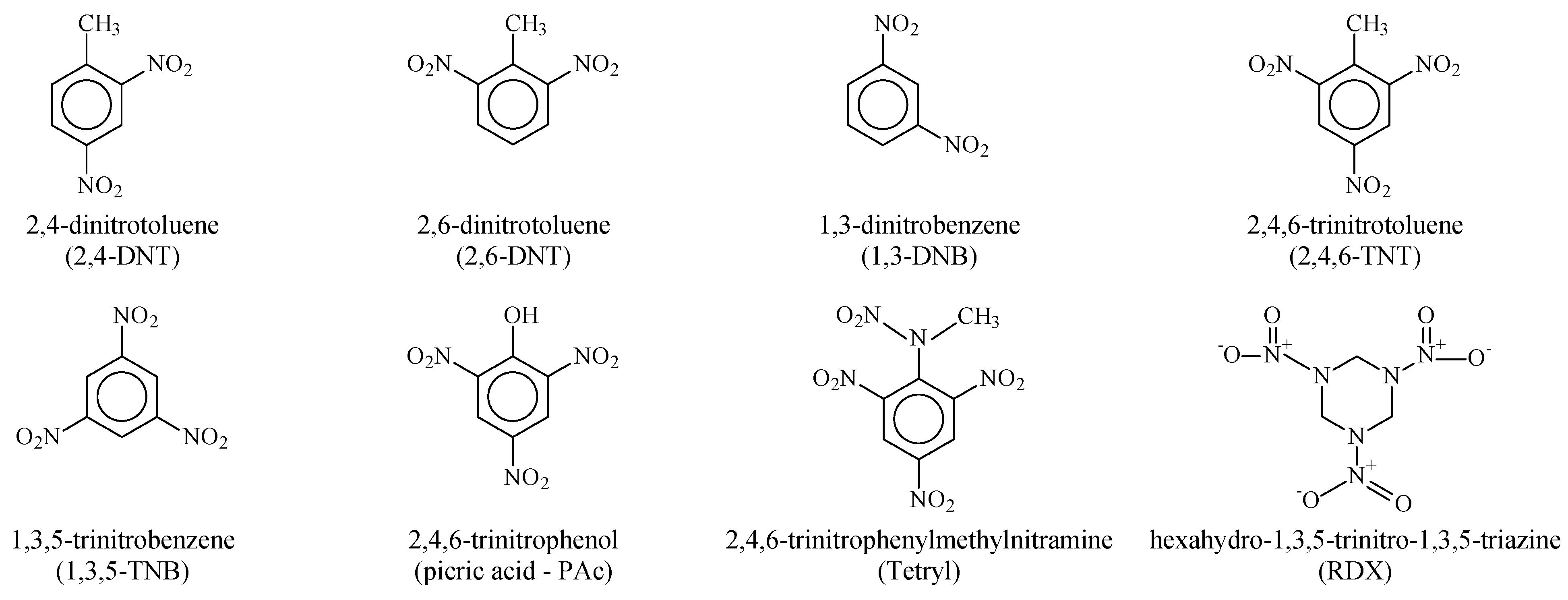
The marine sediment toxicity was previously studied by Carr and Nipper [4] for eight ordnance compounds (see Figure 1): 2,4-dinitrotoluene (2,4-DNT), 2,6-dinitrotoluene (2,6-DNT), 1,3-dinitrobenzene (1,3-DNB), 2,4,6-trinitrotoluene (2,4,6-TNT), 1,3,5-trinitrobenzene (1,3,5-TNB), 2,4,6-trinitrophenylmethylnitramine (tetryl), 2,4,6-trinitrophenol (picric acid), and hexahydro-1,3,5-trinitro-1,3,5-triazine (Royal Demolition Explosive - RDX). The reproduction of the polychaete and the embryological development of arbacia punctulata have been identified as most sensitive species and endpoints [4] while tetryl and 1,3,5-trinitrobenzen are considered as the most toxic ordnance compounds [4].
Figure 1.
2D structure of ordnance compounds.
The main objective of the present research was to identify and to quantify the relationship between the structure of eight ordnance compounds and their marine toxicity by using the Molecular Descriptors Family on the Structure-Activity Relationships approach.
2. Material and Method
2.1. Ordnance compounds and associated toxicities
The experimental toxicities of eight ordnance compounds on arbacia punctulata (sea urchin), dinophilus gyrociliatus (polychaete), sciaenops ocellatus (redfish), opossum shrimp (mysid), and ulva fasciata (macro-alga) were taken from a previously reported research [4]. The toxicity on nine endpoints was analyzed. The toxicities were expressed as [9]:
- Effective Concentration to 50% of the organism (EC50), defined as the effective concentration of toxin in aqueous solution that produces a specific measurable effect in 50% of the test organisms within the stated study time (see Table 1).
- No Observed Effect Concentration (NOEC) defined as the highest concentration of toxicant to which organisms are exposed in a full or partial life-cycle test, that determine no observable adverse effects on the test organisms (the highest concentration of toxicant in which the values for the observed responses are not statistically different from the controls) (see Table 2).
- Lowest Observed Effect Concentration (LOEC) defined as the lowest concentration of toxicant to which organisms are exposed in a full or partial life-cycle test, which causes adverse effects on the test organisms (where the values for the observed responses are statistically significant different from the controls) (see Table 3).
Table 1.
Ordnance compounds toxicity: experimental EC50.
Table 2.
Ordnance compounds toxicity: experimental NOEC values.
Table 3.
Ordnance compounds toxicity: experimental LOEC values.
2.2. Modelling procedure
The toxicities of the ordnance compounds on the investigated marine species were modelled by using the molecular descriptors family on the structure-activity relationships (MDF SARs) [10]. The MDF SARs approach proved its estimated ability and predictive power on classes of compounds with different activity or property [11–19]. The steps applied in molecular modelling were as follows [10]:
- Step 1: Bi- and tri-dimensional representation of the investigated ordnance compounds. This task was done by using a molecular modelling software, HyperChem;
- Step 2: Preparation of the compounds for modelling, optimization of geometry and creation of the file with experimental data;
- Step 3: Construction, generation, calculation and filtration of the molecular descriptors family. The information extracted from the compound’s structure was used in order to construct, generate, and calculate the molecular descriptors. The obtained descriptors were stored into a database. A biases algorithm was applied in order to delete identically recordings. Seven characteristics were considered in the construction of descriptors: Compound geometry or topology (the 7th letter in the descriptor name); Atomic property (e.g. atomic relative mass, atomic partial charge, cardinality, atomic electro negativity, group electro negativity, number of directly bonded hydrogen’s – the 6th letter); Interaction descriptor (the 5th letter); Overlapping interaction models (the 4th letter); Molecular fragmentation criterion (the 3rd letter) [20,21]; Cumulative method of properties fragmentation (the 2nd letter); and Linearization procedure applied in molecular descriptor generation (the 1st character).
- Step 4: Search and identification of the most significant MDF SAR models with one molecular descriptor. The following criteria were used: squared correlation coefficient, standard error of estimated, statistical parameters of the regression model.
- Step 5: Validation of the obtained models. A leave-one-out cross-validation analysis was performed. The cross-validation leave-one-out score, standard error of predict and Fisher parameter were calculated and interpreted [19].
- Step 6: The analysis of the models. The stability of the model (the lowest the difference between squared correlation coefficient and leave-one-out cross-validation score is, the stable de model was considered), and the predictive power was assessed. The toxicity of the ordnance compounds for which the experimental determinations were not available as values (see n.a. from Tables 1 – 3) were predicted based on the obtained models by using online software2.
3. Results and Discussion
The MDF SAR monovariate models with estimated and predictive abilities on investigated endpoints for studied ordnance compounds were identified and are presented in Table 4 for EC50, Table 5 for NOEC, and Table 6 for LOEC.
Table 4.
MDF SAR monovariate models: EC50.
Table 5.
MDF SAR monovariate models: NOEC.
Table 6.
MDF SAR monovariate models: LOEC.
The analysis of the Tables 4 – 6 revealed that all monovariate regression models are statistically significant at a significance level of 5% (p < 0.0001). Note that significance of the descriptor’s name is explained on Material and Method section, “Step 3” and is explained in the results tables below descriptor names (see the followings: Dominant Atomic Property, Interaction via, Interaction Model, and Structure on Activity Scale).
The goodness-of-fit of all models were close to the highest value (one): greater than 0.93 for EC50 (see Table 4) and LOEC (see Table 6), and 0.90 for NOEC (see Table 5). The goodness-of-fit of the models is also sustained by the values of standard error of estimated which never took values greater than 0.42 (see the values of standard error of estimated (s), Tables 4 – 6). The relationship between the investigated toxicity and molecular descriptor used as independent variable was very good (see Figures 2 – 13).
Figure 2.
Relationship between experimental and estimated EC50: fertilization (Eq_01, left hand graphic), and embryological development of sea urchin (Eq_02, right hand graphic).
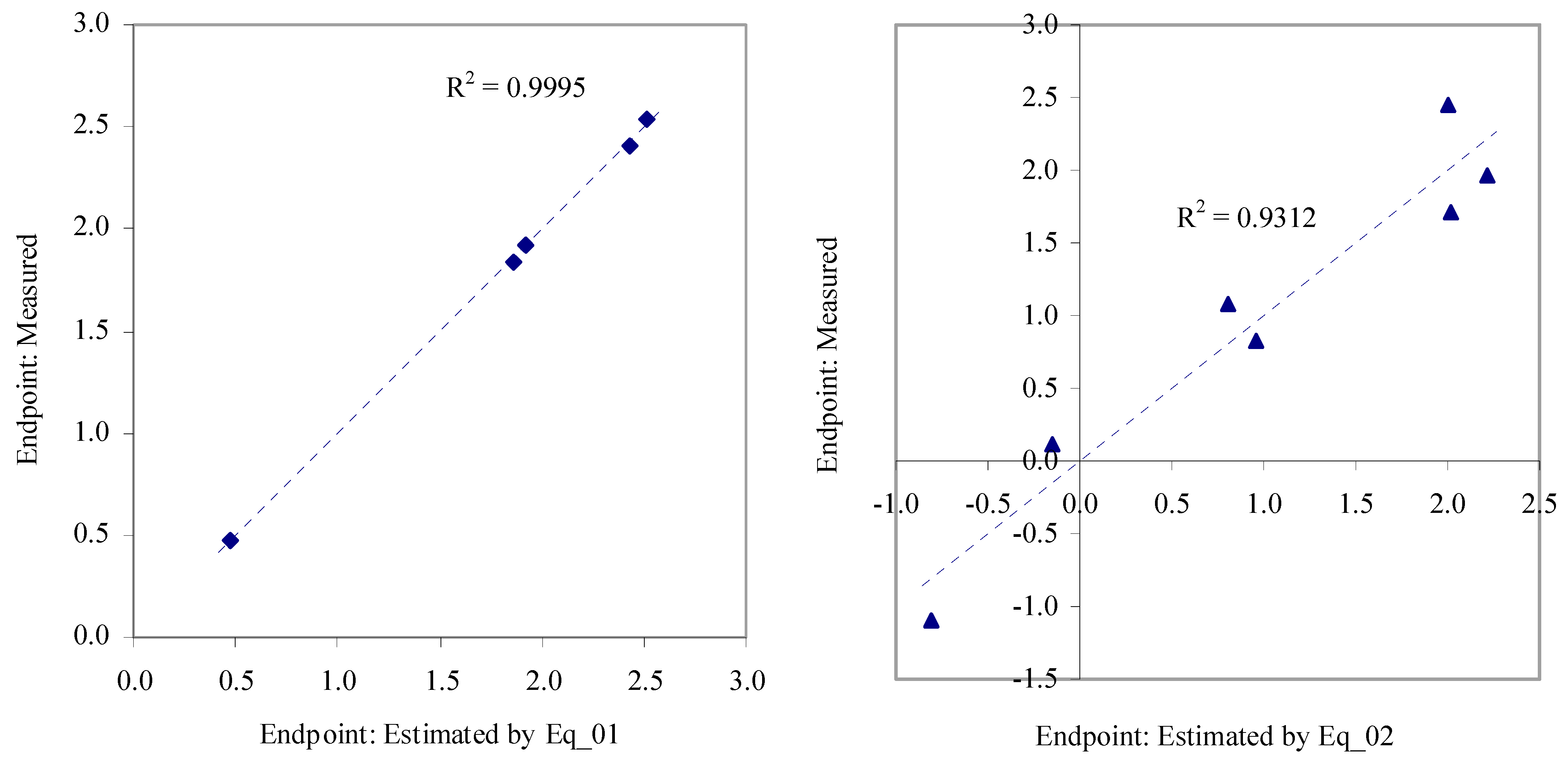
Figure 3.
Relationship between experimental and estimated EC50: germination of sea urchin (Eq_03, left hand graphic), and survival and reproductive success of polychaete (Eq_04, right hand graphic).
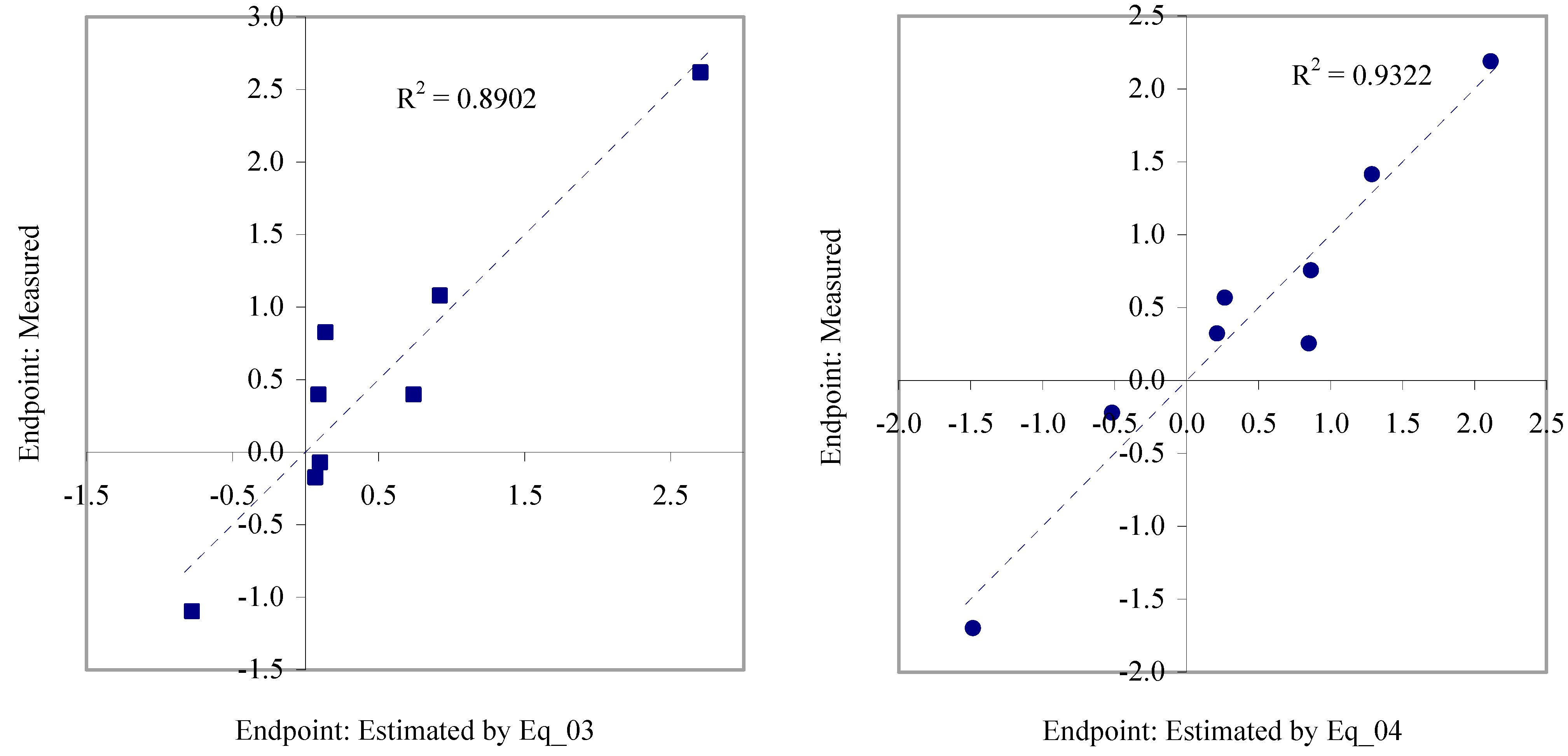
Figure 4.
Relationship between experimental and estimated EC50: larvae survival of redfish (Eq_05, left hand graphic), and juveniles survival of mysid (Eq_06, right hand graphic).
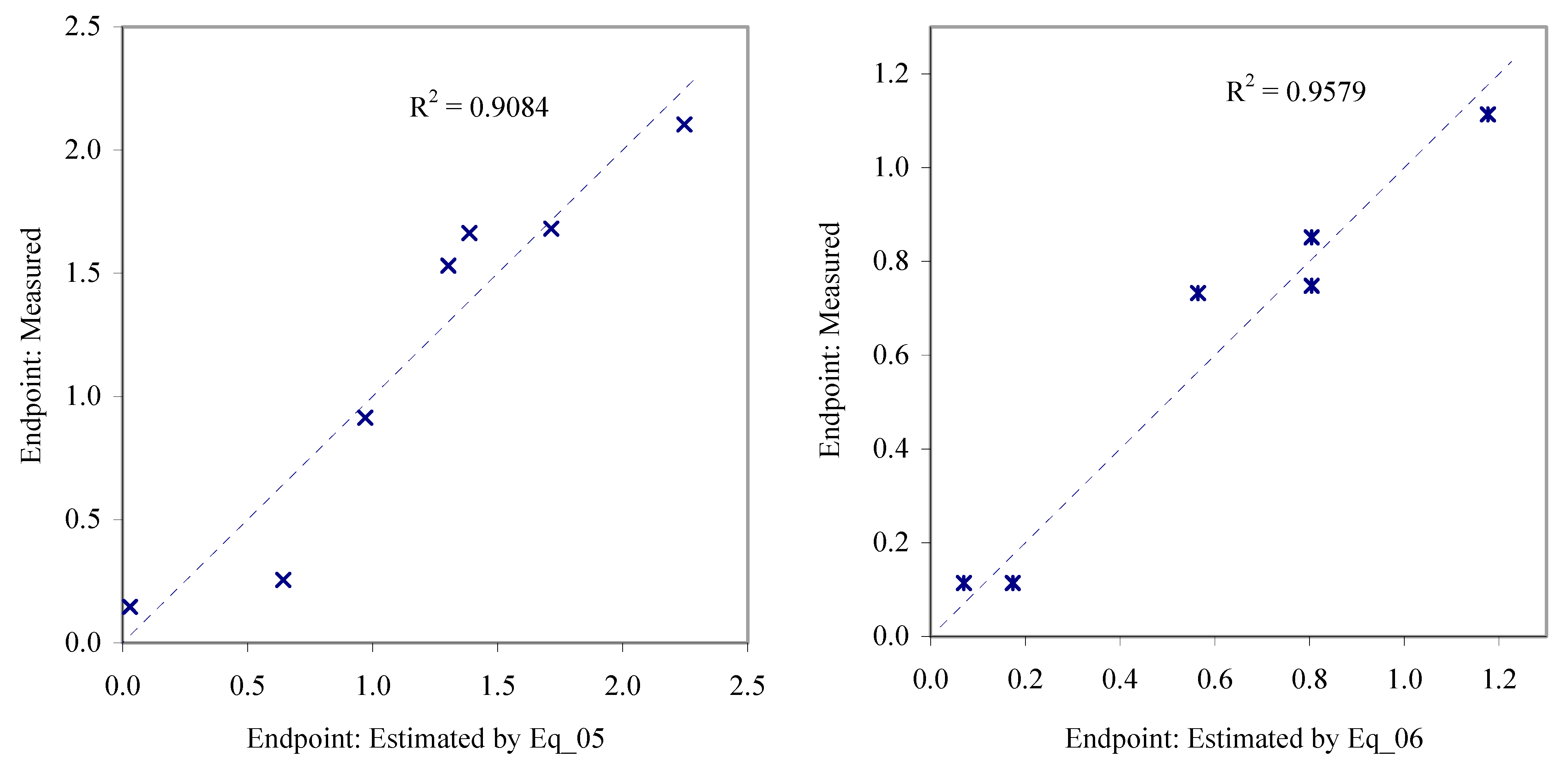
Figure 5.
Relationship between experimental and estimated EC50: germling length (Eq_07, left hand graphic), and germling cell number of macro-alga (Eq_08, right hand graphic).
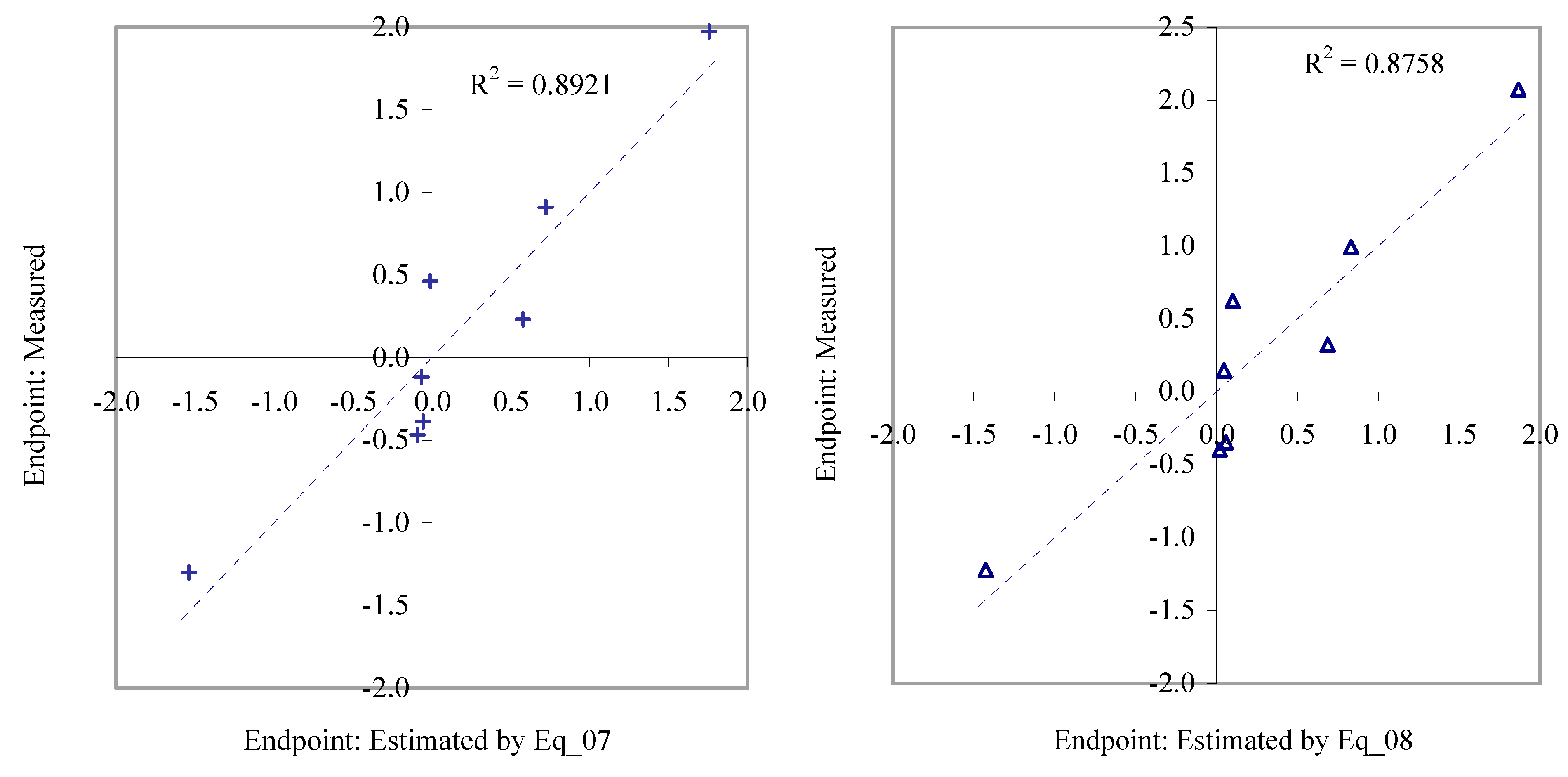
Figure 6.
Relationship between experimental and estimated EC50: survival of macro-alga (Eq_09, left hand graphic), and NOEC as fertilization of sea urchin (Eq_10, right hand graphic).
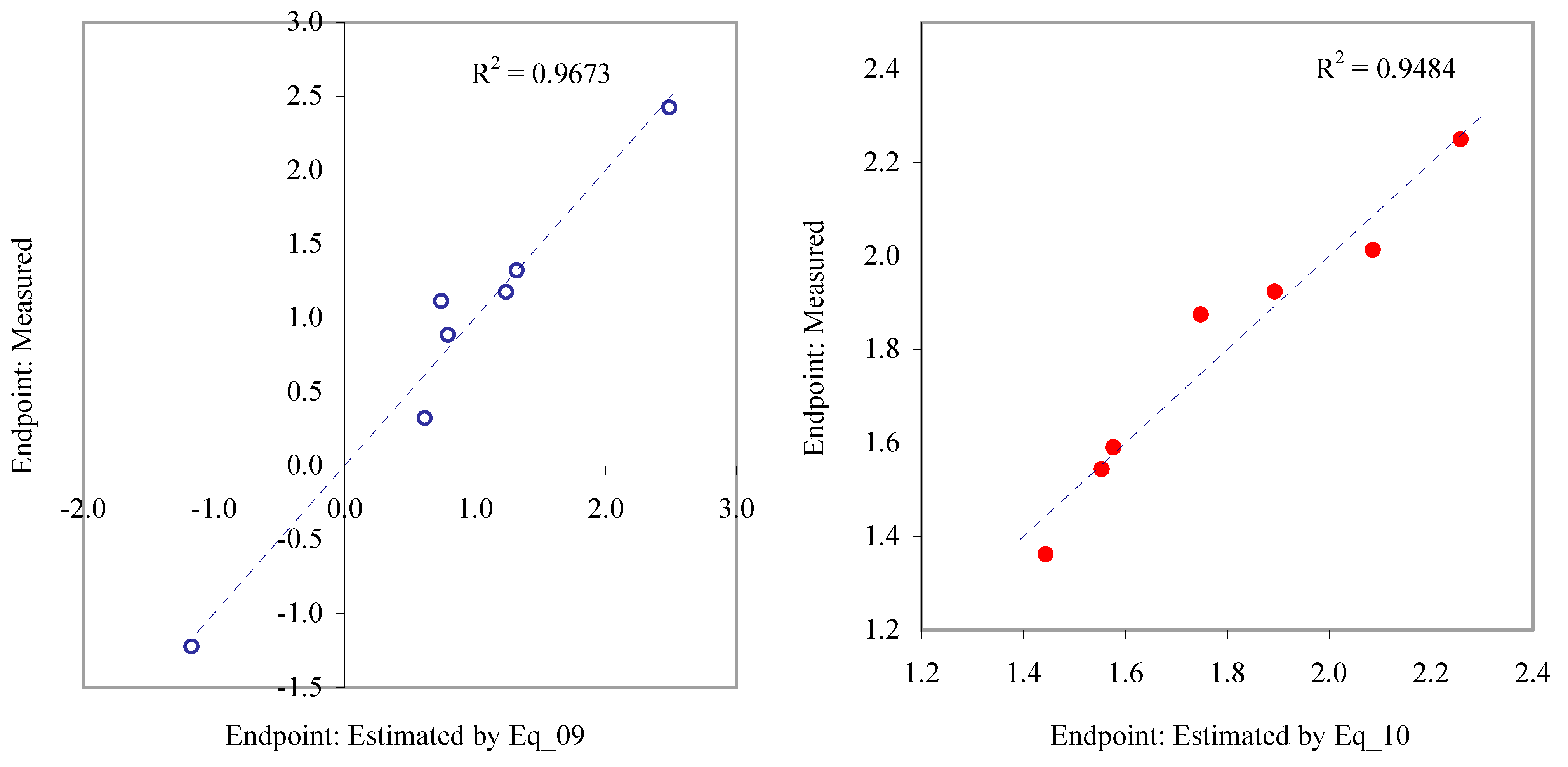
Figure 7.
Relationship between experimental and estimated NOEC: embryological development (Eq_11, left hand graphic), and germination of sea urchin (Eq_12, right hand graphic).
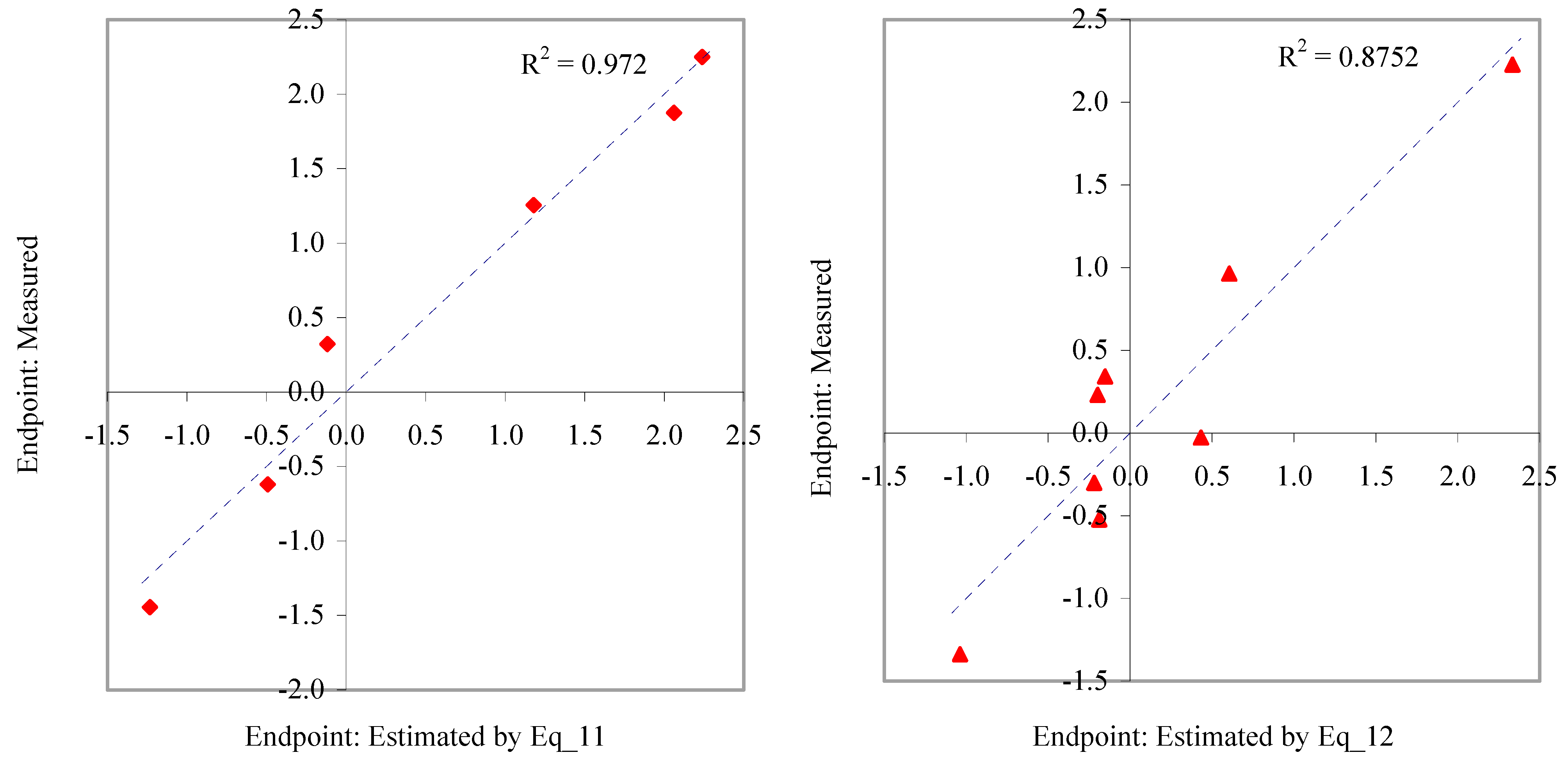
Figure 8.
Relationship between experimental and estimated NOEC: laid eggs/female of polychaete (Eq_13, left hand graphic), and larvae survival of redfish (Eq_14, right hand graphic).
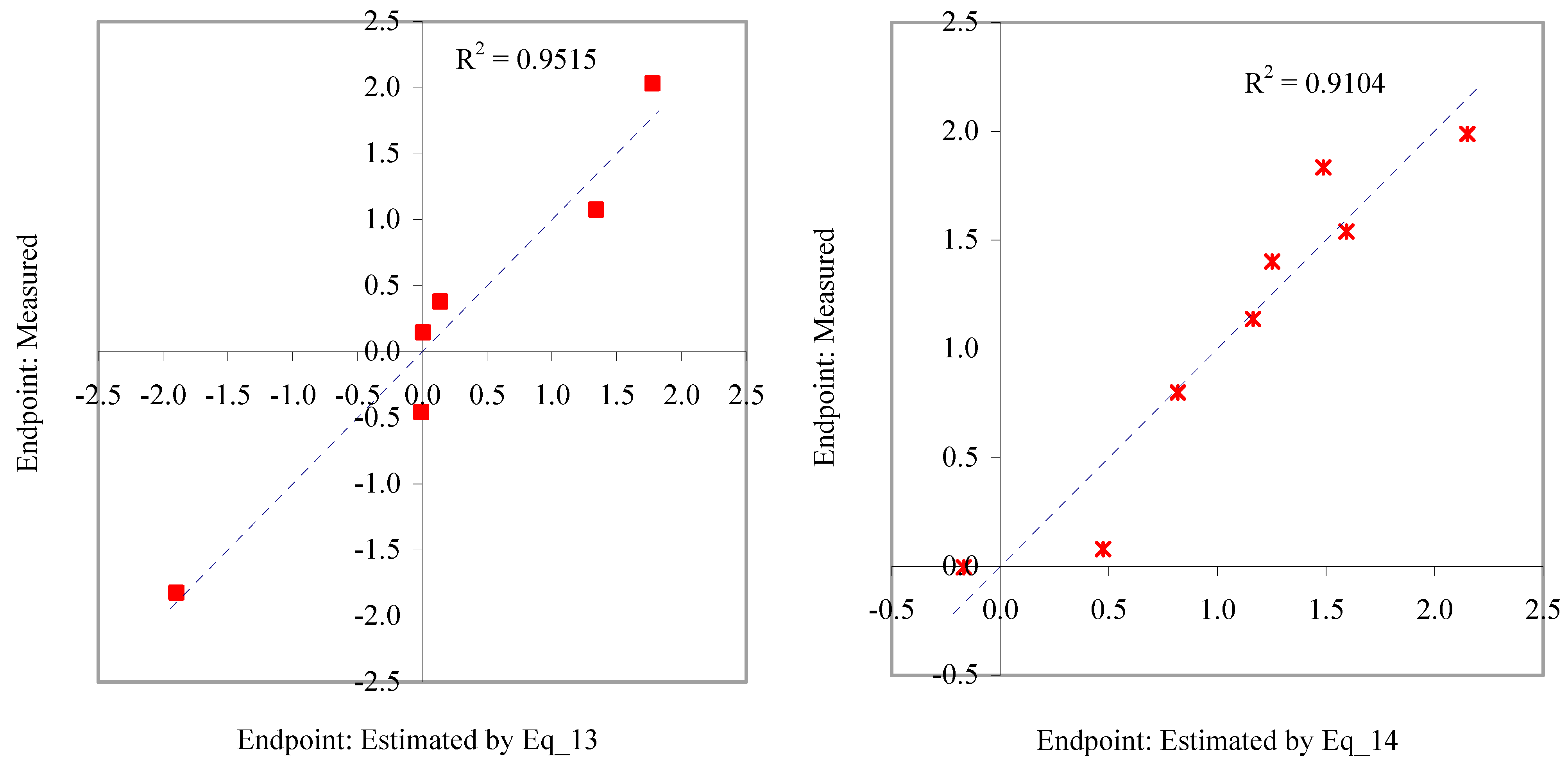
Figure 9.
Relationship between experimental and estimated NOEC: survival of mysid (Eq_15, left hand graphic), and survival of macro-alga (Eq_16, right hand graphic).
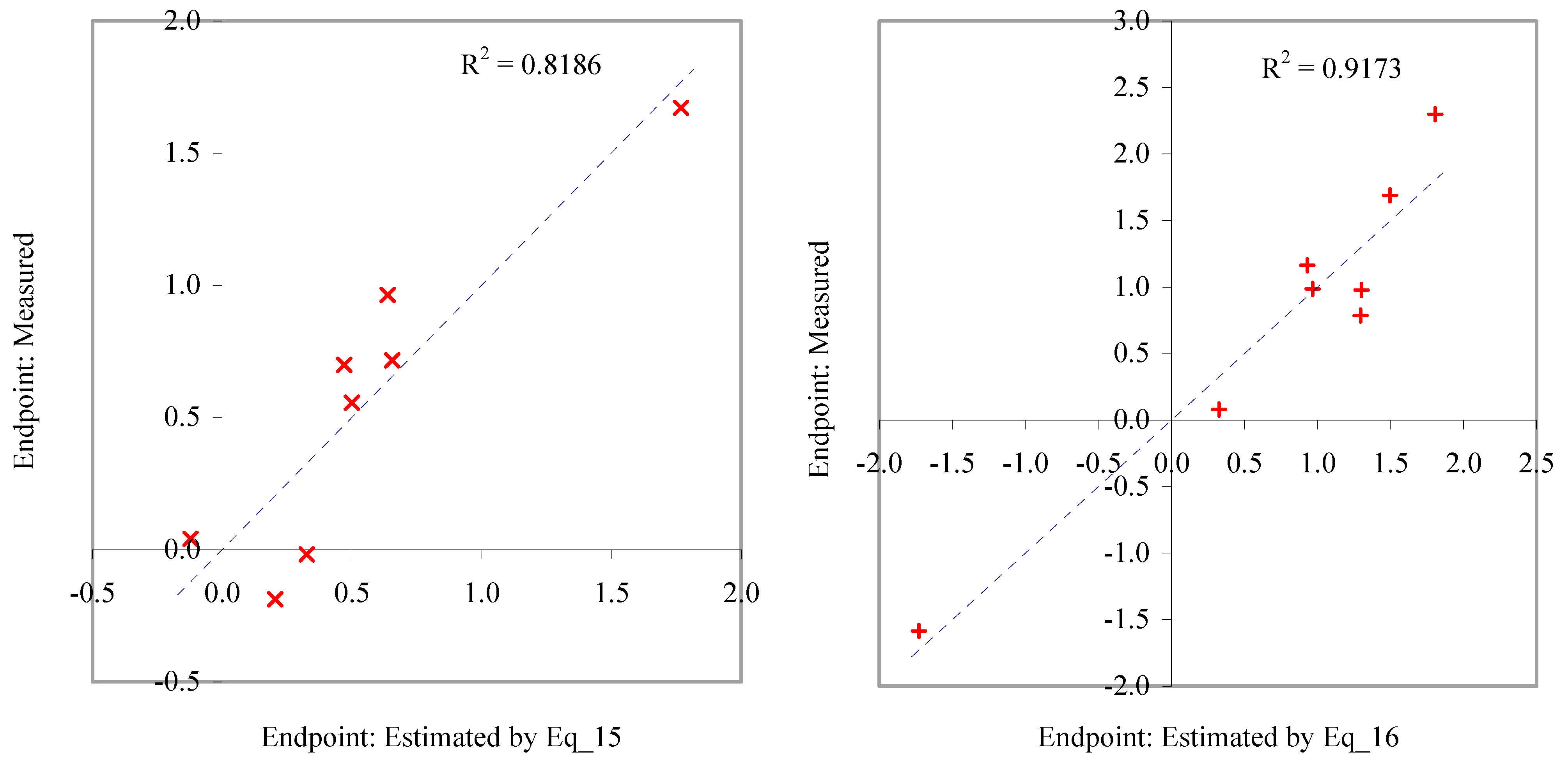
Figure 10.
Relationship between experimental and estimated LOEC: fertilization (Eq_17, left hand graphic), and embryological development of sea urchin (Eq_18, right hand graphic).
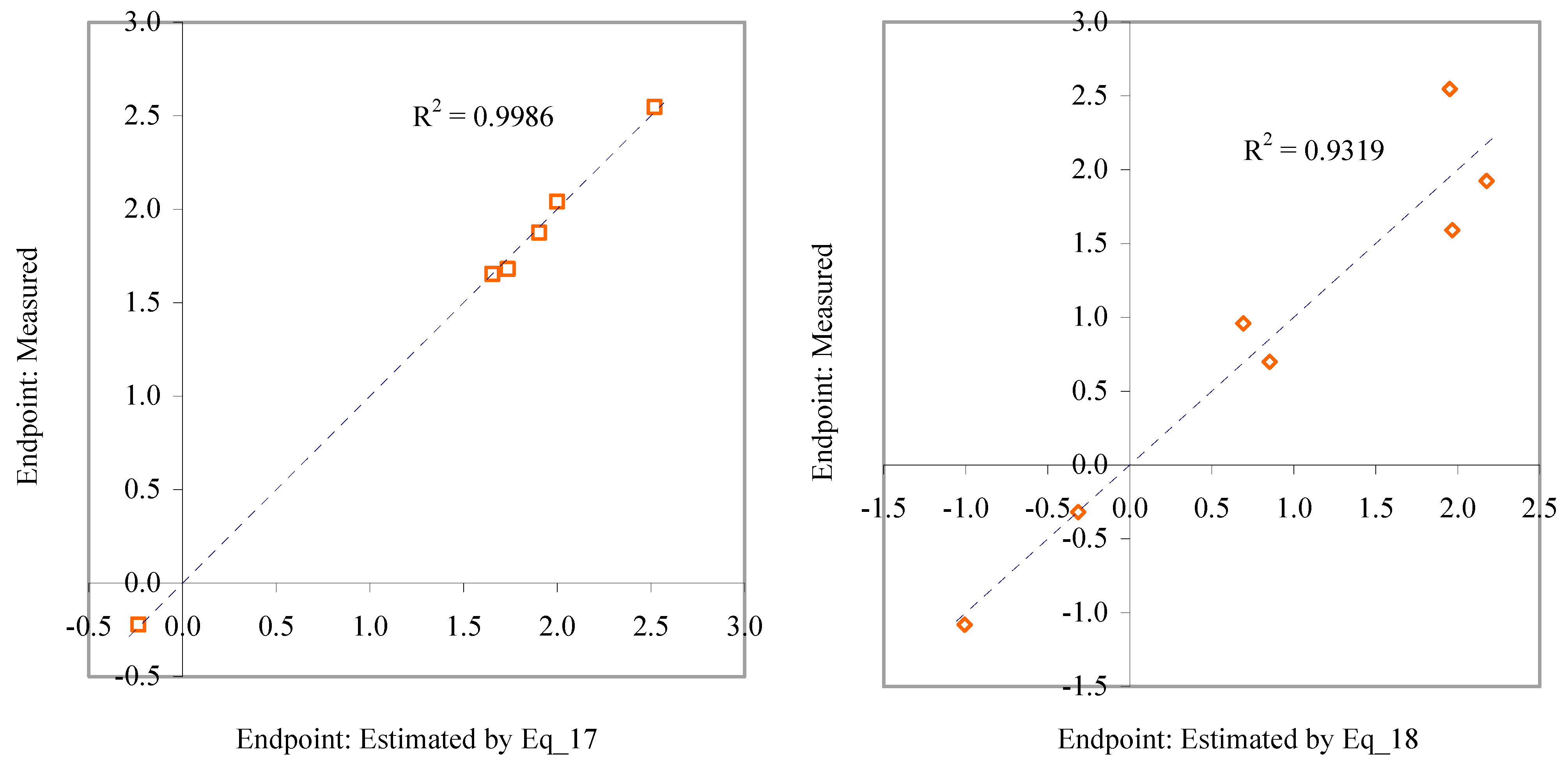
Figure 11.
Relationship between experimental and estimated LOEC: germination of sea urchin (Eq_19, left hand graphic), and laid eggs/female of polychaete (Eq_20, right hand graphic).
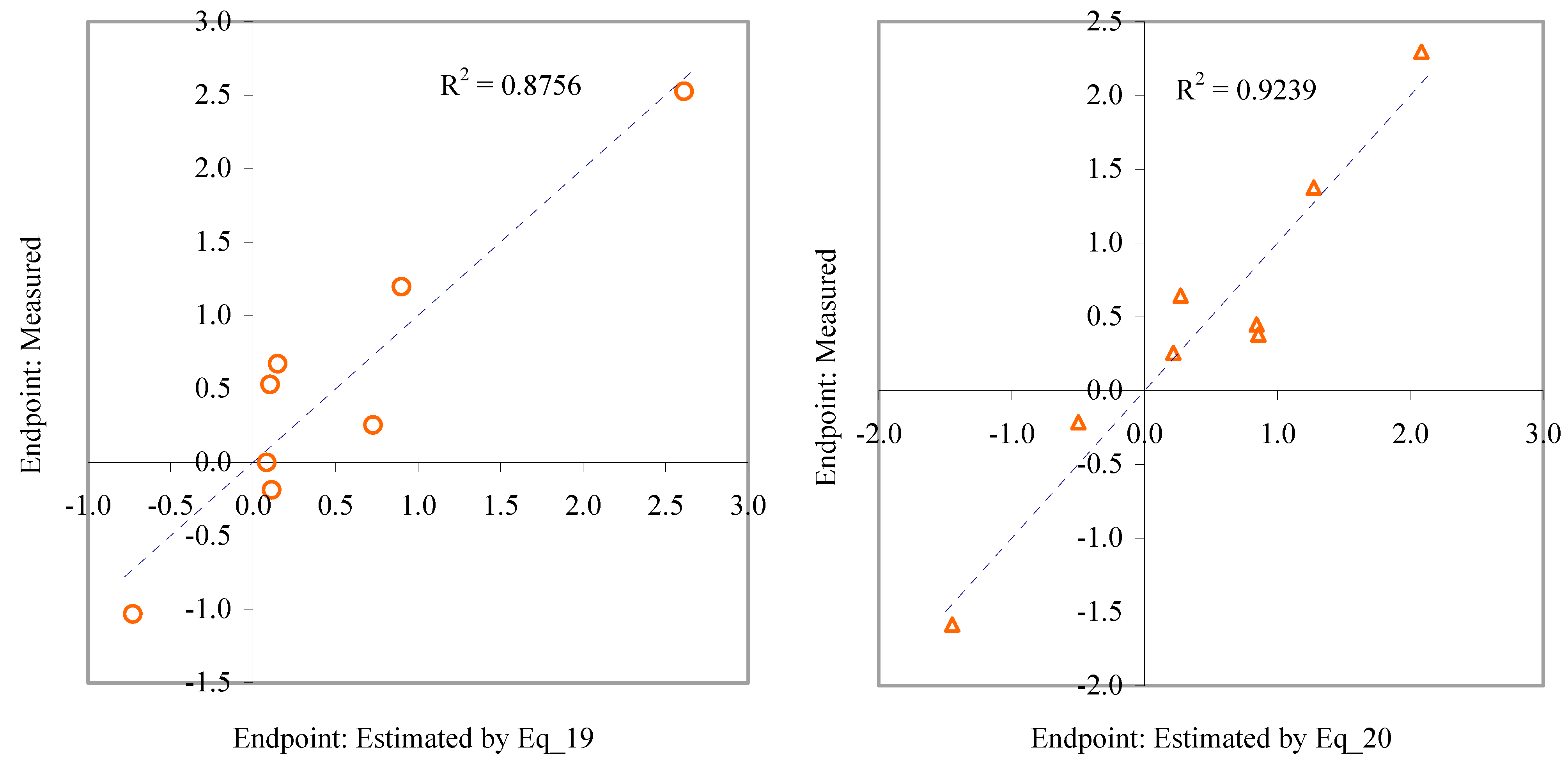
Figure 12.
Relationship between experimental and estimated LOEC: larvae survival of redfish (Eq_21, left hand graphic), and survival of mysid (Eq_22, right hand graphic).
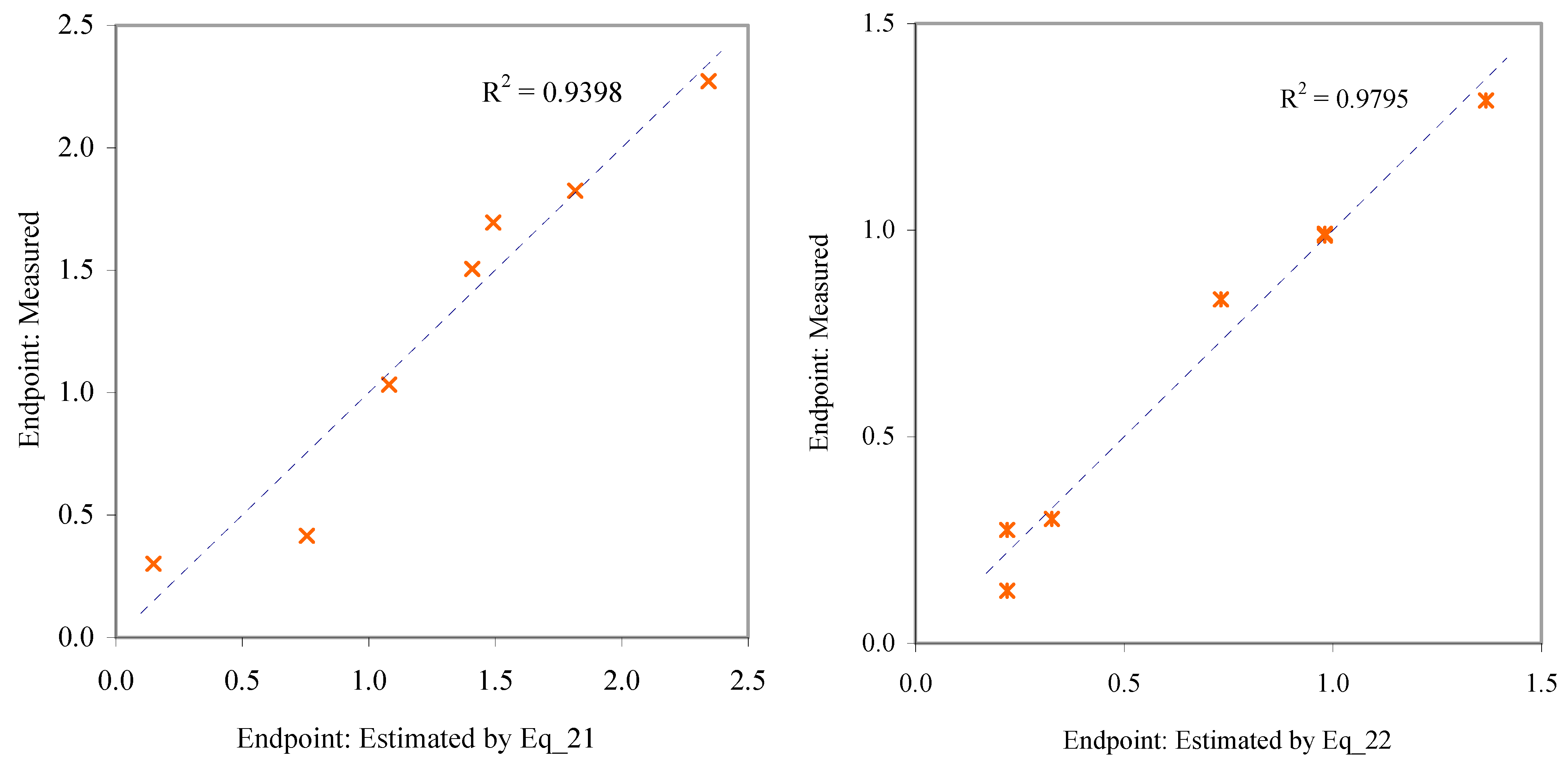
Figure 13.
Relationship between experimental and estimated LOEC: germling length and cell number (Eq_22, left hand graphic), and survival of macro-alga (Eq_24, right hand graphic).
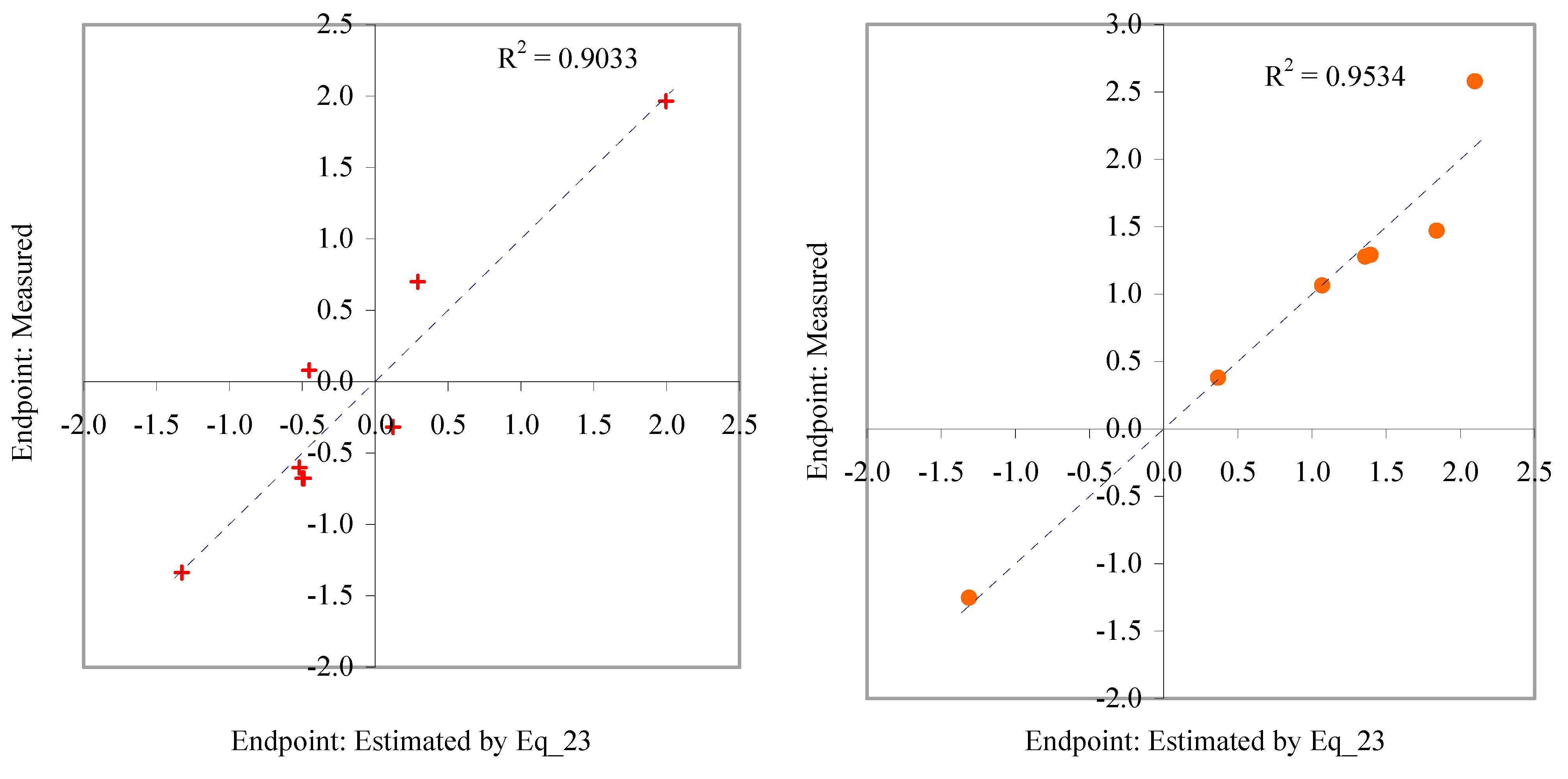
Therefore, more than eighty-one percent of the activity of interest on studied ordnance compounds can be explained by the linear relationship with the variation of molecular descriptors generated strictly based on the information extracted from the ordnance compounds structure (see values of coefficient of determination – R2 from Figures 2 – 13). The lowest determination ability was obtained for the juveniles’ survival of mysid (with R2 = 0.8186). The highest determination was obtained for fertilization of sea urchin (R2 = 0.9995). In seventy-five percent of cases the determination ability was higher than 0.9000.
The stability of each model was investigated in a cross-validation leave-one-out analysis. The values of the cross-validation leave-one-out score sustained the validity of the models. The lowest cross-validation leave-one-out score was of 0.7263. The values where higher than:
- 0.7500 in twenty-three out of twenty-four cases;
- 0.8000 in twenty-two out of twenty-four cases;
- 0.8500 in fifteen out of twenty-four cases;
- 0.9000 in nine out of twenty-four cases.
The lowest value of the cross-validation leave-one-out score was obtained by Eq_15 (see Table 5) being in accordance with the value of the correlation coefficient. The highest cross-validation leave-one-out score was obtained by Eq_01 (see Table 4).
The stability of the obtained models could be expressed by the difference between the determination coefficient and the cross-validation leave-one-out score. The model from Eq_01 obtained the lowest value of 0.0011 while the model from Eq_11 obtained the highest value of 0.0923. The differences between coefficient of determination and leave-one-out cross-validation score did not exceed 0.1, sustaining the absence of over fitted model and/or the absence of outliers. Therefore, it can be concluded that the lowest ability in identification and quantification the relationships between structures of the ordnance compounds and toxicity was obtained for juveniles’ survival of mysid when the NOEC was the investigated toxicity.
The obtained MDF SAR models are valid according with the criteria of Erikson et al. [22] (see the statistical parameters of all models presented in Eq_01 – Eq_24, Tables 4 – 6, and Figures 2 – 13).
In the regard of the type of relationships between ordnance compounds structures and associated toxicities on investigated species it can say that:
- The NOEC on the investigated endpoints (different species, see Table 5) revealed also to be of geometrical nature and directly related with the partial charge (the topological nature was observed in 3 cases out of seven, while the relationship with compounds electronegativity was observed in 1 case out of 7 cases, see Table 5).
- The LOEC on the investigated endpoints (different species, see Table 6) revealed also to be of geometrical nature (the topological nature was identified in 3 cases out of 8 investigated) and directly related with the partial charge (the relationship with compounds cardinality was observed in 1 case out of 8 investigated, see Table 5).
The activities of ordnance compounds without reliable experimental data (expressed as values greater than a number, see Tables 1 – 3) were predicted by using the obtained models (Tables 4 – 6). The results expressed as the values of the molecular descriptors and predicted activities are presented in Table 7.
Table 7.
Predicted activities of ordnance compounds by using the MDF SAR mono-variate models.
The predicted toxicities on different species calculated for studied ordnance compounds need to be validated. This can be done easily once the experimental toxicities are measure. The MDF SAR approach proved to be a useful method in characterization of ordnance compounds toxicities on investigated marine species, offering valid and reliable models. The limited number of the compounds investigated represents the main limitation of the study. The impossibility of validation the predicted toxicities (see Table 7) is another limitation of the study. The obtained MDF SARs models were obtained on small samples, thus further investigations must be done for the validation of the approach.
Conclusion
The MDF SAR approach proved its usefulness in characterization of the toxicity of ordnance compounds. The relationship between ordnance compounds structure and their toxicities revealed to be in the majority of the cases of geometrical nature and directly related with the partial charge for all three types of investigated toxicities.
Acknowledgements
The research was partly supported by UEFISCSU Romania through grants (ID1051/2007).
The authors are grateful for the help of PhD Marion Nipper from Texas A&M University-Corpus Christi, which provided experimental data.
- 1Leave-one-out Analysis (2005) Virtual Library of Free Software. Available online: http://l.academicdirect.org/Chemistry/SARs/MDF_SARs/loo/; accessed on 20 October 2007.
- 2SARs (2005) Virtual Library of Free Software. Available online; http://l.academicdirect.org/Chemistry/SARs/MDF_SARs/loo/; accessed on 20 October 2007.
References
- Talmage, SS; Opresko, DM; Maxwell, CJ; Welsh, CJE; Cretella, FM; Reno, H; Daniel, FB. Nitroaromatic munition compounds: environmental effects and screening values. Rev Environ Contam Toxicol 1999, 161, 1–156. [Google Scholar]
- Nipper, M; Carr, RS; Biedenbach, JM; Hooten, RL; Miller, K. Toxicological and chemical assessment of ordnance compounds in marine sediments and porewaters. Mar Pollut Bull 2002, 44, 789–806. [Google Scholar]
- Nipper, M; Carr, RS; Biedenbach, JM; Hooten, RL; Miller, K. Fate and effects of picric acid and 2,6-DNT in marine environments: Toxicity of degradation products. Mar Pollut Bull 2005, 50, 1205–1217. [Google Scholar]
- Carr, RS; Nipper, M. Toxicity of marine sediments and porewaters spiked with ordnance compounds: Report prepared for Naval Facilities Engineering Commands. NFESC Contract Report CR 01-001-ENV; Washington, DC, USA, 2000. Available from: http://enviro.nfesc.navy.mil/erb/erb_a/restoration/fcs_area/con_sed/MarineSed2000.pdf [viewed December 2006].
- Carr, RS; Nipper, M; Biedenbach, JM; Hooten, RL; Miller, K; Saepoff, S. Sediment toxicity identification evaluation (TIE) studies at marine sites suspected of ordnance contamination. Arch Environ Contam Toxicol 2001, 41, 298–307. [Google Scholar]
- Hamdy, AA. Removal of Pb(2+) by biomass of marine algae. Curr Microbiol 2000, 41, 239–245. [Google Scholar]
- Pavlostathis, SG; Jackson, GH. Biotransformation of 2,4,6-trinitrotoluene in a continuous-flow Anabaena sp. System. Water Res 2002, 36, 1699–1706. [Google Scholar]
- Cruz-Uribe, O; Cheney, DP; Rorrer, GL. Comparison of TNT removal from seawater by three marine macroalgae. Chemosphere 2007, 67, 1469–1476. [Google Scholar]
- US Environmental Protection. Chapter 9: Chronic Toxicity Test Endpoints and Data Analysis. Short-term Methods for Estimating the Chronic Toxicity of Effluents and receiving Waters to Freshwater Organisms; Diana Publishing Co., 2002. EPA-821-R-02-013. 4 ed. pp. 37–46.
- Jäntschi, L. Molecular Descriptors Family on Structure Activity Relationships 1. Review of the Methodology. Leonardo El J Pract Technol 2005, 6, 76–98. [Google Scholar]
- Jäntschi, L; Bolboacã, SD. Results from the Use of Molecular Descriptors Family on Structure Property/Activity Relationships. Int J Mol Sci 2007, 8, 189–203. [Google Scholar]
- Jäntschi, L; Bolboacã, SD. Modeling the octanol-water partition coefficient of substituted phenols by the use of structure information. Int J Quantum Chem 2007, 107, 1736–1744. [Google Scholar]
- Jäntschi, L; Bolboacã, SD; Diudea, MV. Chromatographic Retention Times of Polychlorinated Biphenyls: from Structural Information to Property Characterization. Int J Mol Sci 2007, 8, 1125–1157. [Google Scholar]
- Bolboacã, SD; Jäntschi, L. Amino Acids Sequences Analysis on Collagen. BUSAMV-CN - Animal Sci Biotechn 2007, 63-64, 311–316. [Google Scholar]
- Bolboacã, SD; Jäntschi, L. Data Mining on Structure-Activity/Property Relationships Models. World Appl Sci J 2007, 2(4), 323–332. [Google Scholar]
- Jäntschi, L; Bolboacã, SD. Structure-Activity Relationships on the Molecular Descriptors Family Project at the End. Leonardo El J Pract Technol 2007, 11, 163–180. [Google Scholar]
- Bolboacã, SD; Jäntschi, L. A Structural Informatics Study on Collagen. Chem Biol Drug Des 2008, 71, 173–179. [Google Scholar]
- Bolboacã, SD; Jäntschi, L. Structure versus biological role substituted thiadiazole - and thiadiazoline – disulfonamides. Stud Cercet Stiint Univ Bacau – Ser Biol 2007, 12, 50–56. [Google Scholar]
- Bolboacã, SD; Jäntschi, L. Modelling the Property of Compounds from Structure: Statistical Methods for Models Validation. Environ Chem Lett. [CrossRef]
- Diudea, M; Gutman, I; Jäntschi, L. Molecular Topology; Nova Science: Huntington, NY, USA, 2001. [Google Scholar]
- Jäntschi, L; Katona, G; Diudea, M. Modeling Molecular Properties by Cluj Indices. MATCH-Commun Math Co 2000, 41, 151–188. [Google Scholar]
- Eriksson, L; Jaworska, J; Worth, AP; Cronin, MTD; McDowell, RM; Gramatica, P. Methods for Reliability and Uncertainty Assessment and for Applicability Evaluations of Classification and Regression-Based QSARs. Environ Health Perspect 2003, 111, 1361–1375. [Google Scholar]
