Differential Cytotoxicity and Gene Expression in Human Liver Carcinoma (HepG2) Cells Exposed to Arsenic Trioxide, and Monosodium Acid Methanearsonate (MSMA)


Abstract
:Introduction
Materials and Methods
Chemicals and Test Media
Gene Profile and Cytotoxicity Assays
Statistical Analysis
Results
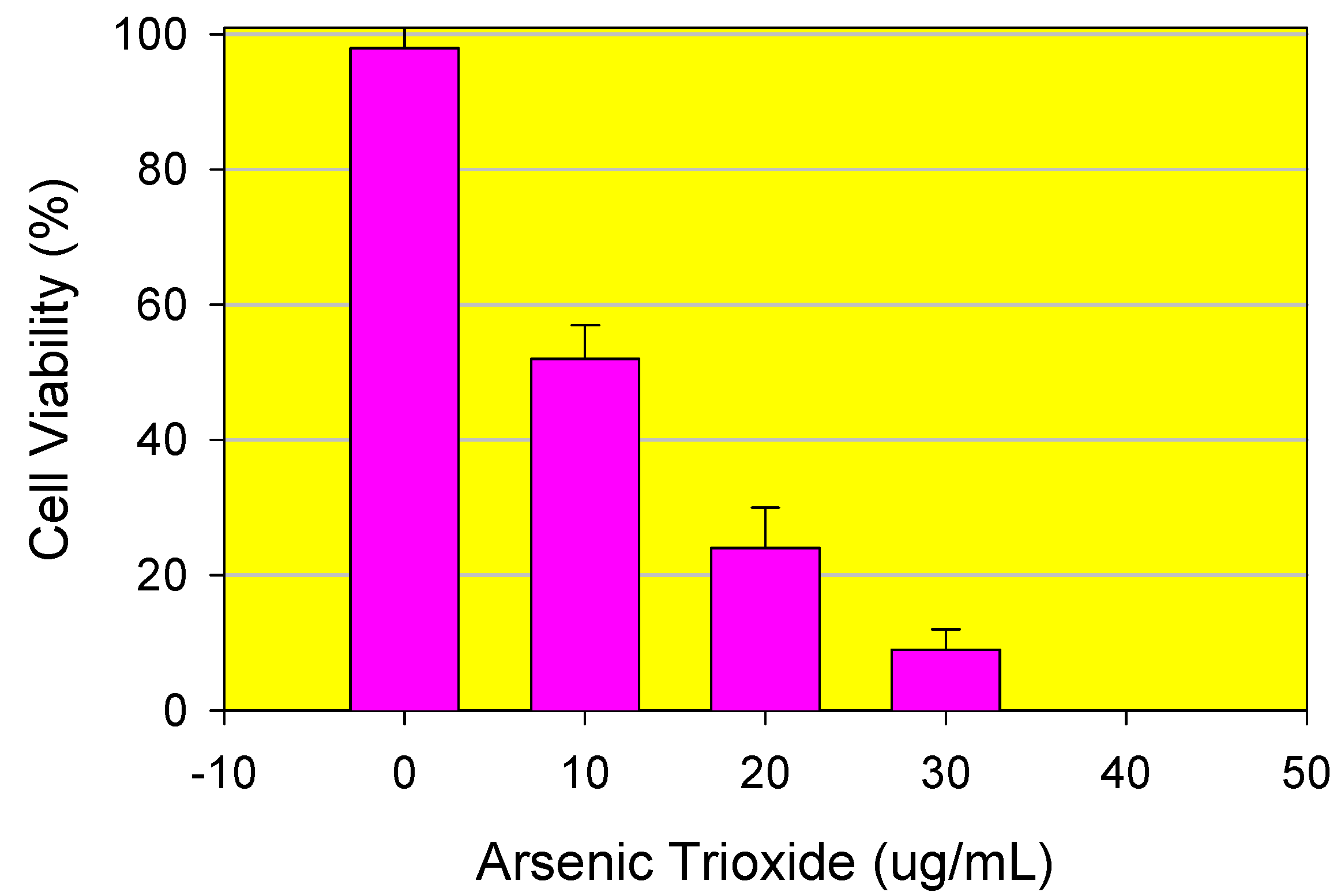
Cytotoxicity Assay
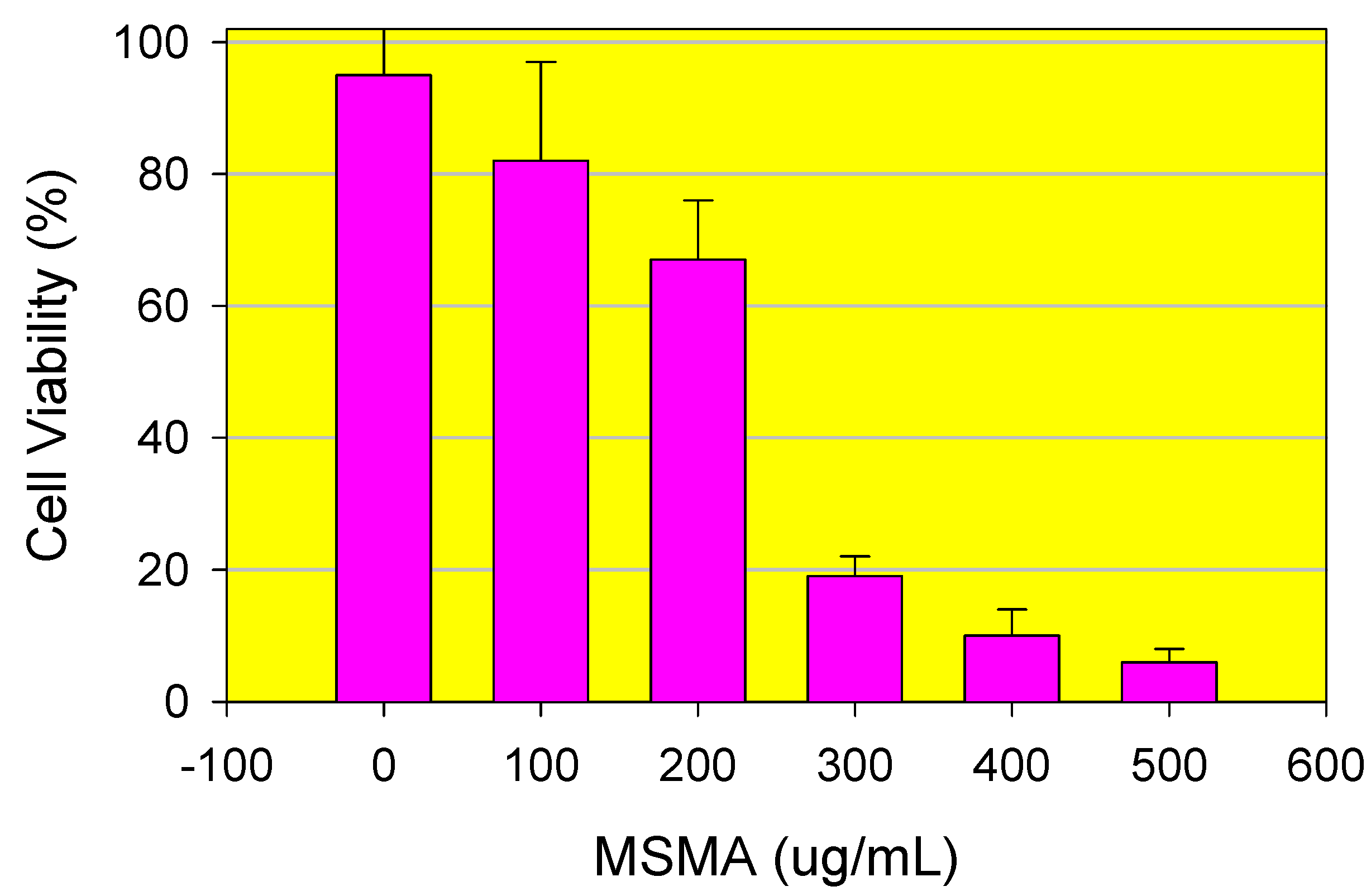
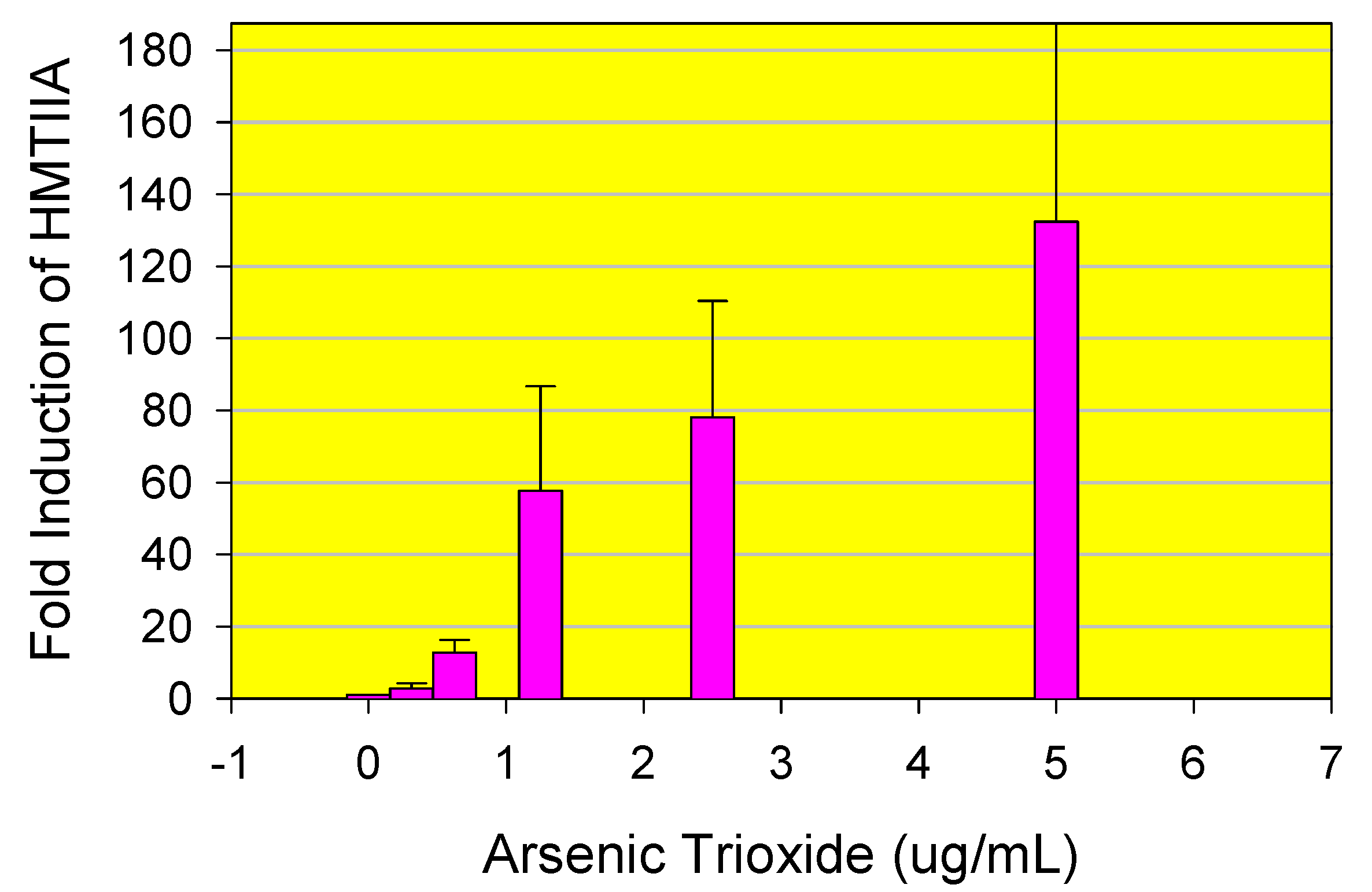
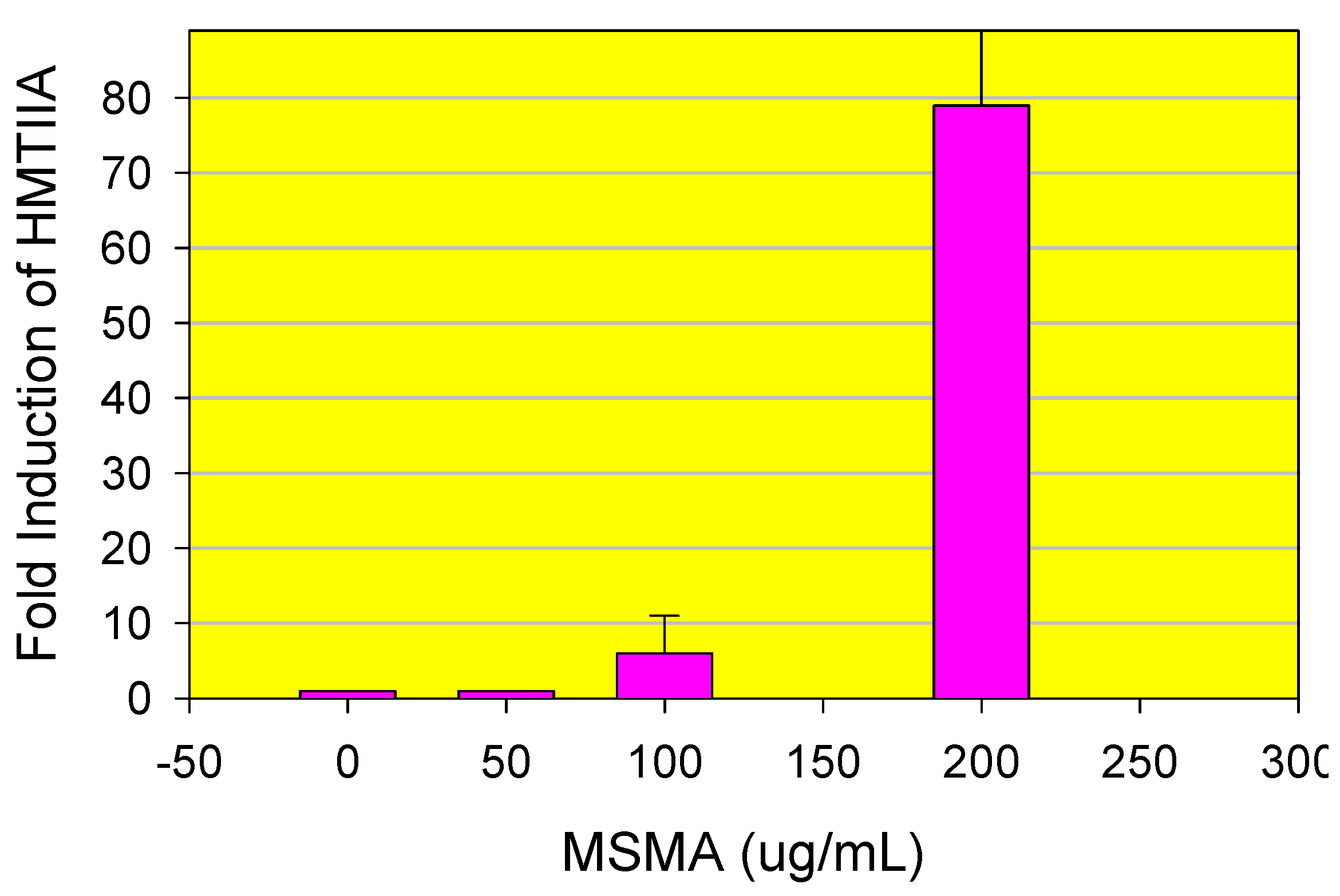
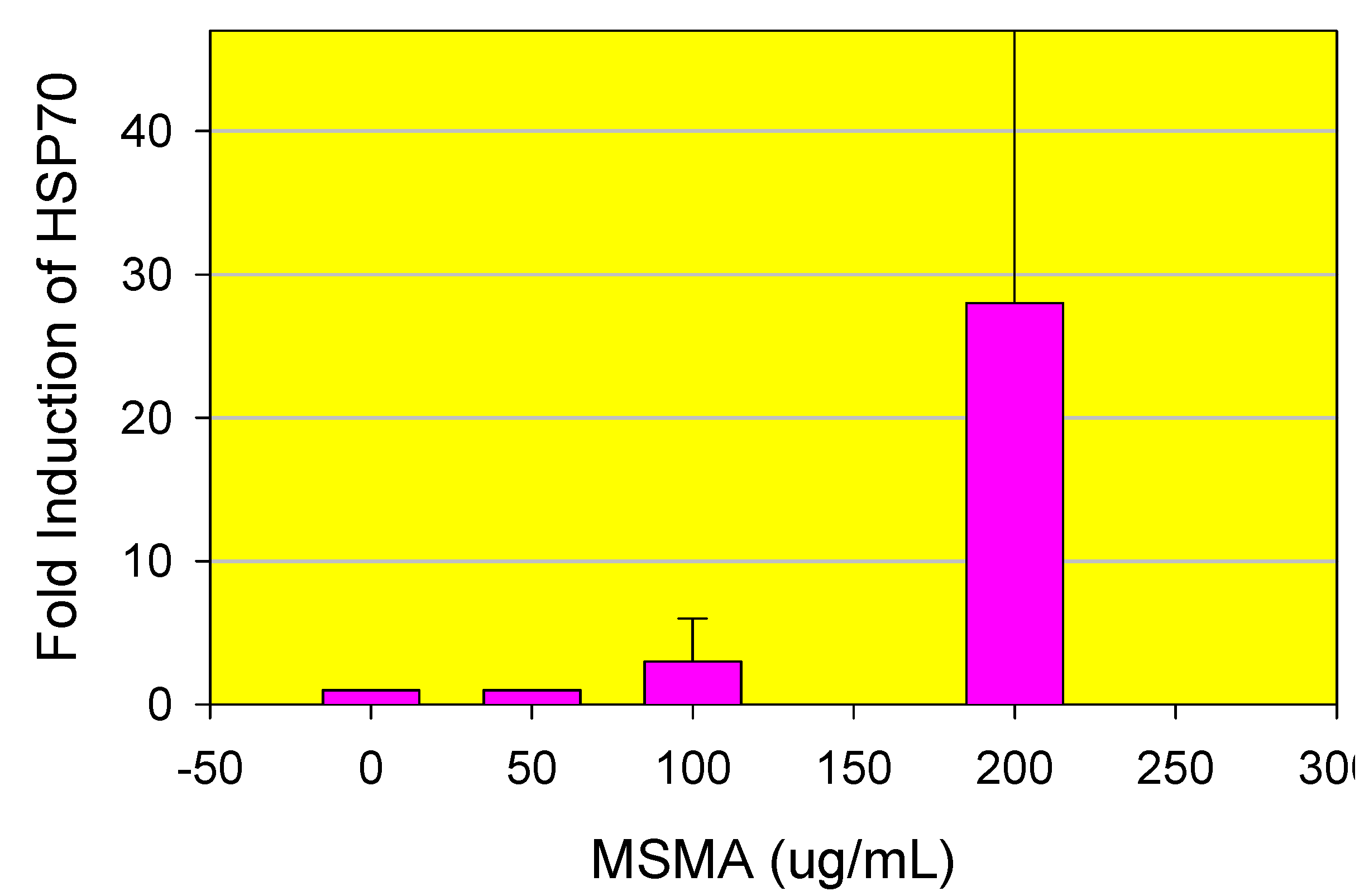
Gene Profile Assay


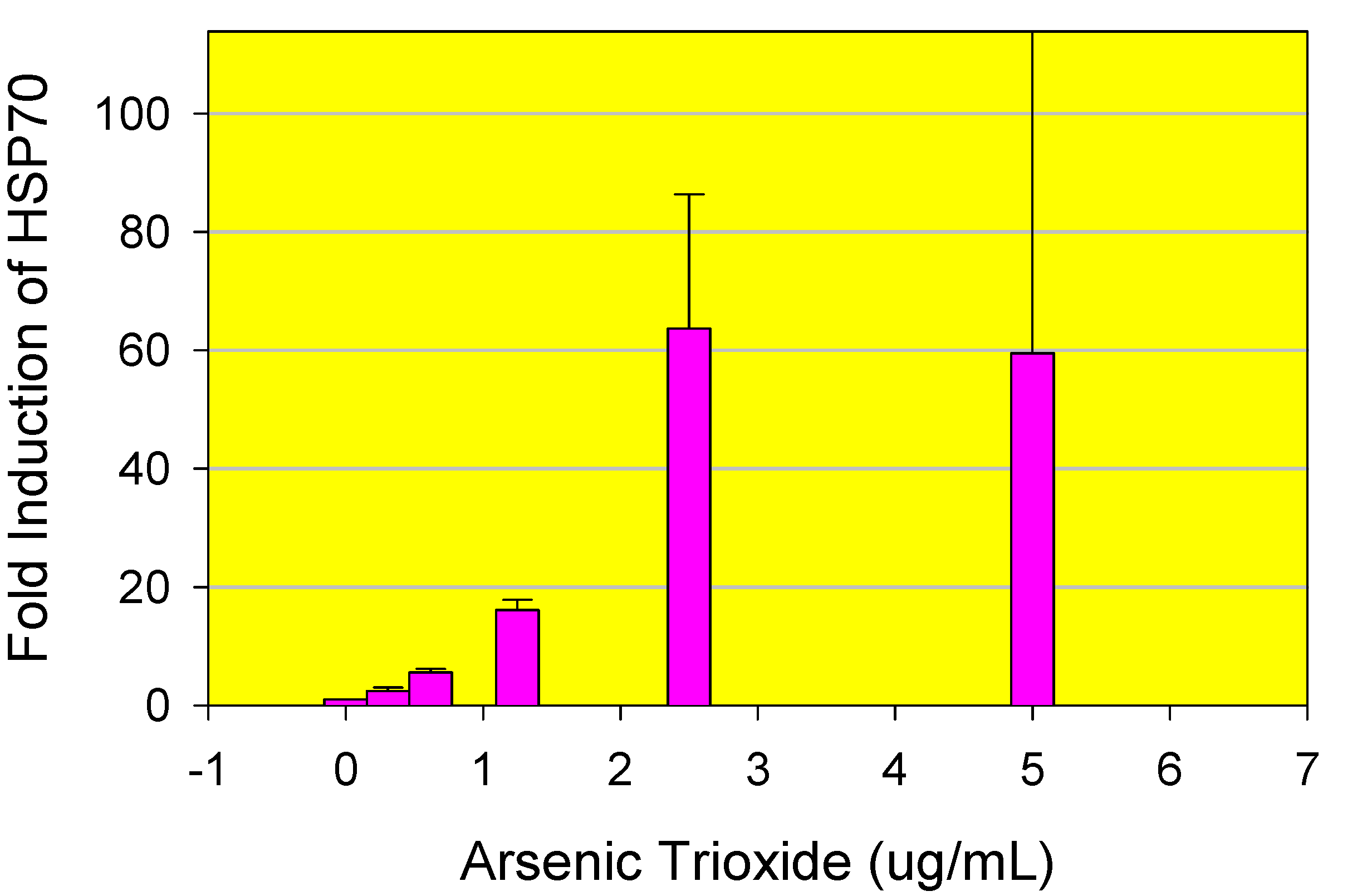


| Gene promoter | Arsenic trioxide dose (ug/mL) | |||||
|---|---|---|---|---|---|---|
| 0 | 0.3 | 0.6 | 1.25 | 2.5 | 5.0 | |
| GST Ya | 1.0+0.0 | 1.5+0.4 | 3.5+0.8 | 10.2+1.9 | 21.9+4.2 | 26.3+8.4 |
| XRE | 1.0+0.0 | 1.0+0.0 | 1.0+0.0 | 1.2+0.0 | 1.7+0.7 | 2.9+1.3 |
| C-FOS | 1.0+0.0 | 1.1+0.4 | 1.6+0.7 | 3.9+2.0 | 14.5+4.2 | 48.2+21.7 |
| NFk-B | 1.0+0.0 | 1.0+0.0 | 1.0+0.0 | 1.6+0.5 | 3.7+1.3 | 5.6+5.0 |
| CRE | 1.0+0.0 | 1.6+0.2 | 1.0+0.0 | 1.7+0.5 | 1.9+0.2 | 3.0+0.2 |
| p-53RE | 1.0+0.0 | 1.0+0.0 | 1.0+0.0 | 1.0+0.0 | 3.4+0.8 | 51.2+10.1 |
| GADD153 | 1.0+0.0 | 1.0+0.0 | 1.0+0.0 | 1.3+0.4 | 2.9+0.5 | 13.2+2.8 |
| GADD45 | 1.0+0.0 | 1.0+0.0 | 1.0+0.0 | 1.0+0.0 | 1.0+1.0 | 2.7+0.4 |
| GRP78 | 1.0+0.0 | 1.0+0.0 | 1.0+0.0 | 1.2+0.1 | 1.2+0.2 | 1.8+0.5 |
Discussion
Cytotoxicity Assay
Gene Profile Assay
Conclusions
Acknowledgments
References
- Tchounwou, P. B.; Wilson, B.; Ishaque, A. Important considerations in the development of public health advisories for arsenic and arsenic-containing compounds in drinking water. Rev. Environ. Health 1999, 14, 1–19. [Google Scholar] [CrossRef] [PubMed]
- NAS. Arsenic. National Academy of Science: Washington D.C., 1977. [Google Scholar]
- Rousselot, P.; Laboume, S.; Marolleau, J. P.; Larghero, T.; Noguera, M. L.; Brouet, J. C.; Fermand, J. P. Arsenic trioxide and melarsoprol induce apoptosis in plasma cell lines and in plasma cells from myeloma patients. Cancer Res. 1999, 59, 1041–1048. [Google Scholar] [PubMed]
- ATSDR. Toxicological Profile for Arsenic TP-92/09. Agency for Toxic Substances and Disease Registry; Center for Disease Control: Atlanta, GA, 1993. [Google Scholar]
- Goyer, R. A. Toxic effects of metals. Klaassen, C.D., Ed.; Cassarett & Doull’s Toxicology-The Basic Science of Poisons. McGraw Hill: New York, NY, 1996; pp. 691–736. [Google Scholar]
- Gorby, M. S. Arsenic in human medicine. In Arsenic in the Environment; Part II: Human Health and Ecosystem Effects; Nriagu, J.O., Ed.; John Wiley & Sons, Inc.: New York, NY, 1994; pp. 1–16. [Google Scholar]
- NRCC. Effects of arsenic in the environment. National Research Council of Canada. Natl. Res. Counc. Can. Publ. 1978, 1–349. [Google Scholar]
- U.S. EPA. Ambient Water Quality Criteria for Arsenic. EPA 400/5-80-021; Environmental Protection Agency: Washington DC, 1980.
- Fierz, U. Catamnestic investigations of the side effects of therapy of skin diseases with inorganic arsenic. Dermatologia 1965, 131, 41–58. [Google Scholar] [CrossRef]
- Chen, C. J.; Lin, L. J. Human carcinogenicity and atherogenicity induced by chronic exposure to inorganic arsenic. In Arsenic in the Environment; Part II: Human Health and Ecosystem Effects; Nriagu, JO, Ed.; John Wiley & Sons, Inc.: New York, NY, 1994; pp. 109–131. [Google Scholar]
- Wu, M. M.; Kuo, T. L.; Hwang, Y. H. Dose-response relation between arsenic concentration in well water and mortality from cancers and vascular diseases. Am. J. Epidemiol. 1989, 130, 1123–1132. [Google Scholar]
- Tseng, W. P.; Chu, H. M.; How, S. W.; Fong, J. M.; Lin, C. S.; Yeh, S. Prevalence of skin Cancer in an endemic area of chronic arsenicism in Taiwan. J. Natl. Cancer Inst. 1968, 40, 453–463. [Google Scholar] [PubMed]
- Chen, C. J.; Chen, C. W.; Wu, M. M.; Kuo, T. L. Cancer potential in liver lung, bladder and kidney due to ingested inorganic arsenic in drinking water. Br. J. Cancer 1992, 66, 888–892. [Google Scholar] [CrossRef] [PubMed]
- Aschengran, A.; Zierler, S.; Cohen, A. Quality of community drinking water and the occurrence of spontaneous abortion. Arch. Environ. Health 1989, 44, 283–290. [Google Scholar] [CrossRef] [PubMed]
- IARC: Monographs on the Evaluation of Carcinogenic Risks of Chemicals to Humans. Supplement F. Overall Evaluation of Carcinogenicity. International Agency for Research on Cancer; World Health Organization: Lyon, France, 1987; pp. 29–57. [Google Scholar]
- Todd, M. D.; Lee, M. J.; Williams, J. L.; Nalenzny, J. M.; Gee, P.; Benjamin, M. B.; Farr, S. B. The CAT-Tox assay: a sensitive and specific measure of stress induced transcription in transformed human liver cells. Fundament. Appl. Toxicol. 1995, 28, 118–128. [Google Scholar] [CrossRef]
- Tchounwou, P. B.; Wilson, B. A.; Schneider, J.; Ishaque, A. Cytogenetic assessment of arsenic trioxide toxicity in the Mutatox, Ames II, and CAT-Tox assays. Metal Ions Biol. Med. 2000, 6, 89–91. [Google Scholar]
- Mosmann, T. Rapid colorimetric assay for cellular growth and survival: applications to proliferation and cytotoxicity assays. J. Immunol. Methods 1983, 65, 55–63. [Google Scholar]
- Tchounwou, P. B. Health risk assessment and management of arsenic and other toxic and hazardous metals in drinking water. Metal Ions Biol. Med. 2000, 6, 21–23. [Google Scholar]
- Schoolmeester, W. L.; White, D. R. Arsenic poisoning. Southern Med. J. 1980, 73, 198–208. [Google Scholar] [CrossRef] [PubMed]
- Gordby, M. S. Arsenic in human medicine. In Arsenic in the Environment, Part II: Human Health and Ecosystem Effects; Nriagu, J.O., Ed.; John Wiley & Sons, Inc.: New York, 1994; pp. 1–16. [Google Scholar]
- Saady, J. J.; Blanke, R. V.; Pollis, A. Estimation of the body burden of arsenic in a child fatally poisoned by arsenic weed killer. J. Analyt. Toxicol. 1989, 13, 310–312. [Google Scholar] [CrossRef]
- IRIS. Integrated Risk Information System. United States Environmental Protection Agency: Washington, DC., 1992. [Google Scholar]
- U.S. EPA. Special Report on Ingested Inorganic Arsenic: Skin Cancer and Nutritional Essentiality. Risk Assessment Forum. United States Environmental Protection Agency: Washington DC., 1987. [Google Scholar]
- National Research Council. Arsenic in Drinking Water. 2001. Update. On line at: http://www.nap.edu/books/0309076293/htm/.
- WHO. Guidelines for Drinking Water Quality; World Health Organization: Geneva, Switzerland, 1984. [Google Scholar]
- OSHA. Occupational Safety and Health Administration. Fed. Reg. 1989, 54, 2332–2335. [Google Scholar]
- Tchounwou, P. B.; Abdelghani, A.A.; Pramar, Y.V.; Heyer, L. R.; Steward, CM. Assessment of potential health risks associated with ingesting heavy metals in fish collected from a hazardous-waste contaminated wetland in Louisiana, USA. Rev. Environ. Health 1996, 11, 191–203. [Google Scholar] [CrossRef] [PubMed]
- Fujii-Kuriyama, Y.; Imataka, H.; Sogawa, K.; Yasumoto, K. I.; Kikuchi, Y. Regulation of CYP1A1 expression. Fasc. Am. Soc. Exp. Biol. 1992, 6, 706–710. [Google Scholar]
- Yao, E. F.; Denison, M. S. DNA sequence determinants for binding of transformed Ah receptor to a dioxin-responsive enhancer. Biochem. 1992, 31, 5060–5067. [Google Scholar] [CrossRef]
- Desjardins, J. P.; Beard, S. E.; Mapoles, J. E.; Gee, P.; Thompson, J. A. Transcriptional activity of quinone methides derived from the tumor promoter butylated hydroxytoluene in HepG2 cells. Cancer Lett. 1998, 131, 201–207. [Google Scholar] [CrossRef] [PubMed]
- Strange, R. C.; Jones, P. W.; Fryer, A. A. Glutathion-S-transferase: genetics and role in toxicology. Toxicol. Lett. 2000, 112-113. [Google Scholar]
- Rushmore, T. H.; Pickett, C. B. Xenobiotic responsive elements controlling inducible expression by planar aromatic compounds and phenolic antioxidants. Meth. Enzy. 1991, 206, 409–420. [Google Scholar]
- Rushmore, T. H.; Pickett, C. B. Glutathion-S-transferases, structure, regulation and therapeutic implications. J. Biol. Chem. 1993, 268, 11475–11478. [Google Scholar] [PubMed]
- Richards, R. I.; Heguy, A.; Karin, M. Structural and functional analysis of the human metallothionein-I gene: differential induction by metal ions and glucocorticoids. Cell 1984, 37, 263–272. [Google Scholar] [CrossRef] [PubMed]
- Tchounwou, P. B.; Ishaque, A. B.; Schneider, J. Cytotoxicity and transcriptional activation of stress genes in human liver carcinoma cells exposed to cadmium chloride. Mol. Cell. Biochem. 2001, 222, 21–28. [Google Scholar] [CrossRef] [PubMed]
- Cherian, M. B.; Howell, S. B.; Imura, N.; Klaassen, C.D.; Koropatnick, K.; Lazo, J.; Waalkes, M. P. Contemporary issues in toxicology: role of metallothioneins in carcinogenesis. Toxicol. Appl. Pharmacol. 1994, 126, 1–5. [Google Scholar] [CrossRef] [PubMed]
- Huang, S. Y.; Chan, C. S.; Tang, J. L.; Tien, H. F.; Kuo, T. L.; Huang, S. F.; Yoa, Y. T.; Chou, W.C.; Chung, C. Y.; Wang, C. H.; Shen, M. C.; Chen, Y.C. Acute and chronic poisoning associated with treatment of acute promyelocytic leukemia. Br. J. Haematol. 1998, 103, 1092–1095. [Google Scholar] [CrossRef] [PubMed]
- Vogelstein, B.; Kinzler, K. W. p53 function and dysfunction. Cell 1992, 70, 523–526. [Google Scholar] [CrossRef] [PubMed]
- Kastan, M. B.; Onyekwere, O.; Sidransy, D.; Vogelstein, B.; Craig, R. W. Participation of p53 protein in the cellular response to DNA damage. Cancer Res. 1991, 51, 6304–6311. [Google Scholar] [PubMed]
- Zhan, Q.; Carrier, F.; Fornace, A. J. Induction of cellular p53 activity by DNA-damaging agents and growth arrest. Mol. Cell. Biol. 1993, 13, 442–4250. [Google Scholar]
- Angel, P.; Karin, M. The role of jun, fos and the AP-1 complex in cell-proliferation and transformation. Biochim. Biophys. Acta 1072, 1072, 129–157. [Google Scholar]
- Sassone-Corsi, P.; Sission, J.C.; Verma, I. M. Transcriptional autoregulation of the proto-oncogene fos. Nature 1988, 334, 314–319. [Google Scholar] [CrossRef] [PubMed]
- Borrelli, E.; Montmayeur, J. P.; Foulkes, N. S.; Sassone-Corsi, P. Signal transduction and gene control: the cAMP pathway. Crit. Rev. Onco. 1992, 3, 321–338. [Google Scholar]
- Hollander, M.C.; Fornace, A. J. Induction of fos RNA by DNA-damaging agents. Cancer Res. 1989, 29, 1687–1692. [Google Scholar]
- Barlett, J. D.; Luethy, J. D.; Carlson, S.G.; Sollott, S. J.; Holbrook, N. M. Calcium ionophore A23187 induces expression of the growth arrest and DNA damage inducible CCAAT/ enhancer-binding protein (C/EBP)-related gene, gadd153. J. Biol Chem. 1992, 267, 20465–20470. [Google Scholar] [PubMed]
- Luethy, J. D.; Holbrook, N. J. Activation of gadd153 promoter by genotoxic agents: a rapid and specific response to DNA damage. Cancer Res. 1992, 52, 5–10. [Google Scholar]
- Baeuerle, P. A. The inducible transcription activator NFKB: regulation by distinct protein subunits. Biochim. Biophys. Acta 1991, 1072, 63–80. [Google Scholar]
- Nelsen, B.; Hellman, L.; Shen, R. The NF-kB-binding site mediates phorbolester-inducible transcription in non-lymphoid cells. Mol. Cell. Biol. 1988, 8, 3526–3531. [Google Scholar] [PubMed]
- Hartl, F. U.; Martin, J.; Neupert, W. Protein folding in the cell: the role of molecular chaperones hsp70 and hsp60. Annual Rev Biophys. Biomol. Struct. 1992, 21, 293–322. [Google Scholar] [CrossRef]
- Liu, H.; Lightfoot, R.; Stevens, J. L. Activation of heat shock factor by alkylating agent is triggered by glutathione depletion and oxidation of protein thiols. J. Biol. Chem. 1996, 271, 4805–4812. [Google Scholar] [CrossRef] [PubMed]
- Ovelgonne, J.H.; Souren, J. E. M.; Wiegant, F. A. C.; Van-Wijk, R. Relationship between cadmium-induced expression of heat shock genes, inhibition of protein synthesis and cell death. Toxicol. 1995, 99, 19–30. [Google Scholar] [CrossRef]
- Wooden, S. K.; Li, L. J.; Navarro, D.; Qadri, I.; Pereira, L. Transactivation of the grp78 promoter by malfolded proteins, glycosylation block, and calcium ionophore is mediated through a proximal region containing a CCAAT motif which interacts with CTF/NF-I. Mol Cell Biol. 1991, 11, 5612–5623. [Google Scholar] [PubMed]
- Allenby, G.; Bosque, M. T.; Saunders, M.; Kramer, S.; Speck, J. Retinoic acid receptors and retinoic X receptors: Interactions with endogenous retinoic acids. Proc. Natl. Acad. Sci. 1993, 90, 30–34. [Google Scholar] [CrossRef] [PubMed]
© 2002 by MDPI (http://www.mdpi.org).
Share and Cite
Tchounwou, P.B.; Wilson, B.A.; Abdelghani, A.A.; Ishaque, A.B.; Patlolla, A.K. Differential Cytotoxicity and Gene Expression in Human Liver Carcinoma (HepG2) Cells Exposed to Arsenic Trioxide, and Monosodium Acid Methanearsonate (MSMA). Int. J. Mol. Sci. 2002, 3, 1117-1132. https://doi.org/10.3390/i3111117
Tchounwou PB, Wilson BA, Abdelghani AA, Ishaque AB, Patlolla AK. Differential Cytotoxicity and Gene Expression in Human Liver Carcinoma (HepG2) Cells Exposed to Arsenic Trioxide, and Monosodium Acid Methanearsonate (MSMA). International Journal of Molecular Sciences. 2002; 3(11):1117-1132. https://doi.org/10.3390/i3111117
Chicago/Turabian StyleTchounwou, P. B., B. A. Wilson, A. A. Abdelghani, A. B. Ishaque, and A. K. Patlolla. 2002. "Differential Cytotoxicity and Gene Expression in Human Liver Carcinoma (HepG2) Cells Exposed to Arsenic Trioxide, and Monosodium Acid Methanearsonate (MSMA)" International Journal of Molecular Sciences 3, no. 11: 1117-1132. https://doi.org/10.3390/i3111117
APA StyleTchounwou, P. B., Wilson, B. A., Abdelghani, A. A., Ishaque, A. B., & Patlolla, A. K. (2002). Differential Cytotoxicity and Gene Expression in Human Liver Carcinoma (HepG2) Cells Exposed to Arsenic Trioxide, and Monosodium Acid Methanearsonate (MSMA). International Journal of Molecular Sciences, 3(11), 1117-1132. https://doi.org/10.3390/i3111117