<?xml version="1.0" encoding="UTF-8"?>
<!DOCTYPE article PUBLIC "-//NLM//DTD Journal Publishing DTD v2.3 20070202//EN" "journalpublishing.dtd">
<article xmlns:xlink="http://www.w3.org/1999/xlink" xml:lang="en" article-type="review-article">
<front>
<journal-meta>
<journal-id journal-id-type="publisher-id">ijms</journal-id>
<journal-title>International Journal of Molecular Sciences</journal-title>
<abbrev-journal-title>Int. J. Mol. Sci.</abbrev-journal-title>
<issn pub-type="epub">1422-0067</issn>
<publisher>
<publisher-name>Molecular Diversity Preservation International (MDPI)</publisher-name></publisher></journal-meta>
<article-meta>
<article-id pub-id-type="doi">10.3390/ijms14023178</article-id>
<article-id pub-id-type="publisher-id">ijms-14-03178</article-id>
<article-categories>
<subj-group>
<subject>Review</subject></subj-group></article-categories>
<title-group>
<article-title>Activation of Defense Mechanisms against Pathogens in Mosses and Flowering Plants</article-title></title-group>
<contrib-group>
<contrib contrib-type="author">
<name><surname>de León</surname><given-names>Inés Ponce</given-names></name><xref ref-type="aff" rid="af1-ijms-14-03178">1</xref><xref ref-type="corresp" rid="c1-ijms-14-03178">*</xref></contrib>
<contrib contrib-type="author">
<name><surname>Montesano</surname><given-names>Marcos</given-names></name><xref ref-type="aff" rid="af2-ijms-14-03178">2</xref></contrib></contrib-group>
<aff id="af1-ijms-14-03178">
<label>1</label>Departamento de Biología Molecular, Instituto de Investigaciones Biológicas Clemente Estable, Avenida Italia 3318, CP 11600, Montevideo, Uruguay</aff>
<aff id="af2-ijms-14-03178">
<label>2</label>Laboratorio de Fisiología Vegetal, Centro de Investigaciones Nucleares, Facultad de Ciencias, Mataojo 2055, CP 11400, Montevideo, Uruguay; E-Mail: <email>montesano@cin.edu.uy</email></aff>
<author-notes>
<corresp id="c1-ijms-14-03178">
<label>*</label>Author to whom correspondence should be addressed; E-Mail: <email>iponcetadeo@gmail.com</email>; Tel.: +598-24872605; Fax: +598-24875548.</corresp></author-notes>
<pub-date pub-type="collection">
<year>2013</year></pub-date>
<pub-date pub-type="epub">
<day>04</day>
<month>02</month>
<year>2013</year></pub-date>
<volume>14</volume>
<issue>2</issue>
<fpage>3178</fpage>
<lpage>3200</lpage>
<history>
<date date-type="received">
<day>04</day>
<month>01</month>
<year>2013</year></date>
<date date-type="rev-recd">
<day>23</day>
<month>01</month>
<year>2013</year></date>
<date date-type="accepted">
<day>23</day>
<month>01</month>
<year>2013</year></date></history>
<permissions>
<copyright-statement>© 2013 by the authors; licensee Molecular Diversity Preservation International, Basel, Switzerland.</copyright-statement>
<copyright-year>2013</copyright-year>
<license license-type="open-access" xlink:href="http://creativecommons.org/licenses/by/3.0">
<p>This article is an open-access article distributed under the terms and conditions of the Creative Commons Attribution license (http://creativecommons.org/licenses/by/3.0/).</p></license></permissions>
<abstract>
<p>During evolution, plants have developed mechanisms to cope with and adapt to different types of stress, including microbial infection. Once the stress is sensed, signaling pathways are activated, leading to the induced expression of genes with different roles in defense. Mosses (Bryophytes) are non-vascular plants that diverged from flowering plants more than 450 million years ago, allowing comparative studies of the evolution of defense-related genes and defensive metabolites produced after microbial infection. The ancestral position among land plants, the sequenced genome and the feasibility of generating targeted knock-out mutants by homologous recombination has made the moss <italic>Physcomitrella patens</italic> an attractive model to perform functional studies of plant genes involved in stress responses. This paper reviews the current knowledge of inducible defense mechanisms in <italic>P. patens</italic> and compares them to those activated in flowering plants after pathogen assault, including the reinforcement of the cell wall, ROS production, programmed cell death, activation of defense genes and synthesis of secondary metabolites and defense hormones. The knowledge generated in <italic>P. patens</italic> together with comparative studies in flowering plants will help to identify key components in plant defense responses and to design novel strategies to enhance resistance to biotic stress.</p></abstract>
<kwd-group>
<kwd><italic>Physcomitrella patens</italic></kwd>
<kwd>flowering plants</kwd>
<kwd>defense mechanisms</kwd>
<kwd>ROS</kwd>
<kwd>cell wall</kwd>
<kwd>programmed cell death</kwd>
<kwd>defense genes</kwd>
<kwd>defense hormones</kwd></kwd-group></article-meta></front>
<body>
<sec sec-type="intro">
<title>1. Introduction</title>
<p>Plants are in permanent contact with a variety of microbial pathogens, such as fungi, oomycetes, bacteria and viruses. To ward off these pathogens, plants must recognize the invaders and activate fast and effective defense mechanisms that arrest the pathogen. Perception of the pathogens is central to the activation of a successful plant defense response. Plant cells are capable of sensing evolutionarily conserved microbial molecular signatures, collectively named pathogen-associated molecular patterns (PAMPs) or microbe-associated molecular patterns (MAMPs), by plant pattern recognition receptors (PRRs) [<xref ref-type="bibr" rid="b1-ijms-14-03178">1</xref>–<xref ref-type="bibr" rid="b3-ijms-14-03178">3</xref>]. MAMPs are molecules that are essential for microbe fitness and survival and are conserved between different species, resulting in an efficient form to sense the presence of pathogens by the plant. Perception of PAMPs by PRRs activates an immune response, referred to as PAMP-triggered immunity (PTI), which provides protection against non-host pathogens and limits disease caused by virulent pathogens [<xref ref-type="bibr" rid="b4-ijms-14-03178">4</xref>]. Pathogens adapted to their host plants can deliver virulence effector proteins into plant cells, which target key PTI components and inhibit plant defense [<xref ref-type="bibr" rid="b5-ijms-14-03178">5</xref>–<xref ref-type="bibr" rid="b9-ijms-14-03178">9</xref>]. In turn, plants have evolved resistance (R) proteins to detect directly or indirectly the effector proteins and trigger disease resistance effector-triggered immunity (ETI), which is highly specific and often accompanied by the hypersensitive response (HR) and systemic acquired resistance (SAR). An additional surveillance system for the presence of pathogens is the release or production of endogenous damage associated molecular patterns (DAMPs), including plant cell wall and cutin fragments that are released by the enzymatic action of pathogens and also trigger immune responses [<xref ref-type="bibr" rid="b3-ijms-14-03178">3</xref>,<xref ref-type="bibr" rid="b10-ijms-14-03178">10</xref>,<xref ref-type="bibr" rid="b11-ijms-14-03178">11</xref>]. Thus, plant immunity can be divided in two phases: PTI triggered by PAMPs and ETI triggered by effectors, with the difference being that activated immune responses in ETI are faster and amplified compared to those in PTI [<xref ref-type="bibr" rid="b4-ijms-14-03178">4</xref>,<xref ref-type="bibr" rid="b12-ijms-14-03178">12</xref>]. ETI and PTI pathways result in activation of an overlapping set of downstream immune responses, suggesting that there is a continuum between PTI and ETI [<xref ref-type="bibr" rid="b13-ijms-14-03178">13</xref>]. These downstream defense responses include the activation of multiple signaling pathways and transcription of specific genes that limit pathogen proliferation and/or disease symptom expression. In addition, antimicrobial compounds are produced, reactive oxygen species (ROS) accumulate, cell wall defense mechanisms are activated and defense hormones, such as salicylic acid (SA), ethylene and jasmonic acid (JA) accumulate [<xref ref-type="bibr" rid="b4-ijms-14-03178">4</xref>,<xref ref-type="bibr" rid="b14-ijms-14-03178">14</xref>–<xref ref-type="bibr" rid="b17-ijms-14-03178">17</xref>].</p>
<p>During the last few years, some progress has been made on the defense mechanisms activated in mosses (Bryophytes) during pathogen assault. The moss <italic>Physcomitrella patens</italic> (<italic>P. patens</italic>) is an interesting model plant to perform functional studies of genes involved in stress responses, because its genome has been sequenced, targeted knock-out mutants can be generated by homologous recombination and it has a dominant haploid phase during its life cycle [<xref ref-type="bibr" rid="b18-ijms-14-03178">18</xref>–<xref ref-type="bibr" rid="b20-ijms-14-03178">20</xref>]. Mosses are non-vascular plants that diverged from flowering plants more than 450 million years ago [<xref ref-type="bibr" rid="b21-ijms-14-03178">21</xref>]. <italic>P. patens</italic>, together with the sequenced vascular spikemoss <italic>Selaginella moellendorffii</italic>[<xref ref-type="bibr" rid="b22-ijms-14-03178">22</xref>], provide an evolutionary link between green algae and angiosperms, allowing comparative studies of the evolution of plant defense mechanisms and gene function. In nature, mosses are infected with microbial pathogens, resulting in chlorosis and necrosis of plant tissues [<xref ref-type="bibr" rid="b23-ijms-14-03178">23</xref>–<xref ref-type="bibr" rid="b25-ijms-14-03178">25</xref>]. Necrotrophic pathogens are capable of infecting and colonizing <italic>P. patens</italic> tissues, leading to the activation of defense responses [<xref ref-type="bibr" rid="b26-ijms-14-03178">26</xref>–<xref ref-type="bibr" rid="b32-ijms-14-03178">32</xref>]. Most likely, <italic>P. patens</italic> utilizes similar mechanisms for pathogen recognition as flowering plants, since chitin (PAMP) [<xref ref-type="bibr" rid="b31-ijms-14-03178">31</xref>] and probably cell wall fragments generated by the action of cell wall degrading enzymes from bacterial pathogens (DAMPs) [<xref ref-type="bibr" rid="b26-ijms-14-03178">26</xref>] are sensed by <italic>P. patens</italic> cells and typical PRRs and R genes homologues are present in its genome [<xref ref-type="bibr" rid="b33-ijms-14-03178">33</xref>–<xref ref-type="bibr" rid="b35-ijms-14-03178">35</xref>]. In addition, many of the cellular and molecular defense reactions activated in <italic>P. patens</italic> are similar to those reported in flowering plants. The present paper reviews the current knowledge of defense responses activated in <italic>P. patens</italic> and compares them to those activated in flowering plants after pathogen assault.</p></sec>
<sec>
<title>2. Broad Host Range Pathogens Infect both Mosses and Flowering Plants</title>
<p>Broad host range pathogens are capable of infecting a variety of plant species, including flowering plants and mosses. These are successful pathogens, which have adapted and developed effective invasion strategies causing disease by producing different compounds, including enzymes and toxins that interfere with metabolic targets common to many plant species. In this review, we focus on the broad host range fungus <italic>Botrytis cinerea</italic>, the bacterium <italic>Pectobacterium carotovorum</italic> subsp. <italic>carotovorum</italic> and the oomycetes <italic>Pythium irregulare</italic> and <italic>Pythium debaryanum</italic>. These are necrotrophic pathogens that actively kill host tissue prior to or during colonization and thrive on the contents of dead or dying cells [<xref ref-type="bibr" rid="b36-ijms-14-03178">36</xref>].</p>
<p><italic>B. cinerea</italic> is a necrotrophic fungal pathogen that attacks over 200 different plant species [<xref ref-type="bibr" rid="b37-ijms-14-03178">37</xref>] and penetrates plant tissues by producing toxins and multiple cell wall degrading enzymes (CWDEs), including pectinolytic enzymes and cutinases that kill the host cells causing grey mould disease in many crop plants [<xref ref-type="bibr" rid="b38-ijms-14-03178">38</xref>]. <italic>B. cinerea</italic> is primarily a pathogen of dicotyledonous plants, but some monocot species, including onions and lilies, are also infected [<xref ref-type="bibr" rid="b39-ijms-14-03178">39</xref>,<xref ref-type="bibr" rid="b40-ijms-14-03178">40</xref>]. <italic>B. cinerea</italic> also infect <italic>P. patens</italic> plants, producing maceration of the tissues and browning of stems and juvenile protonemal filaments [<xref ref-type="bibr" rid="b26-ijms-14-03178">26</xref>,<xref ref-type="bibr" rid="b28-ijms-14-03178">28</xref>].</p>
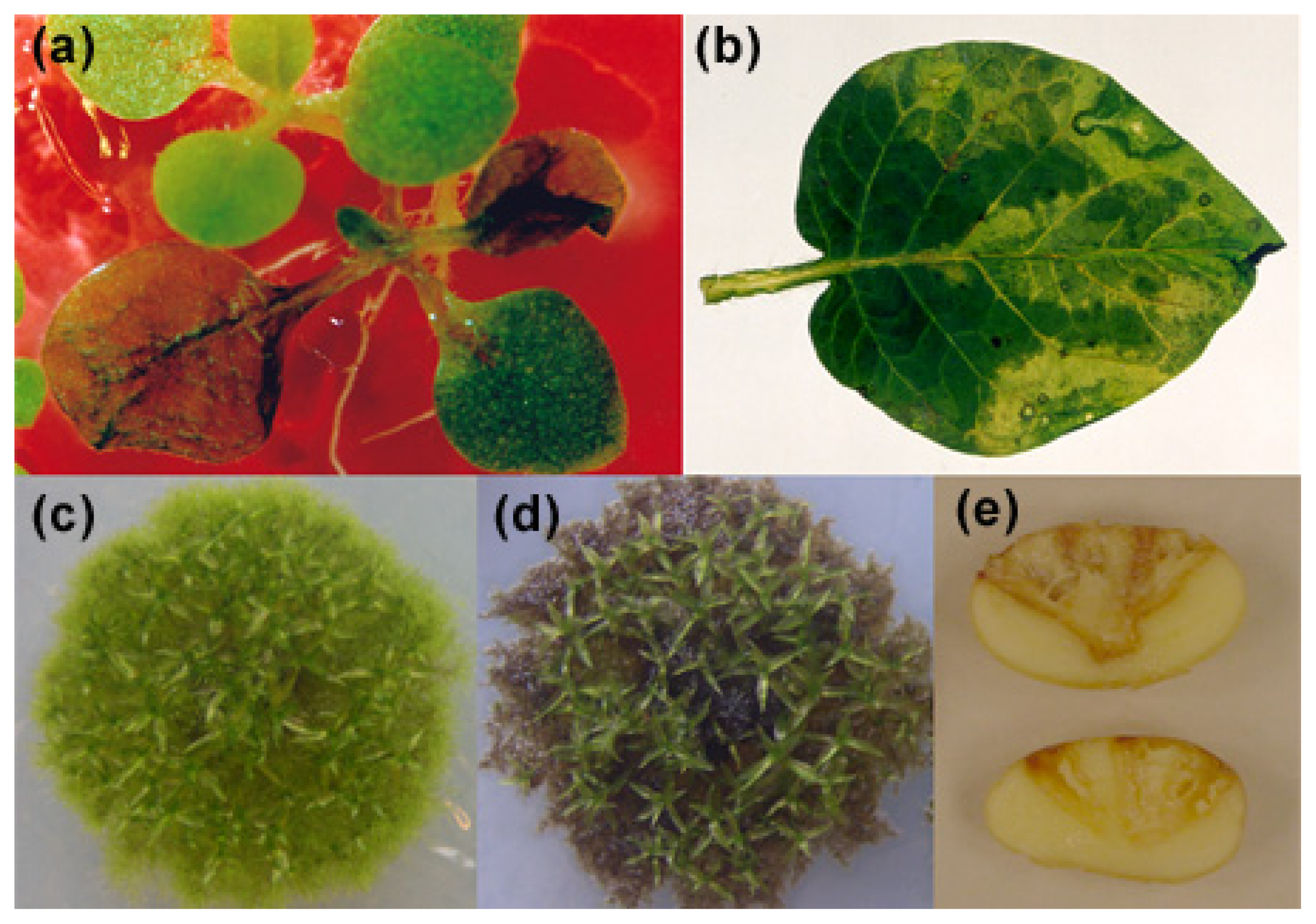
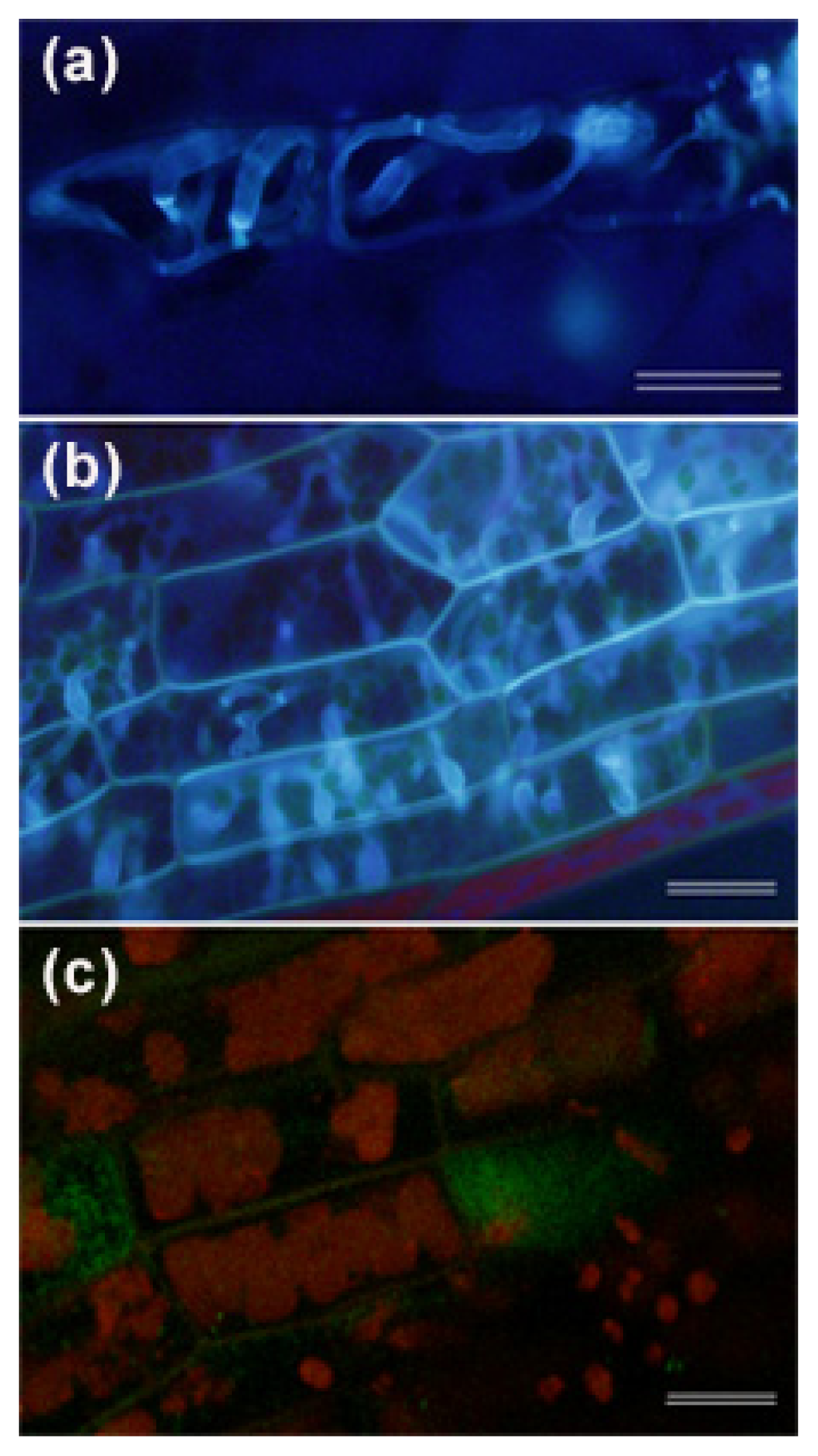
<p><italic>P.c. carotovorum</italic> (ex <italic>Erwinia carotovora</italic> subsp. <italic>carotovora</italic>) cause soft rot in a wide range of plant species, including vegetables, potato and Arabidopsis [<xref ref-type="bibr" rid="b41-ijms-14-03178">41</xref>]. <italic>P.c. carotovorum</italic> is often described as a brute-force pathogen, because its virulence strategy relies on plant CWDEs, including cellulases, proteases and pectinases, which disrupt host cell integrity and promote tissue maceration [<xref ref-type="bibr" rid="b42-ijms-14-03178">42</xref>,<xref ref-type="bibr" rid="b43-ijms-14-03178">43</xref>]. Cell-free culture filtrate (CF) containing CWDEs from <italic>P.c. carotovorum</italic> produces similar symptoms (<xref ref-type="fig" rid="f1-ijms-14-03178">Figure 1</xref>) and defense gene expression as those caused by <italic>P.c. carotovorum</italic> infection, demonstrating that CWDEs are the main virulence factors [<xref ref-type="bibr" rid="b43-ijms-14-03178">43</xref>–<xref ref-type="bibr" rid="b48-ijms-14-03178">48</xref>]. In addition, these CWDEs release cell wall fragments, including oligogalacturonides that act as DAMPS activating an immune response in plant cells evidenced by the activation of defense related genes and phytoalexin accumulation [<xref ref-type="bibr" rid="b44-ijms-14-03178">44</xref>,<xref ref-type="bibr" rid="b49-ijms-14-03178">49</xref>–<xref ref-type="bibr" rid="b51-ijms-14-03178">51</xref>]. Recently, it was shown that two strains of <italic>P.c. carotovorum</italic>, SCC1, harboring the harpin-encoding <italic>hrpN</italic> gene, which is an elicitor of the hypersensitive response (HR) [<xref ref-type="bibr" rid="b52-ijms-14-03178">52</xref>], and the HrpN-negative <italic>P.c. carotovorum</italic> strain (SCC3193) [<xref ref-type="bibr" rid="b53-ijms-14-03178">53</xref>] infect and cause maceration in leaves of <italic>P. patens</italic>[<xref ref-type="bibr" rid="b26-ijms-14-03178">26</xref>]. Green fluorescent protein (GFP) labeled- <italic>P.c. carotovorum</italic>, was detected in the apoplast, as well as the space of <italic>P. patens</italic> invaded leaf cells (<xref ref-type="fig" rid="f2-ijms-14-03178">Figure 2</xref>). Treatments with CFs of these strains also caused symptom development in moss tissues, evidenced by tissue maceration and browning, which was more severe with the HrpN-positive strain, suggesting that harpin may contribute to <italic>P.c. carotovorum</italic> virulence [<xref ref-type="bibr" rid="b26-ijms-14-03178">26</xref>].</p>
<p><italic>Pythium</italic> species are soil-borne vascular pathogens, which infect the plants through the root tissues and under humid conditions cause pre-/post-emergence damping-off and root and stem rots in important crop species. <italic>Pythium</italic> infect host young tissues, and maceration is caused by both toxins and cell wall degrading enzymes, such as pectinases, hemicellulases, cellulases and proteinases [<xref ref-type="bibr" rid="b54-ijms-14-03178">54</xref>,<xref ref-type="bibr" rid="b55-ijms-14-03178">55</xref>]. <italic>P. irregulare</italic> and <italic>P. debaryanum</italic> infect <italic>P. patens</italic>, producing tissue maceration and browning of young protonemal tissues, stems and leaves [<xref ref-type="bibr" rid="b29-ijms-14-03178">29</xref>]. In nature, <italic>Pythium ultimum</italic> infect mosses, causing the formation of areas of dead moss tissues [<xref ref-type="bibr" rid="b24-ijms-14-03178">24</xref>]. In all these moss-pathogen interactions, multiple defense reactions are activated in plant cells, although they are not sufficient to stop infection, and after a few days, moss tissues are degraded, leading to plant decay.</p></sec>
<sec>
<title>3. Activation of Cell Wall Associated Defense Responses</title>
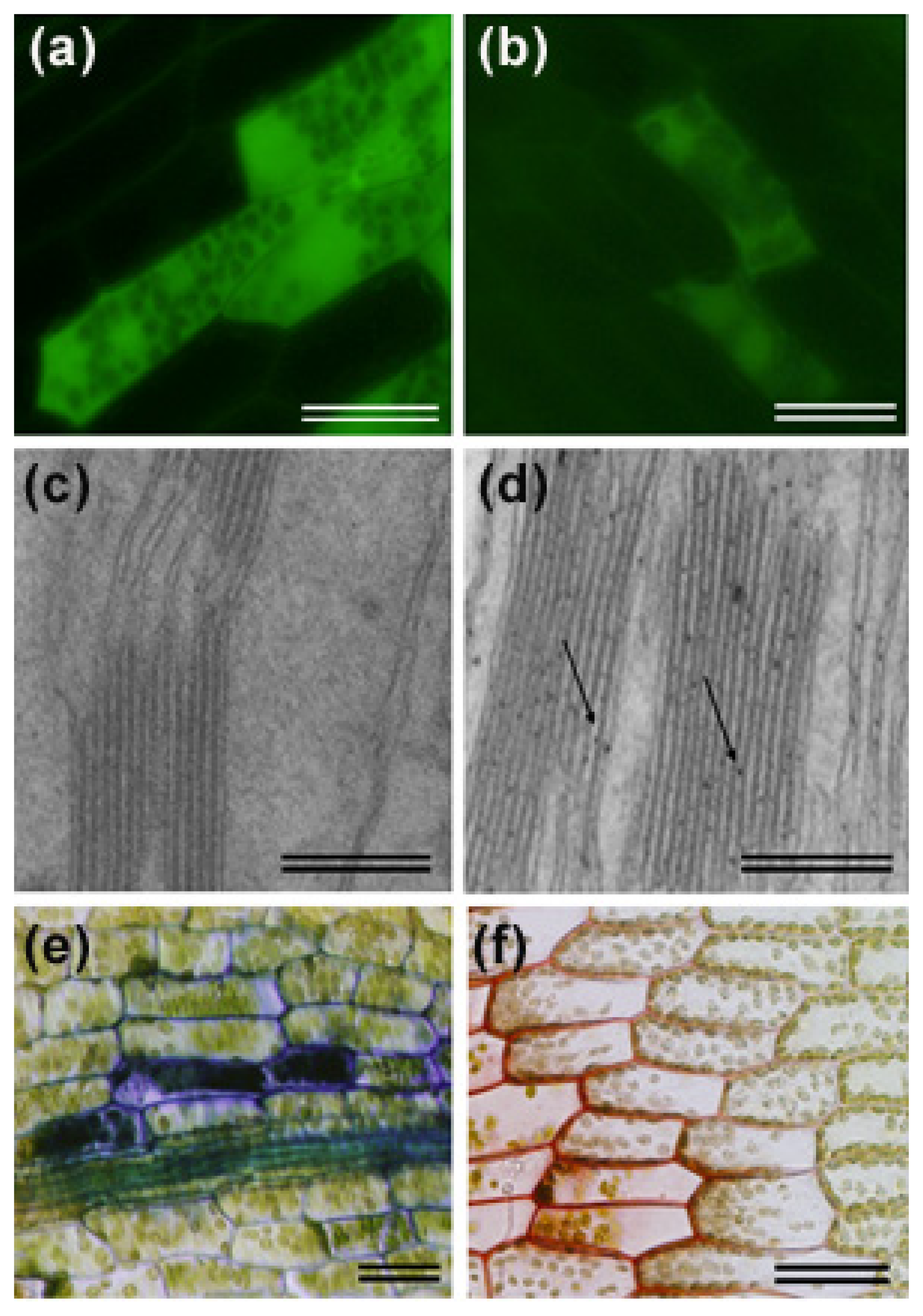
<p>Pathogens are capable of penetrating the plant cell wall and gain access to cellular nutrients. Plant cells have developed pre-invasive structural defenses, including the cuticle and modifications of the cell wall that serve as barriers for the advance of potential pathogens [<xref ref-type="bibr" rid="b38-ijms-14-03178">38</xref>,<xref ref-type="bibr" rid="b56-ijms-14-03178">56</xref>]. Modification of the plant cell wall is an important defense mechanism operating in the defense response of flowering plants against necrotrophs [<xref ref-type="bibr" rid="b57-ijms-14-03178">57</xref>,<xref ref-type="bibr" rid="b58-ijms-14-03178">58</xref>]. Reinforcement of the cell wall involves accumulation of phenolic compounds, ROS and callose deposition at attempted penetration sites, making the cell wall less vulnerable to degradation by CWDEs. Callose is a high–molecular weight β-(1,3)-glucan polymer that is usually associated, together with phenolic compounds, polysaccharides and antimicrobial proteins, with cell wall appositions, called papillae, which are proposed to be effective barriers that are induced at the sites of pathogen attack [<xref ref-type="bibr" rid="b59-ijms-14-03178">59</xref>,<xref ref-type="bibr" rid="b60-ijms-14-03178">60</xref>]. Callose depositions are formed during early stages of pathogen invasion to inhibit pathogen penetration and are sites of accumulation of antimicrobial secondary metabolites [<xref ref-type="bibr" rid="b61-ijms-14-03178">61</xref>]. Callose deposition plays a role in the defense response of <italic>Arabidopsis thaliana</italic> against <italic>P. irregulare</italic>, since the callose synthase mutant <italic>pmr4</italic> is more susceptible to this oomycete compared with wild-type plants [<xref ref-type="bibr" rid="b62-ijms-14-03178">62</xref>]. Phenolic compounds are also incorporated in cell walls of <italic>Pythium-</italic>infected tissues of flowering plants [<xref ref-type="bibr" rid="b63-ijms-14-03178">63</xref>]. Similarly, the <italic>P. patens</italic> defense response against <italic>P. irregulare</italic> and <italic>P. debaryanum</italic> involves the accumulation of phenolic compounds, which were observed in the entire cell wall of infected cells (<xref ref-type="fig" rid="f3-ijms-14-03178">Figure 3</xref>) [<xref ref-type="bibr" rid="b29-ijms-14-03178">29</xref>]. In contrast to <italic>P. irregulare</italic>-infected <italic>Arabidopsis</italic> plants [<xref ref-type="bibr" rid="b62-ijms-14-03178">62</xref>], callose-containing wall appositions were usually not detected in <italic>Pythium</italic>-infected moss tissues [<xref ref-type="bibr" rid="b29-ijms-14-03178">29</xref>]. However, callose depositions were observed when an old <italic>Pythium</italic> inoculum was used and colonization was not extensive, showing that these cell wall appositions can be formed at attempted infection sites, halting the progress of the invading pathogen [<xref ref-type="bibr" rid="b29-ijms-14-03178">29</xref>].</p>
<p>Modification of the plant cell wall by the incorporation of phenolic compounds is also an important defense mechanism in the response of flowering plants against <italic>B. cinerea</italic>[<xref ref-type="bibr" rid="b57-ijms-14-03178">57</xref>,<xref ref-type="bibr" rid="b58-ijms-14-03178">58</xref>]. Increased activity of type III cell wall peroxidases, which probably influence the degree of crosslinking, resulted in enhanced resistance to <italic>B. cinerea</italic>[<xref ref-type="bibr" rid="b64-ijms-14-03178">64</xref>]. Upon <italic>B. cinerea</italic> infection, <italic>P. patens</italic> incorporates phenolic compounds in the cell wall and increases expression of dirigent (DIR) encoding gene(s) [<xref ref-type="bibr" rid="b28-ijms-14-03178">28</xref>]. DIR proteins are thought to mediate the coupling of monolignol plant phenols to yield lignans and lignins [<xref ref-type="bibr" rid="b65-ijms-14-03178">65</xref>], and it is suggested that they participate in the defense response against pathogens [<xref ref-type="bibr" rid="b66-ijms-14-03178">66</xref>,<xref ref-type="bibr" rid="b67-ijms-14-03178">67</xref>]. Consistently, enzymes involved in monolignol biosynthesis, including putative cinnamoyl-CoA reductases, increase in <italic>Arabidopsis</italic> plants inoculated with <italic>B. cinerea</italic>[<xref ref-type="bibr" rid="b68-ijms-14-03178">68</xref>].</p>
<p>The genome of <italic>P. patens</italic> contains orthologs of all the core lignin biosynthetic enzymes with the exception of ferulate 5-hydroxylase (F5H), which converts G (guaiacyl) monolignol to S (syringyl) monolignol [<xref ref-type="bibr" rid="b69-ijms-14-03178">69</xref>]. The occurrence of lignins in bryophytes is still controversial, and instead, mosses may have wall-bound phenolics that resemble lignin [<xref ref-type="bibr" rid="b70-ijms-14-03178">70</xref>,<xref ref-type="bibr" rid="b71-ijms-14-03178">71</xref>]. The lack of genuine lignin together with the absence of S monolignols in <italic>P. patens</italic> could contribute to the high susceptibility observed in <italic>Pythium</italic> and <italic>B. cinerea</italic> infected moss tissues [<xref ref-type="bibr" rid="b28-ijms-14-03178">28</xref>,<xref ref-type="bibr" rid="b29-ijms-14-03178">29</xref>]. Recently, Lloyd and coworkers suggested that syringyl-type lignols in particular are important for successful defense of flowering plants against <italic>B. cinerea</italic>[<xref ref-type="bibr" rid="b72-ijms-14-03178">72</xref>].</p></sec>
<sec>
<title>4. ROS Accumulation and Programmed Cell Death in Pathogen-Infected and Elicitor-Treated Plant Tissues</title>
<p>The production of ROS is one of the earliest plant cell responses following pathogen recognition and is involved in cell wall strengthening via cross-linking of glycoproteins, defense signaling and induction of the hypersensitive response [<xref ref-type="bibr" rid="b73-ijms-14-03178">73</xref>]. Plant cells produce ROS after <italic>B. cinerea</italic> attack, which assist fungal colonization, since treatments with antioxidants suppress fungal infection [<xref ref-type="bibr" rid="b57-ijms-14-03178">57</xref>]. Aggressiveness of different <italic>B. cinerea</italic> isolates correlates with the amount of H<sub>2</sub>O<sub>2</sub> and hydroxyl radicals present in leaf tissues during infection [<xref ref-type="bibr" rid="b74-ijms-14-03178">74</xref>]. In addition to increased ROS production generated by the host plant as part of a defense mechanism, <italic>B. cinerea</italic> itself produces ROS, including hydrogen peroxide, which accumulates in germinating conidia during the early steps of tissue infection [<xref ref-type="bibr" rid="b75-ijms-14-03178">75</xref>,<xref ref-type="bibr" rid="b76-ijms-14-03178">76</xref>]. Inactivation of the major <italic>B. cinerea</italic> H<sub>2</sub>O<sub>2</sub>-generating superoxide dismutase (SOD) retarded development of disease lesions, indicating that this enzyme is a virulence factor leading to the accumulation of phytotoxic levels of hydrogen peroxide in plant tissues [<xref ref-type="bibr" rid="b77-ijms-14-03178">77</xref>]. Thus, ROS production is an important component of <italic>B. cinerea</italic> virulence, and increased levels of ROS in plant cells contributes to host cell death and favors fungal infection [<xref ref-type="bibr" rid="b78-ijms-14-03178">78</xref>]. ROS production also increased in moss tissues after <italic>B. cinerea</italic>, <italic>P. irregulare</italic> and <italic>P. debaryanum</italic> infection (<xref ref-type="fig" rid="f3-ijms-14-03178">Figure 3</xref>) [<xref ref-type="bibr" rid="b28-ijms-14-03178">28</xref>,<xref ref-type="bibr" rid="b29-ijms-14-03178">29</xref>]. Single cells respond rapidly to <italic>B. cinerea</italic> hyphae contact by generating ROS, suggesting that, like vascular plants [<xref ref-type="bibr" rid="b78-ijms-14-03178">78</xref>,<xref ref-type="bibr" rid="b79-ijms-14-03178">79</xref>], the oxidative burst is probably induced before and during <italic>B. cinerea</italic> invasion.</p>
<p><italic>P.c. carotovorum</italic> elicitor treatment also increases ROS production in <italic>P. patens</italic> tissues (Ponce de León <italic>et al.</italic>, unpublished results), similarly to flowering plants [<xref ref-type="bibr" rid="b80-ijms-14-03178">80</xref>]. In addition, the fungal elicitor chitin and chitosan caused an oxidative burst in <italic>P. patens</italic> cells [<xref ref-type="bibr" rid="b30-ijms-14-03178">30</xref>,<xref ref-type="bibr" rid="b32-ijms-14-03178">32</xref>]. The importance of ROS production as a defense mechanism against microbial pathogen in mosses was demonstrated in the <italic>P. patens</italic> class III peroxidase knock-out mutant <italic>Prx34</italic>, which showed enhanced susceptibility to fungal pathogens compared to wild-type <italic>P. patens</italic> plants [<xref ref-type="bibr" rid="b30-ijms-14-03178">30</xref>]. This mutant is unable to generate an oxidative burst after elicitor treatment. While a saprophytic fungal isolate of genus <italic>Irpex</italic> and a pathogenic isolate of <italic>Fusarium</italic> sp. caused only mild symptom development in wild-type plants, hyphal growth was abundant and symptoms were severe in <italic>Prx34</italic> knock-out plants, leading to moss decay [<xref ref-type="bibr" rid="b30-ijms-14-03178">30</xref>]. Class III peroxidases from flowering plants are known to have antifungal activity [<xref ref-type="bibr" rid="b81-ijms-14-03178">81</xref>], and recently, it was shown that the secreted effector Pep1 from the fungus <italic>Ustilago maydis</italic> directly interacts with a class III peroxidase from maize, suppressing the plant defense response by interfering with ROS production [<xref ref-type="bibr" rid="b82-ijms-14-03178">82</xref>]. The functional relevance of the Pep1-peroxidase (POX12) interaction was demonstrated with POX12 silenced plants, which were infected by the <italic>pep1</italic> deletion mutant, indicating that inhibition of this peroxidase by Pep1 is crucial for <italic>U. maydis</italic> infection [<xref ref-type="bibr" rid="b82-ijms-14-03178">82</xref>]. In addition, PpTSPO1 moss knock-out mutants, which are impaired in mitochondrial protoporphyrin IX uptake and produce elevated levels of intracellular ROS [<xref ref-type="bibr" rid="b83-ijms-14-03178">83</xref>], exhibited increased susceptibility to a fungal necrotrophic pathogen, including <italic>Irpex</italic> sp. and <italic>Fusarium avenaceum</italic>, suggesting that PpTSPO1 controls redox homeostasis, which is necessary for efficient resistance against pathogens [<xref ref-type="bibr" rid="b32-ijms-14-03178">32</xref>].</p>
<p>Cell death plays a different role in plant response to biotrophs and necrotrophs. The hypersensitive response (HR) is a type of programmed cell death (PCD) with features of two types of cell death recently described, vacuolar cell death and necrotic cell death [<xref ref-type="bibr" rid="b84-ijms-14-03178">84</xref>]. HR cell death contributes to resistance to biotrophic pathogens by confining the pathogen and limiting its growth [<xref ref-type="bibr" rid="b4-ijms-14-03178">4</xref>]. Biotrophic pathogens actively suppress the HR by using effectors. <italic>Pseudomonas syringae</italic> and <italic>Xanthomonas campestris</italic> deliver 15 to 30 effectors into host cells using type III secretion systems to suppress PTI and ETI, including the HR [<xref ref-type="bibr" rid="b85-ijms-14-03178">85</xref>]. In contrast, necrotrophic pathogens actively stimulate the HR, which enhances tissues colonization and host susceptibility. Plant mutants with enhanced cell death have increased resistance to biotrophic pathogens, but higher susceptibility to necrotrophic fungi [<xref ref-type="bibr" rid="b86-ijms-14-03178">86</xref>,<xref ref-type="bibr" rid="b87-ijms-14-03178">87</xref>]. <italic>B. cinerea</italic> produces nonspecific phytotoxic metabolites, which contribute to cell death on different plant hosts [<xref ref-type="bibr" rid="b76-ijms-14-03178">76</xref>]. As part of its invasion strategy, <italic>B. cinerea</italic> promotes PCD in plant cells [<xref ref-type="bibr" rid="b78-ijms-14-03178">78</xref>], and studies in flowering plants suggest that <italic>B. cinerea</italic> needs HR to achieve full pathogenicity [<xref ref-type="bibr" rid="b78-ijms-14-03178">78</xref>,<xref ref-type="bibr" rid="b88-ijms-14-03178">88</xref>]. <italic>Arabidopsis</italic> mutants with an accelerated cell death response are more susceptible to <italic>B. cinerea</italic>, while mutants with reduced or delayed cell death are generally more resistant [<xref ref-type="bibr" rid="b89-ijms-14-03178">89</xref>]. <italic>P. patens</italic> also activate an HR-like response after <italic>B. cinerea</italic> colonization, evidenced by protoplast shrinkage, accumulation of ROS and autofluorescent compounds, chloroplasts breakdown and TUNEL (terminal deoxynucleotidyl transferase-mediated dUTP nick end labeling) positive nuclei of infected cells [<xref ref-type="bibr" rid="b26-ijms-14-03178">26</xref>,<xref ref-type="bibr" rid="b28-ijms-14-03178">28</xref>]. Pathogen-infected <italic>P. patens</italic> tissues also showed other characteristics of PCD, including nucleus condensation and DNA fragmentation, presence of nuclease activities and formation of cytoplasmic vacuoles [<xref ref-type="bibr" rid="b31-ijms-14-03178">31</xref>]. Treatments with elicitors, such as CFs of <italic>P.c. carotovorum</italic> and chitosan, also provoked cell death in <italic>P. patens</italic> tissues [<xref ref-type="bibr" rid="b26-ijms-14-03178">26</xref>,<xref ref-type="bibr" rid="b31-ijms-14-03178">31</xref>]. Harpin proteins from <italic>Pectobacterium</italic> sp. [<xref ref-type="bibr" rid="b90-ijms-14-03178">90</xref>,<xref ref-type="bibr" rid="b91-ijms-14-03178">91</xref>], <italic>Xanthomonas axonopodis</italic>[<xref ref-type="bibr" rid="b92-ijms-14-03178">92</xref>] or <italic>Pseudomonas syringae</italic>[<xref ref-type="bibr" rid="b93-ijms-14-03178">93</xref>] elicit HR in flowering plants. Consistently, moss cells treated with the CF of the <italic>P.c. carotovorum</italic> harpin-positive strain SCC1 showed hallmarks of PCD, including protoplast shrinkage, accumulation of autofluorescent compounds and chloroplasts breakdown, while none of these features were detectable in CF treatments with the <italic>P.c. carotovorum</italic> harpin-negative strain SCC3193 [<xref ref-type="bibr" rid="b26-ijms-14-03178">26</xref>]. Chitosan induces ROS production and cell death with hallmarks of PCD in young protonemal tissues and gametophores [<xref ref-type="bibr" rid="b31-ijms-14-03178">31</xref>]. Interestingly, genes involved in plant PCD, such as those encoding proteases, deoxiribonucleases and ribonucleases and the antiapoptotic Bax Inhibitor-1 (BI-1) are induced after pathogen or elicitor treatment of <italic>P. patens</italic>[<xref ref-type="bibr" rid="b31-ijms-14-03178">31</xref>]. The most convincing evidence indicating that genetically programmed cell death occurs in moss cells in response to some pathogens, comes from studies showing that transgenic <italic>P. patens</italic> plants overexpressing BI-1 are more resistance to necrotrophic fungal pathogens [<xref ref-type="bibr" rid="b31-ijms-14-03178">31</xref>].</p></sec>
<sec>
<title>5. Induced Expression of Defense-Related Genes and Synthesis of Metabolites</title>
<p>Perception of a pathogen by a plant triggers rapid defense responses via multiple signaling pathways that lead to the induced expression of genes with different roles in defense. These include genes encoding functionally diverse pathogenesis-related (PR) proteins, transcription factors and enzymes involved in the production of metabolites (e.g., phenylpropanoids) and hormones [<xref ref-type="bibr" rid="b15-ijms-14-03178">15</xref>,<xref ref-type="bibr" rid="b94-ijms-14-03178">94</xref>,<xref ref-type="bibr" rid="b95-ijms-14-03178">95</xref>]. Transcriptional reprogramming occurs rapidly after pathogen infection, and in the case of <italic>Arabidopsis</italic>-<italic>B cinerea</italic> interaction, a high-resolution temporal analysis demonstrated that approximately one-third of the <italic>Arabidopsis</italic> genome is differentially expressed during the initial stages of infection [<xref ref-type="bibr" rid="b96-ijms-14-03178">96</xref>]. As expected, <italic>P. patens</italic> also sense the presence of pathogens and elicitors and respond rapidly by activating defense gene expression. <italic>B. cinerea</italic>, <italic>P. irregulare</italic> and <italic>P. debaryanum</italic> induce the expression of <italic>PAL</italic> (phenylalanine ammonia-lyase), <italic>CHS</italic> (chalcone synthase) and <italic>LOX1</italic> (lipoxygenase) in <italic>P. patens</italic> tissues [<xref ref-type="bibr" rid="b26-ijms-14-03178">26</xref>,<xref ref-type="bibr" rid="b28-ijms-14-03178">28</xref>,<xref ref-type="bibr" rid="b29-ijms-14-03178">29</xref>]. PAL is a key enzyme in the synthesis of phenylpropanoids, including lignin monomers, phytoalexin antibiotics and the production of SA and CHS is the first enzyme in the synthesis of flavonoids [<xref ref-type="bibr" rid="b95-ijms-14-03178">95</xref>]. LOXs are enzymes involved in the synthesis of oxygenated fatty acids (oxylipins), including JA and aldehydes, which play important functions in plant defense against microbial infection and insects [<xref ref-type="bibr" rid="b97-ijms-14-03178">97</xref>]. Elicitors of <italic>P.c. carotovorum</italic> also induce <italic>PpPAL</italic>, <italic>PpCHS</italic>, <italic>PpLOX1</italic> and the pathogenesis-related gene <italic>PpPR-1</italic>[<xref ref-type="bibr" rid="b26-ijms-14-03178">26</xref>]. ROS-responsive genes encoding alternative oxidase (PpAOX), NADPH-oxidase (PpNOX) and LOX (PpLOX7) are induced by chitosan [<xref ref-type="bibr" rid="b32-ijms-14-03178">32</xref>], while <italic>B. cinerea</italic> and <italic>P.c. carotovorum</italic> elicitors induce the expression of <italic>P. patens</italic> genes encoding glutathione S-transferases and ascorbate peroxidases (Ponce de León <italic>et al.</italic>, unpublished data).</p>
<p>Mosses are known to contain a whole range of secondary metabolites, which are not present in flowering plants. The <italic>P. patens</italic> genome has been duplicated 30 and 60 million years ago, and metabolic genes seem to have been retained in excess following duplication, leading probably, in part, to the high versatility of moss metabolism [<xref ref-type="bibr" rid="b98-ijms-14-03178">98</xref>]. Some of these metabolites, such as flavonoids, have played important roles in the adaptation of plants to land, to cope with a variety of stresses, including ultraviolet-B (UV-B) radiation, desiccation stress and co-evolving herbivores and pathogens. For example, <italic>P. patens</italic> has a higher number of members composing PAL and CHS multigene families as compared to flowering plants [<xref ref-type="bibr" rid="b99-ijms-14-03178">99</xref>,<xref ref-type="bibr" rid="b100-ijms-14-03178">100</xref>], and some specific genes could contribute to host defense. Consistently, several genes of the phenylpropanoid pathway leading to flavonoids synthesis, including 4-coumarate:coenzyme A ligase, several CHS and chalcone isomerase are induced in <italic>P. patens</italic> tissues after <italic>P.c. carotovorum</italic> elicitor treatments (Navarrete and Ponce de León <italic>et al.</italic>, unpublished results). Moreover, recent studies showed that <italic>P. patens</italic> accumulated quercetin derivatives in response to UV-B radiation [<xref ref-type="bibr" rid="b99-ijms-14-03178">99</xref>]. These flavonoids could also be involved in moss defense responses, since quercetin induces a resistance mechanism in <italic>Arabidopsis</italic> tissues in response to <italic>Pseudomonas syringae</italic> pv. <italic>tomato</italic> DC3000 infection, evidenced by an oxidative burst, callose deposition, and induced expression of <italic>PR-1</italic> and <italic>PAL</italic>[<xref ref-type="bibr" rid="b101-ijms-14-03178">101</xref>]. In addition, the <italic>Pythium</italic> and <italic>B. cinerea</italic> inducible PpLOX1 [<xref ref-type="bibr" rid="b26-ijms-14-03178">26</xref>,<xref ref-type="bibr" rid="b28-ijms-14-03178">28</xref>] can use arachidonic acid as a substrate leading to the production of oxylipins, which are not present in flowering plants [<xref ref-type="bibr" rid="b102-ijms-14-03178">102</xref>–<xref ref-type="bibr" rid="b104-ijms-14-03178">104</xref>] and could contribute to the <italic>P. patens</italic> defense response. PpLOX1 and PpLOX2 can produce 12-hydroperoxy eicosatetraenoic acid (12-HPETE) from arachidonate, which in turn serves as substrate for a hydroperoxide lyase (HPL) [<xref ref-type="bibr" rid="b102-ijms-14-03178">102</xref>,<xref ref-type="bibr" rid="b105-ijms-14-03178">105</xref>] or PpLOX1 and PpLOX2, which posses hydroperoxide cleaving activity [<xref ref-type="bibr" rid="b102-ijms-14-03178">102</xref>,<xref ref-type="bibr" rid="b103-ijms-14-03178">103</xref>], leading to the production of different C8- and C9-oxylipins. <italic>P. patens</italic> HPL can also use 9-hydroperoxides of C18-fatty acids as substrate, producing (2E)-nonenal and C8-volatiles [<xref ref-type="bibr" rid="b105-ijms-14-03178">105</xref>]. The aldehyde (2E)-nonenal could contribute to the defense of <italic>P. patens</italic>, since it has antimicrobial activity against certain pathogens, including <italic>Pseudomonas syringae</italic> pv. <italic>tomato</italic> and <italic>Phytophthora infestans</italic>[<xref ref-type="bibr" rid="b106-ijms-14-03178">106</xref>].</p>
<p>Chitosan induces the production of secondary metabolites in <italic>P. patens</italic>, such as cyclic diterpenes, and increases transcript levels of genes encoding key biosynthetic enzymes of this metabolic pathway [<xref ref-type="bibr" rid="b31-ijms-14-03178">31</xref>,<xref ref-type="bibr" rid="b107-ijms-14-03178">107</xref>]. Inducible ent-kaurane–related diterpenoids play important roles in protecting vascular plants against microbial pathogens, as is the case for the causal agent of rice blast disease, <italic>Magnaporthe grisea</italic>[<xref ref-type="bibr" rid="b108-ijms-14-03178">108</xref>], and <italic>Rhizopus microsporus</italic> and <italic>Colletotrichum graminicola</italic>, which cause stalk rot in maize [<xref ref-type="bibr" rid="b109-ijms-14-03178">109</xref>].</p></sec>
<sec>
<title>6. Defense Hormones</title>
<p>Plant hormones, including SA, JA, ethylene, abscisic acid (ABA) and auxins, are involved in the defense response of flowering plants against pathogens, and the role played by these hormones is related to the particular host-pathogen interaction [<xref ref-type="bibr" rid="b110-ijms-14-03178">110</xref>]. In general, SA is effective in mediating plant resistance against biotrophs, whereas JA and ethylene are effective in mediating resistance against necrotrophs [<xref ref-type="bibr" rid="b111-ijms-14-03178">111</xref>–<xref ref-type="bibr" rid="b114-ijms-14-03178">114</xref>]. The interplay between these defense hormones, both agonistic and antagonistic, will determine the outcome of the interaction and minimizes fitness costs, generating a flexible signaling network that allows fine tuning of the inducible defense mechanisms [<xref ref-type="bibr" rid="b110-ijms-14-03178">110</xref>,<xref ref-type="bibr" rid="b115-ijms-14-03178">115</xref>,<xref ref-type="bibr" rid="b116-ijms-14-03178">116</xref>].</p>
<p><italic>P. patens</italic> is capable of producing ABA, auxin and cytokinin [<xref ref-type="bibr" rid="b117-ijms-14-03178">117</xref>–<xref ref-type="bibr" rid="b119-ijms-14-03178">119</xref>], and during the last few years, most studies on moss hormones have been focused on ABA-dependent abiotic stress responses and the regulation of development processes by auxin and cytokinin [<xref ref-type="bibr" rid="b120-ijms-14-03178">120</xref>–<xref ref-type="bibr" rid="b124-ijms-14-03178">124</xref>]. Until present, only a few studies have been focused on moss hormones in plant-pathogen interactions. The role of ABA in defense responses depends on the infection stage, the type of tissue infected and the specific host pathogen interaction [<xref ref-type="bibr" rid="b125-ijms-14-03178">125</xref>]. Evidence indicates that ABA plays a role in the resistance of flowering plants, including stomatal closure, defense gene expression and ROS production/scavenging [<xref ref-type="bibr" rid="b57-ijms-14-03178">57</xref>,<xref ref-type="bibr" rid="b125-ijms-14-03178">125</xref>–<xref ref-type="bibr" rid="b128-ijms-14-03178">128</xref>]. In flowering plants, ABA antagonizes resistance to <italic>B. cinerea</italic>, since ABA-deficient mutants are more resistant to infection [<xref ref-type="bibr" rid="b58-ijms-14-03178">58</xref>,<xref ref-type="bibr" rid="b62-ijms-14-03178">62</xref>,<xref ref-type="bibr" rid="b129-ijms-14-03178">129</xref>]. Consistently, increased ABA levels contribute to the development of grey mould in tomato [<xref ref-type="bibr" rid="b57-ijms-14-03178">57</xref>,<xref ref-type="bibr" rid="b125-ijms-14-03178">125</xref>]. <italic>B. cinerea</italic>-infected <italic>P. patens</italic> plants showed a small increase in ABA content when mycelium growth was extensive, suggesting that ABA could be produced by <italic>B. cinerea</italic> itself [<xref ref-type="bibr" rid="b130-ijms-14-03178">130</xref>] to promote susceptibility by interfering with defense signaling, like the SA pathway, as has been reported previously for flowering plants [<xref ref-type="bibr" rid="b131-ijms-14-03178">131</xref>,<xref ref-type="bibr" rid="b132-ijms-14-03178">132</xref>].</p>
<p>Bryophytes produce ethylene [<xref ref-type="bibr" rid="b133-ijms-14-03178">133</xref>,<xref ref-type="bibr" rid="b134-ijms-14-03178">134</xref>] and the <italic>P. patens</italic> genome encodes proteins homologous to ethylene signaling components [<xref ref-type="bibr" rid="b18-ijms-14-03178">18</xref>,<xref ref-type="bibr" rid="b135-ijms-14-03178">135</xref>]. There are seven putative ethylene receptor proteins in <italic>P. patens</italic>[<xref ref-type="bibr" rid="b135-ijms-14-03178">135</xref>] and genes encoding EIN3, EIL and ERF-type components, although the existence of a CTR1 component of ethylene signaling is less clear [<xref ref-type="bibr" rid="b136-ijms-14-03178">136</xref>]. A mutation of the presumed ethylene binding site of PpETR7 inhibits the <italic>P. patens</italic> ethylene response, indicating that <italic>P. patens</italic> perceives ethylene using PpETR7 [<xref ref-type="bibr" rid="b136-ijms-14-03178">136</xref>]. Ethylene induces defense mechanisms in flowering plants, including the production of phytoalexins, PR proteins, the induction of the phenylpropanoid pathway and cell wall modifications [<xref ref-type="bibr" rid="b137-ijms-14-03178">137</xref>]. Resistance against <italic>B. cinerea</italic> is thought to be influenced by ethylene [<xref ref-type="bibr" rid="b138-ijms-14-03178">138</xref>–<xref ref-type="bibr" rid="b140-ijms-14-03178">140</xref>]. <italic>B. cinerea</italic> produces ethylene itself and can interfere in this way with plant defense signaling [<xref ref-type="bibr" rid="b141-ijms-14-03178">141</xref>]. Ethylene production increases in Arabidopsis after <italic>B. cinerea</italic> infection [<xref ref-type="bibr" rid="b142-ijms-14-03178">142</xref>], and pretreatment of tomato plants with ethylene results in increased resistance against <italic>B. cinerea</italic>, evidenced by decreased disease symptoms and fungal biomass [<xref ref-type="bibr" rid="b137-ijms-14-03178">137</xref>]. In addition, ethylene influenced phenylpropanoid metabolism, leading to accumulation of hydroxycinnamates and monolignols at the plant cell wall, is linked to ethylene-mediated resistance against <italic>B. cinerea</italic>[<xref ref-type="bibr" rid="b72-ijms-14-03178">72</xref>]. Although studies on the effect of ethylene on the <italic>P. patens</italic> defense system has not been addressed, the ethylene precursor, 1-aminocyclopropane-1-carboxylic acid (ACC), induces the expression of some defense genes in <italic>P. patens</italic> (Ponce de León <italic>et al.</italic>, unpublished results), suggesting that, like flowering plants, ethylene participates in the moss defense response. The use of the candidate ethylene receptors mutant <italic>Ppetr7-1</italic> will contribute to understanding the role played by ethylene in the defense of <italic>P. patens</italic> against pathogen infection.</p>
<p>Until very recently, it was unknown if bryophytes produce SA and JA. The <italic>P. patens</italic> genome has 14 putative genes encoding PALs [<xref ref-type="bibr" rid="b99-ijms-14-03178">99</xref>] and several putative homologues of isochorismate synthases, supporting the synthesis of SA in this moss. In addition, <italic>P. patens</italic> synthesizes at least seven LOXs [<xref ref-type="bibr" rid="b104-ijms-14-03178">104</xref>], two allene oxide synthase (AOS) [<xref ref-type="bibr" rid="b143-ijms-14-03178">143</xref>,<xref ref-type="bibr" rid="b144-ijms-14-03178">144</xref>], three allene oxide cyclase (AOC) [<xref ref-type="bibr" rid="b145-ijms-14-03178">145</xref>,<xref ref-type="bibr" rid="b146-ijms-14-03178">146</xref>] and several putative 12-oxo-phytodienoic acid (OPDA) reductases genes [<xref ref-type="bibr" rid="b147-ijms-14-03178">147</xref>,<xref ref-type="bibr" rid="b148-ijms-14-03178">148</xref>], which encodes enzymes leading to the production of JA. Until present, enzymatic activity has been confirmed for LOXs, AOSs and AOC [<xref ref-type="bibr" rid="b104-ijms-14-03178">104</xref>,<xref ref-type="bibr" rid="b143-ijms-14-03178">143</xref>–<xref ref-type="bibr" rid="b146-ijms-14-03178">146</xref>], although OPR3 activity, which is the only enzyme capable of converting cis-(+)-OPDA to JA, is still missing [<xref ref-type="bibr" rid="b147-ijms-14-03178">147</xref>]. Like flowering plants, <italic>P. patens</italic> responds to <italic>B. cinerea</italic> and <italic>P. irregulare</italic> infection by increasing endogenous levels of the precursor of JA, OPDA [<xref ref-type="bibr" rid="b28-ijms-14-03178">28</xref>,<xref ref-type="bibr" rid="b29-ijms-14-03178">29</xref>,<xref ref-type="bibr" rid="b62-ijms-14-03178">62</xref>,<xref ref-type="bibr" rid="b149-ijms-14-03178">149</xref>]. Transcript levels of genes encoding enzymes involved in OPDA biosynthesis, including LOX and AOS, are induced in <italic>B. cinerea</italic> infected tissues [<xref ref-type="bibr" rid="b28-ijms-14-03178">28</xref>]. OPDA reductase transcript levels also increase in <italic>P. patens</italic> tissues in response to <italic>B. cinerea</italic> inoculation [<xref ref-type="bibr" rid="b28-ijms-14-03178">28</xref>]. However, JA could not be detected in healthy, pathogen-infected, elicitor-treated or wounded <italic>P. patens</italic> tissues, suggesting that oxylipins are not further metabolized to JA [<xref ref-type="bibr" rid="b28-ijms-14-03178">28</xref>,<xref ref-type="bibr" rid="b145-ijms-14-03178">145</xref>,<xref ref-type="bibr" rid="b150-ijms-14-03178">150</xref>]. Thus, cis-(+)-OPDA might function as a signaling molecule in <italic>P. patens</italic> instead of JA. Studies with the <italic>Arabidopsis opr3</italic> mutant have shown that OPDA is active as a defense signal against pathogens and regulates defense gene expression [<xref ref-type="bibr" rid="b150-ijms-14-03178">150</xref>–<xref ref-type="bibr" rid="b152-ijms-14-03178">152</xref>]. Interestingly, moss tissues respond to the presence of OPDA and JA by decreasing rhizoid length and moss colony size [<xref ref-type="bibr" rid="b28-ijms-14-03178">28</xref>], similarly to the reduced growth of seedlings and roots observed in OPDA and Methyl Jasmonate (MeJA) treated <italic>Arabidopsis</italic>[<xref ref-type="bibr" rid="b153-ijms-14-03178">153</xref>–<xref ref-type="bibr" rid="b156-ijms-14-03178">156</xref>]. Moreover, JA, MeJA and OPDA induced the expression of <italic>PAL</italic> in <italic>P. patens</italic>, showing that the presence of these oxylipins is sensed by this moss and signal transduction events are activated, leading to increased levels of defense-related transcripts [<xref ref-type="bibr" rid="b29-ijms-14-03178">29</xref>]. The <italic>P. patens</italic> genome has six putative genes encoding the JA-isoleucine receptor COI (coronatine insensitive) and six encoding the repressor JAZ (jasmonate ZIM-domain) [<xref ref-type="bibr" rid="b157-ijms-14-03178">157</xref>]. <italic>P. patens</italic> COI-like receptors could bind other oxylipins instead of JA-isoleucine, including cis-(+)-OPDA and/or cis-(+)-OPDA-isoleucine. Thus, the JA signaling pathway could have evolved after divergence of bryophytes and vascular plants. In addition, the similarities between the auxin receptor (TIR1) and COI1 suggest that COI-1 could have evolved from a TIR1 ancestor by gene duplication, leading to perception of JA-isoleucine by successive mutations [<xref ref-type="bibr" rid="b157-ijms-14-03178">157</xref>].</p>
<p>Salicylic acid levels increase in response to <italic>B. cinerea</italic> infection in flowering plants [<xref ref-type="bibr" rid="b158-ijms-14-03178">158</xref>,<xref ref-type="bibr" rid="b159-ijms-14-03178">159</xref>] and in <italic>P. patens</italic>[<xref ref-type="bibr" rid="b28-ijms-14-03178">28</xref>]. Like flowering plants, SA seems to play an important role in the defense of <italic>P. patens</italic> against microbial pathogens. SA treatment of moss tissues induces the expression of the defense gene <italic>PAL</italic>[<xref ref-type="bibr" rid="b28-ijms-14-03178">28</xref>], and SA application induced defense mechanisms and increased resistance to <italic>P.c. carotovorum</italic> in <italic>P. patens</italic> colonies [<xref ref-type="bibr" rid="b160-ijms-14-03178">160</xref>]. SA-mediated resistance could be due to activation of similar defense mechanisms in mosses and flowering plants, since exogenous SA application to tobacco plants also increase resistance against <italic>P.c. carotovorum</italic>[<xref ref-type="bibr" rid="b161-ijms-14-03178">161</xref>]. In flowering plants, SA plays a key role in the activation of defense mechanisms associated with the HR and participates in a feedback amplification loop, both upstream and downstream of cell death [<xref ref-type="bibr" rid="b162-ijms-14-03178">162</xref>,<xref ref-type="bibr" rid="b163-ijms-14-03178">163</xref>]. The generation of SA-deficient NahG transgenic moss plants will help to elucidate SA involvement in moss defense, including the HR-like response.</p></sec>
<sec sec-type="conclusions">
<title>7. Conclusions</title>
<p>During land colonization, plants gradually evolved defense strategies to cope with radiation, desiccation stress and airborne pathogens by newly acquired specialized metabolic pathways, such as the phenylpropanoid metabolism. Recently, significant progress has been made on sequencing genomes of plants that occupy interesting positions within the evolutionary history of plants, including the non-vascular moss <italic>P. patens</italic> and the vascular spikemoss <italic>S. moellendorffii</italic>[<xref ref-type="bibr" rid="b18-ijms-14-03178">18</xref>,<xref ref-type="bibr" rid="b22-ijms-14-03178">22</xref>]. <italic>P. patens</italic> occupies a key position halfway between green algae and flowering plants, allowing evolutionary and comparative studies of defense mechanisms across the green plant lineage. Interestingly, it was recently shown that <italic>P. patens</italic> has acquired genes related directly or indirectly with defense mechanisms by means of horizontal gene transfer from fungi and viruses [<xref ref-type="bibr" rid="b164-ijms-14-03178">164</xref>]. The possible uptake of foreign DNA from fungi associated with early land plants could have facilitated the transition to a hostile land environment [<xref ref-type="bibr" rid="b164-ijms-14-03178">164</xref>,<xref ref-type="bibr" rid="b165-ijms-14-03178">165</xref>]. <italic>P. patens</italic> respond to pathogen infection or elicitor treatment by inducing defense-related gene expression and producing metabolites and hormones that could play different roles in defense. Several defense mechanisms are shared between <italic>P. patens</italic> and flowering plants, and functional conservation of some signaling pathways probably indicate common ancestral defense strategies [<xref ref-type="bibr" rid="b28-ijms-14-03178">28</xref>–<xref ref-type="bibr" rid="b30-ijms-14-03178">30</xref>,<xref ref-type="bibr" rid="b32-ijms-14-03178">32</xref>,<xref ref-type="bibr" rid="b136-ijms-14-03178">136</xref>]. While the JA signaling pathway may have evolved after the divergence of bryophytes and vascular plants, ethylene, ABA and SA likely have their origins in the early stages of land colonization. The use of <italic>P. patens</italic> mutants in key components of these signaling pathways will help to determine the role played by these hormones in moss defense. <italic>P. patens</italic> also offers the possibility to identify novel metabolites, some of which are not present in flowering plants, including arachidonic acid-derived oxylipins that could play a role in defense responses. In addition, experimentation with <italic>P. patens</italic> could help to unravel defense pathways and gene functions in plants through the generation of knock-out mutants and single point mutations of genes involved in disease resistance and to identify clear mutant phenotypes due to the presence of a dominant gametophytic haploid phase [<xref ref-type="bibr" rid="b19-ijms-14-03178">19</xref>]. Large-scale analyses of transcripts from pathogen-infected or elicitor-treated moss plants together with functional genomic and comparative studies with flowering plants will help to identify key components in the plant defense response and to design strategies to enhance plant resistance to biotic stress.</p></sec></body>
<back>
<ack>
<title>Acknowledgments</title>
<p>The authors thank ICGEB (International Centre for Genetic Engineering and Biotechnology, CRP/URU07-03), ANII (Fondo Clemente Estable, FCE2007-376) and Pedeciba, Uruguay, for financial support.</p></ack>
<fn-group><fn id="fn1-ijms-14-03178">
<p><bold>Conflict of Interest</bold></p>
<p>The authors declare no conflict of interest.</p></fn></fn-group>
<ref-list>
<title>References</title>
<ref id="b1-ijms-14-03178"><label>1</label><citation citation-type="journal"><person-group person-group-type="author"><name><surname>Ausubel</surname><given-names>F.M.</given-names></name></person-group><article-title>Are innate immune signaling pathways in plants and animals conserved?</article-title><source>Nat. Immunol</source><year>2005</year><volume>6</volume><fpage>973</fpage><lpage>979</lpage><pub-id pub-id-type="doi">10.1038/ni1253</pub-id><pub-id pub-id-type="pmid">16177805</pub-id></citation></ref>
<ref id="b2-ijms-14-03178"><label>2</label><citation citation-type="journal"><person-group person-group-type="author"><name><surname>Bittel</surname><given-names>P.</given-names></name><name><surname>Robatzek</surname><given-names>S.</given-names></name></person-group><article-title>Microbe-associated molecular patterns (MAMPs) probe plant immunity</article-title><source>Curr. Opin. Plant Biol</source><year>2007</year><volume>10</volume><fpage>335</fpage><lpage>341</lpage><pub-id pub-id-type="doi">10.1016/j.pbi.2007.04.021</pub-id><pub-id pub-id-type="pmid">17652011</pub-id></citation></ref>
<ref id="b3-ijms-14-03178"><label>3</label><citation citation-type="journal"><person-group person-group-type="author"><name><surname>Boller</surname><given-names>T.</given-names></name><name><surname>Felix</surname><given-names>G.</given-names></name></person-group><article-title>A renaissance of elicitors: perception of microbe-associated molecular patterns and danger signals by pattern-recognition receptors</article-title><source>Annu. Rev. Plant Biol</source><year>2009</year><volume>60</volume><fpage>379</fpage><lpage>406</lpage><pub-id pub-id-type="doi">10.1146/annurev.arplant.57.032905.105346</pub-id><pub-id pub-id-type="pmid">19400727</pub-id></citation></ref>
<ref id="b4-ijms-14-03178"><label>4</label><citation citation-type="journal"><person-group person-group-type="author"><name><surname>Jones</surname><given-names>J.D.</given-names></name><name><surname>Dangl</surname><given-names>J.L.</given-names></name></person-group><article-title>The plant immune system</article-title><source>Nature</source><year>2006</year><volume>444</volume><fpage>323</fpage><lpage>329</lpage><pub-id pub-id-type="doi">10.1038/nature05286</pub-id><pub-id pub-id-type="pmid">17108957</pub-id></citation></ref>
<ref id="b5-ijms-14-03178"><label>5</label><citation citation-type="journal"><person-group person-group-type="author"><name><surname>Abramovitch</surname><given-names>R.B.</given-names></name><name><surname>Janjusevic</surname><given-names>R.</given-names></name><name><surname>Stebbins</surname><given-names>C.E.</given-names></name><name><surname>Martin</surname><given-names>G.B.</given-names></name></person-group><article-title>Type III effector AvrPtoB requires intrinsic E3 ubiquitin ligase activity to suppress plant cell death and immunity</article-title><source>Proc. Natl. Acad. Sci. USA</source><year>2006</year><volume>103</volume><fpage>2851</fpage><lpage>2856</lpage><pub-id pub-id-type="doi">10.1073/pnas.0507892103</pub-id><pub-id pub-id-type="pmid">16477026</pub-id></citation></ref>
<ref id="b6-ijms-14-03178"><label>6</label><citation citation-type="journal"><person-group person-group-type="author"><name><surname>Boller</surname><given-names>T.</given-names></name><name><surname>He</surname><given-names>S.Y.</given-names></name></person-group><article-title>Innate immunity in plants: An arms race between pattern recognition receptors in plants and effectors in microbial pathogens</article-title><source>Science</source><year>2009</year><volume>324</volume><fpage>742</fpage><lpage>744</lpage><pub-id pub-id-type="doi">10.1126/science.1171647</pub-id><pub-id pub-id-type="pmid">19423812</pub-id></citation></ref>
<ref id="b7-ijms-14-03178"><label>7</label><citation citation-type="journal"><person-group person-group-type="author"><name><surname>Cui</surname><given-names>H.</given-names></name><name><surname>Wang</surname><given-names>Y.</given-names></name><name><surname>Xue</surname><given-names>L.</given-names></name><name><surname>Chu</surname><given-names>J.</given-names></name><name><surname>Yan</surname><given-names>C.</given-names></name><name><surname>Fu</surname><given-names>J.</given-names></name><name><surname>Chen</surname><given-names>M.</given-names></name><name><surname>Innes</surname><given-names>R.W.</given-names></name><name><surname>Zhou</surname><given-names>J.M.</given-names></name></person-group><article-title><italic>Pseudomonas syringae</italic> effector protein AvrB perturbs <italic>Arabidopsis</italic> hormone signaling by activating MAP kinase 4</article-title><source>Cell Host Microbe</source><year>2010</year><volume>7</volume><fpage>164</fpage><lpage>175</lpage><pub-id pub-id-type="doi">10.1016/j.chom.2010.01.009</pub-id><pub-id pub-id-type="pmid">20159621</pub-id></citation></ref>
<ref id="b8-ijms-14-03178"><label>8</label><citation citation-type="journal"><person-group person-group-type="author"><name><surname>Grant</surname><given-names>S.R.</given-names></name><name><surname>Fisher</surname><given-names>E.J.</given-names></name><name><surname>Chang</surname><given-names>J.H.</given-names></name><name><surname>Mole</surname><given-names>B.M.</given-names></name><name><surname>Dangl</surname><given-names>J.L.</given-names></name></person-group><article-title>Subterfuge and manipulation: Type III effector proteins of phytopathogenic bacteria</article-title><source>Annu. Rev. Microbiol</source><year>2006</year><volume>60</volume><fpage>425</fpage><lpage>449</lpage><pub-id pub-id-type="doi">10.1146/annurev.micro.60.080805.142251</pub-id><pub-id pub-id-type="pmid">16753033</pub-id></citation></ref>
<ref id="b9-ijms-14-03178"><label>9</label><citation citation-type="journal"><person-group person-group-type="author"><name><surname>Zhou</surname><given-names>J.M.</given-names></name><name><surname>Chai</surname><given-names>J.J.</given-names></name></person-group><article-title>Plant pathogenic bacterial type III effectors subdue host responses</article-title><source>Curr. Opin. Microbiol</source><year>2008</year><volume>11</volume><fpage>179</fpage><lpage>185</lpage><pub-id pub-id-type="doi">10.1016/j.mib.2008.02.004</pub-id><pub-id pub-id-type="pmid">18372208</pub-id></citation></ref>
<ref id="b10-ijms-14-03178"><label>10</label><citation citation-type="journal"><person-group person-group-type="author"><name><surname>Denoux</surname><given-names>C.</given-names></name><name><surname>Galletti</surname><given-names>R.</given-names></name><name><surname>Mammarella</surname><given-names>N.</given-names></name><name><surname>Gopalan</surname><given-names>S.</given-names></name><name><surname>Werck</surname><given-names>D.</given-names></name><name><surname>De Lorenzo</surname><given-names>G.</given-names></name><name><surname>Ferrari</surname><given-names>S.</given-names></name><name><surname>Ausubel</surname><given-names>F.M.</given-names></name><name><surname>Dewdney</surname><given-names>J.</given-names></name></person-group><article-title>Activation of defense response pathways by OGs and flg22 elicitors in Arabidopsis seedlings</article-title><source>Mol. Plant</source><year>2008</year><volume>1</volume><fpage>423</fpage><lpage>445</lpage><pub-id pub-id-type="doi">10.1093/mp/ssn019</pub-id><pub-id pub-id-type="pmid">19825551</pub-id></citation></ref>
<ref id="b11-ijms-14-03178"><label>11</label><citation citation-type="journal"><person-group person-group-type="author"><name><surname>Lotze</surname><given-names>M.T.</given-names></name><name><surname>Zeh</surname><given-names>H.J.</given-names></name><name><surname>Rubartelli</surname><given-names>A.</given-names></name><name><surname>Sparvero</surname><given-names>L.J.</given-names></name><name><surname>Amoscato</surname><given-names>A.A.</given-names></name><name><surname>Washburn</surname><given-names>N.R.</given-names></name><name><surname>Devera</surname><given-names>M.E.</given-names></name><name><surname>Liang</surname><given-names>X.</given-names></name><name><surname>Tör</surname><given-names>M.</given-names></name><name><surname>Billiar</surname><given-names>T.</given-names></name></person-group><article-title>The grateful dead: damage associated molecular pattern molecules and reduction/oxidation regulate immunity</article-title><source>Immunol. Rev</source><year>2007</year><volume>220</volume><fpage>60</fpage><lpage>81</lpage><pub-id pub-id-type="doi">10.1111/j.1600-065X.2007.00579.x</pub-id><pub-id pub-id-type="pmid">17979840</pub-id></citation></ref>
<ref id="b12-ijms-14-03178"><label>12</label><citation citation-type="journal"><person-group person-group-type="author"><name><surname>Tsuda</surname><given-names>K.</given-names></name><name><surname>Katagiri</surname><given-names>F.</given-names></name></person-group><article-title>Comparing signaling mechanisms engaged in pattern-triggered and effector-triggered immunity</article-title><source>Curr. Opin. Plant Biol</source><year>2010</year><volume>13</volume><fpage>459</fpage><lpage>465</lpage><pub-id pub-id-type="doi">10.1016/j.pbi.2010.04.006</pub-id><pub-id pub-id-type="pmid">20471306</pub-id></citation></ref>
<ref id="b13-ijms-14-03178"><label>13</label><citation citation-type="journal"><person-group person-group-type="author"><name><surname>Thomma</surname><given-names>BP.</given-names></name><name><surname>Nurnberger</surname><given-names>T.</given-names></name><name><surname>Joosten</surname><given-names>MH.</given-names></name></person-group><article-title>Of PAMPs and effectors: the blurred PTI-ETI dichotomy</article-title><source>Plant Cell</source><year>2011</year><volume>23</volume><fpage>4</fpage><lpage>15</lpage><pub-id pub-id-type="doi">10.1105/tpc.110.082602</pub-id><pub-id pub-id-type="pmid">21278123</pub-id></citation></ref>
<ref id="b14-ijms-14-03178"><label>14</label><citation citation-type="journal"><person-group person-group-type="author"><name><surname>Nicaise</surname><given-names>V.</given-names></name><name><surname>Roux</surname><given-names>M.</given-names></name><name><surname>Zipfel</surname><given-names>C.</given-names></name></person-group><article-title>Recent advances in PAMP-triggered immunity against bacteria: Pattern recognition receptors watch over and raise the alarm</article-title><source>Plant Physiol</source><year>2009</year><volume>150</volume><fpage>1638</fpage><lpage>1647</lpage><pub-id pub-id-type="doi">10.1104/pp.109.139709</pub-id><pub-id pub-id-type="pmid">19561123</pub-id></citation></ref>
<ref id="b15-ijms-14-03178"><label>15</label><citation citation-type="journal"><person-group person-group-type="author"><name><surname>van Loon</surname><given-names>L.C.</given-names></name><name><surname>Rep</surname><given-names>M.</given-names></name><name><surname>Pieterse</surname><given-names>C.M.J.</given-names></name></person-group><article-title>Significance of inducible defense-related proteins in infected plants</article-title><source>Annu. Rev. Phytopathol</source><year>2006</year><volume>44</volume><fpage>135</fpage><lpage>162</lpage><pub-id pub-id-type="doi">10.1146/annurev.phyto.44.070505.143425</pub-id><pub-id pub-id-type="pmid">16602946</pub-id></citation></ref>
<ref id="b16-ijms-14-03178"><label>16</label><citation citation-type="journal"><person-group person-group-type="author"><name><surname>Bent</surname><given-names>A.F.</given-names></name><name><surname>Mackey</surname><given-names>D.</given-names></name></person-group><article-title>Elicitors, effectors, and R genes: The new paradigm and a lifetime supply of questions</article-title><source>Annu. Rev. Phytopathol</source><year>2007</year><volume>45</volume><fpage>399</fpage><lpage>436</lpage><pub-id pub-id-type="doi">10.1146/annurev.phyto.45.062806.094427</pub-id><pub-id pub-id-type="pmid">17506648</pub-id></citation></ref>
<ref id="b17-ijms-14-03178"><label>17</label><citation citation-type="journal"><person-group person-group-type="author"><name><surname>Zipfel</surname><given-names>C.</given-names></name></person-group><article-title>Early molecular events in PAMP-triggered immunity</article-title><source>Curr. Opin. Plant Biol</source><year>2009</year><volume>12</volume><fpage>414</fpage><lpage>420</lpage><pub-id pub-id-type="doi">10.1016/j.pbi.2009.06.003</pub-id><pub-id pub-id-type="pmid">19608450</pub-id></citation></ref>
<ref id="b18-ijms-14-03178"><label>18</label><citation citation-type="journal"><person-group person-group-type="author"><name><surname>Rensing</surname><given-names>S.A.</given-names></name><name><surname>Lang</surname><given-names>D.</given-names></name><name><surname>Zimmer</surname><given-names>A.D.</given-names></name><name><surname>Terry</surname><given-names>A.</given-names></name><name><surname>Salamov</surname><given-names>A.</given-names></name><name><surname>Shapiro</surname><given-names>H.</given-names></name><name><surname>Nishiyama</surname><given-names>T.</given-names></name><name><surname>Perroud</surname><given-names>P.F.</given-names></name><name><surname>Lindquist</surname><given-names>E.A.</given-names></name><name><surname>Kamisugi</surname><given-names>Y.</given-names></name><etal/></person-group><article-title>The <italic>Physcomitrella</italic> genome reveals evolutionary insights into the conquest of land by plants</article-title><source>Science</source><year>2008</year><volume>319</volume><fpage>64</fpage><lpage>69</lpage><pub-id pub-id-type="doi">10.1126/science.1150646</pub-id><pub-id pub-id-type="pmid">18079367</pub-id></citation></ref>
<ref id="b19-ijms-14-03178"><label>19</label><citation citation-type="journal"><person-group person-group-type="author"><name><surname>Schaefer</surname><given-names>D.G.</given-names></name></person-group><article-title>A new moss genetics: targeted mutagenesis in <italic>Physcomitrella patens</italic></article-title><source>Annu. Rev. Plant Biol</source><year>2002</year><volume>53</volume><fpage>477</fpage><lpage>501</lpage><pub-id pub-id-type="doi">10.1146/annurev.arplant.53.100301.135202</pub-id><pub-id pub-id-type="pmid">12221986</pub-id></citation></ref>
<ref id="b20-ijms-14-03178"><label>20</label><citation citation-type="journal"><person-group person-group-type="author"><name><surname>Cove</surname><given-names>D.</given-names></name></person-group><article-title>The moss Physcomitrella patens</article-title><source>Annu. Rev. Genet</source><year>2005</year><volume>39</volume><fpage>339</fpage><lpage>358</lpage><pub-id pub-id-type="doi">10.1146/annurev.genet.39.073003.110214</pub-id><pub-id pub-id-type="pmid">16285864</pub-id></citation></ref>
<ref id="b21-ijms-14-03178"><label>21</label><citation citation-type="journal"><person-group person-group-type="author"><name><surname>Lewis</surname><given-names>L.A.</given-names></name><name><surname>McCourt</surname><given-names>R.M.</given-names></name></person-group><article-title>Green algae and the origin of land plants</article-title><source>Am. J. Bot</source><year>2004</year><volume>91</volume><fpage>1535</fpage><lpage>1556</lpage><pub-id pub-id-type="doi">10.3732/ajb.91.10.1535</pub-id><pub-id pub-id-type="pmid">21652308</pub-id></citation></ref>
<ref id="b22-ijms-14-03178"><label>22</label><citation citation-type="journal"><person-group person-group-type="author"><name><surname>Banks</surname><given-names>J.A.</given-names></name><name><surname>Nishiyama</surname><given-names>T.</given-names></name><name><surname>Hasebe</surname><given-names>M.</given-names></name><name><surname>Bowman</surname><given-names>J.L.</given-names></name><name><surname>Gribskov</surname><given-names>M.</given-names></name><name><surname>dePamphilis</surname><given-names>C.</given-names></name><name><surname>Albert</surname><given-names>V.A.</given-names></name><name><surname>Aono</surname><given-names>N.</given-names></name><name><surname>Aoyama</surname><given-names>T.</given-names></name><name><surname>Ambrose</surname><given-names>B.A.</given-names></name><etal/></person-group><article-title>The <italic>Selaginella</italic> genome identifies genetic changes associated with the evolution of vascular plants</article-title><source>Science</source><year>2011</year><volume>332</volume><fpage>960</fpage><lpage>963</lpage><pub-id pub-id-type="doi">10.1126/science.1203810</pub-id><pub-id pub-id-type="pmid">21551031</pub-id></citation></ref>
<ref id="b23-ijms-14-03178"><label>23</label><citation citation-type="journal"><person-group person-group-type="author"><name><surname>Döbbeler</surname><given-names>P.</given-names></name></person-group><article-title>Biodiversity of bryophilous ascomycetes</article-title><source>Biodivers. Conserv</source><year>1997</year><volume>6</volume><fpage>721</fpage><lpage>738</lpage><pub-id pub-id-type="doi">10.1023/A:1018370304090</pub-id></citation></ref>
<ref id="b24-ijms-14-03178"><label>24</label><citation citation-type="journal"><person-group person-group-type="author"><name><surname>Davey</surname><given-names>M.L.</given-names></name><name><surname>Currah</surname><given-names>R.S.</given-names></name></person-group><article-title>Interactions between mosses (Bryophyta) and fungi</article-title><source>Can. J. Bot</source><year>2006</year><volume>84</volume><fpage>1509</fpage><lpage>1519</lpage><pub-id pub-id-type="doi">10.1139/b06-120</pub-id></citation></ref>
<ref id="b25-ijms-14-03178"><label>25</label><citation citation-type="journal"><person-group person-group-type="author"><name><surname>Davey</surname><given-names>M.L.</given-names></name><name><surname>Tsuneda</surname><given-names>A.</given-names></name><name><surname>Currah</surname><given-names>R.S.</given-names></name></person-group><article-title>Pathogenesis of bryophyte hosts by the ascomycete <italic>Atradidymella muscivora</italic></article-title><source>Am. J. Bot</source><year>2009</year><volume>96</volume><fpage>1274</fpage><lpage>1280</lpage><pub-id pub-id-type="doi">10.3732/ajb.0800239</pub-id><pub-id pub-id-type="pmid">21628276</pub-id></citation></ref>
<ref id="b26-ijms-14-03178"><label>26</label><citation citation-type="journal"><person-group person-group-type="author"><name><surname>Ponce de León</surname><given-names>I.</given-names></name><name><surname>Oliver</surname><given-names>J.P.</given-names></name><name><surname>Castro</surname><given-names>A.</given-names></name><name><surname>Gaggero</surname><given-names>C.</given-names></name><name><surname>Bentancor</surname><given-names>M.</given-names></name><name><surname>Vidal</surname><given-names>S.</given-names></name></person-group><article-title><italic>Erwinia carotovora</italic> elicitors and <italic>Botrytis cinerea</italic> activate defense responses in <italic>Physcomitrella patens</italic></article-title><source>BMC Plant Biol</source><year>2007</year><volume>7</volume><fpage>52</fpage><pub-id pub-id-type="doi">10.1186/1471-2229-7-52</pub-id><pub-id pub-id-type="pmid">17922917</pub-id></citation></ref>
<ref id="b27-ijms-14-03178"><label>27</label><citation citation-type="journal"><person-group person-group-type="author"><name><surname>Ponce de León</surname><given-names>I</given-names></name></person-group><article-title>The moss <italic>Physcomitrella patens</italic> as a model system to study interactions between plants and phytopathogenic fungi and oomycetes</article-title><source>J. Pathog.</source><year>2011</year><pub-id pub-id-type="doi">10.4061/2011/719873</pub-id></citation></ref>
<ref id="b28-ijms-14-03178"><label>28</label><citation citation-type="journal"><person-group person-group-type="author"><name><surname>Ponce De León</surname><given-names>I.</given-names></name><name><surname>Schmelz</surname><given-names>E.A.</given-names></name><name><surname>Gaggero</surname><given-names>C.</given-names></name><name><surname>Castro</surname><given-names>A.</given-names></name><name><surname>Álvarez</surname><given-names>A.</given-names></name><name><surname>Montesano</surname><given-names>M.</given-names></name></person-group><article-title><italic>Physcomitrella patens</italic> activates reinforcement of the cell wall, programmed cell death and accumulation of evolutionary conserved defence signals, such as salicylic acid and 12-oxo-phytodienoic acid, but not jasmonic acid, upon <italic>Botrytis cinerea</italic> infection</article-title><source>Mol. Plant Pathol</source><year>2012</year><volume>13</volume><fpage>960</fpage><lpage>974</lpage><pub-id pub-id-type="doi">10.1111/j.1364-3703.2012.00806.x</pub-id><pub-id pub-id-type="pmid">22551417</pub-id></citation></ref>
<ref id="b29-ijms-14-03178"><label>29</label><citation citation-type="journal"><person-group person-group-type="author"><name><surname>Oliver</surname><given-names>J.P.</given-names></name><name><surname>Castro</surname><given-names>A.</given-names></name><name><surname>Gaggero</surname><given-names>C.</given-names></name><name><surname>Cascón</surname><given-names>T.</given-names></name><name><surname>Schmelz</surname><given-names>E.A.</given-names></name><name><surname>Castresana</surname><given-names>C.</given-names></name><name><surname>Ponce de León</surname><given-names>I.</given-names></name></person-group><article-title><italic>Pythium</italic> infection activates conserved plant defense responses in mosses</article-title><source>Planta</source><year>2009</year><volume>230</volume><fpage>569</fpage><lpage>579</lpage><pub-id pub-id-type="doi">10.1007/s00425-009-0969-4</pub-id><pub-id pub-id-type="pmid">19551405</pub-id></citation></ref>
<ref id="b30-ijms-14-03178"><label>30</label><citation citation-type="journal"><person-group person-group-type="author"><name><surname>Lehtonen</surname><given-names>M.T.</given-names></name><name><surname>Akita</surname><given-names>M.</given-names></name><name><surname>Kalkkinen</surname><given-names>N.</given-names></name><name><surname>Ahola-Iivarinen</surname><given-names>E.</given-names></name><name><surname>Rönnholm</surname><given-names>G.</given-names></name><name><surname>Somervuo</surname><given-names>P.</given-names></name><name><surname>Thelander</surname><given-names>M.</given-names></name><name><surname>Valkonen</surname><given-names>J.P.</given-names></name></person-group><article-title>Quickly-released peroxidase of moss in defense against fungal invaders</article-title><source>New Phytol</source><year>2009</year><volume>183</volume><fpage>432</fpage><lpage>443</lpage><pub-id pub-id-type="doi">10.1111/j.1469-8137.2009.02864.x</pub-id><pub-id pub-id-type="pmid">19453432</pub-id></citation></ref>
<ref id="b31-ijms-14-03178"><label>31</label><citation citation-type="journal"><person-group person-group-type="author"><name><surname>Lawton</surname><given-names>M.</given-names></name><name><surname>Saidasan</surname><given-names>H.</given-names></name></person-group><article-title>Pathogenesis in mosses</article-title><source>Annu. Plant Rev</source><year>2009</year><volume>36</volume><fpage>298</fpage><lpage>339</lpage></citation></ref>
<ref id="b32-ijms-14-03178"><label>32</label><citation citation-type="journal"><person-group person-group-type="author"><name><surname>Lehtonen</surname><given-names>M.T.</given-names></name><name><surname>Akita</surname><given-names>M.</given-names></name><name><surname>Frank</surname><given-names>W.</given-names></name><name><surname>Reski</surname><given-names>R.</given-names></name><name><surname>Valkonen</surname><given-names>J.P.</given-names></name></person-group><article-title>Involvement of a class III peroxidase and the mitochondrial protein TSPO in oxidative burst upon treatment of moss plants with a fungal elicitor</article-title><source>Mol. Plant-Microbe Interact</source><year>2012</year><volume>25</volume><fpage>363</fpage><lpage>371</lpage><pub-id pub-id-type="doi">10.1094/MPMI-10-11-0265</pub-id><pub-id pub-id-type="pmid">22112216</pub-id></citation></ref>
<ref id="b33-ijms-14-03178"><label>33</label><citation citation-type="journal"><person-group person-group-type="author"><name><surname>Schwessinger</surname><given-names>B.</given-names></name><name><surname>Ronald</surname><given-names>P.C.</given-names></name></person-group><article-title>Plant innate immunity: Perception of conserved microbial signatures</article-title><source>Annu. Rev. Plant Biol</source><year>2012</year><volume>63</volume><fpage>451</fpage><lpage>482</lpage><pub-id pub-id-type="doi">10.1146/annurev-arplant-042811-105518</pub-id><pub-id pub-id-type="pmid">22404464</pub-id></citation></ref>
<ref id="b34-ijms-14-03178"><label>34</label><citation citation-type="journal"><person-group person-group-type="author"><name><surname>Akita</surname><given-names>M.</given-names></name><name><surname>Valkonen</surname><given-names>J.P.T.</given-names></name></person-group><article-title>A novel gene family in moss (<italic>Physcomitrella patens</italic>) shows sequence homology and a phylogenetic relationship with the TIR-NBS class of plant disease resistance genes</article-title><source>J. Mol. Evol</source><year>2002</year><volume>55</volume><fpage>595</fpage><lpage>605</lpage><pub-id pub-id-type="doi">10.1007/s00239-002-2355-8</pub-id><pub-id pub-id-type="pmid">12399933</pub-id></citation></ref>
<ref id="b35-ijms-14-03178"><label>35</label><citation citation-type="journal"><person-group person-group-type="author"><name><surname>Xue</surname><given-names>J.Y.</given-names></name><name><surname>Wang</surname><given-names>Y.</given-names></name><name><surname>Wu</surname><given-names>P.</given-names></name><name><surname>Wang</surname><given-names>Q.</given-names></name><name><surname>Yang</surname><given-names>L.T.</given-names></name><name><surname>Pan</surname><given-names>X.H.</given-names></name><name><surname>Wang</surname><given-names>B.</given-names></name><name><surname>Chen</surname><given-names>J.Q.</given-names></name></person-group><article-title>A primary survey on bryophyte species reveals two novel classes of nucleotide-binding site (NBS) genes</article-title><source>PLoS One</source><year>2012</year><volume>7</volume><fpage>e36700</fpage><pub-id pub-id-type="doi">10.1371/journal.pone.0036700</pub-id><pub-id pub-id-type="pmid">22615795</pub-id></citation></ref>
<ref id="b36-ijms-14-03178"><label>36</label><citation citation-type="book"><person-group person-group-type="author"><name><surname>Stone</surname><given-names>J.K.</given-names></name></person-group><article-title>Necrotroph</article-title><source>Encyclopedia of Plant Pathology</source><person-group person-group-type="editor"><name><surname>Maloy</surname><given-names>O.C.</given-names></name><name><surname>Murray</surname><given-names>T.D.</given-names></name></person-group><publisher-name>Wiley</publisher-name><publisher-loc>New York, NY, USA</publisher-loc><year>2001</year><volume>2</volume><fpage>676</fpage><lpage>677</lpage></citation></ref>
<ref id="b37-ijms-14-03178"><label>37</label><citation citation-type="book"><person-group person-group-type="author"><name><surname>Elad</surname><given-names>Y.</given-names></name><name><surname>Williamson</surname><given-names>B.</given-names></name><name><surname>Tudzynski</surname><given-names>P.</given-names></name><name><surname>Delen</surname><given-names>N</given-names></name></person-group><source>Botrytis: Biology, Pathology and Control</source><publisher-name>Kluwer Academic Publishers</publisher-name><publisher-loc>Dordrecht, The Netherlands</publisher-loc><year>2004</year></citation></ref>
<ref id="b38-ijms-14-03178"><label>38</label><citation citation-type="journal"><person-group person-group-type="author"><name><surname>van Kan</surname><given-names>J.A.</given-names></name></person-group><article-title>Licensed to kill: The lifestyle of a necrotrophic plant pathogen</article-title><source>Trends Plant Sci</source><year>2006</year><volume>11</volume><fpage>247</fpage><lpage>253</lpage><pub-id pub-id-type="doi">10.1016/j.tplants.2006.03.005</pub-id><pub-id pub-id-type="pmid">16616579</pub-id></citation></ref>
<ref id="b39-ijms-14-03178"><label>39</label><citation citation-type="book"><person-group person-group-type="author"><name><surname>Prins</surname><given-names>T.W.</given-names></name><name><surname>Tudzynski</surname><given-names>P.</given-names></name><name><surname>Tiedemann</surname><given-names>A.V.</given-names></name><name><surname>Tudzynski</surname><given-names>B.</given-names></name><name><surname>ten Have</surname><given-names>A.</given-names></name><name><surname>Hansen</surname><given-names>M.E.</given-names></name><name><surname>Tenberge</surname><given-names>K.</given-names></name><name><surname>van Kan</surname><given-names>J.A.L.</given-names></name></person-group><article-title>Infection strategies of <italic>Botrytis cinerea</italic> and related necrotrophic pathogens</article-title><source>Fungal Pathology</source><person-group person-group-type="editor"><name><surname>Kronstad</surname><given-names>J.W.</given-names></name></person-group><publisher-name>Kluwer Academic Publishers</publisher-name><publisher-loc>Dordrecht, The Netherlands</publisher-loc><year>2000</year><fpage>33</fpage><lpage>64</lpage></citation></ref>
<ref id="b40-ijms-14-03178"><label>40</label><citation citation-type="journal"><person-group person-group-type="author"><name><surname>Staats</surname><given-names>M.</given-names></name><name><surname>van Baarlen</surname><given-names>P.</given-names></name><name><surname>van Kan</surname><given-names>J.A.</given-names></name></person-group><article-title>Molecular phylogeny of the plant pathogenic genus <italic>Botrytis</italic> and the evolution of host specificity</article-title><source>Mol. Biol. Evol</source><year>2005</year><volume>22</volume><fpage>333</fpage><lpage>346</lpage><pub-id pub-id-type="pmid">15496556</pub-id></citation></ref>
<ref id="b41-ijms-14-03178"><label>41</label><citation citation-type="journal"><person-group person-group-type="author"><name><surname>Perombelon</surname><given-names>M.C.M.</given-names></name><name><surname>Kelman</surname><given-names>A.</given-names></name></person-group><article-title>Ecology of the Soft Rot <italic>Erwinias</italic></article-title><source>Annu Rev. Phytopathol</source><year>1980</year><volume>18</volume><fpage>361</fpage><lpage>387</lpage><pub-id pub-id-type="doi">10.1146/annurev.py.18.090180.002045</pub-id></citation></ref>
<ref id="b42-ijms-14-03178"><label>42</label><citation citation-type="journal"><person-group person-group-type="author"><name><surname>Toth</surname><given-names>I.K.</given-names></name><name><surname>Birch</surname><given-names>P.R.</given-names></name></person-group><article-title>Rotting softly and stealthily</article-title><source>Curr. Opin. Plant Biol</source><year>2005</year><volume>8</volume><fpage>424</fpage><lpage>429</lpage><pub-id pub-id-type="doi">10.1016/j.pbi.2005.04.001</pub-id><pub-id pub-id-type="pmid">15970273</pub-id></citation></ref>
<ref id="b43-ijms-14-03178"><label>43</label><citation citation-type="journal"><person-group person-group-type="author"><name><surname>Palva</surname><given-names>T.K.</given-names></name><name><surname>Holmström</surname><given-names>K.O.</given-names></name><name><surname>Heino</surname><given-names>P.</given-names></name><name><surname>Palva</surname><given-names>E.T.</given-names></name></person-group><article-title>Induction of plant defense response by exoenzymes of <italic>Erwinia carotovora</italic> ssp. carotovora</article-title><source>Mol. Plant-Microbe Interact</source><year>1993</year><volume>6</volume><fpage>190</fpage><lpage>196</lpage><pub-id pub-id-type="doi">10.1094/MPMI-6-190</pub-id></citation></ref>
<ref id="b44-ijms-14-03178"><label>44</label><citation citation-type="journal"><person-group person-group-type="author"><name><surname>Norman</surname><given-names>C.</given-names></name><name><surname>Vidal</surname><given-names>S.</given-names></name><name><surname>Palva</surname><given-names>E.T.</given-names></name></person-group><article-title>Oligogalacturonide-mediated induction of a gene involved in jasmonic acid synthesis in response to the cell-wall-degrading enzymes of the plant pathogen <italic>Erwinia carotovora</italic></article-title><source>Mol. Plant-Microbe Interact</source><year>1999</year><volume>12</volume><fpage>640</fpage><lpage>644</lpage><pub-id pub-id-type="doi">10.1094/MPMI.1999.12.7.640</pub-id><pub-id pub-id-type="pmid">10478482</pub-id></citation></ref>
<ref id="b45-ijms-14-03178"><label>45</label><citation citation-type="journal"><person-group person-group-type="author"><name><surname>Norman-Setterblad</surname><given-names>C.</given-names></name><name><surname>Vidal</surname><given-names>S.</given-names></name><name><surname>Palva</surname><given-names>E.T.</given-names></name></person-group><article-title>Interacting signal pathways control defense gene expression in <italic>Arabidopsis</italic> in response to cell wall-degrading enzymes from <italic>Erwinia carotovora</italic></article-title><source>Mol. Plant-Microbe Interact</source><year>2000</year><volume>13</volume><fpage>430</fpage><lpage>438</lpage><pub-id pub-id-type="doi">10.1094/MPMI.2000.13.4.430</pub-id><pub-id pub-id-type="pmid">10755306</pub-id></citation></ref>
<ref id="b46-ijms-14-03178"><label>46</label><citation citation-type="journal"><person-group person-group-type="author"><name><surname>Vidal</surname><given-names>S.</given-names></name><name><surname>Ponce de León</surname><given-names>I.</given-names></name><name><surname>Denecke</surname><given-names>J.</given-names></name><name><surname>Palva</surname><given-names>E.T.</given-names></name></person-group><article-title>Salicylic acid and the plant pathogen <italic>Erwinia carotovora</italic> induce defense genes via antagonistic pathways</article-title><source>Plant J</source><year>1997</year><volume>11</volume><fpage>115</fpage><lpage>123</lpage><pub-id pub-id-type="doi">10.1046/j.1365-313X.1997.11010115.x</pub-id></citation></ref>
<ref id="b47-ijms-14-03178"><label>47</label><citation citation-type="journal"><person-group person-group-type="author"><name><surname>Vidal</surname><given-names>S.</given-names></name><name><surname>Eriksson</surname><given-names>A.R.B.</given-names></name><name><surname>Montesano</surname><given-names>M.</given-names></name><name><surname>Denecke</surname><given-names>J.</given-names></name><name><surname>Palva</surname><given-names>E.T.</given-names></name></person-group><article-title>Cell wall degrading enzymes from <italic>Erwinia carotovora</italic> cooperate in the salicylic acid-independent induction of a plant defense response</article-title><source>Mol. Plant-Microbe Interact.</source><year>1998</year><volume>11</volume><fpage>23</fpage><lpage>32</lpage><pub-id pub-id-type="doi">10.1094/MPMI.1998.11.1.23</pub-id></citation></ref>
<ref id="b48-ijms-14-03178"><label>48</label><citation citation-type="journal"><person-group person-group-type="author"><name><surname>Montesano</surname><given-names>M.</given-names></name><name><surname>Brader</surname><given-names>G.</given-names></name><name><surname>Ponce de Leon</surname><given-names>I.</given-names></name><name><surname>Palva</surname><given-names>ET.</given-names></name></person-group><article-title>Multiple defense signals induced by <italic>Erwinia carotovora</italic> ssp. <italic>carotovora</italic> in potato</article-title><source>Mol. Plant Pathol.</source><year>2005</year><volume>6</volume><fpage>541</fpage><lpage>549</lpage><pub-id pub-id-type="doi">10.1111/j.1364-3703.2005.00305.x</pub-id><pub-id pub-id-type="pmid">20565678</pub-id></citation></ref>
<ref id="b49-ijms-14-03178"><label>49</label><citation citation-type="journal"><person-group person-group-type="author"><name><surname>Montesano</surname><given-names>M.</given-names></name><name><surname>Kõiv</surname><given-names>V.</given-names></name><name><surname>Mãe</surname><given-names>A.</given-names></name><name><surname>Palva</surname><given-names>E.T.</given-names></name></person-group><article-title>Novel receptor-like protein kinases induced by <italic>Erwinia carotovora</italic> and short oligogalacturonides in potato</article-title><source>Mol. Plant Pathol</source><year>2001</year><volume>2</volume><fpage>339</fpage><lpage>346</lpage><pub-id pub-id-type="doi">10.1046/j.1464-6722.2001.00083.x</pub-id><pub-id pub-id-type="pmid">20573023</pub-id></citation></ref>
<ref id="b50-ijms-14-03178"><label>50</label><citation citation-type="journal"><person-group person-group-type="author"><name><surname>Davis</surname><given-names>K.R.</given-names></name><name><surname>Lyon</surname><given-names>G.D.</given-names></name><name><surname>Darvill</surname><given-names>A.G.</given-names></name><name><surname>Albersheim</surname><given-names>P.</given-names></name></person-group><article-title>Host-pathogen interactions: XXV. Endopolygalacturonic acid lyase from <italic>Erwinia carotovora</italic> elicits phytoalexin accumulation by releasing plant cell wall fragments</article-title><source>Plant Physiol</source><year>1984</year><volume>74</volume><fpage>52</fpage><lpage>60</lpage><pub-id pub-id-type="doi">10.1104/pp.74.1.52</pub-id><pub-id pub-id-type="pmid">16663385</pub-id></citation></ref>
<ref id="b51-ijms-14-03178"><label>51</label><citation citation-type="journal"><person-group person-group-type="author"><name><surname>Nothnagel</surname><given-names>E.A.</given-names></name><name><surname>McNeil</surname><given-names>M.</given-names></name><name><surname>Albersheim</surname><given-names>P.</given-names></name><name><surname>Dell</surname><given-names>A.</given-names></name></person-group><article-title>Host-pathogen interactions: XXII. A galacturonic acid oligosaccharide from plant cell walls elicits phytoalexins</article-title><source>Plant Physiol</source><year>1983</year><volume>71</volume><fpage>916</fpage><lpage>926</lpage><pub-id pub-id-type="doi">10.1104/pp.71.4.916</pub-id><pub-id pub-id-type="pmid">16662929</pub-id></citation></ref>
<ref id="b52-ijms-14-03178"><label>52</label><citation citation-type="journal"><person-group person-group-type="author"><name><surname>Rantakari</surname><given-names>A.</given-names></name><name><surname>Virtaharju</surname><given-names>O.</given-names></name><name><surname>Vähämiko</surname><given-names>S.</given-names></name><name><surname>Taira</surname><given-names>S.</given-names></name><name><surname>Palva</surname><given-names>E.T.</given-names></name><name><surname>Saarilahti</surname><given-names>H.T.</given-names></name><name><surname>Romantschuk</surname><given-names>M.</given-names></name></person-group><article-title>Type III secretion contributes to the pathogenesis of the soft-rot pathogen <italic>Erwinia carotovora</italic> partial characterization of the hrp gene cluster</article-title><source>Mol. Plant-Microbe Interact</source><year>2001</year><volume>14</volume><fpage>962</fpage><lpage>968</lpage><pub-id pub-id-type="doi">10.1094/MPMI.2001.14.8.962</pub-id><pub-id pub-id-type="pmid">11497468</pub-id></citation></ref>
<ref id="b53-ijms-14-03178"><label>53</label><citation citation-type="journal"><person-group person-group-type="author"><name><surname>Mattinen</surname><given-names>L.</given-names></name><name><surname>Tshuikina</surname><given-names>M.</given-names></name><name><surname>Mäe</surname><given-names>A.</given-names></name><name><surname>Pirhonen</surname><given-names>M.</given-names></name></person-group><article-title>Identification and characterization of Nip, necrosis-inducing virulence protein of <italic>Erwinia carotovora</italic> subsp. carotovora</article-title><source>Mol. Plant-Microbe Interact</source><year>2004</year><volume>17</volume><fpage>1366</fpage><lpage>1375</lpage><pub-id pub-id-type="doi">10.1094/MPMI.2004.17.12.1366</pub-id><pub-id pub-id-type="pmid">15597742</pub-id></citation></ref>
<ref id="b54-ijms-14-03178"><label>54</label><citation citation-type="book"><person-group person-group-type="author"><name><surname>Martin</surname><given-names>F</given-names></name></person-group><article-title>Pythium</article-title><source>Pathogenesis and Host Specificity in Plant Diseases: Histopathological, Biochemical, Genetic and Molecular Bases</source><person-group person-group-type="editor"><name><surname>Komoto</surname><given-names>K.</given-names></name><name><surname>Singh</surname><given-names>U.S.</given-names></name><name><surname>Singh</surname><given-names>R.P.</given-names></name></person-group><publisher-name>Pergamon Press</publisher-name><publisher-loc>Oxford, UK</publisher-loc><year>1994</year><fpage>17</fpage><lpage>36</lpage></citation></ref>
<ref id="b55-ijms-14-03178"><label>55</label><citation citation-type="journal"><person-group person-group-type="author"><name><surname>Campion</surname><given-names>C.</given-names></name><name><surname>Massiot</surname><given-names>P.</given-names></name><name><surname>Rouxel</surname><given-names>F.</given-names></name></person-group><article-title>Aggressiveness and production of cell-wall degrading enzymes by <italic>Pythium violae</italic>, <italic>Pythium sulcatum</italic> and <italic>Pythium ultimum</italic>, responsible for cavity spot on carrots</article-title><source>Eur. J. Plant Pathol</source><year>1997</year><volume>103</volume><fpage>725</fpage><lpage>735</lpage><pub-id pub-id-type="doi">10.1023/A:1008657319518</pub-id></citation></ref>
<ref id="b56-ijms-14-03178"><label>56</label><citation citation-type="journal"><person-group person-group-type="author"><name><surname>Mendgen</surname><given-names>K.</given-names></name><name><surname>Hahn</surname><given-names>M.</given-names></name><name><surname>Deising</surname><given-names>H.</given-names></name></person-group><article-title>Morphogenesis and mechanisms of penetration by plant pathogenic fungi</article-title><source>Annu. Rev. Phytopathol</source><year>1996</year><volume>34</volume><fpage>367</fpage><lpage>386</lpage><pub-id pub-id-type="pmid">15012548</pub-id></citation></ref>
<ref id="b57-ijms-14-03178"><label>57</label><citation citation-type="journal"><person-group person-group-type="author"><name><surname>Asselbergh</surname><given-names>B.</given-names></name><name><surname>Curvers</surname><given-names>K.</given-names></name><name><surname>Franca</surname><given-names>S.C.</given-names></name><name><surname>Audenaert</surname><given-names>K.</given-names></name><name><surname>Vuylsteke</surname><given-names>M.</given-names></name><name><surname>Van Breusegem</surname><given-names>F.</given-names></name><name><surname>Höfte</surname><given-names>M.</given-names></name></person-group><article-title>Resistance to <italic>Botrytis cinerea</italic> in sitiens, an abscisic acid-deficient tomato mutant, involves timely production of hydrogen peroxide and cell wall modifications in the epidermis</article-title><source>Plant Physiol</source><year>2007</year><volume>144</volume><fpage>1863</fpage><lpage>1877</lpage><pub-id pub-id-type="pmid">17573540</pub-id></citation></ref>
<ref id="b58-ijms-14-03178"><label>58</label><citation citation-type="journal"><person-group person-group-type="author"><name><surname>Curvers</surname><given-names>K.</given-names></name><name><surname>Seifi</surname><given-names>H.</given-names></name><name><surname>Mouille</surname><given-names>G.</given-names></name><name><surname>de Rycke</surname><given-names>R.</given-names></name><name><surname>Asselbergh</surname><given-names>B.</given-names></name><name><surname>Van Hecke</surname><given-names>A.</given-names></name><name><surname>Vanderschaeghe</surname><given-names>D.</given-names></name><name><surname>Höfte</surname><given-names>H.</given-names></name><name><surname>Callewaert</surname><given-names>N.</given-names></name><name><surname>van Breusegem</surname><given-names>F.</given-names></name><name><surname>Höfte</surname><given-names>M.</given-names></name></person-group><article-title>Abscisic acid deficiency causes changes in cuticle permeability and pectin composition that influence tomato resistance to <italic>Botrytis cinerea</italic></article-title><source>Plant Physiol</source><year>2010</year><volume>154</volume><fpage>847</fpage><lpage>860</lpage><pub-id pub-id-type="doi">10.1104/pp.110.158972</pub-id><pub-id pub-id-type="pmid">20709830</pub-id></citation></ref>
<ref id="b59-ijms-14-03178"><label>59</label><citation citation-type="journal"><person-group person-group-type="author"><name><surname>Jacobs</surname><given-names>A.K.</given-names></name><name><surname>Lipka</surname><given-names>V.</given-names></name><name><surname>Burton</surname><given-names>R.A.</given-names></name><name><surname>Panstruga</surname><given-names>R.</given-names></name><name><surname>Strizhov</surname><given-names>N.</given-names></name><name><surname>Schulze-Lefert</surname><given-names>P.</given-names></name><name><surname>Fincher</surname><given-names>G.B.</given-names></name></person-group><article-title>An <italic>Arabidopsis</italic> callose synthase, GSL5, is required for wound and papillary callose formation</article-title><source>Plant Cell</source><year>2003</year><volume>15</volume><fpage>2503</fpage><lpage>2513</lpage><pub-id pub-id-type="doi">10.1105/tpc.016097</pub-id><pub-id pub-id-type="pmid">14555698</pub-id></citation></ref>
<ref id="b60-ijms-14-03178"><label>60</label><citation citation-type="journal"><person-group person-group-type="author"><name><surname>Ton</surname><given-names>J.</given-names></name><name><surname>Mauch-Mani</surname><given-names>B.</given-names></name></person-group><article-title>Beta-amino-butyric acid-induced resistance against necrotrophic pathogens is based on ABA-dependent priming for callose</article-title><source>Plant J</source><year>2004</year><volume>38</volume><fpage>119</fpage><lpage>130</lpage><pub-id pub-id-type="doi">10.1111/j.1365-313X.2004.02028.x</pub-id><pub-id pub-id-type="pmid">15053765</pub-id></citation></ref>
<ref id="b61-ijms-14-03178"><label>61</label><citation citation-type="journal"><person-group person-group-type="author"><name><surname>Luna</surname><given-names>E.</given-names></name><name><surname>Pastor</surname><given-names>V.</given-names></name><name><surname>Robert</surname><given-names>J.</given-names></name><name><surname>Flors</surname><given-names>V.</given-names></name><name><surname>Mauch-Mani</surname><given-names>B.</given-names></name><name><surname>Ton</surname><given-names>J.</given-names></name></person-group><article-title>Callose deposition: A multifaceted plant defense response</article-title><source>Mol. Plant-Microbe Interact</source><year>2011</year><volume>24</volume><fpage>183</fpage><lpage>193</lpage><pub-id pub-id-type="doi">10.1094/MPMI-07-10-0149</pub-id><pub-id pub-id-type="pmid">20955078</pub-id></citation></ref>
<ref id="b62-ijms-14-03178"><label>62</label><citation citation-type="journal"><person-group person-group-type="author"><name><surname>Adie</surname><given-names>B.A.</given-names></name><name><surname>Pérez-Pérez</surname><given-names>J.</given-names></name><name><surname>Pérez-Pérez</surname><given-names>M.M.</given-names></name><name><surname>Godoy</surname><given-names>M.</given-names></name><name><surname>Sánchez-Serrano</surname><given-names>J.J.</given-names></name><name><surname>Schmelz</surname><given-names>E.A.</given-names></name><name><surname>Solano</surname><given-names>R.</given-names></name></person-group><article-title>ABA is an essential signal for plant resistance to pathogens affecting JA biosynthesis and the activation of defenses in <italic>Arabidopsis</italic></article-title><source>Plant Cell</source><year>2007</year><volume>19</volume><fpage>1665</fpage><lpage>1681</lpage><pub-id pub-id-type="doi">10.1105/tpc.106.048041</pub-id><pub-id pub-id-type="pmid">17513501</pub-id></citation></ref>
<ref id="b63-ijms-14-03178"><label>63</label><citation citation-type="journal"><person-group person-group-type="author"><name><surname>Benhamou</surname><given-names>N.</given-names></name><name><surname>Bélanger</surname><given-names>R.</given-names></name></person-group><article-title>Induction of systemic resistance to <italic>Pythium</italic> damping-off in cucumber plants by benzothiadiazole: ultrastructure and cytochemistry of the host response</article-title><source>Plant J</source><year>1998</year><volume>14</volume><fpage>13</fpage><lpage>21</lpage><pub-id pub-id-type="doi">10.1046/j.1365-313X.1998.00088.x</pub-id><pub-id pub-id-type="pmid">15494051</pub-id></citation></ref>
<ref id="b64-ijms-14-03178"><label>64</label><citation citation-type="journal"><person-group person-group-type="author"><name><surname>Ramírez</surname><given-names>V.</given-names></name><name><surname>Agorio</surname><given-names>A.</given-names></name><name><surname>Coego</surname><given-names>A.</given-names></name><name><surname>García-Andrade</surname><given-names>J.</given-names></name><name><surname>Hernández</surname><given-names>M.J.</given-names></name><name><surname>Balaguer</surname><given-names>B.</given-names></name><name><surname>Ouwerkerk</surname><given-names>P.B.</given-names></name><name><surname>Zarra</surname><given-names>I.</given-names></name><name><surname>Vera</surname><given-names>P.</given-names></name></person-group><article-title>MYB46 modulates disease susceptibility to <italic>Botrytis cinerea</italic> in <italic>Arabidopsis</italic></article-title><source>Plant Physiol</source><year>2011</year><volume>155</volume><fpage>1920</fpage><lpage>1935</lpage><pub-id pub-id-type="doi">10.1104/pp.110.171843</pub-id><pub-id pub-id-type="pmid">21282403</pub-id></citation></ref>
<ref id="b65-ijms-14-03178"><label>65</label><citation citation-type="journal"><person-group person-group-type="author"><name><surname>Davin</surname><given-names>L.B.</given-names></name><name><surname>Lewis</surname><given-names>N.G.</given-names></name></person-group><article-title>Dirigent proteins and dirigent sites explain the mystery of specificity of radical precursor coupling in lignan and lignin biosynthesis</article-title><source>Plant Physiol</source><year>2000</year><volume>123</volume><fpage>453</fpage><lpage>462</lpage><pub-id pub-id-type="doi">10.1104/pp.123.2.453</pub-id><pub-id pub-id-type="pmid">10859176</pub-id></citation></ref>
<ref id="b66-ijms-14-03178"><label>66</label><citation citation-type="journal"><person-group person-group-type="author"><name><surname>Coram</surname><given-names>T.E.</given-names></name><name><surname>Wang</surname><given-names>M.</given-names></name><name><surname>Chen</surname><given-names>X.</given-names></name></person-group><article-title>Transcriptome analysis of the wheat–<italic>Puccinia striiformis</italic> f. sp. <italic>tritici</italic> interaction</article-title><source>Mol. Plant Pathol</source><year>2008</year><volume>9</volume><fpage>157</fpage><lpage>169</lpage><pub-id pub-id-type="doi">10.1111/j.1364-3703.2007.00453.x</pub-id><pub-id pub-id-type="pmid">18705849</pub-id></citation></ref>
<ref id="b67-ijms-14-03178"><label>67</label><citation citation-type="journal"><person-group person-group-type="author"><name><surname>Chakravarthy</surname><given-names>S.</given-names></name><name><surname>Velásquez</surname><given-names>A.C.</given-names></name><name><surname>Ekengren</surname><given-names>S.K.</given-names></name><name><surname>Collmer</surname><given-names>A.</given-names></name><name><surname>Martin</surname><given-names>G.B.</given-names></name></person-group><article-title>Identification of <italic>Nicotiana benthamiana</italic> genes involved in pathogen associated molecular pattern-triggered immunity</article-title><source>Mol. Plant-Microbe Interact</source><year>2010</year><volume>23</volume><fpage>715</fpage><lpage>726</lpage><pub-id pub-id-type="doi">10.1094/MPMI-23-6-0715</pub-id><pub-id pub-id-type="pmid">20459311</pub-id></citation></ref>
<ref id="b68-ijms-14-03178"><label>68</label><citation citation-type="journal"><person-group person-group-type="author"><name><surname>Ferrari</surname><given-names>S.</given-names></name><name><surname>Gallettim</surname><given-names>R.</given-names></name><name><surname>Denoux</surname><given-names>C.</given-names></name><name><surname>De Lorenzo</surname><given-names>G.</given-names></name><name><surname>Ausubel</surname><given-names>F.M.</given-names></name><name><surname>Dewdney</surname><given-names>J.</given-names></name></person-group><article-title>Resistance to <italic>Botrytis cinerea</italic> induced in <italic>Arabidopsis</italic> by elicitors is independent of salicylic acid, ethylene or jasmonate signaling but requires PAD3</article-title><source>Plant Physiol</source><year>2007</year><volume>144</volume><fpage>367</fpage><lpage>379</lpage><pub-id pub-id-type="doi">10.1104/pp.107.095596</pub-id><pub-id pub-id-type="pmid">17384165</pub-id></citation></ref>
<ref id="b69-ijms-14-03178"><label>69</label><citation citation-type="journal"><person-group person-group-type="author"><name><surname>Xu</surname><given-names>Z.</given-names></name><name><surname>Zhang</surname><given-names>D.</given-names></name><name><surname>Hu</surname><given-names>J.</given-names></name><name><surname>Zhou</surname><given-names>X.</given-names></name><name><surname>Ye</surname><given-names>X.</given-names></name><name><surname>Reichel</surname><given-names>K.L.</given-names></name><name><surname>Stewart</surname><given-names>N.R.</given-names></name><name><surname>Syrenne</surname><given-names>R.D.</given-names></name><name><surname>Yang</surname><given-names>X.</given-names></name><etal/></person-group><article-title>Comparative genome analysis of lignin biosynthesis gene families across the plant kingdom</article-title><source>BMC Bioinformatics</source><year>2009</year><volume>10</volume><fpage>S3</fpage><pub-id pub-id-type="pmid">19958513</pub-id></citation></ref>
<ref id="b70-ijms-14-03178"><label>70</label><citation citation-type="journal"><person-group person-group-type="author"><name><surname>Popper</surname><given-names>Z.A.</given-names></name></person-group><article-title>Evolution and diversity of green plant cell walls</article-title><source>Curr. Opin. Plant Biol</source><year>2008</year><volume>11</volume><fpage>286</fpage><lpage>292</lpage><pub-id pub-id-type="doi">10.1016/j.pbi.2008.02.012</pub-id><pub-id pub-id-type="pmid">18406657</pub-id></citation></ref>
<ref id="b71-ijms-14-03178"><label>71</label><citation citation-type="journal"><person-group person-group-type="author"><name><surname>Weng</surname><given-names>J.K.</given-names></name><name><surname>Chapple</surname><given-names>C.</given-names></name></person-group><article-title>The origin and evolution of lignin biosynthesis</article-title><source>New Phytol</source><year>2010</year><volume>187</volume><fpage>273</fpage><lpage>285</lpage><pub-id pub-id-type="doi">10.1111/j.1469-8137.2010.03327.x</pub-id><pub-id pub-id-type="pmid">20642725</pub-id></citation></ref>
<ref id="b72-ijms-14-03178"><label>72</label><citation citation-type="journal"><person-group person-group-type="author"><name><surname>Lloyd</surname><given-names>A.J.</given-names></name><name><surname>William Allwood</surname><given-names>J.</given-names></name><name><surname>Winder</surname><given-names>C.L.</given-names></name><name><surname>Dunn</surname><given-names>W.B.</given-names></name><name><surname>Heald</surname><given-names>J.K.</given-names></name><name><surname>Cristescu</surname><given-names>S.M.</given-names></name><name><surname>Sivakumaran</surname><given-names>A.</given-names></name><name><surname>Harren</surname><given-names>F.J.</given-names></name><name><surname>Mulema</surname><given-names>J.</given-names></name><name><surname>Denby</surname><given-names>K.</given-names></name><etal/></person-group><article-title>Metabolomic approaches reveal that cell wall modifications play a major role in ethylene-mediated resistance against</article-title><source>Botrytis cinerea. Plant J.</source><year>2011</year><volume>67</volume><fpage>852</fpage><lpage>868</lpage><pub-id pub-id-type="doi">10.1111/j.1365-313X.2011.04639.x</pub-id></citation></ref>
<ref id="b73-ijms-14-03178"><label>73</label><citation citation-type="journal"><person-group person-group-type="author"><name><surname>Torres</surname><given-names>M.A.</given-names></name><name><surname>Jones</surname><given-names>J.D.</given-names></name><name><surname>Dangl</surname><given-names>J.L.</given-names></name></person-group><article-title>Reactive oxygen species signaling in response to pathogens</article-title><source>Plant Physiol</source><year>2006</year><volume>141</volume><fpage>373</fpage><lpage>378</lpage><pub-id pub-id-type="doi">10.1104/pp.106.079467</pub-id><pub-id pub-id-type="pmid">16760490</pub-id></citation></ref>
<ref id="b74-ijms-14-03178"><label>74</label><citation citation-type="journal"><person-group person-group-type="author"><name><surname>Tiedemann</surname><given-names>A.V.</given-names></name></person-group><article-title>Evidence for a primary role of active oxygen species in induction of host cell death during infection of bean leaves with <italic>Botrytis cinerea</italic></article-title><source>Physiol. Mol. Plant Pathol</source><year>1997</year><volume>50</volume><fpage>151</fpage><lpage>166</lpage><pub-id pub-id-type="doi">10.1006/pmpp.1996.0076</pub-id></citation></ref>
<ref id="b75-ijms-14-03178"><label>75</label><citation citation-type="journal"><person-group person-group-type="author"><name><surname>Schouten</surname><given-names>A.</given-names></name><name><surname>Tenberge</surname><given-names>K.B.</given-names></name><name><surname>Vermeer</surname><given-names>J.</given-names></name><name><surname>Stewart</surname><given-names>J.</given-names></name><name><surname>Wagemakers</surname><given-names>L.</given-names></name><name><surname>Williamson</surname><given-names>B.</given-names></name><name><surname>van Kan</surname><given-names>J.A.</given-names></name></person-group><article-title>Functional analysis of an extracellular catalase of <italic>Botrytis cinerea</italic></article-title><source>Mol. Plant Pathol</source><year>2002</year><volume>3</volume><fpage>227</fpage><lpage>238</lpage><pub-id pub-id-type="doi">10.1046/j.1364-3703.2002.00114.x</pub-id><pub-id pub-id-type="pmid">20569330</pub-id></citation></ref>
<ref id="b76-ijms-14-03178"><label>76</label><citation citation-type="journal"><person-group person-group-type="author"><name><surname>Choquer</surname><given-names>M.</given-names></name><name><surname>Fournier</surname><given-names>E.</given-names></name><name><surname>Kunz</surname><given-names>C.</given-names></name><name><surname>Levis</surname><given-names>C.</given-names></name><name><surname>Pradier</surname><given-names>J.M.</given-names></name><name><surname>Simon</surname><given-names>A.</given-names></name><name><surname>Viaud</surname><given-names>M.</given-names></name></person-group><article-title><italic>Botrytis cinerea</italic> virulence factors: New insights into a necrotrophic and polyphageous pathogen</article-title><source>FEMS Microbiol. Lett</source><year>2007</year><volume>277</volume><fpage>1</fpage><lpage>10</lpage><pub-id pub-id-type="doi">10.1111/j.1574-6968.2007.00930.x</pub-id><pub-id pub-id-type="pmid">17986079</pub-id></citation></ref>
<ref id="b77-ijms-14-03178"><label>77</label><citation citation-type="journal"><person-group person-group-type="author"><name><surname>Rolke</surname><given-names>Y.</given-names></name><name><surname>Liu</surname><given-names>S.</given-names></name><name><surname>Quidde</surname><given-names>T.</given-names></name><name><surname>Williamson</surname><given-names>B.</given-names></name><name><surname>Schouten</surname><given-names>A.</given-names></name><name><surname>Weltring</surname><given-names>K.M.</given-names></name><name><surname>Siewers</surname><given-names>V.</given-names></name><name><surname>Tenberge</surname><given-names>K.B.</given-names></name><name><surname>Tudzynski</surname><given-names>B.</given-names></name><name><surname>Tudzynski</surname><given-names>P.</given-names></name></person-group><article-title>Functional analysis of H<sub>2</sub>O<sub>2</sub>-generating systems in <italic>Botrytis cinerea</italic>: The major Cu-Zn-superoxide dismutase (BCSOD1) contributes to virulence on French bean, whereas a glucose oxidase (BCGOD1) is dispensable</article-title><source>Mol. Plant Pathol.</source><year>2004</year><volume>5</volume><fpage>17</fpage><lpage>27</lpage><pub-id pub-id-type="doi">10.1111/j.1364-3703.2004.00201.x</pub-id><pub-id pub-id-type="pmid">20565578</pub-id></citation></ref>
<ref id="b78-ijms-14-03178"><label>78</label><citation citation-type="journal"><person-group person-group-type="author"><name><surname>Govrin</surname><given-names>E.M.</given-names></name><name><surname>Levine</surname><given-names>A.</given-names></name></person-group><article-title>The hypersensitive response facilitates plant infection by the necrotrophic pathogen <italic>Botrytis cinerea</italic></article-title><source>Curr. Biol</source><year>2000</year><volume>10</volume><fpage>751</fpage><lpage>757</lpage><pub-id pub-id-type="doi">10.1016/S0960-9822(00)00560-1</pub-id><pub-id pub-id-type="pmid">10898976</pub-id></citation></ref>
<ref id="b79-ijms-14-03178"><label>79</label><citation citation-type="journal"><person-group person-group-type="author"><name><surname>Asai</surname><given-names>S.</given-names></name><name><surname>Yoshioka</surname><given-names>H.</given-names></name></person-group><article-title>Nitric oxide as a partner of reactive oxygen species participates in disease resistance to necrotrophic pathogen <italic>Botrytis cinerea</italic> in <italic>Nicotiana benthamiana</italic></article-title><source>Mol. Plant-Microbe Interact</source><year>2009</year><volume>22</volume><fpage>619</fpage><lpage>629</lpage><pub-id pub-id-type="doi">10.1094/MPMI-22-6-0619</pub-id><pub-id pub-id-type="pmid">19445587</pub-id></citation></ref>
<ref id="b80-ijms-14-03178"><label>80</label><citation citation-type="journal"><person-group person-group-type="author"><name><surname>Montesano</surname><given-names>M.</given-names></name><name><surname>Scheller</surname><given-names>H.V.</given-names></name><name><surname>Wettstein</surname><given-names>R.</given-names></name><name><surname>Palva</surname><given-names>E.T.</given-names></name></person-group><article-title>Down-regulation of photosystem I by <italic>Erwinia carotovora</italic>-derived elicitors correlates with H<sub>2</sub>O<sub>2</sub> accumulation in chloroplasts of potato</article-title><source>Mol. Plant Pathol</source><year>2004</year><volume>5</volume><fpage>115</fpage><lpage>123</lpage><pub-id pub-id-type="doi">10.1111/j.1364-3703.2004.00213.x</pub-id><pub-id pub-id-type="pmid">20565588</pub-id></citation></ref>
<ref id="b81-ijms-14-03178"><label>81</label><citation citation-type="journal"><person-group person-group-type="author"><name><surname>Ghosh</surname><given-names>M.</given-names></name></person-group><article-title>Antifungal properties of haem peroxidase from <italic>Acorus calamus</italic></article-title><source>Ann. Bot</source><year>2006</year><volume>98</volume><fpage>1145</fpage><lpage>1153</lpage><pub-id pub-id-type="doi">10.1093/aob/mcl205</pub-id><pub-id pub-id-type="pmid">17056613</pub-id></citation></ref>
<ref id="b82-ijms-14-03178"><label>82</label><citation citation-type="journal"><person-group person-group-type="author"><name><surname>Hemetsberger</surname><given-names>C.</given-names></name><name><surname>Herrberger</surname><given-names>C.</given-names></name><name><surname>Zechmann</surname><given-names>B.</given-names></name><name><surname>Hillmer</surname><given-names>M.</given-names></name><name><surname>Doehlemann</surname><given-names>G.</given-names></name></person-group><article-title>The <italic>Ustilago maydis</italic> effector Pep1 suppresses plant immunity by inhibition of host peroxidase activity</article-title><source>PLoS Pathog</source><year>2012</year><volume>8</volume><fpage>e1002684</fpage><pub-id pub-id-type="doi">10.1371/journal.ppat.1002684</pub-id><pub-id pub-id-type="pmid">22589719</pub-id></citation></ref>
<ref id="b83-ijms-14-03178"><label>83</label><citation citation-type="journal"><person-group person-group-type="author"><name><surname>Frank</surname><given-names>W.</given-names></name><name><surname>Baar</surname><given-names>K.</given-names></name><name><surname>Qudeimat</surname><given-names>E.</given-names></name><name><surname>Woriedh</surname><given-names>M.</given-names></name><name><surname>Alawady</surname><given-names>A.</given-names></name><name><surname>Ratnadewi</surname><given-names>D.</given-names></name><name><surname>Gremillon</surname><given-names>L.</given-names></name><name><surname>Grimm</surname><given-names>B.</given-names></name><name><surname>Reski</surname><given-names>R.</given-names></name></person-group><article-title>A mitochondrial protein homologous to the mammalian peripheral-type benzodiazepine receptor is essential for stress adaptation in plants</article-title><source>Plant J</source><year>2007</year><volume>51</volume><fpage>1004</fpage><lpage>1018</lpage><pub-id pub-id-type="doi">10.1111/j.1365-313X.2007.03198.x</pub-id><pub-id pub-id-type="pmid">17651369</pub-id></citation></ref>
<ref id="b84-ijms-14-03178"><label>84</label><citation citation-type="journal"><person-group person-group-type="author"><name><surname>van Doorn</surname><given-names>W.G.</given-names></name><name><surname>Beers</surname><given-names>E.P.</given-names></name><name><surname>Dangl</surname><given-names>J.L.</given-names></name><name><surname>Franklin-Tong</surname><given-names>V.E.</given-names></name><name><surname>Gallois</surname><given-names>P.</given-names></name><name><surname>Hara-Nishimura</surname><given-names>I.</given-names></name><name><surname>Jones</surname><given-names>A.M.</given-names></name><name><surname>Kawai-Yamada</surname><given-names>M.</given-names></name><name><surname>Lam</surname><given-names>E.</given-names></name><name><surname>Mundy</surname><given-names>J.</given-names></name><etal/></person-group><article-title>Morphological classification of plant cell deaths</article-title><source>Cell Death Differ.</source><year>2011</year><volume>18</volume><fpage>1241</fpage><lpage>1246</lpage><pub-id pub-id-type="doi">10.1038/cdd.2011.36</pub-id><pub-id pub-id-type="pmid">21494263</pub-id></citation></ref>
<ref id="b85-ijms-14-03178"><label>85</label><citation citation-type="journal"><person-group person-group-type="author"><name><surname>Kjemtrup</surname><given-names>S.</given-names></name><name><surname>Nimchuk</surname><given-names>Z.</given-names></name><name><surname>Dangl</surname><given-names>J.L.</given-names></name></person-group><article-title>Effector proteins of phytopathogenic bacteria: Bifunctional signals in virulence and host recognition</article-title><source>Curr. Opin. Microbiol</source><year>2000</year><volume>3</volume><fpage>73</fpage><lpage>78</lpage><pub-id pub-id-type="doi">10.1016/S1369-5274(99)00054-5</pub-id><pub-id pub-id-type="pmid">10679421</pub-id></citation></ref>
<ref id="b86-ijms-14-03178"><label>86</label><citation citation-type="journal"><person-group person-group-type="author"><name><surname>Kachroo</surname><given-names>P.</given-names></name><name><surname>Shanklin</surname><given-names>J.</given-names></name><name><surname>Shah</surname><given-names>J.</given-names></name><name><surname>Whittle</surname><given-names>E.J.</given-names></name><name><surname>Klessig</surname><given-names>D.F.</given-names></name></person-group><article-title>A fatty acid desaturase modulates the activation of defense signaling pathways in plants</article-title><source>Proc. Natl. Acad. Sci. USA</source><year>2001</year><volume>98</volume><fpage>9448</fpage><lpage>9453</lpage><pub-id pub-id-type="doi">10.1073/pnas.151258398</pub-id><pub-id pub-id-type="pmid">11481500</pub-id></citation></ref>
<ref id="b87-ijms-14-03178"><label>87</label><citation citation-type="journal"><person-group person-group-type="author"><name><surname>Veronese</surname><given-names>P.</given-names></name><name><surname>Chen</surname><given-names>X.</given-names></name><name><surname>Bluhm</surname><given-names>B.</given-names></name><name><surname>Salmeron</surname><given-names>J.</given-names></name><name><surname>Dietrich</surname><given-names>R.</given-names></name><name><surname>Mengiste</surname><given-names>T.</given-names></name></person-group><article-title>The BOS loci of <italic>Arabidopsis</italic> are required for resistance to <italic>Botrytis cinerea</italic> infection</article-title><source>Plant J</source><year>2004</year><volume>40</volume><fpage>558</fpage><lpage>574</lpage><pub-id pub-id-type="doi">10.1111/j.1365-313X.2004.02232.x</pub-id><pub-id pub-id-type="pmid">15500471</pub-id></citation></ref>
<ref id="b88-ijms-14-03178"><label>88</label><citation citation-type="journal"><person-group person-group-type="author"><name><surname>Dickman</surname><given-names>M.B.</given-names></name><name><surname>Park</surname><given-names>Y.K.</given-names></name><name><surname>Oltersdorf</surname><given-names>T.</given-names></name><name><surname>Li</surname><given-names>W.</given-names></name><name><surname>Clemente</surname><given-names>T.</given-names></name><name><surname>French</surname><given-names>R.</given-names></name></person-group><article-title>Abrogation of disease development in plants expressing animal antiapoptotic genes</article-title><source>Proc. Natl. Acad. Sci. USA</source><year>2001</year><volume>98</volume><fpage>6957</fpage><lpage>6962</lpage><pub-id pub-id-type="doi">10.1073/pnas.091108998</pub-id><pub-id pub-id-type="pmid">11381106</pub-id></citation></ref>
<ref id="b89-ijms-14-03178"><label>89</label><citation citation-type="journal"><person-group person-group-type="author"><name><surname>van Baarlen</surname><given-names>P.</given-names></name><name><surname>Woltering</surname><given-names>E.J.</given-names></name><name><surname>Staats</surname><given-names>M.</given-names></name><name><surname>van Kan</surname><given-names>J.A.L.</given-names></name></person-group><article-title>Histochemical and genetic analysis of host and non-host interactions of Arabidopsis with three <italic>Botrytis</italic> species: an important role for cell death control</article-title><source>Mol. Plant Pathol</source><year>2007</year><volume>8</volume><fpage>41</fpage><lpage>54</lpage><pub-id pub-id-type="doi">10.1111/j.1364-3703.2006.00367.x</pub-id><pub-id pub-id-type="pmid">20507477</pub-id></citation></ref>
<ref id="b90-ijms-14-03178"><label>90</label><citation citation-type="journal"><person-group person-group-type="author"><name><surname>Wei</surname><given-names>Z.M.</given-names></name><name><surname>Laby</surname><given-names>R.J.</given-names></name><name><surname>Zumoff</surname><given-names>C.H.</given-names></name><name><surname>Bauer</surname><given-names>D.W.</given-names></name><name><surname>He</surname><given-names>S.Y.</given-names></name><name><surname>Collmer</surname><given-names>A.</given-names></name><name><surname>Beer</surname><given-names>S.V.</given-names></name></person-group><article-title>Harpin, elicitor of the hypersensitive response produced by the plant pathogen <italic>Erwinia amylovora</italic></article-title><source>Science</source><year>1992</year><volume>257</volume><fpage>85</fpage><lpage>88</lpage><pub-id pub-id-type="doi">10.1126/science.1621099</pub-id><pub-id pub-id-type="pmid">1621099</pub-id></citation></ref>
<ref id="b91-ijms-14-03178"><label>91</label><citation citation-type="journal"><person-group person-group-type="author"><name><surname>Kariola</surname><given-names>T.</given-names></name><name><surname>Palomäki</surname><given-names>T.A.</given-names></name><name><surname>Brader</surname><given-names>G.</given-names></name><name><surname>Palva</surname><given-names>E.T.</given-names></name></person-group><article-title><italic>Erwinia carotovora</italic> subsp. <italic>carotovora</italic> and <italic>Erwinia</italic> -derived elicitors HrpN and PehA trigger distinct but interacting defense responses and cell death in Arabidopsis</article-title><source>Mol. Plant-Microbe Interact</source><year>2003</year><volume>16</volume><fpage>179</fpage><lpage>187</lpage><pub-id pub-id-type="doi">10.1094/MPMI.2003.16.3.179</pub-id><pub-id pub-id-type="pmid">12650449</pub-id></citation></ref>
<ref id="b92-ijms-14-03178"><label>92</label><citation citation-type="journal"><person-group person-group-type="author"><name><surname>Kim</surname><given-names>J.G.</given-names></name><name><surname>Jeon</surname><given-names>E.</given-names></name><name><surname>Oh</surname><given-names>J.</given-names></name><name><surname>Moon</surname><given-names>J.S.</given-names></name><name><surname>Hwang</surname><given-names>I.</given-names></name></person-group><article-title>Mutational analysis of <italic>Xanthomonas</italic> harpin HpaG identifies a key functional region that elicits the hypersensitive response in nonhost plants</article-title><source>J. Bacteriol</source><year>2004</year><volume>186</volume><fpage>6239</fpage><lpage>6247</lpage><pub-id pub-id-type="doi">10.1128/JB.186.18.6239-6247.2004</pub-id><pub-id pub-id-type="pmid">15342594</pub-id></citation></ref>
<ref id="b93-ijms-14-03178"><label>93</label><citation citation-type="journal"><person-group person-group-type="author"><name><surname>Alfano</surname><given-names>J.R.</given-names></name><name><surname>Bauer</surname><given-names>D.W.</given-names></name><name><surname>Milos</surname><given-names>T.M.</given-names></name><name><surname>Collmer</surname><given-names>A.</given-names></name></person-group><article-title>Analysis of the role of the <italic>Pseudomonas syringae</italic> pv. <italic>syringae</italic> HrpZ harpin in elicitation of the hypersensitive response in tobacco using functionally non-polar hrpZ deletion mutations, truncated HrpZ fragments, and hrmA mutations</article-title><source>Mol. Microbiol</source><year>1996</year><volume>19</volume><fpage>715</fpage><lpage>728</lpage><pub-id pub-id-type="doi">10.1046/j.1365-2958.1996.415946.x</pub-id><pub-id pub-id-type="pmid">8820642</pub-id></citation></ref>
<ref id="b94-ijms-14-03178"><label>94</label><citation citation-type="journal"><person-group person-group-type="author"><name><surname>Zhu</surname><given-names>Q.</given-names></name><name><surname>Dröge-Laser</surname><given-names>W.</given-names></name><name><surname>Dixon</surname><given-names>R.A.</given-names></name><name><surname>Lamb</surname><given-names>C.</given-names></name></person-group><article-title>Transcriptional activation of plant defense genes</article-title><source>Curr. Opin. Genet. Dev</source><year>1996</year><volume>6</volume><fpage>624</fpage><lpage>630</lpage><pub-id pub-id-type="doi">10.1016/S0959-437X(96)80093-1</pub-id><pub-id pub-id-type="pmid">8939722</pub-id></citation></ref>
<ref id="b95-ijms-14-03178"><label>95</label><citation citation-type="journal"><person-group person-group-type="author"><name><surname>Dixon</surname><given-names>R.A.</given-names></name><name><surname>Paiva</surname><given-names>N.L.</given-names></name></person-group><article-title>Stress-induced phenylpropanoid metabolism</article-title><source>Plant Cell</source><year>1995</year><volume>7</volume><fpage>1085</fpage><lpage>1097</lpage><pub-id pub-id-type="pmid">12242399</pub-id></citation></ref>
<ref id="b96-ijms-14-03178"><label>96</label><citation citation-type="journal"><person-group person-group-type="author"><name><surname>Windram</surname><given-names>O.</given-names></name><name><surname>Madhou</surname><given-names>P.</given-names></name><name><surname>McHattie</surname><given-names>S.</given-names></name><name><surname>Hill</surname><given-names>C.</given-names></name><name><surname>Hickman</surname><given-names>R.</given-names></name><name><surname>Cooke</surname><given-names>E.</given-names></name><name><surname>Jenkins</surname><given-names>D.J.</given-names></name><name><surname>Penfold</surname><given-names>C.A.</given-names></name><name><surname>Baxter</surname><given-names>L.</given-names></name><name><surname>Breeze</surname><given-names>E.</given-names></name><etal/></person-group><article-title>Arabidopsis Defense against Botrytis cinerea: Chronology and Regulation Deciphered by High-Resolution Temporal Transcriptomic Analysis</article-title><source>Plant Cell</source><year>2012</year><volume>24</volume><fpage>3530</fpage><lpage>3557</lpage><pub-id pub-id-type="doi">10.1105/tpc.112.102046</pub-id><pub-id pub-id-type="pmid">23023172</pub-id></citation></ref>
<ref id="b97-ijms-14-03178"><label>97</label><citation citation-type="journal"><person-group person-group-type="author"><name><surname>Feussner</surname><given-names>I.</given-names></name><name><surname>Wasternack</surname><given-names>C.</given-names></name></person-group><article-title>The lipoxygenase pathway</article-title><source>Annu. Rev. Plant Biol</source><year>2002</year><volume>53</volume><fpage>275</fpage><lpage>297</lpage><pub-id pub-id-type="doi">10.1146/annurev.arplant.53.100301.135248</pub-id><pub-id pub-id-type="pmid">12221977</pub-id></citation></ref>
<ref id="b98-ijms-14-03178"><label>98</label><citation citation-type="journal"><person-group person-group-type="author"><name><surname>Rensing</surname><given-names>S.A.</given-names></name><name><surname>Ick</surname><given-names>J.</given-names></name><name><surname>Fawcett</surname><given-names>J.A.</given-names></name><name><surname>Lang</surname><given-names>D.</given-names></name><name><surname>Zimmer</surname><given-names>A.</given-names></name><name><surname>Van de Peer</surname><given-names>Y.</given-names></name><name><surname>Reski</surname><given-names>R.</given-names></name></person-group><article-title>An ancient genome duplication contributed to the abundance of metabolic genes in the moss <italic>Physcomitrella patens</italic></article-title><source>BMC Evol. Biol</source><year>2007</year><volume>7</volume><fpage>130</fpage><pub-id pub-id-type="doi">10.1186/1471-2148-7-130</pub-id><pub-id pub-id-type="pmid">17683536</pub-id></citation></ref>
<ref id="b99-ijms-14-03178"><label>99</label><citation citation-type="journal"><person-group person-group-type="author"><name><surname>Wolf</surname><given-names>L.</given-names></name><name><surname>Rizzini</surname><given-names>L.</given-names></name><name><surname>Stracke</surname><given-names>R.</given-names></name><name><surname>Ulm</surname><given-names>R.</given-names></name><name><surname>Rensing</surname><given-names>S.A.</given-names></name></person-group><article-title>The molecular and physiological responses of <italic>Physcomitrella patens</italic> to ultraviolet-B radiation</article-title><source>Plant Physiol</source><year>2010</year><volume>153</volume><fpage>1123</fpage><lpage>1134</lpage><pub-id pub-id-type="doi">10.1104/pp.110.154658</pub-id><pub-id pub-id-type="pmid">20427465</pub-id></citation></ref>
<ref id="b100-ijms-14-03178"><label>100</label><citation citation-type="journal"><person-group person-group-type="author"><name><surname>Koduri</surname><given-names>P.K.</given-names></name><name><surname>Gordon</surname><given-names>G.S.</given-names></name><name><surname>Barker</surname><given-names>E.I.</given-names></name><name><surname>Colpitts</surname><given-names>C.C.</given-names></name><name><surname>Ashton</surname><given-names>N.W.</given-names></name><name><surname>Suh</surname><given-names>D.Y.</given-names></name></person-group><article-title>Genome-wide analysis of the chalcone synthase superfamily genes of <italic>Physcomitrella patens</italic></article-title><source>Plant Mol. Biol</source><year>2010</year><volume>72</volume><fpage>247</fpage><lpage>263</lpage><pub-id pub-id-type="doi">10.1007/s11103-009-9565-z</pub-id><pub-id pub-id-type="pmid">19876746</pub-id></citation></ref>
<ref id="b101-ijms-14-03178"><label>101</label><citation citation-type="journal"><person-group person-group-type="author"><name><surname>Jia</surname><given-names>Z.</given-names></name><name><surname>Zou</surname><given-names>B.</given-names></name><name><surname>Wang</surname><given-names>X.</given-names></name><name><surname>Qiu</surname><given-names>J.</given-names></name><name><surname>Ma</surname><given-names>H.</given-names></name><name><surname>Gou</surname><given-names>Z.</given-names></name><name><surname>Song</surname><given-names>S.</given-names></name><name><surname>Dong</surname><given-names>H.</given-names></name></person-group><article-title>Quercetin-induced H(2)O(2) mediates the pathogen resistance against Pseudomonas syringae pv. Tomato DC3000 in <italic>Arabidopsis thaliana</italic></article-title><source>Biochem. Biophys. Res. Commun</source><year>2010</year><volume>28</volume><fpage>522</fpage><lpage>527</lpage></citation></ref>
<ref id="b102-ijms-14-03178"><label>102</label><citation citation-type="journal"><person-group person-group-type="author"><name><surname>Wichard</surname><given-names>T.</given-names></name><name><surname>Göbel</surname><given-names>C.</given-names></name><name><surname>Feussner</surname><given-names>I.</given-names></name><name><surname>Pohnert</surname><given-names>V.</given-names></name></person-group><article-title>Unprecedented lipoxygenase/hydroperoxide lyase pathways in the moss <italic>Physcomitrella patens</italic></article-title><source>Angew. Chem. Int. Edit</source><year>2004</year><volume>44</volume><fpage>158</fpage><lpage>161</lpage></citation></ref>
<ref id="b103-ijms-14-03178"><label>103</label><citation citation-type="journal"><person-group person-group-type="author"><name><surname>Senger</surname><given-names>T.</given-names></name><name><surname>Wichard</surname><given-names>T.</given-names></name><name><surname>Kunze</surname><given-names>S.</given-names></name><name><surname>Gobel</surname><given-names>C.</given-names></name><name><surname>Lerchl</surname><given-names>J.</given-names></name><name><surname>Pohnert</surname><given-names>G.</given-names></name><name><surname>Feussner</surname><given-names>I.</given-names></name></person-group><article-title>A multifunctional lipoxygenase with fatty acid hydroperoxide cleaving activity from the moss <italic>Physcomitrella patens</italic></article-title><source>J. Biol. Chem</source><year>2005</year><volume>280</volume><fpage>7588</fpage><lpage>7596</lpage><pub-id pub-id-type="pmid">15611050</pub-id></citation></ref>
<ref id="b104-ijms-14-03178"><label>104</label><citation citation-type="journal"><person-group person-group-type="author"><name><surname>Anterola</surname><given-names>A.</given-names></name><name><surname>Göbel</surname><given-names>C.</given-names></name><name><surname>Hornung</surname><given-names>E.</given-names></name><name><surname>Sellhorn</surname><given-names>G.</given-names></name><name><surname>Feussner</surname><given-names>I.</given-names></name><name><surname>Grimes</surname><given-names>H.</given-names></name></person-group><article-title><italic>Physcomitrella patens</italic> has lipoxygenases for both eicosanoid and octadecanoid pathways</article-title><source>Phytochemistry</source><year>2009</year><volume>70</volume><fpage>40</fpage><lpage>52</lpage><pub-id pub-id-type="doi">10.1016/j.phytochem.2008.11.012</pub-id><pub-id pub-id-type="pmid">19131081</pub-id></citation></ref>
<ref id="b105-ijms-14-03178"><label>105</label><citation citation-type="journal"><person-group person-group-type="author"><name><surname>Stumpe</surname><given-names>M.</given-names></name><name><surname>Bode</surname><given-names>J.</given-names></name><name><surname>Gobel</surname><given-names>C.</given-names></name><name><surname>Wichard</surname><given-names>T.</given-names></name><name><surname>Schaaf</surname><given-names>A.</given-names></name><name><surname>Frank</surname><given-names>W.</given-names></name><name><surname>Frank</surname><given-names>M.</given-names></name><name><surname>Reski</surname><given-names>R.</given-names></name><name><surname>Pohnert</surname><given-names>G.</given-names></name><name><surname>Feussner</surname><given-names>I.</given-names></name></person-group><article-title>Biosynthesis of C9-aldehydes in the moss <italic>Physcomitrella patens</italic></article-title><source>Biochim. Biophys. Acta</source><year>2006</year><volume>1761</volume><fpage>301</fpage><lpage>312</lpage><pub-id pub-id-type="doi">10.1016/j.bbalip.2006.03.008</pub-id><pub-id pub-id-type="pmid">16630744</pub-id></citation></ref>
<ref id="b106-ijms-14-03178"><label>106</label><citation citation-type="journal"><person-group person-group-type="author"><name><surname>Prost</surname><given-names>I.</given-names></name><name><surname>Dhondt</surname><given-names>S.</given-names></name><name><surname>Rothe</surname><given-names>G.</given-names></name><name><surname>Vicente</surname><given-names>J.</given-names></name><name><surname>Rodriguez</surname><given-names>M.J.</given-names></name><name><surname>Kift</surname><given-names>N.</given-names></name><name><surname>Carbonne</surname><given-names>F.</given-names></name><name><surname>Griffiths</surname><given-names>G.</given-names></name><name><surname>Esquerré-Tugayé</surname><given-names>M.T.</given-names></name><name><surname>Rosahl</surname><given-names>S.</given-names></name><etal/></person-group><article-title>Evaluation of the antimicrobial activities of plant oxylipins supports their involvement in defense against pathogens</article-title><source>Plant Physiol.</source><year>2005</year><volume>139</volume><fpage>1902</fpage><lpage>1913</lpage><pub-id pub-id-type="doi">10.1104/pp.105.066274</pub-id><pub-id pub-id-type="pmid">16299186</pub-id></citation></ref>
<ref id="b107-ijms-14-03178"><label>107</label><citation citation-type="journal"><person-group person-group-type="author"><name><surname>Von Schwartzenberg</surname><given-names>K.</given-names></name><name><surname>Schultze</surname><given-names>W.</given-names></name><name><surname>Kassner</surname><given-names>H.</given-names></name></person-group><article-title>The moss <italic>Physcomitrella patens</italic> releases a tetracyclic diterpene</article-title><source>Plant Cell Rep</source><year>2004</year><volume>22</volume><fpage>780</fpage><lpage>786</lpage><pub-id pub-id-type="doi">10.1007/s00299-004-0754-6</pub-id><pub-id pub-id-type="pmid">14963693</pub-id></citation></ref>
<ref id="b108-ijms-14-03178"><label>108</label><citation citation-type="journal"><person-group person-group-type="author"><name><surname>Peters</surname><given-names>R.J.</given-names></name></person-group><article-title>Uncovering the complex metabolic network underlying diterpenoid phytoalexin biosynthesis in rice and other cereal crop plants</article-title><source>Phytochemistry</source><year>2006</year><volume>67</volume><fpage>2307</fpage><lpage>2317</lpage><pub-id pub-id-type="doi">10.1016/j.phytochem.2006.08.009</pub-id><pub-id pub-id-type="pmid">16956633</pub-id></citation></ref>
<ref id="b109-ijms-14-03178"><label>109</label><citation citation-type="journal"><person-group person-group-type="author"><name><surname>Schmelz</surname><given-names>E.A.</given-names></name><name><surname>Kaplan</surname><given-names>F.</given-names></name><name><surname>Huffaker</surname><given-names>A.</given-names></name><name><surname>Dafoe</surname><given-names>N.J.</given-names></name><name><surname>Vaughan</surname><given-names>M.M.</given-names></name><name><surname>Ni</surname><given-names>X.</given-names></name><name><surname>Rocca</surname><given-names>J.R.</given-names></name><name><surname>Alborn</surname><given-names>H.T.</given-names></name><name><surname>Teal</surname><given-names>P.E.</given-names></name></person-group><article-title>Identity, regulation, and activity of inducible diterpenoid phytoalexins in maize</article-title><source>Proc. Natl. Acad. Sci. USA</source><year>2011</year><volume>108</volume><fpage>5455</fpage><lpage>5460</lpage><pub-id pub-id-type="doi">10.1073/pnas.1014714108</pub-id><pub-id pub-id-type="pmid">21402917</pub-id></citation></ref>
<ref id="b110-ijms-14-03178"><label>110</label><citation citation-type="journal"><person-group person-group-type="author"><name><surname>López</surname><given-names>M.A.</given-names></name><name><surname>Bannenberg</surname><given-names>G.</given-names></name><name><surname>Castresana</surname><given-names>C.</given-names></name></person-group><article-title>Controlling hormone signaling is a plant and pathogen challenge for growth and survival</article-title><source>Curr. Opin. Plant Biol</source><year>2008</year><volume>11</volume><fpage>420</fpage><lpage>427</lpage><pub-id pub-id-type="doi">10.1016/j.pbi.2008.05.002</pub-id><pub-id pub-id-type="pmid">18585953</pub-id></citation></ref>
<ref id="b111-ijms-14-03178"><label>111</label><citation citation-type="journal"><person-group person-group-type="author"><name><surname>Feys</surname><given-names>B.J.</given-names></name><name><surname>Parker</surname><given-names>J.E.</given-names></name></person-group><article-title>Interplay of signaling pathways in plant disease resistance</article-title><source>Trends Genet</source><year>2000</year><volume>16</volume><fpage>449</fpage><lpage>455</lpage><pub-id pub-id-type="doi">10.1016/S0168-9525(00)02107-7</pub-id><pub-id pub-id-type="pmid">11050331</pub-id></citation></ref>
<ref id="b112-ijms-14-03178"><label>112</label><citation citation-type="journal"><person-group person-group-type="author"><name><surname>Lund</surname><given-names>S.T.</given-names></name><name><surname>Stall</surname><given-names>R.E.</given-names></name><name><surname>Klee</surname><given-names>H.J.</given-names></name></person-group><article-title>Ethylene regulates the susceptible response to pathogen infection in tomato</article-title><source>Plant Cell</source><year>1998</year><volume>10</volume><fpage>371</fpage><lpage>382</lpage><pub-id pub-id-type="pmid">9501111</pub-id></citation></ref>
<ref id="b113-ijms-14-03178"><label>113</label><citation citation-type="journal"><person-group person-group-type="author"><name><surname>Greenberg</surname><given-names>J.T.</given-names></name><name><surname>Silverman</surname><given-names>F.P.</given-names></name><name><surname>Liang</surname><given-names>H.</given-names></name></person-group><article-title>Uncoupling salicylic acid-dependent cell death and defense-related responses from disease resistance in the Arabidopsis mutant acd5</article-title><source>Genetics</source><year>2000</year><volume>156</volume><fpage>341</fpage><lpage>350</lpage><pub-id pub-id-type="pmid">10978297</pub-id></citation></ref>
<ref id="b114-ijms-14-03178"><label>114</label><citation citation-type="journal"><person-group person-group-type="author"><name><surname>Pilloff</surname><given-names>R.K.</given-names></name><name><surname>Devadas</surname><given-names>S.K.</given-names></name><name><surname>Enyedi</surname><given-names>A.</given-names></name><name><surname>Raina</surname><given-names>R.</given-names></name></person-group><article-title>The <italic>Arabidopsis</italic> gain-of-function mutant Dll1 spontaneously develops lesions mimicking cell death associated with disease</article-title><source>Plant J</source><year>2002</year><volume>30</volume><fpage>61</fpage><lpage>70</lpage><pub-id pub-id-type="doi">10.1046/j.1365-313X.2002.01265.x</pub-id><pub-id pub-id-type="pmid">11967093</pub-id></citation></ref>
<ref id="b115-ijms-14-03178"><label>115</label><citation citation-type="journal"><person-group person-group-type="author"><name><surname>Mur</surname><given-names>L.A.</given-names></name><name><surname>Kenton</surname><given-names>P.</given-names></name><name><surname>Atzorn</surname><given-names>R.</given-names></name><name><surname>Miersch</surname><given-names>O.</given-names></name><name><surname>Wasternack</surname><given-names>C.</given-names></name></person-group><article-title>The outcomes of concentration-specific interactions between salicylate and jasmonate signaling include synergy, antagonism, and oxidative stress leading to cell death</article-title><source>Plant Physiol</source><year>2006</year><volume>140</volume><fpage>249</fpage><lpage>262</lpage><pub-id pub-id-type="pmid">16377744</pub-id></citation></ref>
<ref id="b116-ijms-14-03178"><label>116</label><citation citation-type="journal"><person-group person-group-type="author"><name><surname>Koornneef</surname><given-names>A.</given-names></name><name><surname>Pieterse</surname><given-names>C.M.</given-names></name></person-group><article-title>Cross talk in defense signaling</article-title><source>Plant Physiol</source><year>2008</year><volume>146</volume><fpage>839</fpage><lpage>844</lpage><pub-id pub-id-type="doi">10.1104/pp.107.112029</pub-id><pub-id pub-id-type="pmid">18316638</pub-id></citation></ref>
<ref id="b117-ijms-14-03178"><label>117</label><citation citation-type="journal"><person-group person-group-type="author"><name><surname>Komatsu</surname><given-names>K.</given-names></name><name><surname>Nishikawa</surname><given-names>Y.</given-names></name><name><surname>Ohtsuka</surname><given-names>T.</given-names></name><name><surname>Taji</surname><given-names>T.</given-names></name><name><surname>Quatrano</surname><given-names>R.S.</given-names></name><name><surname>Tanaka</surname><given-names>S.</given-names></name><name><surname>Sakata</surname><given-names>Y.</given-names></name></person-group><article-title>Functional analyses of the ABI1-related protein phosphatase type 2C reveal evolutionarily conserved regulation of abscisic acid signaling between Arabidopsis and the moss <italic>Physcomitrella patens</italic></article-title><source>Plant Mol. Biol</source><year>2009</year><volume>70</volume><fpage>327</fpage><lpage>340</lpage><pub-id pub-id-type="doi">10.1007/s11103-009-9476-z</pub-id><pub-id pub-id-type="pmid">19266168</pub-id></citation></ref>
<ref id="b118-ijms-14-03178"><label>118</label><citation citation-type="journal"><person-group person-group-type="author"><name><surname>Bierfreund</surname><given-names>N.M.</given-names></name><name><surname>Reski</surname><given-names>R.</given-names></name><name><surname>Decker</surname><given-names>E.L.</given-names></name></person-group><article-title>Use of an inducible reporter gene system for the analysis of auxin distribution in the moss <italic>Physcomitrella patens</italic></article-title><source>Plant Cell Rep</source><year>2003</year><volume>21</volume><fpage>1143</fpage><lpage>1152</lpage><pub-id pub-id-type="doi">10.1007/s00299-003-0646-1</pub-id><pub-id pub-id-type="pmid">12789498</pub-id></citation></ref>
<ref id="b119-ijms-14-03178"><label>119</label><citation citation-type="journal"><person-group person-group-type="author"><name><surname>Schwartzenberg</surname><given-names>K.V.</given-names></name><name><surname>Nunez</surname><given-names>M.F.</given-names></name><name><surname>Blaschke</surname><given-names>H.</given-names></name><name><surname>Dobrev</surname><given-names>P.I.</given-names></name><name><surname>Novak</surname><given-names>D.O.</given-names></name><name><surname>Motyka</surname><given-names>V.</given-names></name><name><surname>Strnad</surname><given-names>M.</given-names></name></person-group><article-title>Cytokinins in the bryophyte <italic>Physcomitrella patens</italic>: analyses of activity, distribution, and cytokinin oxidase/dehydrogenase overexpression reveal the role of extracellular cytokinins</article-title><source>Plant Physiol</source><year>2007</year><volume>145</volume><fpage>786</fpage><lpage>800</lpage><pub-id pub-id-type="doi">10.1104/pp.107.103176</pub-id><pub-id pub-id-type="pmid">17905863</pub-id></citation></ref>
<ref id="b120-ijms-14-03178"><label>120</label><citation citation-type="journal"><person-group person-group-type="author"><name><surname>Khandelwal</surname><given-names>A.</given-names></name><name><surname>Cho</surname><given-names>S.H.</given-names></name><name><surname>Marella</surname><given-names>H.</given-names></name><name><surname>Sakata</surname><given-names>Y.</given-names></name><name><surname>Perroud</surname><given-names>P.F.</given-names></name><name><surname>Pan</surname><given-names>A.</given-names></name><name><surname>Quatrano</surname><given-names>R.S.</given-names></name></person-group><article-title>Role of ABA and ABI3 in desiccation tolerance</article-title><source>Science</source><year>2010</year><volume>327</volume><fpage>546</fpage><pub-id pub-id-type="doi">10.1126/science.1183672</pub-id><pub-id pub-id-type="pmid">20110497</pub-id></citation></ref>
<ref id="b121-ijms-14-03178"><label>121</label><citation citation-type="journal"><person-group person-group-type="author"><name><surname>Bhyan</surname><given-names>S.B.</given-names></name><name><surname>Minami</surname><given-names>A.</given-names></name><name><surname>Kaneko</surname><given-names>Y.</given-names></name><name><surname>Suzuki</surname><given-names>S.</given-names></name><name><surname>Arakawa</surname><given-names>K.</given-names></name><name><surname>Sakata</surname><given-names>Y.</given-names></name><name><surname>Takezawa</surname><given-names>D.</given-names></name></person-group><article-title>Cold acclimation in the moss <italic>Physcomitrella patens</italic> involves abscisic acid-dependent signaling</article-title><source>J. Plant Physiol</source><year>2012</year><volume>169</volume><fpage>137</fpage><lpage>145</lpage><pub-id pub-id-type="doi">10.1016/j.jplph.2011.08.004</pub-id><pub-id pub-id-type="pmid">21958596</pub-id></citation></ref>
<ref id="b122-ijms-14-03178"><label>122</label><citation citation-type="journal"><person-group person-group-type="author"><name><surname>Prigge</surname><given-names>M.J.</given-names></name><name><surname>Bezanilla</surname><given-names>M.</given-names></name></person-group><article-title>Evolutionary crossroads in developmental biology: <italic>Physcomitrella patens</italic></article-title><source>Development</source><year>2010</year><volume>137</volume><fpage>3535</fpage><lpage>3543</lpage><pub-id pub-id-type="doi">10.1242/dev.049023</pub-id><pub-id pub-id-type="pmid">20940223</pub-id></citation></ref>
<ref id="b123-ijms-14-03178"><label>123</label><citation citation-type="journal"><person-group person-group-type="author"><name><surname>Jang</surname><given-names>G.</given-names></name><name><surname>Dolan</surname><given-names>L.</given-names></name></person-group><article-title>Auxin promotes the transition from chloronema to caulonema in moss protonema by positively regulating PpRSL1and PpRSL2 in <italic>Physcomitrella patens</italic></article-title><source>New Phytol</source><year>2011</year><volume>192</volume><fpage>319</fpage><lpage>327</lpage><pub-id pub-id-type="doi">10.1111/j.1469-8137.2011.03805.x</pub-id><pub-id pub-id-type="pmid">21707622</pub-id></citation></ref>
<ref id="b124-ijms-14-03178"><label>124</label><citation citation-type="journal"><person-group person-group-type="author"><name><surname>Saleh</surname><given-names>O.</given-names></name><name><surname>Issman</surname><given-names>N.</given-names></name><name><surname>Seumel</surname><given-names>G.I.</given-names></name><name><surname>Stav</surname><given-names>R.</given-names></name><name><surname>Samach</surname><given-names>A.</given-names></name><name><surname>Reski</surname><given-names>R.</given-names></name><name><surname>Frank</surname><given-names>W.</given-names></name><name><surname>Arazi</surname><given-names>T.</given-names></name></person-group><article-title>MicroRNA534a control of BLADE-ON-PETIOLE 1 and 2 mediates juvenile-to-adult gametophyte transition in <italic>Physcomitrella patens</italic></article-title><source>Plant J</source><year>2011</year><volume>65</volume><fpage>661</fpage><lpage>674</lpage><pub-id pub-id-type="doi">10.1111/j.1365-313X.2010.04451.x</pub-id><pub-id pub-id-type="pmid">21235646</pub-id></citation></ref>
<ref id="b125-ijms-14-03178"><label>125</label><citation citation-type="journal"><person-group person-group-type="author"><name><surname>Ton</surname><given-names>J.</given-names></name><name><surname>Flors</surname><given-names>V.</given-names></name><name><surname>Mauch-Mani</surname><given-names>B.</given-names></name></person-group><article-title>The multifaceted role of ABA in disease resistance</article-title><source>Trends Plant Sci</source><year>2009</year><volume>14</volume><fpage>310</fpage><lpage>317</lpage><pub-id pub-id-type="doi">10.1016/j.tplants.2009.03.006</pub-id><pub-id pub-id-type="pmid">19443266</pub-id></citation></ref>
<ref id="b126-ijms-14-03178"><label>126</label><citation citation-type="journal"><person-group person-group-type="author"><name><surname>Mauch-Mani</surname><given-names>B.</given-names></name><name><surname>Mauch</surname><given-names>F.</given-names></name></person-group><article-title>The role of abscisic acid in plant-pathogen interactions</article-title><source>Curr. Opin. Plant Biol</source><year>2005</year><volume>8</volume><fpage>409</fpage><lpage>414</lpage><pub-id pub-id-type="doi">10.1016/j.pbi.2005.05.015</pub-id><pub-id pub-id-type="pmid">15939661</pub-id></citation></ref>
<ref id="b127-ijms-14-03178"><label>127</label><citation citation-type="journal"><person-group person-group-type="author"><name><surname>Bari</surname><given-names>R.</given-names></name><name><surname>Jones</surname><given-names>J.D.</given-names></name></person-group><article-title>Role of plant hormones in plant defence responses</article-title><source>Plant Mol. Biol</source><year>2009</year><volume>69</volume><fpage>473</fpage><lpage>488</lpage><pub-id pub-id-type="doi">10.1007/s11103-008-9435-0</pub-id><pub-id pub-id-type="pmid">19083153</pub-id></citation></ref>
<ref id="b128-ijms-14-03178"><label>128</label><citation citation-type="journal"><person-group person-group-type="author"><name><surname>Grant</surname><given-names>M.R.</given-names></name><name><surname>Jones</surname><given-names>J.D.</given-names></name></person-group><article-title>Hormone (dis)harmony moulds plant health and disease</article-title><source>Science</source><year>2009</year><volume>324</volume><fpage>750</fpage><lpage>752</lpage><pub-id pub-id-type="doi">10.1126/science.1173771</pub-id><pub-id pub-id-type="pmid">19423816</pub-id></citation></ref>
<ref id="b129-ijms-14-03178"><label>129</label><citation citation-type="journal"><person-group person-group-type="author"><name><surname>AbuQamar</surname><given-names>S.</given-names></name><name><surname>Chen</surname><given-names>X.</given-names></name><name><surname>Dhawan</surname><given-names>R.</given-names></name><name><surname>Bluhm</surname><given-names>B.</given-names></name><name><surname>Salmeron</surname><given-names>J.</given-names></name><name><surname>Lam</surname><given-names>S.</given-names></name><name><surname>Dietrich</surname><given-names>R.A.</given-names></name><name><surname>Mengiste</surname><given-names>T.</given-names></name></person-group><article-title>Expression profiling and mutant analysis reveals complex regulatory networks involved in Arabidopsis response to <italic>Botrytis</italic> infection</article-title><source>Plant J</source><year>2006</year><volume>48</volume><fpage>28</fpage><lpage>44</lpage><pub-id pub-id-type="doi">10.1111/j.1365-313X.2006.02849.x</pub-id><pub-id pub-id-type="pmid">16925600</pub-id></citation></ref>
<ref id="b130-ijms-14-03178"><label>130</label><citation citation-type="journal"><person-group person-group-type="author"><name><surname>Siewers</surname><given-names>V.</given-names></name><name><surname>Smedsgaard</surname><given-names>J.</given-names></name><name><surname>Tudzynski</surname><given-names>P.</given-names></name></person-group><article-title>The P450 monooxygenase BcABA1 is essential for abscisic acid biosynthesis in <italic>Botrytis cinerea</italic></article-title><source>Appl. Environ. Microbiol</source><year>2004</year><volume>70</volume><fpage>3868</fpage><lpage>3876</lpage><pub-id pub-id-type="doi">10.1128/AEM.70.7.3868-3876.2004</pub-id><pub-id pub-id-type="pmid">15240257</pub-id></citation></ref>
<ref id="b131-ijms-14-03178"><label>131</label><citation citation-type="journal"><person-group person-group-type="author"><name><surname>Audenaert</surname><given-names>K.</given-names></name><name><surname>De Meyer</surname><given-names>G.B.</given-names></name><name><surname>Höfte</surname><given-names>M.M.</given-names></name></person-group><article-title>Abscisic acid determines basal susceptibility of tomato to <italic>Botrytis cinerea</italic> and suppresses salicylic acid dependent signaling mechanisms</article-title><source>Plant Physiol</source><year>2002</year><volume>128</volume><fpage>491</fpage><lpage>501</lpage><pub-id pub-id-type="doi">10.1104/pp.010605</pub-id><pub-id pub-id-type="pmid">11842153</pub-id></citation></ref>
<ref id="b132-ijms-14-03178"><label>132</label><citation citation-type="journal"><person-group person-group-type="author"><name><surname>Yasuda</surname><given-names>M.</given-names></name><name><surname>Ishikawa</surname><given-names>A.</given-names></name><name><surname>Jikumaru</surname><given-names>Y.</given-names></name><name><surname>Seki</surname><given-names>M.</given-names></name><name><surname>Umezawa</surname><given-names>T.</given-names></name><name><surname>Asami</surname><given-names>T.</given-names></name><name><surname>Maruyama-Nakashita</surname><given-names>A.</given-names></name><name><surname>Kudo</surname><given-names>T.</given-names></name><name><surname>Shinozaki</surname><given-names>K.</given-names></name><name><surname>Yoshida</surname><given-names>S.</given-names></name><etal/></person-group><article-title>Antagonistic interaction between systemic acquired resistance and the abscisic acid-mediated abiotic stress response in</article-title><source>Arabidopsis. Plant Cell</source><year>2008</year><volume>20</volume><fpage>1678</fpage><lpage>1692</lpage></citation></ref>
<ref id="b133-ijms-14-03178"><label>133</label><citation citation-type="journal"><person-group person-group-type="author"><name><surname>Rohwer</surname><given-names>F.</given-names></name><name><surname>Bopp</surname><given-names>M.</given-names></name></person-group><article-title>Ethylene Synthesis in Moss Protonema</article-title><source>J. Plant Physiol</source><year>1985</year><volume>117</volume><fpage>331</fpage><lpage>338</lpage><pub-id pub-id-type="doi">10.1016/S0176-1617(85)80069-9</pub-id><pub-id pub-id-type="pmid">23195800</pub-id></citation></ref>
<ref id="b134-ijms-14-03178"><label>134</label><citation citation-type="journal"><person-group person-group-type="author"><name><surname>Osborne</surname><given-names>D.J.</given-names></name><name><surname>Walters</surname><given-names>J.</given-names></name><name><surname>Milborrow</surname><given-names>B.V.</given-names></name><name><surname>Norville</surname><given-names>A.</given-names></name><name><surname>Stange</surname><given-names>L.M.C.</given-names></name></person-group><article-title>Evidence for a non-ACC ethylene biosynthesis pathway in lower plants</article-title><source>Phytochemistry</source><year>1995</year><volume>42</volume><fpage>51</fpage><lpage>60</lpage></citation></ref>
<ref id="b135-ijms-14-03178"><label>135</label><citation citation-type="journal"><person-group person-group-type="author"><name><surname>Ishida</surname><given-names>K.</given-names></name><name><surname>Yamashino</surname><given-names>T.</given-names></name><name><surname>Nakanishi</surname><given-names>H.</given-names></name><name><surname>Mizuno</surname><given-names>T.</given-names></name></person-group><article-title>Classification of the genes involved in the two-component system of the moss <italic>Physcomitrella patens</italic></article-title><source>Biosci. Biotechnol. Biochem</source><year>2010</year><volume>74</volume><fpage>2542</fpage><lpage>2545</lpage><pub-id pub-id-type="doi">10.1271/bbb.100623</pub-id><pub-id pub-id-type="pmid">21150091</pub-id></citation></ref>
<ref id="b136-ijms-14-03178"><label>136</label><citation citation-type="journal"><person-group person-group-type="author"><name><surname>Yasumura</surname><given-names>Y.</given-names></name><name><surname>Pierik</surname><given-names>R.</given-names></name><name><surname>Fricker</surname><given-names>M.D.</given-names></name><name><surname>Voesenek</surname><given-names>L.A.</given-names></name><name><surname>Harberd</surname><given-names>N.P.</given-names></name></person-group><article-title>Studies of <italic>Physcomitrella patens</italic> reveal that ethylene-mediated submergence responses arose relatively early in land-plant evolution</article-title><source>Plant J</source><year>2012</year><volume>72</volume><fpage>947</fpage><lpage>959</lpage></citation></ref>
<ref id="b137-ijms-14-03178"><label>137</label><citation citation-type="journal"><person-group person-group-type="author"><name><surname>Díaz</surname><given-names>J.</given-names></name><name><surname>ten Have</surname><given-names>A.</given-names></name><name><surname>van Kan</surname><given-names>J.A.</given-names></name></person-group><article-title>The role of ethylene and wound signaling in resistance of tomato to <italic>Botrytis cinerea</italic></article-title><source>Plant Physiol</source><year>2002</year><volume>129</volume><fpage>1341</fpage><lpage>1351</lpage><pub-id pub-id-type="doi">10.1104/pp.001453</pub-id><pub-id pub-id-type="pmid">12114587</pub-id></citation></ref>
<ref id="b138-ijms-14-03178"><label>138</label><citation citation-type="journal"><person-group person-group-type="author"><name><surname>Penninckx</surname><given-names>I.A.M.A.</given-names></name><name><surname>Eggermont</surname><given-names>K.</given-names></name><name><surname>Terras</surname><given-names>F.R.G.</given-names></name><name><surname>Thomma</surname><given-names>B.P.H.J.</given-names></name><name><surname>De Samblanx</surname><given-names>G.W.</given-names></name><name><surname>Buchala</surname><given-names>A.</given-names></name><name><surname>Métraux</surname><given-names>J.P.</given-names></name><name><surname>Manners</surname><given-names>J.M.</given-names></name><name><surname>Broekaert</surname><given-names>W.F.</given-names></name></person-group><article-title>Pathogen-induced systemic activation of a plant defensin gene in Arabidopsis follows a salicylic acid-independent pathway</article-title><source>Plant Cell</source><year>1996</year><volume>8</volume><fpage>2309</fpage><lpage>2323</lpage><pub-id pub-id-type="pmid">8989885</pub-id></citation></ref>
<ref id="b139-ijms-14-03178"><label>139</label><citation citation-type="journal"><person-group person-group-type="author"><name><surname>Thomma</surname><given-names>B.P.H.J.</given-names></name><name><surname>Eggermont</surname><given-names>K.</given-names></name><name><surname>Tierens</surname><given-names>K.F.M.J.</given-names></name><name><surname>Broekaert</surname><given-names>W.F.</given-names></name></person-group><article-title>Requirement of functional ethylene-insensitive 2 gene for efficient resistance of Arabidopsis to infection by <italic>Botrytis cinerea</italic></article-title><source>Plant Physiol</source><year>1999</year><volume>121</volume><fpage>1093</fpage><lpage>1101</lpage><pub-id pub-id-type="doi">10.1104/pp.121.4.1093</pub-id><pub-id pub-id-type="pmid">10594097</pub-id></citation></ref>
<ref id="b140-ijms-14-03178"><label>140</label><citation citation-type="journal"><person-group person-group-type="author"><name><surname>Berrocal-Lobo</surname><given-names>M.</given-names></name><name><surname>Molina</surname><given-names>A.</given-names></name><name><surname>Solano</surname><given-names>R.</given-names></name></person-group><article-title>Constitutive expression of ETHYLENE-RESPONSEFACTOR1 in Arabidopsis confers resistance to several necrotrophic fungi</article-title><source>Plant J</source><year>2002</year><volume>29</volume><fpage>23</fpage><lpage>32</lpage><pub-id pub-id-type="doi">10.1046/j.1365-313x.2002.01191.x</pub-id><pub-id pub-id-type="pmid">12060224</pub-id></citation></ref>
<ref id="b141-ijms-14-03178"><label>141</label><citation citation-type="journal"><person-group person-group-type="author"><name><surname>Chague</surname><given-names>V.</given-names></name><name><surname>Elad</surname><given-names>Y.</given-names></name><name><surname>Barakat</surname><given-names>R.</given-names></name><name><surname>Tudzynski</surname><given-names>P.</given-names></name><name><surname>Sharon</surname><given-names>A.</given-names></name></person-group><article-title>Ethylene biosynthesis in <italic>Botrytis cinere</italic>a</article-title><source>FEMS Microbiol. Ecol</source><year>2002</year><volume>40</volume><fpage>143</fpage><lpage>149</lpage><pub-id pub-id-type="pmid">19709221</pub-id></citation></ref>
<ref id="b142-ijms-14-03178"><label>142</label><citation citation-type="journal"><person-group person-group-type="author"><name><surname>Han</surname><given-names>L.</given-names></name><name><surname>Li</surname><given-names>G.J.</given-names></name><name><surname>Yang</surname><given-names>K.Y.</given-names></name><name><surname>Mao</surname><given-names>G.</given-names></name><name><surname>Wang</surname><given-names>R.</given-names></name><name><surname>Liu</surname><given-names>Y.</given-names></name><name><surname>Zhang</surname><given-names>S.</given-names></name></person-group><article-title>Mitogen-activated protein kinase 3 and 6 regulate <italic>Botrytis cinerea</italic>-induced ethylene production in Arabidopsis</article-title><source>Plant J</source><year>2010</year><volume>64</volume><fpage>114</fpage><lpage>127</lpage><pub-id pub-id-type="pmid">20659280</pub-id></citation></ref>
<ref id="b143-ijms-14-03178"><label>143</label><citation citation-type="journal"><person-group person-group-type="author"><name><surname>Bandara</surname><given-names>P.K.</given-names></name><name><surname>Takahashi</surname><given-names>K.</given-names></name><name><surname>Sato</surname><given-names>M.</given-names></name><name><surname>Matsuura</surname><given-names>H.</given-names></name><name><surname>Nabeta</surname><given-names>K.</given-names></name></person-group><article-title>Cloning and functional analysis of an allene oxide synthase in <italic>Physcomitrella patens</italic></article-title><source>Biosci. Biotechnol. Biochem</source><year>2009</year><volume>73</volume><fpage>2356</fpage><lpage>2359</lpage><pub-id pub-id-type="doi">10.1271/bbb.90457</pub-id><pub-id pub-id-type="pmid">19851025</pub-id></citation></ref>
<ref id="b144-ijms-14-03178"><label>144</label><citation citation-type="journal"><person-group person-group-type="author"><name><surname>Scholz</surname><given-names>J.</given-names></name><name><surname>Dickmanns</surname><given-names>A.</given-names></name><name><surname>Feussner</surname><given-names>I.</given-names></name><name><surname>Ficner</surname><given-names>R.</given-names></name></person-group><article-title>Crystal Structures of <italic>Physcomitrella patens</italic> AOC1 and AOC2: Insights into the Enzyme Mechanism and Differences in Substrate Specificity</article-title><source>Plant Physiol</source><year>2012</year><volume>160</volume><fpage>1251</fpage><lpage>1266</lpage><pub-id pub-id-type="doi">10.1104/pp.112.205138</pub-id><pub-id pub-id-type="pmid">22987885</pub-id></citation></ref>
<ref id="b145-ijms-14-03178"><label>145</label><citation citation-type="journal"><person-group person-group-type="author"><name><surname>Stumpe</surname><given-names>M.</given-names></name><name><surname>Göbel</surname><given-names>C.</given-names></name><name><surname>Faltin</surname><given-names>B.</given-names></name><name><surname>Beike</surname><given-names>A.K.</given-names></name><name><surname>Hause</surname><given-names>B.</given-names></name><name><surname>Himmelsbach</surname><given-names>K.</given-names></name><name><surname>Bode</surname><given-names>J.</given-names></name><name><surname>Kramell</surname><given-names>R.</given-names></name><name><surname>Wasternack</surname><given-names>C.</given-names></name><name><surname>Frank</surname><given-names>W.</given-names></name><etal/></person-group><article-title>The moss <italic>Physcomitrella patens</italic> contains cyclopentenones but no jasmonates: mutations in allene oxide cyclase lead to reduced fertility and altered sporophyte morphology</article-title><source>New Phytol.</source><year>2010</year><volume>188</volume><fpage>740</fpage><lpage>749</lpage><pub-id pub-id-type="doi">10.1111/j.1469-8137.2010.03406.x</pub-id><pub-id pub-id-type="pmid">20704658</pub-id></citation></ref>
<ref id="b146-ijms-14-03178"><label>146</label><citation citation-type="journal"><person-group person-group-type="author"><name><surname>Hashimoto</surname><given-names>T.</given-names></name><name><surname>Takahashi</surname><given-names>K.</given-names></name><name><surname>Sato</surname><given-names>M.</given-names></name><name><surname>Bandara</surname><given-names>P.K.G.S.S.</given-names></name><name><surname>Nabeta</surname><given-names>K.</given-names></name></person-group><article-title>Cloning and characterization of an allene oxide cyclase, PpAOC3, in <italic>Physcomitrella patens</italic></article-title><source>Plant Growth Regul.</source><year>2011</year><volume>65</volume><fpage>239</fpage><lpage>245</lpage><pub-id pub-id-type="doi">10.1007/s10725-011-9592-z</pub-id></citation></ref>
<ref id="b147-ijms-14-03178"><label>147</label><citation citation-type="journal"><person-group person-group-type="author"><name><surname>Breithaupt</surname><given-names>C.</given-names></name><name><surname>Kurzbauer</surname><given-names>R.</given-names></name><name><surname>Schaller</surname><given-names>F.</given-names></name><name><surname>Stintzi</surname><given-names>A.</given-names></name><name><surname>Schaller</surname><given-names>A.</given-names></name><name><surname>Huber</surname><given-names>R.</given-names></name><name><surname>Macheroux</surname><given-names>P.</given-names></name><name><surname>Clausen</surname><given-names>T.</given-names></name></person-group><article-title>Structural basis of substrate specificity of plant 12-oxophytodienoate reductases</article-title><source>J. Mol. Biol</source><year>2009</year><volume>392</volume><fpage>1266</fpage><lpage>1277</lpage><pub-id pub-id-type="doi">10.1016/j.jmb.2009.07.087</pub-id><pub-id pub-id-type="pmid">19660473</pub-id></citation></ref>
<ref id="b148-ijms-14-03178"><label>148</label><citation citation-type="journal"><person-group person-group-type="author"><name><surname>Li</surname><given-names>W.</given-names></name><name><surname>Liu</surname><given-names>B.</given-names></name><name><surname>Yu</surname><given-names>L.</given-names></name><name><surname>Feng</surname><given-names>D.</given-names></name><name><surname>Wang</surname><given-names>H.</given-names></name><name><surname>Wang</surname><given-names>J.</given-names></name></person-group><article-title>Phylogenetic analysis, structural evolution and functional divergence of the 12-oxophytodienoate acid reductase gene family in plants</article-title><source>BMC Evol. Biol</source><year>2009</year><volume>9</volume><fpage>90</fpage><pub-id pub-id-type="doi">10.1186/1471-2148-9-90</pub-id><pub-id pub-id-type="pmid">19416520</pub-id></citation></ref>
<ref id="b149-ijms-14-03178"><label>149</label><citation citation-type="journal"><person-group person-group-type="author"><name><surname>Vicedo</surname><given-names>B.</given-names></name><name><surname>Flors</surname><given-names>V.</given-names></name><name><surname>de la O Leyva</surname><given-names>M.</given-names></name><name><surname>Finiti</surname><given-names>I.</given-names></name><name><surname>Kravchuk</surname><given-names>Z.</given-names></name><name><surname>Real</surname><given-names>M.D.</given-names></name><name><surname>García-Agustín</surname><given-names>P.</given-names></name><name><surname>González-Bosch</surname><given-names>C.</given-names></name></person-group><article-title>Hexanoic acid-induced resistance against <italic>Botrytis cinerea</italic> in tomato plants</article-title><source>Mol. Plant-Microbe Interact</source><year>2009</year><volume>22</volume><fpage>1455</fpage><lpage>1465</lpage><pub-id pub-id-type="doi">10.1094/MPMI-22-11-1455</pub-id><pub-id pub-id-type="pmid">19810814</pub-id></citation></ref>
<ref id="b150-ijms-14-03178"><label>150</label><citation citation-type="journal"><person-group person-group-type="author"><name><surname>Browse</surname><given-names>J.</given-names></name></person-group><article-title>Jasmonate passes muster: A receptor and targets for the defense hormone</article-title><source>Annu. Rev. Plant Biol</source><year>2009</year><volume>60</volume><fpage>183</fpage><lpage>205</lpage><pub-id pub-id-type="doi">10.1146/annurev.arplant.043008.092007</pub-id><pub-id pub-id-type="pmid">19025383</pub-id></citation></ref>
<ref id="b151-ijms-14-03178"><label>151</label><citation citation-type="journal"><person-group person-group-type="author"><name><surname>Stintzi</surname><given-names>A.</given-names></name><name><surname>Weber</surname><given-names>H.</given-names></name><name><surname>Reymond</surname><given-names>P.</given-names></name><name><surname>Browse</surname><given-names>J.</given-names></name><name><surname>Farmer</surname><given-names>E.E.</given-names></name></person-group><article-title>Plant defense in the absence of jasmonic acid: The role of cyclopentenones</article-title><source>Proc. Natl. Acad. Sci. USA</source><year>2001</year><volume>98</volume><fpage>12837</fpage><lpage>12842</lpage><pub-id pub-id-type="doi">10.1073/pnas.211311098</pub-id><pub-id pub-id-type="pmid">11592974</pub-id></citation></ref>
<ref id="b152-ijms-14-03178"><label>152</label><citation citation-type="journal"><person-group person-group-type="author"><name><surname>Taki</surname><given-names>N.</given-names></name><name><surname>Sasaki-Sekimoto</surname><given-names>Y.</given-names></name><name><surname>Obayashi</surname><given-names>T.</given-names></name><name><surname>Kikuta</surname><given-names>A.</given-names></name><name><surname>Kobayashi</surname><given-names>K.</given-names></name><name><surname>Ainai</surname><given-names>T.</given-names></name><name><surname>Yagi</surname><given-names>K.</given-names></name><name><surname>Sakurai</surname><given-names>N.</given-names></name><name><surname>Suzuki</surname><given-names>H.</given-names></name><name><surname>Masuda</surname><given-names>T.</given-names></name><etal/></person-group><article-title>12-Oxo-phytodienoic acid triggers expression of a distinct set of genes and plays a role in wound-induced gene expression in Arabidopsis</article-title><source>Plant Physiol.</source><year>2005</year><volume>139</volume><fpage>1268</fpage><lpage>1283</lpage><pub-id pub-id-type="doi">10.1104/pp.105.067058</pub-id><pub-id pub-id-type="pmid">16258017</pub-id></citation></ref>
<ref id="b153-ijms-14-03178"><label>153</label><citation citation-type="journal"><person-group person-group-type="author"><name><surname>Mueller</surname><given-names>S.</given-names></name><name><surname>Hilbert</surname><given-names>B.</given-names></name><name><surname>Dueckershoff</surname><given-names>K.</given-names></name><name><surname>Roitsch</surname><given-names>T.</given-names></name><name><surname>Krischke</surname><given-names>M.</given-names></name><name><surname>Mueller</surname><given-names>M.J.</given-names></name><name><surname>Berger</surname><given-names>S.</given-names></name></person-group><article-title>General detoxification and stress responses are mediated by oxidized lipids through TGA transcription factors in Arabidopsis</article-title><source>Plant Cell</source><year>2008</year><volume>20</volume><fpage>768</fpage><lpage>785</lpage><pub-id pub-id-type="doi">10.1105/tpc.107.054809</pub-id><pub-id pub-id-type="pmid">18334669</pub-id></citation></ref>
<ref id="b154-ijms-14-03178"><label>154</label><citation citation-type="journal"><person-group person-group-type="author"><name><surname>Staswick</surname><given-names>P.E.</given-names></name><name><surname>Su</surname><given-names>W.P.</given-names></name><name><surname>Howell</surname><given-names>S.H.</given-names></name></person-group><article-title>Methyl jasmonate inhibition of root-growth and induction of a leaf protein are decreased in an <italic>Arabidopsis thaliana</italic> mutant</article-title><source>Proc. Natl. Acad. Sci. USA</source><year>1992</year><volume>89</volume><fpage>6837</fpage><lpage>6840</lpage><pub-id pub-id-type="doi">10.1073/pnas.89.15.6837</pub-id><pub-id pub-id-type="pmid">11607311</pub-id></citation></ref>
<ref id="b155-ijms-14-03178"><label>155</label><citation citation-type="journal"><person-group person-group-type="author"><name><surname>Vellosillo</surname><given-names>T.</given-names></name><name><surname>Martinez</surname><given-names>M.</given-names></name><name><surname>Lopez</surname><given-names>M.A.</given-names></name><name><surname>Vicente</surname><given-names>J.</given-names></name><name><surname>Cascon</surname><given-names>T.</given-names></name><name><surname>Dolan</surname><given-names>L.</given-names></name><name><surname>Hamberg</surname><given-names>M.</given-names></name><name><surname>Castresana</surname><given-names>C.</given-names></name></person-group><article-title>Oxylipins produced by the 9-lipoxygenase pathway in Arabidopsis regulate lateral root development and defense responses through a specific signaling cascade</article-title><source>Plant Cell</source><year>2007</year><volume>19</volume><fpage>831</fpage><lpage>846</lpage><pub-id pub-id-type="doi">10.1105/tpc.106.046052</pub-id><pub-id pub-id-type="pmid">17369372</pub-id></citation></ref>
<ref id="b156-ijms-14-03178"><label>156</label><citation citation-type="journal"><person-group person-group-type="author"><name><surname>Yan</surname><given-names>Y.</given-names></name><name><surname>Stolz</surname><given-names>S.</given-names></name><name><surname>Chételat</surname><given-names>A.</given-names></name><name><surname>Reymond</surname><given-names>P.</given-names></name><name><surname>Pagni</surname><given-names>M.</given-names></name><name><surname>Dubugnon</surname><given-names>L.</given-names></name><name><surname>Farmer</surname><given-names>E.E.</given-names></name></person-group><article-title>A downstream mediator in the growth repression limb of the jasmonate pathway</article-title><source>Plant Cell</source><year>2007</year><volume>19</volume><fpage>2470</fpage><lpage>2483</lpage><pub-id pub-id-type="doi">10.1105/tpc.107.050708</pub-id><pub-id pub-id-type="pmid">17675405</pub-id></citation></ref>
<ref id="b157-ijms-14-03178"><label>157</label><citation citation-type="journal"><person-group person-group-type="author"><name><surname>Chico</surname><given-names>J.M.</given-names></name><name><surname>Chini</surname><given-names>A.</given-names></name><name><surname>Fonseca</surname><given-names>S.</given-names></name><name><surname>Solano</surname><given-names>R.</given-names></name></person-group><article-title>JAZ repressors set the rhythm in jasmonate signaling</article-title><source>Curr. Opin. Plant Biol</source><year>2008</year><volume>11</volume><fpage>486</fpage><lpage>494</lpage><pub-id pub-id-type="doi">10.1016/j.pbi.2008.06.003</pub-id><pub-id pub-id-type="pmid">18653378</pub-id></citation></ref>
<ref id="b158-ijms-14-03178"><label>158</label><citation citation-type="journal"><person-group person-group-type="author"><name><surname>El Oirdi</surname><given-names>M.</given-names></name><name><surname>El Rahman</surname><given-names>T.A.</given-names></name><name><surname>Rigano</surname><given-names>L.</given-names></name><name><surname>El Hadrami</surname><given-names>A.</given-names></name><name><surname>Rodriguez</surname><given-names>M.C.</given-names></name><name><surname>Daayf</surname><given-names>F.</given-names></name><name><surname>Vojnov</surname><given-names>A.</given-names></name><name><surname>Bouarab</surname><given-names>K.</given-names></name></person-group><article-title><italic>Botrytis cinerea</italic> manipulates the antagonistic effects between immune pathways to promote disease development in tomato</article-title><source>Plant Cell</source><year>2011</year><volume>23</volume><fpage>2405</fpage><lpage>2421</lpage><pub-id pub-id-type="doi">10.1105/tpc.111.083394</pub-id><pub-id pub-id-type="pmid">21665999</pub-id></citation></ref>
<ref id="b159-ijms-14-03178"><label>159</label><citation citation-type="journal"><person-group person-group-type="author"><name><surname>Veronese</surname><given-names>P.</given-names></name><name><surname>Nakagami</surname><given-names>H.</given-names></name><name><surname>Bluhm</surname><given-names>B.</given-names></name><name><surname>Abuqamar</surname><given-names>S.</given-names></name><name><surname>Chen</surname><given-names>X.</given-names></name><name><surname>Salmeron</surname><given-names>J.</given-names></name><name><surname>Dietrich</surname><given-names>R.A.</given-names></name><name><surname>Hirt</surname><given-names>H.</given-names></name><name><surname>Mengiste</surname><given-names>T.</given-names></name></person-group><article-title>The membrane-anchored <italic>Botrytis</italic> induced kinase1 plays distinct roles in <italic>Arabidopsis</italic> resistance to necrotrophic and biotrophic pathogens</article-title><source>Plant Cell</source><year>2006</year><volume>18</volume><fpage>257</fpage><lpage>273</lpage><pub-id pub-id-type="doi">10.1105/tpc.105.035576</pub-id><pub-id pub-id-type="pmid">16339855</pub-id></citation></ref>
<ref id="b160-ijms-14-03178"><label>160</label><citation citation-type="journal"><person-group person-group-type="author"><name><surname>Andersson</surname><given-names>R.A.</given-names></name><name><surname>Akita</surname><given-names>M.</given-names></name><name><surname>Pirhonen</surname><given-names>M.</given-names></name><name><surname>Gammelgård</surname><given-names>E.</given-names></name><name><surname>Valkonen</surname><given-names>J.P.T.</given-names></name></person-group><article-title>Moss-<italic>Erwinia</italic> pathosystem reveals possible similarities in pathogenesis and pathogen defense in vascular and nonvascular plants</article-title><source>J. Gen. Plant Pathol</source><year>2005</year><volume>71</volume><fpage>23</fpage><lpage>28</lpage><pub-id pub-id-type="doi">10.1007/s10327-004-0154-3</pub-id></citation></ref>
<ref id="b161-ijms-14-03178"><label>161</label><citation citation-type="journal"><person-group person-group-type="author"><name><surname>Palva</surname><given-names>TK.</given-names></name><name><surname>Hurtig</surname><given-names>M.</given-names></name><name><surname>Saindrenan</surname><given-names>P.</given-names></name><name><surname>Palva</surname><given-names>ET.</given-names></name></person-group><article-title>Salicylic Acid Induced Resistance to <italic>Erwinia carotovora</italic> subsp, <italic>carotovora</italic> in tobacco</article-title><source>Mol. Plant-Microbe Interact.</source><year>1994</year><volume>7</volume><fpage>356</fpage><lpage>363</lpage><pub-id pub-id-type="doi">10.1094/MPMI-7-0356</pub-id></citation></ref>
<ref id="b162-ijms-14-03178"><label>162</label><citation citation-type="journal"><person-group person-group-type="author"><name><surname>Dangl</surname><given-names>J.L.</given-names></name><name><surname>Dietrich</surname><given-names>R.A.</given-names></name><name><surname>Richberg</surname><given-names>M.H.</given-names></name></person-group><article-title>Death Don’t Have No Mercy: Cell Death Programs in Plant-Microbe Interactions</article-title><source>Plant Cell</source><year>1996</year><volume>8</volume><fpage>1793</fpage><lpage>1807</lpage><pub-id pub-id-type="pmid">12239362</pub-id></citation></ref>
<ref id="b163-ijms-14-03178"><label>163</label><citation citation-type="journal"><person-group person-group-type="author"><name><surname>Alvarez</surname><given-names>M.E.</given-names></name></person-group><article-title>Salicylic acid in the machinery of hypersensitive cell death and disease resistance</article-title><source>Plant Mol. Biol</source><year>2000</year><volume>44</volume><fpage>429</fpage><lpage>442</lpage><pub-id pub-id-type="doi">10.1023/A:1026561029533</pub-id><pub-id pub-id-type="pmid">11199399</pub-id></citation></ref>
<ref id="b164-ijms-14-03178"><label>164</label><citation citation-type="journal"><person-group person-group-type="author"><name><surname>Yue</surname><given-names>J.</given-names></name><name><surname>Hu</surname><given-names>X.</given-names></name><name><surname>Sun</surname><given-names>H.</given-names></name><name><surname>Yang</surname><given-names>Y.</given-names></name><name><surname>Huang</surname><given-names>J</given-names></name></person-group><article-title>Widespread impact of horizontal gene transfer on plant colonization of land</article-title><source>Nat. Commun.</source><year>2012</year><volume>3</volume><pub-id pub-id-type="doi">10.1038/ncomms2148</pub-id></citation></ref>
<ref id="b165-ijms-14-03178"><label>165</label><citation citation-type="journal"><person-group person-group-type="author"><name><surname>Wang</surname><given-names>B.</given-names></name><name><surname>Yeun</surname><given-names>L.H.</given-names></name><name><surname>Xue</surname><given-names>J.Y.</given-names></name><name><surname>Liu</surname><given-names>Y.</given-names></name><name><surname>Ané</surname><given-names>J.M.</given-names></name><name><surname>Qiu</surname><given-names>Y.L.</given-names></name></person-group><article-title>Presence of three mycorrhizal genes in the common ancestor of land plants suggests a key role of mycorrhizas in the colonization of land by plants</article-title><source>New Phytol</source><year>2010</year><volume>186</volume><fpage>514</fpage><lpage>525</lpage><pub-id pub-id-type="doi">10.1111/j.1469-8137.2009.03137.x</pub-id><pub-id pub-id-type="pmid">20059702</pub-id></citation></ref></ref-list>
<sec sec-type="display-objects">
<title>Figures</title>
<fig id="f1-ijms-14-03178" position="float">
<label>Figure 1</label>
<caption>
<p>Disease symptoms evidenced by tissue maceration of plants inoculated with <italic>Pectobacterium carotovorum</italic> subsp. <italic>carotovorum</italic> (<italic>P.c. carotovorum</italic>) or treated with elicitors of this pathogen. (<bold>a</bold>) <italic>Nicotiana tabacum</italic> leaves inoculated with <italic>P.c. carotovorum</italic><sub>SCC3193</sub> at 48 h post-inoculation; (<bold>b</bold>) <italic>Solanum tuberosum</italic> leaf treated during 72 h with elicitors of <italic>P.c. carotovorum</italic><sub>SCC3193</sub>; (<bold>c</bold>) water-treated <italic>P. patens</italic> colony; (<bold>d</bold>) <italic>P. patens</italic> colony treated during 48 h with elicitors of <italic>P.c. carotovorum</italic><sub>SCC1</sub>; (<bold>e</bold>) <italic>Solanum tuberosum</italic> tubers inoculated with <italic>P.c. carotovorum</italic><sub>SCC3193</sub> (upper tuber) or treated with elicitors of this strain (lower tuber) during 24 h.</p></caption>
<graphic xlink:href="ijms-14-03178f1.gif"/></fig>
<fig id="f2-ijms-14-03178" position="float">
<label>Figure 2</label>
<caption>
<p>Colonization of <italic>P. patens</italic> leaves by <italic>B. cinerea</italic>, <italic>P. debaryanum</italic> and <italic>P.c. carotovorum</italic>. Stained hyphae are visualized with the fluorescent dye solophenyl flavine 7GFE 500 after 24 h of <italic>B. cinerea</italic> inoculation (<bold>a</bold>) and (<bold>b</bold>) 48 h of <italic>P. debaryanum</italic> inoculation. (<bold>c</bold>) Leaves of <italic>P. patens</italic> inoculated with <italic>P.c. carotovorum</italic><sub>SCC3193</sub> carrying a GFP-expressing plasmid at 48 h post-inoculation. The scale bar represents 20 μm.</p></caption>
<graphic xlink:href="ijms-14-03178f2.gif"/></fig>
<fig id="f3-ijms-14-03178" position="float">
<label>Figure 3</label>
<caption>
<p>Reactive oxygen species (ROS) production and cell wall reinforcement in pathogen-infected plant tissues. Generation of intracellular ROS was observed using 2′,7′-dichlorodihydrofluorescein diacetate in <italic>P. patens</italic> leaves inoculated with <italic>P. irregulare</italic> (<bold>a</bold>) and <italic>B. cinerea</italic> (<bold>b</bold>) at 24 hpi. Hydrogen peroxide accumulation was detected by cerium chloride staining and transmission electron microscopy in <italic>Solanum tuberosum</italic> leaves treated with water (<bold>c</bold>) and treated with elicitors of <italic>P.c. carotovorum</italic> (<bold>d</bold>). Arrows indicate examples of electron-dense deposits of cerium perhydroxides in chloroplasts. Cell wall associated defenses were detected with toluidine blue staining of a <italic>B. cinerea</italic>-infected leaf (<bold>e</bold>) and safranin-<italic>O</italic> staining of a <italic>P. irregulare</italic> infected leaf (<bold>f</bold>) showing incorporation of phenolic compounds into the cell walls. The scale bar in a, b, e and f represents 20 μm, while in c and d, the scale bar represents 200 nm.</p></caption>
<graphic xlink:href="ijms-14-03178f3.gif"/></fig></sec></back></article>