Natural-Synthetic Hybrid Polymers Developed via Electrospinning: The Effect of PET in Chitosan/Starch System


Abstract
:1. Introduction
2. Experimental
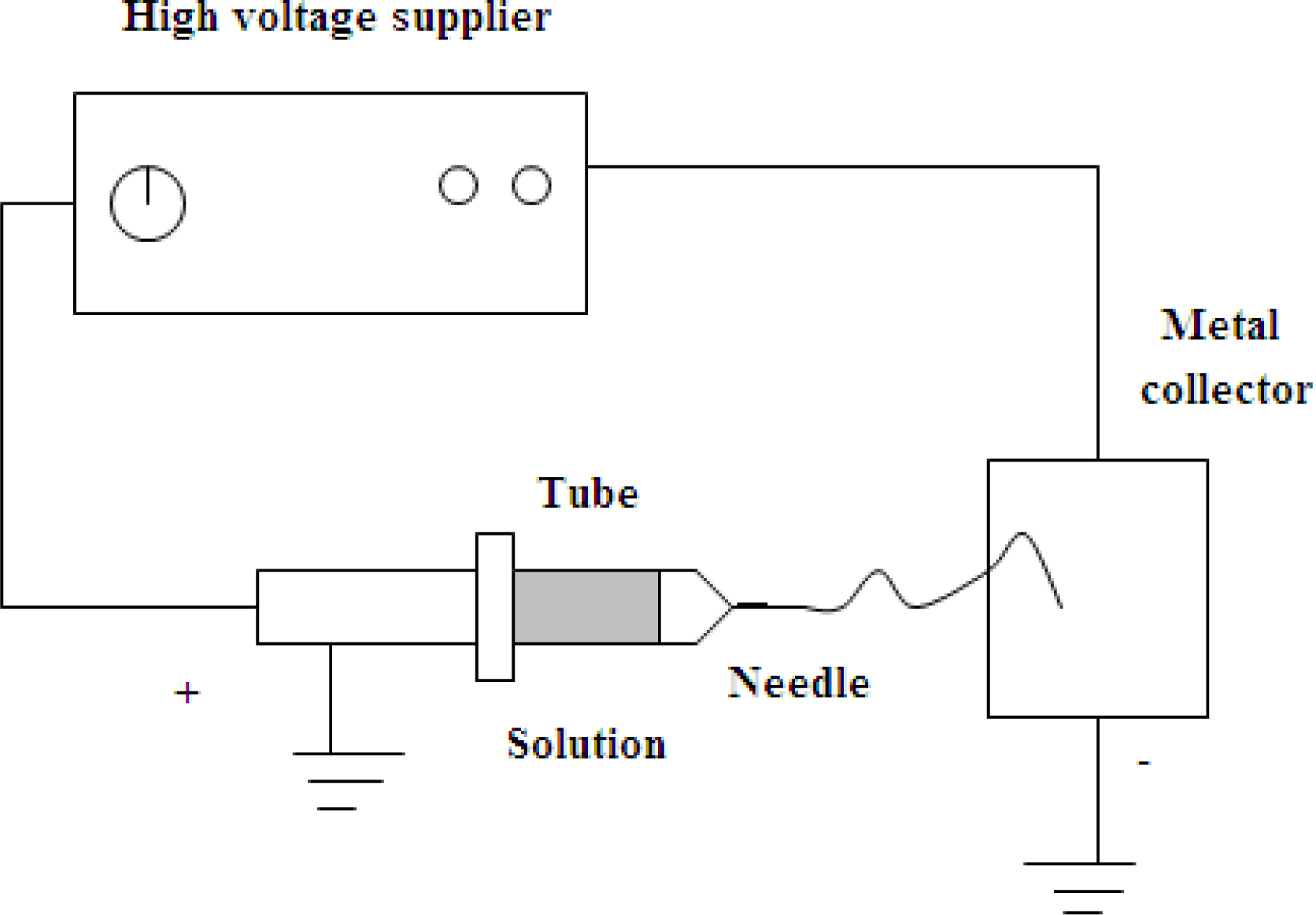
2.1. Electrospinning Process
2.2. Electrospinning of Hybrid Fibers
2.3. Characterization Techniques
3. Results and Discussion
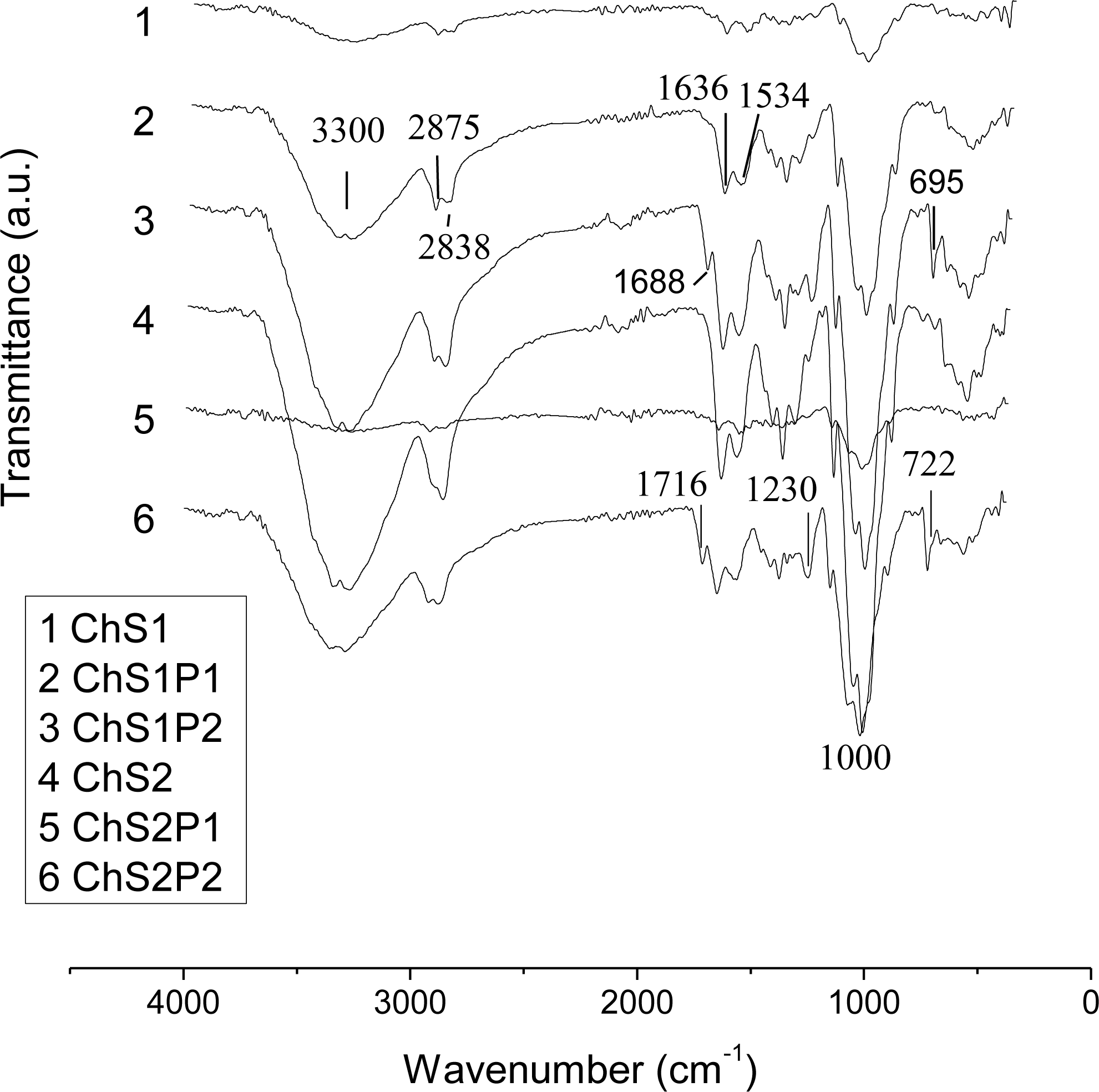
3.1. Fourier Transform Infrared Spectroscopy
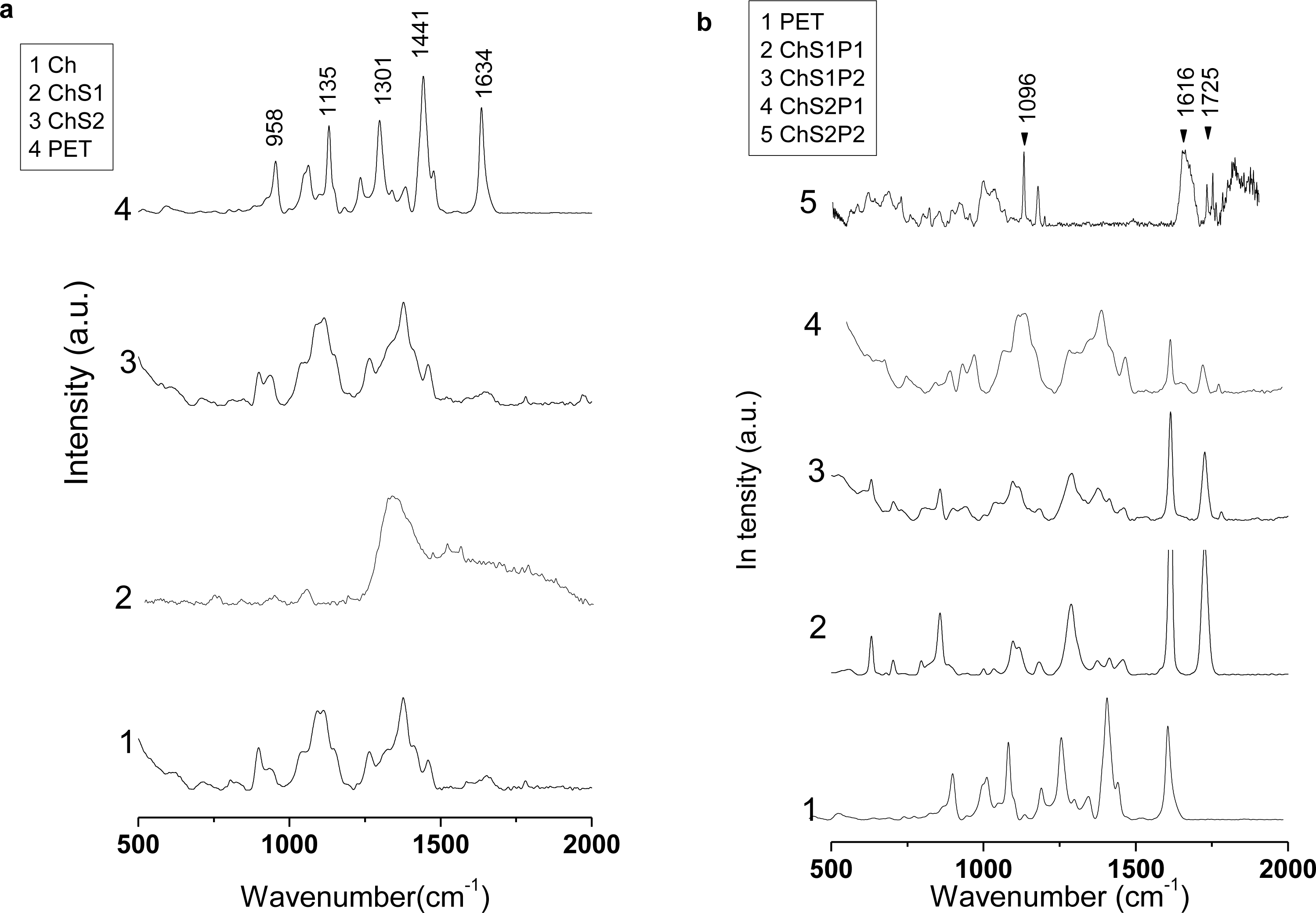
3.2. Raman Spectroscopy
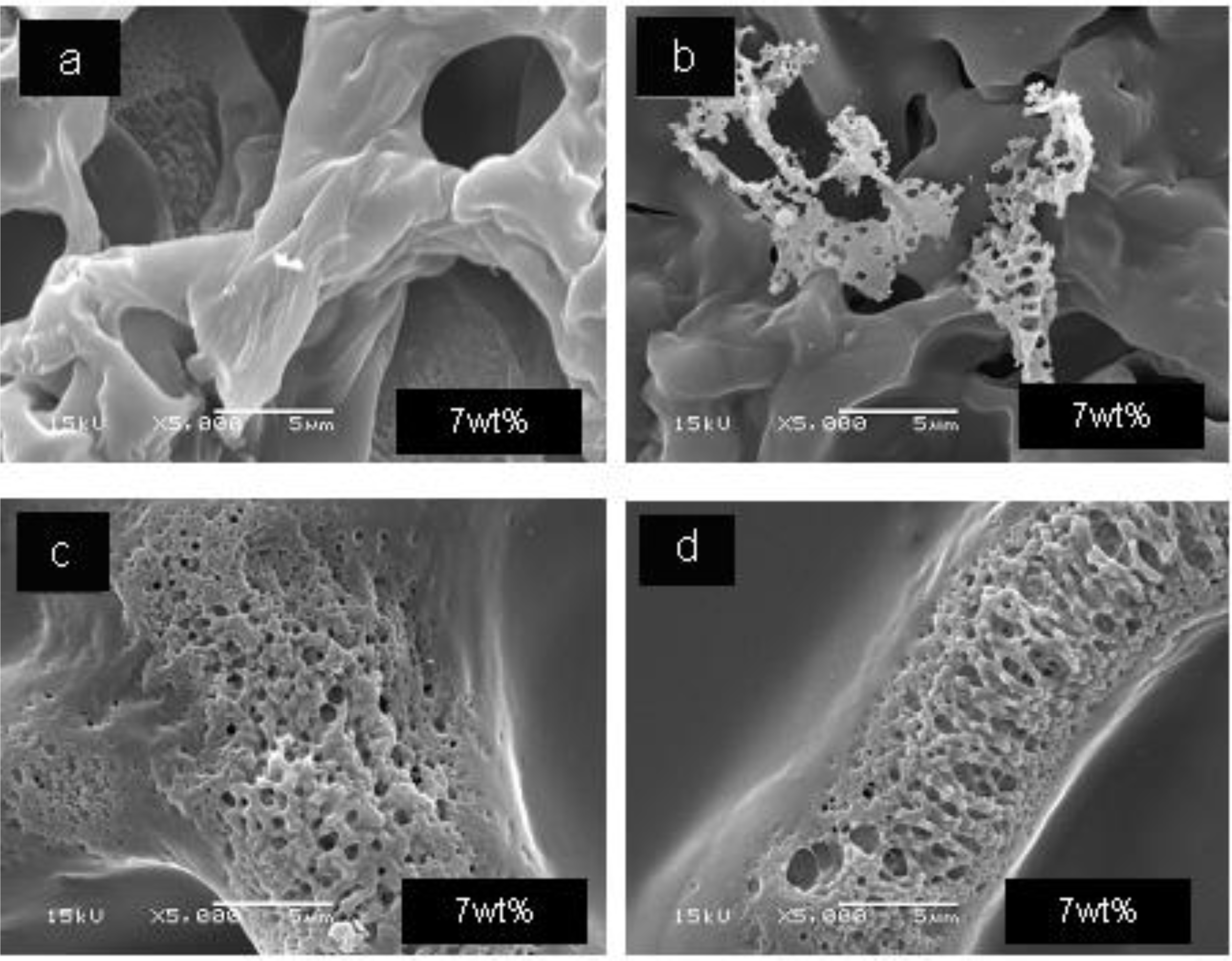
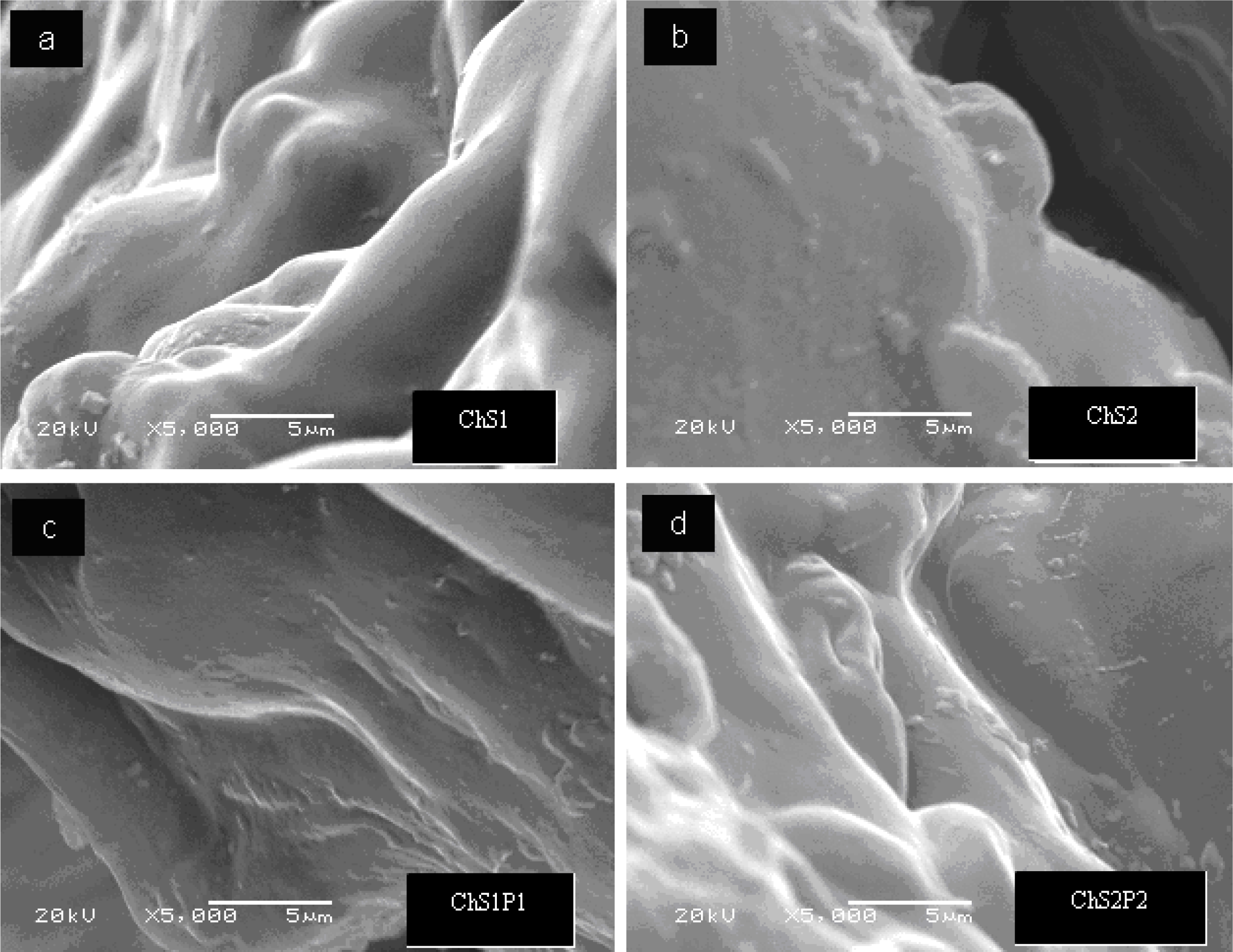
3.3. Morphology from Scanning Electron Microscopy
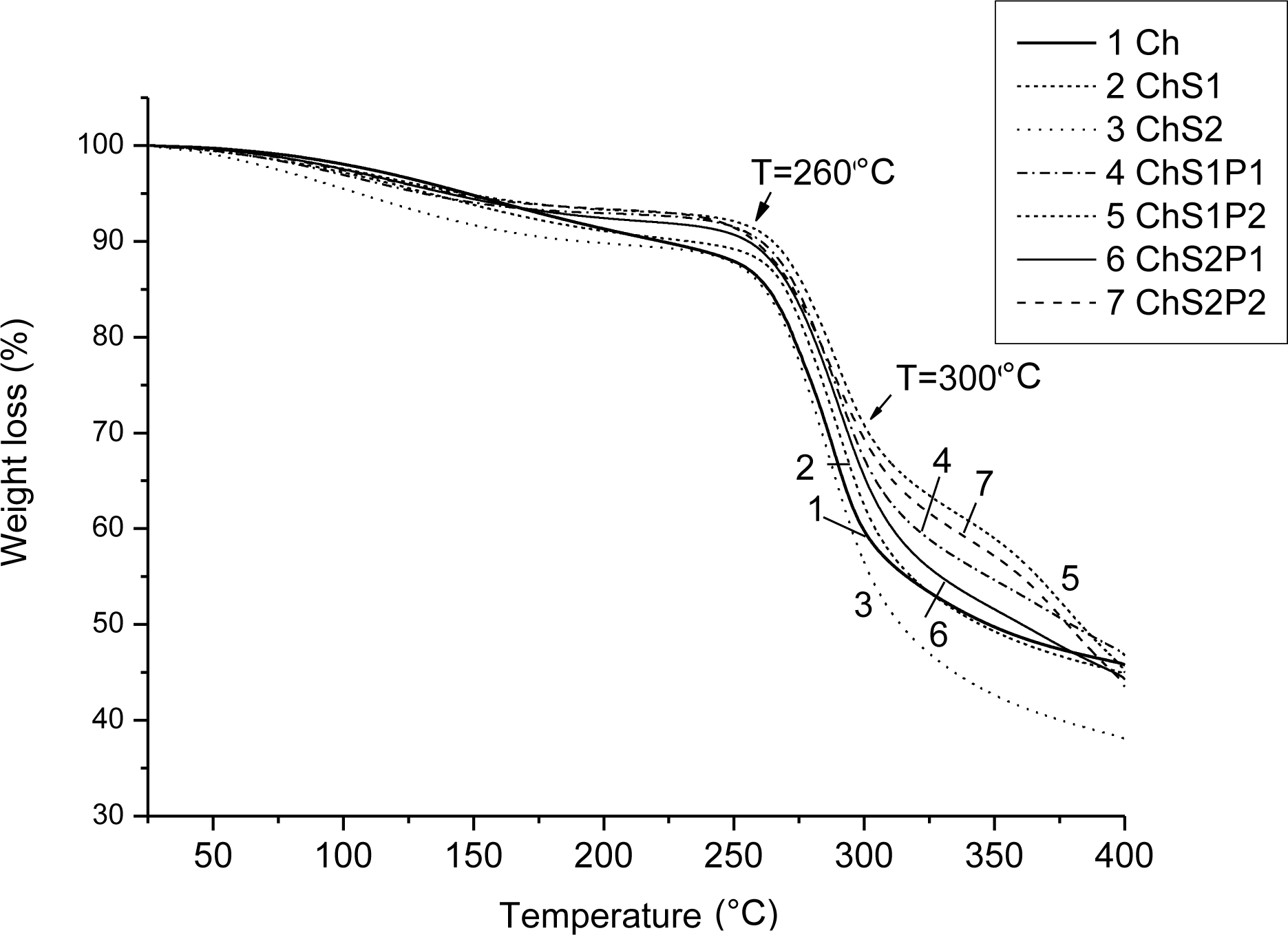
3.4. Thermogravimetric Analysis (TGA)
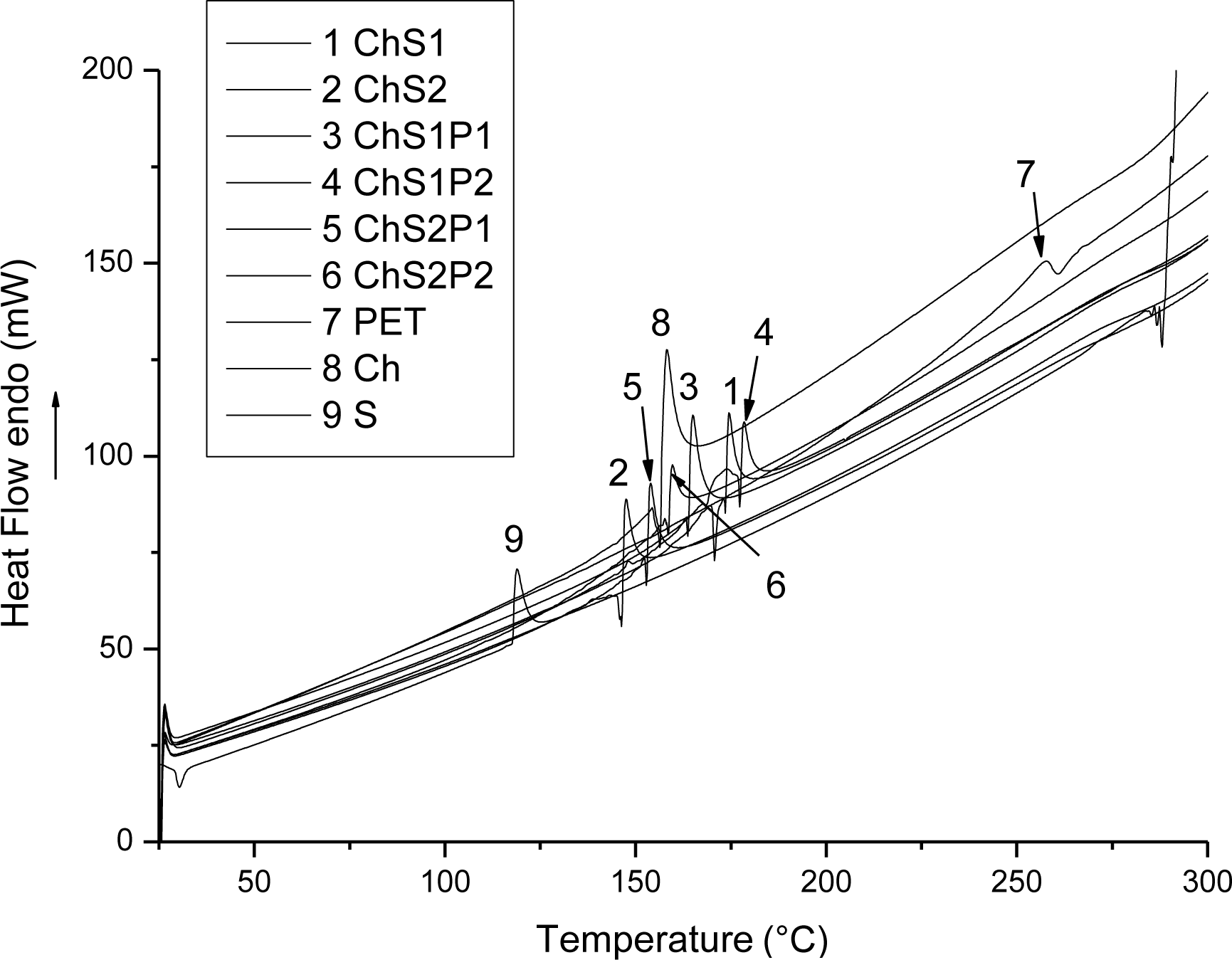
3.5. Differential Scanning Calorimetry
4. A Survey of Results
Acknowledgments
References
- Harish, PVK; Tharanathan, NR. Chitin/chitosan: Modifications and their unlimited application potential an overview. Trends Food Sci Technol 2007, 18(3), 117–131. [Google Scholar]
- Suyatama, EN; Copinet, A; Tighzert, L; Coma, V. Mechanical and barrier properties of biodegradable films made from chitosan and poly (lactic acid) blends. J Polym Environ 2004, 12(1), 1–6. [Google Scholar]
- Butler, BL; Vergano, PJ; Testin, RF; Bunn, JM; Wiles, JL. Mechanical and Barrier Properties of Edible Chitosan Films as affected by Composition and Storage. J Food Sci 1996, 61(5), 953–955. [Google Scholar]
- Pedran, MY; Reuter, J. Homogeneous Grafting Reaction of Vynil Pyrrolidone onto chitosan. J Appl Polym Sci 1997, 63(10), 1321–1326. [Google Scholar]
- Yamane, S; Iwasaki, N; Majima, T; Funakoshi, T; Masuko, T; Harada, K; Minami, A; Monde, K; Nishimura, S. Feasibility of chitosan based hyaluronic acid hybrid biomaterial for a novel scaffold in cartilage tissue engineering. Biomaterials 2005, 26(6), 611–619. [Google Scholar]
- Milosavljevic, BN; Kljajevic, ML; Popovic, GI; Filipovic, MJ; Krusic, KT. Chitosan, itaconic acid and poly (vinyl alcohol) hybrid polymer network of high degree of swelling and good mechanical strength. Polym Int 2010, 59(5), 686–694. [Google Scholar]
- Li, Z; Ramay, RH; Hauch, DK; Xiao, D; Zhang, M. Chitosan-alginate hybrid scaffold for bone tissue engineering. Biomaterials 2005, 26(18), 3919–3928. [Google Scholar]
- Correlo, MV; Boesel, FL; Bhattacharya, M; Mano, FJ; Neves, MN; Reis, LR. Properties of melt processed chitosan and aliphatic polyester blends. Mater Sci Eng A 2005, 403(1–2), 57–68. [Google Scholar] [Green Version]
- Dalton, DP; Grafahrend, D; Klinkhammer, K; Klee, D; Moller, M. Electrospinning of polymer melts: Phenomenological observations. Polymer 2007, 48(23), 6823–6833. [Google Scholar]
- Homayoni, H; Ravandi, HSA; Valizadeh, M. Electrospinning of chitosan nanofibers: Processing optimization. Carbohydr Polym 2009, 77(3), 656–661. [Google Scholar]
- Huang, M-Z; Zhang, Z-Y; Kotaki, M; Ramakrishna, S. A review on polymer nanofibers by electrospinning and their applications in nanocomposites. Compos Sci Technol 2003, 63(15), 2223–2253. [Google Scholar]
- Vondran, LJ; Sun, W; Schauer, LC. Crosslinked, Electrospun Chitosan–Poly(ethylene oxide) Nanofibers Mats. J Appl Polym Sci 2008, 109(2), 968–975. [Google Scholar]
- Jung, H-K; Huh, W-M; Meng, W; Yuang, J; Hyun, HS; Bae, S-J; Hudson, MS; Kang, K-I. Preparation and Antibacterial Activity of PET/Chitosan Nanofibrous Mats Using an Electrospinning Technique. J Appl Polym Sci 2007, 105(5), 2816–2823. [Google Scholar]
- Costache, CM; Heidecker, JM; Manias, E; Wilkie, AC. Preparation and characterization of poly(ethylene terephthalate)/clay nanocomposites by melt blending using thermally stable surfactants. Polym Adv Technol 2006, 17(9–10), 764–771. [Google Scholar]
- Queen, H. Electrospinning chitosan-based nanofibers for biomedical applications. M.Sc. Thesis, North Carolina State University, Raleigh, NC, USA. 2006. [Google Scholar]
- Shalumon, TK; Anulekha, HK; Girish, MC; Prasanth, R; Nair, VS; Jayakumar, R. Single step electrospinning of chitosan/poly(caprolactone) nanofibers using formic acid/acetone solvent mixture. Carbohydr Polym 2010, 80(2), 413–419. [Google Scholar]
- Jia, T-Y; Gong, J; Gu, H-X; Kim, Y-H; Dong, J; Shen, Y-X. Fabrication and characterization of poly (vynil alcohol)/chitosan blend nanofibers produced by electrospinning method. Carbohydr Polym 2007, 67(3), 403–409. [Google Scholar]
- Desai, K; Kit, K. Effect of spinning temperature and blend ratios on electrospun chitosan/poly(acrylamide) blends fibers. Polymer 2008, 19(9), 4046–4050. [Google Scholar]
- Zhang, H; Li, S; White, BCJ; Ning, X; Zhu, L. Studies on electrospun nylon 6/chitosan complex nanofiber interactions. Electrochim Acta 2009, 54(24), 5739–5745. [Google Scholar]
- Pelletier, MJ. Raman spectroscopy of synthetic polymers. In Analytical Applications of Raman Spectroscopy, 1st ed; Blackwell Science Ltd: Oxford, UK, 1997; p. 162. [Google Scholar]
- Bhimaraj, P; Yang, H; Siegel, WR; Schadler, SL. Crystal nucleation and growth in poly(ethylene terephtalate)/alumina-nanoparticle composites. J Appl Polym Sci 2007, 106(6), 4233–4240. [Google Scholar]
- Jaworska, M; Sakurai, K; Gaudon, P; Gubail, E. Influence of chitosan characteristics on polymer properties. I: Crystallographic properties. Polym Int 2003, 52(2), 198–205. [Google Scholar]
- Schiffman, DJ; Stulga, AL; Schauer, LC. Chitin and Chitosan: Transformation due to the electrospinning process. Polym Eng Sci 2009, 49(10), 1918–1928. [Google Scholar]
- Gholipour, A; Bahrami, SH; Nouri, M. Optimization of chitosan-polyvinylalcohol electrospinning process by response surface methodology (RSM). e-Polymers 2010, 35, 1–9. [Google Scholar]
- Min, BM; You, Y; Kim, JM; Lee, SJ; Park, WH. Formation of nanostructured poly(lactic-coglycolic acid)/chitosan matrix and its cellular response to normal human keratinocytes and fibroblasts. Carbohydr Polym 2004, 57(3), 285–292. [Google Scholar]
- Xiao, C; Lu, SY; Jing, Z; Zhang, L. Study on Physical Properties of Blend Films from Gelatin and Polyacrylamide Solutions. J Appl Polym Sci 2002, 83(5), 949–955. [Google Scholar]
- Brostow, W; Jonah, DA; Hess, M. Statistical thermodynamics of polymer liquid crystals: Variation of concentration of the mesogenic component. Macromolecules 1993, 26, 76–83. [Google Scholar]
- Blonski, S; Brostow, W; Jonah, DA; Hess, M. Solubility and compatibility in ternary systems: Polymer liquid crystal + flexible polymer + solvent. Macromolecules 1993, 26, 84–89. [Google Scholar]
- Brostow, W; Hess, M; López, BL. Phase structures and phase diagrams in polymer liquid crystal systems: Copolymers of poly(ethylene terephthalate) and p-hydroxybenzoic acid. Macromolecules 1994, 27, 2262–2269. [Google Scholar]
- Brostow, W; Hess, M; López, BL; Sterzynski, T. Phase structures and phase diagrams in polymer liquid crystal systems: Blends of a longitudinal polymer with polycarbonate. Polymer 1996, 37, 1551–1559. [Google Scholar]
- Brostow, W; Chiu, R; Kalogeras, IM; Vassilikou-Dova, A. Prediction of glass transition temperatures: Binary blends and copolymers. Mater. Lett 2008, 62, 3152–3155. [Google Scholar]
- Babu, JR; Brostow, W; Kalogeras, I; Sathigari, S. Glass transitions in binary polymer + drug systems. Mater. Lett 2009, 63, 2666–2668. [Google Scholar]


| Blends (wt%) | Hybrid Fibers Nomenclature | ||
|---|---|---|---|
| Blend 1 | Blend 2 | ||
| Chitosan | Starch | PET | |
| 0 | ChS1 | ||
| 85 | 15 | 5 | ChS1P1 |
| 15 | ChS1P2 | ||
| 0 | ChS2 | ||
| 70 | 30 | 5 | ChS2P1 |
| 15 | ChS2P2 | ||
| Hybrid Polymer | Weight Ratio (wt/wt) | Melting Point Tm (°C) | Melting Enthalpy (J/g) | Reference |
|---|---|---|---|---|
| PVA + Ch | 100/0 | 199 | 54.3 | [17] |
| 90/10 | 194 | 44.0 | ||
| 80/20 | 192 | 42.8 | ||
| 75/25 | 190 | 27.0 | ||
| Nylon 6 + Ch | 100/0 | 268 | - | [19] |
| 90/10 | 265 | - | ||
| 85/15 | 261 | - | ||
| 80/20 | 260 | - | ||
| 75/25 | 258 | - | ||
| Ch+ S + PET | 85-15/0 | 175 | 3.51 | |
| 70-30/0 | 147 | 2.70 | ||
| 85-15/5 | 165 | 4.90 | ||
| 85-15/15 | 178 | 3.80 | ||
| 70-30/5 | 154 | 4.20 | ||
| 70-30/15 | 159 | 3.21 | ||
© 2011 by the authors; licensee MDPI, Basel, Switzerland. This article is an open-access article distributed under the terms and conditions of the Creative Commons Attribution license (http://creativecommons.org/licenses/by/3.0/).
Share and Cite
Espíndola-González, A.; Martínez-Hernández, A.L.; Fernández-Escobar, F.; Castaño, V.M.; Brostow, W.; Datashvili, T.; Velasco-Santos, C. Natural-Synthetic Hybrid Polymers Developed via Electrospinning: The Effect of PET in Chitosan/Starch System. Int. J. Mol. Sci. 2011, 12, 1908-1920. https://doi.org/10.3390/ijms12031908
Espíndola-González A, Martínez-Hernández AL, Fernández-Escobar F, Castaño VM, Brostow W, Datashvili T, Velasco-Santos C. Natural-Synthetic Hybrid Polymers Developed via Electrospinning: The Effect of PET in Chitosan/Starch System. International Journal of Molecular Sciences. 2011; 12(3):1908-1920. https://doi.org/10.3390/ijms12031908
Chicago/Turabian StyleEspíndola-González, Adolfo, Ana Laura Martínez-Hernández, Francisco Fernández-Escobar, Victor Manuel Castaño, Witold Brostow, Tea Datashvili, and Carlos Velasco-Santos. 2011. "Natural-Synthetic Hybrid Polymers Developed via Electrospinning: The Effect of PET in Chitosan/Starch System" International Journal of Molecular Sciences 12, no. 3: 1908-1920. https://doi.org/10.3390/ijms12031908
APA StyleEspíndola-González, A., Martínez-Hernández, A. L., Fernández-Escobar, F., Castaño, V. M., Brostow, W., Datashvili, T., & Velasco-Santos, C. (2011). Natural-Synthetic Hybrid Polymers Developed via Electrospinning: The Effect of PET in Chitosan/Starch System. International Journal of Molecular Sciences, 12(3), 1908-1920. https://doi.org/10.3390/ijms12031908