
<?xml version="1.0" encoding="UTF-8"?>
<!DOCTYPE article PUBLIC "-//NLM//DTD Journal Publishing DTD v2.3 20070202//EN" "journalpublishing.dtd">
<article xmlns:xlink="http://www.w3.org/1999/xlink" xml:lang="en" article-type="research-article">
<front>
<journal-meta>
<journal-id journal-id-type="publisher-id">ijms</journal-id>
<journal-title>International Journal of Molecular Sciences</journal-title>
<abbrev-journal-title>Int. J. Mol. Sci.</abbrev-journal-title>
<issn pub-type="epub">1422-0067</issn>
<publisher>
<publisher-name>Molecular Diversity Preservation International (MDPI)</publisher-name></publisher></journal-meta>
<article-meta>
<article-id pub-id-type="doi">10.3390/ijms12129504</article-id>
<article-id pub-id-type="publisher-id">ijms-12-09504</article-id>
<article-categories>
<subj-group>
<subject>Article</subject></subj-group></article-categories>
<title-group>
<article-title>Q Fever Endocarditis in Romania: The First Cases Confirmed by Direct Sequencing</article-title></title-group>
<contrib-group>
<contrib contrib-type="author">
<name><surname>Cotar</surname><given-names>Ani Ioana</given-names></name><xref ref-type="aff" rid="af1-ijms-12-09504">1</xref><xref ref-type="corresp" rid="c1-ijms-12-09504">*</xref></contrib>
<contrib contrib-type="author">
<name><surname>Badescu</surname><given-names>Daniela</given-names></name><xref ref-type="aff" rid="af1-ijms-12-09504">1</xref></contrib>
<contrib contrib-type="author">
<name><surname>Oprea</surname><given-names>Mihaela</given-names></name><xref ref-type="aff" rid="af1-ijms-12-09504">1</xref></contrib>
<contrib contrib-type="author">
<name><surname>Dinu</surname><given-names>Sorin</given-names></name><xref ref-type="aff" rid="af1-ijms-12-09504">1</xref></contrib>
<contrib contrib-type="author">
<name><surname>Banu</surname><given-names>Otilia</given-names></name><xref ref-type="aff" rid="af2-ijms-12-09504">2</xref></contrib>
<contrib contrib-type="author">
<name><surname>Dobreanu</surname><given-names>Dan</given-names></name><xref ref-type="aff" rid="af3-ijms-12-09504">3</xref></contrib>
<contrib contrib-type="author">
<name><surname>Dobreanu</surname><given-names>Minodora</given-names></name><xref ref-type="aff" rid="af4-ijms-12-09504">4</xref></contrib>
<contrib contrib-type="author">
<name><surname>Ionac</surname><given-names>Adina</given-names></name><xref ref-type="aff" rid="af5-ijms-12-09504">5</xref></contrib>
<contrib contrib-type="author">
<name><surname>Flonta</surname><given-names>Mirela</given-names></name><xref ref-type="aff" rid="af6-ijms-12-09504">6</xref></contrib>
<contrib contrib-type="author">
<name><surname>Straut</surname><given-names>Monica</given-names></name><xref ref-type="aff" rid="af1-ijms-12-09504">1</xref></contrib></contrib-group>
<aff id="af1-ijms-12-09504">
<label>1</label>National Institute for Research in Microbiology and Immunology, Cantacuzino, Spl. Independentei 103, 050096, Bucharest, Romania; E-Mails: <email>badescu.daniela@gmail.com</email> (D.B.); <email>moprea@cantacuzino.ro</email> (M.O.); <email>sorind@cantacuzino.ro</email> (S.D.); <email>mstraut@cantacuzino.ro</email> (M.S.)</aff>
<aff id="af2-ijms-12-09504">
<label>2</label>Institute for Emergency Cardiovascular Diseases Prof. C.C. Iliescu, Sos. Fundeni 258, 022328, Bucharest, Romania; E-Mail: <email>otiliabanu@gmail.com</email></aff>
<aff id="af3-ijms-12-09504">
<label>3</label>Institute for Cardiovascular Diseases and Transplant Targu Mures, Str. Gheorghe Marinescu 50, 540136, Targu Mures, Mures, Romania; E-Mail: <email>dobreanu@yahoo.com</email></aff>
<aff id="af4-ijms-12-09504">
<label>4</label>University of Medicine and Pharmacy Targu Mures, Str. Gheorghe Marinescu 38, 540139, Targu Mures, Mures, Romania; E-Mail: <email>dobreanum@yahoo.com</email></aff>
<aff id="af5-ijms-12-09504">
<label>5</label>Institute for Cardiovascular Diseases Timisoara, Str. Gheorghe Adam, 13A, 300310, Timişoara, Timis, Romania; E-Mail: <email>adina_ionac@rdstm.ro</email></aff>
<aff id="af6-ijms-12-09504">
<label>6</label>Clinical Hospital for Infectious Diseases Cluj-Napoca, Str. Iuliu Moldovan 23, 400348, Cluj-Napoca, Cluj, Romania; E-Mail: <email>labinfecluj@yahoo.com</email></aff>
<author-notes>
<corresp id="c1-ijms-12-09504">
<label>*</label>Author to whom correspondence should be addressed; E-Mail: <email>aniioana@yahoo.com</email>; Tel.: +40-021-306-9127; Fax: +40-021-306-9307.</corresp></author-notes>
<pub-date pub-type="collection">
<year>2011</year></pub-date>
<pub-date pub-type="epub">
<day>20</day>
<month>12</month>
<year>2011</year></pub-date>
<volume>12</volume>
<issue>12</issue>
<fpage>9504</fpage>
<lpage>9513</lpage>
<history>
<date date-type="received">
<day>18</day>
<month>11</month>
<year>2011</year></date>
<date date-type="rev-recd">
<day>09</day>
<month>12</month>
<year>2011</year></date>
<date date-type="accepted">
<day>12</day>
<month>12</month>
<year>2011</year></date></history>
<permissions>
<copyright-statement>© 2011 by the authors; licensee MDPI, Basel, Switzerland.</copyright-statement>
<copyright-year>2011</copyright-year>
<license license-type="open-access" xlink:href="http://creativecommons.org/licenses/by/3.0">
<p>This article is an open-access article distributed under the terms and conditions of the Creative Commons Attribution license (http://creativecommons.org/licenses/by/3.0/).</p></license></permissions>
<abstract>
<p>Infective endocarditis (IE) is a serious, life-threatening disease with highly variable clinical signs, making its diagnostic a real challenge. A diagnosis is readily made if blood cultures are positive, but in 2.5 to 31% of all infective endocarditis cases, routine blood cultures are negative. In such situations, alternative diagnostic approaches are necessary. <italic>Coxiella burnetii</italic> and <italic>Bartonella</italic> spp. are the etiological agents of blood culture-negative endocarditis (BCNE) most frequently identified by serology. The purpose of this study is to investigate the usefulness of molecular assays, as complementary methods to the conventional serologic methods for the rapid confirmatory diagnostic of Q fever endocarditis in patients with BCNE. Currently, detection of <italic>C. burnetii</italic> by culture or an antiphase I IgG antibody titers &gt;800 represents a major Duke criterion for defining IE, while a titers of &gt;800 for IgG antibodies to either <italic>B. henselae</italic> or <italic>B. quintana</italic> is used for the diagnosis of endocarditis due to <italic>Bartonella</italic> spp. We used indirect immunofluorescence assays for the detection of IgG titers for <italic>C. burnetii</italic>, <italic>B. henselae</italic> and <italic>B. quintana</italic> in 57 serum samples from patients with clinical suspicion of IE. Thirty three samples originated from BCNE patients, whereas 24 were tested before obtaining the blood cultures results, which finally were positive. The results of serologic testing showed that nine out of 33 BCNE cases exhibited antiphase I <italic>C. burnetii</italic> IgG antibody titer &gt;800, whereas none has IgG for <italic>B. henselae</italic> or <italic>B. quintana</italic>. Subsequently, we used nested-PCR assay for the amplification of <italic>C. burnetii</italic> DNA in the nine positive serum samples, and we obtained positive PCR results for all analyzed cases. Afterwards we used the DNA sequencing of amplicons for the repetitive element associated to <italic>htpAB</italic> gene to confirm the results of nested-PCR. The results of sequencing allowed us to confirm that <italic>C. burnetii</italic> is the causative microorganism responsible for BCNE. In conclusion, the nested PCR amplification followed by direct sequencing is a reliable and accurate method when applied to serum samples, and it may be used as an additional test to the serological methods for the confirmatory diagnosis of BCNE cases determined by <italic>C. burnetii</italic>.</p></abstract>
<kwd-group>
<kwd>chronic Q fever</kwd>
<kwd>blood culture-negative endocarditis</kwd>
<kwd>molecular diagnosis</kwd></kwd-group></article-meta></front>
<body>
<sec sec-type="intro">
<title>1. Introduction</title>
<p>Infective endocarditis is a serious, life-threatening disease with highly variable clinical signs that are making the condition a diagnostic challenge. A diagnosis is readily made if blood cultures are positive, but in 2.5 to 31% of all infective endocarditis cases, routine blood cultures are negative [<xref ref-type="bibr" rid="b1-ijms-12-09504">1</xref>–<xref ref-type="bibr" rid="b3-ijms-12-09504">3</xref>]. This variation in incidence could be explained by several factors, including: (i) differences in the diagnostic criteria used; (ii) specific epidemiological factors, as for fastidious zoonotic agents; (iii) variations in the early use of antibiotics before the blood sampling; (iv) differences in sampling strategies; or (v) involvement of unknown pathogens [<xref ref-type="bibr" rid="b4-ijms-12-09504">4</xref>,<xref ref-type="bibr" rid="b5-ijms-12-09504">5</xref>].</p>
<p>Blood culture negative endocarditis (BCNE) was recognized by Osler at the beginning of last century [<xref ref-type="bibr" rid="b6-ijms-12-09504">6</xref>,<xref ref-type="bibr" rid="b7-ijms-12-09504">7</xref>]. Recently, many publications in European countries have demonstrated a significant involvement of <italic>Coxiella burnetti</italic>, <italic>Bartonella henselae</italic>, and <italic>B. quintana</italic> in patients with BCNE [<xref ref-type="bibr" rid="b8-ijms-12-09504">8</xref>,<xref ref-type="bibr" rid="b9-ijms-12-09504">9</xref>]. <italic>C. burnetii</italic> is one of the most encountered fastidious agents in BCNE. Q fever is characterized by its clinical polymorphism and the presentation of the disease is variable, with both acute and chronic manifestations [<xref ref-type="bibr" rid="b10-ijms-12-09504">10</xref>,<xref ref-type="bibr" rid="b11-ijms-12-09504">11</xref>]. Following acute infection, 1 to 5% of patients progress to chronic infection, which can develop after months to several years after acute Q fever infection, the longest interval being 20 years after infection [<xref ref-type="bibr" rid="b12-ijms-12-09504">12</xref>,<xref ref-type="bibr" rid="b13-ijms-12-09504">13</xref>].</p>
<p>Endocarditis is the main form of chronic Q fever (78% of all chronic Q fever cases) [<xref ref-type="bibr" rid="b14-ijms-12-09504">14</xref>]. The most exposed persons are patients with preexistent valvular disease or vascular defects, especially aortic aneurysm and aortic stents and prostheses, immunocompromised patients, and pregnant women [<xref ref-type="bibr" rid="b15-ijms-12-09504">15</xref>–<xref ref-type="bibr" rid="b18-ijms-12-09504">18</xref>]. The estimated risk of transformation from acute infection to Q fever endocarditis in patients with preexisting valvulopathy is approximately 40% [<xref ref-type="bibr" rid="b17-ijms-12-09504">17</xref>]. Because symptoms of Q fever endocarditis are protean and not specific, diagnosis is often delayed, only after significant valvular damage has occurred, resulting in an increasing mortality rate. Some authors proposed that all patients with acute Q fever be investigated by a transthoracic echocardiography [<xref ref-type="bibr" rid="b19-ijms-12-09504">19</xref>].</p>
<p>The diagnosis of Q fever endocarditis requires both clinical endocarditis and isolation or serologic evidence of <italic>C burnetii</italic>. Because Q fever endocarditis is a chronic illness, a single serum specimen is sufficient for diagnosis. A phase I IgG titers of 800 or greater is one of the major modified Duke criteria [<xref ref-type="bibr" rid="b20-ijms-12-09504">20</xref>]. Previously studies showed that PCR with serum samples may be helpful in establishing an early diagnosis of chronic Q fever [<xref ref-type="bibr" rid="b21-ijms-12-09504">21</xref>].</p>
<p>Currently there is no data concerning the incidence of Q fever endocarditis cases among Romanian population. The first Q fever cases in Romania were registered in 1947 in Constanta County [<xref ref-type="bibr" rid="b22-ijms-12-09504">22</xref>]. The most recent data about Q fever in Romania were represented by urban sporadic cases reported in the period 1981–1987 [<xref ref-type="bibr" rid="b23-ijms-12-09504">23</xref>].</p></sec>
<sec sec-type="results|discussion">
<title>2. Results and Discussion</title>
<sec>
<title>2.1. Case Definitions</title>
<p>Patients were considered to have definite blood culture-negative endocarditis if the results of standard blood cultures were negative, and if clinical and echocardiographic findings met the Duke criteria for infective endocarditis. All serum samples tested by serological methods for detection of IgG to <italic>C. burnetii</italic>, <italic>B. quintana</italic> and <italic>B. henselae</italic> originated from patients with clinical suspicion of BCNE. According to the modified Duke criteria a single positive blood culture for <italic>Coxiella burnetii</italic> or antiphase I IgG antibody titers &gt;800 represents a major criterion for definite infective endocarditis [<xref ref-type="bibr" rid="b24-ijms-12-09504">24</xref>]. The results of serological testing showed that 9 out of 33 serum samples exhibited antiphase I <italic>C. burnetii</italic> IgG antibody titers &gt;800, while none of samples has IgG for <italic>B. henselae</italic> or <italic>B. quintana</italic>. The modified Duke criteria used for definite infective endocarditis (IE) diagnosis of analyzed patients with clinical suspicions of BCNE are presented in <xref ref-type="table" rid="t1-ijms-12-09504">Table 1</xref>.</p>
<p>Diagnosis of IE is definite if there are 2 major criteria or 1 major and 3 minor criteria or 5 minor criteria [<xref ref-type="bibr" rid="b25-ijms-12-09504">25</xref>,<xref ref-type="bibr" rid="b26-ijms-12-09504">26</xref>]. Eight out of nine investigated cases fulfilled 2 major criteria (antiphase I <italic>C. burnetii</italic> IgG antibody titer &gt;800 and when there is a vegetation or a new valvular regurgitation) for defining IE, while the remaining case fulfilled one major criterion (antiphase I <italic>C. burnetii</italic> IgG antibody titers &gt;800) and one minor criterion (fever ≥ 38 °C), being classified as a possible case.</p>
<p>It is well-known that endocarditis is the most common presentation of chronic Q fever. Initially thought to be a rare disorder, later it has been estimated to account for up to 5% of all endocarditis cases worldwide [<xref ref-type="bibr" rid="b27-ijms-12-09504">27</xref>]. It occurs almost exclusively in patients who have pre-existing valvular disease or who are immunocompromised. Unlike typical cases of endocarditis, the clinical presentation of endocarditis from chronic Q fever is often nonspecific and lacks many of the typical features of subacute, bacterial endocarditis, such as usual clinical and echocardiographic features common to typical cases of endocarditis [<xref ref-type="bibr" rid="b28-ijms-12-09504">28</xref>]. Thus, the diagnosis is often significantly delayed or even missed, resulting in significant morbidity and mortality. Despite increasing awareness, recent studies show a mean delay of seven months from symptom onset to diagnosis [<xref ref-type="bibr" rid="b29-ijms-12-09504">29</xref>,<xref ref-type="bibr" rid="b30-ijms-12-09504">30</xref>]. Without prompt recognition and adequate antimicrobial therapy, the course of Q fever endocarditis is severe and potentially fatal [<xref ref-type="bibr" rid="b30-ijms-12-09504">30</xref>].</p>
<p>The diagnosis of Q fever endocarditis is hampered by the inability to culture <italic>C. burnetii</italic> using routine media. As a strict obligate intracellular bacterium, it can only be cultured in living cell lines, or embryonated chicken eggs, but the cultures cannot be easily performed in most laboratories, and the technique is restricted to biosafety level 3 laboratories. Thus, the diagnosis of chronic Q fever, therefore, relies on serological testing, being characterized by increased titres against the phase I antigen.</p></sec>
<sec sec-type="results">
<title>2.2. PCR and Sequencing Results</title>
<p>Detection of <italic>C. burnetii</italic> DNA by PCR is an important diagnostic method that could be used on different types of clinical specimens (blood, serum, infected heart valves) [<xref ref-type="bibr" rid="b31-ijms-12-09504">31</xref>]. During the last years, several PCR based diagnostic assays have been developed to detect <italic>C. burnetii</italic> DNA in cell cultures and clinical samples. These assays used conventional PCR [<xref ref-type="bibr" rid="b32-ijms-12-09504">32</xref>], nested PCR [<xref ref-type="bibr" rid="b33-ijms-12-09504">33</xref>–<xref ref-type="bibr" rid="b36-ijms-12-09504">36</xref>] or real-time PCR conditions with LightCycler [<xref ref-type="bibr" rid="b37-ijms-12-09504">37</xref>,<xref ref-type="bibr" rid="b38-ijms-12-09504">38</xref>], SYBR Green [<xref ref-type="bibr" rid="b39-ijms-12-09504">39</xref>] or TaqMan chemistry. The target sequences of the assays originated from single chromosomal genes like <italic>com1</italic>, on plasmids (QpH1, QpRS) or within the transposase gene of insertion element <italic>IS1111</italic> that is present in 20 copies in the genome of the <italic>C. burnetii</italic> Nine Mile RSA493 strain [<xref ref-type="bibr" rid="b40-ijms-12-09504">40</xref>]. Due to the multicopy number of the <italic>IS1111</italic> element, the corresponding PCR is very sensitive.</p>
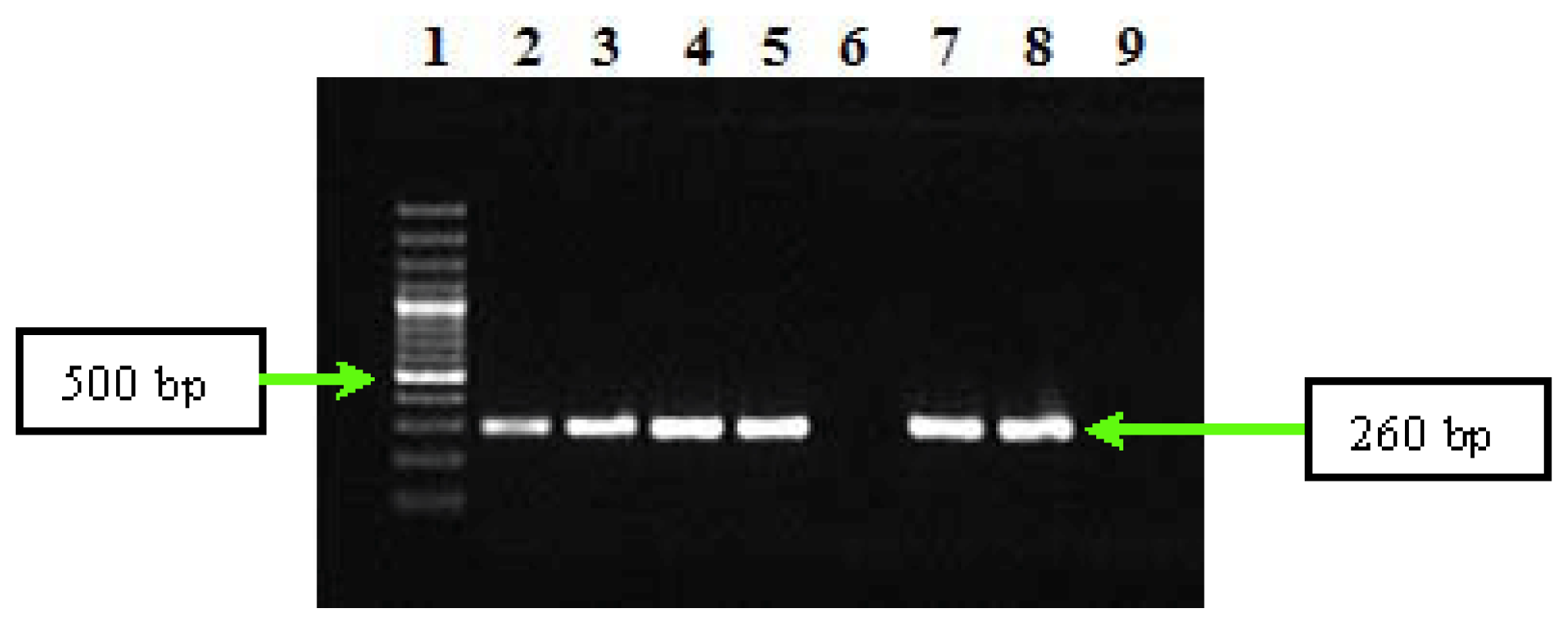
<p>The results of PCR assays performed on DNA from serum samples positive for antiphase I <italic>C. burnetii</italic> IgG showed that nested-PCR assay permitted the amplification of <italic>C. burnetii</italic> DNA. Thus, nested-PCR led to obtaining the amplification products of the repetitive element <italic>IS1111a</italic> associated to <italic>htpAB</italic> transposase gene in the second round of amplification for all analyzed DNAs (<xref ref-type="fig" rid="f1-ijms-12-09504">Figure 1</xref>).</p></sec></sec>
<sec>
<title>3. Experimental Section</title>
<sec sec-type="subjects">
<title>3.1. Patients</title>
<p>In this study we analyzed the role of <italic>C. burnetii</italic> as causative agent of blood culture negative infective endocarditis among patients with clinical diagnostic of infective endocarditis. The blood-cultures were performed for 102 patients hospitalized in three Institutes for Cardiovascular Diseases from Bucharest, Timisoara and Targu-Mures, and in Clinical Hospital for Infectious Diseases from Cluj. For each patient, a standardized questionnaire was filled by the physician in charge and logged into a database. The information filled in the questionnaire were consisted of: known preexisting valvular defect, type of valve involved (native/bioprosthetic/mechanical valve, and its position: aortic, mitral, tricuspid, pulmonary); previous antibiotic therapy; clinical symptoms; and laboratory results. Patients were considered to have possible or definite endocarditis according to the modified Duke criteria.</p></sec>
<sec>
<title>3.2. Indirect Immunofluorescence Assays</title>
<p>57 serum samples were tested by indirect immunofluorescence assay (IFA) for detection of IgG antibodies to <italic>C. burnetii</italic>, <italic>B. henselae</italic> and <italic>B. quintana</italic>. From these samples 33 originated from patients with BCNE, and the rest of samples were tested before obtaining the blood cultures results, which finally were positive. We used IFA kits (Vircell, Spain) for detection of IgG antiphase I and antiphase II <italic>C. burnetii</italic>, and for IgG to <italic>B. quintana</italic> and IgG to <italic>B. henseale.</italic> The presence of IgG titers <italic>&gt;</italic>800 to <italic>C. burnetii</italic> or <italic>B. quintana or B. henselae</italic> were considered positive for endocarditis diagnosis. Furthermore, we analyzed the positive serum samples for <italic>C. burnetii</italic> with antiphase I IgG antibody titers &gt;800 using molecular methods for the confirmation of serological results.</p></sec>
<sec sec-type="methods">
<title>3.3. Molecular Methods</title>
<sec>
<title>3.3.1. DNA Extraction</title>
<p>The serum samples from nine patients with antiphase I <italic>C. burnetii</italic> IgG antibody titer &gt;800, were used for DNA extraction. Total genomic DNA was extracted from 200 microliters of serum using the QIAamp blood kit (Qiagen, Hilden, Germany) according to the manufacturer instructions. DNA was resuspended in fifty microliters of elution buffer. Genomic DNAs were stored at 4 °C until their use as templates in PCR assays and subsequently at −20 °C. DNA samples have been handled carefully to avoid the risk of cross-contamination. DNA extraction, mix preparation, and PCR were performed in different rooms to prevent PCR carryover contamination. No positive control was used to prevent lateral contamination (<italic>i.e.</italic>, contamination caused by PCR products amplified in other tubes in the same assay). DNA extracted from serum specimens of blood donors was used every 4 specimens as a negative control.</p></sec>
<sec>
<title>3.3.2. PCR Assay</title>
<p>We used a nested-PCR assay for detection of the repetitive element <italic>IS1111</italic> associated to <italic>htpAB</italic> transposase gene (GenBank accession number M80806). This repetitive element is present in multiple copies in the genome of <italic>C. burnetii</italic> strains (e.g., there are 20 copies of this element in the <italic>C. burnetii</italic> Nine Mile I genome), which increase the detection sensitivity of this pathogen in serum samples [<xref ref-type="bibr" rid="b21-ijms-12-09504">21</xref>]. In the first round of amplification we used IS111F1 and IS111R1 primers, which were designed to amplify a 485-bp fragment of the repetitive element <italic>IS1111</italic>, while the second round of amplification was performed using the IS111F2 and IS111R2 primers, which amplify an internal 260-bp fragment from the same target [<xref ref-type="bibr" rid="b27-ijms-12-09504">27</xref>]. The sequence of specific primers used in nested-PCR reactions, and the molecular size of the amplicons are presented in <xref ref-type="table" rid="t2-ijms-12-09504">Table 2</xref>.</p>
<p>In the nested-PCR assay, each gene fragment amplified separately on 2700 Applied Biosystems instrument using necessary components provided by Promega. The components used in each type of PCR reaction are described in <xref ref-type="table" rid="t3-ijms-12-09504">Table 3</xref>. The parameters for the amplification cycles used in each PCR experiment are presented in <xref ref-type="table" rid="t4-ijms-12-09504">Table 4</xref>. PCR products from nested-PCR assay were separated in a 1.5% agarose gel for 1 h at 100 V, stained with ethidium bromide and detected by UV transillumination.</p></sec>
<sec sec-type="methods">
<title>3.3.3. Sequencing of PCR Products and Sequence Analysis</title>
<p>The sequencing of the amplicons from nested-PCR has been used to confirm the PCR results. The amplicons from the second round of nested-PCR were sequenced in both directions using the BigDye V3.1 kit as described by the manufacturer. Sequencing products have been resolved using an ABI 3100 automated <italic>Avant</italic> Genetic Analyzer (Applied Biosystems). Sequence analysis was performed with BioEdit program, which permitted obtaining of the consensus sequences that were compared with similar sequences from BLAST. The sequences obtained showed a sequence similarity of 100% with that of the GenBank prototype strain sequence. Thus, sequencing of the amplicons from the second round of PCR reaction has permitted to confirm that amplification products belong to <italic>C. burnetii</italic>. These two molecular tests were used together for the first time to investigate the BCNE cases with <italic>C. burnetii</italic> in Romania.</p></sec></sec></sec>
<sec sec-type="conclusions">
<title>4. Conclusions</title>
<p>We propose that all patients with clinical suspicion of IE be tested serologically for evidence of infection with other agents such as <italic>C. burnetii</italic> in parallel with performing blood cultures.</p>
<p>This is the first report in this country for using the molecular methods to confirm Q fever endocarditis cases on the serum samples from eight confirmed cases and from one possible case of Q fever endocarditis tested by nested-PCR, based on repetitive element <italic>IS1111a</italic> of the transposase gene. This assay exhibited high sensitivity and specificity and led us to obtain specific amplification products, which were subsequently confirmed by direct sequencing to belong to <italic>C. burnetii</italic>, confirming previous studies showing that this nested-PCR assay presents a specificity of 100% and a sensitivity of one <italic>C. burnetii</italic> DNA copy [<xref ref-type="bibr" rid="b27-ijms-12-09504">27</xref>]. In conclusion, our results have demonstrated that nested-PCR amplification, followed by direct sequencing, is a reliable and accurate method when applied to serum samples and can be used as a supplementary diagnosis tool for BCNE cases.</p></sec></body>
<back>
<ack>
<title>Acknowledgments</title>
<p>This work was supported by a UEFISCDI grant awarded to the project “Bacterial infective endocarditis (BIE)—development of a functional model for surveillance and characterization of etiological organisms involved in BIE based on molecular and immunological methods” (2009–2011), No. 42119/1.10.2008.</p></ack>
<ref-list>
<title>References</title>
<ref id="b1-ijms-12-09504"><label>1</label><citation citation-type="journal"><person-group person-group-type="author"><name><surname>Rolain</surname><given-names>J.M.</given-names></name><name><surname>Lecam</surname><given-names>C.</given-names></name><name><surname>Raoult</surname><given-names>D.</given-names></name></person-group><article-title>Simplified serological diagnosis of endocarditis due to <italic>Coxiella burnetii</italic> and <italic>Bartonella</italic></article-title><source>Clin. Diagn. Lab. Immunol</source><year>2003</year><volume>10</volume><fpage>1147</fpage><lpage>1148</lpage><pub-id pub-id-type="pmid">14607881</pub-id></citation></ref>
<ref id="b2-ijms-12-09504"><label>2</label><citation citation-type="journal"><person-group person-group-type="author"><name><surname>Brouqui</surname><given-names>P.</given-names></name><name><surname>Raoult</surname><given-names>D.</given-names></name></person-group><article-title>Endocarditis due to rare and fastidious bacteria</article-title><source>Clin. Microbiol. Rev</source><year>2001</year><volume>14</volume><fpage>177</fpage><lpage>207</lpage><pub-id pub-id-type="pmid">11148009</pub-id></citation></ref>
<ref id="b3-ijms-12-09504"><label>3</label><citation citation-type="journal"><person-group person-group-type="author"><name><surname>Houpikian</surname><given-names>P.</given-names></name><name><surname>Raoult</surname><given-names>D.</given-names></name></person-group><article-title>Diagnostic methods. Current best practices and guidelines for identification of difficult-to-culture pathogens ininfective endocarditis</article-title><source>Cardiol. Clin</source><year>2003</year><volume>21</volume><fpage>207</fpage><lpage>217</lpage><pub-id pub-id-type="doi">10.1016/S0733-8651(03)00028-6</pub-id><pub-id pub-id-type="pmid">12874894</pub-id></citation></ref>
<ref id="b4-ijms-12-09504"><label>4</label><citation citation-type="journal"><person-group person-group-type="author"><name><surname>Fournier</surname><given-names>P.-E.</given-names></name><name><surname>Thuny</surname><given-names>F.</given-names></name><name><surname>Richet</surname><given-names>H.</given-names></name><name><surname>Lepidi</surname><given-names>H.</given-names></name><name><surname>Casalta</surname><given-names>J.-P.</given-names></name><name><surname>Arzouni</surname><given-names>J.-P.</given-names></name><name><surname>Maurin</surname><given-names>M.</given-names></name><name><surname>Celard</surname><given-names>M.</given-names></name><name><surname>Mainardi</surname><given-names>J.-L.</given-names></name><name><surname>Caus</surname><given-names>T.</given-names></name><name><surname>Collart</surname><given-names>F.</given-names></name><name><surname>Habib</surname><given-names>G.</given-names></name><name><surname>Raoult</surname><given-names>D.</given-names></name></person-group><article-title>Comprehensive diagnostic strategy for blood culture-negative endocarditis, a prospective study of 819 new cases</article-title><source>Clin. Infect. Dis</source><year>2010</year><volume>51</volume><fpage>131</fpage><lpage>140</lpage><pub-id pub-id-type="doi">10.1086/653675</pub-id><pub-id pub-id-type="pmid">20540619</pub-id></citation></ref>
<ref id="b5-ijms-12-09504"><label>5</label><citation citation-type="journal"><person-group person-group-type="author"><name><surname>Raoult</surname><given-names>D.</given-names></name><name><surname>Casalta</surname><given-names>J.P.</given-names></name><name><surname>Richet</surname><given-names>H.</given-names></name><name><surname>Khan</surname><given-names>M.</given-names></name><name><surname>Bernit</surname><given-names>E.</given-names></name><name><surname>Rovery</surname><given-names>C.</given-names></name><name><surname>Branger</surname><given-names>S.</given-names></name><name><surname>Gouriet</surname><given-names>F.</given-names></name><name><surname>Imbert</surname><given-names>G.</given-names></name><name><surname>Bothello</surname><given-names>E.</given-names></name><name><surname>Collart</surname><given-names>F.</given-names></name><name><surname>Habib</surname><given-names>G.</given-names></name></person-group><article-title>Contribution of systematic serological testing in diagnosis of infective endocarditis</article-title><source>J. Clin. Microbiol</source><year>2005</year><volume>43</volume><fpage>5238</fpage><lpage>5242</lpage><pub-id pub-id-type="doi">10.1128/JCM.43.10.5238-5242.2005</pub-id><pub-id pub-id-type="pmid">16207989</pub-id></citation></ref>
<ref id="b6-ijms-12-09504"><label>6</label><citation citation-type="journal"><person-group person-group-type="author"><name><surname>Lamas</surname><given-names>C.C.</given-names></name><name><surname>Eykyn</surname><given-names>S.J.</given-names></name></person-group><article-title>Blood culture negative endocarditis, analysis of 63 cases presenting over 25 years</article-title><source>Heart</source><year>2003</year><volume>89</volume><fpage>258</fpage><lpage>262</lpage><pub-id pub-id-type="doi">10.1136/heart.89.3.258</pub-id><pub-id pub-id-type="pmid">12591823</pub-id></citation></ref>
<ref id="b7-ijms-12-09504"><label>7</label><citation citation-type="journal"><person-group person-group-type="author"><name><surname>Osler</surname><given-names>W.</given-names></name></person-group><article-title>Chronic infectious endocarditis</article-title><source>QJM: Int. J. Med</source><year>1909</year><volume>2</volume><fpage>219</fpage><lpage>230</lpage></citation></ref>
<ref id="b8-ijms-12-09504"><label>8</label><citation citation-type="journal"><person-group person-group-type="author"><name><surname>Siciliano</surname><given-names>R.F.</given-names></name><name><surname>Strabelli</surname><given-names>T.M.</given-names></name><name><surname>Zeigler</surname><given-names>R.</given-names></name><name><surname>Rodrigues</surname><given-names>C.</given-names></name><name><surname>Castelli</surname><given-names>J.B.</given-names></name><name><surname>Grinberg</surname><given-names>M.</given-names></name><name><surname>Colombo</surname><given-names>S.</given-names></name><name><surname>da Silva</surname><given-names>L.J.</given-names></name><name><surname>Mendes do Nascimento</surname><given-names>E.M.</given-names></name><name><surname>Pereira dos Santos</surname><given-names>F.C.</given-names></name><name><surname>Uip</surname><given-names>D.E.</given-names></name></person-group><article-title>Infective endocarditis due to <italic>Bartonella</italic> spp. and <italic>Coxiella burnetii</italic> experience at a cardiology hospital in Sao Paulo, Brazil</article-title><source>Ann. N.Y. Acad. Sci</source><year>2006</year><volume>1078</volume><fpage>215</fpage><lpage>222</lpage><pub-id pub-id-type="doi">10.1196/annals.1374.123</pub-id><pub-id pub-id-type="pmid">17114712</pub-id></citation></ref>
<ref id="b9-ijms-12-09504"><label>9</label><citation citation-type="journal"><person-group person-group-type="author"><name><surname>Houpikian</surname><given-names>P.</given-names></name><name><surname>Raoult</surname><given-names>D.</given-names></name></person-group><article-title>Blood culture-negative endocarditis in a reference center, etiologic diagnosis of 348 cases</article-title><source>Medicine (Baltimore)</source><year>2005</year><volume>84</volume><fpage>162</fpage><lpage>173</lpage><pub-id pub-id-type="doi">10.1097/01.md.0000165658.82869.17</pub-id></citation></ref>
<ref id="b10-ijms-12-09504"><label>10</label><citation citation-type="journal"><person-group person-group-type="author"><name><surname>Botelho-Nevers</surname><given-names>E.</given-names></name><name><surname>Fournier</surname><given-names>P.-E.</given-names></name><name><surname>Richet</surname><given-names>H.</given-names></name><name><surname>Fenollar</surname><given-names>F.</given-names></name><name><surname>Lepidi</surname><given-names>H.</given-names></name><name><surname>Foucault</surname><given-names>C.</given-names></name><name><surname>Branchereau</surname><given-names>A.</given-names></name><name><surname>Piquet</surname><given-names>P.</given-names></name><name><surname>Maurin</surname><given-names>M.</given-names></name><name><surname>Raoult</surname><given-names>D.</given-names></name></person-group><article-title><italic>Coxiella burnetii</italic> infection of aortic aneurysms or vascular grafts, report of 30 new cases and evaluation of outcome</article-title><source>Eur. J. Clin. Microbiol. Infect. Dis</source><year>2007</year><volume>26</volume><fpage>635</fpage><lpage>640</lpage><pub-id pub-id-type="doi">10.1007/s10096-007-0357-6</pub-id><pub-id pub-id-type="pmid">17629755</pub-id></citation></ref>
<ref id="b11-ijms-12-09504"><label>11</label><citation citation-type="journal"><person-group person-group-type="author"><name><surname>Lepidi</surname><given-names>H.</given-names></name><name><surname>Houpikian</surname><given-names>P.</given-names></name><name><surname>Liang</surname><given-names>Z.</given-names></name><name><surname>Raoult</surname><given-names>D.</given-names></name></person-group><article-title>Cardiac valves in patients with Q fever endocarditis, microbiological, molecular, and histologic studies</article-title><source>J. Infect. Dis</source><year>2003</year><volume>187</volume><fpage>1097</fpage><lpage>1106</lpage><pub-id pub-id-type="doi">10.1086/368219</pub-id><pub-id pub-id-type="pmid">12660924</pub-id></citation></ref>
<ref id="b12-ijms-12-09504"><label>12</label><citation citation-type="journal"><person-group person-group-type="author"><name><surname>Landais</surname><given-names>C.</given-names></name><name><surname>Fenollar</surname><given-names>F.</given-names></name><name><surname>Thuny</surname><given-names>F.</given-names></name><name><surname>Raoult</surname><given-names>D.</given-names></name></person-group><article-title>From acute Q fever to endocarditis, serological follow-up strategy</article-title><source>Clin. Infect. Dis</source><year>2007</year><volume>44</volume><fpage>1337</fpage><lpage>1340</lpage><pub-id pub-id-type="doi">10.1086/515401</pub-id><pub-id pub-id-type="pmid">17443471</pub-id></citation></ref>
<ref id="b13-ijms-12-09504"><label>13</label><citation citation-type="journal"><person-group person-group-type="author"><name><surname>Healy</surname><given-names>B.</given-names></name><name><surname>Llewelyn</surname><given-names>M.</given-names></name><name><surname>Westmoreland</surname><given-names>D.</given-names></name><name><surname>Lloyd</surname><given-names>G.</given-names></name><name><surname>Brown</surname><given-names>N.</given-names></name></person-group><article-title>The value of follow-up after acute Q fever infection</article-title><source>J. Infect</source><year>2006</year><volume>52</volume><fpage>e109</fpage><lpage>e112</lpage><pub-id pub-id-type="doi">10.1016/j.jinf.2005.07.016</pub-id><pub-id pub-id-type="pmid">16181676</pub-id></citation></ref>
<ref id="b14-ijms-12-09504"><label>14</label><citation citation-type="journal"><person-group person-group-type="author"><name><surname>Raoult</surname><given-names>D.</given-names></name><name><surname>Marrie</surname><given-names>T.</given-names></name><name><surname>Mege</surname><given-names>J.</given-names></name></person-group><article-title>Natural history and pathophysiology of Q fever</article-title><source>Lancet Infect. Dis</source><year>2005</year><volume>5</volume><fpage>219</fpage><lpage>226</lpage><pub-id pub-id-type="doi">10.1016/S1473-3099(05)70052-9</pub-id><pub-id pub-id-type="pmid">15792739</pub-id></citation></ref>
<ref id="b15-ijms-12-09504"><label>15</label><citation citation-type="journal"><person-group person-group-type="author"><name><surname>Kampschreur</surname><given-names>L.M.</given-names></name><name><surname>Oosterheert</surname><given-names>J.J.</given-names></name><name><surname>de Vries Feyens</surname><given-names>C.A.</given-names></name><name><surname>Delsing</surname><given-names>C.E.</given-names></name><name><surname>Hermans</surname><given-names>M.H.</given-names></name><name><surname>van Sluisveld</surname><given-names>I.L.</given-names></name><name><surname>Lestrade</surname><given-names>P.J.</given-names></name><name><surname>Renders</surname><given-names>N.H.</given-names></name><name><surname>Elsman</surname><given-names>P.</given-names></name><name><surname>Wever</surname><given-names>P.C.</given-names></name></person-group><article-title>Chronic Q fever-related dual-pathogen endocarditis, case series of three patients</article-title><source>J. Clin. Microbiol</source><year>2011</year><volume>49</volume><fpage>1692</fpage><lpage>1694</lpage><pub-id pub-id-type="doi">10.1128/JCM.02596-10</pub-id><pub-id pub-id-type="pmid">21289146</pub-id></citation></ref>
<ref id="b16-ijms-12-09504"><label>16</label><citation citation-type="journal"><person-group person-group-type="author"><name><surname>Brouqui</surname><given-names>P.</given-names></name><name><surname>Dupont</surname><given-names>H.T.</given-names></name><name><surname>Drancourt</surname><given-names>M.</given-names></name><name><surname>Berland</surname><given-names>Y.</given-names></name><name><surname>Etienne</surname><given-names>J.</given-names></name><name><surname>Leport</surname><given-names>C.</given-names></name><name><surname>Goldstein</surname><given-names>F.</given-names></name><name><surname>Massip</surname><given-names>P.</given-names></name><name><surname>Micoud</surname><given-names>M.</given-names></name><name><surname>Bertrand</surname><given-names>A.</given-names></name><etal/></person-group><article-title>Chronic Q fever. Ninety-two cases from France, including 27 cases without endocarditis</article-title><source>Arch. Intern. Med</source><year>1993</year><volume>153</volume><fpage>642</fpage><lpage>648</lpage><pub-id pub-id-type="doi">10.1001/archinte.1993.00410050074010</pub-id><pub-id pub-id-type="pmid">8439227</pub-id></citation></ref>
<ref id="b17-ijms-12-09504"><label>17</label><citation citation-type="journal"><person-group person-group-type="author"><name><surname>Fenollar</surname><given-names>F.</given-names></name><name><surname>Fournier</surname><given-names>P.E.</given-names></name><name><surname>Carrieri</surname><given-names>M.P.</given-names></name><name><surname>Habib</surname><given-names>G.</given-names></name><name><surname>Messana</surname><given-names>T.</given-names></name><name><surname>Raoult</surname><given-names>D.</given-names></name></person-group><article-title>Risks factors and prevention of Q fever endocarditis</article-title><source>Clin. Infect. Dis</source><year>2001</year><volume>33</volume><fpage>312</fpage><lpage>316</lpage><pub-id pub-id-type="doi">10.1086/321889</pub-id><pub-id pub-id-type="pmid">11438895</pub-id></citation></ref>
<ref id="b18-ijms-12-09504"><label>18</label><citation citation-type="journal"><person-group person-group-type="author"><name><surname>Parker</surname><given-names>N.R.</given-names></name><name><surname>Barralet</surname><given-names>J.H.</given-names></name><name><surname>Bell</surname><given-names>A.M.</given-names></name></person-group><article-title>Q fever</article-title><source>Lancet</source><year>2006</year><volume>367</volume><fpage>679</fpage><lpage>688</lpage><pub-id pub-id-type="doi">10.1016/S0140-6736(06)68266-4</pub-id><pub-id pub-id-type="pmid">16503466</pub-id></citation></ref>
<ref id="b19-ijms-12-09504"><label>19</label><citation citation-type="journal"><person-group person-group-type="author"><name><surname>Fenollar</surname><given-names>F.</given-names></name><name><surname>Thuny</surname><given-names>F.</given-names></name><name><surname>Xeridat</surname><given-names>B.</given-names></name><name><surname>Lepidi</surname><given-names>H.</given-names></name><name><surname>Raoult</surname><given-names>D.</given-names></name></person-group><article-title>Endocarditis after acute Q fever in patients with previously undiagnosed valvulopathies</article-title><source>Clin. Infect. Dis</source><year>2006</year><volume>42</volume><fpage>818</fpage><lpage>821</lpage><pub-id pub-id-type="doi">10.1086/500402</pub-id><pub-id pub-id-type="pmid">16477559</pub-id></citation></ref>
<ref id="b20-ijms-12-09504"><label>20</label><citation citation-type="journal"><person-group person-group-type="author"><name><surname>Hartzell</surname><given-names>J.D.</given-names></name><name><surname>Wood-Morris</surname><given-names>R.N.</given-names></name><name><surname>Martinez</surname><given-names>L.J.</given-names></name><name><surname>Trotta</surname><given-names>R.F.</given-names></name></person-group><article-title>Q fever, epidemiology, diagnosis, and treatment</article-title><source>Mayo Clin. Proc</source><year>2008</year><volume>83</volume><fpage>574</fpage><lpage>579</lpage><pub-id pub-id-type="pmid">18452690</pub-id></citation></ref>
<ref id="b21-ijms-12-09504"><label>21</label><citation citation-type="journal"><person-group person-group-type="author"><name><surname>Fenollar</surname><given-names>F.</given-names></name><name><surname>Raoult</surname><given-names>D.</given-names></name></person-group><article-title>Molecular genetic methods for the diagnosis of fastidious microorganisms</article-title><source>APMIS</source><year>2004</year><volume>112</volume><fpage>785</fpage><lpage>807</lpage><pub-id pub-id-type="doi">10.1111/j.1600-0463.2004.apm11211-1206.x</pub-id><pub-id pub-id-type="pmid">15638838</pub-id></citation></ref>
<ref id="b22-ijms-12-09504"><label>22</label><citation citation-type="journal"><person-group person-group-type="author"><name><surname>Cracea</surname><given-names>E.</given-names></name></person-group><article-title>Q fever epidemiology in Roumania</article-title><source>Zentralbl. Bakteriol. Mikrobiol. Hyg. A</source><year>1987</year><volume>267</volume><fpage>7</fpage><lpage>9</lpage><pub-id pub-id-type="pmid">3324572</pub-id></citation></ref>
<ref id="b23-ijms-12-09504"><label>23</label><citation citation-type="journal"><person-group person-group-type="author"><name><surname>Crăcea</surname><given-names>E.</given-names></name><name><surname>Constantinescu</surname><given-names>S.</given-names></name><name><surname>Tofan</surname><given-names>N.</given-names></name><name><surname>Căruntu</surname><given-names>F.</given-names></name><name><surname>Dogaru</surname><given-names>D.</given-names></name></person-group><article-title>Q fever urban cases in Romania</article-title><source>Arch. Roum. Pathol. Exp. Microbiol</source><year>1989</year><volume>48</volume><fpage>13</fpage><lpage>17</lpage><pub-id pub-id-type="pmid">2802967</pub-id></citation></ref>
<ref id="b24-ijms-12-09504"><label>24</label><citation citation-type="journal"><person-group person-group-type="author"><name><surname>Li</surname><given-names>J.S.</given-names></name><name><surname>Sexton</surname><given-names>D.J.</given-names></name><name><surname>Mick</surname><given-names>N.</given-names></name><name><surname>Nettles</surname><given-names>R.</given-names></name><name><surname>Fowler</surname><given-names>V.G.</given-names><suffix>Jr</suffix></name><name><surname>Ryan</surname><given-names>T.</given-names></name><name><surname>Bashore</surname><given-names>T.</given-names></name><name><surname>Corey</surname><given-names>G.R.</given-names></name></person-group><article-title>Proposed modifications to the duke criteria for the diagnosis of infective endocarditis</article-title><source>Clin. Infect. Dis.</source><year>2000</year><volume>30</volume><fpage>633</fpage><lpage>638</lpage><pub-id pub-id-type="doi">10.1086/313753</pub-id><pub-id pub-id-type="pmid">10770721</pub-id></citation></ref>
<ref id="b25-ijms-12-09504"><label>25</label><citation citation-type="journal"><person-group person-group-type="author"><name><surname>Habib</surname><given-names>G.</given-names></name><name><surname>Hoen</surname><given-names>B.</given-names></name><name><surname>Tornos</surname><given-names>P.</given-names></name><name><surname>Thuny</surname><given-names>F.</given-names></name><name><surname>Prendergast</surname><given-names>B.</given-names></name><name><surname>Vilacosta</surname><given-names>I.</given-names></name><name><surname>Moreillon</surname><given-names>P.</given-names></name><name><surname>de Jesus Antunes</surname><given-names>M.</given-names></name><name><surname>Thilen</surname><given-names>U.</given-names></name><name><surname>Lekakis</surname><given-names>J.</given-names></name><etal/></person-group><article-title>ESC Committee for Practice Guidelines. Guidelines on the prevention, diagnosis, and treatment of infective endocarditis (new version 2009): The task force on the prevention, diagnosis, and treatment of infective endocarditis of the European Society of Cardiology (ESC). Endorsed by the European Society of Clinical Microbiology and Infectious Diseases (ESCMID) and the International Society of Chemotherapy (ISC) for infection and cancer</article-title><source>Eur. Heart J</source><year>2009</year><volume>30</volume><fpage>2369</fpage><lpage>2413</lpage><pub-id pub-id-type="doi">10.1093/eurheartj/ehp285</pub-id><pub-id pub-id-type="pmid">19713420</pub-id></citation></ref>
<ref id="b26-ijms-12-09504"><label>26</label><citation citation-type="journal"><person-group person-group-type="author"><name><surname>Murdoch</surname><given-names>D.R.</given-names></name><name><surname>Corey</surname><given-names>G.R.</given-names></name><name><surname>Hoen</surname><given-names>B.</given-names></name><name><surname>Miro</surname><given-names>J.M.</given-names></name><name><surname>Fowler</surname><given-names>V.G.</given-names><suffix>Jr</suffix></name><name><surname>Bayer</surname><given-names>A.S.</given-names></name><name><surname>Karchmer</surname><given-names>A.W.</given-names></name><name><surname>Olaison</surname><given-names>L.</given-names></name><name><surname>Pappas</surname><given-names>P.A.</given-names></name><name><surname>Moreillon</surname><given-names>P.</given-names></name><etal/></person-group><article-title>Clinical presentation, etiology, and outcome of infective endocarditis in the 21st century the international collaboration on endocarditis-prospective cohort study</article-title><source>Arch. Intern. Med.</source><year>2009</year><volume>169</volume><fpage>463</fpage><lpage>473</lpage><pub-id pub-id-type="doi">10.1001/archinternmed.2008.603</pub-id><pub-id pub-id-type="pmid">19273776</pub-id></citation></ref>
<ref id="b27-ijms-12-09504"><label>27</label><citation citation-type="journal"><person-group person-group-type="author"><name><surname>Fenollar</surname><given-names>F.</given-names></name><name><surname>Fournier Fenollar</surname><given-names>F.</given-names></name><name><surname>Fournier</surname><given-names>P.E.</given-names></name><name><surname>Raoult</surname><given-names>D.</given-names></name></person-group><article-title>Molecular detection of <italic>Coxiella burnetii</italic> in the sera of patients with Q fever endocarditis or vascular infection</article-title><source>J. Clin. Microbiol</source><year>2004</year><volume>42</volume><fpage>4919</fpage><lpage>4924</lpage><pub-id pub-id-type="doi">10.1128/JCM.42.11.4919-4924.2004</pub-id><pub-id pub-id-type="pmid">15528674</pub-id></citation></ref>
<ref id="b28-ijms-12-09504"><label>28</label><citation citation-type="journal"><person-group person-group-type="author"><name><surname>Deyell</surname><given-names>M.W.</given-names></name><name><surname>Chiu</surname><given-names>B.</given-names></name><name><surname>Ross</surname><given-names>D.B.</given-names></name><name><surname>Alvarez</surname><given-names>N.</given-names></name></person-group><article-title>Q fever endocarditis, A case report and review of the literature</article-title><source>Can. J. Cardiol. Vol</source><year>2006</year><volume>22</volume><fpage>781</fpage><lpage>785</lpage><pub-id pub-id-type="doi">10.1016/S0828-282X(06)70295-1</pub-id></citation></ref>
<ref id="b29-ijms-12-09504"><label>29</label><citation citation-type="journal"><person-group person-group-type="author"><name><surname>Houpikian</surname><given-names>P.</given-names></name><name><surname>Habib</surname><given-names>G.</given-names></name><name><surname>Mesana</surname><given-names>T.</given-names></name><name><surname>Raoult</surname><given-names>D.</given-names></name></person-group><article-title>Changing clinical presentation of Q fever endocarditis</article-title><source>Clin. Infect. Dis</source><year>2002</year><volume>34</volume><fpage>E28</fpage><lpage>E31</lpage><pub-id pub-id-type="doi">10.1086/338873</pub-id><pub-id pub-id-type="pmid">11807685</pub-id></citation></ref>
<ref id="b30-ijms-12-09504"><label>30</label><citation citation-type="journal"><person-group person-group-type="author"><name><surname>Mesana</surname><given-names>T.G.</given-names></name><name><surname>Collart</surname><given-names>F.</given-names></name><name><surname>Caus</surname><given-names>T.</given-names></name><name><surname>Salamand</surname><given-names>A.</given-names></name></person-group><article-title>Q fever endocarditis, A surgical view and a word of caution</article-title><source>J. Thorac. Cardiovasc. Surg</source><year>2003</year><volume>125</volume><fpage>217</fpage><lpage>218</lpage><pub-id pub-id-type="doi">10.1067/mtc.2003.127</pub-id><pub-id pub-id-type="pmid">12539015</pub-id></citation></ref>
<ref id="b31-ijms-12-09504"><label>31</label><citation citation-type="journal"><person-group person-group-type="author"><name><surname>Klee</surname><given-names>S.R.</given-names></name><name><surname>Tyczka</surname><given-names>J.</given-names></name><name><surname>Ellerbrok</surname><given-names>H.</given-names></name><name><surname>Franz</surname><given-names>T.</given-names></name><name><surname>Linke</surname><given-names>S.</given-names></name><name><surname>Baljer</surname><given-names>G.</given-names></name><name><surname>Appel</surname><given-names>B</given-names></name></person-group><article-title>Highly sensitive real-time PCR for specific detection and quantification of</article-title><source>Coxiella burnetii. BMC Microbiol</source><year>2006</year><volume>6</volume><pub-id pub-id-type="doi">10.1186/1471-2180-6-2</pub-id></citation></ref>
<ref id="b32-ijms-12-09504"><label>32</label><citation citation-type="journal"><person-group person-group-type="author"><name><surname>Jhartzell</surname><given-names>D.</given-names></name><name><surname>Wood-Morris</surname><given-names>R.N.</given-names></name><name><surname>Martinez</surname><given-names>L.</given-names></name><name><surname>Trotta</surname><given-names>R.F.</given-names></name></person-group><article-title>Q fever, epidemiology, diagnosis, and treatment</article-title><source>Mayo Clin. Proc</source><year>2008</year><volume>83</volume><fpage>574</fpage><lpage>579</lpage><pub-id pub-id-type="pmid">18452690</pub-id></citation></ref>
<ref id="b33-ijms-12-09504"><label>33</label><citation citation-type="journal"><person-group person-group-type="author"><name><surname>Willems</surname><given-names>H.</given-names></name><name><surname>Thiele</surname><given-names>D.</given-names></name><name><surname>Krauss</surname><given-names>H.</given-names></name></person-group><article-title>Plasmid based differentiation and detection of <italic>Coxiella burnetii</italic> in clinical samples</article-title><source>Eur. J. Epidemiol</source><year>1993</year><volume>9</volume><fpage>411</fpage><lpage>418</lpage><pub-id pub-id-type="doi">10.1007/BF00157399</pub-id><pub-id pub-id-type="pmid">8243597</pub-id></citation></ref>
<ref id="b34-ijms-12-09504"><label>34</label><citation citation-type="journal"><person-group person-group-type="author"><name><surname>Kato</surname><given-names>K.</given-names></name><name><surname>Arashima</surname><given-names>Y.</given-names></name><name><surname>Asai</surname><given-names>S.</given-names></name><name><surname>Furuya</surname><given-names>Y.</given-names></name><name><surname>Yoshida</surname><given-names>Y.</given-names></name><name><surname>Murakami</surname><given-names>M.</given-names></name><name><surname>Takahashi</surname><given-names>Y.</given-names></name><name><surname>Hayashi</surname><given-names>K.</given-names></name><name><surname>Katayama</surname><given-names>T.</given-names></name><name><surname>Kumasaka</surname><given-names>K.</given-names></name><etal/></person-group><article-title>Detection of <italic>Coxiella burnetii</italic> specific DNA in blood samples from Japanese patients with chronic nonspecific symptoms by nested polymerase chain reaction</article-title><source>FEMS Immunol. Med. Microbiol</source><year>1998</year><volume>21</volume><fpage>139</fpage><lpage>144</lpage><pub-id pub-id-type="doi">10.1111/j.1574-695X.1998.tb01159.x</pub-id><pub-id pub-id-type="pmid">9685003</pub-id></citation></ref>
<ref id="b35-ijms-12-09504"><label>35</label><citation citation-type="journal"><person-group person-group-type="author"><name><surname>Zhang</surname><given-names>G.Q.</given-names></name><name><surname>Nguyen</surname><given-names>S.V.</given-names></name><name><surname>To</surname><given-names>H.</given-names></name><name><surname>Ogawa</surname><given-names>M.</given-names></name><name><surname>Hotta</surname><given-names>A.</given-names></name><name><surname>Yamaguchi</surname><given-names>T.</given-names></name><name><surname>Kim</surname><given-names>H.J.</given-names></name><name><surname>Fukushi</surname><given-names>H.</given-names></name><name><surname>Hirai</surname><given-names>K.</given-names></name></person-group><article-title>Clinical evaluation of a new PCR assay for detection of <italic>Coxiella burnetii</italic> in human serum samples</article-title><source>J. Clin. Microbiol</source><year>1998</year><volume>36</volume><fpage>77</fpage><lpage>80</lpage><pub-id pub-id-type="pmid">9431924</pub-id></citation></ref>
<ref id="b36-ijms-12-09504"><label>36</label><citation citation-type="journal"><person-group person-group-type="author"><name><surname>Zhang</surname><given-names>G.Q.</given-names></name><name><surname>Hotta</surname><given-names>A.</given-names></name><name><surname>Mizutani</surname><given-names>M.</given-names></name><name><surname>Ho</surname><given-names>T.</given-names></name><name><surname>Yamaguchi</surname><given-names>T.</given-names></name><name><surname>Fukushi</surname><given-names>H.</given-names></name><name><surname>Hirai</surname><given-names>K.</given-names></name></person-group><article-title>Direct identification of <italic>Coxiella burnetii</italic> plasmids in human sera by nested PCR</article-title><source>J. Clin. Microbiol</source><year>1998</year><volume>36</volume><fpage>2210</fpage><lpage>2213</lpage><pub-id pub-id-type="pmid">9665993</pub-id></citation></ref>
<ref id="b37-ijms-12-09504"><label>37</label><citation citation-type="journal"><person-group person-group-type="author"><name><surname>Fournier</surname><given-names>P.E.</given-names></name><name><surname>Raoult</surname><given-names>D.</given-names></name></person-group><article-title>Comparison of PCR and serology assays for early diagnosis of acute Q fever</article-title><source>J. Clin. Microbiol</source><year>2003</year><volume>41</volume><fpage>5094</fpage><lpage>5098</lpage><pub-id pub-id-type="doi">10.1128/JCM.41.11.5094-5098.2003</pub-id><pub-id pub-id-type="pmid">14605144</pub-id></citation></ref>
<ref id="b38-ijms-12-09504"><label>38</label><citation citation-type="journal"><person-group person-group-type="author"><name><surname>Fenollar</surname><given-names>F.</given-names></name><name><surname>Fournier</surname><given-names>P.E.</given-names></name><name><surname>Raoult</surname><given-names>D.</given-names></name></person-group><article-title>Molecular detection of <italic>Coxiella burnetii</italic> in the sera of patients with Q fever endocarditis or vascular infection</article-title><source>J. Clin. Microbiol</source><year>2004</year><volume>42</volume><fpage>4919</fpage><lpage>4924</lpage><pub-id pub-id-type="doi">10.1128/JCM.42.11.4919-4924.2004</pub-id><pub-id pub-id-type="pmid">15528674</pub-id></citation></ref>
<ref id="b39-ijms-12-09504"><label>39</label><citation citation-type="journal"><person-group person-group-type="author"><name><surname>Boulos</surname><given-names>A.</given-names></name><name><surname>Rolain</surname><given-names>J.M.</given-names></name><name><surname>Maurin</surname><given-names>M.</given-names></name><name><surname>Raoult</surname><given-names>D.</given-names></name></person-group><article-title>Measurement of the antibiotic susceptibility of <italic>Coxiella burnetii</italic> using real time PCR</article-title><source>Int. J. Antimicrob. Agents</source><year>2004</year><volume>23</volume><fpage>169</fpage><lpage>174</lpage><pub-id pub-id-type="doi">10.1016/j.ijantimicag.2003.07.007</pub-id><pub-id pub-id-type="pmid">15013043</pub-id></citation></ref>
<ref id="b40-ijms-12-09504"><label>40</label><citation citation-type="journal"><person-group person-group-type="author"><name><surname>Seshadri</surname><given-names>R.</given-names></name><name><surname>Paulsen</surname><given-names>I.T.</given-names></name><name><surname>Eisen</surname><given-names>J.A.</given-names></name><name><surname>Read</surname><given-names>T.D.</given-names></name><name><surname>Nelson</surname><given-names>K.E.</given-names></name><name><surname>Nelson</surname><given-names>W.C.</given-names></name><name><surname>Ward</surname><given-names>N.L.</given-names></name><name><surname>Tettelin</surname><given-names>H.</given-names></name><name><surname>Davidsen</surname><given-names>T.M.</given-names></name><name><surname>Beanan</surname><given-names>M.J.</given-names></name><etal/></person-group><article-title>Complete genome sequence of the Q-fever pathogen <italic>Coxiella burnetii</italic></article-title><source>Proc. Natl. Acad. Sci. USA</source><year>2003</year><volume>100</volume><fpage>5455</fpage><lpage>5460</lpage><pub-id pub-id-type="doi">10.1073/pnas.0931379100</pub-id><pub-id pub-id-type="pmid">12704232</pub-id></citation></ref></ref-list>
<sec sec-type="display-objects">
<title>Figure and Tables</title>
<fig id="f1-ijms-12-09504" position="float">
<label>Figure 1</label>
<caption>
<p>Gel electrophoresis of amplification products from the second round of repetitive element associated to <italic>htpAB</italic> gene in analyzed DNA samples of Q fever endocarditis cases. Line <bold>1</bold>—Gene Ruler 100 bp Plus DNA Ladder (Fermentas); <bold>2</bold>–<bold>5</bold> and <bold>7</bold>–<bold>8</bold>—DNA samples from Q fever endocarditis cases, <bold>6</bold>—negative serum for <italic>C. burnetii</italic>; <bold>9</bold>—negative control (pure water).</p></caption>
<graphic xlink:href="ijms-12-09504f1.gif"/></fig>
<table-wrap id="t1-ijms-12-09504" position="float">
<label>Table 1</label>
<caption>
<p>The modified Duke criteria used for defining infective endocarditis (IE) diagnosis applied to the nine patients.</p></caption>
<table frame="hsides" rules="groups">
<thead>
<tr>
<th align="center" valign="bottom"/>
<th colspan="3" align="center" valign="bottom">Major criteria
<hr/></th>
<th align="center" valign="bottom"/></tr>
<tr>
<th align="center" valign="middle">Case</th>
<th align="center" valign="middle">Age (years)/sex</th>
<th align="center" valign="middle">Antiphase I <italic>C. burnetii</italic> IgG antibody titer &gt;800</th>
<th align="center" valign="middle">Evidence of endocardial involvement— Echocardiography positive for IE-vegetation</th>
<th align="center" valign="middle">Evidence of endocardial involvement—New valvular regurgitation</th>
<th align="center" valign="middle">Minor criteria</th></tr></thead>
<tbody>
<tr>
<td align="center" valign="top">1</td>
<td align="center" valign="top">51/M</td>
<td align="center" valign="top">Present</td>
<td align="center" valign="top">MV</td>
<td align="center" valign="top">MV; AV</td>
<td align="center" valign="top">Fever ≥ 38 °C</td></tr>
<tr>
<td align="center" valign="top">2</td>
<td align="center" valign="top">62/F</td>
<td align="center" valign="top">Present</td>
<td align="center" valign="top">-</td>
<td align="center" valign="top">MV</td>
<td align="center" valign="top">Fever ≥ 38 °C</td></tr>
<tr>
<td align="center" valign="top">3</td>
<td align="center" valign="top">58/M</td>
<td align="center" valign="top">Present</td>
<td align="center" valign="top">AV</td>
<td align="center" valign="top">Fever ≥ 38 °C</td></tr>
<tr>
<td align="center" valign="top">4</td>
<td align="center" valign="top">64/M</td>
<td align="center" valign="top">Present</td>
<td align="center" valign="top">MV</td>
<td align="center" valign="top">AV; MV</td>
<td align="center" valign="top">Fever ≥ 38 °C</td></tr>
<tr>
<td align="center" valign="top">5</td>
<td align="center" valign="top">60/M</td>
<td align="center" valign="top">Present</td>
<td align="center" valign="top">AV; MV</td>
<td align="center" valign="top">Fever ≥ 38 °C</td></tr>
<tr>
<td align="center" valign="top">6</td>
<td align="center" valign="top">57/M</td>
<td align="center" valign="top">Present</td>
<td align="center" valign="top">-</td>
<td align="center" valign="top">Fever ≥ 38 °C</td></tr>
<tr>
<td align="center" valign="top">7</td>
<td align="center" valign="top">70/F</td>
<td align="center" valign="top">Present</td>
<td align="center" valign="top">MV</td>
<td align="center" valign="top">AV; MV</td>
<td align="center" valign="top">Fever ≥ 38 °C</td></tr>
<tr>
<td align="center" valign="top">8</td>
<td align="center" valign="top">64/M</td>
<td align="center" valign="top">Present</td>
<td align="center" valign="top">AV</td>
<td align="center" valign="top">Fever ≥ 38 °C</td></tr>
<tr>
<td align="center" valign="top">9</td>
<td align="center" valign="top">60/M</td>
<td align="center" valign="top">Present</td>
<td align="center" valign="top">MV</td>
<td align="center" valign="top">AV; MV</td>
<td align="center" valign="top">Fever ≥ 38 °C</td></tr></tbody></table>
<table-wrap-foot><fn id="tfn1-ijms-12-09504">
<p>Note: MV—mitral valve; AV—aortic valve.</p></fn></table-wrap-foot></table-wrap>
<table-wrap id="t2-ijms-12-09504" position="float">
<label>Table 2</label>
<caption>
<p>The primer sequences used in nested-PCR assay for the repetitive element <italic>IS1111a</italic> of <italic>htpAB</italic> transposase.</p></caption>
<table frame="hsides" rules="groups">
<thead>
<tr>
<th align="center" valign="bottom">The gene</th>
<th align="center" valign="bottom">Primer</th>
<th align="center" valign="bottom">Nucleotide sequence</th>
<th align="center" valign="bottom">Amplicon size (bp)</th></tr></thead>
<tbody>
<tr>
<td align="center" valign="middle" rowspan="4"><italic>IS1111</italic></td>
<td align="center" valign="middle">IS111F1</td>
<td align="left" valign="middle">5′-TACTGGGTGTTGATATTGC-3′</td>
<td align="center" valign="middle" rowspan="2">485</td></tr>
<tr>
<td align="center" valign="middle">IS111R1</td>
<td align="left" valign="middle">5′-CCGTTTCATCCGCGGTG-3′</td></tr>
<tr>
<td align="center" valign="middle">IS111F2</td>
<td align="left" valign="middle">5′-GTAAAGTGATCTACACGA-3′</td>
<td align="center" valign="middle" rowspan="2">260</td></tr>
<tr>
<td align="center" valign="top">IS111R2</td>
<td align="left" valign="top">5′-TTAACAGCGCTTGAACGT-3′</td></tr></tbody></table></table-wrap>
<table-wrap id="t3-ijms-12-09504" position="float">
<label>Table 3</label>
<caption>
<p>The components used in nested-PCR reactions.</p></caption>
<table frame="hsides" rules="groups">
<thead>
<tr>
<th colspan="7" align="center" valign="bottom">The components used in nested-PCR
<hr/></th></tr>
<tr>
<th align="center" valign="top">Primers conc.</th>
<th align="center" valign="top">MgCl<sub>2</sub> conc.</th>
<th align="center" valign="top">dNTP mix conc.</th>
<th align="center" valign="top">DNA TaqPol conc.</th>
<th align="center" valign="top">TaqPol buffer conc.</th>
<th align="center" valign="top">DNA conc.</th>
<th align="center" valign="top">Volume/reaction</th></tr></thead>
<tbody>
<tr>
<td align="center" valign="top">0.3 μM</td>
<td align="center" valign="top">2.5 mM</td>
<td align="center" valign="top">0.2 mM</td>
<td align="center" valign="top">0.025 U/μL</td>
<td align="center" valign="top">1×</td>
<td align="center" valign="top">50 ng/μL</td>
<td align="center" valign="top">50 μL</td></tr></tbody></table></table-wrap>
<table-wrap id="t4-ijms-12-09504" position="float">
<label>Table 4</label>
<caption>
<p>The conditions used for the amplification of repetitive element <italic>IS1111</italic> of <italic>htpAB</italic> transposase gene.</p></caption>
<table frame="hsides" rules="groups">
<thead>
<tr>
<th align="center" valign="bottom"/>
<th colspan="6" align="center" valign="bottom">The amplification program for nested PCR assay
<hr/></th></tr>
<tr>
<th align="center" valign="middle">Gene</th>
<th align="center" valign="middle">Initial denaturation</th>
<th align="center" valign="middle">No. of cycles</th>
<th align="center" valign="middle">Denaturation in each cycle</th>
<th align="center" valign="middle">Annealing</th>
<th align="center" valign="middle">Primers extension</th>
<th align="center" valign="middle">Final extension</th></tr></thead>
<tbody>
<tr>
<td align="left" valign="middle">IS1111—first round</td>
<td align="center" valign="middle" rowspan="2">94 °C, 5 min</td>
<td align="center" valign="middle" rowspan="2">35</td>
<td align="center" valign="middle" rowspan="2">94 °C, 1 min</td>
<td align="center" valign="middle">52 °C, 1 min</td>
<td align="center" valign="middle" rowspan="2">72 °C, 1 min</td>
<td align="center" valign="middle" rowspan="2">72 °C, 5 min</td></tr>
<tr>
<td align="left" valign="middle">IS1111—second round</td>
<td align="center" valign="middle">48 °C, 1 min</td></tr></tbody></table></table-wrap></sec></back></article>