Agriculture 2026, 16(5), 495; https://doi.org/10.3390/agriculture16050495 - 24 Feb 2026
Viewed by 449
Abstract
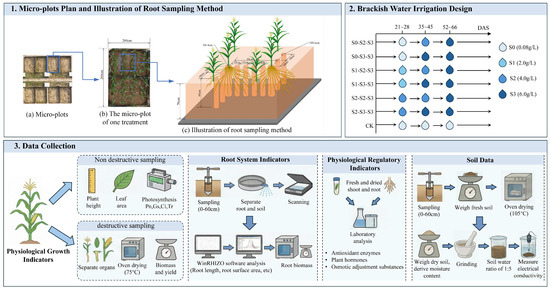
To investigate how different training modes of salt stress priming affect the dynamic variation of the salt tolerance threshold (STT) in summer maize, a micro-plot experiment with staged brackish water irrigation was conducted. Based on physiological and biochemical parameters, along with shoot and
[...] Read more.
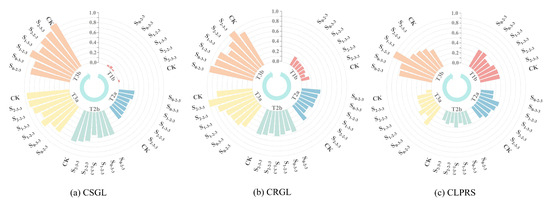
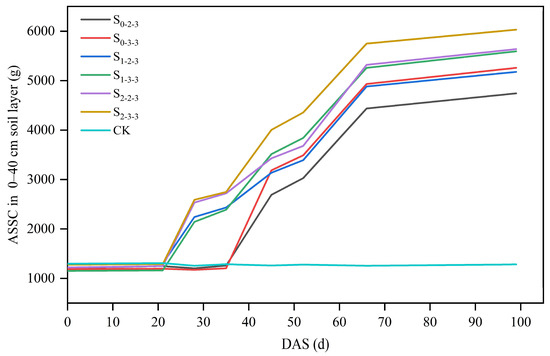
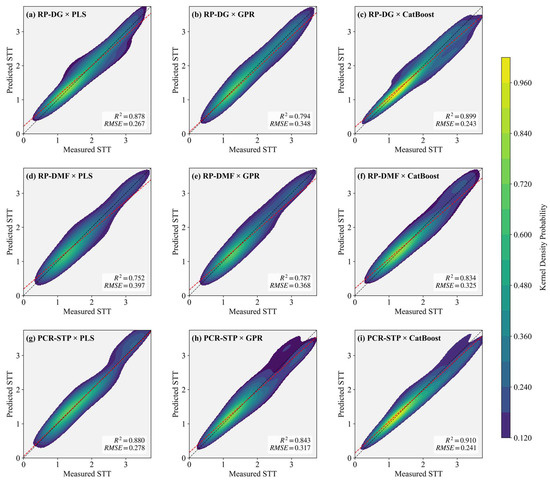
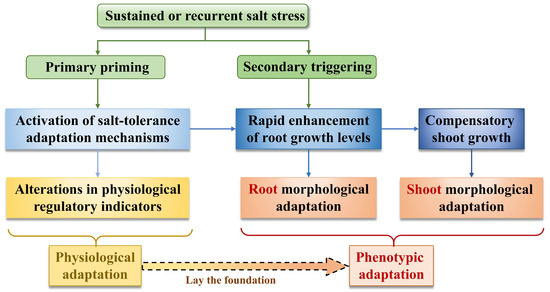
To investigate how different training modes of salt stress priming affect the dynamic variation of the salt tolerance threshold (STT) in summer maize, a micro-plot experiment with staged brackish water irrigation was conducted. Based on physiological and biochemical parameters, along with shoot and root traits, a dynamic salt tolerance coefficient (αSTT) was defined to quantify STT across growth stages. The results revealed a clear two-stage adaptive response to salt stress, consisting of an initial physiological adaptation phase followed by a phenotypic adaptation phase. Different training modes induced distinct salt stress memory effects by regulating the coordination between these two stages. Among treatments, the S1-2-3 regime—corresponding to mild (2.0 g·L−1), moderate (4.0 g·L−1), and severe (6.0 g·L−1) salinity applied sequentially at the six-leaf, ten-leaf, and tasseling stages—exhibited the most favorable adaptive outcome, with αSTT gradually recovering to 1.0 at later stages and a concomitantly higher STT. Furthermore, a unified predictive framework was established to estimate STT dynamics, within which the process-constrained PCR-STP pathway outperformed purely data-driven pathways. Overall, our study elucidates the dynamic nature of salt tolerance in summer maize and provides a scientific basis for optimizing brackish water irrigation regimes and refining salt stress modules in crop models.
Full article
(This article belongs to the Special Issue Modeling as a Tool to Explore Sustainable Irrigation Practices in Agriculture)
►
Show Figures
Figure 1