Article

Remote Sensing of Aerosols at Night with the CoSQM Sky Brightness Data
1
Département de Géomatique Appliquée, Université de Sherbrooke, Sherbrooke, QC J1K 2R1, Canada
2
Cégep de Sherbrooke, Département de Géomatique Appliquée, Université de Sherbrooke, Sherbrooke, QC J1E 4K1, Canada
3
Physics Department, Bishop’s University, Sherbrooke, QC J1M 1Z7, Canada
4
Centro de Investigación Atmosférica de Izaña, Agencia Estatal de Meteorología, 38001 Santa Cruz de Tenerife, Spain
*
Author to whom correspondence should be addressed.
Remote Sens. 2021, 13(22), 4623; https://doi.org/10.3390/rs13224623
Submission received: 31 July 2021 / Revised: 9 November 2021 / Accepted: 11 November 2021 / Published: 17 November 2021
(This article belongs to the Special Issue Light Pollution Monitoring Using Remote Sensing Data II)

Abstract

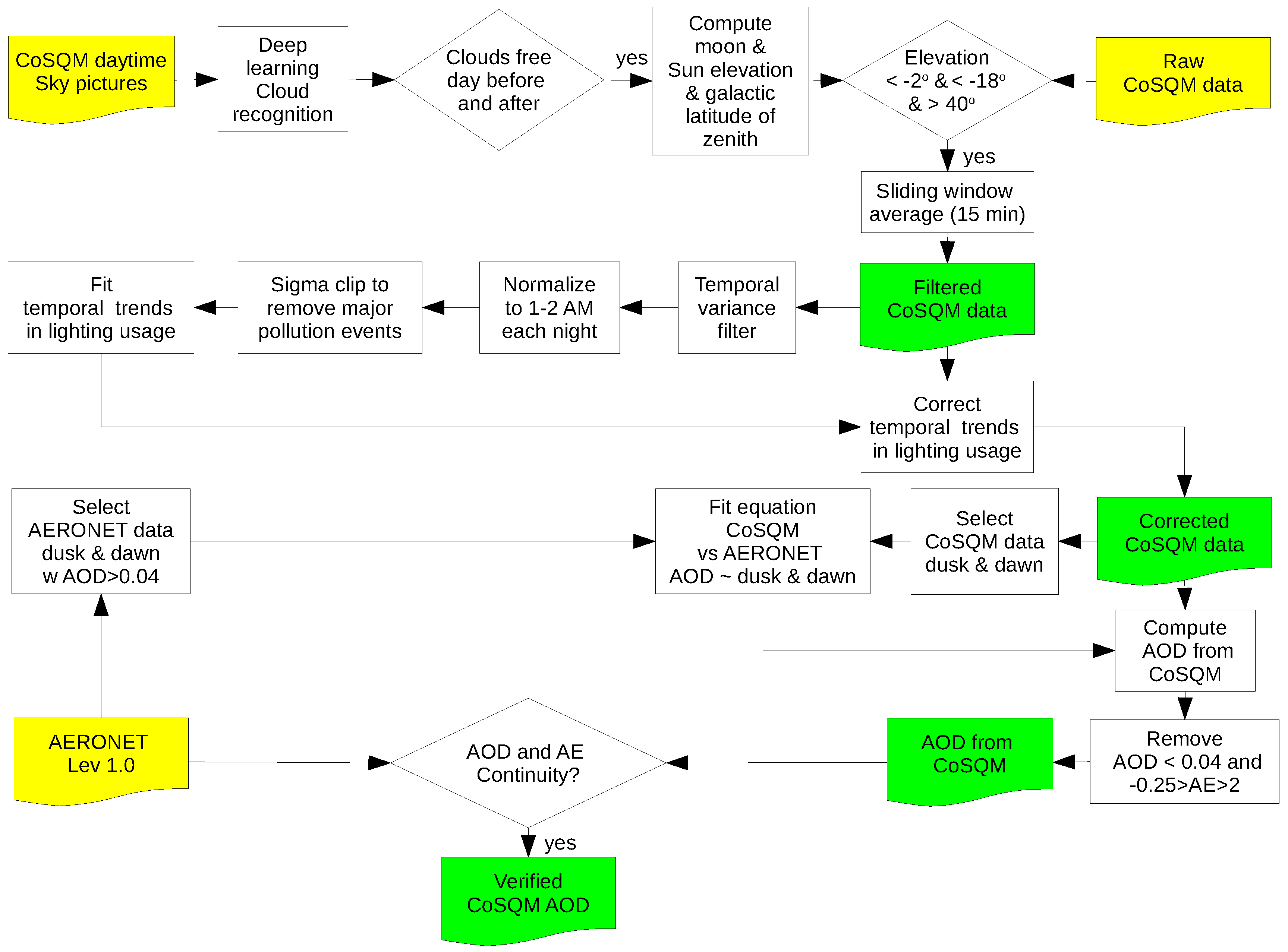
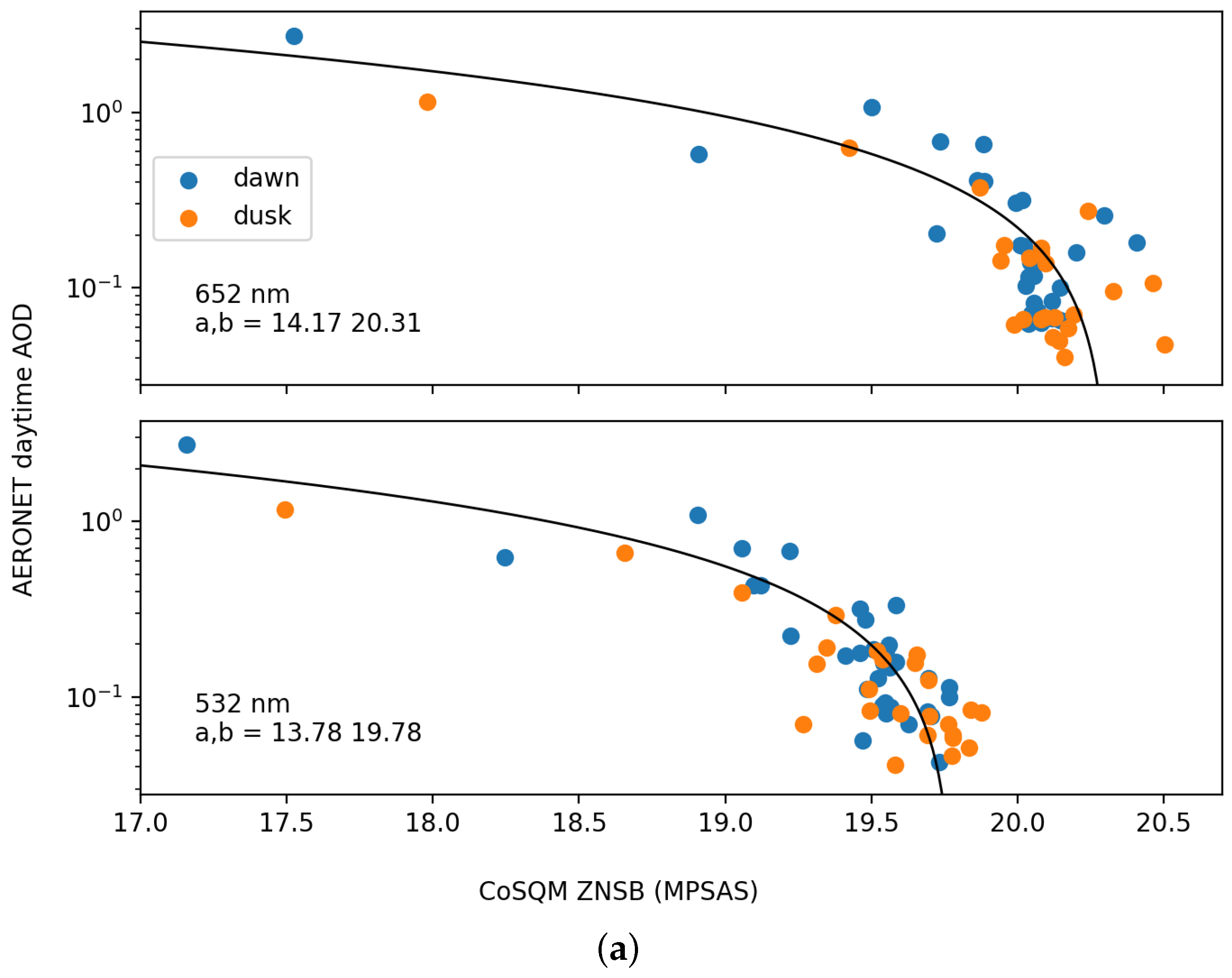
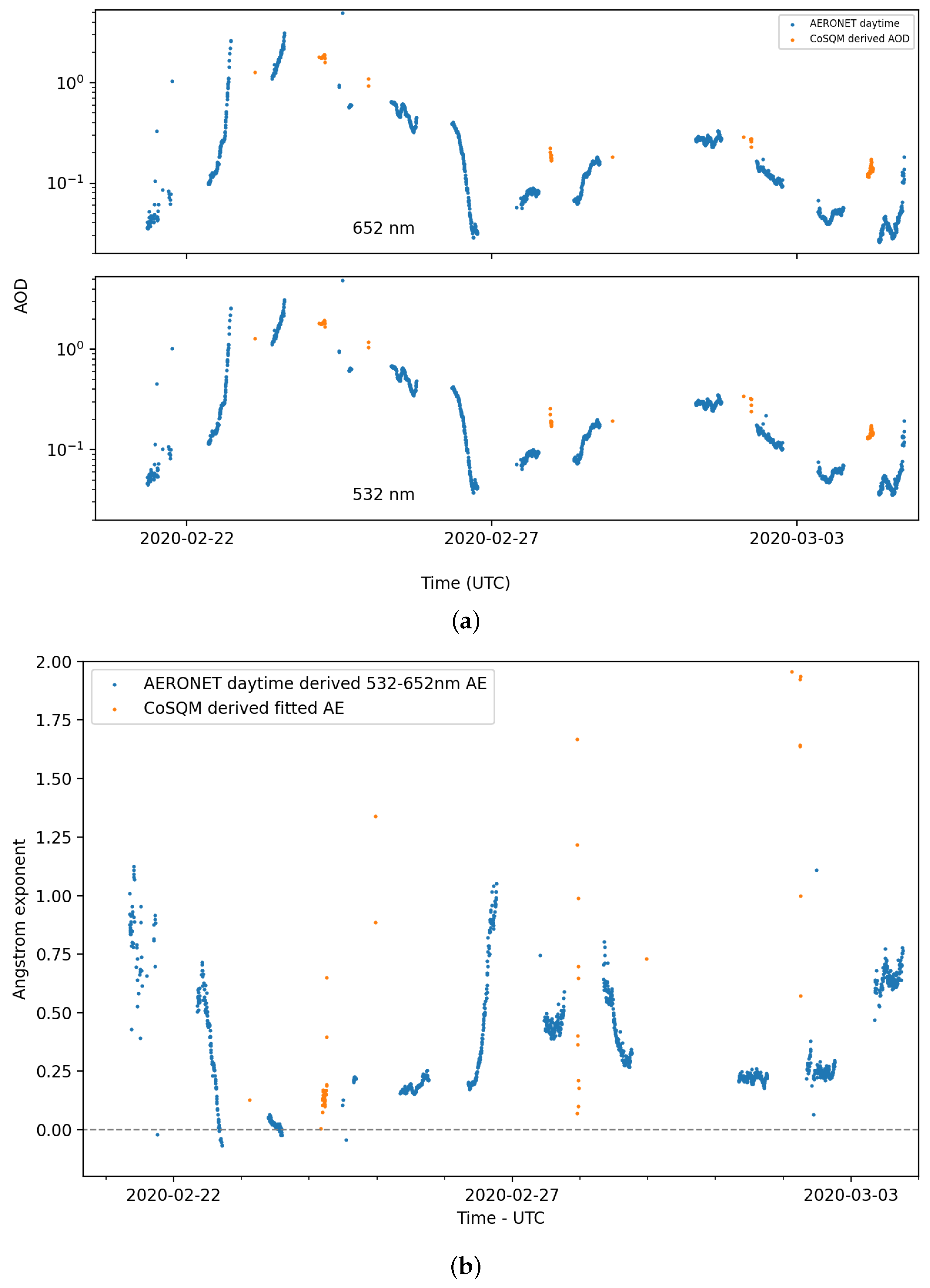
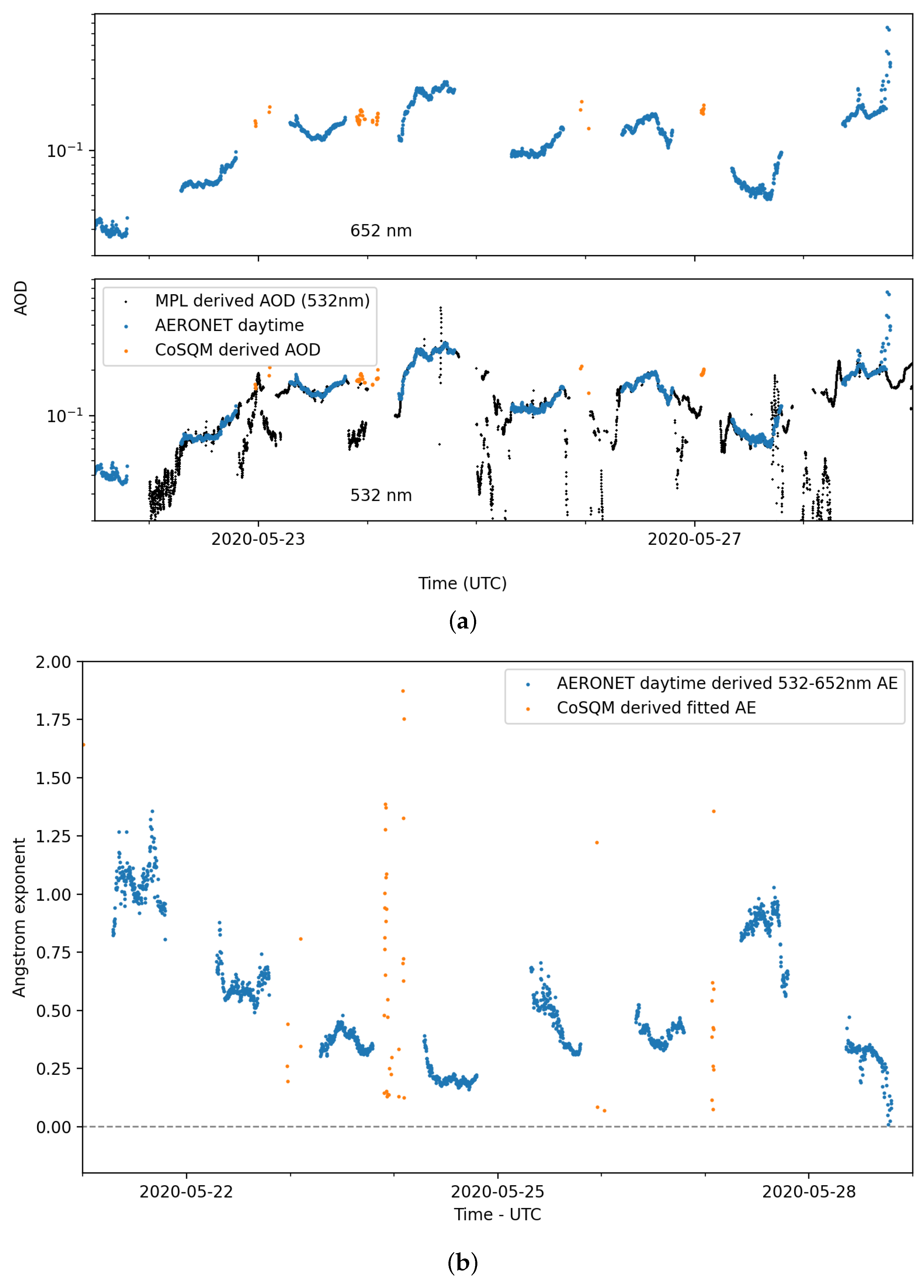
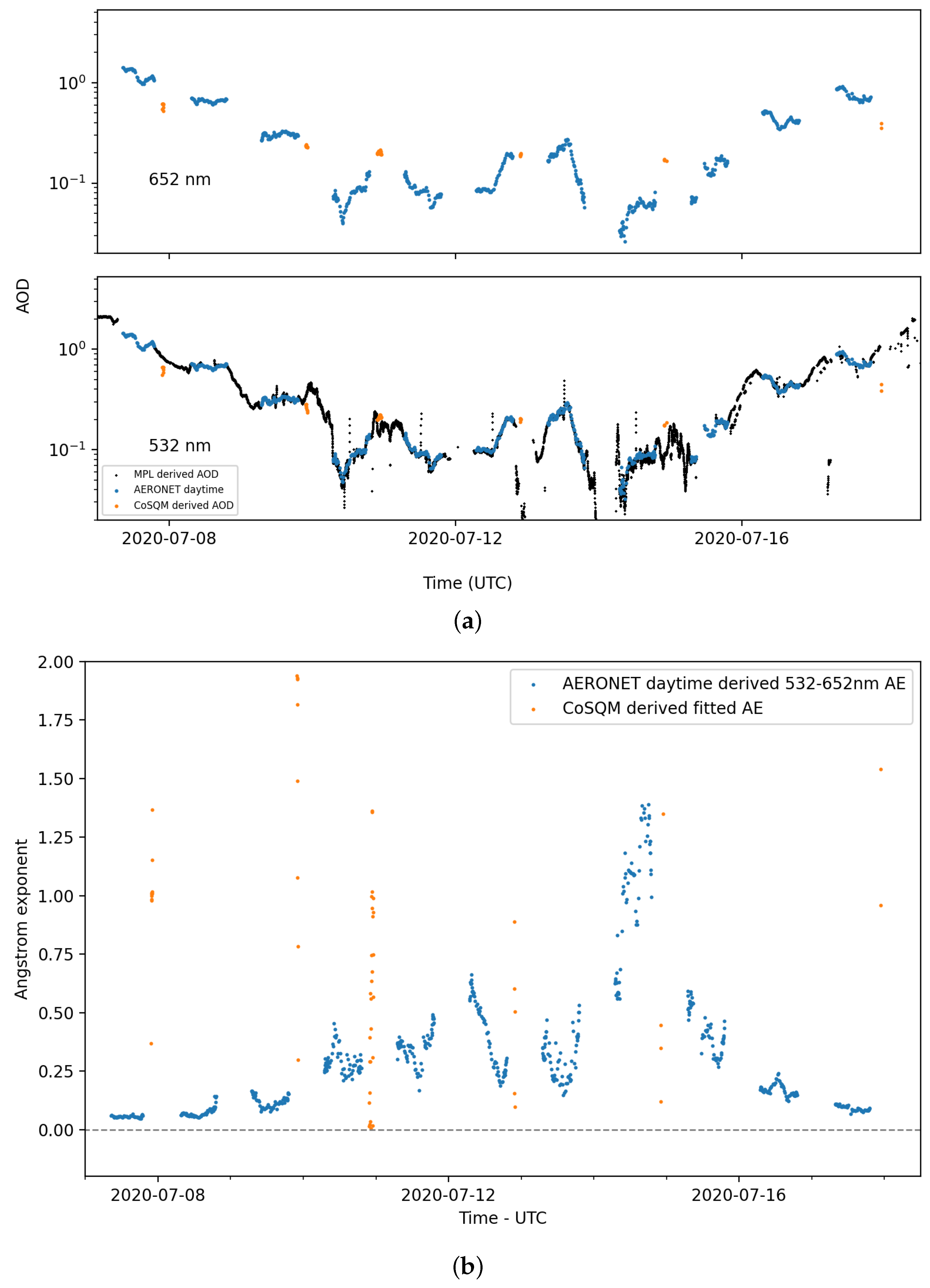
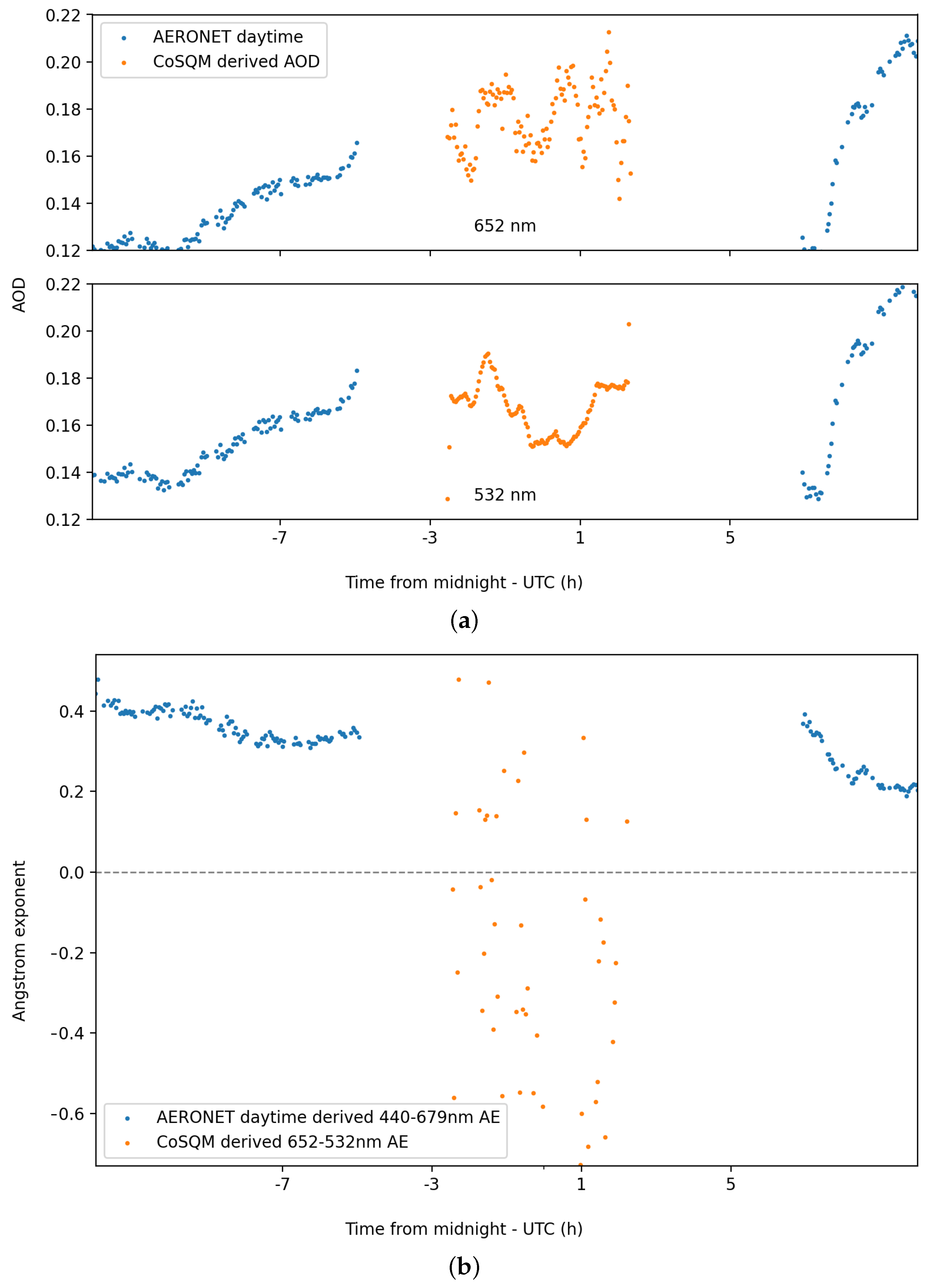
Aerosol optical depth is an important indicator of aerosol particle properties and their associated radiative impacts. AOD determination is very important to achieve relevant climate modelling. Most remote sensing techniques to retrieve aerosol optical depth are applicable to daytime given the high level of light available. The night represents half of the time but in such conditions only a few remote sensing methods are available. Among these approaches, the most reliable are moon photometers and star photometers. In this paper, we attempt to fill gaps in the aerosol detection performed with the aforementioned techniques using night sky brightness measurements during moonless nights with the novel CoSQM, a portable, low-cost and open-source multispectral photometer. In this paper, we present an innovative method for estimating the aerosol optical depth using an empirical relationship between the zenith night sky brightness measured at night with the CoSQM and the aerosol optical depth retrieved during daytime from the AErosol Robotic NETwork. Although the proposed method does not measure the AOD directly, an empirical relationship with the CE318-T is shown to give good results at the location of Santa Cruz de Tenerife. Such a method is especially suited to light-polluted regions with light pollution sources located within a few kilometres of the observation site. A coherent day-to-night aerosol optical depth and Ångström Exponent evolution in a set of 354 days and nights from August 2019 to February 2021 was verified at the location of Santa Cruz de Tenerife on the island of Tenerife, Spain. The preliminary uncertainty of this technique was evaluated using the variance under stable day-to-night conditions, set at 0.02 for aerosol optical depth and 0.75 for the Ångström Exponent. These results indicate the set of CoSQM and the proposed methodology appear to be a promising tool, adding new information on the optical properties of aerosols at night, which could be of key importance in improving climate predictions.
Keywords: artificial light at night; aerosol optical depth; radiometry; multispectral; measurement artificial light at night; aerosol optical depth; radiometry; multispectral; measurement