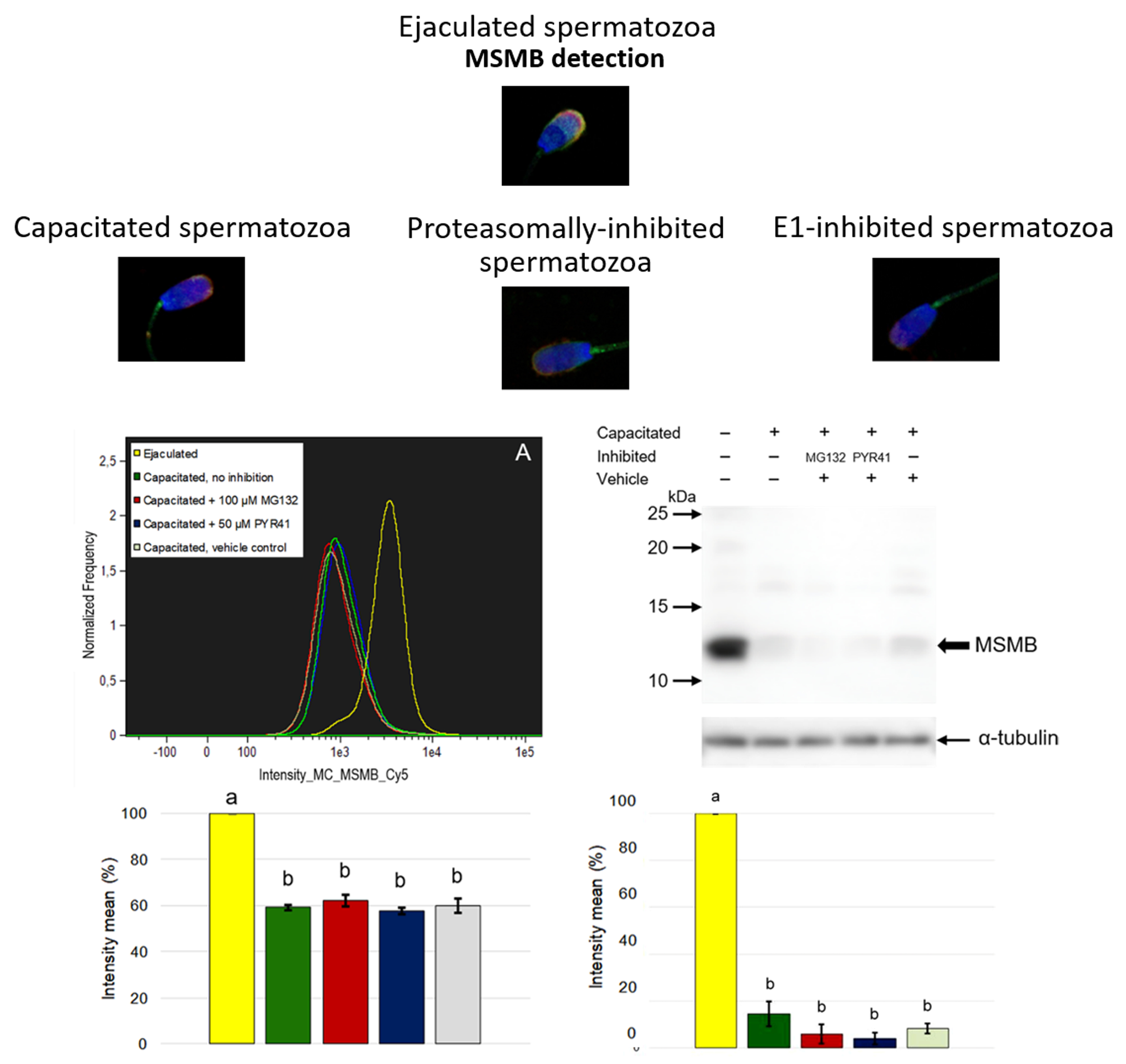

The Ubiquitin-Proteasome System Does Not Regulate the Degradation of Porcine β-Microseminoprotein during Sperm Capacitation


 ,
,  , and
, and
Abstract
1. Introduction
2. Results
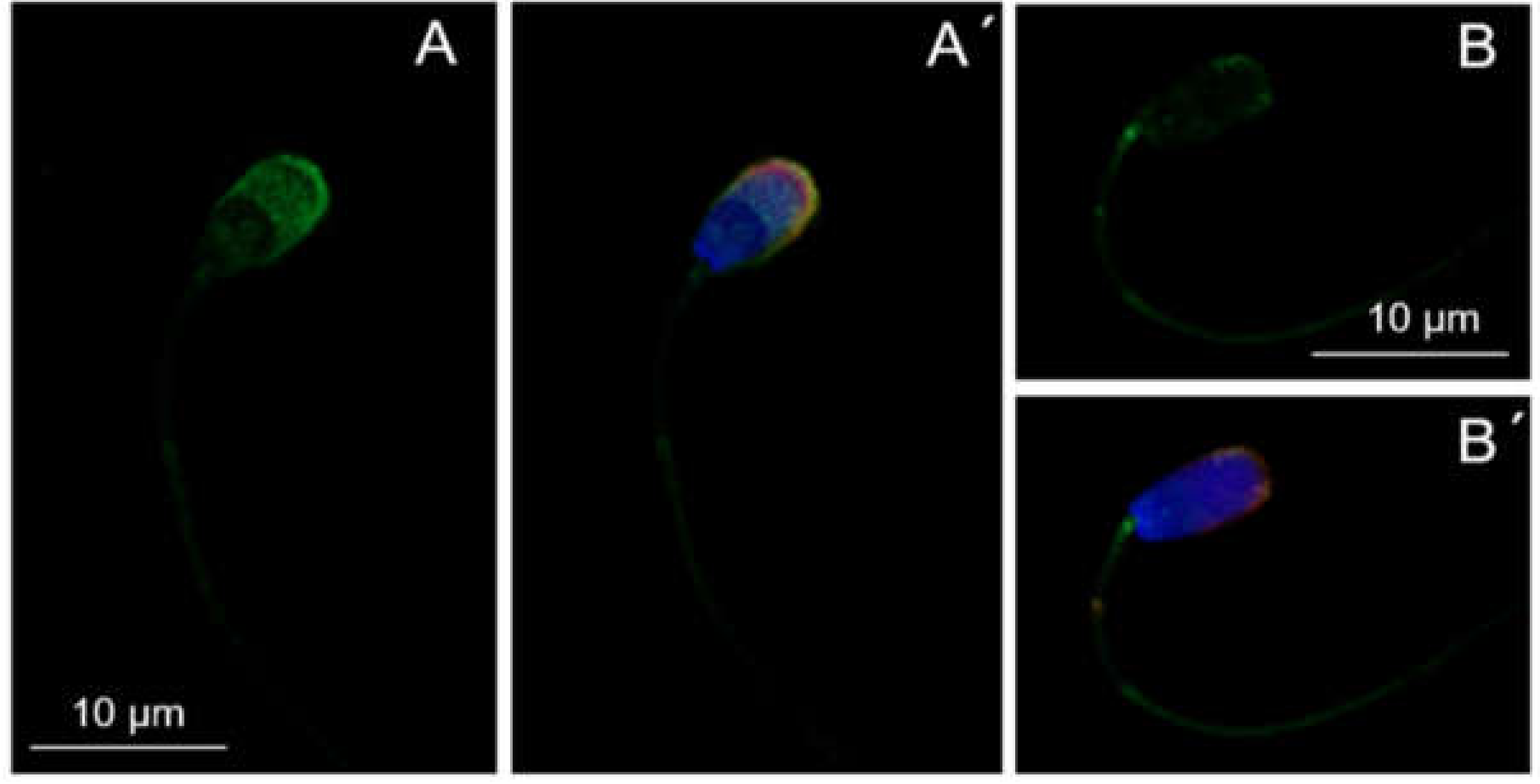
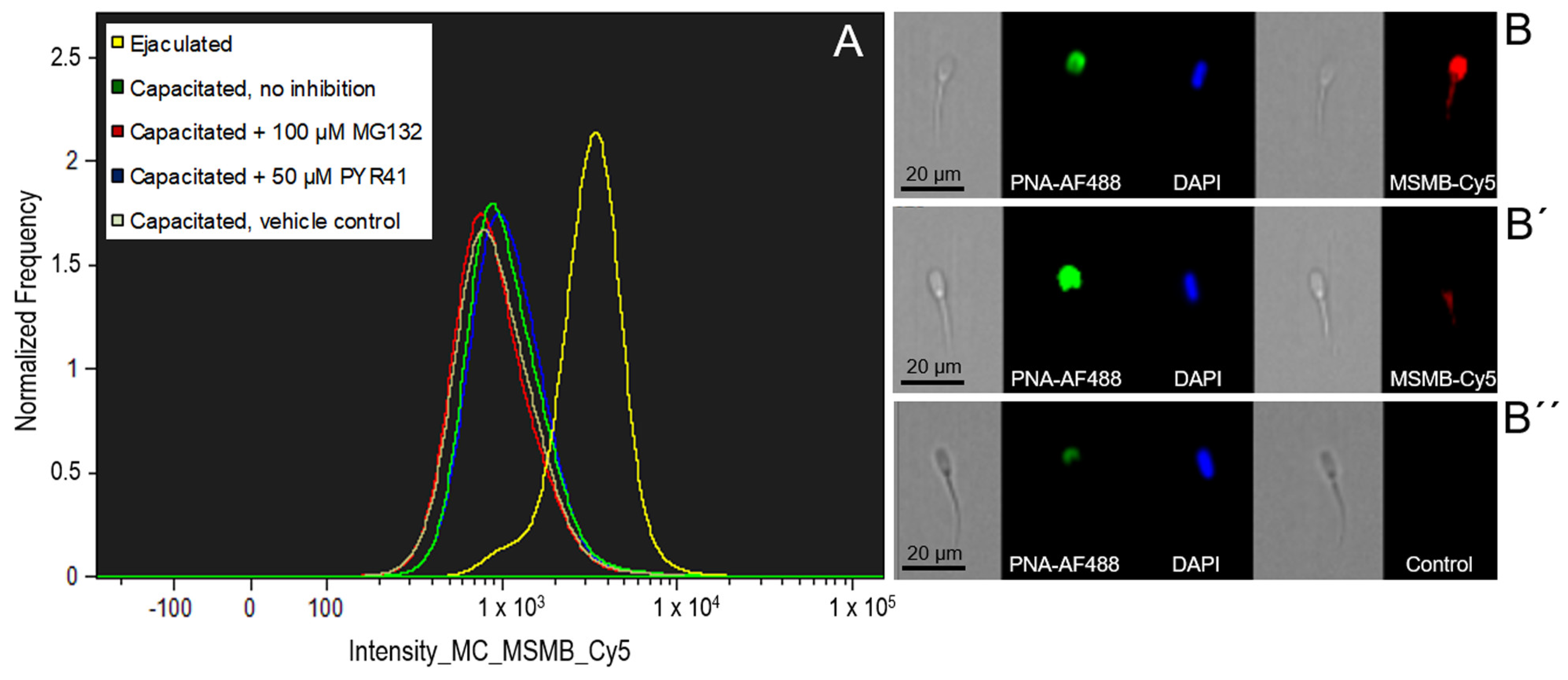
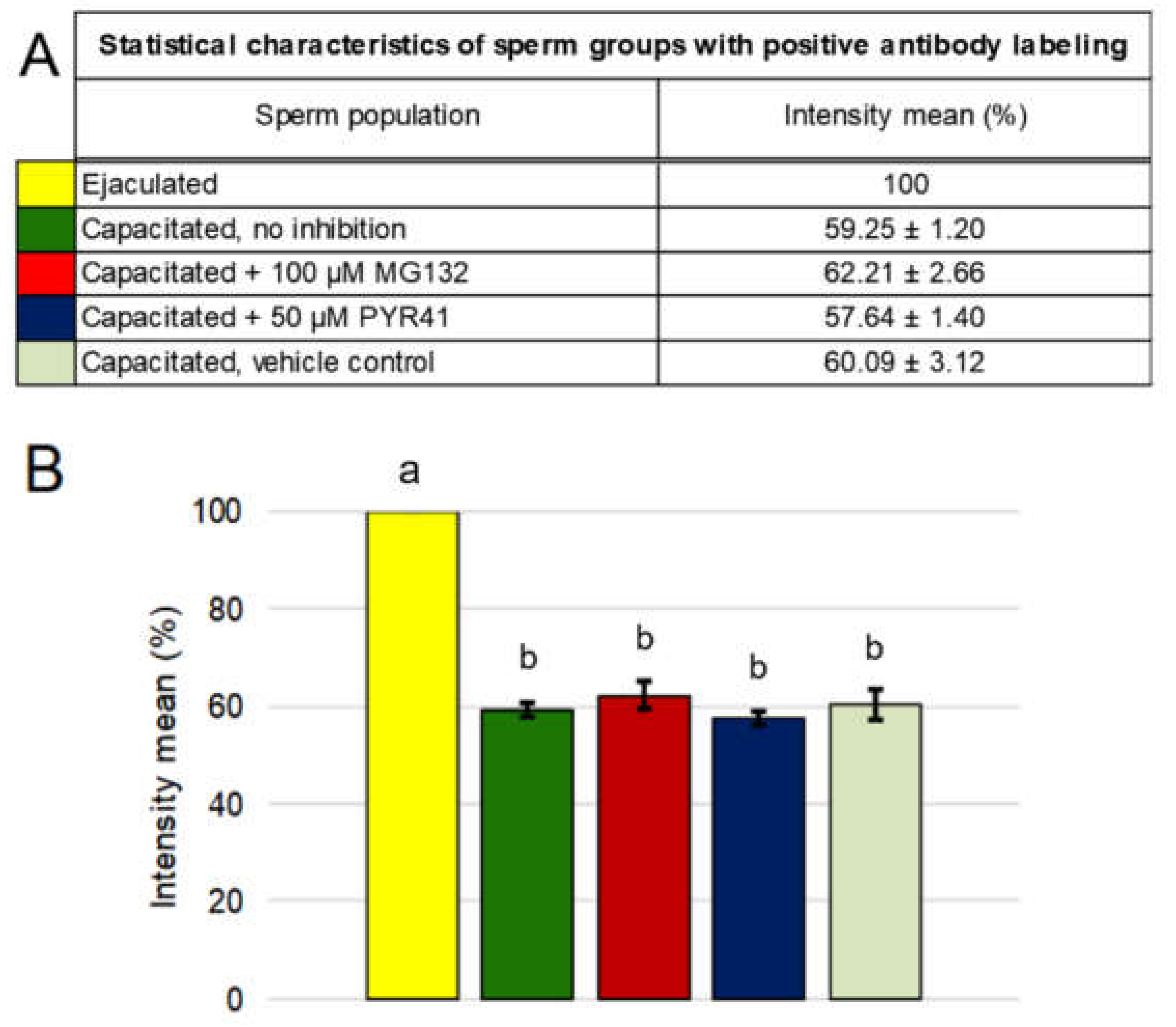
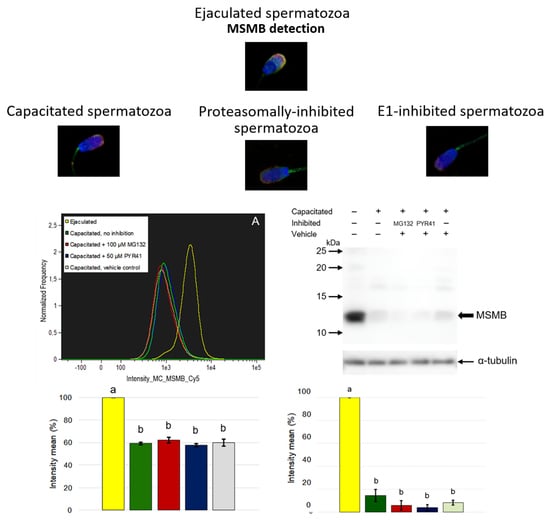
2.1. Localization and Changes of MSMB in Boar Spermatozoa during In Vitro Capacitation
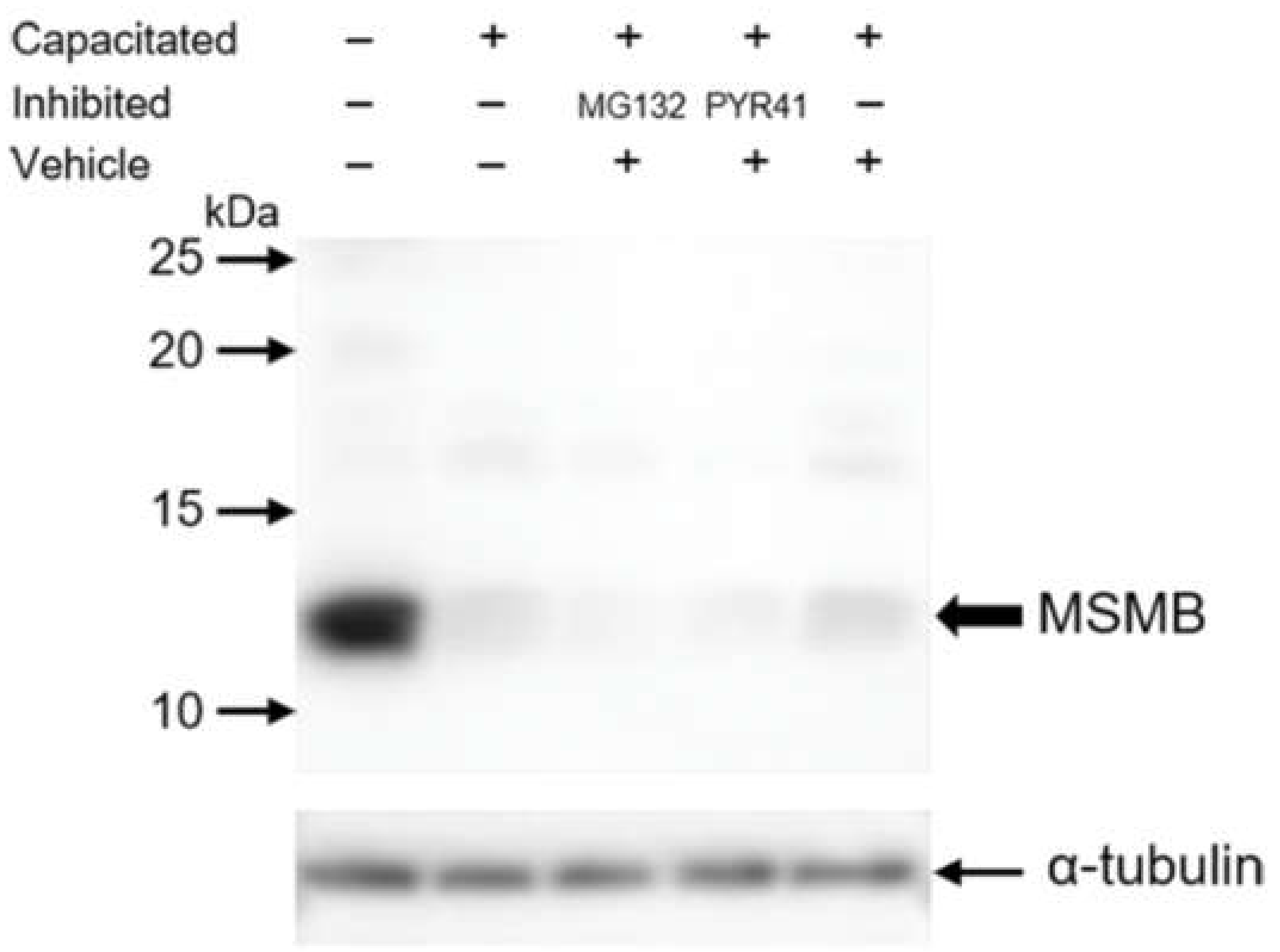
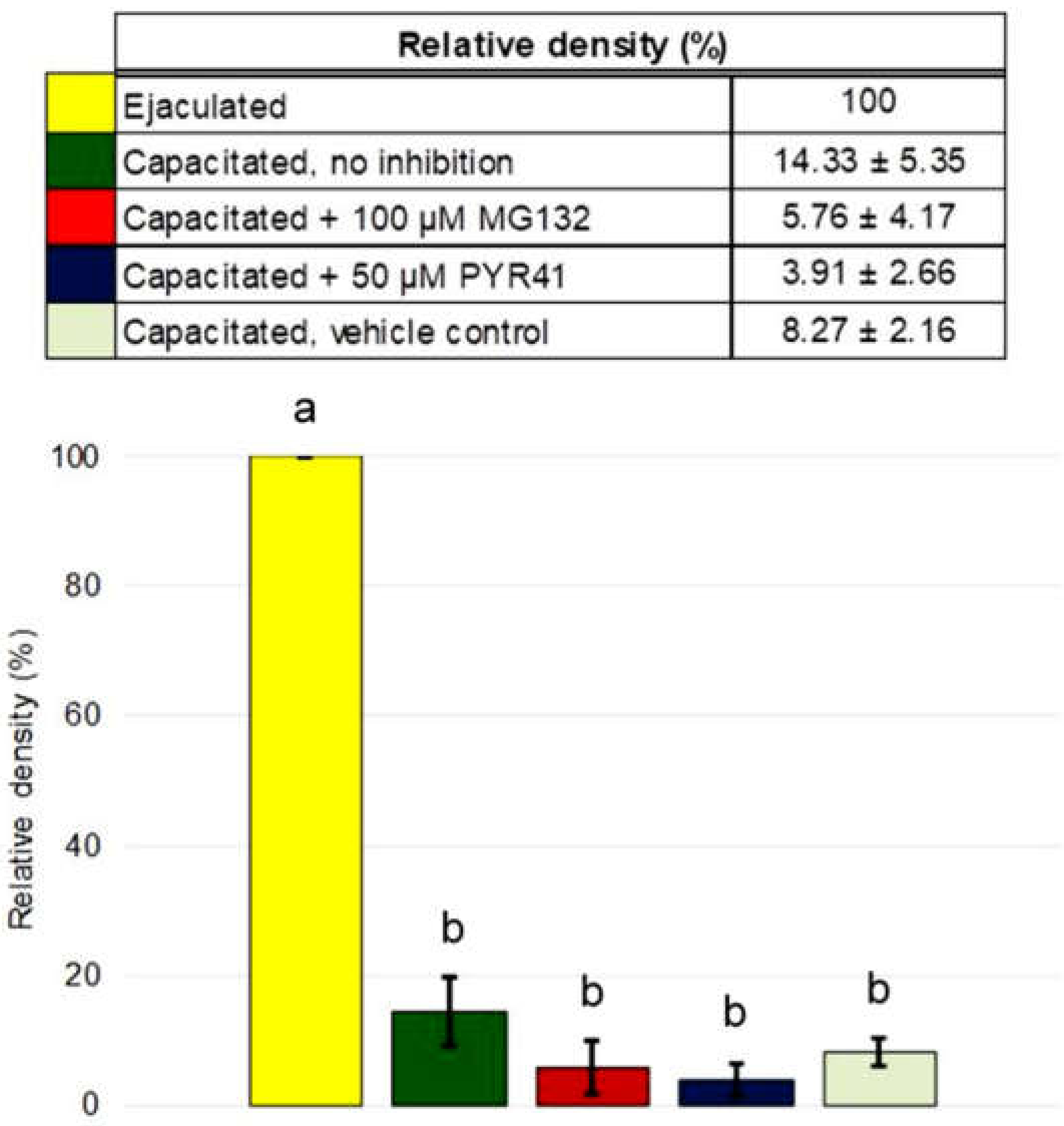
2.2. Detection of MSMB in Boar Sperm Extracts
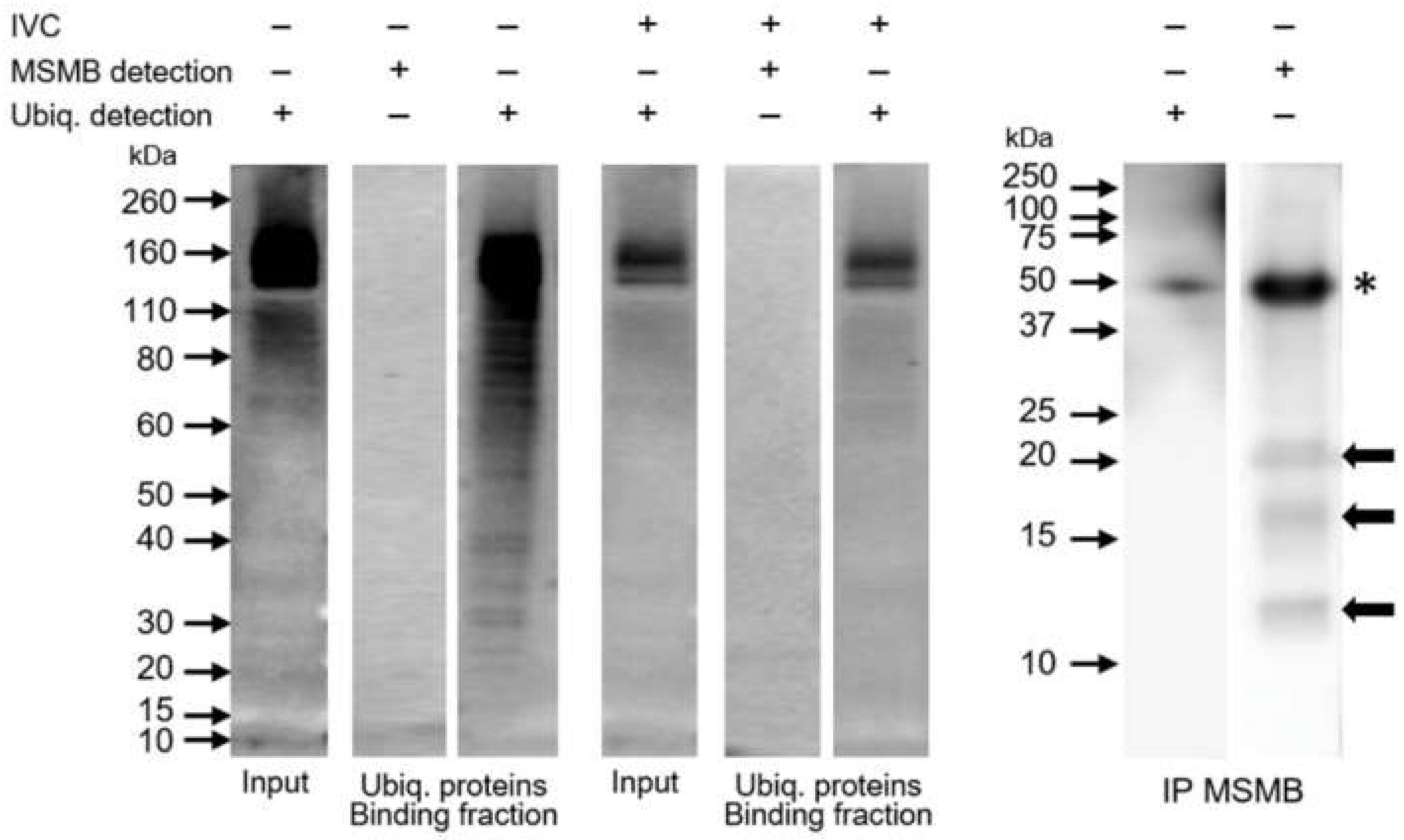
2.3. Detection of Polyubiquitinated Forms of MSMB in Boar Sperm Extracts
3. Discussion
4. Materials and Methods
4.1. Semen Collection and Processing
4.2. Sperm In Vitro Capacitation (IVC) under Proteasomal and E1 Inhibition
4.3. Sample Preparation for Flow Cytometric Analysis
4.4. Image-Based Flow Cytometry
4.5. Indirect Immunofluorescence Imaging
4.6. Sperm Protein Extraction
4.7. Immunoprecipitation
4.8. Affinity Isolation of Polyubiquitinated Proteins
4.9. SDS-PAGE and Western Blot
4.10. Protein Immunodetection
4.11. Statistical Analysis
Supplementary Materials
Author Contributions
Funding
Acknowledgments
Conflicts of Interest
References
- De Lamirande, E.; Leclerc, P.; Gagnon, C. Capacitation as a regulatory event that primes spermatozoa for the acrosome reaction and fertilization. Mol. Hum. Reprod. 1997, 3, 175–194. [Google Scholar] [CrossRef] [Scilit]
- Yanagimachi, R. Mammalian fertilization. In The Physiology of Reproduction, 2nd ed.; Knobil, E., Neill, J.D., Eds.; Raven Press: New York, NY, USA, 1994; Volume 1, pp. 189–317. [Google Scholar]
- Jonáková, V.; Ticha, M. Boar Seminal Plasma Proteins and Their Binding Properties. A Review. Collect. Czechoslov. Chem. Commun. 2004, 69, 461–475. [Google Scholar] [CrossRef] [Scilit]
- Jonáková, V.; Jonak, J.; Ticha, M. Proteomics of Male Seminal Plasma. In Reproductive Genomics in Domestic Animals, 1st ed.; Jiang, Z., Ott, T.L., Eds.; Blackwell Publishing: Oxford, UK, 2010; pp. 339–366. [Google Scholar]
- Ickowicz, D.; Finkelstein, M.; Breitbart, H. Mechanism of sperm capacitation and the acrosome reaction: Role of protein kinases. Asian J. Androl. 2012, 14, 816–821. [Google Scholar] [CrossRef] [Scilit]
- Kamada, M.; Mori, H.; Maeda, N.; Yamamoto, S.; Kunimi, K.; Takikawa, M.; Maegawa, M.; Aono, T.; Futaki, S.; Koide, S.S. β-Microseminoprotein/prostatic secretory protein is a member of immunoglobulin binding factor family. Biochim. Biophys. Acta (BBA)-Protein Struct. Mol. Enzym. 1998, 1388, 101–110. [Google Scholar] [CrossRef] [Scilit]
- Chao, C.F.; Chiou, S.T.; Jeng, H.; Chang, W.C. The Porcine Sperm Motility Inhibitor Is Identical to β-Microseminoprotein and Is a Competitive Inhibitor of Na+,K+-ATPase. Biochem. Biophys. Res. Commun. 1996, 218, 623–628. [Google Scholar] [CrossRef] [Scilit]
- Lazure, C.; Villemure, M.; Gauthier, D.; Naudé, R.J.; Mbikay, M. Characterization of ostrich (Struthio camelus) β-microseminoprotein (MSP): Ideication of homologous sequences in EST databases and analysis of their evolution during speciation. Protein Sci. 2001, 10, 2207–2218. [Google Scholar] [CrossRef] [Scilit]
- Akiyama, K.; Yoshioka, Y.; Schmid, K.; Offner, G.; Troxler, R.F.; Tsuda, R.; Hara, M. The amino acid sequence of human β-microseminoprotein. Biochim. Biophys. Acta (BBA)-Protein Struct. Mol. Enzym. 1985, 829, 288–294. [Google Scholar] [CrossRef] [Scilit]
- Wang, I.; Yu, T.A.; Wu, S.H.; Chang, W.C.; Chen, C. Disulfide pairings and secondary structure of porcine β-microseminoprotein. FEBS Lett. 2003, 541, 80–84. [Google Scholar] [CrossRef] [Scilit]
- Franchi, N.A.; Avendaño, C.; Molina, R.I.; Tissera, A.D.; Maldonado, C.A.; Oehninger, S.; Coronel, C.E. β-Microseminoprotein in human spermatozoa and its potential role in male fertility. Reproduction 2008, 136, 157–166. [Google Scholar] [CrossRef] [Scilit]
- Weiber, H.; Borch, K.; Sundler, F.; Fernlund, P. β-Microseminoprotein in Gastric Carcinoids: A Marker of Tumour Progression. Digestion 1999, 60, 440–448. [Google Scholar] [CrossRef] [Scilit]
- Stott-Miller, M.; Wright, J.L.; Stanford, J.L. MSMB gene variant alters the association between prostate cancer and number of sexual partners. Prostate 2013, 73, 1803–1809. [Google Scholar] [CrossRef] [Scilit]
- Sjoblom, L.; Saramäki, O.; Annala, M.; Leinonen, K.; Nättinen, J.; Tolonen, T.; Wahlfors, T.; Nykter, M.; Bova, G.S.; Schleutker, J.; et al. Microseminoprotein-Beta Expression in Different Stages of Prostate Cancer. PLoS ONE 2016, 11, e0150241. [Google Scholar] [CrossRef] [Scilit]
- Bergström, S.H.; Järemo, H.; Nilsson, M.; Adamo, H.H.; Bergh, A. Prostate tumors downregulate microseminoprotein-beta (MSMB) in the surrounding benign prostate epithelium and this response is associated with tumor aggressiveness. Prostate 2017, 78, 257–265. [Google Scholar] [CrossRef] [Scilit]
- Smith Byrne, K.; Appleby, P.N.; Key, T.J.; Holmes, M.V.; Fensom, G.K.; Agudo, A.; Ardanaz, E.; Boeing, H.; Bueno-De-Mesquita, H.B.; Chirlaque, M.D.; et al. The role of plasma microseminoprotein-beta in prostate cancer: An observational nested case–control and Mendelian randomization study in the European prospective investigation into cancer and nutrition. Ann. Oncol. 2019, 30, 983–989. [Google Scholar] [CrossRef] [Scilit]
- Anklesaria, J.H.; Kulkarni, B.J.; Pathak, B.R.; Mahale, S.D. Identification of CRISP2 from human sperm as PSP94-binding protein and generation of CRISP2-specific anti-peptide antibodies. J. Pept. Sci. 2016, 22, 383–390. [Google Scholar] [CrossRef] [Scilit]
- Da Ros, V.G.; Muñoz, M.W.; Battistone, M.A.; Brukman, N.G.; Carvajal, G.; Curci, L.; Gómez-Elías, M.D.; Cohen, D.J.; Cuasnicu, P.S. From the Epididymis to the Egg: Participation of CRISP Proteins in Mammalian Fertilization. Asian J. Androl. 2015, 17, 711–715. [Google Scholar] [CrossRef] [Scilit]
- Jeng, H.; Chu, H.H.; Cheng, W.T.; Chang, W.C.; Su, S.J. Secretory origin and temporal appearance of the porcine β-microseminoprotein (sperm motility inhibitor) in the boar reproductive system. Mol. Reprod. Dev. 2000, 58, 63–68. [Google Scholar] [CrossRef]
- Postlerova, P.; Liberda, J.; Tichá, M.; Jonáková, V. Isolation of non-heparin-binding and heparin-binding proteins of boar prostate. J. Chromatogr. B 2002, 770, 137–143. [Google Scholar] [CrossRef] [Scilit]
- Maňásková, P.; Ryslava, H.; Ticha, M.; Jonáková, V. Characterization of Proteins from Boar Prostate. Am. J. Reprod. Immunol. 2002, 48, 283–290. [Google Scholar] [CrossRef] [Scilit]
- Postlerova, P.; Davidová, N.; Sulc, M.; Philimonenko, A.; Hozak, P.; Jonáková, V. Reproductive tissue expression and sperm localization of porcine beta-microseminoprotein. Cell. Tissue. Res. 2011, 344, 341–353. [Google Scholar] [CrossRef] [Scilit]
- Jeng, H.; Liu, K.M.; Chang, W.C. Purification and Characterization of Reversible Sperm Motility Inhibitors from Porcine Seminal Plasma. Biochem. Biophys. Res. Commun. 1993, 191, 435–440. [Google Scholar] [CrossRef] [Scilit]
- Yi, Y.J.; Zimmerman, S.W.; Manandhar, G.; Odhiambo, J.F.; Kennedy, C.; Jonáková, V.; Maňásková-Postlerová, P.; Sutovsky, M.; Park, C.S.; Sutovsky, P. Ubiquitin-activating enzyme (UBA1) is required for sperm capacitation, acrosomal exocytosis and sperm-egg coat penetration during porcine fertilization. Int. J. Androl. 2011, 35, 196–210. [Google Scholar] [CrossRef] [Scilit]
- Zigo, M.; Jonakova, V.; Manaskova-Postlerova, P.; Kerns, K.; Sutovsky, P. Ubiquitin-proteasome system participates in the de-aggregation of spermadhesins and DQH protein during boar sperm capacitation. Reproduction 2019, 157, 283–295. [Google Scholar] [CrossRef] [Scilit]
- Glickman, M.H.; Ciechanover, A. The Ubiquitin-Proteasome Proteolytic Pathway: Destruction for the Sake of Construction. Physiol. Rev. 2002, 82, 373–428. [Google Scholar] [CrossRef] [Scilit]
- Sutovsky, P. Ubiquitin-dependent proteolysis in mammalian spermatogenesis, fertilization, and sperm quality control: Killing three birds with one stone. Microsc. Res. Tech. 2003, 61, 88–102. [Google Scholar] [CrossRef] [Scilit]
- Sutovsky, P. Sperm proteasome and fertilization. Reproduction 2011, 142, 1–14. [Google Scholar] [CrossRef] [Scilit]
- Kerns, K.; Morales, P.; Sutovsky, P. Regulation of Sperm Capacitation by the 26S Proteasome: An Emerging New Paradigm in Spermatology. Biol. Reprod. 2016, 94, 117. [Google Scholar] [CrossRef] [Scilit]
- Sutovsky, P.; Moreno, R.; Ramalho-Santos, J.; Dominko, T.; Thompson, E.W.E.; Schatten, G. A putative, ubiquitin-dependent mechanism for the recognition and elimination of defective spermatozoa in the mammalian epididymis. J. Cell Sci. 2001, 114, 1665–1675. [Google Scholar]
- Zimmerman, S.W.; Manandhar, G.; Yi, Y.-J.; Gupta, S.K.; Sutovsky, M.; Odhiambo, J.F.; Powell, M.D.; Miller, D.J.; Sutovsky, P. Sperm Proteasomes Degrade Sperm Receptor on the Egg Zona Pellucida during Mammalian Fertilization. PLoS ONE 2011, 6, e17256. [Google Scholar] [CrossRef] [Scilit]
- Miles, E.L.; O’Gorman, C.; Zhao, J.; Samuel, M.; Walters, E.; Yi, Y.-J.; Sutovsky, M.; Prather, R.S.; Wells, K.D.; Sutovsky, P. Transgenic pig carrying green fluorescent proteasomes. Proc. Natl. Acad. Sci. USA 2013, 110, 6334–6339. [Google Scholar] [CrossRef] [Scilit]
- Kong, M.; Diaz, E.S.; Morales, P. Participation of the Human Sperm Proteasome in the Capacitation Process and Its Regulation by Protein Kinase A and Tyrosine Kinase. Biol. Reprod. 2009, 80, 1026–1035. [Google Scholar] [CrossRef] [Scilit]
- Hillman, P.; Ickowicz, D.; Vizel, R.; Breitbart, H. Dissociation between AKAP3 and PKARII Promotes AKAP3 Degradation in Sperm Capacitation. PLoS ONE 2013, 8, e68873. [Google Scholar] [CrossRef] [Scilit]
- Zigo, M.; Manaskova-Postlerova, P.; Jonakova, V.; Kerns, K.; Sutovsky, P. Compartmentalization of the proteasome-interacting proteins during sperm capacitation. Sci. Rep. 2019, 9, 1–18. [Google Scholar] [CrossRef] [Scilit]
- Kerns, K.; Zigo, M.; Drobnis, E.Z.; Sutovsky, M.; Sutovsky, P. Zinc ion flux during mammalian sperm capacitation. Nat. Commun. 2018, 9, 2061. [Google Scholar] [CrossRef] [Scilit]
- Kennedy, C.E.; Krieger, K.B.; Sutovsky, M.; Xu, W.; Vargovič, P.; Didion, B.A.; Ellersieck, M.R.; Hennessy, M.E.; Verstegen, J.; Oko, R.; et al. Protein expression pattern of PAWP in bull spermatozoa is associated with sperm quality and fertility following artificial insemination. Mol. Reprod. Dev. 2014, 81, 436–449. [Google Scholar] [CrossRef] [Scilit]
- Sutovsky, P. Visualization of Sperm Accessory Structures in the Mammalian Spermatids, Spermatozoa, and Zygotes by Immunofluorescence, Confocal, and Immunoelectron Microscopy. In Germ Cell Protocols. Methods in Molecular Biology™; Schatten, H., Ed.; Humana Press: Totowa, NJ, USA, 2004; Volume 253, pp. 59–77. [Google Scholar] [CrossRef] [Scilit]


© 2020 by the authors. Licensee MDPI, Basel, Switzerland. This article is an open access article distributed under the terms and conditions of the Creative Commons Attribution (CC BY) license (http://creativecommons.org/licenses/by/4.0/).
Share and Cite
Tumova, L.; Zigo, M.; Sutovsky, P.; Sedmikova, M.; Postlerova, P. The Ubiquitin-Proteasome System Does Not Regulate the Degradation of Porcine β-Microseminoprotein during Sperm Capacitation. Int. J. Mol. Sci. 2020, 21, 4151. https://doi.org/10.3390/ijms21114151
Tumova L, Zigo M, Sutovsky P, Sedmikova M, Postlerova P. The Ubiquitin-Proteasome System Does Not Regulate the Degradation of Porcine β-Microseminoprotein during Sperm Capacitation. International Journal of Molecular Sciences. 2020; 21(11):4151. https://doi.org/10.3390/ijms21114151
Chicago/Turabian StyleTumova, Lucie, Michal Zigo, Peter Sutovsky, Marketa Sedmikova, and Pavla Postlerova. 2020. "The Ubiquitin-Proteasome System Does Not Regulate the Degradation of Porcine β-Microseminoprotein during Sperm Capacitation" International Journal of Molecular Sciences 21, no. 11: 4151. https://doi.org/10.3390/ijms21114151
APA StyleTumova, L., Zigo, M., Sutovsky, P., Sedmikova, M., & Postlerova, P. (2020). The Ubiquitin-Proteasome System Does Not Regulate the Degradation of Porcine β-Microseminoprotein during Sperm Capacitation. International Journal of Molecular Sciences, 21(11), 4151. https://doi.org/10.3390/ijms21114151