11 pages, 2502 KB  
Case Report
Median Sternotomy Closure Using an Ultra-High-Molecular-Weight Polyethylene Suture Following Thymectomy in a Dog: A Case Report
by Songju Park, Jun Suk Jo, Sangyul Lee, Min-Young Kim and Hwi-Yool Kim
Vet. Sci. 2026, 13(4), 311; https://doi.org/10.3390/vetsci13040311 - 25 Mar 2026
Viewed by 257
Abstract
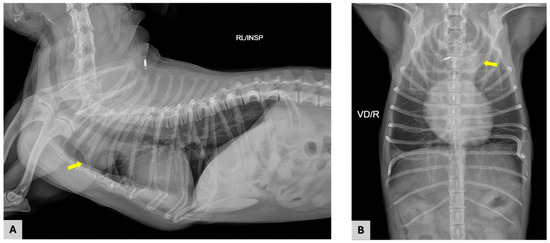
A 10-year-old castrated male Chihuahua weighing 3.06 kg was presented with a chronic, progressively worsening cough of five months’ duration. Diagnostic imaging, including thoracic radiography and computed tomography, identified a well-defined cranial mediastinal mass consistent with a thymic tumor. Surgical excision was performed [...] Read more.
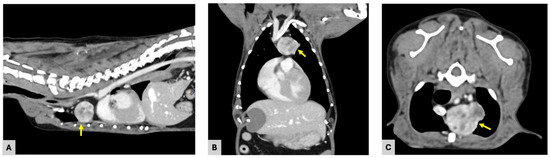
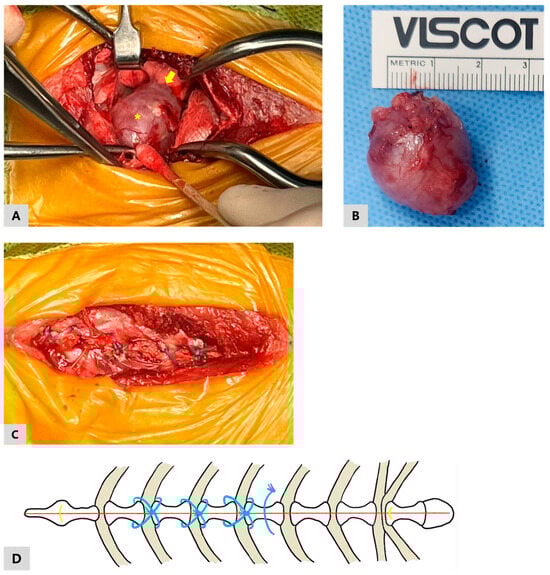
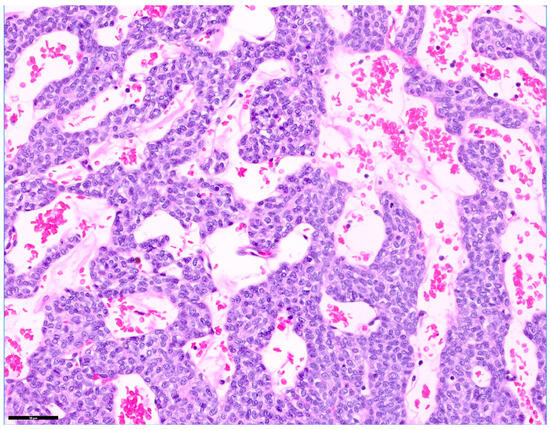
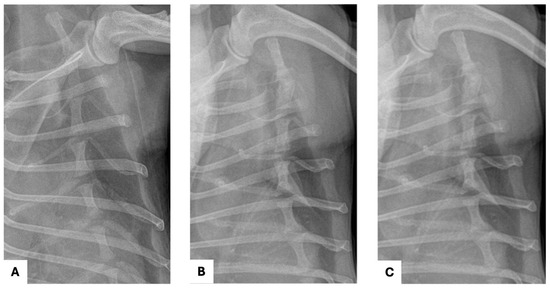
A 10-year-old castrated male Chihuahua weighing 3.06 kg was presented with a chronic, progressively worsening cough of five months’ duration. Diagnostic imaging, including thoracic radiography and computed tomography, identified a well-defined cranial mediastinal mass consistent with a thymic tumor. Surgical excision was performed via median sternotomy with complete thymectomy. Following tumor removal, sternal closure was achieved using a non-absorbable ultra-high-molecular-weight polyethylene (UHMWPE) suture material (FiberWire®, Arthrex, Naples, FL, USA). Histopathological examination confirmed the diagnosis of an epithelial-predominant thymoma with narrow but complete surgical margins. Postoperative recovery was uneventful, and the dog was discharged three days after surgery. Clinical signs, including coughing, progressively improved during follow-up. Radiographic evaluation performed up to postoperative day 57 demonstrated stable sternal alignment without evidence of dehiscence, implant-related complications, or disease recurrence. This report describes the first clinical case of FiberWire use for median sternotomy closure following thymectomy in a dog. The favorable clinical and radiographic outcomes observed during postoperative follow-up suggest that FiberWire may represent a viable alternative to traditional stainless-steel wire for sternal fixation in canine thoracic surgery. Full article
(This article belongs to the Section Veterinary Surgery)
Show Figures

Figure 1

19 pages, 877 KB  
Article
Effects of Laparoscopic and Open Ovariectomy on Cortisol and Oxidative Stress in Dogs Under the Same Anesthesia Protocol
by Sandra Čechovičienė, Ieva Šidlauskaitė, Aidas Grigonis, Birutė Karvelienė, Ieva Sarapinienė, Ieva Čiapienė, Sigita Kerzienė, Vita Riškevičienė and Dalia Juodžentė
Vet. Sci. 2026, 13(4), 310; https://doi.org/10.3390/vetsci13040310 - 24 Mar 2026
Viewed by 307
Abstract
The main distinction between open and laparoscopic ovariectomy (OVE) is pneumoperitoneum (PNP) and anesthesia management. The objective of this study was to evaluate the effect of laparoscopic and open OVE on plasma cortisol, oxidative stress (OS), and cardiorespiratory parameters in dogs under the [...] Read more.
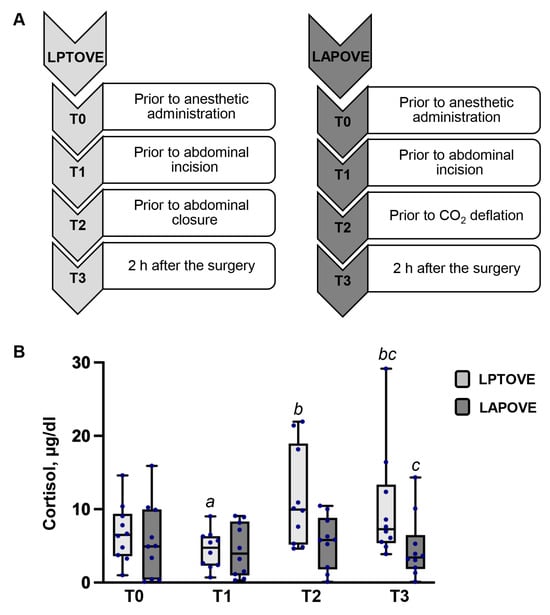
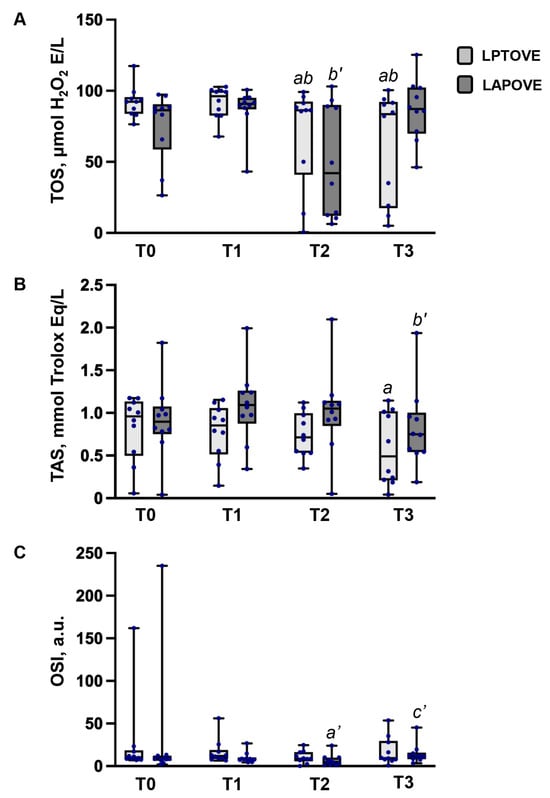
The main distinction between open and laparoscopic ovariectomy (OVE) is pneumoperitoneum (PNP) and anesthesia management. The objective of this study was to evaluate the effect of laparoscopic and open OVE on plasma cortisol, oxidative stress (OS), and cardiorespiratory parameters in dogs under the same anesthesia protocol. Twenty healthy female dogs were assigned to laparotomy OVE (LPTOVE, n = 10) and laparoscopic OVE (LAPOVE, n = 10) groups. OS was assessed using the total oxidant status (TOS), total antioxidant status (TAS), and oxidative stress index (OSI). Blood samples were collected prior to sedation (T0); prior to surgical incision (T1); prior to surgical closure in the LPTOVE group; and prior to the deflation of CO2 in the LAPOVE group (T2), 2 h after the surgery (T3). The monitored cardiorespiratory parameters were heart rate, respiratory rate, and end-tidal CO2 (EtCO2). Cortisol levels at T3 were markedly elevated in the LPTOVE group compared to the LAPOVE group. No substantial changes in TOS, TAS, or OSI between groups were detected. In the LAPOVE group, TOS diminished at T2, but TAS declined and OSI escalated at T3. EtCO2 levels were elevated in the LAPOVE group at the end of the procedure. These findings support laparoscopic OVE as a less traumatic alternative to open surgery, with careful management of PNP and anesthesia recommended to minimize postoperative stress. Full article
Show Figures

Figure 1

16 pages, 1053 KB  
Article
Closely Related Escherichia coli Strains with Multiple Resistances Found on Co-Managed Pig Farms Despite Marked Differences in Farm Antimicrobial Drug Usage
by Francesca Martelli, Andrew Wales, Martina Velasova, Shaun Cawthraw, Rebecca Gosling, Luke Randall, Robert Horton, Fabrizio Lemma, Margherita Rambaldi, Fabio Ostanello, Alessia de Lucia, Roderick Card, Olivia Turner, Nathaniel Storey, Manal AbuOun and Muna Anjum
Vet. Sci. 2026, 13(4), 309; https://doi.org/10.3390/vetsci13040309 - 24 Mar 2026
Viewed by 201
Abstract
Bacterial resistance on farms can be driven by antimicrobial use. Less is known about inter-farm transfer of resistance genes and their persistence under low antimicrobial pressure. Over two years and nine visits, we examined the shedding of resistant indicator bacteria (Escherichia coli [...] Read more.
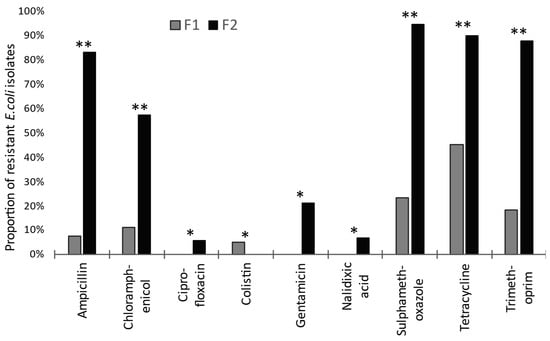
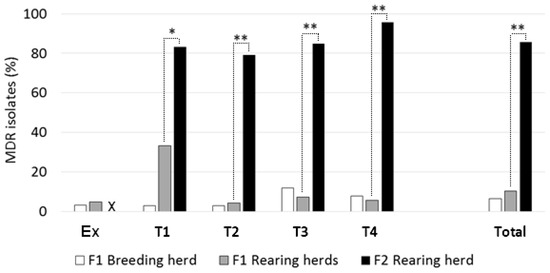
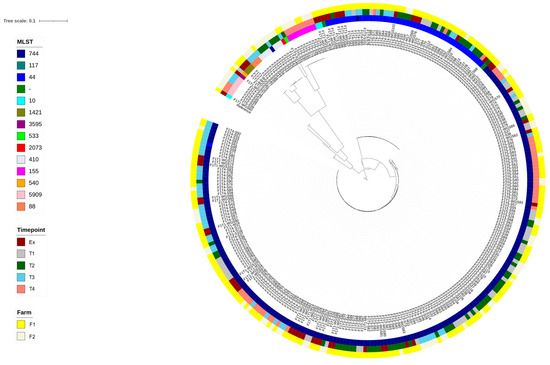
Bacterial resistance on farms can be driven by antimicrobial use. Less is known about inter-farm transfer of resistance genes and their persistence under low antimicrobial pressure. Over two years and nine visits, we examined the shedding of resistant indicator bacteria (Escherichia coli) on one lower- and one higher-antimicrobial-usage pig farm. There was a unidirectional transfer of some less healthy pigs from the former to the latter. Faecal pools (180) were cultured on Chromagar ECC, with and without added cefotaxime or ciprofloxacin. Presumptive E. coli were phenotyped, and many ciprofloxacin-resistant isolates were whole-genome sequenced. Comparing farms, there was more (p < 0.0001) phenotypic resistance to the antimicrobial panel from the higher-usage unit, and markedly more (about ten-fold) multi-resistance. Significantly elevated individual drug resistances on this unit correlated with recently used antimicrobials. Ciprofloxacin and/or cefotaxime-resistant isolates were often present, although in low proportions. Neither of these antimicrobial classes had been administered recently, except for one fluoroquinolone course late in the study. AMR genes were more diverse from the higher-usage farm, but some resistant and multi-resistant isolates were closely related between farms. Thus, we demonstrated the maintenance of resistance genes in strains present on farms, even where selective pressure was low. Full article
Show Figures

Figure 1

10 pages, 870 KB  
Article
Postoperative Serum Quinolinic Acid and 3-Hydroxykynurenine in Dogs with Congenital Portosystemic Shunt: A Pilot Study of Their Association with Postattenuation Neurologic Signs
by Shoma Mikawa, Yuto Ishimaru and Yasuhiko Okamura
Vet. Sci. 2026, 13(4), 308; https://doi.org/10.3390/vetsci13040308 - 24 Mar 2026
Viewed by 181
Abstract
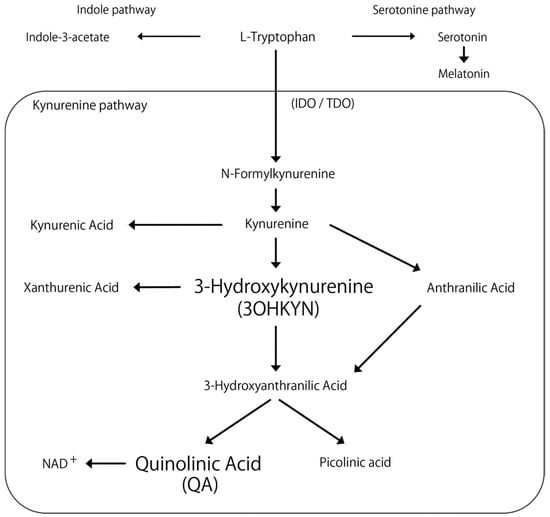
Postattenuation neurologic signs (PANS) are serious complications following surgical ligation of congenital portosystemic shunts (cPSS) in dogs, but their pathogenesis remains incompletely understood. We hypothesized that surgical ligation alters hepatic tryptophan metabolism through increased substrate delivery and inflammation, leading to changes in kynurenine [...] Read more.
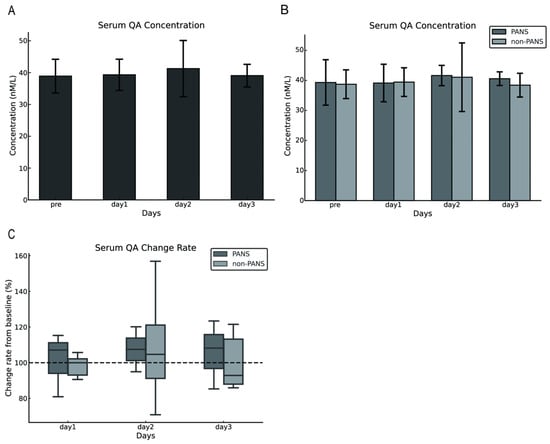
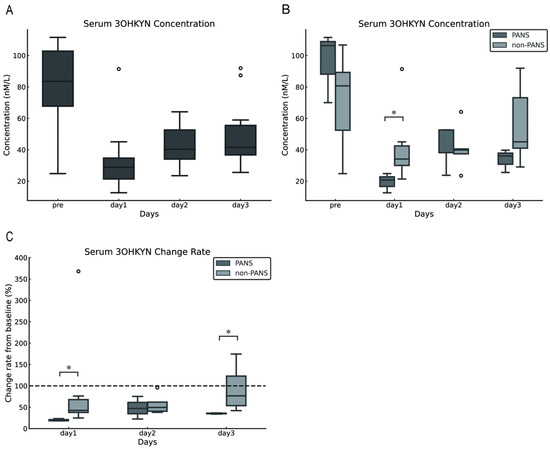
Postattenuation neurologic signs (PANS) are serious complications following surgical ligation of congenital portosystemic shunts (cPSS) in dogs, but their pathogenesis remains incompletely understood. We hypothesized that surgical ligation alters hepatic tryptophan metabolism through increased substrate delivery and inflammation, leading to changes in kynurenine pathway metabolites that may contribute to PANS. Ten dogs diagnosed with cPSS between April 2019 and December 2023 underwent surgical ligation. Serum samples were collected preoperatively and on postoperative days 1, 2, and 3. Serum concentrations of quinolinic acid (QA) and 3-hydroxykynurenine (3OHKYN) were measured using ELISA in this retrospective observational study. Dogs exhibiting neurological signs within 3 days postoperatively were classified as having PANS. Serum QA concentrations showed no significant postoperative changes and did not differ between dogs with and without PANS. In contrast, serum 3OHKYN concentrations decreased significantly after surgery (p = 0.002). Dogs that developed PANS had significantly lower serum 3OHKYN concentrations on postoperative day 1 (p = 0.048) and exhibited greater reductions from baseline on postoperative days 1 and 3 (p = 0.024 and 0.017, respectively). These preliminary findings suggest that postoperative reductions in 3OHKYN, rather than increases in QA, are associated with PANS development, indicating that altered tryptophan metabolism may play a role in its pathogenesis and warrant further investigation in larger studies. Full article
(This article belongs to the Special Issue Advanced Therapy in Companion Animals—3rd Edition)
Show Figures

Figure 1