- Systematic Review

Risk Factors for Human Anthrax Infection on a Global Scale: Understanding and Quantifying Outbreak-Related Exposure Behaviors Within Socio-Demographic and Cultural Contexts
- Muhammad Belal Hossain,
- Mariah Dee and
- Rochelle Butler
- + 1 author
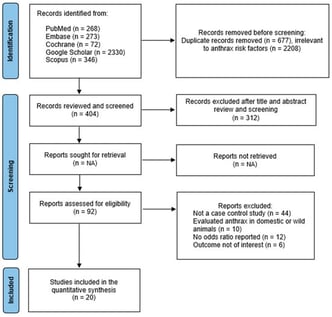
Anthrax, caused by Bacillus anthracis, remains a significant zoonotic disease across the globe disproportionately affecting rural populations reliant on livestock farming. Despite the availability of vaccines for humans and animals, and preventive measures, anthrax outbreaks continue to occur due to convergence of inadequate animal husbandry practices, socioeconomic vulnerabilities, and cultural traditions. This study aimed to identify and quantitatively synthesize the key exposure-related behavioral risk factors for human anthrax infection while contextualizing socio-demographic and cultural determinants through narrative review. A systematic review and meta-analysis were performed in accordance with PRISMA guidelines. Using a random-effects model, risk estimates were pooled exclusively for exposure-related behavioral pathways that are mechanistically linked to anthrax transmission, while socio-demographic and cultural variables were summarized narratively due to heterogeneity in study design, variable definition, and limited cross-study comparability. A total of 20 studies were included, primarily from Africa, Asia, and Europe. The meta-analysis identified a consistent set of high-risk exposure pathways, including contact with raw meat from infected animals (OR = 5.79, 95% CI: 4.04–8.31), skinning (OR = 5.64, 95% CI: 3.73–8.52), butchering (OR = 6.54, 95% CI: 3.26–13.09), slaughtering or presence during slaughter (OR = 5.16, 95% CI: 2.54–10.49), and handling of carcasses or animal by-products (OR = 4.13, 95% CI: 2.88–5.92). Socio-demographic and cultural factors, including religious norms and demographic characteristics, were consistently identified as contextual modifiers of anthrax risk across studies but were not quantitatively pooled because of methodological and definitional heterogeneity. While heterogeneity varied by risk factor, it remained generally low to moderate, supporting the consistency of findings across diverse settings. Our findings emphasize that direct exposure-related behaviors represent the dominant and consistent transmission pathways for human anthrax across endemic settings. Effective prevention strategies should prioritize improved livestock management, enhanced biosecurity systems, community education on safe animal handling practices, particularly the handling of moribund livestock or dead animals of unknown origin, and strengthened veterinary services. Future research should prioritize region-specific interventions and conduct longitudinal studies to assess the effectiveness of anthrax risk reduction efforts.
11 February 2026