


Journal Menu
► ▼ Journal Menu-
- Water Home
- Aims & Scope
- Editorial Board
- Reviewer Board
- Topical Advisory Panel
- Instructions for Authors
- Special Issues
- Topics
- Sections & Collections
- Article Processing Charge
- Indexing & Archiving
- Editor’s Choice Articles
- Most Cited & Viewed
- Journal Statistics
- Journal History
- Journal Awards
- Society Collaborations
- Conferences
- Editorial Office
Journal Browser
► ▼ Journal BrowserNeed Help?
Announcements
4 March 2026
MDPI’s 2025 Best Paper Awards—Award-Winning Papers Announced
MDPI is honored to announce the recipients of the 2025 Best Paper Awards, celebrating exceptional research for its scientific merit and broad impact. After a rigorous evaluation process conducted by Academic Editors, this year’s awards showcase papers that stand out for their innovation, relevance, and high-quality presentation.
Out of a highly competitive pool, 396 winning papers have been recognized for their exceptional contributions. We congratulate these authors for pushing the boundaries of their respective disciplines.
At MDPI, we are dedicated to broadening the reach of innovative science. To learn more about the award-winning papers and explore research projects in your field of study, please visit the following links:
- Biology and Life Sciences;
- Business and Economics;
- Chemistry and Materials Sciences;
- Computer Sciences and Mathematics;
- Engineering;
- Environmental and Earth Sciences;
- Medicine and Pharmacology;
- Social Sciences, Arts and Humanities;
- Physical Sciences;
- Public Health and Healthcare.
About MDPI Awards:
To reward the global research community and enhance academic dialogue, MDPI journals regularly host award programs across diverse scientific disciplines. These awards, serving as a source of inspiration and recognition, help raise the influence of talented individuals who have been credited with outstanding achievements and whose work drives the advancement of their fields.
Explore the Best Paper Awards open for participation, please click here.
6 November 2025
MDPI Launches the Michele Parrinello Award for Pioneering Contributions in Computational Physical Science
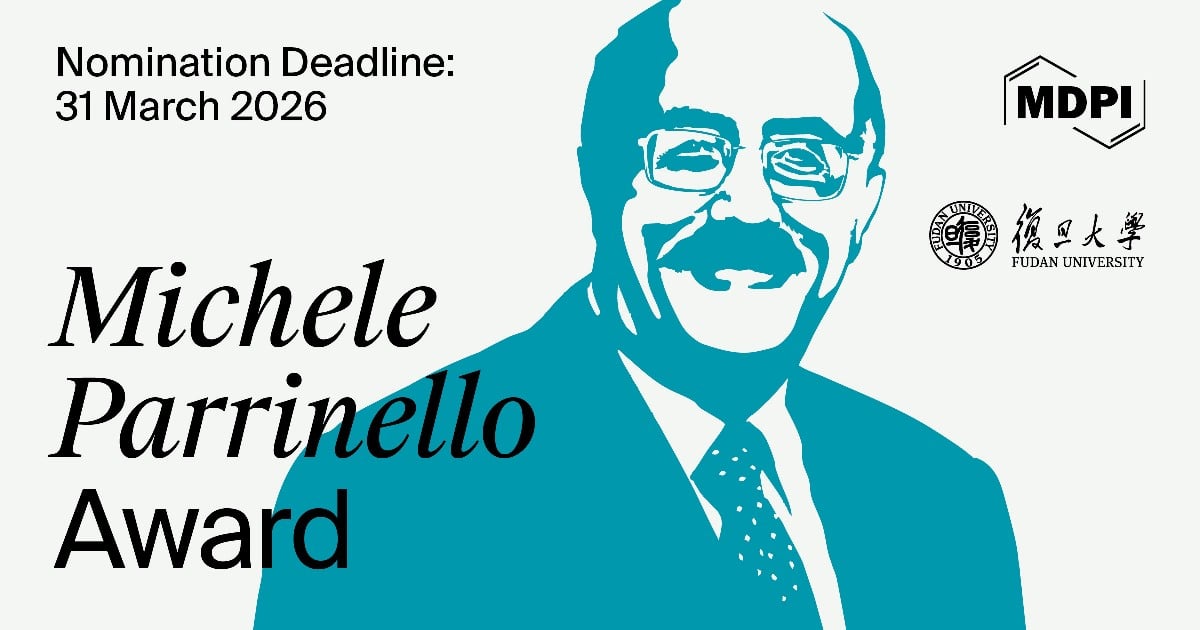
MDPI is delighted to announce the establishment of the Michele Parrinello Award. Named in honor of Professor Michele Parrinello, the award celebrates his exceptional contributions and his profound impact on the field of computational physical science research.
The award will be presented biennially to distinguished scientists who have made outstanding achievements and contributions in the field of computational physical science—spanning physics, chemistry, and materials science.
About Professor Michele Parrinello
"Do not be afraid of new things. I see it many times when we discuss a new thing that young people are scared to go against the mainstream a little bit, thinking what is going to happen to me and so on. Be confident that what you do is meaningful, and do not be afraid, do not listen too much to what other people have to say.”
——Professor Michele Parrinello
 |
Born in Messina in 1945, he received his degree from the University of Bologna and is currently affiliated with the Italian Institute of Technology. Professor Parrinello is known for his many technical innovations in the field of atomistic simulations and for a wealth of interdisciplinary applications ranging from materials science to chemistry and biology. Together with Roberto Car, he introduced ab initio molecular dynamics, also known as the Car–Parrinello method, marking the beginning of a new era both in the area of electronic structure calculations and in molecular dynamics simulations. He is also known for the Parrinello–Rahman method, which allows crystalline phase transitions to be studied by molecular dynamics. More recently, he has introduced metadynamics for the study of rare events and the calculation of free energies. |
For his work, he has been awarded many prizes and honorary degrees. He is a member of numerous academies and learned societies, including the German Berlin-Brandenburgische Akademie der Wissenschaften, the British Royal Society, and the Italian Accademia Nazionale dei Lincei, which is the major academy in his home country of Italy.
Award Committee
 |
The award committee will be chaired by Professor Xin-Gao Gong, a computational condensed matter physicist, academician of the Chinese Academy of Sciences, and professor at the Department of Physics, Fudan University. Professor Xin-Gao Gong will lead a panel of several senior experts in the field to oversee the evaluation and selection process. The Institute for Computational Physical Sciences at Fudan University (Shanghai, China), led by Professor Xin-Gao Gong, will serve as the supporting institute for the award. |
"We hope the Michele Parrinello Award will recognize scientists who have made significant contributions to the field of computational condensed matter physics and at the same time set a benchmark for the younger generation, providing clear direction for their pursuit—this is precisely the original intention behind establishing the award."
——Professor Xin-Gao Gong
The first edition of the award was officially launched on 1 November 2025. Nominations will be accepted before the end of March 2026. For further details, please visit mparrinelloaward.org.
About the MDPI Sustainability Foundation and MDPI Awards 
The Michele Parrinello Award is part of the MDPI Sustainability Foundation, which is dedicated to advancing sustainable development through scientific progress and global collaboration. The foundation also oversees the World Sustainability Award, the Emerging Sustainability Leader Award, and the Tu Youyou Award. The establishment of the Michele Parrinello Award will further enrich the existing award portfolio, providing continued and diversified financial support to outstanding professionals across various fields.
In addition to these foundation-level awards, MDPI journals also recognize outstanding contributions through a range of honors, including Best Paper Awards, Outstanding Reviewer Awards, Young Investigator Awards, Travel Awards, Best PhD Thesis Awards, Editor of Distinction Awards, and others. These initiatives aim to recognize excellence across disciplines and career stages, contributing to the long-term vitality and sustainability of scientific research.
Find more information on awards here.
27 March 2026
Water | Editor’s Choice Articles Published in 2024-2025 in the "Wastewater Treatment and Reuse" Section

We invite you to read the Editor’s choice articles published in the journal Water (ISSN 2073-4441). These papers present the latest insights and findings, and we trust they will infuse fresh inspiration and innovative thinking into your new research endeavors.
1. “Advances in Hydrothermal Carbonization for Biomass Wastewater Valorization: Optimizing Nitrogen and Phosphorus Nutrient Management to Enhance Agricultural and Ecological Outcomes”
by Guoqing Liu and Tao Zhang
Water 2025, 17(6), 800; https://doi.org/10.3390/w17060800
Website online: https://www.mdpi.com/2073-4441/17/6/800
2. “Degradation of Phenolic Compounds and Organic Matter from Real Winery Wastewater by Fenton and Photo-Fenton Processes Combined with Ultrasound”
by Ricardo Augusto Rodrigues, Mariana Bizari Machado de Campos and Paulo Sergio Tonello1
Water 2025, 17(5), 763; https://doi.org/10.3390/w17050763
Website online: https://www.mdpi.com/2073-4441/17/5/763
3. “When Technology Meets Sustainability: Microplastic Removal from Industrial Wastewater, Including Impact Analysis and Life Cycle Assessment”
by Jan Puhar, Michael Toni Sturm, Erika Myers, Dennis Schober, Anika Korzin, Annamaria Vujanović1 and Katrin Schuhen
Water 2025, 17(5), 671; https://doi.org/10.3390/w17050671
Website online: https://www.mdpi.com/2073-4441/17/5/671
4. “Is Industrial-Scale Wastewater Treatment Possible with a Commercially Available Atmospheric Pressure Plasma System? A Practical Study Using the Example of a Car Wash”
by Szulc, Michał, Carmen Kirner, Jörg Götz, and Jochen Schein
Water 2025, 17(3), 413; https://doi.org/10.3390/w17030413
Website online: https://www.mdpi.com/2073-4441/17/3/413
5. “Treatment Performance and Characteristics of Biofilm Carriers in an Aerobic Waterwheel-Driven Rotating Biological Contactor”
by Cheng, Helai, Wenhua Li, Ziao Gong, Cangxiang Wen, Chong Zhang, and Xiwu Lu
Water 2025, 17(3), 356; https://doi.org/10.3390/w17030356
Website online: https://www.mdpi.com/2073-4441/17/3/356
6. “Efficiency of Microalgae Employment in Nutrient Removal (Nitrogen and Phosphorous) from Municipal Wastewater”
by Popa, Marcel Daniel, Ira-Adeline Simionov, Stefan Mihai Petrea, Puiu-Lucian Georgescu, George Adrian Ifrim, and Catalina Iticescu
Water 2025, 17(2), 260; https://doi.org/10.3390/w17020260
Website online: https://www.mdpi.com/2073-4441/17/2/260
7. “Recent Advances in the Synthesis, Characterization, and Application of Carbon Dots in the Field of Wastewater Treatment: A Comprehensive Review”
by Xiao, Yaxuan, Zelong Wang, Jingran Fu, Jing Zhang, Qiulai He, Haijun Lu, Qiaohong Zhou, and Hongyu Wang
Water 2025, 17(2), 210; https://doi.org/10.3390/w17020210
Website online: https://www.mdpi.com/2073-4441/17/2/210
8. “Continuous Flow Electrocoagulation System for Enhanced Phosphorous Removal in Decentralized Wastewater Treatment Systems”
by Hayden, James, and Bassim Abbassi
Water 2025, 17(2), 202; https://doi.org/10.3390/w17020202
Website online: https://www.mdpi.com/2073-4441/17/2/202
9. “The Promotion of Anaerobic Digestion Technology Upgrades in Waste Stream Treatment Plants for Circular Economy in the Context of “Dual Carbon”: Global Status, Development Trend, and Future Challenges”
by Xinjia Huang
Water 2024, 16(24), 3718; https://doi.org/10.3390/w16243718
Website online: https://www.mdpi.com/2073-4441/16/24/3718
10. “Real-Time Control of A2O Process in Wastewater Treatment Through Fast Deep Reinforcement Learning Based on Data-Driven Simulation Model”
by Hu, Fukang, Xiaodong Zhang, Baohong Lu, and Yue Lin
Water 2024, 16(24), 3710; https://doi.org/10.3390/w16243710
Website online: https://www.mdpi.com/2073-4441/16/24/3710
11. “Agricultural Wastewater Reuse as a Circular Economy Model: Future Scenarios Considering Reg. (EU) 2020/741”
by Hamam, Manal, Raffaella Pergamo, Veronica Manganiello, and Marianna Ferrigno
Water 2024, 16(24), 3638; https://doi.org/10.3390/w16243638
Website online: https://www.mdpi.com/2073-4441/16/24/3638
12. “Microplastics in Wastewater Treatment Plants: Characteristics, Occurrence and Removal Technologies”
by Bodzek, Michał, Alina Pohl, and Czesława Rosik-Dulewska
Water 2024, 16(24), 3574; https://doi.org/10.3390/w16243574
Website online: https://www.mdpi.com/2073-4441/16/24/3574
13. “Measuring Microplastic Concentrations in Water by Electrical Impedance Spectroscopy”
by Gomes, Diogo, Solange Magalhães, Maria Graça Rasteiro, and Pedro Faia
Water 2024, 16(22), 3228; https://doi.org/10.3390/w16223228
Website online: https://www.mdpi.com/2073-4441/16/22/3228
14. “Sludge Composting—Is This a Viable Solution for Wastewater Sludge Management?”
by Manea, Elena Elisabeta, and Costel Bumbac
Water 2024, 16(16), 2241; https://doi.org/10.3390/w16162241
Website online: https://www.mdpi.com/2073-4441/16/16/2241
15. “Nutrient Recovery via Struvite Precipitation from Wastewater Treatment Plants: Influence of Operating Parameters, Coexisting Ions, and Seeding”
by Santos, Andreia F., Luísa S. Mendes, Paula Alvarenga, Licínio M. Gando-Ferreira, and Margarida J. Quina
Water 2024, 16(12), 1675; https://doi.org/10.3390/w16121675
Website online: https://www.mdpi.com/2073-4441/16/12/1675
25 March 2026
Acknowledging the Contributions of Our Reviewers in 2025
As a pioneer in open access publishing, MDPI maintains rigorous publication standards. This mission relies on the dedication and expertise of our reviewers, who invest their time and knowledge to ensure the quality and integrity of the research we publish.
In 2025, over 209,000 reviewers contributed to the peer-review process at MDPI, providing more than 1.3 million review reports for our journals. To express our gratitude, MDPI’s Reviewer Recognition Program highlights reviewers across over 400 journals, featuring those who have assessed at least one manuscript and agreed to be acknowledged.
In addition, MDPI has identified its Top 1000 Reviewers of 2024 to recognize those whose expertise, dedication, and thoughtful evaluations were particularly outstanding.
Many journals have also established Outstanding Reviewer Awards to honor our reviewers’ commitment to publication excellence. Together with the Exceptional Reviewer List, we showcase the importance of reviewers’ work and their time and dedication.
These initiatives serve to express our deepest appreciation and gratitude towards the whole reviewer community. In recognition of their contributions, we also welcome new researchers to join this community. If you would like to contribute to open access publishing, learn more about the reviewers’ benefits and sign up to join us.
23 March 2026
World Meteorological Day, 23 March 2026

Observed annually on 23 March, World Meteorological Day highlights the vital role of National Meteorological and Hydrological Services in safeguarding lives, supporting sustainable development, and enhancing societal resilience to weather-, climate-, and water-related hazards. The 2026 theme, “Observing Today, Protecting Tomorrow”, underscores the importance of advancing observation systems and scientific knowledge to better anticipate risks and protect future generations.
Reflecting this mission, established MDPI journals in Environmental and Earth Sciences serve as platforms for scholarly exchange and collaboration, advancing research on climate processes, atmospheric and hydrological dynamics, environmental sustainability, disaster risk reduction, and the role of emerging technologies in Earth system observation and analysis. Through these efforts, MDPI supports meaningful dialogue and research addressing both current and emerging challenges in weather, climate, and environmental science.

| Geosciences | Environment & Ecology | ||
| ● Atmosphere; | ● Geomatics; | ● Coasts; | ● Oceans; |
| ● Climate; | ● Geosciences; | ● Energies; | ● Sustainability; |
| ● Earth; | ● Meteorology; | ● Environments; | ● Urban Science; |
| ● GeoHazards; | ● Remote Sensing. | ● Forests; | ● Water. |
| ● Hydrology; | |||
| Business & Economics | |||
| ● Forecasting. | |||


 |
 |
| Prof. Dr. John Boland, Adelaide University, Australia |
Dr. Edoardo Bucchignani, CIRA – Italian Aerospace Research Center, Italy |
 |
 |
| Dr. Dimitris Kaskaoutis, University of Western Macedonia, Greece |
Dr. Kostas Eleftheratos, National and Kapodistrian University of Athens, Greece |
Register for this webinar for free here!

“Climatic Changes Shift Macroalgal Assemblages from Cold- to Warm-Adapted Species: The Venice Lagoon as a Study Case”
by Adriano Sfriso, Yari Tomio and Andrea Augusto Sfriso
Environments 2025, 12(5), 149; https://doi.org/10.3390/environments12050149
“Urban Microclimates in a Warming World: Land Surface Temperature (LST) Trends Across Ten Major Cities on Seven Continents”
by Yiğitalp Kara and Veli Yavuz
Urban Sci. 2025, 9(4), 115; https://doi.org/10.3390/urbansci9040115
“Summer Diurnal LST Variability Across Local Climate Zones Using ECOSTRESS Data in Lecce and Milan”
by Gianluca Pappaccogli, Antonio Esposito and Riccardo Buccolieri
Atmosphere 2025, 16(4), 377; https://doi.org/10.3390/atmos16040377
“Assessing Drought Severity in Greece Using Geospatial Data and Environmental Indices”
by Constantina Vasilakou, Dimitrios E. Tsesmelis, Kleomenis Kalogeropoulos, Pantelis E. Barouchas, Ilias Machairas, Elissavet G. Feloni, Andreas Tsatsaris and Christos A. Karavitis
Geomatics 2025, 5(1), 10; https://doi.org/10.3390/geomatics5010010
“A Performance Comparison Study on Climate Prediction in Weifang City Using Different Deep Learning Models”
by Qingchun Guo, Zhenfang He, Zhaosheng Wang, Shuaisen Qiao, Jingshu Zhu and Jiaxin Chen
Water 2024, 16(19), 2870; https://doi.org/10.3390/w16192870
“Peruvian North Coast Climate Variability and Regional Ocean–Atmosphere Forcing”
by Mark R. Jury and Luis E. Alfaro-Garcia
Coasts 2024, 4(3), 508-534; https://doi.org/10.3390/coasts4030026
Special Issues:
|
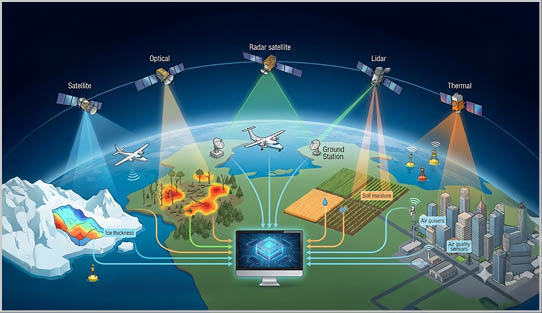
“Applications of Multi-Instrument Remote Sensing in Climate Change and Sustainability Monitoring” |
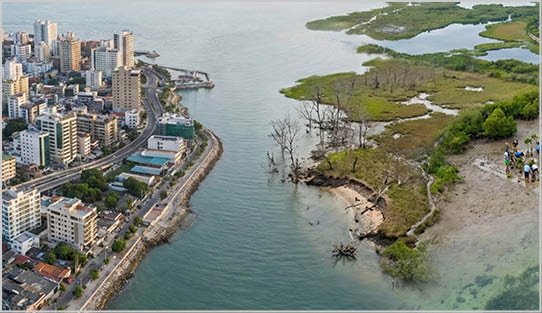
“Changing Coastal Ecosystems Under the Context of Climate Change, Restoration, Rehabilitation, and Urbanization” |
 |
 |

“Impacts of Extreme Storms in Surface Water Resources, Systems, and Infrastructure—Evidence from Storm Daniel (2023) in Greece”
by Michalis Diakakis, Petros Andriopoulos, Andromachi Sarantopoulou, Ioannis Kapris, Christos Filis, Aliki Konsolaki, Emmanuel Vassilakis and Panagiotis Nastos
GeoHazards 2026, 7(1), 14; https://doi.org/10.3390/geohazards7010014
“Wind Regime Variability and Spatiotemporal Distribution of Aeolian Sand Hazards Along a Gobi Desert Highway in the Ejin Banner, Northern China”
by Xixi Ma, Jianhua Xiao, Zhengyi Yao, Xuefeng Hong and Xinglu Gao
Sustainability 2026, 18(3), 1645; https://doi.org/10.3390/su18031645
“A Case Study of a Wintertime Low-Level Jet Associated with a Downslope Wind Event at the Tiksi Observatory (Laptev Sea, Siberia)”
by Günther Heinemann
Meteorology 2025, 4(1), 7; https://doi.org/10.3390/meteorology4010007
“Characterizing the Tropical Cyclones Activity over Arabian Sea (1982–2021)”
by Abdulhaleem H. Labban, H. M. Hasanean, Ali Almahri, Ali Salem Al-Sakkaf and Mahmoud A. A. Hussein
Oceans 2024, 5(4), 840-856; https://doi.org/10.3390/oceans5040048
“A Case Study of the Possible Meteorological Causes of Unexpected Fire Behavior in the Pantanal Wetland, Brazil”
by Flavio T. Couto, Filippe L. M. Santos, Cátia Campos, Carolina Purificação, Nuno Andrade, Juan M. López-Vega and Matthieu Lacroix
Earth 2024, 5(3), 548-563; https://doi.org/10.3390/earth5030028
Special Issues:
|
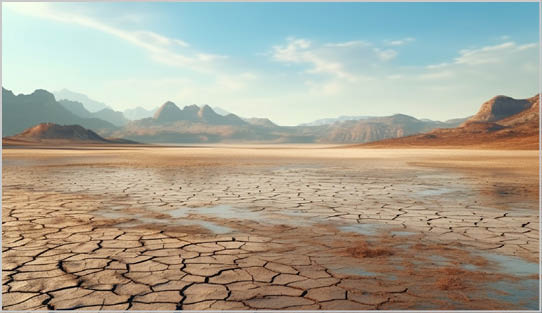
“Climate Change Scenarios and Impacts for the Mountain Regions at Middle Latitudes” |
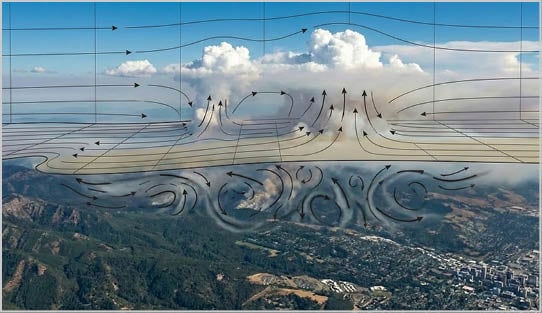
“Observations, Modeling, and Theory of the Atmospheric Boundary Layer” |
 |
 |

“Deep Learning-Based Multi-Source Precipitation Forecasting in Arid Regions Using Different Optimizations: A Case Study from Konya, Turkey”
by Vahdettin Demir
Forecasting 2025, 7(4), 60; https://doi.org/10.3390/forecast7040060
“Climatic and Forest Drivers of Wildfires in South Korea (1980–2024): Trends, Predictions, and the Role of the Wildland–Urban Interface”
by Jinchan Park, Jihoon Suh and Minho Baek
Forests 2025, 16(9), 1476; https://doi.org/10.3390/f16091476
“Systematic Biases in Tropical Drought Monitoring: Rethinking SPI Application in Mesoamerica’s Humid Regions”
by David Romero and Eric J. Alfaro
Meteorology 2025, 4(3), 18; https://doi.org/10.3390/meteorology4030018
“Impact of Climate Conditions on the Sensitivity of Long-Term Annual River Flow in a Cascade-Dammed River System: The Brda River Case Study (Poland)”
by Dawid Szatten, Edward Zbigniew Łaszyca, Alberto Bosino, Mattia De Amicis and Oleksandr Obodovskyi
Geosciences 2025, 15(6), 197; https://doi.org/10.3390/geosciences15060197
“Challenges of Artificial Intelligence Development in the Context of Energy Consumption and Impact on Climate Change”
by Sergiusz Pimenow, Olena Pimenowa and Piotr Prus
Energies 2024, 17(23), 5965; https://doi.org/10.3390/en17235965
“The Importance and Scientific Value of Long Weather and Climate Records; Examples of Historical Marine Data Efforts across the Globe”
by Jürg Luterbacher, Rob Allan, Clive Wilkinson, Ed Hawkins, Praveen Teleti, Andrew Lorrey, Stefan Brönnimann, Peer Hechler, Kondylia Velikou and Elena Xoplaki
Climate 2024, 12(3), 39; https://doi.org/10.3390/cli12030039
“A Novel Fusion-Based Methodology for Drought Forecasting”
by Huihui Zhang, Hugo A. Loaiciga and Tobias Sauter
Remote Sens. 2024, 16(5), 828; https://doi.org/10.3390/rs16050828
Special Issues:
|
“Sustainable Management of Energy Resources, Energy Strategies and Climate Change: 3rd Edition” |
“Wildfire Hazards in a Changing Climate: Risks, Impacts, and Adaptation” |
 |
 |

 |
The 7th International Electronic Conference on Atmospheric Sciences Highlights Click here to read the full list of papers. |

 |
 |
19 March 2026
World Water Day—“Where Water Flows, Equality Grows”, 22 March 2026

World Water Day celebrates water and inspires action to address the global water crisis. Aligned with Sustainable Development Goal 6 (SDG 6): Clean Water and Sanitation, the day highlights the importance of ensuring the availability and sustainable management of water and sanitation for all.
This year’s theme, “Water and Gender”, emphasizes the critical role that gender equality plays in achieving water security. Around the world, women and girls are often disproportionately affected by water scarcity, as they are commonly responsible for water collection and household water management. Recognizing and empowering their participation in water governance, decision-making, and resource management is essential to building equitable and sustainable water systems.
On this World Water Day, let us acknowledge the intersection of water access and gender equality, and work collectively toward inclusive solutions that ensure safe and reliable water for all.
In recognition of World Water Day, we invite you to explore selected articles, Special Issues, and journals spanning fields such as environmental science, public health, engineering, and sustainability. By sharing this knowledge, we aim to inspire positive action and foster collaboration to address global water challenges, promote gender-inclusive water governance, and advance progress toward Sustainable Development Goal 6: Clean Water and Sanitation for All.
 |
 |
 |
 |
 |
 |
 |
 |
 |

|
Chair and Keynote Speakers |
||||
 |
 |
 |
 |
 |
|
Prof. Dr. Sharon Megdal, |
Dr. Laura Imburgia, |
Dr. Róisín Burke, |
Dr. Heather Tanana, |
Prof. Dr. Corrine Schuster-Wallace, |
Register for this webinar for free here!

“Consequences of the Construction of a Small Dam on the Water Quality of an Urban Stream in Southeastern Brazil”
by Lucas Galli do Rosário, Ricardo Hideo Taniwaki and Luis César Schiesari
Limnol. Rev. 2025, 25(4), 48; https://doi.org/10.3390/limnolrev25040048
“Modeling of Real-Time Water Levels and Mapping of Storm Tide Pathways: A Collaborative Effort to Respond to the Threats of Coastal Flooding”
by Joseph Dellicarpini, Mark Borrelli, Stephen T. Mague and Stephen McKenna
Coasts 2025, 5(4), 36; https://doi.org/10.3390/coasts5040036
“Transforming Water Research Through Human Rights-Based Approaches: A Framework for Implementation”
by Leonie J. Pearson, Vachararutai Boontinand and Phan Thanh Thanh
Water 2025, 17(10), 1418; https://doi.org/10.3390/w17101418
“Water Vulnerability in Dhaka, Narayanganj, and Gazipur Districts of Bangladesh: The Role of Textile Dye Production”
by Kamille Hüttel Rasmussen, Martiwi Diah Setiawati and Kamol Gomes
Water 2025, 17(16), 2475; https://doi.org/10.3390/w17162475
“Investigating the Gender-Climate Nexus: Strengthening Women’s Roles in Adaptation and Mitigation in the Sidi Bouzid Region”
by Houda Mazhoud, Arij Boucif, Abir Ouhibi, Lobna Hajji-Hedfi and Fraj Chemak
Climate 2025, 13(8), 164; https://doi.org/10.3390/cli13080164
“Hydrofeminist Life Histories in the Aconcagua River Basin: Women’s Struggles Against Coloniality of Water”
by María Ignacia Ibarra
Histories 2025, 5(3), 31; https://doi.org/10.3390/histories5030031
“Empowering Women, Enhancing Health: The Role of Education in Water, Sanitation, and Hygiene (WaSH) and Child Health Outcomes”
by Aminata Kilungo, Mark Bayer, Zoe Baccam, Hamisi Malebo and Halima Alaofe
Int. J. Environ. Res. Public Health 2025, 22(5), 706; https://doi.org/10.3390/ijerph22050706
“From Flood Mitigation to Environmental and Socioeconomic Disruption: A Case Study of the Langue de Barbarie Sand Spit Breach”
by Souleymane Fall
Hydrology 2025, 12(4), 97; https://doi.org/10.3390/hydrology12040097
“A Decision Support System for Managed Aquifer Recharge Through Non-Conventional Waters in the South of the Mediterranean”
by Rym Hadded, Mongi Ben Zaied, Fatma Elkmali, Giulio Castelli, Fethi Abdelli, Zouhaier Khabir, Khaled Ben Zaied, Elena Bresci and Mohamed Ouessar
Resources 2025, 14(4), 63; https://doi.org/10.3390/resources14040063
“Sustainable Water Management Practices in Agriculture: The Case of East Africa”
by Meseret Dawit Teweldebrihan and Megersa Olumana Dinka
Encyclopedia 2025, 5(1), 7; https://doi.org/10.3390/encyclopedia5010007

|
“Water Resources Allocation, Planning, and Regulation for Sustainable Management” |
“Freshwater Microbiology and Public Health” |
 |
 |
|
“Editorial Board Members' Collection Series: Water Resources—2nd Edition” |
“Advances in Water Management and Water Policy Research, 2nd Edition” |
 |
 |
 |
 |

|
|
The 8th International Electronic Conference on Water Sciences Highlights
Click here to read the full list of papers. |

19 March 2026
MDPI Webinar | World Meteorological Day, 23 March 2026

To commemorate World Meteorological Day 2026, MDPI is honored to host a special webinar highlighting the vital role of weather, climate, and water sciences in safeguarding our shared future.
Under the theme “Observing Today, Protecting Tomorrow,” World Meteorological Day 2026 underscores the importance of advancing observation systems, scientific innovation, and data-driven decision-making in the face of a changing climate. As environmental challenges grow increasingly complex, collaboration across disciplines and borders is more crucial than ever.
Through this webinar, we aim to contribute to the global dialogue by bringing together researchers, experts, and practitioners to explore emerging insights, technological advancements, and transformative research shaping the future of meteorological science.
Join us as we celebrate World Meteorological Day 2026, a moment to reflect on progress, exchange knowledge, and strengthen our collective commitment to protecting people and planet for generations to come.
Session 1:
Keywords: meteorology; weather science; climate monitoring; atmospheric processes; forecast modelling; precipitation; temperature; satellites
Date: 23 March 2026
Time: Session 1: 10:00 a.m. CET |8:00 p.m. AEST | 5:00 p.m. CST Asia
Webinar ID: 849 8585 6650
Website: https://sciforum.net/event/WMD
Register now for free!

|
Speaker/ Presentation |
Timing in CET |
Timing in CST Asia |
|
MDPI Introduction |
10:00–10:10 a.m. |
5:00–5:10 p.m. |
|
Prof. Dr. John Boland |
10:10–10:30 a.m. |
5:10–5:30 p.m. |
|
Dr. Edoardo Bucchignani |
10:30–10:50 a.m. |
5:30–5:50 p.m. |
|
Dr. Dimitris Kaskaoutis |
10:50–11:10 a.m. |
5:50–6:10 p.m. |
|
Dr. Kostas Eleftheratos |
11:10–11:30 a.m. |
6:10–6:30 p.m. |
|
Q&A Session |
11:30–11:50 a.m. |
6:30–6:50 p.m. |
|
Closing of Webinar |
11:50 a.m.–12:00 p.m. |
6:50–7:00 p.m. |
After registering, you will receive a confirmation email with information on how to join the webinar. Registrations with academic institutional email addresses will be prioritized.
Unable to attend? Register anyway, and we will let you know when the recording is available for viewing.
Webinar Keynote Speakers:
- Prof. Dr. John Boland, School of Mathematical Sciences, Adelaide University, Australia;
- Dr. Edoardo Bucchignani, CIRA – Italian Aerospace Research Center, Italy;
- Dr. Dimitris Kaskaoutis, Chemical Engineering Department, University of Western Macedonia, Greece;
- Dr. Kostas Eleftheratos, Department of Geology and Geoenvironment, National and Kapodistrian University of Athens, Greece.
5 March 2026
MDPI World Water Day Webinar | Water for All People – Governance, Security, and Access, 23 March 2026

This webinar focuses on the themes of World Water Day 2026, water and gender, and the 2026 World Water Development Report, “Water for all people: Equal rights and opportunities”. After Dr. Laura Imburgia provides an overview of the World Water Development Report, three experts in water law, security, and public health will engage in a panel discussion to share their insights about ensuring water access for all. The program will end with a moderated question and answer session.
Keywords: water equity; water governance; water and gender; water security; public health; human rights; sustainable development; water law; gender equality
Date: 23 March 2026
Time: 5:00 p.m. CET | 12:00 p.m. EDT | 12:00 a.m. CST (Asia)
Webinar ID: 819 5040 4453
Webinar Secretariat: journal.webinar@mdpi.com
Register now for free!

After registering, you will receive a confirmation email with instructions on how to join the webinar. Registrations with academic institutional email addresses will be prioritized.
Unable to attend? Register anyway and we will let you know when the recording is available to view.
Webinar Speakers:
- Prof. Dr. Sharon B. Megdal, Water Resource Research Center, The University of Arizona, Arizona, USA;
- Dr. Laura Imburgia, UNESCO World Water Assessment Programme (WWAP), Perugia, Italy;
- Dr. Róisín Burke, Public International Law, Utrecht University, Utrecht, the Netherlands;
- Dr. Heather Tanana, University of Denver Sturm College of Law, Colorado, USA;
- Prof. Dr. Corinne Schuster-Wallace, Global Institute for Water Security, University of Saskatchewan, Saskatchewan, Canada.
4 March 2026
Water Outstanding Reviewer Award—Winners Announced
We are pleased to announce the winners of the Water 2025 Outstanding Reviewer Award. The journal’s Editorial Board and editorial team would like to acknowledge the time and energy dedicated by our reviewers to checking the manuscripts submitted to Water (ISSN: 2073-4441). Their efforts are crucial to maintaining the journal’s high quality and quick turnaround.
The outstanding awards for excellence in manuscript reviews:
- Dr. Subhasish Das, Jadavpur University, India;
- Dr. Mousavi Seyed-Farhad, Semnan University, Iran;
- Dr. David Choque Quispe, José María Arguedas National University, Peru;
- Dr. Michael Nones, Polish Academy of Sciences, Poland;
- Dr. Sara Todeschini, University of Pavia, Italy;
Winners will receive:
- CHF 500;
- An electronic certificate;
- Chance to publish a paper with a 50% discount in Water in 2026.
The recognition awards for manuscript reviews:
- Dr. Antonio Albuquerque, University of Beira Interior, Portugal;
- Prof. Dr. Evens Emmanuel, Quisqueya University, Haiti;
- Prof. Dr. Qiting Zuo, Zhengzhou University, China;
- Dr. João Nuno Fernandes, National Laboratory for Civil Engineering (LNEC), Portugal;
- Prof. Dr. Abdul Razzaq Ghumman, Qassim University, Saudi Arabia.
Winners will receive:
- An electronic certificate;
- Chance to publish a paper with a 50% discount in Water in 2026.
Water Editorial Office
4 March 2026
Meet Us at the American Geophysical Union (AGU) Annual Meeting 2026, 7–11 December 2026, San Francisco, USA

Conference: American Geophysical Union (AGU) Annual Meeting 2026
Organization: American Geophysical Union
Date: 7–11 December 2026
Place: San Francisco, USA
Booth: #330
MDPI journals will be attending the American Geophysical Union (AGU) Annual Meeting 2026 as an exhibitor. AGU’s annual meeting, the largest gathering of Earth and space scientists, convenes 25,000+ attendees from 100+ countries to share research and connect with friends and colleagues. Scientists, educators, policymakers, journalists and communicators attend AGU26 to better understand our planet and environment, opening pathways to discovery, opening greater awareness to address climate change, opening greater collaborations to lead to solutions and opening the fields and professions of science to a whole new age of justice equity, diversity, inclusion and belonging.
The following MDPI journals will be represented:
- Remote Sensing;
- Water;
- Atmosphere;
- Geosciences;
- World;
- Hydrology;
- Environments;
- Coasts;
- Land;
- Biosphere;
- Fire;
- Earth;
- GeoHazards;
- Glacies;
- Geomatics;
- Meteorology;
- Mining;
- Minerals;
- Oceans;
- Quaternary;
- Stratigraphy and Sedimentology.
If you plan on attending this conference, feel free to stop by our booth, #330. Our delegates look forward to meeting you in person to answer any questions you may have.
For more information about the conference, please visit the following link: https://www.agu.org/annual-meeting.
