
Skip Content
You are currently on the new version of our website. Access the old version .
  • 24 days
    Time to First Decision

Uro

Uro is an international, peer-reviewed, open access journal on all aspects of urology and andrology, including oncology, endourology, sexual dysfunction, fertility, and infertility, published quarterly online by MDPI.
The Italian Society of Andrology (SIA) is affiliated to Uro, and its members receive a discount on the article processing charges.

All Articles (131)

  • Systematic Review
  • Open Access

Background/Objectives: Stereotactic Body Radiation Therapy (SBRT) is increasingly used for localized prostate cancer (PCa), but evidence supporting its use in high-risk PCa (HRPC) remains limited. Standard management continues to favor conventional or moderately hypofractionated radiotherapy combined with long-course androgen deprivation therapy (ADT). This systematic review aimed to synthesize current data on SBRT biochemical outcomes, toxicity, and technical aspects in localized HRPC. Methods: A systematic PubMed search was conducted on 1 May 2024, following PRISMA 2020 guidelines (PROSPERO ID CRD420251235649). Studies reporting biochemical control (BC) for HRPC treated definitively with SBRT, with or without ADT, were included. Studies not meeting these criteria or including ≤10 HRPC patients were excluded. Risk of bias was assessed through qualitative appraisal of study methodology. Substantial heterogeneity across study design, SBRT schedules, cohort composition, and ADT integration precluded a meta-analysis; data were synthesized descriptively. Results: Thirty studies contributed biochemical control data after prostate SBRT for 1354 patients meeting inclusion criteria. SBRT was delivered using diverse platforms and dose-fractionation schemes, frequently in combination with ADT. Across studies, BC was generally favorable, though follow-up duration varied widely. Toxicity profiles were acceptable, with most reports describing predominantly grade 1–2 events and low rates of severe toxicity. Marked variability was observed in target volume definition, focal-boost strategies, urethra-sparing techniques, and the use of rectal spacers. Conclusions: Although current evidence is heterogeneous and largely derived from non-randomized studies, BC and toxicity outcomes are consistently promising, supporting SBRT as a potentially effective strategy for localized HRPC. Randomized prospective trials are needed to confirm these findings and refine optimal SBRT regimens and the role of ADT. This review received no funding.
4 February 2026

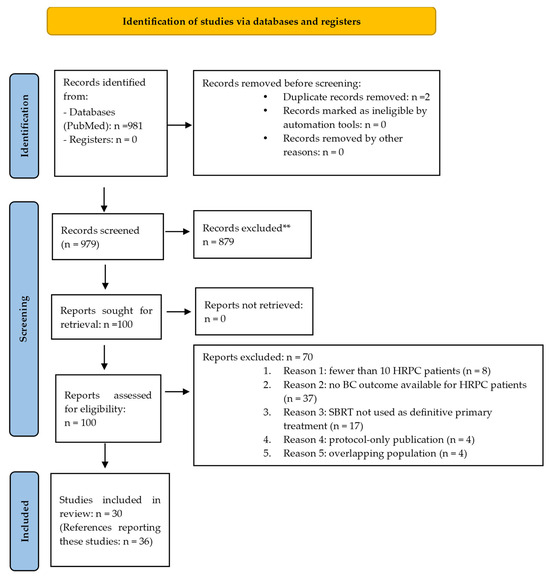
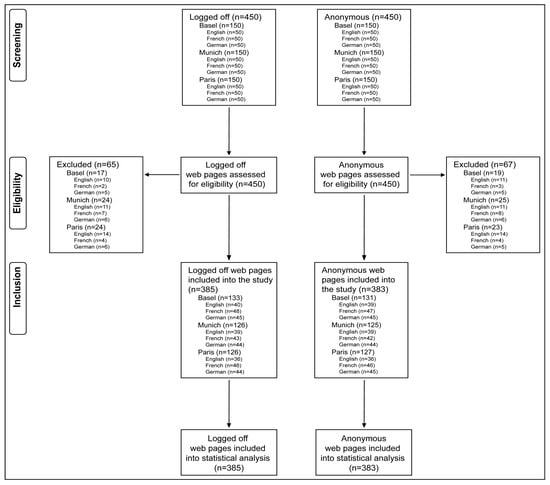
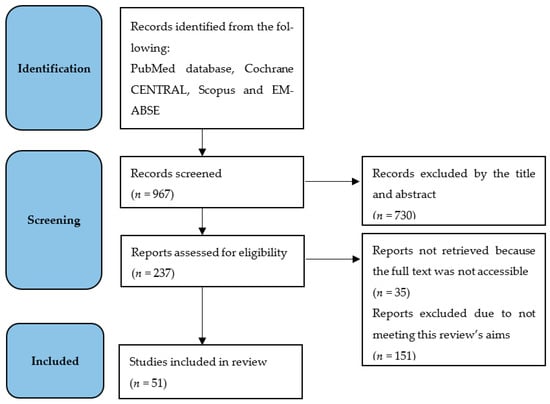
PRISMA flow diagram. **: Reviews or meta-analyses; study protocols without patient data; editorials, letters, and case reports; conference abstracts; non-English articles; not prostate SBRT; not organ-confined disease; HRPC patients not included; dosimetric/planning-only studies.

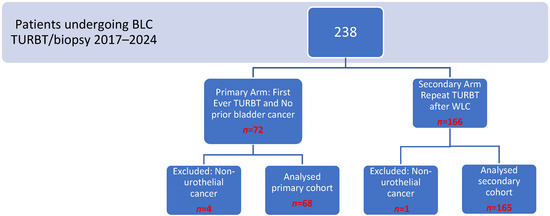
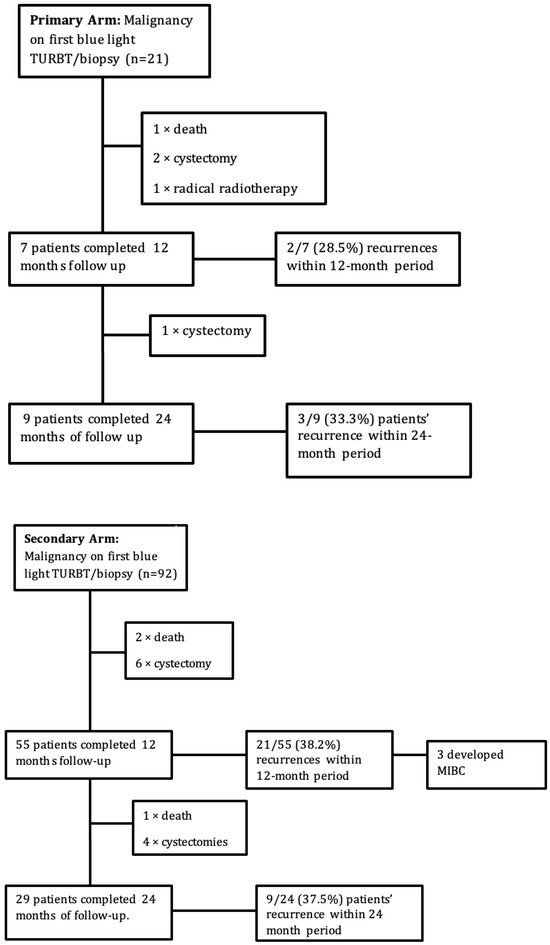
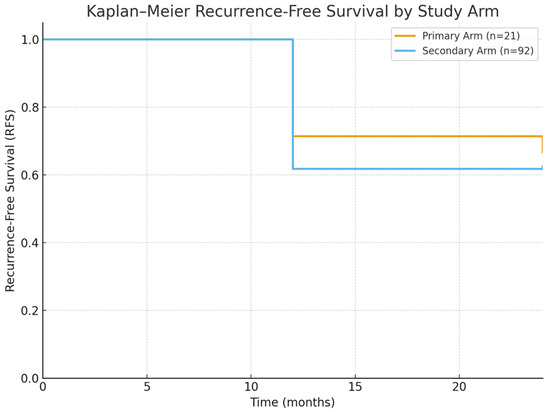
Objective: To evaluate the diagnostic yield of blue-light cystoscopy (BLC) compared with white-light cystoscopy (WLC) in detecting carcinoma in situ (CIS) and muscle-invasive bladder cancer (MIBC), and to assess recurrence-free survival (RFS) following BLC-HAL resection. Patients and Methods: We retrospectively analysed 238 patients undergoing BLC-HAL between July 2017 and July 2024. Seventy-two underwent primary BLC at initial resection, and 166 underwent BLC re-resection following WLC. Endpoints were CIS detection, tumour upstaging, and recurrence-free survival at 12 and 24 months using Kaplan–Meier analysis. Results: Overall, malignancy was confirmed in 113/238 patients (47%). Detection was higher in the secondary arm (55%) compared with the primary arm (29%). In the primary arm, CIS was detected in 19% and MIBC in 24%. In the secondary arm, CIS increased from 18% on WLC to 38% with BLC (p = 0.001), with 26% detected only under blue light; 10% were upstaged to MIBC (p = 0.022). Over one-third of patients were reclassified into a higher EAU NMIBC risk group. Kaplan–Meier analysis showed 12- and 24-month RFS of 71% (95% CI: 36–92%) and 67% (95% CI: 35–88%) in the primary arm, and 62% (95% CI: 49–74%) and 63% (95% CI: 43–79%) in the secondary arm. Median RFS was not reached within 24 months. Conclusions: BLC significantly enhances CIS detection and identifies MIBC and higher-risk disease not seen on WLC, directly influencing patient management. Despite improved detection, recurrence-free survival remains modest, consistent with high-risk NMIBC, supporting guideline recommendations for routine use of BLC at TURBT, particularly in suspected CIS and high-grade disease.

2 February 2026

Background/Objectives: Interest in the use of nutraceuticals and phytotherapy for the management of andrological diseases has increased markedly in recent years. In particular, growing attention has been directed toward the treatment of patients affected by erectile dysfunction (ED), male infertility, chronic prostatitis/chronic pelvic pain syndrome (CP/CPPS), and induratio penis plastica (IPP). However, several areas of uncertainty remain. This narrative review aims to examine the role of nutraceuticals and phytotherapeutic agents in the management of andrological disorders. Methods: A narrative review was conducted using PubMed, Scopus, Cochrane CENTRAL, and EMBASE to identify relevant studies published over the past 25 years. Only articles published in English and involving adult populations were included in the analysis. Results: Nutraceuticals and phytotherapeutic compounds have been extensively investigated in the current literature, and certain formulations—particularly specific combinations—have been evaluated in high-quality studies. Conversely, other compounds lack sufficient scientific evidence and therefore should not be recommended in routine clinical practice. In the management of ED, the following compounds, administered either alone or in combination, have demonstrated clinically significant effects: Panax ginseng, Tribulus terrestris, L-arginine, and Withania somnifera. L-carnitine, combined with micronutrients, antioxidants, and various traditional herbal supplements, appears to be an effective therapeutic option for male infertility and subfertility. Pollen extracts play an important role in the management of CP/CPPS, while carnitine, coenzyme Q10, silymarin, bromelain, and curcumin show promising potential in the treatment of IPP. Conclusions: Nutraceuticals and phytotherapeutic agents may provide favorable outcomes in the management of andrological diseases. Although current evidence is encouraging, larger prospective studies employing standardized protocols and treatment schedules are required to confirm long-term efficacy and to optimize therapeutic strategies.

30 January 2026

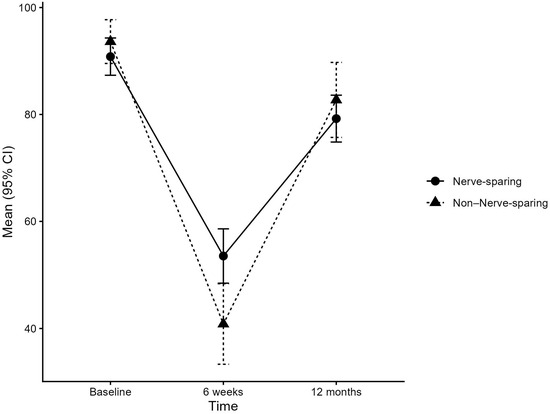
Background/Objectives: The objective of this study is to compare nerve-sparing (NS) and non-nerve-sparing (NNS) robot-assisted radical prostatectomy (RARP) techniques used to treat localized prostate cancer. Numerous studies have evaluated the impact of NS techniques on patient-reported outcomes. However, there are unaddressed methodological issues making interpretation of results difficult. Therefore, we performed a comparison of the two techniques, accounting for methodological threats, including patient selection and confounding. Methods: We sampled 120 patients with similar disease burden who underwent RARP by the same surgeon, either with NS (n = 84) or NNS (n = 36) and assessed changes in lower urinary tract (LUT) function and bother, and bowel function/bother using the Expanded Prostate Cancer Index Composite (EPIC) questionnaire and the six-item International Index of Erectile Function (IIEF-6) survey at 6 weeks and 12 months postoperatively. Multivariable linear regression models were used to adjust for differences in age, preoperative PSA levels, pathological tumor stage and Gleason-score of patients receiving either NS or NNS. Results: At 6 weeks postoperatively, the NNS group had a significantly larger decrease in LUT function compared to the NS group (−17.42; 95% Confidence Interval (CI): −31.31, −3.53; p = 0.0145). At 12 months, both groups recovered substantially, and no group differences were observed (p > 0.9). No significant differences were observed between the NS and NNS groups for the EPIC bowel subscores, whereas the IIEF-6 showed borderline significance at 12 months. Conclusions: The results suggest a small impact of NS vs. NNS RARP on important patient-reported outcomes when controlling for tumor biology, surgeon skill, and patient characteristics. These results need to be confirmed by larger studies using similar sampling strategies and design considerations.

4 January 2026

News & Conferences

Issues

Open for Submission

Editor's Choice

Reprints of Collections

Prostate Cancer
Reprint

Prostate Cancer

Symptoms, Diagnosis & Treatment
Editors: Ana Faustino, Paula A. Oliveira, Lúcio Lara Santos
Prostate Cancer
Reprint

Prostate Cancer

Symptoms, Diagnosis & Treatment - 2nd Volume
Editors: Ana Faustino, Paula A. Oliveira, Lúcio Lara Santos

Get Alerted

Add your email address to receive forthcoming issues of this journal.

XFacebookLinkedIn
Uro - ISSN 2673-4397