Skip to Content
You are currently on the new version of our website. Access the old version .

Toxics

Toxics is an international, peer-reviewed, open access journal on all aspects of the toxic chemicals and materials, published monthly online by MDPI.

Indexed in PubMed | Quartile Ranking JCR - Q1 (Toxicology)

All Articles (4,788)

Chlorinated paraffins (CPs) are persistent, bioaccumulative, and toxic. In marine environments, most studies have focused on short-chain CPs (SCCPs) in animals, while medium-and long-chain CPs (MCCPs and LCCPs) in plants have been neglected. In this study, samples collected from kelp mariculture zones in different seasons were analyzed for the CPs’ contamination characteristics and spatiotemporal distributions in seawater and contamination profiles, bioaccumulation behavior, and dietary exposure risks in kelp. In seawater, the total concentration ranges of SCCPs, MCCPs, and LCCPs were 25.44–245.75, 8.24–27.19, and not detected at 3.26 ng/L, respectively. Spatially, the CP concentrations were influenced by industrial discharge, riverine inputs, and dilution effects, and were significantly higher in nearshore water than in offshore areas (p < 0.05). The concentrations were significantly higher in February than in May, which was attributed to emissions from winter heating and reduced vessel activity during a fishing moratorium. In kelp, the total concentration ranges of SCCPs, MCCPs, and LCCPs were 5.4–210.9, 0.007–0.87, and 0.0–4.45 ng/g wet weight, respectively. Kelp exhibited significant growth-stage-dependent bioaccumulation of CPs, with higher CP concentrations and bioaccumulation factors in its tender stage (February) than during its mature stage (May). Congener analysis revealed similar composition patterns between seawater and kelp. According to a dietary risk assessment (hazard quotient < 0.01), the potential health risks associated with kelp consumption are low.

18 February 2026

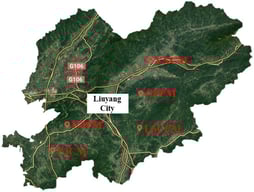
Sampling sites along the Yellow Sea coast of Shandong, China.

Dysregulated lipid metabolism is increasingly implicated in the pathogenesis of chronic obstructive pulmonary disease (COPD), yet the role of lipid transporters in cigarette smoke (CS)-induced chronic pulmonary inflammation remains unclear. Phosphatidylinositol transfer protein β (PITPβ) is a key regulator of phospholipid transport and phosphatidylinositol (PI) homeostasis. This study aims to investigate the expression of PITPβ in a COPD model induced by cigarette smoke extract (CSE) and lipopolysaccharide (LPS) and to elucidate whether its upregulation is regulated by the epidermal growth factor receptor/extracellular signal-regulated kinase (EGFR/ERK) signaling pathway. This study established an in vivo model through combined CS and LPS exposure and an in vitro model through combined CSE and LPS treatment. In the rat model, significant pathological changes characteristic of COPD were observed, accompanied by marked upregulation of PITPβ, tumor necrosis factor-α (TNF-α), and interleukin-6 (IL-6) expression. In human alveolar epithelial A549 cells, combined CSE and LPS treatment not only upregulated PITPβ, TNF-α, and IL-6 expression but also enhanced the phosphorylation levels of EGFR and ERK. Inhibition or silencing of ERK reduces PITPβ expression and downregulates TNF-α and IL-6 levels, whereas overexpression of ERK produces the opposite effect. Silencing EGFR reduces ERK phosphorylation while simultaneously inhibiting PITPβ, TNF-α, and IL-6 expression. Furthermore, combining EGFR silencing with ERK inhibition further decreases PITPβ expression. These findings indicate that CSE combined with LPS induces PITPβ upregulation in chronic pulmonary inflammation, with the EGFR/ERK signaling pathway at least partially mediating this process. This suggests that PITPβ may serve as a potential therapeutic target for COPD.

18 February 2026

Schematic diagram of SD rat modeling and histological section analysis of lung tissue sections. (A) Schematic diagram of SD rat modeling. (B,D) H&amp;E staining of SD rat lung tissues; blank areas represent alveoli (scale bar = 50 μm). (C) Mean alveolar diameters in different groups of lung tissues were measured and analyzed (n = 5). (E) Mean small airway wall thickness in different groups was measured and analyzed (n = 5). Results are shown as mean ± SD; ** p &lt; 0.01, *** p &lt; 0.001 compared with control group.

We investigated benzene variability in an urban environment using an interpretable, setting-based artificial intelligence framework. A seven-year dataset (2017–2023) of hourly pollutant concentrations (benzene, NO2, SO2, CO, O3) measured in Zagreb (Croatia) was analyzed, as were meteorological variables. Multiple-ensemble decision tree models were developed, with hyperparameters optimized using metaheuristic algorithms. The best-performing model, Extra Trees optimized by the Sine Cosine Algorithm, achieved an R2 of 0.87. Model interpretation employed Shapley additive explanations (SHAP), followed by PaCMAP embedding and HDBSCAN clustering to identify coherent environmental settings. Seven settings (C0–C6) and one residual group were identified, representing pollution-enhancing, suppressing, and transitional regimes. Two settings dominated benzene extremes. C6 reflected winter stagnation, characterized by strong combustion influence (CO contribution of 11.9%), shallow boundary layers (~290 m), weak winds, and high humidity. C4 represented a synoptic stability regime with enhanced heat fluxes and diminished after the COVID-19 period, consistent with altered anthropogenic activity. Low-benzene settings (C0, C1, C3) were associated with stronger mixing and higher oxidizing capacity, while transitional settings (C2, C5) reflected moderate conditions. Overall, the results show that a small number of environmental settings governed the benzene extremes, providing a transferable and interpretable framework for air quality assessment and policy support.

18 February 2026

Temporal distribution of environmental settings (C1–C6) and benzene levels [µg m−3].

Benign prostatic hyperplasia (BPH) is a significant health issue among ageing men, with ongoing research focused on elucidating its underlying mechanisms and improving experimental models. Testosterone Propionate (TP) is the first line of choice for the induction of BPH in experimental rodent models. However, TP’s controlled status as a Schedule III drug in the United States and a Class C drug in the UK presents challenges in obtaining TP for experimental use, giving preference to the sulpiride model since it is easily obtained as an alternative for the induction and study of BPH. A comprehensive literature search was conducted across multiple electronic databases, including PubMed/MEDLINE, Embase, and Web of Science. The primary PubMed search strategy included combinations of Medical Subject Headings (MeSH) and free-text terms: (“Benign prostatic hyperplasia induction” OR “and rodent models’’) AND (“Testosterone Propionate model”) AND (“sulpiride model”). Studies were included if they induced BPH (using testosterone or sulpiride models). Titles and abstracts were screened for relevance; eligible articles underwent full-text review, with data extracted thematically. No formal risk-of-bias scoring was used due to the narrative approach; instead, studies were appraised by design, rigor, plausibility, and evidence. This study reviewed published and publicly available data, so no ethical approval was required. Although both TP and sulpiride induce BPH via various mechanisms, this review provides a comparative analysis of these two commonly utilised models for studying BPH. In the TP approach, castrated rodents receive daily subcutaneous injections for 4 weeks, resulting in dihydrotestosterone (DHT)-mediated epithelial hyperplasia predominantly affecting the ventral prostate lobes. Conversely, the sulpiride model is non-invasive, employs intact animals treated with sulpiride, and induces hyperprolactinemia-mediated BPH via interactions with androgen and oestrogen receptor pathways that stimulate prostatic stromal and epithelial proliferation, particularly in the lateral and dorsal lobes, representing an alternative method. We also highlight the strengths and limitations of TP and sulpiride in replicating clinical symptoms and examine the toxicological effects of sulpiride on the kidney, testis, liver, and brain. We recommend the sulpiride model for the induction and studying of BPH, as it is readily accessible and closely mimics the pathogenesis of BPH in humans, unlike the TP model, which requires castration.

18 February 2026

Mechanistic overview of sulpiride-induced benign prostatic hyperplasia (BPH) through the hypothalamic–pituitary and prostatic signalling pathway. Sulpiride blocks dopamine receptors, preventing dopamine’s inhibitory effect on prolactin release and causing hyperprolactinemia, which then activates prolactin receptors in prostatic cells, triggering JAK2–STAT5 signalling to promote nuclear transcription and prostatic epithelial and stromal proliferation. An increased prolactin level further stimulates stromal–epithelial interactions, inducing mesenchymal cells to release growth and inflammatory mediators, such as FGF-2, FGF-7, TGF-β1, TGF-β2, IGF-I, CCL3, IL-6, IL-8, and IL-15, which enhance epithelial–mesenchymal transition, stromal expansion, and macrophage infiltration. Together with androgen-dependent DHT–AR activation, these pathways synergistically increase prostatic epithelial and stromal growth, contributing to the development of BPH. Created in BioRender. Abdullah Sanusi. (2025). https://BioRender.com/ezywthp.

News & Conferences

Issues

Open for Submission

Editor's Choice

Reprints of Collections

Cadmium and Trace Elements Toxicity
Reprint

Cadmium and Trace Elements Toxicity

Editors: Roberto Madeddu, Soisungwan Satarug, Peter Massányi

Get Alerted

Add your email address to receive forthcoming issues of this journal.

XFacebookLinkedIn
Toxics - ISSN 2305-6304