

- Review

Synthetic Strategies for Linear and Circular RNA
- Shi Du and
- Yuxi Zhu
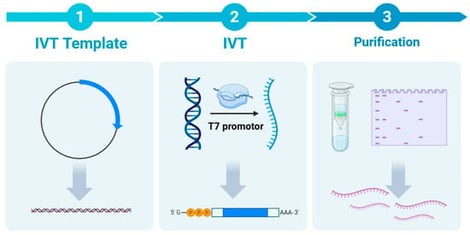
Synthetic RNA has become an essential modality in therapeutic development. Linear mRNA is already clinically validated, which demonstrated that in vitro-transcribed (IVT) RNA can achieve robust protein expression in humans and can be manufactured at a large scale. Circular RNA (circRNA) represents a more recent format characterized by a covalently closed backbone that confers enhanced resistance to exonucleases and supports sustained translation when paired with appropriate regulatory elements. Although both formats are produced through cell-free synthesis, their manufacturing pathways are distinct. Linear mRNA synthesis requires transcription, capping, polyadenylation, and stringent removal of double-stranded RNA contaminants. circRNA production generally proceeds through transcription of a linear precursor followed by enzymatic or ribozyme-mediated circularization, with emerging strategies such as permuted intron-exon designs improving efficiency and reducing extraneous sequence content. This review summarizes the principal methods used to generate linear and circRNA and identifies the technical barriers that must be overcome during the manufacturing process.
1 February 2026