Skip Content
You are currently on the new version of our website. Access the old version .
  • 27 days
    Time to First Decision

Standards

Standards is an international, peer-reviewed, open access journal on standardization, inspection, verification, certification, testing and quality control published quarterly online by MDPI.

All Articles (131)

In the context of strategies for the promotion of a sustainable wine industry, the utilization of production regulations under the European Geographical Indications system is seldom contemplated. Furthermore, when such texts are considered, the focus is typically on rules for viticulture or winemaking, rather than on articles governing the boundaries of a PDO or PGI. The present study examines the manner in which regulatory innovation, when viewed from a strictly geographical perspective, can promote the sustainable growth of the sparkling wine districts of Franciacorta and Oltrepò Pavese, which are located in the Italian Lombardy region. Through a comparative analysis of Franciacorta and Oltrepò Pavese, we explore how regulatory frameworks, land-use constraints, and production capacities interact to shape environmental, social, and economic sustainability. Franciacorta’s premium positioning and global reputation are constrained by its limited geographic area, making expansion environmentally and socially challenging. In contrast, Oltrepò Pavese has substantial production potential, particularly for Pinot Noir-based classic-method sparkling wines but suffers from a fragmented identity and weak market recognition. Benchmarking the Prosecco PDO evolution, we propose a sustainability-oriented growth model integrating multiple territories under harmonized rules, termed “Grande Franciacorta”. This framework would enable controlled growth, reduce land pressure in high-density areas, enhance regional competitiveness, and support long-term ecological stewardship. This study outlines managerial implications for producers, emphasizing multi-tier product architectures, dynamic capabilities, and coordinated governance mechanisms. Policy recommendations highlight the need for regulatory frameworks that embed sustainability criteria, optimize land use, and consolidate regional reputation to ensure the long-term viability of high-quality sparkling wine production.

5 February 2026
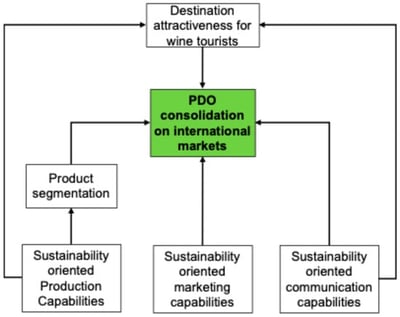
“Grande Franciacorta” PDO sustainable growth model. Source: author’s elaboration.

Navigating Unserved Areas: A Comprehensive Review of Medical Deserts

  • Davide Costa,
  • Nicola Ielapi and
  • Raffaele Serra

Medical deserts have become an increasingly prominent expression of unequal access to healthcare, yet the literature addressing this phenomenon remains fragmented, with heterogeneous definitions, indicators, and analytical approaches. This narrative review aims to systematize existing evidence by developing and applying a multidimensional typology based on four analytical axes: medical specialty, geography, population vulnerability to threats, and systemic barriers. A narrative review of English-language studies retrieved from Web of Science, PubMed, Scopus, and Google Scholar was conducted and interpreted through this framework. The analysis shows that medical deserts are described across a wide range of clinical fields and territorial contexts, with research concentrating primarily on specialty- and geography-based dimensions. In contrast, population vulnerability and systemic barriers are addressed less consistently and are often treated implicitly rather than as core analytical dimensions. Vulnerable groups and structural determinants of access, including organizational, regulatory, and digital factors, remain underexplored despite their growing relevance. By organizing fragmented evidence into a coherent multidimensional framework, this review clarifies how medical deserts emerge as systemic phenomena and highlights the need for integrated policy responses that move beyond workforce redistribution to address social vulnerability and health system design.

30 January 2026

Large outcrops of ophiolites from exposed land surfaces can potentially impact the geochemistry of much greater areas through transport and weathering. Derived soil and sediments contain significant concentrations of heavy metals, including chromium and nickel. In the context of environmental risk analysis, there is a necessity to obtain more information about the distribution of Cr and Ni in serpentine rocks and their derived associated geological matrices, and about how easily Cr could be released and then oxidized in the environment, causing pollution of groundwater. The aim of this study was to evaluate the distribution of Cr and Ni in the geochemical fractions containing Fe and Mn and the role of Fe and Mn oxides (crystalline and non-crystalline) in redox processes leading to the formation of Cr(VI) during serpentine soil weathering. Through the combination of chemical selective sequential extraction (SSE) and X-ray diffraction, solid samples belonging to ophiolitic rocks and their derived soils and sediments in southern Tuscany were investigated. The applied SSE method followed the established extraction scheme commonly used in sequential selective extraction procedures. The extraction was accomplished in seven successive steps, using appropriate reagents to destroy the binding agents between the target metal and the specific soil fraction to release the heavy metals selectively from their structural context. The results indicated significant differences in the availability and mobility of Cr and Ni in soils, with Cr concentrations ranging from 200 to 950 μg/g and Ni from 274 to 665 μg/g in reactive fractions. Cr is tightly bound to well-crystallized Fe-oxides and primary rock-derived phases, whereas Ni is substantially more mobile, being mainly controlled by Mn-oxides and amorphous Fe-oxides. Weakly acidic solutions or systems with high redox potential increase Cr and Ni mobility in the environment due to Fe/Mn hydroxides produced by the weathering of serpentinites. An ORP higher than 1000 mV leads to the formation of Cr(VI) by oxidation of Cr(III), increasing the mobility of Cr in groundwater and the hazard for human health. The analytical activity carried out in this research can be used to identify the potential risk of Cr(VI) release in groundwater from serpentine and derived geomaterials.

27 January 2026

With globalization rising, much scholarship has presented “a race to the bottom” regarding standards posing serious environmental concerns. This paper considers the debate of globalization leading to a “race to the bottom” or, contrastingly, a “race to the top.” With the growth of information technology and communication, the paper explores existing frameworks to advance green computing in the globalized context. Given a notable void in policy-driven frameworks in the current green computing literature, the paper proposes a comprehensive five-component policy framework to advance green computing, relying on norms and mandates for success. The framework includes the following: 1. Public policy involvement to drive private corporate sustainability. 2. Investment in green technology via government intervention. 3. Industrywide organizations promoting sustainable computing. 4. Proper disposal of computing equipment. 5. Comprehensive industry standards. Ultimately, this framework passionately advocates for the advancement of green computing and encourages further empirical research and evaluation of its respective elements.

20 January 2026

News & Conferences

Issues

Open for Submission

Editor's Choice

Get Alerted

Add your email address to receive forthcoming issues of this journal.

XFacebookLinkedIn
Standards - ISSN 2305-6703