Skip to Content
You are currently on the new version of our website. Access the old version .
  • Tracked for
    Impact Factor
  • 4.3
    CiteScore
  • 20 days
    Time to First Decision

Solar

Solar is an international, peer-reviewed, open access journal on all aspects of solar energy and photovoltaic systems published bimonthly online by MDPI.

All Articles (177)

Numerical Study of a Parabolically Deformed Beam for Solar Concentration Applications

  • Rodolfo Y. Salas-Bernal,
  • Pablo Sosa-Flores and
  • Ricardo A. Pérez-Enciso
  • + 4 authors

Recent advances in design, manufacturing and development techniques have been very relevant to making solar collectors feasible for production in a variety of applications. In the field of concentrated solar thermal technologies, several techniques have been developed to achieve high levels of radiation concentration. The generation of concave curvature geometry through the polishing of the reflective surface or through specialized machining is one of the most common methods. However, the way in which these bends are obtained can vary significantly, depending on the required quality of optical concentration for the application. This study presents a simple parametric technique to achieve a parabolic curvature for solar concentration applications. To do this, a controlled bending deformation was applied to a metal hollow profile beam supported by a pin and roller at each of the ends, and only two symmetric point loads were applied to generate a bending moment to induce a bending of a curved shape. It was found that, for a given load configuration, a parabolic geometry was generated along a partial center section of the beam. The analysis carried out showed that under the load configuration analyzed, up to 66% of the beam length adopted a fully parabolic geometry. The technique proposed in this work allows for the creation of parabolas with variable focal distances, offering versatility in the design of solar concentrating systems. It also allows corrective adjustments to be made during the assembly of the complete solar concentrator system.

12 February 2026
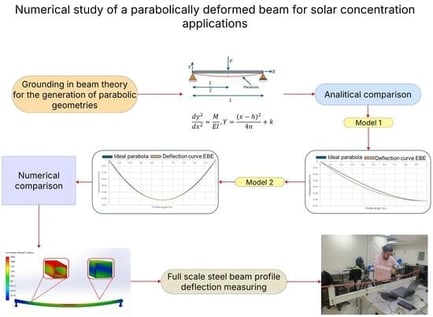
Reflection diagram of a parabolic surface, showing that all parallel rays converge at the focus f.

Thermal and Energy Performance Assessment of Evacuated Tube Collectors: Case Study at Rancho Luna Hotel

  • Leonel Díaz-Tato,
  • Luis Angel Iturralde Carrera and
  • Juvenal Rodríguez-Reséndiz
  • + 4 authors

This study aimed to evaluate the thermal performance and operational behavior of an evacuated-tube solar collector field installed in a coastal hotel under real industrial conditions. The work analyzed temperature, irradiance, and mass-flow data to determine instantaneous efficiency and identify performance deterioration associated with fouling. A multivariable regression model was developed to predict collector efficiency as a function of operating parameters. The results showed an average efficiency of 40–55%, with a noticeable decrease attributed to soiling effects. The methodology and findings contribute to improving monitoring-based maintenance strategies and optimizing the energy performance of large-scale domestic hot-water systems.

5 February 2026

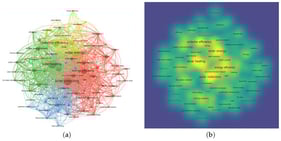
Bibliometric analysis networks and density map. (a) Bibliometric network for the analysis of articles. (b) Bibliometric density for the analysis of articles.

CPVG (Utility-scale photovoltaic generation) is expanding rapidly worldwide, yet its cumulative ecological effects remain insufficiently quantified. This review synthesizes current evidence to clarify how CPVG influences ecosystems through linked mechanisms of energy redistribution, biogeochemical cycling disturbance, and ecological responses. CPVG alters surface radiation balance, modifies microclimate, and disrupts carbon–nitrogen–water fluxes, thereby driving vegetation shifts, soil degradation, and biodiversity decline. These impacts accumulate across temporal scales—from short-term construction disturbances to long-term operational feedbacks—and propagate spatially from local to regional and watershed levels. Ecological outcomes differ substantially among deserts, grasslands, and agroecosystems due to contrasting resilience and limiting factors. Based on these mechanisms, we propose a multi-scale cumulative impact assessment framework integrating indicator development, multi-source monitoring, coupled modelling, and ecological risk tiering. A full-chain mitigation pathway is further outlined, emphasizing optimized siting, disturbance reduction, adaptive management, and targeted restoration. This study provides a systematic foundation for evaluating and regulating CPVG’s cumulative ecological impacts, supporting more sustainable solar deployment.

3 February 2026

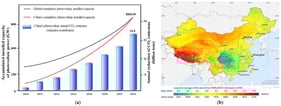
(a) Global and Chinese photovoltaic installed capacity growth trend (2010–2024). (b) Spatial distribution map of solar energy resources in China.

Smart microgrids are localized energy systems that integrate distributed energy resources, such as photovoltaics (PVs) and battery storage, to optimize energy use, enhance reliability, and minimize environmental impacts. This paper investigates the operation of a smart microgrid installed at the Hellenic Mediterranean University (HMU) campus in Heraklion, Crete, Greece. The system, consisting of PVs and battery storage, operates under a zero feed-in scheme, which maximizes on-site self-consumption while preventing electricity exports to the main grid. With increasing PV penetration and growing grid congestion, this scheme is an increasingly relevant strategy for microgrid operations, including university campuses. A properly sized PV–battery microgrid operating under zero feed-in operation can remain financially viable over its lifetime, while additionally it can achieve significant environmental benefits. The study performed at the HMU Campus utilizes measured hourly data of load demand, solar irradiance, and ambient temperature, while PV and battery components were modeled based on real technical specifications. The study evaluates the system using financial and environmental performance metrics, specifically net present value (NPV) and annual greenhouse gas (GHG) emission reductions, complemented by sensitivity analyses for battery technology (lead–carbon and lithium-ion), load demand levels, varying electricity prices, and projected reductions in lithium-ion battery costs over the coming years. The findings indicate that the microgrid can substantially reduce grid electricity consumption, achieving annual GHG emission reductions exceeding 600 tons of CO2. From a financial perspective, the optimal configuration consisting of a 760 kWp PV array paired with a 1250 kWh lead–carbon battery system provides a system autonomy of 46% and achieves an NPV of EUR 1.41 million over a 25-year horizon. Higher load demands and electricity prices increase the NPV of the optimal system, whereas lower load demands enhance the system’s autonomy. The anticipated reduction in lithium-ion battery costs over the next 5–10 years is expected to provide improved financial results compared to the base-case scenario. These results highlight the techno-economic viability of zero feed-in microgrids and provide valuable insights for the planning and deployment of similar systems in regions with increasing renewable penetration and grid constraints.

3 February 2026

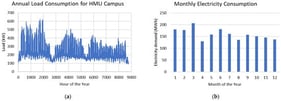
Load demand data for HMU Campus in Heraklion, Crete: (a) hourly load; (b) total monthly load.

News & Conferences

Issues

Open for Submission

Editor's Choice

Reprints of Collections

Sustainable Energy Technology
Reprint

Sustainable Energy Technology

Editors: Wei-Hsin Chen, Aristotle T. Ubando, Chih-Che Chueh, Liwen Jin
Advances in Renewable Energy and Energy Storage
Reprint

Advances in Renewable Energy and Energy Storage

Editors: Luis Hernández-Callejo, Jesús Armando Aguilar Jiménez, Carlos Meza Benavides

Get Alerted

Add your email address to receive forthcoming issues of this journal.

XFacebookLinkedIn
Solar - ISSN 2673-9941