Skip Content
You are currently on the new version of our website. Access the old version .

Separations

Separations - formerly Chromatography - is an international, peer-reviewed, open access journal on separation and purification science and technology in all areas of chemical, biological, physical science, and separation performance, published monthly online by MDPI.
The Central European Group of Separation Sciences (CEGSS) is affiliated with Separations and its members receive discounts on the article processing charges.

All Articles (2,383)

Water with a high fluoride content poses a serious threat to both public health and the natural environment. To enhance fluoride ion removal efficiency, a modified activated carbon adsorbent (HPAC-La) was synthesized by impregnating soybean protein in a lanthanum nitrate solution, followed by freezing–drying and carbonization. The results confirmed that lanthanum nitrate modification significantly improved the adsorption performance. Under optimised experimental conditions (pH = 2.0, [F] = 300 mg·L−1, 12 h, 298 K), HPAC-La exhibited a maximum adsorption capacity for fluoride ions of 126.7 mg·L−1, significantly higher than that of unmodified HPAC (86.1 mg·L−1). The adsorption process followed the pseudo-second-order kinetic model and the Langmuir isotherm model, indicating monolayer chemisorption. The mechanism involves ion exchange via surface hydroxyl groups and fluoride coordination with La sites. This study proposes a method for developing highly efficient adsorbents for the treatment of fluoride-contaminated wastewater.

7 February 2026
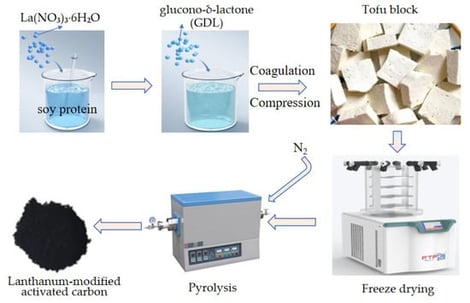
The preparation scheme of lanthanum-modified activated carbon (HPAC-La).

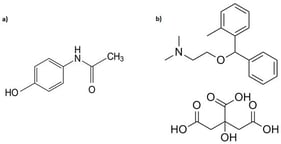
Paracetamol (PAR) and orphenadrine citrate (ORPH) are two active substances commonly used in combination medicinal products, due to the analgesic effect of paracetamol and the muscle relaxant effect of orphenadrine, with a therapeutic indication of mild to moderate acute musculoskeletal pain. The aim of this work is to develop and validate an isocratic HPLC method for the simultaneous determination of PAR and ORPH in tablet formulation. Preliminary experiments showed that an analytical column with a chemically bound phenyl phase was required. A Box–Behnken design (BBD) was utilized to optimize the analytical method for two key responses, PAR asymmetry factor (AsymPAR) and ORPH capacity factor (kORPH), with three numerical factors: percentage of ACN in mobile phase (A); pH (B); and salt concentration in the aqueous solution (C). The optimized method consists of a Pinnacle DB Biphenyl (250 × 4.6 mm) 5 µm column, and a mobile phase of 37%/63% v/v ACN-NaH2PO4·H2O in 29 mM aqueous solution, pH = 2.5. The flow rate was set to 1.5 mL/min and detection occurred at 215 nm. After the optimization process the following chromatographic conditions were selected and the method was validated for various ICH parameters covering system suitability, specificity, linearity (R2 = 1.00), precision (%RSD ≤ 2), accuracy (98% ≤ %Recovery ≤ 102%), and robustness. Finally, the environmental friendliness of the novel method was assessed by using the Analytical GREEnness (AGREE) metric tool, obtaining a score of 0.67.

6 February 2026

Constitutional formulas of (a) paracetamol and (b) orphenadrine citrate.

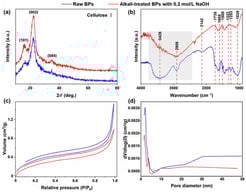
To develop low-cost and renewable materials for treating dye wastewater, an efficient biosorbent was prepared from Bambusa emeiensis bamboo powders (BPs) via a simple alkali pretreatment. Systematic investigation revealed that NaOH concentration was critical for enhancing adsorption performance. Under optimal conditions (NaOH ≥ 0.2 mol/L, dosage = 10.0 g/L), the BPs achieved over 96% removal of cationic Methylene Blue (MB, 20 mg/L) within 20 min, demonstrating rapid kinetics. The adsorption process followed the Langmuir isotherm model with a maximum adsorption capacity of 4.1 mg/g without adjusting the pH of the solution and complied with the pseudo-second-order kinetic model. Thermodynamic analysis confirmed the spontaneous (ΔG < 0) and exothermic (ΔH = −52.73 kJ/mol) nature of the adsorption. Notably, the alkali-treated BPs exhibited a pronounced preference for the cationic dye, achieving a high removal rate of 96.5% for MB, in contrast to a much lower removal of 23.6% for the anionic dye AO7 under identical single-dye conditions, attributed to the enhanced surface negative charge after alkali treatment. Furthermore, the BPs maintained a high removal efficiency of 91.2% after eight adsorption-desorption cycles using 0.1 mol/L HCl as eluent, demonstrating excellent reusability. This study presents a feasible and sustainable strategy for designing regenerative bamboo-based biosorbents with rapid and preferential adsorption capabilities for cationic dye wastewater.

6 February 2026

(a) XRD spectra, (b) FTIR spectra, (c) N2 adsorption-desorption isotherms, and (d) Barrett–Joyner–Halenda pore size distribution curves of raw BPs and alkali-treated BPs with 0.2 mol/L NaOH aqueous solution.

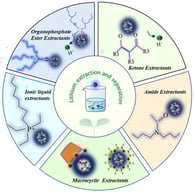
With the rapid expansion of the global lithium battery industry, the demand for lithium as a critical raw material continues to grow. Lithium precipitation mother liquor still contains considerable concentrations of lithium ions (Li+), but they generally exhibit a high sodium-to-lithium ratio, which makes the separation of lithium from sodium particularly challenging. Solvent extraction is recognized as a viable approach for challenging Li+/Na+ separation due to its high selectivity, operational flexibility, and scalability. A comprehensive assessment and comparison of various extraction systems are therefore essential to facilitate the sustainable recovery of lithium from precipitation mother liquor. This review summarizes the commonly used extraction systems, including organophosphorus extractants, ketone-based extractants, macrocyclic compounds, ionic liquids, and deep eutectic solvents. A systematic analysis is provided regarding their extraction mechanisms, applicable conditions, and respective advantages and disadvantages. Finally, perspectives and suggestions are offered on future research directions and improvement strategies for different extraction systems, along with an outlook on the potential of combined enhancement technologies.

5 February 2026

Generation of lithium precipitation mother liquor.

News & Conferences

Issues

Open for Submission

Editor's Choice

Get Alerted

Add your email address to receive forthcoming issues of this journal.

XFacebookLinkedIn
Separations - ISSN 2297-8739