Skip Content
You are currently on the new version of our website. Access the old version .
  • 0.6
    Impact Factor
  • 21 days
    Time to First Decision

Reports - Clinical Practice and Surgical Cases

Reports — Clinical Practice and Surgical Cases is an international, peer-reviewed, open access journal about the medical cases, images, and videos in human medicine, published quarterly online by MDPI.

All Articles (679)

  • Case Report
  • Open Access

Diagnostic Challenge of Extranodal Marginal Zone Lymphoma of Extraocular Muscles: A Case Report

  • Vaia-Aikaterini Alexoudi,
  • Dimitris Tatsis and
  • Aggeliki Cheva
  • + 2 authors

Background and clinical significance: The current report examines an unusual case of extranodal marginal zone lymphoma (EMZL) affecting only the extraocular muscles. The diagnostic challenges connected to such atypical manifestations are highlighted. The resemblance to inflammatory or infiltrative processes may lead to diagnostic delays; therefore, therapy administration may be withheld. Case presentation: A 77-year-old male was admitted to our hospital with periorbital edema accompanied with vision abnormalities affecting his left eye. The complete diagnostic workup and surgical treatment is presented using a navigation system. Adequate biopsy samples from the delicate orbital tissue can be obtained by utilizing contemporary visualization techniques, particularly navigation systems. The pathology report proved indispensable, with ample raw muscle tissue providing sufficient material from whicha definitive diagnosis was made. The indicated therapy was administered without delay. Conclusions: The uncommon, isolated affection of extraocular muscles by extranodal marginal zone lymphoma is exemplified in this case, highlighting the need for early clinical suspicion in order to differentiate this condition from other more prevalent inflammatory pathologies. The implementation of advanced technologies, such as image-guided navigation systems, alongside a highly skilled multidisciplinary medical team, ensures optimal patient results.

9 February 2026
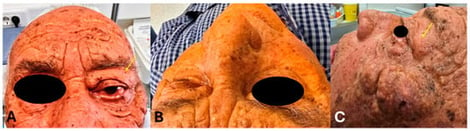
Clinical photographs of the patient: (A) anterior, (B) superior, and (C) lateral perspectives. Periorbital edema is localized on the left-hand side (arrow).

Background/Objectives: Vitamin D has an essential role in immune modulation and inflammatory control, particularly in respiratory infections. Despite widespread supplementation policies, hypovitaminosis D remains common in children and data linking vitamin D status to hospitalization outcomes in pediatric upper respiratory tract infections are limited, especially in Eastern Europe. Methods: We included 400 pediatric patients hospitalized between October 2020 and December 2024 for acute respiratory tract infections (ARTI), and we stratified them into a Normal Vitamin D group (NVD) with sufficient serum 25(OH)D concentrations and a Low Vitamin D group (LVD) with insufficient or deficient levels. Between-group comparisons for continuous variables were performed using non-parametric methods. Results: Children with insufficient or deficient 25(OH)D had a significantly longer duration of hospitalization compared with those with sufficient levels (mean 4.68 ± 2.59 days vs. 2.89 ± 1.81 days). The LVD group showed markedly lower serum vitamin D concentrations (mean 21.63 ± 5.56 ng/mL; median 22.29 ng/mL) compared with the NVD group (mean 47.60 ± 19.59 ng/mL; median 43.70 ng/mL). Markers of disease severity were consistently higher in vitamin D-deficient patients, including higher clinical scores (mean 3.77 ± 2.29 vs. 1.62 ± 1.89), elevated CRP levels (mean 3.50 ± 3.02 mg/L vs. 1.64 ± 1.59 mg/L), and increased O2 therapy requirement (69.5% vs. 21.0%). Fever was more frequent in the LVD group (61.0% vs. 32.0%). An inverse correlation was observed between serum 25(OH)D concentrations and hospitalization duration, clinical score, and disease severity, with deficiency present across all age strata in the LVD group, while no cases of deficiency were observed in the NVD group. Conclusions: Low serum 25(OH)D concentrations are associated with increased disease severity and prolonged hospitalization.

9 February 2026

Multifaceted immunomodulatory roles of 1,25-dihydroxyvitamin D. Created with Biorender version 2.0 [7].
  • Case Report
  • Open Access

Autoimmune Gastritis in Children: A Rare Cause of Refractory Iron-Deficiency Anemia

  • Alfonso Lendínez-Jurado,
  • Ana García-Ruiz and
  • Víctor Manuel Navas-López
  • + 3 authors

Background and Clinical Significance: Pediatric autoimmune gastritis (AIG) is a rare and frequently underdiagnosed disorder characterized by chronic immune-mediated inflammation and atrophy of the gastric mucosa. In children, AIG typically presents with iron-deficiency anemia (IDA) refractory to oral iron supplementation, in contrast to the pernicious anemia more commonly observed in adults. Diagnosis relies on a combination of serological markers, such as anti-parietal cell antibodies, and histopathological confirmation, with gastric biopsies demonstrating oxyntic mucosal atrophy and lymphocytic infiltration. Early recognition is essential, particularly in patients with personal or familial autoimmune backgrounds, to prevent long-term complications including nutritional deficiencies and increased gastric neoplasia risk. Case Presentation: An 11-year-old boy was referred for evaluation of severe microcytic anemia. He was clinically asymptomatic, with normal growth and physical examination except for mucocutaneous pallor. Celiac disease, thyroid dysfunction, hemoglobinopathies, and infectious or inflammatory gastrointestinal causes were excluded. Despite six months of high-dose oral iron therapy, anemia persisted. Upper gastrointestinal endoscopy showed macroscopically normal mucosa; however, histopathological analysis of gastric body biopsies revealed chronic atrophic gastritis. Serological testing confirmed autoimmune etiology, with positive anti-parietal cell antibodies and hypergastrinemia. Since diagnosis, the patient has required two courses of intravenous iron supplementation, and remains under close follow-up for associated autoimmune and hematologic conditions. Conclusions: Refractory IDA may represent the sole clinical manifestation of AIG in pediatric patients, even in the absence of gastrointestinal symptoms. Histological assessment is crucial, as endoscopic findings may be normal. Early diagnostic suspicion allows timely management focused on correction of nutritional deficiencies and long-term surveillance to mitigate neoplastic risk. AIG should therefore be considered in children with anemia unresponsive to conventional iron therapy.

4 February 2026

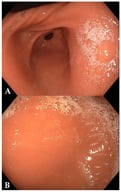
Endoscopic findings on upper gastrointestinal endoscopy. The mucosa appears endoscopically preserved in both antrum (A) and gastric body (B). This macroscopic normality is a hallmark of the initial phases of autoimmune gastritis, where the immune-mediated mucosal damage is only detectable at the microscopic level.
  • Case Report
  • Open Access

Background and Clinical Significance: Optic neuritis, an inflammatory demyelinating condition affecting the optic nerve, can present as an isolated phenomenon or as a harbinger of an underlying systemic disorder. While often associated with multiple sclerosis (MS), optic neuritis has been reported in the context of various infectious and inflammatory conditions, including human immunodeficiency virus (HIV) infection. Case Presentation: We describe a case of bilateral optic neuritis that led to the diagnosis of acute HIV infection in a young man actively engaged in bodybuilding, anabolic steroid use, and high-risk sexual behavior. The patient initially presented with an acute onset of vision loss, headache, and photophobia. Magnetic resonance imaging (MRI) findings confirmed demyelination of the optic nerves, and laboratory workup revealed acute HIV-1 infection. The patient improved following high-dose corticosteroids and initiation of antiretroviral therapy. Conclusions: This case highlights the need to consider systemic infections such as HIV in atypical presentations of optic neuritis.

3 February 2026

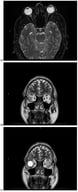
(a) Magnetic Resonance Imaging (MRI) of the brain and orbits fat-saturated T2-weighted axial image showing mild right greater than left T2 hyperintense signal in the periphery of the optic nerves in the anterior intraorbital region, consistent with optic neuritis. A: anterior, R: right; (b) MRI of the brain and orbits coronal T2-weighted image showing right sided optic neuritis. S: superior, R: right; (c) MRI of the brain and orbits coronal T2-weighted image showing left sided optic neuritis. S: superior, R: right.

News & Conferences

Issues

Open for Submission

Editor's Choice

Reprints of Collections

Novel Aspects of COVID-19 after a Two-Year Pandemic
Reprint

Novel Aspects of COVID-19 after a Two-Year Pandemic

Editors: Toshio Hattori, Yugo Ashino
Photodynamic Therapy
Reprint

Photodynamic Therapy

Editors: Stefano Bacci, Kyungsu Kang

Get Alerted

Add your email address to receive forthcoming issues of this journal.

XFacebookLinkedIn
Reports - ISSN 2571-841X