

- Case Report

Autoimmune Gastritis in Children: A Rare Cause of Refractory Iron-Deficiency Anemia
- Alfonso Lendínez-Jurado,
- Ana García-Ruiz and
- Víctor Manuel Navas-López
- + 3 authors
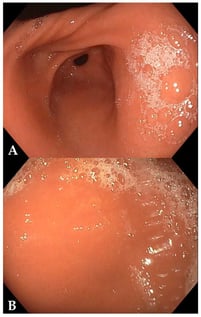
Background and Clinical Significance: Pediatric autoimmune gastritis (AIG) is a rare and frequently underdiagnosed disorder characterized by chronic immune-mediated inflammation and atrophy of the gastric mucosa. In children, AIG typically presents with iron-deficiency anemia (IDA) refractory to oral iron supplementation, in contrast to the pernicious anemia more commonly observed in adults. Diagnosis relies on a combination of serological markers, such as anti-parietal cell antibodies, and histopathological confirmation, with gastric biopsies demonstrating oxyntic mucosal atrophy and lymphocytic infiltration. Early recognition is essential, particularly in patients with personal or familial autoimmune backgrounds, to prevent long-term complications including nutritional deficiencies and increased gastric neoplasia risk. Case Presentation: An 11-year-old boy was referred for evaluation of severe microcytic anemia. He was clinically asymptomatic, with normal growth and physical examination except for mucocutaneous pallor. Celiac disease, thyroid dysfunction, hemoglobinopathies, and infectious or inflammatory gastrointestinal causes were excluded. Despite six months of high-dose oral iron therapy, anemia persisted. Upper gastrointestinal endoscopy showed macroscopically normal mucosa; however, histopathological analysis of gastric body biopsies revealed chronic atrophic gastritis. Serological testing confirmed autoimmune etiology, with positive anti-parietal cell antibodies and hypergastrinemia. Since diagnosis, the patient has required two courses of intravenous iron supplementation, and remains under close follow-up for associated autoimmune and hematologic conditions. Conclusions: Refractory IDA may represent the sole clinical manifestation of AIG in pediatric patients, even in the absence of gastrointestinal symptoms. Histological assessment is crucial, as endoscopic findings may be normal. Early diagnostic suspicion allows timely management focused on correction of nutritional deficiencies and long-term surveillance to mitigate neoplastic risk. AIG should therefore be considered in children with anemia unresponsive to conventional iron therapy.
4 February 2026