


Need Help?
Announcements
4 March 2026
MDPI’s 2025 Best Paper Awards—Award-Winning Papers Announced
MDPI is honored to announce the recipients of the 2025 Best Paper Awards, celebrating exceptional research for its scientific merit and broad impact. After a rigorous evaluation process conducted by Academic Editors, this year’s awards showcase papers that stand out for their innovation, relevance, and high-quality presentation.
Out of a highly competitive pool, 396 winning papers have been recognized for their exceptional contributions. We congratulate these authors for pushing the boundaries of their respective disciplines.
At MDPI, we are dedicated to broadening the reach of innovative science. To learn more about the award-winning papers and explore research projects in your field of study, please visit the following links:
- Biology and Life Sciences;
- Business and Economics;
- Chemistry and Materials Sciences;
- Computer Sciences and Mathematics;
- Engineering;
- Environmental and Earth Sciences;
- Medicine and Pharmacology;
- Social Sciences, Arts and Humanities;
- Physical Sciences;
- Public Health and Healthcare.
About MDPI Awards:
To reward the global research community and enhance academic dialogue, MDPI journals regularly host award programs across diverse scientific disciplines. These awards, serving as a source of inspiration and recognition, help raise the influence of talented individuals who have been credited with outstanding achievements and whose work drives the advancement of their fields.
Explore the Best Paper Awards open for participation, please click here.
20 April 2026
Religions Young Investigator Award—Winners Announced

We are pleased to announce the winners of the Religions 2025 Young Investigator Award, established to acknowledge the achievements of young investigators in the field of religion.
After a rigorous evaluation process, including two rounds of evaluation and voting from a committee, two winners have been selected for their exceptional contributions to religion research and their potential for future leadership.
Please join us in congratulating the following winners:
- Dr. W. Y. Alice Chan, The Centre for Civic Religious Literacy, Canada;
- Dr. Davide Tramarin, University of Padua, Italy.
As the awardees, they will each receive an honorarium of CHF 1500, an electronic certificate, and a voucher to waive the article processing charges (APCs) for one submission to the Religions—valid for one year.
With so many high-quality applicants, the evaluation process and final decision were challenging. We would like to thank all the nominators for their participation and the Award Committee Members for their careful evaluation of the many outstanding nominees. On behalf of the assessment committee, we congratulate the winners on their accomplishments.
16 April 2026
MDPI’s Newly Launched Journals in the First Quarter of 2026
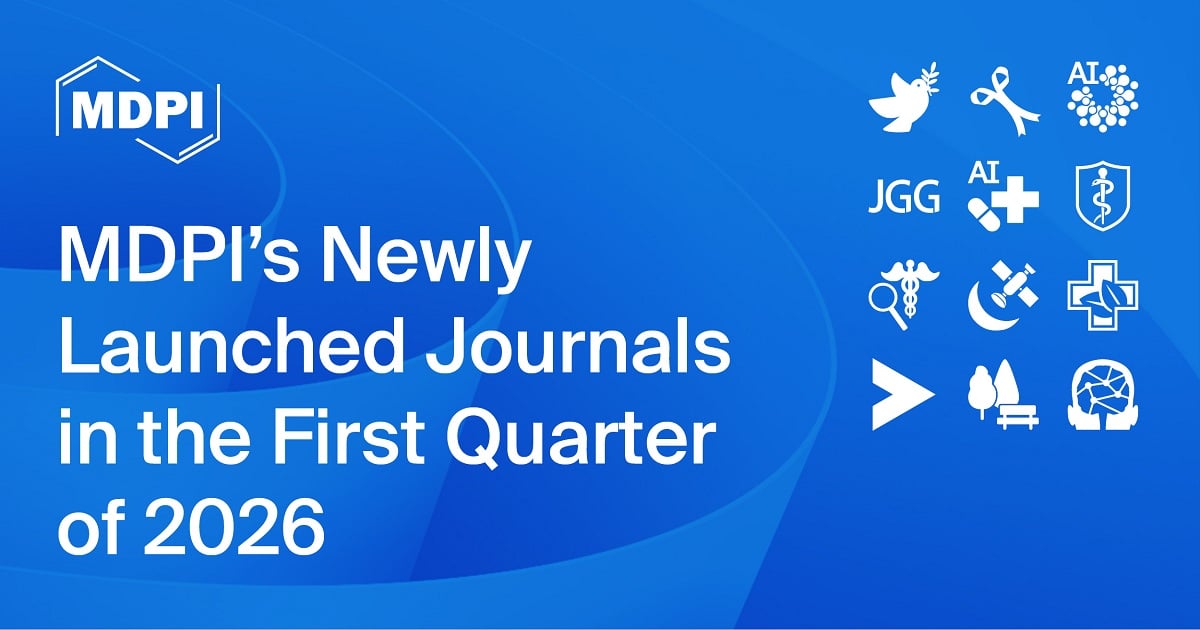
Our portfolio of journals available for publishing up-to-date research in immediate open access format has been further expanded. In the first quarter of 2026, nine new journals released their inaugural issues and three transferred journals released their first issue as part of MDPI, covering the subjects of clinical medicine, chemistry, computer science & mathematics, engineering, environment & ecology, and social sciences & psychology.
We extend our gratitude to the Editors-in-Chief, Associate Editors, and Editorial Board Members who will shape the future course of these brand-new journals. Each journal is dedicated to upholding strong editorial standards through a thorough peer review process, ensuring impactful open access scholarship.
Please feel free to browse and discover more about the new journals below.
|
New Journals |
Founding Editor(s)-in-Chief |
Journal Topics (Selected) |
|
|
Prof. Dr. Matt Oehlschlaeger, |
AI-based chemical data analysis, prediction, and discovery; AI-enabled chemical reaction prediction, synthesis planning, and retrosynthesis; AI in bioorganic chemistry and chemical biology; digital twins and simulation of chemical processes; AI-powered chemical education and pedagogy | |
|
|
Prof. Dr. Guang Jia, |
occupational hazards and exposure science; occupational health effects and susceptibility; occupational risk assessment and management; occupational health intervention, promotion, and policy | |
|
|
Prof. Dr. Alessandro Miani, |
environmental exposures and health; the built environment and public health; One Health approach; environmental justice and health equity; environmental policies and interventions | |
|
|
Prof. Dr. Miriam H. A. Bopp, |
neuroimaging technology and tool; multimodal neuroimaging integration and analysis; |
|
|
Prof. Dr. Raul A. Urrutia, |
personalized translational and clinical oncology research that contribute to a deeper understanding of cancer diagnoses, prognoses, prevention, and treatment specifically for individual patients | |
|
|
Prof. Dr. Pierre Boulanger, |
AI in disease detection, diagnosis, prediction, and treatment; medical informatics; AI in genomics and precision medicine; AI in drug discovery and development; |
|
|
Prof. Dr. Zhaokui Wang, |
astrodynamics; spacecraft technology; satellite technology; space transportation; space vehicle design, propulsion, and avionics; space energy, power and propulsion | |
|
|
Prof. Dr. Richard J Hauer, |
park design, planning, and evaluation; park and art; park, industrialization, urbanization, and civilization; park and education; park and smart society; park role in SDGs; park services for humans | |
|
|
Prof. Dr. Stacey L. Connaughton, |
conflict resolution; peacebuilding; peacemaking; mediation, reconciliation, and transitional justice; sustaining peace | |


|
Transferred Journals |
Editor(s)-in-Chief |
Journal Topics (Selected) |
|
|
Prof. Dr. Gianluigi Vendemiale, |
physiology and pathology of aging; biogerontology; epidemiology; clinical geriatrics; pharmacology; geriatric nursing | |
|
|
Prof. Dr. Michele Maffia, |
cellular and developmental biology; physiology, pathophysiology and endocrinology; diagnostic tools, therapies and public health | |
|
|
Dr. Warren S. Joseph, |
foot and ankle medicine; podiatric medicine | |


We would like to thank everyone who has supported the development of open access publishing. If you would like to create a new journal, you are welcome to send an application here or contact the New Journal Committee (newjournal-committee@mdpi.com).
16 April 2026
Empowering Academic Growth with MDPI Academic Publishing Workshop at Rajamangala University of Technology Thanyaburi, 12 May 2026

We are pleased to present the MDPI Academic Publishing Workshop, organized in collaboration with Rajamangala University of Technology Thanyaburi. This joint initiative underscores a shared vision for fostering interdisciplinary research that addresses pressing global sustainability issues through creative methodologies, cross-sector partnerships, and impactful solutions.
Rooted in a shared dedication to researcher development, this workshop is designed to support the academic community at Rajamangala University of Technology Thanyaburi. Attendees will gain insights into current trends in sustainability, open access publishing, and direct interaction with journal editors and publishing experts. With a special focus on early-career researchers and innovators, the session aims to equip participants with practical skills to elevate the reach of their research and cultivate lasting international collaborations.
Date: 12 May 2026
Time: 9:00–12:00 p.m.
Location: Lecture 3, Faculty of Liberal Arts
Language: Thai
Registration: https://www.surveymonkey.com/r/TG88QNG
| Speaker | Program | Time |
| Asst. Prof. Dr. Supit Boonlab | Opening Speech | 9:00–9:10 |
| Dr. Krit Inthajak | MDPI and Journal Introduction | 9:10–9:40 |
| Dr. Juthathip Poofery | How to Write Scientific Papers | 9:40–10:30 |
| Q&A Session | 10:30–10:40 | |
| Ms. Hathaipat Kittirojana | How to Respond to Peer Reviewers | 10:40–11:10 |
| Q&A Session | 11:10–11:20 | |
| Dr. Siriporn Tantiwatcharothai | Artificial Intelligence in Scientific Publishing | 11:20–11:50 |
| Q&A Session | 11:50–12:00 |
| Chair | |
 |
Supit Boonlab is an Assistant Professor and serves as the Vice Dean for research development, and academic services at the Faculty of Liberal Arts. She earned her PhD degree in public administration. She specializes in public administration, leadership, and public policy, focusing on local governance, education management, and digital citizenship. Her significant contributions include developing structural equation models for policy and education systems, advancing digital-era learning frameworks, and promoting sustainable community and governance innovations in Thailand. |
| MDPI Speakers: | |
 |
Dr. Krit Inthajak obtained his PhD in engineering and technology from Sirindhorn International Institute of Technology, Thammasat University. He joined MDPI in March 2020 as an Assistant Editor for Molecules. He was appointed as a Section Managing Editor in 2021 and worked as a Group Leader from 2021 to 2024. He is now one of MDPI’s Regional Journal Relations Specialists for the Asia–Pacific region. |
 |
Dr. Juthathip Poofery holds a PhD in biochemistry from the Faculty of Medicine, Chiang Mai University, Thailand. She began working at MDPI in 2021 as an Assistant Editor for Medicina and advanced to the position of Section Managing Editor in 2022. Since 2023, Dr. Poofery has been serving as the Group Leader of the “Medical Science” Section, where she oversees editorial operations and contributes to the advancement of research in the field. |
 |
Ms. Hathaipat Kittirojana obtained her master’s degree in food science and biotechnology from Teesside University. She joined MDPI in December 2020 as an Assistant Editor for the Journal of Imaging. She was appointed as a Section Managing Editor in March 2023 and a Regional Journal Relations Specialist for the Asia–Pacific region in July 2024. |
 |
Dr. Siriporn Tantiwatcharothai obtained her PhD in applied chemistry from the Faculty of Science, King Mongkut's Institute of Technology Ladkrabang. She joined MDPI in December 2022 as an Assistant Editor for Catalysts. In 2024, she was promoted to Section Managing Editor, and as of April 2025, she has been serving as the Chief Section Managing Editor. And she is currently one of MDPI’s Regional Journal Relations Specialists for the Asia–Pacific region. |
2 April 2026
2026 Tu Youyou Award—Open for Nominations
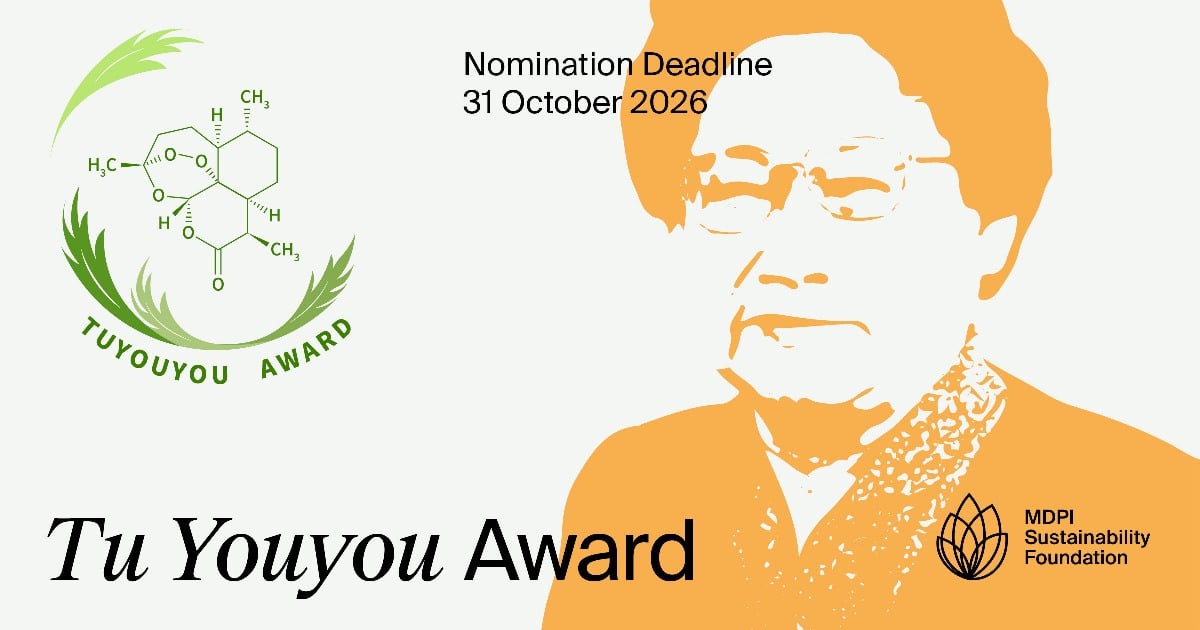
We are delighted to announce that nominations are now open for the 2026 Tu Youyou Award. Named after Nobel Laureate Tu Youyou, whose discovery of artemisinin has saved millions of lives, this award recognizes researchers whose work advances the fields of natural products chemistry and medicinal chemistry, while also contributing to human health.
Prize
– CHF 100,000;
– A medal;
– A certificate.
The monetary prize will be shared equally should there be multiple recipients.
Who May Be Nominated?
– Scientists with outstanding achievements and contributions in the fields of natural products chemistry and medicinal chemistry.
Nominees must be individuals; team or group nominations are not permitted. Nominations are valid only for the current award cycle.
Who May Submit a Nomination?
– The director of the nominee’s host research institution or recognized scientists within the field.
Self-nominations will not be considered.
Nomination Materials
– A biographical sketch;
– A detailed description of the nominee’s contributions;
– 5–10 representative academic publications;
– A list of academic honors, awards, and funded projects;
– A nomination letter signed by two nominators.
How to Submit?
Submit nominations online via the following link: https://tuyouyouprize.org/nomination
Important Dates
– Nomination Deadline: 31 October 2026
– Winner Announcement: March 2027
For further information, please visit the Tu Youyou Award website (https://tuyouyouprize.org/). For any inquiries, please contact the Tu Youyou Award Team at tuyouyouaward@mdpi.com.
1 April 2026
Interview with Ms. Ngoc Nguyen—Winner of the Religions Travel Award

1. Congratulations on winning the Religions Travel Award! What does this recognition mean to you, and how has it impacted your research and professional development? Can you share with us your feelings about winning the award?
Receiving the Religions Travel Award gave me the tremendous opportunity to attend an important international conference, gain valuable feedback on my current research, and interact with other experts in the field. I was thrilled with this opportunity and remain grateful for the experience that I gained.
2. Where did you learn about how to apply for this journal award? Can you briefly introduce which conference or conferences you plan to attend with this award?
I was informed about the possibility of applying for this travel award through an email from my academic institution. I felt that it was a perfect opportunity for me to participate in and attend the annual World Christianity Conference that was held in Recife, Brazil, in March 2026. This conference regularly features a vast array of international scholars who conduct research on Christianity beyond the narrow scope of a European or North American context. The theme of this year’s conference allowed me to join a panel that discussed aspects of interreligious and ecumenical relations in the realm of Asian Christianity.
3. Do you have any suggestions for improving the visibility of these awards?
I was fortunate to receive the email from my institution. I hope that this is advertised to students at universities throughout the world. I am sure that many of my colleagues in my native country of Vietnam had not heard of this opportunity.
4. Attending international conferences is an essential part of scientific collaboration and growth. How did the Religions Travel Award support your participation, and how do you plan to promote the journal at the conference? Do you have any thoughts on how the promotion of the journal at conferences could be more effective?
I would not have been able to participate in this conference because of the travel costs, but this travel award allowed me to participate as an in-person attendee in Brazil. I ensured that the slides in my presentation clearly identified that my travel costs and participation were enabled through the journal’s Religions Travel Award. While the people who attended my panel presentation were able to learn about this, the other conference attendees were not aware. I think that promoting the journal could be more effectively done with representatives who could also attend the conference and show examples of what the journal has to offer.
5. How do you view the role of open access journals (such as Religions) in academic communication? Will you consider reviewing or contributing to them in the future?
I think that open access journals are very important because they allow access to a wider audience, especially for those in other countries that are not able to access the paywalls and firewalls that block many of the academic publications that are available in Europe and North America. This is especially important for many of my colleagues in Asia, including those from Africa and Latin America who attend conferences such as the World Christianity Conference. Yes, I would be happy to contribute to an open access journal such as Religions.
1 April 2026
Interview with Mr. Benjamin Manig—Winner of the Religions Travel Award

1. Congratulations on winning the Religions Travel Award! Can you tell us about your current research interests? What motivated you to pursue this area of study?
My doctoral thesis addresses a topic within the field of biblical exegesis in the sixteenth century. This area brings together two disciplines that greatly fascinate me: New Testament Studies and Church History. The interdisciplinary focus on reception history is recognized and valued in both fields.
The early modern period was a time of profound institutional and political disruption. The Catholic Church, which had long been the only Western church, was challenged by the emergence of Protestant state churches. In the context of these developments, religious identities needed to be redefined: through processes of demarcation from one another, diverse confessional traditions took shape.
These developments unfolded through various discourses at different institutional levels and in different locations. Exegesis represents one such discourse. Within this context, the biblical text occupies a central position, yet it is interpreted and commented upon from a variety of perspectives. What particularly interests me is the diversity of the interpretations and the techniques employed to interpret the texts. In many cases, one can observe a genuine wrestling with the biblical text. The resulting interpretations often do not simply follow confessional lines. Thus, when theological tractates no longer allowed for meaningful discussion, the Bible—sharing as a common reference point—could still establish a space in which scholars read and commented on each other’s work. The common reference to the biblical text guided their discussions and left room for ambiguities.
My research focuses especially on the reception of the letter to the Romans. Nearly one hundred commentaries on this major Pauline work were published during the sixteenth century. Without a doubt, Romans—where the doctrine of justification, natural theology, and predestination were discussed—was the central exegetical battleground of the early modern period. My thesis examines the more practical chapters 12–15, the so-called paraenesis, in order to evaluate the claim often made in contemporary scholarship that Reformation-era exegetes treated Romans 12–15 merely as an appendix to the letter. As I aim to demonstrate, sixteenth-century exegetes did in fact integrate the paraenesis into their interpretation of the letter as a whole. They were well aware both of the historical circumstances of the letter and of its significance for shaping the life of the church.
My motivation for pursuing this area of study lies in an interest in the history of culturally influential texts. The Bible remains a highly debated text, and, as we can observe in several countries today, it is still used to justify forms of governance and practical life. At the same time, early modern interpretative developments continue to shape important aspects of modern society.
2. Attending international conferences is an essential part of scientific collaboration and growth. How do you plan to promote the journal at the conference? What is the significance of attending such conferences in expanding your international cooperation or enhancing your academic influence?
My paper will be given in a panel with colleagues from Zurich and Geneva who are part of an SNSF project targeting the broader topic of “16th-Century Exegesis of Paul”. I will be happy to mention the award at the beginning of my paper and to display the journal’s logo in my presentation.
The Reformation Studies Colloquium offers an excellent opportunity to present my research in an international context. Many distinguished scholars will attend the conference. While most participants come from the United Kingdom, scholars will also be present from the Netherlands, France, Spain, Canada, the United States, Sweden, Romania, Poland, and Iceland. This international environment provides an ideal setting to present the results of my research at the final stage of my doctoral project. It allows me to gain a sense of how my findings might contribute to ongoing international scholarship and to make my work more widely known as it approaches publication.
Our research group has already published an article in Religions, and through our panel, both our research and our published work will gain additional visibility. In addition to the formal presentations, personal encounters and discussions with conference participants will be particularly valuable.
3. Do you have any suggestions for improving the visibility of these awards?
I learned about the award through my supervisor. One suggestion for increasing the visibility of the awards would be a stronger physical presence at conferences. If Religions had a dedicated space at conferences—similar to the publisher stands that are often present—it could provide an opportunity to enter into conversations with participants and to make the journal’s various initiatives and opportunities more widely known.
4. Do you have any other suggestions on how our journal could further support young researchers and the academic community?
Publishing peer-reviewed articles in open access format is indispensable for ensuring that research reaches a broad audience. Religions makes this possible in an efficient way. Fee waivers for outstanding research—such as those connected to awards like the Young Investigator Award—could further strengthen the diversity of contributions and enable high-quality research from less privileged scholars to reach a wider audience. In particular, I see the Special Issues of Religions as an excellent opportunity to connect with scholars, authors, and editors working on a specific topic. Building scholarly communities and networks is crucial for the subsequent stages of an academic career. While I do not have specific proposals for how this support might be further developed, I would like to emphasize the importance of fostering international academic networks.
In my interactions with the journal so far, I have had very positive experiences. The publication process was efficient and fast. The Microsoft Word template facilitates efficient work and helps authors adhere to the journal’s style requirements.
31 March 2026
MDPI INSIGHTS: The CEO’s Letter #33 - 2025 Annual Report, Preprints.org, IWD, Recapping Viruses 2026 & Romania Salon

Welcome to the MDPI Insights: The CEO's Letter.
In these monthly letters, I will showcase two key aspects of our work at MDPI: our commitment to empowering researchers and our determination to facilitating open scientific exchange.
Opening Thoughts

Scaling Open Access with Integrity: MDPI Annual Report 2025
I am pleased to share the release of MDPI’s 2025 Annual Report, reflecting our continued progress as one of the world’s leading open access publishers. The report highlights not only our growth, but also the continued evolution of our publishing model and our commitment to quality, transparency, and collaboration.
You can explore the full report here: https://mdpi-res.com/data/mdpi_annual_report_2025_0401.pdf?1775045421
Or visit the interactive page: https://www.mdpi.com/annual-report-2025/
A Year of Growth and Responsibility
2025 was a year of significant growth for MDPI. We received over 669,000 manuscript submissions, the highest in our history, while maintaining a rejection rate above 60%, reinforcing our commitment to both scale and quality.
We published 261,576 peer-reviewed open access articles across a portfolio of 500 journals, supported by a global community of more than 68,000 Editorial Board Members and 209,000 reviewers.
Scaling with Integrity
Growth alone is not the objective; how we grow matters.
Our 2025 Annual Report, Scaling Open Access with Integrity, reflects our continued focus on building the systems and processes that support reliable and trustworthy publishing. As submission volumes increase globally, so too does the importance of robust editorial workflows, research integrity frameworks, and the infrastructure required to support them.
In 2025, we continued to invest in:
- Research integrity and quality assurance processes
- Editorial support and reviewer engagement
- Transparency across the publishing workflow
These efforts ensure that scale does not come at the expense of rigor, but rather reinforces it.
Validation Through Indexing and Visibility
As MDPI continues to grow, validation of quality remains essential.
In 2025, the number of MDPI journals indexed in the Web of Science Core Collection increased from 298 to 329, while Scopus coverage reached 355 journals, including 45 new acceptances. Coverage in major biomedical databases (PMC/Medline/PubMed) expanded to 95 journals, and indexing in Ei Compendex increased significantly.
These milestones reflect the strength of our editorial processes and the trust placed in our journals by independent indexing bodies.
Importantly:
- 96% of all MDPI articles are indexed in Web of Science databases
- More than 1.75 million articles are indexed, with an average of 13 citations per article
Recognition through Journal Citation Reports also continues to grow:
- 298 journals received Impact Factors
- 65% ranked in the top half of their categories
- 61 journals achieved top-quartile positions
These developments demonstrate that growth and quality are advancing together, supported by strong editorial oversight and consistent performance across our journal portfolio.
Strengthening Partnerships and Community
Open access is a collaborative endeavor.
In 2025, we expanded our institutional partnerships to more than 1,000 IOAP agreements, helping simplify publishing for researchers and institutions worldwide.
We also hosted 60 in-person conferences and virtual events, bringing together more than 28,000 participants to exchange ideas, share research, and strengthen connections across the global scientific community.
At the heart of everything we do is this community of authors, editors, reviewers, and partners who make open science possible.
Looking Ahead
Open access continues to move toward becoming the standard model for sharing research globally. With that growth comes increased responsibility.
Our focus moving forward is to continue building a publishing ecosystem that is:
- Collaborative, to serve the research community
- Rigorous, to ensure quality
- Transparent, to support trust
- Scalable, to meet global demand
We believe that open access, when combined with strong editorial standards and integrity, is the most effective way to accelerate scientific progress.
Thank you to all the scholarly community who collaborated with us and our MDPI staff for your continued dedication and contributions in making 2025 a successful year.
Impactful Research

Celebrating Ten Years of Preprints.org: Accelerating Open Research
In 2026, MDPI’s preprints server Preprints.org marked its 10th anniversary as a platform dedicated to accelerating the dissemination of research. Since its launch, Preprints.org has grown into a global platform that hosts more than 120,000 preprints contributed by hundreds of thousands of researchers worldwide, generating tens of millions of views and downloads and demonstrating the value of sharing research openly and rapidly.
At MDPI, we are proud to celebrate ten years of Preprints.org supporting the mission of open science. Over the past decade, we have seen how early sharing of research can accelerate collaboration and help ideas move more quickly from discovery to impact.
The Evolution of Preprints
While Preprints.org launched in 2016, the idea behind it has deeper roots. The concept of rapid research dissemination has existed for decades, with early preprint servers showing how open sharing can accelerate scientific progress.
Over the past decade, preprints have become an increasingly important part of scholarly communication. Researchers across disciplines are looking at faster ways to share their discoveries, exchange ideas, and receive feedback from the global scientific community.
Preprints in a Growing Research Ecosystem
The global preprint landscape has expanded significantly over the past decade, with multiple platforms serving different research communities. The figure below (sourced from James Butcher newsletter), based on data from Dimensions (Digital Science), shows the growth of preprint outputs across several major platforms over time.

Among these platforms, arXiv (the pioneering preprint server) has experienced great growth in recent years. At the same time, other platforms have continued to expand their reach across disciplines, capturing increasing global interest in early research sharing.
Preprints.org contributes to this evolving ecosystem by providing a multidisciplinary platform that works in synergy with academic journals, helping researchers bridge the gap between rapid dissemination and the formal publication process.
Celebrating the First Decade
To commemorate this milestone, Preprints.org launched a 10th Anniversary celebration hub highlighting the impact of preprints and the researchers who contribute to them.

One of the central initiatives is the Popular Preprints of the Decade Award, recognizing influential preprints published between 2016 and 2026 across multiple research fields. Through community voting, the award will recognize research that has generated high engagement and visibility within the global research community.
Looking Ahead: The Next Decade of Preprints
As research communication continues to evolve, preprints will continue to play an important role in enabling faster collaboration, improving transparency, and expanding access to knowledge. The next decade may bring further integration between preprint platforms and journals, new tools for discovery and evaluation, and greater global participation in open science.
At MDPI, we remain committed to supporting researchers through platforms that encourage the open exchange of ideas. The success of Preprints.org over the past ten years reflects the engagement and trust of the global research community – authors, readers, reviewers, and collaborators who believe in the value of sharing knowledge openly.
Congratulations to everyone involved in the development and growth of Preprints.org over the past decade!
Inside MDPI

Beyond International Women’s Day: Supporting Women in Research
International Women’s Day (IWD) offers an opportunity to recognize the achievements of women around the world and reflect on how we can continue building a more inclusive future. In research and academia, this conversation carries particular importance, as scientific progress depends on diverse perspectives, and supporting women in science is essential to strengthening the global research ecosystem.
For MDPI, IWD is an opportunity to celebrate the achievements of women in research and highlight the initiatives, conversations, and collaborations that help support researchers across disciplines and career stages.
Highlighting Women in Science Across MDPI
This year, MDPI marked International Women’s Day with a global campaign highlighting research, awards, and perspectives that support women in science. Throughout the week, our teams shared content across MDPI’s social media channels sharing the work of women researchers and encouraging engagement across the academic community.

As part of this initiative, MDPI published several blog articles exploring important themes related to gender equity in research. One article, Give Support, Gain Progress: Retaining Women in Science, discusses the importance of mentorship, institutional support, and inclusive research environments in helping women build sustainable scientific careers.
Another featured article, Bridging the Gap in Women’s Health Research, highlights the ongoing need to address disparities in health research and ensure that women’s health receives the scientific attention and investment it deserves.
These topics capture the notion that supporting women in science benefits not only individual researchers but the entire scientific community. When researchers from diverse backgrounds can contribute their perspectives and ideas, the scope and impact of scientific discovery expand.
Creating Spaces for Dialogue
Beyond online content, MDPI is also supporting conversations about women in research through community engagement.

On 10 March, MDPI UK hosted the “Women in Research” event, bringing together researchers and professionals to share experiences and discuss the opportunities and challenges women face throughout their scientific careers. Events like these are an opportunity for open dialogue, mentorship, and networking to create more inclusive research communities.
Looking Beyond a Single Day
While IWD is an important moment of recognition, progress requires ongoing effort.
Supporting women in research involves many forms of engagement: from mentorship and collaboration to creating inclusive environments in which diverse voices are heard and valued. Publishers, institutions, and researchers all play a role in building this ecosystem.
At MDPI, we remain committed to supporting the global research community and to promoting open access publishing as a foundation for accessible and inclusive knowledge-sharing.
As we reflect on IWD this year, we recognize the many women who contribute to research as authors, reviewers, editors, mentors, and educators; we also recognize the impact they continue to have on the advancement of science. The influence of women in research extends far beyond a single day of recognition, reminding us that supporting them is a commitment that continues throughout the year.
Coming Together for Science

Highlights from Viruses 2026 – New Horizons in Virology (11–13 March)
Through 11–13 March, we successfully delivered the Viruses 2026 – New Horizons in Virology MDPI conference in Barcelona, bringing together an international community of researchers, editors, and partners dedicated to advancing the field of virology.
Conference Highlights
Viruses 2026 in numbers:
- 198 total registrations, with 171 attendees on site
- 233 submissions, with 122 accepted
- 42 short talks, 9 flash talks, and 80 posters
- 13 invited speakers and 1 keynote speaker

The strong level of participation and quality of submissions once again demonstrate the relevance of the Viruses community.
A standout moment was the keynote lecture by Dr. Ho, which also attracted an NBC documentary film crew, highlighting the broader impact of the research being presented.
Scientific Programme
The conference programme covered areas across modern virology, including viral replication, pathogenesis, immunology, and public health. Sessions explored topics on antiviral therapeutics and vaccines, innate immunity, virus–host interactions, and the structure and mechanisms of virus replication.
Together, these discussions highlighted both the fundamental biology of viruses and the translational challenges of addressing emerging infectious diseases, reflecting the breadth and continued importance of virology research in a global context. The programme also included a sponsored workshop on research data management in virology, further emphasizing the importance of data practices in advancing the field.
Thank You
Feedback from participants has been very positive, and I would like to thank the Conference team for the organization and delivery of this year’s event.

Thank you to our Viruses journal team and all colleagues involved behind the scenes in supporting the delivery of the event. As noted by Dr. Eric Freed (EiC of Viruses), the success of this edition gives us strong momentum as we look ahead to the next conference in 2028, with opportunities to further expand participation and engagement.
Closing Thoughts

Recap from MDPI Romania Salon in Cluj-Napoca (24 March)
On 24 March, we had the opportunity to meet with members of the Romanian research community in Cluj-Napoca at our MDPI Romania Salon. The event was a space for presentations, open discussion, and the exchange of perspectives on publishing and the research landscape in Romania.

We welcomed 39 participants, including 27 researchers from institutions across Romania, representing cities such as Cluj-Napoca, Timișoara, and Reșița. Among them were Editorial Board Members, Associate Editors, and Guest Editors, all of whom play an important role in collaborating with MDPI and shaping the quality and direction of academic publishing.
|
|
|
|



A Shared Commitment to Research Excellence
These events reflect MDPI’s commitment to connecting with and supporting researchers by means of transparency, dialogue, and collaboration. During the day, MDPI colleagues shared a series of presentations covering different parts of our publishing ecosystem:
- MDPI’s presence in Romania – Anamaria Vartolomei (Journal Relationship Specialist (JRS), Section Managing Editor (ME))
- MDPI’s performance, growth, and impact in Romania – Stefan Tochev (CEO)
- Academic services, initiatives, and projects supporting researchers – Ioana Preda (JRS, Section ME)
- Best practices and standards in publication ethics – Lavinia Rogojina (Research Integrity Manager)
- Panel session on ethics, AI, and peer review – Lavinia Rogojina, Ioana Preda, Doris Larisa Albu (JRS, Section ME), Cristina Georgiana Spelmezan (JRS, Section ME)
- Closing remarks – Lavinia Dumitrela Cozma (Operations Manager, Section ME)

Feedback from participants was very positive, particularly regarding the quality of discussions, the relevance of the topics, and the opportunity to engage directly with MDPI colleagues. What stood out most was the openness of the discussion. These events are important not only for the purposes of presenting what we do, but also as an opportunity to listen, understand concerns, and continue to build alignment with the research community.
Romania and the Growth of Open Access Publishing
The Romanian research landscape continues to show growth in open access (OA) publishing.
In 2025:
- 72% of all publications in Romania were published as OA
- Of these, 74% were Gold Open Access
Over the past five years, Romania has produced more than 109,000 publications, with approximately 71% available openly, highlighting a sustained shift toward accessibility and knowledge-sharing.
Within this landscape, MDPI continues to play a significant role:

- MDPI is the leading OA publisher in Romania, contributing 42% of all OA publications in 2025
- More than 37,000 articles have been published with MDPI by Romanian institutions since 1996
- This figure includes over 7,500 publications in 2025 alone
- More than 400 Editorial Board Members from Romania collaborate with MDPI across disciplines
These trends show the growth of OA and the strength of collaboration between MDPI and the Romanian research community.
Looking Ahead
As academic publishing continues to evolve, maintaining open and transparent communication with researchers is essential. Events such as our Salons and Summits provide great opportunities to exchange perspectives and to build trust and collaboration.
Thank you to all participants who joined us in Cluj, and to our teams in Romania for delivering a successful event. A special thank-you to Alina-Florina Agafitei (Marketing Specialist) for her care and attention to detail in delivering the Salon.
Chief Executive Officer
MDPI AG
25 March 2026
Acknowledging the Contributions of Our Reviewers in 2025

As a pioneer in open access publishing, MDPI maintains rigorous publication standards. This mission relies on the dedication and expertise of our reviewers, who invest their time and knowledge to ensure the quality and integrity of the research we publish.
In 2025, over 209,000 reviewers contributed to the peer-review process at MDPI, providing more than 1.3 million review reports for our journals. To express our gratitude, MDPI’s Reviewer Recognition Program highlights reviewers across over 400 journals, featuring those who have assessed at least one manuscript and agreed to be acknowledged.
In addition, MDPI has identified its Top 1000 Reviewers of 2024 to recognize those whose expertise, dedication, and thoughtful evaluations were particularly outstanding.
Many journals have also established Outstanding Reviewer Awards to honor our reviewers’ commitment to publication excellence. Together with the Exceptional Reviewer List, we showcase the importance of reviewers’ work and their time and dedication.
These initiatives serve to express our deepest appreciation and gratitude towards the whole reviewer community. In recognition of their contributions, we also welcome new researchers to join this community. If you would like to contribute to open access publishing, learn more about the reviewers’ benefits and sign up to join us.
17 March 2026
Recruiting Editorial Board Members for Religions
In order to further enhance the international influence of Religions (ISSN: 2077-1444) and support the Editorial Board with additional expertise, the journal is inviting interested and eligible researchers from academia to apply for Editorial Board membership.
Recruitment:
Editorial Board Members will hold the position for two years, with the possibility of renewal for a second term.
Application eligibility:
- Researchers must have completed their doctorate/PhD degree in the past 10 years (considering exceptions for career interruptions, including medical and family leave);
- Researchers must have served as the first author/corresponding author on at least five peer-reviewed and published manuscripts in the last five years;
- Researchers must have published impactful work in the field of religion;
- Researchers must be holding (at the time of application) a senior lecturer, associate professor, or professor title in academia;
- Researchers must be actively engaged in their community (e.g., experienced at presenting at conferences or involved in professional organizations).
Benefits for Editorial Board Members include the following:
- A certificate of appointment as an Editorial Board Member will be provided;
- The Editorial Board Member may publish one paper per year, free of charge, in an open access format;
- The journal will regularly acknowledge those who have participated in the peer-review process on the journal’s website;
- There will be opportunities to participate in, or host annual meetings and online seminars organized by the Editor-in-Chief and Editorial Board Members.
Responsibilities of Editorial Board Members include the following:
- An Editorial Board Member is asked to review a couple of manuscripts per year and make decisions on whether to accept them for publication;
- An Editorial Board Member may also write papers for the journal or serve as a Guest Editor of a Special Issue relating to their research interests;
- The Editorial Office will seek advice from the Editorial Board whenever necessary or productive.
Applications:
Please send the application form and your resume to religions@mdpi.com with the subject “Religions Editorial Board Application + Name”.
Application deadline: 30 June 2026.
Selection process:
The initial screening of application materials will be followed by selection by the Editor-in-Chief and Editorial Board Members; an email notification will follow, and, if successful, a certificate of appointment will be issued.
