Skip to Content
You are currently on the new version of our website. Access the old version .

Quantum Beam Science

Quantum Beam Science is an international, peer-reviewed, open access journal on research derived from beam line facilities and related techniques published quarterly online by MDPI.

All Articles (286)

  • Feature Paper
  • Article
  • Open Access

Simulating Neutron Diffraction from Deformed Mosaic Crystals in McStas

  • Daniel Lomholt Christensen,
  • Sandra Cabeza and
  • Jan Šaroun
  • + 2 authors

Monochromator and analyzer systems that rely on bent single crystals are in use throughout the neutron scattering community. An adequate component for the simulation of such crystals was missing in the widely used neutron simulation software package McStas. The newly developed component Monochromator_bent, which fills this gap, is introduced. It can serve as a model for crystal monochromators and analyzers of various kinds, including the bent perfect crystals, mosaic crystals, and crystals combining mosaicity with bending. The performance of the component is tested at several configurations and compared with the results of another simulation program, SIMRES. Validation is carried out using analytical calculations and the McStas NCrystal_sample component for the case of unbent crystals. Excellent agreement in all tests and good performance in terms of computing speed has been found. The component has been included in the present distribution of McStas 3.5.

4 February 2026
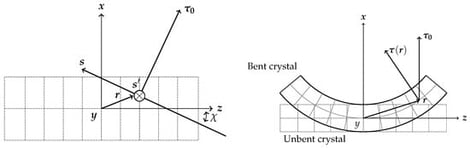
(Left) An unbent crystal. The reflecting lattice planes are cut at an angle 
  χ
 to the surface. (Right) The deformed crystal with 
  
    χ
    =
    0
  
. The reciprocal lattice vectors are shown with 
  
    τ
    0
  
 and 
  
    τ
    (
    r
    )
  
 being the unbent and bent reciprocal lattice vector, respectively.

In this paper, several optimized design results of the HTGR-based 10 MWth Reaktor Daya Eksperimental (RDE) (Experimental Power Reactor), so far conducted, are reviewed and compared from the neutronics, reactor types, refueling schemes, and fuel cycle points of view. The review covers the multipass and once-through-then-out (OTTO) pebble-bed cores, as well as block/prismatic type cores with several fuel shuffling options. As for the fuel cycle, uranium and thorium fuels are considered. The fuel burnup performance and power distribution are evaluated and compared among other important design parameters. Reactor physics codes, nuclear data libraries, and calculation models and procedures used for the design and analysis are reviewed, and challenges for future improvements are discussed.

2 February 2026

Radial (upper) and axial (lower) core layouts of block/prismatic type RDE. Adapted from ref [6]. Copyright Elsevier.
  • Feature Paper
  • Article
  • Open Access

This paper presents a thermal management solution for a Ka-band gyrotron traveling wave tube (gyro-TWT) with non-superconducting magnets. At present, the miniaturization and non-superconductivity of gyro-TWT have become a trend, but miniaturization leads to a significant increase in power density and a severe limitation in heat sink volume, which critically limits power capacity. To address this challenge, a joint microwave–thermal management evaluation model is used to investigate the heat transfer process and identify the crucial factors constraining the power capacity. A cylindrical heat sink with narrow rectangular grooves is introduced. Based on this, the cooling efficiency has been enhanced through structural optimization. The beam–wave interaction, electrothermal conversion, and heat conduction processes of the interaction circuit are analyzed. The compact heat sink achieves a 1.2-fold increase in coolant utilization and reduces the overall volume by 27.4%. Meanwhile, this heat sink improves the cooling performance and power capability of the gyro-TWT effectively. At 29 GHz, the gyro-TWT achieves a pulse power of 150 kW. Simulation results show that the maximum temperature is 348 °C at a 45% duty cycle, reduced by 159 °C. The power capacity of the Ka-band gyro-TWT increases by 40.6%.

22 January 2026

Schematic of the ka-band gyro-TWT with non-superconducting magnets. Adapted with permission from Ref. [9]. Copyright 2022 IEEE.

The global cancer burden continues to increase worldwide. Among the various treatment options, radiotherapy (RT), which employs high-energy ionizing radiation to destroy cancer cells, is one of the primary modalities for cancer. However, increasing the absorbed dose to the target volume also increases the risk of damage to surrounding healthy tissues. This radiation-induced toxicity to normal tissues limits the desirable dosage that can be delivered to the tumor, thereby constraining the effectiveness of radiation therapy in achieving tumor control. FLASH radiotherapy (FLASH-RT) has emerged as a promising technique due to its biological advantages. FLASH-RT involves the delivery of radiation at an ultra-high dose rate (≥40 Gy/s). Unlike conventional RT, FLASH-RT achieves comparable tumor control rates while significantly reducing damage to surrounding normal tissues, a phenomenon known as the FLASH effect. Although the mechanism behind the FLASH effect is not fully understood, this approach shows considerable promise for future cancer treatment. The development of specialized treatment planning systems (TPS) becomes imperative to facilitate the clinical implementation of FLASH-RT from experimental studies. These systems must account for the unique characteristics of FLASH-RT, including ultra-high dose rate delivery and its distinctive radiobiological effects. Critical reassessment and optimization of treatment planning protocols are essential to fully leverage the therapeutic potential of the FLASH effect. This review examines key considerations for the TPS development of electron and proton FLASH-RT, including electron and proton FLASH techniques, biological models, crucial beam parameters, and dosimetry, providing essential insights for optimizing TPS and advancing the clinical implementation of this promising therapeutic modality.

8 January 2026

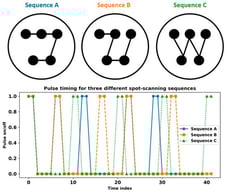
Illustration of how different spot-scanning sequences alter the temporal dose-delivery structure in PBS.

News & Conferences

Issues

Open for Submission

Editor's Choice

Get Alerted

Add your email address to receive forthcoming issues of this journal.

XFacebookLinkedIn
Quantum Beam Sci. - ISSN 2412-382X