Skip Content
You are currently on the new version of our website. Access the old version .

All Articles (30,572)

To address the growing problem of electromagnetic pollution, the development of intelligent, multifunctional electromagnetic shielding materials is essential. The objective of this work is to fabricate an intelligent, low-reflection and high-absorption electromagnetic shielding composite via direct ink writing. In this study, epoxy resin (EP) was employed as the matrix, with nickel powder (Ni), multi-walled carbon nanotubes (MWCNTs), and silver powder (Ag) serving as functional fillers. Direct-ink printing enabled the fabrication of uniformly structured composites and layered gradient-structured composites. By precisely varying the filler content through layer-by-layer printing, the gradient-structured composite exhibited an increasing electrical conductivity gradient and a decreasing magnetic permeability gradient along the direction of electromagnetic wave incidence. Comprehensive characterization of microstructure, electrical, magnetic, and dielectric properties, and electromagnetic shielding effectiveness revealed that the uniformly structured composites exhibited higher total shielding effectiveness (SET) and reflection coefficient (R) with increased electrical conductivity. The layered gradient-structured composite achieved an electrical conductivity of 5.44 S/m and an SET of 17.74 dB, with the R value reduced to 0.53. Compared to the highly conductive homogeneous composite used in the bottom layer (R = 0.87), this represents a reduction in reflectivity of approximately 39.1%, thereby mitigating secondary pollution from excessive reflection. Under a DC voltage of 200 V, all composites recovered their original shape within 63 s, with shape fixity (Rf) and recovery (Rr) ratios exceeding 92%. This strong shape memory capability supports conformal coating on complex devices and facilitates material recycling, offering a practical foundation for next-generation multifunctional electromagnetic shielding materials.

9 February 2026
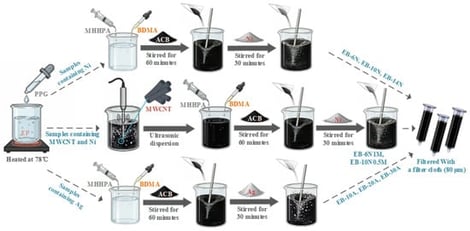
Preparation Flowchart of EB/NM-A Printing Ink.

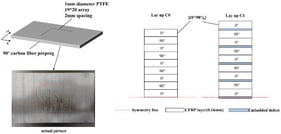
Thermoplastic carbon fiber-reinforced polymer (CFRP) composites possess the intrinsic capability to heal delamination and matrix cracks via thermal re-melting. However, under impact loading, they are prone to severe fiber fracture, which significantly compromises their repairability. To address this, this study introduced polytetrafluoroethylene (PTFE) films as pre-set interlaminar defects within continuous carbon fiber-reinforced polyamide 6 (CF/PA6) thermoplastic cross-ply laminates. Low-velocity impact tests were conducted at varying energy levels to comparatively investigate the impact response and damage mechanisms of the CFRPs with and without embedded defects. Experimental results indicate that the embedded interlaminar defects triggered a transition in the failure mode of the CFRP from brittle fracture to progressive damage behavior. Compared to the baseline laminates, the specimens with embedded defects maintained higher flexural stiffness under low-energy impact. Furthermore, they effectively reduced the extent of fiber breakage by dissipating impact kinetic energy through extensive delamination, interlaminar frictional sliding, and plastic micro-deformation. These findings verify the feasibility of achieving macroscopic pseudo-ductility through interlaminar microstructural tailoring. This research provides an experimental basis and methodological support for the pseudo-ductile design of thermoplastic composites.

9 February 2026

Placement configuration of pre-embedded defects and laminate stacking sequence.

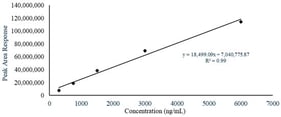
Buprenorphine (BUP) is widely used in the treatment of neonatal opioid withdrawal syndrome (NOWS). However, the most compounded formulation contains 30% ethanol, despite regulatory and clinical concerns regarding ethanol exposure in pediatric patients. Thus, this research aimed to develop an ethanol-free sublingual (SL) gel formulation of BUP that would be safe, stable, and suitable for NOWS. Multiple polymers were screened as gelling agents, with hydroxypropyl methylcellulose (HPMC) emerging as the ideal base polymer for the formulation due to its optimal pH, rheological characteristics, and stability. The formulated gels were stored at room temperature and refrigerated conditions for 30 days and evaluated for stability using pH, rheology, and liquid chromatography-mass spectrometry. BUP content was between 90–110% of the labeled amount of the dosage form (75 µg/mL) at all time-points, and the pH remained close to physiological values. Release studies demonstrated a drug release of 23–24% for SL gels without surfactants stored at room temperature and refrigerated conditions, respectively. Incorporation of non-ionic surfactants (Tween 20 and Tween 80) significantly increased drug release to 33% and 40%, respectively, reflecting enhanced solubilization and improved mucosal penetration. The ethanol-free formulation demonstrated physicochemical stability and favorable release characteristics suitable for neonatal administration. These findings represent a meaningful advance in the development of safer pediatric formulations for NOWS.

9 February 2026

Standard Curve of Buprenorphine.

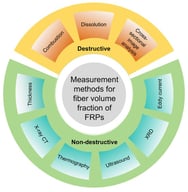
Fiber-reinforced composites are extensively utilized in mass-critical structures spanning aerospace, automotive, civil, etc., owing to their exceptional specific strength and stiffness. Fiber volume fraction (FVF) is a critical parameter for evaluating the performance of the composites. As a consequence, different measurement methods have been developed in recent decades, including resin removal method, thickness measurement method, microscopic method, etc. This paper reviews both traditional destructive (acid digestion, combustion, image analysis, etc.) and newly developed non-destructive techniques (X-ray CT, thermography, ultrasonic, XRD, eddy current, etc.), with a focus on their applicability to specific materials, measurement accuracy, operational complexity and cost. Moreover, key challenges and future directions are discussed, emphasizing the need for non-destructive testing, cost and energy efficiency, intelligent measurement and sustainability.

9 February 2026

Overview of fiber volume fraction measurement methods.

News & Conferences

Issues

Open for Submission

Editor's Choice

Reprints of Collections

Advances in Biocompatible and Biodegradable Polymers, 4th Edition
Reprint

Advances in Biocompatible and Biodegradable Polymers, 4th Edition

Editors: José Miguel Ferri, Vicent Fombuena Borràs, María Fernanda López Pérez
Advances in Functional Polymers and Composites
Reprint

Advances in Functional Polymers and Composites

Editors: Bing Wang, Chenglong Guan, Lihua Zhan

Get Alerted

Add your email address to receive forthcoming issues of this journal.

XFacebookLinkedIn
Polymers - ISSN 2073-4360