Skip to Content
  • Tracked for
    Impact Factor
  • Indexed in
    Scopus
  • 33 days
    Time to First Decision

Pollutants

Pollutants is an international, peer-reviewed, open access journal on all aspects of environmental pollution published quarterly online by MDPI.

All Articles (192)

This study focused on the presence of heavy metals in the mining waste dump in the Certej area (Hunedoara County, Romania). The total content of metals (Cr, Cd, Cu, Mn, Pb, Ni, Zn, Fe) and the physical–chemical parameters (pH, redox potential, electrical conductivity, total dissolved solids, and salinity) were analyzed in the soil and sterile samples. The content of Cd, Cu, Zn, Pb, Mn in the samples collected nearby the mining waste dump was relatively low, being close to those considered normal levels in the national legislation. The samples from the mining waste dump indicated that Pb exceeded the alert levels, Zn almost reached the alert limit, and Cu exceeded the normal threshold. The content of Cd, Cu, Zn and Pb had an increasing trend from the top to the base of the dump, which may indicate a metal leakage due to water infiltration. Since agricultural activities take place in the proximity of the investigated area, special attention for plant uptake was taken into consideration.

20 February 2026
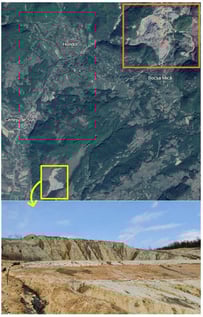
Certej mining waste dump (orange frame—Coranda quarry, yellow frame—Certej mining waste dump).

Marine Organisms Fouling on Ghost Nets in the Sounio Marine Protected Area (Greece)

  • Nikolaos Simantiris,
  • Nikos Karatzas and
  • Martha Z. Vardaki
  • + 1 author

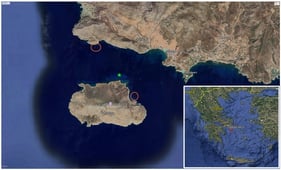
Ghost nets are the result of fishing nets ending up at sea by fishing vessels during operations, repairs, accidental loss, and from aquaculture activities. This is a major threat to the marine environment due to the entrapment of marine species, which often leads to the mortality of important species, the alteration of the marine benthic habitat, and the release of microplastics. In the current study, the authors conducted underwater clean-up activities in the marine protected area of Sounio in Greece (NATURA2000) to identify, evaluate whether they can be removed, and remove ghost nets. A total of 1200 Kg of ghost nets was removed within one year, with 68 different species reported to have colonized the nets. The reported groups were Mollusca, Porifera, Chordata, Arthropoda, Echinodermata, Bryozoa, Ochrophyta, Tracheophyta, Rhodophyta, Cnidaria, Chlorophyta, and Annelida. The species were not listed as threatened by the IUCN conservation status, while 86% were native, and 14% were invasive in the Mediterranean Sea. The current work presents the need to expand research efforts in the field of underwater plastic pollution, implement monitoring campaigns to a greater extent in the study area, and perform an assessment before the removal of ghost nets.

5 February 2026

The location of ghost nets removal is shown with a green star, between two active aquaculture companies (orange ellipses), in central Greece (red rectangle in bottom right corner of the figure).

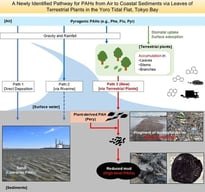
Reduced mud in the Yoro tidal flat (inner part of Tokyo Bay, Japan) consists of black and highly viscous sediment containing high levels of polycyclic aromatic hydrocarbons (PAHs). The mud is formed through the decomposition of terrestrial plants washed up on the tidal flat; however, the origin of PAHs within the mud has remained unclear. To investigate the origin of PAHs in the mud, we analyzed PAHs in the mud and fragments of terrestrial plants using gas chromatography–mass spectrometry. The total PAH concentrations except for perylene were comparable between the mud (336 ± 58 μg kg-dry−1) and the fragments of plants (247 ± 77–435 ± 235 μg kg-dry−1), and their compositional patterns were also similar. These results indicate that the high levels of PAHs in the mud primarily originated from the fragments of plants that composed the mud. Furthermore, the perylene (Pery) concentrations in the fragments of plants were the same as or higher than those in the mud, suggesting that the formation of Pery begins in the plant tissues even before the mud was formed. These findings reveal a previously unrecognized pathway by which terrestrial plants introduce PAHs into tidal flat environments.

3 February 2026

Location of the sampling site in the Yoro tidal flat, Ichihara, Chiba Prefecture, Japan. (A) Map of Japan showing the Kanto region, including the sampling area (red box). (B) Location of the sampling site within Tokyo Bay, with a red square indicating the Yoro tidal flat. (C) Detailed map of the Yoro tidal flat, with individual sampling sites indicated by red points (a–d): a, location where reduced mud was collected (29 September 2023); b, location where terrestrial plant I was collected (27 September 2023); c, location where terrestrial plant II was collected (29 September 2023); d, location where terrestrial plant III was collected (17 October 2024).

Contamination of drinking water by potentially toxic elements (PTEs) remains a critical public-health concern in Uganda. This systematic review compiled and harmonized quantitative concentrations (mg/L) for key PTEs, lead (Pb), cadmium (Cd), arsenic (As), chromium (Cr), mercury (Hg), copper (Cu), zinc (Zn), nickel (Ni), cobalt (Co), manganese (Mn), and iron (Fe), across various potable and informal water sources used for drinking, including municipal tap water, boreholes, protected and unprotected springs, wells, rainwater, packaged drinking water, rivers, lakes, and wetlands. A comprehensive search of different databases and key institutional repositories yielded 715 records; after screening and eligibility assessment, 161 studies met the inclusion criteria, and were retained for final synthesis. Reported PTE concentrations frequently exceeded WHO and UNBS drinking water guidelines, with Pb up to 8.2 mg/L, Cd up to 1.4 mg/L, As up to 25.2 mg/L, Cr up to 148 mg/L, Fe up to 67.3 mg/L, and Mn up to 3.75 mg/L, particularly in high-risk zones such as Rwakaiha Wetland, Kasese mining affected catchments, and Kampala’s urban springs and drainage corridors. These hotspots are largely influenced by mining activities, industrial discharges, agricultural runoff, and corrosion of aging water distribution infrastructure, while natural geological conditions contribute to elevated background Fe and Mn in several regions. The review highlights associated health implications, including neurological damage, renal impairment, and cancer risks from chronic exposure, and identifies gaps in regulatory enforcement and routine monitoring. It concludes with practical recommendations, including stricter effluent control, expansion of low-cost adsorption and filtration options at household and community level, and targeted upgrades to water-treatment and distribution systems to promote safe-water access and support Uganda’s progress toward Sustainable Development Goal 6.

2 February 2026

Main sources of drinking water in Uganda (extracted from the Uganda national household survey 2012/13 [33].

News & Conferences

Issues

Open for Submission

Editor's Choice

Reprints of Collections

Environmental Exposure, Biomonitoring and Exposure Assessment
Reprint

Environmental Exposure, Biomonitoring and Exposure Assessment

Editors: Maaike van Gerwen, Roel Vermeulen, Lauren Petrick
Ventilation and Indoor Air Quality
Reprint

Ventilation and Indoor Air Quality

Editors: Ashok Kumar, Alejandro Moreno Rangel, M. Amirul I. Khan, Michał Piasecki

Get Alerted

Add your email address to receive forthcoming issues of this journal.

XFacebookLinkedIn
Pollutants - ISSN 2673-4672