Skip to Content
You are currently on the new version of our website. Access the old version .

Plants

Plants is an international, scientific, peer-reviewed, open access journal on plant science published semimonthly online by MDPI. 
The Spanish Phytopathological Society (SEF), the Spanish Society of Plant Biology (SEBP), the Spanish Society of Horticultural Sciences (SECH) and the Italian Society of Phytotherapy (S.I.Fit.) are affiliated with Plants and their members receive a discount on the article processing charges.
Indexed in PubMed | Quartile Ranking JCR - Q1 (Plant Sciences)

All Articles (21,506)

Bok choy (Brassica rapa var. chinensis) experiences rapid postharvest quality decline, primarily due to water loss. This study aims to evaluate the effect of H2-modified atmosphere packaging (MAP; containing 0.01%, 0.1%, and 1% H2) on extending the shelf life of bok choy. First, we observed that the storage of bok choy for 9 d (4 °C and 85% relative humidity) was accompanied by a decreasing tendency of molecular hydrogen (H2) production. Subsequently, the effects of hydrogen (H2) administered via modified atmosphere packaging on the preservation of bok choy were investigated. The results showed that among the treatments, 0.1% H2 MAP could effectively improve the storage quality of bok choy under identical storage conditions. Compared to the control groups at 9 d, the contents of chlorophyll a/b, carotenoids, total phenols and flavonoids, and total soluble solids were increased by 43.75%, 40%, 27.78%, 28.89%, 102.38%, and 7.29%, and weight loss rate and electrolyte leakage were reduced by 31.77% and 50.19% (p < 0.05). Meanwhile, the combined water fraction was increased and respiration rate was decreased. Biochemical evidence further showed that xyloglucan endotransglycosylase 2/3 (XET2/3) transcripts and xyloglucan endotransglycosylase (XET) activity, responsible for cell wall degradation, were decreased. By contrast, peroxidase 31/37 (POD31/37) genes and peroxidase (POD) activity, key to the synthesis of lignin, were increased. Importantly, these changes were positively matched with the maintenance of cell wall integrity by H2 MAP. Together, the results clearly suggested that H2 MAP could maintain the postharvest quality of bok choy via alleviating water loss and maintaining cell wall integrity. These findings thus provide a useful technology for improving the storage quality of vegetables prone to water loss.

19 February 2026
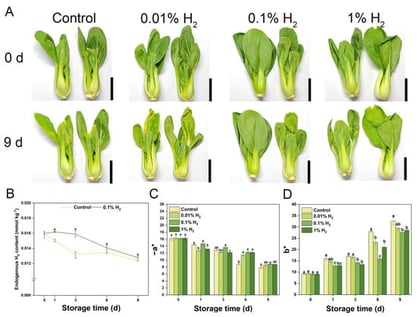
Altered appearance (A), endogenous H2 content (B), chroma −a* (C), and chroma b* (D) in bok choy during storage for 0, 1, 3, 6, and 9 d after H2 MAP. Scale bar = 5 cm. The vertical bar represents the standard error (n = 3 replicates). According to Duncan’s multiple range test, different letters for each storage time indicate statistically significant difference (p &lt; 0.05). The asterisks indicate significant differences for each storage time (t-test; * p &lt; 0.05).

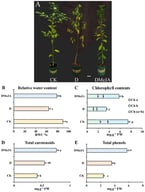
Drought stress severely compromises the physiological integrity and secondary metabolism of medicinal plants. This study integrated physiological, biochemical, and ultra-performance liquid chromatography–tandem mass spectrometry (UPLC-MS/MS) analyses to investigate the effects of exogenous methyl jasmonate (MeJA) on drought-stressed Ilex rotunda seedlings. Drought reduced relative water content by 29% and chlorophyll by >50%, while elevating H2O2 (76%) and malondialdehyde (120%). MeJA application mitigated these impairments, reducing oxidative markers by 25% and enhancing non-enzymatic antioxidant capacity, as shown by a 74% increase in DPPH radical scavenging activity and a 141% rise in total phenolic content. Hierarchical clustering analysis (HCA), principal component analysis (PCA), and orthogonal partial least squares-discriminant analysis (OPLS-DA), and pathway mapping confirmed a significant reprogramming of the phenolic metabolome, particularly within phenylpropanoid and benzoate biosynthesis pathways. Drought + MeJA-treated plants exhibited a distinct and enriched profile compared to both well-watered control and drought-stressed groups. This reprogramming specifically elevated key hydroxycinnamates, including verbascoside and neochlorogenic acid (increased by 50% and 52%, respectively), while suppressing alternative phenolic branches. These findings demonstrate that MeJA orchestrates a shift from enzymatic scavenging to a potent metabolite-based antioxidant system, positioning it as an effective elicitor for enhancing drought resilience and enriching the high-value phytochemicals in I. rotunda.

19 February 2026

Methyl Jasmonate mitigates drought-induced inhibition of chlorophyll and preserves morphological integrity in Ilex rotunda leaves. (A) Representative images of whole plants (line 3.5 cm), (B) Relative water content (%), (C) Chlorophyll contents (mg/g), (D) Total carotenoids (mg/g), (E) Total phenols (mg/g) from Ilex rotunda subjected to three treatments: Control (CK), Drought (D), and Drought + MeJA (DMeJA). Drought stress induced severe wilting, leaf curling, and chlorosis. Data are presented as mean ± SD (n = 6). Different lowercase letters (a,b,c) indicate significant differences among treatments (p &lt; 0.05, Duncan’s multiple range test).

Harnessing Plant–Microorganism Interactions to Mitigate Biotic and Abiotic Stresses for Sustainable Crops

  • Mayara Santana dos Santos,
  • Silas Pessini Rodrigues and
  • Patricia Machado Bueno Fernandes
  • + 2 authors

Climate change has intensified the occurrence of biotic and abiotic stresses, representing a major threat to agricultural productivity. This climate variability, coupled with the excessive use of agrochemicals, not only compromises environmental sustainability but also exacerbates food insecurity, directly affecting food availability and quality. In this context, biotechnological strategies have proven essential for mitigating the effects of stress on plants, promoting practices focused on agricultural sustainability. Notable among these strategies is the use of plant growth-promoting microorganisms, which are emerging as promising alternatives capable of improving plant tolerance to stress conditions and simultaneously reducing dependence on agrochemicals. These microorganisms can act as nitrogen fixers and solubilizers of nutrients, such as phosphorus and potassium. Additionally, they can influence plant immune responses by inducing systemic resistance and promoting the synthesis of phytohormones, such as auxins, cytokinins, and abscisic acid, which support plant development during the stress response. The interaction between plants and microorganisms represents a sustainable agricultural management strategy capable of enhancing crop tolerance to environmental adversities. In this review, we discuss the microorganisms known to establish beneficial interactions with plants, leading to improved performance under biotic and abiotic stress. Overall, this work highlights the potential of plant–microbe partnerships as a cornerstone for advancing sustainable agriculture in the face of global challenges.

19 February 2026

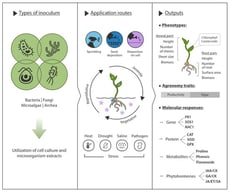
Schematic overview of how PGPMs are used to improve crop performance. Different types of inocula, bacteria, fungi, microalgae and archaea, are applied as cell cultures or microbial extracts and can be delivered by foliar spraying, seed coating or soil/substrate drenching at juvenile, vegetative or reproductive stages. Under multiple stresses (heat, drought, salinity and pathogens), these inoculations modulate plant outputs at three levels: (i) phenotypes, including shoot and root growth, leaf number and size, root surface area, biomass and pigment content (chlorophylls, carotenoids); (ii) agronomic traits, such as productivity and vigor; and (iii) molecular responses, comprising changes in gene expression (e.g., PR1, SOS1, NAC1), antioxidant enzymes (CAT, SOD, GPX), stress-related metabolites (proline, phenolics, flavonoids) and phytohormone balance (IAA/CK, GA/CK,/ET/ salicylic acid (SA) and jasmonic acid (JA)).

Unveiling the Biotechnological and Agronomic Potential of Amazonian Fruit Species from the Genus Eugenia (Myrtaceae): Functional Traits and Applied Perspectives

  • Pedro Paulo dos Santos,
  • Josiane Celerino de Carvalho and
  • José Francisco de Carvalho Gonçalves
  • + 7 authors

Eugenia (Myrtaceae) is a highly diverse genus of fruit trees native to the Amazon with remarkable potential for food, nutritional, and biotechnological applications. This review synthesizes the current knowledge on morphofunctional traits, ecological strategies, and genetic resources that make several Eugenia species promising candidates for domestication and cultivation. Its main attributes include shrubby growth habits, racemose inflorescences, nutrient-rich fruits with few seeds, recalcitrant yet viable propagules, and wide distribution across the Americas. Their molecular and phytochemical diversity suggests applications in food systems, pharmaceuticals, and bioindustries. However, key challenges persist, such as irregular fruiting, postharvest perishability, limited germplasm conservation in degraded areas, prospecting biotechnological applications such as antioxidants, and insufficient genomic characterization. By addressing these gaps, Eugenia domestication could contribute to food security, sustainable agriculture, and the bioeconomy of remote Amazonian regions, thereby positioning this genus as a strategic resource in the face of biodiversity loss.

19 February 2026

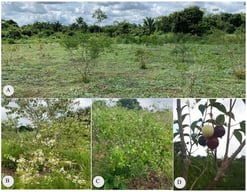
Illustrative photographs of Eugenia patrisii cultivation in the city of Marabá (Pará-Brazil), in the year 2024. (A) General view of the arrangement of individuals; (B) Flowering plant during the harvest period; (C) Individuals with fruit at different stages of ripeness; (D) Fruit at different stages of ripeness.

News & Conferences

Issues

Open for Submission

Editor's Choice

Reprints of Collections

Plant Invasion
Reprint

Plant Invasion

Editors: Bruce Osborne, Panayiotis G. Dimitrakopoulos
Recent Advances in Horticultural Plant Genomics
Reprint

Recent Advances in Horticultural Plant Genomics

Editors: Zhongxiong Lai, Yuling Lin, Yuqiong Guo

Get Alerted

Add your email address to receive forthcoming issues of this journal.

XFacebookLinkedIn
Plants - ISSN 2223-7747