Skip to Content
You are currently on the new version of our website. Access the old version .

Philosophies

Philosophies is an international, peer-reviewed, open access journal promoting re-integration of diverse forms of philosophical reflection and scientific research on fundamental issues in science, technology and culture, published bimonthly online by MDPI.
The International Society for the Study of Information (IS4SI) is affiliated with Philosophies and their members receive a discount on the article processing charge. 
Quartile Ranking JCR - Q2 (History and Philosophy Of Science)

All Articles (917)

Contemporary artificial intelligence (AI) achieves remarkable results in data processing, text generation, and the simulation of human cognition. However, it appears to lack key characteristics typically associated with living systems—consciousness, autonomous motivation, and genuine understanding of the world. This article critically examines the possible ontological divide between simulated intelligence and lived experience, using the metaphor of the motorcycle and the horse to illustrate how technological progress may obscure deeper principles of life and mind. Drawing on philosophical concepts such as abduction, tacit knowledge, phenomenal consciousness, and autopoiesis, the paper argues that current approaches to developing Artificial General Intelligence (AGI) may overlook organizational principles whose role in biological systems remains only partially understood. Methodologically, it employs a comparative ontological analysis grounded in philosophy of mind, cognitive science, systems theory, and theoretical biology, supported by contemporary literature on consciousness and biological autonomy. The article calls for a new paradigm that integrates these perspectives—one that asks not only “how to build smarter machines,” but also “what intelligence, life, and consciousness may fundamentally be,” acknowledging that their relation to computability remains an open question.

10 February 2026

Graphical illustration of the main differences between living and artificial systems. A horse “replicates” itself, draws the necessary information from within, and obtains energy and material directly from its environment. In contrast, a motorcycle requires blueprints, a factory, machines, and external sources of energy and materials for its production, operating entirely within the currently known laws of physics and computability.

This article explores Mihail Aslan’s volume of poetry Late Geometries, Rejected through the prism of an in-depth psychoanalytic reading. The text highlights how the poetic work constitutes an expression of deep psychic processes, centered around the concepts of early trauma, narcissistic deficit, and failure of the primordial environment. Through theories by authors such as Winnicott, Anzieu, Green, and Kristeva, the article reveals how Aslan’s creation functions as a transitional space, in which a complex dialectic takes place between Eros and Thanatos, between the constitution of the self and its waste. Writing thus becomes an act of psychic survival, a way to metabolize the traumatic experience and to reconstruct an inner geometry, albeit “late” and “rejected”.

10 February 2026

This essay explores the metaphysical and philosophical implications of Artificial Intelligence (AI) and Machine Learning (ML) through the intersecting insights of René Guénon (ʿAbd al-Wāḥid Yaḥiā), Martin Heidegger, and Ibn al-ʿArabī. It argues that modern AI systems, particularly in their statistical and data-centric forms, are not merely instrumental tools but expressions of a deeper metaphysical worldview-one rooted in quantification, abstraction, and utility. Guénon’s critique of the “reign of quantity” and Heidegger’s notion of Enframing (Gestell) converge in diagnosing the loss of qualitative and sacred dimensions in modern life. While Heidegger’s phenomenology provides a powerful immanent critique of technological reductionism from within the Western philosophical tradition, Guénon’s metaphysical traditionalism articulates a diagnosis of modernity that resonates with Islamic metaphysics, especially as articulated by Ibn al-ʿArabī. The essay includes Heidegger in the argument as a representative of a critique of modern technology issuing from the Western tradition itself, and by emphasizing his shared concerns with Guénon, whose metaphysics resonates with Ibn al-ʿArabī’s metaphysics. Through a comparative metaphysical framework, this paper proposes an Islamic response to AI that avoids both technophilia and technophobia, insisting instead on a spiritually grounded ethic of technology that preserves human’s dignity and mission. Methodologically, the essay restores a prior order often inverted in contemporary AI ethics: ontology (what AI is) grounds epistemology (what it can know), and only then can ethical evaluation be coherent.

6 February 2026

If modern readers sometimes find Adam Smith’s laissez-faire market vision in Wealth of Nations difficult to reconcile with his emphasis on sympathy in The Theory of Moral Sentiments, which Smith published in 1759 while serving as Chair of Moral Philosophy at the University of Glasgow, the fault may be ours. For many of Smith’s eighteenth-century contemporaries, the connections between the two books would have been obvious: they were distinct but converging aspects of an Enlightenment project to lay the ethical foundations of an urban middle-class discourse of polite sociability that reflected Britain’s status as a modern transactional society. This focus on the moral dimensions of eighteenth-century Britain’s experience of commercial modernity becomes especially clear when we read Smith in the philosophical context out of which his ideas emerged, including writers such as Joseph Addison, Francis Hutcheson, and David Hume. Closer attention to these earlier writers, especially Steele and Addison’s Spectator, offers a powerful reminder of the philosophical complexity of this project and a timely rejoinder to current efforts to sever economic policies from ethical imperatives in the name of an often brutal protectionism today.

5 February 2026

News & Conferences

Issues

Open for Submission

Editor's Choice

Reprints of Collections

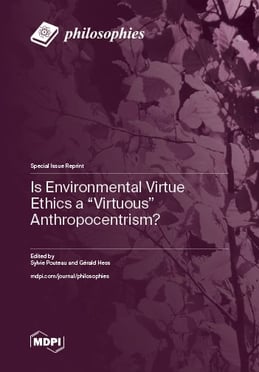
Is Environmental Virtue Ethics a "Virtuous" Anthropocentrism?
Reprint

Is Environmental Virtue Ethics a "Virtuous" Anthropocentrism?

Editors: Sylvie Pouteau, Gérald Hess
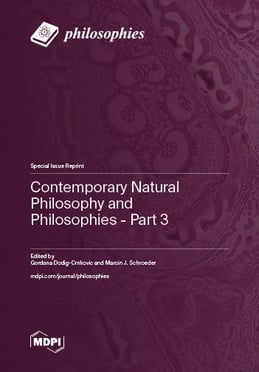
Contemporary Natural Philosophy and Philosophies - Part 3
Reprint

Contemporary Natural Philosophy and Philosophies - Part 3

Editors: Gordana Dodig-Crnkovic, Marcin J. Schroeder

Get Alerted

Add your email address to receive forthcoming issues of this journal.

XFacebookLinkedIn
Philosophies - ISSN 2409-9287