Skip to Content
You are currently on the new version of our website. Access the old version .
  • 1.8
    Impact Factor
  • 23 days
    Time to First Decision

Pharmacy

Pharmacy is an international, scientific, peer-reviewed, and open access journal dealing with pharmacy education and practice, and is published bimonthly online by MDPI. 
The Academy of Pharmaceutical Sciences (APS) is affiliated with Pharmacy and its members receive discounts on the article processing charges.

All Articles (1,707)

As pharmacy career pathways diversify, professional doctoral programs such as PharmD face increasing pressure to demonstrate measurable workforce readiness outcomes within accreditation-constrained curricula. This study describes and evaluates PharmReaDy, a longitudinal, theory-informed workforce readiness platform embedded within a U.S. PharmD program. Guided by Tinto’s student retention framework, the platform integrates curricular, co-curricular, and experiential elements, including an industry-focused elective course, national professional competitions, targeted skills workshops, micro-credentialing opportunities, and experiential placements. Outcomes were assessed using enrollment trends, aggregate course evaluation data, academic performance indicators, and downstream participation in industry-aligned opportunities. Enrollment in the elective increased from 8 to 20 to 30 students across three offerings. Mean course evaluation scores across seven learning domains remained consistently high, ranging from 3.7 to 3.9 on a 4-point scale, with no statistically significant differences between cohorts (Welch’s t-tests, adjusted p > 0.05) and small positive effect sizes observed over time (Hedges’ g ≈ 0.20–0.29). Students demonstrated strong academic performance and increased participation in industry-focused competitions, scholarships, and post-graduate fellowship pathways. Findings from PharmReaDy indicate that workforce readiness can be meaningfully operationalized as a structured educational function embedded within professional curricula rather than being exclusively deferred to post-graduate training.

13 February 2026
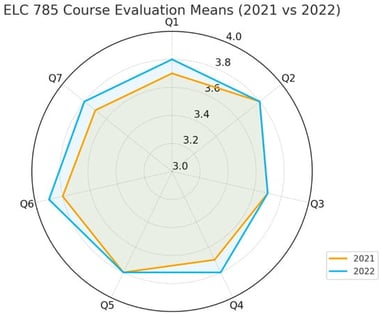
A radar plot showing the high and stable evaluation profile across all seven course evaluation items, with marginal outward extensions for the 2022 cohort in “Course Engagement,” “Level of Detail,” and “Advanced Understanding”. Q1–Q7 refer to the questions used in the student evaluation of the course.

Although pharmacist-led vaccination is a global standard for expanding immunization coverage, its adoption in Romania remains at an early stage. While previous studies have focused on early adopters, this research evaluates barriers, perceptions, and readiness among community pharmacies that do not yet provide this service, thereby addressing a critical knowledge gap regarding the “non-vaccinating” majority. A cross-sectional mixed-methods study was conducted among 208 pharmacists representing national chains, regional networks, and independent pharmacies. Quantitative data were analyzed using Chi-square tests and Spearman correlations to identify structural disparities, while a thematic analysis was employed to explore qualitative insights related to professional identity and operational barriers. We identified a clear mismatch between pharmacies’ willingness to provide vaccination services and their practical ability to implement them. Independent pharmacies demonstrated a strong intention to adopt vaccination services (71.4%) but were limited by financial constraints, with high implementation costs identified as a significant barrier (p = 0.014). In contrast, national pharmacy chains had sufficient resources yet faced marked staff resistance, with 43.9% reporting extreme reluctance (p = 0.038). These chains were concentrated in the capital region (p = 0.002), thereby positioning other pharmacies as key providers in underserved areas. Furthermore, thematic analysis revealed a deep-seated “professional identity” crisis, in which pharmacists struggle with the transition from medication specialists to clinical practitioners. The expansion of vaccination services cannot rely on a “one-size-fits-all” strategy. Successful national implementation requires a segmented policy approach, including financial subsidies to support independent pharmacies, change management strategies to engage the corporate workforce, and targeted regulatory education for regional networks to prevent vaccination deserts.

12 February 2026

Background: Type 2 diabetes mellitus (T2DM) is a prevalent chronic disease requiring effective pharmacological treatment, sustained self-management, and patient education. Pharmacists are increasingly recognized as key contributors to diabetes care; however, their role remains underutilized in Bulgaria. This study aimed to assess self-management behaviors, medication adherence, patient awareness, and the perceived role of pharmacists among patients with T2DM in Bulgarian primary care. Methods: A cross-sectional observational study was conducted among 105 patients with T2DM using an anonymous questionnaire based on the Diabetes Self-Management Questionnaire and supplementary items adapted to the local healthcare context. Data were analyzed using descriptive statistics and non-parametric tests to explore associations between demographic characteristics, treatment patterns, self-management behaviors, and educational needs. Results: Most patients were treated with oral antidiabetic therapy (90.0%), predominantly metformin-based regimens (64.0%). Adherence to prescribed pharmacological treatment was high (93.0%), while adherence to dietary recommendations (70.0%), regular physical activity (60.0%), and blood glucose self-monitoring (63.0%) was less consistent. Although 92.0% of participants reported good or excellent disease awareness, 41.0% expressed a need for additional education, particularly regarding confidence in managing hypoglycemia and the use of digital monitoring tools. More than half of respondents (54.0%) had received diabetes-related information from a pharmacist; however, only 38.0% expressed willingness to participate in pharmacist-led education, while 34.0% were undecided. Female sex was associated with a higher prevalence of comorbidities (p = 0.010), while increasing age was associated with reduced metformin use (p = 0.004). Conclusions: Despite good pharmacological adherence and self-reported awareness, gaps remain in lifestyle-related self-management and patient education. The findings support an expanded role for pharmacists in diabetes care, particularly through structured educational and counseling interventions to enhance self-management and complement physician-led treatment.

12 February 2026

Critical thinking is emphasized across ACPE Standards 2025, the Pharmacist Patient Care Process, interprofessional education (IPE) frameworks, and licensure preparation (NAPLEX). Despite this, pharmacy education lacks a practical, theory-grounded framework that operationalizes critical thinking as an observable, assessable reasoning process, particularly in team-based and interprofessional contexts. We developed the AIM (Analyze–Interpret–Manage) framework by integrating the Delphi Consensus definition of critical thinking with the AAC&U VALUE framework, translating foundational theory into a concise, measurable, stage-based model applicable to both individual and collective cognition. AIM was tested using qualitative analysis of transcripts of student team discursive narratives of an assigned IPE scenario. Reasoning behaviors were coded by AIM stage and mapped to the 2016 IPEC Core Competencies and the 2025 NAPLEX competencies to ensure professional relevance and external validity. AIM reliably distinguished discrete stages of critical thinking across teams, revealing consistent patterns in how learners analyzed information, interpreted clinical and ethical significance, and managed decisions collaboratively. Mapping demonstrated strong alignment between AIM stages and IPEC and NAPLEX competencies. Our novel AIM framework offers a scalable approach for defining, teaching, and assessing team-based critical thinking in pharmacy education. By operationalizing critical thinking as a staged reasoning process aligned with professional standards, AIM fills a critical gap between educational theory, interprofessional practice, and licensure preparation.

12 February 2026

News & Conferences

Issues

Open for Submission

Editor's Choice

Reprints of Collections

Medicines Reuse
Reprint

Medicines Reuse

Editors: Parastou Donyai
Embedded Pharmacists in Primary Care
Reprint

Embedded Pharmacists in Primary Care

Editors: George E. MacKinnon III, PhD, MS, RPh, Nathan Lamberton, PharmD, BCPS

Get Alerted

Add your email address to receive forthcoming issues of this journal.

XFacebookLinkedIn
Pharmacy - ISSN 2226-4787