Skip Content
You are currently on the new version of our website. Access the old version .
  • Indexed in
    Scopus
  • 24 days
    Time to First Decision

Onco

Onco is an international, peer-reviewed, open access journal on the whole field of oncotargets and cancer therapies research published quarterly online by MDPI.

All Articles (144)

Objectives. Pancreatic cancer remains one of the most lethal malignancies, and the lack of effective therapies highlights the need for novel treatment strategies. In this study, we evaluated the antitumor potential of the attenuated Streptococcus pyogenes strain GURSA1—engineered to knockout the M protein completely—in a murine model of orthotopically transplanted pancreatic ductal adenocarcinoma. Methods. Female C57Bl/6 mice received intratumoral injections of GURSA1 at doses of 5 × 10⁵ or 1 × 10⁶ CFU per animal. Animal survival, body weight, tumor engraftment, metastasis intensity, tumor mass and volume, and hematological, biochemical, histological, and microbiological parameters were assessed. Results. Intratumoral administration of GURSA1 produced dose-dependent antitumor effects on tumor growth and metastatic burden, but did not result in a statistically significant survival benefit. The strain reduced tumor engraftment, the overall metastasis score, and the incidence of hemorrhagic ascites, while also decreasing tumor mass and volume, with the strongest effects observed at a dose of 1 × 10⁶ CFU. Treatment increased platelet counts and reduced urea and ALT levels toward values observed in intact mice, without affecting anemia, neutrophilia, or changes in AST, alkaline phosphatase, glucose, and total protein levels. Conclusions. These findings demonstrate that GURSA1 attenuates partial reduction in primary tumor burden in vivo and support further investigation of this strain as a potential oncolytic agent.

5 February 2026
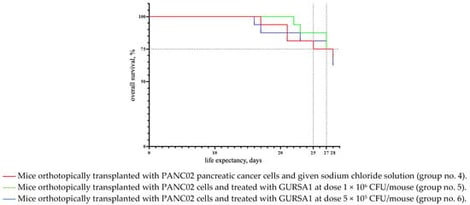
Effect of S. pyogenes GURSA1 treatment on overall survival of C57BL/6 mice orthotopically transplanted with pancreatic cancer.

Immunotherapy in Small Cell Lung Cancer: Advances, Barriers, and Emerging Strategies

  • Manish Charan,
  • Tanisha Mukherjee and
  • Ramesh K. Ganju
  • + 1 author

Small cell lung cancer (SCLC) is a highly aggressive neuroendocrine disease marked by rapid growth, early metastatic spread, and poor outcomes. The addition of immune checkpoint inhibitors (ICIs) targeting the PD-1/PD-L1 axis to first-line chemotherapy has recently reshaped the treatment landscape for extensive-stage SCLC (ES-SCLC); however, the resulting survival gains remain modest compared with non-small lung cancer (NSCLC). This review explores the molecular features of the SCLC immune landscape that contribute to its predominantly “cold” tumor phenotype, including low MHC class I expression, T-cell exhaustion, and a profoundly immunosuppressive tumor microenvironment (TME). We summarize key clinical findings from landmark trials and examine mechanisms of both primary and acquired resistance against ICIs in SCLC. In addition, we have reviewed the growing role of precision medicine in SCLC, including molecular subtyping (SCLC-A, -N, -P, and -I) and the development of next-generation immunotherapies such as bispecific T-cell engagers (BiTEs), B7-H3, targeted therapy, and antibody–drug conjugates. By combining existing clinical evidence with new molecular insights, this review article presents strategies to overcome the existing therapeutic plateau and enhance personalized immunotherapy approaches in SCLC.

5 February 2026

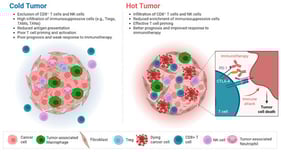
ICIs can reshape cold TMEs into hot TMEs. Hot TME is characterized by abundant cytotoxic T cells and pro-inflammatory signaling, whereas cold TME shows limited immune infiltration and high levels of immunosuppressive factors. By converting cold TME into hot, ICIs enhance T-cell activity and promote cancer cell killing. Created in BioRender. Charan, M. (2026) https://BioRender.com/lraiwjd (accessed on 26 January 2026).

Advancing Immunotherapy in Cervical Cancer: Biological Rationale, Clinical Evidence, and Biomarker Standardization

  • Sofia Carralas Antunes,
  • Joana Nogueira and
  • Leda Viegas de Carvalho
  • + 1 author

Cervical cancer is strongly associated with persistent infection by high-risk human papillomavirus (HPV). Recent advances in immunotherapy have redefined the therapeutic landscape of this disease. We aim to review the biological rationale, clinical evidence, and biomarker standardization supporting the use of immune checkpoint inhibitors (ICIs) in cervical cancer. A comprehensive review of recent literature and pivotal phase II–III clinical trials was performed, focusing on the PD-1/PD-L1 and CTLA-4 pathways, mechanisms of immune evasion, and predictive biomarkers. Persistent HPV infection leads to immune dysregulation and PD-L1 upregulation through E6/E7-mediated activation of the PI3K/AKT/mTOR and JAK/STAT pathways. ICIs have demonstrated significant improvements in overall survival, progression-free survival, and objective response rates in advanced and recurrent disease. PD-L1 immunohistochemistry using standardized assays such as 22C3 pharmDx and SP263 remains the key biomarker for treatment selection, while emerging molecular markers (TMB, MSI, HLA-I expression) are under investigation. Immunotherapy represents a major step forward in cervical cancer management, integrating molecular diagnostics and immune modulation into clinical practice. Continued efforts to refine biomarkers, optimize combination strategies, and expand global access will be essential to achieve equitable outcomes and disease elimination goals.

2 February 2026

Representative histologic section of cervical squamous cell carcinoma. Neoplastic cells (arrow) show an infiltrative growth pattern within a reactive stroma rich in inflammatory cells [Hematoxylin & Eosin stain. (A) Original magnification 100×; (B) Original magnification 200×, corresponding to the area outlined by the black box in (A)]. (Source: Original figure created by the authors for this review).

Introduction: Radiotherapy plays a critical role in the management of head and neck squamous-cell carcinoma (HNSCC); however, the influence of overall treatment time on patient outcomes remains an area of ongoing investigation. The use of radiation, either in conjunction with concurrent chemotherapy or on its own, is crucial when treating HNSCC. Despite the longstanding hypothesis that treatment gaps may adversely affect tumor response and overall survival, there is a paucity of literature on this particular area. This study aims to bridge the knowledge gap and assess the correlation of treatment gaps on recurrences in HNSCC patients. Materials and Methodology: This retrospective study is based on an analysis of data obtained from a single institution between 2017 and 2021. Patients were selected on the basis of the presence of treatment gaps. Data were extracted from medical records and analyzed to evaluate the association between overall treatment time and various patient and treatment-related factors. Various factors thought to contribute to treatment gaps, such as age, TNM Stage, radiation dose, and use of concurrent chemotherapy, were also examined. Results: A total of 212 patients with treatment gaps were evaluated. Of these, 80 individuals experienced recurrences. It was observed that compared to distant metastases, locoregional failure was more frequent (n = 2, 4.2% vs. n = 45, 95.74%). The patients underwent both adjuvant and definitive therapy and were treated with a dose range of 60–70 Gy and concurrent cisplatin chemotherapy. It was noticed that this cohort had a range of 4–43 days of treatment gaps. Notably, 19 out of 47 patients had treatment gaps ≤ 5 days, while 28 out of 47 had gaps exceeding 5 days. It was also observed that patients with treatment gaps of >5 days had poorer quality of life and overall survival. Conclusions: This study identified that the Overall Treatment Time (OTT) had a strong statistical correlation with the development of recurrences. Further, the age of the patient, presence of neutropenia and the duration of the treatment gap were also identified to significantly correlate with the chance of developing recurrences.

17 January 2026

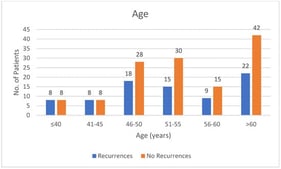
Bar Chart depicting the variation in the ages of patients (N = 212).

News & Conferences

Issues

Open for Submission

Editor's Choice

Reprints of Collections

Artificial Intelligence in Cancer, Biology and Oncology
Reprint

Artificial Intelligence in Cancer, Biology and Oncology

Editors: Hamid Khayyam, Ali Hekmatnia, Rahele Kafieh
Soft Tissue Sarcomas: Treatment and Management
Reprint

Soft Tissue Sarcomas: Treatment and Management

Editors: Shinji Miwa, Po-Kuei Wu, Hiroyuki Tsuchiya

Get Alerted

Add your email address to receive forthcoming issues of this journal.

XFacebookLinkedIn
Onco - ISSN 2673-7523