Skip to Content
You are currently on the new version of our website. Access the old version .

Neurology International

Neurology International is an international, peer-reviewed, open access journal which provides an advanced forum for studies related to all aspects of neurology and neuroscience, published monthly online by MDPI (since Volume 12, Issue 3 - 2020).
The Panhellenic Federation of Alzheimer's Disease and Related Disorders (PFADRD) is affiliated with Neurology International and its members receive discounts on the article processing charges.
Indexed in PubMed | Quartile Ranking JCR - Q2 (Clinical Neurology)

All Articles (876)

  • Systematic Review
  • Open Access

Background/Objectives: Stroke survivors require life-long secondary prevention to reduce recurrence, but they also often face long-term impairments that may limit medication adherence (MA) including cognitive, physical, and psychological effects. This updated qualitative meta-synthesis aims to descriptively explore and synthesise the experiences and perspectives of stroke/TIA survivors, informal and formal carers of stroke survivors, and healthcare professionals involved in post-stroke/TIA care, with a focus on factors influencing and hindering MA. Methods: A qualitative meta-synthesis was conducted in accordance with PRISMA guidance. Searches were undertaken across MEDLINE, CINAHL, Embase, PsycINFO, Scopus and Web of Science for studies published from 1 January 2018. Study quality was assessed using the Joanna Briggs Institute checklist and data synthesised using Thomas and Harden’s method. Results: Of 5463 titles and abstracts screened, 212 underwent full-text review with 13 papers meeting inclusion criteria from eight countries with a total of 435 participants. Seven key themes were identified: knowledge and understanding, beliefs and attitudes, practical barriers, social support, healthcare system, psychological factors and medication characteristics. Survivors showed a varied understanding of their condition and prescribed medicines, with unclear communication often contributing to confusion. Beliefs and attitudes shaped adherence, ranging from confidence in treatment to scepticism. Practical barriers included financial costs, physical impairments, and limited access to services. Social support from family, friends, and healthcare professionals was also important. Psychological wellbeing, coping strategies, and medication side effects further influenced adherence, highlighting the challenges faced by this patient group. Conclusions: Medication adherence post-stroke/TIA is shaped by multiple complex factors including knowledge, beliefs, attitudes, and lived experience. As a descriptive synthesis of qualitative evidence, these findings do not permit conclusions regarding causality or intervention effectiveness but provide insight into perceived barriers and facilitators that may inform future intervention development and clinical questioning.

11 February 2026
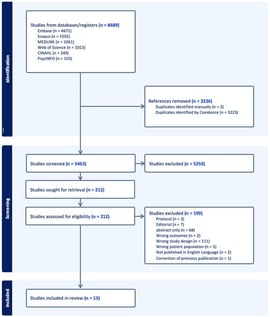
PRISMA flowchart.
  • Correction
  • Open Access

Missing Supplementary File [...]

12 February 2026

Background/Objective: It remains unknown whether patients with the more common forms of hypermobility carry an elevated risk for the development of intracranial/cervical artery abnormalities. The objective of this study was to determine the prevalence of unruptured intracranial aneurysms, spontaneous cervical artery dissections, and fibromuscular dysplasia in patients with hypermobile Ehlers–Danlos Syndrome (hEDS) and hypermobility spectrum disorders (HSD) who presented to an academic headache clinic. Methods: This is a retrospective cohort study. We used an electronic medical record to look for all patients seen at the Mayo Clinic Florida Headache Center and EDS Clinic between 2019 and 2025 with a diagnosis of hEDS or HSD and neuroimaging of both the intracranial and cervical arteries. Results: There were 103 patients who met the inclusion criteria. There was no statistically significant difference between hEDS and HSD patients in developing cerebral/cervical arterial anomalies. Of the sample, 95% of the hypermobile patients with abnormal neuroimaging also had migraine. A total of eleven (10.7%) patients (hEDS + HSD) were diagnosed with unruptured intracranial aneurysms. Trends included age less than 50 years, small aneurysms in the anterior circulation, and having migraine with aura. Five (4.8%) patients were diagnosed with spontaneous cervical artery dissection with trends for HSD, over the age of 50 years, vertebral artery involvement and a history of migraine without aura. Six (5.8%) patients were diagnosed with fibromuscular dysplasia with trends for HSD, over the age of 50 years, carotid artery involvement and a history of migraine with aura. Conclusions: This is the first study to identify that patients with the more common type of EDS, HSD and hEDS, and a possible concomitant history of migraine have a heightened risk for the development of unruptured intracranial aneurysms, spontaneous cervical artery dissections, and fibromuscular dysplasia. Our findings suggest the need for targeted screening with intracranial and extracranial arterial imaging for this unique patient population.

11 February 2026

  • Case Report
  • Open Access

Background/Objectives: To date, few studies have reported the use of neurophysiological testing to assess the long-term progression of functional changes in median and ulnar nerve conduction in children and adolescents with mucopolysaccharidosis (MPS). This case series study aimed to perform an electroneurographic (ENG) assessment of the median and ulnar nerves in three young patients with MPS treated with enzyme replacement therapy (ERT) and hematopoietic stem cell transplantation (HSCT) over a five-year observation period. Methods: Bilateral electroneurography of the motor and sensory fibers in the median and ulnar nerves, recording compound muscle action potential (CMAP) and sensory nerve action potential (SNAP), was performed twice in 5-, 7-, and 19-year-old males at two time points: before and five years after the application of ERT and HSCT. Results: In three MPS patients with Hurler or Hunter syndrome, ENG studies similarly demonstrated decreased amplitudes and prolonged distal latencies in their CMAP recordings, confirming the bilateral progression of axonal degeneration and demyelinating changes in the distal parts of the median nerves. The SNAP recordings revealed more severe degenerative processes of similar types in the sensory fibers of the median nerves. Nerve conduction studies in the ulnar nerve fibers bilaterally revealed analogous pathologies, but with a lesser degree of progression. Conclusions: This study confirms the progression of axonal degeneration and demyelinating changes in the distal parts of the median nerves, which were associated with decreased amplitudes and prolonged distal latencies in the CMAP recordings of the MPS patients. More expressed degeneration processes of a similar type were found in the sensory fibers of the median nerves. Ulnar nerve pathologies of neural conduction are less advanced in patients with Hurler and Hunter syndromes. It seems advisable to implement neurophysiological diagnostics as soon as possible to specify surgical or conservative therapy, which is crucial for maintaining hand function in the case of progressive peripheral neuropathies in patients with MPS. The timing of the treatment and the patient’s age may be factors influencing the effectiveness of treatment.

11 February 2026

News & Conferences

Issues

Open for Submission

Editor's Choice

Get Alerted

Add your email address to receive forthcoming issues of this journal.

XFacebookLinkedIn
Neurol. Int. - ISSN 2035-8377