Skip Content
You are currently on the new version of our website. Access the old version .
  • 28 days
    Time to First Decision

NDT - Journal of Non-Destructive Testing

NDT — Journal of Non-Destructive Testing is an international, peer-reviewed, open access journal on non-destructive testing, and is published quarterly online by MDPI.
The Faringdon Research Centre for Non-Destructive Testing and Remote Sensing (FCNDT&RS) is affiliated with NDT and its members receive discounts on the article processing charges.

All Articles (75)

Efficient structural health monitoring requires not only robust computational strategies but also reliable data acquisition systems capable of capturing representative dynamic responses of real structures. In this study, a continuous dynamic monitoring system composed of accelerometers strategically distributed along the bridge deck provides the foundational data for all subsequent computational analyses. The integrated application of t-Distributed Stochastic Neighbor Embedding (t-SNE) and Learning Vector Quantization (LVQ) is evaluated for the identification of structural damage in the Infante D. Henrique Bridge, located in Porto, Portugal. Data obtained from five years of continuous monitoring were used, with a portion of the identified natural frequencies employed for training and validation of the LVQ algorithm. The robustness of the approach was assessed through artificial modification of data from the second year of monitoring, simulating different damage scenarios. The results demonstrate that the t-SNE–LVQ combination improves discrimination between normal and damaged structural states, achieving identification rates above 70%. The main contribution of this work lies in demonstrating the feasibility and effectiveness of an integrated hardware-to-software machine learning framework applied to real monitoring data, highlighting its potential for structural health monitoring and decision-support systems.

7 February 2026

Methodological steps.

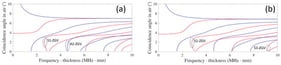
We report on the non-contact characterization of various plate materials (including aluminum and steel) using a high-pressure, micrometer-scale air jet as a broadband ultrasound source and an optomechanical microphone as a receiver. Through-plate transmission spectra are dominated by zero-group-velocity (ZGV) Lamb modes. We attribute this to the ‘point-like’ nature of both the source and receiver, since ZGV modes are spatially localized and comprise a range of non-normal wave numbers. As is well known, the properties of the ZGV modes, including their frequency and amplitude, are sensitive to thickness variations or the presence of defects. The continuous nature and high acoustic power of the gas jet source enabled us to perform uninterrupted scanning of non-uniform steel plates. Given the ubiquitous and low-cost nature of compressed air systems, our approach might be of interest for the rapid inspection of industrial parts.

1 February 2026

Numerically predicted Lamb-mode dispersion relations for (a) a stainless-steel plate (304 alloy), and (b) an aluminum plate (1100 alloy). ZGV branches are indicated by the dashed ellipses and labeled according to the main Lamb mode involved in each case (see main text). Red and blue curves correspond to symmetric and asymmetric modes, respectively.

Design and Implementation of an SFCW Radar Platform for Environmental Monitoring

  • Jarne Van Mulders,
  • Jaron Vandenbroucke and
  • Lieven De Strycker
  • + 6 authors

Current satellite-based active microwave observations lack the temporal resolution needed to accurately capture rapid Earth system dynamics such as soil–plant–atmosphere interactions, rainfall interception, snowfall and rain-on-snow events. Ground-based radar systems can resolve these processes but typically rely on high-end VNAs, limiting their affordability and deployment scale. This work presents a low-cost SFCW radar system built around a compact, SDR-based VNA with an enhanced RF front end supported by remote-access firmware and a cloud-based back end with automatic backup. Calibration experiments and preliminary measurements demonstrate that the system achieves stable performance and is capable of capturing high-temporal-resolution microwave signatures relevant for climate monitoring.

1 February 2026

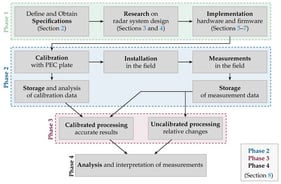
Steps in the research, design and deployment of the radar system.

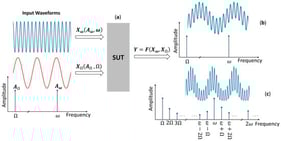
Detecting structural defects is one of the primary challenges engineers face. Consequently, the development of techniques and methods capable of detecting structural defects has always been critical. It should be emphasized that crack detection is only meaningful if it occurs before the final stages of structural failure. Accordingly, the early identification of structural defects has become a significant research challenge, motivating the development of techniques and diagnostic parameters that can effectively capture and reflect the structure’s nonlinearity or non-uniform behavior. This study aims to provide a more detailed examination of modulation phenomena observed in the measured response using the vibro-acoustic modulation (VAM) method, and propose a new model that simultaneously incorporates all three conventional modulation types (amplitude, frequency, and phase), which may offer a more accurate representation of the response signal behavior. Both theoretical and experimental results clearly confirm that the phase shifts of individual frequency components in the frequency domain vary throughout the lifetime of the tested specimen. This behavior, as anticipated by the proposed model, reveals a strong correlation between phase shifts and modulation indices (MIs). Furthermore, the relative sensitivity analysis indicates that the phase shift is more sensitive than the modulation index (MI), suggesting its strong potential as an indicator for early defect detection in structural components.

9 January 2026

The fundamentals of the Vibro-Acoustic Modulation method—(a) a test setup, (b) the frequency component of the response, when SUT has no defect, and (c) when SUT has a defect.

News & Conferences

Issues

Open for Submission

Editor's Choice

Get Alerted

Add your email address to receive forthcoming issues of this journal.

XFacebookLinkedIn
NDT - ISSN 2813-477X