

- Review

Virtual Reality Learning Environments: A Review of Support for Autonomous Learning Development
- Pablo Fernández-Arias,
- Antonio del Bosque and
- Diego Vergara
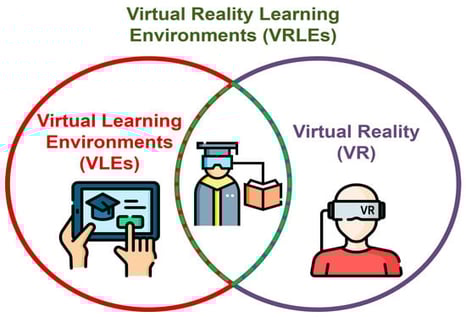
The rapid expansion of digital education in the 21st century has positioned Virtual Reality Learning Environments (VRLEs) as promising spaces for fostering greater learner autonomy. As immersive technologies become more accessible and pedagogically versatile, they offer students opportunities to regulate their learning processes, experiment in interactive scenarios, and progress at their own pace. This review examines how autonomous learning has been conceptualized and investigated within VRLE research through a comprehensive bibliometric analysis of studies published between 2000 and 2025. The results reveal a research field shaped by two major orientations: one focused on human and pedagogical dimensions (learner diversity, instructional design, and evidence-based strategies) and another on technological innovation (artificial intelligence, machine learning, and simulation-based systems). Topic analyses show that digital and immersive education dominate current scholarly production, while areas directly related to autonomy, personalized learning, and student-centered methodologies remain comparatively less developed. Accordingly, it is crucial to reinforce pedagogical structures that enable autonomous learning in VR environments and to integrate technological advancements in a manner that translates into tangible improvements in educational quality across different settings.
5 February 2026