
Minerals 2026, 16(2), 185; https://doi.org/10.3390/min16020185 (registering DOI) - 8 Feb 2026
Abstract
The Cambrian Period represents a critical yet debated interval in the global transition from “Aragonite Seas” to “Calcite Seas”. This study reconstructs the physicochemical evolution of paleoseawater through microstructural analysis and trace element geochemistry of Cambrian oolitic rocks in the northern Sichuan Basin,
[...] Read more.
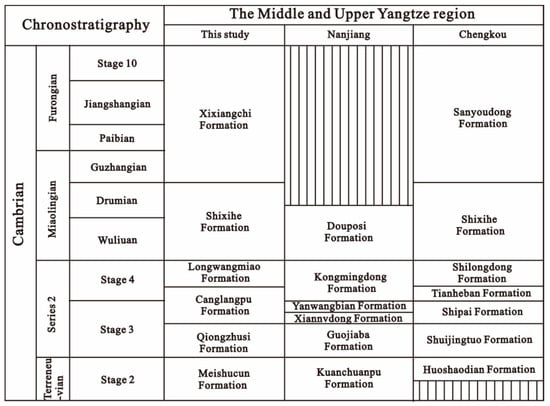
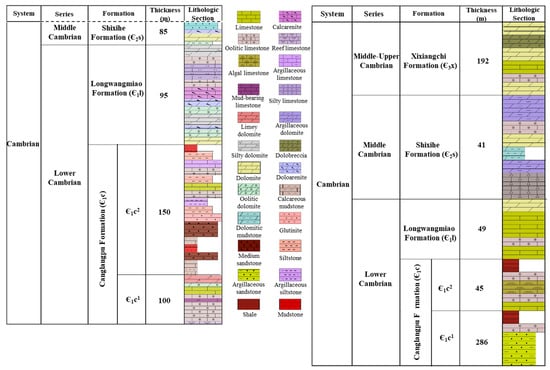
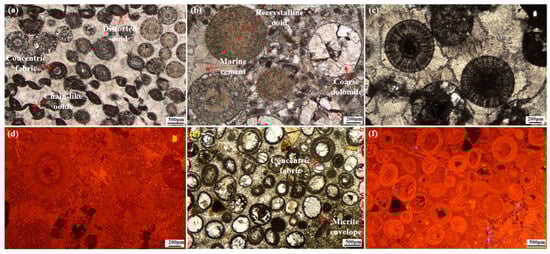
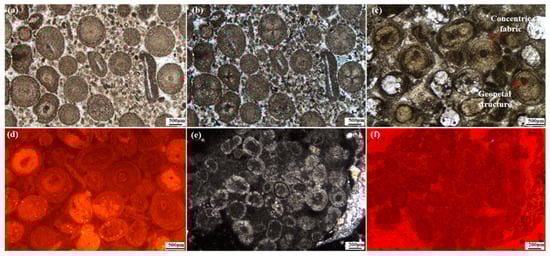
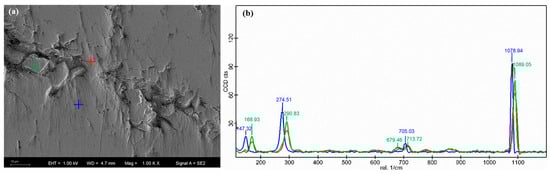
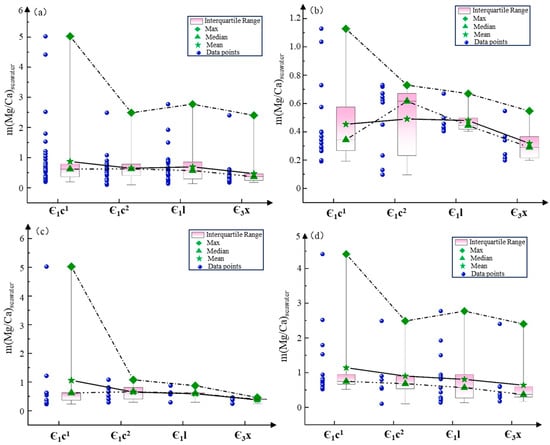
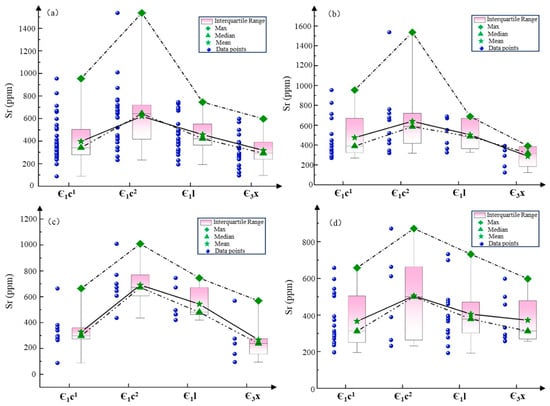
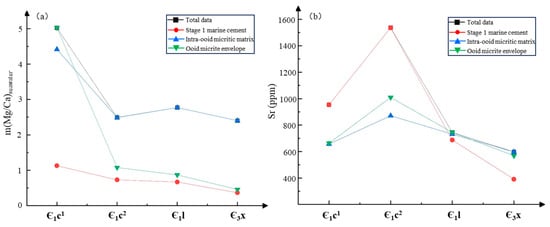
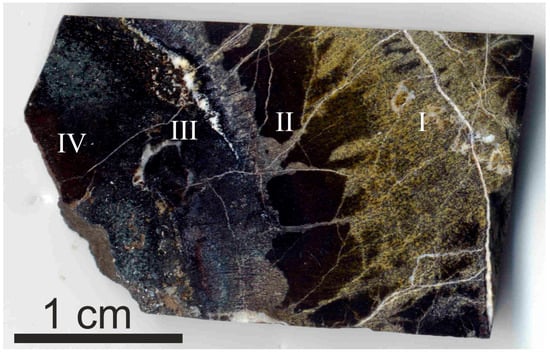
The Cambrian Period represents a critical yet debated interval in the global transition from “Aragonite Seas” to “Calcite Seas”. This study reconstructs the physicochemical evolution of paleoseawater through microstructural analysis and trace element geochemistry of Cambrian oolitic rocks in the northern Sichuan Basin, South China. Our results demonstrate that micrite envelopes on ooid margins and early submarine cements (Stage 1) effectively least-altered signals, resisting diagenetic alteration. Consequently, the maximum values of trace element in these fabrics serve as reliable proxies for paleoseawater reconstruction. Ooids from the upper Canglangpu Formation to the Longwangmiao Formation (Lower Cambrian, Series 2) are characterized by concentric laminations with tangential ultrastructures, high Sr contents (up to 1536 ppm), and high seawater molar Mg/Ca ratios (hereafter mMg/Ca, up to 5.02). These features contrast sharply with the radial fabrics, low Sr contents (<400 ppm), and low seawater mMg/Ca ratios (<0.4) observed in the Xixiangchi Formation (Upper Cambrian, Furongian). Integrating regional data with global correlations, this study confirms that Aragonite Sea conditions persisted on the northern margin of the Yangtze Block until at least the late Early Cambrian (Stage 4). The Middle Cambrian (Miaolingian) represents a pivotal transitional interval, leading to a complete shift to a stable Calcite Sea by the Late Cambrian (Furongian). These findings provide crucial regional constraints for refining the Phanerozoic model of seawater chemical evolution.
Full article
(This article belongs to the Special Issue Advances in Carbonate Sedimentology: From Deposition to Diagenesis)
►
Show Figures
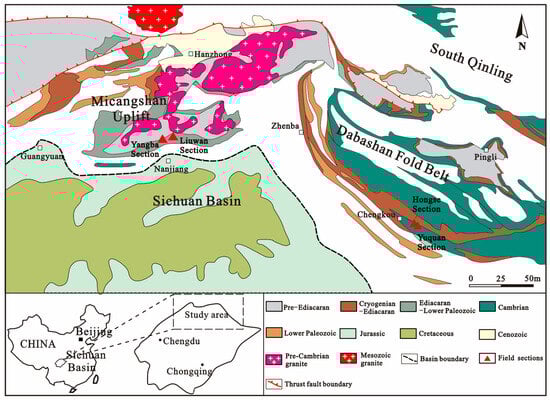
Figure 1