Skip to Content

Membranes

Membranes is an international, peer-reviewed, open access journal covering the broad aspects of the science and technology of both biological and non-biological membranes, published monthly online by MDPI.
The Membrane Society of Australasia (MSA) and Polish Membrane Society (PTMem) are affiliated with Membranes and their members receive discounts on the article processing charges. 
Indexed in PubMed | Quartile Ranking JCR - Q2 (Polymer Science | Engineering, Chemical | Materials Science, Multidisciplinary | Chemistry, Physical)

All Articles (5,020)

Stimuli-responsive liposomal membranes have attracted growing interest as dynamic soft materials capable of regulating permeability, fusion, and cargo release in response to external or internal triggers. By incorporating functional molecular or nanostructured guests, such as photochromic compounds, plasmonic nanoparticles, or ionizable lipids, bilayers can be endowed with reversible and tunable properties. These modifications often rely on the precise control of lipid packing, phase behaviour, and the formation of transient membrane defects that facilitate molecular transport. This review aims to provide an overview of the molecular design strategies and underlying mechanisms used to engineer such responsive liposomal systems, with particular emphasis on light- and heat-triggered behaviours and on supramolecular approaches that modulate membrane structure and dynamics. Emerging trends, current limitations, and opportunities for future development in functional lipid-based materials and biointerfaces will also be discussed.

28 February 2026
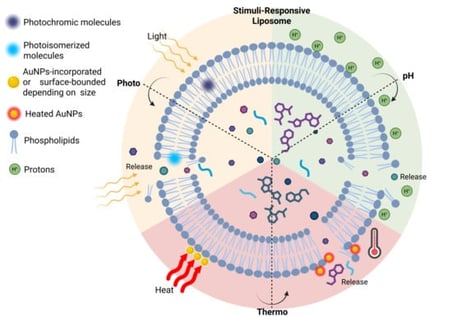
Schematic representation of AuNP-liposome hybrid systems and light-triggered release. Gold nanoparticles (AuNPs) embedded within or adsorbed onto the liposomal membrane absorb light and convert it into heat. Localized heating leads to membrane perturbation, which destabilizes the membrane, ultimately promoting the release of the encapsulated cargo.

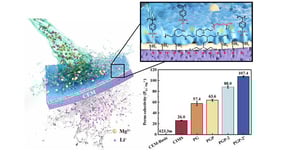
The industrial application of modified ion-exchange membranes is limited by complex, discontinuous ex-situ processes. This study introduces an in-situ electro-assembly strategy that enables the direct fabrication of a selective layer within an electrodialysis stack without disassembly. By utilizing a programmed current reversal to orchestrate the sequential deposition of polyethyleneimine (PEI), glutaraldehyde cross-linking, and polystyrene sulfonate (PSS) adsorption, we achieve meticulous interfacial engineering on a commercial cation exchange membrane. Comprehensive characterization confirms the successful construction of a hydrophilic, charge-tuned multilayer, which enhances ion transport kinetics and raises the limiting current density. This method culminates in a membrane with an exceptional Li+/Mg2+ selectivity of 107.9 and robust stability, retaining a significant selectivity of 47 over 10 cycles in real salt lake brine. This synergistic integration of operational simplicity, interfacial precision, and superior performance establishes a transformative and scalable platform for manufacturing high-performance membranes for selective ion separation from complex brine sources.

28 February 2026

Route for the modification process of the CEM and the representation for structure.

Impedance-Controlled Molecular Transport Across Multilayer Skin Membranes

  • Slobodanka Galovic,
  • Milena Cukic Radenkovic and
  • Edin Suljovrujic

Analytical models of transdermal drug delivery (TDD) often represent deeper skin layers using ideal sink assumptions or phenomenological interfacial resistances. While mathematically convenient, these approaches obscure the physical role of the dermis and hypodermis in controlling molecular transport. Here, we develop an impedance-based analytical model for diffusion across multilayer skin membranes, in which the epidermal barrier is dynamically coupled to a finite diffusive backing layer representing the dermis–hypodermis composite. Diffusion impedance links transport conductivity, storage capacity, and layer thickness, while preserving continuity of concentration and flux at all interfaces. Closed-form expressions in the Laplace domain describe concentration fields and interfacial fluxes, and cumulative drug uptake is computed in the time domain via inverse Laplace transformation. The model identifies distinct short- and long-time transport regimes. Commonly used Dirichlet and Robin boundary conditions emerge as limiting cases but cannot reproduce the regime-dependent behavior of a backing layer. In particular, Robin formulations reduce the backing layer to a constant effective resistance, neglecting its storage capacity and time-dependent impedance. By replacing ad hoc boundary conditions with a physically grounded impedance framework, this approach provides a unified and extensible method for analyzing multilayer transport systems, including extensions to anomalous or memory-dependent diffusion.

27 February 2026

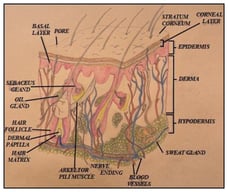
Schematic of skin structure. The stratum corneum (SC) and viable epidermis (VE) form a superficial semipermeable layer acting as the primary molecular barrier. Beneath them, the dermis and hypodermis are thicker, highly vascularized regions that enable systemic distribution of absorbed molecules via the capillary network.

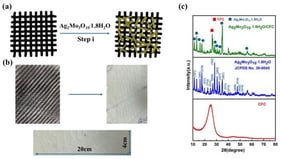
This work presents a novel, membrane-inspired hybrid framework composed of Ag2Mo3O10·1.8H2O nanowires grown in situ on carbon fiber cloth (CFC) for the continuous and selective recovery of high-value sulfur-containing molecules from organic wastewater. The framework forms an integrated hierarchical porous network rich in micro-/nano-channels, which facilitates efficient, capillary-driven water transport. Owing to its mesoporous texture and specific Ag–S coordination affinity, the material shows exceptional selectivity toward sulfur-containing dyes, enabling rapid adsorption (>94% removal of methylene blue within 10 min) and high specificity in mixed solutions. The hybrid also exhibits excellent reusability, maintaining high recovery efficiency over repeated adsorption–desorption cycles. When configured into a continuous-flow system, the framework operates without external pressure and achieves a water transport rate of 1875 mL·h−1·m−2. These findings underscore the potential of the Ag2Mo3O10·1.8H2O/CFC hybrid as an efficient, scalable, and sustainable platform for resource-oriented wastewater treatment.

26 February 2026

(a) Schematic of the Ag2Mo3O10·1.8H2O/CFC hybrid framework fabrication process. (b) Optical images of pristine CFC (left) and the resulting framework (right). (c) XRD patterns of the products.

News & Conferences

Issues

Open for Submission

Editor's Choice

Reprints of Collections

Recent Advances in Polymeric Membranes
Reprint

Recent Advances in Polymeric Membranes

Preparation and Applications
Editors: María Ortencia González-Díaz, Manuel Aguilar Vega

Get Alerted

Add your email address to receive forthcoming issues of this journal.

XFacebookLinkedIn
Membranes - ISSN 2077-0375