Skip Content
You are currently on the new version of our website. Access the old version .

Machine Learning and Knowledge Extraction

Machine Learning and Knowledge Extraction is an international, peer-reviewed, open access, monthly journal on machine learning and applications, see our video on YouTube explaining the MAKE journal concept. 

Quartile Ranking JCR - Q1 (Engineering, Electrical and Electronic | Computer Science, Artificial Intelligence | Computer Science, Interdisciplinary Applications)

All Articles (646)

  • Perspective
  • Open Access

The Innovative Potential of Artificial Intelligence Applied to Patient Registries to Implement Clinical Guidelines

  • Sebastiano Gangemi,
  • Alessandro Allegra and
  • Giorgio Walter Canonica
  • + 3 authors

Guidelines provide specific recommendations based on the best available medical knowledge, summarizing and balancing the advantages and disadvantages of various diagnostic and treatment options. Currently, consensus methods are the best and most common practices in creating clinical guidelines, even though these approaches have several limitations. However, the rapid pace of biomedical innovation and the growing availability of real-world data (RWD) from clinical registries (containing data like clinical outcomes, treatment variables, imaging, and laboratory results) call for a complementary paradigm in which recommendations are continuously stress-tested against high-quality, interoperable data and auditable artificial intelligence (AI) pipelines. AI, based on information retrieved from patient registries, can optimize the process of creating guidelines. In fact, AI can analyze large volumes of data, ensuring essential tasks such as correct feature identification, prediction, classification, and pattern recognition of all information. In this work, we propose a four-phase lifecycle, comprising data curation, causal analysis and estimation, objective validation, and real-time updates, complemented by governance and machine learning operations (MLOps). A comparative analysis with consensus-only methods, a pilot protocol, and a compliance checklist are provided. We believe that the use of AI will be a valuable support in drafting clinical guidelines to complement expert consensus and ensure continuous updates to standards, providing a higher level of evidence. The integration of AI with high-quality patient registries has the potential to substantially modernize guideline development, enabling continuously updated, data-driven recommendations.

7 February 2026
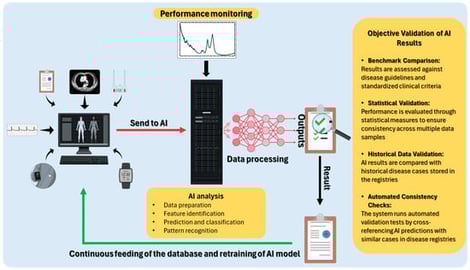
Schematic representation of the proposed AI-enhanced registry framework and living guideline lifecycle.

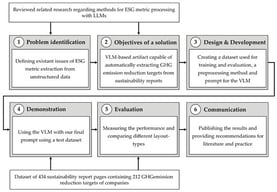
This study investigates how Vision Language Models (VLMs) can be used and methodically configured to extract Environmental, Social, and Governance (ESG) metrics from corporate sustainability reports, addressing the limitations of existing text-only and manual ESG data-extraction approaches. Using the Design Science Research Methodology, we developed an extraction artifact comprising a curated page-level dataset containing greenhouse gas (GHG) emission-reduction targets, an automated evaluation pipeline, model and text-preprocessing comparisons, and iterative prompt and few-shot refinement. Pages from oil and gas sustainability reports were processed directly by VLMs to preserve visual–textual structure, enabling a controlled comparison of text, image, and combined input modalities, with extraction quality assessed at page and attribute level using F1-scores. Among tested models, Mistral Small 3.2 demonstrated the most stable performance and was used to evaluate image, text, and combined modalities. Combined text + image modality performed best (F1 = 0.82), particularly on complex page layouts. The findings demonstrate how to effectively integrate visual and textual cues for ESG metric extraction with VLMs, though challenges remain for visually dense layouts and avoiding inference-based hallucinations.

5 February 2026

Activities of the artifact development following the DSRM.

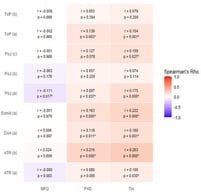
The increasing integration of artificial intelligence (AI) in decision-making processes has amplified discussions surrounding algorithmic authority—the perceived epistemic legitimacy of AI systems over human judgment. This study investigates how individuals attribute epistemic authority to AI, focusing on psychological, contextual, and sociotechnical factors. Existing research highlights the importance of trust in automation, perceived performance, and moral frameworks in shaping such attributions. Unlike prior conceptual or philosophical accounts of algorithmic authority, our study adopts a relational and empirically grounded perspective by operationalizing algority through psychometric measures and contextual assessments. To address knowledge gaps in the micro-level dynamics of this phenomenon, we conducted an empirical study using psychometric tools and scenario-based assessments. Here, we report key findings from a survey of 610 participants, revealing significant correlations between trust in automation (TiA), perceptions of automated performance (PAS), and the propensity to defer to AI, particularly in high-stakes scenarios like criminal justice and job-matching. Trust in automation emerged as a primary factor, while moral attitudes moderated deference in ethically sensitive contexts. Our findings highlight the practical relevance of transparency and explainability for supporting critical engagement with AI outputs and for informing the design of contextually appropriate decision support. This study contributes to understanding algorithmic authority as a multidimensional construct, offering empirically grounded insights for designing AI systems that are trustworthy and context-sensitive.

5 February 2026

Spearmann’s rank correlation coefficients between literature-derived constructs (MFQ, TiA, and PAS) and ad hoc constructs. EonAI = Expectation on AI. ATR = Attitude towards replacement. ToP = Trust on Prediction. PoJ = Preference on Judgment. DoA = Deference on Action. (a), (b), (c) are the ad hoc items—see Table 3 and Table 4. * p value < 0.05.

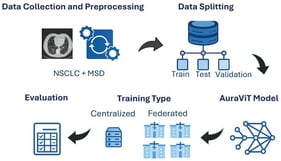
Accurate lung tumor segmentation using computed tomography (CT) scans is needed for efficient tumor treatment. However, the development of deep learning models is often constrained by strict patient privacy regulations that limit direct data sharing. This work presents a system that enables multi-institutional collaboration while training high-quality lung tumor segmentation models without requiring access to sensitive patient data. The proposed framework features the AuraViT suite, which includes the standard AuraViT—a hybrid model with 136 million parameters that combines a Vision Transformer (ViT) encoder, Atrous Spatial Pyramid Pooling (ASPP), and attention-gated residual connections—and the Lightweight AuraViT (LAURA) family (Small, Tiny, and Mobile). These variants are designed for resource-constrained environments and potential edge deployment scenarios. Training is conducted on publicly available datasets (MSD Lung and NSCLC) in a simulated five-client federated learning setup that emulates collaboration among institutions while ensuring patient privacy. The framework uses a federated learning setup with FedProx, adaptive weighted aggregation, and a dynamic virtual client strategy to handle data and system differences. The framework is further evaluated through ablation studies on model architecture and feature importance. The results show that the standard AuraViT-FL achieves a global mean Dice score of 80.81%, while maintaining performance close to centralized training. Additionally, the LAURA variations show a better trade-off between accuracy and efficiency. Notably, the Mobile variant with ∼5 M parameters reduces model complexity by over 96% while maintaining competitive performance (82.96% Dice on MSD Lung).

3 February 2026

Pipeline of the proposed AuraViT model for lung tumor segmentation.

News & Conferences

Issues

Open for Submission

Editor's Choice

Get Alerted

Add your email address to receive forthcoming issues of this journal.

XFacebookLinkedIn
Mach. Learn. Knowl. Extr. - ISSN 2504-4990