Skip Content
You are currently on the new version of our website. Access the old version .

All Articles (230)

  • Systematic Review
  • Open Access

Background and Aim: The management of patients with chronic Hepatitis B Virus (HBV) HBeAg-negative infection in the indeterminate-grey zone (GZ) remains debatable. We conducted a systematic review and meta-analysis to compare these patients with those with chronic HBV HBeAg-negative infection (inactive carriers; IC/HBeAg-negative), regarding the severity of liver inflammation and fibrosis and the risk of developing hepatocellular carcinoma (HCC). Methods: A literature search was conducted to identify all published studies comparing GZ/HBeAg-negative patients with IC/HBeAg-negative patients. Data on the severity of liver inflammation and fibrosis were extracted, and pooled relative risks (RR) and 95% confidence intervals (CI) were calculated. The risk of HCC was estimated by pooled hazard ratios (HR). A random-effects meta-analysis model was performed using R v4.1.2. Results: Eleven studies were finally included. GZ/HBeAg-negative patients had significantly higher mean HBV-DNA and alanine transferase (ALT) levels, compared to their IC/HBeAg-negative counterparts (4089.9 ± 4840.5 vs. 215.9 ± 318.1 IU/mL; p = 0.0004, and 39.6 ± 26.9 IU/L and 20.1 ± 7.6 IU/L/; p < 0.0001, respectively). GZ/HBeAg-negative patients showed a trend towards a higher risk of significant liver inflammation (RR: 5.11; 95%CI: 0.68–38.33; p = 0.1), F2/F3 fibrosis (RR: 2.13; 95%CI: 0.89–5.1; p = 0.09), and cirrhosis (RR: 14.39; 95%CI: 0.5–417.08; p = 0.12), respectively, compared to IC/HBeAg-negative patients. After a median follow-up of 6.2 years, the former group demonstrated a significantly higher risk of developing HCC (HR: 4.7; 95% CI: 1.4–15.6; p < 0.0001). Conclusions: GZ/HBeAg-negative patients have a higher risk of developing HCC compared to IC/HBeAg-negative patients, which raises concerns about the potential need to initiate treatment in this patient group.

4 February 2026
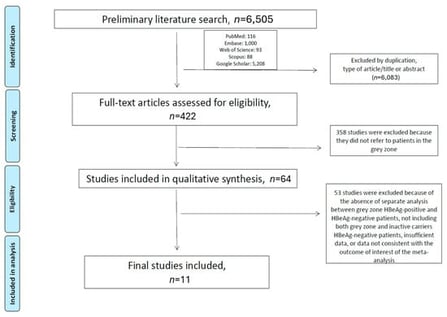
PRISMA flow diagram of the studies’ selection.

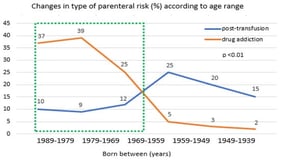
Background and Objectives: The increase in rates of cirrhosis and hepatocellular carcinoma (HCC) due to HCV infection supported the implementation of screening programs for control of this infection in Italy. The HepCoVe network has collected cases with chronic hepatitis C (CHC) in the Veneto region of North-East Italy since the 2000s. This platform allowed us to (a) compare the characteristics of the HCV cohort exposed to parenteral risk before or after 1995 (introduction of mandatory HCV testing), and (b) track the changes induced by IFN-based therapy and the novel direct-acting antivirals (DAA). Methods: From January 2000 to December 2005, 2703 prospectively recruited cases with CHC were analyzed and followed up for 16.2 ± 8.4 years, by a per protocol analysis. Results: Two epidemic waves occurred; the first, related to blood transfusions and infection with the HCV-1b and 2a/2c genotypes, affecting an elderly population, and the second, spread through drug addiction, among young people and with a prevalence of HCV-1a, 3a/3b and 4c/4d. Patients treated with DAA had more advanced liver disease; despite this, they achieved the highest SVR rate, compared to those who received an IFN-based regimen (95.1% vs. 61.5%; p < 0.01). The 10-year HCC incidence rate by KM was 0.81, 3.75, and 1.26 per 100 person-years (p-y) in cases with or without SVR and in the untreated group, respectively (p < 0.001). Conclusions: The period of exposure to HCV in Italy (born from 1939 to 1989) was supported by two epidemic waves. Unknowing cases of HCV infection are disappearing, particularly those included in the first cohort, among the “boomers”. Despite the eradication of HCV in all treated cases, antiviral therapy does not completely eliminate the risk of HCC onset.

23 January 2026

Risk rates of post-transfusion hepatitis or drug addiction by age range 1939–1989, inluded in the 2005 survey data. The green dash line indicates the population included in the “2021–2025 HCV screening free-of-charge dedicated campaign in Italy”.

The liver plays a central role in numerous physiological processes, with one of its most critical functions being the regulation of lipid homeostasis through both the biogenesis and secretion of very low-density lipoproteins (VLDLs) and fatty acid oxidation. By forming and secreting VLDLs, the liver mitigates the influx of potentially toxic free fatty acids from the bloodstream and repurposes them for energy utilization throughout the body. Fatty acid oxidation is equally essential for maintaining hepatic lipid balance, and its disruption can lead to lipid accumulation and metabolic dysfunction-associated steatotic liver disease (MASLD), previously referred to as non-alcoholic fatty liver disease (NAFLD). Even subtle alterations in these processes can have profound health consequences, contributing to chronic liver diseases and atherosclerosis—the leading cause of cardiovascular morbidity and mortality worldwide. Despite their importance, many aspects of hepatic VLDL formation, secretion, and fatty acid oxidation remain poorly understood. This narrative review highlights the pivotal role of the liver in maintaining lipid balance, summarizes current knowledge on fatty acid uptake and processing, provides an in-depth analysis of VLDL biogenesis and secretion, and underscores the need for continued research in this critical area of human health.

20 January 2026

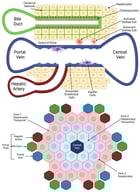
The anatomy of the hepatic lobule and organization of zonation: The lobule consists of a central vein surrounded by layers of hepatocytes arranged into zones based on their proximity to the central vein. Zone 1 hepatocytes are periportal, while Zone 3 hepatocytes are pericentral. The lobule also contains the portal triad, which includes the bile duct lined with cholangiocytes, the portal vein, and the hepatic artery, as well as the canalicular network for bile flow.

Completeness of Initial Laboratory Evaluation Impacts Chronic Hepatitis B Outcomes

  • Haris Imsirovic,
  • Jui-Hsia (Cleo) Hung and
  • Curtis L. Cooper
  • + 3 authors

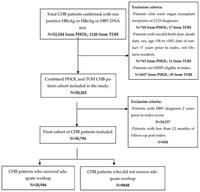
Introduction: The health care burden of chronic hepatitis B virus (CHB) infection can be reduced by appropriate workup, treatment, and monitoring. Methods: As a primary objective, we determined whether adequate initial hepatitis B virus (HBV) laboratory workup in CHB patients is associated with improved CHB complications risk. Secondary outcomes assessed included: mortality, hospitalization, emergency department, and liver specialist visits. We conducted a retrospective cohort study from 1 January 2012 to 31 December 2018. Participants were followed from 12 months post index event until outcome occurrence, death, loss of eligibility, or 31 March 2023. Health administrative data from Ontario, Canada was utilized. The study cohort included individuals with at least one positive result of either hepatitis B surface antigen, hepatitis B e antigen, or HBV DNA viral load documented during the study window. The exposure of interest was defined as adequate laboratory workup, defined as having subsequent quantitative HBV DNA, and alanine aminotransferase testing completed within 12 months of the index event. CHB-related complications were assessed using previously validated diagnostic codes. Modified Poisson regression modelling was used to estimate relative risks. Results: The study cohort consisted of 30,794 CHB patients, with a mean age 45.7 years. The majority were male (53.5%) and within the lowest two income quintiles (50.2%). In total, 68.0% underwent adequate workup. Individuals with adequate workup were more likely to be older, male, urban based, and of the highest racialized and newcomer populations quintile. The risk for CHB complications was 1.50 (95% CI 1.36–1.65) times greater among those with adequate workup. By multivariable analysis, adequate workup was associated with a lower risk of mortality (RR 0.78; 95% CI 0.69–0.87), all-cause hospitalizations (RR 0.77; 95% CI 0.74–0.80), all-cause (RR 0.77; 95% CI 0.75–0.78), and liver-related (RR 0.67; 95% CI 0.60–0.75) ED visits. Conclusions: Adequate CHB clinical workup is associated with improved patient outcomes. Our findings advocate for the comprehensive evaluation of CHB patients using key laboratory tests to optimize clinical management and improve long-term health outcomes. We identified gaps in the workup of young adults, females, and those residing in rural settings, which should be addressed to ensure equity of HBV care.

20 January 2026

Flow chart of study patient selection.

News & Conferences

Issues

Open for Submission

Editor's Choice

Reprints of Collections

Recent Advances in Acetaminophen Hepatotoxicity
Reprint

Recent Advances in Acetaminophen Hepatotoxicity

Editors: Hartmut W. Jaeschke
Liver Fibrosis
Reprint

Liver Fibrosis

Mechanisms, Targets, Assessment and Treatment
Editors: Ralf Weiskirchen, Tilman Sauerbruch

Get Alerted

Add your email address to receive forthcoming issues of this journal.

XFacebookLinkedIn
Livers - ISSN 2673-4389