

Journal Menu
► ▼ Journal Menu-
- JSAN Home
- Aims & Scope
- Editorial Board
- Reviewer Board
- Topical Advisory Panel
- Instructions for Authors
- Special Issues
- Topics
- Sections
- Article Processing Charge
- Indexing & Archiving
- Editor’s Choice Articles
- Most Cited & Viewed
- Journal Statistics
- Journal History
- Journal Awards
- Conferences
- Editorial Office
Journal Browser
► ▼ Journal BrowserNeed Help?
Announcements
19 November 2025
Meet Us Virtually at the 1st International Online Conference on Sensor and Actuator Networks (CSAN 2026), 9–10 July 2026

We are pleased to announce that the 1st International Online Conference on Sensor and Actuator Networks (CSAN 2026) will be held online from 9 to 10 July 2026. The conference is organized by MDPI’s Journal of Sensor and Actuator Networks (JSAN, ISSN: 2224-2708, Impact Factor: 3.3).
CSAN 2026 will present the latest studies in sensor and actuator network-related research in the fields of healthcare, smart agriculture, industry, mobile systems, intelligent transportation, manufacturing, smart cities, and engineering.
We welcome all past authors to speak at CSAN2026. All invited speakers will get the award.
Conference Chair:
- Prof. Dr. Lei Shu, 1 Nanjing Agricultural University, Nanjing, China; 2 University of Lincoln, Lincoln, UK.
Session topics:
S1. Industry 4.0 and embedded wireless sensor/actuator systems;
- Session Chair: Prof. Adnan M. Abu-Mahfouz, Council for Scientific and Industrial Research (CSIR), South Africa.
S2. Blockchain technologies and Internet-of-Things-based WSAN;
- Session Chair: Prof. Pascal Lorenz, University of Haute-Alsace, France.
S3. WSAN and next-generation networks (5G, 6G, etc.);
- Session Chair: Prof. Jordi Mongay Batalla, Warsaw University of Technology, Poland.
S4. Applications of WSAN in agriculture, vehicles, wearable sensors, smart cities, manufacturing, mobile systems, and health and medical care;
- Session Chair: Prof. Sye-Loong Keoh, University of Glasgow, UK.
S5. Big data, computing and artificial intelligence.
- Session Chair: Prof. Jianwei Niu, Bei hang University, China.
Conference awards:
- The Best Oral Presentation Award is given to the invited speakers; we appreciate your contribution and time at CSAN2026;
- The Best Video Presentation Award is given to the submission judged to make the most significant and interesting video presentation for the conference.
Guide for Authors:
Abstracts written for CSAN 2026 will be directly submitted to the Topic “The 1st International Online Conference on Sensor and Actuator Networks (CSAN 2026)” within the “Special Issue” section of JSAN with a 15% discount on the publication fee.

Submit your abstract before 9 March 2026!

Register before 6 July 2026!

Register for Early Bird by 6 June 2026. The registration fee includes attendance costs for all conference sessions.
For detailed information, please visit https://sciforum.net/event/CSAN2026.
For any enquiries regarding the event, please contact csan2026@mdpi.com.
We look forward to seeing you at CSAN 2026.
6 November 2025
MDPI Launches the Michele Parrinello Award for Pioneering Contributions in Computational Physical Science
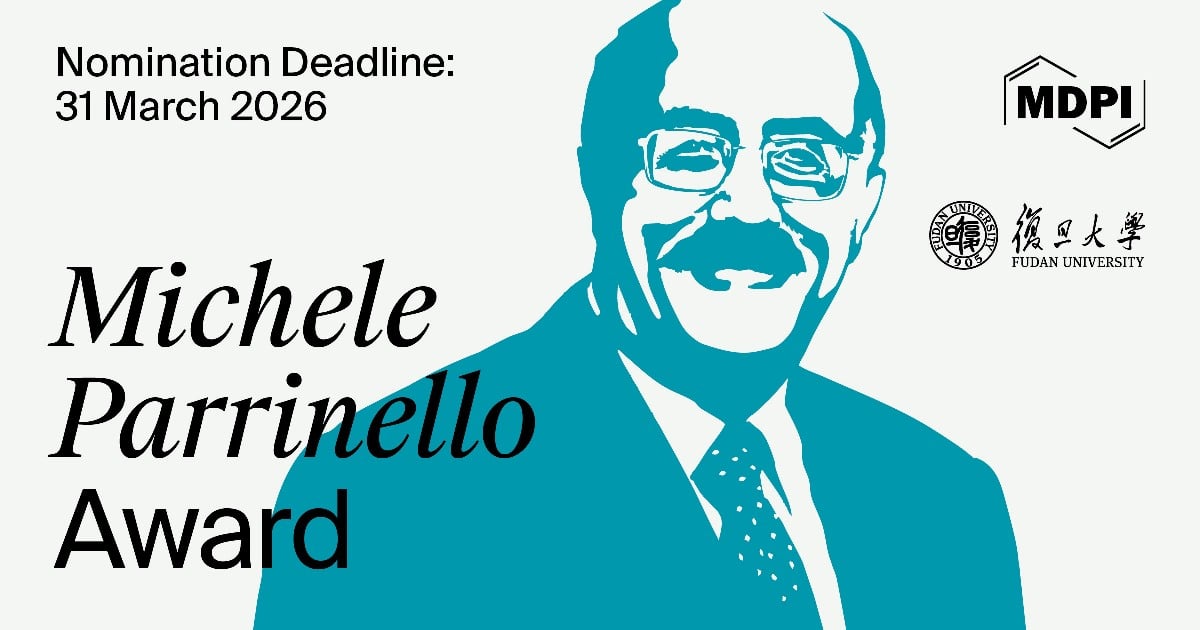
MDPI is delighted to announce the establishment of the Michele Parrinello Award. Named in honor of Professor Michele Parrinello, the award celebrates his exceptional contributions and his profound impact on the field of computational physical science research.
The award will be presented biennially to distinguished scientists who have made outstanding achievements and contributions in the field of computational physical science—spanning physics, chemistry, and materials science.
About Professor Michele Parrinello
"Do not be afraid of new things. I see it many times when we discuss a new thing that young people are scared to go against the mainstream a little bit, thinking what is going to happen to me and so on. Be confident that what you do is meaningful, and do not be afraid, do not listen too much to what other people have to say.”
——Professor Michele Parrinello
 |
Born in Messina in 1945, he received his degree from the University of Bologna and is currently affiliated with the Italian Institute of Technology. Professor Parrinello is known for his many technical innovations in the field of atomistic simulations and for a wealth of interdisciplinary applications ranging from materials science to chemistry and biology. Together with Roberto Car, he introduced ab initio molecular dynamics, also known as the Car–Parrinello method, marking the beginning of a new era both in the area of electronic structure calculations and in molecular dynamics simulations. He is also known for the Parrinello–Rahman method, which allows crystalline phase transitions to be studied by molecular dynamics. More recently, he has introduced metadynamics for the study of rare events and the calculation of free energies. |
For his work, he has been awarded many prizes and honorary degrees. He is a member of numerous academies and learned societies, including the German Berlin-Brandenburgische Akademie der Wissenschaften, the British Royal Society, and the Italian Accademia Nazionale dei Lincei, which is the major academy in his home country of Italy.
Award Committee
 |
The award committee will be chaired by Professor Xin-Gao Gong, a computational condensed matter physicist, academician of the Chinese Academy of Sciences, and professor at the Department of Physics, Fudan University. Professor Xin-Gao Gong will lead a panel of several senior experts in the field to oversee the evaluation and selection process. The Institute for Computational Physical Sciences at Fudan University (Shanghai, China), led by Professor Xin-Gao Gong, will serve as the supporting institute for the award. |
"We hope the Michele Parrinello Award will recognize scientists who have made significant contributions to the field of computational condensed matter physics and at the same time set a benchmark for the younger generation, providing clear direction for their pursuit—this is precisely the original intention behind establishing the award."
——Professor Xin-Gao Gong
The first edition of the award was officially launched on 1 November 2025. Nominations will be accepted before the end of March 2026. For further details, please visit mparrinelloaward.org.
About the MDPI Sustainability Foundation and MDPI Awards 
The Michele Parrinello Award is part of the MDPI Sustainability Foundation, which is dedicated to advancing sustainable development through scientific progress and global collaboration. The foundation also oversees the World Sustainability Award, the Emerging Sustainability Leader Award, and the Tu Youyou Award. The establishment of the Michele Parrinello Award will further enrich the existing award portfolio, providing continued and diversified financial support to outstanding professionals across various fields.
In addition to these foundation-level awards, MDPI journals also recognize outstanding contributions through a range of honors, including Best Paper Awards, Outstanding Reviewer Awards, Young Investigator Awards, Travel Awards, Best PhD Thesis Awards, Editor of Distinction Awards, and others. These initiatives aim to recognize excellence across disciplines and career stages, contributing to the long-term vitality and sustainability of scientific research.
Find more information on awards here.
9 October 2025
Meet Us at the 3rd International Conference on AI Sensors and Transducers, 2–7 August 2026, Jeju, South Korea

Following from our two previous successful editions, we invite you to submit your abstracts and participate in the 3rd International Conference on AI Sensors and Transducers, taking place from 2 to 7 August 2026 in Jeju, South Korea.
Organized by MDPI and the open access journals Sensors, Micromachines, AI Sensors, Micro and Remote Sensing, this in-person conference will once again bring together experts and participating researchers who will share insights and innovations in sensors, sensing technology, transducers and artificial intelligence.
Start preparing your abstracts:
Don’t miss this opportunity to showcase your work to peers and leading experts in AI-enhanced sensing systems and transducers. We will be announcing the session topics at AIS 2026 soon.
Find out more about the instructions for authors: https://sciforum.net/event/AIS2026?section=#instructions.
Find out more about the publication opportunities available for authors: https://sciforum.net/event/AIS2026?section=#Publicationopportunities.
Please feel free to share the information about this conference to your colleagues and students.
We look forward to welcoming you in Jeju!
The organizing committee of the 3rd International Conference on AI Sensors and Transducers (AIS 2026).
28 February 2026
MDPI INSIGHTS: The CEO’s Letter #32 - MDPI China and Thailand, China Science Daily, 1,000 Partnerships, R2R

Welcome to the MDPI Insights: The CEO's Letter.
In these monthly letters, I will showcase two key aspects of our work at MDPI: our commitment to empowering researchers and our determination to facilitating open scientific exchange.
Opening Thoughts

Reflections from China: Year-End-Celebrations and Open Access Publishing
In February, I had the pleasure of joining over a thousand colleagues from our Tongzhou and Haidian offices at their end-of-year annual celebration in Beijing.
Spending time with our teams in China is also a powerful reminder of the scale and complexity of MDPI as a global organization. Our colleagues in Beijing, Wuhan, and across the country play a significant role in our day-to-day operations and long-term development. I’m grateful for the hospitality, collaboration, and commitment shown by our managers and teams in China, alongside colleagues worldwide, who have helped steadily build MDPI, brick by brick, over the years.
Below are some data on Open Access (OA) publishing in China and our collaboration in this important research market.
Open Access Publishing in China
China has been the world’s leading country in research and review article publication volume since 2019, exceeding one million publications in 2025. Over the past five years, the gap between China and the second-ranked country, the United States, has continued to widen.
In 2025:
- 47% of China’s research output was published Open Access
- Of those OA publications, 76% were Gold Open Access (approximately 382,930 articles)
- The overall OA distribution remained stable compared with 2024, with Gold OA increasing by 1%
Over the past five years (2021–2025):
- China published 4,398,050 research and review articles
- Approximately 48% of this output was OA
According to Dimensions, when comparing the top 20 countries by publication volume (2021–2025):
- China ranks 1st worldwide in publication volume
- China ranks 9th in citation performance within this group (for comparison, the US ranks 2nd in publication volume and 10th in citation ranking)
- Average citations per article: 12.51
Among the top 10 universities globally by publication volume, six are Chinese institutions, alongside Harvard University (USA), the University of São Paulo (Brazil), the University of Toronto (Canada), and the University of Oxford (UK).

MDPI and China
China is an important and long-standing part of MDPI’s global publishing ecosystem:
- In 2025, MDPI was the largest fully Open Access publisher in China
- MDPI published 22% of China’s Gold Open Access output (82,133 papers)
- We received 290,999 submissions from China-affiliated authors and published 82,133 articles
- There are 8,500+ active Editorial Board Members based in China
- 64% (5,438) have an H-index above 26
- MDPI works with:
- 117 Editors-in-Chief
- 103 Section Editors-in-Chief
- 71 China-based institutions currently hold IOAP agreements with MDPI, seven of which rank among the top 10 Chinese institutions by publication volume
China's scale in research output means that the publishing platforms chosen by Chinese scholars will continue to influence the direction of scholarly publishing. At the same time, MDPI’s strength comes from its international collaboration, with colleagues, editors, reviewers, and authors working together across regions and disciplines.
Thank you to all our colleagues in China, and around the world, who support MDPI’s publishing activities across departments and help advance open access research every day.
Impactful Research

“Progress in open science is built through trust, dialogue, and relationships”
Behind the Scenes: A Conversation with China Science Daily
During my trip to Beijing, I also had the opportunity to visit China Science Daily and take part in an interview and broader exchange with their team in Beijing. Visits like this matter because progress in open science is built not only through platforms and infrastructure, but also through trust, dialogue, and relationships across research communities and regions.
China Science Daily: History Museum
As part of the visit, I was given a tour of their History Museum, which offers a thorough perspective on the evolution of China’s first science and technology newspaper, established in 1959. The exhibition highlights how the organization developed into a trusted institution connecting research with the public and policymakers. It was a helpful reminder that at the core of publishing is stewardship, credibility, and long-term public engagement with science.

An Open Exchange on Open Science
During the visit, I met with Dr. Zhao Yan, Editor-in-Chief of ScienceNet. We had an open and engaging conversation about MDPI’s role in Open Access, the evolution of open science globally, and the potential for more collaboration going forward. He especially appreciated the candid and personal nature of our exchange, noting that this kind of dialogue feels important in a landscape where trust and transparency matter.

Interview on Open Access
I also participated in an interview with Ms. Yan Jie, from the Online Media Center and Editor-in-Chief of ScienceNet, China Science Daily. Our discussion covered the growth of Open Access over the past 30 years, MDPI’s mission and values, academic integrity, collaboration with the Chinese research community, and MDPI’s own 30th anniversary milestone. It was a great opportunity to reflect on how open science has matured, and where shared responsibility across publishers, institutions, and researchers continues to matter most.
“Progress in open science is built by more than scale and infrastructure”
I’m sharing a few photos from the visit as a glimpse behind the scenes. The full interview will be published by China Science Daily in due course, and I look forward to sharing it when it is available.

More broadly, visits like this reinforce something I’ve always believed in: progress in open science is built not only through scale and infrastructure, but also through continued dialogue, mutual respect, collaboration, and a willingness to listen across regions and perspectives. That remains central to our work, especially as MDPI reflects on 30 years of publishing, built together.
Inside MDPI

Bangkok Visit: Growth, Partnership, and Local Impact
In February, I also had the opportunity to visit our Bangkok office for the second time in two years to support their local meetings and deliver a training session on how we present MDPI at a corporate level.
It’s easy to spend time with our colleagues in Thailand. From Editorial and Production to Conferences, Marketing, Design, and our Regional Journal Relations Specialist (RJRS), the team continues to grow in scale and professionalism. I’d also like to recognize our local management and admin teams, who have been steadily expanding our office and supporting more than 500 colleagues on the ground.
Academic Partnerships
During the visit, we met with the Engineering Department at King Mongkut’s Institute of Technology Ladkrabang (KMITL). Our discussion focused on the recent MDPI developments, Institutional Open Access Program (IOAP) opportunities, Author Publishing Workshops (APW), and the potential use of JAMS to support their institutional journal.

“MDPI is the third-largest OA publisher in Thailand”
We also shared insights into the growth of Open Access (OA) in Thailand and KMITL’s own publishing trends. These conversations matter because institutions are looking for sustainable ways to support their researchers. Our IOAP agreements are one simple example of how we can provide value in this area while maintaining accessibility for authors.
Thailand and MDPI: 2025 Snapshot
Our Bangkok office, officially launched in 2022, has been growing to support over 500 staff members while continuing to expand its engagement in scholar visits, workshops, and conference collaborations. As at 2025, Thailand submissions to MDPI have increased about 21% and publications by about 25%, maintaining a rejection rate close to the company average. MDPI is the third-largest OA publisher in Thailand, publishing 15% of all Gold OA output in 2025.
Representing MDPI Externally
During the visit, I delivered a training session on how we present MDPI at external events.

This session covered topics related to:
- Our aim and guiding principles
- High-level company milestones and Indexing facts and figures
- Industry partnerships and collaborations
- Market trends in OA and subscription publishing
- Country-specific publishing data and collaborations with MDPI
- Insights from our Voice of Community report
I find that while many colleagues are very familiar with the specific journal for which they have responsibility, fewer have visibility into the broader MDPI ecosystem and the company’s global positioning. These sessions help build alignment, confidence, and consistency in how we represent the company.
What stands out most is that MDPI’s growth is not abstract: it’s visible in the people, the partnerships, and the professionalism developing across our offices.
Coming Together for Science

1,000 Institutional Partners: A Milestone Built on Trust
This month, we reached an important milestone: more than 1,000 institutions worldwide are now part of MDPI’s Institutional Open Access Program (IOAP). On paper, that is a number. In practice, it represents trust.
This milestone symbolizes thousands of conversations with libraries and institutions. It stands for negotiations, renewals, consortium expansions, and, most importantly, relationships built over time. It reflects the work of colleagues across publishing, institutional partnerships, marketing, editorial, finance, and many other teams who contribute to making these agreements operational.
In 2025 alone, more than 61,300 research articles benefited from article processing charge (APC) discounts through IOAP agreements. Tens of thousands of authors were able to publish through a simplified and structured process. At the same time, institutional administrators gained clearer oversight and streamlined workflows.

Why IOAP Matters
When we launched IOAP, the objective was straightforward: to reduce barriers for researchers while supporting institutions in navigating the evolving OA landscape. Over the past decade, the research ecosystem has changed. Funder mandates, national policies, and Plan S–aligned requirements have accelerated the transition to OA.
Institutions need publishing partners who provide transparency, scalability, and operational efficiency. IOAP was designed to support that reality.
For colleagues who would like to better understand the program, this blog-post overview of MDPI’s IOAP provides additional context, including common questions around the transition to OA and how our institutional partnerships are structured.
“Institutions need publishing partners who provide transparency, scalability, and operational efficiency”
Recent Examples
Our agreements continue to evolve across regions:
- In Sweden, MDPI signed a national Open Access publishing agreement with 96 institutions, enabling affiliated researchers to publish without managing individual APC payments.
- In Spain, we extended our flat-fee agreement with Universidad Católica de Valencia, reinforcing institutional support for OA publishing.
These examples show that institutions seek structured, predictable models that support their researchers at scale.
Looking Ahead
Crossing the threshold of 1,000 partners tells us that institutions see MDPI not just as a publisher but as a reliable operational partner in advancing open science. This milestone is not a finish line. It is a reminder that the work continues.
Thank you to the entire IOAP team and to all colleagues who contributed to reaching this achievement.
P.S. You can read about this milestone across industry outlets, including STM Publishing News, ALPSP, Research Information, EurekAlert, Brightsurf, among others. You can also read about the coverage in Poland (e.g., media-room, bomega) Korea (newstap), and Romania (EduLike).
Closing Thoughts

Reflections from the Researcher to Reader Conference
During 24–25 February, I attended the 2026 Researcher to Reader Conference in London, UK. Leaders from across scholarly publishing, research infrastructure, libraries, and technology gathered to discuss AI and research integrity, peer review reform, metadata and infrastructure, community engagement, open research policy, and the evolving role of publishers in a rapidly shifting ecosystem.
The conversations were open and honest, and at times uncomfortable – exactly what we need at times. Below are a few reflections that stayed with me.
The Battle for Knowledge: What Becomes Accepted as ‘True’?
One recurring theme was not whether science evolves but whether our infrastructure is resilient enough to sustain trust at scale. Science does not promise certainty: it promises process. As publishing systems grow more complex and become more technologically mediated, the question is how intentionally we design, monitor, and strengthen that process.
Peer Review: Speed, Credentials, and Structural Loops
Researchers consistently call for faster peer review. At the same time, reviewer credentials are often tied to publication records. This creates a structural loop. Publishing history opens reviewing opportunities, reviewing strengthens credentials, and those without early access remain outside the cycle.
There is a need for us to reflect on how opportunity circulates within our systems: we should ask how we create more inclusive pathways for researchers globally to participate in peer review.
Community Engagement Workshop
One of the highlights of R2R was the workshop format, whereby small groups met repeatedly over two days and moved from ideas to tangible strategies.
I joined the Community Engagement workshop led by Lou Peck (CEO at The International Bunch) and Godwyns Onwuchekwa (Principal Consultant at Global Tapestry Consulting). We explored two deceptively simple questions: What is a community? and What does engagement truly mean?
“Engagement requires shared design and shared responsibility”
Too often, organizations equate communication with engagement. The framework discussed mapped a maturity spectrum – from enablement (broadcasting, informing and consulting) to true engagement (collaborating and co-creating).
It was a useful reminder of the fact that if we want trust and loyalty, engagement must go beyond announcements and surveys. It requires shared design and shared responsibility.
AI: Democratization or Digital Colonialism?
I especially enjoyed the thought-provoking presentation from Nikesh Gosalia (Chief Partnership Officer at Cactus Communications), which highlighted an uncomfortable reality:

- 93% of AI-generated content is in English
- Approximately 2% is in French
- Approximately 2% is in German
- More than 7,000 languages are represented in less than 5% of the content within large AI systems
The implications are profound. Is AI democratizing access to scholarly publishing (making it easier for researchers everywhere to participate in global knowledge production)? Or are we encoding colonialism at scale (entrenching linguistic and structural hierarchies, and making it harder for voices from the Global South to be heard)?
AI is already reshaping how research is created, reviewed, discovered, and shared. Its potential is enormous. But its impact depends not only on capability, but on governance, design, and intentionality. Publishers, funders, and researchers all share responsibility in shaping how these systems evolve.
Ethicality in practice (Lightening Talk)

It was also great to have our colleague Dr Miloš Čučulović (Head of Technology Innovation at MDPI) present MDPI’s Ethicality platform during a lightning talk.
“Technology alone is not the answer”
Ethicality embeds AI-driven checks directly into the submission workflow, supporting editors proactively rather than reacting after publication. As we scale, tools like this help balance trust, efficiency, and research integrity.
This goes back into the underlying theme of the conference that technology alone is not the answer. However, technology embedded thoughtfully within clear governance frameworks can strengthen confidence in the editorial process.
Final thought
The question is no longer whether technology will transform research infrastructure: it is already doing so. The real question is what role each of us will play in shaping that transformation deliberately, with structural maturity, inclusive governance, and engagement that moves from informing to co-creating.
Science needs to evolve, responsibly. And that responsibility extends not only to what we publish, but also to how the systems behind publication are designed. Some important topics to continue reflecting on both internally and within our broader community.
Chief Executive Officer
MDPI AG
24 February 2026
Journal of Sensor and Actuator Networks | Issue Cover Collection Published in 2025
We are delighted to present a list of Issue Cover Articles selected for display in volume 14 of Journal of Sensor and Actuator Networks (JSAN, ISSN: 2224-2708). These articles cover a wide range of topics, including body sensor networks, multi-processor reporter-verifiers, metal oxide semiconductor application, JPEG image encryption, 3D wireless sensor networks, and industrial safety monitoring. We hope you will find something of interest among these exceptional publications.
 |
1. “An Efficient Communication Protocol for Real-Time Body Sensor Data Acquisition and Feedback in Interactive Wearable Systems” Cover Story: While wireless solutions usually dominate body sensor networks, wired methods excel where dense sensor/actuator deployments, low latency, and high reliability are needed. Despite decades of wired communication advancements, wearable applications have lagged behind, burdened by complex wiring and communication overhead. We address this gap by introducing a novel serial protocol with group addressing that cuts overhead by up to 50%, as well as demonstrating its use in an interactive jacket prototype over a semiduplex UART. Using only a three-wire bus for power and communication, the jacket supports nine sensors/actuators, achieving a 2.27 ms feedback delay and a 435.4 Hz frame rate, matching top-performing multi-node wearables while maintaining flexible, efficient wiring. |
 |
2. “A Zero-Trust Multi-Processor Reporter-Verifier Design of Edge Devices for Firmware Authenticity in Internet of Things and Blockchain Applications” Cover Story: This paper proposes a secure IoT device design that combats internal threats by verifying firmware authenticity to ensure accurate data reporting. Unlike traditional IoT–blockchain devices, it uses a multiprocessor architecture in which one processor periodically extracts and checks firmware against expected signatures. This ensures that only trusted firmware runs on devices monitoring critical data. This approach has minimal impact on code size, power, or performance, offering a hardware-based alternative to lightweight blockchain for enhancing security in the era of edge AI-enabled IoT applications. |
 |
3. “A Review: Applications of MOX Sensors from Air Quality Monitoring to Biomedical Diagnosis and Agro-Food Quality Control” Cover Story: Metal oxide (MOX) sensors are gaining increasing attention across multiple fields due to their high sensitivity, low cost, and suitability for miniaturization. This review examines the evolution of MOX technology and its growing use in diverse sectors such as air quality monitoring, biomedical diagnostics, and food quality control. By presenting recent developments and emerging trends, the article offers a comprehensive perspective on how MOX sensors are shaping the future of environmental and health-related sensing applications. |
 |
4. “An Improved Chosen Plaintext Attack on JPEG Encryption” Cover Story: Images often contain sensitive content such as personal data, medical records, confidential documents, or military intelligence. Unauthorized access can lead to severe consequences. Encryption is an effective approach to safeguarding image security and privacy. Recently, a JPEG image encryption method using an adaptive encryption key was presented by He et al. However, He’s scheme has shown to be vulnerable to chosen plaintext attack. This study first demonstrates that the adaptive key generation in He’s scheme introduces exploitable security risks and then proposes an improved chosen plaintext attack scheme by replacing the single-permutation approach with an additive value method, which can significantly improve the attack success rates. The proposed method also provides insights for developing more robust image cryptographic schemes. |
 |
5. “A Survey of Three-Dimensional Wireless Sensor Networks Deployment Techniques” Cover Story: Three-dimensional wireless sensor networks (3D WSNs) are transforming environmental monitoring, smart agriculture, and urban management by enabling sensing in complex spatial domains. However, deploying nodes in 3D environments introduces challenges in coverage, connectivity, and map construction. This paper provides a structured survey of node deployment strategies, analyzing six algorithmic categories, ranging from classical geometric methods to swarm intelligence and approximation algorithms. It highlights key design considerations, compares algorithmic performances, and presents a case study on solar insecticidal lamp deployment, bridging theoretical models with practical 3D applications. |
 |
6. “Improving Accuracy in Industrial Safety Monitoring: Combine UWB Localization and AI-Based Image Analysis” Cover Story: Industry 4.0 advanced technologies are increasingly used to monitor workers and reduce accident risks. This paper presents an on-premise, rule-based safety management system that fuses data from an ultra-wideband (UWB) locating system and AI-based video analytics to enforce context-aware safety policies. The proposed system integrates UWB-based RTLS with AI-based PPE detection through a rule-based aggregation engine, enabling policies that neither technology can enforce alone. Data fusion expands the range of enforceable safety rules and enhances system resilience. A proof of concept validates the approach, demonstrating video processing on edge devices and accurate worker tracking. Extended validation confirms reliability under challenging conditions. |
20 February 2026
MDPI Virtual Academic Publishing Workshop (New Harvest), 25 February 2026

This Academic Publishing Workshop will be led by MDPI Regional Journal Relations Specialist, Dr. Sally Wu, on “Author Training”. Participants will receive practical advice on essential aspects of writing academic articles. Participants will leave with a clearer understanding of the academic publishing landscape and how to successfully contribute to it.
Date: 25 February 2026
Time: 11:30 a.m.–1:30 p.m. EST
Schedule:
|
Speaker |
Program |
Time in EST |
|
Dr. Sally Wu |
Introduction |
11:30–11:40 a.m. |
|
Dr. Sally Wu |
Tips for Writing Great Research Papers
|
11:40 a.m.–12:15 p.m. |
|
Dr. Sally Wu |
How to Respond to Peer Reviewers
|
12:15–12:50 p.m. |
|
Dr. Sally Wu |
AI in Publishing: Challenges and Opportunities
|
12:50–13:30 p.m. |
Speakers:
|
|
Dr. Sally Wu received a PhD in medical science from the University of Toronto in the fall of 2025. She joined MDPI in February 2025 as an Assistant Editor for Cells. She was recently promoted to Regional Journal Relations Specialist position in August. In this role, she works with many journals, liaising with authors, board members, and EiCs. She has attended several conferences across North America, hosted scholar visits, and taken part in other outreach events. |

18 February 2026
MDPI’s Open Access Program Reaches 1,000 Institutions Worldwide

MDPI has surpassed the milestone of 1,000 partners within the Institutional Open Access Program (IOAP). The agreements span 59 countries, covering North and South America, Europe, Asia, Africa, and Oceania.
Last year alone, more than 150 new libraries and academic institutions joined MDPI’s IOAP. With the expansion of an existing consortium deal in Sweden we welcomed a further 75 partners to the program in January 2026, enabling us to surpass the 1,000-partners milestone.
The IOAP supports affiliated researchers by streamlining submission processes, reducing administrative burdens, and offering discounted Article Processing Charges (APCs). Through IOAP membership, more than 61,300 research articles received APC discounts in 2025, driving greater visibility and accessibility for partner institutions and global research communities alike.
"This milestone marks a significant step towards expanding MDPI’s global impact," said Stefan Tochev, MDPI's CEO. "Reaching 1,000 IOAP partnerships is a true testament to the growing trust and collaboration we’ve built with universities, libraries, and research organizations worldwide. We are proud to lead the way in Open Access publishing, ensuring researchers have the support they need to reach global audiences." "The success of our program is reflected in the growing global demand for Open Science and quality publishing services," said Becky Castellon, MDPI institutional partnerships manager. "Equally, institutions are increasingly seeking Open Access publishing options that support funder and national mandates. Joining the IOAP makes compliance simple."
13 February 2026
Interview with Mr. Amir Rad—Winner of the Journal of Sensor and Actuator Networks Travel Award

We are delighted to present the winner of the Journal of Sensor and Actuator Networks (JSAN) Travel Award—Mr. Amir Rad. We hope you enjoy the interview.
1. Could you please briefly introduce yourself to our readers? Could you share your current research focus and the latest developments in your work?
My research focuses on developing quantum-based sensors to detect extremely weak electromagnetic fields generated by cardiac activity. For more than a century, electrocardiography has been the standard method for recording the heart’s electrical signals. While effective, ECG measurements are constrained by electrode placement, susceptibility to motion artifacts, and their reliance on surface-level, time-limited recordings.
Quantum sensors offer a fundamentally new approach to cardiac sensing. By exploiting quantum phenomena, these devices can be precisely tuned to target specific signals while exhibiting reduced sensitivity to environmental noise. My objective is to advance this technology to a level where high-fidelity, continuous measurements of cardiac activity are achievable, enabling the investigation of subtle magnetic field features associated with each heartbeat that are inaccessible with conventional techniques.
2. Could you provide a brief overview of the main content of your award-winning paper?
The award-winning work was mainly based on my master’s project, which involved developing a near-infrared spectroscopy sensor. This sensor was designed to monitor tissue health after reconstructive surgery in the head and neck region.
In such procedures, tissue is transplanted from one part of the body to reconstruct areas affected by tumor removal. Blood vessels are surgically connected through a process called anastomosis. The sensor helps monitor tissue viability after surgery by tracking hemodynamic changes within the first 72 hours, which is the most critical period for ensuring the transplanted tissue remains healthy. The system provides clinicians with quantitative information that helps assess tissue condition during recovery.
3. How does it feel to receive the Travel Award? What does this recognition mean to you?
Receiving the award is a great feeling. It is very rewarding when your work, effort, and time are recognized and highlighted. It creates a sense of progress, showing that the work you do goes beyond earning a degree and can have a broader impact on society. I hope all researchers experience such recognition at some point, as it reinforces the value of the journey and the contribution to the scientific community.
4. In your opinion, which research topics do you think will be the most popular in the field of sensor and actuator networks in the coming years?
I believe quantum sensors will become a major focus in the coming decade. Classical sensors have reached a maturity stage where improvements are mostly incremental. Quantum sensors, however, offer new possibilities.
They can be tailored for specific applications, require less frequent recalibration, operate for longer durations, and are less susceptible to environmental artifacts. These advantages make them promising candidates for future sensing technologies.
5. What advice and insights would you share with young scholars, particularly when it comes to selecting research topics and maintaining persistence?
In today’s fast-paced environment, people often look for shortcuts and try to speed through processes. My advice is to slow down and enjoy the research journey. Try to absorb as much knowledge as possible and use all available resources and opportunities.
At times, individual tasks may not seem connected, but when you step back and look at the bigger picture, you realize how each step contributes to progress. Like connecting dots, the full picture only becomes clear over time. Persistence and patience are essential in research.
6. What are your views and expectations regarding the open access model of publishing?
I strongly support open access publishing. Much research funding comes from public taxpayers, and it is only fair that research outcomes remain accessible to the public without requiring additional payment to access results.
Open access ensures that research findings can benefit society directly, allowing knowledge funded by the public to return to the public. For these reasons, I strongly support this publishing model.
7. JSAN will hold its first electronic conference in July this year. Are you interested in presenting and introducing your research findings as a speaker at the conference?
Yes, definitely. I would be happy to participate. I have found the JSAN community very active in networking and collaboration, and I look forward to presenting my work and connecting with other researchers.
8. As the recipient of this award, could you share your feelings about whom you would like to thank?
I am very proud to receive this award, not only because of the recognition itself but also because it provided the opportunity to participate in the SPIE conference, where I presented my work and received valuable peer-reviewed feedback from leading researchers in the field.
I would like to thank the JSAN team and committee members for granting me this opportunity. I am also deeply grateful to my supervisor, who encouraged me to apply and supported me throughout the process. Their support played an important role in achieving this milestone.
9 February 2026
Journal of Sensor and Actuator Networks | Aims and Scope Update
To further enhance the quality of the Journal of Sensor and Actuator Networks (JSAN, ISSN: 2224-2708) and the articles published within it, the journal has updated and revised its scope. This refinement has been guided by the insightful recommendations of our esteemed Editorial Board Members and implemented with the invaluable support of our Editor-in-Chief, Prof. Dr. Lei Shu.
Our aim is to sharpen the journal’s focus to better reflect the evolving landscape of sensor and actuator network research. While JSAN has long served as a cornerstone for pioneering work in network architectures, protocols, security, and fundamental theory, we now seek to place stronger emphasis on the transformative real‑world impact of this technology.
The future of sensor and actuator networks lies in their powerful convergence with other scientific and engineering disciplines. Accordingly, our updated scope will actively highlight and encourage submissions that demonstrate deep interdisciplinary integration.
The original scope and the updated version are listed below:
|
Scope (old version): |
Scope (new version): |
|
System architecture, operating systems, and network hardware for sensor/actuator networks |
System architecture, operating systems, and network hardware for sensor/actuator networks |
|
Smart and intelligent sensing and actuation |
Smart and intelligent sensing and actuation |
|
Protocols and middleware for sensor/actuator networks |
Protocols and middleware for sensor/actuator networks |
|
Cloud- or edge-based services |
Edge AI and Machine Learning |
|
Edge–Cloud Collaboration |
|
|
Industry 4.0 and embedded wireless sensor/actuator systems |
Industrial IoT (IIoT), Industry 4.0 and embedded wireless sensor/actuator systems |
|
Nano-sensor networks |
Nano-sensor networks |
|
Wireless sensor/actuator networks (WSANs) for tactile Internet |
WSANs for Visual Network and Tactile Internet |
|
WSAN modelling simulation and virtualization tools and network twins |
WSAN modelling simulation and virtualization tools and network twins |
|
Experimental facilities and test beds for sensor/actuator networks |
Experimental facilities and test beds for SANs |
|
Large-scale and global sensor/actuator networks |
Large-scale and global sensor/actuator networks |
|
Blockchain technologies and their applications to sensor/actuator networks |
Blockchain technologies and their applications to sensor/actuator networks |
|
Internet-of-Things-based WSANs |
Internet-of-Things-based WSANs |
|
Quality of WSAN services and experiences |
Quality of WSAN services and experiences |
|
WSAN and next-generation networks (5G, 6G, etc.) |
5G/6G for SANs |
|
Applications of WSAN in farming, horticultural, vehicular, and mobile systems; smart cities, manufacturing, health and medical care; environment and wildlife; and others |
Applications of Wireless Sensor and Actuator Networks (WSANs) |
|
-Smart Grid |
|
|
-AI-Driven Wearable Sensor |
|
|
-Smart Cities and Infrastructure |
|
|
-Smart Agriculture |
|
|
-Environmental Monitoring |
|
|
-Health and Medical Care |
|
|
-Energy Harvesting and Green SANs |
|
|
-Intelligent robot |
|
|
-Intelligent Vehicles |
|
|
-Aerospace and Electronic Systems |
|
|
-Disaster Response and Surveillance |
|
|
WSANs as cyber–physical systems |
WSANs as cyber–physical systems |
|
WSAN reliability, trust, security, and privacy |
WSAN reliability, trust, security, and privacy |
|
Software-defined WSAN systems and infrastructure |
Software-defined WSAN systems and infrastructure |
|
WSANs for control systems |
WSANs for control systems |
|
|
Federated Learning in SANs |
|
|
AI Automation |
|
|
Digital Twins for Sensor Networks |
|
|
Heterogeneous Network Integration |
|
|
Lightweight Cryptography |
|
|
Resilient and Self-Healing Networks |
|
|
Software-Defined Networking (SDN) |
|
|
Intrusion Detection in SANs |
|
|
Simultaneous Wireless Information and Power Transfer (SWIPT) |
For more information, please visit the following link: https://www.mdpi.com/journal/jsan/about.
JSAN Editorial Office
5 February 2026
Meet Us at the International Workshop on Antenna Technology 2026, 25–27 March 2026, Liverpool, UK

MDPI will be attending the International Workshop on Antenna Technology 2026 (iWAT 2026) in Liverpool, UK, which will take place from 25 to 27 March 2026. The IEEE International Workshop on Antenna Technology (iWAT) is an annual forum for the exchange of information on the research and development in innovative antenna technologies. It especially focuses on small antennas and applications of advanced and artificial materials to antenna design. At iWAT, all the oral presentations are delivered by invited prominent researchers and professors. iWAT has a particular focus on posters, through which authors have the opportunity to interact with leading researchers in their fields.
The following MDPI journals will be represented:
- Electronics;
- Sensors;
- Telecom;
- Applied Sciences;
- Drones;
- Eng;
- Inventions;
- Journal of Sensor and Actuator Networks;
- Logistics;
- Microwave;
- Signals;
- Technologies.
If you are attending the conference, please feel free to visit our booth. Our delegates look forward to meeting you in person and answering any questions that you may have. For more information about the conference, please visit the following link: https://attend.ieee.org/iwat-2026.