Skip Content
You are currently on the new version of our website. Access the old version .

Journal of Marine Science and Engineering

Journal of Marine Science and Engineering is an international, peer-reviewed, open access journal on marine science and engineering, published semimonthly online by MDPI.
The Australia New Zealand Marine Biotechnology Society (ANZMBS) is affiliated with JMSE and its members receive discounts on the article processing charges.
Quartile Ranking JCR - Q2 (Engineering, Marine | Engineering, Ocean | Oceanography)

All Articles (12,927)

A New Concept for Docking Vessels

  • Adi Tal and
  • Nitai Drimer

Docking vessels are used to transport and launch landing crafts, for launching offshore platforms, and in other marine operations. This research develops a new concept for docking vessels, with the aim of optimizing landing operations. Our idea involves separating the functions of transit and landing into two different vessels, where the transporter is the docking vessel of the lander. This generates an efficient concept, as efficient transportation craft and efficient landing craft have different properties to fulfil their functional requirements. The separation enables the design of each vessel with appropriate performance in areas such as cruising speed, range and seakeeping. These functional specifications affect the whole naval architecture of the vessels. This concept is applicable for shores with no harbor facilities, where landing may be necessary for supply or survey. The transporter provides a floating base to the landing craft, with advanced cruising performance, while the lander design has optimal features for shallow water maneuvering and for landing. The docking vessel is of a Semi-SWATH (Small Water-Plane Area Twin Hull) type. A critical aspect of the design concept is the feasibility of launching and docking operations. This research develops this new concept for docking vessels and applies hydrodynamic response analysis to the transporter’s interaction with the lander, for several operational sea states. The method used for the hydrodynamic analysis involves modeling the vessels and solving the wave–body problem for the two interacting vessels, in the frequency domain as well as in the time domain. The time domain analysis enables us to determine the motion of the vessels in real sea spectra, including the representation of the nonlinear response of fenders between the vessels. We apply the AQWA software 2021 developed by ANSYS. The results validate the suitability of this docking application up to a significant wave height of 1.5 m, which present a margin of 0.1 m above the upper limit of sea state 3: 1.4 m. This shows the feasibility of conducting launching and docking operations using this unique design; there is a significant possibility of using this technique to achieve fast and comfortable transportation to a natural shore with no terminal facilities.

8 February 2026

(a) Crane vessel [6], (b) docking vessel [7].

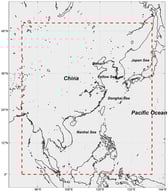
Current wind energy planning in the China Seas and adjacent waters generally focuses on wind speed or wind power density (WPD), yet lacks sufficient understanding of the long-term climatic evolution patterns and climatic driving mechanisms of effective wind speed occurrence (EWSO) and its correlation with climate oscillations. Based on the ERA5 10 m sea surface wind reanalysis data from the European Centre for Medium-Range Weather Forecasts (ECMWF) and multiple key climate index datasets from 1941 to 2020, this study systematically analyzed spatiotemporal distribution characteristics, long-term variation trends, and correlations with climate oscillations of EWSO in the China Seas and adjacent waters. The results indicated the following: (1) There are discrepancies between the distribution of EWSO and mean wind speed. (2) Over the past 80 years, EWSO across the study area has shown an overall significant increasing trend with pronounced regional disparities, among which the Yellow–Bohai Sea area has exhibited a significant decreasing trend. (3) The interannual variability of EWSO is regulated by climate oscillations such as ENSO. This study demonstrates that incorporating EWSO as an independent indicator separate from wind speed into the wind energy resource assessment system is crucial for identifying offshore wind power generation risks and more accurately evaluating the actual operational duration of wind farms in China’s offshore waters and adjacent sea areas. The correlation between EWSO and climate oscillations such as ENSO provides an important scientific basis for improving seasonal prediction models of wind energy resources.

6 February 2026

The China Seas and adjacent waters are outlined in red.

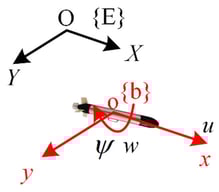
Pursuit–evasion involves coupled, antagonistic decision-making and is prone to local-optimal behaviors when solved online under nonlinear dynamics and constraints. This study investigates a dual-AUV pursuit–evasion problem in ocean-current environments by integrating game theory with model predictive control (MPC). We formulated a game-theoretic MPC scheme that optimizes pursuit and evasion actions over a finite receding horizon, producing Nash-like responses. To solve the resulting nonconvex and multi-modal optimization problems reliably, we developed an Enhanced Adaptive Quantum Particle Swarm Optimization (EA-QPSO) method that incorporates chaos-based initialization and adaptive diversity-aware exploration with stagnation-escape perturbations. EA-QPSO is benchmarked against representative solvers, including fmincon, Differential Evolution (DE), and the Marine Predator Algorithm (MPA). Extensive 2D and 3D simulations demonstrate that EA-QPSO mitigates local-optimum trapping and yields more effective closed-loop behaviors, achieving longer escaping trajectories and more persistent pursuit until capture under the game formulation. In 3D scenarios, EA-QPSO better preserves high-speed motion while coordinating agile angular-rate adjustments, outperforming competing methods that exhibit premature deceleration or degraded maneuvering. These results validate the proposed framework for computing reliable competitive strategies in constrained underwater pursuit–evasion games.

6 February 2026

Coordinate frames of the AUV.

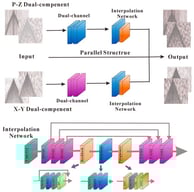
In modern marine seismic exploration, ocean bottom node (OBN) acquisition systems are increasingly valued for their flexibility in deep-water complex structural surveys. However, the high operational costs associated with OBN systems often lead to spatially sparse sampling, which adversely affects the fidelity of wavefield reconstruction. To overcome these limitations, hybrid deep learning frameworks that integrate physics-driven and data-driven approaches show significant potential for interpolating OBN four-component (4C) seismic data. The proposed frequency-domain residual-attention U-Net (ResAtt-Unet) architecture systematically exploits the inherent physical correlations among 4C data to improve interpolation performance. Specifically, an innovative dual-branch dual-channel network topology is designed to process OBN 4C data by grouping them into complementary P–Z (hydrophone–vertical geophone) and X–Y (horizontal geophone) pairs. A synchronized joint training strategy is employed to optimize parameters across both branches. Comprehensive evaluations demonstrate that the ResAtt-Unet achieves superior performance in component-wise interpolation, particularly in preserving signal fidelity and maintaining frequency-domain characteristics across all seismic components. Future work should focus on expanding the training dataset to include diverse geological scenarios and incorporating domain-specific physical constraints to improve model generalizability. These advancements will support robust seismic interpretation in challenging ocean-bottom environments characterized by complex velocity variations and irregular illumination.

6 February 2026

The workflow and structure for the ResAtt-Unet.

News & Conferences

Issues

Open for Submission

Editor's Choice

Get Alerted

Add your email address to receive forthcoming issues of this journal.

XFacebookLinkedIn
J. Mar. Sci. Eng. - ISSN 2077-1312