

- Article

Validated Approach for Flow Cytometric Quantification of Phospholipase C Zeta (PLCζ, PLCZ1) Protein Levels in Sperm
- Marie-Helene Godin Pagé,
- Debbie Montjean and
- Pierre Miron
- + 6 authors
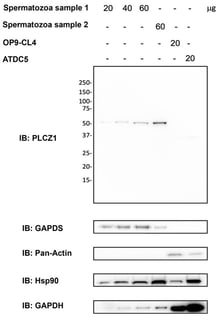
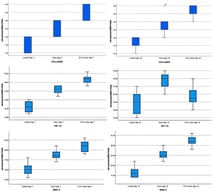
Background/Objectives: Phospholipase C zeta (PLCZ1; PLCζ) is a sperm-specific enzyme responsible for the Ca2+ oscillations required for oocyte activation, and altered PLCζ expression has been associated with fertilization failure in assisted reproductive technologies, particularly intracytoplasmic sperm injection (ICSI). This study aimed to develop and analytically validate a flow cytometry–based protocol for PLCζ quantification in human spermatozoa. Methods: The assay was established using normozoospermic samples and included validated positive and negative technical controls. Antibody specificity was confirmed by Western blot analysis. A defined gating strategy was used to assess linearity between fluorescence intensity and PLCζ expression. Analytical performance was evaluated for precision, reproducibility, stability, and sensitivity, including applicability to low sperm concentrations. Results: A linear relationship between fluorescence intensity and PLCζ expression was demonstrated. The assay showed high precision, reproducibility, and stability, with consistent results in samples stored up to 24 h at room temperature or up to one week post-fixation at 4 °C. Sensitivity testing confirmed suitability for low sperm concentrations. Conclusions: This work provides a standardized and analytically validated framework for PLCζ quantification using flow cytometry. Although the assay measures protein expression rather than functional competence or subcellular localization, it establishes a solid analytical basis for future studies to define clinically relevant PLCζ thresholds and assess its value as a biomarker of fertilization capacity.
9 February 2026