Skip Content
You are currently on the new version of our website. Access the old version .

Journal of Cardiovascular Development and Disease

Journal of Cardiovascular Development and Disease (JCDD) is an international, peer-reviewed, open access journal on cardiovascular medicine, published monthly online by MDPI.

Indexed in PubMed | Quartile Ranking JCR - Q2 (Cardiac and Cardiovascular Systems)

All Articles (2,407)

Introduction: The serum apelin level in patients with heart failure with reduced ejection fraction (HFrEF) and its relationship with ventricular tachycardia (VT) are not clearly known. This study aimed to investigate changes in serum apelin levels in patients with HFrEF and their relationship with VT. Method: This retrospective pilot study included 90 patients with 30 patients in each group: Group I: HFrEF with documented VT; Group II: HFrEF without VT; Group III: control group without HFrEF. In addition to routine parameters, apelin levels were measured. All parameters were compared between Group I–II–III. Parameters associated with VT were identified. Result: Apelin levels were found to be significantly lower in Group I–II than in Group III. Serum glucose, creatinine, and left atrial diameter were shown to be significantly higher in Group I–II than in Group III. HDL cholesterol and left ventricular ejection fraction (LVEF) levels were significantly lower in Group I–II compared with Group III. A positive and negative correlation was found between plasma apelin levels and LVEF and age, respectively. In logistic regression analysis, apelin levels and LVEF were found to independently determine VT (OR = 0.313, 95%CI: 0.124–0.788, p = 0.014 and OR = 0.912, 95%CI: 0.877–0.968, p < 0.001). In the ROC analysis, the cut-off value for apelin was determined to be 0.80 ng/mL, and it distinguished VT status in this sample with acceptable sensitivity and specificity. Discussion: According to the results of our study, apelin levels are significantly reduced in patients with HFrEF, and reduced apelin levels are associated with the presence of VT in these patients.

4 February 2026
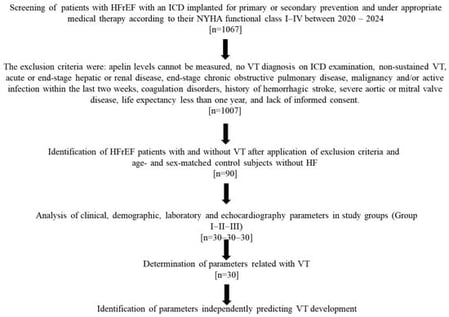
Flowchart of the study.

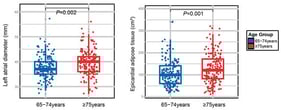
Background: Previous studies identified epicardial adipose tissue (EAT) as a metabolic risk factor for atrial remodeling. However, given the distinct physiological changes associated with aging, findings from the general population may not translate directly to older adults. This study aims to clarify the relationship between EAT and left atrial (LA) diameter in older adults specifically. Methods: This retrospective cross-sectional study was conducted among in an older adult cohort (aged ≥ 65 years) at Peking Union Medical College Hospital. The association between EAT and LA diameter was evaluated using multivariable linear regression, a generalized additive model, and restricted cubic spline (RCS) modeling. Results: Among 353 participants (median age 75 years), EAT was independently associated with LA diameter (β = 0.286, p < 0.001) after adjusting for confounders including age, BMI, and LDL-C. Notably, RCS analysis revealed a J-shaped relationship between EAT volume and LA dimensions. Specifically, when EAT exceeded 110.7 cm3, the LA diameter increased significantly by 0.22 mm per 10 cm3 increase in EAT (p = 0.004). Conclusions: EAT accumulation shows a non-linear association with left atrial remodeling in older adults, with an identifiable threshold at 110.7 cm3. EAT may be a valuable biomarker for cardiovascular risk stratification, suggesting that EAT burden monitoring could be beneficial in older populations.

4 February 2026

Comparison of left atrial (LA) diameter and epicardial adipose tissue across age groups. Boxplots illustrate the distribution of LA diameter and EAT in patients aged 65–74 years old versus those aged ≥ 75 years old. The horizontal line within each box represents the median, the box boundaries represent the 25th and 75th percentiles (interquartile range, IQR), and the whiskers extend to the most extreme data points within 1.5 times the IQR. p values were calculated using independent-samples t-test and Mann–Whitney U test and indicate a significant increase in both LA diameter and EAT in the older age group.
  • Systematic Review
  • Open Access

Cor Triatriatum Dexter: The Largest Comprehensive Review in the Field on 124 Worldwide Cases (1968–Now)

  • Pier Paolo Bassareo,
  • Erica Franco and
  • Marco Alfonso Perrone
  • + 5 authors

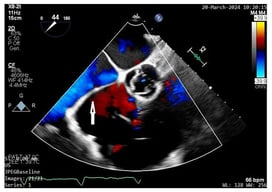
Background. Cor triatriatum dexter (CTD) is a rare congenital heart defect where a membrane divides the right atrium into two chambers, resulting from the incomplete regression of the right valve of the sinus venosus. Due to its rarity, only individual case reports and a limited number of case series have been published to date. This study constitutes the most extensive comprehensive review conducted in this area. Eight factors were evaluated: age at diagnosis, sex, clinical presentation, electrocardiographic findings, imaging (ultrasound, CT, or MRI), associated cardiac anomalies, and patient outcomes. Methods. The electronic databases PubMed and Scopus were searched from their inception until 30 October 2025. Only case reports and case series were considered for inclusion. Studies involving foetuses, autopsies, and animals were excluded. The collected data were primarily presented as percentages. Results. One hundred fourteen studies were found encompassing 124 patients. The mean age at diagnosis was 33.3 ± 9.4 years The most common clinical presentations were dyspnoea (44.3%) and cyanosis (29.5%). The most commonly encountered ECG changes were supraventricular tachycardia/atrial flutter/atrial fibrillation (33.3%) and right bundle branch block (22.6%). On chest X-ray, cardiomegaly was noted in 46.5%. CTD was suspected or diagnosed by echocardiography in 95.2% of cases. The diagnosis was confirmed by CT and/or MRI in 34.1% of cases. A concomitant congenital heart defect was found in 67.7%, especially in the form of all kinds of atrial septal defect (38.1%) and of right valvular and right ventricular involvement (20.1%). An outcome was reported in 97/124. Surgical correction was the treatment of choice in 51.6%. Since 1991, a percutaneous approach has been employed in selected cases (5.1%). Conservative management was the treatment of choice in 43.3%. The mortality rate was 8.2%. Discussion. The principal limitation of this systematic review lies in its reliance solely on case reports and small case series, reflecting the absence of large-scale studies on CTD. Nonetheless, it constitutes the most comprehensive analysis available to date.

3 February 2026

Transoeasophageal echocardiography displaying the cor triatriatum dexter membrane (white arrow) subdividing the right atrium into two chambers.

Mechanisms and Therapeutic Potential of Human Cardiomyocyte Proliferation

  • Richard D. McLane,
  • Abhay Cheruku and
  • Ravi Karra
  • + 1 author

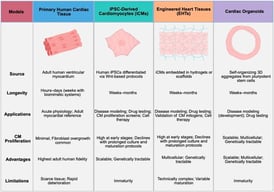
The limited capacity for cardiomyocyte proliferation in the adult human heart restricts its ability to recover from injury. Building on discoveries in regenerative model systems, such as zebrafish and neonatal mice, reactivation of a latent potential for cardiomyocyte proliferation is a strategy to promote therapeutic heart regeneration. Although cardiomyocyte proliferation remains modest even with the most effective mitogenic stimuli identified to date, evidence for a potential functional benefit in pre-clinical model systems has led to the initiation of several early-phase clinical programs. Here, we review insights from model organisms that inform the potential efficacy and limitations of therapeutic cardiomyocyte proliferation, systems to study human cardiomyocyte proliferation, and the natural history of cardiomyocyte proliferation in the human heart. We also examine the translational trajectory of selected discoveries, including therapeutic delivery modalities, and attendant safety concerns. Finally, we discuss critical challenges that will need to be addressed to enable successful clinical translation.

2 February 2026

Comparison of various human model systems to study CM proliferation. Created in BioRender. McLane, R. (2026) https://BioRender.com/megafdt (accessed on 28 January 2026).

News & Conferences

Issues

Open for Submission

Editor's Choice

Reprints of Collections

Minimal Access Cardiac Surgery
Reprint

Minimal Access Cardiac Surgery

State of the Art and Future Perspectives
Editors: Jason Ali
Advances in Cardiovascular Imaging
Reprint

Advances in Cardiovascular Imaging

An Exciting Future to Revolutionize the Diagnosis and Management of Cardiovascular Disease
Editors: Zhonghua Sun

Get Alerted

Add your email address to receive forthcoming issues of this journal.

XFacebookLinkedIn
J. Cardiovasc. Dev. Dis. - ISSN 2308-3425