Skip Content
You are currently on the new version of our website. Access the old version .

Informatics

Informatics is an international, peer-reviewed, open access journal on information and communication technologies, human–computer interaction, and social informatics, and is published monthly online by MDPI.

All Articles (784)

Using Process Mining Techniques to Enhance the Patient Journey in an Oncology Clinic

  • Ricardo S. Santos,
  • Jaqueline B. Braz and
  • José M. Parente de Oliveira
  • + 2 authors

The cancer care pathway comprises several stages encompassing diagnosis, treatment, and follow-up. Studies show that delays in treatment initiation are associated with worse outcomes, including increased mortality, reduced progression-free survival, and diminished post-treatment quality of life. To address this, patient navigation tools have emerged as a strategy to identify bottlenecks and mitigate delays. In this context, process mining offers a promising approach to discover, model, and optimize workflows using real data from hospital information systems. This paper presents a case study on the application of process mining to analyze care pathways in an oncology clinic. The focus was on identifying critical pathways and delays in the treatment journey to support the patient navigation program. Based on the insights gained, targeted improvement actions were proposed to enhance the patient journey. Using the PM2 methodology, event data were extracted and processed from the clinic’s information systems to model and analyze two key processes: (i) departmental workflows related to ambulatory care and (ii) longitudinal treatment pathways from initial evaluation to discharge. The results confirm the value of process mining for improving oncology patient journey and highlight its potential as a decision-support tool for healthcare administrators and clinical leaders.

5 February 2026

PM2 methodology overview. (Adapted from van Eck et al. [22]).

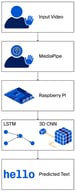
This paper presents a hybrid deep learning framework for real-time sign language recognition (SLR) tailored to Internet of Things (IoT)-enabled environments, enhancing accessibility for Deaf communities. The proposed system integrates a Long Short-Term Memory (LSTM) network for static gesture recognition and a 3D Convolutional Neural Network (3D CNN) for dynamic gesture recognition. Implemented on a Raspberry Pi device using MediaPipe for landmark extraction, the system supports low-latency, on-device inference suitable for resource-constrained edge computing. Experimental results demonstrate that the LSTM model achieves its highest stability and performance for static signs at 1000 training epochs, yielding an average F1-score of 0.938 and an accuracy of 86.67%. In contrast, at 2000 epochs, the model exhibits a catastrophic performance collapse (F1-score of 0.088) due to overfitting and weight instability, highlighting the necessity of careful training regulation. Despite this, the overall system achieves consistently high classification performance under controlled conditions. In contrast, the 3D CNN component maintains robust and consistent performance across all evaluated training phases (500–2000 epochs), achieving up to 99.6% accuracy on dynamic signs. When deployed on a Raspberry Pi platform, the system achieves real-time performance with a frame rate of 12–15 FPS and an average inference latency of approximately 65 ms per frame. The hybrid architecture effectively balances recognition accuracy with computational efficiency by routing static gestures to the LSTM and dynamic gestures to the 3D CNN. This work presents a detailed epoch-wise comparative analysis of model stability and computational feasibility, contributing a practical and scalable IoT-enabled solution for inclusive, real-time sign-to-text communication in intelligent environments.

5 February 2026

System architecture.

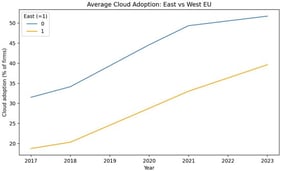
The deployment of large language models (LLMs) in commercial environments depends critically on the availability of robust digital infrastructure, scalable computing resources, and mature cloud architectures. This study examines how macro-level digital infrastructure, in particular cloud computing adoption, conditions the ability of the European retail sector to deploy and benefit from large language models (LLMs). Using a country-year panel of EU member states from 2017 to 2023, we estimate fixed-effects regressions to quantify the association between enterprise cloud use and retail trade volume growth, and implement an event-study design to explore dynamic responses around changes in cloud uptake. The results show that increases in cloud adoption are significantly associated with higher retail trade growth added and productivity, with especially strong effects in emerging Eastern European markets. We identify a digital threshold of around 20% of enterprises using cloud services, above which the marginal impact on retail performance becomes notably larger. These findings highlight cloud infrastructure as a key enabling condition for LLM-enabled retail applications and inform EU digital and industrial policy targeting regional digital disparities.

4 February 2026

The trend of cloud adoption rates in Western vs. Eastern EU from 2017 to 2023.

Virtualizing of Team Processes and Team Performance

  • Henrique Takashi Adati Tomomitsu and
  • Renato de Oliveira Moraes

This study explores the virtualizability of team processes and their implications for team performance during the COVID-19 pandemic. The main research question was: What is the effect of the ease of virtualizing team processes on the outcomes of teams that have shifted from in-person to virtual work? A survey method was employed, and the data were analyzed using Structural Equation Modeling (SEM). Building on the frameworks based on literature review, the study defined sensory, relational, and synchronization requirements, along with the mechanisms of reach and representation. Results show that sensory requirements negatively influence the virtualizability of team processes, while relational and synchronization requirements do not have a statistically significant impact. Although the mechanisms of reach and representation do not moderate the relationships between constructs, they do have a direct positive effect on susceptibility to virtualization. Contrary to initial expectations, virtualizability positively affects both tangible and emotional outcomes, indicating that cohesion and satisfaction can be maintained—or even improved—in virtual teams. These findings enhance the theoretical understanding of team processes and virtualizability and offer practical insights for managing distributed teams.

3 February 2026

Model of ease of virtualizing team processes. Source: Adapted from Overby [10].

News & Conferences

Issues

Open for Submission

Editor's Choice

Reprints of Collections

Advances in Construction and Project Management
Reprint

Advances in Construction and Project Management

Volume III: Industrialisation, Sustainability, Resilience and Health & Safety
Editors: Srinath Perera, Albert P. C. Chan, Dilanthi Amaratunga, Makarand Hastak, Patrizia Lombardi, Sepani Senaratne, Xiaohua Jin, Anil Sawhney
Advances in Construction and Project Management
Reprint

Advances in Construction and Project Management

Volume II: Construction and Digitalisation
Editors: Srinath Perera, Albert P. C. Chan, Dilanthi Amaratunga, Makarand Hastak, Patrizia Lombardi, Sepani Senaratne, Xiaohua Jin, Anil Sawhney

Get Alerted

Add your email address to receive forthcoming issues of this journal.

XFacebookLinkedIn
Informatics - ISSN 2227-9709