
Journal Menu
► ▼ Journal Menu-
- IJERPH Home
- Aims & Scope
- Editorial Board
- Reviewer Board
- Topical Advisory Panel
- Instructions for Authors
- Special Issues
- Topics
- Sections & Collections
- Article Processing Charge
- Indexing & Archiving
- Editor’s Choice Articles
- Most Cited & Viewed
- Journal Statistics
- Journal History
- Journal Awards
- Society Collaborations
- Editorial Office
Journal Browser
► ▼ Journal Browser-
arrow_forward_ios
Forthcoming issue
arrow_forward_ios Current issue - Vol. 21 (2024)
- Vol. 20 (2023)
- Vol. 19 (2022)
- Vol. 18 (2021)
- Vol. 17 (2020)
- Vol. 16 (2019)
- Vol. 15 (2018)
- Vol. 14 (2017)
- Vol. 13 (2016)
- Vol. 12 (2015)
- Vol. 11 (2014)
- Vol. 10 (2013)
- Vol. 9 (2012)
- Vol. 8 (2011)
- Vol. 7 (2010)
- Vol. 6 (2009)
- Vol. 5 (2008)
- Vol. 4 (2007)
- Vol. 3 (2006)
- Vol. 2 (2005)
- Vol. 1 (2004)
Need Help?
Announcements
31 May 2024
International Journal of Environmental Research and Public Health | World No Tobacco Day 2024—“Protecting Children from Tobacco Industry Interference”
World No Tobacco Day 2024 is observed annually on 31 May. The aim of this special day is to highlight the health and other risks associated with tobacco use and discourage the use of tobacco in any form. The theme of World No Tobacco Day 2024 is “Protecting Children from Tobacco Industry Interference”, focusing on the impact of tobacco on addictive behaviors among children and adolescents, calling and urging attention to the various risks posed by tobacco to adolescents.
To further discuss research related to World No Tobacco Day, the International Journal of Environmental Research and Public Health (IJERPH, ISSN: 1660-4601) has created a collection of open-access academic research on the topic of tobacco exposure, child and adolescent health risks and tobacco-related addictive behaviors. We hope to use this special day to share new scientific knowledge in the field of the impact of tobacco on health and quality of life.
Article Collection
1. “Association between E-Cigarette Advertising Exposure and Use of E-Cigarettes among a Cohort of U.S. Youth and Young Adults”
by Vuong V. Do, Amy L. Nyman, Yoonsang Kim, Sherry L. Emery, Scott R. Weaver and Jidong Huang
Int. J. Environ. Res. Public Health 2022, 19(19), 12640; https://doi.org/10.3390/ijerph191912640
Available online: https://www.mdpi.com/1660-4601/19/19/12640
2. “Harm Perception in Response to Pictorial Warning Labels Predict Higher Non-Smoking Intention among Korean Adolescents”
by Jun Hyun Hwang and Soon-Woo Park
Int. J. Environ. Res. Public Health 2021, 18(4), 1404; https://doi.org/10.3390/ijerph18041404
Available online: https://www.mdpi.com/1660-4601/18/4/1404
3. “Use of and Beliefs toward Novel Tobacco and Nicotine Products among Portuguese University Students: A Pandemic Survey”
by Marina Vaz, Pedro Cascais and Olga Lourenço
Int. J. Environ. Res. Public Health 2024, 21(4), 478; https://doi.org/10.3390/ijerph21040478
Available online: https://www.mdpi.com/1660-4601/21/4/478
4. “Assessing Smoking Habits, Attitudes, Knowledge, and Needs among University Students at the University of Milan, Italy”
by Laura Campo, Silvia Lumia and Silvia Fustinoni
Int. J. Environ. Res. Public Health 2022, 19(19), 12527; https://doi.org/10.3390/ijerph191912527
Available online: https://www.mdpi.com/1660-4601/19/19/12527
5. “Smoking Habits and Workplace Health Promotion among University Students in Southern Italy: A Cross-Sectional Pilot Investigation”
by Elpidio Maria Garzillo, Maria Grazia Lourdes Monaco, Anna Rita Corvino, Alessia Giardiello, Antonio Arnese, Francesco Napolitano, Gabriella Di Giuseppe and Monica Lamberti
Int. J. Environ. Res. Public Health 2022, 19(17), 10682; https://doi.org/10.3390/ijerph191710682
Available online: https://www.mdpi.com/1660-4601/19/17/10682
6. “Changes in the Patterns and Characteristics of Youth ENDS Use over Time”
by Stephen R. Shamblen, Melissa H. Abadi, Kirsten T. Thompson, Grisel García-Ramírez and Bonnie O. Richard
Int. J. Environ. Res. Public Health 2022, 19(13), 8120; https://doi.org/10.3390/ijerph19138120
Available online: https://www.mdpi.com/1660-4601/19/13/8120
7. “Pilot Ecological Momentary Assessment Study of Subjective and Contextual Factors Surrounding E-Cigarette and Combustible Tobacco Product Use among Young Adults”
by Deepa R. Camenga, Angela M. Haeny, Suchitra Krishnan-Sarin, Stephanie S. O’Malley and Krysten W. Bold
Int. J. Environ. Res. Public Health 2021, 18(21), 11005; https://doi.org/10.3390/ijerph182111005
Available online: https://www.mdpi.com/1660-4601/18/21/11005
8. “Tobacco Use Status and Temptation to Try E-Cigarettes among a Sample of Appalachian Youth”
by Delvon T. Mattingly, Jayesh Rai, Osayande Agbonlahor, Kandi L. Walker and Joy L. Hart
Int. J. Environ. Res. Public Health 2021, 18(13), 6755; https://doi.org/10.3390/ijerph18136755
Available online: https://www.mdpi.com/1660-4601/18/13/6755
Access more articles at the following link: https://www.mdpi.com/search?journal=ijerph.
Call for Papers
Special Issue: “Tobacco Use in Adolescents and Youth”
Guest Editor: Dr. Uma S. Nair
Submission deadline: 30 September 2024
Special Issue: “Tobacco Use, Vaping, Heating, Nicotine Dependence, Smoking Cessation, and Public Health”
Guest Editors: Dr. Klaas F. Franzen and Dr. Daniel Drömann
Submission deadline: 30 September 2024
Access more open Special Issues at the following link: https://www.mdpi.com/journal/ijerph/special_issues.
Closed Special Issues
Special Issue: “2nd Edition: Tobacco Smoke Exposure and Tobacco Product Use”
Special Issue: “Addressing Tobacco and Nicotine Use among Adolescent and Young Adult Populations”
23 May 2024
Transfer Service in MDPI
We are pleased to announce MDPI’s Transfer Service.
This service provides a convenient method of transferring your manuscript file, along with any reviewer comments, to another journal within our publishing portfolio.
We are committed to helping authors find the right home for their research, and we will provide authors with guidance and technical support through all stages of the transfer process. Authors will be able to choose to transfer in the following two situations:
1. Select alternative journals on submission.
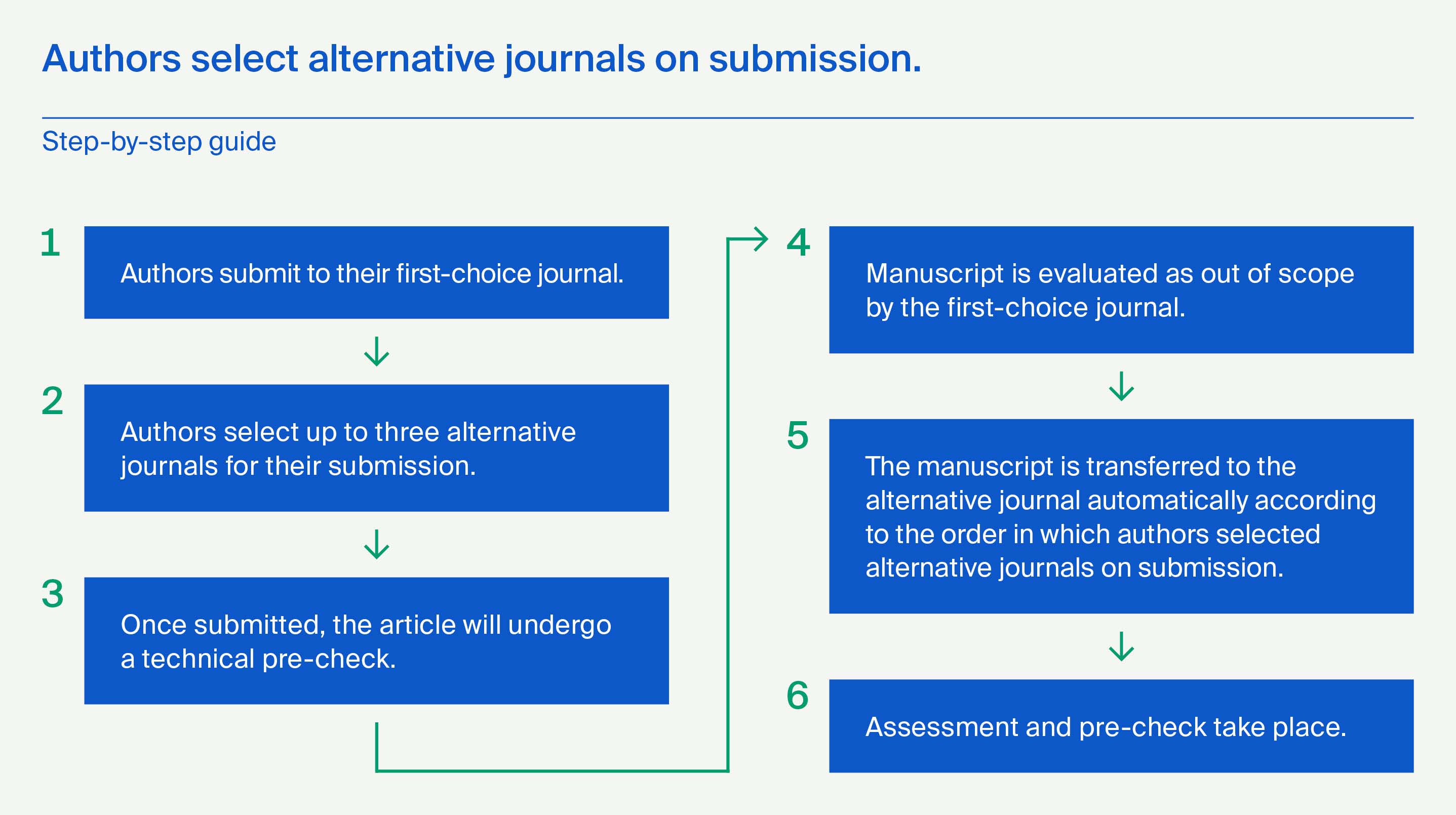
2. Authors are encouraged to transfer manuscripts to other MDPI journals.

More details about the Transfer Service can be found at the following link:
17 May 2024
Tu Youyou Award—Open for Nominations
In acknowledgment of the groundbreaking achievements of Professor Tu Youyou, the Nobel laureate credited with the discovery of artemisinin, MDPI is proud to announce the Tu Youyou Award. This award, inaugurated in 2016, seeks to honor scholars who excel in the fields of natural products chemistry and medicinal chemistry.
Prize:
- CHF 100,000 in total (If there is more than one winner, the prize will be divided equally amongst the winners);
- An award medal for each winner.
Who should be nominated?
- Scientists with outstanding achievements and contributions in the fields of natural products chemistry and medicinal chemistry.
Who can submit a nomination?
- Academic research institutes
- Universities
- Academic societies
Any personal nominations are not accepted.
How do I submit a nomination?
Candidates’ institutional affiliations need to submit their nominations for final candidates to the Tu Youyou Award Team directly by email after internal screening, and each institution can only nominate a maximum of two candidates for each edition of the Tu Youyou Award. Please note that the nominations cannot be modified once they are submitted and confirmed by the Tu Youyou Award Team.
Required nomination materials:
Nomination Form (Download)
Schedule:
Nomination deadline: 31 December 2024;
Winner announcement: 30 April 2025.
Contact:
Tu Youyou Award Team ([email protected])
More information can be found on the Tu Youyou Award official website. For any inquiries, do not hesitate to contact the Tu Youyou Award Team.
16 May 2024
MDPI Romania Author Training Academic Events in April
MDPI Romania sponsored four events over the month of April, contributing author training sessions to each event.
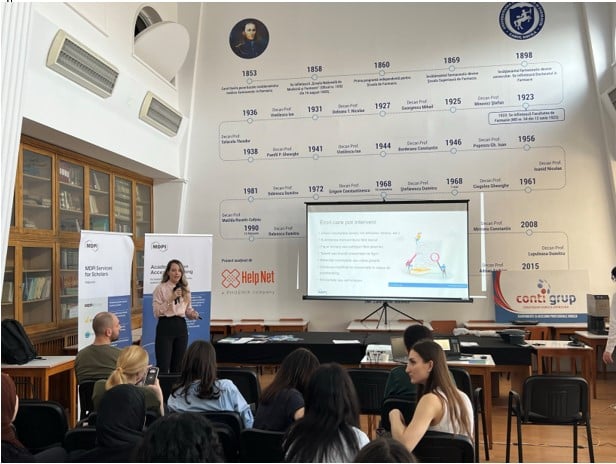
The NutriSciLabs 2024 conference was held at the Carol Davila University of Medicine and Pharmacy on 12 April 2024. Organized by the Association of Students from the Faculty of Pharmacy Studies, the conference aimed to enhance students’ academic writing and research skills, and bolster their confidence in participating in the academic world. Ioana Paunescu, journal relations specialist for MDPI Romania, led the training session. Paunescu first outlined MDPI’s history and core values, then explained academic writing techniques, ethics, and similarity percentages. The presentation covered the entire editorial process, highlighting the amount of attention paid to details throughout manuscript processing. Paunescu also discussed common errors that authors make while writing, and how to avoid such errors.
On 13 April 2024, the NextGEN 2.0 Student Conference took place at the Babes-Bolyai University of Cluj-Napoca. NextGen Healthcare organized this event with the university’s European Students’ Society to discuss European and international current affairs. MDPI Romania contributed an author training session called Steps of the Publication Process. Irina Codruta Zaharia, journal relations specialist, began the session with a general introduction of MDPI before diving into different article types, different layout formats, possible journals to submit to, the MDPI submission checklist, and the MDPI editorial process. By explaining the fundamentals of writing and publishing academic papers, Zaharia imparted valuable industry knowledge to the curious minds present. Participants were eager to engage with Zaharia in the subsequent Q&A session.
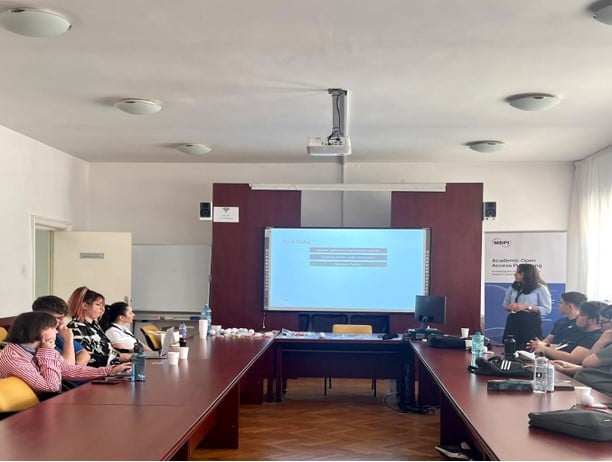
Celebrating its 20th anniversary this year, the International Conference “Students for Students” has long been a gathering place for undergraduate and postgraduate students of all nationalities to present their work and exchange ideas with each other. This year’s conference was held on 18 April 2024, with MDPI Romania contributing an author training session called The World of Open Access. Key speakers included Dr. Norbert Kiss from MDPI Romania and Prof. Dragos Horvath from Strasbourg University. Dr. Kiss discussed the history of open access, differences between open access publishing and traditional publishing, and implications for open access in the future. Attendees expressed keen interest in the subject, approaching Dr. Kiss with questions about academic publishing as well as his career trajectory.
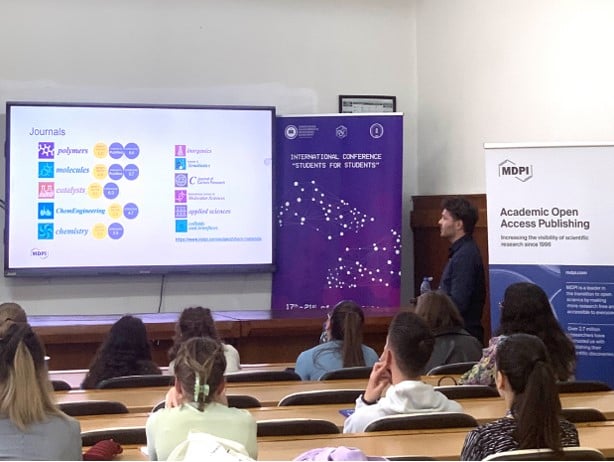
Most recently, on 26 April 2024, MDPI Romania sponsored the National Symposium of Students from Geology and Geophysics Faculties. The AAPG Students Chapter at the Babes-Bolyai University organized this event as an opportunity for geology students from all Romanian universities to present their work and confer with other researchers. Dr. Kiss gave his lecture The World of Open Access at this event as well.
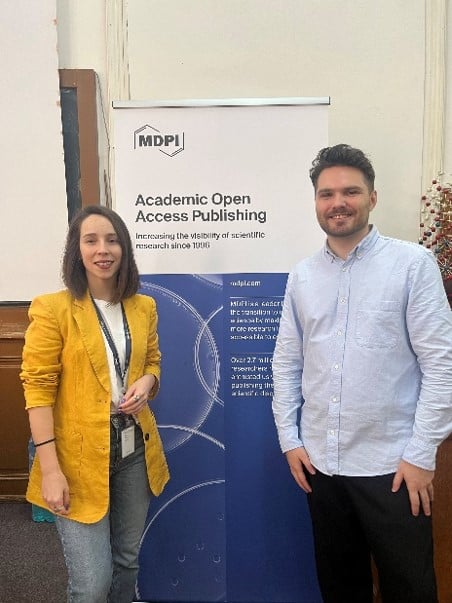
MDPI is thankful to all the participants, speakers, and organizers who attended these events. Through their enthusiasm and dedication, these events were great successes.
14 May 2024
Meet Us at the 33rd Annual Meeting of the European Society of Paediatric and Neonatal Intensive Care (ESPNIC 2024), 11–14 June 2024, Rome, Italy
Conference: 33rd Annual Meeting of the European Society of Paediatric and Neonatal Intensive Care (ESPNIC 2024)
Date: 11–14 June 2024
Location: Rome, Italy
The 33rd Annual Meeting of the European Society of Paediatric and Neonatal Intensive Care (ESPNIC 2024) offers cutting-edge scientific and educational content with many highly engaging sessions on pediatric and neonatal intensive care. The topics of this year’s congress include cardiovascular dynamics, cardiac ICU, and mechanical circulatory support; critical care nephrology and hepatology; ethics; health services research; administration; education; information technology, infection, systemic inflammation, and sepsis; metabolism, endocrinology, and nutrition; neuro critical care; nursing science; paediatric and neonatal intensive care nursing; patient quality and safety; pharmacology; respiratory failure; resuscitation and emergency medicine, etc.
MDPI will be attending the 33rd Annual Meeting of the European Society of Paediatric and Neonatal Intensive Care (ESPNIC 2024). We welcome researchers from different backgrounds to visit and share their latest ideas with us.
The following MDPI journals will be represented:
- Children;
- Medicina;
- Pediatric Reports;
- Healthcare;
- Nursing Reports;
- Diseases;
- IJERPH;
- Women;
- Antibiotics.
If you plan to attend this conference, please contact us online. Our delegates look forward to meeting you in person at booth #21 and answering any questions that you may have. For more information about the conference, please visit the following website: https://espnic2024.kenes.com/.
3 May 2024
International Journal of Environmental Research and Public Health 2022 Best Paper Award—Winner Announcement Postponed
Thank you for your continuous support. We regret to inform you that the deadline for announcing the winner of the IJERPH 2022 Best Paper Award has been postponed to 31 May 2024.
The Editorial Office would like to apologize for any inconvenience caused. If you have any questions, please do not hesitate to contact us.
We are pleased to announce the IJERPH 2022 Best Paper Award for research and review articles published in the International Journal of Environmental Research and Public Health (IJERPH, ISSN: 1660-4601) from 1 January to 31 December in 2022. One review and one research article will each receive an award. The papers will be selected after a thorough evaluation by the journal Award Committee, led by the Editor-in-Chief, Prof. Dr. Paul B. Tchounwou.
Eligibility for the Award:
- Papers published in the journal from 1 January to 31 December in 2022;
- Open to all career levels;
- Both regular and Special Issue submissions will be considered.
Selection Criteria:
The papers will be selected by the journal Award Committee according to the following criteria:
- Scientific merit and broad impact;
- Originality of the research objectives and/or the ideas presented;
- Creativity of the study design or uniqueness of the approaches and concepts;
- Clarity of presentation;
- Citations and downloads.
The Prize:
- One review award: CHF 500 and a chance to publish a paper free of charge in IJERPH in 2024 after peer review;
- One research article award: CHF 500 and a chance to publish a paper free of charge in IJERPH in 2024 after peer review.
Each winner will also receive a certificate.
The winners will be announced on the journal website at the end of May 2024.
IJERPH Editorial Office
2 May 2024
MDPI Insights: The CEO's Letter #11 – 2023 Annual Report, MDPI Awards, STM

Welcome to the MDPI Insights: The CEO's Letter.
In these monthly letters, I will showcase two key aspects of our work at MDPI: our commitment to empowering researchers and our determination to facilitating open scientific exchange.
Opening Thoughts
2023 Annual Report
This is an exciting time of year at MDPI, as we have just released our annual report 2023, recapping the past year and sharing the progress and changes that took place during it.

Stefan Tochev (CEO, MDPI)
Reflecting on 2023, I can't help but think of the changes that have occurred not only at MDPI but also within our industry as a whole. In light of this, I’m reminded that change is the only constant, and that for a publishing enterprise that has experienced rapid growth, adapting to change becomes not only a necessity but also a catalyst for sustained success.
Looking back on the significant ground we covered in 2023, I am pleased to report that the year was marked by a rise in paper submissions, along with a range of initiatives aimed at improving our internal processes and delivering top services to our scientists.
2023 Top-line MDPI Numbers
An important priority for 2023 was to strengthen our editorial policies. Despite a notable increase in the number of papers submitted from 603,000 to 655,000 (+8.6%), there was a decrease in the number of papers published from 303,000 to 285,000 (-5.9%), consistent with the overall trend in the scholarly publishing market. MDPI’s market share in gold open access articles published reached 17% in 2023 (according to Dimensions data).
2023 Open Access Numbers
For over two decades, MDPI has been at the forefront of reshaping the academic publishing landscape, with OA surpassing subscription-based publishing in 2020. This trajectory is deeply rooted in our history and reflects our unwavering commitment to, and vision for, an open future. This momentum continued in 2023, with 39% of the 4.16 million articles and reviews published as gold full-OA, 15% as gold hybrid-OA, 8% as bronze-OA, and 3% as green-OA, relative to 35% behind a paywall. In terms of gold OA (full or hybrid) articles and reviews published, MDPI leads the way in terms of total articles published in 2023.
MDPI is the trusted and preferred OA publisher for the scholarly community
However, in 2023, we saw a downward trend in publication numbers compared to 2022. This trend was also seen in total OA publications. While the number of submissions increased, the decline in MDPI publications can be attributed to several factors, such as improved scrutiny in our peer-review process, including the evaluation of content scope and higher rejection rates, and a post-pandemic decrease in research related to COVID-19 papers.
Download 2023 MDPI Annual Report.
Access 2023 Digital Report.
Impactful Research

Recognizing Scholars – MDPI Awards
MDPI is committed to empowering young researchers as they embark on their careers. In 2023, our journals hosted a total of 400 awards, receiving 8,839 applications and nominations. The evaluation committees selected 959 winners, with the total budget for these awards amounting to CHF 546,500.
For more information about MDPI awards, applications, and winners, please click here
The following awards recognize scholars and the impact of their research, including Young Investigator Awards, Best PhD Thesis Awards, and Travel Awards for junior researchers.
MDPI Awards – The following awards require an application or a nomination.
Young Investigator Award (CHF 1000–2000 for each winner)
This award acknowledges the achievements of young investigators in research areas relevant to the journal’s scope. Candidates must have received their PhD no more than 10 years prior to the award announcement date and must be nominated.
Best PhD Thesis Award (CHF 500–800 for each winner)
This award recognizes young scholars who have completed outstanding PhD theses in research areas relevant to the journal’s scope. It aims to encourage them to continue their excellent work and make further contributions to their field.
Travel Award (CHF 500–800 for each winner)
This award encourages junior scientists to present their latest research at academic conferences relevant to the journal’s scope, thereby increasing their impact.
Distinguished Scholars
Additionally, 220 awards were granted to the most distinguished authors and reviewers in our journals through Best Paper Awards and Outstanding Reviewer Awards. The following awards are selected by the editorial staff of the journal and do not require an application or a nomination. They exemplify the excellent contributions made by our authors, reviewers, and editors.
These awards exemplify the excellent contributions made by our authors, reviewers, and editors
Best Paper Award (CHF 200–500 for each winner)
This award is granted annually to highlight publications of high quality, scientific significance, and extensive influence.
Outstanding Reviewer Award (CHF 500 for partial winners)
This award is given annually to recognize reviewers who generously contribute their time to reviewing papers and demonstrate thoroughness, professionalism, and timeliness in their reviews.
MDPI also offers awards for specific topics in various research fields:
Carbon Neutrality Award (CHF 500–800 for each winner)
Sponsored by MDPI journal Sustainability, this award recognizes applicants who have made exceptional academic or societal contributions to carbon neutrality, either in general or in relation to a specific carbon-neutrality-related issue.
Intelligent Manufacturing Award (CHF 500–800 for each winner)
Administered by MDPI journal Machines, this award is presented to an individual who has made outstanding academic or societal contributions to the field of intelligent manufacturing.
Granted: World Sustainability Awards
Inside MDPI
MDPI Opens Office in Seoul, Korea and Appoints Claude Seo as Office Manager
As CEO of the world’s leading OA publisher, I am pleased to announce the official opening of our Korean branch office. With this addition, MDPI now operates 21 offices in 12 countries worldwide, improving on our position as a truly global publisher. This expansion represents more than just an increase in our physical footprint; it is a pivotal step in our ongoing commitment to making scientific knowledge more accessible across the globe.
MDPI now operates 21 offices in 12 countries worldwide, improving on our position as a truly global publisher

Claude Seo (MDPI Korea Office Manager, Seoul)
Claude Seo, who has over 15 years of experience in the academic publishing industry, has been appointed as the Office Manager of the Seoul office. The launch of our Seoul office allows us to better support the Korean scientific community and to further promote the publication of OA journals in the region.
Reflecting on his role, Claude shared that he is:
“Delighted to have been entrusted with this position within MDPI, the no. 1 scholarly OA publisher. As we establish our presence in Korea, we are dedicated to integrating ourselves into the local community and contributing to its vibrant culture. Our commitment goes beyond business growth; it is about creating a more informed and innovative society by embracing and promoting diversity within the scientific community.”
Sungkyunkwan University Joins MDPI’s Institutional Open Access Program
Additionally, I am pleased to share that Sungkyunkwan University has joined MDPI’s Institutional Open Access Program (IOAP). This program offers free access to MDP’s online submission system for institutions and provides APC discounts to affiliated authors. Thirteen major Korean universities, including Sungkyunkwan University, Kyunghee University, Chung-Ang University, and the Catholic University of Korea, have adopted IOAP in Korea.
Learn more about MDPI’s collaboration in Korea in my previous CEO Letter, in which I recap our visit to Seoul, South Korea.
Coming Together for Science
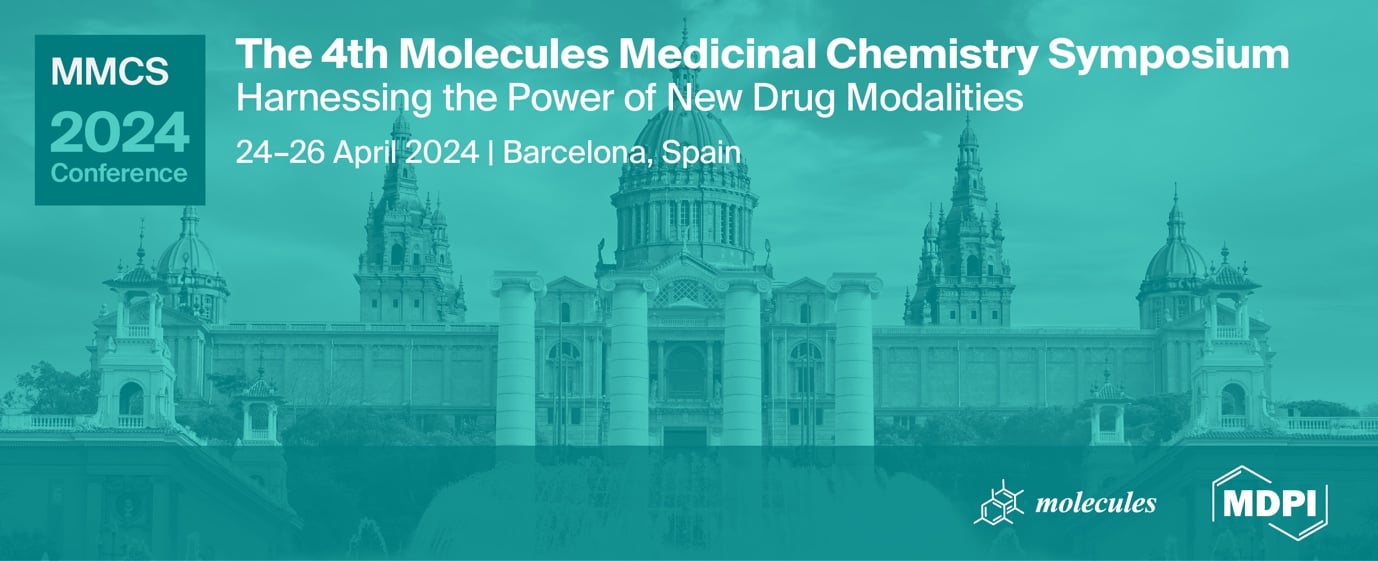
4th MMCS: Harnessing the Power of New Drug Modalities
Our conference team successfully managed the 4th Molecules Medicinal Chemistry Symposium, held from 24–26 April in Barcelona, Spain. It was chaired by Prof. Dr. Diego Muñoz-Torrero from the Institute of Biomedicine (IBUB), University of Barcelona, Spain, and Prof. Dr. Simona Collina from the University of Pavia, Italy. In total, there were 84 accepted abstracts and 102 conference attendees from 22 different countries.
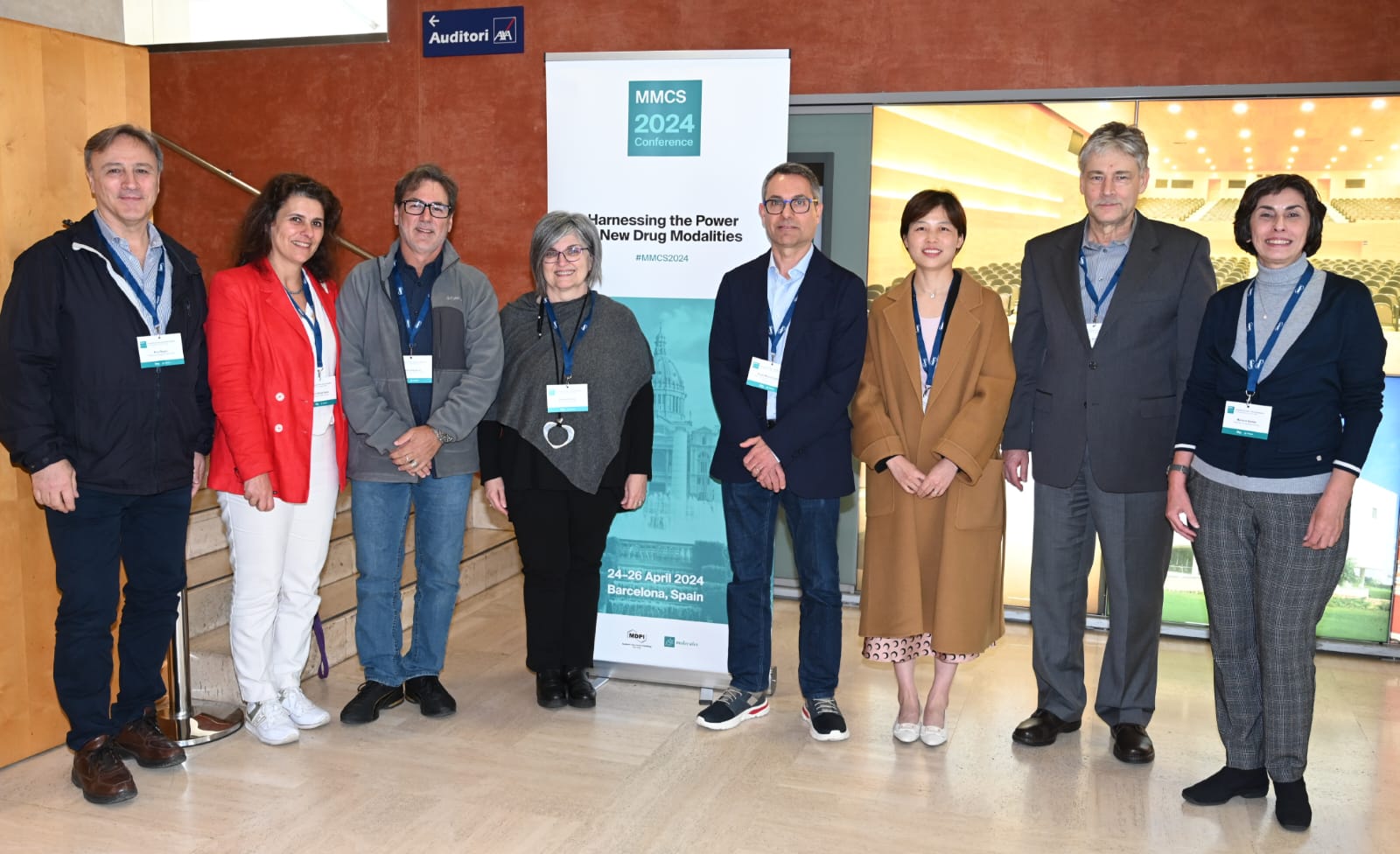
From left to right: Prof. Dr. Rino Ragno (Scientific Committee), Dr. Maria Emilia Sousa (Scientific Committee), Prof. Dr. Claudio Viegas Jr. (Scientific Committee), Prof. Dr. Simona Collina (Chair), Prof. Dr. Diego Muñoz-Torrero (Chair), Alvina Wu (Managing Editor, MDPI), Prof. Dr. Roman Dembinski (Scientific Committee), Prof. Dr. Mariana Spetea (Scientific Committee).
The event comprised 12 Invited Speakers, 35 Selected Talks, 10 Flash Poster Presentations, and 39 Posters. The overarching topic of the conference was the impact of the emergence of new drug modalities on drug discovery, with thematic sessions covering topics such as photoactivatable drugs, candidates targeting RNA and epigenetic targets, covalent modifiers, and the development of new anti-cancer agents, among other medicinal chemistry projects.
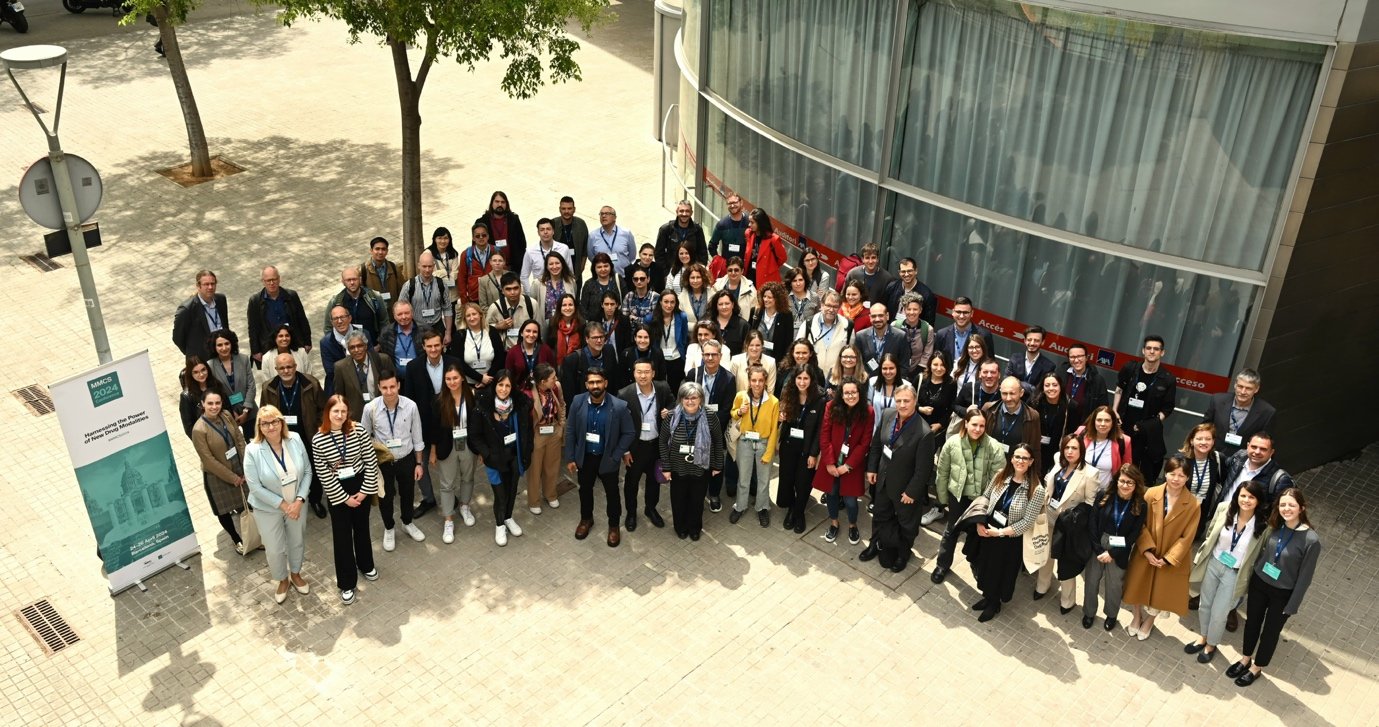
We are pleased to have received feedback from attendees highlighting the professional approach of the conference chairs and participants, the high quality of the talks, and the overall outstanding organization on the part of the MDPI conference team.
Thank you to the conference sponsors, Fluorochem and IBUB, and to our partnering societies, The Spanish Society for Biochemistry and Molecular Biology (SEBBM), and the Spanish Society of Medicinal Chemistry (SEQT).
Upcoming In-Person Event
28–31 May, 2024
Polymers 2024 – Polymers for a Safe and Sustainable Future
Location: Athens, Greece
Conference Chairs: Prof. Dr. Dimitrios Bikiaris, Prof. Dr. Konstantinos Triantafyllidis, Dr. Ioanna Deligkiozi
We look forward to welcoming experts Prof. Damià Barceló, Prof. Minna Hakkareinen, and Prof. Armando J. D. Silvestre to this event.
Find more upcoming MDPI events here.
Organize Your Event with MDPI’s Sciforum
Sciforum is MDPI’s platform dedicated to the organization of scientific events. In line with our mission to promote science, Sciforum supports scholars, societies, research networks, and universities at all stages of organizing in-person events, virtual events and webinars. Our platforms are efficient, user-friendly, and cost-effective. We handle all steps related to event management. Contact us for details.
Closing Thoughts
A Report from the Future – STM US Annual Conference 2024
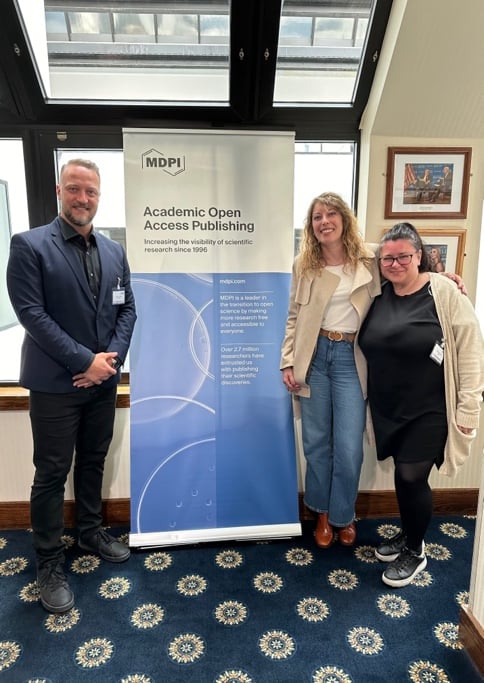
Stefan Tochev (CEO, MDPI), Dr. Giulia Stefenelli and Dr. Ioana Craciun from MDPI’s Scientific Office Board.
MDPI has for a long time been a sponsor of the STM Annual Conferences, held yearly in the US and Frankfurt, and is a trusted partner and supporter of the STM organization. While I have attended the Frankfurt conference for the past three years, this was my first time visiting the Washington, DC session, and I am glad I did.
Although it was a brief trip, I greatly appreciated the opportunity to attend in the company of my colleagues Dr. Giulia Stefenelli and Dr. Ioana Craciun from MDPI’s Scientific Office Board. They always help map some of the new industry trends against MDPI’s operational framework and guidelines. It’s a great group for kicking ideas back and forth on what we can apply at MDPI.
In my experience, STM never fails to deliver. It’s always a great conference for reconnecting with fellow publishers, industry friends, and vendors. As usual, STM this year curated a diverse range of speakers and panels, who proferred valuable knowledge and insights from outside our industry, delivering thought-provoking insights into our field. An example of this was the ‘Trust Panel’ session, which included Alan Schiffres (Managing Director, InfoLinx), who shared a number of the learnings about fraud and risk management from his 40 years in financial services, to help address some of the challenges we are currently facing in the area of publishing integrity.
Launch of STM Trends 2028 Panel
I particularly enjoyed the ‘Launch of STM Trends 2028 Panel’, which presented a report focused on the integration of humans and machines in scholarly publishing. The session highlighted themes such as AI, digitization, and the evolving research ecosystem. The report envisions a future where technology blurs the lines between human and machine involvement in research processes, with significant implications for trust, reputation, and equity. While this presents opportunities for connectivity and knowledge dissemination, it also poses challenges such as disinformation, fragmentation, and geopolitical tensions. We must rely on a wise combination of technology and human agency to navigate this complex landscape and will have to carefully examine its potential impacts on communication and scholarly publishing.
MDPI has joined the STM Integrity Hub. Click here to learn more.
While every presenter brought their own knowledge and personal touch, I was particularly pleased to encounter new speakers such as Heather Whitney (Research Assistant Professor, Radiology, University of Chicago) and Igor Grossmann (Professor of Psychology, University of Waterloo, Canada). Having studied Sociology at the University of Guelph, I have a soft spot for fellow social scientists from Canada, and I was very impressed by Igor’s presentation on ‘The Social Scientist: A View from the Future’ and his participation in the panel session ‘The Future Beyond the Article,’ which was one of my favourites from the conference, given the diversity of perspectives from the panel speakers.
Memorial Park in Washington, DC

On a personal note, this was my first-time visiting Washington, DC, and I’m glad we took an afternoon to visit the Memorial Park, with its incredible monuments to figures ranging from Martin Luther King, Jr. to Abraham Lincoln. The magnitude of the monuments is deeply impressive. I particularly appreciated the Thomas Jefferson memorial and the following quote, which I think speaks to the importance of change and adaptation. It’s something we can apply not only in our industry but also in our personal lives.
"I am not an advocate for frequent changes in laws and constitutions, but laws and institutions must go hand in hand with the progress of the human mind. As that becomes more developed, more enlightened, as new discoveries are made, new truths discovered and manners and opinions change, with the change of circumstances, institutions must advance also to keep pace with the times. We might as well require a man to wear still the coat which fitted him when a boy as a civilized society to remain ever under the regimen of their barbarous ancestors."
– Excerpted from a letter to Samuel Kercheval, July 12, 1816.
Chief Executive Officer
MDPI AG
30 April 2024
MDPI Opens Office in Seoul, Korea and Appoints Claude Seo as Office Manager

MDPI, the leading Open Access (OA) publisher, announced on Monday that it opened its Korean branch office on 29th April 2024. With this addition, MDPI now operates 21 offices in 12 countries worldwide. Claude Seo, with over 20 years of experience in the academic journal publishing industry, including Nature Publishing Group (NPG), has been appointed as the Office Manager of the Seoul office.
With the establishment of a Seoul office, MDPI aims to actively support Korea scientific communities to further promote the publication of OA journals in the region. As of the end of 2023, Korea ranked sixth worldwide in both submissions and publications of MDPI research papers. MDPI is the number one OA publisher in Korea.
Sungkyunkwan University Joins MDPI’s Institutional Open Access Program
In addition, MDPI announced that Sungkyunkwan University joined MDPI’s Institutional Open Access Program (IOAP). This program offers free access to MDPI online submission system for the institutions and APC discounts to affiliated authors. Thirteen major Korean universities, including Sungkyunkwan University, Kyung Hee University, Chung-Ang University and Catholic University of Korea, have adopted IOAP in Korea.
OA aims to break down barriers that have traditionally restricted access to science, ensuring that knowledge is available to all, regardless of financial situation or institutional affiliations. Authors, academia, and scientific communities are rapidly moving toward OA. MDPI has been at the forefront of reshaping the academic publishing landscape, with OA surpassing subscription-based publishing in 2020.
MDPI CEO Visits Seoul, Korea
In March, Stefan Tochev, Chief Executive Officer (CEO) of MDPI, visited Korea and met with various stakeholders including government agencies, research and academic institutions, universities. During his visit, Stefan highlighted that MDPI continues to pave the way for a world where science is accessible to all, supporting a global community of inclusive innovation and collaborative solutions.
Stefan expressed excitement about the new venture, stating, "Today marks a significant milestone for MDPI as we celebrate the opening of our new office in Seoul, Korea. This expansion is more than just an increase in our physical footprint, it is a pivotal step in our ongoing commitment to making scientific knowledge more accessible, participatory, and inclusive across the globe."
Claude Seo, reflecting on his new role, commented, "I am delighted to have been offered this position of trust within MDPI, the no. 1 scholarly OA publisher. As we establish our presence in Korea, we are dedicated to integrating into the local community and contributing to its vibrant culture. Our commitment goes beyond business growth; it is about creating a more informed and innovative society by embracing and promoting diversity within the scientific community.”
For further inquiries, please contact our Seoul office directly.
About MDPI
A pioneer in scholarly, open access publishing, MDPI has supported academic communities since 1996. MDPI is leading the transition to open science by making more research free and accessible to everyone. Over 3.3 million researchers have entrusted MDPI with publishing their scientific discoveries. MDPI’s editorial process is bolstered by a network of dedicated reviewers, a team of 6000 diligent, well-trained staff members, and an in-house article submission platform that was designed to ensure efficient processes within its 430 fully OA titles.
26 April 2024
International Journal of Environmental Research and Public Health Exceptional Reviewers List 2024
We are thrilled to share the updated Exceptional Reviewers List 2024. This program was designed to recognize and honor scholars who have consistently delivered exceptional review reports to our journal. Committed to fostering rigorous research and promoting knowledge exchange, the International Journal of Environmental Research and Public Health (IJERPH, ISSN: 1660-4601) recognizes the significant role that our reviewers play in maintaining the quality and integrity of the articles we publish. According to recent surveys conducted in 2023, 91% of our authors rate the peer review as good or excellent, thanks to our pool of excellent reviewers.
We would like to express our sincere appreciation to all of the reviewers who have generously volunteered their time and expertise in assisting IJERPH’s peer-review process. Their dedication and attention to detail in evaluating manuscripts, offering valuable feedback, and contributing to academic rigor are truly commendable.
The Exceptional Reviewers List was introduced in April 2024. In each quarter, we will be selecting a group of outstanding reviewers and introducing them here.
Q1
- Name: Dr. Jesús Molina-Mula
Affiliation: Departamento de Enfermería y Fisioterapia, University of Balearic Islands, Spain
Interests: bioethics; capnography and triage; decision making; Foucault; health services administration; interprofessional relations; professional–family relations; professional–patient relations; substance-related disorders
Interview: “Reviewing in IJERPH is a very enriching experience because it not only allows us to be fully up to date with the research that professionals carry out on a daily basis, their results and conclusions to improve our professional practice, but it also serves as a learning experience. research methodologies, improving quality and scientific rigor.”
- Name: Dr. Andrew W. Joyce
Affiliation: Centre for Social Impact, Swinburne University of Technology, Australia
Interests: health-promoting settings; social enterprise; disability and health promotion; evaluation in complex settings
Interview: “The review process is all very efficient and the quality of the articles has been strong.”
- Name: Dr. Yong Hwan Kim
Affiliation: Department of Physical Education, Gangneung-Wonju National University, Republic of Korea
Interests: metabolic syndrome; rehabilitation; physical activity; sports medicine; fitness
Interview: “I am honored by this opportunity. I experienced the latest research trends through IJERPH reviews. Moreover, I have become more confident in IJERPH's ethics and transparent system. I wish IJERPH continued development.”
- Name: Dr. Marius Baranauskas
Affiliation: Faculty of Biomedical Sciences, State Higher Education Institution Panevėžys College, Lithuania
Interests: applied health research, health technology, foods, public health, applied epidemiology, biomedicine, environmental health, athletes, nutrition, exercise physiology, mental health, nursing
- Name: Dr. Agnieszka Chwałczyńska
Affiliation: Department of Human Biology, Faculty of Physiotherapy, Wroclaw University of Health and Sport Sciences, Poland
Interests: BMI at different ages; body composition; physical activity and body composition; childhood physioprophylaxis; therapeutic programs for overweight and obese children, adults, seniors; healthy aging—tertiary prophylaxis
- Name: Dr. Karyn Heavner
Affiliation: Zuckerberg College of Health Sciences, University of Massachusetts Lowell, USA
Interests: epidemiology, infectious disease, biostatistics, public health education; substance use, mental health; environmental and occupational health
24 April 2024
International Journal of Environmental Research and Public Health Papers Cited in the News in Q1 of 2024
Throughout the first quarter of 2024, research published in the International Journal of Environmental Research and Public Health (IJERPH, ISSN: 1660-4601) was featured over 484 times in news articles published by reputable media sources, such as Forbes, The Washington Post, BBC News, Time Magazine and USA Today.
You can learn more about the cited articles below.
“Pushing staff to work 60 to 80 hours a week has historically been associated with workplace trauma and burnout.”
Forbes—“Finding The Balance Between Productivity And Employee Well-Being”
IJERPH—“The Effect of Long Working Hours and Overtime on Occupational Health: A Meta-Analysis of Evidence from 1998 to 2018”
Article link: https://www.mdpi.com/1660-4601/16/12/2102.
“Chlamydia and gonorrhea are two classic STDs that have been rising among older adults in recent years. There were more than 2000 cases of each among people 65 and older in 2017.”
The Washington Post—“The sexual health checkup older adults didn’t know they needed”
IJERPH—“Sexually Transmitted Infection Knowledge among Older Adults: Psychometrics and Test–Retest Reliability”
Article link: https://www.mdpi.com/1660-4601/17/7/2462.
“Those benefits can be profound – including improved cognitive function, blood pressure, mental health, physical activity and sleep. The benefits that we derive from nature, says Park, apply across all different age groups, genders, ethnicities and socioeconomic statuses.”
BBC News—“The hiking movement to reclaim green spaces”
IJERPH—“Associations between Nature Exposure and Health: A Review of the Evidence”
Article link: https://www.mdpi.com/1660-4601/18/9/4790.
“Research suggests that the lonelier and more socially isolated someone feels, the higher their levels of climate distress. Finding your people can help. Join local land-restoration efforts, get involved with community gardening, or stop by your favorite park’s clean-up day.”
Time Magazine—“7 Ways to Deal With Climate Despair”
IJERPH—“Climate Anxiety, Loneliness and Perceived Social Isolation”
Article link: https://www.mdpi.com/1660-4601/19/22/14991.
“Holding onto resentment and polarized views can have an adverse impact on health, while exercising forgiveness can enhance well-being.”
The Washington Post—“Your toughest mental health goal? Being kinder to yourself.”
IJERPH—“Forgive, Let Go, and Stay Well! The Relationship between Forgiveness and Physical and Mental Health in Women and Men: The Mediating Role of Self-Consciousness”
Article link: https://www.mdpi.com/1660-4601/20/13/6229.
“In the 20 years since then, many studies have documented how nurses, doctors and other healthcare professionals are not exempt from implicit biases prevalent in America, said Adrienne Moetanalo, former program coordinator at Ohio State University’s Kirwan Institute for the Study of Race and Ethnicity.”
USA Today—“DEI attacks pose threats to medical training, care”
IJERPH—“Unconscious Bias among Health Professionals: A Scoping Review”
Article link: https://www.mdpi.com/1660-4601/20/16/6569.
22 April 2024
Meet Us at the Annual Meeting of American Psychological Association 2024 (APA 2024), 8–10 August 2024, Seattle, WA, USA

Conference: Annual Meeting of American Psychological Association 2024 (APA 2024)
Organization: American Psychological Association
Date: 8–10 August 2024
Place: Seattle Convention Center, Arch at 705 Pike, 705 Pike St., Seattle, WA, USA
Booth: #418
MDPI journals will be attending APA 2024 as an exhibitor. This meeting will be held in Seattle, WA, USA, from 8 to 10 August 2024.
APA is the leading scientific and professional organization representing psychology in the USA, with more than 157,000 researchers, educators, clinicians, consultants, and students as its members. Immerse yourself in the world of psychology professionals at the APA 2024. This is your prime opportunity for in-person engagement with a diverse mix of practitioners, researchers, academicians, and students in this field.
The following MDPI journals will be represented:
- Behavioral Sciences;
- J. Intell.;
- Education Sciences;
- EJIHPE;
- Encyclopedia;
- Healthcare;
- IJERPH;
- Psychology International;
- Social Sciences;
- Youth;
- Challenges;
- Disabilities;
- Psychiatry International;
- Sexes;
- Tourism and Hospitality;
- Children.
If you are attending this conference, please feel free to start a conversation with us. Our delegates look forward to meeting you in person and answering any questions you may have. For more information about the conference, please visit the following website: https://convention.apa.org.
2 April 2024
MDPI Insights: The CEO's Letter #10 - South Korea, IWD, U2A, Japan
Welcome to the MDPI Insights: The CEO's Letter.
In these monthly letters, I will showcase two key aspects of our work at MDPI: our commitment to empowering researchers and our determination to facilitating open scientific exchange.
Opening Thoughts

Left to right: Dr. Jisuk Kang (Scientific Officer, MDPI), Stefan Tochev (CEO, MDPI), and Dr. Giulia Stefenelli (Chair of Scientific Office Board, MDPI), during media meetings at Prain Agency office in Seoul, South Korea.
Visit to Seoul, South Korea
During my recent visit to South Korea, I had the privilege of meeting various stakeholders, including representatives of government, research institutions, and academia, to understand their needs and communicate MDPI’s commitment to accessible science. Accompanied by my colleagues Dr. Giulia Stefenelli and Dr. Jisuk Kang, I engaged with the Korean scientific community, which is increasingly embracing open access (OA).
As the leading OA publisher in South Korea, MDPI is trusted by local authors and in 2023 enjoyed an approximately 30% share of the OA market. South Korea ranks sixth globally for MDPI in terms of research papers submitted and published.
MDPI and South Korea by Numbers
As at 30 March, over 76,000 MDPI articles have been authored by individuals affiliated with Korean institutions. We have over 1,800 active editorial board members (EBMs) from South Korea, with more than 880 EBMs having an H-index between 26 and 50, including 10 serving as Chief Editors.
“South Korea is the sixth-largest contributor to our total publications”
Over the past five years (2019–2023), nearly 120,000 authors affiliated with South Korean institutes have published with MDPI. Specifically in 2023, we received approximately 25,000 submissions from South Korean authors, publishing close to 13,000 articles, resulting in a rejection rate of 47.4%, which is not far below MDPI’s overall rejection rate of 56.4% in 2023.
Institutional Partnerships with South Korea
I am pleased to share that MDPI has more than 825 institutional partnerships worldwide, with 12 in South Korea, including Kyunghee University, Chung-Ang University, and Inha University, among others.
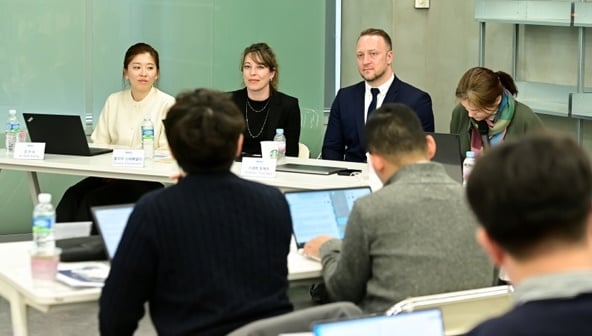
Left to right: Dr. Jisuk Kang (Scientific Officer, MDPI), Dr. Giulia Stefenelli (Chair of Scientific Office Board, MDPI), and Stefan Tochev (CEO, MDPI) fielding media questions at Prain PR Agency office in Seoul, South Korea.
Over the past three years (2021–2023), we have had some of the most prestigious academic universities ranked among the top 10 Korean institutions publishing with MDPI. Seoul National University had the highest number of publications with MDPI during those three years, publishing nearly 6,000 papers. Universities such as Korea University and Yonsei University also rank among the top 10 Korean institutions publishing with MDPI.
MDPI Hosts Seminar for Academia and Media
As the world’s leading OA publisher, MDPI is actively democratizing science. This is reflected in the seminars we hosted on 21 March to address questions about our editorial processes and ethical standards. The visit garnered media coverage, reflecting our mission to providing high-quality services and fostering open dialogue in the community.
“MDPI is actively democratizing science”
MDPI in the News

Stefan Tochev (CEO, MDPI) leading a seminar on OA and MDPI at Prain PR Agency office in Seoul, South Korea.
Media coverage generated by our visit to Seoul included the following stories:
“Open access is an unstoppable trend…it will lead the development of the knowledge ecosystem.”
I greatly appreciate the contributions of everyone who took the time to meet with us, share their stories, and hold us accountable for continuing to provide high-quality publishing services while identifying areas for improvement. I am also excited to announce that we have opened an MDPI office in Seoul and will release a press release on MDPI.com, with details, by the end April 2024. The purpose of the office is to establish a local presence to connect with and support the South Korean academic community through institutional partnerships, conferences, author workshops, stakeholder communications, and more.
Impactful Research

Featured Articles on Women’s Leadership and Healthcare
In celebration of International Women’s Day (8 March 2024), MDPI curated a collection of research articles on various topics, including women’s leadership, reproductive health, preventive healthcare, and a selection of articles from our journal Women.
Women’s Leadership
- Women Entrepreneurship and Sustainable Development: Bibliometric Analysis and Emerging Research Trends
Sustainability 2022, 14, 9160. https://doi.org/10.3390/su14159160 - Refugee Women Business Mentors: New Evidence for Women’s Empowerment
Sustainability 2022, 14, 9154. https://doi.org/10.3390/su14159154 - Women and Leadership in Higher Education: A Systematic Review
Soc. Sci. 2023, 12, 555. https://doi.org/10.3390/socsci12100555 - Understanding Needs and Potentials for Gender-Balanced Empowerment and Leadership in Climate Change Adaptation and Mitigation in Africa
Sustainability 2022, 14, 9410. https://doi.org/10.3390/su14159410 - Challenges Women Experience in Leadership Careers: An Integrative Review
Merits 2023, 3, 366-389. https://doi.org/10.3390/merits3020021
Women’s Reproductive Health
- Recreational Female Athletes’ Understanding of and Perceived Impact of the Menstrual Cycle on Physical Performance, Mood, and Sleeping Behaviour
Women 2023, 3, 445-456. https://doi.org/10.3390/women3030034 - Difficulties in Adaptation of the Mother and Newborn via Cesarean Section versus Natural Birth—A Narrative Review
Life 2023, 13, 300. https://doi.org/10.3390/life13020300 - The Main Theories on the Pathogenesis of Endometriosis
Int. J. Mol. Sci. 2023, 24, 4254. https://doi.org/10.3390/ijms24054254
Women’s Preventive Healthcare
- Insulin Metabolism in Polycystic Ovary Syndrome: Secretion, Signaling, and Clearance
Int. J. Mol. Sci. 2023, 24, 3140. https://doi.org/10.3390/ijms24043140 - Assessing Barriers Encountered by Women in Cervical Cancer Screening and Follow-Up Care in Urban Bolivia, Cochabamba
Healthcare 2022, 10, 1604. https://doi.org/10.3390/healthcare10091604 - Updates on HPV Vaccination
Diagnostics 2023, 13, 243. https://doi.org/10.3390/diagnostics13020243
Featured Articles in MDPI Journal Women
Below are a few articles from Women, our journal focused on women’s health, the social determinants of health, and the healthcare system that serves women. The aim of Women is to encourage academics to publish their experimental and theoretical results in detail, to aid reproducibility, and in an engaging style, to aid comprehensibility.
- Premenstrual Syndrome and Exercise: A Narrative Review
Women 2023, 3, 348-364. https://doi.org/10.3390/women3020026 - Increasing Awareness of the Human Papillomavirus (HPV) Vaccine for Women 18–45 Years of Age
Women 2023, 3, 365-373. https://doi.org/10.3390/women3030027 - Addressing Women’s Needs with Human Immunodeficiency Virus (HIV) and Enhancing the Visibility of Pharmacists in the Public Health Arena
Women 2022, 2, 346-352. https://doi.org/10.3390/women2040032
Inside MDPI

Championing Women’s Healthcare and Access to Healthcare Information
MDPI colleagues from our offices joined in celebrating #IWD2024. In doing so, we emphasized key missions that encompass:
- Empowering women to assume leadership and decision-making roles in both business and science.
- Helping women and girls make informed decisions about their health.
- Recruiting and developing female talent and fostering inclusive workplace environments.
“We are thrilled to recognize the accomplishments of women scientists”
I am proud to see our colleagues enthusiastically supporting the International Women’s Day call to ‘Inspire Inclusion!’ The heart-hands in the collage below symbolize our appreciation of the achievements of women researchers and the recognition of the trailblazers who have courageously made a mark on societies past and present.
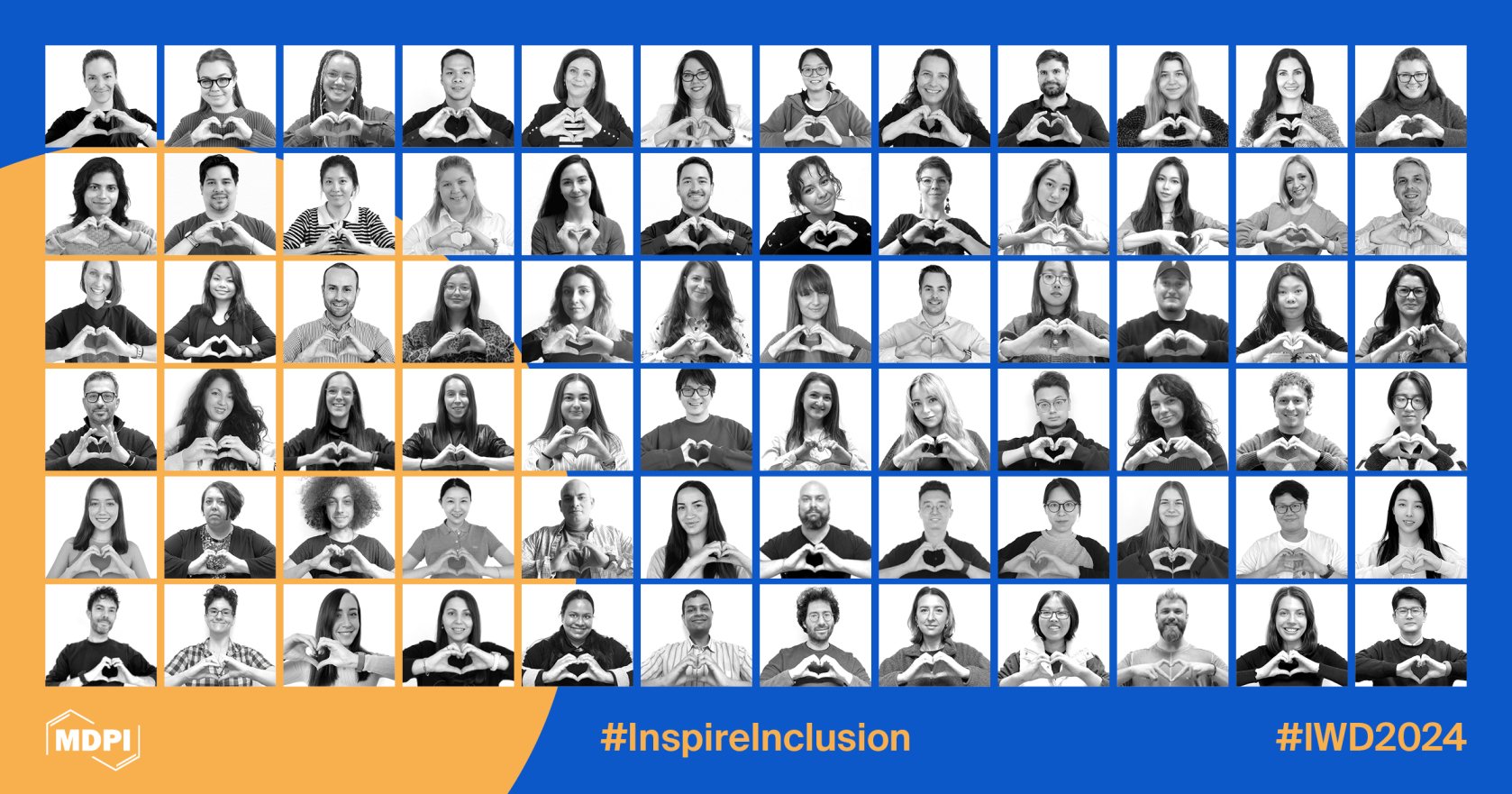
We are thrilled to recognize the accomplishments of women scientists through our many MDPI awards and by highlighting success stories. As inspirational figures, female scientists are paving the way for the next generation of women aspiring to pursue careers in engineering, life sciences, computing, and various other STEM fields.
“I consider myself lucky because I work with incredibly talented women who inspire me every day.”
– Dr. Alessandra Pasut, Winner of MDPI's ‘Biology 2023 Young Investigator Award’
“It’s really important to find a supportive and enabling environment in which to do your science; it would have a big impact on you as a person and on your scientific outputs.”
– Dr. Rhea Longley, Winner of the ‘Pathogens 2023 Young Investigator Award’
Open-access publishing, in particular, allows early-career women researchers to share their work more widely, potentially attracting mentorship opportunities and collaborations. This support is crucial for career development and advancement.
Coming Together for Science

MDPI Joins United2Act in Collective Fight to Stop Paper Mills
In my February 2024 CEO Letter, I highlighted some of our recent initiatives aimed at bolstering our commitment to research integrity, including joining the STM Integrity Hub and expanding our Research Integrity and Publication Ethics team (RIPE). Continuing our efforts in coming together for science, I am pleased to share our participation in the United2Act initiative.
The text below is taken from our official announcement:
United2Act represents an international group of stakeholders in the publishing industry committed to addressing the collective challenge posed to research integrity by paper mills.
Scientists and academic publishers have increasingly noted the alarming proliferation of paper mills, recognized as fraudulent entities seeking to manipulate the publication process for financial profit. These entities engage in fraudulent practices such as falsifying or fabricating data, selling co-authorship of fake papers, manipulating peer review, and including inappropriate citations. These actions pose a significant threat to the integrity of the scholarly record, prompting widespread concern among those involved in the academic community.
MDPI has been actively contributing to combat the undermining of the scientific record. Our editors employ a set of tools to detect potential ethical breaches within a manuscript and to tackle the issue of fake papers.
United2Act’s consensus statement is the outcome of a virtual summit held in May 2023. It involved the participation of research bodies, publishers, researchers/sleuths, universities, and publishing infrastructure from 15 countries and resulted in a Consensus Statement outlining five key areas of action for all stakeholders:
- Education and awareness
- Improve post-publication corrections
- Facilitate and organise research on paper mills
- Enable the development of trust markers
- Facilitate dialogue between stakeholders
MDPI is committed to promoting transparency and integrity in scholarly publishing and is continuing to work closely with the scientific community toward this goal.
Closing Thoughts
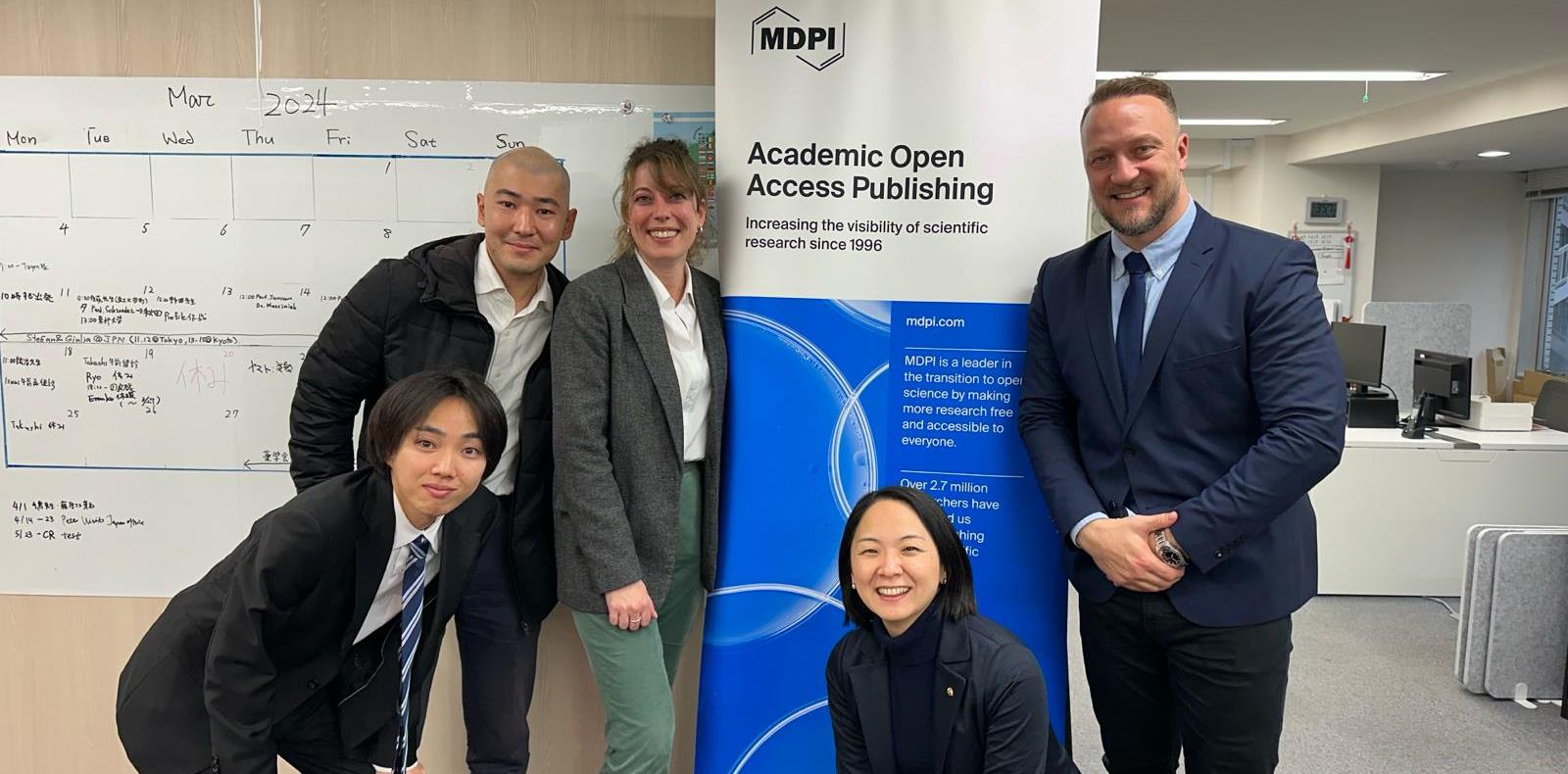
Left to right: Ryo Hirayama (Marketing Specialist, MDPI), Takashi Sasabe (Marketing Specialist, MDPI), Dr. Giulia Stefenelli (Chair of Scientific Office Board, MDPI), Dr. Izumi Yamamoto (Marketing Manager, MDPI), and Stefan Tochev (CEO, MDPI), at MDPI’s office in Tokyo, Japan.
Visit to Tokyo and Kyoto, Japan
In March, I had the opportunity to visit our Tokyo office and engage with stakeholders in Tokyo and Kyoto. During the visit, I also recorded a video message to welcome Japanese scholars working with MDPI and to highlight our operations in Japan.
We held meetings with Editors-in-Chief, librarians, scholars, and external consultants to gather feedback on our efforts to enhance our reputation and explore additional steps we can take in that direction. Japan's rich cultural heritage, characterized by tradition, respect, and formality, provided valuable insights into meeting the publishing needs specific to Japan.
Japan’s Open Access statistics
Over the years, we have seen a shift from subscription-only to gold OA publishing in Japan, despite the lack of an official mandate. Here are some statistics:
- 2012: 68% of articles were subscription-only, 6% were green Open Access, and 8% were gold Open Access.
- 2016: 55% of articles were subscription-only, 6% were green Open Access, and 20% were gold Open Access.
- 2022: 43% of articles were subscription-only, 7% were green Open Access, and 39% were gold Open Access.
To learn more about the history of OA in Japan as well as about future trends, please read this blog post.
“Japan is the ninth-largest contributor to our total publications”
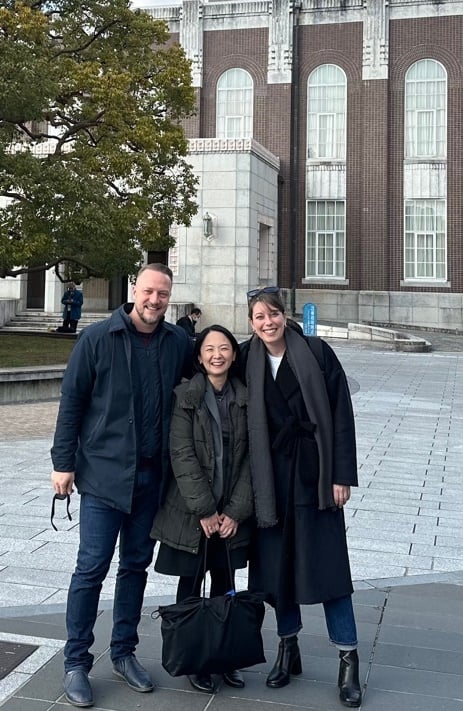
Left to right: Stefan Tochev (CEO, MDPI), Dr. Izumi Yamamoto (Marketing Manager, MDPI), and Dr. Giulia Stefenelli (Chair of Scientific Office Board, MDPI) visiting Kyoto University in Kyoto, Japan.
MDPI and Japan by Numbers
As at 1 April, over 50,000 MDPI articles have been authored by scholars affiliated with Japanese institutions, making the country the ninth-largest contributor to our total publications. Over the past three years (2020–2023), nearly 90,000 authors affiliated with Japanese institutes have published with MDPI, and we have collaborated with over 4,600 Guest Editors from Japan.
In 2023, we published over 8,200 papers from authors associated with Japanese institutions. MDPI collaborates with 41 institutional partnerships in Japan, including the University of Tokyo, Hokkaido University, and Nagoya University. We have over 2,100 active EBMs from Japan, more than 1,050 EBMs having an H-index between 26 and 50, including 13 serving as Editors-in-Chief.
General Feedback – a side note
A general takeaway from our discussions with stakeholders from around the world is that negative perceptions of MDPI often stem from misinformation, misconceptions, or misunderstandings about MDPI and our practices. While we acknowledge our mistakes and work diligently to address them, maintaining a strong editorial procedure and robust peer-review process, I find that educating stakeholders about our how we do what we do and our ongoing improvements tends to help shift opinions.
That said, we recognize the importance of addressing individual concerns. We take feedback seriously and are continuously working to get better while not compromising the core principles that millions of authors appreciate about MDPI.
Chief Executive Officer
MDPI AG
1 April 2024
Meet Us at the American Thoracic Society International Conference 2024, 17–22 May 2024, San Diego, USA
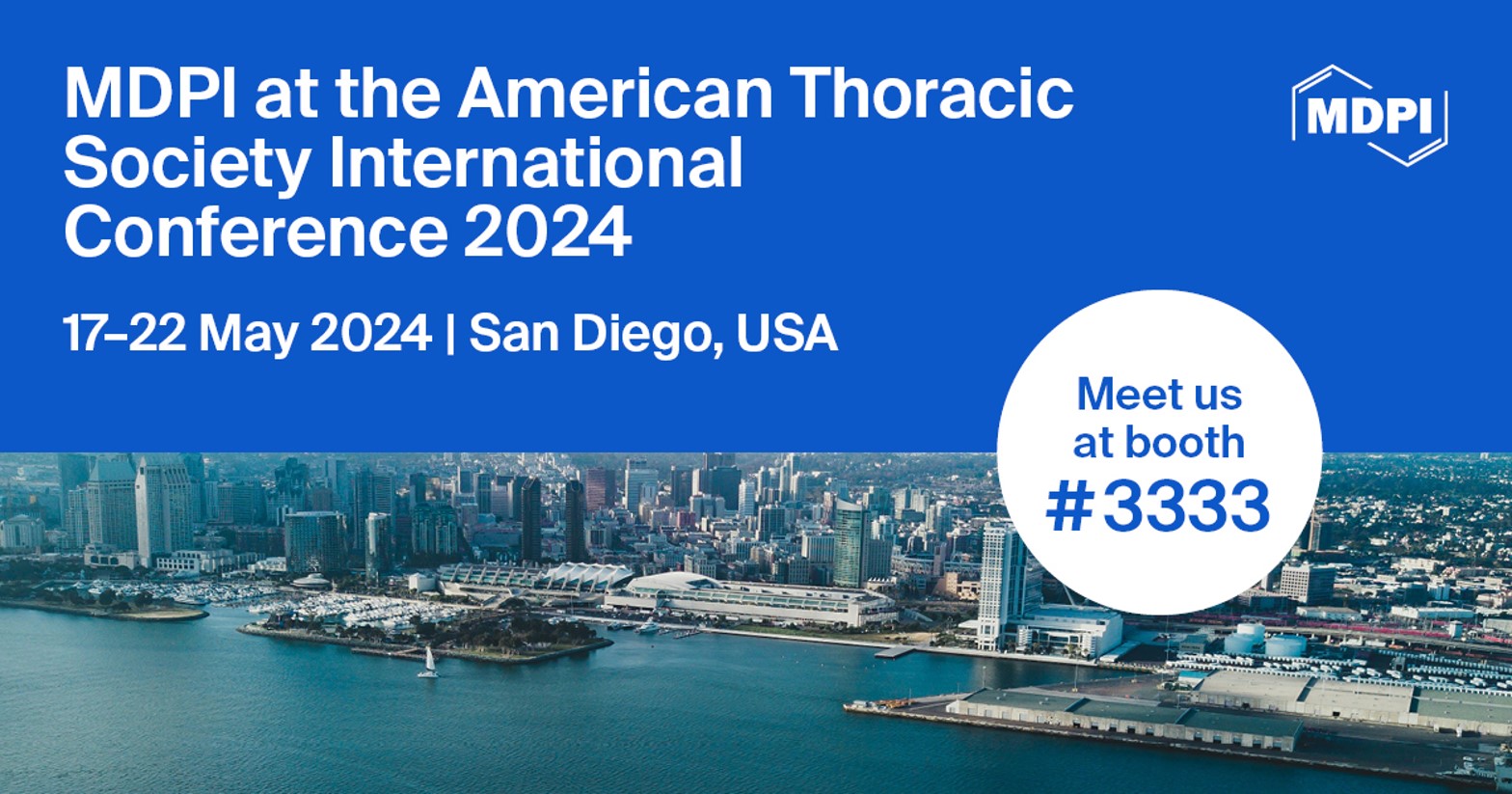
MDPI will be attending the American Thoracic Society International Conference 2024, which will be held on from 17 to 22 May 2024 in San Diego, USA.
The ATS International Conference brings together pulmonary, critical care, and sleep professionals at all career stages, fostering collaboration and knowledge exchange. With nearly 14,000 attendees annually, the event serves as a platform for the latest research, global networking, and interdisciplinary discussions. Healthcare professionals from various fields, including nurses, therapists, and hospitalists, converge to share insights and advancements in pulmonary health, critical care, and sleep disorders. Furthermore, the conference's global reach is highlighted by 40 percent of participants representing healthcare facilities from around the world.
The following MDPI journals will be represented at the conference:
- Children;
- Medicina;
- Journal of Clinical Medicine;
- International Journal of Environmental Research and Public Health;
- Tomography;
- European Journal of Investigation in Health, Psychology and Education.
If you are considering attending this conference, we warmly welcome you to visit our booth and interact with our representatives. We are eager to meet you in person and assist you with any queries you may have. For more information about the conference, please visit the official website at https://conference.thoracic.org/.
28 March 2024
International Journal of Environmental Research and Public Health | World Sleep Day—“Sleep Equity for Global Health”
World Sleep Day is observed annually on the Friday before the northern hemisphere vernal equinox. It aims to promote the benefits of good and healthy sleep and to draw society's attention to the burden of sleep problems and to strengthen the prevention and management of sleep disorders. The theme of World Sleep Day 2024 is “Sleep Equity for Global Health”, focusing on measurable differences in sleep health among different populations around the world, reducing additional burdens and providing opportunities to eliminate health inequalities.
To further discuss research related to World Sleep Day, the International Journal of Environmental Research and Public Health (IJERPH, ISSN: 1660-4601) has collected open access academic research on the topic of sleep quality, health conditions and health-related quality of life. We want to use this special day to share new scientific knowledge in the field of sleep health disparities and to raise awareness of sleep health.
Article Collection:
1. “Sleep Problems among Disaster Victims: A Long-Term Survey on the Life Changes of Disaster Victims in Korea”
by Yujeong Kim and Haeyoung Lee
Int. J. Environ. Res. Public Health 2021, 18(6), 3294; https://doi.org/10.3390/ijerph18063294
Available online: https://www.mdpi.com/1660-4601/18/6/3294
2. “Accept Anxiety to Improve Sleep: The Impact of the COVID-19 Lockdown on the Relationships between Mindfulness, Distress, and Sleep Quality”
by Marco Mirolli, Luca Simione, Monica Martoni and Marco Fabbri
Int. J. Environ. Res. Public Health 2021, 18(24), 13149; https://doi.org/10.3390/ijerph182413149
Available online: https://www.mdpi.com/1660-4601/18/24/13149
3. “Family Caregivers of People with Dementia Have Poor Sleep Quality: A Nationwide Population-Based Study”
by Min Ji Song and Ji Hyun Kim
Int. J. Environ. Res. Public Health 2021, 18(24), 13079; https://doi.org/10.3390/ijerph182413079
Available online: https://www.mdpi.com/1660-4601/18/24/13079
4. “Gaming Behaviors and the Association with Sleep Duration, Social Jetlag, and Difficulties Falling Asleep among Norwegian Adolescents”
by Regina Hamre, Otto Robert Frans Smith, Oddrun Samdal and Ellen Haug
Int. J. Environ. Res. Public Health 2022, 19(3), 1765; https://doi.org/10.3390/ijerph19031765
Available online: https://www.mdpi.com/1660-4601/19/3/1765
5. “The Relationship between Living Arrangements and Sleep Quality in Older Adults: Gender Differences”
by Hyeon Sik Chu, Juyeon Oh and Kounseok Lee
Int. J. Environ. Res. Public Health 2022, 19(7), 3893; https://doi.org/10.3390/ijerph19073893
Available online: https://www.mdpi.com/1660-4601/19/7/3893
6. “Sleep Quality and Its Associations with Physical and Mental Health-Related Quality of Life among University Students: A Cross-Sectional Study”
by Matteo Carpi, Claudia Cianfarani and Annarita Vestri
Int. J. Environ. Res. Public Health 2022, 19(5), 2874; https://doi.org/10.3390/ijerph19052874
Available online: https://www.mdpi.com/1660-4601/19/5/2874
You can access more articles here.
Call for Papers:
Special Issue: “Sleep Health: Circadian Alignment, Daylight, Light-at-Night (LAN), and Public Health”
Guest Editor: Dr. Rohan Nagare
Submission deadline: 31 October 2024
Special Issue: “Sleep, Health and Rhythms”
Guest Editors: Dr. Azizi Seixas and Prof. Dr. Girardin Jean-Louis
Submission deadline: 30 November 2024
You can access more Special Issues here.
Closed Special Issues:
“Sleep Quality Research”
4 March 2024
International Journal of Environmental Research and Public Health | Sectional Reinvention
We are delighted to announce significant updates to the Section structure of the International Journal of Environmental Research and Public Health (IJERPH, ISSN: 1660-4601). Our Editor-in-Chief, Prof. Dr. Paul Tchounwou, has been working closely with each Section Editor-in-Chief to restructure the journals into seven main Sections. We believe these are contemporary categorizations of the ever-evolving field of environmental research and public health and will adequately cater to the needs of our readership and scholarly contributors. This strategic initiative aims to enhance the journal's transdisciplinary focus, foster collaboration across diverse fields, and elevate the impact of published research. As part of this restructuring process, several existing Sections have been closed to streamline the journal’s content and align it more closely with its revised scope and aims.
We are excited to introduce seven new consolidated Sections, each designed to encompass a broad spectrum of topics relevant to environmental research and public health. These Sections are shown below.
|
Section |
Leadership |
|
“Global Health” |
Prof. Dr. Jimmy T. Efrid Prof. Dr. Ulf-G. Gerdtham Prof. Dr. William Douglas Evans |
|
“Healthcare Sciences” |
Prof. Dr. Nicola Magnavita Prof. Dr. Gianrico Spagnuolo |
|
“Behavioral and Mental Health” |
Prof. Dr. Karl Goodkin |
|
“Infectious Diseases, Chronic Diseases, and Disease Prevention” |
Prof. Zahid Ahmad Butt Prof. Dr. Javier Abian-Vicen Prof. Dr. David Rodriguez-Lazaro |
|
“Exercise and Health-Related Quality of Life” |
Prof. Dr. German Vicente-Rodriguez Prof. Dr. Fulvio Lauretani Prof. Dr. Pantelis T. Nikolaidis Prof. Dr. Cristina Cortis |
|
“Environmental Health” |
Prof. Dr. William A. Toscano Prof. Dr. Xinbin Feng Prof. Dr. Dongsheng Ji |
|
“Environmental Sciences” |
Prof. Dr. Lingxin Chen Prof. Dr. Jinyou Shen Prof. Dr. Linyu Xu Prof. Dr. Jun Hou |
The detailed aims and scope for each of the new Sections will be updated within the next few months and will be available on the individual Section websites.
We extend our heartfelt gratitude to the Editorial Board, MDPI leadership team, and all stakeholders for their invaluable contributions and support throughout this transformative process. Together, we are dedicated to advancing the frontiers of environmental research and public health through the pages of IJERPH.
4 March 2024
MDPI Insights: The CEO's Letter #9 - Romania, Research Integrity, Viruses
Welcome to the MDPI Insights: The CEO's Letter.
In these monthly letters, I will showcase two key aspects of our work at MDPI: our commitment to empowering researchers and our determination to facilitating open scientific exchange.
Opening Thoughts
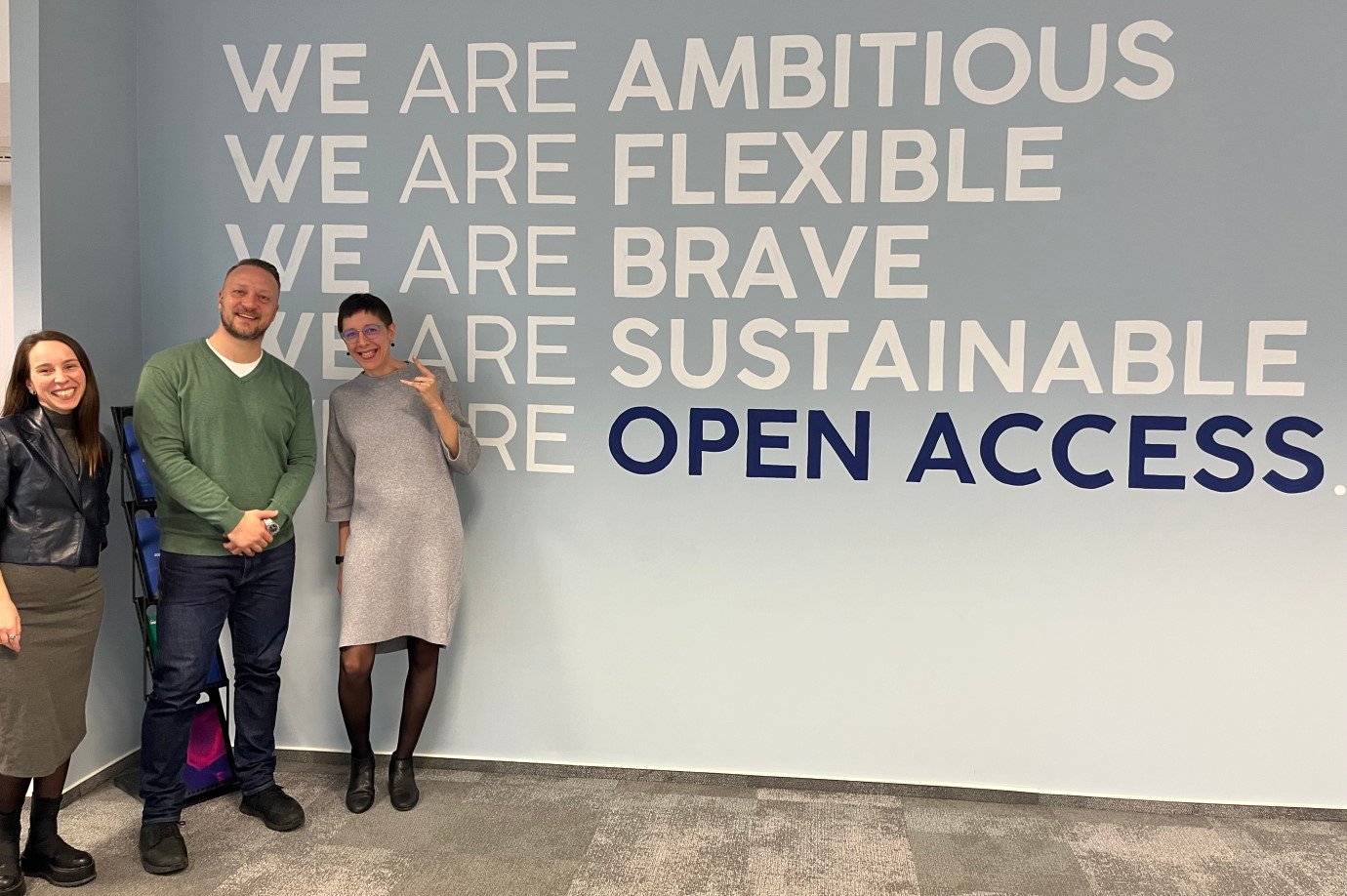
Reka Kovacs (Deputy Office Manager, MDPI), Stefan Tochev (CEO, MDPI), and Sandra Ana Spatariu (Office Manager, MDPI) at the MDPI office in Cluj, Romania.
MDPI’s Impact on Romania
In February, I visited our office in Cluj, Romania. I worked closely with our senior office managers and various teams, including the departments of training, marketing and conferences, as well as our journal relationship specialists, reviewing our service to the local scholarly community. During the visit, I also met with representatives from Babes-Bolyai University and the Technical University of Cluj-Napoca. Our multifunctional Romanian office plays an important role in supporting our collaborations with the local market as well as helping to meet MDPI’s overall business needs.
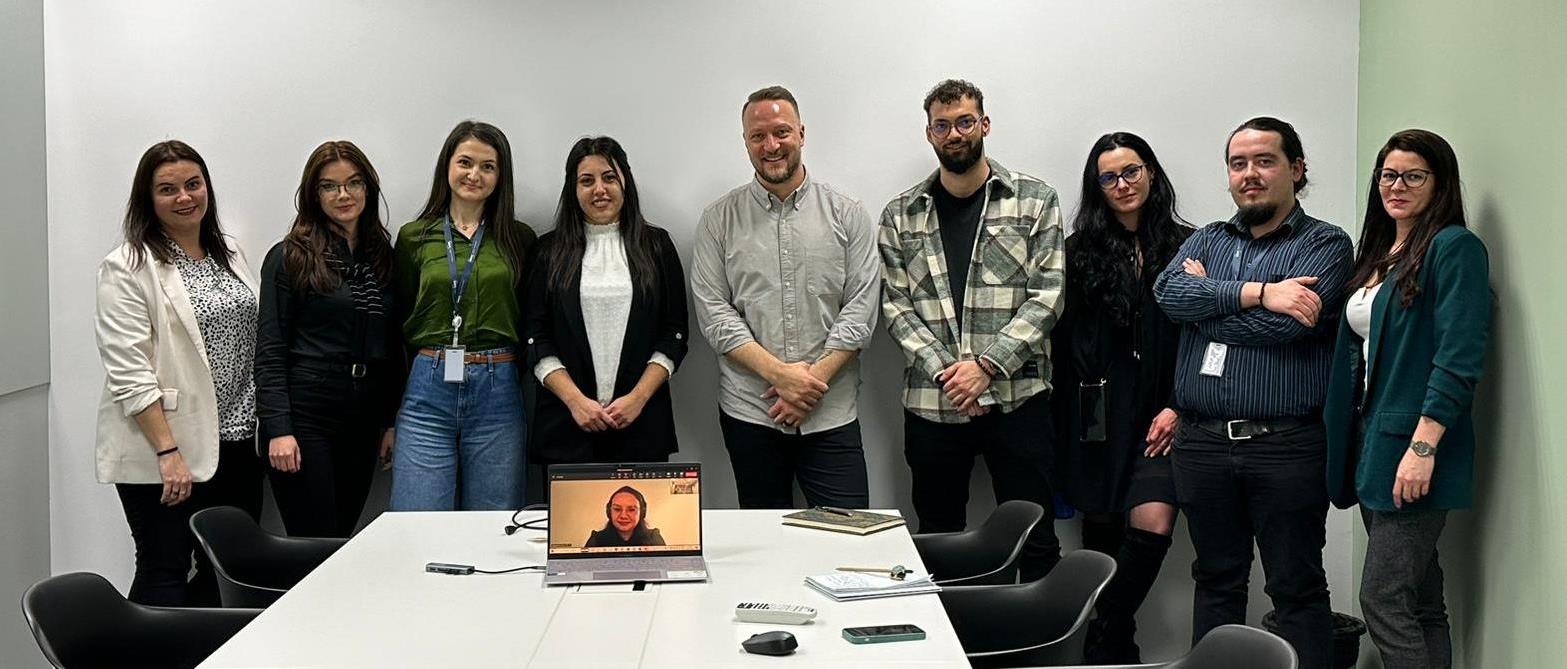
Feedback and strategy meeting with a group of MDPI’s Journal Relationship Specialists at the MDPI office in Cluj, Romania.
With 22,436 articles, Romania ranks as a top 20 contributing country to MDPI’s total number of papers published as at 28 February 2024. This highlights the importance of our collaboration with Romanian-affiliated authors and the growing opportunity to support their publishing needs. MDPI is one of the few academic publishers with a significant presence in Romania, boasting over 360 colleagues across our offices in Bucharest and Cluj. We are also proud to hire colleagues from local institutions to launch their careers within publishing.
Romania ranks as a top 20 contributing country.
The Numbers: 2019–2023
MDPI has seen a healthy increase in submissions from Romanian authors over the past three years, from 8,439 in 2021 to 11,866 by end of 2023, with most submissions going to journals such as Sustainability, Medicina, Diagnostics, IJMS, Applied Sciences, and JCM. From 2019 to 2023, MDPI published articles from 32,145 authors affiliated with Romanian institutions. Over those years, we have worked with Romanian Guest Editors on nearly 3,000 occasions to support their Special Issue and Topical collections.
With more than 300 Editorial Board Members from Romania, 34 appear on the board of Mathematics, 27 on Materials, 19 on Polymers, 18 on Coatings, and 16 on Molecules, while three serve as Section Editors-in-Chief (SEiC) on our journals Coatings (3.4 IF, 4.6 Citescore), Magnetochemistry (2.7 IF, 3.5 Citescore), and Chemosensors (4.2 IF, 3.9 Citescore).
Institutional Open Access Programs
Our commitment to working with institutions is evident in Romania, where we have established eight Institutional Open Access Programs (IOAP) with esteemed institutions such as the University of Bucharest, the University of Medicine and Pharmacy Cluj-Napoca, and most recently the National Institute for Laser, Plasma and Radiation Physics.
Our growth and presence in Romania are a true testament.
We also have IOAP agreements with Babes-Bolyai University and the Technical University of Cluj-Napoca, where I had the opportunity to meet senior stakeholders during my visit. Below are a few photos capturing our meeting with Prof. Radu Silaghi-Dumitrescu (Head of Faculty of Chemistry, Babes-Bolyai University) at the MDPI office in Cluj, Romania, along with a photo from our meeting with Vice Deans Nicoleta Cobarzan, Nicoleta Ilies, and Hoda Gavril, from the faculty of Civil Engineering at the Technical University of Cluj, Romania.
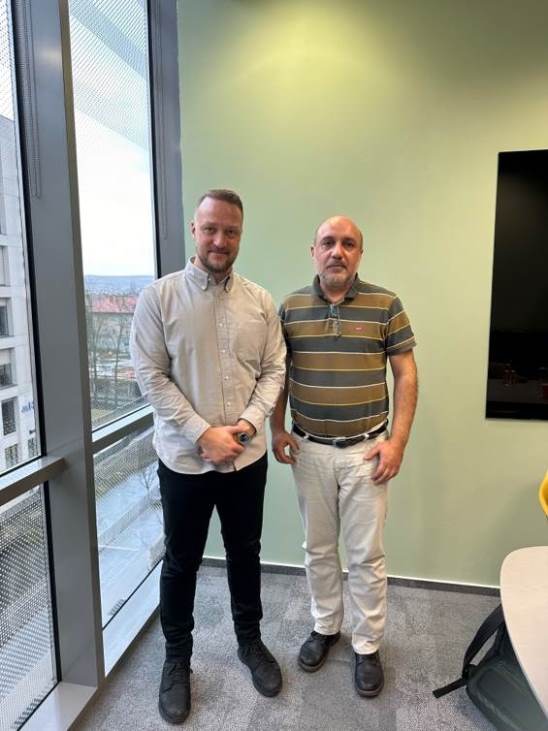

Our growth and presence in Romania are a true testament to the service we provide to the scholarly community and the relationships we foster in that region. We look forward to continuing to support Romanian scholars and institutions by providing a valuable and trusted experience with MDPI, the leader in open access publishing.
Impactful Research

MDPI Joins the STM Integrity Hub
MDPI has long been a supporter and partner of STM, with our involvement ranging from sponsoring and attending events to helping organize event programs. By joining the STM Integrity Hub, we aim to further our commitment to STM initiatives aimed at safeguarding the integrity of science.
“We are pleased to welcome MDPI as the 35th organisation participating in the Hub. This expansion is critical, as every new member enhances our capacity to prevent fraudulent submissions from entering the academic record.”
Joris van Rossum, Director of Research Integrity, STM
MDPI operates in full alignment with STM Integrity Hub's values of shared data and experiences. We strongly believe in collaboration and open exchange for the purposes of creating a holistic approach to support research integrity at MDPI itself and across the entire academic publishing industry. The Integrity Hub is an excellent example of how publishers can come together to jointly address industry-wide challenges related to research integrity, such as manuscripts that breach research integrity standards and paper-mills.
I look forward to our Research Integrity and Publication Ethics Team (RIPE) team immersing themselves in this initiative, exchanging information, best practices, and tools for the benefit of the entire scholarly ecosystem. We believe that ethical publishing standards should be implemented across the board, and we aim to be rigorous in our approach, addressing research integrity issues and improving the impact of published research.
Inside MDPI
MDPI Expands Research Integrity and Publication Ethics Team (RIPE)
In addition to external collaborations and joint initiatives aimed at further strengthening our commitment to research integrity, we are also enhancing our internal efforts. This includes improving our processes and guidelines and expanding our teams and departments to ensure quality assurance throughout our publishing process.
We are pleased to announce the expansion of our Research Integrity and Publication Ethics Team (RIPE) at MDPI. The RIPE team has recently welcomed new colleagues, each bringing unique skills and a personal commitment to prioritize ethical considerations in all our work.
The demand for research integrity and high ethical standards in academic publishing is steadily rising across our industry. Our expanded RIPE team will work to enhance and align our practices with industry best practices, ensuring excellence in research integrity and publication ethics.
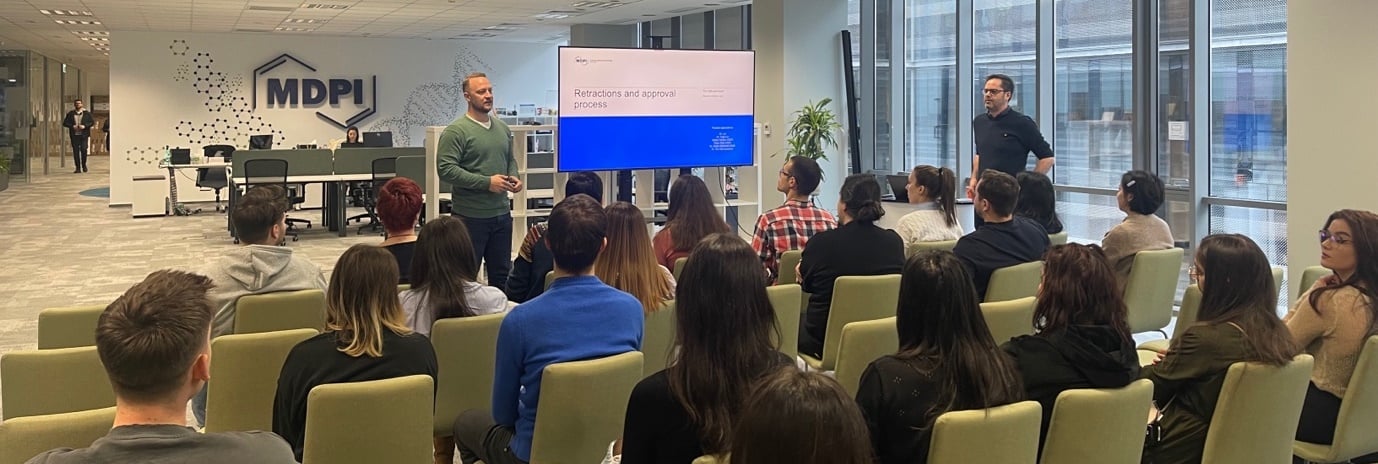
Stefan Tochev (CEO, MDPI) introduces Dr. Tim Tait-Jamieson (Research Integrity Lead, MDPI) for his presentation on MDPI’s Retraction and Approval Process to a group of Journal Relationship Specialists at the MDPI office in Cluj, Romania: “The demand for research integrity and publication ethics is steadily rising across our industry.”
Introducing our Research Integrity and Publication Ethics Team
Led by Dr. Tim Tait-Jamieson (Research Integrity Lead), the RIPE team comprises Dr. Ivana Resanovic (Research Integrity Manager), Dr. Lavinia Rogojina (Research Integrity Manager), Ms. Diana Apodaritei (Research Integrity Specialist), Dr. Zoltan Mihaly (Research Integrity Specialist), Mr. Aleksandar Đukić (Research Integrity Specialist), Ms. Ana Stankovic (Research Integrity Specialist), and Ms. Anna Pena (Publication Ethics Assistant).
Please click here to access everything that you need to know about MDPI’s Research and Publication Ethics.
With this span of complementary roles, the RIPE team collaborates directly with journal editorial teams and works closely with various departments, including our Scientific Office Board and our Journal Relationship Specialists. The team’s primary objectives are to help prevent issues regarding research integrity and publication ethics during peer review, uphold MDPI’s ethics policies, adhere to industry standards, and resolve publication ethics and research integrity issues and complaints.
Quality Updates to Special Issues Oversight
At MDPI, we are committed to reviewing policies pertaining to the quality of research. In this blog post, Shaheena Patel (Communications Associate, MDPI), outlines two recent updates to MDPI journal processes. These updates pertain to Special Issue (SI) quality guidelines, in line with criteria provided by COPE and DOAJ. Alongside the SI updates, details regarding the new minor corrections policy introduced in 2024 are provided in the blog.
The two updates we implemented include greater oversight and the verification of Guest Editor credentials. These guidelines require that Editors-in-Chief (EiCs) and Editorial Board Members (EBMs) take responsibility for overseeing SIs.
PS. Thank you, James Butcher, for featuring this up in your 67th issue of the Journalogy newsletter.
Read more:
Coming Together for Science
Viruses 2024 – A World of Viruses
I am pleased to share the success of our MDPI conference Viruses 2024 – A World of Viruses, held 14-16 February, in Barcelona. With 240 registrations, this event brought together top scientists, researchers, and industry experts from 40 countries to share their findings on the latest developments in viral pathogenesis and immune responses.
Attendees gathered for the 5th edition of the Viruses’ conference, where we hosted influential keynote speeches from Nobel Prize laureate Dr. Charles M. Rice and ‘Distinguished Senior Virologist’ Prof. Luis Enjuanes, along with 14 invited speakers, 47 selected speakers, and nine flash poster presenters, to discuss the most significant issues in virology today.
Recap on the #Viruses2024 Conference
Take a look at the key moments from MDPI’s Viruses event and please join us in commemorating a gathering for global knowledge and cooperation. A heartfelt thank-you to all attendees; their passion and engagement played a crucial role in making this event an engaging success!
Below are calls to action from the keynote speakers encouraging collaboration and communication:
“There’s never been a better time than now to really take the power that we have both in terms of basic research and also in biotech and pharma to develop antiviral agents.” - Dr. Charles M. Rice, The Rockefeller University, New York, USA
“The collaboration between labs is absolutely essential. Improving initial detection and improving communication is a must for all of us working in science.” - Prof. Dr. Luis Enjuanes, National Center of Biotechnology (CNB-CSIC), Madrid, Spain
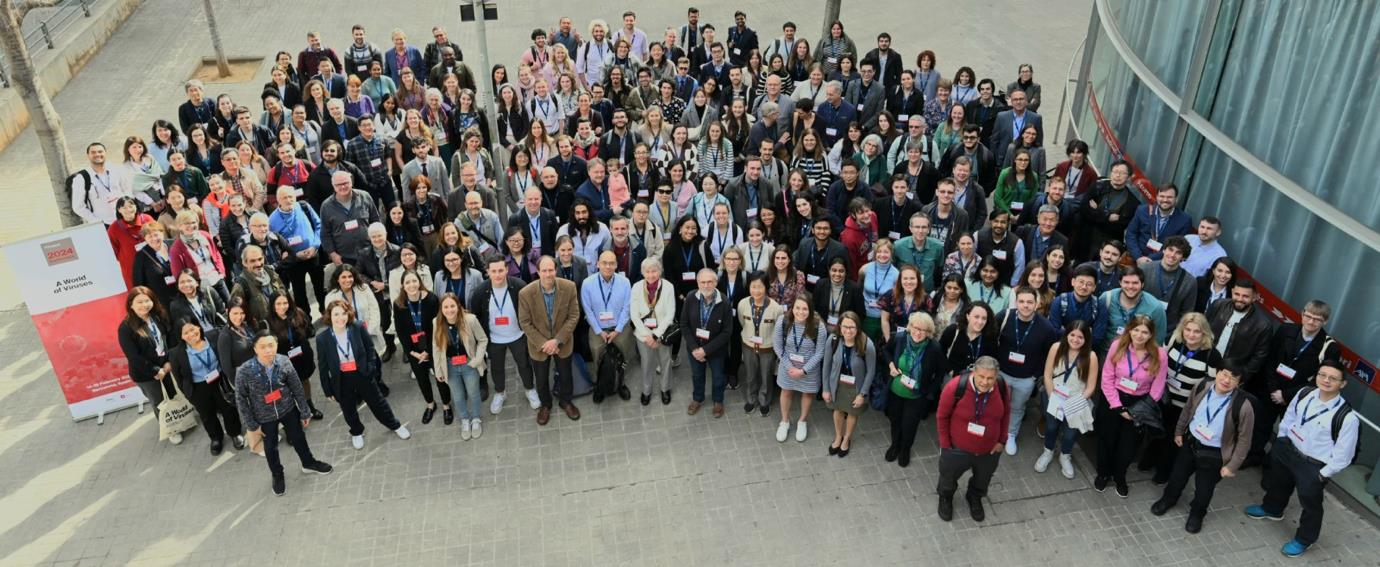
Our thanks go to our sponsors and partnering societies, our Viruses journal and editorial team, our Barcelona colleagues, and the social media, conference and other MDPI teams for making this event a memorable occasion. View the event gallery here.
Upcoming In-Person Event
24–26 April, 2024
4th MMCS – Harnessing the Power of New Drug Modalities
Location: Barcelona, Spain
Esteemed speakers at MMCS 2024 include Prof. Arun K. Ghosh, the mind behind the Darunavir molecule, and Prof. Paul Brennan, CSO of Alzheimer's Research UK Oxford Drug Discovery Institute.
Find more upcoming MDPI events here.
Organize Your Event with MDPI’s Sciforum
Sciforum is MDPI’s platform dedicated to the organization of scientific events. In line with our mission to promote science, Sciforum supports scholars, societies, research networks, and universities at all stages of organizing in-person events, virtual events and webinars. Our platforms are efficient, user-friendly, and cost-effective. We handle all steps related to event management. Contact us for details.
Closing Thoughts

Researcher to Reader (R2R) Conference
From 20–21 February 2024, I had the pleasure of attending the Researcher to Reader (R2R) conference in London, which MDPI has proudly sponsored over the years. The conference programme offered a variety of session formats, including workshops, panel discussions, debates, interviews, presentations, and lightning talks, with opportunities to discuss relevant topics.
We take pride in supporting the scientific community, bringing researchers across the world together to network, exchange ideas and share the latest in science and publishing. In 2023, MDPI invested close to 2 million CHF in sponsoring over 2,000 scientific and publishing-related conferences worldwide.
R2R Peer Review Innovations Workshop
I found the R2R conference to be engaging, with the workshops being particularly enjoyable. My colleague Giulia Stefenelli (Chair of Scientific Office Board) and I participated in the “Peer Review Innovations” workshop, which spanned four sessions over the two days. These sessions explored the future of peer review and how we can improve the peer review process for everyone involved. Notably, the large majority of attendees expressed their opinion that peer review, as currently practiced, requires significant improvement. Together, we collaborated on potential immediate and long-term improvements and innovative processes, aiming to create an ecosystem beneficial to all stakeholders by strengthening submission systems with the aim of reducing threats and making authors more responsible for their work. We also discussed the opportunity for academic institutions to better scrutinize the quality of the work produced and submitted to journals.
Our group comprised publishers, software providers, librarians, and more, bringing diverse perspectives to the discussions. These interactions were relevant to MDPI’s ongoing conversations, providing insights to our efforts. The session also made me appreciate that MDPI is doing well, as the group discussions included the subject of various quality checks that we have already embedded in our processes, ensuring that we keep abreast of industry standards.
The need for an optimized system to incentivize the activities of editors and reviewers was also a focus of discussion, as well as the support that reviewers need from publishers via the provision of strong reports through fixed forms, questionnaires and training.
At MDPI, we are currently auditing our reviewer program to improve reviewer recognition, guidelines, and methods for identifying suitable reviewers, while maintaining our commitment to quality and timeliness.
Congratulations to Mark Carden, Conference Director, and the R2R team for organizing a productive and successful event. PS: The break times were greatly appreciated as well!
Chief Executive Officer
MDPI AG
1 February 2024
Acknowledgment of the Reviewers of International Journal of Environmental Research and Public Health in 2023
In recognizing the exceptional efforts of our reviewers in 2023, we express our sincere gratitude for upholding the high standards of International Journal of Environmental Research and Public Health (IJERPH). Their commitment ensured the rigorous peer review that is integral to quality academic publishing.
In 2023, IJERPH received 25078 review reports, from 17867 reviewers. This past year, we worked with reviewers from 136 countries and regions, reflecting the diversity in our collaboration with research communities. Their dedication shapes scholarly discourse and advances global research. The editorial team expresses gratitude for the vital role played by each reviewer in the IJERPH family throughout 2023, and we look forward to their continued support in 2024.
The following are the reviewers who have consented to show their names:
| Balazs Nemeth | Matteo Nicolini |
| Balkrishna Eknath Narkhede | Matteo Ratti |
| Bang-Lee Chang | Matteo Riccò |
| Banta Viorel-Costin | Matthew Beerse |
| Barani Kumar Rajendran | Matthew Lyons |
| Barbara Caci | Matthew Taylor |
| Barbara De Rosa | Matthias Grieder |
| Barbara Fura | Matthias J. Roggendorf |
| Barbara Gilic | Matthias Lukasczik |
| Barbara Hausott | Mattia Cappelletti |
| Barbara Lond | Mattias Paulsson |
| Barbara Manconi | Mau-Ern Poh |
| Barbara Polivka | Maura Pilotti |
| Barbara Probierz | Maureen Sibiya |
| Barbara Ruaro | Maurício Andrades Paixão |
| Barbara Wiatkowska | Mauricio Ramírez-Moreno |
| Barbara Wiewióra | Maurizio Romagnuolo |
| Barbara Żarska | Maurizio Stella |
| Barry Borman | Mauro Henrique Abreu |
| Bart Vande Vannet | Mauro Lombardo |
| Bartosz Jóźwik | Mauro Marengo |
| Bartosz Rymkiewicz | Max Stephenson |
| Basanta Haobijam | May Ee Png |
| Bathrinath Sankaranarayanan | Mayara Amario |
| Bayode Romeo Adegbite | Mayur Doke |
| Bayu Wiratama | Maziar Shabestari |
| Beata Bieszk-Stolorz | Md Azharul Islam |
| Beata Gruber-Bzura | Md Jahangir Alam |
| Beata Hoffmann | Md Shakhawat Hossain |
| Beata Jaworska-Szulc | Md Tarique Jamal Ansari |
| Beata Karwowska | Md. Sabbir Ahmed |
| Beata Łabuz-Roszak | Meerambika Mishra |
| Beata Morak-Młodawska | Megha Sharma |
| Beata Sperkowska | Mehdi Bahrami |
| Beatrice Adriana Balgiu | Mehdi Goudarzi |
| Beatrice Albanesi | Mehmet Alphan Çakiroğlu |
| Beatrice Gabriela Ioan | Mehmet Yıldız |
| Beatrice Paradiso | Mehmood Ahmad |
| Beatriz Casais | Mehran Ghaemi |
| Beatriz F. Núñez Angulo | Mehran Shayganfard |
| Beenish Chaudhry | Meike Rombach |
| Behnam Asgari Lajayer | Meimei Wang |
| Behzad Barekatain | Melania Melis |
| Bekir Genc | Melinda Butsch Kovacic |
| Belgin Akın | Melinda Csima |
| Bence András Lázár | Melinda Mccormick |
| Benedetta Esposito | Meng Cai |
| Benedict Francis | Meng Chuan Ong |
| Benjamin Silverberg | Mengyu Li |
| Benson P. C. Liu | Meredith Gresham |
| Bente Knoll | Meredith Perry |
| Berislav Bolfek | Meredith Yeung |
| Berit Irene Helgheim | Merlin Ariefdjohan |
| Berna Ulutas | Michael Baglivio |
| Bernardo Marques | Michael Cope |
| Bernardo Vega Crespo | Michael Dougherty |
| Bernhard Resch | Michael Frosch |
| Bettina Piko | Michael Ganzle |
| Betty Mcguire | Michael Hast |
| Beyza Ünalan Değirmenci | Michael Mathura |
| Bhakti Basu | Michael Rigby |
| Bhanu Prakash Kolla | Michael Roy Hames García |
| Bhargav Patel | Michael Schirmer |
| Bianca Hanganu | Michael Thelwell |
| Bibhuti Sar | Michael Tong |
| Bibian Van Der Voorn | Michail Kalogiannakis |
| Bidur Devkota | Michal Franek |
| Biedma Ferrer José María | Michał Ginszt |
| Bijay Chhetri | Michał Karbownik |
| Bilal Manzoor | Michal Pruc |
| Biljana Kurtović | Michal Starczewski |
| Bin Ye | Michel Guillemin |
| Bing Guo | Michel Jancloes |
| Bing He | Michel Pérusse |
| Binyan Wang | Michela Franchini |
| Birgitte Lerbæk | Michele Marzulli |
| Birol Topçu | Michelle D'Abundo |
| Bishal Gyawali | Michelle Gamber |
| Biswajit Maharathi | Michelle Sahr |
| Bixia Hu | Micol Massimiani |
| Blanca Bazán-Perkins | Mieko Nakamura |
| Blanca Pelcastre-Villafuerte | Miguel Á. Castro Villamor |
| Błażej Cieślik | Miguel Ángel Carbonero |
| Blazo Lalevic | Miguel Armengot |
| Bo Wang | Miguel Mariscal-Arcas |
| Bogdan Florin Filip | Miguel Rebelo |
| Bogdan Iliescu | Miguel Reyna-Castillo |
| Bogdan Oancea | Miguel Sanchez-Aleman |
| Bogdan Tiganoaia | Miguel Sanchez-Hechavarria |
| Bogdan-Mircea Mihai | Miguel Terroso |
| Bojan Masanovic | Miha Ambrož |
| Bonnie Freeman | Mihaela Ionescu |
| Boris Radić | Mihaela Ionica |
| Borja Herrero de la Parte | Mihaela Kavran |
| Boryana Nikolova-Mladenova | Mihaela Laura Bratu |
| Boško Matović | Mihaela Zegrean |
| Boštjan Šumak | Mihaela-Diana Oancea-Negescu |
| Botros Abdelnaser Masry Tawfik | Mihai Curelaru |
| Brajendra Singh | Mihai Olanescu |
| Branislav Bajkin | Mihai S. Rusu |
| Branko Lukić | Mihail Chervenkov |
| Brendon Ferrier | Mihály Kökény |
| Brent Harper | Mihnea Costin Manea |
| Brian Crook | Mihnea Ion Marin |
| Brian Law | Mika Simonen |
| Brian Littlechild | Mikhail Kuptsov |
| Brian Mcskimming | Mi-Kyoung Cho |
| Brian Sloboda | Mi-Kyoung Jun |
| Brian Spitzberg | Milan Andrejić |
| Brian Wartell | Milan Kubina |
| Brigitte Servatius | Milan Marinković |
| Britton Brewer | Milan Markovic |
| Bruce Becker | Milena Tomanic |
| Bruce Judd | Milica Kasanin-Grubin |
| Bruce Spittle | Milica Zekovic |
| Bruce Winston | Milka Mileva |
| Bruna Tonin | Miloš Marković |
| Bruno Da Costa | Miloš Miler |
| Bryan Nelson | Miloš Stepović |
| Bryan Ormond | Miłosz Caban |
| Bulat Soktoev | Min Wang |
| Buongo Chun | Mina Yekani |
| Burak Demirhan | Mindy Millard-Stafford |
| Burook Misganaw | Mine Seçkin |
| Burton Dickey | Minfang Zhang |
| Burzyńska Burzyńska | Mingcheng Ren |
| Bushra Khalid | Mingfei Sheng |
| Byoungwook Ahn | Mingxue Gu |
| Çağrı Ergin | Minh Hieu Nguyen |
| Calero Morales Santiago | Minhaj Ali |
| Calin Mircea Gherman | Minh-Hoang Nguyen |
| Camelia Margareta Bogdanici | Minjong Cheon |
| Camelia Teodorescu | Mir Aftab Hussain Talpur |
| Camilla Preda | Mircea Lițescu |
| Candan Hizel | Miriam Aracely Anaya Loyola |
| Cândida Malça | Mirian Hervás Torres |
| Caner Çaki | Mirjana Radenkovic |
| Cano-Ramírez Hugo | Mirko Manetti |
| Carin Staland Nyman | Mirna Žulec |
| Carina Balcoş | Miroslava Zavadska |
| Carita Håkansson | Mirta Vranko |
| Carl Becker | Mishall Al-Zubaidie |
| Carl Frisk | Mititelu Magdalena |
| Carla Antunes | Mitsuya Yamakita |
| Carla Serrão | Mo Li |
| Carles Dulsat-Ortiz | Moacir Marocolo |
| Carlo Bieńkowski | Mochammad Fahlevi |
| Carlo Capelli | Modesti Martina Nicole |
| Carlo Cinque | Mohamad Nurul Azmi Mohamad Taib |
| Carlo De Benedictis | Mohamed Ahmed Said |
| Carlos Abreu | Mohamed Aly-Eldeen |
| Carlos Aguirre-Nuñez | Mohamed Elsadek |
| Carlos Almeida | Mohamed Emran |
| Carlos Calderon-Ospina | Mohamed Khalifa |
| Carlos Carvalhais | Mohamed Lounis |
| Carlos Cerdán Santacruz | Mohamed M. Yagoub |
| Carlos Chávez | Mohamed Mahdi |
| Carlos Delgado-Miguel | Mohamed Mahfouz |
| Carlos Escobar | Mohamed Salah |
| Carlos Gutiérrez Aguilar | Mohamed Salah Ayyat |
| Carlos Hervás-Gómez | Mohamed Tahooon |
| Carlos Izaias Sartorão Filho | Mohammad Alfhili |
| Carlos López-de-Celis | Mohammad Attaullah |
| Carlos Martín Ardila | Mohammad Hamed |
| Carlos Pantoja | Mohammad Heydari |
| Carlos Pascal | Mohammad Javad Ebadi |
| Carlos Seiça Cardoso | Mohammad Javad Rahimdel |
| Carlos Sequeira | Mohammad Khan |
| Carmela Buono | Mohammad Khosroshahi |
| Carmelo Cali | Mohammad Paydar |
| Carmen Burgos | Mohammad Qneibi |
| Carmen Concerto | Mohammad Sadra Rajabi |
| Carmen Enrique Mirón | Mohammad Sharif |
| Carmen Llena | Mohammad Zamani |
| Carmen Pavelescu | Mohammadreza Shalbafan |
| Carmen Toribio Marín | Mohammed Emran |
| Carmen Zaharia | Mohammed Fayad |
| Carmine Izzo | Mohammed Mustafa |
| Carol Nash | Mohammed Nadar |
| Caroline Harvey | Mohammed Rashad Baker |
| Caroline Speksnijder | Mohammed Sabbah |
| Caroll Hermann | Mohammed Sayed |
| Casey Watters | Mohammed Shuaib |
| Cassandra Hua | Mohammed Talle |
| Cătălin Barbu | Mohan Tanniru |
| Catalin Silvestru | Mohana Rani Gokana |
| Catalina Soriana Sitnikov | Mohanad Al-Owaidi |
| Catarina Patoilo Teixeira | Mohd Hizami Mohd Yusoff |
| Catarina Ruivo | Mohd Ismail Ibrahim |
| Catarina Tomás | Mohit Joshi |
| Caterina Villa | Mohsen Salimi |
| Catharine Fleming | Mohsen Soltanifar |
| Catherine Smith | Moises Betancort |
| Cátia Sousa | Moisés Marquina |
| Cécil Meulenberg | Molly Scanlon |
| Celal Bulgay | Mona A. Abdel-Fatah |
| Celia Sánchez Gómez | Mona Abdelrahman |
| Célia Ventura | Mona Alinejad-Naeini |
| Celine Chu | Mona Ionas |
| Cesar Augusto Ruiz Agudelo | Mona Sadat Larijani |
| César Infante | Mona Seyed Esfahani |
| Cesar Martinez-Olvera | Monia Vagni |
| Ceu Mateus | Mónica Huerta |
| Cezary Beker | Monica Parlato |
| Chairul Irawan | Mónica Rodrigues |
| Chakema Carmack | Monika Bąk-Sosnowska |
| Chamara Senaratna | Monika Berns |
| Chang Shouzhi | Monika Budzyńska |
| Chao Wu | Monika Łopuszańska-Dawid |
| Chapman Rackaway | Monika Peshevska-Sekulovska |
| Charitha Dias | Monika Piątkowska |
| Charles D. Ponte | Monika Prakash |
| Charles Musselwhite | Monika Šabić Runjavec |
| Charlotte Gregoire | Monika Trojanowska |
| Charlotte Simonÿ | Monika Zawadka-Kunikowska |
| Che Hsueh Yang | Monireh Sadat Seyyedsalehi |
| Chee-Seng Tan | Moon Fai Chan |
| Che-Hung Tsai | Moran Pollack |
| Chen-Cheng Yang | Morteza Taheri |
| Cheng Yang | Mosad Zineldin |
| Chengbo Li | Mostafa Amini Rarani |
| Cheng-Chieh Yen | Mostafa Yuness Abdelfatah Mostafa |
| Chengwei Huang | Motohiro Munakata |
| Cheng-Wen Lee | Moumtaz Razack |
| Chen-Hua Fu | Mounia Tahri |
| Chen-Hua Liu | Mourad Jbene |
| Chenming Jiang | Mousa Pazhuhan |
| Chenxiang Li | Mubashir Hussain |
| Cheryl Beseler | Mubbasher Munir |
| Cheryl Jones | Mudassar Iqbal Arain (Pakistan) |
| Chi Hua Lu | Mudassar Iqbal Arain (USA) |
| Chiachi Wang | Muddassar Sarfraz |
| Chiara Cinquini | Mugurel Constantin Rusu |
| Chiara Gallione | Muhammad Ali Inam |
| Chiara Oppi | Muhammad Alkasaby |
| Chien Nguyen | Muhammad Anshory |
| Chiew-Yen Wong | Muhammad Anwar |
| Chih-Long Lin | Muhammad Arshad (National University of Sciences and Technology) |
| Chin Wen Tan | Muhammad Arshad (University of Engineering & Technology Taxila) |
| Ching Sin Siau | Muhammad F. A. Chaudhary |
| Ching-Teng Yao | Muhammad Fareed |
| Chis Adriana Aurelia | Muhammad Fawad |
| Chloe Fletcher | Muhammad Haroon Stanikzai |
| Chng Saun Fong | Muhammad Hussain |
| Chong Myung Park | Muhammad Ibrahim |
| Chonin Kuok | Muhammad Irfan Ahamad |
| Choo Hock Tan | Muhammad Jawad Sajid |
| Choung Ah Lee | Muhammad Khalifa |
| Chou-Ping Chiou | Muhammad Mohsin |
| Chris Dickens | Muhammad Nauman Zahid |
| Chris Groendyke | Muhammad Noor Hisyam Jusoh |
| Christalla Pithara-Mckeown | Muhammad Riaz |
| Christian Álvarez | Muhammad Sajid Hamid Akash |
| Christian Bux | Muhammad Salman |
| Christian Fernández-Campusano | Muhammad Sardaraz |
| Christian Gabriel Toledo Lozano | Muhammad Shahid |
| Christian Gernhardt | Muhammad Umer |
| Christian Tamantini | Muhammad Umer Saleem |
| Christiana Balan | Muhammad Uzair Yousuf |
| Christina Tortorelli | Muhammad Waheed Riaz |
| Christine Call | Muhammad Yamin |
| Christine Entleitner-Phleps | Muhammed Atak |
| Christine Parks | Muna Barakat |
| Christoph Biehl | Munho Ryu |
| Christoph Stallmann | Munkhbaatar Buuveibaatar |
| Christopher Atkinson | Murad Abualhasan |
| Christopher Bagley | Mustafa Cemali |
| Christopher Donnell | Mustafa Sevindik |
| Christopher Kobierzycki | Muthia Elma |
| Christopher Tompkins | Muyiwa Oladosun |
| Christoph-Ludwig Hennig | Myriam Khlat |
| Christos Kakarougkas | Nabil Kherbache |
| Chrysafis Vogiatzis | Naceur Haouet |
| Chuan-Guo Shi | Nadhir Hammami |
| Chukwuma Okoye | Nadia Abbaszadeh Tehrani |
| Chul Hyun Park | Nadia Najafi |
| Chun Ching Liu | Nadim Rana |
| Chun-Che Huang | Naeem Akhtar Qaisrani |
| Chung Lien Pan | Naeem Hayat |
| Chun-Jen Huang | Nafisa Gull |
| Chunki Fong | Nageh Abo-Dahab |
| Chunlin Yao | Nagendraprabhu Ponnuraj |
| Cihad Dundar | Nahid Sultana |
| Cihangir Tezcan | Nahum Rosenberg |
| Cinta Barba-Brioso | Naim Jerliu |
| Cinzia Rienzo | Naiying Mao |
| Ciprian Ilea | Naji Kharouf |
| Ciprian Rosca | Najim Alshahrani |
| Ciro Vasmara | Nakul Karle |
| Claire Flemmer | Nam Tran |
| Clara Simães | Naman Vatsa |
| Clare Roscoe Roscoe | Namdev Shankar Harale |
| Clarissa Cricenti | Nan Lin |
| Claudette Poole | Nana Shinozaki |
| Claudia Bardoni | Nanabhau Kudnar |
| Claudia Camedda | Nancy Abdel-Moneim |
| Claudia Costa | Nancy Monroy-Jaramillo |
| Cláudia Faria | Nancy Purdy |
| Cláudia Pereira | Nani Gelovani |
| Claudia Seabra | Naohiro Shioji |
| Claudimar Veiga | Naohisa Shobako |
| Claudio Alberto Dávila-Cervantes | Naoko Katsurada |
| Claudio Andre Barbosa De Lira | Naoto Kamide |
| Claudio Sorino | Narasimha Reddy Soora |
| Claudio Tirelli | Naresh Samy |
| Claudiu Morgovan | Narongchai Autsavapromporn |
| Clemens Schopper | Naser Alsharairi |
| Clementine Labrosciano | Nasima Akhter |
| Clive Richardson | Natália Aredes |
| Codruta Baltescu | Natalia Calvo-Ayuso |
| Codruta Popescu | Natalia Koubassova |
| Colton Ladbury | Natalia Lajara-Camilleri |
| Comfort N. Obi | Natalia Lebedeva |
| Concepción Soto-Vidal | Natalia Nadrowska |
| Concetta Pironti | Natalia Naumova |
| Concetta Pirrone | Natalia Polyakova |
| Constantin Bungau | Natalia Shnayder |
| Constantin Munteanu | Natalia Szejko |
| Corina Zugravu | Natalia Torlińska-Walkowiak |
| Corinna Culler | Natalia Volkova |
| Corinna Lesley Seidel | Natalie Bain Reguis |
| Cornelius C. Dodoo | Nataliia Goncharova |
| Corrado Pelaia | Nataliya Yaglova |
| Cosmas Wacal | Natallia Hanssen |
| Cosmin Salasan | Natalya Glushkova |
| Craig Craig | Nataša Dragić |
| Craig Talmage | Natasha Hubbard Murdoch |
| Crina Bejan | Naveen Ramesh |
| Cristian Alionte | Navid Abedpoor |
| Cristian Balducci | Navid Nadimi |
| Cristian Lieneck | Nazli Farajzadeh |
| Cristian Mornos | Neal Davies |
| Cristian Orasanu | Neeraj Bhandari |
| Cristian Sandoval | Neeraj Kumar Sethiya |
| Cristiano Fava | Neha Garg |
| Cristian-Valeriu Patriche | Neha Shroff |
| Cristina Ciuluvica Neagu | Neida Ramos |
| Cristina Dumitru | Nejc Umek |
| Cristina Gago | Nemanja Berber |
| Cristina Manuela Dragoi | Nemat Ali |
| Cristina Mihaela Salca Rotaru | Nessr Abu Rached |
| Cristina Nicolau | Netti Herawati |
| Cristina Nunes | Neuza Cristina Moura Reis |
| Cristina Tarantino | Neven Grubisic |
| Cristina Teresa-Morales | Nevin Sanlier |
| Cristina Tripon | Nicholas Jaegers |
| Cristoforo Pomara | Nicola Gentili |
| Croitoru Gabriel | Nicola Lamberti |
| Csaba Bojtor | Nicola Nante |
| Csaba Koren | Nicola Savory |
| Csaba Patkós | Nicolae Gica |
| Csáky Imre | Nicolás Bores-Calle |
| Cuauhtémoc Sanchez Ramírez | Nicole de Mello Fiallos |
| Cunyi Yang | Nicole Meier |
| Cuong Huu Nguyen | Nicoleta Carmen Purdel |
| Cyril Fersing | Nicoletta Nicolaou |
| Dae-Wui Yoon | Nicolò Brandi |
| Dafni Petkou | Niels Qvist |
| Dai Whan An | Nienke Kool |
| Daikun Wang | Nieves Fátima Oropesa Ruiz |
| Dainius Savickas | Nieves Lantada |
| Daisuke Akiba | Nigel Quinn |
| Daisuke Matsushita | Nighat Perveen |
| Daizo Kojima | Niko Kohls |
| Dale Chapman | Nikola Hadzi-Petrushev |
| Dale Maglalang | Nikola Hodkovicova |
| Dalibor Stanimirović | Nikola Komlenac |
| Damian Pawlik | Nikolaos Moustakas |
| Damián Reyes Jáquez | Nikolaos Rikos |
| Dan Alexe | Nikolaos Soldatos |
| Dan Dai | Nikolaos Varotsis |
| Dan Romer | Nikolay Bugaev |
| Dan Zhang | Nima Karimi |
| Dana Lawrence | Nina Anfinogenova |
| Dana Lucia Stanculeanu | Nina Esaki |
| Dana Maria (Oprea) Constantin | Nina Filip |
| Dana Rad | Nina Krüger |
| Dan-Alexandru Szabo | Nina Mendez-Dominguez |
| Danica Zaric | Nina Novozhilova |
| Daniel Anang | Nina Skjæret-Maroni |
| Daniel Antón | Nina Szczygiel |
| Daniel Antwi-Amoabeng | Nipon Ketjoy |
| Daniel Brauss | Niraj Prakash Joshi |
| Daniel Cardoso | Nisha Naicker |
| Daniel Carnieto Tozadore | Nívea Adriana Pons |
| Daniel Diaz | Nnaemeka Odo |
| Daniel Griffith | Nobutaka Kurihara |
| Daniel Horna Munoz | Noé Abraham González-Nieto |
| Daniel Kessler | Noelia García Castillo |
| Daniel Morris | Noemi Salmeri |
| Daniel Potaczek | Noman Shakoor |
| Daniel Ramos Louzada | Nonhlanhla Tlotleng |
| Daniel Rayson | Noor Almandil |
| Daniel Reyes-Molina | Noor Bahadar |
| Daniel San Juan Orta | Noor Ul Hadi |
| Daniel Sanz-Martín | Nor Akmar Abdul Aziz |
| Daniel Torres-Lagares | Norazian Mohamed Noor |
| Daniel Vegh | Norbert Ebert |
| Daniela Canella | Norfaridatul Akmaliah Othman |
| Daniela Gomes | Noritaka Katatani |
| Daniela Lopes Gomes | Nour Shimei |
| Daniela Nosch | Noura Dosoky |
| Daniela Sulea | Nuno Amaro |
| Daniele Contini | Nuno Filipe Alves Jorge |
| Daniele Fattorini | Nuno Morais |
| Daniele Mengato | Nuno Rodrigues |
| Danielle Frasca Teixeira | Nunzia Linzalone |
| Daniel-Rareș Obadă | Nur Belkayalı |
| Danijela Domljan | Nur Sabrina Idrose |
| Danijela Miljanovic | Nuraldeen Al-Khanati |
| Dante Roger Culqui Lévano | Nurhanis Syazni Roslan |
| Daria Mottareale | Nurpudji Astuti Taslim |
| Dario Bacchini | Oana Rusu |
| Dario Calafiore | Octav Candel |
| Dariusz Graczyk | Octavian Andronic |
| Dariusz Krok | Octavian Groza |
| Darko Božanić | Octavian Vasiliu |
| Darko Modun | Ofer Beeri |
| Darryl Plecas | Olaf Kühne |
| Darshana Athukorala | Olaf Mumm |
| Dartagnan Pinto Guedes | Olalla García-Taibo |
| Davi Silva | Olga Grabowska-Chenczke |
| David A. Mejia | Olga Redina |
| David Catela | Olga Serrano-Villalobos |
| David Chesire | Olga Tsivileva |
| David Cingranelli | Olga V. Zaharova |
| David Covell | Olgica Mihaljevic |
| David E. Flores-Jiménez | Olimpia Mintas |
| David Harrison | Olimpia Pino |
| David Hogan | Oliver Meixner |
| David Lim | Oliver Ramos |
| David Manzano-Sánchez | Oliver Sander |
| David Mcdowall | Oliver Weigelt |
| David Paar | Olivier Hue |
| David Pascoal Rosado | Oliwia Gawlik-Kotelnicka |
| David Pineda | Olli Arjamaa |
| David Ribas-Perez | Olutosin Otekunrin |
| David Rodríguez | Oluwaseun Adeyemi |
| David Schwebel | Oluwatoyin Olukotun |
| David Sedláček | Omar Janeh |
| David Stadelmann | Omer Berkehan Inal |
| Davide Settembre-Blundo | Omid Dadras |
| Davor Mance | Omid Mirmosayyeb |
| Dawid Majcherek | Omneya Attallah |
| Daxin Liang | Onno Bouwmeester |
| Debatosh Banik Partha | Oralia Alejandra Guillén |
| Debbie Faulkner | Oreste Marrone |
| Debbie Fetter | Orhan Çiçek |
| Debbie Olson | Oriol Abellan-Aynes |
| Deborah Gray | Oscar Hernández-Hernández |
| Debra Wetcher-Hendricks | Oscar Herrera-Calderon |
| Dedi Noviendri | Óscar Lorenzo González |
| Deep Raj | Oscar Navarro |
| Deepa Madathil | Oscar Tejeda |
| Deepti Sharma | Osmar Antonio Jaramillo-Morales |
| Deepti Shrivastava | Osvelia Rodríguez Luis |
| Dejan Vasović | Otto Ruokolainen |
| Delaram Ghodsi | Ousama Ben-Salha |
| Delia Deliu | Ovidiu Pop |
| Delia Stefenel | Ovidiu-Iulian Bunea |
| Delma Nieves | Oyake Kazuaki |
| Delphine Labbé | Oyuntugs Byambasukh |
| Delyth Higman James | P. M. Durai Raj Vincent |
| Deni Kostelac | Pablo Ezequiel Flores-Kanter |
| Denise Dillon | Pablo Martinez-Camblor |
| Dennis Asante | Pablo Thomas |
| Deqiang Cheng | Pablo Vergara |
| Derar H. Abdel-Qader | Padam Dahal |
| Derek Falk | Palanikumar Balasundaram |
| Derrick R. Stowell | Palanivel Chinnakali |
| Dervis Kirikkaleli | Pallavi Singh |
| Despoina Moraitou | Pam Factor-Litvak |
| Devayani R. Tipre | Pamela Mikkelsen |
| Devender Kumar Saini | Panagiotis Varsamis |
| Dherik Fraga Santos | Pankaj Kumar |
| Diana Cornelia Moisuc | Pankaj Vadgama |
| Diana Miconi | Paola Faraoni |
| Diana Mindrila | Paola Midrio |
| Diana Rusu | Paola Scaramozzino |
| Diana Vranceanu | Paolo Ciampalini |
| Dian-Jeng Li | Paolo Emilio Santoro |
| Didier G. Leibovici | Paolo Iovino |
| Diego Arauna | Paraskevi Boufounou |
| Diego Bellini | Paraskevi Karanikola |
| Diego Estrada-Luna | Parastou Kordestani-Moghadam |
| Diego Monferrer | Parasuraman Subramani |
| Diego P. Ruiz | Paria Motahari |
| Diego Sanchez-Gonzalez | Parisa Ziaesaeidi |
| Diep Dao | Parisa Ziarati |
| Dieter Hohenwarter | Parsa Arbab |
| Diji Kuriakose | Parveen Rewri |
| Dilovan Zebari | Pascal Gottmann |
| Dimitrina Miteva | Pascale Heins |
| Dimitrios Panagopoulos | Pascale Voelker |
| Dimitris Tatsis | Pasquale Auricchio |
| Dimitris Zavras | Pasquale Avino |
| Dimosthenis Kotsopoulos | Pasqualina Gallo |
| Dina Abdellatif | Patricia Anafi |
| Dingde Xu | Patricia Kardambikis |
| Dingzhi Peng | Patricia Makoni |
| Dino Dobrinić | Patrícia Manarte-Monteiro |
| Diogo Martinho | Patricia Masterson-Algar |
| Diogo Morais | Patricia Mckay |
| Diogo Trajano Gomes da Silva | Patrícia Monteiro Seraphim |
| Dion Enari | Patricia Vázquez-Villegas |
| Dionysios Tafiadis | Patricia Vermeersch |
| Dirceu Ramos | Patricia Wadowski |
| Dmitri Panfilov | Patricija Bajec |
| Dmitry Kireev | Patrick Martin |
| Dmitry Vorontsov | Patrick Pageat |
| Dmytro Chumachenko | Patrizia Laurenti |
| Doan Tri | Patrycja Matusik |
| Dobrin Cosmin | Patxi León-Guereño |
| Dobromira Shopova | Paul Daly |
| Domenica D'Elia | Paul Héroux |
| Domenico Morrone | Paul Jülicher |
| Domenico Vito | Paul Ramirez |
| Domingo Alfonso Martín-Sánchez | Paul Salamh |
| Dominic Adam Worku | Paul Tucan |
| Dominic Amuzu | Paul Vargas Jentzsch |
| Dominic Augustine | Paula Albuquerque |
| Dominik Dłuski | Paula Cobos Moreno |
| Dominik Pförringer | Paula Cristina Martins |
| Dominika Szkatuła | Paula Ferreira |
| Dominika Zając | Paula Macdowell |
| Dominique Decouchant | Paula Oliveira |
| Dominique Persano Adorno | Paul-Émile Boileau |
| Donald Cole | Pauliina Husu |
| Donald Moss | Paulina Metelska |
| Donatas Austys | Paulo Carteri Coradi |
| Donatella Privitera | Paulo Carvalho |
| Done Stojanov | Paulo Infante |
| Dong Wu | Paulo Reis-Pina |
| Dong Yang | Paulo Ricardo Gazzola Zen |
| Donghwan Park | Paulo Santiago |
| Dora Isabel Fialho Pereira | Paulo Santos |
| Dora Luz Almanza Ojeda | Paulo Schwingel |
| Dorota Olszewska-Słonina | Paulo Vale |
| Dragana Komnenov | Paulo Vitória |
| Dragos Darabaneanu | Paunita Boanca |
| Dragos Mircea Median | Pavel Kotlarsky |
| Dragos Serban | Pavel Onofrei |
| Drozdstoy Stoyanov | Pavel Solopov |
| Dujrudee Chinwong | Pawel Kiper |
| Dulani Meedeniya | Paweł Kubica |
| Dulce Barreto | Paweł Swornowski |
| Dulce Flores-Rentería | Paweł Turek |
| Durga Rao Gijjappu | Payal Ganguly |
| Dusan Kuljancic | Payam Nejat |
| Dušan Šimšík | Payam Safavi‐Naeini |
| Dushad Ram | Payam Sheikhattari |
| Duygu Ağagündüz | Pd Ina Schüler |
| Duygu Sari-Ak | Pearl Pei Liu |
| Dyah Gandasari | Pedro Aleixo |
| Dzintra Kazoka | Pedro Cruz |
| E. M. Ekanayake | Pedro Ferreira |
| Ebrahim Kouhsari | Pedro Fonseca |
| Eckart Haneke | Pedro Gois |
| Edgar Antonio Barragan-Escandón | Pedro Hernandez |
| Edgar García-Torres | Pedro Lucas |
| Edgars Edelmers | Pedro Melo |
| Edina Molnár | Pedro Paulo Scariot |
| Edina Szabo | Pedro Rocha |
| Edison Roi Macusi | Pedro Rodrigues |
| Edit Hoyk | Pedro Tadeu |
| Edith Claros | Peerayuth Charoensukmongkol |
| Edith Friesema | Peiguo Zhou |
| Edmund Yamba | Pei-Jung Wang |
| Edoardo Beretta | Peitao Wang |
| Edoardo Pirera | Pejman Peykani |
| Edson Bustos | Pekka Puska |
| Edson Ursini | Penelope Ioannidou |
| Eduard Guasch | Peng Cui |
| Eduard Kolla | Pengyu Zong |
| Eduard Maury-Sintjago | Peplinski Benedykt |
| Eduardo Enrique Sandoval Obando | Per Jensen |
| Eduardo Garrido | Per Nordin |
| Eduardo José López Fernández | Per Olof Lundgren |
| Eduardo López Martínez | Pere Lavega |
| Eduardo Oliveira-Filho | Petar Đanić |
| Eduardo Piedrafita | Peter Adatara |
| Eduardo Vieira Neto | Peter Deibert |
| Edward Asis | Peter Fahmy |
| Edward Laws | Peter Kondrla |
| Edward P. Hoffer | Peter Lunt |
| Edward Tolhurst | Peter Piko |
| Edyta Nartowska | Peter Smith |
| Edyta Pasicka | Petra Lenártová |
| Edyta Wawrzyniak-Gramacka | Petra Marková |
| Efi Yovi | Petros Mouzourides |
| Egle Savukyne | Phil J. Handcock |
| Eileen Brennan | Philip Chilibeck |
| Einar Thorsteinsson | Philippe Tscholl |
| Ekaterina Diachkova | Phoka Rathebe |
| Ekaterina Garbaruk | Pier Franco Lattanzi |
| Ekaterina Glebova | Pierluca Piselli |
| Ekaterina Vodeneeva | Piero Antonio Zecca |
| Ekaterini Hadjisolomou | Pierre Besson |
| Elamara Marama De Araujo Vieira | Pierre Carlotti |
| Elba Gutiérrez-Santiuste | Pierre-Simon Jouk |
| Elbert Almazan | Pieter Jj Sauer |
| Eleftherios Gkioulekas | Pietro Alfano |
| Eleftherios Paraskevopoulos | Pilar Munuera Gómez |
| Elen Cristiane Gandra | Pilar Rueda |
| Elena Ambros | Pinar Cevik |
| Elena Bernad | Ping-Tsan Ho |
| Elena Bogan | Piotr Aschenbrenner |
| Elena Bogdanova | Piotr Bolibok |
| Elena Carrión | Piotr Gabryel |
| Elena Chitoran | Piotr Karniej |
| Elena Colonnello | Piotr Korczynski |
| Elena Dinte | Piotr Kryczka |
| Elena Escolano-Pérez | Piotr Leszczyński |
| Elena García Campos | Piotr Petrykowski |
| Elena Grakova | Piya Temviriyanukul |
| Elena Grimaccia | Piyapong Janmaimool |
| Elena Lyakso | Polina Mihova |
| Elena Marrocchino | Polyxeni Mangoulia |
| Elena Pagliarino | Pornchai Sathirapanya |
| Elena Rezus | Pouria Ataei |
| Elena Simina Lakatos | Prasanna Venkatesh Sampath |
| Elena Tomba | Prashant R. Nair |
| Elena-Nicoleta Untaru | Prashant Sharma |
| Elena-Suzana Biris-Dorhoi | Prathyusha Bagam |
| Eleni Karligiotou | Pratikkumar Desai |
| Eleni Makri | Pravin Kaldhone |
| Eleni Rebelos | Preeti Dubey |
| Eleni-Myrto Trifylli | Prem Bhandari |
| Eleonora Dubljanin | Prema Velusamy |
| Eleonora Santos | Priscila Besen |
| Elham Aljaaly | Pritam Ganguly |
| Elham Faghihzadeh | Priya Rajagopalan |
| Elham Farahani | Przemysław Kowal |
| Elham Haghparast | Przemysław Żuratyński |
| Elham Hosseini | Pura Marín-Sanleandro |
| Eliã Botelho | Qaiser Riaz |
| Elia Saneleuterio | Qi Zhang |
| Elias Dritsas | Qian Dong |
| Elias Said | Qian Zhang |
| Elio Romano | Qiang Wei |
| Elisa Bustaffa | Qingfeng Wang |
| Elisa Tiilikainen | Qingqing Xiao |
| Elisabeta Antonescu | Qing-Wei Chen |
| Elisabete Maria da Fonseca Correia | Qingyang Wei |
| Elisabeth Pinart | Qingyun Yuan |
| Elisabeth Zeilinger | Qinying Yu |
| Elisabetta Carraro | Qiujun Shao |
| Elisabetta Sagone | Qiyang Liu |
| Elise Margaretha Adriana Slob | Que Huang |
| Elisete Diogo | Qunfeng Ji |
| Elisete Mourão | R. Kingsy Grace |
| Elitsa Dimitrova | Rabindra Bista |
| Eliza Kalbarczyk | Rabindra Jena |
| Elizabeth Taylor | Rachel Yerbury |
| Elke Knisel | Rachid Ait Addi |
| Elmedin Bajric | Rachid Oulahal |
| Eloy Lopez Meneses | Rachna Valvani |
| Elpidio Maria Garzillo | Radha Gopalaswamy |
| Elsa López Pintor | Radoslaw Drozd |
| Elsa Ribeiro-Silva | Radoslaw Walczak |
| El-Sayed El-Sheikh | Radu Chifor |
| Elsayed Mehana | Radu Crișan-Dabija |
| Elsherbiny Elsherbiny | Radu Marcel Chisnoiu |
| Elżbieta Cieśla | Radu Racovita |
| Elżbieta Cipora | Rafael Araújo |
| Elżbieta Izabela Szczepankiewicz | Rafael Bernardes |
| Elzbieta Wierzbicka | Rafael Castro Delgado |
| Emad Al-Heety | Rafael Jesús Astorga Márquez |
| Emad Ata | Rafael López Cordero |
| Eman Mehanna | Rafael Tomás Andujar Barroso |
| Emanuela Mari | Rafael Vila Candel |
| Emília Alves | Rafaela Vasiliadou |
| Emiliano Sironi | Rafał Prusak |
| Emiliano Tesoro-Cruz | Rafat Ghanamah |
| Emilio José Poveda-Pagán | Raffaele De Luca Picione |
| Emilio Lozano-Aguilera | Raffaele Marrone |
| Emily Scheinfeld | Raffaele Nappo |
| Emin Ulas Erdem | Raffaele Pellegrino |
| Emma Siesmaa | Raghunadharao Digumarti |
| Emmanouil Androulakis | Raghunandan Kemmannu Ramesh |
| Emmanuel Kagning Tsinda | Raghuveera Goel |
| Emmanuel Odame | Rahat Ullah |
| Enas Abdel-Hady | Rahmat Nurcahyo |
| Enbo Ma | Rahul Gauttam |
| Endale Tadesse | Raja Mogallapu |
| Enno Nowossadeck | Rajagopal Maheswar |
| Enrica Ciucci | Rajagopalan Ramaswamy |
| Enrico Apa | Rajanikanth Aluvalu |
| Enrico Ivaldi | Rajendra Parajuli |
| Enrico Mancinelli | Rajesh Gupta |
| Enrico Pessina | Rakesh Kumar |
| Enrique Cervantes-Pérez | Rakesh P. Suseela |
| Enrique Colino | Rakesh Patel |
| Enrique Germany | Rakshit Shah |
| Enrique Rico-García | Raluca Mijaica |
| Enrique Romero-Velarde | Raluca Roman |
| Enwu Liu | Ram Sihag |
| Eranga M. Wimalasiri | Ramalingam Senthil |
| Ercan Özen | Ramasubba Reddy Palem |
| Erdem Küçüktopcu | Ramazan Sener |
| Eren Şahiner | Ramcés Falfán-Valencia |
| Eren Yildiz | Ramendra Pandey |
| Erez Bar-Haim | Ramesh Bhandari |
| Eric Chow | Ramesh Das |
| Eric Klopp | Raminderjit Kaur |
| Erica Neri | Ramiro Ruiz-Rosas |
| Erifili Nika | Ramon Gonzalez-Camarena |
| Erika Levei | Ramona Huzum |
| Erin Morgan | Randall Lockwood |
| Eriola Hoxha | Rania Christoforou |
| Erkin Mirrakhimov | Ranjeet Kumar |
| Erman Çakıt | Ranjith Kumar Manoharan |
| Ernesto Castaneda | Ranka Godec |
| Ernoiz Antriyandarti | Ranko Gacesa |
| Ersoy Öz | Rares Mircea Birlutiu |
| Ertuğrul Şahin | Rasa Smaliukienė |
| Erum Whyne | Rashed Karim |
| Esat Fahri Aydin | Rashida Hameed |
| Esmaeel Saemi | Rashmi Kumari |
| Esmaeel Soleimani | Rasool Norouzi Seyed Hossini |
| Ester Cerezo Tellez | Rastegar Hoseini |
| Ester Marco | Raúl Alegría-Morán |
| Estevão Freire | Raul Arango Miranda |
| Esther Irawati Setiawan | Raúl Quevedo-Blasco |
| Ethan Ng | Raúl Romero Del Rey |
| Eunchan Mun | Ravendra Chauhan |
| Eunyoung Han | Ravi Gautam |
| Eva A. Andersson | Ravi Pratap Barnwal |
| Éva Orbán-Mihálykó | Ravindra Singh |
| Eva Reininghaus | Ray Wu-Rorrer |
| Éva Salamon-Albert | Raymundo Buenrostro-Mariscal |
| Evaggelia Fappa | Razeghian-Jahromi Iman |
| Evangelia Kouidi | Razvan Rahota |
| Evangelos Fradelos | Rebeca Gómez-Ibáñez |
| Evans Frimpong Boateng | Rebeca Monroy-Torres |
| Everardo Granda-Gutierrez | Rebecca Hirschhorn |
| Evgenii Kuzin | Rebecca Mead |
| Evgeny Bojko | Rebecca Sargisson |
| Evridiki Kaba | Rebecca Upsher |
| Ewa Błaszczyk-Bębenek | Reda Elkacmi |
| Ewa Grudzińska | Regina Alves |
| Ewa Jaska | Regina Maura De Miranda |
| Ewa Korzeniewska | Regina Ruiz De Viñaspre-Hernández. |
| Ewa Polak | Reginaldo Fidelis |
| Ewa Referowska-Chodak | Regragui Taki |
| Ewa Skibniewska | Reinhold Feldmann |
| Ewa Śliwicka | Renan Dal-Fabbro |
| Ewan Wilkinson | Renata Andrade |
| Fabian Hugo Rucano | Renata Jadresin Milic |
| Fabien Paillusson | Renata Rutkauskaite |
| Fabio Angeoletto | Renata Škrbić |
| Fabio Cianferoni | Renata Solimini |
| Fabio Del Duca | Renato Maaliw |
| Fabio Serpilli | Renato Melo |
| Fabio Zicker | Renato Ribeiro |
| Fabrizio Bambini | Rene Buchet |
| Fabrizio Bardelli | Renee Carey |
| Fabrizio Terenzio Gizzi | Renfeng Ma |
| Fadi Aljamaan | Renhong Wu |
| Fahad Al-Asmari | Reto Baertschiger |
| Fahd Alsalleeh | Reza Mazaheri |
| Faisal Ahmed | Reza Mortazavi |
| Faisal Maqbool Zahid | Reza Rostamzadeh |
| Faming Wang | Reza Zolfaghari Emameh |
| Fanfan Hao | Ricarda Micallef |
| Fang Tong | Ricardo Bernardez-Vilaboa |
| Farah Aziz | Ricardo Gomes |
| Faris El-Dahiyat | Ricardo Medrano-de-la-Fuente |
| Farooq Ahmed | Ricardo Silva |
| Farzad Taghizadeh-Hesary | Riccardo Vecellio Segate |
| Fatemeh Kazemi | Richard Butler |
| Fathey Mohammed | Richard David Hayward |
| Fathima Wakeel | Richard Greene |
| Fatih Eren | Richard Howitt |
| Fátima Gameiro | Richard Ittenbach |
| Fayuan Wang | Richard W. Mankin |
| Federica Bettarello | Richard Weller |
| Federica Fogacci | Riitta Mansnerus-Dlodlo |
| Federica Zabini | Rima Kregždytė |
| Federico Abate Daga | Rimma Kalina |
| Federico Sisani | Rini Arianti |
| Felicia Gabriela Gligor | Rinki Kumar |
| Felipe Contreras-Briceño | Rita Cordeiro |
| Felipe Freitas | Rita Panaoura |
| Felipe Neves | Rita Peres |
| Felipe Querol-Giner | Ritesh Chimoriya |
| Felipe Soto-Pérez | Ritesh Pattnaik |
| Felisa Latorre | Ritthideach Yorsaeng |
| Felix Bergmann | Riya Chatterjee |
| Feng Dong | Riza Radmehr |
| Feng Huang | Riza Sunindijo |
| Feng Li | Rizwan Ahmed Laar |
| Feng Wang | Rizzieri Pedruzzi |
| Feng Yang | Rob Kim Marjerison |
| Fernanda Lopes | Robert Adamu Shey |
| Fernanda Rosário | Robert Boyd |
| Fernando Barragán-Medero | Robert Bransfield |
| Fernando Cardona | Robert Didham |
| Fernando Gonzalez-Alonso | Robert Emmett Kelly |
| Fernando Loio Pinto | Robert Gerwin |
| Fernando Moreira | Robert Kunst |
| Fernando Sanchez Lasheras | Robert M. Carini |
| Fernando Suárez-Carballo | Robert Machowski |
| Fernando Vazquez-Alaniz | Robert Marshall |
| Ferran Fece De La Cruz | Robert Nowacki |
| Fiammetta Iannuzzo | Robert Onyeneke |
| Filipe Jeremias | Robert Pietrzykowski |
| Filipe Paiva-Santos | Robert Roghair |
| Filippe Falcao-Tebas | Robert Strong |
| Filippo Della Rocca | Robert Suslo |
| Filippo Manti | Robert Ulewicz |
| Firdoos Gogry | Robert Wegener |
| Flavia Graca | Robert Ziółkowski |
| Flavia Iaculli | Roberta Gasparro |
| Flavia Sarti | Roberta Masella |
| Flavio Arroyo | Roberto Codella |
| Flavio Pisani | Roberto Di Martino |
| Flavius Cristian Mărcău | Roberto Merino-Martinez |
| Fleischer Kotey | Roberto Ruggieri |
| Florea Andrei-Mirel | Roberto Sanchez-Cabrero |
| Florence Lebert | Robinson Sabino-Silva |
| Florence Weierbach | Robyn Gilden |
| Florian Bodescu | Rochelle Stevenson |
| Florian Ebner | Rocío A. Baquero |
| Florian Nuta | Rocío Aguilar-Quesada |
| Florian Pochstein | Rocío Llamas-Ramos |
| Florian Recker | Rocsana Bucea-Manea-Țoniș |
| Florian Schmitz | Rodica Pripoaie |
| Florin Achim | Rodolfo Mauceri |
| Florin Dumitru Petrariu | Rodolfo Morrison |
| Florin-Andrei Taran | Rodrigo Scoczynski Ribeiro |
| Foroud Shahbazi | Rogério Laurentino |
| Fotini Kehagia | Rogério Manuel Ferreira |
| Fotios Barkas | Rohan Nagare |
| Fouad Sakr | Roja Raman Mekalathur |
| Fragkiski Anthouli-Anagnostopoulou | Roksana Muzyka |
| Frances Johnson | Roman Dolata |
| Francesca Borghi | Roman Fedorenko |
| Francesca Cattoni | Roman Lewandowski |
| Francesca De Angelis | Romil Parikh |
| Francesca Felicia Operto | Rónán Doherty |
| Francesca Gaino | Ronghua Zhong |
| Francesca Policastro | Ronny Bell |
| Francesca Zotti | Rony Syahputra |
| Francesco Barbero | Roong Jien Wong |
| Francesco Bosco | Rosa Carla Silva |
| Francesco Di Bello | Rosa Isabel |
| Francesco Esposito | Rosa María Oliart-Ros |
| Francesco Maffìa | Rosa Rosario-Rosado |
| Francesco Marcatto | Rosalia Stella Evola |
| Francesco Sgrò | Rosalie Schultz |
| Francesk Mulita | Rosalie Steinberg |
| Franchek Drobnic | Rosalinda Sanchez |
| Francis Ries | Rosanna Cousins |
| Francisca Angelica Monroy García | Rosaria Califano |
| Francisca Pereira De Moraes | Rosediani Muhamad |
| Francisco A. Burgos-Julián | Roseli Nomura |
| Francisco Berral | Rosendo Berengüí |
| Francisco Branco | Rosendo Zanga |
| Francisco Da Silva Costa | Rosilainy Fernandes |
| Francisco Haces-Fernandez | Rosilda Mussury |
| Francisco Javier Cano-García | Roslyn Livingstone |
| Francisco Javier Cantero Sánchez | Roumi Bhattacharya |
| Francisco Javier Castellano Álvarez | Roxana Marcela Racoviceanu |
| Francisco Javier Medina-Fernández | Roxana Mare |
| Francisco Javier Pérez-Rivas | Roxana Stegaroiu |
| Francisco Javier Ruiz-Castilla | Roxanne Berube |
| Francisco José De Nadai Dias | Ruba Saleh |
| Francisco José Martínez-Olmos | Rubén Arroyo Fernández |
| Francisco José Nunes Antunes | Rubén Navarro-Patón |
| Francisco Méndez | Ruben Sanchez-Gomez |
| Francisco Nieto Escámez | Rubi Sanchez-Casanova |
| Francisco Silva | Rubia Bosse |
| Francisco Villegas Lirola | Ruchira Ghosh |
| Franko Burcul | Rudy Pramono |
| Fransiska Bossuyt | Rui Dang |
| František Synák | Rui Li |
| Franz-Georg Simon | Rui Neves |
| Franziska Thieken | Rui Valdiviesso |
| Fredrik Velander | Ruijie Wang |
| Friederike Well | Ruisong Yu |
| Frigyes Racz | Rukman Awang Hamat |
| Fuad Abuadas | Rulin Zhuang |
| Fulgencio Sánchez Vera | Run Zhou Ye |
| Fulvia Chiampo | Rupkatha Bardhan |
| Fulvio Signore | Ruslans Smigins |
| Fumiya Tanji | Russ Best |
| Gábor Kumánovics | Russell Kabir |
| Gábor Simon | Rute Santos |
| Gabriel Gastélum-Cuadras | Ruth Mckenzie |
| Gabriel Magrin | Ruth Schwalbe |
| Gabriel Mustatea | Ruth Wills |
| Gabriel Rodrigues | Ruth Zielinski |
| Gabriela Dima | Ruthmarie Hernández-Torres |
| Gabriela Goujgoulova | Ryan Maves |
| Gabriela Muñoz | Ryszard Cierpiszewski |
| Gabriela Mustata Wilson | Ryszard Marszowski |
| Gabriele Melegari | S. Cristina Oancea |
| Gabriele Messina | S. M. Amin Hosseini |
| Gabriella Esposito De Vita | S. Raquel Ramos |
| Gail Rees | S. Sasikala |
| Galvin Sim Siang Lin | Saba Ahmed Beigh |
| Galya Georgieva-Tsaneva | Saber Saedmocheshi |
| Gaofeng Xu | Sabina Kordana-Obuch |
| Gary Smerdon | Sabri Kanzari |
| Gatot Yudoko | Saddam Waheed |
| Gaurav Dwivedi | Sadia Malik |
| Geena Prasad | Saeed Khalili |
| Geetika Kaur | Saeed Nazari Kudahi |
| Gencay Sariisik | Saeed Qaisrani |
| Genevieve Graaf | Saeid Abbasi-Maleki |
| Genevieve Po Gee Fung | Saeid Norouzian-Maleki |
| Georg Bollig | Saeid Parvandeh |
| George Aphamis | Safa Elkefi |
| George Imataka | Sagit Lev |
| George Jennings | Sagrario Gomez-Cantarino |
| George Koulierakis | Sahar Zavareh Hofmann |
| George Pamboris | Said El-Ashker |
| George Thompson | Saikat Ghosh |
| Georgescu Emil | Sajad Borzoueisileh |
| Georgi Panov | Sajal Chattopadhyay |
| Georgia Papadopoulou | Sajid Ali |
| Georgia Zara | Saleh Aminyavari |
| Georgios Bartzas | Salima Meherali |
| Georgios Eleftheriou | Saloua Biyada |
| Georgios Tsantopoulos | Salvador Jesús López-Alonzo |
| Geovani Lopez-Ortiz | Salvador Trejo |
| Geraldo Neto | Salvatore Ponte |
| Gerd Schmitz | Salvatore Romano |
| Gergely Rathonyi | Sam Noshadha |
| Germán Ebensperger | Samantha Broadhead |
| Germán Osorio-Novela | Samar Tharwat |
| Germina-Alina Cosma | Sameera Ahmed |
| Gerson Aparecido Foratori-Junior | Sameh Eltaybani |
| Gertie Oostingh | Samiksha Prasad |
| Ghassan Ghssein | Samira Alfayumi-Zeadna |
| Ghazala Kaukab Raja | Samma Rasool |
| Ghazi Racil | Samrat Kumar Dey |
| Gheorghe Cristian Popescu | Samy Anwar |
| Ghulam Abbas | Samy Sayed |
| Ghulam Hafeez | Sana Ashraf |
| Giacomo Tondo | Sandeep Kumar Reddy Adena |
| Gian Mario Migliaccio | Sándor Rózsa |
| Giancarlo Condello | Sandra Carrera Juliá |
| Gianluca Landi | Sandra J. Winter |
| Gianluca Spiteri | Sandra Rute-Pérez |
| Gianluca Testa | Sandra Vujkov |
| Gianpaolo Maggi | Sandra Wajchman-Świtalska |
| Gib Chatchaporn Uraipong | Sandy Wurtele |
| Gilbert Sterling Octavius | Sania Qureshi |
| Giner Alor-Hernández | Sanjeeva Godakandage |
| Gintarė Vaznonienė | Sanjid Shahriar |
| Giovanni Buzzaccarini | Sanjit Kumar Mondal |
| Giovanni Pennisi | Sankha Bhattacharya |
| Giovanni Pernigotto | Santi Mandal |
| Giovanni Piva | Santiago Madriñán |
| Giovanni Santi | Santosh Kumar Prajapati |
| Giovanni Viroli | Santosh S. Jeevannavar |
| Girts Brigis | Sapana Jadoun |
| Gisela E. Immich | Saqib Jamil |
| Gisela Teixeira | Saqib Saeed |
| Giulia Frank | Saqlain Raza |
| Giulia Lamberti | Sara A. Quandt |
| Giulia Lausi | Sara Baldassano |
| Giulia Policardo | Sara Benham |
| Giuliana Drava | Sara Caceres |
| Giuliana Solinas | Sara Da Silva Ramos |
| Giulio Gabrieli | Sara García-Bravo |
| Giulio Perrotta | Sara Lima |
| Giulio Senes | Sara Palermo |
| Giuseppe Albano | Sara Real Castelao |
| Giuseppe Barile | Sara Santini |
| Giuseppe Bruno | Sarah Pierotti |
| Giuseppe Di Martino | Sarah Shueb |
| Giuseppe La Verde | Sarfaraz Niazi |
| Giuseppe Lisco | Sarfraz Hashim |
| Giuseppe Maccagnano | Sarika Gopalakrishnan |
| Giuseppe Stefani | Saskia Nowicki |
| Glen Bergeron | Sathish Thirunavukkarasu |
| Gloria Post | Satish Vishwanathaiah |
| Glòria Reig-Garcia | Satoshi Nakai |
| Gniewko Wieckiewicz | Saulius Sukys |
| Gökmen Özen | Saumya Anang |
| Golshan Mohamadpour | Saurabh Jain |
| Gomaa Nour Eldein Abdel-Rahman | Saverio Caini |
| Gonçalo Santinha | Sayyed Ali Samadi |
| González-Abad Libertad | Scarlette Hernández-Vigueras |
| Goohyeon Hong | Scott Fuller |
| Goran Palijan | Scott Rush |
| Gorka Vuletić | Sean MacDermott |
| Graeme Norval | Sebastián Espoz-Lazo |
| Grazia D'Onofrio | Sebastián Robledo |
| Grazyna Puto | Sebastian Zduński |
| Grażyna Rosa | Sebastiano Cicco |
| Greg Marchand | Sebastien Blanchette |
| Gregor Čok | Sedighe Kahrizi |
| Gregor Weißflog | Sedigheh Sadat Naimi |
| Gregory Anstead | Sehar Iqbal |
| Greta Krešić | Self-Burcu Ellis |
| Grigorios Dimas | Sema Yurdakul |
| Grissell Tirado | Senem Güner |
| Grzegorz Bulaj | Senthil Kumaran Satyanarayanan |
| Grzegorz Cieślar | Seok-Youn Oh |
| Grzegorz Jakubiak | Seolwoo Park |
| Grzegorz Józef Nowicki | Seoyoon Heo |
| Grzegorz Trybek | Sergey Arutyunov |
| Grzegorz Zieliński | Sergey Kapranov |
| Guadalupe Francia | Sergey Moskvin |
| Guan Yang | Sergey Myamlin |
| Guang Yih Sheu | Sergey Zhironkin |
| Guanglin Zhang | Serghei Covantsev |
| Guangming Wang | Sergio Iglesias-Parro |
| Guankui Du | Sergio Martinez Huenchullan |
| Guat See Ooi | Sergiy Lavrenko |
| Guglielmo Campus | Serhat Asci |
| Guglielmo Duranti | Seungho Jung |
| Guglielmo Federico Antonio Brunetti | Seung-Hyun Cho |
| Guilherme Bauer-Negrini | Seung-Yoon Rhee |
| Guilherme Tamarindo | Se-Won Kang |
| Guilherme Zagui | Sezer Okay |
| Guillaume Mornieux | Shabnam Bakhshalizadeh |
| Guillermo Gómez Delgado | Shadi Altahat |
| Guillermo Til-Perez | Shah Fahad |
| Gulali Aktas | Shah Mohammad Fahim |
| Gülay Taşcı | Shaha Faisal |
| Gule Cinar | Shaher Hamaideh |
| Guna Semjonova | Shahid Nawaz Khan |
| Gündüz Yümün | Shahin Sohrabi |
| Güneş Şenol | Shahrokh Hatefi |
| Gunnar Sæbø | Shahrokh Rahbari |
| Gunnar Treff | Shai Factor |
| Guolei Zhou | Shaima Alothman |
| Guo-Ping Zhan | Shaina Schwartz |
| Guo-Wei He | Shambhabi Chatterjee |
| Guoyou Zhang | Shamik Tiwari |
| Gustavo Costa | Shanfeng Zhang |
| Gustavo Fernandes | Shankar Jaikishan Evani |
| Gustavo Lascalea | Shanu Shukla |
| Gustavo Rodrigues Makert Dos Santos | Shaode Yu |
| Gustavo Rodríguez-Fuentes | Shaolong Zeng |
| Guy-Armel Bounda | Sharareh Harirchi |
| Gyanesh Kumar Tiwari | Shariza Sahudin |
| Gyanesh Singh | Sharon Anderson |
| Gyula Szabo | Sharon Jalene |
| Habtamu Bizuayehu | Shashi Bhatia |
| Hadeel Halaweh | Shastri Motilal |
| Hadi Tehrani | Shawky Aboelhadid |
| Hafdís Skúladóttir | Shawn Simonson |
| Hafeezur Rehman | Sheela Rao |
| Hafiz Muhammad Rizwan | Shehwaz Anwar |
| Hafiz Umar Farid | Sheila Veronese |
| Haider Qasim | Shelly Mcgrath |
| Haidi Ibrahim | Sheng Liu |
| Haidi Ramadan | Sheng Yao |
| Haidong Pan | Sheng-Qun Deng |
| Hainan Guo | Sherif Fahmy |
| Haiting Jiang | Sherrie Kelly |
| Haiwei Jiang | Shervin Hashemi |
| Hajar Mehdizadeh | Shiamaa Almashhadani |
| Hajime Ando | Shifan Wang |
| Hajime Iwasa | Shigeharu Sato |
| Halyna Mishchuk | Shigeyoshi Hiratsuka |
| Hamid Morovati | Shikha Sharma |
| Hamid Solgi | Shinhao Yang |
| Hamidreza Rabiei-Dastjerdi | Shino Suma |
| Hammad Ganatra | Shinya Suzuki |
| Hammoda Abu-Odah | Shireen Sokar |
| Hamoun Sabri | Shirley Ben Shlomo |
| Hamza Alhamad | Shirley Russ |
| Hamza Zine | Shirley Wyver |
| Han C. G. Kemper | Shirli Werner |
| Han Zhou | Shiva Najafi |
| Hani Naseef Shtaya | Shivalee Duduskar |
| Hanif Heidari | Shivani Bansal |
| Hanifi Yıldız | Shobana Navaneethabalakrishnan |
| Hanlin Zhang | Shore Shahnoori |
| Hanna Liberska | Shozo Yano |
| Hanns Moshammer | Shu Zhang |
| Hans Degens | Shuai Gao |
| Hans Van Eyghen | Shuang Liu |
| Hanvedes Daovisan | Shubhada Krishna Chothe |
| Hanxiang Li | Shuchen Feng |
| Hao Ma | Shuitao Gu |
| Hao Peng | Shu-Lun Mak |
| Hao Wu (Nanjing Hydraulic Research Institute) | Shunsheng Wang |
| Hao Wu (Zhejiang University Of Science And Technology) | Shunsuke Kidani |
| Hao Zhong | Shuo Li |
| Haolin Wang | Shuolin Xiao |
| Haoyu Wang | Shurong Lu |
| Hardik Dineshbhai Desai | Sıddika Songül Yalçın |
| Haris Setyawan | Signe Tomsone |
| Harnish P. Patel | Sihui Dong |
| Harpreet Kaur | Silin Zhang |
| Harriet Okronipa | Silivan Valentin Moldovan |
| Harry Freeman | Silke Pawils |
| Harshwant Grover | Silvana Nuñez-Fadda |
| Hartmut Müller | Silvana Stefani |
| Haruka Abe | Silvia Fornasaro |
| Haruna Moda | Silvia Giannattasio |
| Hashem Salarzadeh Jenatabadi | Silvia Gonella |
| Hassan Fouayzi | Silvia Kohnova |
| Hassan Hashemi | Silvia M. Albillos |
| Hassan Ouachtak | Silvia Monaco |
| Hassan Sarsak | Silvia Perzolli |
| Hathal Haddad | Silvia Puiu |
| Hatice Atilgan | Silvio Nocera |
| Hatice Merve Bayram | Sima Romina-Marina |
| Hazem Alaskar Alani | Simão Pinho |
| He Jin | Simon Fox |
| He Yin | Simona Dedoni |
| Heather Hower | Simona Goia |
| Heather Tillewein | Simona Laurino |
| Heather Walter | Simona Spanu |
| Heba Abdelal | Simone Barreto |
| Héctor González-de la Torre | Simone Cilio |
| Héctor Gutiérrez | Simone Miraglia |
| Hee Soo Lee | Sinan Li |
| Hee Sook Lee-Niinioja | Sinan Turp |
| Hee-Geun Jo | Sinead Furey |
| Hei Man Heather Kwok | Siniša Bogdan |
| Heidi Hillman | Sinziana Calina Silisteanu |
| Heike Roth | Siqi Ma |
| Heikki Räisänen | Sirajudheen Anwar |
| Hélder Lopes | Siti Mistima Maat |
| Hélder Spínola | Sitong Zhou |
| Helen Crabbe | Sivabaskari Pasupathy |
| Helen Farley | Sivakumar Nuvvula |
| Helena Alves De Carvalho Sampaio | Sivakumar Viswanathan |
| Helena Belchior Rocha | Siyu Ren |
| Helena José | Sladjana Jevremovic |
| Helena Solo-Gabriele | Slaven Falamić |
| Helle Raun Andersen | Slaven Jozić |
| Helmut Mair | Sławomir Kalinowski |
| Heng Bo Jiang | Sławomir Mitrus |
| Heng Luo | Sobhan Sheykhivand |
| Henk Koppelaar | Sobia Rana |
| Henna Asikainen | Sofia Augustsson |
| Hennie Fisher | Sofia Karachrysafi |
| Henrietta Bánfai-Csonka | Sofia Lopes |
| Henrique Cerqueira | Soha Albeitawi |
| Henrique Gil | Sohni Siddiqui |
| Henrique Neiva | Soichiro Saeki |
| Herbert L. Meiselman | Sol García-Germán |
| Herlander Mata-Lima | Solomon Viswas Raja |
| Herman Sahni | Somenath Chakraborty |
| Hesham Haffez | Sonay Aydin |
| Hidde Bekhuis | Song Wang |
| Hideo Wada | Sónia Carabineiro |
| Hifzur R. Siddique | Sonia Gaur |
| Himanshu Deshwal | Sonia Janeth Romero Martínez |
| Hipolito Nzwalo | Sonsoles Salto-Alejandre |
| Hippolyte Tene Mouafo | Sonu Acharya |
| Hira Aftab | Soorej Jose Puthoopparambil |
| Hiroyuki Hirai | Soowoong Noh |
| Hiroyuki Noda | Sophia Charitou |
| Hisayoshi Kawahara | Sophia Eberhard |
| Hisham Abusaada | Sophie Despina Vasiliadis |
| Hitomi Fujita | Sorana-Maria Bucur |
| Hiwa M. Ahmed | Sorin George Toma |
| Hoang Phong Le | Sotiria Vrouva |
| Holger Herff | Souham Meshoul |
| Hon Lon Tam | Soung-Yob Rhi |
| Hong Ching Goh | Sourav Chatterjee |
| Hongbin Dai | Soutik Ghosal |
| Hongfeng Zhang | Srdjan Masic |
| Honggang Liu | Sree Lekshmi Sreekumaran Nair |
| Hongjie Dong | Sreelakshmi Panginikkod |
| Honglei Wang | Sri Tatminingsih Tatminingsih |
| Hong-Yu Ren | Srijani Basu |
| Hooman Shafaee | Srijit Das |
| Horatiu Catalano | Srikanth Madala |
| Hossam El-Sherbiny | Srinivas Namuduri |
| Hossein Hamidifar | Stacey Schutte |
| Hossein Hossein-Mohand | Stamatia Theodoridou |
| Houyu Zhou | Stamatoula Tsikrika |
| Howard Schneider | Stanislava Ivanova |
| Hristina Lebanova | Stanislava Stoyanova |
| Hrvoje Karninčić | Stanisław Kalisz |
| Hsin-Hung Tu | Stavros Pitoglou |
| Hu Chih-Pei | Stavros Poulopoulos |
| Hu Li | Stefan Gödeke |
| Hua Pang | Stefan Mandic-Rajcevic |
| Hua Wei (China) | Stefan Meier |
| Hua Wei (Uk) | Stefana Moisa |
| Hua Zhong | Stefania Iametti |
| Hubert Dobrowolski | Stefania Troise |
| Hue-Yu Wang | Stefanie Amend |
| Hugo Canas-Simião | Stefanie Russell |
| Hugo Neves | Stefano Casalotti |
| Hugo Wai Leung Mak | Stefano Cirillo |
| Hui Jin | Stefano Martina |
| Hui Jun Chih | Stefano Tambuzzi |
| Hui Ma | Stefano Tasselli |
| Hui Nee Au Yong | Steffen Flessa |
| Hui Shan Lee | Stephan Mäs |
| Hui Xiao | Stephan Schlögl |
| Huixin Yang | Stephane Bilodeau |
| Huiyin Tu | Stephanie Navarro |
| Hulisani Matakanye | Stephen Beerman |
| Hülya Şimşek | Stephen Chukwudeh |
| Humaira Nisar | Stephen Cousins |
| Humbelina Robles-Ortega | Stephen Kolwicz Jr. |
| Huseyin Ede | Stephen Ombere |
| Hussein Mohamed | Stergios Boussios |
| Hwayoung Kim | Steve Glass |
| Hynek Pikhart | Steven Loh |
| Hyo Young Lee | Steven Murray |
| Hyunah Kwon | Steven Waller |
| Hyunkyoo Kang | Stevo Popovic |
| Hyunsik Kang | Stoyan Marinov |
| Iacovos Ioannou | Stuart Leske |
| Iain Brownlee | Subitha Lakshminarayanan |
| Ian Hodgson | Sudarshan Debnath |
| Íbis Moraes | Sudeep Thakuri |
| Ibne Ali | Sudip Banerjee |
| Ibrahim Çütcü | Suhaily Mohd Hairon |
| Ie-Bin Lian | Suhairul Hashim |
| Iftikhar Khan | Suhana Chattopadhyay |
| Ignacio Díez López | Sujeong Han |
| Ignacio Macpherson | Sukanya Saha |
| Ignacio Martínez-González-Moro | Suman Chakraborty |
| Igor Gruic | Suman Lata Wattal |
| Igor Johansen | Suman Pal |
| Igor Nesteruk | Sundar Ramalingam |
| Igor Turkiewicz | Sung-Soo Kim |
| Igor Volvenko | Sunil Bangare |
| Iimran Shahid | Sunil Rai |
| Iker Muñoz | Sunith Babu Madduri |
| Iker Sáez | Sunny Chi Lik Au |
| Ilaria Cataldo | Suraj Mali |
| Ilaria Di Pietro | Suraj Shekhar |
| Ileana Blanco | Surajit Basak |
| Ileana Mardare | Surendran Rajendran |
| Ilia Stambler | Surya Nirmal |
| Iliana E. Aguilar-Rodríguez | Susan Harvey |
| Ilker Dere | Susan Rifkin |
| Illimar Altosaar | Susana Henriques |
| Ilze Beitane | Susana Mendonça |
| Imad Saleh | Susana Muñoz Hernandez |
| Iman Karimzadeh | Susana Paixão |
| Imran Aslan | Susana Pedras |
| Imran Mirza | Susanna Cramb |
| Imtiaj Hasan | Suvik Assaw |
| Inaki Elio | Suyanto Suyanto |
| Inbar Levkovich | Suzan Çınar |
| Ines Aguinaga-Ontoso | Svetlana Merenkova |
| Inês Delgado | Svetlana Ušča |
| Inés Llamas-Ramos | Svjetlana Raus |
| Inga Saitadze | Swapna Bettanapalya Venkatesh |
| Inge Spronk | Swati Jaiswal |
| Ing-Mari Dohrn | Syed Amir Ashraf |
| Ingrid Friesema | Syed Furqan Qadri |
| Ingrid Raponi | Syed Hassan Raza |
| Ingunn Fjørtoft | Sylvia Kirchengast |
| Inmaculada Lizasoain | Sylvia Twersky |
| Inmaculada López-Izquierdo | Sylvie Berthoz |
| Inna Petrashevich | Sylwester Borowski |
| Innokenty Mokhosoev | Sylwia Myszograj |
| Ioan Florin Marchis | Szabolcs Nagy |
| Ioan Ianos | Szymon Hoffman |
| Ioana Balan | Szymon Sieciński |
| Ioana Gutu | Tai-Shan Hu |
| Ioana Marin | Taiwo Lasisi |
| Ioana Monica Sur | Tajamul Hussain |
| Ioanna Kyriakou | Takamasa Mizuno |
| Ioannis Katsantonis | Takaomi Arai |
| Ioannis Kosmas | Takuichi Sato |
| Ioannis Markoulidakis | Talat Islam |
| Ioannis Moisoglou | Tamara Basishvili |
| Ionela Maniu | Tamara Floricic |
| Ionela Ruxandra Sfeatcu | Tamara Lukić |
| Iongel Duran-Llacer | Tamara Mohorić |
| Ionut Nica | Tamara Rial Rebullido |
| Iosif Botetzagias | Tamer Abdelmaguid |
| Irena Milaniak | Tamer Basha |
| Irena Tabain | Tamerah Hunt |
| Irene Ottaviani | Tanawin Nopsopon |
| Irene Pinucci | Tanguy Soulié |
| Irina Adriana Chiurciu | Tanja Miličić |
| Irina Andrievskaya | Tanmay Sarkar |
| Irina Magdalena Dumitru | Tanmaya Sahu |
| Irina Novikova | Tanseer Ahmed |
| Irina Rabinovich | Tao Li (Chinese Academy of Agricultural Sciences) |
| Iris Almeida | Tao Li (University of Chinese Academy of Sciences) |
| Irma Gabriela Anaya Saavedra | Tao Sun |
| Irmina Ćwieląg-Piasecka | Tao Wen |
| Irmina Morawska | Tao Xu |
| Isaac Amoah | Tariq Alalwan |
| Isaac Appiah-Otoo | Tariq Mehmood |
| Isaac Calvert | Tasneem Arsiwala |
| Isaac Rampedi | Tassanee Silawan |
| Isabel Alvarado-Cruz | Tatiana Begotti |
| Isabel Fernandes | Tatjana Fischer |
| Isabel Lucas | Tatjana Krstić |
| Isaías Scalabrin Bianchi | Taweegrit Siripongboonsitti |
| Isain Zapata | Taylor Arnold |
| I-Shian Suen | Tayo Alex Adekiya |
| Isidora Vujcic | Teddy Lazebnik |
| Isidro A. Pérez | Telma Almeida |
| Iskra A. Nola | Telmo Raul Aveiro Robalo |
| Islam Elghonaimy | Temitope Ojo |
| Islam T. Abdel-Halim | Teng Zhao |
| Ismael Baierle | Tengfei Bian |
| Ismail Toygar | Tengyao Jiang |
| Israel Casado-Hernández | Teodor Salmen |
| Israel Miguel Andres | Teodora Dominteanu |
| István Füzesi | Terence Moriarty |
| István Vassányi | Teresa Bento |
| Iulia Bleoanca | Teresa Bobes-Bascarán |
| Iuliana Petronela Gârdan | Teresa Cotrim |
| Iuliana Raluca Gheorghe | Teresa Fazia |
| Iuliia Pavlova | Teresa Letra Mateus |
| Iuliu Gabriel Cocuz | Terry Yip |
| Iva Sklempe Kokic | Tetsuro Agusa |
| Ivan Bindoff | Tetyana Chumachenko |
| Ivan Clavel San Emeterio | Tetyana Pimonenko |
| Ivan Cuk | Thais Martins-Silva |
| Iván Fernández-Suárez | Tharshanah Thayabaranathan |
| Iván Padrón | Thayne Kowalski |
| Ivan Sabol | Themis Kokolakakis |
| Ivan Valdivia-Gandur | Theng Choon Ooi |
| Ivana Babovic | Theocharis Koufakis |
| Ivana Borić | Theodore Koutroukis |
| Ivana Gusar | Theodoros Stamatopoulos |
| Ivana Karmelić | Thiago Murari |
| Ivana Medvedec Mikic | Thiago P. Fernandes |
| Ivana Rumora Samarin | Thiago Vieira |
| Ivana Savić Pavičin | Thierry Oscar Edoh |
| Ivana Skrinjar | Thierry Ribeiro |
| Ivana Tosic | Thierry Schneider |
| Ivanildo Sousa | Thilini Jayasinghe |
| Ivaylo Ivanov | Thomas Arcury |
| Ivica Pelivan | Thomas Baer |
| Ivo Allegrini | Thomas Heston |
| Ivo Dostál | Thomas Laudal |
| Iwona Olszewska-Czyz | Thomas Lei |
| Izabel Cristina Rodrigues da Silva | Thomas Licht |
| Izabela Dembińska | Thomas M. Hinckley |
| Izabela Podgórska - Kryszczuk | Thomas Mayers |
| Izabella Łęcka | Thomas Müller |
| Jaana Lahdetie | Thomas Stenvig |
| Jacek Bogucki | Thomas Tschoellitsch |
| Jacek Różkowski | Thomas Van Groen |
| Jacek Wąsik | Thomas Wilkes |
| Jacielle Carolina Ferreira | Thualfakar Hayder Hasan |
| Jack Kues | Thuli Mthembu |
| Jack Kurki-Fox | Tiago Atalaia |
| Jacobo Á. Rubio-Arias | Tian Xia |
| Jacobo Cano Escoriaza | Tian Yang |
| Jacopo Davide Giamello | Tianan Yang |
| Jacopo Profili | Tianou Zhang |
| Jacopo Pruccoli | Tianqi Liu |
| Jacques-Olivier Fortrat | Tianxiao Zhang |
| Jad Adrian Washif | Tibebeselassie Keflie |
| Jadeera Cheong | Tiberiu Iancu |
| Jaehyun Ahn | Tibor Ertl |
| Jaganmay Sarkar | Tiffany Champagne-Langabeer |
| Jahar Bhowmik | Tiffany Rios |
| Jaheer Mukthar K. P. | Tijana Milićević |
| Jaime Delgado | Tim Marczylo |
| Jaime Devine | Tim Urdan |
| Jairo León-Quismondo | Timo Airaksinen |
| Jairo Vanegas López | Timofey Leshukov |
| Jaishree Raman | Timofti Mihaela |
| Jakub Grabowski | Timothy Macneill |
| Jakub Klekowski | Timothy Ness |
| Jakub Kufel | Timothy Sly |
| Jameel Rizwana Hussaindeen | Tina Tomazic |
| James Leigh | Tiong Peng Yap |
| Jamie Ranse | Tiziana Crovella |
| Jamie Taylor | Tiziana Tosco |
| Jamille Dombrowski | Tobias Stricker |
| Jamir Pitton Rissardo | Todd Astorino |
| Jamshid Behin | Todd G. Morrison |
| Jan Bihałowicz | Tofan Lucica |
| Jan Domaradzki | Tolga Ceranoglu |
| Jan K. Wachter | Tom Baranowski |
| Jan Lowery | Tomáš Ditrich |
| Jan Romantowski | Tomas Perez Contreras |
| Jana Chovancová | Tomáš Tichý |
| Jana Poórová | Tomasz Goździewicz |
| Jane Evans | Tomasz Krukowicz |
| Janet Bezner | Tomasz Kubrak |
| Janet Macher | Tomasz Lesiow |
| Jangpyo Bae | Tomasz Małysa |
| Janko Jankovic | Tomasz Michalski |
| János Dégi | Tomasz Skrzypczak |
| Janusz Opolski | Tomasz Sobierajski |
| Jaqueline Castelo Branco | Tomasz Szymborski |
| Jarmila Honzikova | Tomasz Warzocha |
| Jaroslav Vrchota | Tomislav Bulum |
| Jaroslaw Chmielewski | Tommaso Trombetta |
| Jarosław Chudzicki | Tommaso Vitale |
| Jarosław Domaradzki | Tomohiko Isobe |
| Jarosław Horowski | Tomoki Sekiguchi |
| Jaroslaw Korzeb | Torlarp Kamyo |
| Jaroslaw Krzywanski | Tosin Popoola |
| Jaroslaw Uglis | Tran Nguyen |
| Jarrod Call | Tri Utami |
| Jar-Yuan Pai | Troy Purdom |
| Jasmina Tomašić Humer | Trudi Cameron |
| Jasminka Peršec | Tsz Ho Kwan |
| Jasna Grabić | Tuba Çiğdem Oğuzoğlu |
| Jason Fogler | Tunc Asuroglu |
| Jason Turner | Türkan Kopaç |
| Jason Wilson | Tuula Kallunki |
| Javier Marco-Lledó | Ubaidillah Zuhdi |
| Javier Merino-Andres | Ulla Hellstrand Tang |
| Javier Pereira | Ulrike Lechner |
| Javier Rico-Díaz | Ulyana Lyakhova |
| Javier Rodrigo-Ilarri | Uma Langkulsen |
| Javier Vidal | Umair Riaz |
| Jawayria Najeeb | Umberto Garagiola |
| Jaya Jha | Umberto Rizza |
| Jaya Shanker Tedla | Umut Uzar |
| Jayanta Mondal | Unaib Rabbani |
| Jean Doumit | Unnur Ottarsdottir |
| Jean Hemphill | Ursu Andreea |
| Jean Paul | Usama Konbr |
| Jean-Claude Charpentier | Usman Zulfiqar |
| Jeanette Tamplin | Uzma Khan |
| Jeanne Cartier | Uzma Zaidi |
| Jędrzej Proch | V. Krishna Kumar |
| Jeewon Choi | Vadim Fetisov |
| Jeffrey Aldous | Vadim Rakitin |
| Jeffrey Hugh Gamble | Vahid Gharibi |
| Jeffrey Parr | Vaitsa Giannouli |
| Jelena Alić | Valentim Coelho |
| Jelena Djokic | Valentin Radu |
| Jelena Jovičić-Bata | Valentin Ritschl |
| Jelena Kovačević | Valentina Bugelli |
| Jelena Maric | Valentina Cesari |
| Jelena Tadic | Valentina Chkoniya |
| Jennifer Crittenden | Valentina Ndou |
| Jennifer Lira Mandujano | Valentina Presta |
| Jennifer Pomeroy | Valentine Owan |
| Jennifer R. Schroeder | Valentino Natoli |
| Jennifer Warnick | Valérie Benoit |
| Jenny Vilchis-Gil | Valerio Dell'Oste |
| Jeong Hoon Choi | Valerio Giustino |
| Jeong Yeon Kim | Valerio Ricci |
| Jeongsoo Yu | Vandana Varma |
| Jeremy Kohlitz | Vanja Kopilaš |
| Jernej Kapus | Vanja Vasiljev |
| Jérôme Molimard | Vanya Rangelova |
| Jerónimo De Burgos-Jiménez | Varameth Vichiensan |
| Jesse Contreras | Vasile-Daniel Pavaloaia |
| Jessica Barreto | Vasiliki Zarokanellou |
| Jessica Gleason | Vassilios Panoutsakopoulos |
| Jesús Ángel Román Gallego | Vassilis Tsiantos |
| Jesus Gabriel Rangel-Peraza | Vasuki Rajaguru |
| Jesús Molina-Mula | Vaughan Rees |
| Jesus Oliva Pascual-Vaca | Vedat Toğan |
| Jesus Tamariz | Veerle Msimang |
| Jeungchan Lee | Venkata Nagaraj Kakaraparthi |
| Jeyasakthy Saniasiaya | Venkata Pavan Pillalamarri Narasimha Rao |
| Jhonatan Betancourt-Peña | Venkata Rajesh Yella |
| Ji Young Cho | Vera Lomazzi |
| Jia Jiet Lim | Vera Simões |
| Jialiang Feng | Veralia Sanchez |
| Jianbang Du | Verónica Alonso-Ferreira |
| Jiang Ziran | Veronica Filetti |
| Jiangang Chen (China) | Veronica Rivi |
| Jiangang Chen (Usa) | Veronica Sărățeanu |
| Jian-Hong Ye | Veronika Bocsi |
| Jianing Fu | Veronique Billat |
| Jian-Wen Shi | Versavia Curelaru |
| Jia-Wen Lin | Vesna Jug |
| Jiawen Yong | Vesna Tepavčević |
| Jiazhen Chen | Vicky Belousova |
| Jichao Geng | Victor Hugo Gasparini Neto |
| Jichao Sun | Víctor L. Barradas |
| Jie Gao | Victor M. Rodriguez-Moreno |
| Jie Liu | Victor Martin |
| Jie Ma | Victor Palarie |
| Jie Ying | Víctor Rincón Herráez |
| Jiguang Zhu | Victoria Abril-Ulloa |
| Jihoon Jung | Vidhisha Vyas |
| Jihwi Jang | Vidhya Venugopal |
| Jill Meirte | Viera Svihrova |
| Jimmy T. Efird | Viet Tran |
| Jin Wen | Vignesh Muthusamy |
| Jin Zuo | Vijay Kumar Verma |
| Jincai Ma | Viji Vijayan |
| Jing Hongwu | Vikas Jhawat |
| Jing Liu | Vikas Kumar |
| Jing Pang | Vikas Malik |
| Jingjing Tang | Viktar Lemiasheuski |
| Jingjing Yang | Viktoria Wahlström |
| Jinli Cui | Viktoriia Vovk |
| Jinwoo Park | Vilma Dudoniene |
| Jinxin Zhu | Vinaya Kumar Golla |
| Jiri Ambros | Vinayak Vijayan |
| Jiří Remr | Vincent Chen |
| Jitendra Kumar Sinha | Vincent Peter C. Magboo |
| Jitka Fialova | Vincenza Gragnaniello |
| Jo Britt-Rankin | Vincenzo Micale |
| Joachim Gerich | Vinod Kumar (India) |
| Joachim Voss | Vinod Kumar (Russia) |
| Joan Viciano | Violetta Rozani |
| Joana Ferreira (Hospital da Senhora da Oliveira) | Viorel Herman |
| Joana Ferreira (University of Aveiro) | Virginia Serrano-Gómez |
| Joana Marques | Vishnu Vishnu |
| Joana Pereira Sousa | Vishnunarayan Girishan Prabhu |
| Joana Proença Becker | Vishwanath Prabhu |
| Joanna Baj-Korpak | Visitación Fernández |
| Joanna Bąk | Visnja Katic |
| Joanna Fox | Vitalii Ishchenko |
| Joanna Kossewska | Vitalija Simonaitytė |
| Joanna Nieczuja-Dwojacka | Vitor Parola |
| Joanna Sikora | Vítor Raposo |
| Joanna Świderska | Vitor Roque |
| Joanna Wyszkowska | Vittorio Aprile |
| Joanne Thandrayen | Vivek Kumar |
| João Carvalho | Vjekoslav Peitl |
| João Gregorio | Vlad Dima |
| João Marcelo Teixeira | Vlad Tica |
| João Monteiro | Vladimir Dodevski |
| João Paulo Santos | Vladimir M. Cvetković |
| João Viseu | Vladimír Musil |
| Joaquim Bustorff-Silva | Vladimir Obolkin |
| Joaquín Navajas Adán | Vladimir Yeremeev |
| Jocelyn Chew | Volkan Arısan |
| Joel Ellwanger | Voula Georgopoulos |
| Joel Goldberg | Wachira Wongtanasarasin |
| Joel Nitzkin | Wael Mansy |
| Johan Du Plessis | Wael Mohamed |
| Johann Valentowitsch | Wahid Altowayti |
| Johanna Nel | Wai Ming To |
| Johanna Solano | Waishan Qiu |
| Johannes Kirchebner | Wajdy Al-Awaida |
| Johar Iqbal | Walaa Ismaeel |
| John A. Capitman | Walter Alexander Mata López |
| John Albert St. Cyr | Walter R. Schumm |
| John Bartkowski | Walther Ploos van Amstel |
| John Boxel | Wan Manan |
| John Cherrie | Wang-Kin Chiu |
| John Cunha | Wanlu Ouyang |
| John Fredy Bobby Saragih | Wantana Siritaratiwat |
| John G. Kellett | Waqed Hassan |
| John Halperin | Warawut Chaiwong |
| John Leake | Wasan Katip |
| John Nicholson | Wasim Ahmad |
| John O'Hagan | Wei Anlei |
| Joke Van Nieuw Amerongen-Meeuse | Wei Cheong Ngeow |
| Jolanta Domańska | Wei Du |
| Jolanta Dzwierzynska | Wei Hsu |
| Jolanta E. Loster | Wei Huang |
| Jolanta Kanclerz | Wei Lin |
| Jonathan Calvert | Wei Ni |
| Jonathan D. W. Kahl | Weibing Ye |
| Jonathan Depierro | Wei-Che Huang |
| Jonathan Espindola | Weifang Zhang |
| Jonathan Suazo-Hernández | Wei-Hsun Tai |
| Jonathan Tritter | Weimin Dai |
| Jong Chi Oh | Wei-Mo Tu |
| Jonhatan Magno Silva | Weiwei Jiang |
| Jörg Miehling | Weiwei Wang |
| Jorge Bidinotto | Weizhen Hou |
| Jorge Calvillo-Arbizu | Wen Wu |
| Jorge Casaña Mohedo | Wenbin Shi |
| Jorge Limon | Wen-Chih Liu |
| Jorge Lizandra | Wendy Packman |
| Jorge Manuel Góngora Rodríguez | Wen-Hsi Cheng |
| Jorge Rodolfo Beingolea | Wenhu Wang |
| Jorge Verdú-Andrés | Wen-Li Hou |
| Jos Rohling | Wen-Sheng Liu |
| José Alberto Martínez | Wentai Luo |
| José Antonio De Paz | Wenxin Tong |
| José Antonio Mirón-Canelo | Wenxue Lin |
| José Antonio Moraño | Werner Cordier |
| José Antonio Pineda-Alfonso | Wesam Ahmed |
| José Aparecido Da Silva | Wilgince Apollon |
| José Barrera-Andrade | Wilhelm Mistiaen |
| José Carlos Lopez-Ardao | Willi Andrei Uriciuc |
| Jose Emanuel Loeza Alcocer | William Baumgarth |
| Jose Francisco Gomez Clavel | William Berg |
| Jose Francisco Gomez-Sosa | William Bernet |
| José Francisco López-Gil | William Hammond |
| José Garrido-Molina | William Stephen Morton |
| José Jailson Bezerra | William Toscano |
| José Leopoldo Aguilar-Faisal | Willibald Wonisch |
| José López Castro | Wilma Maria Araujo |
| Jose Luis Fuentes-Bargues | Wilmer Danilo Esparza |
| José Luis Lalueza | Wilson Miguel Salas-Picón |
| Jose Luis Sánchez-Sánchez | Wim Verkruijsse |
| Jose Manuel Almerich Silla | Wireen Leila Dator |
| Jose Manuel Diaz-Sarachaga | Wisam Al-Shohani |
| Jose Manuel Jurado-Castro | Witalis Pellowski |
| José Manuel Otero-López | Wi-Young So |
| José María Izquierdo Velasco | Wladimir Beck |
| José Martínez Sanz | Włodzimierz Kołodziejczak |
| José Mendes | Wojciech Kiebzak |
| José Menezes-Filho | Wojciech Konarski |
| José Miguel Seguí-Ripoll | Wojciech Skrobot |
| Jose Navarro Pedreño | Wojciech Walat |
| José Pastrana-Brincones | Wolfgang Sadee |
| José Sanchez-Medina | Wondimagegn Mengist |
| José Teixeira | Worradorn Phairuang |
| José Vázquez-Parra | Xi Hu |
| José Vicente Carmona-Simarro | Xia Hao |
| Josefa Gonzalez-Santos | Xiang Gao |
| Jose-Luis Pérez-Castrillón | Xiang Ma |
| José-María León-Rubio | Xiang Zeng |
| Josep C. Benítez-Martínez | Xiangjun Liu |
| Josep Clua-Espuny | Xiang-Yu Hou |
| Joseph Servadio | Xiao Shen |
| Joshua Keller | Xiaochuan Song |
| Josie Henley | Xiaochuan Wang |
| Jovan Gardasevic | Xiaofei Chen |
| Joy Hart | Xiaoguang Zhang |
| Joy Mitra | Xiaohan Ning |
| Joydeep Chakraborty | Xiaohu Lin |
| Jože Kropivšek | Xiaohua Li |
| Jozef Husár | Xiaohui Pang |
| Józef Opara | Xiaojun Luo |
| Jozef Simenko | Xiaokang Wu |
| Jozsef Juhasz | Xiao-Ming Sun |
| József Vitrai | Xiaoqi Ye |
| Juan Antonio Torrents Arevalo | Xiaoshan Gordy |
| Juan Antonio Torres-Martínez | Xiaoyong Ni |
| Juan Carlos Sánchez-García | Xiaoyun Zhao |
| Juan De Dios Benítez Sillero | Ximena Garzon |
| Juan García-Roca | Xin Cui |
| Juan Gavala | Xin Rui |
| Juan Jesús García-Iglesias | Xin Yin |
| Juan Jose Criado-Alvarez | Xinchen Gu |
| Juan Luis González-Caballero | Xinglin Yang |
| Juan Manuel Vázquez-Lago | Xinglu Wang |
| Juan Pablo Hervás Pérez | Xingwei Li |
| Juan R. Coca | Xinhui Wang |
| Juan Rodríguez Mansilla | Xinqiao Liu |
| Juan Wang | Xinye Chen |
| Jubina Balan Venghateri | Xinyin Jiang |
| Judit Lisanyi | Xinyu Li |
| Judith Catella | Xinyue Mo |
| Jue Huang | Xiuhua Song |
| Jukka Takala | Xiuqing Li |
| Juliana Castro | Xu Jing |
| Juliana Faria | Xuan Guo |
| Juliana Fernandes | Xuan Ha |
| Juliana Kain | Xuanzhen Cen |
| Juliana Teruel Camargo | Xuchang Zhou |
| Julie Cousins | Xuebo Zhang |
| Juliette O’Keeffe | Xuesong Gu |
| Júlio Costa | Xueyong Zhang |
| Julio Diaz | Xufeng Cui |
| Julio Hernández Blanco | Yachao Li |
| Julio Montañez | Yafei Wang |
| Julio Ochoa | Yahya Sohrabi |
| Jun Choi | Yaiza Taboada-Iglesias |
| Jun Hou | Yakhya Dieye |
| Jun Wu | Yan Li |
| Junaid Ahmad | Yan Liu |
| Junaidi Junaidi | Yan Sun |
| Junfeng Gao | Yan Yuan |
| Jungyeon Sung | Yan Zhou |
| Junhel Dalanon | Yana Korneeva |
| Junhong Si | Yana Zorkina |
| Junko Nagai | Yanchen Wang |
| Junqi Wang | Yanfeng Xu |
| Junran Zhang | Yang Yu |
| Junwei Cao | Yanina Besstrashnova |
| Junyan Han | Yannis Mouzakitis |
| Juraj Jug | Yannis Zavoleas |
| Jurema Corrêa Da Mota | Yanru Lyu |
| Jurgita Žižienė | Yanshuo Han |
| Justin Deblauw | Yanwei Su |
| Justyna Grudziąż-Sękowska | Yaobo Shi |
| Justyna Przywojska | Yaoqun Xu |
| Justyna Zywiolek | Yari Longobucco |
| Juvenal Rodriguez | Yaseen Al-Mulla |
| Ka Huen Yip | Yasemin M. Akay |
| Kabirullah Lutfy | Yaser Kharakh |
| Kah Hui Wong | Yasir Latif |
| Kai Li | Yasmin Jahan |
| Kai Wang | Yasmina Abd-Elhakim |
| Kai Zheng | Yasser Abobakr |
| Kaia Laidra | Yassir Yassir |
| Kaibo Huang | Yavuz Selim Özdemir |
| Kaijian Hou | Yawei Shi |
| Kaili Ma | Yazhou Liu |
| Kaliyaperumal Sugirthamani Anandh | Ye Duan |
| Kamalesh Sarkar | Yehoshua Socol |
| Kambiz Farahmand | Yen Yat |
| Kamil Barański | Yen-Chiang Chang |
| Kamil Koszela | Yeon-Ha Kim |
| Kamil Wrona | Yeting Fan |
| Kamila Widziewicz-Rzońca | Yi Sun |
| Kana Puspita | Yi Xue |
| Kang Wang | Yihang Zhao (North China Electric Power University) |
| Kanike Raghavendra Kumar | Yihang Zhao (Shanghai Jiao Tong University) |
| Kaoruko Seino | Yi-Huang Shih |
| Karel Charvat | Yikang Sun |
| Karel Hrich | Yi-Lang Chen |
| Karel Kostev | Yilinuer Alifujiang |
| Karel Van den Bosch | Yin Li |
| Karen Fisher | Yindan Zhang |
| Karen Kopciuk | Ying Li |
| Karen Meteyer | Ying Wang |
| Karen Ramirez | Yiqun Geng |
| Karen Schlag | Yiwen Meng |
| Karin Coninx | Ylva Tindberg |
| Karina Guillén-Navarro | Yoko Kawamura |
| Karine Curvello-Silva | Yolanda Alcaraz-Contreras |
| Karl Andriessen | Yolanda Baez-López |
| Karlijn Massar | Yonatan Oster |
| Karol Kaziród-Wolski | Yong Chen |
| Karolina Barcauskaite | Yong Jie Wong |
| Karolina Filipska-Blejder | Yong Zhou |
| Karolina Kósa | Yongchao Zhang |
| Karolina Kovács | Yongrok Choi |
| Karolina Maslak | Yongsheng Chen |
| Karolina Sobieraj | Yoongu Lee |
| Karoline Reich | Yoshihiko Kadoya |
| Karthikeyan Subbarayan | Yoshio Nakata |
| Kasi Vegesana | Younes Rezaee Danesh |
| Kassio Mendes | Young A. Kim |
| Katalin Harangus | Youngsub Oh |
| Katarzyna Antosik | Younsook Yeo |
| Katarzyna Durniat | Yousra Kotp |
| Katarzyna Sułkowska-Ziaja | Yuancai Lv |
| Katarzyna Wiatrowska | Yuan-Yang Cheng |
| Katarzyna Zaborowska-Sapeta | Yücel Ba̧Spinar |
| Kate Judith | Yu-Chi Lee |
| Kate Mcbride | Yu-Chin Lien |
| Katherine Boydell | Yue Lin |
| Katherine K. Knapp | Yue Zhang |
| Katherine Main | Yueting Ding |
| Katherine Odegaard | Yuhai Bao |
| Kathleen Monahan | Yuh-Yih Lin |
| Kathryn Waddington | Yuji Tani |
| Katie Barfoot | Yuki Seidler |
| Katja I. Braam | Yuko Harada |
| Katrien De Wilde | Yuko Nakamura |
| Katrin Müller | Yulia Bobrova |
| Kavalipurapu Teja | Yulia Sidorova |
| Kaveh Nasiri | Yung Hsiang Chen |
| Kavitha Haldorai | Yu-Ning Hu |
| Kay See | Yun-Sik Nam |
| Kazi Abdul Mannan | Yunus Bektay |
| Kazuki Tokumasu | Yupeng He |
| Kb Bhusal | Yuriy Vasil'ev |
| Kb Boomer | Yusra Habib Khan |
| Kebogile Mokwena | Yusuf S. Althobaiti |
| Keeren Sundara Rajoo | Yusuke Kajiwara |
| Keetam Alkahtani | Yuta Norimatsu |
| Keiichi Matsubara | Yutian Zou |
| Kelli George | Yuvarat Ngernyen |
| Kelly De Jesus | Yuyu Jiang |
| Kenan Can Tok | Yvonne De Kluizenaar |
| Kendra Croak | Yvonne Wells |
| Keng Yinn Wong | Zacharias Papadakis |
| Kenneth Handelman | Zachary Prudowsky |
| Kenneth Kok | Zachary Winkelmann |
| Kenneth Lim | Zaeem Babar |
| Keren Dopelt | Zahid Butt |
| Kestutis Rimaitis | Zahra Esfandiari |
| Kevin Bain | Zahra Panjali |
| Kevin Fuji | Zain Ulabdin |
| Kévin Vezirian | Zandra Betzabe Rivera Chavez |
| Keya Sen | Zeashan Khan |
| Kezhou Zhu | Zeenat Kotval-K |
| Khadizah Abdul-Mumin | Zeeshan Hamid |
| Khaled Obaideen | Zefferino Palamà |
| Khalid Raza | Zeina Ismail-Allouche |
| Khaliq Ur Rehman | Zeke Mckinney |
| Khumbulani Hlongwana | Zélia Anastácio |
| Khushdeep Bandesh | Željko Antić |
| Kiadtisak Saenboonruang | Zenon Pogorelić |
| Kiattipoom Kiatkawsin | Zhahra Rahimi Khalifeh Kandi |
| Kien Vu | Zhang Shaoyao |
| Kijin Seong | Zhanzhan Tang |
| Kim An Nguyen | Zhaoxi Sun |
| Kim Schulte | Zhe Li |
| Kimberly Garza | Zhen Zhang |
| Kimberly Middleton | Zhencheng Xing |
| Kin Kui Lai | Zhexenbek Toktarbay |
| King Hei Stanley Lam | Zhibao Wang |
| Kirill Zhichkin | Zhichuan Zhu |
| Klaus Von Wilpert | Zhijun Yu |
| Kleopatra Nikolopoulou | Zhipeng Deng |
| Knut Skulberg | Zhivka Goranova |
| Kodai Kitagawa | Zhiyuan Guo |
| Kofi Agyekum | Zhiyuan Yu |
| Koji Ichihara | Zhonglian Yan |
| Koji Yamatsu | Zhuolin Tao |
| Kondwani Chidziwisano | Zia Ullah |
| Konrad Mendrala | Ziad Al-Dwairi |
| Konstantin Scholz | Ziheng Shangguan |
| Konstantina Intziegianni | Zilvinas Anusevicius |
| Konstantinos Drosos | Ziqi Meng |
| Konstantinos Kamposioras | Zisis Kozlakidis |
| Konstantinos Liolios | Zofia Koloszko-Chomentowska |
| Kornanong Yuenyongchaiwat | Zongliang Zuo |
| Koshy Koshy | Zongshan Zhao |
| Koteshwara Mudigonda | Zoran Mijić |
| Kou Kitabayashi | Zoran Radaković |
| Kousalya Prabahar | Zorica Stanojević-Ristić |
| Koyeli Girigoswami | Zsuzsanna Bacsi |
| Kresimir Basic | Zsuzsanna Győri |
| Krishna Mohbey | Zubia Masood |
| Kristian Pastor | Zuohui Zhang |
| Kristie Waterfield | Zuoxu Xie |
| Kristina Daunoravičienė | Zuzana Hudáková |
| Krisztián Józsa | Zuzanna Bielan |
| Krit Phankitnirundorn | |
31 January 2024
MDPI Insights: The CEO's Letter #8 - Altmetric and Flat Fee Agreement
Welcome to the MDPI Insights: The CEO's Letter.
In these monthly letters, I will showcase two key aspects of our work at MDPI: our commitment to empowering researchers and our determination to facilitating open scientific exchange.
Opening Thoughts

MDPI and Digital Science Meeting
At MDPI, we are committed to providing our authors with the essential tools to publish, promote, and track their research. In line with this commitment, we have established a longstanding collaboration with Digital Science, a company specializing in research data and analytical insights for the research community. Our collaboration integrates their Altmetric tool, offering us and our authors the ability to track a variety of sources that monitor and report attention surrounding publications.
As part of our collaboration, we recently hosted Cathy Holland, Director of Global Publisher Business Development, and Helen Cooke, Managing Director of Publisher Sales, from Digital Science, at our MDPI headquarters in Basel, Switzerland.
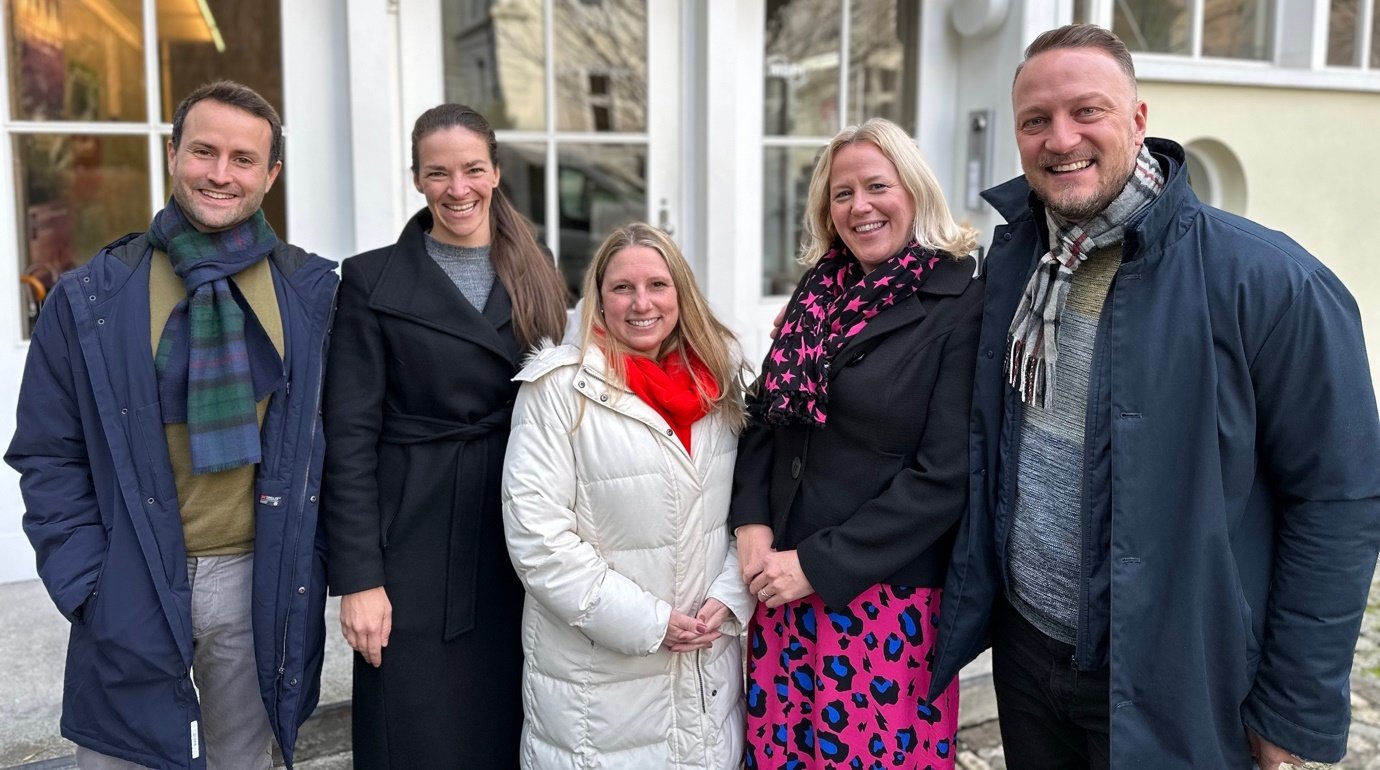
Left to right: Facundo Santomé (Senior Marketing Manager, MDPI), Constanze Shelhorn (Indexing Manager, MDPI), Cathy Holland (Director of Global Publisher Business Development, Digital Science), Helen Cooke (Managing Director of Publisher Sales, Digital Science), and Stefan Tochev (CEO, MDPI) in front of MDPI headquarters in Basel, Switzerland.
During our meeting, we discussed MDPI’s publishing philosophy and explored further avenues for collaboration. We look forward to continuing our partnership with Digital Science, aiming to improve our services yet further and meet the needs of our authors more closely than ever.
What is Altmetric?
You will notice that MDPI articles feature an Altmetric score, a colourful doughnut capturing the score in the upper right corner of the article page. This score represents ‘alternative metrics,’ as distinct from traditional metrics such as Impact Factor, CiteScore, and Scimago Journal Rank.
Altmetrics complement traditional citation-based metrics by capturing online discussions related to a specific research topic. By analyzing both sets of data, we can obtain a comprehensive understanding of the attention a particular research output receives and the sources in which it is mentioned.
“Almetric provides visual insights into where research is being discussed”
Sources Tracked by Altmetric

Altmetric badge showing the Altmetric score and colour-coded mention sources.
Altmetric monitors various sources, categorizing them into segments such as policy documents, peer reviews, Wikipedia, news and blogs, and social media, among other sources. Each category is identifiable by a specific colour.
The Altmetric badge provides visual insights into where the research is being discussed. A more colourful badge indicates broader mentions across multiple platforms. Such tracking enables us to gauge the extent of an article’s online dissemination, noting that increased visibility may correlate with higher citation rates.
Read more:
Impactful Research

Ten High-Altmetric Articles Published by MDPI
As at 30 January 2024, Altmetric has tracked 670,500 MDPI research outputs from MDPI, resulting in over 4.3 million mentions. This includes over 71,894 mentions in policy and patents and 294,714 mentions in news and blogs, with some achieving an Altmetric score as high as 28,754.
So, what is a good Altmetric score? There are various ways to put this score into context. You can find out more about the score in context and how to evaluate your work by this means.
Here are ten MDPI papers ranking in the top 5% of all research outputs scored by Altmetric.
|
|
“Accuracy in Wrist-Worn, Sensor-Based Measurements of Heart Rate and Energy Expenditure in a Diverse Cohort” J. Pers. Med. 2017, 7(2), 3; https://doi.org/10.3390/jpm7020003 Altmetric page: https://mdpi.altmetric.com/details/20477344 Altmetric shows that this article appeared in 253 news stories from 209 outlets including Forbes, BBC, and Fox News. |
|
|
“Daylight Saving Time and Acute Myocardial Infarction: A Meta-Analysis” J. Clin. Med. 2019, 8(3), 404; https://doi.org/10.3390/jcm8030404 Altmetric page: https://mdpi.altmetric.com/details/57654628 Altmetric shows that this article appeared in 295 news stories from 207 outlets including Forbes, The Atlantic, and New York Times. |
|
|
“The Preliminary Analysis of Cave Lion Cubs Panthera spelaea (Goldfuss, 1810) from the Permafrost of Siberia” Quaternary 2021, 4(3), 24; https://doi.org/10.3390/quat4030024 Altmetric page: https://mdpi.altmetric.com/details/111086701 Altmetric shows that this article appeared in 182 news stories from 134 outlets including CBC News, CNN, and National Geographic. |
|
|
“Not the Cat’s Meow? The Impact of Posing with Cats on Female Perceptions of Male Dateability” Animals 2020, 10(6), 1007; https://doi.org/10.3390/ani10061007 Altmetric page: https://mdpi.altmetric.com/details/83796184 Altmetric shows that this article appeared in 124 news stories from 98 outlets including VICE, CNN and The Guardian. |
|
|
“Behaviour and Welfare Impacts of Releasing Elephants from Overnight Tethers: A Zimbabwean Case Study” Animals 2022, 12(15), 1933; https://doi.org/10.3390/ani12151933 Altmetric page: https://mdpi.altmetric.com/details/133463915 Altmetric shows that this article appeared in 192 news stories from 186 outlets. |


How do I use altmetrics?
Altmetric Explorer provides a detailed step-by-step guide and instruction video for first-time users of the tool. The guide includes useful diagrams that make it easy to get started.
Sharing Research Online
For research to be tracked across different sources, Altmetric needs a research output with a persistent identifier: a DOI, ISBN, PubMed ID, handle ID, etc. When sharing research, it is important to include a link to the original research output.
|
|
“An Update on Eukaryotic Viruses Revived from Ancient Permafrost” Viruses 2023, 15(2), 564; https://doi.org/10.3390/v15020564 Altmetric page: https://mdpi.altmetric.com/details/142929875 Altmetric shows that this article appeared in 250 news stories from 180 outlets including CTV, Fox News, and CNN. |
|
|
“The Global Problem of Insufficient Sleep and Its Serious Public Health Implications” Healthcare 2019, 7(1), 1; https://doi.org/10.3390/healthcare7010001 Altmetric page: https://mdpi.altmetric.com/details/53406248 Altmetric shows that this article appeared in 252 news stories from 168 outlets including BBC, Harvard Business Review, and Forbes. |
|
|
“A Detailed Review Study on Potential Effects of Microplastics and Additives of Concern on Human Health” Int. J. Environ. Res. Public Health 2020, 17(4), 1212; https://doi.org/10.3390/ijerph17041212 Altmetric page: https://mdpi.altmetric.com/details/86529137 Altmetric shows that this article appeared in 197 news stories from 150 outlets including BBC, The Tribune, and World Economic Forum. |
|
|
“An Empirical Study of Chronic Diseases in the United States: A Visual Analytics Approach to Public Health” Int. J. Environ. Res. Public Health 2018, 15(3), 431; https://doi.org/10.3390/ijerph15030431 Altmetric page: https://mdpi.altmetric.com/details/34714141 Altmetric shows that this article appeared in 232 news stories from 149 outlets including Forbes, New York Times, and Harvard Business Review. |
|
|
“Garden Scraps: Agonistic Interactions between Hedgehogs and Sympatric Mammals in Urban Gardens” Animals 2023, 13(4), 590; https://doi.org/10.3390/ani13040590 Altmetric page: https://mdpi.altmetric.com/details/142934305 Altmetric shows that this article appeared in 172 news stories from 168 outlets including BBC. |
Inside MDPI
MDPI Annual Meeting Celebrations in China
On Thursday 25 January, over 1,300 MDPI colleagues from our two offices in Beijing gathered to kick off MDPI’s traditional ‘Annual Meetings.’ These celebrations take place in MDPI’s offices across China, including Dalian, Tianjin, Wuhan, and Nanjing.
The evenings include performances, informative talks and presentations, awards, and entertainment, providing an ideal platform to recognize our colleagues, celebrate their achievements, and set our sights on the future.
“It is essential that we stay connected and share best practices”

I sent a video congratulating everyone on their work and sharing our vision of building MDPI into the most trusted OA publisher, highlighting the roles each of us has to play in achieving that goal.
Unfortunately I could not join in person, but you may recall my recent trip, when I visited our offices in Beijing and Wuhan, which I look forward to visiting again this year.
Although our headquarters are in Basel, Switzerland, and we are expanding throughout Europe and North America, the majority of MDPI’s workforce is in China and throughout the Asia-Pacific region, including offices in Singapore, Thailand, Japan, and newly opened office in South Korea. It is essential that as a global organization, we stay connected and share best practices in order to grow collectively and continue providing the exceptional service to our authors.
The Annual Meeting is a moment to reflect and enjoy the year’s hard work and dedication.
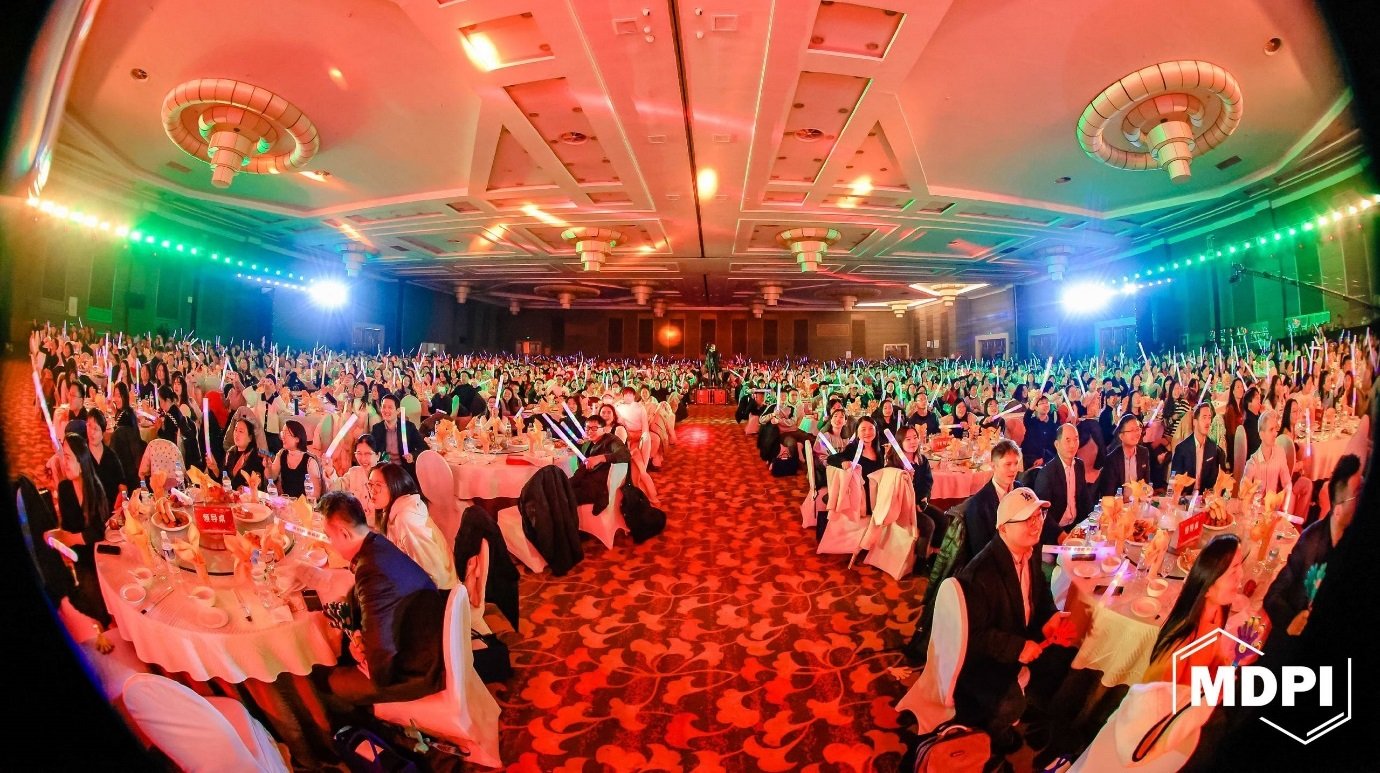
I extend our best wishes to all for the Chinese New Year (Xīnnián kuàilè)!
Coming Together for Science
MDPI and TU Delft Adopt Flat Fee Model in Extended Partnership
We are excited to announce a renewed three-year partnership with Delft University of Technology (TU Delft) in the Netherlands. This collaboration introduces a fixed lump-sum fee, covering publishing costs from 2024 to 2026.
“This initiative reflects our dedication to transparent and inclusive publishing”
TU Delft-affiliated authors will enjoy cost-free publishing in any MDPI journal during this period, aligning with our commitment to removing barriers for open access publishing. The agreement supports Plan S compliance and facilitates a seamless publishing process for TU Delft corresponding authors. This initiative reflects our dedication to transparent and inclusive publishing, providing stability and predictability both for authors and for institutions.
For further details on our Institutional Open Access Program (IOAP), please contact us.
Benefits to MDPI’s IOAP
At MDPI we have a long tradition of partnerships, including our Institutional Open Access Program (IOAP). IOAP supports institutions through simplification, access, transparency, APC discounts, and institutional repository deposits. The program simplifies administrative processes, offers central payment, and allows easy opting in and out. Participants gain free access to Susy, MDPI’s online submission system, with extensive article metadata and exportable data. APC discounts and Book Processing Charge discounts are available for affiliated authors. Automated deposits to institutional repositories and streamlined matching of papers to IOAP participants enhance the overall experience.
For further information, see our IOAP FAQ.
Closing Thoughts

Reflections on the 2024 APE Conference
MDPI was proud to co-sponsor the Academic Publishing in Europe (APE) 2024 Conference that took place in Berlin, Germany, from 9–10 January 2024.
The conference theme, ‘Keep the Conversation Going!’, explored the evolving landscape of scholarly communication. APE is one of the key conferences I make a point to attend each year. January offers a valuable opportunity to engage with new contacts, reconnect with familiar faces, and participate in impactful discussions and presentations among professionals, scholars, and practitioners in the field.
“It's fascinating to see how other publishers are leveraging AI”
Highlights
Some of the standout panels for me include: the role of the UN Sustainable Development Goals (SDGs) within the publishing industry. It was encouraging to hear the current status quo, though I was eager also to learn about the exciting projects planned for 2024 and beyond. These will allow us to track progress in subsequent years. At MDPI, we remain committed to promoting Open–Access (OA) content on SDGs through scientific articles and books. Furthermore, we extend our commitment to sustainability by financially supporting researchers through initiatives such as the World Sustainability Award and the Emerging Sustainability Leader Award, as well as waiving the APC for feature papers on each SDG.
In recent years, discussions on AI have become increasingly prominent at such conferences. It’s fascinating to see how other publishers are leveraging AI to meet the evolving needs of their audiences while at the same time using it to safeguard the scientific process. Other engaging panels that I enjoyed included updates on transformation beyond transformative agreements, the principles of lean change, incentive structures related to research integrity, and the panel on reviewer incentives.
“We can share best practices and lessons learned”
Incorporating MDPI’s Insights into Conferences
I must confess that I sometimes feel overlooked when MDPI is not invited to participate in crucial industry discussions. As the leading open access publisher and the third-largest publisher overall, we possess extensive experience in many of these areas and can offer valuable contributions to these discussions. We can share best practices, lessons learned, and our thinking about future trajectories. For instance, in panels discussing reviewer incentives, at MDPI we offer a discount voucher to reviewers for future submissions, reflecting our commitment to fostering a robust peer review process. In 2022 alone, MDPI collected over 1.4 million peer review reports, informing the decision-making processes of our editors. Given our expertise in these areas, it would be natural to include MDPI in such discussions. I therefore extend an invitation to future conference organizers to consider MDPI for speaking engagements and collaborative opportunities.
Chief Executive Officer
MDPI AG
29 January 2024
Meet Us at the MDPI World Wetlands Day 2024 Webinar, 2 February 2024

MDPI would like to invite all experts recognized in their fields to attend the MDPI World Wetlands Day 2024 Webinar, which will be held on 2 February 2024. The aim of this webinar is to encourage researchers to join together, take action, and raise awareness as to how the exchange of findings facilitates efforts to stop wetland loss.
We are looking forward to seeing you at the MDPI World Wetlands Day 2024 Webinar.
Title: MDPI World Wetlands Day 2024 Webinar
Date: 02 February 2024
Time: 10:00 a.m.–12:00 a.m. (CET) | 5:00 p.m.–7:00 p.m. (EST)
More Information: https://sciforum.net/event/WWD2024
This is a free webinar. After registering, you will receive a confirmation email containing information on how to join the webinar. Registrations with academic institutional email addresses will be prioritized.
Unable to attend? Register anyway and we will let you know when the recording is available to watch.
Register for free:

Program:
| Speaker/Presentation | Time in CET | Time in EST |
| Introduction | 10:00 a.m.–10.10 a.m. | 5:00 p.m.–5:10 p.m. |
| Professor Stephen Tooth “Wetlands in Drylands: ‘Hotspots’ of Ecosystem Services in Marginal Environments” |
10:10 a.m.– 10:40 a.m. | 5:10 p.m.–5:40 p.m. |
| Prof. Dr. Miklas Scholz “Sustainable Treatment Wetland Systems” |
10:40 a.m.– 11:10 a.m. | 5:40 p.m.–6:10 p.m. |
| Dr. Krish Jayachandran “Wetland Soils Health” |
11:10 a.m.–11:40 a.m. | 6:10 p.m.–6:40 p.m. |
| Q&A | 11:40 a.m.–11:55 a.m. | 6:40 p.m.–6:55 p.m. |
| Closing of Webinar | 11:55 a.m.–12:00 p.m. | 6:55 p.m.–7:00 p.m. |
Relevant Special Issues:
Applied Sciences
“River and Lake Catchments: Ecological Challenges, Hydrological Changes, Environmental Problems”
Guest Editors: Prof. Dr. Christian Opp and Dr. Tom Lotz
Deadline for manuscript submissions: 20 February 2024
Environments
“Monitoring and Assessment of Environmental Quality in Coastal Ecosystems Volume III“
Guest Editor: Dr. Sílvia C. Gonçalves
Deadline for manuscript submissions: 20 May 2024
Hydrobiology
“Ecosystem Disturbance in Small Stream“
Guest Editor: Prof. Dr. Baik-Ho Kim
Deadline for manuscript submissions: 30 June 2024
Forests
“Research on Vegetation Change in Forest Wetlands“
Guest Editor: Dr. Jasmin Mantilla-Contreras
Deadline for manuscript submissions: 15 August 2024
Remote Sensing
“Remote Sensing for Mapping and Monitoring Wetlands and Their Ecosystems“
Guest Editor: Dr. Andy Hardy
Deadline for manuscript submissions: 31 May 2024
“Remote Sensing of Forest and Wetland Hydrology“
Guest Editor: Prof. Dr. Sudhanshu Sekhar Panda
Deadline for manuscript submissions: 31 March 2024
“Future of the Wetlands in Megacities under Rapid Urbanization: Geospatial Analysis and Modeling of the Land-Use Changes Using Remotely Sensed Data and GIS“
Guest Editors: Dr. Darshana Athukorala and Prof. Dr. Yuji Murayama
Deadline for manuscript submissions: 26 June 2024
“Remote Sensing for Wetland Restoration“
Guest Editors: Prof. Dr. Xiyong Hou, Prof. Dr. Weiwei Sun, Prof. Dr. Dehua Mao, Dr. Chao Chen and Dr. Dong Li
Deadline for manuscript submissions: 31 May 2024
Diversity
“Knowledge and Conservation of Peatlands and Their Biodiversity“
Guest Editors: Prof. Dr. Xabier Pontevedra Pombal and Dr. Martín Souto
Deadline for manuscript submissions: 15 November 2024
“Ecology, Diversity and Conservation of Aquatic and Helophytic Plants, Plant Communities and Their Environments“
Guest Editor: Prof. Dr. Jarosław Proćków
Deadline for manuscript submissions: 30 November 2024
“Biodiversity Conservation in Metacommunities“
Guest Editor: Dr. Alessandro Ferrarini
Deadline for manuscript submissions: 30 April 2024
Land
“Ecosystem Services and Coastal Management: Tools to Counteract Sediment Losses“
Guest Editors: Prof. Dr. Margherita Palmieri, Prof. Marucci Angelo and Prof. Dr. Marcello Di Risio
Deadline: 31 July 2024
“Recent Advances in the Ecological Conservation of Coastal Landscapes“
Guest Editor: Prof. Dr. Augusto Pérez-Alberti
Deadline: 30 April 2024
“Soil Security of Peatland Ecosystems: Risk Assessment, Pollution Prevention and Restoration“
Guest Editors: Dr. Oskars Purmalis and Dr. Marios Drosos
Deadline: 26 April 2024
“Surface Runoff and Soil Erosion in the Mediterranean Region“
Guest Editors: Prof. Dr. Hanoch Lavee and Dr. Lea Wittenberg
Deadline: 30 April 2024
“Ecological and Cultural Ecosystem Services in Coastal Areas“
Guest Editors: Dr. Mita Drius, Prof. Maria Laura Carranza and Prof. Dr. Robert Philipp Wagensommer
Deadline: 30 April 2024
“Global Change in Mediterranean Regions: Potential Impact of Climate Drift and Land Use on Soil Erosion and Land Degradation“
Guest Editors: Dr. Rossano Ciampalini, Dr. Feliciana Licciardello, Dr. Damien Raclot and Dr. Armand Crabit
Deadline: 26 June 2024
“Effects of Land Use on the Ecohydrology of River Basin in Accordance with Climate Change II“
Guest Editors: Dr. Wiktor Halecki, Dr. Dawid Bedla, Dr. Marek Ryczek and Prof. Dr. Artur Radecki-Pawlik
Deadline: 15 March 2024
“Monitoring and Simulation of Wetland Ecological Processes“
Guest Editors: Prof. Dr. Zhenguo Niu, Prof. Dr. Bin Zhao, Prof. Dr. Zhaoqing Luan and Dr. Bo Guan
Deadline: 25 June 2024
Water
“ Microbial Transformation and Transport of Organic Pollutants within Paddy-Ditch-Pond Water “
Guest Editors: Dr. Jing Chen and Dr. Xiang Gao
Deadline: 25 May 2024
“Internal Nutrient Cycling in Lakes and Reservoirs“
Guest Editors: Dr. Xiaolong Yao and Dr. Xingyu Jiang
Deadline: 28 February 2024
“Wetland Ecosystems—Functions and Use in a Changing Climate“
Guest Editor: Prof. Dr. Jianghua Wu
Deadline: 29 February 2024
“Ecohydrological Processes, Environmental Effects, and Integrated Regulation of Wetland Ecosystems, Volume II“
Guest Editors: Prof. Dr. Junhong Bai, Dr. Tian Xie and Dr. Laibin Huang
Deadline: 31 July 2024
10 January 2024
International Journal of Environmental Research and Public Health Papers Cited in the News in Q4 of 2023
Throughout the fourth quarter of 2023, a total of 398 International Journal of Environmental Research and Public Health (IJERPH, ISSN: 1660-4601) papers were cited in news articles published by reputable media sources such as The Washington Post, Scientific American, BBC News, and Forbes.
Learn more about the latest research below.
“At least a third of Americans live with two or more chronic conditions, and more than a quarter live with three or more. To deal with the problem of comorbidities, approximately half of organizations currently manage between four and nine digital health point solutions––programs designed to help manage a single condition––at a time.”
Forbes—“Three Challenges To Navigating This Year's Biggest Healthcare Trends”
IJERPH—“An Empirical Study of Chronic Diseases in the United States: A Visual Analytics Approach to Public Health”
Article Link: https://www.mdpi.com/1660-4601/15/3/431
“A growing body of research is revealing how crises of climate change—including wildfire smoke, pollution, flooding and extreme heat—are worsening conditions such as anxiety, depression and post-traumatic stress disorder (PTSD).”
Scientific American—“Treating Mental Health as Part of Climate Disaster Recovery”
IJERPH—“Chronic Mental Health Sequelae of Climate Change Extremes: A Case Study of the Deadliest Californian Wildfire”
Article Link: https://www.mdpi.com/1660-4601/18/4/1487
“It has been widely reported how the pandemic accelerated stress and workloads on healthcare workers and organizations. While medical professionals have shown incredible resilience, they are not invincible. Staffing shortages, inaccessibility to proper care and employee burnout are real, undermining the core of patient care.”
Forbes—“Four Digital Solutions That Can Alleviate Issues In Healthcare”
IJERPH—“Quality of Life in Healthcare Workers during COVID-19—A Longitudinal Study”
Article Link: https://www.mdpi.com/1660-4601/20/14/6397
“A notable aspect of cognitive development among children who take part in outdoor learning is a sense of responsibility towards local spaces.”
BBC News—“How Forest Schools Boost Children's Immune Systems”
IJERPH—“Time Spent in Nature Is Associated with Increased Pro-Environmental Attitudes and Behaviors”
Article Link: https://www.mdpi.com/1660-4601/18/14/7498
“Imagine waking up from sleep, opening your eyes, and realizing that you can’t move or speak. You’re overwhelmed with the terrifying sensation of being paralyzed. Some of you don’t have to imagine — it’s all too real for about 8 percent of the general population who suffers from the condition fittingly known as sleep paralysis (SP).”
Discover Magazine—“What Really Happens During Sleep Paralysis and How to Stop It”
IJERPH—“Prevalence and Clinical Picture of Sleep Paralysis in a Polish Student Sample”
Article Link: https://www.mdpi.com/1660-4601/17/10/3529
“Study after study has shown that people move more in warmer months and become more sedentary in the winter, but your body and mood will benefit from fresh air and exercise, whether it’s a walk in the winter air or … snowga.”
Washington Post—“7 Ways to Live Healthier This Winter”
IJERPH—“Impact of Seasonality on Physical Activity: A Systematic Review”
Article Link: https://www.mdpi.com/1660-4601/19/1/2
2 January 2024
MDPI Insights: The CEO’s Letter #7 - Nobel Laureates Entrust MDPI with Their Research
Welcome to the MDPI Insights: The CEO's Letter.
In these monthly letters, I will showcase two key aspects of our work at MDPI: our commitment to empowering researchers and our determination to facilitating open scientific exchange.
Opening Thoughts
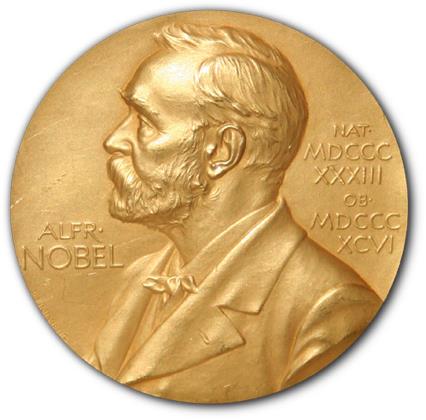
Nobel Prize Laureates Entrust MDPI with Their Research
The Nobel Prize stands as a hallmark of distinction, honouring ground-breaking research across disciplines. Annually, the Nobel Prizes are awarded in six categories: Physics, Chemistry, Medicine or Physiology, Literature, Peace, and Economic Sciences.
Through the years, renowned scholars have entrusted MDPI with their work. As at December 2023, 26 Nobel laureates have contributed to more than 75 articles across 25 MDPI journals, including: Antibiotics, Applied Sciences, Biology, Biomedicines, Cancers, Catalysts, Cells, Crystals, Entropy, Games, IJMS, Life, Materials, Micromachines, Molecules, Pharmaceuticals, Pharmaceutics, Photonics, Quantum Beam Science, Remote Sensing, Sensors, Solids, Universe, Vaccines, and Viruses.
The best of the best trust us with their work.
Nobel Prize Laureates Who Have Published with MDPI
We are proud to list the names of Pierre Agostini, Hiroshi Amano, Werner Arber, Aaron Ciechanover, Robert H. Grubbs, Oliver Hart, Gerard ‘t Hooft, Michael Houghton, Harald zur Hausen, Katalin Karikó, Jean-Marie Lehn, Gérard Mourou, Ferid Murad, Shuji Nakamura, William Nordhaus, Kostya S. Novoselov, Giorgio Parisi, Charles M. Rice, Alvin E. Roth, Donna Strickland, K. Barry Sharpless, George F. Smoot, Anne L’Huillier, Drew Weissman, Kurt Wüthrich, Ada Yonath.
The privilege of hosting such contributors resonates deeply with our editorial teams. For instance, in this interview, the Editor-in-Chief (EiC) of Universe speaks on the significance of publishing a paper by Nobel laureate Gerard ’t Hooft within the journal.
2023 Nobel Prize Winners Published by MDPI
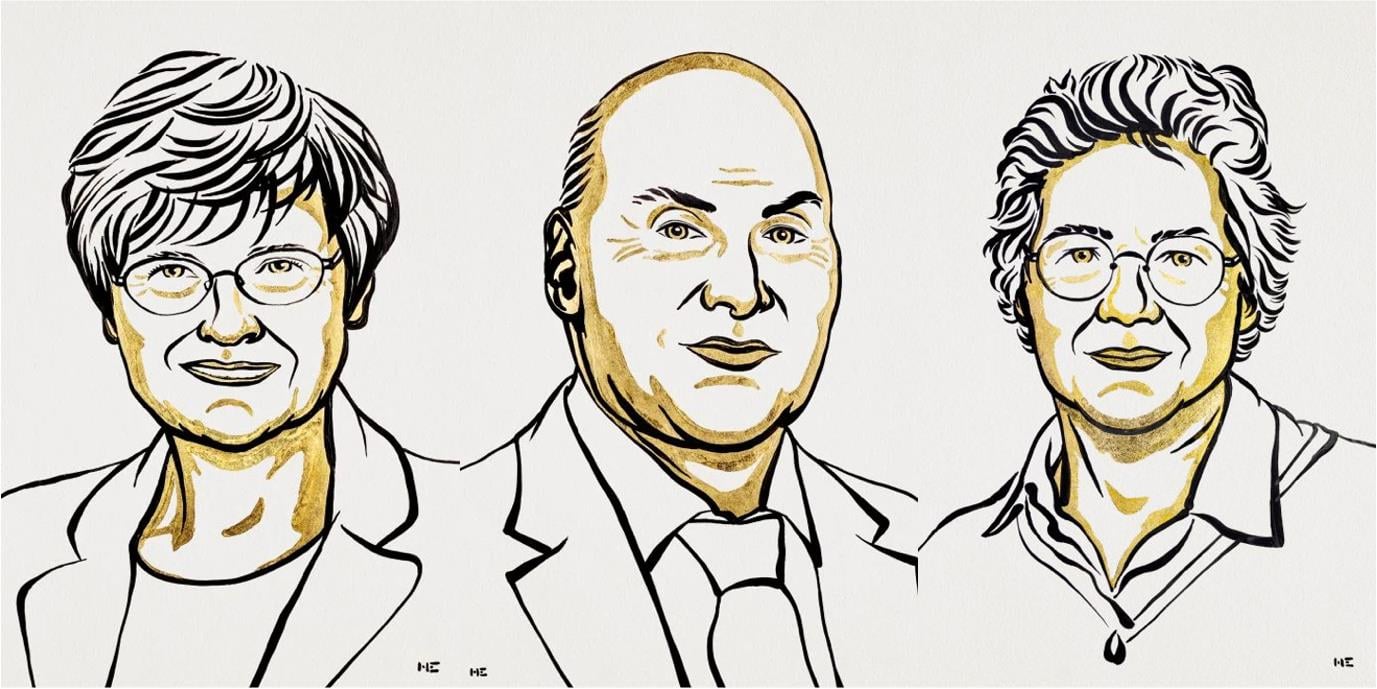
Nobel Prize Winners, 2023: Katalin Karikó, Drew Weissman, Anne L’Huillier (Ill. Niklas Elmehed © Nobel Prize Outreach)
Three laureates from the 2023 Nobel Prize cohort have trusted MDPI as their publishing platform. Notably, in a 2022 Pharmaceutics paper, molecular biologist Katalin Karikó and her team presented a methodology for evaluating mRNA capping efficiency, pivotal for therapeutic applications. Pharmaceutics had previously dedicated a Special Issue to “mRNA Therapeutics: A Themed Issue in Honor of Professor Katalin Karikó”, spotlighting ten articles from August 2021 to February 2022.
In the journal Vaccines, Professor Drew Weissman, collaborating with scholars from Pennsylvania University and George Mason University, contributed an influential review titled “Nanomaterial Delivery Systems for mRNA Vaccines”. His collaborative efforts spanned five papers across MDPI journals between 2021 and 2023.
Furthermore, Anne L'Huillier of Lund University, only the fifth female recipient of the Physics Prize, co-authored an article in Applied Sciences focusing on "Advanced EUV and X-Ray Optics". Similarly, Pierre Agostini, an Emeritus Professor from Ohio State University, co-authored an article featured in the special issue "Attosecond Science and Technology: Principles and Applications".
We extend heartfelt congratulations to all Nobel Prize laureates and express sincere gratitude for their confidence in MDPI as a platform for their scholarly contributions.
Read more:
Impactful Research

MDPI Journals Newly Indexed in 2023
The aim of indexing is to enhance the quality and credibility of published research, ensuring that researchers access the most credible resources available. While the principle behind citation indexing is straightforward, it remains one of the most dependable methods for tracking an idea's evolution across various scientific disciplines.
Throughout the year, MDPI works to expand the reach of our publications across premier multidisciplinary databases like Web of Science, Scopus, EBSCO, and ProQuest. This initiative is spearheaded by MDPI's Indexing team, under the leadership of Dr. Constanze Schelhorn.
In 2023, MDPI achieved 54 new acceptances in Scopus, 29 in Web of Science, 52 in EBSCO, and 83 in DOAJ: Directory of Open Access Journals.
The team prioritizes ensuring that our journals feature in numerous specialized databases, including PMC, PubMed, MEDLINE, Inspec, CAS, and FSTA, among others. Currently, MDPI collaborates with over 65 renowned international databases, consistently enhancing our database affiliations annually.
MDPI’s journals are indexed in all major global databases.
Furthermore, we collaborate with universities and government organizations to list our journals in country-specific ranking lists and relevant institutional repositories. This ensures compliance with requirements often set by funders or institutions for authors to publish in specific journals.
Web of Science Adds 24 MDPI Journals to Emerging Sources Citation Index (ESCI)
Clarivate recently analysed MDPI’s new journals, resulting in 24 journals, mainly established in 2020, being added to the ESCI in November and December 2023. Additionally, five journals passed this assessment earlier in the year. For a complete list of our journals in Web of Science, refer here. Journals in the ESCI meet 24 quality criteria, ensuring editorial rigor. They may be considered for inclusion in broader indices like the Science Citation Index Expanded (SCIE), the Social Sciences Citation Index (SSCI), or the Arts and Humanities Citation Index (AHCI), based on four impact criteria.
Read more:
Inside MDPI
MDPI Appoints New Chief Operating Officer (COO)

Alistair Freeland returned to MDPI and assumed the role of Chief Operating Officer in November 2023, a position he previously held from 2013 to 2019. He succeeds Dr. Yu Lin, who will remain a member of MDPI’s Board of Directors, overseeing significant financial decisions for the company. I would like to express my sincere thanks to Dr. Yu Lin for his service as COO.
Alistair brings extensive experience not only in scholarly publishing but also in technology and business management. Prior to rejoining MDPI, he was associated with SIX Group, the entity responsible for Switzerland's financial market infrastructure. There, he played a pivotal role in developing the blockchain-based platform SDX (SIX Digital Exchange), which has gained traction among major Swiss banks and the Swiss National Bank.
As COO, Alistair will collaborate with the MDPI management team to improve the practices and services we offer to scholarly communities. I am pleased to welcome Alistair back to MDPI and look forward to his contributions going forward.
Coming Together for Science

MDPI’s 2024 In-Person Academic Events Schedule
MDPI's Conference Team is dedicated to organizing and hosting in-person academic events across Europe, Asia-Pacific, and North America. We recognize conferences as invaluable platforms for scientific collaboration, scholarly exchange, discussions on contemporary topics, networking, and forging collaborations.
Here's a glimpse of the notable events we currently have scheduled for 2024:
|
|
14–16 February, 2024 |
|
|
24–26 April, 2024 |
|
|
28–31 May, 2024 |
|
|
1–4 August, 2024 |
Upcoming events with details to be announced:
- September 2024, Materials 2024 – Basel, Switzerland
- 19–21 September 2024, International Conference on Nanomaterials Sciences 2024 – Beijing, China
- October 2024, ncRNA 2024 – Basel, Switzerland
- November 2024, Pharmaceuticals 2024 – Barcelona, Spain
- 22–26 November 2024, International Conference on Science of Electronics – Wuhan, China
- Stay tuned for more details on the Sustainable Publishing Forum 2024.
Click here for all upcoming MDPI events.
Organize Your Event with MDPI’s Sciforum
Sciforum is MDPI’s platform dedicated to the organization of scientific events. In line with our mission to promote science, Sciforum supports scholars, societies, research networks, and universities at all stages of organizing in-person events, virtual events and webinars. Our platforms are efficient, user-friendly, and cost-effective. We handle all steps related to event management. Contact us for details.
Closing Thoughts

Reflecting on 2023 and Looking Ahead to 2024
As we approach 2024, I reflect on the incredible journey we’ve had together at MDPI this year. The past 12 months have been marked by ambitious projects and initiatives to improve our internal processes, and a commitment to continue delivering top-notch services to our stakeholders. I’d like to thank each and every one of our staff members for contributing to the positive experiences our stakeholders have reported in our surveys. Your dedication to speed, efficiency, and effective communication with our stakeholders is very much recognized and appreciated.
Becoming a stronger organisation
While we have encountered challenges in 2023, it’s important to understand that these are a part of our growth process. Difficulties provide us with opportunities to reflect, address problems at their roots, and ultimately evolve into a stronger organization. Our stakeholders expect us to overcome tough times, and it’s an expectation that we have for ourselves.
I extend my sincere appreciation to every MDPI employee, from our editorial office and IT department to marketing, indexing, IOAP, societies, Scientific Office board, products, production, conferences, finance, operations, admin, and beyond. To our newest team members, a warm welcome; to our longstanding colleagues, your dedication is invaluable.
“I am committed to taking MDPI to a new level of excellence.”
Interacting with many of you during my visits to our offices and representing MDPI at external events has been a personal highlight. I am deeply grateful to Dr. Lin for entrusting me with the role of CEO of MDPI. Looking forward, I am committed to working closely with our management team to lead MDPI and take it to a new level of excellence, aiming to establish it as the most trusted publisher in open access worldwide. This is a collective endeavour, with each of us shaping MDPI’s reputation. I therefore encourage us to take pride in our work, as it represents not only our craft but also MDPI as a whole.
Accountability and communication
As we look forward to 2024, there’s a lot to be excited about. Together, we’ll navigate challenges, seize growth opportunities, and refine our practices. To solidify MDPI’s position as the premier open access publisher globally, we must bolster accountability, improve stakeholder communication, share MDPI’s best practices, champion the open access philosophy, and educate stakeholders about our mission, methodologies, and motivations.
Thank you for engaging with the CEO Letter over the past six months of 2023. I will continue to release this newsletter as a method of sharing the great work being done at MDPI. Please feel free to connect directly with any insights or questions.
Here’s to a joyous and prosperous 2024!
Chief Executive Officer
MDPI AG
14 December 2023
International Journal of Environmental Research and Public Health | International Universal Health Coverage Day in 2023—“Health for All: Time for Action”
The International Universal Health Coverage Day (UHC Day) is held annually on 12 December. It aims to work with multi-stakeholder partners to raise awareness of the need to achieve universal health coverage. With the adoption of the United Nations Political Declaration on Universal Health Coverage (21 September 2023), this year’s UHC Day provides an opportunity to accelerate commitments to universal health coverage. The theme of UHC Day 2023 is “Health for All: Time for Action”, to call on all policymakers to invest in health systems and primary healthcare and provide affordable and quality healthcare to their citizens.
To further discuss research related to the International Universal Health Coverage Day (UHC Day), the International Journal of Environmental Research and Public Health (IJERPH, ISSN: 1660-4601) has collected open access academic research on the topic of advancing the coverage of the broader envisioned right to health. We want to use this special day to share new scientific knowledge in the field of the opportunities and challenges associated with achieving universal health coverage.
Article Collection:
1. “Educational Intervention to Improve Citizen’s Healthcare Participation Perception in Rural Japanese Communities: A Pilot Study”
by Ryuichi Ohta, Yoshinori Ryu, Jun Kitayuguchi, Chiaki Sano and Karen D. Könings
Int. J. Environ. Res. Public Health 2021, 18(4), 1782; https://doi.org/10.3390/ijerph18041782
Available online: https://www.mdpi.com/1660-4601/18/4/1782
2. “A Vision of Future Healthcare: Potential Opportunities and Risks of Systems Medicine from a Citizen and Patient Perspective—Results of a Qualitative Study”
by Clarissa Lemmen, Dusan Simic and Stephanie Stock
Int. J. Environ. Res. Public Health 2021, 18(18), 9879; https://doi.org/10.3390/ijerph18189879
Available online: https://www.mdpi.com/1660-4601/18/18/9879
3. “Communication Experiences in Primary Healthcare with Refugees and Asylum Seekers: A Literature Review and Narrative Synthesis”
by Pinika Patel, Sarah Bernays, Hankiz Dolan, Danielle Marie Muscat and Lyndal Trevena
Int. J. Environ. Res. Public Health 2021, 18(4), 1469; https://doi.org/10.3390/ijerph18041469
Available online: https://www.mdpi.com/1660-4601/18/4/1469
4. ““To Be Treated as a Person and Not as a Disease Entity”—Expectations of People with Visual Impairments towards Primary Healthcare: Results of the Mixed-Method Survey in Poland”
by Katarzyna Weronika Binder-Olibrowska, Maciek Godycki-Ćwirko and Magdalena Agnieszka Wrzesińska
Int. J. Environ. Res. Public Health 2022, 19(20), 13519; https://doi.org/10.3390/ijerph192013519
Available online: https://www.mdpi.com/1660-4601/19/20/13519
5. “Health Communication and Inequalities in Primary Care Access during the COVID-19 Pandemic among Ethnic Minorities in the United Kingdom: Lived Experiences and Recommendations”
by Winifred Ekezie, Akilah Maxwell, Margaret Byron, Barbara Czyznikowska, Idil Osman, Katie Moylan, Sarah Gong and Manish Pareek
Int. J. Environ. Res. Public Health 2022, 19(22), 15166; https://doi.org/10.3390/ijerph192215166
Available online: https://www.mdpi.com/1660-4601/19/22/15166
6. “A Scoping Review of Approaches to Improving Quality of Data Relating to Health Inequalities”
by Sowmiya Moorthie, Vicki Peacey, Sian Evans, Veronica Phillips, Andres Roman-Urrestarazu, Carol Brayne and Louise Lafortune
Int. J. Environ. Res. Public Health 2022, 19(23), 15874; https://doi.org/10.3390/ijerph192315874
Available online: https://www.mdpi.com/1660-4601/19/23/15874
7. “First Nations, Inuit and Métis Peoples Living in Urban Areas of Canada and Their Access to Healthcare: A Systematic Review”
by Simon Graham, Nicole M. Muir, Jocelyn W. Formsma and Janet Smylie
Int. J. Environ. Res. Public Health 2023, 20(11), 5956; https://doi.org/10.3390/ijerph20115956
Available online: https://www.mdpi.com/1660-4601/20/11/5956
8. “Enablers and Barriers to Accessing Healthcare Services for Aboriginal People in New South Wales, Australia”
by Davida Nolan-Isles, Rona Macniven, Kate Hunter, Josephine Gwynn, Josephine Gwynn, Rachael Moir, Yvonne Dimitropoulos, Donna Taylor, Tim Agius, Heather Finlayson et al.
Int. J. Environ. Res. Public Health 2021, 18(6), 3014; https://doi.org/10.3390/ijerph18063014
Available online: https://www.mdpi.com/1660-4601/18/6/3014
Access more articles at the following link: https://www.mdpi.com/search?journal=ijerph.
Call for Papers:
“Healthcare Policy and Population Health: Unpacking the Connections”
Guest Editor: Dr. Tim Tenbensel
Submission deadline: 31 May 2024
“New Insights into Understudied Phenomena in Healthcare”
Guest Editors: Dr. José Manuel Hernández Padilla and Dr. Cayetano Fernández-Sola
Submission deadline: 31 March 2024
Access more Special Issues at the following link: https://www.mdpi.com/journal/ijerph/special_issues.
Closed Special Issues:
“Using Digital Health Technologies to Improve Healthcare Quality”
Guest Editors: Dr. Anna Janssen and Dr. Melissa Brunner
“Equity, Access and Use of Health Care Services”
Guest Editors: Prof. Dr. Rosa Urbanos-Garrido and Dr. Alexandrina Stoyanova
5 December 2023
International Journal of Environmental Research and Public Health | International Day of Persons with Disabilities in 2023—“United in Action to Rescue and Achieve the Sustainable Development Goals (SDGs) for, with, and by Persons with Disabilities”
The International Day of Persons with Disabilities (IDPD) is held annually on 3 December. Currently, more than 1.3 billion people worldwide suffer from some form of disability, accounting for approximately 15% of the world's total population. The aim of the IDPD is to promote an understanding of disability issues and mobilize support for the dignity, rights, and well-being of persons with disabilities. The theme of IDPD 2023 is “United in Action to Rescue and Achieve the Sustainable Development Goals (SDGs) for, with, and by Persons with Disabilities”, to enhance actions and international cooperation to make the SDGs a reality for, with, and by persons with disabilities.
To further discuss research related to the International Day of Persons with Disabilities (IDPD), the International Journal of Environmental Research and Public Health (IJERPH, ISSN: 1660-4601) has collected open access academic research on the topic of the health and well-being of persons with disabilities. We want to use this special day to share new scientific knowledge in the field of the participation and empowerment of persons with disabilities in achieving the SDGs.
Article Collection:
1. ““Enticing” but Not Necessarily a “Space Designed for Me”: Experiences of Urban Park Use by Older Adults with Disability”
by Meredith Perry, Lucy Cotes, Benjamin Horton, Rebecca Kunac, Isaac Snell, Blake Taylor, Abbey Wright and Hemakumar Devan
Int. J. Environ. Res. Public Health 2021, 18(2), 552; https://doi.org/10.3390/ijerph18020552
Available online: https://www.mdpi.com/1660-4601/18/2/552
2. “Health and Access to Health Services for People with Disability in Australia: Data and Data Gaps”
by Nicola Fortune, Rosamond H. Madden and Shane Clifton
Int. J. Environ. Res. Public Health 2021, 18(21), 11705; https://doi.org/10.3390/ijerph182111705
Available online: https://www.mdpi.com/1660-4601/18/21/11705
3. “Impact of the Acceptance of Disability on Self-Esteem among Adults with Disabilities: A Four-Year Follow-Up Study”
by Yun Hwa Jung, Soo Hyun Kang, Eun-Cheol Park and Suk-Yong Jang
Int. J. Environ. Res. Public Health 2022, 19(7), 3874; https://doi.org/10.3390/ijerph19073874
Available online: https://www.mdpi.com/1660-4601/19/7/3874
4. “How Did People with Functional Disability Experience the First COVID-19 Lockdown? A Thematic Analysis of YouTube Comments”
by Karen A. E. Hall, Blanca Deusdad, Manuel D’Hers Del Pozo and Ángel Martínez-Hernáez
Int. J. Environ. Res. Public Health 2022, 19(17), 10550; https://doi.org/10.3390/ijerph191710550
Available online: https://www.mdpi.com/1660-4601/19/17/10550
5. “Tides of Change—Barriers and Facilitators to Beach Accessibility for Older People and People with Disability: An Australian Community Survey”
by Sasha Job, Luke Heales and Steven Obst
Int. J. Environ. Res. Public Health 2023, 20(9), 5651; https://doi.org/10.3390/ijerph20095651
Available online: https://www.mdpi.com/1660-4601/20/9/5651
6. “Health and Socioeconomic Determinants of Abuse among Women with Disabilities”
by Javier Zamora Arenas, Ana Millán Jiménez and Marcos Bote
Int. J. Environ. Res. Public Health 2023, 20(12), 6191; https://doi.org/10.3390/ijerph20126191
Available online: https://www.mdpi.com/1660-4601/20/12/6191
7. “Examining the Canadian 24-Hour Movement Guidelines among Adults with Intellectual Disability: A Pilot Study”
by John Cooper Coats, Matthew Coxon, Viviene A. Temple, Cara Butler and Lynneth Stuart-Hill
Int. J. Environ. Res. Public Health 2023, 20(13), 6291; https://doi.org/10.3390/ijerph20136291
Available online: https://www.mdpi.com/1660-4601/20/13/6291
8. “Built Environment Accessibility and Disability as Predictors of Well-Being among Older Adults: A Norwegian Cross-Sectional Study”
by Grace Katharine Forster, Leif Edvard Aarø, Maria Nordheim Alme, Thomas Hansen, Thomas Sevenius Nilsen and Øystein Vedaa
Int. J. Environ. Res. Public Health 2023, 20(10), 5898; https://doi.org/10.3390/ijerph20105898
Available online: https://www.mdpi.com/1660-4601/20/10/5898
Access more articles at the following link: https://www.mdpi.com/search?journal=ijerph.
Call for Papers:
“The Mental Health of Persons with Disabilities; towards Co-produced Solutions”
Guest Editors: Dr. Ikenna Ebuenyi and Dr. Olayemi Akinola
Submission deadline: 31 January 2024
“Mobile Health and Mobile Rehabilitation for People with Disabilities: 2nd Edition”
Guest Editors: Dr. Michael L. Jones, Dr. Frank Deruyter and Dr. John T. Morris
Submission deadline: 29 February 2024
Access more Special Issues at the following link: https://www.mdpi.com/journal/ijerph/special_issues.
Closed Special Issues:
“Disability and Healthcare Disparities”
Guest Editors: Dr. Dikaios Sakellariou and Dr. Hisayo Katsui
Guest Editor: Dr. Janet Finlayson
30 November 2023
MDPI Insights: The CEO’s Letter #6 - MDPI Spain Summit and ResearchGate
Welcome to the MDPI Insights: The CEO's Letter.
In these monthly letters, I will showcase two key aspects of our work at MDPI: our commitment to empowering researchers and our determination to facilitating open scientific exchange.
Opening Thoughts

MDPI Spain Summit
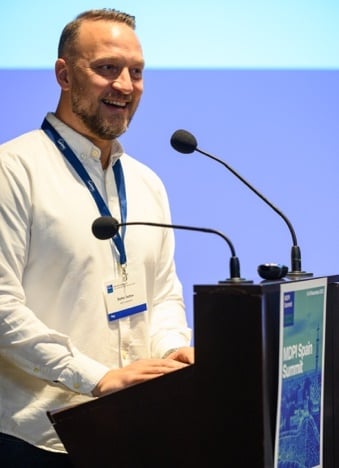
Stefan Tochev (CEO, MDPI) gives the opening speech at the MDPI Spain Summit.
On Friday 10 November 2023 I was in Barcelona, Spain, to deliver the opening presentation and participate in a panel at MDPI’s Spain Summit, a two-day event, inspired by our salon events in China.
With 16 Editors-in-Chief (EiCs) and 20 Editorial Board Members (EBMs) in attendance, the event, organized by our conference team and Barcelona office, featured presentations on open access (OA), MDPI, and publishing market trends in Spain.
The event provided a great opportunity to engage with stakeholders from various MDPI journals, including Nutrients, Vaccines, Buildings, IJMS, and others. We were able to gather feedback and have open conversations around manuscript quality, the peer-review process, and journal development, as well as accreditation agencies.
The main objective of this Summit was to bring together Editors representing MDPI journals across various disciplines within Spanish universities and research centers, primarily from the Barcelona area. The aim was to facilitate an open and fruitful discussion regarding the development of their journals, the future of OA in Spain, and to provide meaningful interactions and networking opportunities.
Connecting with Editorial Board Members
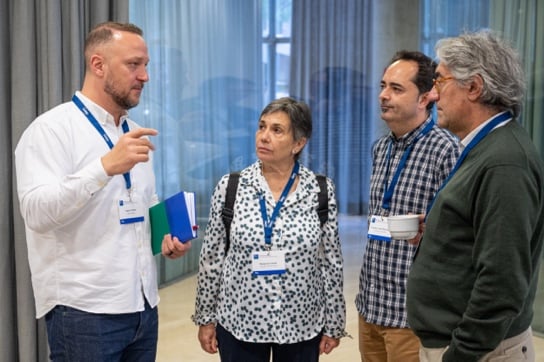
Stefan Tochev in conversation with Summit participants: "Our EBMs are passionate about the journals they serve."
Interacting with our EBMs in person provides a valuable opportunity to show how important it is to us to connect with them, hear their perspectives on their journals and learn more about their own experience collaborating with MDPI.
From my conversations, it was clear that our EBMs are passionate about the journals they serve. I know the advice they provide may sometimes involve just small tweaks, but these can lead to important improvements. As the saying goes, small hinges swing open big doors.
As at November 2023, MDPI has over 6,300 EBMs affiliated with Spanish institutions, with more than 30 of them serving as EiCs or section EiCs. Furthermore, over 68,000 Spanish scholars have contributed as reviewers in MDPI journals.
Open Access in Spain
In 2023, Spain implemented legislation mandating immediate OA for all publicly funded research, aligning with the EU’s Plan S initiative to expedite the transition to OA. The Spanish government also approved a four-year, €23.8 million annual budget for the first national OA strategy, aiming to make publicly funded research freely accessible upon publication. This strategy aims to strengthen the quality and transparency of research in Spain, and to help promote movement towards a digital, low-carbon economy.
For further details of Spain's OA policy and the history of government mandates, click here.
Spain has already seen a notable decline in subscription-only articles, decreasing by 62% over a 10-year period, while gold OA increased by 42%. Green OA slightly decreased, suggesting a shift towards publishing in gold OA journals rather than traditional subscription-based ones. Here are some statistics from Scopus.
A big thank-you to the various MDPI teams, including our conference team and the Barcelona office, for organizing this very successful event!
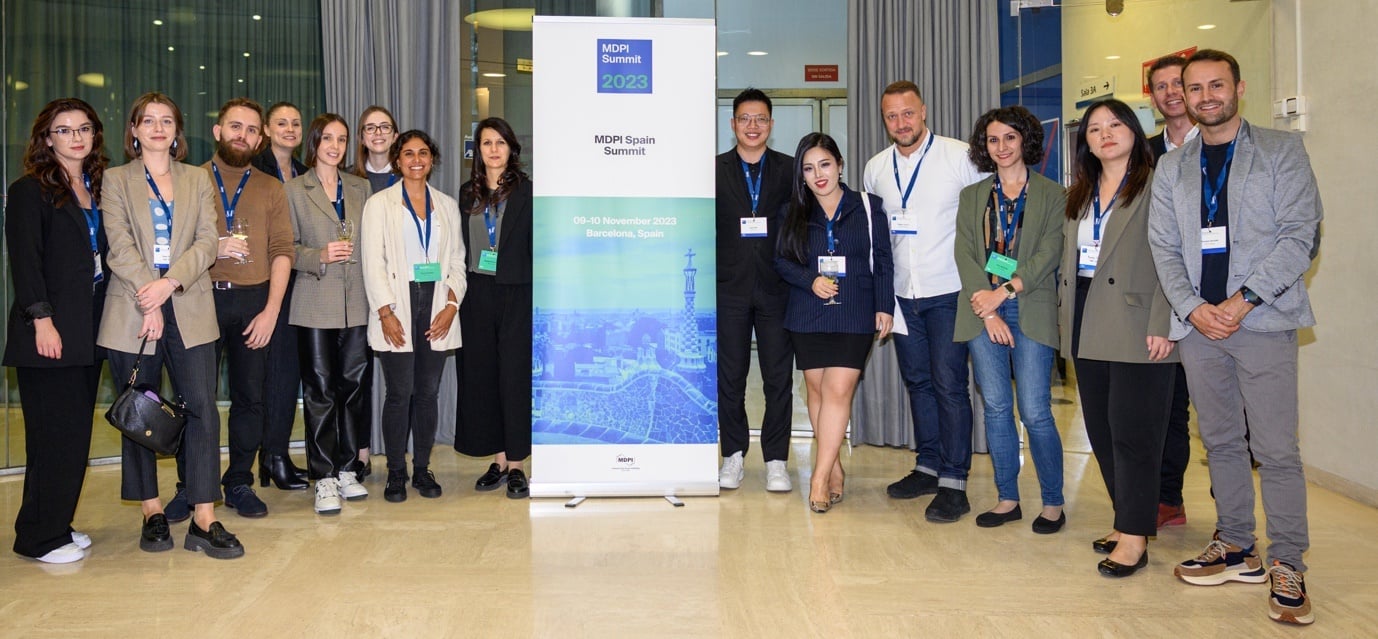
MDPI colleagues from various offices gathered to host and support the first MDPI Spain Summit, in Barcelona, Spain.
I think this type of gathering has the potential to become an annual event in various locations. For example, Manchester could be an option, as we have over 30 EiCs and over 3,000 EBMs in the UK, a top market for MDPI that publishes high-quality research.
Impactful Research

769 Editorial Board Members of MDPI Journals Recognized as Highly Cited Researchers in 2023
Congratulations to our 769 Editorial Board Members from 40 countries/territories who have been awarded Highly Cited Researcher status for 2023 by Clarivate. This recognition is based on their outstanding scientific research contributions and significant influence in various fields, as evidenced by Web of Science data.
Click here to view the full list of 769 Editorial Board Members.
Clarivate's Highly Cited ResearchersTM list identifies individuals with exceptional impact in scientific and social science domains over the past decade. Their papers rank in the top 1% of citations in 21 fields analysed in ‘Essential Science Indicators,’ showcasing their substantial influence.
This year, 7,125 Highly Cited Researcher 2023 designations were issued to 6,849 individuals from 67 countries, representing just 1 in 1,000 researchers worldwide.
These researchers demonstrate exceptional influence, representing a small fraction of contributors pushing the boundaries of knowledge, contributing to global well-being, sustainability, and security.
Congratulations to these scholars for their remarkable achievement: we are honoured to have them on board with our journals!
Inside MDPI
Corporate Marketing and Communications Strategy Session

Members of MDPI’s Corporate Marketing & Communications team.
For the past few years, I have led the Corporate Marketing & Communications department in our annual strategy session.
This typically involves 2–3 days of focused sessions covering key topics including budgeting, hiring targets, campaign reviews, and planning for the upcoming year, department strategy, and structure.
We are constantly exploring ways to optimize the Corporate Marketing & Communications department to support MDPI’s primary objectives and better convey the MDPI story while serving the scholarly community.
The strategy session also serves as a team-building activity, during which the team voted on bowling!
Strategy Session
In this strategy session, we looked at how to align our teams in order to better streamline our content with our campaigns, build a dedicated marketing team to strategically support our core MDPI products, expand our communications teams and functionalities to focus on company-critical campaigns and press releases, align our new brand design system with our marketing initiatives, set up a community and engagement team to support various teams with their outreach and communication efforts, and increase our use of data in the evaluation of campaign performance.
To grow in these areas, we will be hiring for various positions, including those of Public Relations Manager, Communications Manager, Internal Communications Manager, Campaign Manager, Marketing Associate, and Editorial Engagement Manager.
I am grateful for the way our Corporate Marketing & Communications department has grown and gelled over the years, and I look forward to supporting the department teams and their ideas for the future.
Coming Together for Science

ResearchGate and MDPI Partner to Boost the Visibility of Open Access Content through Journal Home
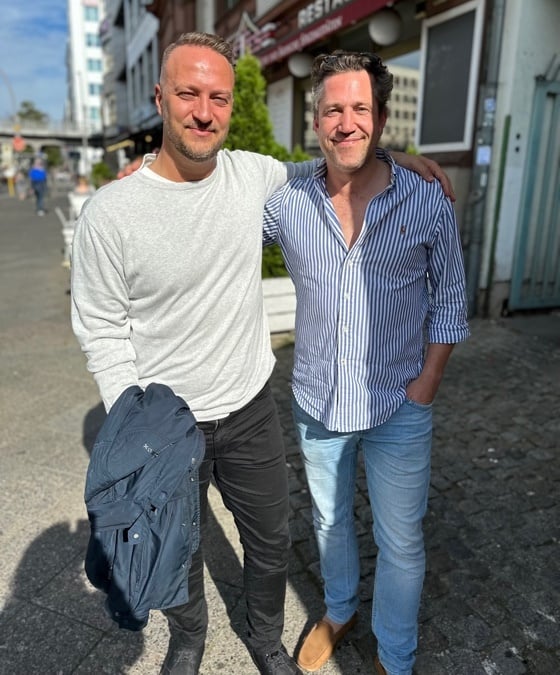
Stefan Tochev (CEO, MDPI) and Sören Hofmayer (Co-Founder and Chief Strategy Officer, ResearchGate) meet in Berlin, Germany to take their ongoing discussion further.
When I assumed the role of CEO at MDPI, my primary focus was to initiate the building of essential partnerships and collaborations within our industry. After all, I am a firm believer in achieving our goals by helping others achieve theirs and focusing on co-opetition wherever there is an opportunity. I first touched on the notion of co-opetition in MDPI Insights: The CEO's Letter #3, particularly when discussing collaborations with Elsevier.
In light of this, Sören Hofmayer (Co-Founder and Chief Strategy Officer at ResearchGate) and I connected recently to continue a discussion that had been ongoing for months. I was quickly brought up to speed and felt there was an opportunity for MDPI journals to pilot the Journal Home service that ResearchGate had launched. This would provide a new way for MDPI to engage with authors and readers and amplify the visibility of our journals.
While I receive many offers and opportunities for discussions with vendors, I am a firm believer that timing is everything, and in this case, the time for us is now. Sören and I met in person during my recent visit to Berlin and decided to proceed with piloting ten MDPI journals with the Journal Home service.
The press release below provides further details.
Press Release: Berlin (Germany) and Basel (Switzerland), 15 November 2023
ResearchGate, the professional network for researchers, and MDPI, the largest open access publisher in the world and a pioneer in open access publishing, today announced a partnership that will see ten of MDPI’s open access journals benefit from an enhanced presence on ResearchGate through its innovative Journal Home offering.
This new partnership will expand the reach and visibility of MDPI’s participating flagship journals with ResearchGate’s highly relevant community of more than 25 million researchers globally.
Around 210,000 version-of-record articles from these 10 titles will be readily available on ResearchGate, including the full archive material and all new articles as they are published. These journals also benefit from enhanced brand visibility, with dedicated journal profiles, prominent representation on all associated article pages and all relevant touchpoints across the ResearchGate network – keeping the journals top-of-mind with their reader and author audiences. All articles covered by the new partnership will automatically be added to the authors’ publication records in ResearchGate. This not only reduces MDPI authors’ needs for direct management but also offers them valuable insights into the impact of their work, including data about readership and citations.
Closing Thoughts

November is Men’s Health Awareness Month

Stefan Tochev (CEO, MDPI) listening to music as he writes at a coffee shop in Basel, Switzerland.
November is dedicated to raising awareness of various men’s health issues. I have been fortunate to have positive male role models in my life, and I strive to share my experiences with others.
I used to take part in Movember, growing my moustache throughout November to raise awareness and funds and to help “change the face of men’s health.” With male family and friends impacted by physical and mental health issues, I have recently become more interested in men’s overall well-being.
Men often face stigma involving the perceived need always to be strong and have things figured out. Recently, I’ve had meaningful conversations with male friends and colleagues about issues we rarely discuss, and it was a positive experience.
Various factors impact men’s health and well-being, all too easily leading to risky health behaviours including a lack of health awareness, poor health education, and negative, culturally induced, behaviour patterns in our work and personal lives. I hope we can break down these barriers in our work environment.
Healthy men help build healthy families and a healthy society
Men are less likely than women to seek help with their physical and mental health struggles. This is a reminder to prioritize your overall well-being. I hope that as men, we will continue to open up to one another, becoming vulnerable in order to share what we are going through. By sharing and by supporting each other, we can learn and grow together. You are not alone, and when you fall, you can still get up and stand tall.
From one broski to another, you are loved and appreciated. I hope this mindset carries into December and beyond.
Mindfulness
Our content team recently released a handful of articles on mindfulness, a practice that I believe provides a good opportunity for stress release and self-reflection:
Chief Executive Officer
MDPI AG
21 November 2023
769 Editorial Board Members of MDPI Journals Achieve Highly Cited Researcher Recognition in 2023

We extend our sincere congratulations to the 769 Editorial Board Members of our journals – from 40 different countries/territories – who have been recognized as Highly Cited Researchers for the year 2023 by Clarivate. They are being recognized for their high-quality scientific research achievements and outstanding contributions to their professional fields, as indicated by Web of Science data.
Clarivate's annual list of Highly Cited ResearchersTM identifies the most highly cited scientists for the past decade who stand out for their significant and broad influence in various scientific and social science domains. Their impactful papers are among the top 1 per cent in the citation distribution of one or more of 21 fields analyzed in the "Essential Science Indicators", distinguishing them as hugely influential among their peers.
This year, 7,125 Highly Cited Researcher 2023 designations were issued to 6,849 individuals from 67 countries, representing just 1 in 1,000 researchers worldwide.
This means that these researchers have demonstrated an incredible level of significant and broad influence in their chosen field or fields over the last decade. They represent a small fraction of the researcher population whose contributions disproportionately push the boundaries of knowledge, enhancing global well-being, sustainability, and security.
Congratulations to the scholars for their noteworthy achievement – we are honored to have them on board with our journals!
|
Abate, Antonio |
Jaiswal, Amit K. |
Shen, Zexiang |
15 November 2023
International Journal of Environmental Research and Public Health| World Diabetes Day 2023—“Access to Diabetes Care”
World Diabetes Day (WDD) is held annually on 14 November. Diabetes is a chronic disease that affects 1 in 10 adults worldwide. The purpose of WDD is to understand the risks of diabetes in order to delay or prevent the disease. The theme of WDD 2023 is “Access to diabetes care” to highlight the impact of diabetes-related diseases and the importance of access to correct information and care.
To further discuss research related to World Diabetes Day (WDD), the International Journal of Environmental Research and Public Health (IJERPH, ISSN: 1660-4601) has brought together a collection of open-access academic research studies on the topic of the risks and care of diabetes-related conditions. We would like to use this special day to share new scientific knowledge in the field of diabetes risk prevention and care with the world.
Article Collection:
1. “Racial Disparities in Post-Acute Home Health Care Referral and Utilization among Older Adults with Diabetes”
by Jamie M. Smith, Olga F. Jarrín, Haiqun Lin, Jennifer Tsui, Tina Dharamdasani and Charlotte Thomas-Hawkins
Int. J. Environ. Res. Public Health 2021, 18(6), 3196; https://doi.org/10.3390/ijerph18063196
Available online: https://www.mdpi.com/1660-4601/18/6/3196
2. “Efficacy of eHealth Interventions for Adults with Diabetes: A Systematic Review and Meta-Analysis”
by Giulia Bassi, Elisa Mancinelli, Gaia Dell’Arciprete, Silvia Rizzi, Silvia Gabrielli and Silvia Salcuni
Int. J. Environ. Res. Public Health 2021, 18(17), 8982; https://doi.org/10.3390/ijerph18178982
Available online: https://www.mdpi.com/1660-4601/18/17/8982
3. “Health Literacy and Diabetes Knowledge: A Nationwide Survey in a Multi-Ethnic Population”
by P. V. Asharani, Jue Hua Lau, Kumarasan Roystonn, Fiona Devi, Wang Peizhi, Saleha Shafie, Sherilyn Chang, Anitha Jeyagurunathan, Chua Boon Yiang, Edimansyah Abdin et al.
Int. J. Environ. Res. Public Health 2021, 18(17), 9316; https://doi.org/10.3390/ijerph18179316
Available online: https://www.mdpi.com/1660-4601/18/17/9316
4. “Management of Type 2 Diabetes Mellitus in Elderly Patients with Frailty and/or Sarcopenia”
by Jaime Sanz-Cánovas, Almudena López-Sampalo, Lidia Cobos-Palacios, Michele Ricci, Halbert Hernández-Negrín, Juan José Mancebo-Sevilla, Elena Álvarez-Recio, María Dolores López-Carmona, Luis Miguel Pérez-Belmonte, Ricardo Gómez-Huelgas et al.
Int. J. Environ. Res. Public Health 2022, 19(14), 8677; https://doi.org/10.3390/ijerph19148677
Available online: https://www.mdpi.com/1660-4601/19/14/8677
5. “Nutrition-Education-Based Interventions in Gestational Diabetes: A Scoping Review of Clinical Trials”
by Macy M. Helm, Kenneth Izuora and Arpita Basu
Int. J. Environ. Res. Public Health 2022, 19(19), 12926; https://doi.org/10.3390/ijerph191912926
Available online: https://www.mdpi.com/1660-4601/19/19/12926
6. “Development of a Web-Based Diabetes Prevention Program (DPP) for Chinese Americans: A Formative Evaluation Approach”
by Ming-Chin Yeh, Wincy Lau, Zoey Gong, Margrethe Horlyck-Romanovsky, Ho-Jui Tung, Lin Zhu, Grace X. Ma and Judith Wylie-Rosett
Int. J. Environ. Res. Public Health 2023, 20(1), 599; https://doi.org/10.3390/ijerph20010599
Available online: https://www.mdpi.com/1660-4601/20/1/599
7. “Feasibility and Outcomes of Meta Salud Diabetes Behavioral Health Intervention: A Pilot Study of a Community Health Worker-Administered Educational Intervention to Prevent Cardiovascular Disease and Its Complications among Hispanic Patients with Type-2 Diabetes”
by Tomas Nuño, Maria Rocio Torres, Sheila Soto, Refugio Sepulveda, Benjamin Aceves and Cecilia Ballesteros Rosales
Int. J. Environ. Res. Public Health 2023, 20(21), 6968; https://doi.org/10.3390/ijerph20216968
Available online: https://www.mdpi.com/1660-4601/20/21/6968
8. “Risk of Gestational Diabetes Due to Maternal and Partner Smoking”
by María Morales-Suárez-Varela, Isabel Peraita-Costa, Alfredo Perales-Marín, Agustín Llopis-Morales and Agustín Llopis-González
Int. J. Environ. Res. Public Health 2022, 19(2), 925; https://doi.org/10.3390/ijerph19020925
Available online: https://www.mdpi.com/1660-4601/19/2/925
by Mi-Kyoung Cho and Mi Young Kim
Int. J. Environ. Res. Public Health 2021, 18(23), 12750; https://doi.org/10.3390/ijerph182312750
Available online: https://www.mdpi.com/1660-4601/18/23/12750
Access more articles here.
Call for Papers:
“Social Determinants of Health and Risks for Developing Diabetes and Diabetes-Related Complications”
Guest Editor: Dr. Duke Appiah
Submission Deadline: 28 February 2024
“Obesity and Type 2 Diabetes as a Global Challenge”
Guest Editor: Dr. Angeliki Angelidi
Submission Deadline: 31 December 2024
Access more Special Issues here.
Closed Special Issues:
13 November 2023
Meet Us at the British Ecological Society Annual Meeting 2023 (BES 2023), 12–15 December 2023, Belfast, UK
加载中~
MDPI will attend the British Ecological Society Annual Meeting 2023 (BES 2023) as an exhibitor. This meeting will be held in Belfast, UK, from 12 to 15 December 2023.
The British Ecological Society was established in 1913 and has been fostering the science of ecology ever since. The society has 7,000 members around the world and brings people together across regional, national and global scales to advance ecological science. Membership is open to anyone, anywhere. The British Ecological Society is the oldest ecological society in the world and its annual meeting is Europe’s largest conference dedicated to ecology. More than 1,500 delegates from over 50 countries across six continents attended the 2022 meeting in person or online.
The following MDPI journals will be represented:
- Sustainability;
- Land;
- Ecologies;
- IJERPH;
- Earth;
- Plants;
- Environments;
- Resources;
- Animals;
- Diversity;
- Climate.
If you are attending this conference, please feel free to start a conversation with us at our booth #12. Our delegates look forward to meeting you in person and answering any questions that you may have.
For more information about the conference, please visit https://www.britishecologicalsociety.org/events/bes-annual-meeting-2023/.
1 November 2023
International Journal of Environmental Research and Public Health Papers Cited in the News in Q3 of 2023
Throughout the third quarter of 2023, a total of 393 papers of the International Journal of Environmental Research and Public Health (IJERPH, ISSN: 1660-4601) were cited in news articles published by reputable media sources such as The Washington Post, CNN News, National Geographic and Forbes.
You can read the citings below.
“Most research on wildfire smoke exposure and pregnancy has focused on preterm birth and birthweight, but wildfire smoke contains the same PM2.5 that air pollution does, so theoretical risk of long-term impacts on the fetus are possible.”
National Geographic—“How wildfire smoke can permanently damage your brain and body”
IJERPH—“Wildfire Smoke Exposure during Pregnancy: A Review of Potential Mechanisms of Placental Toxicity, Impact on Obstetric Outcomes, and Strategies to Reduce Exposure”
Article link: https://www.mdpi.com/1660-4601/19/21/13727
“Heat stresses the brain as well, affecting the ability to think, plan, pay attention and control impulses, experts say. Heat causes the heart to race, blood pressure can drop, and mental processing is weakened. Those changes may remain even after the body has cooled. Studies have found that the ability to resolve cognitive conflicts remains impaired—which may explain why tempers often flare when it’s hot.”
CNN News—“Some people are more vulnerable to heat than others. See if you’re at risk”
IJERPH—“Possible Biological Mechanisms Linking Mental Health and Heat—A Contemplative Review”
Article link: https://www.mdpi.com/1660-4601/15/7/1515
“In the US, approximately 88% of all households use air conditioning units. AC units can lead to high electricity bills, and account for 4% of global carbon emissions. Looking to the middle east, researchers are studying how traditional barajeels (wind towers) and domed roofs can help to adapt to heat by offering sustainable architectural solutions that prevent overheating.”
TIME—“The U.S. Should Ditch AC and Use Middle Eastern Techniques to Cool Its Cities
IJERPH—“Emergency Department Visits for Heat-Related Emergency Conditions in the United States from 2008–2020”
Article link: https://www.mdpi.com/1660-4601/19/22/14781
“According to the report, we are exposed to plastic additives that leach out of our everyday plastic-packaged products—think of your to-go coffee cup (often lined with plastic), grocery store purchases, single-use plastic beverage bottles, or even tea bags. Ironically, the plastic packaging used to protect food is also a source of chemical contamination to that food.”
Newsweek—“Plastic's Health Impacts Are Becoming Impossible To Ignore”
IJERPH—“Occurrence of Microplastics in Tap and Bottled Water: Current Knowledge”
Article link: https://www.mdpi.com/1660-4601/19/9/5283
“Regular physical activity may improve brain health in numerous ways, not least of which is reducing risk factors for dementia, such as diabetes and heart disease. A 2023 analysis of 21 studies, published in the International Journal of Environmental Research and Public Health, concluded that exercise (both aerobic and strength training) improved cognitive function in older adults regardless of their current cognitive status. Researchers speculate that physical activity helps by encouraging the growth of new neurons and blood vessels in the brain, fighting inflammation, and improving plasticity, the brain’s ability to change and adapt.”
Washington Post—“A healthy diet may lower dementia risk — even if you start late”
IJERPH—“The Effects of Exercise for Cognitive Function in Older Adults: A Systematic Review and Meta-Analysis of Randomized Controlled Trials”
Article link: https://www.mdpi.com/1660-4601/20/2/1088
“According to a study in the International Journal of Environmental Research and Public Health, spending time outdoors helps depressed people. “Nature is extremely important in working through depression,” says Sosa.”
Forbes—“How To Cope With High-Functioning Depression While Working, According To Mental Health Experts”
IJERPH—“Lifestyle Prescription for Depression with a Focus on Nature Exposure and Screen Time: A Narrative Review”
Article link: https://www.mdpi.com/1660-4601/19/9/5094
1 November 2023
MDPI Insights: The CEO’s Letter #5 - OA Week, UK, and Strategy
Welcome to the MDPI Insights: The CEO's Letter.
In these monthly letters, I will showcase two key aspects of our work at MDPI: our commitment to empowering researchers and our determination to facilitating open scientific exchange.
Opening Thoughts

Open Access Week 2023 – the Global Drive to Open Continues
As the world's largest open-access (OA) publisher, we believe that unrestricted access to research findings is the cornerstone of transparency, efficiency, and quality control across scientific disciplines. At MDPI, we provide free, immediate access to scientific papers, empowering scientists to examine, validate, replicate, and build upon existing results. This minimizes redundancy, optimizes resources, and fosters innovative approaches.
International OA Week, held from 23 to 29 October 2023, provided a unique opportunity to link the global movement toward open sharing and open science with the progress of policy changes at the local level. Our mission, during OA Week and all the year round, is to offer educational resources highlighting the benefits of open-access publishing. The MDPI Blog is a valuable resource for information on open access and open science.
Core principles of OA publishing
Accessibility, transparency, and collaboration are core principles of OA publishing. OA aims to break down barriers that have traditionally restricted research access, ensuring that knowledge is available to all, regardless of financial situation or institutional affiliations. Our commitment to diverse pathways for OA publishing worldwide includes discounts for researchers. You can learn more about how MDPI supports scientific communities here.
One of the key strengths of OA publishing is its ability to facilitate interdisciplinary research. By removing paywalls and promoting knowledge-sharing across disciplines, OA encourages collaboration and innovation. Researchers from various fields can access and build upon each others’ work, fostering a holistic approach to addressing complex global challenges.
OA holds the potential to democratize knowledge, advance science, and drive positive societal change.
Policy driving change
Governments, institutions, and funding agencies have recognized the transformative potential of OA and have implemented policies to promote it. These policies often require publicly funded research to be made openly accessible, accelerating the growth of OA repositories and journals. Check out our spotlights on OA policies in the US, EU and China.
OA publishing is continuously evolving, with community-driven models and technologies shaping its future. Initiatives such as “Plan S” and “cOAlition S” promote OA publishing from the perspective of national funders, requiring grantees to publish their research openly. A new policy announced by the US administration last year mandates that, with effect from January 2026, all US federally funded research should be freely and immediately available after publication.
Additionally, preprint servers such as MDPI's Preprints.org, which allow researchers to share their findings before formal peer review, have gained popularity, enhancing the speed at which new knowledge is disseminated. The rise of blockchain technology is also being explored to ensure transparency and authenticity in scholarly publishing.
For more than two decades, OA publishing has been revolutionizing academic publishing by promoting accessibility, transparency, and collaboration. Its support for interdisciplinary research, evolving policies, and innovative practices all contribute to its growing influence in the global research community. As OA continues to expand, it holds the potential to democratize knowledge, advance science, and drive positive societal change.
MDPI is proud to lead the transition to open access.
Read more:
Impactful Research

Spotlight on Smart Cities
Smart cities will serve as a cornerstone for future human development. Their implementation will help us tackle many of the significant challenges we are facing – climate change, ageing populations, waste management, public safety, travel, and so on. Recognising the importance of this multifaceted field, MDPI launched the inaugural issue of Smart Cities in 2018 to provide an advanced forum for research into smart technology and society. Here we take a look at how this journal has developed, and its impact in this exciting field.
As at 30 October, 2023, Smart Cities has published 421 papers and has an Impact Factor of 6.4. It also has a CiteScore of 8.5, and more than one quarter of its published papers – 124 – have been cited 10 times or more.
Highly cited papers in Smart Cities
Below are several highly cited papers recently published in Smart Cities. Citation metrics are current as at 31 October 2023.
1. “Introducing the “15-Minute City”: Sustainability, Resilience and Place Identity in Future Post-Pandemic Cities”
Authors: Carlos Moreno, Zaheer Allam, Didier Chabaud, Catherine Gall and Florent Pratlong
Smart Cities 2021, 4(1), 93-111; https://doi.org/10.3390/smartcities4010006
Citations: Crossref (338), Scopus (366), Web of Science (270), Google Scholar (710)
The paper discusses the socio-economic impacts of the COVID-19 on cities, including increasing inequalities and rising unemployment. It introduces the concept of the "15-Minute City," a form of "chrono-urbanism," as a response to the challenges posed by the pandemic.
2. “A Review on Electric Vehicles: Technologies and Challenges”
Authors: Julio A. Sanguesa, Vicente Torres-Sanz, Piedad Garrido, Francisco J. Martinez and Johann M. Marquez-Barja
Smart Cities 2021, 4(1), 372-404; https://doi.org/10.3390/smartcities4010022
Citations: Crossref (359), Scopus (363), Web of Science (268), Google Scholar (558)
This paper provides an overview of the progress in Electric Vehicles (EVs), focusing on battery technology, charging methods, and emerging research challenges. It also analyzes the global EV market and its future outlook.
3. “IoT in Smart Cities: A Survey of Technologies, Practices and Challenges”
Authors: Abbas Shah Syed, Daniel Sierra-Sosa, Anup Kumar and Adel Elmaghraby
Smart Cities 2021, 4(2), 429-475; https://doi.org/10.3390/smartcities4020024
Citations: Crossref (121), Scopus (151), Web of Science (91), Google Scholar (215)
This paper gives an overview of the Internet of Things (IoT) in the context of Smart Cities, discussing the fundamental components, technologies, architectures, networking technologies, and artificial algorithms that underpin IoT-based Smart City systems.
4. “Artificial Intelligence Techniques in Smart Grid: A Survey”
Authors: Olufemi A. Omitaomu and Haoran Niu
Smart Cities 2021, 4(2), 548-568; https://doi.org/10.3390/smartcities4020029
Citations: Crossref (76), Scopus (94), Web of Science (57), Google Scholar (120)
This survey paper reviews the utilization of artificial intelligence (AI) techniques in the context of the smart grid. It covers various applications of AI in load forecasting, power grid stability assessment, fault detection, and security issues in the smart grid and power systems.
5. “The Metaverse as a Virtual Form of Smart Cities: Opportunities and Challenges for Environmental, Economic, and Social Sustainability in Urban Futures”
Authors: Zaheer Allam, Ayyoob Sharifi, Simon Elias Bibri, David Sydney Jones and John Krogstie
Smart Cities 2022, 5(3), 771-801; https://doi.org/10.3390/smartcities5030040
Citations: Crossref (72), Scopus (75), Web of Science (43), Google Scholar (176)
This paper discusses the concept of the Metaverse, a virtual world introduced by Meta (formerly Facebook), and its potential impact on urban life. It explores how emerging technologies such as AI, Big Data, IoT, and Digital Twins could reshape urban design and services in the context of the Metaverse.
Testimonial
“It was indeed a great and pleasant experience with MDPI regarding our recent publication. The submission process was very straightforward and less time-consuming than the norm. The review process was very fast compared to many other open access journals, which is praiseworthy. The support from the Editorial Office during the revision process was highly useful as well. We look forward to publishing with MDPI in the future, and I will most definitely recommend MDPI to my colleagues and collaborators.” – Dr. Luís Rosa, University of Minho
Article in Smart Cities: Mobile Networks and Internet of Things Infrastructures to Characterize Smart Human Mobility
Inside MDPI

MDPI Manchester office, UK Visit

Allie Shi (Editorial Director, MDPI), Stefan Tochev (CEO, MDPI), Jamie Anderson (Manchester Office Manager, MDPI), Michael O’Sullivan (Senior Scientific Officer, MDPI), Hushneara Akhtar, and Becky Castellon (IOAP Team Lead, MDPI), dining out in Manchester, UK.
In October, I visited MDPI’s new office in Manchester. During the visit, I connected with our English Editing (EE) managers, Scientific Officer, members of the Editorial team, the Marketing team, and IOAP Team Lead.
Our Manchester office focuses primarily on EE services and provides local support for the UK market. Additionally, we regularly visit Editorial Board members and participate in local conferences.
I would like to thank Jamie Anderson, Manchester Office Manager, and her team, for their deep commitment to our Manchester staff and to MDPI’s impact on the UK market.
The UK by numbers
The UK is a hub for the world’s top universities, making it a key market for MDPI and the publishing world in general. It is home to two of the top-five-ranked universities globally, 11 in the top 100, and 15 in the top 200.
As a result, the UK plays a key role in MDPI’s global market. As at October 2023, it ranks as the seventh-largest contributor to the total number of papers published by MDPI. We have 3,500 Editorial Board members affiliated with UK institutions, including 34 serving as Editors-in-Chief (EiCs). Our commitment to collaboration with institutions is evident in the UK, where we have successfully established some 60 Institutional Open Access Program (IOAP) agreements with esteemed institutions, such as the University of Oxford, the University of Cambridge, Imperial College London, the University of Edinburgh, and more.
According to InCites Dataset + ESCI for the period 2018–2022, as at October 2023, nearly 65% of UK papers are now published as OA. Just over 10% of total OA publications are by UK authors. UK papers are known for their high quality, with an average of 11 citations per paper. Furthermore, 2.16% of UK papers are in the top 1% of cited papers, and 14.61% are in the top 10% of cited papers, showcasing their impact.
We are currently hiring EEs in various locations worldwide.
English Editing at MDPI
Our English Editing (EE) department consists of two main branches, Quality Control and Learning and Development, reflecting our priorities. We are continuously enhancing the quality of our English Editing services and have raised the relevant standards, which now extend to company-wide communications. English editors participate in international interviews, conduct English assessments, and provide colleagues with presentations on ways to improve their use of written and spoken English.
While expanding, the EE department has proactively refocused its efforts on the quality of our work and how the English Editing department can benefit the company more broadly. We currently have approximately 140 full-time English Editors based across five offices worldwide, supplemented by over 700 freelance English editors.
Our Manchester office serves as the hub for the EE Department, with EE Managers situated there, except for Kurtis Jackson, who serves as the Head of EE and is located in our Basel office. Manchester EEs play a critical role in establishing and developing EE teams in our other offices, overseeing management and recruitment. The EE department plays a vital role in MDPI’s operations, as it is the department that touches every published paper. If this work interests you, I encourage you to explore our available EE positions, whether you are seeking full-time or freelance opportunities.
Testimonials
“MDPI provides an excellent service compared to any other previously used services. It delivers fast and high-quality results but at an affordable price.” – Ardha Apriyanto, University of Potsdam
“In my role as a professor, I consider that MDPI Author Services offer an excellent quality in the editing of Western academic writing while maintaining the required standards of clarity, precision and rigor. Additionally, delivery times are fast compared to other available services.” – Jesus Insuasti, University of Nariño
Read more:
Coming Together for Science

STM and Frankfurt Book Fair
Attending STM
MDPI has been a proud sponsor of the STM Conference for several years. The STM Conference is a dynamic event featuring interactive sessions, expert panellists, idea-sharing, and ample networking opportunities. On 16 October, the event kicked off with arrival drinks, sponsored by MDPI, followed by a welcoming dinner, providing a great chance to connect and network with industry professionals. The following day was filled with speakers, sessions, and further opportunities to connect. STM exemplifies the collaborative spirit of the scientific community, with session topics including achieving open, visible, and impactful research at scale; maintaining research integrity in a rapidly changing world; and exploring the impact of ever-evolving technology in the scholarly community.
Meeting with Web of Science
On a personal note, one of the highlights of STM was a candid and productive conversation with Nandita Quaderi, Editor-in-Chief and SVP at Web of Science. During our discussion, we talked about MDPI, Web of Science, the IJERPH delisting, and ways of moving forward. This open conversation aimed at fostering better collaboration for the future.
“We discussed ways to improve our communication and collaboration.”
I appreciated our frank discussion and felt that Nandita wholeheartedly supports open access. She also expressed her appreciation for the monthly CEO Letter, which she sees as a way to add personality to the MDPI brand and provide insight into the great work we do at MDPI. While we highlighted the positives, we also discussed ways to improve our communication and collaboration moving forward. This meeting alone made the trip worthwhile, and I hope Nandita doesn’t mind my sharing that she found our chat to be “the most honest and constructive discussion” she’s had with someone from MDPI in recent years.
75th Frankfurt Book Fair
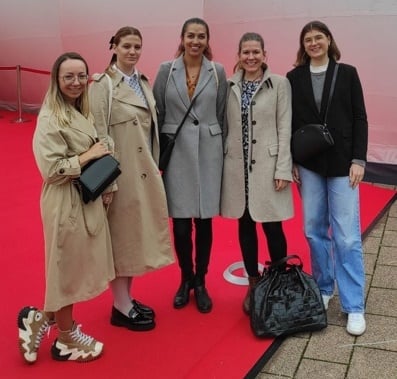
Jelena Milojevic (Book Editor, MDPI), Jovana Dubajic (Book Editor, MDPI), Evan Escamilla (Project Manager, MDPI), Laura Wagner (Head of Books, MDPI), and Jenny Knowles (Commissioning Editor, MDPI), at the Frankfurt Book Fair in Frankfurt am Main, Germany.
For the 75th time, the Frankfurter Buchmesse opened its doors in October to celebrate exciting stories and their authors. If you haven’t yet had the chance to visit the Frankfurt Book Fair, I highly recommend it. It’s the largest book fair in the world, attracting thousands of visitors from around the globe. This is the place to gain valuable industry insights from top-class publishing professionals, connect with publishers directly, and learn about the latest trends in publishing.
MDPI Books
Our Books team was also present at the Frankfurt Book Fair, networking and learning from various panels. Did you know that our MDPI Books department publishes OA Books?
The book publishing program includes monographs, book series, edited books and reprints of special issues and topical collections, among other book types.
If you have a book proposal you would like to discuss, please feel free to contact our Books team to understand the benefits and methods of publishing your next book with the OA model.
Closing Thoughts

MDPI Strategy Meeting
As the newly appointed CEO, this is my first year leading the MDPI Senior Management Strategy session. I saw it as an opportunity to explore what MDPI has the potential to become in the next five years. Guided by the vision of its founder and President, Dr. Shu-kun Lin, the company has accomplished remarkable feats over the past 27 years and currently holds the position as the world’s third-largest academic publisher, following Springer Nature and Elsevier.
Our primary objective is to build upon the milestones of the past decades and consolidate MDPI’s position as well-established publishing brand. The two-day meeting emphasized the importance of communicating MDPI’s values more actively via its brand and adopting a straightforward yet impactful approach to managing MDPI as a mature academic publisher.
“Our primary objective is to consolidate MDPI’s position as well-established publishing brand”
As the world’s number one open-access publisher, MDPI has long been a game-changer in the scholarly community, serving millions of authors. The challenge in being a trailblazer is the need to continuously improve and at the same time explore the next blue-ocean strategy, while also maintaining the smooth operation of the business. Our collection model, featuring guest-curated thematic topics in the form of Special Issues, has disrupted the industry. Other publishers closely study us and attempt to replicate our models. The future of this collection model is something we are actively addressing – while, of course, looking ahead to what comes next!
Chief Executive Officer
MDPI AG
19 October 2023
Open Access Week 2023 – the Global Drive to Open Continues

MDPI has been a strong proponent of the open access publishing model right from the beginning. As one of the pioneering fully open access publishers, we firmly believe that unrestricted access to research findings forms the foundation for better transparency, efficiency, and quality control across all scientific disciplines.
In December 2022, we reached a significant milestone by surpassing one million articles published. That is one million articles freely available to all, to circulate and build upon!
Offering free and immediate access to scientific papers empowers scientists to examine, validate, replicate, and expand upon existing results. This not only helps prevent redundancy and optimizes how resources are used but also paves the way for innovative new approaches.
The International Open Access Week takes place from 23 to 29 October 2023, providing a unique opportunity to connect the global movement towards open sharing and open science with the progress of policy transformations at the local level.
Our goal, during Open Access Week as well as throughout the year, is to offer resources for educating people about the benefits of open access publishing. The MDPI Blog offers a wealth of information around open access and open science.
Promoting the values of accessibility, transparency, and collaboration
Open access publishing embodies the fundamental values of democratizing knowledge and fostering global accessibility. It aims to break down barriers that have traditionally limited access to scholarly work, ensuring that knowledge is available to all, regardless of their financial or institutional affiliations.
Discounts are part of our commitment to ensuring there are diverse pathways to Open Access publishing for researchers worldwide. MDPI supports scientific communities in several different ways.
One of the key strengths of open access publishing lies in its ability to facilitate interdisciplinary research. By removing paywalls and promoting the sharing of knowledge across disciplines, OA encourages collaboration and innovation. Researchers from diverse fields can access and build upon each other's work, fostering a holistic approach to addressing complex global challenges.
Funders' policies are getting aligned with open science
Governments, institutions, and funding agencies have recognized the transformative potential of open access and have implemented policies to promote it. These policies often mandate that publicly funded research should be made openly accessible. Such initiatives have accelerated the growth of open access repositories and journals, reinforcing the commitment to open access principles. Check our spotlights on OA policies in the US, EU and China.
Open access publishing is continually evolving, with innovative and community-driven models and technologies shaping its future. Initiatives like "Plan S" and "cOAlition S" promote the adoption of OA publishing from the national funders’ perspective by requiring grantees to publish their research openly. A new policy announced by the US administration last year requires that, as of January 2026, all US federally funded research be made freely and immediately available after publication.
Additionally, preprint servers such as MDPI's Preprints.org, which allow researchers to share their findings before formal peer review, have gained popularity, enhancing the speed at which new knowledge is disseminated. The rise of blockchain technology is also being explored to ensure transparency and authenticity in scholarly publishing.
For more than twenty years, open access scholarly publishing has been revolutionizing academia by promoting the values of accessibility, transparency, and collaboration. Its support for interdisciplinary research, evolving policies, and innovative practices all contribute to its growing influence in the global research community. As open access continues to expand, it holds the potential to democratize knowledge, advance science, and drive positive societal change.
MDPI is proud to be a leader in the transition to open access.
13 October 2023
International Journal of Environmental Research and Public Health | International Day for Disaster Risk Reduction in 2023—“Fighting Inequality for a Resilient Future”
The International Day for Disaster Risk Reduction (IDDRR) is held annually on 13 October. It aims to reduce the loss of life and property damage caused by various natural disasters and their negative impact on society through coordinated international actions. In 2023, IDDRR’s theme is “Fighting Inequality for a Resilient Future”, exploring the interrelationship between disasters and inequality.
To further discuss research related to the International Day for Disaster Risk Reduction (IDDRR), the International Journal of Environmental Research and Public Health (IJERPH, ISSN: 1660-4601) has collected open access academic research on the topic of disaster risk reduction. We want to share new scientific knowledge in the field of disaster risk reduction with the world.
Article Collections:
1. “Disasters without Borders: The Coronavirus Pandemic, Global Climate Change and the Ascendancy of Gradual Onset Disasters”
by Katsuya Yamori and James D. Goltz
Int. J. Environ. Res. Public Health 2021, 18(6), 3299; https://doi.org/10.3390/ijerph18063299
Available online: https://www.mdpi.com/1660-4601/18/6/3299
2. “Optimizing Disaster Preparedness Planning for Minority Older Adults: One Size Does Not Fit All”
by Omolola E. Adepoju, Luz Herrera, Minji Chae and Daikwon Han
Int. J. Environ. Res. Public Health 2023, 20(1), 401; https://doi.org/10.3390/ijerph20010401
Available online: https://www.mdpi.com/1660-4601/20/1/401
3. “Evaluating Community Resilience and Associated Factors One Year after the Catastrophic Fort McMurray Flood”
by Gloria Obuobi-Donkor, Ejemai Eboreime, Reham Shalaby, Belinda Agyapong, Medard K. Adu, Ernest Owusu, Wanying Mao, Folajinmi Oluwasina, Hannah Pazderka and Vincent I. O. Agyapong
Int. J. Environ. Res. Public Health 2022, 19(23), 16153; https://doi.org/10.3390/ijerph192316153
Available online: https://www.mdpi.com/1660-4601/19/23/16153
4. “Disaster Evacuation for Home-Based Patients with Special Healthcare Needs: A Cross-Sectional Study”
by Yukari Matsumoto, Hisao Nakai, Yumi Koga, Tamayo Hasegawa and Yumiko Miyagi
Int. J. Environ. Res. Public Health 2022, 19(22), 15356; https://doi.org/10.3390/ijerph192215356
Available online: https://www.mdpi.com/1660-4601/19/22/15356
5. “When Natural Hazards Intersect with Public Health: A Preliminary Exploration of the Impact of Bushfires and the COVID-19 Pandemic on Australian Coastal Drowning Fatalities“
by Jasmin C Lawes, Luke Strasiotto, Shane Daw and Amy E Peden
Int. J. Environ. Res. Public Health 2021, 18(10), 5314; https://doi.org/10.3390/ijerph18105314
Available online: https://www.mdpi.com/1660-4601/18/10/5314
6. “Facilitating Sustainable Disaster Risk Reduction in Indigenous Communities: Reviving Indigenous Worldviews, Knowledge and Practices through Two-Way Partnering”
by Tahir Ali, Petra Topaz Buergelt, Douglas Paton, James Arnold Smith, Elaine Lawurrpa Maypilama, Dorothy Yuηgirrηa, Stephen Dhamarrandji and Rosemary Gundjarranbuy
Int. J. Environ. Res. Public Health 2021, 18(3), 855; https://doi.org/10.3390/ijerph18030855
Available online: https://www.mdpi.com/1660-4601/18/3/855
7. “Appraising Evidence-Based Mental Health and Psychosocial Support (MHPSS) Guidelines—PART II: A Content Analysis with Implications for Disaster Risk Reduction”
by Michel Dückers, Wera van Hoof, Andrea Willems and Hans te Brake
Int. J. Environ. Res. Public Health 2022, 19(13), 7798; https://doi.org/10.3390/ijerph19137798
Available online: https://www.mdpi.com/1660-4601/19/13/7798
8. “Coping and Post-Traumatic Stress in Children and Adolescents after an Acute Onset Disaster: A Systematic Review”
by Tara Powell, Kate M. Wegmann and Emily Backode
Int. J. Environ. Res. Public Health 2021, 18(9), 4865; https://doi.org/10.3390/ijerph18094865
Available online: https://www.mdpi.com/1660-4601/18/9/4865
Access more articles here.
Call for Paper:
“2nd Edition: Mental Health and Disaster: Response, Recovery, and Preparedness for the Future”
Guest Editors: Dr. Masatsugu Orui and Dr. Takahashi Sho
Submission Deadline: 31 March 2024
“Disaster Mental Health”
Guest Editors: Dr. Suzy Bird Gulliver and Dr. Victoria Torres
Submission Deadline: 30 August 2024
Access more Special Issues here.
Closed Special Issues:
13 October 2023
Meet Us at the 34th Annual Meeting of the Japanese Society of Clinical Sports Medicine, 11–12 November 2023, Tokyo, Japan
MDPI will be attending the 34th Annual Meeting of the Japanese Society of Clinical Sports Medicine, which will be held from 11 to 12 November in Tokyo, Japan.
The theme of this academic conference is "Cooperation and Evolution". As many academic conferences have been held online due to the coronavirus pandemic, we are now realizing that one of the most important aspects of academic conferences is the face-to-face exchange of information inside and outside the academic venue. This academic conference will aim to promote the future progress of sports medicine by disseminating the research results of each person who has made progress during the coronavirus pandemic and by bringing together many participants for full discussions.
The following MDPI journals will be represented:
- Sports;
- Medicina;
- JPM;
- Nutrients;
- JCM;
- IJERPH;
- STD;
- Geriatrics.
If you are planning to attend this conference, please feel free to stop by our booth and chat with us. Our delegates look forward to meeting you in person and answering any questions that you may have. For more information about the conference, please visit the following website: https://www.34rinspo.jp/index.html.
8 October 2023
Meet Us at APHA’s 2023 Annual Meeting and Expo, 12–15 November 2023, Atlanta, USA
Conference: APHA’s 2023 Annual Meeting and Expo
Date: 12–15 November 2023
Location: Atlanta, USA
MDPI will be attending APHA’s 2023 Annual Meeting and Expo as an exhibitor. We welcome researchers from different backgrounds to visit and share their latest ideas with us.
This conference is organized by the American Public Health Association (APHA). APHA is the largest organization of public health professionals in the United States, founded in 1872, and APHA's annual meeting and exhibition brings the largest gathering of public health professionals in the world. Connect with public health experts and other advocates at APHA’s 2023 Annual Meeting and Expo to overcome the social and ethical challenges that threaten public health together.
The following MDPI journals will be represented:
If you are planning to attend this conference, please do not hesitate to contact us online. Our delegates look forward to meeting you in person and answering any questions that you may have. For more information about the conference, please visit the following website: https://www.apha.org/Events-and-Meetings/Annual/.
2 October 2023
MDPI Insights: The CEO’s Letter #4 - MDPI Presence in China
Welcome to the MDPI Insights: The CEO's Letter.
In these monthly letters, I will showcase two key aspects of our work at MDPI: our commitment to empowering researchers and our determination to facilitating open scientific exchange.
Opening Thoughts
Open Access in China
It is Saturday, 23 September, and I have just returned from an unforgettable 12-day trip to China, visiting our main offices in Beijing and Wuhan. In the wake of a packed and very enjoyable agenda of internal and external meetings, I would like to use this edition of the CEO Letter to showcase how MDPI supports the scholarly community in China.
Coincidentally, Jack McKenna, Communications Associate from MDPI’s corporate content team, has just released a blog article discussing China’s open access (OA) policy. It is a timely read, providing a concise overview of the development of the OA movement in China and reflecting on its future. I shall draw some content from Jack’s piece and use this edition of the CEO Letter to highlight the various ways in which MDPI is involved in this market. And it would be remiss of me not to include some pictures and highlights from my travels!
Open Access Policy in China
As per Jack’s post, in 2020, China became the world’s leading producer of research articles. Today, China is experiencing a “substantial growth rate in OA [Open Access] publication”. This growth is supported by the State’s commitment to research & development and its policy “requiring the promotion of open science”.
Over the past two decades, there have been gradual developments in China’s OA framework, with repositories and platforms being developed in a consistent manner. Currently, key institutions across China – including the National Science Library, the National Science and Technology Library, and the Natural Science Foundation of China – support OA. The State aims to establish consistent policies across government agencies – a framework for a more encompassing embrace of OA across institutions.
In China, the number of subscription-only articles decreased by nearly 30% over the 10-year period of 2011–2021, while gold OA increased by 22%. Between 2017 and 2020 alone, China published 800,921 academic papers in an OA format.
In 2023, as the leading publisher of academic research, China is pursuing “self-reliance”. Therefore, the State will be establishing consistent policies across government agencies, including those related to OA. Additionally, it will want to ensure that Chinese people can access the research that is supported by Chinese funding and produced by Chinese academics. For this reason, “Open Access is a matter of priority in China”.
MDPI Offices in China
While the history of MDPI begins in Basel, Switzerland, the story of MDPI’s founder is very much rooted in China. Dr. Shu-kun Lin, Founder and President of MDPI, graduated with a BSc from Wuhan University in 1982. He also studied physical chemistry at the Lanzhou Institute of Chemical Physics, Chinese Academy of Sciences (1982–1986; MSc in 1985), and at the University of Louisville, USA (1987–1989). Dr. Lin completed his doctorate in organic chemistry at the Swiss Federal Institute of Technology (ETH-Zürich) in 1992.
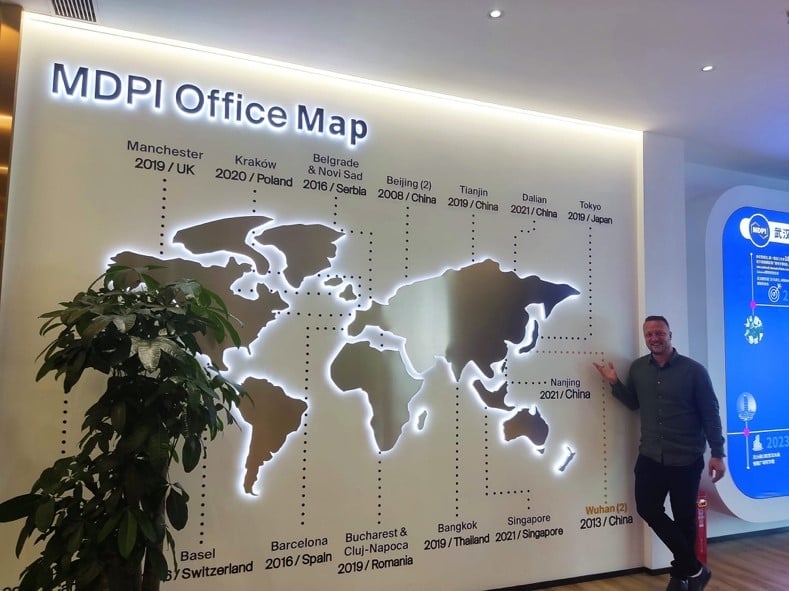
Stefan Tochev (CEO, MDPI) at MDPI’s Wuhan office.
In 2002, MDPI’s Basel headquarters moved to Matthäusstrasse 11, 4052 Basel, and Dr. Lin opened an editorial office in Qingdao, China, which launched the journal Marine Drugs in the following year. Below is a list of MDPI’s current offices in China and their respective dates of inauguration:
- 2008: Beijing (Tongzhou, Haidian)
- 2013: Wuhan (Hankou, Guanggu)
- 2019: Tianjin
- 2021: Dalian
- 2021: Nanjing
Our Strength is in Our People
With over 6,000 MDPI staff, across 20 offices in 11 countries, MDPI is able to offer authors responsive and efficient round-the-clock support, enabling a rapid publication process.
In my experience, stakeholders are genuinely surprised when they realize the extent of our global operations. My response is to reiterate that our people are our strength. This is why we have fast and efficient processes and top-notch responsiveness. Our global presence ensures that your manuscript is constantly attended to, rather than sitting on someone’s desk. We prioritize our authors’ needs and act quickly to move things through the various stages of publication. MDPI is built on speed, convenience, and competence, which I believe are core pillars for success in any industry. We continually strive to improve our systems and processes on the basis of these core strengths. We literally have over 6,000 staff worldwide dedicated to serving your needs. It’s not magic: it’s people; it’s real.
Impactful Research
MDPI Awards
To support the academic community, and especially young researchers, and also to enhance communication among scientists, MDPI journals offer various awards in specific fields. We serve the scientific community by funding research to facilitate the development of sustainable global solutions through our annual World Sustainability Award and Emerging Sustainability Leader Award.
In 2022, MDPI made awards totalling over US$1 million in recognition and support of researchers worldwide.
Across our journal catalogue, we have granted over 2,000 awards to recognize and support researchers from all disciplines. Since 2016, these awards have served as a source of recognition, acknowledging the impact of research by heightening the influence of talented individuals. The award types mainly include the Young Investigator Award, the Best PhD Thesis Award, the Best Paper Award, and the Outstanding Reviewer Award.
To learn more about MDPI Awards and to find out which are currently available, please click here.
MDPI Awards to Scholars from China
Since 2021, there have been 23 Best Paper Awards granted to authors affiliated with Chinese institutions, identifying their papers as having high-quality scientific impact. A total of 45 Chinese scholars have received awards such as the Young Investigator Award, the Best PhD Thesis Award, the Outstanding Reviewer Award, and the Tu Youyou Award, among others. Prizes for these awards include MDPI grants for paid publications, totalling over CHF 70,000 for scholars affiliated with Chinese institutions.
MDPI’s Tu Youyou Award
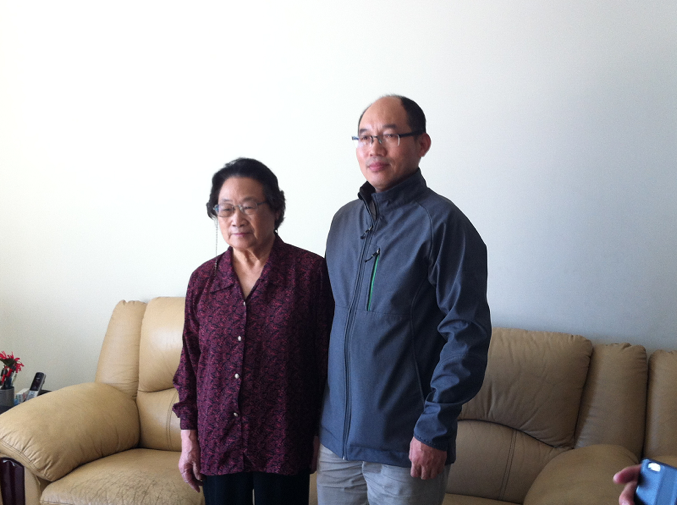
Prof. Tu Youyou (left), Dr. Shu-Kun Lin (President, MDPI).
In 2015, Professor Tu Youyou was awarded the Nobel Prize in Physiology or Medicine “for her discoveries concerning a novel therapy against Malaria.” In order to commemorate Professor Tu’s contributions to human health and to promote the passion and spirit conveyed by her experiences, MDPI in 2016 established the ‘Tu Youyou Award’, which runs biennially to recognize outstanding scholars dedicated to the research of natural products and medicinal chemistry.
The 2022 Tu Youyou Award was granted to Prof. Dr. Xiaoguang Lei of Peking University. Click here to access the interview with the winner.
2015 Nobel Prize for Medicine Awarded to Professor Youyou Tu
Professor Tu’s work was celebrated in a Special Issue from Molecules on the occasion of her 80th birthday. The Special Issue: 'Artemisinin (Qinghaosu): Commemorative Issue in Honor of Professor Youyou Tu on the Occasion of her 80th Anniversary” was created five years before she won the Nobel Prize, highlighting the visibility MDPI provides researchers and their work.
Highly Cited Articles by Chinese Scholars Published in MDPI
Click here to access the most cited MDPI papers published by scholars affiliated with Chinese institutions. This list presents the most influential research from the more than 287,000 MDPI papers published by Chinese scholars. With over 9 million total citations, I encourage you to maximize your visibility and impact by publishing with MDPI, the number one most cited open access publisher.
Read more:
- Tu Youyou Award
- World Sustainability Awards
- Available Awards
Inside MDPI
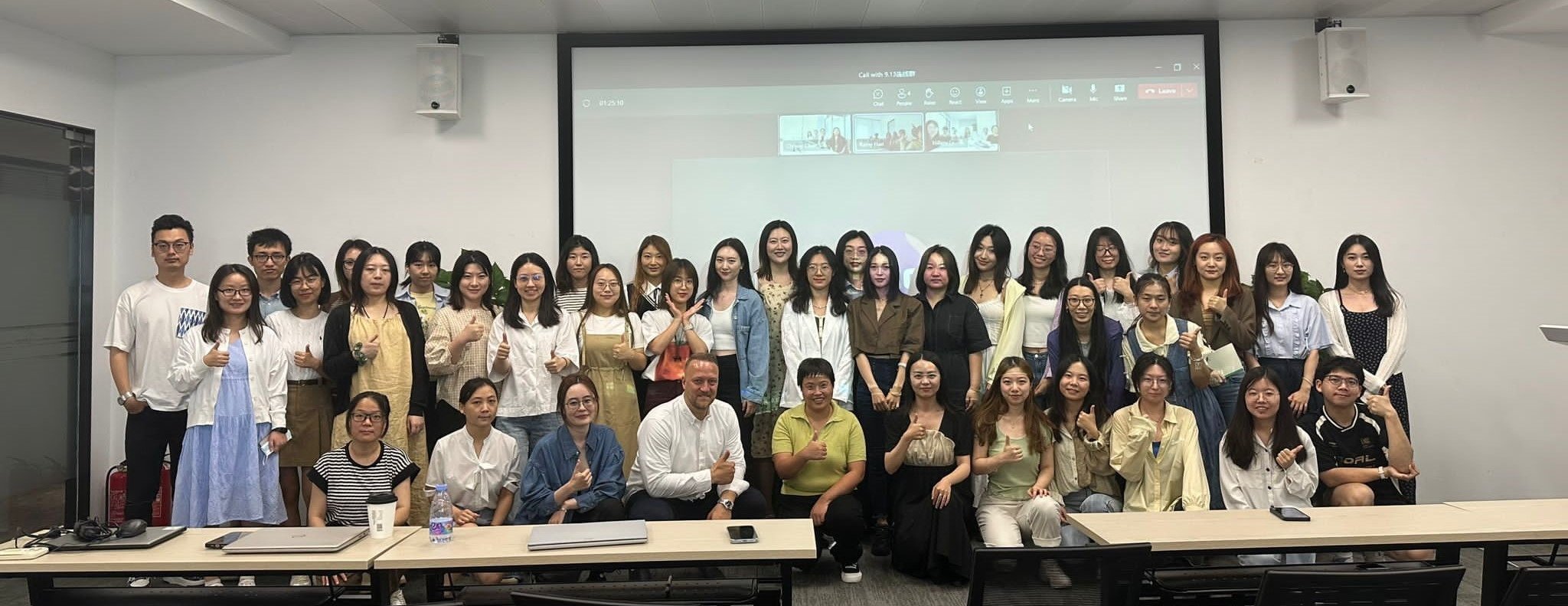 Stefan Tochev (CEO, MDPI) with the Beijing Marketing team.
Marketing Department in China
During my visit to our offices in Beijing and Wuhan, I had the opportunity to meet with, and to present to, our local marketing teams. These teams are responsible for various journal-related and corporate promotional activities, including newsletters, conferences, seminars, author training, journal awards, content creation, digital marketing, and social media.
I was pleased by the ambition and curiosity of our marketing colleagues. They showed a strong desire to collaborate and acquire knowledge and tactics to effectively market and promote MDPI-journal-related activities. I presented some of the principles and objectives that we apply in the Corporate Marketing and Communications department, and used the opportunity to strengthen our collaborative communications across offices.
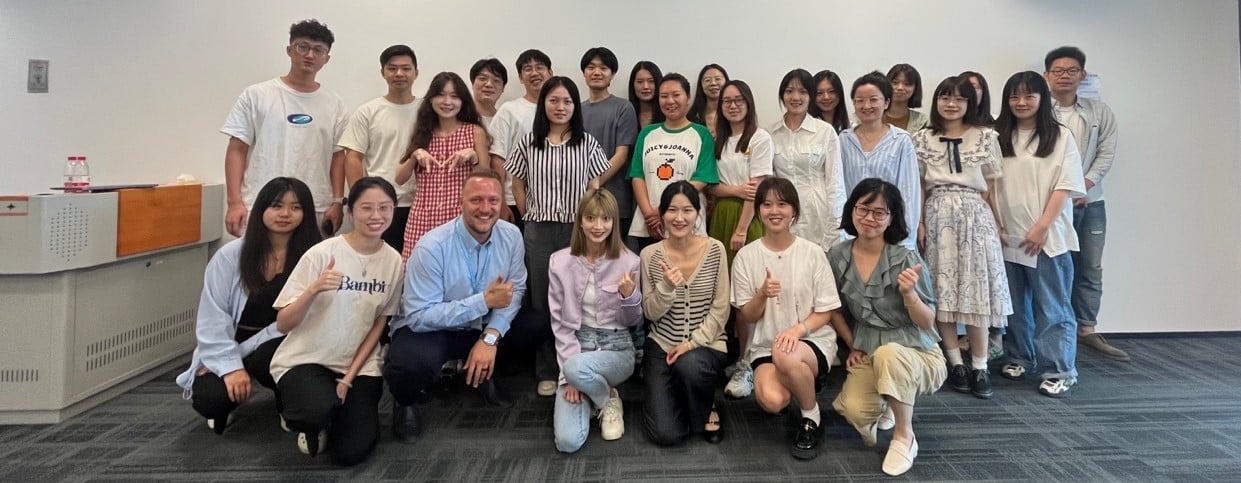 Stefan Tochev (CEO, MDPI) with the Wuhan Marketing team.
Coming Together for Science

Collaborations, Scholarships and Meetings
MDPI maintains partnerships with nearly 190 learned societies and over 800 institutions and consortia, helping to facilitate the transition to OA publishing. Our commitment to working with institutions is evident in China, where we have successfully established over 35 Institutional Open Access Programs (IOAP) with esteemed institutions such as the Tsinghua University, Huazhong University of Science and Technology, and Shanghai Jiao Tong University.
Our institutional partnerships, waiver programs, and article processing cost discounts create diverse pathways to OA publishing for researchers worldwide.
Scholarships in China
Since 2021, several MDPI journals (Sensors, Photonics, Coatings, Materials, Energies, and Journal of Fungi) have funded full scholarships for four Master’s and five Ph.D. projects in China. These scholarships align with Tianjin University, Wuhan University of Technology, Central South University, the Chinese Academy of Sciences, and the China University of Petroleum (Beijing).
Meeting with the Society of Chinese University Journals (CUJS)

Prof. Tieming Zhang (President of CUJS, centre) and MDPI colleagues at CUJS office.
I am pleased to have participated in some highly productive meetings during my visit to China, including one with the Society of Chinese University Journals (CUJS). The meeting involved Prof. Tieming Zhang (President of CUJS), Assoc. Prof. Xin Zhang (Vice President and Secretary General), and Dr. Fei Gao (Executive Member of CUJS). Alongside my colleagues Dr. Guoshi Liu, Dr. Giulia Stefenelli, and Anita Sun, I represented MDPI and held an open discussion to address any questions regarding OA and MDPI.
We discussed several methods for collaboration, including a workshop on the future of peer review, MDPI sponsoring a funding grant for early-career researchers, and transitioning journals from diamond to gold OA. I am thankful for the opportunity to have met our colleagues at CUJS in person and feel very confident about our future collaborations in support of OA publishing in China.
MDPI hosts free academic seminars, author training sessions, and academic conferences as part of its commitment to enrich and support the scholarly community. CUJS often stages academic events (e.g., conferences, editor training, and editor competitions), and I believe there are great opportunities for CUJS and MDPI to collaborate accordingly.
Meeting with National Science Library, Chinese Academy of Sciences (NSLC)
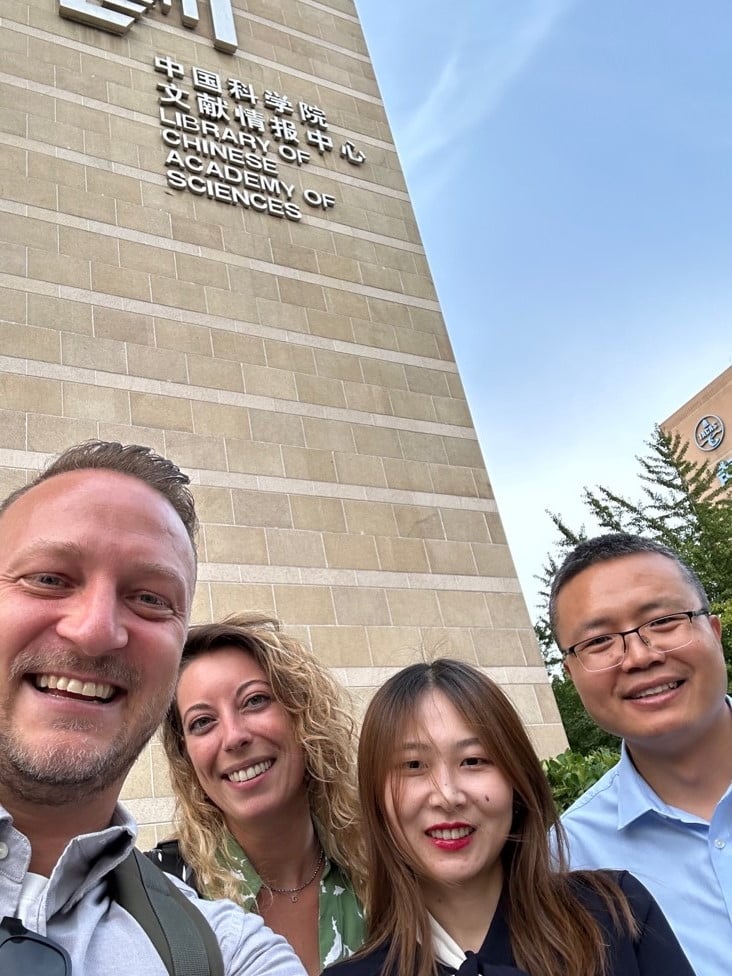
Stefan Tochev (CEO, MDPI), Dr. Giulia Stefenelli (Chair of Scientific Officers, MDPI), Anita Sun (PR Manager, MDPI) and Dr. Guoshi Liu (Managing Director, MDPI) at the National Science Library, Chinese Academy of Sciences.
We also visited the NSLC Director, Xiwen Liu, and colleagues Ying Jin, Zhesi Shen, and Sichao Tong. Following our introductions, we gave a presentation on the history and editorial process at MDPI, discussing specific details related to MDPI’s business and data. We highlighted the status of our IOAP collaborations in China and the makeup of our author base, specifically in China, and drew attention to the fact that MDPI has published research by authors from every country in the world. We then discussed the design indicators, calculation methods and implementation purposes of the ‘Early Warning Journal List’ and how we can have open communication to provide any data regarding MDPI journals. I am pleased to report that we reached a consensus on future communications, and am grateful to NSLC for hosting us in their offices.
In-person meetings with stakeholders provide an invaluable opportunity to communicate what MDPI is about and the various ways in which we serve the scholarly community. While digital marketing and online communication are essential, they are no replacement for the understanding and trust that come about through in-person interactions.
The Numbers
As at September 2023, China holds the largest position in MDPI’s global market, ranking as the largest contributor to the total number of papers published by MDPI.
At this point in time, there were more than 847,000 China mainland scholars who have published with MDPI, 51 of whom are Section-Editors-in-Chief (SEiC) of MDPI journals, with seven serving as Editors-in-Chief (EiCs) for journals such as Air, Big Data and Cognitive Computing, Blockchains, Future, Nanoenergy Advances, and Targets.
Our growth and presence in China are a true testament to the service we provide to the scholarly community, and to the relationships we foster through collaborative activities. We look forward to continuing to support the growth of the scholarly community in China, providing a valuable and trusted experience with MDPI.
Closing Thoughts
Final Reflections on our MDPI Offices in Beijing and Wuhan

Stefan Tochev (CEO, MDPI), Dr. Constanze Schelhorn (Indexing Manager, MDPI), Jiale Shang (Admin, Tongzhou, MDPI) at Beijing Capital International Airport, Beijing.
I spent approximately two weeks visiting some of our offices in China, and the first word that comes to mind when describing my experience is ‘hospitality.’ My colleagues and I were met with enthusiasm and delight at the airport by the Tongzhou Admin team (thank you, Jiale Shang, and thank you, Eric Wang, for keeping us organized on this trip!) and were taken care of with great attention. From hotels to transportation, dinners, and meetings, our stay was catered for perfectly.
Perhaps this is where MDPI’s focus on customers and service originates. At our core, we are a service company that provides a publishing platform for its authors. It’s therefore no surprise that authors consistently rate their experience with MDPI very highly.
95% of submitting authors rate their overall experience with the MDPI publication process as Excellent or Good (Springer Nature report 90%).
91% of submitting authors rate their overall experience with the MDPI peer review process as Excellent or Good.
Speed/Efficiency and Editorial Relationship are two key reasons underlying this high satisfaction score. ‘Editorial Relationship’ can be further explored, but in the past month, the most commonly noted aspects were the professionalism, kindness, availability, communicativeness, and personalized assistance provided by our editorial staff throughout the process. These attributes are at the core of our work across all our offices and continents.
Hospitality and Service
Just as our Chinese colleagues strove to keep us engaged by showing us the city sights (thank you, Thea Pan, and Jason Wu from the Wuhan Marketing team!) and sharing a variety of wonderful meals, our editorial staff are committed to serving our authors throughout their publishing journey. Our aim is to place the author at the centre of everything we do, eager to welcome our ‘guests’ and provide them with a pleasant publishing experience.
I asked my colleague Francis Wu (Senior Publisher, Wuhan office) where this hospitality originates. He responded that it is part of Chinese culture. I reflected long and deep on this answer. China is a vast country, and when visitors arrive, hosts want to ensure they feel welcomed and taken care of in order to maximize their time and visit. I can’t think of a better analogy for how I would want our authors to feel when they visit MDPI for their publishing needs. A company culture that prioritizes service, something that goes beyond products and productivity, and focuses on the overall experience. Over 6,000 people, across all MDPI offices, are ready, willing and able to go the extra mile for their colleagues and their customers. This is something I am truly proud of.
Chief Executive Officer
MDPI AG
25 September 2023
Meet Us at the Gerontological Society of America (GSA) 2023 Annual Scientific Meeting, 8–12 November 2023, Tampa, Florida, USA
MDPI will attend the Gerontological Society of America (GSA) 2023 Annual Scientific Meeting. The Gerontological Society of America is the oldest and largest interdisciplinary organization devoted to research, education, and practice in the field of aging.
The GSA 2023 Annual Scientific Meeting draws professionals in the field of aging on a global scale. Attendees represent specialties including geriatrics, biological sciences, nursing, nutrition, medicine, social work, economics, policy, psychology, and more. The Annual Scientific Meeting offers an extensive amount of stimulating and high-level scholarship, from a diverse variety of aging research disciplines. It is this new, enriching knowledge that will inform policy, practice, and research for years to come.
The following MDPI journals will be represented:
- Healthcare;
- Medicina;
- Epidemiologia;
- Nutrients;
- JCM;
- JPM;
- IJERPH;
- Nursing Reports;
- Geriatrics;
- Life;
- BioMedInformatics;
- Behavioral Sciences;
- Societies;
- JAL.
If you plan on attending this conference, please feel free to stop by our booth #119 and start a conversation with us. Our delegates look forward to meeting you in person and answering any questions that you may have.
For more information about the conference, please visit https://www.gsa2023.org.
15 September 2023
International Journal of Environmental Research and Public Health | World Patient Safety Day 2023—“Engaging Patients for Patient Safety”
World Patient Safety Day (WPSD), held annually on 17 September, aims to raise global awareness about patient safety and calls for solidarity and united action by all countries and international partners to reduce patient harm. Patient safety focuses on preventing and reducing risks, errors, and harm that happen to patients during the provision of health care. This year, WPSD is dedicated to the theme “Engaging patients for patient safety” and the slogan “Elevate the voice of patients!”.
To further explore the related research on World Patient Safety Day (WPSD), the International Journal of Environmental Research and Public Health (IJERPH, ISSN: 1660-4601) has gathered open access academic research on the topic of patient safety. We hope to share new scientific knowledge in the field of patient safety with the world on this day.
Article Collection:
1. “The Influence of Burnout on Patient Safety Management Activities of Shift Nurses: The Mediating Effect of Compassion Satisfaction”
by I Seul Ryu and JaeLan Shim
Int. J. Environ. Res. Public Health 2021, 18(22), 12210; https://doi.org/10.3390/ijerph182212210
Available online: https://www.mdpi.com/1660-4601/18/22/12210
2. “Assessing Patient Safety Culture in United States Hospitals”
by Abdulmajeed Azyabi, Waldemar Karwowski, Peter Hancock, Thomas T. H. Wan and Ahmad Elshennawy
Int. J. Environ. Res. Public Health 2022, 19(4), 2353; https://doi.org/10.3390/ijerph19042353
Available online: https://www.mdpi.com/1660-4601/19/4/2353
3. “The Perception of the Patient Safety Climate by Health Professionals during the COVID-19 Pandemic—International Research”
by Justyna Kosydar-Bochenek, Sabina Krupa, Dorota Religa, Adriano Friganović, Ber Oomen, Elena Brioni, Stelios Iordanou, Marcin Suchoparski, Małgorzata Knap and Wioletta Mędrzycka-Dąbrowska
Int. J. Environ. Res. Public Health 2022, 19(15), 9712; https://doi.org/10.3390/ijerph19159712
Available online: https://www.mdpi.com/1660-4601/19/15/9712
4. “Interventions to Increase Patient Safety in Long-Term Care Facilities—Umbrella Review”
by Jakub Świtalski, Katarzyna Wnuk, Tomasz Tatara, Wojciech Miazga, Ewa Wiśniewska, Tomasz Banaś, Olga Partyka, Katarzyna Karakiewicz-Krawczyk, Justyna Jurczak, Mateusz Kaczmarski et al.
Int. J. Environ. Res. Public Health 2022, 19(22), 15354; https://doi.org/10.3390/ijerph192215354
Available online: https://www.mdpi.com/1660-4601/19/22/15354
5. “Using Dominance Analysis to Identify the Most Important Dimensions of Safety Culture for Predicting Patient Safety”
by Seung Eun Lee and V. Susan Dahinten
Int. J. Environ. Res. Public Health 2021, 18(15), 7746; https://doi.org/10.3390/ijerph18157746
Available online: https://www.mdpi.com/1660-4601/18/15/7746
6. “Patient Safety Related to Microbiological Contamination of the Environment of a Multi-Profile Clinical Hospital”
by Marlena Robakowska, Marek Bronk, Anna Tyrańska-Fobke, Daniel Ślęzak, Jakub Kraszewski and Łukasz Balwicki
Int. J. Environ. Res. Public Health 2021, 18(7), 3844; https://doi.org/10.3390/ijerph18073844
Available online: https://www.mdpi.com/1660-4601/18/7/3844
7. “Leveraging the Work Environment to Minimize the Negative Impact of Nurse Burnout on Patient Outcomes”
by Amelia E. Schlak, Linda H. Aiken, Jesse Chittams, Lusine Poghosyan and Matthew McHugh
Int. J. Environ. Res. Public Health 2021, 18(2), 610; https://doi.org/10.3390/ijerph18020610
Available online: https://www.mdpi.com/1660-4601/18/2/610
8. “Easier Said Than Done: Healthcare Professionals’ Barriers to the Provision of Patient-Centered Primary Care to Patients with Multimorbidity”
by Sanne J. Kuipers, Anna P. Nieboer and Jane M. Cramm
Int. J. Environ. Res. Public Health 2021, 18(11), 6057; https://doi.org/10.3390/ijerph18116057
Available online: https://www.mdpi.com/1660-4601/18/11/6057
Access more articles at the following link: https://www.mdpi.com/search?journal=ijerph.
Call for papers:
- “2nd Edition of COVID-19, Healthcare Quality, Patient Safety and Quality of Life”
Guest Editor: Prof. Dr. Mosad Zineldin
Submission Deadline: 15 November 2023
- “Research on the Primary Care Services, Patients Safety and Primary Healthcare Workers Training in the Face of Adversity”
Guest Editor: Prof. Dr. Filipe Prazeres
Submission Deadline: 31 December 2023
Access more Special Issues at the following link: https://www.mdpi.com/journal/ijerph/special_issues.
Closed Special Issues:
Special Issue Book:
Access more Special Issue Books here.
13 September 2023
Meet Us at the AGU Fall Meeting 2023, 11–15 December 2023, Online or On-Site in San Francisco, CA, USA
MDPI will be attending the AGU Fall Meeting 2023, which will be held from 11 to 15 December 2023 in San Francisco, CA, USA.
For more than 100 years, AGU has been opening science—opening pathways to discovery, opening greater awareness to address climate change, opening greater collaborations that lead to solutions and opening the fields and professions of science to a whole new age of justice, equity, diversity, inclusion and belonging.
2023 might be the official year of Open Science, but we also see it as an opportunity to affirm AGU’s overarching values and beliefs. It is a message for all of us to carry as we come together to share, inspire, collaborate, engage and most of all rededicate ourselves as a united community grounded in wide open science.
The following MDPI journals will be represented:
- Air;
- Atmosphere;
- Climate;
- Drones;
- Earth;
- Fire;
- Forests;
- Geomatics;
- Geosciences;
- Hydrology;
- IJERPH;
- Land;
- Meteorology;
- Minerals;
- Remote Sensing;
- Sustainability;
- Water;
- World.
If you are planning to attend this conference, please feel free to stop by our booth #1424 and start a conversation with us. Our delegates look forward to meeting you in person and answering any questions that you may have. For more information about the conference, please visit the following website: https://www.agu.org/fall-meeting.
6 September 2023
Recap of Awards Granted to Scholars in 2022
MDPI is committed to supporting the academic community, nurturing talent and advancing science. Awards are an important part of the research landscape and play a vital role in helping academics gain recognition, especially young researchers as they embark on new research avenues.
In 2022, our journals presented a total number of 394 Awards, including Travel Awards, Young Investigator Awards, Best PhD Thesis Awards, Best Paper Awards, and Outstanding Reviewer Awards, with several winners announced for some of the awards. The total prize sum amounted to just under 580,000 Swiss francs (CHF), or approximately 650,000 US dollars. Overall, more than 720 scholars were awarded.
The majority of the awards were dedicated to young researchers in relatively early stages of their careers. This encompassed 66 of the afore-mentioned Travel Awards, 60 Young Investigator Awards, supporting research projects and conference attendance, as well as 51 Best PhD Thesis Awards. Additionally, 113 Best Paper Awards were given by our journals. The selection committees were entrusted with identifying the most impactful and novel research and review articles published in their journal within a given year.
MDPI will continue its support and recognition for the academic community moving forward, sponsoring new awards across disciplines. To learn more about all the awardees and their research projects in your field of study, please visit the following pages:
To explore more MDPI awards, please click here.
30 August 2023
MDPI Insights: The CEO’s Letter #3 - Sustainability and Co-opetition
Welcome to the MDPI Insights: The CEO's Letter.
In these monthly letters, I will showcase two key aspects of our work at MDPI: our commitment to empowering researchers and our determination to facilitating open scientific exchange.
Opening Thoughts

Our Commitment to Sustainability
As a pioneer in academic open access publishing since 1996, MDPI has always been dedicated to facilitating scientific exchange across all disciplines. Our approach to open science is guided by principles such as Open Access (OA), Timeliness and Efficiency, Simplicity, High-Quality Service, Flexibility, and a commitment to Sustainability. This commitment involves preserving published papers for the long term and supporting the future of science through partnerships, sponsorships, and awards.
In this edition of the CEO Letter, I will delve into MDPI’s various sustainability initiatives. As a leader in OA publishing, we are able to provide the public with a significant amount of environment-related content at no cost.
MDPI and the Sustainable Development Goals (SDGs)
In 2020, the SDG Publishers Compact was launched to accelerate implementation of the SDGs by promoting content that informs, develops, and inspires action. MDPI joined this initiative in 2021 and subsequently launched the MDPI SDG Hub in 2022, offering free access to recent research within the scope of each of the 17 SDGs. We also support authors from underrepresented communities by waiving publication charges for selected SDG-related papers. Detailed sustainability practices and supported publications are available in the report under each Goal page.
“More than 80% of MDPI articles and reviews published in 2022 relate to the Sustainable Development Goals.” [source: InCites, Accessed on 21.08.2023]
As at August 2023, MDPI boasts 14 journals dedicated to sustainability-related topics. Our first journal in this area, Sustainability, has published over 29,000 articles on the SDGs, accumulating over 240,000 citations (source: InCites, as at 1 January 2023). These journals serve as vital platforms for researchers to share insights and address environmental challenges. In addition:
MDPI journals specializing in sustainability-related topics:
- 2009: Sustainability
- 2012: Resources
- 2013: Climate
- 2014: Environments
- 2016: Recycling
- 2019: Clean Technologies
- 2020: Sustainable Chemistry
- 2021: Wind, Biomass, Conservation, Pollutants, Solar
- 2022: Waste, Microplastics
Read more:
Impactful Research

Highly Cited Articles in Sustainability
In 2022, content published in Sustainability and indexed in Journal Citation Reports (JCR) received nearly 190,000 citations. This highlights the fact that Sustainability publishes highly cited research articles related to environmental sciences and SDG-related topics such as climate action.
We are pleased to share that Sustainability received a 2022 CiteScore of 5.8, marking a 16% increase from the 2021 metric. Specifically, the CiteScore positions Sustainability as follows: Q1 (27 out of 163) in the “Environmental Science (miscellaneous)” category, and Q1 (101 out of 779) in the “Geography Planning and Development” category. For additional journal statistics, please visit here.
“Sustainability received a 2022 CiteScore of 5.8”
While MDPI journals such as Climate and Atmosphere have a distinct focus on atmosphere pollution and its impact on climate processes, journals like Sustainability, Environments, Water, Remote Sensing, and IJERPH publish content related to climate change. These journals have published over 32,300 articles related to SDG 13: Climate Action.
Highly Cited Papers in Sustainability
Below are several highly cited papers published in Sustainability over the past three years. Citation metrics are current as at 15 August 2023.
1. “A Global Assessment: Can Renewable Energy Replace Fossil Fuels by 2050?”Authors: Jerry L. Holechek, Hatim M. E. Geli, Mohammed N. Sawalhah, and Raul Valdez
Sustainability 2022, 14(8), 4792; https://doi.org/10.3390/su14084792
Citations: Crossref (97), Scopus (91), Web of Science (82), Google Scholar (125)
This paper addresses one of the most significant challenges of climate change – achieving Net Zero Carbon by 2050. The meta-analysis suggests that while difficult, this transition is possible through the concerted application of pathways, lifestyle changes, and global cooperation.
2. “Anxiety and the Ecological Crisis: An Analysis of Eco-Anxiety and Climate Anxiety”Author: Panu Pihkala
Sustainability 2020, 12(19), 7836; https://doi.org/10.3390/su12197836
Citations: Crossref (144), Scopus (121), Web of Science (159), Google Scholar (382)
This paper has received substantial media attention, including coverage by The Guardian, BBC, Vice, and CNBC. An interview with Dr. Panu Pihkala, a leading interdisciplinary researcher on the topic, can be found on MDPI’s podcast: Insight Faster, Episode 1.
3. “Impact of Climate Change on Agriculture and Its Mitigation Strategies: A Review”Authors: Gurdeep Singh Malhi, Manpreet Kaur, and Prashant Kaushik
Sustainability 2021, 13(3), 1318; https://doi.org/10.3390/su13031318
Citations: Crossref (207), Scopus (221), Web of Science (186), Google Scholar (355)
This paper reviews literature on climate change, addressing its causes, future projections, impact on agriculture, including plant physiology, growth, productivity, pest infestation, and the economic implications of mitigation strategies.
4. “Impacts of Plastic Pollution on Ecosystem Services, Sustainable Development Goals, and Need to Focus on Circular Economy and Policy Interventions”Authors: Rakesh Kumar, Anurag Verma, Arkajyoti Shome, Rama Sinha, Srishti Sinha, Prakash Kumar Jha, Ritesh Kumar, Pawan Kumar, Shubham, Shreyas Das, Prabhakar Sharma, and P. V. Vara Prasad
Sustainability 2021, 13(17), 9963; https://doi.org/10.3390/su13179963
Citations: Crossref (134), Scopus (136), Web of Science (113), Google Scholar (184)
This review aims to assess the adverse effects of plastic pollution on ecosystems, link the management of plastic with the SDGs, and propose policy measures using transdisciplinary approaches. Empowering communities to reduce plastic use is crucial. Addressing global plastic pollution is a priority.
Sustainability is an international, cross-disciplinary, open access journal that explores environmental, cultural, economic, and social sustainability of human beings. It provides a forward-looking platform for research on sustainability and sustainable development, and is published semi-monthly online by MDPI. Sustainability is affiliated with The Canadian Urban Transit Research & Innovation Consortium (CUTRIC) and The International Council for Research and Innovation in Building and Construction (CIB).
Read more:
- Testimonials: See what our editors and authors say about Sustainability.
Inside MDPI
President of Ireland Authors Editorial in MDPI Journal Sustainability
It’s a very special occasion when the president of a country takes the initiative to write an editorial for a journal. Michael D. Higgins, President of the Republic of Ireland, has contributed his insights to a forthcoming Special Issue in Sustainability:

This Special Issue, focusing on “making sustainable development happen” at grassroots levels, allows for perspectives from, and on, the major world faiths, exploring how challenges have been conceptualised and addressed, in addition to case studies of faith-based sustainability initiatives in practice.
The experience of faith institutions and communities in translating theological and moral commitments to sustainable development into action is now a topic we must examine with urgency; one on which I am so glad this Special Issue focuses.
As President of Ireland, I very much support this Special Issue of Sustainability. It is my great hope that the contents of the papers contained herein will assist in making sustainable development happen at grassroots levels across the world so that we can cooperate together, people of faith and of none, to ensure a just, inclusive and sustainable future for all on our fragile planet.
Read the completed editorial here:
Special Issue “Faith and Sustainable Development: Exploring Practice, Progress and Challenges among Faith Communities and Institutions”: Foreword by the President of Ireland
Author: Michael D. Higgins
Sustainability 2023, 15(12), 9683; https://doi.org/10.3390/su15129683
Coming Together for Science

The World Sustainability Forum 2023
The World Sustainability Forum (WSF) is a biennial MDPI event focused on sustainability. WSF 2023 marks the tenth anniversary of the conference series, taking place on 14 September. For the first time, the event will be hosted as a 24-hour conference across three locations – Singapore, Basel in Switzerland, and Toronto in Canada – alongside virtual streaming.
This unique format allows us to span three time zones, providing live coverage of critical sustainability-related topics throughout the day:
- The Singapore Hub, chaired by Professor Horn Mun Cheah and Associate Professor Renee Tan, will explore “Sustainability for Social and Community Impact”.
- The Basel Hub, chaired by Prof. Dr. Anet Režek Jambrak and Dr. Lela Mélon, will delve into “Sustainability in the industry, and at university and corporate settings”.
- The Toronto Hub, led by Dr. Umberto Berardi, will discuss “The Sustainable Built Environment”.
MDPI Sustainability Foundation: Recognizing Excellence in Sustainability Research
The MDPI Sustainability Foundation supports researchers through two sustainability-focused awards:
- The World Sustainability Award, amounting to USD 100,000, is given to senior researchers.
- The Emerging Sustainability Leader Award, valued at USD 20,000, sponsored by the journal Sustainability, is presented to early-career researchers.
The winners of the Sustainability Foundation will be formally awarded during the WSF2023 on 14 September. Interviews with the award winners and finalists are available below.
2023 World Sustainability Award Winners
Interviews with 2023 Emerging Sustainability Leader Award Finalists
- Dr. Bahareh Kamranzad
- Dr. Youjin Kim
- Dr. Julia Lohmann
As a hybrid event, WSF23 provides scholars with the option to attend in person at one of the conference sites or, for a more sustainable approach, virtually. All sessions will be recorded and archived for future access. Registration is open until 3 September 2023, with in-person and virtual tickets available here.
Read more:
Closing Thoughts
“Co-opetition”: Collaboration Plus Healthy Competition – A Visit to Elsevier
I firmly believe in fostering collaboration and at the same time promoting healthy competition within the academic publishing industry. The market offers ample room for publishers and related companies to provide valuable services and products that enrich the academic community. While MDPI is recognized for its efficient and streamlined processes –thanks to our over 6,000 colleagues, in-house tools, and initiatives that support the author journey – our ethos has always involved learning from and collaborating with other organizations.
MDPI’s Interaction with Elsevier
In January 2023, I had a brief conversation with Judy Verses, President of Global Academic and Government Markets at Elsevier, following her participation in a panel discussion at the Academic Publishers Europe event in Berlin. One of the highlights for me was Judy’s insight into the impact of research, particularly her emphasis on the role of collaboration, including policy and showing the impact of research to influence on funding decisions.
“Such collaborations drive forward-looking strategies to elevate our support for the scholarly community”

Judy and I resumed our discussion in August, when I visited Elsevier's office to review current projects, such as our recent agreement with Science Direct and the continued indexing of MDPI journals in Scopus (indexing database owned by Elsevier). We also explored possible opportunities for the future, including a potential collaboration to expand MDPI’s Scilit data infrastructure. This endeavour aims to aggregate and provide access to scholarly metadata encompassing journal articles, conference papers, books, preprints, and more. While these discussions are ongoing, the underlying principle remains that such collaborations drive forward-looking strategies to elevate our services and support for the scholarly community.
It was great that Judy and I acknowledged the merits of 'co-opetition,' a concept based of the belief that fostering cooperation alongside healthy competition can lead to shared advancements for both individual companies and the industry at large.
‘Fully OA’ Organizations Dedicated to Open Access
MDPI proudly aligns with the ‘Fully OA’ group, a collaborative initiative comprising nine organizations dedicated to Open Access. Our monthly meetings, including an OASPA representative, serve as platforms to share non-confidential information, resources, and projects. These gatherings also facilitate discussions on topics relevant to fully OA organizations. Occasionally, joint actions spring from these interactions, such as collaborative blog posts on pertinent subjects and joint statements, such as a recent response to the House Appropriations Committee.
This display of cooperation among competing entities forms a strategic alliance focused on nurturing the best interests of the OA publishing model.
As I wrap up this third edition of the CEO Letter, I encourage you to seize opportunities for collaboration and contribute to advancing our shared academic culture. As the African proverb has it, “If you want to go fast, go alone; if you want to go far, go together.”
Chief Executive Officer
MDPI AG
25 August 2023
Meet Us at the American Congress of Rehabilitation Medicine (ACRM) 100th Annual Conference, 30 October–2 November 2023, Atlanta, USA

MDPI will attend the American Congress of Rehabilitation Medicine (ACRM) 100th Annual Conference. The 2023 annual meeting of ACRM is the world’s largest interdisciplinary rehabilitation research event. Rehabilitation professionals and community members from around the globe are encouraged to join. With 150+ inter-professional groups at ACRM, including community groups, committees, and task forces, the 100th anniversary conference is planning 4 powerful plenaries, 15+ symposia, 300+ educational sessions, symposia and lectures, and 600+ scientific papers and digital poster presentations, etc.
To enhance patient care, the presentation of science by researchers is required, and to inform and improve research, feedback from the clinicians is required. The aim of the ACRM 100th annual conference is to encourage attendees to join the discussions and collaborations in order to help move the field of physical medicine and rehabilitation forward.
The following MDPI journals will be represented:
If you plan on attending this conference, please feel free to stop by our booth #413 and start a conversation with us. Our delegates look forward to meeting you in person and answering any questions that you may have. For more information about the conference, please visit https://conference.acrm.org/.
18 August 2023
Meet Us at the American Academy of Pediatrics 2023 National Conference & Exhibition, 20–24 October 2023, Washington, USA
MDPI will attend the American Academy of Pediatrics 2023 National Conference & Exhibition. This event will be held in Washington D.C. for five days from Friday, 20 October, to Tuesday, 24 October 2023.
The following MDPI journals will be represented:
- Children;
- JCM;
- Medicina;
- Healthcare;
- IJERPH;
- JPM;
- Clinpract;
- Diagnostics;
- Medicines.
If you plan on attending this conference, please stop by our booth and speak with us. Our delegates look forward to meeting you in person and answering any questions that you may have.
For more information about the conference, please visit https://aapexperience.org/.
9 August 2023
International Journal of Environmental Research and Public Health | Google Scholar Metrics Released
We are pleased to announce that the International Journal of Environmental Research and Public Health (IJERPH, ISSN: 1660-4601) ranked first in the latest release of the Google Scholar Metrics under the subcategory “Public Health”. The h5-index of IJERPH is 201, and the h5-median is 280.
We would like to take this opportunity to express our gratitude to all the editors, reviewers, authors, and readers of IJERPH. Thank you for all your support for the journal. Please feel free to contact us at [email protected] if you have any questions or suggestions for IJERPH.
For more information about our ranking on Google Scholar, please visit the following website: https://scholar.google.com/citations?view_op=top_venues&hl=en&vq=med_publichealth.
31 July 2023
MDPI’s 2022 Best PhD Thesis Awards in Environmental and Earth Sciences—Winners Announced
MDPI’s Best PhD Thesis Awards are presented to recognize the young scholars who are deemed to have completed the most outstanding PhD thesis in their field of research and to encourage them to continue their outstanding work and make further contributions to their field.
We would like to warmly congratulate the winners of the 2022 Best PhD Thesis Awards and wish them success with their future research endeavors.
- “Variability of Ocean Dynamics and Associated Mechanisms Over the Tropical Indian Ocean”
by Sartaj Khan, Harbin Engineering University, China
- “Nanofluid Impingement Jet Heat Transfer”
by Javad Mohammadpour, Macquarie University, Australia
- “Abiotic Sedimentary Dolomite Formation: from Nano- to Macro-Scale”
by Yihang Fang, Washington University, USA
- “Effects of Rare Earth Elements on Aquatic Organisms under a Changing Environment”
by Catia Figueiredo, CIIMAR—Interdisciplinary Centre of Marine and Environmental Research, Portugal
- “Green-Gray Coupled Runoff Control Infrastructure Adaptive Multi-Objective Optimization Method”
by Zijing Liu, Tsinghua University, China
About MDPI Awards:
In order to reward the academic community, especially young researchers and enhance communication among scientists, MDPI journals regularly offer various awards to researchers in specific fields. These awards, serving as a source of inspiration and recognition, help raise the influence of talented individuals who have been credited with outstanding achievements and are making a significant contribution to the advancement of their fields.
To explore more MDPI awards, please click here.
31 July 2023
MDPI’s 2022 Best Paper Awards in Environmental and Earth Sciences—Winners Announced
The purpose of our Best Paper Awards is to promote and recognize the most impactful contributions published within MDPI journals.
The editors of each journal carefully selected reviews and research papers through a rigorous judging process based on criteria such as the scientific merit, overall impact, and the quality of presentation of the papers published in the journal.
We are honored to present the winners for the year 2022 in environmental and earth sciences, who were selected amongst the extensive competition, and congratulate the authors for their outstanding scientific publications.
- “Covid-19 Airborne Transmission and Its Prevention: Waiting for Evidence or Applying the Precautionary Principle?”
by Annalaura Carducci, Ileana Federigi and Marco Verani
Atmosphere 2020, 11(7), 710; https://doi.org/10.3390/atmos11070710
- “The Heat Health Warning System in Germany—Application and Warnings for 2005 to 2019”
by Andreas Matzarakis, Gudrun Laschewski and Stefan Muthers
Atmosphere 2020, 11(2), 170; https://doi.org/10.3390/atmos11020170
- “Temporal Hydrological Drought Index Forecasting for New South Wales, Australia Using Machine Learning Approaches”
by Abhirup Dikshit, Biswajeet Pradhan and Abdullah M. Alamri
Atmosphere 2020, 11(6), 585; https://doi.org/10.3390/atmos11060585
- “Lignocellulosic Biomass Mild Alkaline Fractionation and Resulting Extract Purification Processes: Conditions, Yields, and Purities”
by Vincent Oriez, Jérôme Peydecastaing and Pierre-Yves Pontalier
Clean Technol. 2020, 2(1), 91-115; https://doi.org/10.3390/cleantechnol2010007
- “Environmental and Economic Evaluation of Fuel Choices for Short Sea Shipping”
by Kirsi Spoof-Tuomi and Seppo Niemi
Clean Technol. 2020, 2(1), 34-52; https://doi.org/10.3390/cleantechnol2010004
- “Analyzing Similarities between the European Union Countries in Terms of the Structure and Volume of Energy Production from Renewable Energy Sources”
by Jarosław Brodny and Magdalena Tutak
Energies 2020, 13(4), 913; https://doi.org/10.3390/en13040913
- “High Reynold’s Number Turbulent Model for Micro-Channel Cold Plate Using Reverse Engineering Approach for Water-Cooled Battery in Electric Vehicles”
by Satyam Panchal, Krishna Gudlanarva, Manh-Kien Tran, Roydon Fraser and Michael Fowler
Energies 2020, 13(7), 1638; https://doi.org/10.3390/en13071638 - “Investigation of Inorganic Phase Change Material for a Semi-Transparent Photovoltaic (STPV) Module”
by Alagar Karthick, Muthu Manokar Athikesavan, Manoj Kumar Pasupathi, Nallapaneni Manoj Kumar, Shauhrat S. Chopra and Aritra Ghosh
Energies 2020, 13(14), 3582; https://doi.org/10.3390/en13143582
- “Considerations on Potentials, Greenhouse Gas, and Energy Performance of Biofuels Based on Forest Residues for Heavy-Duty Road Transport in Sweden”
by Shveta Soam and Pål Börjesson
Energies 2020, 13(24), 6701; https://doi.org/10.3390/en13246701
- “Characterization of Hybrid-nano/Paraffin Organic Phase Change Material for Thermal Energy Storage Applications in Solar Thermal Systems”
by Manoj Kumar Pasupathi, Karthick Alagar, Michael Joseph Stalin P, Matheswaran M. M and Ghosh Aritra
Energies 2020, 13(19), 5079; https://doi.org/10.3390/en13195079
- “Snapshot of Photovoltaics—February 2020”
by Arnulf Jäger-Waldau
Energies 2020, 13(4), 930; https://doi.org/10.3390/en13040930
- “The Importance of Renewable Energy Sources in Poland’s Energy Mix”
by Renata Marks-Bielska, Stanisław Bielski, Katarzyna Pik and Krystyna Kurowska
Energies 2020, 13(18), 4624; https://doi.org/10.3390/en13184624
- “Infectious Diseases, Market Uncertainty and Oil Market Volatility”
by Elie Bouri, Riza Demirer, Rangan Gupta and Christian Pierdzioch
Energies 2020, 13(16), 4090; https://doi.org/10.3390/en13164090
- “Cost of Equity of Coal-Fired Power Generation Projects in Poland: Its Importance for the Management of Decision-Making Process”
by Piotr W. Saługa, Katarzyna Szczepańska-Woszczyna, Radosław Miśkiewicz and Mateusz Chłąd
Energies 2020, 13(18), 4833; https://doi.org/10.3390/en13184833
- “Internet of Things (IoT) and the Energy Sector”
by Naser Hossein Motlagh, Mahsa Mohammadrezaei, Julian Hunt and Behnam Zakeri
Energies 2020, 13(2), 494; https://doi.org/10.3390/en13020494
- “A Review on Thermoelectric Generators: Progress and Applications”
by Mohamed Amine Zoui, Saïd Bentouba, John G. Stocholm and Mahmoud Bourouis
Energies 2020, 13(14), 3606; https://doi.org/10.3390/en13143606
- “Contributions and Risks of Artificial Intelligence (AI) in Building Smarter Cities: Insights from a Systematic Review of the Literature”
by Tan Yigitcanlar, Kevin C. Desouza, Luke Butler and Farnoosh Roozkhosh
Energies 2020, 13(6), 1473; https://doi.org/10.3390/en13061473
- “Possibilities and Challenges for the Inclusion of the Electric Vehicle (EV) to Reduce the Carbon Footprint in the Transport Sector: A Review”
by Aritra Ghosh
Energies 2020, 13(10), 2602; https://doi.org/10.3390/en13102602
- “Energy and Climate Policy—An Evaluation of Global Climate Change Expenditure 2011–2018”
by Coilín ÓhAiseadha, Gerré Quinn, Ronan Connolly, Michael Connolly and Willie Soon
Energies 2020, 13(18), 4839; https://doi.org/10.3390/en13184839 - “A Review of The Methanol Economy: The Fuel Cell Route”
by Samuel Simon Araya, Vincenzo Liso, Xiaoti Cui, Na Li, Jimin Zhu, Simon Lennart Sahlin, Søren Højgaard Jensen, Mads Pagh Nielsen and Søren Knudsen Kær
Energies 2020, 13(3), 596; https://doi.org/10.3390/en13030596
- “Microplastic Contamination in Freshwater Environments: A Review, Focusing on Interactions with Sediments and Benthic Organisms”
by Arianna Bellasi, Gilberto Binda, Andrea Pozzi, Silvia Galafassi, Pietro Volta and Roberta Bettinetti
Environments 2020, 7(4), 30; https://doi.org/10.3390/environments7040030
- “Biogas Production from Food Residues—The Role of Trace Metals and Co-Digestion with Primary Sludge”
by Moshe Habagil, Alexander Keucken and Ilona Sárvári Horváth
Environments 2020, 7(6), 42; https://doi.org/10.3390/environments7060042
- “Coastal Pine-Oak Glacial Refugia in the Mediterranean Basin: A Biogeographic Approach Based on Charcoal Analysis and Spatial Modelling”
by Gaetano Di Pasquale, Antonio Saracino, Luciano Bosso, Danilo Russo, Adriana Moroni, Giuliano Bonanomi and Emilia Allevato
Forests 2020, 11(6), 673; https://doi.org/10.3390/f11060673
- “A Survey in Natural Forest Ecosystems of Vietnam Reveals High Diversity of both New and Described Phytophthora Taxa including ramorum”
by Thomas Jung, Bruno Scanu, Clive M. Brasier, Joan Webber, Ivan Milenković, Tamara Corcobado, Michal Tomšovský, Matěj Pánek, József Bakonyi, Cristiana Maia et al.
Forests 2020, 11(1), 93; https://doi.org/10.3390/f11010093
- “Living in Drylands: Functional Adaptations of Trees and Shrubs to Cope with High Temperatures and Water Scarcity”
by José Javier Peguero-Pina, Alberto Vilagrosa, David Alonso-Forn, Juan Pedro Ferrio, Domingo Sancho-Knapik and Eustaquio Gil-Pelegrín
Forests 2020, 11(10), 1028; https://doi.org/10.3390/f11101028
- “Advances and Promises of Epigenetics for Forest Trees”
by Joana Amaral, Zoé Ribeyre, Julien Vigneaud, Mamadou Dia Sow, Régis Fichot, Christian Messier, Gloria Pinto, Philippe Nolet and Stéphane Maury
Forests 2020, 11(9), 976; https://doi.org/10.3390/f11090976
- “Cartographic Vandalism in the Era of Location-Based Games—The Case of OpenStreetMap and Pokémon GO”
by Levente Juhász, Tessio Novack, Hartwig H. Hochmair and Sen Qiao
ISPRS Int. J. Geo-Inf. 2020, 9(4), 197; https://doi.org/10.3390/ijgi9040197
- “A Comprehensive Review of Rare Earth Elements Recovery from Coal-Related Materials”
by Wencai Zhang, Aaron Noble, Xinbo Yang and Rick Honaker
Minerals 2020, 10(5), 451; https://doi.org/10.3390/min10050451 - “SEM-Based Automated Mineralogy and Its Application in Geo- and Material Sciences”
by Bernhard Schulz, Dirk Sandmann and Sabine Gilbricht
Minerals 2020, 10(11), 1004; https://doi.org/10.3390/min10111004
- “Characteristics of Precipitation of Rare Earth Elements with Various Precipitants”
by Kenneth N. Han
Minerals 2020, 10(2), 178; https://doi.org/10.3390/min10020178
- “Lithium-Rich Claystone in the McDermitt Caldera, Nevada, USA: Geologic, Mineralogical, and Geochemical Characteristics and Possible Origin”
by Stephen B. Castor and Christopher D. Henry
Minerals 2020, 10(1), 68; https://doi.org/10.3390/min10010068
- “Using Complementary Methods of Synchrotron Radiation Powder Diffraction and Pair Distribution Function to Refine Crystal Structures with High Quality Parameters—A Review”
by Seungyeol Lee and Huifang Xu
Minerals 2020, 10(2), 124; https://doi.org/10.3390/min10020124
- “Erosive Response of Non-Glaciated Pyrenean Headwater Catchments to the Last Major Climate Transition and Establishing Interglacial Conditions”
by Kurt Martin Stange, Ivar Midtkandal, Johan Petter Nystuen, Andrew Murray, Reza Sohbati, Warren Thompson, Cornelia Spiegel and Hans-Joachim Kuss
Quaternary 2019, 2(2), 17; https://doi.org/10.3390/quat2020017
- “Last Interglacial Climate in Northern Sweden—Insights from a Speleothem Record”
by Martin Finné, Sakari Salonen, Norbert Frank, Karin F. Helmens, Andrea Schröder-Ritzrau, Michael Deininger and Steffen Holzkämper
Quaternary 2019, 2(3), 29; https://doi.org/10.3390/quat2030029
- “Climatically Controlled River Terraces in Eastern Australia”
by James S. Daley and Tim J. Cohen
Quaternary 2018, 1(3), 23; https://doi.org/10.3390/quat1030023
- “Dropstones in Lacustrine Sediments as a Record of Snow Avalanches—A Validation of the Proxy by Combining Satellite Imagery and Varve Chronology at Kenai Lake (South-Central Alaska)”
by Sien Thys, Maarten Van Daele, Nore Praet, Britta J. L. Jensen, Thomas Van Dyck, Peter J. Haeussler, Elke Vandekerkhove, Veerle Cnudde and Marc De Batist
Quaternary 2019, 2(1), 11; https://doi.org/10.3390/quat2010011
- “From Climatic to Anthropogenic Drivers: A Multi-Proxy Reconstruction of Vegetation and Peatland Development in the French Jura Mountains”
by Emilie Gauthier, Vincent E. J. Jassey, Edward A. D. Mitchell, Mariusz Lamentowicz, Richard Payne, Frédéric Delarue, Fatima Laggoun-Defarge, Daniel Gilbert and Hervé Richard
Quaternary 2019, 2(4), 38; https://doi.org/10.3390/quat2040038
- “Current Practices in UAS-based Environmental Monitoring”
by Goran Tmušić, Salvatore Manfreda, Helge Aasen, Mike R. James, Gil Gonçalves, Eyal Ben-Dor, Anna Brook, Maria Polinova, Jose Juan Arranz, János Mészáros et al.
Remote Sens. 2020, 12(6), 1001; https://doi.org/10.3390/rs12061001
- “Change Detection Based on Artificial Intelligence: State-of-the-Art and Challenges”
by Wenzhong Shi, Min Zhang, Rui Zhang, Shanxiong Chen and Zhao Zhan
Remote Sens. 2020, 12(10), 1688; https://doi.org/10.3390/rs12101688 - “A Spatial-Temporal Attention-Based Method and a New Dataset for Remote Sensing Image Change Detection”
by Hao Chen and Zhenwei Shi
Remote Sens. 2020, 12(10), 1662; https://doi.org/10.3390/rs12101662
- “Mapping Landslides on EO Data: Performance of Deep Learning Models vs. Traditional Machine Learning Models”
by Nikhil Prakash, Andrea Manconi and Simon Loew
Remote Sens. 2020, 12(3), 346; https://doi.org/10.3390/rs12030346
- “LiCSBAS: An Open-Source InSAR Time Series Analysis Package Integrated with the LiCSAR Automated Sentinel-1 InSAR Processor”
by Yu Morishita, Milan Lazecky, Tim J. Wright, Jonathan R. Weiss, John R. Elliott and Andy Hooper
Remote Sens. 2020, 12(3), 424; https://doi.org/10.3390/rs12030424
- “A Novel Method for Safety Analysis of Cyber-Physical Systems—Application to a Ship Exhaust Gas Scrubber System”
by Victor Bolbot, Gerasimos Theotokatos, Evangelos Boulougouris, George Psarros and Rainer Hamann
Safety 2020, 6(2), 26; https://doi.org/10.3390/safety6020026
- “Characteristics of Commuters’ Single-Bicycle Crashes in Insurance Data”
by Roni Utriainen
Safety 2020, 6(1), 13; https://doi.org/10.3390/safety6010013
- “Effect of Road Markings and Traffic Signs Presence on Young Driver Stress Level, Eye Movement and Behaviour in Night-Time Conditions: A Driving Simulator Study”
by Darko Babić, Dario Babić, Hrvoje Cajner, Ana Sruk and Mario Fiolić
Safety 2020, 6(2), 24; https://doi.org/10.3390/safety6020024
- “COVID-19 Could Leverage a Sustainable Built Environment”
by Manuel Duarte Pinheiro and Nuno Cardoso Luís
Sustainability 2020, 12(14), 5863; https://doi.org/10.3390/su12145863
- “Mapping the Sustainable Development Goals Relationships”
by Luis Miguel Fonseca, José Pedro Domingues and Alina Mihaela Dima
Sustainability 2020, 12(8), 3359; https://doi.org/10.3390/su12083359
- “The Impact of COVID-19 Pandemic on the Resilience of Sustainable Mobility in Sicily”
by Tiziana Campisi, Socrates Basbas, Anastasios Skoufas, Nurten Akgün, Dario Ticali and Giovanni Tesoriere
Sustainability 2020, 12(21), 8829; https://doi.org/10.3390/su12218829
- “Artificial Intelligence in the Agri-Food System: Rethinking Sustainable Business Models in the COVID-19 Scenario”
by Assunta Di Vaio, Flavio Boccia, Loris Landriani and Rosa Palladino
Sustainability 2020, 12(12), 4851; https://doi.org/10.3390/su12124851
- “Interaction of Environmental Pollutants with Microplastics: A Critical Review of Sorption Factors, Bioaccumulation and Ecotoxicological Effects”
by Albert Menéndez-Pedriza and Joaquim Jaumot
Toxics 2020, 8(2), 40; https://doi.org/10.3390/toxics8020040
- “Analysis of Cannabinoid-Containing Fluids in Illicit Vaping Cartridges Recovered from Pulmonary Injury Patients: Identification of Vitamin E Acetate as a Major Diluent”
by Bryan Duffy, Lingyun Li, Shijun Lu, Lorie Durocher, Mark Dittmar, Emily Delaney-Baldwin, Deepika Panawennage, David LeMaster, Kristen Navarette and David Spink
Toxics 2020, 8(1), 8; https://doi.org/10.3390/toxics8010008
- “Assessing the Benefits of Forested Riparian Zones: A Qualitative Index of Riparian Integrity Is Positively Associated with Ecological Status in European Streams”
by Francis J. Burdon, Ellinor Ramberg, Jasmina Sargac, Marie Anne Eurie Forio, Nancy de Saeyer, Petra Thea Mutinova, Therese Fosholt Moe, Mihaela Oprina Pavelescu, Valentin Dinu, Constantin Cazacu et al.
Water 2020, 12(4), 1178; https://doi.org/10.3390/w12041178
- “Worldwide Regulations and Guidelines for Agricultural Water Reuse: A Critical Review”
by Farshid Shoushtarian and Masoud Negahban-Azar
Water 2020, 12(4), 971; https://doi.org/10.3390/w12040971
- “Adsorption of Methylene Blue in Water onto Activated Carbon by Surfactant Modification”
by Yu Kuang, Xiaoping Zhang and Shaoqi Zhou
Water 2020, 12(2), 587; https://doi.org/10.3390/w12020587
- “Antimicrobials and Antibiotic-Resistant Bacteria: A Risk to the Environment and to Public Health”
by Liliana Serwecińska
Water 2020, 12(12), 3313; https://doi.org/10.3390/w12123313
About MDPI Awards:
In order to reward the academic community, especially young researchers and enhance communication among scientists, MDPI journals regularly offer various awards to researchers in specific fields. These awards, serving as a source of inspiration and recognition, help raise the influence of talented individuals who have been credited with outstanding achievements and are making a significant contribution to the advancement of their fields.
To explore more MDPI awards, please click here.
31 July 2023
MDPI’s 2022 Young Investigator Awards in Environmental and Earth Sciences—Winners Announced
MDPI’s Young Investigator Awards recognize promising junior researchers, acknowledge their contributions, and enhance communication among scientists. We are proud to present the winners for the year 2022 in environmental and earth sciences. The winners were selected by the journals’ Award Evaluation Committee.
We warmly congratulate the awarded young investigators for their outstanding contributions. MDPI will continue to provide support and recognition to the academic community.
- Jianhuai Ye, Southern University of Science and Technology, China
- Saeed Golestan, Aalborg University (AAU), Denmark
- Michael Bertram, Swedish University of Agricultural Sciences, Sweden
- Shaunna M. Morrison, Carnegie Institution for Science, USA
- Danfeng Hong, Qingdao University, China
- Xiaolei Yuan, Aalto University, Finland
- Minjian Chen, Nanjing Medical University, China
- Sergi Garcia-Segura, Arizona State University, USA
About MDPI Awards:
In order to reward the academic community, especially young researchers and enhance communication among scientists, MDPI journals regularly offer various awards to researchers in specific fields. These awards, serving as a source of inspiration and recognition, help raise the influence of talented individuals who have been credited with outstanding achievements and are making a significant contribution to the advancement of their fields.
To explore more MDPI awards, please click here.
31 July 2023
MDPI’s 2022 Travel Awards in Environmental and Earth Sciences—Winners Announced
We are proud to recognize the winners of MDPI’s 2022 Travel Awards in environmental and earth sciences for their outstanding presentations and to present them with the prize.
MDPI journals regularly offer travel awards to encourage junior scientists to present their latest research at academic conferences in specific fields, which helps to increase their influence.
The winners mentioned below were carefully selected by the journal editors based on an outline of their research and the work to be presented at an academic conference.
We would like to warmly congratulate the winners of the 2022 Travel Awards and wish them the greatest success with their future research endeavors.
- Pavani Misra, Indian Institute of Technology Kanpur, India
- Runxia Cai, North Carolina State University, USA
- Lukasz Niedzwiecki, Wrocław University of Science and Technology, Poland
- Michael Eze, 1Macquarie University, Australia; 2University of Goettingen, Germany
- Murillo Vetroni Barros, Federal University of Technology—Paraná, Brazil
- Ana Novo, University of Vigo, Spain
- Eko Setio Wibowo, Kyungpook National University, Republic of Korea
- Esmaiil Mokarighahroodi, Texas A&M University, USA
- Roseane F. De Fátima Guimarães, Université de Montréal, Canada
- Phillips E. Obasohan, University of Sheffield, UK
- Katarina Baralić, University of Belgrade, Serbia
- Xianglong Xu, Monash University, Australia
- Jianwei Huang, The Chinese University of Hong Kong, China
- Sevim Sezi Karayazi, Eindhoven University of Technology, the Netherlands
- Rocky Talchabhadel, Texas A&M AgriLife Research, USA
- Leah Renwick, University of Chile, Chile
- Ana Novo, University of Vigo, Spain
- Renée Mie Fredensborg Hansen, 1Technical University of Denmark; 2Norwegian University of Science and Technology (in collaboration with The University Centre in Svalbard), Norway
- Aida Hosseinian, Oulu University, Finland
- Morteza Nazari-Heris, Pennsylvania State University, USA
- Domenico Mazzeo, University of Calabria, Italy
- Yuan Chen, The University of Sydney, Australia
- Sonia Khadija Maïté Gueroun, Tecnologia e Inovação (ARDITI), Portugal
- Konstantina Tsigkou, University of Patras, Greece
- Sabolc Pap, University of the Highlands and Islands, UK
- Xuexiu Jia, Brno University of Technology, Czech Republic
- Angelos Alamanos, Dundalk Institute of Technology, Ireland
About MDPI Awards:
In order to reward the academic community, especially young researchers and enhance communication among scientists, MDPI journals regularly offer various awards to researchers in specific fields. These awards, serving as a source of inspiration and recognition, help raise the influence of talented individuals who have been credited with outstanding achievements and are making a significant contribution to the advancement of their fields.
To explore more MDPI awards, please click here.
31 July 2023
MDPI’s 2022 Outstanding Reviewer Awards in Environmental and Earth Sciences—Winners Announced
In order to acknowledge our reviewers, who so generously dedicate their time to reviewing papers and demonstrate diligence, professionalism, and timeliness when reviewing manuscripts, MDPI journals regularly offer outstanding reviewer awards to scholars who participate in the peer-review process.
We are proud to recognize the winners for the year 2022 in environmental and earth sciences for their outstanding contributions among the extensive competition by presenting them with an Outstanding Reviewer Award.
We would like to take this opportunity to congratulate all the winners on their achievements. MDPI will continue to provide support and recognition to the academic community.
- Stanislav Juráň, Global Change Research Institute CAS, Czech Republic
- Sandro W. Lubis, Pacific Northwest National Laboratory (PNNL), USA
- Eliza Kalbarczyk, Adam Mickiewicz University in Poznan, Poland
- Raffaele Carli, Polytechnic of Bari, Italy
- Marcos Tostado-Véliz, University of Jaén, Spain
- Andrea Mariscotti, University of Genova, Italy
- Xuejun Qian, Morgan State University, USA
- Dominik Zimon, Rzeszow University of Technology, Poland
- Petr Pyszko, University of Ostrava, Czech Republic
- Narayan Bhusal, Seoul National University, Republic of Korea
- Vasiliki Kamperidou, Aristotle University of Thessaloniki, Greece
- Muhammad Adnan Akram, Lanzhou University, China
- Jelena T. Petrović, Institute for Technology of Nuclear and Other Mineral Raw Materials, Serbia
- Martina Zucchi, University of Bari, Italy
- Theodore M. Present, California Institute of Technology, United States
- Anuli Njoku, Southern Connecticut State University, USA
- Álvaro Francisco Lopes De Sousa, Institute of Hygiene and Tropical Medicine, Portugal
- Carol Nash, University of Toronto, Canada
- Geovani Lopez-Ortiz, Universidad Nacional Autónoma de México, Mexico
- Jorge Velázquez Saornil, Universidad Católica de Ávila, Spain
- Naser Alsharairi, Menzies Health Institute Qld- Griffith University, Australia
- Salvador Baena-Morales, University of Alicante, Spain
- Shirley Wyver, Macquarie University, Australia
- Akihiko Katayama, Shikoku Gakuin University, Japan
- Alessandro Sapienza, Institute of Cognitive Sciences and Technologies (ISTC - CNR), Italy
- Alexandr Ceasovschih, “St. Spiridon” Emergency Hospital, Romania
- Alina Cernasev, University of Tennessee Health Science Center, USA
- Amelia Beata Staszowska, Lublin University of Technology, Poland
- Andreia Lima, Fernando Pessoa University, Portugal
- Anna Lipert, Medical University of Lodz, Poland
- Anson Kai Chun Chau, The Chinese University of Hong Kong, China
- Bianca Hanganu, “Grigore T. Popa” University of Medicine and Pharmacy of Iasi, Romania
- Bocong Yuan, Sun Yat-sen University, China
- Chee-Seng Tan, Universiti Tunku Abdul Rahman, Malaysia
- Christine Manlai Kwan,The University of Hong Kong, China
- Cristina Mendoza-Holgado, University of Extremadura, Spain
- Denise Dillon, James Cook University, Singapore
- Hiroyuki Noda, Graduate School of Medicine, Japan
- Isaac Rampedi, University of Johannesburg, South Africa
- Jan Domaradzki, Poznań University of Medical Sciences, Poland
- Joel Nitzkin, JLN, MD Associates, L.L.C., USA
- Kyung-Hyun Suh, Sahmyook University, Republic of Korea
- Lorenzo Gianquintieri, Polytechnic University of Milan, Italy
- Mariusz Duplaga, Jagiellonian University Medical College, Poland
- Matteo Riccò, Unità Operativa di Prevenzione e Sicurezza degli Ambienti di Lavoro, Italy
- Olga Czerwińska-Ledwig, University of Physical Education in Kraków, Poland
- Petra Marková, Slovak University of Technology in Bratislava, Slovakia
- Piyapong Janmaimool, Kochi University of Technology, Japan
- Rafał Gerymski, Opole University, Poland
- Rasa Jankauskiene, Lithuanian Sports University, Lithuania
- Ruben Lopez-Bueno, University of Zaragoza, Spain
- Siu Shing Man, City University of Hong Kong, China
- Tomasz Sobierajski, University of Warsaw, Poland
- Wang-Kin Oscar Chiu, Hong Kong Polytechnic University, China
- Yang Wu, Huazhong University of Science and Technology, China
- Fernando P. Fonseca, Universidade do Minho, Portugal
- Polina Lemenkova, Université Libre de Bruxelles, Belgium
- Alexandre B. Gonçalves, University of Lisbon, Portugal
- Marcin Kulawiak, Gdansk University of Technology, Poland
- Dennis Edler, Ruhr-University Bochum, Germany
- Concetta Cardillo, Center for Agricultural Policies and Bioeconomy, Italy
- Elisabetta Maria Venco, University of Pavia, Italy
- Małgorzata Dudzińska, University of Warmia and Mazury in Olsztyn, Poland
- Lubomir Strba, Technical University of Kosice, Slovakia
- Naresh Duvva, University of Texas at San Antonio, USA
- Aleksandra Jezierska-Thöle, Kazimierz Wielki University, Poland
- Piotr Borowski, Vistula University, Poland
- Elżbieta Szaruga, University of Szczecin, Poland
- Raffaele Carli, Polytechnic of Bari, Italy
- Joana Costa, University of Szczecin, Portugal
- Silvia Puiu, University of Craiova, Romania
- Miguel Afonso Sellitto, School of Unisinos, Brazil
- Tiago F. A. C. Sigahi, University of São Paulo, Brazil
- Abdalwali Lutfi, King Faisal University, Saudi Arabia
- Jarosław Uglis, Poznań University of Life Sciences, Poland
- Ágnes Csiszárik-Kocsir, Óbuda University, Hungary
- Jianwan Ji, Suzhou University of Science and Technology, China
- Aldona Zawojska, Warsaw University of Life Sciences, Poland
- Jianwei Qian, Hangzhou Normal University, China
- Ali Saleh Alshebami, King Faisal University, Saudi Arabia
- José Belda-Medina, University of Alicante, Spain
- Ana Dias, University of Aveiro, Portugal
- Krzysztof Rząsa, University of Warmia and Mazury in Olsztyn Poland, Poland
- Andreea-Ionela Puiu, The Bucharest University of Economic Studies, Romania
- Krzysztof Skrzypkowski, AGH University of Science and Technology, Poland
- Andrés Velástegui-Montoya, Escuela Superior Politécnica del Litoral (ESPOL), Ecuador
- Louis S. H. Lee, University of Hong Kong, Hong Kong
- Anita Silvana Ilak Peršurić, Institute of Agriculture and Tourism, Croatia
- Marek Gaworski, Warsaw University of Life Sciences, Poland
- Brett Bligh, Lancaster University, UK
- Meike Rombach, Lincoln University, New Zealand
- Catarina Fernandes, Instituto Politécnico de Bragança, Portugal
- Ming-Lang Tseng, Asia University, Taiwan
- Charitha Dias, Qatar University, Qatar
- Nicoleta Dospinescu, Alexandru Ioan Cuza University, Romania
- Daniel Badulescu, University of Oradea, Romania
- Roman Trach, Warsaw University of Life Sciences, Poland
- Darko Božanić, University of Defense in Belgrade, Serbia
- Romina D’Ascanio, Roma Tre University, Italy
- Donatella Privitera, University of Catania, Italy
- Sol García-Germán, Universidad Politécnica de Madrid, Spain
- Eleonora Santos, Polytechnic Institute of Leiria, Portugal
- Valentina Vasile, Romanian Academy, Romania
- Francis Boadu, Kumasi Technical University, Ghana
- Yir-Hueih Luh, National Taiwan University, Taiwan
- Chris Douvris, New York Institute of Technology, USA
- Meysam Vadiati, University of California, USA
- Carmine Apollaro, University of Calabria (UniCAL), Italy
- Giacomo Medici, University of Guelph, Canada
- Katarzyna Pietrucha-Urbanik, Rzeszow University of Technology, Poland
- Dobrochna Ginter-Kramarczyk, Poznan University of Technology, Poland
- Vladimir Dvoretsky, Murmansk Marine Biological Institute, Russia
- Chengcheng Xia, University of Padova, Italy
- Aristeidis Kastridis, Aristotle University of Thessaloniki, Greece
- Majid Niazkar, University of Milan, Italy
- Yuliia Trach, Szkoła Główna Gospodarstwa Wiejskiego w Warszawie, Poland
About MDPI Awards:
In order to reward the academic community, especially young researchers, and enhance communication among scientists, MDPI journals regularly offer various awards to researchers in specific fields. These awards serve as a source of inspiration and recognition, and help promote the influence of talented individuals who have been credited with outstanding achievements and who are making a significant contributions to the advancement of their field.
To explore more MDPI awards, please click here.
27 July 2023
MDPI Insights: The CEO’s Letter #2 - Open Peer-Review and IJERPH
Welcome to the MDPI Insights: The CEO's Letter.
In these monthly letters, I will showcase two key aspects of our work at MDPI: our commitment to empowering researchers and our determination to facilitating open scientific exchange.
Opening Thoughts

Open Peer Review Reports
Continuing the topic of openness from my inaugural monthly CEO letter, in these Opening Thoughts, I highlight the growth and importance of open peer-review reports at MDPI. Open peer reports align with the principles of open science, making the publishing process more transparent and facilitating rigorous peer review.
MDPI journals operate an open peer-review option by default, allowing authors to publish review reports and author responses (often referred to as open reports) together with the published paper. Publishing the reviewer reports and author responses together with the article provides greater transparency and trust for readers, as this allows them to track the editorial decision-making process. Open peer-review also encourages reviewers and editors to provide high-quality comments, as these will be made public if the article is accepted for publication.
Start and Growth of Open Peer Review at MDPI
The MDPI journal Life was a pioneer in offering this opportunity to its authors in 2014. The first MDPI article with peer-review reports openly published was a review by the Nobel Laureate Werner Arber, in which the review reports were published as supplementary material. By 2018, open peer-review was available across all MDPI journals. As such, MDPI authors have embraced the open peer-review model, providing a steady increase in the number of MDPI articles. As of 2023, approximately one-third (34.0%) of MDPI articles were published with open review reports.
As at July 2023, the percentage of MDPI articles published with open peer review has increased to 36.2% of the total papers published in 2023 so far, indicating ongoing growth in adoption.
Open peer review continues to play a critical role in the assessment of the peer-review process in Life. For further insights, please see the recent editorial by Dr. Pabulo Henrique Rampelotto, the former Editor-in-Chief of Life, who spearheaded the implementation of the open peer-review process.
Benefits of Open Peer Review
The benefits of open peer review include increased transparency, trust and constructive feedback. To promote open communication further and increase the robustness of the peer-review process, we encourage reviewers to sign their reports so that their name appears on the review report (this process is referred to as open identity). The default option is for reviewers to remain anonymous; however, by signing the reports, reviewers receive direct credit for their contribution to the peer-review process and show their commitment towards open science.
As the leading open access publisher, MDPI remains committed to promoting open peer-review and encourages authors to choose this approach. Our goal is to provide a rigorous and transparent peer-review process that benefits the scientific community, and we believe that open peer-review is a vital step in fostering openness and collaboration in scientific communication.
Impactful Research
MDPI Papers Cited in the News – IJERPH edition
Every month, our corporate marketing team compiles data from Altmetrics to create a list of MDPI papers that have been cited in the news. This list continues to grow as renowned news outlets regularly reference research published by MDPI in their articles.
During 2022, a total of 111,965 MDPI research papers were mentioned in prominent news outlets such as National Geographic, The Washington Post, Forbes, The Guardian, the BBC, CNN, Time, and Harvard Business Review.
Highly Cited Journal Publications
IJERPH, known for publishing impactful research, received the most news mentions among all MDPI journals in 2022, based on Altmetrics data:
- International Journal of Environmental Research and Public Health: 3509 mentions
- Nutrients: 2698 mentions
- International Journal of Molecular Sciences: 1701 mentions
- Journal of Clinical Medicine: 1131 mentions
- Viruses: 1111 mentions
These numbers show the recognition and impact of the articles published in IJERPH. For a more detailed view of the journal’s most cited and viewed papers, you can visit here. In total, IJERPH has garnered over 28,000 mentions in prominent news outlets, and as at July 2023, an impressive count of over 17,000 papers cited 10 times or more. These figures highlight the impactful contribution of IJERPH publications to the scientific community.
Example of Recent Mentions
During May and June 2023, a noteworthy selection of articles from IJERPH was cited in news articles, including:
The Washington Post: “Bringing nature inside can improve your health. Here’s how to do it.”
IJERPH paper: “Physiological Benefits of Viewing Nature: A Systematic Review of Indoor Experiments”
Harvard Business Review: “How to Take Better Breaks at Work, According to Research”
IJERPH paper: “Canine-Assisted Therapy Improves Well-Being in Nurses”
National Geographic: “Lyme disease is spreading fast—but a vaccine may be on the way”
IJERPH paper: “Range Expansion of Tick Disease Vectors in North America: Implications for Spread of Tick-Borne Disease”
Inside MDPI

MDPI Develops an Artificial Intelligence Tool to Enhance the Peer-Review Process
At MDPI, we believe that rigorous peer-review is the corner-stone of high-quality academic publishing. We are grateful to the scholars who generously dedicate their time to peer-review articles submitted to MDPI journals. Their contributions are invaluable to the advancement of science.
Peer-review is a critical part of the publication process, ensuring that MDPI upholds the highest quality standards for the papers we publish. Every manuscript submitted to our journals undergoes a comprehensive peer-review process conducted by subject-matter experts.
To further enhance our peer-review process, our Data Analytics team has developed an Artificial Intelligence (AI) tool designed to support the selection of reviewers. This proprietary tool utilizes Natural Language Processing (NLP), a specially designed AI language model, to extract information from the title and abstract of submitted papers. It then searches our database for similar manuscripts and suggests potential reviewers based on this analysis. Integrated with MDPI's submission system (SuSy), the AI tool cross-references the suggested candidates with our reviewer database to verify their invitation status and availability.
The goal of this tool is to provide better targeted peer-review invitations, reducing the number of emails sent for each paper and increasing the efficiency of our editorial staff.
In the near future, our Data Analytics team plans to deploy similar AI projects to improve other critical aspects of our services, offering an enhanced experience to our authors and readers.
Click here to learn about MDPI’s review process, including procedures, responsibilities, and benefits.
Read more:
Coming Together for Science
The Future of IJERPH

On 5 July 2023, Prof. Dr. Paul B. Tchounwou, the founding Editor-in-Chief of IJERPH, along with five Section Editors in Chief (Prof. Dr. Germán Vicente-Rodríguez, Prof. Dr. Karl Goodkin, Prof. Dr. William A. Toscano, Prof. Dr. Jimmy T. Efird, and Prof. Dr. William Douglas Evans), gathered in Basel to discuss the future of the journal. The meeting provided an opportunity to address the recent decision by The Web of Science to delist IJERPH due to the journal failing the Content Relevance criterion, and propose best strategies that will ensure high scientific rigor as well as a clear scope and aim of IJERPH, going forward.
While the delisting is disappointing for IJERPH, as well as for our authors, academic editors, and the entire scientific community supporting our journal, we see it as an opportunity to reflect and prepare for the future direction of the journal.
Since its launch in 2004, IJERPH’s vision and mission have evolved to be more complete and comprehensive in engaging scientific communities. In light of this, we will refresh the journal’s aims and scope, ensuring they align with the organic expansion of IJERPH. Additionally, we will restructure the journal sections into broader categories, encouraging collaborative research and transdisciplinary approaches for authors. This is designed to foster collaboration and knowledge exchange among diverse fields, contributing to a holistic understanding of health promotion and disease prevention. We are confident that these next steps will enhance the scientific strength and societal impact of our journal.
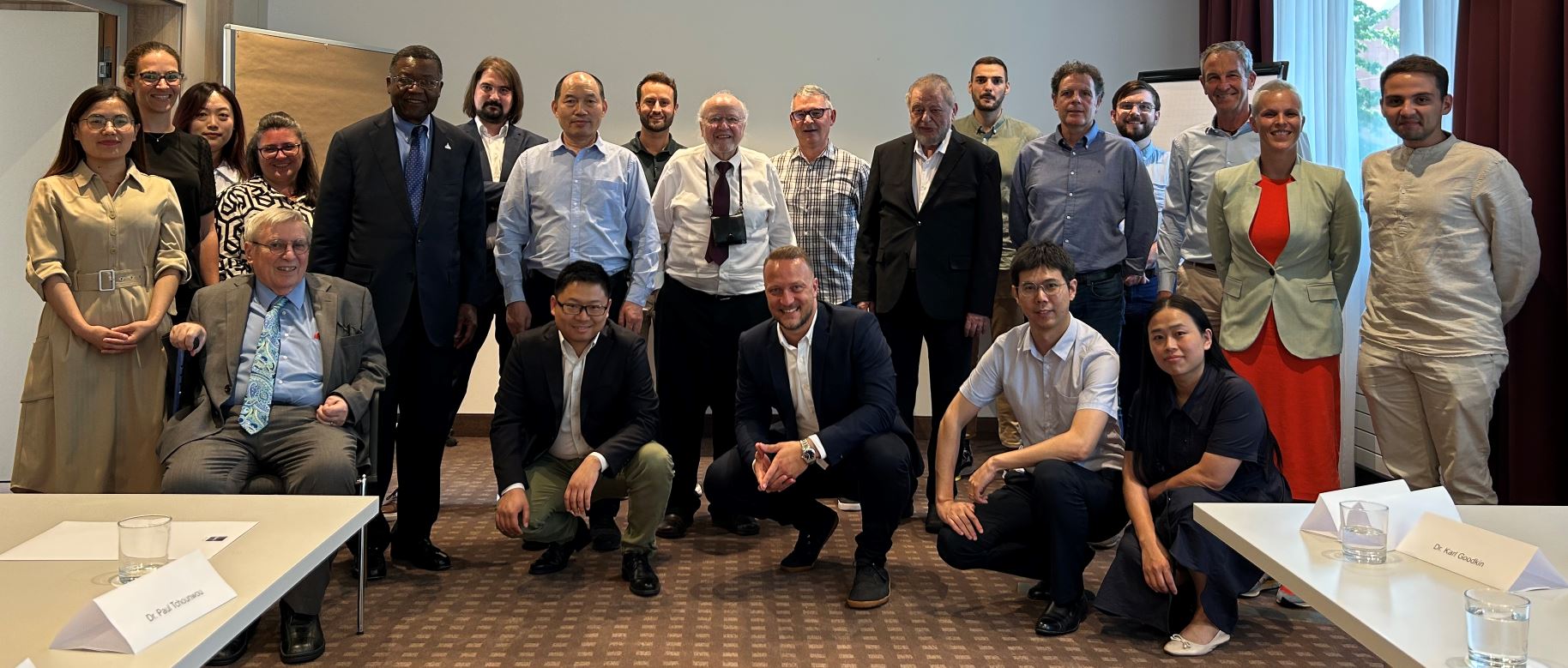
Journal Achievements
In addition to the productive discussions, we took the time to celebrate some of the remarkable achievements of IJERPH, which I highlight below:
- Founded by Prof. Dr. Paul B. Tchounwou in 2004
- Indexed in PubMed in 2008
- Received its first Impact Factor in 2012
- Published its 5000th paper in 2017
- Over 60,000 papers published as at June 30, 2023
- 131,628,173 paper views in 2018–2022
- Over 28,000 mentions in prominent news outlets
- 17,000 papers cited 10 times or more as at June 30, 2023
- No.1 journal in the 2022 Google Scholar Metrics in the category of Public Health
- Awarded several editions of Young Investigator Awards, Travel Awards, and Outstanding Reviewer Awards since 2018.
These achievements showcase the journal’s significant contributions to the field and its impact on global health. We are proud of the exceptional work accomplished by the IJERPH team and look forward to building upon this success in the years to come.
Closing Thoughts
MDPI’s Impact in Spain
During the past month, I had the opportunity to visit our new office building in Barcelona, where I met with our local colleagues to discuss the ways we serve the scholarly community, particularly in Spain. The multi-functional office plays a vital role in supporting various business needs, including editorial, design, conference management, data analytics, journal relationship management, publishing partnerships, and collaborations with societies.
Spain holds a significant position in MDPI’s global market, ranking as the fourth-largest contributor to the total number of papers published by MDPI as at July 2023, ranking next to Italy, the USA, and China, with Germany completing the top five.
The Numbers
Out of the 1,680,000 total MDPI articles published as at 25 July, almost 80,000 articles are contributed by Spanish authors, representing nearly 40,000 unique authors affiliated with Spanish institutions. Remarkably, over 6,300 of these authors hold editorial board member (EBM) positions within MDPI journals, with 30 of them serving as Editors-in-Chief (EiCs).
Our commitment to working with institutions is very evident in Spain, where we have successfully established over 40 Institutional Open Access Programs (IOAP) with esteemed institutions such as the University of Barcelona, the Autonomous University of Barcelona, Pompeu Fabra University, the University of Navarre, and Complutense University of Madrid.
Over the past five years, we have successfully organized eight in-person conferences in Barcelona, attracting over 1,150 registrations, with two forthcoming events scheduled for 2024. Barcelona's excellent connectivity to international airports makes it easily accessible to participants from around the world. Its welcoming atmosphere provides us with the perfect environment for knowledge-sharing, networking, and contributing to the local economy.
Our growth and presence in Spain are a true testament to the incredible service we provide to the scholarly community and the relationships we foster through responsive and collaborative communication. We look forward to continuing to support Spanish scholars, providing them a valuable and trusted experience with MDPI, the leader in open access publishing.
Testimonials
I close this letter as I did in the first edition, by sharing testimonials from our stakeholders. Here are a few IJERPH testimonials from a Spanish guest editor and an author:
Guest Editor
“I want to thank the kindness, attention and professionalism of the MDPI team throughout the editorial process of the Special Issue. I believe that it is a very professional and quality editorial process.”
- Professor Víctor Arufe-Giráldez, University of A Coruña
Special Issue in International Journal of Environmental Research and Public Health: Physical Activity in Childhood and Adolescence
Special Issue in International Journal of Environmental Research and Public Health: Physical Education: Present and Future
__
Author
“I want to thank the rigor of the revisions made to the manuscripts to improve their quality, the support to the authors for the editor assignment system they have and the follow-up they carry out, for the speed in answering and in carrying out the entire process of the revision, and for doing all this at an affordable price.”
- Dr. María Paz García-Caro, University of Granada
Article in International Journal of Environmental Research and Public Health: Factors Associated with Suicide Attempts and Suicides in the General Population of Andalusia (Spain)
Chief Executive Officer
MDPI AG
14 July 2023
IJERPH: Looking Towards the Future
We received notification on 15 March, 2023, that Clarivate has discontinued coverage of IJERPH due to the journal failing the Content Relevance criterion. On the 31 March, we formally appealed the decision. Unfortunately, on 15 June, we were informed that Clarivate would uphold their original decision.
While this outcome is disappointing for IJERPH, as well as for our authors, academic editors, and the entire scientific community supporting our journal, we see it as an opportunity to reflect and prepare for the future direction of the journal.
On 5 July, Prof. Dr. Paul B. Tchounwou, the founding Editor in Chief of IJERPH, along with five Section Editors in Chief, gathered with us in Basel to discuss the future of the journal. The meeting provided an opportunity to propose best strategies that will ensure high scientific rigor as well as a clear scope and aim of IJERPH.
Since its launch in 2004, IJERPH's vision and mission have evolved to be more complete and comprehensive in engaging scientific communities. In light of this, we will take the necessary time to refresh the journal's aims and scope, ensuring they align with the organic expansion of IJERPH. Additionally, we will restructure the journal sections into broader categories, encouraging collaborative research and transdisciplinary approaches for authors. We are confident that these next steps will enhance the scientific strength and societal impact of our journal.
We believe this is an exciting moment for IJERPH to explore new ideas and further evolve. We extend our gratitude to the Editorial Board and authors for their unwavering support during this restructuring phase.
We would like to highlight some of the remarkable achievements of IJERPH to date:
- Founded by Prof. Dr. Paul B. Tchounwou in 2004
- Indexed in PubMed in 2008
- Received its first Impact Factor in 2012
- Published its 5000th paper in 2017
- Over 60,000 papers published as of June 30, 2023
- 131,628,173 paper views in 2018-2022
- Over 28,000 mentions in prominent news outlets
- 17,000 papers cited 10 times or more as of June 30, 2023
- No.1 journal in the 2022 Google Scholar Metrics in the category of Public Health
- Awarded several editions of Young Investigator Awards, Travel Awards, and Outstanding Reviewer Awards since 2018.
These achievements demonstrate the journal's significant contributions to the field and its impact on global health. We are proud of the exceptional work accomplished by the IJERPH editorial board and journal team and look forward to building upon this success in the years to come.
Stay tuned for further updates on the aims and scope of IJERPH.
11 July 2023
MDPI’s Newly Launched Journals in June 2023
With the first issue released in June 2023, five new MDPI journals disseminating multi-disciplinary science are due to launch, which will cover the subjects of medicine & pharmacology, biology and physical sciences.
The newly launched journals will be overseen by professional Editorial Board Members and Editors to ensure an accurate and rapid publication, rigorous peer review and broad visibility.
Please feel free to browse and discover more about the new journals below.
| Journal | Founding Editor-in-Chief | Journal topics (selected) |
 |
Prof. Dr. Jun Ma, Peking University, China| Editorial | view inaugural issue | growth and development; diet and nutrients; school health promotion policies and practices; child health and care; adolescent health and wellbeing | view journal scope | submit an article |
 |
Prof. Dr. Bernd Rehm, Griffith University, Australia | Editorial | view inaugural issue | DNA and gene synthesis; synthetic transcription factors; protein engineering; viral engineering; metabolic engineering | view journal scope | submit an article |
 |
Prof. Dr. Varsha Gandhi, University of Texas MD Anderson Cancer Center, USA | Editorial | view inaugural issue | lymphatics; cancers associated with lymphocytes and lymphoblasts; lymphatic tissues; lymphoma; lymphoid leukemia | view journal scope | submit an article |
 |
Dr. Bradley Turner, University of Melbourne, Australia | Editorial | view inaugural issue | multiple sclerosis; amyotrophic lateral sclerosis; primary lateral sclerosis; atherosclerosis; systemic sclerosis | view journal scope | submit an article |
 |
Prof. Dr. Clemens Burda, Case Western Reserve University, USA | Editorial | view inaugural issue | Gamma ray, X-ray, and UV–Vis spectroscopies; NIR/mid-infrared/Raman spectroscopy; microwave and THz spectroscopy; high-resolution gas-phase atomic, molecular, and cluster spectroscopy; MS, NMR, and EPR spectroscopy | view journal scope | submit an article |
We wish to thank everyone who has supported the development of open access publishing. You are welcome to submit an application to the New Journal Committee ([email protected]) if you would like to create more new journals.
3 July 2023
MDPI Insights: The CEO’s Letter #1 - Open Access and Impactful Research
Welcome to the MDPI Insights: The CEO's Letter.
In these monthly letters, I will showcase two key aspects of our work at MDPI: our commitment to empowering researchers and our determination to facilitating open scientific exchange.
Opening Thoughts
The Future is Open, and MDPI is Leading the Way
I strongly believe in a future that embraces openness, where open source, open information, and open access (OA) take center stage. This belief that led me to join MDPI in 2020, and I am honored to have recently been appointed as Chief Executive Officer (CEO). In this capacity, and operating in close liaison with Dr. Lin and MDPI’s senior management, I shall work to build on Dr. Lin’s achievements of the past quarter-century. In this role, I will focus on communication initiatives to promote MDPI's remarkable work and continue to build our company as a trusted leader in OA publishing. For over two decades, MDPI has been at the forefront of reshaping the academic publishing landscape, with OA surpassing subscription-based publishing in 2020. This trajectory is deeply rooted in our history and reflects our unwavering commitment and vision for an open future.
1 Million Published Articles
2023 began with a remarkable achievement for MDPI, as we became the first OA publisher to reach the milestone of 1 million published articles. This represents 2.7 million unique authors who have trusted us with their work, or about a third of all researchers worldwide. As the world's most cited OA publisher, we are proud in sharing these significant milestones.
Our mission remains unchanged: to make science open and accessible to all. We understand the importance of knowledge access, empowering researchers to stay at the forefront of a rapidly changing world. Our diverse range of journals covers a wide spectrum of disciplines, offering cutting-edge insights, trusted tools, and crucial knowledge to address global challenges.
Liberating Science
As the world’s leading OA publisher, MDPI is actively liberating science. We are committed to eliminating the frustrations researchers and the general public face when accessing information, ensuring it is not locked behind paywalls. We firmly believe that everyone has a right to information, and our commitment to open access publishing drives our work.
In this inaugural edition of Insights: The CEO's Letter, I draw inspiration from the upcoming 20th anniversary of the Berlin Declaration on Open Access. Its stated mission reminds us that true impact is achieved when knowledge is widely and readily available to society:
"Our mission of disseminating knowledge is only half complete if the information is not made widely and readily available to society”
Impactful Research

MDPI Publishes Impactful Research: Recognized by Leading Indexing Databases
MDPI journals are indexed in every single top database in the world.
As of June 2023, we have 214 journals indexed within Web of Science, 223 indexed within Scopus, 87 indexed within PubMed and PMC, and 17 indexed within MEDLINE, and these numbers increase every month. We constantly strive to expand the coverage of our journals within leading multi-disciplinary and scope-specific databases, resulting in an incredibly broad range of journals that are indexed within a variety of databases. MDPI has active relationships with approximately 65 well-known databases around the world, and we continue to expand our portfolio every year so that your work can be found, cited, and referenced with ease.
Continued Growth of MDPI Journals
The 2022 Scopus and Web of Science journal citation metrics were officially released in June, and I am pleased to report that 31 MDPI journals received their first CiteScore, taking the total number of journals with a CiteScore to 216. The number of MDPI journals receiving an Impact Factor (IF) also continues to grow with 111 receiving their first, by being covered in the ESCI, bringing our total number of journals with an IF to 208 of which 41 journals received an IF above 4.0. Looking at 2022 CiteScores in the Scopus database, 80% of MDPI journals have a score that ranks them in Q1 or Q2 in at least one subject category.
Publishing impactful science would not be possible without all of our authors, editors and reviewers. Thank you for your contribution and continued support! Together we share the latest scientific insights faster and ensure that your work is accessible to all.
Read more
Inside MDPI

Preprints.org: Clarivate adds the Preprint Citation Index to the Web of Science
At MDPI, we are dedicated to driving the advancement of science. Through our initiative, Preprints.org, researchers can publish their work and gain valuable feedback from the broader research community, ensuring rapid progress in their respective fields. This is particularly crucial during times of health and climate challenges, where timely dissemination of findings is essential.
Increased Visibility for Preprints
I am pleased to share that Clarivate recognizes the significance of preprints and has taken a crucial step to enhance their visibility. Clarivate has added the Preprint Citation Index to the Web of Science, encompassing preprints published not only on Preprints.org but also on other reputable repositories.
Looking ahead, the future of preprints appears promising, bolstered by the recent indexing announcement from the Web of Science. As a result, preprints will receive increased visibility, serving as a valuable resource for staying informed about the latest research developments.
Read more
What are Preprints?
The Pros and Cons of Preprints
Preprints and COVID-19
Preprints—The Future of Open Access Publishing?
Coming Together for Science
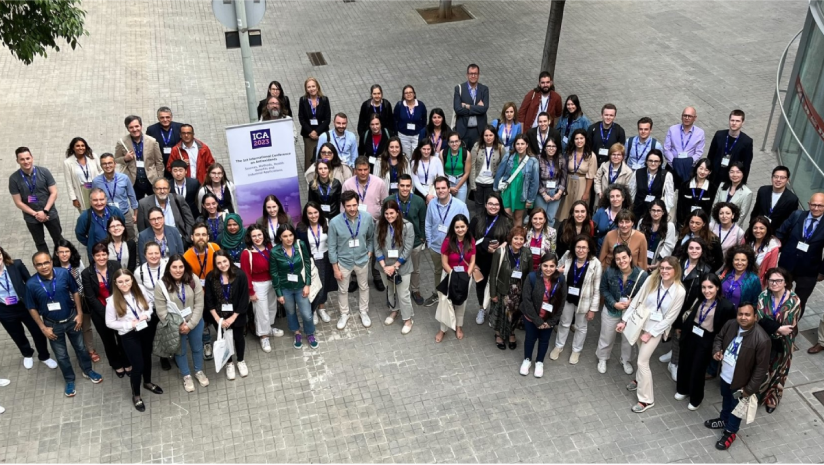
The First International Conference on Antioxidants: Sources, Methods, Health Benefits and Industrial Applications
In this edition of ‘Coming Together for Science,’ I am pleased to highlight the First International Conference on Antioxidants organized by our conference team in the beautiful city of Barcelona, Spain. The conference attracted over 130 attendees, who engaged in 42 talks, and 89 poster presentations spread across several sessions.
Working Together
Under the leadership of Prof. Dr. Alessandra Napolitano (Department of Chemical Sciences, University of Naples ‘Federico II’, Naples, Italy) and Prof. Dr. Rosa M. Lamuela Raventos (Department of Nutrition, Food Sciences and Gastronomy, University of Barcelona, Spain) as chairs, and supported by the committee members, 10 invited keynote speakers, poster presenters, and all the attendees, this dedicated group of academics came together to discuss the natural sources, methodologies, health benefits, and industrial applications of antioxidants.
Especially noteworthy is the positive feedback received from attendees, with 94% rating the overall organization of the conference as good or excellent. I particularly love the picture above, capturing the gathering of some of the participants. You can browse through more photos in the event gallery located here.
Managing Events With Sciforum
If you are considering hosting your own academic event, I highly recommend checking out Sciforum, MDPI's event management platform. Sciforum simplifies the entire process, making it easy to host your own event by allowing you to focus on what really matters: Science!
Read more
Closing Thoughts
 Stefan Tochev, Dr. Shu-Kun Lin, Dr. Eric O. Freed, Peter Roth, Wynne Wang, Allison Yang
Viruses and Editorial Quality: Acknowledging the Dedication of our Viruses Journal Team
During a June meeting with Dr. Eric O. Freed, the founding and current Editor-in-Chief of our journal Viruses, I was reminded of the exceptional dedication of our editorial board. Meeting with Eric is a pleasure, as he has a strong commitment and clear vision for the journal. Over the course of two days, we gained a deep understanding of the journal’s expectations and focus on strategic growth, editorial board representation, and engagement.
I am pleased to share that Viruses holds a CiteScore of 7.1 (an increase of 7.57% versus the 2021 metric) and an Impact Factor of 4.7. You can view the journal statistics here. Viruses publishes highly cited papers, and is indexed in renowned databases such as Scopus, SCIE (Web of Science), PubMed, and others, and maintains affiliations with prestigious societies. Moreover, the Viruses team has recently announced an exciting upcoming event titled ‘Viruses 2024 – A World of Viruses,’ scheduled to take place in Barcelona, Spain, from 14–16 February 2024.
Testimonials
If you notice my enthusiasm regarding our editorial service, it’s because the surveys and testimonials we receive speak volumes about the experiences of our authors, reviewers, and guest editors who collaborate with MDPI. The purpose of these letters is to highlight the exceptional work that we do and the experiences we create for the scholars – thus, let me end with this testimonial from an author:
“It was a great pleasure to publish in Viruses Special Issue [Emerging Viruses in Aquaculture]. The submission process was easy. Guest editors were very helpful and provided all the guidance and support as needed. The handling of the manuscript by the Editorial Team was very fast, efficient, and professional. The reviewer’s comments were insightful, and the publication processes were remarkably rapid.”
– Ms. Magdalena Stachnik, Państwowy Instytut Weterynaryjny | PIWet
Article in Viruses: Emerging Viral Pathogens in Sturgeon Aquaculture in Poland: Focus on Herpesviruses and Mimivirus Detection
Chief Executive Officer
MDPI AG
28 June 2023
2022 Impact Factors for MDPI Journals
The 2022 citation metrics have been released in the Journal Citation Reports (JCR), and we’re pleased to announce the following results for MDPI journals:
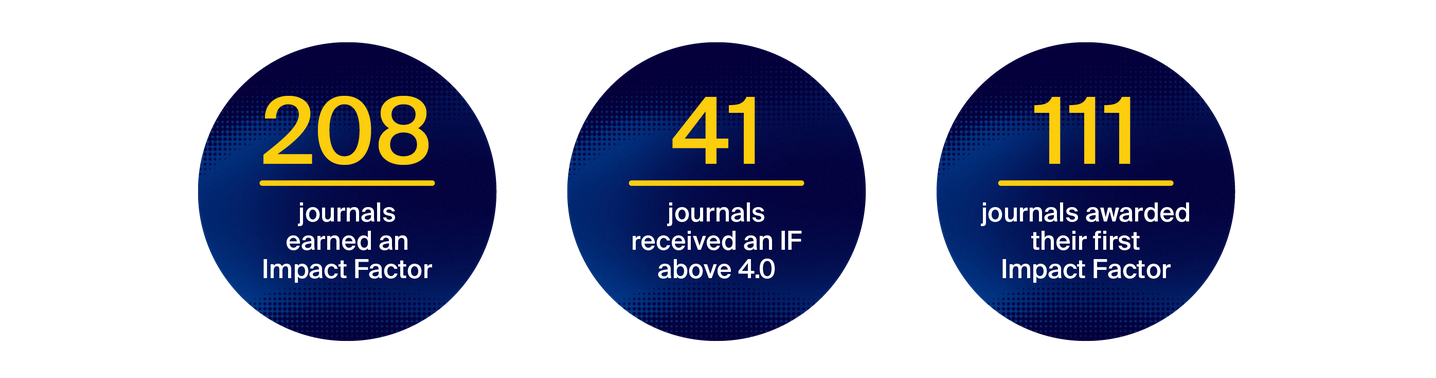
We are thrilled to announce that 90% of our ranked MDPI journals, specifically 86 out of 96 (captured in the table below), are performing above average in Q1 or Q2. This year, Clarivate has expanded its Impact Factor (IF) awards to include journals in the Emerging Sources Citation Index (ESCI) and the Arts and Humanities Citation Index (AHCI), providing greater transparency for the full set of journals indexed in the Web of Science Core Collection. As a result, 111 of MDPI journals have received their first IF in 2023, with 37 journals surpassing an IF of 3.0. In total, 208 MDPI journals have been honored with an IF.
Clarivate explains that by "expanding the coverage but holding to highly selective standards, the [Impact Factor] is now a reliable indicator of trustworthiness, as well as a measure of scholarly impact, at the journal level."
Please visit our blog post where we discuss the release of the latest citation metrics with our Indexing Manager, Dr. Constanze Schelhorn, to find out what's different this time around and how to make use of different metrics available.
| Journal | Impact Factor | Rank Quartile | Category |
| Vaccines | 7.8 | Q1 | Immunology |
| Medicine, Research & Experimental | |||
| Antioxidants | 7.0 | Q1 | Food Science & Technology |
| Biochemistry & Molecular Biology | |||
| Chemistry, Medicinal | |||
| Cells | 6.0 | Q2 | Cell Biology |
| Nutrients | 5.9 | Q1 | Nutrition & Dietetics |
| International Journal of Molecular Sciences | 5.6 | Q1 | Biochemistry & Molecular Biology |
| Q2 | Chemistry, Multidisciplinary | ||
| Journal of Theoretical and Applied Electronic Commerce Research | 5.6 | Q2 | Business |
| Biomolecules | 5.5 | Q1 | Biochemistry & Molecular Biology |
| Biosensors | 5.4 | Q1 | Chemistry, Analytical |
| Instruments & Instrumentation | |||
| Q2 | Nanoscience & Nanotechnology | ||
| Fractal and Fractional | 5.4 | Q1 | Mathematics, Interdisciplinary Applications |
| Marine Drugs | 5.4 | Q1 | Chemistry, Medicinal |
| Pharmacology & Pharmacy | |||
| Pharmaceutics | 5.4 | Q1 | Pharmacology & Pharmacy |
| Nanomaterials | 5.3 | Q1 | Physics, Applied |
| Q2 | Chemistry, Multidisciplinary | ||
| Materials Science, Multidisciplinary | |||
| Nanoscience & Nanotechnology | |||
| Cancers | 5.2 | Q2 | Oncology |
| Foods | 5.2 | Q1 | Food Science & Technology |
| Polymers | 5.0 | Q1 | Polymer Science |
| Remote Sensing | 5.0 | Q1 | Geosciences, Multidisciplinary |
| Q2 | Remote Sensing | ||
| Imaging Science & Photographic Technology | |||
| Environmental Sciences | |||
| Antibiotics | 4.8 | Q1 | Pharmacology & Pharmacy |
| Q2 | Infectious Diseases | ||
| Drones | 4.8 | Q2 | Remote Sensing |
| Journal of Functional Biomaterials | 4.8 | Q2 | Engineering, Biomedical |
| Materials Science, Biomaterials | |||
| Biomedicines | 4.7 | Q1 | Pharmacology & Pharmacy |
| Q2 | Biochemistry & Molecular Biology | ||
| Medicine, Research & Experimental | |||
| Journal of Fungi | 4.7 | Q2 | Mycology |
| Microbiology | |||
| Viruses | 4.7 | Q2 | Virology |
| Bioengineering | 4.6 | Q2 | Engineering, Biomedical |
| Gels | 4.6 | Q1 | Polymer Science |
| Molecules | 4.6 | Q2 | Chemistry, Multidisciplinary |
| Biochemistry & Molecular Biology | |||
| Pharmaceuticals | 4.6 | Q2 | Pharmacology & Pharmacy |
| Chemistry, Medicinal | |||
| Toxics | 4.6 | Q1 | Toxicology |
| Q2 | Environmental Sciences | ||
| Biomimetics | 4.5 | Q1 | Engineering, Multidisciplinary |
| Q2 | Materials Science, Biomaterials | ||
| Microorganisms | 4.5 | Q2 | Microbiology |
| Plants | 4.5 | Q1 | Plant Sciences |
| Biology | 4.2 | Q2 | Biology |
| Chemosensors | 4.2 | Q2 | Instruments & Instrumentation |
| Chemistry, Analytical | |||
| Electrochemistry | |||
| Membranes | 4.2 | Q2 | Engineering, Chemical |
| Materials Science, Multidisciplinary | |||
| Chemistry, Physical | |||
| Polymer Science | |||
| Toxins | 4.2 | Q1 | Toxicology |
| Q2 | Food Science & Technology | ||
| Metabolites | 4.2 | Q2 | Biochemistry & Molecular Biology |
| Batteries | 4.0 | Q2 | Electrochemistry |
| Materials Science, Multidisciplinary | |||
| Q3 | Energy & Fuels | ||
| Catalysts | 3.9 | Q2 | Chemistry, Physical |
| Journal of Clinical Medicine | 3.9 | Q2 | Medicine, General & Internal |
| Land | 3.9 | Q2 | Environmental Studies |
| Sensors | 3.9 | Q2 | Instruments & Instrumentation |
| Chemistry, Analytical | |||
| Engineering, Electrical & Electronic | |||
| Sustainability | 3.9 | Q2 | Environmental Sciences (SCIE) |
| Environmental Studies (SSCI) | |||
| Q3 | Green & Sustainable Science & Technology (SCIE) | ||
| Green & Sustainable Science & Technology (SSCI) | |||
| Buildings | 3.8 | Q2 | Construction & Building Technology |
| Engineering, Civil | |||
| Agronomy | 3.7 | Q1 | Agronomy |
| Q2 | Plant Sciences | ||
| Fermentation | 3.7 | Q2 | Biotechnology & Applied Microbiology |
| Pathogens | 3.7 | Q2 | Microbiology |
| Agriculture | 3.6 | Q1 | Agronomy |
| Diagnostics | 3.6 | Q2 | Medicine, General & Internal |
| Genes | 3.5 | Q2 | Genetics & Heredity |
| Journal of Intelligence | 3.5 | Q2 | Psychology, Multidisciplinary |
| Lubricants | 3.5 | Q2 | Engineering, Mechanical |
| Processes | 3.5 | Q2 | Engineering, Chemical |
| Coatings | 3.4 | Q2 | Materials Science, Coatings & Films |
| Physics, Applied | |||
| Q3 | Materials Science, Multidisciplinary | ||
| ISPRS International Journal of Geo-Information | 3.4 | Q2 | Geography, Physical |
| Q3 | Computer Science, Information Systems | ||
| Remote Sensing | |||
| Materials | 3.4 | Q2 | Metallurgy & Metallurgical Engineering |
| Physics, Applied | |||
| Physics, Condensed Matter | |||
| Q3 | Materials Science, Multidisciplinary | ||
| Chemistry, Physical | |||
| Micromachines | 3.4 | Q2 | Instruments & Instrumentation |
| Physics, Applied | |||
| Chemistry, Analytical | |||
| Q3 | Nanoscience & Nanotechnology | ||
| Water | 3.4 | Q2 | Water Resources |
| Environmental Sciences | |||
| Brain Sciences | 3.3 | Q3 | Neurosciences |
| Energies | 3.2 | Q3 | Energy & Fuels |
| Fire | 3.2 | Q1 | Forestry |
| Q2 | Ecology | ||
| Life | 3.2 | Q2 | Biology |
| Current Issues in Molecular Biology | 3.1 | Q3 | Biochemistry & Molecular Biology |
| Horticulturae | 3.1 | Q1 | Horticulture |
| Animals | 3.0 | Q1 | Agriculture, Dairy & Animal Science |
| Veterinary Sciences | |||
| Insects | 3.0 | Q1 | Entomology |
| Atmosphere | 2.9 | Q3 | Meteorology & Atmospheric Sciences |
| Environmental Sciences | |||
| Electronics | 2.9 | Q2 | Engineering, Electrical & Electronic |
| Physics, Applied | |||
| Q3 | Computer Science, Information Systems | ||
| Forests | 2.9 | Q1 | Forestry |
| Inorganics | 2.9 | Q2 | Chemistry, Inorganic & Nuclear |
| Journal of Marine Science and Engineering | 2.9 | Q1 | Engineering, Marine |
| Q2 | Oceanography | ||
| Engineering, Ocean | |||
| Metals | 2.9 | Q2 | Metallurgy & Metallurgical Engineering |
| Q3 | Materials Science, Multidisciplinary | ||
| Tropical Medicine and Infectious Disease | 2.9 | Q2 | Tropical Medicine |
| Parasitology | |||
| Q3 | Infectious Diseases | ||
| Universe | 2.9 | Q2 | Astronomy & Astrophysics |
| Physics, Particles & Fields | |||
| Healthcare | 2.8 | Q2 | Health Policy & Services (SSCI) |
| Q3 | Health Care Sciences & Services (SCIE) | ||
| Applied Sciences | 2.7 | Q2 | Engineering, Multidisciplinary |
| Physics, Applied | |||
| Q3 | Chemistry, Multidisciplinary | ||
| Materials Science, Multidisciplinary | |||
| Crystals | 2.7 | Q2 | Crystallography |
| Q3 | Materials Science, Multidisciplinary | ||
| Entropy | 2.7 | Q2 | Physics, Multidisciplinary |
| Magnetochemistry | 2.7 | Q2 | Chemistry, Inorganic & Nuclear |
| Q3 | Chemistry, Physical | ||
| Materials Science, Multidisciplinary | |||
| Symmetry | 2.7 | Q2 | Multidisciplinary Sciences |
| Actuators | 2.6 | Q2 | Instruments & Instrumentation |
| Engineering, Mechanical | |||
| Aerospace | 2.6 | Q1 | Engineering, Aerospace |
| Behavioral Sciences | 2.6 | Q2 | Psychology, Multidisciplinary |
| Current Oncology | 2.6 | Q3 | Oncology |
| Machines | 2.6 | Q2 | Engineering, Mechanical |
| Q3 | Engineering, Electrical & Electronic | ||
| Medicina | 2.6 | Q3 | Medicine, General & Internal |
| Separations | 2.6 | Q3 | Chemistry, Analytical |
| Minerals | 2.5 | Q2 | Mining & Mineral Processing |
| Mineralogy | |||
| Geochemistry & Geophysics | |||
| Children | 2.4 | Q2 | Pediatrics |
| Diversity | 2.4 | Q2 | Biodiversity Conservation |
| Q3 | Ecology | ||
| Journal of Cardiovascular Development and Disease | 2.4 | Q3 | Cardiac & Cardiovascular Systems |
| Mathematics | 2.4 | Q1 | Mathematics |
| Photonics | 2.4 | Q3 | Optics |
| Veterinary Sciences | 2.4 | Q1 | Veterinary Sciences |
| Fishes | 2.3 | Q2 | Marine & Freshwater Biology |
| Fisheries | |||
| Axioms | 2.0 | Q2 | Mathematics, Applied |
| Systems | 1.9 | Q2 | Social Sciences, Interdisciplinary |
| Tomography | 1.9 | Q3 | Radiology, Nuclear Medicine & Medical Imaging |
Note: The Journal of Personalized Medicine's Impact Factor was omitted in the original release and will be assigned separately. Please find the data on the journal webpage in due course.
Source: 2022 Journal Impact Factors, Journal Citation Reports TM (Clarivate, 2023)
14 June 2023
International Journal of Environmental Research and Public Health Receives an Increased CiteScore of 5.4
We are pleased to inform you that the International Journal of Environmental Research and Public Health (IJERPH, ISSN: 1660-4601) has received an updated CiteScore of 5.4, an increase of 20% compared with the 2021 metric. The 2022 CiteScore™ was released recently, making an assessment of the scientific influence of journals in the 2019 to 2022 period.
IJERPH’s CiteScore ranks as follows:
- Q1 (128 out of 577 journals) in the category "Medicine: Public Health, Environmental and Occupational Health" category;
- Q2 (58 out of 159 journals) in the "Environmental Science: Pollution" category;
- Q2 (49 out of 133 journals) in the "Environmental Science: Health, Toxicology and Mutagenesis" category.
For more journal statistics, please visit https://www.mdpi.com/journal/ijerph/stats.
Excellent performance is inseparable from the support and dedication of all journal editors, reviewers, authors, and readers. We would like to take this opportunity to thank all of you who have contributed to the journal.
12 May 2023
Topical Collection Webinar | Sleep(-Related) Phenotypes: Future Directions for Insomnia, ADHD, Restless Sleep Disorders in Childhood, Held on 24 May 2023
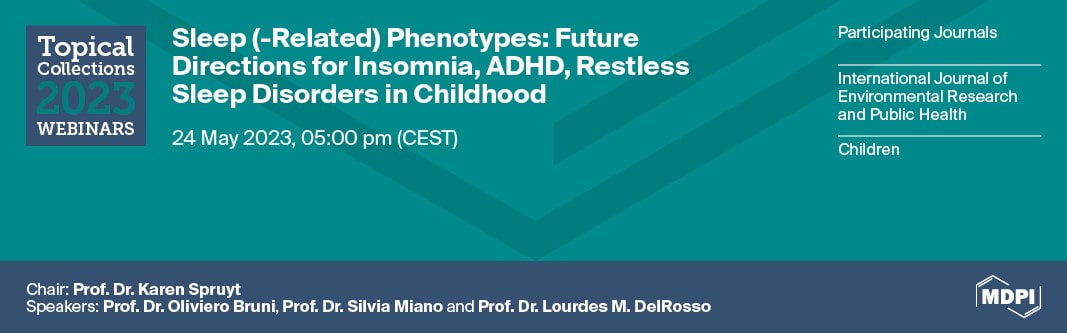
On Wednesday, 24 May 2023, MDPI and the journals International Journal of Environmental Research and Public Health (IJERPH, ISSN: 1660-4601) and Children (ISSN: 2227-9067) organized the webinar entitled "Sleep(-Related) Phenotypes: Future Directions for Insomnia, ADHD, Restless Sleep Disorders in Childhood". The webinar focused on the current findings in children presenting insomnia and restless sleep.
Insomnia, defined as difficulties falling asleep, difficulties maintaining sleep, or early awakenings, is a very common complaint. Presentations in this webinar demonstrate comprehensively that insomnia complaints are a transdiagnostic issue in (a)typically developing children. Therefore, careful assessment and diagnosis, as presented in these talks, are crucial steps toward successful treatment. The detrimental impact on families' sleep cannot be ignored, that is, at least one parent will have poor sleep when struggling each night with a poor-sleeping child. Thus, increased awareness across healthcare professionals is the priority of our pediatric sleep field, and this should resonate across our society.
| Speaker/Presentation |
| Prof. Dr. Karen Spruyt Chair Introduction |
| Prof. Dr. Lourdes M. DelRosso Restless Sleep Disorder |
| Prof. Dr. Silvia Miano Sleep Phenotypes in ADHD: A Distinction between Primary and Secondary Forms |
| Prof. Dr. Oliviero Bruni Phenotypes of Insomnia in Early Childhood: Early Identification and Treatment |
| Q&A Session |
| Prof. Dr. Karen Spruyt Closing of Webinar |
Please note that this webinar is associated with the Topical Collection in both IJERPH and Children: "Sleep in Children".
Webinar Chair and Speakers:
- Prof. Dr. Karen Spruyt, Université de Paris, INSERM –Neuro Diderot, Academic Hospital Robert Debré, France;
- Prof. Dr. Oliviero Bruni, Department of Developmental and Social Psychology, Sapienza University, Italy;
- Prof. Dr. Silvia Miano, 1Neurocenter of Southern Switzerland, Faculty of Biomedical Sciences, Università della Svizzera Italiana, Switzerland; 2Sleep Medicine Unit, Ospedale Civico, Switzerland;
- Prof. Dr. Lourdes M. DelRosso, Department of Medicine, University of California, USA.
6 April 2023
Clarivate Discontinues IJERPH and JRFM Coverage in Web of Science (Update)
On 15 March 2023, we received note that Clarivate has discontinued coverage of IJERPH and JRFM in Web of Science as of 13 February 2023. Clarivate revealed that two MDPI journals failed the Content Relevance criterion, highlighting publications that were deemed outside the scope of the journal, and not to do with quality of the publications. On 31 March 2023, we formally appealed the decision to discontinue IJERPH in Web of Science.
Clarivate periodically evaluates journals indexed in their collections, and any journals that no longer meet their criteria are removed from coverage. Unfortunately, publishers are not informed about the evaluation process until its completion.
In response to the decision, we have taken several actions, including collecting feedback from editorial board members and chief editors and submitting an official appeal. We have now agreed to send over a set of questions and we'll set up a virtual meeting once Clarivate have discussed our queries.
We believe that the decision made by Clarivate in relation to IJERPH is unfair and wrongly assessed, and we included such information from our appeal process to support this claim.
Throughout this process, we have identified several aspects that have not been transparent on the part of Clarivate. These include the lack of warning, refusal to index content published before the communication of decision, and the fact that we have not been provided with data and detailed information on the evaluation process and output.
MDPI was only informed that IJERPH and JRFM were assessed. Clarivate's blog post from March 20 provides more information about their current re-evaluation process, stating that they have been assessing over 500 journals since the beginning of the year, with 50 already delisted. Both major commercial publishing houses and smaller or society publishers are affected.
Close to 90% of MDPI published content is going to be covered by the Web of Science Core Collection going forward. MDPI takes this opportunity to safeguard the editorial policies of our journals, and work closely with Web of Science to ensure that the stated scope of journals is being met.
We value Web of Science as a highly trusted citation database within the publishing industry and look forward to more than 200 MDPI journals receiving advanced citation metrics with Web of Science this coming June.
We remain committed to providing high-quality service to our authors and look forward to resolving this issue with Clarivate in a fair and transparent manner.
Finally, we will keep the community updated with further notifications on this matter.
If you have any concern about the indexing status of your article in either of the two journals, please contact the Editorial Office: IJERPH and JRFM.
13 March 2023
MDPI’s Newly Launched Journals in December 2022
As a leading open access publisher, MDPI provides scholars with a high-quality and rich academic exchange platform by continuously expanding into new and exciting research areas.
In December 2022, MDPI launched five new journals, covering multiple subjects such as life sciences, biology, medicine and pharmacology, social sciences and humanities. These new journals are being edited by established scholars across the world.
|
Journal |
Founding Editor-in-Chief |
Journal Topics (Selected) |
|
|
Prof. Dr. Fabio Gresta, University of Messina, Italy| Editorial | view inaugural issue |
grass/forage/turf production; grassland management; pasture monitoring; grazing and livestock; grass agro-ecosystems| view journal scope | submit an article |
|
|
Prof. Dr. Christos G. Athanassiou, University of Thessaly, Greece| Editorial | view inaugural issue |
pesticides; fungicides; herbicides; fertilizers; soil conditioners| view journal scope | submit an article |
|
|
Prof. Dr. Stephen H. Safe, Texas A&M University, USA| Editorial | view inaugural issue |
receptor structure; receptor function; receptor signaling; receptor expression and regulation; receptor interactions with drugs| view journal scope | submit an article |
|
|
Dr. Jean Jacques Vanden Eynde, University of Mons-UMONS, Belgium| Editorial | view inaugural issue |
drug discovery; medicinal chemistry; preclinical and clinical research; marketed drugs; intellectual property and regulatory affairs| view journal scope | submit an article |
|
|
Prof. Dr. Heather Kanuka, University of Alberta, Canada| Editorial | view inaugural issue |
higher education; tertiary education; policy and practice in higher education; educational leadership in higher education; educational administration and management in higher education| view journal scope | submit an article |





If you are interested in creating more open access journals with us to publish cutting-edge research, please send your journal proposal application to [email protected].
7 March 2023
Displaying Co-Authors’ Email Addresses on the Webpage of Published Papers
MDPI is pleased to announce that we now display the co-authors’ email addresses in addition to the corresponding author’s email address on the webpage of published papers, protected by Captcha. For more information about this change, please visit the journal’s instructions for authors page.
We believe this change will facilitate academic discussions and advance our cause of open science and research. The corresponding authors are responsible for communicating with their co-authors and indicating in our system (https://susy.mdpi.com/) if co-authors would prefer for their email addresses not to be displayed.
22 February 2023
Meet Us at the 2023 AAG Annual Meeting, 23–27 March 2023, Denver, USA
Conference: 2023 AAG Annual Meeting
Date: 23–27 April 2023
Location: Denver, USA
MDPI will be attending the 2023 AAG Annual Meeting as an exhibitor, and we welcome researchers from different backgrounds to visit and share their latest ideas with us.
This conference is organized by the American Association of Geographers (AAG). The theme of the meeting is “Toward More Just Geographies”. At the meeting, specialists will share and discuss the latest in research and applications in geography, sustainability, and GIScience.
The following MDPI journals will be represented:
- Remote Sensing (leading journal);
- Sustainability (leading journal);
- IJGI;
- Hydrology;
- Land;
- Water;
- Earth;
- Atmosphere;
- IJERPH;
- Fire;
- Oceans;
- GeoHazards;
- Coasts;
- Geomatics.
Remote Sensing (ISSN: 2072-4292, IF: 5.349) publishes regular research papers, reviews, technical notes and communications covering all aspects of remote sensing science, from sensor design and validation/calibration to its application in geosciences, environmental sciences, ecology, and civil engineering. The aim is to publish novel/improved methods/approaches and/or algorithms of remote sensing to benefit the community, open to everyone in need of them.
Sustainability (ISSN: 2071-1050, IF: 3.889) encourages experts to publish their experimental, computational and theoretical research on sustainability. This encompasses topics related to social sciences, natural and applied science and engineering, in order to enable the application and development of sustainability.
If you are planning to attend this conference, please do not hesitate to start an online conversation with us. Our delegates look forward to meeting you in person and answering any questions that you may have. For more information about the conference, please visit the following website: https://www.aag.org/events/aag2023/.
16 February 2023
Increasing Visibility for Preprints.org – Clarivate adds the Preprint Citation Index to the Web of Science

On 9 February 2023, Clarivate, a global leader in providing trusted insights and analytics, added the Preprint Citation Index to the Web of Science platform, streamlining the research process by allowing researchers to locate and link to preprints alongside other trusted content in the database.
The Preprint Citation Index will act as a bridge to connect cutting-edge preprints with peer-reviewed journal articles published within the Web of Science Core Collection. Alerts can be easily set to monitor new research across several repositories and authors will also be able to include preprints on their Web of Science Research Profile to more accurately display their various research outputs.
As of its launch, the Preprint Citation Index will provide nearly two million preprints from various repositories, including MDPI’s own Preprints.org.
MDPI's Preprints Platform – Preprints.org
To advance Open Science and the fast dissemination of research, MDPI offers researchers a free multidisciplinary preprint platform. Preprints.org accepts submissions from all research areas and offers authors high visibility, permanent archiving, article-level Metrics and immediately citable content by assigning a Digital Object Identifier (DOI) to all preprints.
During submission to any MDPI journal, authors have the option to share their research as a preprint. After an initial screening, the manuscript is available online in 48 hours or less. Once online, preprints can be downloaded, shared, commented on, and cited, providing authors maximum visibility.
We invite you to join the ranks of the over 100k researchers using Preprints.org and share your research.
For more information, please visit Preprints.org.
28 December 2022
International Journal of Environmental Research and Public Health | Call for Special Issue Proposals for Section “Health-Related Quality of Life and Well-Being”
On behalf of the Section Editorial Board Member Dr. Joanne Hudson, we are now accepting Special Issue proposals for the “Health-Related Quality of Life and Well-Being” Section of the International Journal of Environmental Research and Public Health (IJERPH, ISSN: 1660-4601). If you are an active researcher in the field and are passionate about publishing cutting-edge research, please do not hesitate to contact the Section Managing Editor, Ms. Jocelyn Xu ([email protected]).
IJERPH is an interdisciplinary, peer-reviewed, and open access journal published semimonthly online by MDPI. It covers environmental sciences and engineering, public health, environmental health, occupational hygiene, economic health and global health research, etc. The journal is indexed within Scopus, SCIE and SSCI (Web of Science), PubMed, MEDLINE, PMC, Embase, GEOBASE, CAPlus/SciFinder, and other databases. For more details, please see the following link: https://www.mdpi.com/journal/ijerph/about.
The “Health-Related Quality of Life and Well-Being” Section has the following topics for your consideration:
- Home-based physical activity interventions;
- Health inequalities in a post-COVID-19 world;
- Effectiveness of strategies to change physical activity behavior in middle-aged adults;
- Cross-discipline approaches to enhancing health;
- Health impacts of the self–environment interaction.
The topics are tentative, and you are also welcome to propose a title that is of interest to you and within the scope of the journal. If you are interested, you are welcome to submit your proposal at the following link: https://www.mdpi.com/journalproposal/sendproposalspecialissue/ijerph. Our editors will respond to you as soon as possible.
The duties of acting as a Guest Editor are as follows:
- Refining the Special Issue’s title and scope, and providing a short introduction (100–200 words) as well as 5–10 keywords to set up the Special Issue’s website;
- Inviting contributors with the assistance of the in-house editor to achieve a publication target (e.g., 10 papers);
- Supervising the peer review process of this Special Issue: conducting a pre-review check, making final decisions based on at least two review reports that we have collected, etc.
The benefits of acting as a Guest Editor are as follows:
- As the Guest Editor, you will be offered the opportunity to publish one of your papers free of charge in an Open Access form, in addition to the chance to provide discounts to the papers that you invited for your Special Issue;
- A printed book of the Special Issue can be sent to you if more than 10 papers are published by the end of the Special Issue. See an example at https://www.mdpi.com/books/pdfview/book/1209;
- It is an ideal venue for networking and communicating with scholars in the research community, as well as a chance to mark you as influential within your discipline. The relationships you develop will last beyond the publication of your Special Issue, establishing a network for future collaboration.
The Editorial Office will set up the Special Issue’s website, arrange the promotional materials, assist with the invitations for paper contributions, and take care of the administrative tasks associated with peer review (including inviting reviewers, collating reports, contacting authors, and arranging professional production before publication).
We look forward to receiving your proposals.
IJERPH Editorial Office
27 December 2022
International Journal of Environmental Research and Public Health | Call for Special Issue Proposals for Section “Climate Change”
On behalf of Section Editor-in-Chief, Prof. Dr. Kristie L. Ebi, we are now accepting Special Issue proposals for the Section “Climate Change” of the International Journal of Environmental Research and Public Health (IJERPH, ISSN: 1660-4601). If you are an active researcher in the field and are passionate about publishing cutting-edge research, please do not hesitate to contact the Section Managing Editor, Ms. Ann Cheng ([email protected]).
The journal IJERPH is an interdisciplinary, peer-reviewed, open access journal published semimonthly online by MDPI. It covers Environmental Sciences and Engineering, Public Health, Environmental Health, Occupational Hygiene, Health Economic and Global Health Research, etc. The journal is indexed within Scopus, SCIE and SSCI (Web of Science), PubMed, MEDLINE, PMC, Embase, GEOBASE, CAPlus / SciFinder, and other databases. For more details, please see the following link: https://www.mdpi.com/journal/ijerph/about.
The Section “Climate Change” has the following topics for your consideration:
- Elaborating causal pathways related to global environmental changes with health;
- Quantifying associations between weather and health, taking into consideration other key drivers;
- Assessing the current burden of climate-sensitive diseases;
- Identifying thresholds and time of emergence of climate-sensitive health outcomes;
- Projecting climate-sensitive disease burdens under different climate and development pathways, including health system impacts, focusing on how changing weather patterns could affect the geographic range, seasonality, and/or burden of health outcomes;
- Examining challenges and opportunities for multi-sectoral adaptation partnerships that benefit human health;
- Identifying, implementing, and evaluating the effectiveness of adaptation policies and programs;
- Estimating the range of health co-benefits of climate change mitigation policies and technologies.
The duties of acting as a Guest Editor are as follows:
- Refining the Special Issue title and scope, and providing a short introduction (100–200 words) and 5–10 keywords to set up the Special Issue website;
- Inviting contributors with the assistance of the in-house editor to achieve a publication target (e.g., 10 papers);
- Supervising the peer review process of this Special Issue: conducting a pre-review check, making final decisions based on at least two review reports that we have collected, etc.
The benefits of acting as a Guest Editor are as follows:
- As the Guest Editor, you will be offered an opportunity to publish one of your papers free of charge in open access form, and the chance to provide discounts to the papers that you invited for your Special Issue;
- A printed book of the Special Issue can be sent to you if more than 10 papers are published by the end of the Special Issue. See an example at https://www.mdpi.com/books/pdfview/book/1209;
- It is an ideal venue for networking and communication with scholars in the research community, as well as a chance to mark you as influential within your discipline. The relationships you develop will last beyond the publication of your Special Issue, establishing a network for future collaboration.
The Editorial Office will set up the Special Issue’s website, arrange the promotional materials, assist with the invitations for paper contributions, and take care of the administrative tasks associated with peer review (including inviting reviewers, collating reports, contacting authors, and arranging professional production before publication).
We look forward to receiving your proposals.
IJERPH Editorial Office
22 December 2022
Special Issue Mentor Program
We are pleased to announce the launch of a new initiative—the MDPI Special Issue Mentor Program.
This program will enable early career researchers (who must hold a Ph.D. in a related field) to experience editing a Special Issue in MDPI journals, under the mentorship of our experienced Editorial Board Members or other experienced scientists. The mentor program will provide an excellent opportunity for early career scientists to gain editorial experience, and to cultivate their ability to edit scientific research.
The mentee’s responsibilities include:
- Proposing a Special Issue title and assisting the mentor in preparing a summary (around 200–400 words) and 3–10 keywords describing the background, importance, and goal of the Issue;
- Writing a brief promotion plan for the Special Issue;
- Preparing a list of scholars who may be interested in the Issue and personally e-mailing invitations on behalf of Guest Editors;
- Writing an editorial for the online Special Issue together with the mentor.
The mentor’s responsibilities include:
- Conducting a final check before the Special Issue is published online;
- Performing editorial control of the Special Issue and quality control of the publications, both of which must be carried out in a timely manner;
- Providing suggestions to younger scholars if they have any doubts or concerns regarding submissions;
- Organizing video calls with young scholars and the Editorial Office regularly to discuss problems and improvement suggestions for the Special Issue;
- Making and submitting decisions regarding submissions with the assistance of mentees.
Certificates and awards:
After the Special Issue closes, the Editorial Office will provide official certificates for all the mentors and early career researchers.
If you are interested in this opportunity, please send your Special Issue proposal to the Editorial Office of a journal you choose, and we will discuss the process (i.e., mentor collaboration, Special Issue topic feasibility analysis, etc.) in further detail. The full list of MDPI journals is as follows: https://www.mdpi.com/about/journals.
In addition to the new Special Issue Mentor Program, we will continue to welcome all Special Issue proposals focusing on hot research topics.
15 December 2022
International Journal of Environmental Research and Public Health | Call for Special Issue Proposals for Section “Environmental Science and Engineering”
On behalf of the Section Editor-in-Chief, Prof Lingxin Chen, we are now accepting Special Issue proposals for the Section “Environmental Science and Engineering” of the International Journal of Environmental Research and Public Health (IJERPH, ISSN: 1660-4601). If you are an active researcher in the field and are passionate about publishing cutting-edge research, please do not hesitate to contact the Section Managing Editor, Ms. Isobel Luan ([email protected]).
IJERPH is an interdisciplinary, peer-reviewed, and open access journal published semimonthly online by MDPI. It covers environmental sciences and engineering, public health, environmental health, occupational hygiene, health economic and global health research, etc. The journal is indexed within Scopus, SCIE and SSCI (Web of Science), PubMed, MEDLINE, PMC, Embase, GEOBASE, CAPlus/SciFinder, and other databases. For more details, please see the following link: https://www.mdpi.com/journal/ijerph/about.
The Section “Environmental Science and Engineering” has the following topics for your consideration:
- Toxic effects and degradation mechanisms of environmental/marine pollution;
- Machine learning uses in environmental monitoring and remediation;
- Pollution removal/remediation’s new materials, methods, and techniques;
- Relationship between pollution and health;
- Marine and coastal zone pollution;
- Rapid sampling and detection techniques as well as instruments;
- “Double carbon”- and green-chemistry-related analyses and remediation research.
The topics are tentative, and you are also welcome to propose a title that is of interest to you and within the scope of the journal. If you are interested, you are welcome to submit your proposal at the following link: https://www.mdpi.com/journalproposal/sendproposalspecialissue/ijerph. Our editors will respond to you as soon as possible.
The duties of acting as a Guest Editor are as follows:
- Refining the Special Issue’s title and scope, as well as providing a short introduction (100–200 words) and 5–10 keywords to set up the Special Issue’s website;
- Inviting contributors with the assistance of the in-house editor to achieve a publication target (e.g., 10 papers);
- Supervising the peer review process of this Special Issue: conducting a pre-review check, making final decisions based on at least two review reports that we have collected, etc.
The benefits of acting as a Guest Editor are as follows:
- As the Guest Editor, you will be offered an opportunity to publish one of your papers free of charge in open access form, in addition to the chance to provide discounts to the papers that you invite for your Special Issue;
- A printed book of the Special Issue can be sent to you if more than 10 papers are published by the end of the Special Issue. See an example at https://www.mdpi.com/books/pdfview/book/1209;
- It is an ideal venue for networking and communicating with scholars in the research community, as well as a chance to mark you as influential within your discipline. The relationships that you develop will last beyond the publication of your Special Issue, establishing a network for future collaboration.
The Editorial Office will set up the Special Issue’s website, arrange the promotional materials, assist with invitations for paper contributions, and take care of the administrative tasks associated with peer review (including inviting reviewers, collating reports, contacting authors, and arranging professional production before publication).
We look forward to receiving your proposals.
IJERPH Editorial Office
14 December 2022
International Journal of Environmental Research and Public Health | Call for Special Issue Proposals for Section “Health Communication and Informatics”
On behalf of the Section Editor-in-Chief, Prof. Dr. William Douglas Evans, we are now accepting Special Issue proposals for the Section “Health Communication and Informatics” of the International Journal of Environmental Research and Public Health (IJERPH, ISSN: 1660-4601). If you are an active researcher in the field and are passionate about publishing cutting-edge research, please do not hesitate to contact the Section Managing Editor, Pansy Wu ([email protected]).
The journal IJERPH is an interdisciplinary, peer-reviewed, open access journal published semimonthly online by MDPI. It covers Environmental Sciences and Engineering, Public Health, Environmental Health, Occupational Hygiene, Health Economic and Global Health Research, etc. The journal is indexed within Scopus, SCIE and SSCI (Web of Science), PubMed, MEDLINE, PMC, Embase, GEOBASE, CAPlus / SciFinder, and other databases. For more details, please see the following link: https://www.mdpi.com/journal/ijerph/about.
The Section “Health Communication and Informatics” has the following topics for your consideration:
- Digital technology strategies to reduce health disparities and increase equity;
- Health communication strategies to increase routine vaccination uptake among children and adolescents in the post-COVID era.
The topics are tentative, and you are also welcome to propose a title that is of interest to you and within the scope of the journal. If you are interested, you are welcome to submit your proposal at: https://www.mdpi.com/journalproposal/sendproposalspecialissue/ijerph. Our editors will respond to you as soon as possible.
The duties of acting as a Guest Editor are as follows:
- Refining the Special Issue title and scope, and providing a short introduction (100–200 words) and 5–10 keywords to set up the Special Issue website;
- Inviting contributors with the assistance of the in-house editor to achieve a publication target (e.g., 10 papers);
- Supervising the peer review process of this Special Issue: conducting a pre-review check, making final decisions based on at least two review reports that we have collected, etc.
The benefits of acting as a Guest Editor are as follows:
- As the Guest Editor, you will be offered an opportunity to publish one of your papers free of charge in open access form, and the chance to provide discounts to the papers that you invited for your Special Issue;
- A printed book of the Special Issue can be sent to you if more than 10 papers are published by the end of the Special Issue. See an example at https://www.mdpi.com/books/pdfview/book/1209;
- It is an ideal venue for networking and communication with scholars in the research community, as well as a chance to mark you as influential within your discipline. The relationships you develop will last beyond the publication of your Special Issue, establishing a network for future collaboration.
The Editorial Office will set up the Special Issue’s website, arrange the promotional materials, assist with the invitations for paper contributions, and take care of the administrative tasks associated with peer review (including inviting reviewers, collating reports, contacting authors, and arranging professional production before publication).
We look forward to receiving your proposals.
IJERPH Editorial Office
14 December 2022
"Thanks a Million!" – One Million Articles Published in MDPI Journals
MDPI has just become the first open access (OA) publisher to reach the milestone of one million articles published. That is one million articles freely available to all, to circulate and build upon! We are proud to share this special moment with the global scientific community.
This landmark has been reached thanks to the immeasurable support of more than 600,000 expert reviewers, 66,000 editorial board members and 6700 hard-working colleagues across MDPI’s global offices.
Within more than 25 years of publishing, our journals received 2.1 million manuscripts and generated 4.6 million peer review reports to get to one million papers published.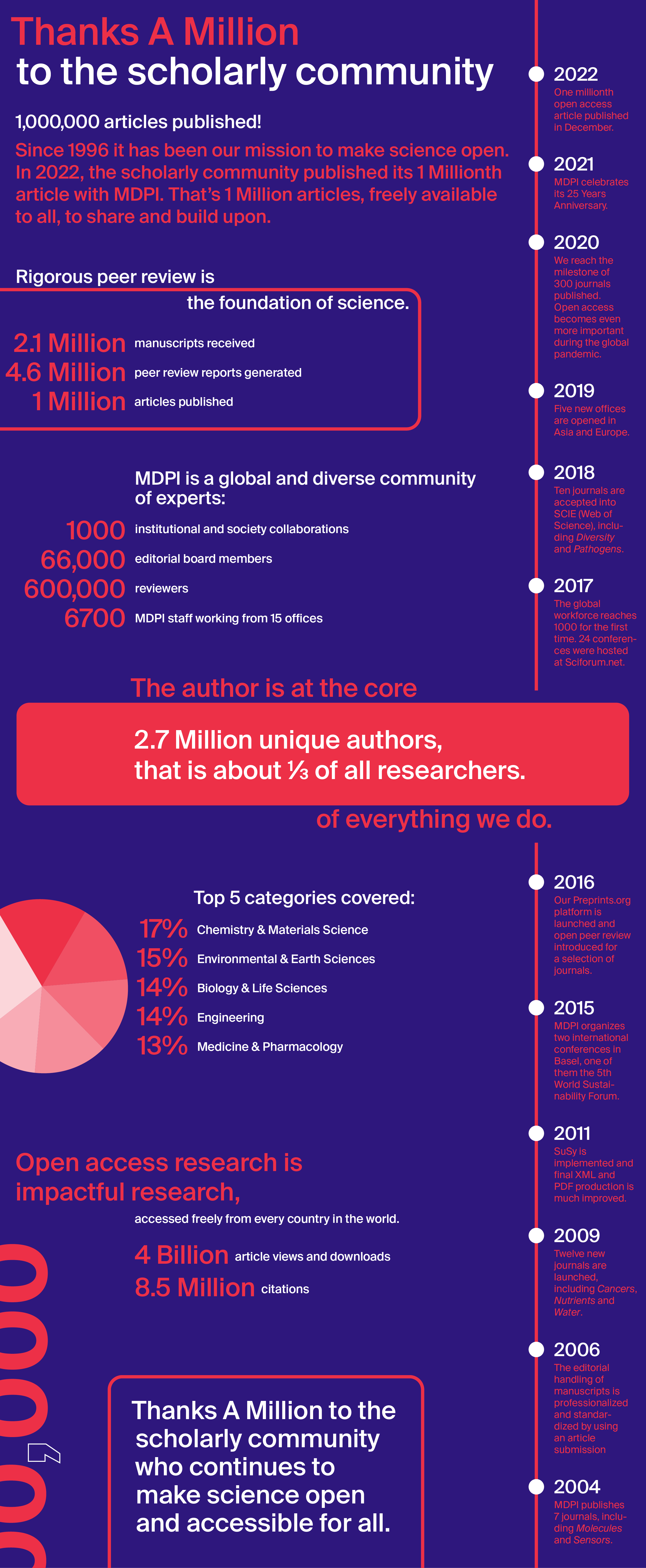
Reaching the milestone of one million articles published reinforces our mission to remove any existing barriers and to make scientific research accessible to all. Since its inception, MDPI’s goal has been to create reliable processes to make science open. This is a path towards facilitating the dissemination of novel insights in scientific communities.
Regular feedback from authors and reviewers shows that our service is greatly appreciated and needed. At the same time, the feedback helps us identify areas for further improvement.
As it stands, a significant share of published research findings remain closed access. More than half of the content published with the most well-known legacy publishers stays behind a paywall, and that is not including articles published in hybrid OA journals, or made available months or years after publication.
A new policy announced by the US administration in August 2022 requires that, as of January 2026, all US federally funded research be made freely and immediately available after publication. While the new policy does not mandate articles be published under an open access license, it is aligned with the open access movement in removing all barriers to research. Similarly, some of the most advanced research institutions in the world intend to have all funded research articles published in open access by 2025.
MDPI is proud to be the leading agent of the transition to open access.
"Thanks a Million" to all the contributors!
13 December 2022
International Journal of Environmental Research and Public Health | Call for Special Issue Proposals for Section “Digital Health”
On behalf of the Section Editor-in-Chief, Prof. Dr. Fabrizio Bert, we are now accepting Special Issue proposals for the Section “Digital Health” of the International Journal of Environmental Research and Public Health (IJERPH, ISSN: 1660-4601). If you are an active researcher in the field and are passionate about publishing cutting-edge research, please do not hesitate to contact the Section Managing Editor, Ms. Crystal Wang ([email protected]).
The journal IJERPH is an interdisciplinary, peer-reviewed, open access journal published semimonthly online by MDPI. It covers Environmental Sciences and Engineering, Public Health, Environmental Health, Occupational Hygiene, Health Economic and Global Health Research, etc. The journal is indexed within Scopus, SCIE and SSCI (Web of Science), PubMed, MEDLINE, PMC, Embase, GEOBASE, CAPlus/SciFinder, and other databases. For more details, please see the following link: https://www.mdpi.com/journal/ijerph/about.
The Section “Digital Health” has the following topics for your consideration:
- Telemedicine: lessons learned from COVID-19 pandemic;
- Digital health: usefulness, role, and experiences from a medical education perspective;
- Digital health: local experiences and real-world results;
- Social media and older adults: experiences, risks, and potentialities;
- The role of public health professionals in the digital world.
The topics are tentative, and you are also welcome to propose a title that is of interest to you and within the scope of the journal. If you are interested, you are welcome to submit your proposal at: https://www.mdpi.com/journalproposal/sendproposalspecialissue/ijerph. Our editors will respond to you as soon as possible.
The duties of acting as a Guest Editor are as follows:
- Refining the Special Issue title and scope and providing a short introduction (100–200 words) and 5–10 keywords to set up the Special Issue website;
- Inviting contributors with the assistance of the in-house editor to achieve a publication target (e.g., 10 papers);
- Supervising the peer review process of this Special Issue: conducting a pre-review check, making final decisions based on at least two review reports that we have collected, etc.
The benefits of acting as a Guest Editor are as follows:
- As the Guest Editor, you will be offered an opportunity to publish one of your papers free of charge in open access form and the chance to provide discounts to the papers that you invited for your Special Issue;
- A printed book of the Special Issue can be sent to you if more than 10 papers are published by the end of the Special Issue. See an example at https://www.mdpi.com/books/pdfview/book/1209;
- It is an ideal venue for networking and communication with scholars in the research community, as well as a chance to mark you as influential within your discipline. The relationships you develop will last beyond the publication of your Special Issue, establishing a network for future collaboration.
The Editorial Office will set up the Special Issue’s website, arrange the promotional materials, assist with the invitations for paper contributions, and take care of the administrative tasks associated with peer review (including inviting reviewers, collating reports, contacting authors, and arranging professional production before publication).
We look forward to receiving your proposals.
IJERPH Editorial Office
9 December 2022
International Journal of Environmental Research and Public Health | Call for Special Issue Proposals for Section “Disease Prevention”
On behalf of the Section Editor-in-Chief, Prof. Javier Abián-Vicén, we are now accepting Special Issue proposals for the Section “Disease Prevention” of the International Journal of Environmental Research and Public Health (IJERPH, ISSN: 1660-4601). If you are an active researcher in the field and are passionate about publishing cutting-edge research, please do not hesitate to contact the Section Managing Editor, Ms. Lily Lv ([email protected]).
The journal IJERPH is an interdisciplinary, peer-reviewed, open access journal published semimonthly online by MDPI. It covers Environmental Sciences and Engineering, Public Health, Environmental Health, Occupational Hygiene, Health Economic and Global Health Research, etc. The journal is indexed within Scopus, SCIE and SSCI (Web of Science), PubMed, MEDLINE, PMC, Embase, GEOBASE, CAPlus / SciFinder, and other databases. For more details, please see the following link: https://www.mdpi.com/journal/ijerph/about.
The Section “Disease Prevention” has the following topics for your consideration:
- Exercise prescription for disease prevention and rehabilitation;
- Strategy for the prevention of temporomandibular disorders;
- The equipment as a preventive method of sports injuries;
- Physical activity as prevention of heart disease.
The topics are tentative, and you are also welcome to propose a title that is of interest to you and within the scope of the journal. If you are interested, you are welcome to submit your proposal at: https://www.mdpi.com/journalproposal/sendproposalspecialissue/ijerph. Our editors will respond to you as soon as possible.
The duties of acting as a Guest Editor are as follows:
- Refining the Special Issue title and scope, and providing a short introduction (100–200 words) and 5–10 keywords to set up the Special Issue website;
- Inviting contributors with the assistance of the in-house editor to achieve a publication target (e.g., 10 papers);
- Supervising the peer review process of this Special Issue: conducting a pre-review check, making final decisions based on at least two review reports that we have collected, etc.
The benefits of acting as a Guest Editor are as follows:
- As the Guest Editor, you will be offered an opportunity to publish one of your papers free of charge in open access form, and the chance to provide discounts to the papers that you invited for your Special Issue;
- A printed book of the Special Issue can be sent to you if more than 10 papers are published by the end of the Special Issue. See an example at https://www.mdpi.com/books/pdfview/book/1209;
- It is an ideal venue for networking and communication with scholars in the research community, as well as a chance to mark you as influential within your discipline. The relationships you develop will last beyond the publication of your Special Issue, establishing a network for future collaboration.
The Editorial Office will set up the Special Issue’s website, arrange the promotional materials, assist with the invitations for paper contributions, and take care of the administrative tasks associated with peer review (including inviting reviewers, collating reports, contacting authors, and arranging professional production before publication).
We look forward to receiving your proposals.
IJERPH Editorial Office
8 December 2022
MDPI Sustainability Foundation: New Look and Nominations for the 2023 Sustainability Awards Now Open
We are pleased to announce that the website of the MDPI Sustainability Foundation has been revamped! For the past couple of months, our UX UI team and front-end developers have been working hard to launch the website in time for the opening of the Sustainability Awards nominations.
The website is not the only thing that has had a remodeling. Indeed, the format of the Emerging Sustainability Leader Award (ESLA) has been updated. ESLA is now a competition open to individual researchers or start-ups founded by researchers under the age of 35. Nominee applications will go through 2 rounds of selection until the final 3 are decided. The finalists will then be invited to give pitch presentations during the Award Ceremony to win either first place (10,000 USD) or runner-up (2 x 5000 USD).
The World Sustainability Award, on the other hand, remains the same: a total prize money of 100,000 USD is up for grabs by senior individual researchers or groups of researchers from the international research community.
Nominations for both the World Sustainability Award and the Emerging Sustainability Leader award are now open! Check out our new website for more information on how to nominate.
8 December 2022
International Journal of Environmental Research and Public Health | Call for Special Issue Proposals for Section “Environmental Health”
On behalf of Section Editor-in-Chief, Prof. Dr. William A. Toscano, we are now accepting Special Issue proposals for the Section “Environmental Health” of the International Journal of Environmental Research and Public Health (IJERPH, ISSN: 1660-4601). If you are an active researcher in the field and are passionate about publishing cutting-edge research, please do not hesitate to contact the Section Managing Editor, Ms. Harley Chen ([email protected]).
IJERPH is an interdisciplinary, peer-reviewed, open access journal published semimonthly online by MDPI. It covers Environmental Sciences and Engineering, Public Health, Environmental Health, Occupational Hygiene, Health Economic and Global Health Research, etc. The journal is indexed within Scopus, SCIE and SSCI (Web of Science), PubMed, MEDLINE, PMC, Embase, GEOBASE, CAPlus / SciFinder, and other databases. For more details, please see the following link: https://www.mdpi.com/journal/ijerph/about.
The Section “Environmental Health” has the following topics for your consideration:
- Planetary Health and Climate;
- Social Exposome and Epigenomics;
- Developmental Origins of Adult Diseases;
- Organs on a Chip as Models to Assess Risk of Environmentally-caused Disease;
- Global Environmental Justice;
- Urban Structure and Health;
- Mechanisms of Poverty and Chronic Diseases.
The topics are tentative, and you are also welcome to propose a title that is of interest to you and within the scope of the journal. If you are interested, you are welcome to submit your proposal at: https://www.mdpi.com/journalproposal/sendproposalspecialissue/ijerph. Our editors will respond to you as soon as possible.
The duties of acting as a Guest Editor are as follows:
- Refining the Special Issue title and scope, and provide a short introduction (100–200 words) and 5–10 keywords to set up the Special Issue website;
- Inviting contributors with the assistance of the in-house editor to achieve a publication target (e.g., 10 papers);
- Supervising the peer review process of this Special Issue: conduct a pre-review check, make final decisions based on at least two review reports that we have collected, etc.
The benefits of acting as a Guest Editor are as follows:
- As the Guest Editor, you will be offered an opportunity to publish one of your papers free of charge in open access form, and the chance to provide discounts to the papers that you invited for your Special Issue;
- A printed book of the Special Issue can be sent to you if more than 10 papers are published by the end of the Special Issue. See an example at https://www.mdpi.com/books/pdfview/book/1209;
- It is an ideal venue for networking and communication with scholars in the research community, as well as a chance to mark you as influential within your discipline. The relationships you develop will last beyond the publication of your Special Issue, establishing a network for future collaboration.
The Editorial Office will set up the Special Issue’s website, arrange the promotional materials, assist with the invitations for paper contributions, and take care of the administrative tasks associated with peer review (including inviting reviewers, collating reports, contacting authors, and arranging professional production before publication).
We look forward to receiving your proposals.
IJERPH Editorial Office
7 December 2022
International Journal of Environmental Research and Public Health | Call for Special Issue Proposals for the Section “Environmental Ecology”
On behalf of the Section Editor-in-Chief, Prof. Dr. Linyu Xu, we are now accepting Special Issue proposals for the Section “Environmental Ecology” in the International Journal of Environmental Research and Public Health (IJERPH, ISSN: 1660-4601). If you are an active researcher in the field and are passionate about publishing cutting-edge research, please do not hesitate to contact the Section Managing Editor, Ms. Stealu Shi ([email protected]).
IJERPH is an interdisciplinary, peer-reviewed, open-access journal published semimonthly online by MDPI. It covers Environmental Sciences and Engineering, Public Health, Environmental Health, Occupational Hygiene, Health Economic and Global Health Research, etc. The journal is indexed within Scopus, SCIE and SSCI (Web of Science), PubMed, MEDLINE, PMC, Embase, GEOBASE, CAPlus/SciFinder, and other databases. For more details, please see the following link: https://www.mdpi.com/journal/ijerph/about.
The Section “Environmental Ecology” covers the following topics for your consideration:
- Urban blue green space—mental health;
- Urban forest therapy—human health;
- Rapid urbanization—environmental health;
- Urban renewal—ecological environmental benefits;
- Urban energy consumption—public economy;
- Food safety/agricultural development—human health;
- COVID-19 mental/environmental health;
- Indoor air pollution—human health;
- Water environmental pollution—human health;
- Digital finance environmental sustainability;
- Sponge city/resilient city construction;
- Water environment problems and governance;
- Pollution reduction and carbon reduction synergy;
- Green low-carbon innovative technologies;
- Environmental research related to COVID-19;
- Research related to air pollution;
- Research on environmental characteristics;
- Risks and control of new pollutants;
- Biodiversity and species classification.
The topics are tentative, and you are also welcome to propose a title that is of interest to you and within the scope of the journal. If you are interested, you are welcome to submit your proposal at: https://www.mdpi.com/journalproposal/sendproposalspecialissue/ijerph. Our editors will respond to you as soon as possible.
The duties of acting as a Guest Editor are as follows:
- Refining the Special Issue title and scope, and provide a short introduction (100–200 words) and 5–10 keywords to set up the Special Issue website;
- Inviting contributors with the assistance of the in-house editor to achieve a publication target (e.g., 10 papers);
- Supervising the peer-review process of this Special Issue: conduct a pre-review check and make final decisions based on at least two review reports that we have collected, etc.
The benefits of acting as a Guest Editor are as follows:
- As the Guest Editor, you will be offered an opportunity to publish one of your papers free of charge in open-access form, and the chance to provide discounts to the papers that you invited for your Special Issue;
- A printed book of the Special Issue can be sent to you if more than 10 papers are published by the end of the Special Issue. See an example at https://www.mdpi.com/books/pdfview/book/1209;
- It is an ideal venue for networking and communication with scholars in the research community, as well as a chance to mark you as influential within your discipline. The relationships you develop will last beyond the publication of your Special Issue, establishing a network for future collaboration.
The Editorial Office will set up the Special Issue’s website, arrange the promotional materials, assist with the invitations for paper contributions, and take care of the administrative tasks associated with peer review (including inviting reviewers, collating reports, contacting authors, and arranging professional production before publication).
We look forward to receiving your proposals.
IJERPH Editorial Office
7 December 2022
International Journal of Environmental Research and Public Health | Call for Special Issue Proposals for Section “Mental Health”
On behalf of Section Editor-in-Chief, Prof Dr. Karl Goodkin, we are now accepting Special Issue proposals for the Section “Mental Health” of the International Journal of Environmental Research and Public Health (IJERPH, ISSN: 1660-4601). If you are an active researcher in the field and are passionate about publishing cutting-edge research, please do not hesitate to contact the Section Managing Editor, Mr. Michael Pei ([email protected]).
IJERPH is an interdisciplinary, peer-reviewed, open access journal published semimonthly online by MDPI. It covers Environmental Sciences and Engineering, Public Health, Environmental Health, Occupational Hygiene, Health Economic and Global Health Research, etc. The journal is indexed within Scopus, SCIE and SSCI (Web of Science), PubMed, MEDLINE, PMC, Embase, GEOBASE, CAPlus / SciFinder, and other databases. For more details, please see the following link: https://www.mdpi.com/journal/ijerph/about.
The Section “Mental Health” has the following topics for your consideration:
- Long-term mental health sequelae of COVID;
- Expansion of tele-mental health services;
- New applications of transcranial magnetic stimulation (TMS);
- Trauma-informed care --improving assessment of trauma history and integration into current care;
- Psychedelic research as an adjuvant to psychotherapy;
- Social media—the need for further definition of appropriate boundaries;
- Virtual reality: Treatment applications in mental health.
The topics are tentative, and you are also welcome to propose a title that is of interest to you and within the scope of the journal. If you are interested, you are welcome to submit your proposal at: https://www.mdpi.com/journalproposal/sendproposalspecialissue/ijerph. Our editors will respond to you as soon as possible.
The duties of acting as a Guest Editor are as follows:
- Refining the Special Issue title and scope, and provide a short introduction (100–200 words) and 5–10 keywords to set up the Special Issue website;
- Inviting contributors with the assistance of the in-house editor to achieve a publication target (e.g., 10 papers);
- Supervising the peer review process of this Special Issue: conduct a pre-review check, make final decisions based on at least two review reports that we have collected, etc.
The benefits of acting as a Guest Editor are as follows:
- As the Guest Editor, you will be offered an opportunity to publish one of your papers free of charge in open access form, and the chance to provide discounts to the papers that you invited for your Special Issue;
- A printed book of the Special Issue can be sent to you if more than 10 papers are published by the end of the Special Issue. See an example at https://www.mdpi.com/books/pdfview/book/1209;
- It is an ideal venue for networking and communication with scholars in the research community, as well as a chance to mark you as influential within your discipline. The relationships you develop will last beyond the publication of your Special Issue, establishing a network for future collaboration.
The Editorial Office will set up the Special Issue’s website, arrange the promotional materials, assist with the invitations for paper contributions, and take care of the administrative tasks associated with peer review (including inviting reviewers, collating reports, contacting authors, and arranging professional production before publication).
We look forward to receiving your proposals.
IJERPH Editorial Office
6 December 2022
International Journal of Environmental Research and Public Health | Call for Special Issue Proposals for Section “Exercise and Health”
On behalf of the Section Editor-in-Chief Dr. Pantelis T. Nikolaidis, we are now accepting Special Issue proposals for the Section “Exercise and Health” of the International Journal of Environmental Research and Public Health (IJERPH, ISSN: 1660-4601). If you are an active researcher in the field and are passionate about publishing cutting-edge research, please do not hesitate to contact the Section Managing Editor, Ms. Miki Shen ([email protected]).
IJERPH is an interdisciplinary, peer-reviewed, open access journal published semimonthly online by MDPI. It covers Environmental Sciences and Engineering, Public Health, Environmental Health, Occupational Hygiene, Health Economic and Global Health Research, etc. The journal is indexed within Scopus, SCIE and SSCI (Web of Science), PubMed, MEDLINE, PMC, Embase, GEOBASE, CAPlus / SciFinder, and other databases. For more details, please see the following link: https://www.mdpi.com/journal/ijerph/about.
The Section “Exercise and Health” has the following topics for your consideration:
- Effect of exercise on the metabolic systems;
- Physiological mechanisms and sex differences in exercise;
- Exercise and injury epidemiology;
- Recovery after exercise;
- Exercise and brain;
- Network physiology of exercise.
The duties of acting as a Guest Editor are as follows:
- Refine the Special Issue title and scope, and provide a short introduction (100–200 words) and 5–10 keywords to set up the Special Issue website;
- Invite contributors with the assistance of the in-house editor to achieve a publication target (e.g., 10 papers);
- Supervise the peer review process of this Special Issue: conduct a pre-review check, make final decisions based on at least two review reports that we have collected, etc.
The benefits of acting as a Guest Editor are as follows:
- As the Guest Editor, you will be offered an opportunity to publish one of your papers free of charge in open access form, and the chance to provide discounts to the papers that you invited for your Special Issue;
- A printed book of the Special Issue can be sent to you if more than 10 papers are published by the end of the Special Issue. See an example at https://www.mdpi.com/books/pdfview/book/1209;
- It is an ideal venue for networking and communication with scholars in the research community, as well as a chance to mark you as influential within your discipline. The relationships you develop will last beyond the publication of your Special Issue, establishing a network for future collaboration.
The Editorial Office will set up the Special Issue’s website, arrange the promotional materials, assist with the invitations for paper contributions, and take care of the administrative tasks associated with peer review (including inviting reviewers, collating reports, contacting authors, and arranging professional production before publication).
We look forward to receiving your proposals.
IJERPH Editorial Office
1 December 2022
Editorial Board Members from the International Journal of Environmental Research and Public Health Featured in the 2022 Highly Cited Researchers List Published by Clarivate
Recently, ClarivateTM revealed its 2022 list of Highly Cited ResearchersTM – individuals at universities, research institutes and commercial organizations.
The scientists who were selected into the list of Highly Cited Scientists this year have published highly cited papers in the 11 years from January 2011 to December 2021, and the citation frequency is in the top 1% of academic subjects and the same year of publication in the Web of Science TM database. Based on Web of Science Citation data, 6,938 researchers from across the globe who have demonstrated a disproportionate level of significant and broad influence in their chosen field or fields over the last decade have been awarded Highly Cited Researcher 2022 designations. The list is truly global, spanning 69 countries or regions and spread across a diverse range of research sciences and social sciences.
According to statistics, 17 members of the Editorial Board of the International Journal of Environmental Research and Public Health (IJERPH, ISSN: 1660-4601) have been selected into the list of Highly Cited Scientists of Clarivate in 2022. They are recognized for their high-quality scientific research achievements and outstanding contributions in professional fields. The IJERPH journal office sincerely congratulates all elected Editorial Board Members and wishes them to make more breakthroughs together with the journal!
| Name | Affiliation |
| Prof. Dr. Giuseppe Grosso | King Saud University, Saudi Arabia |
| Prof. Dr. Qinghua Zhang | Chinese Academy of Sciences, China Mainland |
| Prof. Dr. Lingxin Chen | Chinese Academy of Sciences, China Mainland |
| Prof. Dr. Xie Quan | Dalian University of Technology, China Mainland |
| Prof. Dr. Yanjuan Sun | University of Electronic Science & Technology of China, China Mainland |
| Dr. Margarita Triguero-Mas | Massachusetts Institute of Technology (MIT), United States |
| Prof. Dr. Yaobin Zhang | Dalian University of Technology, China Mainland |
| Prof. Dr. Boqiang Lin | Xiamen University, China Mainland |
| Prof. Dr. Kwok-wing Chau | Hong Kong Polytechnic University, Hong Kong |
| Prof. Dr. Marco Sarchiapone | University of Molise, Italy |
| Prof. Dr. Nicola Orsini | Karolinska Institutet, Sweden |
| Dr. Yang Zhou | Renmin University of China, China Mainland |
| Dr. Sarah E. Perkins-Kirkpatrick | University of New South Wales Canberra, Australia |
| Prof. Dr. Sebastien F. M. Chastin | Glasgow Caledonian University, United Kingdom |
| Prof. Dr. Raymond S. Niaura | New York University, United States |
| Prof. Dr. Alex R. Piquero | University of Miami, United States |
| Prof. Dr. S. V. Subramanian | Harvard University, United States |
24 November 2022
Editorial Board Members from the International Journal of Environmental Research and Public Health Featured among the World’s Top 2% Scientists in 2022
Scientists at Stanford University has recently published an update of the list of the top 2% most widely cited scientists—the World’s Top 2% Scientists.
The time period of the statistical data of this list ranges from 1960 to 2022, and it is divided into two lists, "Lifetime Scientific Influence Ranking" and "2022 Annual Scientific Influence Ranking". The "Lifetime Scientific Influence Ranking" counts the comprehensive influence performance of scientists during their careers, and the "2022 Annual Influence Ranking" focuses on highlighting the academic influence of scientists in the previous year. This ranking, considered to be the most prestigious worldwide, is based on the bibliometric information contained in the Scopus database and includes more than 200,000 researchers from the more than 10 million scientists considered to be active worldwide, with 22 scientific fields and 176 subfields taken into account.
We are pleased to share that 561 Editorial Board Members from MDPI’s International Journal of Environmental Research and Public Health (IJERPH, ISSN: 1660-4601) were featured in the World’s Top 2% Scientists in 2022.
| A. Dick Vethaak | Guy Hutton | Norman Sartorius |
| Adilson Marques | Gyu Myoung Lee | Olaf Gefeller |
| Adriano Piattelli | H. Dean Hosgood | Olatunde Aremu |
| Alan Apter | Hai Fang | Olatz Lopez-Fernandez |
| Alan W. Gertler | Hanns Moshammer | Oliana Carnevali |
| Albert Nienhaus | Hans Bosma | Oliver Faust |
| Alberto Bazzocchi | Hans Sanderson | Omorogieva Ojo |
| Alberto Mantovani | Hanyong Peng | Panagiotis Karanis |
| Alessandra Cincinelli | Hanzhong Jia | Paola Michelozzi |
| Alessandra Torina | Hayley Christian | Paolo Capparè |
| Alessandro Federico | Heide Glaesmer | Paolo Martelletti |
| Alessandro Marinaccio | Heide Schatten | Pasquale Avino |
| Alessio Ishizaka | Heiko Becher | Paul A. Sandifer |
| Alexandra Schneider | Helen Edwards | Paul Kelly |
| Alice Mannocci | Hendrik Meyer-Lueckel | Paul McCrone |
| Alison Reid | Heng Liang | Paul S. Links |
| Amir Sapkota | Hichem Snoussi | Paul Ward |
| Andrea Marini | Hong Jiang | Paul Yip |
| Andrea Speltini | Hong Yang | Paula Paredes |
| Andrea Tinelli | Hongbo Fu | Pedro R. Olivares |
| Andreas Seidler | Howard H. Chang | Peng Bi |
| Andrew Bush | Hu Li | Peng Yang |
| Andrew Curtis | Hua Zhang | Peng Zhang |
| Andrew Gray | Huacheng Xu | Peter C. Konturek |
| Angeles Blanco | Hui Wang | Peter Congdon |
| Angelo Pietrobelli | Huixiao Hong | Peter Kaatsch |
| Angelo Scuteri | Hyuma Makizako | Peter Lercher |
| Anna Hansell | Iain Lake | Peter Memiah |
| Annalaura Carducci | Ian Falconer | Peter Smith |
| Annalee Yassi | Ichiro Wakabayashi | Philip J. Lupo |
| Annamaria Colao | Ildefonso Hernández-Aguado | Pierre Magal |
| Annunziata Faustini | Imti Choonara | Ping Li |
| Antoine Flahault | Inmaculada Failde | Piotr Rzymski |
| Antonella Agodi | Isabelle Durand-Zaleski | Prescott Deininger |
| Ariana Zeka | Ivo Iavicoli | Qiang Fu |
| Ariane Berdal | Izabella Uchmanowicz | Qinghua Zhang |
| Aristomenis Exadaktylos | Jagdish Khubchandani | Quan Wang |
| Arjan Vissink | James Leigh | Raf Dewil |
| Arpita Basu | James Milner | Rajib Shaw |
| Arthur L. Brody | James Roberts | Ramesh P. Singh |
| Ashok Kumar | Jan Kühnisch | Renjie Chen |
| Atte Oksanen | Jane Sims | Ricardo Fernandes |
| Belinda Gabbe | Janet Seeley | Ricardo Pagan |
| Benoit Nemery | Jayajit Chakraborty | Richard B. Kreider |
| Bin Zou | Jean Woo | Richard Gray |
| Bing Bai | Jerome Nriagu | Richard Hubbard |
| Bo Zhang | Jerzy Falandysz | Rodney P. Jones |
| Bogdan Skwarzec | Jiajia Wang | Rodrigo Franco |
| Boqiang Lin | Jian Xu | Rodrigo Reis |
| Brett Smith | Jianbo Shi | Romuald Lepers |
| Brian Finlayson | Jianfeng Feng | Rónán O’Caoimh |
| Bruno Pereira | Jianxin Li | Ronghua Li |
| Bryan Rodgers | Jie Zhang | Rosa Angela Fabio |
| Carlo Signorelli | Jin Wang | Rosanna Tarricone |
| Carlos Brotons | Jinfeng Wang | Rosario Ortega-Ruiz |
| Carlos Castillo-Chavez | Jing Li | Roy McConkey |
| Carmen Freire | Jinnan Wang | Ruut Veenhoven |
| Cary Cooper | Jinyou Shen | Ryo Inoue |
| Caterina Pesce | Jiuyang Lin | Sabine Oertelt-Prigione |
| Chad T. Jafvert | Joachim Heinrich | Sadie J. Ryan |
| Changsoo Lee | Joan Costa-Font | Salvatore Vaccarella |
| Charalampos Siristatidis | Joanna Mazur | Samina Salim |
| Cheng Wang | John B. Nezlek | Samuel R. Friedman |
| Chengshuai Liu | John Øvretveit | Sara A. Quandt |
| Chiara de Waure | Jonathan E. Thompson | Sara Lal |
| Chris Evans | Jonathan Foulds | Sarabjit Mastana |
| Christian Napoli | Jordi Miró | Saul Shiffman |
| Christoph Heesen | Jörg Matthes | Savino Sciascia |
| Christopher L. Drake | Jorge Paz-Ferreiro | Sebastien Chastin |
| Christos Lionis | José Joaquín Mira | Sergio Iavicoli |
| Chuansi Gao | José Muñiz | Sha Liang |
| Chuanxin Ma | Jose V. Tarazona | Shahabaldin Rezania |
| Chun Hung Chu | Juan Carlos Arango-Lasprilla | Shakoor Hajat |
| Chung Y. Hsu | Juan Del Coso | Sharon Lawn |
| Chunping Yang | Judy S. LaKind | Sharon Manne |
| Claire Thorne | Jukka Takala | Sharyn Rundle-Thiele |
| Claudia Carmassi | Jukka Takala | Shenbin Cao |
| Claudio Costantino | Jun He | Sherry Hamby |
| Colin Binns | Jun Hou | Sherry Shiqian Gao |
| Concettina Fenga | Jun Li | Shilu Tong |
| Corrado Magnani | Jun Sung Hong | Shokoofeh Shamsi |
| Craig Williams | Jun Xiao | Shuiping Cheng |
| Cristina Canova | Jun Yoshinaga | Silvano Gallus |
| Daehee Kang | K. Daniel O'Leary | Simone Ferrari |
| Dagang Liu | Karel Allegaert | Sina Dobaradaran |
| Damaskini Valvi | Karen Francis | Sotiris Vardoulakis |
| Damien Leger | Karen Glanz | Soufiane Boufous |
| Daniel A. Griffith | Karen Søgaard | Stefano Ballestri |
| Daniel T. L. Shek | Karen Spruyt | Stefano Capolongo |
| Danlin Yu | Katy Bell | Stefanos Bonovas |
| Daryl J. Higgins | Ken Rigby | Sten H. Vermund |
| David Berrigan | Kevin Pottie | Stephen B. Thomas |
| David C. Wheeler | Kihong Park | Stephen J. Lepore |
| David Canning | Kirsten Vallmuur | Stephen Seiler |
| David Hoel | Klea Katsouyanni | Stephen Wood |
| David L. Rowland | Koji Wada | Steve Jex |
| David Lawrence | Konstantinos P. Tsagarakis | Steve Sussman |
| David Lester | Kristie Ebi | Steven Stack |
| David Nichols | Kristin L. Sainani | Subas Neupane |
| Dayi Zhang | Kristin Shrader-Frechette | Sunghyup Sean Hyun |
| Dean McKay | Kun Chang Lee | Susan Griffin |
| Deborah Black | Kypros Kypri | Susan J. Elliott |
| Deborah J. Bowen | Lawrence M. Schell | Susanne Breitner |
| Denis Bourgeois | Lawrence Palinkas | Susanne Charlesworth |
| Derek Clements-Croome | Lee S. Newman | Suzanne King |
| Despina Koletsi | Lei Yang | Sylvia Kirchengast |
| Dick Ettema | Leslie Hammer | Tahira M. Probst |
| Diego Romero | Li He | Tamara Schikowski |
| Dietmar Knopp | Li Song | Tangfu Xiao |
| Dietrich Plaß | Lili Wang | Tao Zhang |
| Dimosthenis Sarigiannis | Lili Wang | Tao Zhou |
| Dino Musmarra | Liliana Dell'Osso | Tareq Hussein |
| Dongsheng Ji | Lin Xu | Tarita Biver |
| Dustin T. Duncan | Linda Cox | Tatsuo Yamamoto |
| Dylan P. Cliff | Ling Tim Wong | Theodore Eliades |
| Eduardo Bernabé | Lingxin Chen | Thomas A. Arcury |
| Eduardo Fonseca-Pedrero | Lisbeth E. Knudsen | Thomas Astell-Burt |
| Eitan Mijiritsky | Loïc Sentilhes | Thomas E. Dorner |
| Elaine Fuertes | Long D. Nghiem | Thomas Kirchner |
| Eleanor Holroyd | Louise von Essen | Timothy J. Wade |
| Emma McIntosh | Lucia Manganaro | Timothy W. Collins |
| Enrico Clini | Luiz F. Pires | Tingshao Zhu |
| Enrique Casalino | Luke Knibbs | Tiziana Cappello |
| Eunil Park | Madelon L. Finkel | Tiziana Cappello |
| Eva Morales | Maged N. Kamel Boulos | Tiziano Testori |
| Eva Schernhammer | Malcolm Koo | Tom Postmes |
| Evangelos Alexopoulos | Man Sing Wong | Tomonori Okamura |
| Evelyn Talbott | Manabu Morita | Toomas Timpka |
| Ewa Korzeniewska | Manish Kumar | Ubydul Haque |
| Eyal Oren | Manoj Sharma | Ugo Fedeli |
| Fabian Cieplik | Manuel Gámez-Guadix | Usha Sambamoorthi |
| Fabrizio Bianchi | Marc Saez | Uwe Siebert |
| Fabrizio Bruschi | Marcia Testa | Valentina Bollati |
| Fabriziomaria Gobba | Marco Ferrari | Valtteri Hongisto |
| Fang Wang | Marco Helbich | Varsha Srivastava |
| Fawad Javed | Marco Parolini | Victoria Banyard |
| Fayuan Wang | Marco Vacante | Vincent S. Tseng |
| Fei Wang | Marco Vinceti | Vincenzo Russo |
| Fei Wang | Margherita Ferrante | Wade Trappe |
| Felix Akpojene Ogbo | Maria Del Ben | Walid El Ansari |
| Feng Lu | Maria Luisa Cristina | Wei Chen |
| Feng Zhang | Maribel Casas | Wei Du |
| Fernando António Leal Pacheco | Mark Elwood | Wei Song |
| Florence Carrouel | Mark Robson | Wei Zhou |
| Florian Fischer | Mark Stevenson | Weiping Xiong |
| Francesco Aletta | Mark Williams | Wenbiao Hu |
| Francesco Inchingolo | Martin Burtscher | William Douglas Evans |
| Francesco Pepe | Martin Knapp | Willibald Ruch |
| Frank E. Marino | Martin Röösli | Wolfgang Uter |
| Frank J. Chaloupka | Mary H. Ward | Woo Lee |
| Fred Paas | Mary Patricia Nowalk | Wooyul Kim |
| Fulvio Amato | Mary V. Seeman | Xianlai Zeng |
| Fulvio Lauretani | Masahiro Hashizume | Xiaoquan Zhao |
| Gabriel Filippelli | Massimiliano Panella | Xiaoxia Lu |
| Gabriele Grunig | Massimo De Martinis | Xie Quan |
| Gareth Stratton | Massimo Leone | Xin Li |
| Gavin Pereira | Massimo Lucarini | Xinyong Li |
| Gea Oliveri Conti | Massimo Moretti | Xinyue Ye |
| Genserik Reniers | Massimo Stafoggia | Xuelong Li |
| George Spanoudakis | Matt DeLisi | Xuetao Guo |
| Gerard Hoek | Matteo Malvezzi | Yang Yang |
| Gerard Leavey | Matteo Vitali | Yang Zhou |
| Gerardo Bosco | Maurizio Pompili | Yanjuan Sun |
| Gerardo Maupomé | Mauro Ceccanti | Yaobin Zhang |
| Germán Vicente-Rodríguez | Michael Hendryx | Yaqian Zhao |
| Giacomo Frati | Michael Spencer | Yasutake Tomata |
| Gianfranco Damiani | Michael Watts | Yinchang Feng |
| Gianluca Serafini | Michela Baccini | Ying Zhu |
| Gianrico Spagnuolo | Michelle F. Wright | Yong Chi |
| Giovanni Benelli | Michiaki Yamashita | Yongli Cai |
| Giovanni Damiani | Miklas Scholz | Yoshifumi Saisho |
| Giovanni De Girolamo | Minseong Kim | Yuanyuan Yang |
| Giovanni Gabutti | Mohsen Mazidi | Yuebing Sun |
| Giovanni Sotgiu | Mona S. Calvo | Yuewei Liu |
| Giuseppe Banfi | Moonseong Heo | Yunlin Zhang |
| Giuseppe Grosso | Myriam Khlat | Yvonne Forsell |
| Giuseppe La Torre | Myrtill Simkó | Zahra Kalantari |
| Giuseppe Liotta | Nadine Schuurman | Zhe Li |
| Gong Chen | Nansheng Chen | Zhenxing Shen |
| Gordon Huang | Naresh Kumar | Zhenyao Shen |
| Graziano Onder | Neeru Gupta | Zhijian Liu |
| Guglielmo Bonaccorsi | Nicola Magnavita | Zhiqiang Zhao |
| Guglielmo Campus | Nicola Orsini | Zhongwei Huang |
| Guillermo Blanco | Nicola Pirrone | Ziad El-Khatib |
| Guiying Li | Niladri Basu | Zohra S. Lassi |
| Guofeng Shen | Ning Liu | Zongwei Ma |
| Gustavo Carlo | Nir Krakauer | Zubair Kabir |
The latest Stanford rankings reflect the significant influence and research excellence of the scientists, who are committed to furthering their knowledge for the benefit of the world.
We would like to congratulate our Editorial Board Members on their excellent achievement and thank them for their immense contribution to the scientific progression and development of the International Journal of Environmental Research and Public Health.
14 November 2022
International Journal of Environmental Research and Public Health | Call for Special Issue Proposals and Recruiting Guest Editors
The International Journal of Environmental Research and Public Health (IJERPH, ISSN: 1660-4601) is an interdisciplinary, peer-reviewed, open access journal published semimonthly online by MDPI. It covers Environmental Sciences and Engineering, Public Health, Environmental Health, Occupational Hygiene, Health Economic and Global Health Research, etc. The journal is indexed within Scopus, SCIE and SSCI (Web of Science), PubMed, MEDLINE, PMC, Embase, GEOBASE, CAPlus / SciFinder, and other databases. For more details, please see the following link: https://www.mdpi.com/journal/ijerph/about.
The IJERPH editorial team is pleased to announce this open call for Special Issue proposals, which offers a group of authors the opportunity to work on an interconnected set of papers on an innovative topic. We are soliciting high-quality proposals that will be evaluated in a continuous selection process throughout the year.
If you would like to propose a Special Issue topic for this journal, please contact the IJERPH Editorial Office ([email protected]) or complete and submit the form at the following link: https://www.mdpi.com/journalproposal/sendproposalspecialissue/ijerph. Our editors will respond to you as soon as possible.
The duties of acting as a Guest Editor are as follows:
- Refining the Special Issue title and scope, and providing a short introduction (100–200 words) and 5–10 keywords to set up the Special Issue website;
- Inviting contributors with the assistance of the In-House Editor to achieve a publication target (e.g., 10 papers);
- Supervising the peer review process of this Special Issue, conduct a pre-review check, make final decisions based on at least two review reports that we have collected, etc.
The benefits of acting as a Guest Editor are as follows:
- As the Guest Editor, you will be offered an opportunity to publish one of your papers free of charge in open access form, and the chance to provide discounts to the papers that you invited for your Special Issue;
- A printed book of the Special Issue can be sent to you if more than 10 papers are published by the end of the Special Issue. See an example at https://www.mdpi.com/books/pdfview/book/1209;
- It is an ideal venue for networking and communication with scholars in the research community, as well as a chance to mark you as influential within your discipline. The relationships you develop will last beyond the publication of your Special Issue, establishing a network for future collaboration.
The Editorial Office will set up the Special Issue’s website, arrange the promotional materials, assist with the invitations for paper contributions, and take care of the administrative tasks associated with peer review (including inviting reviewers, collating reports, contacting authors, and arranging professional production before publication).
Please do not hesitate to contact the Editorial Office ([email protected]) for further details and clarification.
We look forward to receiving your proposals.
IJERPH Editorial Office
21 October 2022
Meet Us at the 15th European Public Health Conference 2022, 9–12 November 2022, Berlin, Germany
MDPI will be attending the 15th European Public Health Conference 2022, held in Berlin, Germany, from 9 to 12 November 2022. The theme of Berlin 2022 is “Strengthening Health Systems: Improving Population Health and Being Prepared for the Unexpected”. This conference will aim to explore ways in which the public health community can rally around the principle of bringing about better population health. Meanwhile, the conference committee wants the discussions at the 15th EPH Conference to contribute to resilient health systems, universal health coverage (UHC), a well-trained and highly qualified clinical and public health workforce, and governance structures that take a stand and shape health systems globally.
During this conference, MDPI (at booth #13) will welcome researchers from different backgrounds to visit and share their latest ideas with us.
The following MDPI journals will be represented:
- IJERPH;
- Medicina;
- JCM;
- EJIHPE;
- Epidemiologia;
- Behavioral Sciences;
- Healthcare;
- Women;
- MPs;
- Nursing Report;
- COVID;
- Diseases;
- Data;
- Adolescents.
If you plan on attending this conference, feel free to stop by our booth at #13. Our delegates look forward to meeting you in person to answer any questions you may have.
For more information about the conference, please see the following link: https://ephconference.eu/index.php.
21 October 2022
Meet Us at the 17th International Conference on Waste Management and Technology (ICWMT17), 19–22 November 2022, Sanya, China
MDPI will be attending the 17th International Conference on Waste Management and Technology (ICWMT17), held in Sanya, China, from 19 to 22 November 2022. The theme of this year’s conference is “Synergizing the Reduction of Pollution and Carbon Emission”. Throughout the conference, prominent researchers and government officials will give keynote speeches on pressing issues of solid waste management. ICWMT17 provides an excellent opportunity for participants from industry and academia to keep up to date with the latest trends in solid waste management.
During this conference, MDPI will welcome researchers from different backgrounds to visit and share their latest views as well as research with us.
The following MDPI journals will be represented:
- Sustainability (leading journal);
- Environments;
- IJERPH;
- Atmosphere;
- Buildings;
- Resources;
- Smart Cities;
- Sustainable Chemistry;
- Pollutants;
- Microplastics.
If you plan on attending this conference, feel free to stop by our booth. Our delegates look forward to meeting you in person to answer any questions that you may have.
For more information about the conference, please see the following link: http://www.bcrc.cn/icwmt/.
20 October 2022
Meet Us at the 20th International Congress for Tropical Medicine and Malaria (ICTMM2020), 24–28 October 2022, Bangkok, Thailand
Conference: The 20th International Congress for Tropical Medicine and Malaria (ICTMM2020)
Date: 24–28 October 2022
Place: Bangkok, Thailand
Booth: B02
MDPI will be attending the 20th International Congress for Tropical Medicine and Malaria (ICTMM2020) from 24 to 28 October 2022 in Bangkok, Thailand.
The ICTMM is one of the largest tropical-medicine conferences in the world, gathering more than 2,000 scientists, researchers, and experts every four years. It offers an excellent opportunity for delegates to exchange knowledge on tropical medicine with people from all over the world who share the same research interests. The congress will cover topics and updates on tropical medicine, malaria, infectious diseases, neglected diseases, drug resistance, parasitology, zoonoses, and travel medicine, to name just a few.
The following MDPI journals will be represented:
- TropicalMed;
- Diagnostics;
- Diseases;
- Future Pharmacology;
- Healthcare;
- IJERPH;
- Parasitologia;
- Pathogens;
- Pharmaceutics.
Please do not hesitate to reach out ([email protected]) if you plan on attending this conference. Our delegates look forward to meeting you in person and answering any questions that you might have.
For more information about the conference, please visit the following website: https://ictmm2020.org/.
11 October 2022
Congratulatory Video Messages from Section Editors-in-Chief of the International Journal of Environmental Research and Public Health
Recently, the Editorial Office of the International Journal of Environmental Research and Public Health (IJERPH, ISSN: 1660-4601) has had the honor of receiving video greetings from the Section Editors-in-Chief of the journal for receiving a new Impact Factor in 2021 and hereby shares it with you. At the same time, the journal would also like to thank the many scholars for their support. IJERPH will continue to provide scholars with high-quality academic services and wishes everyone continued achievements in 2022.
The following are the messages from Section Editors-in-Chief:
Prof. Dr. Jimmy T. Efird, Section Editor-in-Chief of “Public Health Statistics and Risk Assessment”
Dr. David Berrigan, Section Editor-in-Chief of “Health Behavior, Chronic Disease and Health Promotion”
Prof. Xinbing Feng, Section Editor-in-Chief of “Environmental Earth Science and Medical Geology”
28 September 2022
Peer Review Week 2022 – Research Integrity: Creating and Supporting Trust in Research
Peer Review Week began 19 September 2022 under the theme of “Research Integrity: Creating and Supporting Trust in Research”. Through various blog articles, podcast, and webinar, we discussed this crucial subject throughout the week, celebrating the essential role peer review plays in maintaining research quality.
To begin, we held a Webinar on the topic. Professor Peter W. Choate and Dr. Emmanuel Obeng-Gyasi joined Dr. Ioana Craciun, one of MDPI’s scientific officers, for an in-depth discussion.
We invite you to view the event recording:
During the week, the MDPI Blog in a series articles highlighted how good Peer Review safeguards research integrity. The following topics were covered:
- Peer Review Week 2022
- Research Integrity
- What We’ve Learned About Peer Review Reports
- 4 Steps to the Perfect Peer Review Report
- How to Write the Perfect Peer Review Report: An Interview
- Inviting Great Peer Reviewers
In a new edition of Insight Faster, an MDPI podcast, we were delighted to talk to the co-chairs of the Peer Review Week committee, Jayashree Rajagopalan (Senior Manager of Global Community Engagement for CACTUS) and Danielle Padula (Head of Marketing and Community Development at Scholastica) to get their take on this year’s event and its related topics.
You can find the Podcast here.
We hope you enjoy the contents!
23 September 2022
Meet Us at the AGU Fall Meeting 2022 (AGU22), 12–16 December 2022, Online or On-Site in Chicago, IL, USA

MDPI will be attending the AGU Fall Meeting 2022 (AGU22), held in Chicago and online, from 12 to 16 December 2022. The AGU Fall Meeting is the most influential event in the world dedicated to the advancement of Earth and space sciences. The conference unites the Earth and space science community to share findings, connect like-minded scientists from around the world, and advance our profession and shared passion for the impact of science. Researchers, scientists, educators, students, policymakers, enthusiasts, journalists, and communicators attend the AGU Fall Meeting to better understand our planet and environment, and our role in preserving its future.
During this conference, MDPI (at booth #1452) will welcome researchers from different backgrounds to visit and share their latest views and research with us.
The following MDPI journals will be represented:
- Water (leading journal);
- Remote Sensing (leading journal);
- Geosciences;
- Climate;
- Hydrology;
- Land;
- Drones;
- Environments;
- Sustainability;
- IJERPH;
- Earth;
- Fire;
- GeoHazards;
- Oceans;
- World.
If you plan on attending this conference, feel free to stop by our booth at #1452. Our delegates look forward to meeting you in person to answer any questions you may have.
For more information about the conference, please see the following link: https://igs.org/event/agu22/.
23 September 2022
International Journal of Environmental Research and Public Health | Two New Sections Established
We are pleased to announce that, in order to further develop different research areas and manage the journal more professionally, the International Journal of Environmental Research and Public Health (IJERPH, ISSN: 1660-4601) has established the following two Sections:
Additionally, we are currently accepting applications for Section Editorial Board Members and editorial positions for these two Sections. Successful applicants will have the opportunity to be promoted to Section Editor-in-Chief.
The main responsibilities of Section Editorial Board Members are as follows:
- Prescreening and issuing decisions on new submissions to the Section;
- Helping to edit a Special Issue on a relevant topic (or supervising Special Issues related to your research field);
- Providing input or feedback regarding journal policies;
- Promoting the journal among peers or at conferences;
- Attending board meetings and suggesting journal development strategies;
- Reviewing manuscripts.
Please send your application to the IJERPH Editorial Office ([email protected]), and feel free to reach out with any questions.
13 September 2022
Meet Us at the 34th Annual Conference of the International Society for Environmental Epidemiology (ISEE 2022), 18–21 September 2022, Athens, Greece
MDPI will be attending the 34th Annual Conference of the International Society for Environmental Epidemiology (ISEE 2022), held in Athens, Greece, from 18 to 21 September 2022. The main theme of the 2022 conference is “Strengthening the global role of environmental epidemiology”, stressing the need to study and understand local conditions in order to synthesize knowledge and make a difference for our planet. In the 2022 conference we will continue advancing our society’s aims in promoting epidemiological studies that link environmental exposures to human health.
During this conference, MDPI (at booth #22) will welcome researchers from different backgrounds to visit and share their latest inspirations with us.
The following MDPI journals will be represented:
- IJERPH (leading journal);
- Sustainability;
- Healthcare;
- Children;
- Cancers;
- Climate;
- Environments;
- Earth;
- Societies;
- Epidemiologia.
If you plan on attending this conference, feel free to stop by our booth: #22. Our delegates look forward to meeting you in person to answer any questions that you may have.
For more information about the conference, please see the following link: https://isee2022.org/.
28 August 2022
Meet Us at the 17th Persistent Organic Pollutants Forum and Chemical Environmental Safety Conference, 8–10 December 2022, Qingdao, China
Toxics (ISSN: 2305-6304) will be attending the 17th Persistent Organic Pollutants Forum and Chemical Environmental Safety Conference as an exhibitor. This meeting will be held in Qingdao, China, from 8 to 10 December 2022.
The Persistent Organic Pollutants Forum and Chemical Environmental Safety Conference (hereinafter referred to as the "POPs Forum") was initiated by the Persistent Organic Pollutants Research Center of Tsinghua University in 2006, and cooperated with the Office of the National Coordination Group for the Implementation of the Stockholm Convention of the Ministry of Ecology and Environment. A series of annual meetings cosponsored by the Chinese Society of Environmental Sciences and the Persistent Organic Pollutants Professional Committee have been successfully held for 16 sessions by 2021. The POPs Forum has become a forum for academia, management, and industry in the field of POPs in China to brainstorm and contemplate countermeasures, review the international trends in POPs compliance and China's progress, discuss POPs research hotspots and development trends, and showcase high-tech and advanced products for POPs analysis and control, as well as high-level communication platforms.
The 17th POPs Forum focuses on "new pollutant treatment", and invites domestic as well as foreign experts from various fields of government, industry, academia, and research to discuss and exchange information together.
The following MDPI journals will be represented:
- Toxics (leading);
- Water;
- JoX;
- IJERPH;
- Pollutants.
If you are attending this conference, please feel free to start a conversation with us. Our delegates look forward to meeting you in person and answering any questions that you may have. For more information about the conference and our booth, please visit the following link: https://popsforum2022.scievent.com/.
18 August 2022
Prof. Dr. Lingxin Chen Appointed Section Editor-in-Chief of Section “Environmental Science and Engineering” in the International Journal of Environmental Research and Public Health
We are pleased to announce that Prof. Dr. Lingxin Chen has been appointed Section Editor-in-Chief of the Section “Environmental Science and Engineering” in the International Journal of Environmental Research and Public Health (IJERPH, ISSN: 1660-4601, IF 4.614).

Prof. Dr. Lingxin Chen is a professor at the Yantai Institute of Coastal Zone Research, Chinese Academy of Sciences, Yantai, China. The Institute’s R&D work is mainly about innovative chemical measurement technology and marine measurement technology, involving the fields of analytical chemistry, environmental science, marine chemistry, marine environmental monitoring, and ecological restoration engineering technology. It is committed to taking typical pollutants in the coastal environment as research objects, using nanomaterials, biomaterials, and photoelectric as well as magnetic analysis and detection technologies, building micro/nano sensing interfaces and exploring new principles, methods, and new instrument technologies for analysis and monitoring, in addition to paying attention to the study of the interaction between typical pollutants and life systems as well as revealing their relevance to human health. Meanwhile, the group pays attention to actively carrying out domestic and international cooperation. Additionally, nowadays, wide and deep contacts with distinguished experts/scholars and instrumental companies are built within the USA, Korea, Germany, United Kingdom, Australia, Japan, etc.
He has published more than 400 scientific original articles and reviews. His current research interests are in coastal zone pollutants; typical water body pollutants; microanalysis techniques; environmental microanalysis; oceanic oil spill; and situ on-line as well as real-time environmental monitoring techniques. He was selected as a Clarivate “Highly Cited Researcher” in the Cross-Field category in 2020 and 2021, respectively.
The following is a short Q&A with Prof. Dr. Lingxin Chen, who shared his vision for the journal with us, as well as his views of the research area and open access publishing:
1. What appealed to you about the journal that made you want to take the role as its Editor-in-Chief?
Fortunately, contemporary society has great awareness of deleterious environmental side effects, resulting in a sense of responsibility toward the environment. Today we look forward to a healthy and harmonious environment system. I have devoted most of my energy to research, especially in the identification, analysis and monitoring of environmental pollution. In this direction, I have been tracking the research works engaged in environment and health, studying how pollutants lead to the change of the endogenous sources of active species in life, so as to reveal the relationship between environment and public health. I have also been thinking about how to exploit environmental science and engineering technology knowledge to solve global problems stemming from environmental pollution. I am interested in studying how to develop environmental models to investigate, analyze, predict and remediate environmental crises, how to achieve key pollution control, treatment and prevention, how to avoid exposure to hazardous materials, and ways to participate in public health prevention and management through valuable analytical insights. My relevant background coincides with the journal, and I look forward to working with researchers across the world to promote the development of this field.
2. What is your vision for the journal?
I hope for this journal to promote high-quality scientific research, which meets the need of Environmental Protection Agencies, health organizations, academics, and the governmental personnel/the public engaged in ecological protection and also human/living creatures’ safety across the world. This is the most important goal and requirement of the journal. I hope that we can attract all types of scientific researchers from many disciplines to contribute in promoting the development of environmental science, environmental engineering, clinical medicine and public health. I also hope for this journal to not only act as a platform for scientific researchers to display their research results, but also as a resource platform for understanding the latest and most important progress in the field, so as to stimulate the continuous emergence of new research results. It is hoped that in the near future, we will pool our wisdom and pay attention to the quality of the papers so that the journal can become a mainstream journal in this field.
3. What does the future of this field of research look like?
Environment and human health are enduring scientific themes. Humans and the environment are inseparable. They interact with each other, restrict each other, depend on each other and adapt to each other. Over billions of years of evolution, human beings have constantly adjusted their adaptive ability to maintain their dynamic balance with the changing environment. Along with the development of society and the progress of science, unsustainable anthropogenic activities have increased and a large number of environmental pollutants (physical/chemical/biological pollution) have been emitted into the human living environment (water, air and soil), further leading to the deterioration of the ecological environment and causing a variety of harm to human health. How should mankind choose a development path that coexists harmoniously with nature, so that human development needs can be met and meanwhile the natural ecosystem can be protected to the maximum extent? This question indicates the direction in which the field will be headed in the future. We expect multidisciplinary global researchers, especially those in Environmental Science and engineering technology, to put forward feasible solutions for pollution control, treatment and prevention to solve environmental problems such as pollution and public health problems including hazard exposure prevention. This is pivotal work to maintain a healthy and sustainable environmental system suitable for humans’ and other living creatures’ survival.
4. What do you think of the development of Open Access in the publishing field?
Open Access publishing provides a platform to share findings for global researchers, thus promoting the rapid dissemination and development of science and technology. Providing a cross-application science platform focusing on the combination of the environment and human health, open access publishing holds unique significance.
We warmly welcome Prof. Dr. Lingxin Chen as he starts his new role as Section Editor-in-Chief, and we look forward to him leading International Journal of Environmental Research and Public Health to achieve many more milestones.
14 July 2022
A Message from the Editor-in-Chief of the International Journal of Environmental Research and Public Health | Updated Impact Factor of 4.614
Dear colleagues,
I am very glad to inform you that Thomson Reuters has recently released the 2021 Journal Citation Reports® (JCR), including a very impressive impact factor of 4.614 for the International Journal of Environmental Research and Public Health (IJERPH, ISSN: 1660-4601). The new impact factor represents a 36.11% increase compared to its 2020 record of 3.390.
This remarkable increase in impact factor for IJERPH underscores the rigorous peer review process and the high quality of scientific papers that have been published. It clearly demonstrates the important role IJERPH has played and will continue to play in advancing scientific knowledge and providing a decision support tool for protecting the environment and human health.
It is indeed an outstanding achievement that ranks IJERPH as one of the top journals in the multi-disciplinary field of environmental science and public health.
I would like to commend our entire Editorial Board including the Section Editors-in-Chief, the editors of Special Issues and Topical Collections, the Managing Editors, and Assistant Editors, as well as the external referees, for working tirelessly to attract, review, and publish the best scientific discoveries in IJERPH. I am grateful for their outstanding contributions to our journal.
Special thanks are also extended to the MPDI leadership for their excellent vision in guiding a robust development of our journal.
Kind regards,
Paul Tchounwou
Editor-in-Chief
4 July 2022
Meet Us at the 11th National Conference on Environmental Chemistry, 25–29 July 2022, Harbin, China
A range of MDPI journals will be attending the 11th National Conference on Environmental Chemistry as an exhibitor. This meeting will be held in Harbin, China, from 25 to 29 July 2022.
The theme of this conference will be “Innovating Environmental Sciences, Low-Carbon Protecting Environment and Health”, which fully reflects the conference’s purpose of innovation, participation, cooperation, and foresight. More than 50 branches have been set up in the fields of interface process, toxicology and health, public health, environmental safety, pollution control, remediation technology, green and low-carbon, and environmental policy, and various well-known experts at home and abroad have been invited to produce conference and branch reports and deliver speeches. We invite experts in the field and environmental protection companies to participate in the exhibition, for which academic activities such as paper exhibitions, postgraduate forums, and Editor-in-Chief meetings have been organized.
The following MDPI journals will be represented:
- Toxics (leading);
- Water (leading);
- Sustainability (leading);
- Applied Sciences;
- JoX;
- Nanomaterials;
- Soil Systems;
- Sustainable Chemistry;
- IJERPH;
- Pollutants;
- Environments.
If you are attending this conference, please feel free to start a conversation with us. Our delegates look forward to meeting you in person and answering any questions you may have. For more information about the conference and our booth, please visit the following link: https://www.ncec2021.com/Home/Default.
1 July 2022
Prof. Dr. Fabrizio Bert Appointed Section Editor-in-Chief of the Section “Digital Health” in the International Journal of Environmental Research and Public Health
We are pleased to announce that Prof. Dr. Fabrizio Bert has been appointed Section Editor-in-Chief of the Section “Digital Health” in the International Journal of Environmental Research and Public Health (IJERPH, ISSN 1660-4601, IF 4.614).
Prof. Dr. Fabrizio Bert is an associate professor of public health at the Department of Public Health and Pediatrics Sciences at the University of Turin, Italy. He graduated in Medicine and Surgery and then specialized in Public Health at the University of Turin. He is involved in many international and national projects, research initiatives, and networks. His main research focuses are on digital health, mental health, vaccinology, and healthcare organization.
He has published more than 120 scientific original articles and reviews. His teaching activity includes courses on epidemiology, hygiene, health promotion, and public health for the School of Medicine in Turin, where he is the vice president of the Degree in Medicine and Surgery. He is a member of the International Scientific Committee of the main international conferences in the public health field.
The following is a short Q&A with Prof. Dr. Fabrizio Bert, who shared his vision for the journal with us, as well as his views of the research area and open access publishing:
1. What appealed to you about the journal that made you want to take the role as its Editor-in-Chief?
In recent years, the International Journal of Environmental Research and Public Health has proved to be an open space for the scientific community involved in many topics related to public health. The efficient peer-reviewing and editorial process offers a fast and favorable publication path and allows many researchers to be continuously updated. The digital health field is innovative, characterized by a forward-looking approach and it is naturally subject to constant novelties. Considering the good experience as Guest Editor of a Special Issue and the potential of the digital health topic, I decided to give my personal contribution to the journal’s aims as Editor-in-Chief of this specific Section.
2. What is your vision for the journal?
In my vision, the journal will benefit from high-quality research papers and reviews with a growing excellent standard of peer review and the publication process. It will be a home for several top researchers and scientists and a platform for the dissemination of their findings. The “Digital Health” Section with its Special Issues will give a strong contribution to the scientific community’s knowledge.
3. What does the future of this field of research look like?
Digital health is a very promising research field. The combination of informatic science, ICT, and medicine is the present and the future of health services provision. The investigation of these phenomena is important for the current society’s goals. We will surely approach them further with new innovations, technological developments, and opportunities through digital solutions for health professionals. It is an exciting field of research in constant evolution, and it will be great to be part of it.
4. What do you think of the development of open access in the publishing field?
The open access format is important to make research findings available to the whole community. It is a big step forward in the path leading to greater transparency and accountability of scientists' work. In the future, I sincerely hope for equal opportunities for all researchers to disseminate their research findings, and the same possibilities should be guaranteed to all of them. For this reason, some improvements to overcome the issue of open access costs for those researchers with funding issues can still be achieved.
We wish Prof. Dr. Fabrizio Bert every success in his new position, and we look forward to his contributions to the journal.
29 June 2022
Welcoming New Section Editors-in-Chief of the International Journal of Environmental Research and Public Health
We are pleased to announce that the following experts have been appointed to the roles of Section Editors-in-Chief of IJERPH (ISSN: 1660-4601):
Name: Prof. Dr. Karl Goodkin
Affiliation: Department of Psychiatry, University of Nebraska Medical Center in Omaha, Omaha, NE 68198, USA
Interests: HIV-associated neurocognitive disorders (HAND); major depressive disorder in persons living with HIV; aging and HIV infection; global epidemiology of HAND; psychoneuroimmunology; psycho-oncology; chronic pain
Section: “Mental Health”
Name: Prof. Dr. Fabrizio Bert
Affiliation: Department of Public Health, University of Turin, Via Santena 5 bis, 10126 Turin, Italy
Interests: public health; epidemiology; e-health; mental health; minority health
Section: “Digital Health”
Name: Prof. Dr. Germán Vicente-Rodríguez
Affiliation: Department of Physiatry and Nursing, Faculty of Health and Sport Sciences (FCSD), University of Zaragoza, Ronda Misericordia 5, 22001 Huesca, Spain
Interests: adolescents; MASS; osteoporosis; children; fractures; physical activity; publication bias; weight-bearing exercise; vitamin D status; impact exercise
Section: “Adolescents”
Name: Prof. Dr. Fulvio Lauretani
Affiliation: Geriatric-Rehabilitation Department, University Hospital of Parma, University of Parma, 43121 Parma, Italy
Interests: frail older persons; parkinsonism; dementia; amyloid PET; older persons
Section: “Aging”
Name: Prof. Dr. David Rodríguez-Lázaro
Affiliation: Microbiology Section, Department of Biotechnology and Food Science, Faculty of Science, University of Burgos, 09001 Burgos, Spain
Interests: food-borne pathogens; food safety; food microbiology
Section: “Environmental Microbiology”
Name: Prof. Dr. Nicola Magnavita
Affiliation: Department of Public Health, Università Cattolica del Sacro Cuore, Largo Gemelli 8, 00168 Roma, Italy
Interests: health promotion; public health; epidemiology health; risk assessment; safety; risk analysis; epidemiology and public health; healthcare; environmental risk assessment; health and safety sleep disorders and sleep medicine; risk factors; determination health risk assessment; exposure assessment; environmental exposure occupational health; hospital management; chemical risk assessment environmental epidemiology; health impact assessment informed consent; occupational epidemiology; chemical safety occupational medicine; occupational health and disease; inhalation toxicology; environmental medicine; aging and work; hazardous workers
Section: “Nursing”
Name: Prof. Dr. Olaf Gefeller
Affiliation: Department of Medical Informatics, Biometry and Epidemiology, Friedrich-Alexander-University of Erlangen-Nuremberg, 91054 Erlangen, Germany
Interests: epidemiology; biostatistics; melanoma; ultraviolet radiation; UV index; prevention of sun exposure
Section: “Skin Health”
Name: Prof. Dr. Dongsheng Ji
Affiliation: State Key Laboratory of Atmospheric Boundary Layer Physics and Atmospheric Chemistry, Institute of Atmospheric Physics, Chinese Academy of Sciences, Beijing 100029, China
Interests: atmospheric environment; atmospheric chemistry; atmospheric physics; aerosol chemistry; volatile organic compounds; photochemical air pollution; regional air pollution; hazardous airborne elements; carbonaceous aerosols; atmospheric pollution control
Section: “Air”
Name: Prof. Dr. Javier Abián-Vicé
Affiliation: Performance and Sports Rehabilitation Laboratory, Faculty of Sport Sciences, University of Castilla-La Mancha, 45071 Toledo, Spain
Interests: sport science; sport biomechanics; physical activity; caffeine; ergogenic aids; racquet sports; injury prevention; exercise performance; sonoelastography in sports injury diagnosis
Section: “Disease Prevention”
Name: Prof. Dr. Jinyou Shen
Affiliation: School of Environmental and Biological Engineering, Nanjing University of Science and Technology, Nanjing 210094, China
Interests: wastewater treatment process; environmental engineering; anaerobic digestion; bioelectrochemistry; nanobiotechnology; advanced oxidation processes treatment; environmental remediation; biodegradation; renewable energy
Section: “Chemoenvironment”
We warmly welcome each expert in taking up their roles as Section Editors-in-Chief and look forward to them leading IJERPH to achieve many more milestones.
IJERPH Editorial Office
28 June 2022
Recruiting Section Editors-in-Chief for the International Journal of Environmental Research and Public Health
To ensure the efficient and high-quality production of our journal, we have added several new Sections and are currently seeking nominations and applications for the position of Section Editor-in-Chief (SEiC) for the following Sections:
- “Health Care Sciences & Services”;
- “Traumas”;
- “Biosafety”;
- “Health-Related Quality of Life and Well-Being”;
- “Environmental Science and Engineering”;
- “Reproductive Health”.
If you are a researcher in a related field and are passionate about participating in the publication of cutting-edge research, please do not hesitate to get in touch about joining the Editorial Board.
The responsibilities of the Section Editor-in-Chief include the following:
- Defining the aims and scope of the Section;
- Advising on the strategic development of the Section;
- Providing support and guidance to the Editorial Board Members and editorial staff where required;
- Inviting distinguished scientists to join the Editorial Board;
- Maintaining oversight of the editorial process to ensure that the published content is of high quality, and discussing possible improvements;
- Suggesting themes/subjects for Special Issues and assisting in inviting Guest Editors to lead them;
- Performing prechecks of new manuscripts and making final decisions after peer review as well as revisions when requested;
- Chairing the annual Editorial Board meeting;
- Acting as an ambassador for the journal, MDPI, and open access publishing.
The Section Editor-in-Chief should be a leader in their particular field of research and will be responsible for checking and maintaining the scientific quality of a particular Section in the journal. The Section Editor-in-Chief is expected to oversee the growth and development of the journal’s Sections and Board Members. The Section Editor-in-Chief position is honorary; therefore, MDPI will support the Section Editor-in-Chief with an annual honorarium. Additionally, as the Section Editor-in-Chief, you will be granted the opportunity to publish two papers in the journal per year—these will be free of charge once they are accepted for publication.
The International Journal of Environmental Research and Public Health (IJERPH, ISSN: 1660-4601) is an interdisciplinary, peer-reviewed, and open access journal published semimonthly online by MDPI. It covers environmental sciences and engineering, public health, environmental health, occupational hygiene, health economics, global health research, etc. It is indexed in Science Citation Index Expanded (SCIE) and Social Sciences Citation Index (SSCI)—Web of Science, and is to be covered in Scopus. Citations are available in PubMed and full-text archived in PubMed Central.
Applications or nominations must include:
- A complete curriculum vitae (CV);
- A personal statement summarizing a proposed vision and plans for this Section.
The deadline for applications is 30 September 2022. Please contact us ([email protected]) before the deadline.
We look forward to working with you in the future.
28 June 2022
2021 Impact Factors - Released
The 2021 citation metrics have been released in the Journal Citation Reports (JCR), and we’re pleased to announce the following results for MDPI journals:

| Journal | Impact Factor | Rank | Category |
| Antioxidants | 7.675 | Q1 | Food Science & Technology |
| Biochemistry & Molecular Biology | |||
| Chemistry, Medicinal | |||
| Cells | 7.666 | Q2 | Cell Biology |
| Nutrients | 6.706 | Q1 | Nutrition & Dietetics |
| Cancers | 6.575 | Q1 | Oncology |
| Pharmaceutics | 6.525 | Q1 | Pharmacology & Pharmacy |
| International Journal of Molecular Sciences | 6.208 | Q1 | Biochemistry & Molecular Biology |
| Q2 | Chemistry, Multidisciplinary | ||
| Marine Drugs | 6.085 | Q1 | Chemistry, Medicinal |
| Pharmacology & Pharmacy | |||
| Biomolecules | 6.064 | Q2 | Biochemistry & Molecular Biology |
| Batteries * | 5.938 | Q2 | Electrochemistry |
| Energy & Fuels | |||
| Materials Science, Multidisciplinary | |||
| Viruses | 5.818 | Q2 | Virology |
| Biosensors | 5.743 | Q1 | Chemistry, Analytical |
| Instruments & Instrumentation | |||
| Q2 | Nanoscience & Nanotechnology | ||
| Journal of Fungi | 5.724 | Q1 | Mycology |
| Q2 | Microbiology | ||
| Nanomaterials | 5.719 | Q1 | Physics, Applied |
| Q2 | Chemistry, Multidisciplinary | ||
| Materials Science, Multidisciplinary | |||
| Nanoscience & Nanotechnology | |||
| Metabolites | 5.581 | Q2 | Biochemistry & Molecular Biology |
| Foods | 5.561 | Q1 | Food Science & Technology |
| Drones * | 5.532 | Q2 | Remote Sensing |
| Remote Sensing | 5.349 | Q1 | Geosciences, Multidisciplinary |
| Imaging Science & Photographic Technology | |||
| Q2 | Remote Sensing | ||
| Environmental Sciences | |||
| Journal of Theoretical and Applied Electronic Commerce Research | 5.318 | Q2 | Business |
| Antibiotics | 5.222 | Q1 | Pharmacology & Pharmacy |
| Q2 | Infectious Diseases | ||
| Pharmaceuticals | 5.215 | Q1 | Pharmacology & Pharmacy |
| Q2 | Chemistry, Medicinal | ||
| Biology | 5.168 | Q1 | Biology |
| Fermentation | 5.123 | Q2 | Biotechnology & Applied Microbiology |
| Toxins | 5.075 | Q1 | Toxicology |
| Q2 | Food Science & Technology | ||
| Bioengineering * | 5.046 | Q2 | Engineering, Biomedical |
| Polymers | 4.967 | Q1 | Polymer Science |
| Journal of Clinical Medicine | 4.964 | Q2 | Medicine, General & Internal |
| Vaccines | 4.961 | Q2 | Immunology |
| Medicine, Research & Experimental | |||
| Molecules | 4.927 | Q2 | Chemistry, Multidisciplinary |
| Biochemistry & Molecular Biology | |||
| Microorganisms | 4.926 | Q2 | Microbiology |
| Journal of Functional Biomaterials * | 4.901 | Q2 | Engineering, Biomedical |
| Materials Science, Biomaterials | |||
| Biomedicines | 4.757 | Q2 | Medicine, Research & Experimental |
| Pharmacology & Pharmacy | |||
| Biochemistry & Molecular Biology | |||
| Plants | 4.658 | Q1 | Plant Sciences |
| International Journal of Environmental Research and Public Health | 4.614 | Q1 | Public, Environmental & Occupational Health (SSCI) |
| Q2 | Public, Environmental & Occupational Health (SCIE) | ||
| Environmental Sciences (SCIE) | |||
| Membranes | 4.562 | Q1 | Polymer Science |
| Q2 | Engineering, Chemical | ||
| Materials Science, Multidisciplinary | |||
| Chemistry, Physical | |||
| Pathogens | 4.531 | Q2 | Microbiology |
| Catalysts | 4.501 | Q2 | Chemistry, Physical |
| Toxics | 4.472 | Q2 | Toxicology |
| Environmental Sciences | |||
| Gels | 4.432 | Q1 | Polymer Science |
| Journal of Cardiovascular Development and Disease | 4.415 | Q2 | Cardiac & Cardiovascular Systems |
| Chemosensors | 4.229 | Q1 | Instruments & Instrumentation |
| Q2 | Chemistry, Analytical | ||
| Q3 | Electrochemistry | ||
| Genes | 4.141 | Q2 | Genetics & Heredity |
| Diagnostics | 3.992 | Q2 | Medicine, General & Internal |
| Agronomy | 3.949 | Q1 | Agronomy |
| Plant Sciences | |||
| Land | 3.905 | Q2 | Environmental Studies |
| Sustainability | 3.889 | Q2 | Environmental Sciences (SCIE) |
| Environmental Studies (SSCI) | |||
| Q3 | Green & Sustainable Science & Technology (SCIE) | ||
| Q4 | Green & Sustainable Science & Technology (SSCI) | ||
| Sensors | 3.847 | Q2 | Instruments & Instrumentation |
| Chemistry, Analytical | |||
| Engineering, Electrical & Electronic | |||
| Materials | 3.748 | Q1 | Metallurgy & Metallurgical Engineering |
| Q2 | Physics, Applied | ||
| Physics, Condensed Matter | |||
| Q3 | Materials Science, Multidisciplinary | ||
| Chemistry, Physical | |||
| Biomimetics * | 3.743 | Q2 | Engineering, Multidisciplinary |
| Q3 | Materials Science, Biomaterials | ||
| Tropical Medicine and Infectious Disease * | 3.711 | Q1 | Tropical Medicine |
| Q2 | Parasitology | ||
| Q3 | Infectious Diseases | ||
| Lubricants * | 3.584 | Q2 | Engineering, Mechanical |
| Fractal and Fractional | 3.577 | Q1 | Mathematics, Interdisciplinary Applications |
| Water | 3.530 | Q2 | Water Resources |
| Q3 | Environmental Sciences | ||
| Micromachines | 3.523 | Q2 | Instruments & Instrumentation |
| Physics, Applied | |||
| Chemistry, Analytical | |||
| Q3 | Nanoscience & Nanotechnology | ||
| Journal of Personalized Medicine | 3.508 | Q2 | Medicine, General & Internal |
| Health Care Sciences & Services | |||
| Agriculture | 3.408 | Q1 | Agronomy |
| Processes | 3.352 | Q2 | Engineering, Chemical |
| Separations | 3.344 | Q2 | Chemistry, Analytical |
| Magnetochemistry | 3.336 | Q2 | Chemistry, Inorganic & Nuclear |
| Q3 | Chemistry, Physical | ||
| Materials Science, Multidisciplinary | |||
| Brain Sciences | 3.333 | Q3 | Neurosciences |
| Buildings | 3.324 | Q2 | Construction & Building Technology |
| Engineering, Civil | |||
| Forests | 3.282 | Q1 | Forestry |
| Energies | 3.252 | Q3 | Energy & Fuels |
| Life | 3.251 | Q2 | Biology |
| Coatings | 3.236 | Q2 | Materials Science, Coatings & Films |
| Physics, Applied | |||
| Q3 | Materials Science, Multidisciplinary | ||
| Animals | 3.231 | Q1 | Agriculture, Dairy & Animal Science |
| Veterinary Sciences | |||
| Journal of Intelligence * | 3.176 | Q2 | Psychology, Multidisciplinary |
| Fishes | 3.170 | Q1 | Marine & Freshwater Biology |
| Q2 | Fisheries | ||
| Healthcare | 3.160 | Q2 | Health Policy & Services (SSCI) |
| Health Care Sciences & Services (SCIE) | |||
| Inorganics * | 3.149 | Q2 | Chemistry, Inorganic & Nuclear |
| Insects | 3.139 | Q1 | Entomology |
| Atmosphere | 3.110 | Q3 | Meteorology & Atmospheric Sciences |
| Environmental Sciences | |||
| Current Oncology | 3.109 | Q3 | Oncology |
| ISPRS International Journal of Geo-Information | 3.099 | Q2 | Geography, Physical |
| Q3 | Computer Science, Information Systems | ||
| Remote Sensing | |||
| Diversity | 3.029 | Q2 | Biodiversity Conservation |
| Ecology | |||
| Tomography | 3.000 | Q3 | Radiology, Nuclear Medicine & Medical Imaging |
| Current Issues in Molecular Biology | 2.976 | Q3 | Biochemistry & Molecular Biology |
| Medicina | 2.948 | Q3 | Medicine, General & Internal |
| Symmetry | 2.940 | Q2 | Multidisciplinary Sciences |
| Horticulturae | 2.923 | Q1 | Horticulture |
| Machines | 2.899 | Q2 | Engineering, Mechanical |
| Engineering, Electrical & Electronic | |||
| Systems * | 2.895 | Q2 | Social Sciences, Interdisciplinary |
| Applied Sciences | 2.838 | Q2 | Engineering, Multidisciplinary |
| Physics, Applied | |||
| Q3 | Chemistry, Multidisciplinary | ||
| Materials Science, Multidisciplinary | |||
| Children | 2.835 | Q2 | Pediatrics |
| Minerals | 2.818 | Q2 | Mining & Mineral Processing |
| Mineralogy | |||
| Geochemistry & Geophysics | |||
| Universe | 2.813 | Q2 | Astronomy & Astrophysics |
| Q3 | Physics, Particles & Fields | ||
| Journal of Marine Science and Engineering | 2.744 | Q1 | Engineering, Marine |
| Q2 | Oceanography | ||
| Engineering, Ocean | |||
| Entropy | 2.738 | Q2 | Physics, Multidisciplinary |
| Fire * | 2.726 | Q2 | Forestry |
| Q3 | Ecology | ||
| Metals | 2.695 | Q2 | Metallurgy & Metallurgical Engineering |
| Q3 | Materials Science, Multidisciplinary | ||
| Electronics | 2.690 | Q3 | Engineering, Electrical & Electronic |
| Computer Science, Information Systems | |||
| Physics, Applied | |||
| Crystals | 2.670 | Q2 | Crystallography |
| Q3 | Materials Science, Multidisciplinary | ||
| Aerospace | 2.660 | Q1 | Engineering, Aerospace |
| Mathematics | 2.592 | Q1 | Mathematics |
| Photonics | 2.536 | Q3 | Optics |
| Actuators | 2.523 | Q2 | Instruments & Instrumentation |
| Q3 | Engineering, Mechanical | ||
| Veterinary Sciences | 2.518 | Q2 | Veterinary Sciences |
| Behavioral Sciences * | 2.286 | Q3 | Psychology, Multidisciplinary |
| Axioms * | 1.824 | Q2 | Mathematics, Applied |
For more information on Impact Factors and what it means to index academic journals, please visit our related blog posts.
* Journals given their first Impact Factor in 2022
Source: 2021 Journal Impact Factors, Journal Citation Reports TM (Clarivate, 2022)
13 June 2022
MDPI’s 2021 Young Investigator Awards in “Environmental & Earth Sciences”—Winners Announced
MDPI’s Young Investigator Awards recognize promising junior researchers, acknowledge their contributions, and enhance communication among scientists. We are proud to present the winners for the year 2021 in the “Environmental & Earth Sciences” category. The winners were selected by the journals’ editors.
We warmly congratulate the awarded young investigators for their outstanding contributions. MDPI will continue to provide support and recognition to the academic community.
- Shaojie Song, Harvard University, USA
- Francesco Galiano, Institute on Membrane Technology of the National Research Council, Italy
- Qilin Wang, University of Technology Sydney, Australia
- Christopher H. T. Lee, Nanyang Technological University, Singapore
International Journal of Environmental Research and Public Health:
- Grace Vincent, Central Queensland University, Australia
- Antony Burnham, Australian National University, Australia
- Celso Henrique Leite Silva Junior, National Institute for Space Research – INPE, Brasil; Agricultural Engineering Department of the State University of Maranhão – UEMA, Brazil
- Baojie He, Chongqing University, China
- Stefanos Giannakis, Polytechnic University of Madrid, Spain
13 June 2022
MDPI’s 2021 Outstanding Reviewer Awards in “Environmental & Earth Sciences”—Winners Announced
In order to acknowledge our reviewers, who so generously dedicate their time to reviewing papers and demonstrate diligence, professionalism, and timeliness when reviewing manuscripts, MDPI journals regularly offer outstanding reviewer awards to scholars who participate in the peer-review process.
We are proud to recognize winners for the year 2021 in the “Environmental & Earth Sciences” category for their outstanding contributions among extensive competition by presenting them with an Outstanding Reviewer Award.
We would like to take this opportunity to congratulate all the winners on their achievement. MDPI will continue to provide support and recognition to the academic community.
- Hristo Chervenkov, National Institute of Meteorology and Hydrology, Bulgaria
- Jouni Räisänen, University of Helsinki, Finland
- Piotr F. Borowski, Warsaw University of Life Sciences, Poland
- Elena Lucchi, Institute for Renewable Energy, Italy
- Marcin Dębowski, University of Warmia and Mazury in Olsztyn, Poland
- Miroslav Variny, Slovak University of Technology in Bratislava, Slovakia
- Piotr F. Borowski, Warsaw University of Life Sciences, Poland
- Vedran Mrzljak, University of Rijeka, Croatia
- Tomasz Oszako, Forest Research Institute, Poland
- Stelian Alexandru Borz, Transilvania University of Brasov, Romania
- Maricar Aguilos, North Carolina State University, USA
- Narayan Bhusal, Seoul National University, South Korea
- Dave Waters, University of Oxford, UK
International Journal of Environmental Research and Public Health:
- Anuli Njoku, Southern Connecticut State University, USA
- Haruna Musa Moda, Manchester Metropolitan University, UK
- Jesús Molina-Mula, University of BalearicIsland, Spain
- Katharina Diehl, Friedrich-Alexander-University of Erlangen-Nuremberg, Germany
- Katarzyna Tomaszek, Pedagogical University of Kracow, Poland
- Matteo Nioi, University of Cagliari, Italy
- Pablo A. Cantero-Garlito, Universidad de Castilla La Mancha, Spain
- Seoyong Kim, Ajou University, South Korea
- Andrzej Adamski, University of Information Technology and Management, Poland
- Adrian Curto, Faculty of Medicine, University of Salamanca, Spain
- Arkaitz Castañeda Babarro, University of Deusto, Spain
- Álvaro Francisco Lopes De Sousa, Universidade Nova de Lisboa, Portugal
- Agata Gabryelska, Medical University of Lodz, Poland
- Ana Reyes Menéndez, Rey Juan Carlos University, Spain
- Bartosz Dalewski, Pomeranian Medical University in Szczecin, Poland
- Chong Chen, Yamaguchi University Graduate School of Medicine, Japan
- Carla Maria Batista Ferreira Pires, CBIOS-Universidade Lusófona de Humanidades e Tecnologias-Escola de Ciências e Tecnologias da Saúde, Portugal
- Claudia Pisanu, University of Cagliari, Italy
- Emmanuel Obeng-Gyasi, North Carolina Agricultural and Technical State University, USA
- Faisal F. Hakeem, King’s College London, UK
- Francisco Javier Fernández Carrasco, Punta de Europa Hospital, Spain
- Haewon Byeon, Inje University, South Korea
- HuiJun Chih, Curtin University, Australia
- Jerónimo Aragón Vela, University of Granada, Spain
- Joana Costa, University of Aveiro, Portugal,
- Joanne Lloyd, University of Wolverhampton, UK
- José Luis Romero-Bejar, University of Granada, Spain
- Laura Nathans, Human Development and Family Studies, Penn State Scranton, USA
- Mateusz Jankowski, Centre of Postgraduate Medical Education, Poland
- Matteo Riccò, Azienda USL-IRCCS di Reggio Emilia, Italy
- Nicola Döring, Technische Universität Ilmenau, Germany
- Nora Suleiman-Martos, University of Granada, Spain
- Russell Kabir, Anglia Ruskin University, UK
- Roy McConkey, University of Ulster, UK
- Sunhee Kim, Ajou University, South Korea
- Sol García-Germán, Centro de Estudios e Investigación para la Gestión de Riesgos Agrarios y Medioambientalesdisabled, Spain
- Sebastian Rutkowski, Opole University of Technology, Poland
- Tamás Berki, University of Szeged, Hungary
- Terence Moriarty, University of Northern Iowa, USA
- Pedro Antonio Martín Cervantes, University of Almería, La Cañada de San Urbano, Spain
ISPRS International Journal of Geo-Information:
- Lemenkova Polina, Université Libre de Bruxelles, Belgium
- Andrew Newton, Nottingham Trent University, UK
- Dennis Edler, Ruhr University Bochum, Germany
- Lukáš Herman, Masaryk University, Czech Republic
- Marcela Bindzarova Gergelova, Technical University of Kosice, Slovakia
Land:
- Rahul Datta, Mendel University in Brno, Czech Republic
- Dirk H.R. Spennemann, Charles Sturt University, Australia
- Raimundo Jimenez-Ballesta, (Retired recently) Autonoma University of Madrid, Spain
- Veraldo Liesenberg, Santa Catarina State University, Brazil
- Yady Tatiana Solano-Correa, University of Cauca, Colombia
- Francesco Marinello, University of Padova, Italy
- Pedro Melo-Pinto, Universidade de Trás-os-Montes e Alto Douro, Portugal
- Ignacio Bosch, Universitat Politènica de València, Spain
- Juan Soria, University of Valencia, Spain
- Chiman Kwan, Signal Processing, Inc., USA
- Benoit Vozel, University of Rennes, France
- Giuseppe Casula, National Institute of Geophysics and Volcanology Unit of Bologna, Italy
- Simone Cosoli, The University of Western Australia, Australia
- Maria Economou-Eliopoulos, University of Athens, Greece
- Cynthia Rider, National Institute of Environmental Health Sciences, USA
13 June 2022
MDPI’s 2021 Travel Awards in “Environmental & Earth Sciences”—Winners Announced
We are proud to recognize the winners of MDPI’s 2021 Travel Awards in the “Environmental & Earth Sciences” category for their outstanding presentations and to present them with the prize.
MDPI journals regularly offer travel awards to encourage talented junior scientists to present their latest research at academic conferences in specific fields, which helps to increase their influence.
The winners mentioned below were carefully selected by the journal editors based on an outline of their research and the work to be presented at an academic conference.
We would like to warmly congratulate the Travel Awards winners for the year 2021 and wish them the greatest success with their future research endeavors. MDPI will continue to enhance communication among scientists.
- Charbel Harb, Civil and Environmental Engineering, Virginia Tech, USA
- Jibran Khan, Aarhus University, Roskilde, Denmark
- Agostino Niyonkuru Meroni, Politecnico di Milano, Italy
- Platon Patlakas, National and Kapodistrian University of Athens, Greece
- Nnaemeka Vincent Emodi, University of Tasmania, Australia
- Irene Poza-Casado, Universidad de Valladolid, Spain
- Pipiet Larasatie, Oregon State University, USA
- Tania L. Maxwell, French National Research Institute for Agriculture, Food and Environment (INRAE), France
- Georgia Papacharalampous, Roma Tre University, Italy
- Mattei Alexandra, University of Corsica, France
International Journal of Environmental Research and Public Health:
- Danila Azzolina, University of Eastern Piedmont, Italy
- Kelvin Fong, Yale University, USA
- Levi Frehlich, University of Calgary, Canada
- Garyfallos Konstantinoudis, Imperial College London, UK
ISPRS International Journal of Geo-Information:
- Junghwan Kim, University of Illinois at Urbana-Champaign, USA
- Xuke Hu, Institute of Data Science, German Aerospace Center (DLR), Germany
Land:
- Álvaro Castilla Beltrán, University of La Laguna, Spain
- Lauren Nerfa, University of Hawaiʻi, USA
- Amen Al-Yaari, Sorbonne University, France
- Meng Lu, Utrecht University, Netherlands
- Alessandro Lenci, University of Bologna, Italy
- Evangelia Georgantzia, Liverpool John Moores University, UK
- Sayyed Rasoul Khayyam Nekouei, University of New South Wales (UNSW), Australia
- Georgia A. Papacharalampous, Roma Tre University, Italy
- Raquel Filipa da Costa Viveiros, NOVA University of Lisbon, Portugal
- Rajesh Pathak, South Dakota State University, USA
- Nnanake-Abasi Okon Offiong, University of Uyo, Nigeria
- Tonni Agustiono Kurniawan, Polytechnic of Health, Indonesia
- Shawna Andrea Foo, Arizona State University, USA
13 June 2022
Meet Us at the Joint Conference on Environmental Chemicals 2022, 14–16 June 2022, Toyama City, Japan
IJERPH (ISSN: 1660-4601) and Toxics (ISSN: 2305-6304) will be attending the Joint Conference on Environmental Chemicals 2022 as exhibitors. This conference will be held from 14 to 16 June 2022.
The joint conference will focus on the importance of research related to the environment and chemical substances to society and on expanding scientific knowledge and management of chemicals that support sustainable development, while understanding the risks of chemicals.
The following MDPI journals will be represented:
If you are attending this conference, please feel free to start an on-site conversation with us. Our delegates look forward to meeting you in person and answering any questions you may have.
13 June 2022
MDPI’s 2021 Best Paper Awards in “Environmental & Earth Sciences”—Winners Announced
The purpose of our Best Paper Awards is to promote and recognize the most impactful contributions published within MDPI journals.
The editors of each journal carefully selected reviews and research papers through a rigorous judging process based on criteria such as the scientific merit, overall impact, and the quality of presentation of the papers published in the journal last year.
We are honored to present the winners in the subject areas of “Environmental & Earth Sciences”, who were selected amongst extensive competition, and congratulate the authors for their outstanding scientific publications.
MDPI will continue to provide support and recognition to the academic community.
- “Distinguishing between Deep-Water Sediment Facies: Turbidites, Contourites and Hemipelagites”
by Dorrik Stow and Zeinab Smillie
Geosciences 2020, 10(2), 68. https://doi.org/10.3390/geosciences10020068 - “Review of Explosive Hydrovolcanism”
by Károly Németh and Szabolcs Kósiks
Geosciences 2020, 10(2), 44. https://doi.org/10.3390/geosciences10020044
- “A Review on Deep Learning Techniques for 3D Sensed Data Classification”
by David Griffiths and Jan Boehm
Remote Sens. 2019, 11(12), 1499. https://doi.org/10.3390/rs11121499 - “Satellite Remote Sensing of Precipitation and the Terrestrial Water Cycle in a Changing Climate”
by Vincenzo Levizzani and Elsa Cattani
Remote Sens. 2019, 11(19), 2301. https://doi.org/10.3390/rs11192301 - “Evaluation of Different Machine Learning Methods and Deep-Learning Convolutional Neural Networks for Landslide Detection”
by Omid Ghorbanzadeh, Thomas Blaschke, Khalil Gholamnia, Sansar Raj Meena, Dirk Tiede and Jagannath Aryal
Remote Sens. 2019, 11(2), 196. https://doi.org/10.3390/rs11020196 - “An Integrated View of Greenland Ice Sheet Mass Changes Based on Models and Satellite Observations”
by Ruth Mottram, Sebastian B. Simonsen, Synne Høyer Svendsen, Valentina R. Barletta, Louise Sandberg Sørensen, Thomas Nagler, Jan Wuite, Andreas Groh, Martin Horwath, Job Rosier, Anne Solgaard, Christine S. Hvidberg and Rene Forsberg
Remote Sens. 2019, 11(12), 1407. https://doi.org/10.3390/rs11121407 - “UAV-Based High Resolution Thermal Imaging for Vegetation Monitoring, and Plant Phenotyping Using ICI 8640 P, FLIR Vue Pro R 640, and thermoMap Cameras”
by Vasit Sagan, Maitiniyazi Maimaitijiang, Paheding Sidike, Kevin Eblimit, Kyle T. Peterson, Sean Hartling, Flavio Esposito, Kapil Khanal, Maria Newcomb, Duke Pauli, Rick Ward, Felix Fritschi, Nadia Shakoor and Todd Mockler
Remote Sens. 2019, 11(3), 330. https://doi.org/10.3390/rs11030330
- “A Review of Biomonitoring of Phthalate Exposures”
by Wang, Yu, Hongkai Zhu and Kurunthachalam Kannan
Toxics 2019, 7(2), 21; https://doi.org/10.3390/toxics7020021 - “Trace Element Uptake by Herbaceous Plants from the Soils at a Multiple Trace Element-Contaminated Site”
by Nworie, Obinna E., Junhao Qin and Chuxia Lin
Toxics 2019, 7(1), 3; https://doi.org/10.3390/toxics7010003
- “Water Quality Indices: Challenges and Application Limits in the Literature”
by Moez Kachroud, Fabienne Trolard, Mohamed Kefi, Sihem Jebari and Guilhem Bourrié
Water 2019, 11(2), 361. https://doi.org/10.3390/w11020361 - “A Brief Review of Random Forests for Water Scientists and Practitioners and Their Recent History in Water Resources”
by Hristos Tyralis, Georgia Papacharalampous and Andreas Langousis
Water 2019, 11(5), 910. https://doi.org/10.3390/w11050910 - “The Use of Non-Conventional Water Resources as a Means of Adaptation to Drought and Climate Change in Semi-Arid Regions: South-Eastern Spain”
by Álvaro-Francisco Morote, Jorge Olcina and María Hernández
Water 2019, 11(1), 93. https://doi.org/10.3390/w11010093 - “Hydrological Effectiveness of an Extensive Green Roof in Mediterranean Climate”
by Stefania Anna Palermo, Michele Turco, Francesca Principato and Patrizia Piro
Water 2019, 11(7), 1378. https://doi.org/10.3390/w11071378 - “Forecasting Groundwater Table in a Flood Prone Coastal City with Long Short-term Memory and Recurrent Neural Networks”
by Benjamin D. Bowes, Jeffrey M. Sadler, Mohamed M. Morsy, Madhur Behl and Jonathan L. Goodall
Water 2019, 11(5), 1098. https://doi.org/10.3390/w11051098 - “Effectiveness of Rainwater Harvesting Systems for Flood Reduction in Residential Urban Areas”
by Gabriele Frenib and Lorena Liuzzo
Water 2019, 11(7), 1389. https://doi.org/10.3390/w11071389
9 June 2022
2021 CiteScores - Released
The 2021 citation metrics have been officially released in Scopus!
We are pleased to announce that 182 MDPI journals are included, of which:
● 21 journals received their first CiteScore.
● 85% of journals increased their CiteScore from 2020.
● 155 journals (85%) ranked above average, in at least one category.
The following 65 MDPI journals (36%) ranked among the top 25% of journals, in at least one category:
|
Journal |
CiteScore |
Quartile |
Category |
|
10.1 |
Q1 |
Genetics |
|
|
10.0 |
Q1 |
Biomedical Engineering |
|
|
8.1 |
Q1 |
Pharmacology, Toxicology and Pharmaceutics (miscellaneous) |
|
|
7.9 |
Q1 |
Electrical and Electronic Engineering |
|
|
7.9 |
Q1 |
Nutrition and Dietetics |
|
|
7.4 |
Q1 |
General Earth and Planetary Sciences |
|
|
7.2 |
Q1 |
Computer Science Applications |
|
|
6.9 |
Q1 |
Inorganic Chemistry |
|
|
6.9 |
Q1 |
Computer Networks and Communications |
|
|
6.7 |
Q1 |
General Biochemistry, Genetics and Molecular Biology |
|
|
6.6 |
Q1 |
General Chemical Engineering |
|
|
6.6 |
Q1 |
Health, Toxicology and Mutagenesis |
|
|
6.6 |
Q1 |
Infectious Diseases |
|
|
6.5 |
Q1 |
Food Science |
|
|
6.5 |
Q1 |
Civil and Structural Engineering |
|
|
6.4 |
Q1 |
Nature and Landscape Conservation |
|
|
6.4 |
Q1 |
Instrumentation |
|
|
6.1 |
Q1 |
Management Information Systems |
|
|
5.9 |
Q1 |
Chemistry (miscellaneous) |
|
|
5.7 |
Q1 |
Polymers and Plastics |
|
|
5.6 |
Q1 |
Engineering (miscellaneous) |
|
|
5.5 |
Q1 |
General Environmental Science |
|
|
5.5 |
Q1 |
Urban Studies |
|
|
5.4 |
Q2 |
Computer Networks and Communications |
|
|
5.3 |
Q1 |
Food Science |
|
|
5.3 |
Q1 |
Plant Science |
|
|
5.2 |
Q1 |
Ecology, Evolution, Behavior and Systematics |
|
|
5.2 |
Q1 |
General Engineering |
|
|
Journal of Open Innovation: Technology, Market, and Complexity |
5.1 |
Q1 |
Development |
|
5.0 |
Q1 |
Chemistry (miscellaneous) |
|
|
5.0 |
Q1 |
Control and Optimization |
|
|
5.0 |
Q1 |
Geography, Planning and Development |
|
|
5.0 |
Q1 |
Geography, Planning and Development |
|
|
4.9 |
Q1 |
Forestry |
|
|
4.9 |
Q1 |
Control and Optimization |
|
|
4.9 |
Q1 |
Soil Science |
|
|
4.8 |
Q1 |
General Earth and Planetary Sciences |
|
|
4.8 |
Q1 |
Mechanical Engineering |
|
|
4.8 |
Q1 |
Public Health, Environmental and Occupational Health |
|
|
4.8 |
Q1 |
Geography, Planning and Development |
|
|
International Journal of Environmental Research and Public Health |
4.5 |
Q1 |
Public Health, Environmental and Occupational Health |
|
4.5 |
Q1 |
Physical Therapy, Sports Therapy and Rehabilitation |
|
|
4.4 |
Q1 |
Mathematical Physics |
|
|
4.4 |
Q1 |
General Medicine |
|
|
4.3 |
Q1 |
General Mathematics |
|
|
4.2 |
Q1 |
Surgery |
|
|
4.1 |
Q1 |
Health Professions (miscellaneous) |
|
|
4.1 |
Q1 |
Plant Science |
|
|
4.0 |
Q1 |
General Engineering |
|
|
4.0 |
Q1 |
Forestry |
|
|
4.0 |
Q1 |
Education |
|
|
3.9 |
Q1 |
General Pharmacology, Toxicology and Pharmaceutics |
|
|
3.9 |
Q1 |
Applied Mathematics |
|
|
3.8 |
Q1 |
Development |
|
|
3.8 |
Q1 |
Architecture |
|
|
3.8 |
Q1 |
Metals and Alloys |
|
|
3.5 |
Q1 |
Communication |
|
|
3.4 |
Q1 |
General Social Sciences |
|
|
2.9 |
Q1 |
General Mathematics |
|
|
2.8 |
Q1 |
Analysis |
|
|
2.7 |
Q1 |
General Veterinary |
|
|
2.6 |
Q1 |
Algebra and Number Theory |
|
|
1.8 |
Q1 |
Conservation |
|
|
1.0 |
Q1 |
Religious Studies |
|
|
0.9 |
Q1 |
Philosophy |
Source: 2021 CiteScores™ (Elsevier)
8 April 2022
Meet Us at the EGU General Assembly 2022, 23–27 May 2022, Vienna, Austria or Online

Water (ISSN: 2073-4441) and IJERPH (ISSN: 1660-4601) will be attending the EGU General Assembly 2022 as exhibitors. This meeting will be held from 23 to 27 May 2022.
The EGU General Assembly 2022 will bring together geoscientists from all over the world for one meeting covering all disciplines of the Earth, planetary, and space sciences. The EGU aims to provide a forum where scientists, especially early career scientists, can present their work and discuss their ideas with experts in all fields of geoscience.
The last two General Assemblies, Sharing Geoscience Online in 2020 and vEGU21: Gather Online, were organized as virtual meetings due to COVID-19-related restrictions. In 2022, the EGU aims to once again provide an on-site experience for those attending in person while, at the same time, introducing new concepts for including virtual attendees as much as possible. The EGU General Assembly 2022 (EGU22) will be a conference with a virtual component where everybody is welcome, in person or online. We plan for the format of the conference to be flexible, giving us the opportunity to adapt to uncertainties more easily in a global context.
The following MDPI journals will be represented:
- Water;
- IJERPH;
- CivilEng;
- Climate;
- Earth;
- Geographies;
- GeoHazards;
- Geosciences;
- Land;
- Minerals;
- Remote Sensing;
- Resources;
- Sustainability;
- Forests.
If you are attending this conference, please feel free to start an on-site conversation with us. Our delegates look forward to meeting you in person and answering any questions you may have. For more information about our booth, please visit here.
25 March 2022
International Journal of Environmental Research and Public Health | New Section "Chemoenvironment" Established
We are pleased to announce a new Section entitled "Chemoenvironment" in the International Journal of Environmental Research and Public Health (IJERPH, ISSN 1660-4601, IF 3.390). This Section focuses on the effect of chemical properties, produced by the constituent factors of soil, water, air, etc., on the life of humans and other organisms. More information regarding this Section can be found via the following link: https://www.mdpi.com/journal/ijerph/sections/chemoenvironment.
We are looking to recruit new Editorial Board Members for this new Section to add to the expertise in these areas. The ideal candidates will be active, international, and experienced scholars in research areas related to those listed above. In addition, candidates should have a passion for journal editing, scientific communication, and digital publishing. We encourage anyone who is interested in applying for this position or who would like to recommend a potential candidate to contact us by 30 June 2022.
Members of the Editorial Board have the following duties:
- Reviewing a couple of manuscripts per year;
- Editing a Special Issue on a topic related to your research, and making final decisions for submitted papers regarding acceptance for publication;
- Recommending timely topics and suggesting potential Guest Editors;
- Publishing one paper per year, free of charge, in open access;
- Identifying appropriate conferences for editors to attend;
- Promoting the journal.
We are also accepting Special Issue proposals for this new Section.
Guest Editor’s duties and benefits are as follows:
- Redefining the title and scope of a Special Issue;
- Determining whether a manuscript can be accepted based on the reports we collect;
- Promoting the Special Issue and increasing its visibility at related academic conferences;
- Full/partial waivers for the publishing fee will be granted for your first submission in this Special Issue.
If you are interested, please let us know and send your Special Issue proposal as well as your academic CV to Mr. Weldon Luo ([email protected]).
Please feel free to forward the journal announcement to any colleagues or other contacts in this field who may be interested.
11 March 2022
International Journal of Environmental Research and Public Health | New Section "Health-Related Quality of Life and Well-Being" Established
We are pleased to announce a new Section entitled "Health-Related Quality of Life and Well-Being" in International Journal of Environmental Research and Public Health (IJERPH, ISSN 1660-4601, IF 3.390). This Section focuses on the impact that health status has on our quality of life. More information regarding this Section can be found via the following link: https://www.mdpi.com/journal/ijerph/sections/health-related_quality_of_life_and_well-being. We are currently accepting Special Issue proposals for this new Section.
The duties and benefits of acting as a Guest Editor are as follows:
- Redefining the title and scope of this Special Issue;
- Determining whether a manuscript can be accepted based on the reports we collect;
- Promoting the Special Issue and increasing its visibility at related academic conferences;
- Full/partial waivers for the publishing fee will be granted for your first submission in this Special Issue.
This upcoming Section will be an ideal venue for networking and communication among scholars in the research community, as well as a chance to establish your influence within your discipline. The relationships you develop will last beyond the publication of your Special Issue, promoting a network for future collaboration.
If you are interested, please let us know and send your Special Issue proposal as well as your academic CV within two weeks to Ms. Merilee Song ([email protected]). You are also welcome to contact us if you are interested in joining the Editorial Board of this new Section.
Please feel free to forward the journal announcement to any colleagues or other contacts in this field who may be interested.
23 February 2022
International Journal of Environmental Research and Public Health | New Section "Environmental Earth Science and Medical Geology" Established
We are pleased to announce a new Section entitled "Environmental Earth Science and Medical Geology" in IJERPH (ISSN 1660-4601, IF 3.390). Prof. Dr. Xinbin Feng, from the Chinese Academy of Sciences, will serve as the Section Editor-in-Chief.
This Section includes two major fields: environmental earth science and medical geology. More information on this Section can be found via the following link: https://www.mdpi.com/journal/ijerph/sections/earth.
We are currently accepting Special Issue proposals for this new Section.
The duties and benefits of acting as a Guest Editor are as follows:
- Re-defining the title and scope of this Special Issue;
- Determining whether a manuscript can be accepted based on the reports we collect;
- Promoting the Special Issue and increasing its visibility at related academic conferences;
- Full/partial waivers for the publishing fee will be granted for your first submission in this Special Issue.
This upcoming Section will be an ideal venue for networking and communication among scholars in the research community, as well as a chance to establish your influence within your discipline. The relationships you develop will last beyond the publication of your Special Issue, promoting a network for future collaboration.
If you are interested, please let us know and send your Special Issue proposal as well as your academic CV within two weeks to Ms. Merilee Song ([email protected]).
You are also welcome to forward the journal announcement to any colleagues or other contacts in this field who may be interested.
11 February 2022
Meet Us Online at the 4th International Electronic Conference on Environmental Research and Public Health (ECERPH 2022), 15–30 October 2022

We cordially invite you to participate in the 4th International Electronic Conference on Environmental Research and Public Health (ECERPH2022), which will be held from 15 to 30 October 2022. Prof. Dr. Jon Øyvind Odland serves as the chair of this e-conference. He is a Professor of Global Health at NTNU, Norwegian University of Science and Technology, and a specialist in GYN/OB, environmental medicine, and epidemiology. This online event will bring together researchers from all over the world with no concerns regarding travel or other related expenditures.
Health effects could be very different if the world’s temperature increases from 5 to 10 °C compared to an increase from 35 to 40 °C. If we look at the mortality associated with climate change, it is obvious that the burden is higher in tropical areas. However, if we add morbidity and complications for, e.g., reproductive health and pregnancy care, the situation might be very different. The spread of infectious diseases related to vector migration is also a very important topic, as is the situation of environmental exposure to contaminants and occupational health.
This conference will provide leading scientists, working in the environmental research and public health field, with an online platform to share their latest research and engage in exciting discussions.
The main topics and sessions of the conference are:
- Pregnancy, Reproductive Health, and Climate Change;
- Vector Migration from a Climate Perspective;
- COVID-19 from a Climate Perspective;
- The Forgotten Tropical Diseases from a Climate Perspective;
- Cardiovascular Diseases and Climate Change;
- Occupational Health and Temperature Change.
The conference will be completely free of charge to attend, as well as for scholars to upload and present their latest work on the conference platform.
The accepted proceedings papers from the conference will most likely be published in a dedicated issue of the MDPI journal Environmental Sciences Proceedings (ISSN: 2673-4931). Please note that, before publication, Proceedings Series Journals will review accepted papers using the powerful text comparison tool iThenticate. This procedure aims to prevent scholarly and professional plagiarism. Articles with a high repetition rate and lack of novelty will not be published in the conference proceedings. In addition, all participants will be encouraged to submit an extended full manuscript to one dedicated Special Issue in IJERPH (ISSN 1660-4601) with a 15% discount on the article processing charge (APC, the original APC is CHF 2500).
Important Dates:
- Abstract Submission Deadline: 10 July 2022;
- Notification of Acceptance: 31 July 2022;
- Full Paper Submission Deadline: 28 August 2022;
- Conference Date: 15–30 October 2022.
IJERPH is indexed in Scopus, SCIE (IF = 3.390), SSCI (Web of Science), PubMed, MEDLINE, PMC, and many other databases. Please visit the following website for more information: https://www.mdpi.com/journal/ijerph.
Event Awards
In recognition of the support of the conference’s esteemed authors and their outstanding scientific accomplishments, we are pleased to announce that the conference will provide one Best Paper Award and one Best Presentation Award.
For more information on ECERPH 2022, please visit the conference website (https://sciforum.net/event/ECERPH-4) or contact us by email ([email protected]).
Please do not hesitate to contact us if you have any questions and we look forward to welcoming you to this exciting online meeting.
Conference Secretariat
3 December 2021
The 2nd International Electronic Conference on Healthcare (IECH2022)—Submissions Deadline Extension
We would like to inform you that the schedule of the 2nd International Electronic Conference on Healthcare (IECH2022) has been updated:
- Abstract submission deadline: 13 January 2022;
- Notification of acceptance: 24 January 2022;
- Full file Submission Deadline: 8 February 2022;
- Conference date: 17 February–3 March 2022.
This conference will provide leading scientists working in the field with an online platform on which to share their latest research and engage in exciting discussions. The main topics and sessions of the conference are:
- Artificial Intelligence: Prof. Tin-Chih Toly Chen;
- COVID-19 Update (Diagnostics and Vaccines): Prof. Roberto Verna;
- Regenerative Medicine;
- Sport Performance: Dr. Alyx Taylor.
The conference will be completely free of charge to attend, as will also be the case for scholars to upload to and present their latest work on the conference platform.
We would like to invite those of you who have not yet submitted an abstract to do so up until 13 January 2022. Please refer to https://iech2022.sciforum.net/ for the instructions for authors.
Event Award
The IECH Best Student Award (CHF 500) will be awarded to one student researcher. If you would like to join this competition, please submit your work to the Student Session.
We look forward to welcoming you at the 2nd International Electronic Conference on Healthcare.
Please do not hesitate to contact us if you have any questions. You can contact us at [email protected].
Conference Secretariat
22 November 2021
722 MDPI Editorial Board Members Receiving "2021 Highly Cited Researchers" Distinction
It is our great honor to congratulate the Editorial Board Members and Editors in MDPI's journals who have been distinguished as 2021 Highly Cited Researchers by Clarivate, according to Web of Science data. We herewith express our gratitude for the immense impact the named researchers continue to make on scientific progress and on our journals' development.
Clarivate's annual list of Highly Cited ResearchersTM identifies the most highly cited scientists for the past decade. Their impactful papers are among the top 1 per cent in the citation distribution of one or more of 22 fields analyzed in the "Essential Science Indicators", distinguishing them as hugely influential among their peers.
| Abate, Antonio Abatzoglou, John T. Abbaszadeh, Mostafa Acharya, U. Rajendra Acharya, Viral V. Agarwal, Ravi P. Ahn, Myung-Ju Airoldi, Laura Ali, Imran Allakhverdiev, Suleyman I. Aluko, Rotimi E. Anasori, Babak Andersson, Dan I. Andes, David Anker, Stefan D. Apergis, Nicholas Ariga, Katsuhiko Arqub, Omar Abu Aschner, Michael Assaraf, Yehuda G. Astruc, Didier Atala, Anthony Atanasov, Atanas G. Atangana, Abdon Bahram, Mohammad Bakris, George L. Balandin, Alexander A. Baleanu, Dumitru Balsamo, Gianpaolo Bando, Yoshio Banks, William A. Bansal-Travers, Maansi Barba, Francisco J. Barros, Lillian Basit, Abdul W. Baskonus, Haci Mehmet Bassetti, Matteo Battino, Maurizio Bell, Jordana T. Bellomo, Nicola Benediktsson, Jon Atli Benelli, Giovanni Benjakul, Soottawat Bhatnagar, Amit Biddle, Stuart J. H. Biondi, Antonio Biondi-Zoccai, Giuseppe Bjarnsholt, Thomas Blaabjerg, Frede Blaschke, Thomas Blay, Jean-Yves Blumwald, Eduardo Blunt, John W. Boffetta, Paolo Bogers, Marcel Bonomo, Robert A. Bowman, David M.J.S. Boyer, Cyrille Brestic, Marian Brevik, Eric C. Buhalis, Dimitrios Burdick, Jason A. Byrd, John C. Cabeza, Luisa F. Cai, Xingjuan Cai, Jianchao Calhoun, Vince D. Calin, George Cao, Jinde Cao, Guozhong Carvalho, Andre F. Castellanos-Gomez, Andres Cerqueira, Miguel Ângelo Parente Ribeiro Chang, Jo-Shu Chang, Chih-Hao Chastin, Sebastien Chau, Kwok-wing Chemat, Farid Chen, Xiaobo Chen, YangQuan Chen, Jianmin Chen, Chaoji Chen, Min Chen, Qi Chen, Jun Chen, Xi Chen, Peng Chen, Yulin Chen, Bo Chen, Chen Chen, Zhi-Gang Chen, Wei-Hsin Chen, Gang Chen, Yongsheng Chen, Xiang Chen, Yimin Chen, Runsheng Chen, Lidong Chen, Shaowei Chen, Qian Chen, Yu Chen, Shuangming Chiclana, Francisco Cho, Sun Young Choi, Wonyong Chowdhary, Anuradha Choyke, Peter L. Cichocki, Andrzej Corella, Dolores Corma, Avelino Cortes, Javier Cortes, Jorge Costanza, Robert Crommie, Michael F. Cui, Yi Cui, Haiying Cui, Qinghua Cummings, Kenneth Michael Dai, Shifeng Dai, Sheng Daiber, Andreas Davis, Steven J. Dawson, Ted M. de la Fuente-Nunez, Cesar Decker, Eric Andrew Dekel, Avishai Demaria, Marco Deng, Yong Deng, Xiangzheng DePinho, Ronald A. Desneux, Nicolas Dimopoulos, Meletios-Athanasios Ding, Aijun Dionysiou, Dionysios D. Dokmeci, Mehmet Remzi Dolgui, Alexandre Dong, Fan Dou, Shi Xue Dou, Letian Du, Qian Du, Bo Dube, Shanta Rishi Dufresne, Alain Dummer, Reinhard Dupont, Didier Edwards, David Elaissari, Abdelhamid Elhoseny, Mohamed Ellahi, Rahmat Ellis, Erle C. ElMasry, Gamal Esteller, Manel Estévez, Mario Fabbro, Doriano Facchetti, Antonio Fan, Zhanxi Fang, Chuanglin Fasano, Alessio Fečkan, Michal Felser, Claudia Feng, Liangzhu Fensholt, Rasmus Ferdinandy, Péter Fernandez-Lafuente, Roberto Ferreira, Isabel C. F. R. Filippi, Massimo Fisher, Helen Fortino, Giancarlo Fosso Wamba, Samuel Franceschi, Claudio Fujita, Hamido Fujita, Masayuki Gai, Francesco Gaisford, Simon Galanakis, Charis M. Galluzzi, Lorenzo Galvano, Fabio Gan, Ren-You Gan, Lihua Gandomi, Amir H. Gao, Bin Gao, Feng Gao, Minrui Gao, Huijun Gao, Wei Gao, Huile Garbe, Claus Garcia, Hermenegildo Gasbarrini, Antonio Gasco, Laura Gautret, Philippe Geng, Yong Gerdts, Gunnar Geschwind, Daniel H. Ghadimi, Noradin Ghaffari, Roozbeh Ghamisi, Pedram Giampieri, Francesca Glick, Bernard R. Gnant, Michael Goel, Ajay Gogotsi, Yury Goldewijk, Kees Klein Gong, Jinlong Gong, Yongji Govindan, Kannan Granato, Daniel Grancini, Giulia Green, Douglas R. Grosso, Giuseppe Gu, Ke Guan, Cao Guastella, Adam J. Guerrero, Josep M. Gui, Guan Guizani, Mohsen Guo, Zaiping Gupta, Rangan Gutzmer, Ralf Haase, Dagmar Habibi-Yangjeh, Aziz Hagemann, Stefan Hagger, Martin Hamblin, Michael R. Hammoudeh, Shawkat Han, Heesup Hanes, Justin Harrison, Roy M. Hartung, Hans-Peter Hasanuzzaman, Mirza He, Jr-Hau He, Hongwen He, Jiaqing He, Debiao Henseler, Jörg Herrera, Francisco Herrera-Viedma, Enrique Hetz, Claudio Ho Kim, Jung Holmes, Elaine Hossain, Ekram Hsueh, Po-Ren Hu, Xiaosong Hu, Wenbin Huang, Jianping Huang, Hongwei Huang, Yu Huang, Jianying Huang, Peng Huang, Baibiao Huang, Shaoming Hubacek, Klaus |
Iqbal, Hafiz M. N. |
Saad, Fred |
The full list of 2021 Highly Cited Researchers can be accessed at the following webpage in the Web of ScienceTM https://recognition.webofscience.com/awards/highly-cited/2021/.
--- Highly Cited Researchers (HCR) is a Clarivate product.
16 November 2021
Topical Advisory Panel Established to Support Editorial Board
Academic editors play a crucial role in leading our journals and ensuring that each article undergoes a robust and timely peer-review. With the launch of Topics this year and addition of Topic Editors to our family of academic editors, we decided it would be a good time to restructure our academic boards, thus providing more clarity and support for each role. MDPI is pleased to announce the launch of a new position—Topical Advisory Panel Member, that will replace the previous position of Topics Board Member. The Topical Advisory Panel will be comprised of early career researchers eager to gain experience in editorial work.
The main responsibility of the new members of the Topical Advisory Panel is to regularly provide support to Guest Editors, Topic Editors, and Section Board Members. The responsibilities of the Topical Advisory Panel are available here: https://www.mdpi.com/editors.
Each year, the members’ performances are evaluated, and outstanding members are promoted to the Editorial Board by the Editor-in-Chief.
To qualify as a Topical Advisory Panel Member, applicants must:
- Have expertise and experience in the field related to the journal;
- Have received a Ph.D. in the last 10 years, approximately;
- Have at least 6-8 published papers in the last 5 years as first author or corresponding author;
- Currently hold an independent research position in academia or a government institute.
If you are interested in this role, please contact the editorial office by email.
We look forward to hearing from you soon.
25 October 2021
Open Access Week 2021 | It Matters How We Open Knowledge: Building Structural Equity, 25–31 October
Founded in 1996, MDPI was one of the first fully Open Access publisher. Over 25 years MDPI has grown to become the largest Open Access publisher globally, publishing over 160,000 articles across more than 350 journals in 2020. At the core, MDPI was founded in response to a pressing need of fast publication and inclusion. The scholar was set at the centre of the publication process for the first time. Acting as a service provider, rather than a product provider, MDPI exists to help scientists achive their objective to disseminate research results. At MDPI, we believe scientists deserve a better service from the publishing world.
The International Open Access Week (Open Access Week), founded by the SPARC (the Scholarly Publishing and Academic Resources Coalition) Alliance and student partners in 2008, has been successfully running for 13 years. As an advocate and pioneer of open access publishing, MDPI actively responds to the call of International Open Access Week. This year’s theme of “It Matters How We Open Knowledge: Building Structural Equity” highlights the Recommendation’s call for equitable participation from all authors and readers.
For the last 25 years, MDPI has been committed to disseminating open research. Here is a video showing MDPI’s Commitment to Equity, Inclusion and Diversity for More than 25 Years.
International Open Access Week is an important opportunity to catalyze new conversations, create connections across and between communities that can facilitate this co-design, and advance progress in the building of more equitable foundations for opening knowledge—discussions and actions that need to be continued, year in and year out. MDPI has always aimed to provide professional and efficient publishing services to scholars around the world.
Our mission is to make scientific research accessible to everyone; this year, we interview and hold discussions with open science ambassadors on how to build an equal and inclusive environment for open science. Academic editors help us collaborate with more institutions to advocate for open access ideas.
Besides this, our scientific community is a key driver of our success and MDPI’s remarkable growth. Despite the pandemic, we have prepared online conferences and workshops to gather scholars from different communities.
The Basel Sustainable Publishing online forum provides an equal opportunity for stakeholders and researchers from multi-cultural environments to exchange ideas and eliminate barriers to participation.

Conference date: 25 October 2021, online
Conference website: https://bspf2021.sciforum.net/
Main topics: MDPI discusses the current dilemma of open access science from various perspectives such as governments, libraries, and publishers, and related measures on how to change the status quo of discrimination from a global perspective.
We aim to support equality, inclusion, diversity, and accessibility in scholarly communications. We collaborate with universities and key laboratories and have scholarly communications with researchers, teachers, and students on open access workshops.

- 25 October 2021
Energies journal and Institute of Mechanics, Chinese Academy of Sciences
- 28 October 2021
Machines journal and State Key Laboratory of Traction Power, Southwest Jiaotong University
- 29 October 2021
Processes journal and Beijing Institute of Technology
- 29 October 2021
Coatings journal and Wuhan University of Technology
MDPI is committed to providing open access and high-quality publishing services for scholars and promoting rapid dissemination of academic achievements. We hope to promote the practices and policies of open access publishing and diversify the dissemination of academic achievements.
28 September 2021
Meet Us at the Advanced Membrane Technology Summit for Water Treatment 2021, Shanghai, China, 15–17 October 2021

MDPI will be attending the Advanced Membrane Technology Summit for Water Treatment 2021, jointly hosted by the International Water Association (IWA), China Regional Office and Tongji University, which will be held from 15 to 17 October 2021, in Shanghai, China.
Famous domestic and foreign experts will give keynote speeches during the conference, in addition to poster exhibitions, postgraduate seminars and other academic activities. This summit is focused on the theme of "Sustainable Development of Membrane Water Treatment Technology under the Background of Carbon Peak and Carbon Neutrality". Topics covered by the summit include, but are not limited to, membrane water and wastewater treatment, new theories of membrane processes, advanced membranes and membrane modules, advanced membrane processes and combined processes, sustainable membrane water treatment technologies, and the industrial application of membrane technology.
The following MDPI journals will be represented:
- Membranes;
- Separations;
- IJERPH;
- Applied Sciences;
- Water;
- Toxics;
- Resources;
- Sustainability;
- ChemEngineering.
If you are also attending this conference, please feel free to stop by our booth. Our delegates look forward to meeting you in person to answer any questions you may have. For more information about the conference, please visit:
23 September 2021
2020 MDPI Top Reviewer Award—Winners Announced
Rigorous peer-review is the cornerstone of high-quality academic publishing. Over 369,916 scholars served as reviewers for MDPI journals in 2020. We are extremely appreciative of all those who made a contribution to the editorial process in this capacity. At the beginning of every year, journal editorial offices publish a list of all reviewers’ names to express our gratitude. In addition, this year, the MDPI Top Reviewer Award was announced, to recognize the very best reviewers for their expertise and dedication, and their high-quality, and timely review reports. We are pleased to announce the following winners of the 2020 MDPI Top Reviewer Award:
- Adriana Burlea-Schiopoiu;
- Alban Kuriqi;
- Álvaro González-Vila;
- Alessandro Alaimo;
- Alexey Beskopylny;
- Alexander Yu Churyumov;
- Alberto Fernández-Isabel;
- Andrea Mastinu;
- Antonios N. Papadopoulos;
- Anton Rassõlkin;
- Antonio Humberto Hamad Minervino;
- Arkadiusz Matwijczuk;
- Artur Słomka;
- Baojie He;
- Bartłomiej Potaniec;
- Bojan Đurin;
- Camilo Arturo Rodriguez Diaz;
- Carmelo Maria Musarella;
- Chiachung Chen;
- Chiman Kwan;
- Cristian Busu;
- Danil Pimenov;
- Dan-Cristian Dabija;
- Delfín Ortega-Sánchez;
- Demetrio Antonio Zema;
- Denis Butusov;
- Elena Lucchi;
- Gaurab Dutta;
- Livia Anastasiu;
- M. R. Safaei.
For more information about how to become a reviewer of MDPI journals, please see: www.mdpi.com/reviewers.
22 September 2021
MDPI Joins SDG Publishers Compact
UN's 17 Sustainable Development Goals (SDGs) are the blueprint to achieve a better and more sustainable future for all. In 2020 the SDG Publishers Compact was launched, aimed to inspire publishers and accelerate progress to achieve the 17 goals by 2030. Members of the programme are committed to support the publication of materials that will promote and inspire actions towards SDGs.
MDPI is an eager advocate of SDGs and has already been supporting the programme by creating Special Issues and publishing a series of books on SDGs prior to joining the Compact in 2021. MDPI's Sustainability Foundation initiated the World Sustainability Awards in 2016. We fully support UN's goals to promote sustainable actions that make the world a better place for all and, as part of its commitment, we will focus our actions on SDG10: Reduced Inequalities whilst promoting all 17 SDGs. For more details, please visit the programme’s website: https://www.un.org/sustainabledevelopment/sdg-publishers-compact/.
Joining this initiative was a unanimous decision. MDPI has in its core values the dissemination of science for all, breaking the wall between research access and under-represented members of the scientific community and the general population. To support this initiative further and continue to support under-represented scientists, MDPI will take a series of actions that will be announced once ready.
The first action MDPI takes is to nominate Dr. Liliane Auwerter as the coordinator of the programme. Dr. Auwerter studied Environmental Process Technology (UTFPR, Brazil), obtained her MSc degree in Water and Environmental Engineering (University of Surrey, UK) and in 2020 completed her PhD in self-healing low-friction materials for water transport (Imperial College London, UK), always focusing on diverse scientific projects that would potentially bring sustainability to industrial processes. As a student in Brazil, she engaged in volunteering activities focused on environmental education and took part in the Millennial Development Goals meetings held at the university.
For more information, please contact:
Dr. Liliane Auwerter
Scientific Officer
[email protected]
6 September 2021
Meet Us Online at the 2nd International Electronic Conference on Healthcare (IECH2022), 17 February–3 March 2022
You are cordially invited to participate in the 2nd International Electronic Conference on Healthcare (IECH2022), which will be held from 17 February to 3 March 2022. This online event will bring researchers from all over the world together with no concerns of travel or other related expenditures.
Healthcare is the maintenance or improvement of health. An efficient healthcare system can contribute to a significant part of a country’s economy, development, and industrialization. This conference will provide leading scientists working in the healthcare field with an online platform to share their latest research and engage in exciting discussions. The main topics and sessions of the conference are:
- Artificial Intelligence
- COVID-19 Update
- Regenerative Medicine
- Sport Performance
- Student Session
The conference will be completely free of charge to attend, as well as for scholars to upload and present their latest work on the conference platform.
The accepted proceedings papers from the conference will most likely be published in a dedicated issue of the MDPI journal Medical Sciences Forum. Please note that before publication, Proceedings Series Journals will review accepted papers using the powerful text comparison tool iThenticate. This procedure aims to prevent scholarly and professional plagiarism. Articles with a high repetition rate and lack of novelty will not be published in the conference proceedings. In addition, all participants will be encouraged to submit an extended full manuscript to one dedicated Special Issue in Healthcare with a 20% discount on the article processing charge (APC).
Important Dates:
• Abstract Submission Deadline: 3 December 2021
• Notification of Acceptance: 14 January 2022
• Submission of Full Manuscript to Healthcare Deadline: 27 January 2022
• Conference Date: 17 February–3 March 2022
Healthcare is indexed in Scopus, SCIE (IF = 2.645), SSCI (Web of Science), PubMed, PMC, and many other databases. Please visit the following website for more information: https://www.mdpi.com/journal/healthcare.
Event Awards
In order to encourage high-quality work among young researchers, we are launching the IECH Best Student Award.
Terms and Conditions:
This award is for the IECH-2 online student competition. The prize will be 500 Swiss francs, and one winner will be selected.
Eligibility Requirements:
- The student themselves should be the corresponding author;
- A scanned copy or photograph of a valid student ID card must be submitted together with the extended abstract;
- Presentation materials must be submitted.
If you would like to join this competition, please submit your work to the Student Session.
For more information on IECH, please visit the conference website (https://sciforum.net/event/IECH2022) or contact us by email ([email protected]).
Please do not hesitate to contact us if you have questions.
We look forward to welcoming you to this exciting online meeting.
Conference Secretariat
16 August 2021
International Journal of Environmental Research and Public Health Receives Updated Impact Factor of 3.390
We are pleased to inform you that IJERPH received an updated Impact Factor of 3.390 in the June 2021 release of the Journal Citation Reports®. The journal's 5-Year Impact Factor is 3.789. IJERPH now ranks 118/274 (Q2) in “Environmental Sciences” (SCIE), 68/203 (Q2) in “Public, Environmental & Occupational Health” (SCIE) and 41/176 (Q1) in “Public, Environmental & Occupational Health” (SSCI). It has also received an increased CiteScore (2020 Scopus data) of 3.4.
We would like to extend our sincerest gratitude to all of the authors, reviewers, and editors who have contributed to the journal and enabled this excellent achievement!
3 August 2021
Announcement on Japanese Consumption Tax (JCT)
This serves to announce to our valued authors based in Japan that value-added tax, or consumption tax will now be imposed on article processing fees and other service fees for all papers submitted, or resubmitted (assigned new paper IDs), effective from 15 August 2021. The change is in accordance with the Japanese "Act for Partial Revision of the Income Tax Act and Other Acts" (Act No. 9 of 2015), which includes a revision of consumption taxation on cross-border supplies of services such as digital content distribution.
For additional information from the National Tax Agency please see here ("Cross-border supplies of electronic services").
Contact: Setsuko Nishihara, MDPI Tokyo
30 June 2021
2020 Impact Factors - Released
The 2020 citation metrics have been officially released in the Journal Citation Reports (JCR)!
We are pleased to announce that 85 MDPI journals are included, of which:
- 10 journals received their first impact factor
- 96% of journals increased their impact factor from 2019
- 32 journals (38%) ranked among the top 25% of journals, in at least one category
| Journal | Impact Factor | Rank | Category |
| Cancers | 6.639 | Q1 | • Oncology |
| Cells | 6.600 | Q2 | • Cell Biology |
| Pharmaceutics | 6.321 | Q1 | • Pharmacology & Pharmacy |
| Antioxidants | 6.313 | Q1 | • Food Science & Technology |
| • Biochemistry & Molecular Biology | |||
| • Chemistry, Medicinal | |||
| Biomedicines | 6.081 | Q1 | • Medicine, Research & Experimental |
| • Pharmacology & Pharmacy | |||
| • Biochemistry & Molecular Biology | |||
| International Journal of Molecular Sciences | 5.924 | Q1 | • Biochemistry & Molecular Biology |
| Q2 | • Chemistry, Multidisciplinary | ||
| Pharmaceuticals | 5.863 | Q1 | • Pharmacology & Pharmacy |
| • Chemistry, Medicinal | |||
| Journal of Fungi | 5.816 | Q1 | • Mycology |
| • Microbiology | |||
| Nutrients | 5.719 | Q1 | • Nutrition & Dietetics |
| Biosensors | 5.519 | Q1 | • Chemistry, Analytical |
| • Instruments & Instrumentation | |||
| Q2 | • Nanoscience & Nanotechnology | ||
| Marine Drugs | 5.118 | Q1 | • Chemistry, Medicinal |
| • Pharmacology & Pharmacy | |||
| Biology | 5.079 | Q1 | • Biology |
| Nanomaterials | 5.076 | Q1 | • Physics, Applied |
| Q2 | • Chemistry, Multidisciplinary | ||
| • Materials Science, Multidisciplinary | |||
| • Nanoscience & Nanotechnology | |||
| Viruses | 5.048 | Q2 | • Virology |
| Journal of Personalized Medicine | 4.945 | Q1 | • Medicine, General & Internal |
| • Health Care Sciences & Services | |||
| Metabolites | 4.932 | Q2 | • Biochemistry & Molecular Biology |
| Biomolecules | 4.879 | Q2 | • Biochemistry & Molecular Biology |
| Remote Sensing | 4.848 | Q1 | • Geosciences, Multidisciplinary |
| Q2 | • Remote Sensing | ||
| • Imaging Science & Photographic Technology | |||
| • Environmental Sciences | |||
| Gels * | 4.702 | Q1 | • Polymer Science |
| Antibiotics | 4.639 | Q2 | • Infectious Diseases |
| • Pharmacology & Pharmacy | |||
| Toxins | 4.546 | Q1 | • Toxicology |
| • Food Science & Technology | |||
| Vaccines | 4.422 | Q2 | • Immunology |
| • Medicine, Research & Experimental | |||
| Molecules | 4.412 | Q2 | • Chemistry, Multidisciplinary |
| • Biochemistry & Molecular Biology | |||
| Foods | 4.350 | Q2 | • Food Science & Technology |
| Polymers | 4.329 | Q1 | • Polymer Science |
| Journal of Clinical Medicine | 4.242 | Q1 | • Medicine, General & Internal |
| Toxics | 4.146 | Q2 | • Toxicology |
| • Environmental Sciences | |||
| Catalysts | 4.146 | Q2 | • Chemistry, Physical |
| Microorganisms | 4.128 | Q2 | • Microbiology |
| Membranes | 4.106 | Q1 | • Polymer Science |
| Q2 | • Engineering, Chemical | ||
| • Materials Science, Multidisciplinary | |||
| • Chemistry, Physical | |||
| Genes | 4.096 | Q2 | • Genetics & Heredity |
| Fermentation * | 3.975 | Q2 | • Biotechnology & Applied Microbiology |
| Journal of Cardiovascular Development and Disease * | 3.948 | Q2 | • Cardiac & Cardiovascular Systems |
| Plants | 3.935 | Q1 | • Plant Sciences |
| Life | 3.817 | Q2 | • Biology |
| Diagnostics | 3.706 | Q2 | • Medicine, General & Internal |
| Current Oncology | 3.677 | Q3 | • Oncology |
| Materials | 3.623 | Q1 | • Metallurgy & Metallurgical Engineering |
| Q2 | • Materials Science, Multidisciplinary | ||
| • Chemistry, Physical | |||
| • Physics, Applied | |||
| • Physics, Condensed Matter | |||
| Sensors | 3.576 | Q1 | • Instruments & Instrumentation |
| Q2 | • Chemistry, Analytical | ||
| • Engineering, Electrical & Electronic | |||
| Pathogens | 3.492 | Q2 | • Microbiology |
| Agronomy | 3.417 | Q1 | • Agronomy |
| • Plant Sciences | |||
| Chemosensors | 3.398 | Q2 | • Instruments & Instrumentation |
| • Chemistry, Analytical | |||
| Q3 | • Electrochemistry | ||
| Land | 3.398 | Q2 | • Environmental Studies |
| Brain Sciences | 3.394 | Q3 | • Neurosciences |
| International Journal of Environmental Research and Public Health | 3.390 | Q1 | • Public, Environmental & Occupational Health (SSCI) |
| Q2 | • Public, Environmental & Occupational Health (SCIE) | ||
| • Environmental Sciences (SCIE) | |||
| Tomography | 3.358 | Q2 | • Radiology, Nuclear Medicine & Medical Imaging |
| Fractal and Fractional * | 3.313 | Q1 | • Mathematics, Interdisciplinary Applications |
| Sustainability | 3.251 | Q2 | • Environmental Sciences (SCIE) |
| • Environmental Studies (SSCI) | |||
| Q3 | • Green & Sustainable Science & Technology (SCIE) | ||
| • Green & Sustainable Science & Technology (SSCI) | |||
| Water | 3.103 | Q2 | • Water Resources |
| • Environmental Sciences | |||
| Journal of Theoretical and Applied Electronic Commerce Research | 3.049 | Q3 | • Business |
| Energies | 3.004 | Q3 | • Energy & Fuels |
| Agriculture | 2.925 | Q1 | • Agronomy |
| ISPRS International Journal of Geo-Information | 2.899 | Q2 | • Geography, Physical |
| • Computer Science, Information Systems | |||
| Q3 | • Remote Sensing | ||
| Micromachines | 2.891 | Q2 | • Instruments & Instrumentation |
| • Physics, Applied | |||
| Q3 | • Chemistry, Analytical | ||
| • Nanoscience & Nanotechnology | |||
| Coatings | 2.881 | Q2 | • Materials Science, Coatings & Films |
| • Physics, Applied | |||
| Q3 | • Materials Science, Multidisciplinary | ||
| Children | 2.863 | Q2 | • Pediatrics |
| Processes | 2.847 | Q3 | • Engineering, Chemical |
| Separations | 2.777 | Q3 | • Chemistry, Analytical |
| Insects | 2.769 | Q1 | • Entomology |
| Animals | 2.752 | Q1 | • Agriculture, Dairy & Animal Science |
| • Veterinary Sciences | |||
| Symmetry | 2.713 | Q2 | • Multidisciplinary Sciences |
| Atmosphere | 2.686 | Q3 | • Meteorology & Atmospheric Sciences |
| • Environmental Sciences | |||
| Applied Sciences | 2.679 | Q2 | • Engineering, Multidisciplinary |
| • Physics, Applied | |||
| Q3 | • Chemistry, Multidisciplinary | ||
| • Materials Science, Multidisciplinary | |||
| Photonics | 2.676 | Q2 | • Optics |
| Buildings * | 2.648 | Q2 | • Construction & Building Technology |
| • Engineering, Civil | |||
| Healthcare | 2.645 | Q2 | • Health Policy & Services (SSCI) |
| Q3 | • Health Care Sciences & Services (SCIE) | ||
| Minerals | 2.644 | Q2 | • Mining & Mineral Processing |
| • Mineralogy | |||
| • Geochemistry & Geophysics | |||
| Forests | 2.634 | Q1 | • Forestry |
| Crystals | 2.589 | Q2 | • Crystallography |
| Q3 | • Materials Science, Multidisciplinary | ||
| Entropy | 2.524 | Q2 | • Physics, Multidisciplinary |
| Diversity | 2.465 | Q2 | • Biodiversity Conservation |
| Q3 | • Ecology | ||
| Journal of Marine Science and Engineering | 2.458 | Q2 | • Oceanography |
| • Engineering, Marine | |||
| • Engineering, Ocean | |||
| Medicina | 2.430 | Q2 | • Medicine, General & Internal |
| Machines * | 2.428 | Q2 | • Engineering, Mechanical |
| Q3 | • Engineering, Electrical & Electronic | ||
| Electronics | 2.397 | Q3 | • Engineering, Electrical & Electronic |
| • Computer Science, Information Systems | |||
| • Physics, Applied | |||
| Fishes * | 2.385 | Q2 | • Fisheries |
| • Marine & Freshwater Biology | |||
| Metals | 2.351 | Q2 | • Metallurgy & Metallurgical Engineering |
| Q3 | • Materials Science, Multidisciplinary | ||
| Horticulturae * | 2.331 | Q1 | • Horticulture |
| Veterinary Sciences * | 2.304 | Q1 | • Veterinary Sciences |
| Universe | 2.278 | Q3 | • Physics, Particles & Fields |
| • Astronomy & Astrophysics | |||
| Mathematics | 2.258 | Q1 | • Mathematics |
| Magnetochemistry | 2.193 | Q3 | • Chemistry, Inorganic & Nuclear |
| • Chemistry, Physical | |||
| • Materials Science, Multidisciplinary | |||
| Current Issues in Molecular Biology | 2.081 | Q4 | • Biochemistry & Molecular Biology |
| Actuators | 1.994 | Q3 | • Instruments & Instrumentation |
| • Engineering, Mechanical | |||
| Aerospace * | 1.659 | Q2 | • Engineering, Aerospace |
* Journals given their first Impact Factor in 2021
Source: 2020 Journal Impact Factors, Journal Citation Reports ® (Clarivate, 2021)
28 April 2021
Book Builder—Compile a Customized E-Book from Your Favorite MDPI Open Access Content
MDPI Books recently released Book Builder, a new online tool to conveniently arrange, design and produce an eBook from any content published in MDPI journals. Book Builder offers two functions: on the one hand (1) Selections, available to every registered user of MDPI; on the other hand (2) Special Issue Reprints, which can be used exclusively by Guest Editors of Special Issues.
Selections
In just a matter of a few clicks, all users are now able to assemble books from MDPI articles and receive instantaneous feedback in the form of a fully produced and compiled book (PDF), which can be downloaded or ordered as print copy. Selections can include any paper published with MDPI, picking and combining content from different journals and special issues.
This way, the user may for example choose to compile an ebook focusing around a particular topic, or assemble articles from a group of others.
We invite you to make yourself familiar with the new tool! The Book Builder can be found here: https://www.mdpi.com/books/book_builder.
Special Issue Reprints
The Book Builder allows Guest Editors of MDPI journals to create a reprint from a successfully completed Special Issue or Topical Collection in book format. If you are a Guest Editor for an MDPI journal, you can use the new tool to create an PDF document which includes all articles published in the Special Issue as well as a book cover and table of contents.
For Special Issues containing a minimum of 5 articles, the Guest Editor can request its publication on the MDPI Book platform. Published reprints are assigned an ISBN and DOI.
In addition to the PDF copy of the Reprint Book, as a token of our gratitude, MDPI offers every Guest Editor one (1) complimentary print copy (via print-on-demand). All contributors benefit from a discount on orders of any additional print copies, to share with colleagues or libraries or others.

Why choose MDPI Books?
In line with our organization's values, MDPI Books publishes all content in open access, promoting the exchange of ideas and knowledge in a globalized world. MDPI Books encompasses all the benefits of open access—high availability and visibility, as well as wide and rapid dissemination. MDPI Books are distributed under the terms and conditions of the Creative Commons Attribution License, meaning as an author you retain the copyright for your work. In addition, with MDPI Books you can complement the digital version of your work with a high-quality printed counterpart.
If you are interested in editing a book volume or series, or have a monograph manuscript to be considered for publication, please submit your proposal online and look at our Information for Authors.
Contact: Laura Wagner, MDPI Books Manager (email)
15 April 2021
MDPI Celebrates Company Milestone With 25th Anniversary Page
"We exist to help scientists achieve their own objectives"

In June of this year, MDPI will celebrate the 25th anniversary of its foundation. To mark this significant milestone, we have created a 25th Anniversary page on our website that evokes the development of our company over the past quarter-century.
MDPI has been a pioneer of Open Access publishing ever since the concept was first created.
In a wide-ranging interview, our CEO Delia Mihaila reflects on the company’s 25th anniversary and its contribution to the world of scientific publishing.
Delia considers how MDPI has evolved since starting life in 1996 as a visionary ‘project’ run out of an apartment in Basel, Switzerland, by Dr. Shu-Kun Lin. A chemist who was passionate about the long-term preservation of rare chemical sample, Dr. Lin was determined to help scholars publish their findings as quickly as possible and make their research results available to as wide a readership as possible worldwide. That determination remains unchanged 25 years later.
Today, MDPI is an international organization with over 4,000 employees based on three continents and in ten countries, and ranks among the world's top four academic publishers.
MDPI's mission is to accelerate access to new scientific research, delivering insight faster for researchers worldwide. Read more here about the company's remarkable success story and what the Open Access publishing model can offer the global scientific community.
10 March 2021
Journal Selector: Helping to Find the Right MDPI Journal for Your Article

At MDPI, we strive to make your online publication process seamless and efficient. To achieve this, our team is continuously developing tools and features to make the user experience useful and convenient.
As the number of academic papers continues to grow, so does the need to analyze and work with them on a large scale. This prompted us to design a new feature aimed at helping researchers find journals that are relevant to their publication by matching their abstract topic. In this regard, we designed a similarity model that automatically identifies the most suitable academic journals for your paper.
We are pleased to introduce Journal Selector, a new feature that measures similarity in academic contexts. By simply entering the title and/or abstract into our Journal Selector, the author will see a list of the most related scientific journals published by MDPI. This method helps authors select the correct journals for their papers, highlighting the time of publication and citability.
The methodology is known as representation learning, where words are represented as vectors in hyperspace. Representation helps us differentiate between different concepts within articles, and in turn, helps us identify similarities between them.
We used an advanced machine learning model to better capture the semantic meanings of words. This helps the algorithm make better predictions by leveraging scientific text representation. In turn, this ensures high precision, helping authors decide which journal they should submit their paper to.
The goal is to support authors to publish their work in the most suitable journal for their research, as fast as possible, accelerating their career progress.
Contact: Andrea Perlato, Head of Data Analytics, MDPI (email)
23 February 2021
International Journal of Environmental Research and Public Health | 2020 Review
IJERPH’s success story is continued during the year 2020. Its stable position as a top-quality journal in the Journal Citation Reports (JCR) combined with a steady increasing submission rate with 23,365 new submission in 2020 and a five-year-in-a-row increase in impact factor rank place IJERPH as the most informative journal in environmental and public health research.
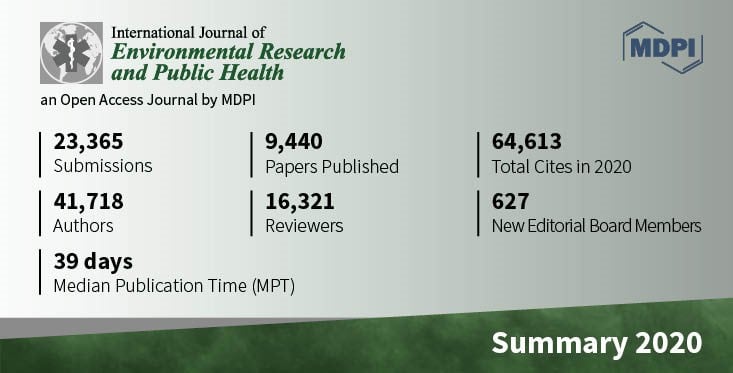
In 2020, we received 23,365 new submissions, with an annual growth of 85.88% and published 9440 papers, an increase of 78.28%. The median processing time (from submission to publication online) was 39 days in 2020. A total of 627 new editorial board members have joined us, and the number of editorial board members increased to 1440. There are also 695 topics editors and 506 reviewer board members who newly joined, with increasing rates of 288% and 158%, respectively. We now have 15,228 subscribers in total.
IJERPH has been expanding its scope with seven new sections: Traumas; Nursing; Adolescents; Disabilities; Reproductive Health; Sport and Health; and Skin Health and with its intensively cited COVID-19-related articles, the journal will continue to attract more and more authors from all over the world who appreciate its very efficient peer review and publishing processes.
High Altimetric Papers
Global Health
Airborne Transmission Route of COVID-19: Why 2 Meters/6 Feet of Inter-Personal Distance Could Not Be Enough
Leonardo Setti et al.
Exercise and Health
Wearing of Cloth or Disposable Surgical Face Masks has no Effect on Vigorous Exercise Performance in Healthy Individuals
Keely Shaw et al.
Environmental Health
Global to USA County Scale Analysis of Weather, Urban Density, Mobility, Homestay, and Mask Use on COVID-19
Sajad Jamshidi et al.
Mental Health
Nutritional Factors, Physical Health and Immigrant Status Are Associated with Anxiety Disorders among Middle-Aged and Older Adults: Findings from Baseline Data of The Canadian Longitudinal Study on Aging (CLSA)
Karen M. Davison et al.
Mental Health
Immediate Psychological Responses and Associated Factors during the Initial Stage of the 2019 Coronavirus Disease (COVID-19) Epidemic among the General Population in China
Cuiyan Wang et al.
Collections/Special Issues
IJERPH runs Special Issues to create collections of papers on specific topics. The aim is to build a community of authors and readers to discuss the latest research and develop new ideas and research directions. Special Issues are led by guest editors who are experts in the subject and oversee the editorial process for papers. Papers published in a Special Issue will be collected together on a dedicated page of the journal website.
Hot Special Issues
Adult Psychiatry
Sports and Health
Occupational Health Psychology
Measurement and Evaluation in Physical Education, Physical Activity and Sports
Rethinking Work in the Digital Era to Protect the Environment and Promote Health
Open Calls
Topical Collection "Aging and Public Health"
edited by Matthew Lee Smith and Marcia G. Ory
Topical Collection "2nd Edition of Achieving Environmental Health Equity: Great Expectations"
edited by Timothy E. Ford and Margaret J. Eggers
Topical Collection "COVID-19 Research"
edited by Paul B. Tchounwou
Read full list of call for papers: https://www.mdpi.com/journal/ijerph/special_issues
On behalf of the editorial team, we would like to express our gratitude to the Editor-in-Chief of IJERPH, all Section Editors-in-Chief and Editorial Board Members, as well as to the Guest Editors of Special Issues, Topic Board Members, and Reviewer Board Members, all of whom have ensured the continued success of the journal through their hard work and diligence.
In 2021, IJERPH will continue to contribute to academic exchange and sharing of knowledge.
15 December 2020
MDPI adopts C4DISC principles to improve diversity and inclusion in scholarly communications
MDPI is proud to adopt the principles of the Coalition for Diversity & Inclusion in Scholarly Communications (C4DISC) to support building equity, inclusion, diversity, and accessibility in scholarly communications.
The C4DISC represents organizations and individuals working in scholarly communications and is focused on addressing issues of diversity and inclusion within the publishing industry.

MDPI’s Managing Editors encourage the Editors-in-Chief and Associate Editors to appoint diverse expert Editorial Boards. This is also reflective in our multi-national and inclusive workplace. We are proud to create equal opportunities without regard to gender, ethnicity, geographic location, sexual orientation, age, disability, political beliefs, religion, or socio-economic status. There is no place for discrimination in our workplace and editors of MDPI journals are to uphold these principles in high regard.
Representatives from C4DISC meet monthly, and have started to implement initiatives to shed light and improve on the lack of diversity in scholarly communications. Some of the initiatives include developing a joint statement of principles; conducting market research; providing training resources, best practices, toolkits, and documentation for our collective memberships; and establishing outreach programs, curricula, events, and publications.
The Coalition is committed to:
- eliminating barriers to participation, extending equitable opportunities across all stakeholders, and ensuring that our practices and policies promote equitable treatment and do not allow, condone, or result in discrimination;
- creating and maintaining an environment that respects diverse traditions, heritages, and experiences;
- promoting diversity in all staff, volunteers, and audiences, including full participation in programs, policy formulation, and decision-making;
- raising awareness about career opportunities in our industries to groups who are currently underrepresented in the workforce;
- supporting our members in achieving diversity and inclusion within their organizations.
14 December 2020
Article Layout and Templates Revised for Future Volumes
At MDPI we have slightly revised the layout for articles to be published in the 2021 Volume, starting at the end of December 2020. As of today, the article templates available for download on ‘Instructions for Authors’ pages have been updated.
The most noticeable change can be found on the first page of the article, where a left-hand column has been created to include the following front matter elements: (i) the recommended citation style for the article, (ii) the publishing history, (iii) as well as the Creative Commons Attribution license used (iv) a standard note regarding affiliations. At the same time, the extra spacing on the left means the authors’ affiliations are now more clearly set apart than before. Other front matter key elements such as journal logo, article type, article title, authors, abstract and keywords remain unchanged.
The blank column on the left runs through all pages in an article; as a result, the main text is slightly more condensed, which improve reader friendliness for smaller screens. Small figures/tables are aligned on the left with standard indenture, while large figures/tables are centered and covering the full width of the page. The revised layout was applied in the article pictured below, to serve as an example:
1) Information is displayed in the left information bar.
2) In the main text, there is a blank column on the left.
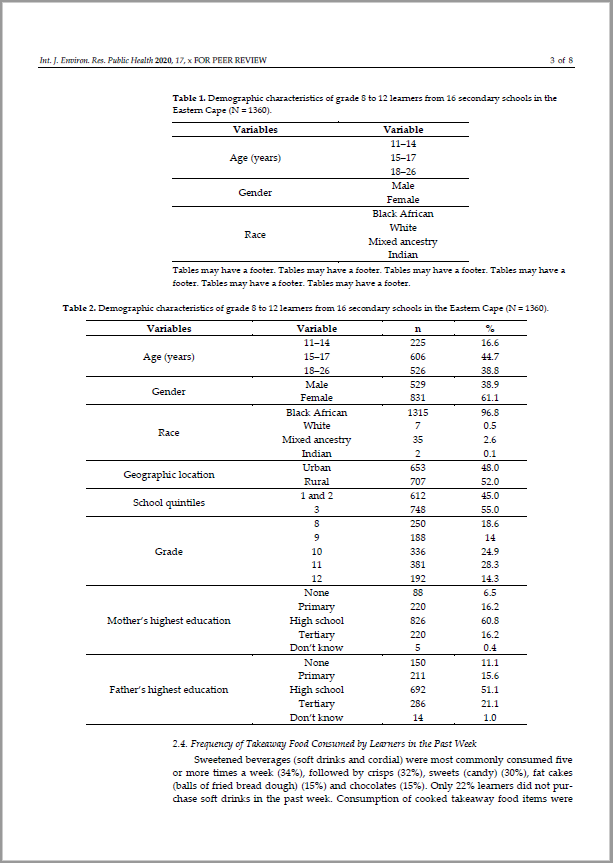
3) Small tables/figures are aligned on the left, large tables/figures are centered.
11 December 2020
2020 "Highly Cited Researchers" on MDPI Journal's Editorial Boards
We are pleased to acknowledge that many academic editors who have made an impact on MDPI journals as editorial board members, editors-in-chief, or section editors, are recognized as 2020 Highly Cited Researchers by Clarivate.
Highly Cited Researchers highlights the top 1% of researchers, by citations, in one or more of the 22 fields used in Clarivate Analytics Essential Science Indicators. We offer our congratulations to 279 academic editors of MDPI journals who were recognized as the most influential scholars in their fields in 2020.
Adams, Dave Agarwal, Ravi P. Ahn, Choon Ki Ahn, Myung-Ju Albrecht, Randy A. Andersson, Dan I. Anker, Stefan D. Apergis, Nicholas Ariga, Katsuhiko Artaxo, Paulo Balsamo, Gianpaolo Barba, Francisco J. Benediktsson, Jon Atli Benelli, Giovanni Bhatnagar, Amit Bialystok, Ellen Blaabjerg, Frede Blay, Jean-Yves Bogers, Marcel Bolton, Declan J. Boyer, Cyrille Brocca, Luca Bruix, Jordi Buhalis, Dimitrios Burdick, Jason A. Byrd, John C. Cabeza, Luisa F. Cabrerizo-Lorite, Francisco Javier Cai, Jianchao Calhoun, Vince D. Cantu, Robert C. Cerqueira, Miguel Chang, Jo-Shu Chau, Kwok-wing Chemat, Farid Chen, Jianmin Chen, Jun Chen, Min Chen, Shaowei Chen, Wei Chen, Wei-Hsin Chen, Xiaofeng Chen, Yangkang Chen, Zhi-Gang Chiclana, Francisco Corella, Dolores Cortes, Javier Cortes, Jorge Cummings, Kenneth Michael Dai, Shifeng Decker, Eric A. DePinho, Ronald A. Dimopoulos, Meletios-Athanasios Dincer, Ibrahim Du, Yihong Dupont, Didier Edwards, David Ellahi, Rahmat Ellis, Erle C. ElMasry, Gamal Esteller, Manel Estruch, Ramón Fang, Chuanglin Fasano, Alessio Fernandez-Lafuente, Roberto Ferreira, Isabel Fortino, Giancarlo Galluzzi, Lorenzo Galvano, Fabio Gandomi, Amir H. Gandomi, Amir H. Gao, Bin Gao, Feng Gao, Wei Garbe, Claus García, Hermenegildo Geschwind, Daniel H. Giampieri, Francesca Giralt, Sergio A. Glanz, Karen Goldewijk, Kees Klein Gössling, Stefan Govindan, Kannan Granato, Daniel Grosso, Giuseppe Grosso, Giuseppe Guerrero, Josep M. Haase, Dagmar Hagger, Martin S. Hamblin, Michael R. Han, Heesup Jankovic, Joseph Janotti, Anderson |
Jiang, Hai-Long Kalaji, Hazem M. Kalantar-Zadeh, Kourosh Kaner, Richard B. Karimi, Hamid Reza Kataoka, Kazunori Keesstra, Saskia Kepp, Oliver Kerminen, Veli-Matti Keyzers, Robert A. Khademhosseini, Ali Khan, Nafees A. Kim, Ki-Hyun Klemeš, Jiří Jaromír Klenk, Hans-Peter Konopleva, Marina Y. Krammer, Florian Krebs, Frederik C. Kroemer, Guido Kudo, Masatoshi Kurths, Juergen Kurzrock, Razelle Kuznetsov, Nikolay V. Kyrpides, Nikos C. La Vecchia, Carlo Lai, Yuekun Lam, James Lancellotti, Patrizio Lee, Sangmoon Leung, Victor C. M. Li, Jinghong Li, Yurui Lindahl, José M. Merigó Lip, Gregory Y. H. Loh, Xian Jun Long, Hualou Lund, Henrik Luo, Jingshan Luque, Rafael Lyons, Timothy W. Ma, Jun Ma, Wen-Xiu Ma, Yanming Maeda, Keisuke Makarova, Kira Mantovani, Alberto Martín-Belloso, Olga Martinoia, Enrico Marzband, Mousa Masclaux-Daubresse, Celine Masson, Patrick Mateos, María Victoria Mathiesen, Brian Vad Matyjaszewski, Krzysztof McArthur, Grant A. McCauley, Darren Medlock, Jolyon M. Melero, Ignacio Mezzetti, Bruno Miroshnichenko, Andrey E. Moran, Daniel Mueller, Lukas A. Mueller-Roeber, Bernd Naushad, Mu Nemeroff, Charles B. Nieto, Juan J. O'Donnell, Colm Ogino, Shuji Olabi, Abdul-Ghani O'Regan, Donal Orsini, Nicola Oswald, Isabelle P. Ozcan, Aydogan Pahl-Wostl, Claudia Pang, Huan Payne, James E. Peng, Shushi Perc, Matjaz Perez-Alvarez, Jose Angel Piquero, Alex R. Ploss, Alexander Postolache, Mihai Pradhan, Biswajeet Prinsep, Michele R. Qian, Dong Qu, Xiaogang Reiter, Russel J. Riahi, Keywan Richter, Andreas Rignot, Eric Robert, Caroline Ros, Emilio Rosell, Rafael |
Rosen, Marc A. |
The full list of 2020 Highly Cited Researchers can be accessed on https://recognition.webofsciencegroup.com/awards/highly-cited/2020/
--- Highly Cited Researchers (HCR) is a Clarivate product.
22 September 2020
The 3rd International Electronic Conference on Environmental Research and Public Health – Open for Submission

We would like to advise you that the schedule of the 3rd International Electronic Conference on Environmental Research and Public Health—Public Health Issues in the Context of the COVID-19 Pandemic (ECERPH-3) has been updated:
Time Schedule
Deadline for Abstract Submission: 10 December 2020
Notification of Acceptance: 17 December 2020
Full Paper Submission Deadline: 4 January 2021
Conference Open: 11–25 January 2021
We need to look at the pandemic from many sides, and we think we have covered many important aspects with your help in the different sessions of this conference. We aim to have a discussion relating to infectious disease, global health, mental health, reproductive health, occupational health, and environmental exposure, etc. We hope to encourage discovery across the discipline as we cover the following broad themes in sessions A–K, as listed below:
Session A: Infectious Disease Epidemiology
Session B: Environmental Exposures and Health
Session C: Mental Health
Session D: Children’s Health
Session E: Women’s Health
Session F: Exercise and Health
Session G: Health Economics
Session H: Occupational Safety and Health
Session I: Public Health Statistics and Risk Assessment
Session J: Oral Health (Newly added session)
Session K: Posters (Newly added session)
We proudly invite the global community of scholars to join ECERPH-3 to present their latest public health research and development and share novel ideas on COVID-19 topics. Thanks to the flexibility of our innovative electronic platform, you are welcome both to upload and present your work and to attend the conference completely free of charge. We have also created a Special Issue (https://www.mdpi.com/journal/ijerph/special_issues/IECERPH-3) for selected conference papers in our journal International Journal of Environmental Research and Public Health (ISSN 1660-4601, IF 2.849, https://www.mdpi.com/journal/ijerph). Papers submitted to this Special Issue, if accepted for publication, will receive a 20% discount on the Article Processing Charges.
ECERPH-3 offers you the opportunity to participate in an international scholarly conference without the concerns and expense of travelling—all you need is to have access to the Internet. During the conference period, you will be able to upload papers, posters, presentations (including videos) and comment on other presentations, and otherwise engage with fellow scholars in real time. In this way, the conference offers a novel opportunity to exchange opinions and views within the scholarly community and to discuss the papers and latest research in a discussion forum.We would like to invite those of you who have not yet submitted an abstract to do so up until 10 December 2020. Please refer to https://ecerph-3.sciforum.net/ for the Instructions for Authors.
We are looking forward to receiving your research papers and to welcoming you to this 3rd International Electronic Conference on Environmental Research and Public Health.
Please do not hesitate to contact us if you have any questions.
Kind regards,
Conference Secretariat
Ms. Cici Zhou
Ms. Rainy Han
E-Mail: [email protected]
17 September 2020
Recruiting Editors for IJERPH
IJERPH is recruiting Editorial Board members for the following eighteen new sections:
- Health Economics
- Climate Change and Health
- Infectious Disease Epidemiology
- Mental Health
- Digital Health
- Children’s Health
- Health Communication
- Public Health Statistics and Risk Assessment
- Environmental Microbiology
- Oral Health
- Exercise and Health
- Traumas
- Nursing
- Adolescents
- Skin Health
- Disabilities
- Reproductive Health
- Sport and Health
These sections will expand the Editorial Board and cover areas that are less represented by the current team. If you are interested in this position or know of potential candidates to recommend, please contact us by 31 December 2020.
IJERPH (ISSN 1660-4601) covers Environmental Sciences and Engineering, Public Health, Environmental Health, Occupational Hygiene, Health Economic and Global Health Research, and related topics. It was awarded a 2019 Journal Impact Factor of 2.849. The website of IJERPH can be accessed here.
As an Editorial Board member, you have the following responsibilities:
– To make decisions on whether a manuscript can be accepted or not based on the reports we collect;
– To edit a Special Issue on a topic related to your research interests when it is convenient for you;
– To promote IJERPH and increase its visibility at related academic conferences.
To apply or request further information, please contact the IJERPH Editorial Office ([email protected]).
27 July 2020
International Journal of Environmental Research and Public Health Receiving 2019 Updated Impact Factor of 2.849
We are pleased to announce that the International Journal of Environmental Research and Public Health received an updated Journal Impact Factor of 2.849 in the recent release of the Journal Citation Reports®. The journal's 5-Year Impact Factor is 3.127. IJERPH now ranks 58/193 (Q2) in the category “Public, Environmental, and Occupational Health” (SCIE edition), 32/170 (Q1) in “Public, Environmental, and Occupational Health” (SSCI edition), and 105/265 (Q2) in “Environmental Sciences”.
Evolution of Impact Factor, Citations, and Publications for IJERPH:
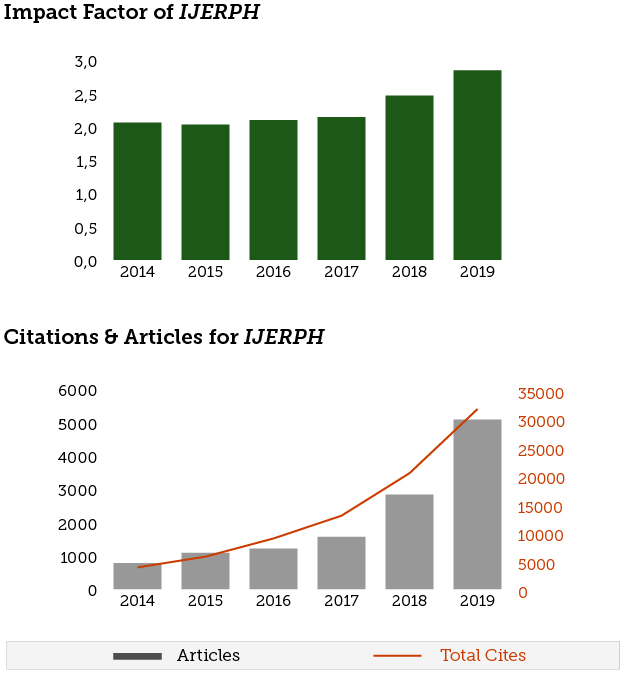
Source: data according to Journal Citation Reports®, 2019 release, a Clarivate Analytics product.
24 July 2020
Recruiting Editors for IJERPH
IJERPH is recruiting Editorial Board members for the following eighteen new sections:
- Health Economics
- Climate Change and Health
- Infectious Disease Epidemiology
- Mental Health
- Digital Health
- Children’s Health
- Health Communication
- Public Health Statistics and Risk Assessment
- Emerging Contaminants
- Environmental Analysis and Methods
- Environmental Microbiology
- Environmental Remediation and Management
- Environment and Applied Ecology
- Industrial Ecology
- Environmental Chemistry and Technology
- Health Informatics
- Oral Health
- Exercise and Health
These sections will expand the Editorial Board and cover areas that are less represented by the current team. If you are interested in this position or know of potential candidates to recommend, please contact us by 31 December 2020.
IJERPH (ISSN 1660-4601) covers Environmental Sciences and Engineering, Public Health, Environmental Health, Occupational Hygiene, Health Economic and Global Health Research, and related topics. It was awarded a 2019 Journal Impact Factor of 2.849. The website of IJERPH can be accessed here.
As an Editorial Board member, you have the following responsibilities:
– To make decisions on whether a manuscript can be accepted or not based on the reports we collect;
– To edit a Special Issue on a topic related to your research interests when it is convenient for you;
– To promote IJERPH and increase its visibility at related academic conferences.
To apply or request further information, please contact the IJERPH Editorial Office ([email protected]). We look forward to hearing from you soon.
10 July 2020
Meet Us at the Society for Neurosciences’ 50th Annual Meeting (Neuroscience 2020), Washington, USA, 24–28 October 2020
MDPI will be attending the conference Neuroscience 2020, which will be hosted in Washington, USA, 24–28 October 2020.
SfN’s 50th annual meeting is the premier venue for the presentation of emerging science in the field of neurosciences, where one can learn from experts, forge collaborations with peers, explore new tools and technologies, and advance their career.
The following MDPI journals will be represented:
- Brain Sciences (leading journal)
- JCM
- Medicina
- Genes
- Children
- Cancers
- Behavioral Sciences
- Cells
- IJERPH
- Disease
- Biomedicines
- JPM
- Pathogens
- Healthcare
- IJMS
- Psych
- Pharmaceuticals
- Clocks&Sleep
- Jounal of Intelligence
- Pharmaceutics
If you are attending this conference, please feel free to stop by our booth (Booth #208). Our delegates look forward to meeting you in person, to answer any questions you may have. For more information about the conference, please visit:
9 July 2020
Open Access Agreement Between Jisc Collections and MDPI
We are delighted to announce the establishment of our Open Access agreement with Jisc Collections, which will allow UK institutions to benefit from access to article processing charge (APC) discounts and streamlined payment workflows.
All institutions participating in the agreement will also gain access to the MDPI online submission system where they can find full article metadata and pricing information for easy identification and additional transparency.
Eligible authors affiliated with the participating institutions are prompted to choose the corresponding Institutional Open Access Program (IOAP) when they submit an article via our online submission system.

About Jisc
Jisc's vision is for the UK to be the most digitally advanced education and research nation in the world. At its heart is the super-fast national research and education network, Janet, with built-in cyber security protection. Jisc also provides technology solutions for its members (colleges, universities and research centres) and customers (public sector bodies), helps members save time and money by negotiating sector-wide deals and provides advice and practical assistance on digital technology. Jisc is funded by the UK higher and further education and research funding bodies and member institutions.
For more information, contact [email protected].
About MDPI
MDPI is a publisher of fully peer-reviewed, Open Access journals with a focus on thorough and rapid editorial processing. Its aim is to ensure that high-quality research is verified and made available to the research community as quickly as possible. MDPI stands at the forefront of the Open Access movement, having launched its first online journal Molecules in 1996. Today, MDPI is a leader in Open Access publishing with over 250 journals across all research disciplines, and all content published under a Creative Commons Attribution License (CC BY).
For any questions about this agreement, please contact the MDPI IOAP team at [email protected].
29 June 2020
Updated Impact Factors Released in the Journal Citation Reports (Clarivate)
The updated citation metrics have been released in the Journal Citation Reports (JCR), published by Clarivate. The recent release of the JCR includes seventy-one MDPI titles. Out of these, 18 titles are newcomers, receiving a first Journal Impact Factor which is based on citation activity in 2019: Actuators, Agriculture, Biology, Biomedicines, Biosensors, Chemosensors, Children, Healthcare, Journal of Fungi, Journal of Personalized Medicine (JPM), Land, Life, Magnetochemistry, Membranes, Pharmaceuticals, Photonics, Separations and Toxics.
- Out of the previously listed journals, a total of 72 percent boast an increased Impact Factor.
- 25 journals are ranked among the top 25% of journals in at least one of the categories they are ranked for.
- Articles published in 2019 in MDPI journals account for approximately 17 percent of of articles published in gold Open Access journals covered in the Science Citation Index Expanded (SCIE) and Social Sciences Citation Index (SSCI).
First Impact Factors
| Journal | Impact Factor | Rank | Category | Details |
| Actuators | 1.957 | 31/64 (Q2) | • Instruments & Instrumentation | Link |
| Agriculture | 2.072 | 25/91 (Q2) | • Agronomy | Link |
| Biology | 3.796 | 19/93 (Q1) | • Biology | Link |
| Biomedicines | 4.717 | 30/138 (Q1) 36/270 (Q1) |
• Medicine, Research & Experimental • Pharmacology & Pharmacy |
Link |
| Biosensors | 3.240 | 24/86 (Q2) | • Chemistry, Analytical | Link |
| Chemosensors | 3.108 | 16/64 (Q1) 27/86 (Q2) 13/27 (Q2) |
• Instruments & Instrumentation • Chemistry, Analytical • Electrochemistry |
Link |
| Children | 2.078 | 50/128 (Q2) | • Pediatrics | Link |
| Healthcare | 1.916 | 62/102 (Q3) 45/87 (Q3) |
• Health Care Sciences & Services (SCIE) • Health Policy & Services (SSCI) |
Link |
| Journal of Fungi | 4.621 | 5/29 (Q1) 31/135 (Q1) |
• Mycology • Microbiology |
Link |
| Journal of Personalized Medicine | 4.433 | 24/165 (Q1) 10/102 (Q1) |
• Medicine, General & Internal • Health Care Sciences & Services |
Link |
| Land | 2.429 | 58/123 (Q2) | • Environmental Studies (SSCI) | Link |
| Life | 2.991 | 26/93 (Q2) 109/267 (Q2) |
• Biology • Microbiology |
Link |
| Magnetochemistry | 1.947 | 22/45 (Q2) 109/159 (Q3) 201/314 (Q3) |
• Chemistry, Inorganic & Nuclear • Chemistry, Physical • Materials Science, Multidisciplinary |
Link |
| Membranes | 3.094 | 53/143 (Q2) 129/314 (Q2) 23/89 (Q2) |
• Engineering, Chemical • Materials Science, Multidisciplinary • Polymer Science |
Link |
| Pharmaceuticals | 4.286 | 49/270 (Q1) | • Pharmacology & Pharmacy | Link |
| Photonics | 2.140 | 48/97 (Q2) | • Optics | Link |
| Separations | 1.900 | 53/86 (Q3) | • Chemistry, Analytical | Link |
| Toxics | 3.271 | 32/92 (Q2) 92/265 (Q2) |
• Toxicology • Environmental Sciences |
Link |
Updated Impact Factors
| Journal | Impact Factor | Rank | Category | Details |
| Agronomy | 2.603 | 18/91 (Q1) 65/234 (Q2) |
• Agronomy • Plant Sciences |
Link |
| Animals | 2.323 | 10/63 (Q1) 14/142 (Q1) |
• Agriculture, Dairy & Animal Science • Veterinary Sciences |
Link |
| Antibiotics | 3.893 | 23/93 (Q1) 64/270 (Q1) |
• Infectious Diseases • Pharmacology & Pharmacy |
Link |
| Antioxidants | 5.014 | 10/139 (Q1) 56/297 (Q1) 7/61 (Q1) |
• Food Science & Technology • Biochemistry & Molecular Biology • Chemistry, Medicinal |
Link |
| Applied Sciences | 2.474 | 161/314 (Q3) 32/91 (Q2) 88/177 (Q2) 62/154 (Q2) |
• Materials Science, Multidisciplinary • Engineering, Multidisciplinary • Chemistry, Multidisciplinary • Physics, Applied |
Link |
| Atmosphere | 2.397 | 48/93 (Q3) | • Meteorology & Atmospheric Sciences | Link |
| Biomolecules | 4.082 | 98/297 (Q2) | • Biochemistry & Molecular Biology | Link |
| Brain Sciences | 3.332 | 113/271 (Q2) | • Neurosciences | Link |
| Cancers | 6.126 | 37/244 (Q1) | • Oncology | Link |
| Catalysts | 3.520 | 65/159 (Q2) | • Chemistry, Physical | Link |
| Cells | 4.366 | 70/195 (Q2) | • Cell Biology | Link |
| Coatings | 2.436 | 10/21 (Q2) | • Materials Science, Coatings & Films | Link |
| Crystals | 2.404 | 10/26 (Q2) 165/314 (Q3) |
• Crystallography • Materials Science, Multidisciplinary |
Link |
| Diagnostics | 3.110 | 39/165 (Q1) | • Medicine, General & Internal | Link |
| Diversity | 1.402 | 119/168 (Q3) | • Ecology | Link |
| Electronics | 2.412 | 125/266 (Q2) | • Engineering, Electrical & Electronic | Link |
| Energies | 2.702 | 63/112 (Q3) | • Energy & Fuels | Link |
| Entropy | 2.494 | 33/85 (Q2) | • Physics, Multidisciplinary | Link |
| Foods | 4.092 | 27/139 (Q1) | • Food Science & Technology | Link |
| Forests | 2.221 | 17/68 (Q1) | • Forestry | Link |
| Genes | 3.759 | 53/177 (Q2) | • Genetics & Heredity | Link |
| Insects | 2.220 | 18/101 (Q1) | • Entomology | Link |
| International Journal of Environmental Research and Public Health (IJERPH) | 2.849 | 58/193 (Q2) 32/170 (Q1) 105/265 (Q2) |
• Public, Environmental & Occupational Health (SCIE) • Public, Environmental & Occupational Health (SSCI) • Environmental Sciences (SCIE) |
Link |
| International Journal of Molecular Sciences (IJMS) | 4.556 | 74/297 (Q1) 48/177 (Q2) |
• Biochemistry & Molecular Biology • Chemistry, Multidisciplinary |
Link |
| ISPRS International Journal of Geo-Information (IJGI) | 2.239 | 31/50 (Q3) 18/30 (Q3) |
• Geography, Physical • Remote Sensing |
Link |
| Journal of Clinical Medicine | 3.303 | 36/165 (Q1) | • Medicine, General & Internal | Link |
| Journal of Marine Science and Engineering | 2.033 | 31/66 (Q2) | • Oceanography | Link |
| Marine Drugs | 4.073 | 16/61 (Q2) | • Chemistry, Medicinal | Link |
| Materials | 3.057 | 132/314 (Q2) | • Materials Science, Multidisciplinary | Link |
| Mathematics | 1.747 | 28/324 (Q1) | • Mathematics | Link |
| Medicina | 1.205 | 107/165 (Q3) | • Medicine, General & Internal | Link |
| Metabolites | 4.097 | 95/297 (Q2) | • Biochemistry & Molecular Biology | Link |
| Metals | 2.117 | 18/79 (Q1) 185/314 (Q3) |
• Metallurgy & Metallurgical Engineering • Materials Science, Multidisciplinary |
Link |
| Micromachines | 2.523 | 56/92 (Q3) 23/64 (Q2) |
• Nanoscience & Nanotechnology • Instruments & Instrumentation |
Link |
| Microorganisms | 4.152 | 37/135 (Q2) | • Microbiology | Link |
| Minerals | 2.380 | 6/21 (Q2) 11/30 (Q2) |
• Mining & Mineral Processing • Mineralogy |
Link |
| Molecules | 3.267 | 70/177 (Q2) 141/297 (Q2) |
• Chemistry, Multidisciplinary • Biochemistry & Molecular Biology |
Link |
| Nanomaterials | 4.324 | 89/314 (Q2) 42/103 (Q2) |
• Materials Science, Multidisciplinary • Nanoscience & Nanotechnology |
Link |
| Nutrients | 4.546 | 17/89 (Q1) | • Nutrition & Dietetics | Link |
| Pathogens | 3.018 | 65/135 (Q2) | • Microbiology | Link |
| Pharmaceutics | 4.421 | 44/270 (Q1) | • Pharmacology & Pharmacy | Link |
| Plants | 2.762 | 58/234 (Q1) | • Plant Sciences | Link |
| Polymers | 3.426 | 16/89 (Q1) | • Polymer Science | Link |
| Processes | 2.753 | 59/143 (Q2) | • Engineering, Chemical | Link |
| Remote Sensing | 4.509 | 9/30 (Q2) | • Remote Sensing | Link |
| Sensors | 3.275 | 22/86 (Q2) 77/266 (Q2) 15/64 (Q1) |
• Chemistry, Analytical • Engineering, Electrical & Electronic • Instruments & Instrumentation |
Link |
| Sustainability | 2.576 | 120/265 (Q2) 26/41 (Q3) 53/123 (Q2) 6/8 (Q3) |
• Environmental Sciences (SCIE) • Green & Sustainable Science & Technology (SCIE) • Environmental Studies (SSCI) • Green & Sustainable Science & Technology (SSCI) |
Link |
| Symmetry | 2.645 | 29/71 (Q2) | • Multidisciplinary Sciences | Link |
| Toxins | 3.531 | 21/92 (Q1) 34/139 (Q1) |
• Toxicology • Food Science & Technology |
Link |
| Universe | 1.752 | 18/29 (Q3) 42/68 (Q3) |
• Physics, Particles & Fields • Astronomy & Astrophysics |
Link |
| Vaccines | 4.086 | 57/158 (Q2) 50/138 (Q2) |
• Immunology • Medicine, Research & Experimental |
Link |
| Viruses | 3.816 | 12/37 (Q2) | • Virology | Link |
| Water | 2.544 | 31/94 (Q2) | • Water Resources | Link |
Source: Clarivate 2020, InCites Journal Citation Reports®.
13 May 2020
COVID-19 Academic Resources Center

Since 1996, MDPI has been committed to supporting the research community by providing the latest research freely available and making relevant and useful research available as quickly as possible. The world is current experiencing a pandemic of COVID-19, and researchers are working extremely hard to understand it and find a cure.
The values MDPI holds strongly are particularly important at the moment, and we will continue to publish relevant, peer-reviewed research as quickly as possible in open access format. This means that it will immediately be available for researchers, health professionals, and the general public to read, distribute, and reuse. We believe that scientific advancements will be crucial to overcoming this pandemic, and will do everything we can to support researchers working looking for solutions.
COVID-19 Academic Resources Center contains a variety of information related to COVID-19 available from MDPI, including journal articles, special issues, and preprints, among others.
For more information, please visit: https://www.mdpi.com/covid-19
9 April 2020
Free Open Platforms to Support Academics During the COVID-19 Pandemic
As a leading Open Access publisher, MDPI is committed to fostering open scientific exchange in all forms across all disciplines. Due to the outbreak of COVID-19, many researchers have to stay at home and many academic conferences have been cancelled or postponed. In light of these changes, MDPI has adopted numerous initiatives that may help accelerate scientific exchange and provide support to the academics during this period.
Scholarly Community—Encyclopedia
Encyclopedia is an online reference created and curated by active scholars. It aims to highlight the latest research results as well as providing benchmark information for researchers and the general public interested in accurate and advanced knowledge on specific topics.
Comprehensive and Free Literature Database—Scilit
Scilit is a comprehensive, free database for scientists that uses a new method to collate data and index scientific material. Our crawlers extract the latest data from CrossRef and PubMed on a daily basis. This means that newly published articles are immediately added to Scilit.
Display Academic Achievements—SciProfiles
SciProfiles is an innovative social network for researchers and scholars that is developed by MDPI. In line with our broad mission, the purpose of SciProfiles is to accelerate discovery and innovation by facilitating immediate access to research results and providing opportunities for academic networking.
Organize and Participate in Conferences Online—Sciforum
Sciforum is an event planning platform that supports open science by offering the opportunity to host and participate in academic conferences. It provides an environment for scholarly exchange, discussion of topics of current interest, building of networks, and establishing collaborations.
Post Early Versions of Research Outputs—Preprints
Preprints is a platform dedicated to making early versions of research outputs permanently available and citable. We post original research articles and comprehensive reviews, and papers can be updated by authors at any time. Content on Preprints is not peer-reviewed, and feedback can be received from readers.
***
MDPI remains committed to open science and open data and has signed a statement, along with more than thirty scholarly publishers, showing our intention to facilitate sharing of new research findings as early on as possible. The initiative sees publishers collectively removing barriers to new research, in the face of a global healthcare crisis.
25 March 2020
MDPI Comment on the COVID-19 Virus
The world is currently suffering from a global pandemic of the corona virus COVID-19. MDPI expresses its sympathies for all of those affected by the virus and stands in solidarity with medical staff and researchers treating patients and searching for scientific solutions.
MDPI has previously published papers covering corona viruses in addition to new papers on the current outbreak, see all papers here. In particular, Viruses has published a number of Special Issues and papers on the topic (see here, here, and here) as well as a forthcoming Special Issue.
Alongside journal articles, MDPI has been a strong supporter of preprints, which are increasingly being used to rapidly disseminate the latest research, and we run the preprint server Preprints.org. Our database of research articles, Scilit, is free to use and covers all publishers including preprint servers. New papers are often in search results within hours of publication and users can set up alerts for new papers.
Our main priority during this period has been the health and safety of staff, and we continue to allow staff to work at home and closely monitor the situation in all locations in which we work. Despite the restrictions, we continue to provide a full publication service and, by close collaboration with our editorial boards and making use our in-house teams, ensure that there are no unnecessary delays in publishing vital research. Fast and open publication has always been at the core of MDPI values and is now more important than ever.
We hope that a solution to the current situation will emerge soon. In the meantime, we will do our best to continue communicating vital research in all fields.
18 March 2020
MDPI Co-Signed Position Statement on Transformative Agreements
The advantages of the open access model of scientific publishing are being increasingly recognized in the scientific community. It allows new scientific evidence to be accessed from the moment of publication for free by anyone around the globe, boosting the impact of new research. In response, many funders, libraries and universities have been adopting new principles to accelerate the transition to open access.
Recently, “transformative agreements” have been negotiated between traditional publishers and various institutions. While increasing the number of open access papers, these agreements lack binding commitments to a full transition to open access, their conditions vary across different regions, and access is still limited for many users.
MDPI is a co-signatory of the recent position statement raising concerns about potential downsides of transformative agreements and how they may delay a full transition to open access. The statement highlights that these models “risk perpetuating current limitations on access, transparency and market competitiveness, while simultaneously facilitating excessive charges on the public purse”.
As a pioneering open access journal publisher, MDPI is the first to promote the importance of science being made available to everyone. Our peer-reviewed journals, covering diverse academic disciplines, are fully accessible to the public free of charge under a Creative Commons Attribution License (CC BY). This is why, along with other open access publishers, MDPI is a proud signatory of the position paper and is committed to contributing to the replacement of weak transitional agreements with “agreements with publishers that are already fully committed to open science and who offer full, immediate and transparent Open Access”.
Read the position paper here
16 March 2020
Encyclopedia Outstanding Contributor Awards 2020 - Open for Application
We are pleased to announce that Encyclopedia will be awarding five Outstanding Contributor Awards for researchers in 2020. The nominations and applications will be assessed by an Evaluation Committee consisting of senior scholars from the Encyclopedia Editorial Board.
Prize for Winners
- An official certificate;
- A cash award of 500 CHF or an MDPI discount voucher of 800 CHF.
Application Deadline
31 December, 2020 (Please send your application email with a list of all entries you contributed to our office before the deadline: [email protected])
Candidate Requirements
- Have a Ph.D. degree;
- Have more than three qualified entries published in Encyclopedia in 2020.
Evaluation Standards
- Number of entries published in Encyclopedia in 2020;
- Quality of entries online (including length, figure quality, and novelty);
- Impact of entries (including the number of likes, discussion contents, views, and downloads).
If you are a researcher and have not yet contribute entries to Encyclopedia, please do not miss this chance to highlight your research results.
19 February 2020
Meet Us at American Thoracic Society (ATS) 2020 Congress in Philadelphia, PA, USA, 15–20 May 2020

MDPI will be attending the American Thoracic Society (ATS) 2020 Congress in Philadelphia, PA, USA, 15–20 May 2020.
The ATS International Conference is the home of pulmonary, critical care, and sleep professionals, from those in the earliest stages of their careers to those whose research or strides in clinical care has gained them international recognition. Each year, nearly 14,000 of these professionals choose to attend, present, and learn about the latest advances, meet with colleagues from around the world, and strike new collaborations. It is truly where today’s science meets tomorrow’s care.
This international conference is also multidisciplinary. Clinicians and researchers in many other fields attend the conference, thereby enriching conversations that lead to insights that ultimately improve patient care.
The following MDPI journals will be represented:
If you are also attending this conference, please feel free to stop by our booth (Booth 1101). Our delegates look forward to meeting you in person to answer any questions you may have. For more information about the conference, please visit: https://conference.thoracic.org.
11 October 2019
Introducing SciProfiles, an Academic Social Network
MDPI is pleased to announce the release of SciProfiles, its social network platform for researchers and scholars.
The purpose of SciProfiles is aligned with MDPI’s broad mission to accelerate discovery and innovation by facilitating immediate access to research results and to serve scholars and communities by providing opportunities for academic networking.

SciProfiles also ambitions to serve as a sustainable, transparent and community-driven research evaluation system aligned with the DORA principles (https://sfdora.org/). Through their scientific profiles, academics can highlight their contribution to research communities, and measure their impact on their field, beyond publication numbers and impact factors. SciProfiles is currently a beta version and will enrich to give researchers the possibility to highlight all of their contributions to science and their scientific communities as authors, reviewers, editors, conference organizers, conference panelists, conference keynote speakers, or even as lecturers or student mentors at their University.
The classic components of popular community social networks, including follower/following, classical metrics, endorsements and recommendations (https://www.mdpi.com/about/announcements/1690), comments (https://www.mdpi.com/about/announcements/1397) are or will be very soon highlighted in SciProfiles as open science contributions.
To help increase the impact and visibility of articles and their authors to an appropriate audience, the platform offers a NewsFeed that includes recommendations of relevant content based on interests, publication history, saved searches or colleagues’ recommendations.
SciProfiles’ avatars are now being integrated on several MDPI platforms, meaning that you will directly access researchers’ profiles from any of the MDPI platforms:
MDPI's journal publishing website: www.mdpi.com
MDPI's conference hosting and management website: www.sciforum.net
MDPI's pre-print website : www.preprints.org
MDPI's knowledge sharing website : www.encyclopedia.pub
MDPI's books store: www.mdpi.com/books
MDPI's literature database : www.scilit.net
SciProfiles aims to serve scientific communities at large. It can be embedded into third-party websites and also welcomes integration of data from third-parties.
Dr. Shu-Kun Lin: https://sciprofiles.com/profile/2
Dr. Franck Vazquez: https://sciprofiles.com/profile/FranckVazquez
Dr. Martyn Rittman: https://sciprofiles.com/profile/martynrittman
2 October 2019
Winners of the 2019 MDPI Writing Prize
We are delighted to announce the winners of the 2019 MDPI Writing Prize. Entrants were asked to write on the theme "Judging research: How should research and researchers be evaluated and rewarded?" We received a large number of excellent essays from PhD students and postdocs, and the process of shortlisting and choosing winners was not an easy one. The winners demonstrated excellent writing skills alongside interesting and thought-provoking ideas.

As last year, we will begin the process of collating all entries into a book that will be available in open access format. Alongside promoting good writing skills, we see the prize as a way to promote the voices of early career researchers within broader debates and policy discussions.
Congratulations to all of the participants and especially the winners. The winners are:
1st Prize (500 CHF):
Albin Nilsson (National Centre for Nuclear Research, Warsaw, Poland)
[Read here]
2nd Prize (250 CHF):
Qi Zhang (Shandong University, Jinan, China)
[Read here]
Igor Ogashawara (Indiana University, Indianapolis, US)
[Read here]
3rd Prize (100 CHF):
Margaret Sivapragasam (Universiti Teknologi Petronas, Perak, Malaysia)
[Read here]
Arvind Sharma (The University of Queensland, Gatton, Australia)
[Read here]
Jose Flores-Guerrero (University Medical Center Groningen, Groningen, The Netherlands)
[Read here]
The MDPI Writing Prize is an annual award supported by MDPI Author Services, which provides services including language editing, reformatting, plagiarism checks, and image editing.
20 September 2019
MDPI Now Gives Scholars the Possibility to Endorse and Recommend Articles

MDPI is pleased to announce the release of a new functionality giving the possibility for researchers and scholars to endorse, and formally recommend articles to their colleagues.
MDPI was an early signatory of the San Francisco Declaration on Research Assessment (https://sfdora.org/read/) which calls for improvement in how quality and impact of scholarly research outputs are evaluated, especially in moving beyond journal-based citation metrics (journal Impact Factor, Scopus Citescore, etc.).
MDPI supports the establishment of article-level impact metrics, including citations, views, downloads, and Altmetric scores. These measures serve as an impact indicator for research articles on a case–by-case basis, assessing paper on its own merit. However, these metrics are also subjective and can give a biased picture of the article impact: they do not directly reflect the quality or the intrinsic scientific value of the article.
In our view, community engagement with publications based on community-driven metrics can help to overcome this limitation. We have therefore launched an option for scholars to endorse articles, indicating their own assessment of its content and making a recommendation to their community. This follows our implementation of the open source Hypothesis commenting tool, which has been available for all articles published by MDPI for over a year (https://www.mdpi.com/about/announcements/1397). Both endorsement and commenting are available for all previously published and forthcoming MDPI articles.
In addition to potentially serving as a sustainable solution to article assessment, endorsements will help scientific communities to identify the most relevant articles, independently of the journal in which it was published.
The code for the endorsing functionality, which relies on DOIs and ORCIDs, will be made available on GitHub with an open source license.
Dr. Shu-Kun Lin, President and Founder
Dr. Franck Vazquez, Chief Scientific Officer
Dr. Martyn Rittman, Publishing Director
11 September 2019
Create an Entry in Encyclopedia to Get a 100 CHF Voucher in Publishing in MDPI Journals
Encyclopedia is a free online reference created and curated by active scholars. It aims to highlight the latest research results as well as provide a comprehensive record of scientific development. If you have any suggestions or questions, please feel free to contact us via [email protected].

12 August 2019
Recruiting Editors for IJERPH
IJERPH is recruiting Editorial Board members for the following eight new sections:
- Climate Change and Health
- Infectious Disease Epidemiology
- Mental Health
- Digital Health
- Children’s Health
- Women's Health
- Health Communication
- Toxicology and Public Health
These sections will expand the Editorial Board and cover areas that are less represented by the current team. If you are interested in this position or know of potential candidates to recommend, please contact us by 31 December 2019.
IJERPH (ISSN 1660-4601) covers Environmental Sciences and Engineering, Public Health, Environmental Health, Occupational Hygiene, Health Economic and Global Health Research, and related topics. It was awarded a 2018 Journal Impact Factor of 2.468. The website of IJERPH can be accessed here.
As an Editorial Board member, you have the following responsibilities:
– To make decisions on whether a manuscript can be accepted or not based on the reports we collect;
– To edit a Special Issue on a topic related to your research interests when it is convenient for you;
– To promote IJERPH and increase its visibility at related academic conferences.
To apply or request further information, please contact the IJERPH Editorial
Office ([email protected]). We look forward to hearing from you soon.
6 August 2019
Preprints Reaches 10,000 Posted Articles Milestone
We are pleased to announce that Preprints has passed the milestone of 10,000 posted preprints. We are delighted to have reached this after just over three years of operation. Our congratulations and thanks go to our authors and advisory board who have supported growth of the platform and been crucial to its operation.
You can find further details at https://www.preprints.org/announcement/show/37.
2 August 2019
DeepGreen Partnering with Publishers and Universities in Distributing Open Access Content to Institutional Repositories
Last week, the DeepGreen initiative in Germany started into an advanced test phase with the publishing partners S. Karger AG, SAGE Publishing, MDPI, Frontiers and De Gruyter, as well as 27 universities from all over Germany, from Hamburg University of Applied Sciences to University of Konstanz.
DeepGreen aims at lowering the barriers for open access publishing by automatically delivering metadata and full text publications from participating publishers to authorized repositories at German universities.
In preparation for a later live operation, the advanced test phase serves to gain experience with extensive data deliveries from publishers and also handling different repository software (including OPUS4, DSpace, EPrints, MyCoRe). DeepGreen thereby acts as a sophisticated platform, receiving articles published by authors affiliated with German universities and depositing these articles to respective university repositories, based on the affiliation metadata. For more information about DeepGreen: https://deepgreen.kobv.de
Karger AG has been a close cooperation partner of the DeepGreen consortium since 2016. S. Karger has more than 80 subscription-based and around 20 open access journals covering a wide spectrum in health science. DeepGreen will assign S. Karger articles to authorized institutions on the legal basis of German alliance and national licenses.
SAGE Publishing was founded by Sara Miller McCune in 1965 to support the dissemination of usable knowledge and educate a global community. SAGE publishes more than 1,000 journals and over 600 new books each year, spanning a wide range of subject areas. Our growing selection of library products includes archives, data, case studies and video. SAGE remains majority owned by our founder and after her lifetime will become owned by a charitable trust that secures the company’s continued independence. Principal offices are located in Los Angeles, London, New Delhi, Singapore, Washington DC and Melbourne. SAGE Publishing has been a close cooperation partner of DeepGreen since 2016.
MDPI is a scientific open access publisher and has been a partner of DeepGreen since 2017. MDPI comprises 205 peer-reviewed journals of various disciplines. All articles are published under a CC-BY license and are freely available without embargo period.
Frontiers is a scientific open access publisher with 61 journals of over 600 academic disciplines. All articles are peer-reviewed and published freely available under CC-BY license.
De Gruyter is an academic publisher with more than 700 subscription-based and open access journals of 29 disciplines. Articles provided by De Gruyter will be assigned to institutions with German alliance and national licenses.
There is promising communication with other publishers.
DeepGreen is funded by the German Research Foundation (DFG) and the consortium comprises six institutions: the Cooperative Library Network Berlin-Brandenburg, Bavarian State Library, Bavarian Library Network, University Library of the Technische Universität Berlin, University Library of Erlangen-Nuremberg and the Helmholtz Open Science Coordination Office at the GFZ German Research Centre for Geosciences.
If you would like to know in more detail which institutions take part in the advanced test phase of DeepGreen, you can find more information here.
30 July 2019
Meet Us at the 2019 APHA Annual Meeting and Expo

We will be attending the 2019 APHA Annual Meeting and Expo in Philadelphia, PA, USA from 2–6 November 2019. APHA's Annual Meeting and Expo is the largest and most influential annual gathering of public health professionals. Nearly 13,000 attendees join the conference each year to present, learn, and find inspiration. This year, the theme of the conference is “Creating the Healthiest Nation: For science. For action. For health”. Representatives of the following open access journals will attend:
If you are also attending this conference, please feel free to stop by our booth (Booth #1144). Our delegates look forward to meeting you in person to answer any questions you may have. For more information about the conference, please visit https://www.apha.org/events-and-meetings/annual.
25 July 2019
Meet Us at the 12th European Public Health Conference

We will be attending the 12th European Public Health Conference. From 20–23 November 2019, Marseille is hosting the 12th European Public Health (EPH) Conference, where you can reach over 1500 international delegates attending a fully packed programme over four days. Marseille 2019 offers you exceptional opportunities to network, raise your profile in the public health community, and gain valuable access to influential opinion-leaders, policy-makers, and researchers. The theme of the Congress is: Building bridges for solidarity and public health. Representatives of the following open access journals will attend:
IJERPH
Cancers
Toxics
Healthcare
JPM
17 July 2019
First Basel Sustainable Publishing Forum
The University of Basel and the MDPI Sustainability Foundation are organizing the First Basel Sustainable Publishing Forum on 9th September 2019.
The aim of this event is to provide background and perspectives on Plan S to Learned Societies, which have to make well-informed decisions to transition their journals to Open Access (OA).
The BSPF will bring together several representatives of Learned societies, Plan S architects as well as representatives from various publishers and publishing platforms. After getting the big picture from cOAlition S, panel discussions will allow to better understand the diverse challenges that Learned societies are facing to transition their journals to OA as well as to identify sustainable, implementable and scalable solutions for successful Open Access transition.
For program details and registration, please follow the link below:
https://sciforum.net/conference/SustainableSolutionsToOpenAccess
11 July 2019
Free Media Partnership between The Reward Foundation – Love, Sex and the Internet and IJERPH Special Issue "Internet and Smartphone Use-Related Addiction Health Problems: Treatment, Education and Research"

20 June 2019
International Journal of Environmental Research and Public Health Receiving 2018 Updated Impact Factor of 2.468
We are pleased to inform the International Journal of Environmental Research and Public Health received an updated Journal Impact Factor of 2.468 in the recent release of the Journal Citation Reports®. The journal's 5-Year Impact Factor is 2.948. IJERPH now ranks 67/185 (Q2) in the category 'Public, Environmental & Occupational Health' (SCIE edition), 38/162 (Q1) in 'Public, Environmental & Occupational Health' (SSCI edition) and 112/250 (Q2) in 'Environmental Sciences.'
Evolution of Impact Factor, Citations and Publications for IJERPH:
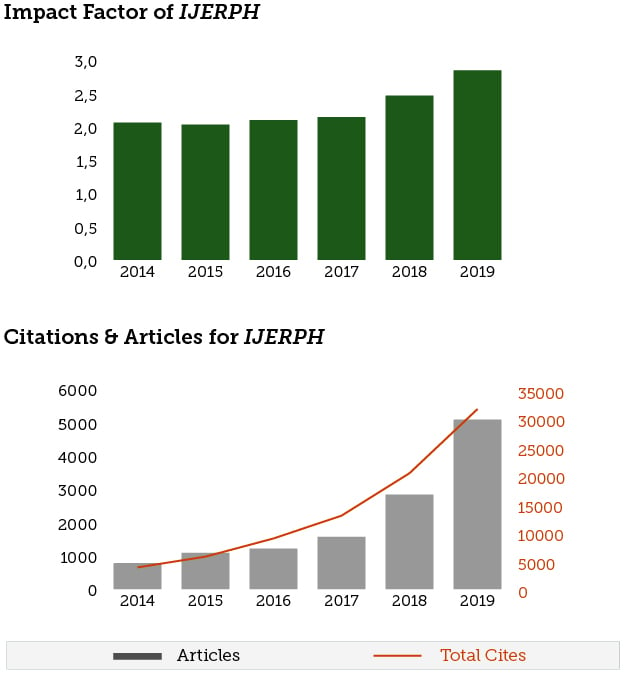
Source: data according to Journal Citation Reports®, 2018 release, a Clarivate Analytics product.
19 June 2019
Just Released: Proceedings from IECEHS 2018, an Electronic Conference Organized by IJERPH
We are pleased to announce that all the accepted submissions of the 1st International Electronic Conference on Environmental Health Sciences have been published in a dedicated volume of Proceedings and this volume has now been released online.
- Volume Editor: Prof. Dr. Jon Øyvind Odland
The 1st International Electronic Conference on Environmental Health Sciences was an incredible success. It was our first attempt, and it led to the receipt of some excellent submissions. Some important topics were missed, e.g., global environment, registry epidemiology, and climate change, but it was a good and promising start. The concept of electronic conferences is here to stay, with huge potential for development, due to its environmentally friendly nature. The precautionary principle should be the basis of all environmental health science approaches based on newly acquired knowledge, including risk assessments and the definition of strategies to reduce contaminant exposure to humans.
We are also delighted to announce that the 2nd International Electronic Conference on Environmental Health Sciences now is open to contributions; you are welcome to join us at https://iecehs-2.sciforum.net/.
To read the articles published in the volume, please visit the website https://www.mdpi.com/2504-3900/6/1.
8 May 2019
Meet Us at the ESMO Congress 2019

Barcelona, Spain
27 September–1 October 2019
We will be attending the ESMO Congress 2019 in Barcelona, Spain from 27 September to 1 October 2019. The European Society for Medical Oncology (ESMO) is the leading European professional organization for medical oncology. Comprised of 17,000 oncology professionals from over 130 countries, they are the society of reference for oncology education and information. The annual ESMO Congress, which is held every year, is attended by 25,000 participants. The Congress presents the latest scientific developments in basic, translational and clinical cancer research and contextualizes new findings for practical implementation in everyday patient care. Representatives of the following MDPI open access journals will attend:
Cancers (https://www.mdpi.com/journal/cancers)
Diagnostics (https://www.mdpi.com/journal/diagnostics)
Genes (https://www.mdpi.com/journal/genes)
Healthcare (https://www.mdpi.com/journal/healthcare)
IJERPH (https://www.mdpi.com/journal/ijerph)
Journal of Clinical Medicine (https://www.mdpi.com/journal/jcm)
Journal of Personalized Medicine (https://www.mdpi.com/journal/jpm)
Medicina (https://www.mdpi.com/journal/medicina)
Medicines (https://www.mdpi.com/journal/medicines)
Vaccines (https://www.mdpi.com/journal/vaccines)
If you will attend this conference, please stop by our booth (Booth # P433). Our delegates look forward to meeting you in person and to answering any questions you may have concerning open access publishing and our journals.
For more information about the conference, please visit
https://www.esmo.org/Conferences/ESMO-Congress-2019
15 April 2019
Meet Us at JpGU 2019 in Chiba, Japan, 26–30 May 2019

We will attend the Japan Geoscience Union Meeting 2019 (JpGU 2019). It will be held at the Makuhari Messe, International Convention Complex in Chiba, Japan, on 26–30 May 2019, and will be organized by the Japan Geoscience Union (JpGU). JpGU is an academic union that encompasses all the Earth and planetary sciences disciplines and related fields, and has been organizing annual meetings since 2005. JpGU 2019 will cover a wide range of Earth and planetary sciences, including space and planetary sciences, atmospheric and hydrospheric sciences, human geosciences, solid Earth sciences, and biogeosciences. The JpGU annual meeting provides participants with a good opportunity to become familiar with cutting-edge research and unique approaches to research objects within their own special field as well as beyond. Representatives of the following open-access journals will attend:
11 April 2019
Meet Us at the 46th Controlled Release Society Annual Meeting & Exposition

We will be attending the 46th Controlled Release Society Annual Meeting & Exposition. It is one of the biggest events in pharmaceutical field. Representatives of the following open access journals will attend:
Pharmaceutics
JCM
Biomolecules
Materials
IJMS
Molecules
Nanomaterials
Pharmaceuticals
Scientia Pharmaceutica
Vaccines
JPM
Genes
JFB
IJERPH
Biomedicines
Healthcare
If you are also attending this conference, please feel free to stop by our booth (Booth #303). Our delegates look forward to meeting you in person to answer any questions you may have. For more information about the conference, please visit: https://2019.controlledreleasesociety.org/
20 March 2019
Fostering Open Access Publishing Worldwide: New IOAP Participants in February and March 2019
We are pleased to welcome more universities from Poland, Italy, Germany, Brazil and other parts of the world to MDPI's Institutional Open Access Program (IOAP). A warm welcome to the institutions listed below, who have joined the Program in February and March this year.
Authors affiliated with these institutions can now enjoy a discount on the APC for papers accepted for publication in any MDPI journal. If you would like to learn more about our program, please visit: https://www.mdpi.com/about/ioap or email us at [email protected].
5 March 2019
MDPI Joins Jisc’s Publications Router Service
We are delighted to announce our participation in Jisc’s Publication Router project, as of March 2019.
Publications Router is a Jisc service that automatically sends notifications about research articles to institutions' systems such as their repositories or CRISs, since May 2015. Through this agreement, MDPI will provide Jisc with daily feeds and information regarding published articles, which will be gathered by their system and delivered to institutions also registered to this service. Nearly all of our articles are published within 15 days of acceptance, so institutions will receive them quite promptly.
The feed will include the full text of the published version of record, with no embargo, so the articles can be exposed immediately for public view. They are accompanied by rich metadata, including confirmation of the immediate CC BY licence, minimising the need for any manual intervention or checking.
For more information about Publications Router, you may contact Jisc’s central helpdesk at [email protected]. For any queries about MDPI’s institutional agreements and collaborations, you may get in touch with MDPI’s Institutional Engagement team at [email protected], which would be very happy to hear from further UK institutions.
1 February 2019
2018 MDPI Top Reviewer Award—Winners Announced
Rigorous peer-review is the cornerstone of high quality academic publishing. Over 97,000 scholars served as reviewers for MDPI journals in 2018. We are extremely appreciative of all those who made a contribution to the editorial process in this capacity. At the beginning of every year, journal editorial offices publish a list all reviewers’ names to express our gratitude. In addition, this year the “MDPI Top Reviewer Awards” are announced, to recognize the very best reviewers for their expertise, dedication, high quality, and timely review reports. We are pleased to announce the following winners of the 2018 MDPI Top Reviewer Awards:
- Ali Behnood
- Andrea Pezzuolo
- Angela Gorgoglione
- Anna D'Auria
- Antonio D'Andrea
- Azhar Abbas
- Bogdan Zagajewski
- Chunhui Chen
- Dominika Głąbska
- Dominika Guzek
- Dragan Pamucar
- Francisco J. G. Silva
- Frank Li
- Gianluca Serafini
- Gyorgy Szekely
- Haozhi Pan
- Helvi Heinonen-Tanski
- José Manuel Gómez-Soberón
- Kathy Lewis
- Klara Kosova
- Luis N. López De Lacalle
- M. Z. Naser
- Malwina Tytła
- Masoume Amirkhani
- Matteo Ghidelli
- Moretti Laura
- Petra Schneider
- Roberto Cerchione
- Spyros Papaefthymiou
- Ştefan Cristian Gherghina
24 January 2019
JAMS Journals: A Low-Cost Publishing Platform

Since 2010, MDPI has run its own online submission system. More recently, we have made the software, with accompanying publishing services, available to other publishers as JAMS (Journal and Article Management System). We are now delighted to announce the launch of JAMS Journals, a standardized platform for operating open access journals at low cost.
JAMS Journals provides a comprehensive service, including a shared submission website, journal websites hosted at a URL provided by the publisher, and a full production service. There is a small setup fee and the cost for each published paper is just a few hundred Swiss francs.
The platform demonstrates that running an open access journal can be straightforward and affordable. The JAMS Journals platform is suitable for
- small publishers or groups of scholars looking to launch their own journal;
- existing publishers or societies seeking to explore open access options;
- publishers looking to convert an existing subscription journal to open access.
JAMS journals launches with two journals from Canadian-based publisher Etcetera Publications:
- Canadian Journal of Pesticides & Pest Management (http://www.cjppm.ca)
- Nanotechnology in Agriculture, Food & Environment (http://www.nanoafe.ca)
Dr AJ Al-Rajab (President of Etcetera Publications) comments:
“In the past few months, we were working on our project to launch new open access scientific journals in the field of agricultural and environmental sciences. We decided to go with JAMS for this venture because of the high quality of their services, reasonable prices, professionalism and easy communication. Our portfolio is expected to grow rapidly during 2019 to include more titles covering different areas in agriculture and environment. MDPI earned already our complete satisfaction and we are looking for a long term cooperation.”
Alongside the new platform, we continue to provide flexible, tailored journal management solutions for existing publishers. For any questions or to request a quotation, contact Dr. Constanze Schelhorn ([email protected]).
24 January 2019
Popularity of Preprints Continues to Grow

2018 was a great year for preprints, with increasing numbers of authors looking to make their papers available online before peer review. Along with other preprint servers, our platform Preprints.org saw an increase in the uptake from authors, and more than double the number of announced papers compared to 2017. In fact, we recently passed two important milestones: 8000 preprints online and 30,000 authors.
We believe that the whole research community has the opportunity to benefit from work being available online as early as possible. We thank and congratulate our authors for supporting us to make this goal a reality.
In 2019, we will be looking carefully at how to provide better value for authors, maintain efficiency while growing in size, and make sure we remain well-connected with the research community.
If you want to participate, you can consider screening preprints or joining our advisory board. And, of course, posting your own work.
9 January 2019
Open Access Agreement between the Austrian Academic Library Consortium (KEMÖ), the Austrian Science Fund (FWF), and MDPI

We are delighted to announce the establishment of our national Open Access agreement with the Austrian Academic Library Consortium (KEMÖ) and the Austrian Science Fund (FWF). Through this national agreement, the Austrian institutions listed below as well as FWF will cover the Article Processing Charges (APC) of manuscripts published by eligible corresponding or funded authors in MDPI journals as long as central funds are available.
All participating institutions have gained access to the MDPI online submission system where they can find full article metadata and pricing information as well as Funder and Grant ID details for easy identification and additional transparency. At the same time eligible authors are benefited from an APC discount which comes at no cost for the institutions.
Eligible corresponding authors affiliated with the participating institutions are prompted to choose the corresponding Institutional Open Access Program (IOAP) when they submit an article via our online submission system. The program will be selected automatically if authors submit their papers using their institutional email address. To claim their discount, FWF funded authors should choose the particular funder and add their Grant ID upon online submission of their manuscript. The institutions will then crosscheck the information and confirm the APC funding.
Eligible authors that have their APC covered by their institution or funder are advised to include the following sentence in their acknowledgments: "Open Access Funding by the [name of the institution/funder]".
The full text of the agreement is openly available online at: http://doi.org/10.5281/zenodo.2536007
For any questions about the agreement, please contact the KEMÖ Consortium at [email protected], FWF at [email protected], or the MDPI IOAP team at [email protected].
The Austrian institutions participating in this agreement are:
- Austrian Science Fund (FWF)
- University for Continuing Education Krems
- University of Applied Sciences BFI Vienna
- University of Applied Sciences Upper Austria
- University of Applied Sciences Technikum Wien
- Vorarlberg University of Applied Sciences
- International Institute for Applied Systems Analysis (IIASA)
- Institute of Science and Technology Austria
- MCI Management Center Innsbruck
- University of Graz
- University of Linz
- University of Salzburg
- Graz University of Technology
- TU Wien
- University of Veterinary Medicine Vienna
- University of Vienna
This is our first collective agreement with a national library consortium, while the individual institutions around the world participating in our IOAP are now more than 500 - see details here: https://www.mdpi.com/about/ioap. We would be mostly interested in discussing about possible collaborations with other consortia, funders, and institutions in our mutual efforts to accelerate Open Access.
2 January 2019
Encyclopedia—the Scholarly Community Encyclopedia

We are pleased to announce the new platform Encyclopedia, which is an online reference created and curated by active scholars. It aims to highlight the latest research results as well as providing benchmark information for researchers and the general public interested in accurate and advanced knowledge on specific topics.
We encourage authors of review articles to quote and adapt the content of their published papers to create Encyclopedia entries. You can create completely new entries on topics in which you have knowledge and expertise. There is no limit on the topics or research fields. All of science and the humanities are included. Each entry will be published directly after submission.
We also have prepared a DOI application function in Encyclopedia. Once a DOI application is approved, the entry website will announce the DOI number and a pdf version with DOI information will be automatically created.
We look forward to your contributions and hope you will make use of this service. Find more about the service at: https://encyclopedia.pub/
30 October 2018
Institutional Open Access Agreement between Bill and Melinda Gates Foundation and MDPI

We are delighted to announce that the Bill and Melinda Gates Foundation (BMGF) is now a participant of our Institutional Open Access Program (IOAP). Authors funded by the BMGF can enjoy discounts on the APC, while the funder covers the costs of eligible articles centrally. BMGF also has access to the MDPI online submission system where they can find full article metadata and pricing information as well as Grant ID details for easy identification and additional transparency.
We hope that funded authors find the programme beneficial and we are happy to offer our IOAP to other funders that need a streamlined workflow of compliance checking and APC coverage.
To claim their discount, BMGF funded authors should choose the particular funder and add their Grant ID upon online submission of their manuscript.
For any questions about the BMGF agreement, please contact the funder at [email protected] or the MDPI IOAP team at [email protected].
2 October 2018
MDPI Welcomes Plan S
Recently, it was announced that a group of European funders supported 10 principles that will help to expand open access, known as Plan S. MDPI warmly welcomes this move as a step towards achieving more open and accessible communication of research across all disciplines. Some aspects remain to be clarified, however the details given so far match the aims and values that MDPI has held over the past two decades.

We believe that open access publishers should be active participants in discussions around Plan S, particularly regarding potential new business models and practical aspects of implementation. MDPI supports APCs as a transparent unit of payment for article publishing, however we are committed to exploring other measures and recently signed the Jussieu Call. Sustainability is a key value for MDPI, and future funding models should have at their heart the sustainability of knowledge and research dissemination. Plan S provides an opportunity for funders and publishers to directly discuss funding of open access journals in ways that are beneficial to all parties involved.
30 August 2018
MDPI establishes Open Access agreement with Qatar National Library

We are happy to announce the establishment of an Open Access (OA) agreement with Qatar National Library (QNL). QNL is committed to supporting and helping Qatar authors publish OA at no cost. Through this national agreement, QNL will cover the Article Processing Charges (APC) of manuscripts published by Qatar-based corresponding authors in MDPI journals.
Eligible corresponding authors affiliated with Qatar research centers and universities are prompted to choose QNL as part of our Institutional Open Access Program (IOAP) when they submit an article via our online submission system. The program will be selected automatically if authors submit their papers using their institutional email and/or a computer registered with the institution’s IP range. QNL will then crosscheck the information and confirm the APC funding.
Qatar authors that have their APC covered by QNL are advised to include the following sentence in their acknowledgments: "The publication of this article was funded by Qatar National Library".
For more information, please visit Open Access at QNL or email the QNL Open Access team at [email protected].
3 July 2018
Prof. Paul Tchounwou Receives «Presidential Award for Excellence in Science, Mathematics and Engineering Mentoring» (PAESMEM)
Congratulations to IJERPH's Editor-in-Chief Prof. Paul Tchounwou who has been honored by the US administration for his long-standing role as a mentor of young scientists in the environmental science at Jackson State University (JSU), Mississipi, USA.

The «Presidential Awards for Excellence in Science, Mathematics and Engineering Mentoring» (PAESMEM) is a program overseen by the National Science Foundation (NSF). This year, 41 individuals and institutions have been awarded for their excellence in mentoring in the science, technology, engineering and mathematics.
Prof. Tchounwou is a Distinguished Professor and Associate Dean of Graduate and International Programs in the College of Science, Engineering and Technology at Jackson State University (JSU). Over the years, he has mentored or co-mentored 73 Ph.D. scholars (55 of which are African-American and 42 of which are women) and he has helped many young faculty members at JSU to develop their careers.
The team at IJERPH send their congratulations to Prof. Tchounwou for receiving this honor!
26 June 2018
2017 Impact Factor Released for IJERPH: 2.145

We are pleased to inform that the International Journal of Environmental Research and Public Health (IJERPH) received an updated Journal Impact Factor of 2.145 in the June 2018 release of the Journal Citation Reports®. The journal's 5-Year Impact Factor is 2.608. IJERPH now ranks 73/180 (Q2) in the category 'Public, Environmental & Occupational Health' (SCIE edition), 44/156 (Q2) in 'Public, Environmental & Occupational Health' (SSCI edition) and 116/241 (Q2) in 'Environmental Sciences.'
Overview of Citation Metrics:
- Journal Impact Factor, 2 yrs (2017): 2.145
- 5-Year Impact Factor (2017): 2.608
- CiteScore, 3 yrs (Scopus): 2.41
- SJR Scimago Journal Rank 2017 (SJR): 0.735
- Source Normalized Impact 2017 (SNIP): 0.998
Evolution of Impact Factor, Citations and Publications for IJERPH:
Source: data according to Journal Citation Reports®, 2018 release, a Clarivate Analytics product; and Scopus journal metrics.
1 June 2018
International Journal of Environmental Research and Public Health 2017 CiteScore™ Announced - 2.41
We are pleased to report IJERPH received a CiteScore of 2.41 for 2017. The metric reflects citation activity in 2017 in Scopus for papers published in the period 2014‒2016.
For the full details in the current CiteScore release, please see the journal's Source profile. To check the full list of MDPI journals receiving CiteScores, please see here.
31 May 2018
2017 CiteScore™ Metrics Released
The 2017 CiteScore™ data is available now, based on citation data in the Scopus® database. The current CiteScore reflects citation activity in 2017 for articles published in 2014‒2016. Please note that the list below includes journals assigned a CiteScore in this year’s release. For a full list of journals indexed in Scopus, please see our journal list.
Thirteen of our journals received a CiteScore which is in the top 10% of the distribution in at least one of the categories (marked with * in the table below), while a further 32 journals exhibit scores that are in the first quartile of the respective categories.
To access the full data for MDPI journals, please see here. More data can also be found in SJR Scimago Journal & Country Rank.
Unlike CiteScores and the widely used Journal Impact Factors, the Source Normalized Impact per Paper (SNIP) metrics are normalized in order to correct for differences in citation practices between scientific fields. Therefore, the SNIP allows direct comparison between journals specialized in different fields.
According to 2017 data, MDPI publishes six journals with an average citation impact, or SNIP, in excess of 1.500. These journals are Biomolecules, Cancers, Journal of Clinical Medicine (JCM), Marine Drugs, Remote Sensing and Sensors (see the last column in the table below).
CiteScore Data for MDPI Journals
| Journal | Rank (Quartile) |
Category | Link | CiteScore 2017 | 2016 |
2015 |
SNIP 2017 |
| Aerospace | 43/116 (Q2) | • Aerospace Engineering | Link | 1.23 | - | - | 1.152 |
| Agriculture | 69/309 (Q1) 91/398 (Q1) 78/255 (Q2) |
• Agronomy and Crop Science • Plant Science • Food Science |
Link | 1.93 | - | - | 1.133 |
| Agronomy | 46/309 (Q1) | • Agronomy and Crop Science | Link | 2.38 | - | - | 1.115 |
| Algorithms | 22/46 (Q2) 61/125 (Q2) 60/107 (Q3) 64/114 (Q3) |
• Numerical Analysis • Computational Mathematics • Computational Theory and Mathematics • Theoretical Computer Science |
Link | 1.03 | 1.15 | 1.07 | 0.749 |
| Animals | 12/154 (Q1) * 48/367 (Q1) |
• General Veterinary • Animal Science and Zoology |
Link | 2.02 | 1.46 | 1.66 | 1.099 |
| Antibiotics | 6/68 (Q1) * 62/263 (Q1) 55/230 (Q1) 31/108 (Q2) 47/134 (Q2) 139/398 (Q2) |
• General Pharmacology, Toxicology and Pharmaceutics • Infectious Diseases • Pharmacology (medical) • Microbiology (medical) • Microbiology • Biochemistry |
Link | 2.85 | 1.65 | - | 0.975 |
| Antibodies | 43/143 (Q2) 61/164 (Q2) 85/189 (Q2) |
• Drug Discovery • Immunology and Allergy • Immunology |
Link | 2.85 | - | - | 0.844 |
| Antioxidants | 23/119 (Q1) 35/169 (Q2) 100/398 (Q2) 119/367 (Q2) 102/264 (Q2) |
• Clinical Biochemistry • Physiology • Biochemistry • Molecular Biology • Cell Biology |
Link | 3.42 | - | - | 1.361 |
| Applied Sciences | 48/270 (Q1) 15/66 (Q1) 31/116 (Q2) 18/53 (Q2) 151/434 (Q2) 186/535 (Q2) |
• General Engineering • Fluid Flow and Transfer Processes • Instrumentation • Process Chemistry and Technology • General Materials Science • Computer Science Applications |
Link | 1.90 | - | - | 0.801 |
| Biology | 12/177 (Q1)* 32/186 (Q1) 10/40 (Q1) |
• General Agricultural and Biological Sciences • General Biochemistry, Genetics and Molecular Biology • General Immunology and Microbiology |
Link | 3.48 | 3.02 | 2.78 | 0.961 |
| Biomolecules | 31/398 (Q1) * 41/367 (Q1) |
• Biochemistry • Molecular Biology |
Link | 5.72 | 1.67 | 3.08 | 1.542 |
| Biosensors | 20/119 (Q1) | • Clinical Biochemistry | Link | 3.59 | 2.83 | 2.37 | 1.122 |
| Brain Sciences | 47/111 (Q2) | • General Neuroscience | Link | 2.56 | - | - | 0.695 |
| Cancers | 26/323 (Q1) * 23/191 (Q1) |
• Oncology • Cancer Research |
Link | 5.82 | 5.02 | 4.07 | 1.567 |
| Catalysts | 32/151 (Q1) 21/46 (Q2) |
• Physical and Theoretical Chemistry • Catalysis |
Link | 3.23 | 3.44 | 3.45 | 0.954 |
| Crystals | 76/272 (Q2) 140/434 (Q2) 127/398 (Q2) 26/64 (Q2) |
• General Chemical Engineering • General Materials Science • Condensed Matter Physics • Inorganic Chemistry |
Link | 1.97 | 1.89 | 1.47 | 0.745 |
| Diagnostics | 49/119 (Q2) | • Clinical Biochemistry | Link | 2.43 | - | - | 0.788 |
| Diversity | 30/124 (Q1) 14/52 (Q2) 83/306 (Q2) 11/29 (Q2) |
• Nature and Landscape Conservation • Agricultural and Biological Sciences (miscellaneous) • Ecology • Ecological Modelling |
Link | 2.15 | 2.03 | 1.96 | 1.300 |
| Electronics | 109/644 (Q1) 26/148 (Q1) 42/224 (Q1) 50/259 (Q1) 23/96 (Q1) |
• Electrical and Electronic Engineering • Hardware and Architecture • Control and Systems Engineering • Computer Networks and Communications • Signal Processing |
Link | 2.97 | - | - | 1.227 |
| Energies | 6/73 (Q1) * 31/192 (Q1) 103/644 (Q1) 4/16 (Q1) 47/140 (Q2) |
• Control and Optimization • Energy Engineering and Power Technology • Electrical and Electronic Engineering • Energy (miscellaneous) • Renewable Energy, Sustainability and the Environment |
Link | 3.11 | 2.50 | 2.87 | 1.340 |
| Entropy | 35/202 (Q1) | • General Physics and Astronomy | Link | 2.41 | 1.87 | 1.99 | 1.189 |
| Forests | 17/129 (Q1) | • Forestry | Link | 2.31 | 2.06 | 1.76 | 0.990 |
| Future Internet | 132/259 (Q3) | • Computer Networks and Communications | Link | 1.25 | - | - | - |
| Games | 132/187 (Q3) 78/110 (Q3) 305/418 (Q3) |
• Statistics and Probability • Statistics, Probability and Uncertainty • Applied Mathematics |
Link | 0.61 | 0.87 | 0.57 | 1.038 |
| Genes | 21/91 (Q1) 74/311 (Q1) |
• Genetics (clinical) • Genetics |
Link | 3.49 | 3.62 | 3.18 | 0.374 |
| Geosciences | 32/182 (Q1) |
• General Earth and Planetary Sciences | Link | 1.97 | 1.67 | 1.29 | 0.856 |
| Information | 143/251 (Q3) | • Information Systems | Link | 1.16 | 0.78 | 0.94 | 1.146 |
| Insects | 27/135 (Q1) | • Insect Science | Link | 1.85 | 1.81 | 1.38 | 0.719 |
| International Journal of Environmental Research and Public Health (IJERPH) | 80/478 (Q1) 34/106 (Q2) |
• Public Health, Environmental and Occupational Health • Health, Toxicology and Mutagenesis |
Link | 2.41 | 2.38 | 2.42 | 0.931 |
| International Journal of Molecular Sciences (IJMS) | 7/69 (Q1) * 61/535 (Q1) 20/163 (Q1) 9/64 (Q1) 26/151 (Q1) 89/367 (Q2) 17/46 (Q2) |
• Spectroscopy • Computer Science Applications • Organic Chemistry • Inorganic Chemistry • Physical and Theoretical Chemistry • Molecular Biology • Catalysis |
Link | 3.86 | 3.73 | 3.37 | 0.998 |
| ISPRS International Journal of Geo-Information (IJGI) | 79/605 (Q1) 22/82 (Q2) 13/36 (Q2) |
• Geography, Planning and Development • Earth and Planetary Sciences (miscellaneous) • Computers in Earth Sciences |
Link | 2.10 | 1.62 | 1.52 | 1.062 |
| Journal of Clinical Medicine (JCM) | 10/841 (Q1) * | • General Medicine | Link | 7.07 | - | - | 1.535 |
| Journal of Functional Biomaterials (JFB) | 43/199 (Q1) 23/77 (Q2) |
• Biomedical Engineering • Biomaterials |
Link | 3.47 | - | - | 1.344 |
| Journal of Low Po- wer Electronics and Applications (JLPEA) |
301/644 (Q2) | • Electrical and Electronic Engineering | Link | 1.12 | 0.98 | 0.83 | 0.367 |
| Journal of Personalized Medicine (JPM) | 54/189 (Q2) | • Medicine (miscellaneous) | Link | 2.61 | - | - | 0.944 |
| Land | 50/124 (Q2) 129/306 (Q2) 36/65 (Q3) |
• Nature and Landscape Conservation • Ecology • Global and Planetary Change |
Link | 1.44 | - | - | 0.658 |
| Life | 4/94 (Q1) * 70/561 (Q1) 40/186 (Q1) 20/80 (Q2) |
• Palaeontology • Ecology, Evolution, Behavior and Systematics • General Biochemistry, Genetics and Molecular Biology • Space and Planetary Science |
Link | 3.16 | 2.95 | 1.68 | 0.935 |
| Marine Drugs | 17/146 (Q1) | • Drug Discovery | Link | 4.58 | 3.83 | 3.66 | 1.537 |
| Materials | 83/434 (Q1) | • General Materials Science | Link | 3.02 | 3.26 | 3.11 | 1.285 |
| Membranes | 5/18 (Q2) 15/53 (Q2) 4/10 (Q2) |
• Chemical Engineering (miscellaneous) • Process Chemistry and Technology • Filtration and Separation |
Link | 2.69 | 2.19 | 2.95 | 0.880 |
| Metabolites | 47/209 (Q1) 103/398 (Q2) 127/367 (Q2) |
• Endocrinology, Diabetes and Metabolism • Biochemistry • Molecular Biology |
Link | 3.35 | - | - | 0.925 |
| Metals | 155/434 (Q2) | • General Materials Science | Link | 1.87 | - | - | 0.955 |
| Micromachines | 105/554 (Q1) 154/644 (Q1) 64/224 (Q2) |
• Mechanical Engineering • Electrical and Electronic Engineering • Control and Systems Engineering |
Link | 2.31 | 1.83 | 1.78 | 0.987 |
| Minerals | 33/175 (Q1) 45/208 (Q1) |
• Geotechnical Engineering and Engineering Geology • Geology |
Link | 2.21 | 2.13 | 1.77 | 1.149 |
| Molecules | 4/25 (Q1) 25/172 (Q1) 18/104 (Q1) 31/163 (Q1) 30/151 (Q1) 31/146 (Q1) 55/160 (Q2) |
• Chemistry (miscellaneous) • Pharmaceutical Science • Analytical Chemistry • Organic Chemistry • Physical and Theoretical Chemistry • Drug Discovery • Molecular Medicine |
Link | 3.27 | 3.09 | 2.65 | 1.146 |
| Nutrients | 11/255 (Q1) * 9/112 (Q1) * |
• Food Science • Nutrition and Dietetics |
Link | 4.35 | 4.29 | 4.07 | 1.403 |
| Pathogens | 38/263 (Q1) 20/108 (Q1) 9/40 (Q1) 40/164 (Q1) 110/367 (Q2) |
• Infectious Diseases • Microbiology (medical) • General Immunology and Microbiology • Immunology and Allergy • Molecular Biology |
Link | 3.52 | - | - | 1.166 |
| Pharmaceuticals | 14/172 (Q1) * 33/160 (Q1) |
• Pharmaceutical Science • Molecular Medicine |
Link | 4.12 | 4.90 | 3.64 | 1.370 |
| Pharmaceutics | 21/172 (Q1) | • Pharmaceutical Science | Link | 3.68 | 3.83 | 2.68 | 1.092 |
| Photonics | 30/116 (Q1) 80/270 (Q2) 53/160 (Q2) |
• Instrumentation • Radiology Nuclear Medicine and Imaging • Atomic and Molecular Physics, and Optics |
Link | 1.96 | - | - | 0.817 |
| Plants | 73/561 (Q1) 48/389 (Q1) 44/306 (Q1) |
• Ecology, Evolution, Behavior and Systematics • Plant Science • Ecology |
Link | 3.13 | - | - | 0.969 |
| Polymers | 17/142 (Q1) 63/359 (Q1) |
• Polymers and Plastics • General Chemistry |
Link | 3.30 | 3.74 | 3.37 | 1.213 |
| Religions | 26/389 (Q1) * | • Religious Studies | Link | 0.56 | - | - | 0.676 |
| Remote Sensing | 13/182 (Q1) * | • General Earth and Planetary Sciences | Link | 4.03 | 3.56 | 3.76 | 1.559 |
| Resources | 19/142 (Q1) 39/261 (Q1) |
• Nature and Landscape Conservation • Management, Monitoring, Policy and Law |
Link | 2.69 | - | - | 1.387 |
| Scientia Pharmaceutica | 92/172 (Q3) | • Pharmaceutical Science | Link | 0.86 | - | - | 0.513 |
| Sensors | 9/116 (Q1) * 25/160 (Q1) 100/644 (Q1) 19/104 (Q1) 113/398 (Q2) |
• Instrumentation • Atomic and Molecular Physics, and Optics • Electrical and Electronic Engineering • Analytical Chemistry • Biochemistry |
Link | 3.23 | 2.78 | 2.21 | 1.550 |
| Social Sciences | 81/213 (Q2) | • General Social Sciences | Link | 0.60 | - | - | 0.445 |
| Sustainability | 61/605 (Q1) * 55/261 (Q1) 60/140 (Q2) |
• Geography, Planning and Development • Management, Monitoring, Policy and Law • Renewable Energy, Sustainability and the Environment |
Link | 2.37 | 1.96 | 1.78 | 1.030 |
| Symmetry | 44/327 (Q1) 17/45 (Q2) 16/40 (Q2) 14/25 (Q2) |
• General Mathematics • Computer Science (miscellaneous) • Physics and Astronomy (miscellaneous) • Chemistry (miscellaneous) |
Link | 1.32 | 1.12 | 0.95 | 0.802 |
| Toxins | 18/106 (Q1) 21/111 (Q1) |
• Health, Toxicology and Mutagenesis • Toxicology |
Link | 3.32 | 3.34 | 3.76 | 1.136 |
| Vaccines | 5/230 (Q1) * 13/263 (Q1) * 18/302 (Q1) * 11/146 (Q1) * 32/189 (Q1) |
• Pharmacology (medical) • Infectious Diseases • Pharmacology • Drug Discovery • Immunology |
Link | 4.88 | 1.23 | 3.76 | 1.255 |
| Viruses | 29/263 (Q1) 16/68 (Q1) |
• Virology • Infectious Diseases |
Link | 3.88 | 3.60 | 3.74 | 1.130 |
| Water | 66/605 (Q1) 37/191 (Q1) 43/199 (Q1) 193/398 (Q2) |
• Geography, Planning and Development • Water Science and Technology • Aquatic Science • Biochemistry |
Link | 2.29 | 2.05 | 1.96 | 1.007 |
3 May 2018
Join us at ASM Microbe 2018, Atlanta, GA, USA, 8–10 June 2018

MDPI will be attending ASM Microbe 2018 International Conference during the three day event held from 8–10 June.
ASM Microbe showcases the best microbial sciences in the world and provides a one-of-a-kind forum to explore the complete spectrum of microbiology, from basic science to translation and application. Representatives of the following open access journals will attend:
Toxins
Journal of Clinical Medicine
Viruses
Antibiotics
Diseases
Medicines
Fermentation
Veterinary Sciences
Genes
International Journal of Environmental Research and Public Health (IJERPH)
Pathogens
Tropical Medicine and Infectious Disease
Vaccines
Microorganisms
If you are also attending this conference, please stop by our Booth: #731. Our delegates look forward to meeting you in person, to answer any questions you may have regarding open access publication and our journals. For more information about the conference, please visit: https://www.asm.org/index.php/asm-microbe-2018.
Date: 8–10 June 2018
Location: Georgia World Congress Center, 285 Andrew Young International Blvd NW, Atlanta, GA 30313, USA
2 May 2018
Meet us at the ESA Annual Meeting 2018 in New Orleans, Louisiana

MDPI will be represented at the ESA Annual Meeting 2018 which will be held in New Orleans, Louisiana, 5–10 August 2018.
Extreme events, such as heat waves, droughts, floods, fires and storms, are exacerbated by human activities and challenge populations, communities and ecosystems, as well as our human health and living conditions. The ability of ecosystems to respond to these challenges depends on the integrity of resilience mechanisms that have been severely undermined by land-use practices that increase effects of extreme conditions. Past civilizations, such as the Maya and Mesopotamians, apparently exacerbated the droughts (that caused their demise) through deforestation and agricultural practices similar to our own. Clearly, the sustainability of ecosystem services and human well-being depends on ecosystem resilience to extreme events.
The following MDPI journals will be represented:
If you are also attending this conference, please feel free to stop by our booth (Booth #208). Our delegates look forward to meeting you in person to answer any questions you may have regarding open access publishing or our journals. For more information about the conference, please visit: https://esa.org/neworleans/
30 April 2018
Winners of the First MDPI Writing Prize
We are pleased to announce the results of the first MDPI Writing Prize. We received a large number of entries from across the globe on the theme of “The Global Benefits of Open Research”. It was a pleasure to read so many original, well-researched and well-presented ideas, and the final choice was not an easy one. We are pleased to announce that the winners are as follows:
1st prize (500 CHF, Swiss knife and certificate)
Edmond Sanganyado, Shantou University, China
2nd prizes (250 CHF, Swiss knife and certificate)
Kamala T. Rajahgopal, Asia e University, Malaysia
Yin Zhixuan, Qingdao University of Technology, China
3rd prizes (100 CHF, Swiss knife and certificate)
Alexandra Ticea, Carol Davila University of Medicine and Pharmacy, Romania
Ankur Sarker, University of Virginia, USA
Daniel Attoye, United Arab Emirates University, UAE
Congratulations to all of them! The winning entries can be downloaded by clicking on the names above. A compilation of all entries will soon be available as an open access book.
The writing prize is sponsored by the MDPI English editing service.
23 March 2018
Check for Updates: A New Function in the Article PDF Version

At MDPI, we always want to keep you up to date. Even for already published articles, some corrections or minor changes may occur. To prevent you from missing any updates, from now on you will be able to access the latest version of any manuscript by clicking on the “check for updates” logo that you can find in the PDF file, even if you have saved the file on your computer.
13 March 2018
MDPI Becoming a Member of UKSG

We are proud to announce that MDPI is now a member of UKSG, the UK´s largest scholarly communications community. Through UKSG, different stakeholders share their knowledge and experience in order to improve the knowledge and information environment for researchers. UKSG´s members include universities, publishers, content providers, intermediaries, and other similar organisations. Members participate in discussions and events on issues around scholarly communications.
The UKSG Annual Conference and Exhibition is a flagship initiative from the UKSG and one of the most stimulating events in the scholarly communications calendar. It is held annually and attracts a large number of delegates. More information is available at https://www.uksg.org/events/annualconference
MDPI is delighted to be a part of this active community and we look forward to making our own contribution. We will continue to support organisations and initiatives that boost collaboration and vision within scholarly communication.
More information about UKSG can be found at https://www.uksg.org/. The full membership list is available at: https://www.uksg.org/members.
8 March 2018
Meet Us at NANOTECH 2018 in Anaheim, CA, USA, 13–16 May 2018

We will be attending the 20th annual Nanotech 2018 Conference & Expo (NANOTECH 2018), co-located with the TechConnect World Innovation Conference, Defense TechConnect Summit and Spring SBIR/STTR Conference. The event will attract more than 350 featured exhibitors and an expected crowd of more than 4000 attendees, including business executives, venture capitalists, politicians, s cientists and researchers from over 70 countries. Nanotech contains 38 symposiums and brings together specialists from a wide range of scientific fields, technology and business.
Representatives of the following open access journals will attend:
Sensors
Materials
Nanomaterials
Journal of Functional Biomaterials (JFB)
Journal of Imaging
Sustainability
Fluids
Photonics
Electronics
Catalysts
Applied Sciences
Inventions
Diagnostics
Cancers
Journal of Low Power Electronics and Applications (JLPEA)
Designs
Pharmaceuticals
C
Inorganics
International Journal of Environmental Research and Public Health (IJERPH)
Machines
Pharmaceutics
Journal of Manufacturing and Materials Processing (JMMP)
Actuators
Robotics
Energies
Biosensors
Chemosensors
Membranes
Coatings
Micromachines
If you will also attend this conference, please feel free to stop by our booth (Booth # 317). Our delegates look forward to meeting you in person to answer any questions you may have. For more information about the conference, please visit:
https://www.techconnectworld.com/Nanotech2018/
Conference Location:
Anaheim Convention Center,
800 W Katella Avenue
Anaheim CA 92802
USA
1 February 2018
MDPI Signed the San Francisco Declaration on Research Assessment (DORA)

The DORA initiative addresses the need for advanced approaches in the evaluation and measurement of the quality of scientific research outputs. It is a worldwide initiative covering all scholarly disciplines. MDPI proudly joins a list of more than 400 organizations around the world which support DORA’s recommendations for improving the way the quality of research results is evaluated.
More info can be found at http://www.ascb.org/dora/
22 January 2018
Meet Us at the Experimental Biology 2018 (21–25 April 2018) in San Diego, CA, USA

MDPI will be attending the Experimental Biology 2018 annual meeting in San Diego, CA, USA from 21 to 25 April 2018, representing the following open access journals:
Antibiotics
Antioxidants
Behavioral Sciences
Bioengineering
Biology
Biomedicines
Brain Sciences
Cancers
Cells
Dentistry Journal
Diagnostics
Diseases
Epigenomes
Fermentation
Genes
High-Throughput
International Journal of Molecular Sciences (IJMS)
International Journal of Environmental Research and Public Health (IJERPH)
Journal of Clinical Medicine (JCM)
Journal of Developmental Biology (JDB)
Journal of Functional Morphology and Kinesiology (JFMK)
Metabolites
Methods and Protocols
Microorganisms
Non-Coding RNA
Nutrients
Pharmaceuticals
Pharmaceutics
Proteomes
Sports
Veterinary Sciences
Viruses
Experimental Biology is the annual meeting of five societies comprised of more than 14,000 scientists and 25 guest societies.
The areas of primary focus include anatomy; biochemistry and molecular biology; investigative pathology; nutrition; pharmacology; physiology. Attendees represent scientists from academic institutions, government agencies, non-profit organizations and industry.
Conference details:
San Diego Convention Center
San Diego CA
USA
21–25 April 2018
Do you want to learn more about MDPI open access journals? Don’t miss this opportunity to discuss them with our editors and MDPI delegates. If you are at Experimental Biology 2018, just come visit our booth for a moment to have a chat. We have some gifts for you to take home and will answer any questions that you have about the open access journal (booth # 1034).
For more information, please visit:
http://experimentalbiology.org/2018/Home.aspx
29 December 2017
Meet Us at the EGU General Assembly 2018 in Vienna, 8–13 April 2018

We will be attending the General Assembly 2018 of the European Geosciences Union (EGU) (https://egu2018.eu/home.html). The EGU General Assembly 2018 will bring together geoscientists from all over the world to one meeting covering all disciplines of the Earth, planetary and space sciences. It aims to provide a forum where scientists, especially early career researchers, can present their work and discuss their ideas with experts in all fields of geoscience. Representatives of the following open access journals will attend:
Remote Sensing
Geosciences
ISPRS International Journal of Geo-Information
Water
Animals
Atmosphere
Climate
Environments
Forests
Hydrology
International Journal of Environmental Research and Public Health (IJERPH)
Journal of Marine Science and Engineering
Land
Minerals
Resources
Quaternary
Sensors
If you are also attending this conference, please feel free to stop by our booth (Booth #36). Our delegates look forward to meeting you in person to answer any questions you may have. For more information about the conference, please visit: https://egu2018.eu/home.html.
21 December 2017
Meet Us at the AACR Annual Meeting 2018 in Chicago, IL, USA

We will be attending the AACR Annual Meeting 2018, to be held in Chicago, IL, USA, 14-18 April 2018. The American Association for Cancer Research (AACR) is the world's oldest and largest professional association related to cancer research. The AACR gives the opportunity to gain visibility for your organization among more than 21,000 scientists and other cancer professionals who are projected to attend from around the world. Representatives of the following MDPI open access journals will attend:
Antibodies (https://www.mdpi.com/journal/antibodies)
Biomedicines (https://www.mdpi.com/journal/biomedicines)
Cancers (https://www.mdpi.com/journal/cancers)
Cells (https://www.mdpi.com/journal/cells)
Children (https://www.mdpi.com/journal/children)
Diagnostics (https://www.mdpi.com/journal/diagnostics)
Epigenomes (https://www.mdpi.com/journal/epigenomes)
Genes (https://www.mdpi.com/journal/genes)
Healthcare (https://www.mdpi.com/journal/healthcare)
High-Throughput (https://www.mdpi.com/journal/high-throughput)
IJERPH (https://www.mdpi.com/journal/ijerph)
JCM (https://www.mdpi.com/journal/jcm)
IJMS (https://www.mdpi.com/journal/ijms)
JPM (https://www.mdpi.com/journal/jpm)
Medical Sciences (https://www.mdpi.com/journal/medsci)
Medicines (https://www.mdpi.com/journal/medicines)
Metabolites (https://www.mdpi.com/journal/metabolites)
ncRNA (https://www.mdpi.com/journal/ncrna)
Pharmaceuticals (https://www.mdpi.com/journal/pharmaceuticals)
Pharmaceutics (https://www.mdpi.com/journal/pharmaceutics)
Scientia Pharmaceutica (https://www.mdpi.com/journal/scipharm)
Vaccines (https://www.mdpi.com/journal/vaccines)
Please come along to our stand, No.1339, to have a chat with our delegates about the journals, and information on online publishing as well as our editorial procedures. You may also learn more about the various awards offered by the journals, including the Best Paper Awards, the Young Investigator Awards, Travel Awards, etc. Some useful handouts are also available. We look forward to meeting you in person to answer any questions you may have.
Conference address:
AACR Annual Meeting 2018
McCormick Place North/South
Chicago, IL, USA
Conference date:
14-18 April 2018
For more information on the conference, please visit:
http://www.aacr.org/Meetings/Pages/MeetingDetail.aspx?EventItemID=136
20 December 2017
Feature Paper: Food Prices and Diet Quality

"We found that, on average, healthier perishable foods were nearly twice as expensive as unhealthy packaged foods” said Kern, lead author of the study in a recent issue of the journal. “As the gap between neighborhood prices of healthier and unhealthier foods got wider, study participants had lower odds of having a healthier diet.”
For example, the study found that for every 14 percent increase in the healthy-to-unhealthy price ratio (the standard deviation in this study), the odds of having a healthy diet dropped by 24 percent. This was even after controlling for personal characteristics, like age, sex, income, education and other factors. : “We are consuming way too many sugary foods like cookies, candies and pastries, and sugary drinks, like soda and fruit drinks,” co-author Auchincloss said. “Nearly 40 percent of U.S. adults are obese and less than 20 percent attain recommendations for fruits and vegetables. Cheap prices of unhealthy foods relative to healthier foods may be contributing to obesity and low-quality diet.”
To delve into price impacts, the authors used cross-sectional data from 2,765 participants recruited from six urban areas in the U.S.: New York, Chicago, St. Paul, Los Angeles, Baltimore and Winston-Salem in North Carolina. Each participant’s diet data was linked to food prices at supermarkets in their neighborhood. This is one of the few studies that takes a hard look at prices between foods, compares them, and tries to link them back to their dietary implications.
Translating the price difference found in this study into US dollars: on average, five servings of healthier perishable foods cost $3.00 while 5 servings of unhealthier packaged foods cost $1.55.
The adverse impact of increasing healthy food prices compared to unhealthy food prices was particularly strong for people in the middle ranges of income/wealth in the study, and those with higher education. “We originally expected to find the largest impact among individuals in the lowest wealth/income group. However, given the price gap that we found, healthy food may be too expensive for the lowest socioeconomic status group even at its most affordable,” Kern said. “So the impact of the price ratio is weaker for this group.”
For further information about this research, see: http://drexel.edu/now/archive/2017/November/When-Healthier-Food-Price-Closer-to-Unhealthier-Diets-Are-Better/
19 December 2017
Announcing the MDPI English Writing Prize
The competition is still open until end of March! Please check out the banner for more details: https://mdpi-res.com/data/english-prize.pdf
15 December 2017
UCL Press Adopts the MDPI Editorial Platform JAMS

We are delighted to announce that UCL Press has adopted MDPI's Journal Article & Management System, JAMS, including production services. JAMS is a modular, integrated editorial platform for academic publishers. It offers flexibility, ease-of-use, and is a fully integrated solution for the end-to-end management of scholarly journals. JAMS is based on the software used to publish MDPI’s portfolio of journals.
Ian Caswell, UCL Press Journals Manager, says he is "excited to see UCL Press and MDPI partner together to implement the JAMS submission system for all UCL Press journals. The system offered a flexible, efficient and straightforward solution for our processes from author submission to ready for publication. I am grateful for the valuable experience and support MDPI have offered and look forward to developing our programme with an effective submission system in place.” Dr Martyn Rittman, MDPI’s Publishing Services Manager, adds, “We are proud to support one of the UK’s premier university presses in their publishing operation. This is an excellent way for us at MDPI to share our experience and knowledge, and benefit the research community beyond our own journals.”
JAMS combines services that are kept separate for many publishers. The entire editorial process, production and invoicing (e.g. for open access article processing charges) are fully integrated into a single platform. This allows for efficient, fast manuscript processing. For further information about JAMS, see https://www.mdpi.com/publishing_services.
23 November 2017
New Participants in the Institutional Open Access Program (IOAP)
We are pleased to welcome new participants to MDPI's Institutional Open Access Program (IOAP), designed to help institutions manage the transition to the Open Access publishing model. Researchers affiliated with participating universites benefit from a 10% discount on the Article Processing Charges (APC) for any paper published in an MDPI journal, while the participating library or university incurs no basic fee for participating in the program.
The IOAP set of free services, provided by MDPI to institutions that sign up, include:- No fee for participants and no obligation to prolong after the initial 12 months. The participants may withdraw from the programme at any time, and we will also keep it free for the library for as long as they continue in the programme.
- Authors affiliated with the university will receive a 10% discount on the APC.
- The institution is granted free access to the MDPI submission system and can receive free alerts of new submissions to our journals.
- By default, authors from the institution will continue to be invoiced directly unless the institution opts for central billing.
- Auto-archiving of papers into the institutions´ repository as long as it supports SWORD 1.3.
More details about the programme and a list of our current participant institutions can be found at: https://www.mdpi.com/about/ioap
Institutions which are interested to participate may do so online at: https://www.mdpi.com/ioap-form
The following North American universities have signed up to the IOAP program recently:
Connecticut College, USA
Emory University, USA
Florida International University, USA
Johns Hopkins University, USA
Mississippi State University, USA
Northeastern University, USA
Rice University, USA
University of Ontario Institute of Technology, Canada
University of Rhode Island, USA
University of Texas Southwestern Medical Center, USA
University of Toronto, Canada
University of Windsor, Canada
University of Wisconsin–Madison, USA
Wellesley College, USA
West Virginia University, USA
Many prestigious institutions from Europe and Asia have joined as well:
Asia Pacific University of Technology & Innovation, Malaysia
Czech Technical University in Prague, Czech Republic
Gdansk University of Technology, Poland
Martin-Luther-Universität Halle-Wittenberg, Germany
National Chung Hsing University, Taiwan
Newcastle University, UK
Northumbria University, UK
Southwest University, China
Technical University of Crete, Greece
University Malaya, Malaysia
University of Antwerp, Belgium
University of Cyprus, Cyprus
University of Manchester, UK
University of Reading, UK
University of Sussex, UK
University of Warwick, UK
West Pomeranian University of Technology Szczecin, Poland
We offer a warm welcome to the new participants!
10 November 2017
Available Journal Awards at MDPI
In order to reward the academic community, especially young researchers, and enhance communication among scientists, MDPI journals regularly offer various awards to researchers in specific fields, for example, Young Investigator Awards, Travel Awards, Best Paper Awards, and Best Poster Awards, etc. The awardees range from PhD students to junior scientists.
Currently, the following 44 awards given by MDPI journals are accepting applications. Please click on the award title below to check whether you are eligible for it and start the application process.
|
Subject |
Journal |
Award |
Intended Awardee |
|
Biology & Life Sciences |
Animals |
PhD students or postdoctoral researchers |
|
|
Antioxidants |
Postdoctoral researchers or PhD students |
||
|
Biology |
PhD or postdoctoral fellows |
||
|
Forests |
Postdocs or PhD students |
||
|
International Journal of Molecular Sciences (IJMS) |
Ground-breaking contribution in the fields of Molecular Biology, and Molecular Pathology |
||
|
Journal of Fungi (JoF) |
Travel Awards 2018 |
PhD graduate students, and postdoctoral fellows |
|
|
Life |
Travel Award 2018 |
PhD students or postdoctoral fellows |
|
|
Metabolites |
PhD students |
||
|
Pharmaceuticals |
PhD students |
||
|
Toxins |
Postdoctoral fellows |
||
|
Viruses |
Viruses 2018 participants |
||
|
Viruses |
Viruses 2018 participants |
||
|
Water |
2018 Young Investigator Award |
Young investigators |
|
|
Chemistry & Materials Science |
Biomimetics
|
Graduate Student or Postdoctoral Trainee / Research Associate |
|
|
Catalysts |
PhD students |
||
|
Chemosensors |
PhD or postdoctoral fellows |
||
|
Entropy |
Young investigators |
||
|
Fibers |
2018 Travel award |
Postdocs or PhD students |
|
|
Magnetochemistry |
Postdocs |
||
|
Materials |
PhD or postdoctoral fellows |
||
|
Metals |
PhD or postdoctoral fellows |
||
|
Minerals |
PhD or postdoctoral fellows |
||
|
Sensors |
Travel Award 2018 |
PhD or postdoctoral fellows |
|
|
Sensors |
Sensors' reviewers in 2017 |
||
|
Sensors |
Young investigators |
||
|
Technologies |
PhD students |
||
|
Computer Science & Mathematics |
Multimodal Technologies and Interaction (MTI) |
Postdoctoral researchers or PhD students |
|
|
ISPRS International Journal of Geo-Information(IJGI) |
Postdocs |
||
|
Journal of Sensor and Actuator Networks (JSAN) |
Postdoctoral fellows and PhD students |
||
|
Journal of Imaging |
Postdoctoral fellows and PhD students |
||
|
Engineering |
Actuators |
PhD or postdoctoral fellows |
|
|
Remote Sensing |
Authors |
||
|
Machines |
PhD or postdoctoral fellows |
||
|
Micromachines |
PhD or postdoctoral fellows |
||
|
Fluids |
Postdoctoral fellows and PhD students |
||
|
ChemEngineering |
Postdoctoral researchers and PhD students |
||
|
Environmental & Earth Sciences |
Diversity |
Travel Awards 2018 |
Postdoctoral fellows |
|
International Journal of Environmental Research and Public Health (IJERPH) |
Authors who submit from 1 Nov 2017 to 31 Oct 2018 |
||
|
Resources |
Postdocs or PhD students |
||
|
Geosciences |
Postdoctoral fellows and PhD students |
||
|
Physical Sciences & Astronomy |
Galaxies |
Ph.D. students, postdoctoral fellows, or lecturers in cosmology or galaxies physics |
|
|
Applied Science |
Postdocs |
||
|
Medicine & Pharmacology; Public Health & Healthcare |
Journal of Clinical Medicine (JCM) |
PhD or postdoctoral fellows |
|
|
Medicines |
Postdocs |
7 November 2017
MDPI has signed the Jussieu Call for Open Science and Bibliodiversity
The Jussieu Call aims to develop and implement alternative models to meet the aims of open science while promoting bibliodiversity. In particular it wishes to promote new business models for funding open access publication. It was drafted on the Jussieu campus in Paris by a group of French researchers and scientific publishing professionals.
MDPI supports scholarly communities and initiatives that innovate and further promote Open Access publishing. There is a need to explore different frameworks to fund open access in ways that ensure that excessive funds are not diverted from research towards publishing. Many fair funding models already exist, and they can be further developed and extended. These include institutional support, library contributions or subsidies, premium services, participatory funding, etc. For this reason, MDPI has signed up to the Jussieu call and welcomes its aims.
More information can be found at http://jussieucall.org/ (archived here)

6 October 2017
Dr. Franck Vazquez, MDPI CEO, Interviewed by Scholarly Kitchen
The Society for Scholarly Publishing’s popular blog about topics in academic publishing, Scholarly Kitchen, recently interviewed MDPI’s CEO, Dr. Franck Vazquez. He shared some thoughts and information on the past and future of MDPI and open access publishing in general:
“In the long run, we aim to anchor MDPI in research communities. We recently developed and launched the preprint platform Preprints, revamped our free-to-use conference hosting platform Sciforum, and are working on other projects, such as Scilit, our bibliographic database.”
Read the full interview here.
19 September 2017
A Warm Welcome to the New IOAP Participants
We are delighted to have welcomed 24 new participants to our Institutional Open Access Programme (IOAP) since the beginning of September this year. These are University libraries and Research Institutions located around the world; from the USA and Canada to the UK, and from Norway and Spain to Greece. Well respected Universities, such as the University of Denver, the University of Colorado Boulder, and the University of Arizona in the US, have signed up, while their researchers can now benefit from a 10% discount on the Article Processing Charges (APC) for any papers they publish in MDPI journals, at no cost for the library or the University.
We are more than happy to see the Open Access movement growing stronger and wider every day and we appreciate the vital role which librarians, repository managers, and other scholarly communications professionals play in the field. Our communication with and service to this community is, therefore, one of our principal priorities. The IOAP is our way to support academic and scientific Institutions as well as their scholars in managing, administrating, and publishing research in an Open Access world.
The IOAP set of free services, provided by MDPI to institutions that sign up, include:
- No fee for participants and no obligation to prolong after the initial 12 months. The participants may withdraw from the programme at any time, and we will also keep it free for the library for as long as they continue in the programme.
- Authors affiliated with the university will receive a discount on the article processing charge (APC).
- The institution is granted free access to the MDPI submission system and can receive free alerts of new submissions to our journals.
- By default, authors from the institution will continue to be invoiced directly unless the institution opts for central billing.
- Auto-archiving of papers into the institutions´ repository as long as it supports SWORD 1.3.
More details about the programme and a list of our current participant institutions can be found at: https://www.mdpi.com/about/ioap
Institutions which are interested to participate may do so online at: https://www.mdpi.com/ioap-form
The full list of the Institutions that signed up in September is as follows:
- University of Denver, USA
- University of Colorado Boulder, USA
- University of Arizona, USA
- Institute of Metrology of Bosnia and Herzegovina, Bosnia and Herzegovina
- Middlebury College, USA
- Touro College, USA
- University of New Orleans, USA
- University of Leicester, UK
- Indiana University-Purdue University Indianapolis, USA
- University of Strathclyde, UK
- Cranfield University, UK
- Hope College, USA
- Oregon State University, USA
- Drew University, USA
- Swansea University, UK
- University of South Florida, USA
- University of Georgia, USA
- Arizona State University, USA
- University of Southern Mississippi, USA
- Université du Québec à Chicoutimi, Canada
- Grinnell College, USA
- Norwegian University of Science and Technology, Norway
- University of Patras, Greece
- Public University of Navarre, Spain
23 June 2017
Congratulations for Publishing the 100,000th Peer-Reviewed Article
Congratulations to the authors Javier Monroy and Javier Gonzalez-Jimenez from Universidad de Malaga, Spain, Victor Hernandez-Bennets, Han Fan and Achim Lilienthal from Örebro University, Sweden for publishing the 100,000th peer-reviewed article.
The article is published in the Chemical Sensors section of Sensors.
GADEN: A 3D Gas Dispersion Simulator for Mobile Robot Olfaction in Realistic Environments
Evermore pressing environmental concerns have led global actors and decision-makers to search for stricter emission monitoring approaches. As part of novel monitoring systems, robots with gas and environmental sensors are a promising solution. However, validation of such robotic inspectors is expensive, time consuming, and plagued by repeatability issues. In this article, we present GADEN (the short form for Gas Dispersion Simulator for Mobile Robot Olfaction in Realistic Environments), which combines gas dispersion and robotics simulation in a common framework. Developed under the widely used Robot Operating System (ROS), GADEN enables validation of sensing strategies with gas dispersion being simulated using computational fluid dynamics and filament dispersion theory. GADEN allows simulating complex, realistic, 3D environments for reproducible testing of robotic gas sensing algorithms. Through qualitative and quantitative evaluations, we show that GADEN is a versatile and user-friendly evaluation tool and emphasize its enormous potential for the mobile robot olfaction community.
Read the full article here: https://www.mdpi.com/1424-8220/17/7/1479/htm
14 June 2017
2016 Impact Factor Released for the International Journal of Environmental Research and Public Health (IJERPH) - 2.101
IJERPH now ranks 70/176 (Q2) in the category ‘Public, Environmental & Occupational Health’ (SCIE edition), 41/157 (Q2) in ‘Public, Environmental & Occupational Health’ (SSCI edition) and 101/229 (Q2) in ‘Environmental Sciences’.
Evolution of Impact Factor, Citations and Publications for IJERPH:
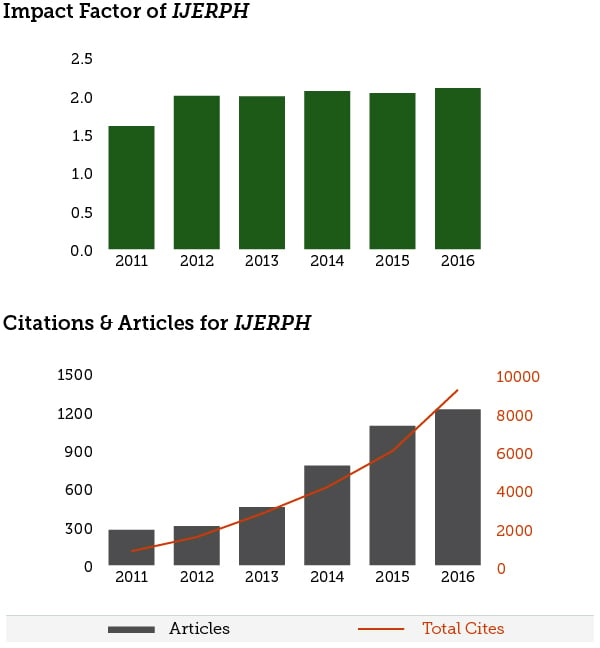
6 June 2017
CiteScore™ Metrics Released for Scopus Journals
The CiteScore, the new citation metric for journals covered in the Scopus® database, was released on 1 June 2017, reflecting the citation activity in 2016 for articles published during the three previous years. Please note that the list below does not contain all MDPI journals covered in Scopus. For the CiteScore to serve as a reliable metric at least three volumes of articles need to be indexed in Scopus; journals which have not met this criterion have been omitted here.
Ten MDPI journals received a CiteScore which is in the Top 10% of scores in at least one of the categories, while a further 21 journals exhibit scores that are in the first quartile of the respective categories.
CiteScore Data for MDPI Journals
| Journal | Rank | Category | Link | CiteScore 2016 | 2015 |
2014 |
| Algorithms | 44/112 (Q2) 49/111 (Q2) 19/42 (Q2) 52/113 (Q2) |
• Numerical Analysis • Computational Mathematics • Computational Theory and Mathematics • Theoretical Computer Science |
Link | 1.15 | 1.07 | 1.06 |
| Animals | 69/343 (Q1) 21/146 (Q1) |
• Animal Science and Zoology • General Veterinary |
Link | 1.46 | 1.66 | 0.74 |
| Biology | 13/92 (Q1) 34/81 (Q1) 10/75 (Q1) |
• General Agricultural and Biological Sciences • General Biochemistry, Gene- tics and Molecular Biology • General Immunology and Microbiology |
Link | 3.02 | 2.78 | 1.74 |
| Biomolecules | 234/382 (Q3) 260/353 (Q3) |
• Biochemistry • Molecular Biology |
Link | 1.67 | 3.08 | 1.00 |
| Biosensors | 36/118 (Q2) 209/2156 (Q1) |
• Clinical Biochemistry • General Medicine |
Link | 2.83 | 2.37 | 2.04 |
| Cancers | 29/196 (Q1) 27/321 (Q1) |
• Cancer Research • Oncology |
Link | 5.02 | 4.07 | 2.31 |
| Catalysts | 18/44 (Q2) 27/144 (Q1) |
• Catalysis • Physical and Theoretical Chemistry |
Link | 3.44 | 3.45 | 2.17 |
| Crystals | 70/270 (Q2) 25/64 (Q2) 118/398 (Q2) 131/424 (Q2) |
• General Chemical Engineering • Inorganic Chemistry • Condensed Matter Physics • General Materials Science |
Link | 1.89 | 1.47 | 1.03 |
| Diversity | 10/41 (Q1) 9/25 (Q2) 76/291 (Q2) 24/109 (Q1) |
• Agricultural and Biological Sciences (miscellaneous) • Ecological Modelling • Ecology • Nature and Landscape Conservation |
Link | 2.03 | 1.96 | 1.82 |
| Energies | - | - | Link | 2.50 | 2.87 | 2.66 |
| Entropy | 51/198 (Q2) | • General Physics and Astronomy | Link | 1.87 | 1.99 | 1.69 |
| Forests | 17/127 (Q1) | • Forestry | Link | 2.06 | 1.76 | 1.84 |
| Games | 204/398 (Q3) 83/181 (Q2) 48/105 (Q2) |
• Applied Mathematics • Statistics and Probability • Statistics, Probability and Uncertainty |
Link | 0.87 | 0.57 | 0.64 |
| Genes | 62/300 (Q1) 18/90 (Q1) |
• Genetics • Genetics (clinical) |
Link | 3.62 | 3.18 | 1.33 |
| Geosciences | 36/169 (Q1) |
• General Earth and Planetary Sciences | Link | 1.67 | 1.29 | 1.13 |
| Information | 156/237 (Q3) | • Information Systems | Link | 0.78 | 0.94 | 0.74 |
| Insects | 28/131 (Q1) | • Insect Science | Link | 1.81 | 1.38 | 1.23 |
| International Journal of Environmental Research and Public Health (IJERPH) | 67/446 (Q1) 31/102 (Q2) |
• Public Health, Environmental and Occupational Health • Health, Toxicology and Mutagenesis |
Link | 2.38 | 2.42 | 2.47 |
| International Journal of Molecular Sciences (IJMS) | 23/157 (Q1) 8/64 (Q1) 90/353 (Q1) 22/144 (Q1) 16/44 (Q1) 8/62 (Q1) |
• Organic Chemistry • Inorganic Chemistry • Molecular Biology • Physical and Theoretical Chemistry • Catalysis • Spectroscopy |
Link | 3.73 | 3.37 | 3.06 |
| ISPRS International Journal of Geo-Information | 12/29 (Q2) 28/79 (Q2) 96/587 (Q1) |
• Computers in Earth Sciences • Earth and Planetary Sciences (miscellaneous) • Geography, Planning and Development |
Link | 1.62 | 1.52 | - |
| Journal of Low Power Electronic Applications (JLPEA) | 301/645 (Q2) | • Electrical and Electronic Engineering | Link | 0.98 | 0.83 | 0.83 |
| Life | 65/525 (Q1) 36/186 (Q1) 5/92 (Q1) 20/80 (Q2) |
• Ecology, Evolution, Behavior and Systematics • General Biochemistry, Gene- tics and Molecular Biology • Palaeontology • Space and Planetary Science |
Link | 2.95 | 1.68 | 1.20 |
| Marine Drugs | 18/145 (Q1) | • Drug Discovery | Link | 3.83 | 3.66 | 3.59 |
| Materials | 63/424 (Q1) | • General Materials Science | Link | 3.26 | 3.11 | 2.69 |
| Membranes | 103/424 (Q1) | • Materials Science | Link | 2.19 | 2.95 | 2.42 |
| Micromachines | 173/645 (Q2) 69/211 (Q2) 113/526 (Q1) |
• Electrical and Electronic Engineering • Control and Systems Engineering • Mechanical Engineering |
Link | 1.83 | 1.78 | 2.10 |
| Minerals | 45/206 (Q1) 29/167 (Q1) |
• Geology • Geotechnical Engineering and Engineering Geology |
Link | 2.13 | 1.77 | - |
| Molecules | 32/157 (Q1) | • Organic Chemistry | Link | 3.09 | 2.65 | 2.62 |
| Nutrients | 12/247 (Q1) | • Food Science | Link | 4.29 | 4.07 | 3.78 |
| Pharmaceuticals | 8/168 (Q1) 21/158 (Q1) |
• Pharmaceutical Science • Molecular Medicine |
Link | 4.90 | 3.64 | 1.92 |
| Pharmaceutics | 19/168 (Q1) | • Pharmaceutical Science | Link | 3.83 | 2.68 | 2.46 |
| Polymers | 13/138 (Q1) 44/354 (Q1) |
• Polymers and Plastics • General Chemistry |
Link | 3.74 | 3.37 | 4.10 |
| Remote Sensing | 13/169 (Q1) | • General Earth and Planetary Sciences | Link | 3.56 | 3.76 | 3.23 |
| Sensors | 25/96 (Q2) 25/159 (Q1) 124/382 (Q2) 103/645 (Q1) |
• Analytical Chemistry • Atomic and Molecular Physics, and Optics • Biochemistry • Electrical and Electronic Engineering |
Link | 2.78 | 2.21 | 2.40 |
| Sustainability | 49/129 (Q2) 68/587 (Q1) 56/236 (Q1) |
• Renewable Energy, Sustai-nability and the Environment • Geography, Planning and Development • Management, Monitoring, Policy and Law |
Link | 1.96 | 1.78 | 1.52 |
| Symmetry | 17/42 (Q2) 49/111 (Q2) |
• Numerical Analysis • Computational Mathematics |
Link | 1.12 | 0.95 | 1.02 |
| Toxins | 16/102 (Q1) 16/108 (Q1) |
• Health, Toxicology and Mutagenesis • Toxicology |
Link | 3.34 | 3.76 | 2.85 |
| Vaccines | 146/184 (Q4) 151/250 (Q3) 93/145 (Q3) 186/299 (Q3) 130/232 (Q3) |
• Immunology • Infectious Diseases • Drug Discovery • Pharmacology • Pharmacology (medical) |
Link | 1.23 | 3.76 | 2.85 |
| Viruses | 15/68 (Q1) 34/250 (Q1) |
• Virology • Infectious Diseases |
Link | 3.60 | 3.74 | 3.80 |
| Water | 33/184 (Q1) 48/195 (Q1) 62/587 (Q1) 198/382 (Q3) |
• Water Science and Technology • Aquatic Science • Geography, Planning and Development • Biochemistry |
Link | 2.05 | 1.96 | 1.45 |
17 May 2017
Three New Institutional Memberships Established

We are pleased to announce that the Goethe University of Frankfurt, the Technical University of Hamburg (TU Hamburg-Harburg), as well as the Humboldt University of Berlin, in Germany, have joined MDPI's institutional membership program: Primary authors from these instititions will benefit from a 10% discount on the article processing charges.
Additional details can be found on our institutional membership page.



4 May 2017
MDPI Supports the Initiative for Open Citations (I4OC)
As an open access publisher, we are keen to support openness and transparency in the research process. Citation data is very important for assessing the value of individual papers and the contribution of researchers. As such, we support the recently launched Initiative for Open Citations (I4OC). The initiative recognizes that citations should be freely available and machine-readable. By doing so, authors gain the maximum benefit from having their work cited.
MDPI now uploads citation data with metadata uploaded to Crossref when registering digital object identifiers (DOIs) for published papers. We are delighted to take this step to support a truly open research environment.
2 May 2017
Publons Peer Review Academy Goes Live
Getting high quality review reports is critical for any journal’s editorial process. At MDPI we have put in place several measures to motivate reviewers and reward them for their work. We are proud of the quality of reviewer reports we receive and grateful for the hours put in by active researchers from across the globe.
Reviewers of MDPI’s largest journals can get recognition via Publons, a website dedicated to rewarding peer reviewers. They have now taken this one step further and launched the Publons Reviewer Academy to help train reviewers to provide useful feedback. Through the academy, researchers can be trained and tutored in various aspects of how to provide structured feedback that will be of genuine help to editors and authors. We support this initiative and recommend it to potential MDPI reviewers, especially early career researchers. See the Publons announcement for further information.
More information on reviewing for MDPI, including how to volunteer as a reviewer, can be found here.
24 April 2017
Two New Institutional Memberships Established
We are pleased to announce that the following universities have joined MDPI's institutional membership program: Trinity University, San Antonio, Texas, USA and the University of New South Wales (UNSW), Sydney, Australia. Primary authors from these instititions will benefit from a 10% discount on the article processing charges.
Additional details can be found on our institutional membership page.


30 March 2017
Credit for Preprints Comments via Publons
Preprints.org is a platform run by MDPI that allows authors to make early versions of manuscripts available before peer review has been completed.
One of the major benefits of putting a preprint online is to get feedback before journal submission. Until now, however, the feedback has been on a voluntary basis. Preprints is delighted to be the first preprint server to collaborate with Publons to acknowledge substantial comments as reviews and give commentators the opportunity to receive credit for their efforts.
When you add a comment to any article, there is a check box to click for it to appear on Publons. If you have already linked your account it will be passed on automatically. If you don't already have a Publons account, you will be contacted soon afterwards with instructions on how to create one.
We appreciate the enthusiasm and cooperation of Publons in this project and expect it to be of great benefit to authors and commenters alike.

20 March 2017
MDPI 2016 Annual Report Released
We are pleased to announce that our annual report for the year 2016 has now been published.
It contains information regarding company and journal performance, conferences and other publishing services that we provided throughout 2016.
To read the report in full or download a copy, please click here.
15 March 2017
Our 100,000th Article Could be Yours!
After the 20th anniversary of MDPI in 2016, we will reach another milestone this year and will publish the 100,000th peer-reviewed article in one of our 170+ open access journals.
We would like you to be part of this great achievement and so are offering to publish the 100,000th accepted paper free of charge.
To be in with a chance, select a journal in one of our 10 scientific subject areas and submit your paper.
Access the live tracker on published articles here.
3 March 2017
1000 Preprints Online
We are delighted that Preprints now has 1000 papers online since its launch on 3 May 2016.
For more information, see the editorial here.
9 February 2017
Minister and State Secretaries Visit MDPI Office at STP, Belgrade, Serbia
Earlier this week the Science Technology Park in Belgrade, Serbia was visited by Swiss Secretary of State Dr. Mauro Dell’Ambrogio, as well as Serbian Minister of Public Administration and Local Self-Government Ana Brnabic, State Secretary Dr. Vladimir Popovic and Mayor of Belgrade Mr. Siniša Mali.
During the visit to the STP they had a short presentation from MDPI’s CEO Dr. Franck Vazquez and IT Manager Mr. Miloš Čučulović, and further discussed important issues such as Open Access and Open education. Dr. Dell'Ambrogio said he was impressed with the potential for development and ideas for business.
For more information please see:
http://bit.ly/2kpIu7k and http://bit.ly/2kpUQfz
7 February 2017
The 6th World Sustainability Forum: Final Press Release

Basel, 29 January 2017
The 6th World Sustainability Forum #WSF2017SA: African universities critical to achieving the Sustainable Development Goals
Jeffrey and Sonia Sachs win first World Sustainability Award.
Universities need to take the lead in solving the greatest challenges the world faces today, particularly in Africa. They need to do this not only through education – teaching the next generation to think critically and creatively to find sustainable solutions – but also through research that cuts across a range of disciplines. To ensure these solutions are implemented, they need to partner with the private sector and with government.
This was the key message from the 6th World Sustainability Forum (WSF2017), which took place in Cape Town on 27 and 28 January 2017. Sponsored by MDPI and the journal Sustainability under the patronage of the Universities of the Western Cape (UWC), Cape Town (UCT), University of Basel and the National Research Foundation (NRF) of South Africa, the conference was attended by key national and international speakers, including world-leading economist Professor Jeffrey D. Sachs, senior United Nations (UN) advisor and director of the Earth Institute at Columbia University.
The WSF is an annual sustainability conference which addresses research in a range of areas related to sustainable development and sustainability globally. This was the first WSF to take place on the African continent. Discussions at the 2017 conference were driven by the 17 sustainable development goals (SDGs) adopted as part of the 2030 Agenda for Sustainable Development by the UN in September 2015.
Achieving the SDGs “is the moonshot for our generation,” said Sachs. “Like the moonshot [moon landing] of the 1960s, these are tough, bold and achievable objectives.”
“This is a nasty, tough world we live in, and our world agrees on very little. So when 193 governments agree on something, that is important. And when they agree on something as important as sustainable development, that is really something for us to grab hold of – that is a lifeline.”
There was agreement at the WSF that the SDGs are particularly important for Africa, and that African universities in particular have a role to play in achieving them.
Said Professor Tyrone Pretorius, vice-chancellor of UWC: “The quest for sustainable development can only be met through education. Universities today are the oil that fuels the knowledge economy.”
As part of the drive to develop academic capacity to provide the knowledge needed to meet the SDGs, WSF2017 was preceded by the 1st Postgraduate Forum on Sustainability. “A series of workshops for postgraduate education linked to WSF are important, in order to equip postgraduates with the skills necessary to promote sustainability,” said Professor Thandi Mgwebi, director for research at UWC. A second postgraduate forum will take place alongside the WSF2018 in Beijing.
This capacity development is particularly critical to Africa. Said Sachs: “African universities need to do research to find solutions to Africa’s development challenges, because no other university will.”
The UN set a target of achieving the SDGs by 2030: “I regard this as the breakthrough period to end extreme poverty on the continent,” said Sachs, “and for Africa to become one of the most dynamic centres of the world economy.”
It is a critical time for South African universities, said Professor Mamokgethi Phakeng, deputy vice-chancellor for research and internationalisation at UCT: “Higher education is at a crossroads, and there is much polarisation. We need to think carefully about how this sustainable development agenda is owned by all so that it is inclusionary.”
There was also strong emphasis on public–private partnerships – for universities, business and government to work together to achieve the goals.
Said Professor Francis Petersen, deputy vice-chancellor at UCT and vice-chancellor designate at the University of the Free State: “Business sustainability has become critical, because there is increasing demand and complexity of demand on business from the natural, social and economic environment. Sustainability cannot be a standalone issue, divorced from business as usual. Sustainability needs to be embedded into business.”
Environmental crises and climate change was also high on the WSF agenda. In his keynote address, Sachs noted the irreversibility of the climate- and environmental-related challenges.
“If we don’t get our act together, we lose the chance of safety,” he said.
Said Professor Mark New, pro vice-chancellor and director of the African Climate and Development Initiative at UCT: “We have a fundamental challenge in responding to climate change, and we must go further than just putting a plaster on a wound. We need to address the deep structural issues, to move from our current model of development into climate-compatible development.”
“This requires researchers to find the evidence for the correct development pathways to take, and then support the ability of policymakers at all levels to enable the shift to climate-compatible development planning.”
Said Dr. Aldo Stroebel, executive director of international relations and cooperation at the NRF, in closing: “We have seen over the past two days an urgency towards the next step of thinking, that critical type of framework that we all must engage with, not only from an academic perspective, but further up into the policy environment and into rural-based environments where one can clearly see the links and effectiveness of the work.”
World Sustainability Awards
The first World Sustainability Award and the first Emerging Sustainability Leader Awards were presented by Prof. Thandi Mgwebi, Director of Research at UWC, and Dr. Franck Vazquez, CEO of MDPI, during the ceremony on 27 January 2017 as part of the gala dinner of the 6th World Sustainability Forum in South Africa.after day one of proceedings of the 2017 World Sustainability Forum South Africa.
Professor Jeffrey D. Sachs and Dr. Sonia Ehrlich Sachs are the joint recipients of the first World Sustainability Award. Jeffrey Sachs is a world-renowned economist and senior United Nations (UN) advisor and director of the Earth Institute at Columbia University. Sonia Sachs is a paediatrician and public health specialist, and director of the Health Centre at the Centre for Sustainable Development, also at Columbia University.
The joint recipients of the first Emerging Sustainability Leader Award are Dr. Esther Ngumbi and Dr. Xiaosong Hu. Esther Ngumbi is a postdoctoral researcher at Auburn University in Alabama USA and serves as a 2015 Clinton Global University Mentor for agriculture. Xiaosong Hu is a professor at the Chongqing University in China and specialises in automotive control systems and mechanical engineering.
The World Sustainability Award and the Emerging Sustainability Leader Awards are funded to encourage new initiatives and developments in sustainability with the ultimate aim of fostering the transition to sustainable practices and societies.
The World Sustainability Award is funded by the MDPI Sustainability Foundation, and included a monetary prize of USD 100,000 to Jeffrey and Sonia Sachs. The Emerging Sustainability Leader Award is funded by the journal Sustainability, awarded to researchers under 40, and included a monetary prize of USD10,000.
Issued jointly by: UCT Global Strategy and Visibility, Research Office, UWC Communications & Media and MDPI AG
Conference photos are free available at: https://sciforum.net/conference/wsf-6/page/175 Photo credit: Matthias Burkhalter
|
Carla Bernardo |
Luthando Tyhalibongo |
Matthias Burkhalter |
31 January 2017
Three New Institutional Memberships Established
We are pleased to announce that the Chalmers University of Technology, Sweden, the University of Manitoba, Canada and the Technical University of Cartagena, Spain, have joined MDPI's institutional membership program: Primary authors from these institutions will benefit from a 10% discount on the article processing charges.
Additional details can be found on our institutional membership page.



27 January 2017
6th World Sustainability Forum under way in South Africa
The 6th World Sustainability Forum is currently being held at the Cape Sun Hotel until 28 January 2017.
The Forum will showcase the work of internationally renowned researchers and include more than 150 presentations. During the conference dinner, the World Sustainability Award, associated with a US$ 100,000 prize, will be announced, as well as the Emerging Sustainability Leader Award, associated with a US$ 10,000 prize. The prizes are sponsored by the MDPI Sustainability Foundation and Sustainability, an academic open access journal by MDPI.
Here are some pictures from the forum so far:
To see the full WSF2017 program and schedule, please see here: https://sciforum.net/conference/wsf-6/page/schedule
19 January 2017
Cape Town to Host the 6th World Sustainability Forum
Cape Town will host the 6th World Sustainability Forum at the Cape Sun Hotel on 27 and 28 January 2017. This prominent event, held for the first time in Africa, will include many illustrious South African and international experts, such as Her Excellency Graça Machel (Sustainable Development Advocate for the United Nations, Mozambique), Joyene Isaacs (HoD Agriculture Western Cape Government), Jeffrey Sachs (Columbia University, USA), Max Bergman (SRaM, University of Basel), Mark New (Pro Vice-Chancellor, University of Cape Town), Frans Swanepoel (FutureAfrica, University of Pretoria) and Francis Petersen (Vice-Chancellor-designate, University of the Free State). The Forum will provide a stage for national and international debates on sustainability in South Africa, the African continent, and about international perspectives on sustainability. It brings together researchers and representatives from government and the business sector to discuss a wide-ranging set of issues associated with sustainability, including food security, water and energy scarcity, mining, poverty reduction, climate change, and urbanisation.
The next few decades will be marked by profound changes in the relationships between global economics, national societies, and the environment. We have entered what some call the Anthropocene, an age in which human activity dominates the climate and the environment. These changes will have numerous consequences on societies around the globe. South Africa and Africa will play a central role, for better or worse, in creating opportunities and risks during these changing times as Africa is profoundly influencing and being influenced by global developments.
The adoption of the 17 United Nations Sustainable Development Goals and the 2030 Agenda for Sustainable Development in September 2015 was accompanied by what insiders considered an optimism they have not experienced in relation to UN resolutions before. The relative efficiency in the drafting, the lack of trenches between East and West, or between North and South, and the unanimity of support of the 193 countries speak volumes. In stark contrast, sustainability seems to go against a changing economic and political tide, where waves of nationalism and protectionism from some of the most powerful countries risk the wellbeing of the rest of the world. The 6th World Sustainability Forum will enable fruitful exchanges, which sensitise South African and international communities to the global urgency and specifics of sustainability.
The Forum will showcase the work of internationally renowned researchers and include more than 150 presentations. During the conference dinner, the World Sustainability Award, associated with a US$ 100 000 prize, will be announced, as well as the Emerging Sustainability Leader Award, associated with a US$ 10 000 prize. The prizes are sponsored by the MDPI Sustainability Foundation and Sustainability, an academic open access journal by MDPI. The World Sustainability Forum is preceded by the Postgraduate Forum on Sustainability, which will introduce more than 100 young scholars from South Africa and the African continent to sustainability research. Both events are organized and sponsored by the University of Cape Town, the University of the Western Cape, the University of Basel, MDPI, and by the National Research Foundation of South Africa.
Contacts:
Scientific Matters: Prof Manfred Max Bergman, Social Research and Methodology Group (SRaM), University of Basel, Switzerland; Email: [email protected]
Press Accreditation and General Enquiries: Mr Matthias Burkhalter, MDPI AG, Basel, Switzerland; Email: [email protected]; Tel. +41 61 683 77 34
Follow us on Twitter

#WSF2017SA
6 January 2017
MDPI Supports the OA2020 Initiative

MDPI is now a proud supporter of the OA2020 Initiative.
Open Access 2020 is an international initiative that aims to induce the swift, smooth and scholarly-oriented transformation of today’s scholarly journals from subscription to open access publishing.
MDPI is participating in the upcoming Berlin13 conference in March 2017, where we are contributing to the initiative by aiding in the design of the roadmap which will make OA the default publishing model.
For more information please see here.
5 January 2017
Three New Institutional Memberships Established
We are pleased to announce that the University of Texas at Arlington, USA, the Harbin Institute of Technology, China and TU Darmstadt, Germany, have joined MDPI's institutional membership program: Primary authors from these institutions will benefit from a 10% discount on the article processing charges.
Additional details can be found on our institutional membership page.




22 December 2016
Two New Institutional Memberships Established
We are pleased to announce that the Otto-von-Guericke-Universität Magdeburg, Germany and the University of California, Berkeley, USA, have joined MDPI's institutional membership program: Primary authors from these instititions will benefit from a 10% discount on the article processing charges.
Additional details can be found on our institutional membership page.


19 December 2016
MDPI and Wellcome Trust Compliance

The Wellcome Trust has, for a number of years, required that the results of its funded projects are published in open access format. Recently it announced criteria that publishers must fulfil for publication fees to be paid by the Trust. MDPI is pleased to have been added to the list of compliant publishers.
Only publishers who have confirmed their compliance by 16 December 2016 will be eligible to receive payment of APCs by the Wellcome Trust as of 1 April 2017. For more information on the criteria and a full list of publishers that meet them, see here.
13 December 2016
Meet MDPI at the 2016 AGU Fall Meeting
 MDPI is currently attending the 2016 AGU Fall Meeting (12–16 December, 2016)
If you are also attending the conference, please feel free to stop by our booth (Booth #1147) and meet the representative editors.
Conference details:
2016 AGU Fall Meeting
12–16 December 2016
Moscone Center
747 Howard St
San Francisco, CA 94103, USA
8 December 2016
Three New Institutional Memberships Established
We are pleased to announce that Purdue University, USA, the Universitat Politécnica de Valencia, Spain and the Queensland University of Technology, Australia, have joined MDPI's institutional membership program: Primary authors from these instititions will benefit from a 10% discount on the article processing charges.
Additional details can be found on our institutional membership page.


16 November 2016
World Sustainability Award - Final Extension
The deadline for the World Sustainability Award has been extended for one last time! You now have one more month to nominate an individual researcher, group or project! The final deadline for nominations will be December 15, 2016.
For full details, please visit here.
11 November 2016
Three New Institutional Memberships Established
We are pleased to announce that the University of Minnesota, USA, the Universidad Politécnica de Madrid, Spain and Shanghai Jiao Tong University, China, have joined MDPI's institutional membership program: Primary authors from these instititions will benefit from a 10% discount on the article processing charges.
Additional details can be found on our institutional membership page.


4 November 2016
MDPI Joins the United Nations Global Compact
MDPI has become a member of the United Nations Global Compact to support corporate sustainability and have committed ourselves to the ten principles associated with the Compact.
Sustainability has always been at the core of MDPI’s values, starting with the collection and preservation of rare chemical samples that started in 1996 and led to the first journal, Molecules. Sustainability has become one of our flagship journals and we have supported and organized several conferences and events based on Sustainability, including the upcoming 6th World Sustainability Forum. As a global enterprise, we see it as our duty to promote responsible practices that will ensure a bright future for our planet. Given this, the choice to join the Global Compact was an easy one and we will do our utmost to fully implement it.

3 November 2016
MDPI Now a Member of SPARC Europe
We are delighted to announce that MDPI has become a member of SPARC Europe, an organization that works for open scholarship in Europe, including support of open access publication.
As one of the few publishers to join SPARC Europe to date, MDPI looks forward to making a contribution that puts open scholarship on a positive and sustainable path. We fully support the goals of open scholarship that allow the largest number of people possible to benefit from work of researchers in all disciplines. We hope that our membership will enable us to work with other stakeholders to find the best possible solution.
2 November 2016
World Sustainability Award Deadline Extension
The deadline for the World Sustainability Award has been extended! You now have until November 15, 2016 to nominate an individual researcher, group or project!
For full details, please visit here.
 .
.
26 October 2016
Four New Institutional Memberships Established
We are pleased to announce that the Wuppertal Institut, Germany, the University of Girona, Spain and Central South University and Huazhong University of Science and Technology, China, have joined MDPI's institutional membership program: Primary authors from these instititions will benefit from a 10% discount on the article processing charges.
Additional details can be found on our institutional membership page.




24 October 2016
International Open Access Week 2016

Meet us during International Open Access Week 2016! We will be presenting at various locations in Europe and China.
To get involved and for full details see the complete list of events organised by MDPI here.
18 October 2016
Institutional Membership established with Universitat Pompeu Fabra, Spain and Aalto University, Finland
We are pleased to announce that the Universitat Pompeu Fabra, Spain and Aalto University, Finland, have joined MDPI's institutional membership program: Primary authors from these universities will benefit from a 10% discount on the article processing charges.
Additional details can be found on our institutional membership page.

12 October 2016
Institutional Membership Established with Iowa State University and the University of North Texas, USA
We are pleased to announce that the Iowa State University and the University of North Texas, USA, have joined MDPI's institutional membership program: Primary authors from these universities will benefit from a 10% discount on the article processing charges.
Additional details can be found on our institutional membership page.


7 October 2016
MDPI at Open Access Days in Munich, 10-11 October 2016
Meet MDPI during the Open Access Days held from 10-11 October 2016 at Ludwig Maximilian University of Munich, Germany.
The two-day event will feature experts from the open access sector, scientists from all disciplines, publishing representatives and supporters of scientific research and communication from libraries as well as research institutes and funding institutions. Join us!
For more information about the event and to see the program, visit the event webpage.

7 October 2016
Institutional Membership Established with the University of Sevilla and the University of Alicante, Spain
We are pleased to announce that the University of Sevilla and the University of Alicante, Spain have joined MDPI's institutional membership program: Primary authors from these universities will benefit from a 10% discount on the article processing charges.
Additional details can be found on our institutional membership page.

29 September 2016
Institutional Membership Established with the University of Delaware
We are pleased to announce that the University of Delaware, USA, has joined MDPI's institutional membership program: Primary authors from this university will benefit from a 10% discount on the article processing charges.
Additional details can be found on our institutional membership page.

19 September 2016
Peer Review Week 2016
As an open access publisher indebted to the work of our peer reviewers, we are proud to support Peer Review Week 2016. As part of the week's activities and to celebrate this year's theme "Recognition for Review", MDPI will host two webinars that anyone can join.
These webinars will explore the role and value of reviewers and the recognition they receive from a publishers perspective, with examples from MDPI's experience in publishing nearly 80,000 peer reviewed papers, along with evidence from reviewer surveys. It will also touch upon potential changes in how review is carried out and tips for early career researchers who want to be involved in the review process.
Details and links to join can be found below:
Wednesday September 21, 08:00 (CEST)
Friday September 23, 16:00 (CEST)
For more information about all the activites taking place, please visit the Peer Review Week website.
6 September 2016
Institutional Membership established with Kansas State University and Northwestern University, USA
We are pleased to announce that Kansas State University and Northwestern Universty, USE, have joined MDPI's institutional membership program: Primary authors from these universities will benefit from a 10% discount on the article processing charges.
Additional details can be found on our institutional membership page.


5 September 2016
Institutional Membership Established with University College Cork
We are pleased to announce that University College Cork, Ireland, has joined MDPI's institutional membership program: Primary authors from this university will benefit from a 10% discount on the article processing charges.
Additional details can be found on our institutional membership page.

22 August 2016
MDPI New Office Location

We are pleased to announce that MDPI has now moved to a new permanent address:
MDPI AG
St. Alban Anlage 66
CH-4052 Basel
Postfach, CH-4020 Basel
Switzerland
Telephone and fax numbers remain unchanged.
18 August 2016
Outstanding Article Published in IJERPH
The International Journal of Environmental Research and Public Health (IJERPH) is pleased to announce that one of our articles, "Approaching Environmental Health Disparities and Green Spaces: An Ecosystem Services Perspective" by Viniece Jennings and Cassandra Johnson Gaither, has recently been selected as one of the top articles of relevant research in a document published by the National Recreation and Park Association (NRPA) in the United States.
From an initial list of over 700 articles, this manuscript was chosen among the top 45 articles which were featured in this document. Featured articles represent influential and relevant research to professionals working in parks, recreation, and community decision-making. While this article was categorized based on its contribution to health and wellness, it was also highlighted in other themes such as social equity and sustainability. The editorial office of IJEPRH would like to officially congratulate Viniece Jennings and Cassandra Johnson Gaither for their scientific contributions. We are always pleased to publish high quality manuscripts that are relevant to managing resources that affect public health. We hope this publication will have a positive impact on society, and we wish the authors continued success in the future.
10 August 2016
Institutional Membership established with the University of Texas at Austin, USA, the Wroclaw University of Science and Technology, Poland and the University of Granada and the Compultense University of Madrid, Spain
We are pleased to announce that the following institutions have joined MDPI's institutional membership program in August 2016:
- University of Texas at Austin, USA
- Wroclaw University of Science and Technology, Poland
- University of Granada, Spain
- Compultense University of Madrid, Spain
Authors affiliated with these institutions will benefit from a 10% discount on the article processing charges.
Additional details can be found on our institutional membership page.


18 July 2016
Institutional Membership established with Louisiana State University and Florida State University, USA, Royal College of Surgeons, Ireland, University of Rostock, Germany, AGH University of Science and Technology, Poland and Southeast University, China
We are pleased to announce that the following institutions have joined MDPI's institutional membership program in July 2016:
- Louisiana State University, USA
- Florida State University, USA
- Royal College of Surgeons, Ireland
- University of Rostock, Germany
- AGH University of Science and Technology, Poland
- Southeast University, China
Authors affiliated with these institutions will benefit from a 10% discount on the article processing charges.
Additional details can be found on our institutional membership page.





13 July 2016
Italian Society of Environmental Medicine (SIMA) now an Affiliated Society Member of IJERPH
In May 2016, the Italian Society of Environmental Medicine (SIMA) chose IJERPH as its preferred journal and became an affiliated society member of the journal.
As part of this collaboration, all affiliated SIMA members enjoy a 20% discount on the article processing charges (APC) when submitting articles to IJERPH. SIMA aims to promote education and research in the field of environmental medicine and interconnected disciplines, as well as fostering collaboration between environmental health specialists, policymakers, and any individual interested in these fields.
12 July 2016
MDPI Moving to New Office Location in Basel (Switzerland) in August 2016
As of 20 August 2016, MDPI's new address in Basel will be:
MDPI AG
St. Alban-Anlage 66
CH-4052 Basel
Switzerland
Telephone and fax numbers remain unchanged.
St. Alban-Anlage 66 was built from 1947 to 1948 and initially the home of the "Bühler AG", a book printing business.


For more information about this building, see: https://www.mdpi.com/about/headquarters
21 June 2016
"Behind the Scenes of Academic Publishing—A Publisher's Perspective" - MDPI's Lecture at the University of Basel

From the 15-16 September, 2016, MDPI will run a course on Academic Publishing at the University of Basel.
In this two day workshop, MDPI will look in detail at the role performed by academic journal publishers and how they interact with academics. Ethical dimensions, what happens when problems occur and how the publisher coordinates all aspects of the submission process will also be covered.
For more detailed information about the program, trainers and registration please visit the course webpage.
14 June 2016
2015 Impact Factors Released
We are pleased to report the 2015 Journal Impact Factors in the latest Journal Citation Reports® Science Edition, published by Thomson Reuters in June 2016. Twenty out of 25 journals have seen an increase in their Impact Factor and two journals (Crystals and IJGI) received a first Impact Factor. Coatings was recently added to SCIE and will receive its first Impact Factor in next year’s JCR.
Updated Impact Factors for Journals in the Science Citation Index Expanded (SCIE)
| Journal | 2015 Impact Factor | Details | Category Rank |
| Applied Sciences | 1.726 | Link | 83/163 (Q3) in ‘Chemistry, Multidisciplinary’; 129/271 (Q2) in ‘Materials Science, Multidisciplinary’; 64/145 (Q2) in ‘Physics, Applied’ |
| Atmosphere | 1.221 | Link | 66/84 (Q4) in ‘Meteorology & Atmospheric Sciences’ |
| Catalysts | 2.964 | Link | 53/144 (Q2) in ‘Chemistry, Physical’ |
| Energies | 2.077 | Link | 43/88 (Q2) in ‘Energy & Fuels’ |
| Entropy | 1.743 | Link | 25/79 (Q2) in ‘Physics, Multidisciplinary’ |
| Forests | 1.583 | Link | 19/66 (Q2) in ‘Forestry’ |
| Genes | 3.242 | Link | 60/165 (Q2) in ‘Genetics & Heredity’ |
| International Journal of Environmental Research and Public Health (IJERPH) | 2.035 | Link | 101/225 (Q2) in ‘Environmental Sciences’ |
| International Journal of Molecular Sciences (IJMS) | 3.257 | Link | 110/289 (Q2) in ‘Biochemistry & Molecular Biology’; 51/163 (Q2) in ‘Chemistry, Multidisciplinary’ |
| Marine Drugs | 3.345 | Link | 13/59 (Q1) in ‘Chemistry, Medicinal’ |
| Materials | 2.728 | Link | 63/271 (Q1) in ‘Materials Science, Multidisciplinary’ |
| Metals | 1.574 | Link | 18/73 (Q1) in ‘Metallurgy & Metallurgical Engineering’; 145/271 (Q3) in ‘Materials Science, Multidisciplinary’ |
| Micromachines | 1.295 | Link | 30/56 (Q3) in ‘Instruments & Instrumentation’ 63/83 (Q4) in ‘Nanoscience & Nanotechnology’ |
| Minerals | 1.468 | Link | 9/21 (Q2) in ‘Mining & Mineral Processing; 14/29 (Q2) in ‘Mineralogy’ |
| Molecules | 2.465 | Link | 24/59 (Q2) in ‘Chemistry, Organic’ |
| Nanomaterials | 2.690 | Link | 64/271 (Q1) in ‘Materials Science, Multidisciplinary’; 36/83 (Q2) in ‘Nanoscience & Nanotechnology’ |
| Nutrients | 3.759 | Link | 16/78 (Q1) in ‘Nutrition & Dietetics’ |
| Polymers | 2.944 | Link | 20/85 (Q1) in ‘Polymer Science’ |
| Remote Sensing | 3.036 | Link | 5/28 (Q1) in ‘Remote Sensing’ |
| Sensors | 2.033 | Link | 36/75 (Q2) in ‘Chemistry, Analytical’; 16/27 (Q3) in ‘Electrochemistry’; 12/56 (Q1) in ‘Instruments & Instrumentation’ |
| Sustainability | 1.343 | Link | 146/225 (Q3) in ‘Environmental Sciences’; 22/29 (Q4) in ‘Green & Sustainable Science & Technology’ |
| Symmetry | 0.841 | Link | 31/63 (Q2) in ‘Multidisciplinary Sciences’ |
| Toxins | 3.571 | Link | 16/89 (Q1) in ‘Toxicology’ |
| Viruses | 3.042 | Link | 14/33 (Q2) in ‘Virology’ |
| Water | 1.687 | Link | 33/85 (Q2) in ‘Water Resources’ |
Journals with First Impact Factors
| Journal | 2015 Impact Factor | Details | Category Rank |
| Crystals | 2.075 | Link | 13/26 (Q2) in ‘Crystallography’ |
| ISPRS International Journal of Geo-Information | 0.651 | Link | 45/49 (Q4) in ‘Geography, Physical’; 26/28 (Q4) in ‘Remote Sensing’. |
14 June 2016
2015 Impact Factor Released for International Journal of Environmental Research and Public Health (IJERPH) - 2.035
We are pleased to inform you that the new Impact Factor of IJERPH has been released. According to the Journal Citation Reports®, published by Thomson Reuters in June 2016, the new Impact Factor is 2.035, and the 5-Year Impact Factor is 2.471.
IJERPH now ranks 101/225 (Q2) in the category ‘Environmental Sciences’.
Evolution of Impact Factor , Citations and Publications for IJERPH:
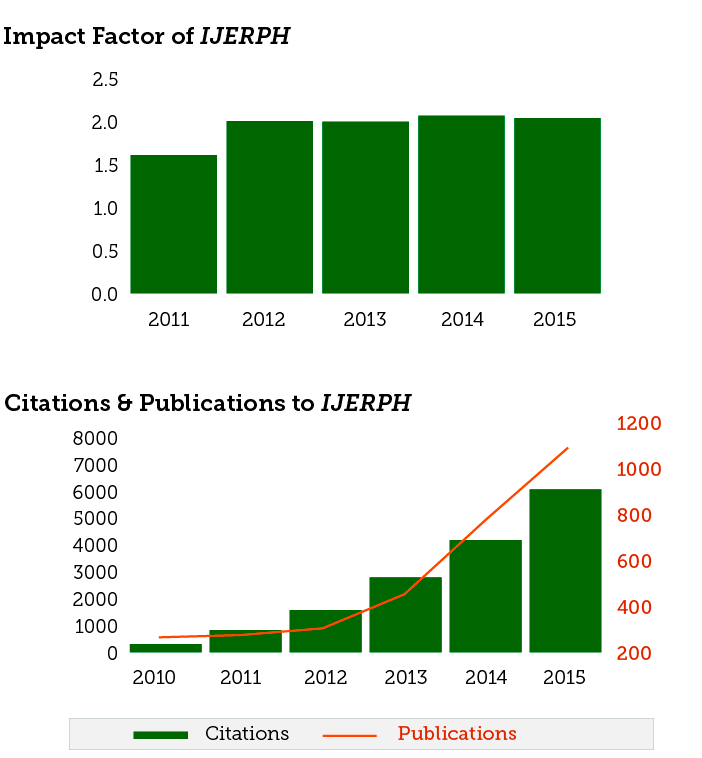
26 May 2016
Institutional Membership established with University of Bremen, Germany, Koç University, Turkey, IIASA, Austria and Jilin University and Kunming Institute of Botany, CAS, China
We are pleased to announce that the following institutions have joined MDPI's institutional membership program in May 2016:
- Unversity of Bremen, Germany
- Koç University, Turkey
- International Institute for Applied Systems Analysis (IIASA), Austria
- Jilin University, China
- Kunming Institute of Botany, Chinese Academy of Sciences, China
Authors affiliated with these institutions will benefit from a 10% discount on the article processing charges.
Additional details can be found on our institutional membership page.




23 May 2016
Institutional Membership Established with the KTH Royal Institute of Technology, Sweden and the South China University of Technology, Beijing University of Technology and Southern Medical University, China
We are pleased to announce that the following institutions have joined MDPI's institutional membership program in April and May 2016:
- KTH Royal Institute of Technology, Sweden
- South China University of Technology, China
- Beijing University of Technology, China
- Southern Medical University, China
Authors affiliated with these institutions will benefit from a 10% discount on the article processing charges.
Additional details can be found on our institutional membership page.



26 April 2016
New Section on www.mdpi.com - Latest Books
You may have noticed a new section that is now visible on our home page. This section is called "Latest Books" and showcases recent publications from MDPI Books, our book publishing service.
By clicking on the hyperlink "More Books" you will be taken to the MDPI Books Home Page. There you will find more information about the service, as well as the "Recent Publications" list.
Clicking on any of the book images in this list will take you to detailed information about that book (shown below). Here you can also download a PDF version of the book, or order a hardcover printed copy.
For further information about the MDPI Books service, please visit the webpage or contact [email protected].
31 March 2016
Axioms, Behavioral Sciences, Photonics, Separations and Toxics added to the Emerging Sources Citation Index in Web of Science
We are pleased to announce that the journals Axioms, Behavioral Sciences, Photonics, Separations and Toxics were recently accepted for inclusion in the newly launched Emerging Sources Citation Index (ESCI) in Web of Science.
ESCI serves to highlight promising journals which are still under consideration for the Science Citation Index Expanded (SCIE) or the Social Sciences Citation Index (SSCI).
The Emerging Sources Citation Index (ESCI), Science Citation Index Expanded (SCIE), Social Sciences Citation Index
(SSCI), and Web of Science™ (WoS) are Thomson Reuters products.






30 March 2016
Institutional Membership established with the University of Winchester, UK, Silesian University of Technology, Poland and Beijing Jiaotong University and Zhejiang University, China
We are pleased to announce that the University of Winchester, UK, the Silesian University of Technology, Poland and Beijing Jiaotong University and Zhejiang University, China, have joined our Institutional Membership program. Primary authors from these universities will benefit from a 10% discount on article processing charges.
Additional details can be found on our institutional membership page.



24 March 2016
New Editorial Office in Barcelona, Spain
We are excited to announce the opening of our new editorial office in Barcelona, Spain. The launch team is led by a Senior Editor and comprises further staff holding doctoral degrees with several years of research experience. The new editorial team will help us to get closer to European research communities and progress Sciforum, the platform to support the scientific community via conference hosting and other functions. They will also help spread the word about Open Access and meet academics at scientific events.
We are in the process of hiring more doctoral and masters graduates to join the editorial team and welcome applications via [email protected]. For contact details about the office, see our contact page.

22 February 2016
Membership Established with the Max Planck Society
We are pleased to announce that the Max Planck Digital Library (MPDL) has signed an agreement with MDPI to support authors associated with the Max Planck Society (Max-Planck-Gesellschaft). As of 22 February 2016, corresponding authors will receive full funding from the MPDL for articles published in MDPI journals, with a 10% discount applied to the Article Processing Charges. Additional details can be found at our institutional membership page.
Founded in 1948, The Max Planck Society is one of Germany’s leading research organizations, and is currently made up of 83 institutes conducting basic research in natural sciences, life sciences, social sciences and humanities. 18 Nobel laureates have emerged from its ranks of scientists and the society has more than 15,000 publications in scientific journals each year.
5 February 2016
Institutional Membership Extension: Wageningen University, CSIC, University of Zürich, ETH Zürich, University of Tübingen and Osnabrück University
We are pleased to announce that Wageningen University, the Netherlands, the Spanish National Research Council (CSIC), Spain, the University of Zürich and ETH Zürich, Switzerland, and the University of Tübingen and Osnabrück University, Germany, have not only renewed their institutional memberships with MDPI after two years of successful cooperation, but have also increased the reduction of the article processing charges (APCs) for affiliated authors to 25%.
Additional details can be found on our institutional membership page.






5 February 2016
Institutional Membership established with Brock University, Canada and the University of Pisa, Italy
We are pleased to announce that Brock University, Cananda, and the University of Pisa, Italy, have joined MDPI's institutional membership program: Primary authors from these universities will benefit from a 10% discount on the article processing charges as of 01 February 2016.
Additional details can be found on our institutional membership page.

25 January 2016
MDPI Sponsors diss:kurs with the University of Basel
MDPI is pleased to announce its newly established sponsorship of diss:kurs, an event coordinated by the University of Basel to support their doctorate program. For more information about the event and how to register, please visit the diss:kurs webpage.
7 January 2016
New Institutional Memberships Established with Tsinghua University, the Chinese Society of Micro-Nano Technology, Ruhr University Bochum and the University of Ulm
We are pleased to announce that the following institutions have joined MDPI's institutional membership program as of 1 January 2016:
- Tsinghua University, China
- Chinese Society of Micro-Nano Technology (CSMNT)
- Ruhr University Bochum, Germany
- University of Ulm, Germany
Authors affiliated with these institutions will benefit from a 10% discount on the article processing charges.
Additional details can be found on our institutional membership page.



5 January 2016
Safety, Fermentation, C-Journal of Carbon Research, Magnetochemistry, Batteries and Horticulturae Released Their First Issue in December 2015
We are pleased to announce that MDPI's open access journals Safety, Journal of Imaging, Fermentation, C-Journal of Carbon Research, Magnetochemistry, Batteries and Horticulturae released their first issue at the end of December 2015.








17 December 2015
Institutional Membership Extension: University of Bern, Switzerland
We are pleased to announce that the University of Bern, Switzerland has not only renewed their institutional membership with MDPI after two years of successful cooperation, but also increased the reduction of the article processing charges (APCs) for affiliated authors to 25%.

17 December 2015
Institutional Membership with the University of Ulm and Helmholtz Zentrum Munich
We are pleased to announce that University of Ulm, Germany and Helmholtz Zentrum Munich, Germany has joined MDPI's institutional membership program:
Primary authors from the University of Ulm and Helmholtz Zentrum Munich will benefit from a 10% discount on the article processing charges as of 1 January 2016. Additional details can be found on our institutional membership page.


9 December 2015
Membership Established with the Virginia Polytechnic Institute and State University (Virginia Tech)
We are pleased to announce that Virginia Tech has joined MDPI's institutional membership program. Authors from Virginia Tech will benefit from a 10% discount on the article processing charges as of 1 December 2015. Additional details can be found on our institutional membership page.
1 December 2015
Membership Established with the Technical University of Denmark and the University of North Florida
We are pleased to announce that the following universities have joined MDPI's institutional membership program:
- Technical University of Denmark (as of 1 November 2015)
- University of North Florida, USA (as of 15 November 2015)
Primary authors from the Technical University of Denmark and the University of North Florida will benefit from a 10% discount on the article processing charges.
Additional details can be found on our institutional membership page.


2 October 2015
Membership Established with the University of Freiburg and the University of Regensburg
We are pleased to announce that the following universities have joined MDPI's institutional membership program:
University of Freiburg, Germany
University of Regensburg, Germany
Primary authors from the University of Freiburg and the University of Regensburg will benefit from a 10% discount on the article processing charges as of 1 October 2015 and 1 November 2015.
Additional details can be found on our institutional membership page.

19 June 2015
Updated Impact Factor for IJERPH – 2.063
We are pleased to report the 2014 Impact Factor for the International Journal of Environmental Research and Public Health (IJERPH). According to the 2015 release of the Journal Citation Reports® Science Edition (published by Thomson Reuters in June 2015), the updated Impact Factor for IJERPH is 2.063. The 5-Year Impact Factor is 2.493. IJERPH now ranks 96/221 (Q2) in the category ‘Environmental Sciences’.
Evolution of the IJERPH Impact Factor:
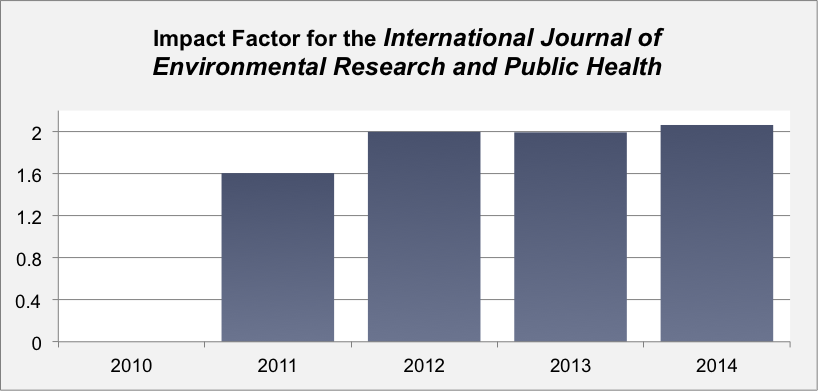
Evolution of citations to IJERPH: