Skip Content
You are currently on the new version of our website. Access the old version .
  • Tracked for
    Impact Factor
  • 2.6
    CiteScore
  • 29 days
    Time to First Decision

Hygiene

Hygiene is an international, peer-reviewed, open access journal on healthcare epidemiology, public health and environmentally-related hygiene, published quarterly online by MDPI.
We also welcome submissions with a focus on best practices that help maintain health and prevent the spread of diseases.

All Articles (178)

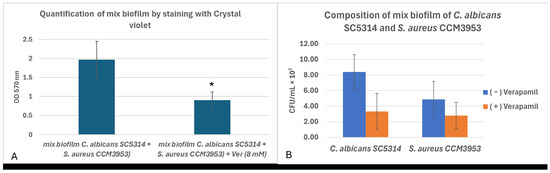
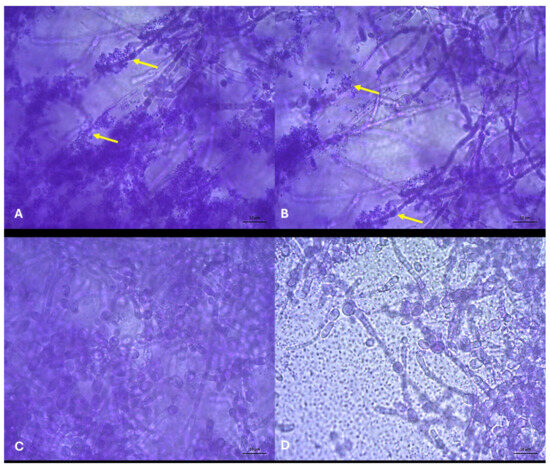
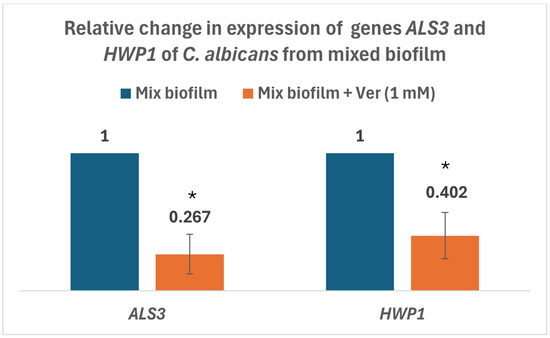
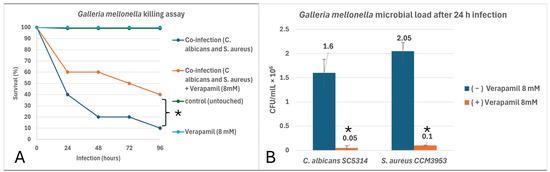
Verapamil (VER) is a calcium channel blocker used to treat cardiovascular diseases. However, some studies also suggest its antimicrobial potential. Changes in calcium abundance in yeasts can lead to decreased expression of transcription factors for genes related to morphology, resistance, and biofilm. Hyphal growth in Candida albicans is necessary for biofilm formation, especially in mixed biofilms with Staphylococcus aureus. This research studied the antibiofilm activity of VER in mixed biofilms of C. albicans SC5314 and S. aureus CCM3953. First, the minimal inhibitory concentration of VER was determined for single-species biofilms. Subsequently, a subinhibitory concentration of VER (1 mM) was tested on mixed biofilms. Biomass was reduced by 20% for C. albicans and 30% for S. aureus. The morphology of C. albicans was altered, and a decrease in S. aureus cells was also observed. qPCR was used to determine changes in HWP1 and ALS3 gene expression in biofilms formed w/wo VER. A decrease in the expression of both genes was observed. In vivo experiments with Galleria mellonella confirmed the antibiofilm activity of VER against mixed infections of C. albicans and S. aureus. These results suggest that VER regulates the morphology of C. albicans, resulting in changes in biofilm composition and the adhesion of S. aureus.
5 February 2026

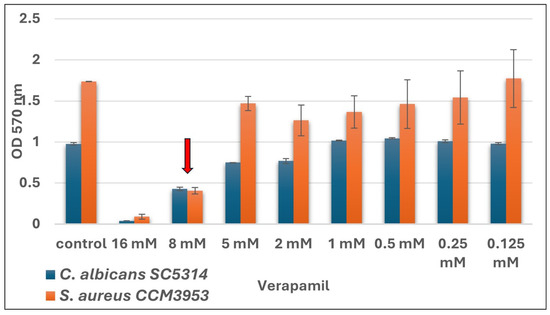
SMIC50 (minimal inhibitory concentration) (marked with arrow) of VER to biofilms of C. albicans SC 5314 (blue) and S. aureus CCM3953 (orange).

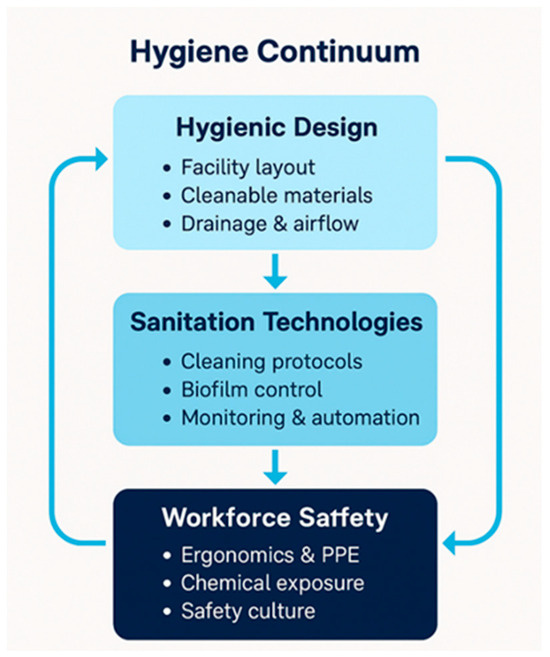
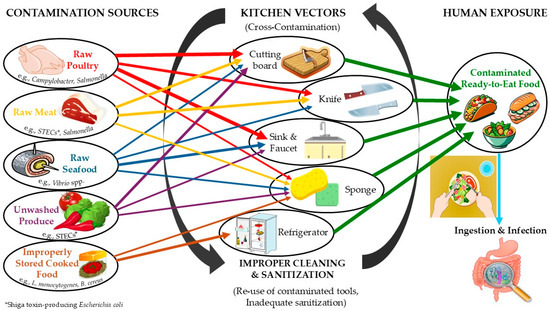
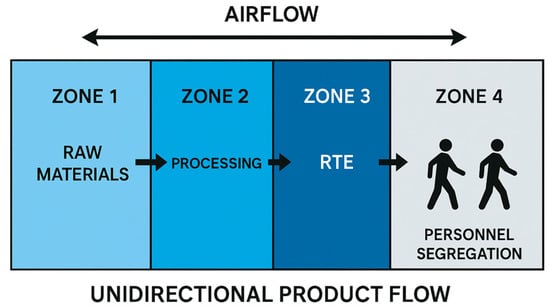
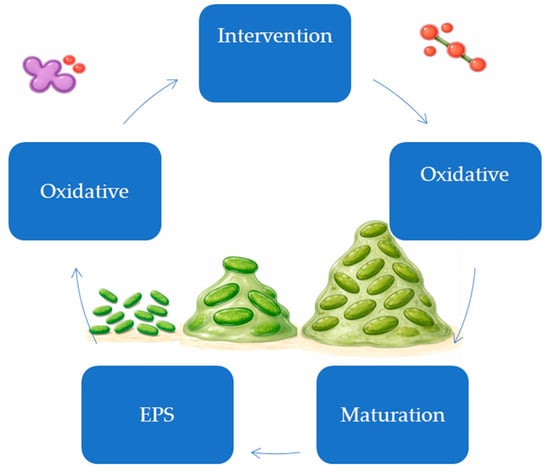
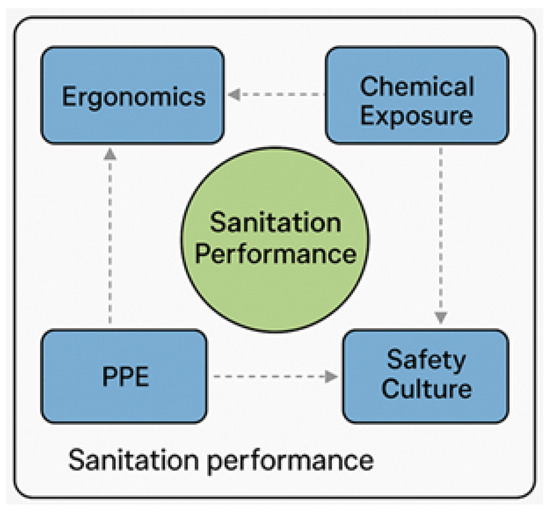
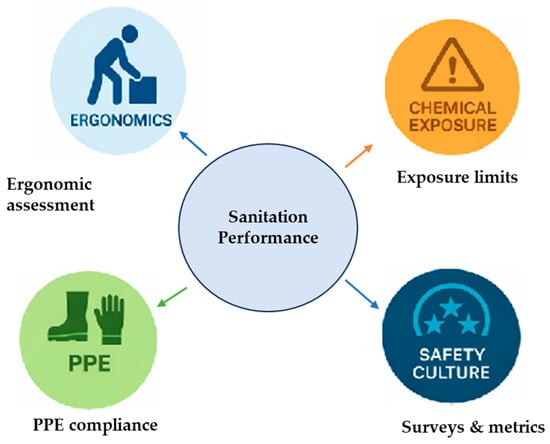
Seafood processing environments represent some of the most demanding hygienic settings in the global food sector. High humidity, variable temperatures, and heavy organic residues promote the persistence of Listeria monocytogenes, Vibrio spp., and Salmonella spp., making sanitation both critical and inherently complex. This review synthesizes recent advances in hygienic design, sanitation technologies, and workforce safety as interconnected elements of a single “hygiene continuum.” Building upon Codex, FDA, and European hygiene frameworks (2020–2024), the review examines how engineering design, Sanitation Standard Operating Procedures (SSOPs) and Good Manufacturing Practices (GMPs) systems, and occupational hygiene jointly determine microbial control, sustainability, and workforce well-being. Particular focus is given to biofilm dynamics, emerging disinfection technologies, and automation through cleaning-in-place (CIP) and cleaning-out-of-place (COP) systems. Recent trends—including digital monitoring, eco-efficient cleaning, and human-centered facility design—are discussed as drivers of next-generation hygiene management. Collectively, these insights demonstrate that hygienic performance in seafood processing is not a fixed endpoint but a living system linking design, management, and human behavior toward safe, sustainable, and resilient seafood production.

2 February 2026

Trajectory Patterns of Hygiene Training Effectiveness Across Three Instructional Modes

  • Mark R. Limon,
  • Shaira Vita Mae G. Adviento and
  • Shiella Mae G. Juan
  • + 9 authors

Background: Hygiene and food-safety training is a critical public health strategy for preventing contamination and promoting safe food-handling practices in community settings. This study evaluated the long-term effectiveness of In-person, Online, and Hybrid instructional modes in enhancing hygiene and food-safety competencies among trainees in Ilocos Norte, Philippines. Methods: Using a longitudinal quasi-experimental design, performance was measured at 12, 24, and 36 months across four domains: Personal Health & Hygiene, Food Hazards, Cleaning and Sanitation, and Good Manufacturing Practices. A total of 384 students met all inclusion criteria and completed the full series of evaluations. Descriptive and inferential statistical analyses were employed. Results: Competency scores increased significantly over time in all instructional modes (p < 0.001). Hybrid learners demonstrated the highest early longitudinal gains at 12 months (mean score, M = 20.88), compared with In-person (M = 10.28) and Online (M = 10.57). At 36 months, Online learners achieved the highest performance (M = 19.50), indicating stronger long-term retention. Effect size analysis using eta squared (η2) showed large effects for Cleaning and Sanitation (η2 = 0.196), Good Manufacturing Practices (η2 = 0.115), and overall performance (η2 = 0.138). Standardized Mean Change (SMC) indicated substantial improvement across modes, with Hybrid showing the greatest early change (SMC = 41.76 at 12 months) and Online exhibiting the strongest long-term improvement (SMC = 38.80 at 36 months). Training Efficiency Index (TEI) identified In-person instruction as most efficient (TEI = 30.55), followed by Online (29.49) and Hybrid (19.56). Linear Mixed-Effects Regression confirmed significant main effects of Time (β = 4.82, p < 0.001) and Mode (β = 3.97, p < 0.001), as well as a significant Time × Mode interaction (β = −1.42, p < 0.01). Conclusions: The findings indicate that Hybrid instruction supports rapid early competency gains, while Online instruction yields superior long-term mastery of hygiene and food-safety competencies. These results provide evidence-based guidance for optimizing hygiene training programs in community and public health contexts.

26 January 2026

Background: Despite its crucial role in overall health, oral health is frequently overlooked within healthcare systems, partly due to the misconception that oral diseases are neither life-threatening nor directly disabling. This perception has led to an underestimation of the psychological, social, and economic burden associated with oral diseases. Τhe present study aimed to assess oral health status and oral health-related quality of life among dental patients attending a public Special Care Center in Greece. Methods: A cross-sectional study was conducted among 400 dental patients aged 18 years and older who visited a public Special Care Center for a routine check-up or a dental problem between September and October 2024. Data was collected through personal interviews and clinical examinations after informed consent was obtained. Oral health-related quality of life was evaluated using the Oral Health Impact Profile-14 (OHIP-14) and the Oral Impacts on Daily Performance (OIDP) questionnaires. Categorical variables were presented as absolute and relative frequencies, while quantitative variables were summarized as mean, standard deviation, median, minimum, and maximum. Normality was assessed using the Kolmogorov–Smirnov test. Bivariate analyses and multivariate linear regression models were performed, with statistical significance set at p < 0.05. Statistical analyses were conducted using IBM SPSS 23.0. Results: The majority of participants were female (56.3%) with a mean age of 50.4 years (SD = 14.9). Overall oral health-related quality of life was moderate (OHIP-14: Mean = 21.0, SD = 14.8; OIDP: Mean = 14.0, SD = 12.8). Patients who attended the center due to a dental problem reported significantly poorer oral health outcomes than those attending routine check-ups (p < 0.001). Poorer self-rated oral health, having ≥12 missing teeth, prosthetic restoration, and foreign nationality were significantly associated with worse oral health-related quality of life. Conclusions: Dental patients attending the Special Care Center demonstrated moderate oral health status, which was associated with psychological distress, physical disability, and social limitations. These findings underline the need for targeted public oral health interventions, especially for vulnerable population groups.

12 January 2026

News & Conferences

Issues

Open for Submission

Editor's Choice

Get Alerted

Add your email address to receive forthcoming issues of this journal.

XFacebookLinkedIn
Hygiene - ISSN 2673-947X