



Journal Description
Humanities
Humanities
is an international, peer-reviewed, open access journal on the meaning of cultural expression and perceptions as seen through different interpretative lenses. Humanities is published monthly online by MDPI.
- Open Access— free for readers, with article processing charges (APC) paid by authors or their institutions.
- High Visibility: indexed within Scopus, ESCI (Web of Science), ERIH Plus, and other databases.
- Rapid Publication: manuscripts are peer-reviewed and a first decision is provided to authors approximately 33.4 days after submission; acceptance to publication is undertaken in 4.6 days (median values for papers published in this journal in the second half of 2025).
- Recognition of Reviewers: reviewers who provide timely, thorough peer-review reports receive vouchers entitling them to a discount on the APC of their next publication in any MDPI journal, in appreciation of the work done.
- Journal Cluster of Human Thought and Cultural Expression: Culture, Histories, Humanities, Languages, Literature and Religions.
Impact Factor:
0.3 (2024)
Latest Articles
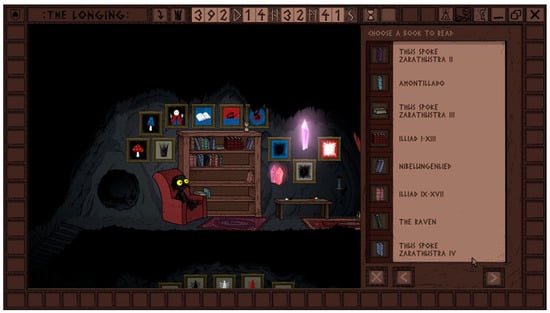
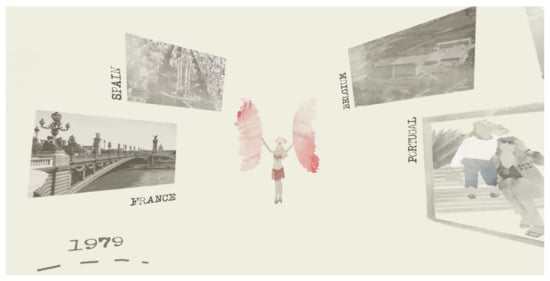
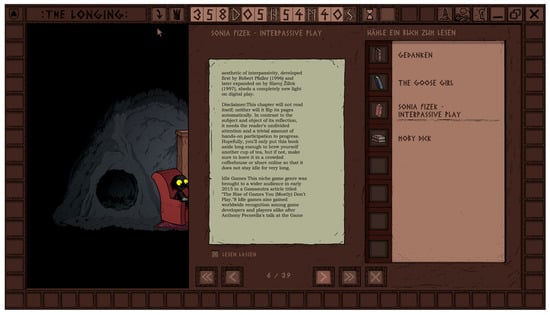
Analyzing Distant Play as Parasocial Resistance: Unnatural Temporality, Interpassive Dis-Reading, and Existentialist Angst in The Longing
Humanities 2026, 15(2), 27; https://doi.org/10.3390/h15020027 - 5 Feb 2026
Abstract
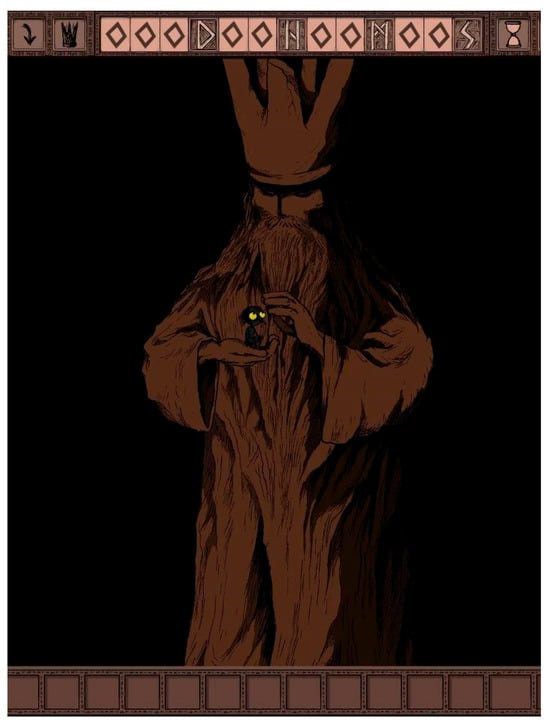
This article offers the first systematic analytical methodology to understand distant play as a multidimensional, ludoliterary, critical, and philosophical practice of engaging with so-called idle or semi-idle games. It uses Anselm Pyta’s The Longing, a so far underexplored semi-idle, slow game that
[...] Read more.
This article offers the first systematic analytical methodology to understand distant play as a multidimensional, ludoliterary, critical, and philosophical practice of engaging with so-called idle or semi-idle games. It uses Anselm Pyta’s The Longing, a so far underexplored semi-idle, slow game that challenges traditional gameplay paradigms through its metareferential, bookish, philosophical, and contemplative structure, as a case study. Our central argument is that The Longing deploys antimimetic temporal mechanics, interpassive forms of bookish play, and ideas of existentialist resistance to explore themes of time, agency, and existential longing, thereby offering a reflective space for dealing with neo-liberal, post-pandemic, polycrisis-stricken angst. To come to terms with the multidisciplinary complexities of the game, our paper adopts a triadic analytical methodology interweaving insights from postclassical, medium-specific narratology, platform-comparative literary analysis, and existentialist philosophy. This combined approach transcends existing ludoliterary frameworks and accounts for divergent forms of play. Our first focus is the game’s multiscalar temporal layering and the strategies it requires from players to “ludify” antimimetic frictions bookish between those layers. This is followed by an examination of how the game constructs a bookish player by interweaving ludexical processes of reading, unreading, dis-reading, and writing (in) books and other printed documents. Finally, we turn to the game’s complex interpassive relationships between player, player-character, and game world, highlighting in particular the role of walking, collecting, building, and searching as acts of catharsis and rebellion, and examining failure as a valid ludic alternative to survival and happiness. Ultimately, our analysis renders distant play as a form of parasocial resistance, which in The Longing manifests as an affective and philosophically fine-grained combination of more-than-human relationality, care, and relief vis-a-vis the nothingness of lost hope. The game thus offers a new form of e-literary engagement, placing books and their “unnatural,” transmediated affordances front and center while questioning the capitalist undercurrents of contemporary literary media and critiquing a culture of acceleration.
Full article
(This article belongs to the Special Issue Electronic Literature and Game Narratives)
►
Show Figures
Open AccessArticle
‘The Citadel of Their Celibacy’: Masculinity, Celibacy and Marriage in Mary Lavin’s Short Fiction
by
Fae McNamara
Humanities 2026, 15(2), 26; https://doi.org/10.3390/h15020026 - 3 Feb 2026
Abstract
Throughout her oeuvre, Mary Lavin (1912–1996) engages with the nuances of “celibate moments” within masculine life cycles. This periodic sexlessness is often expressed through the complexities of strained or upended marital unions, as in “A Happy Death”, as well as the homosocial and
[...] Read more.
Throughout her oeuvre, Mary Lavin (1912–1996) engages with the nuances of “celibate moments” within masculine life cycles. This periodic sexlessness is often expressed through the complexities of strained or upended marital unions, as in “A Happy Death”, as well as the homosocial and fraternal relationships depicted in “The Joy Ride” and “The Becker Wives.” Within these overlooked narrative spaces, we can consider the relational implications of sexlessness, singleness and marital struggle on interpersonal relationships and the intimacies of masculine sexual identity in post-independent Ireland. In Lavin’s work, the short story is not a conclusive form, and celibacy is not always a permanent practice or observed behaviour. Instead, celibacy can be transient, often silent but equally charged with generative or destructive potential. This article will theorise male celibacy as part of Lavin’s commitment to silence and restraint and include this as part of her refusal of conventional romantic closures. Celibacy in this case takes on a significant positionality within interpersonal characterisations, not merely as a passive symptom of unhappiness or a given consequence of marital decline or spousal death, but as an active and at times frustrated response to hegemonic expectation. To conceive of masculine celibacy in these works, this article considers how celibacy functions within domestic short fiction and Lavin’s conceptualisation of everyday estranged intimacies.
Full article
(This article belongs to the Special Issue Celibacy in Irish Women’s Writing)
Open AccessArticle
Water as Cultural Memory: The Symbolism of Flow in African Spiritual Imagination
by
Oluwaseyi B. Ayeni, Oluwajuwon M. Omigbodun, Oluwakemi T. Onibalusi and Isabella Musinguzi-Karamukyo
Humanities 2026, 15(2), 25; https://doi.org/10.3390/h15020025 - 3 Feb 2026
Abstract
This study explores water as memory and as method in African thought. It shows how rivers, rain, and oceans act not only as sources of life but also as teachers who carry a story, restore balance, and reveal moral truth. Drawing from Yoruba,
[...] Read more.
This study explores water as memory and as method in African thought. It shows how rivers, rain, and oceans act not only as sources of life but also as teachers who carry a story, restore balance, and reveal moral truth. Drawing from Yoruba, Akan, Igbo, southern African, Kenyan and Afro-Atlantic traditions, this paper presents water as archive and as oracle, holding the past while speaking to the present. This article develops the idea of hydro epistemology, understood here as a way of knowing through flow, renewal, and relationship. In this framework, knowledge is created through ritual engagement with water, transmitted through oral memory and ecological observation, tested against environmental response and revised when conditions change. Water is treated as a witness, mediator and guide, rather than a passive resource. By setting these traditions alongside global discussions on water governance, nature-based ecological care and decolonial environmental ethics, this paper argues that African water imagination offers more than symbolism. It proposes a practical philosophy in which caring for water and caring for life are the same act. To listen to water is to remember, to restore and to recover a way of living that renews both people and land.
Full article
Open AccessArticle
Global Neo-Decadence, Postcolonialism, and the Hyper-Digital Hysterical Sublime of Late Capitalism
by
Cherrie Kwok
Humanities 2026, 15(2), 24; https://doi.org/10.3390/h15020024 - 3 Feb 2026
Abstract
This article examines some postcolonial dimensions of a global literary movement in the twenty-first century called Neo-Decadence. It begins by highlighting the artistic and political preoccupations of the movement within the context of the century’s turn toward authoritarianism and late capitalism amidst an
[...] Read more.
This article examines some postcolonial dimensions of a global literary movement in the twenty-first century called Neo-Decadence. It begins by highlighting the artistic and political preoccupations of the movement within the context of the century’s turn toward authoritarianism and late capitalism amidst an increasingly hyper-digital landscape. Then, it examines two short stories set in Iran and Peru in order to stress the emergence of what the article calls the Neo-Decadent “Real” (an anti-realism that bears witness to our century’s late capitalist and digital saturations); Fugitive Aestheticism (an aestheticism that, in emphasizing taste, touch, and smell, escapes permanent or totalizing capitalist capture); and Neo-Decadent Sexuality (queer circuits of desire that play with the consumptive impulses of late capitalism). In the process, it demonstrates how Neo-Decadence overlaps with, but also departs from, fin de siècle European decadence. It concludes by examining how Neo-Decadence might expand our on-going understanding of decadence more broadly, as well as the movement’s limitations with respect to its relationship to academia, the environment, and women.
Full article
(This article belongs to the Special Issue The Use and Misuse of Fin-De-Siècle Decadence and Its Imagination)
►▼
Show Figures

Figure 1
Open AccessArticle
The Dead End of Dollar Road: Traces of World War II in Kjartan Fløgstad’s Novels
by
Heming H. Gujord
Humanities 2026, 15(2), 23; https://doi.org/10.3390/h15020023 - 30 Jan 2026
Abstract
In his 17 novels, Kjartan Fløgstad (born 1944) has analysed the traces of WWII and possible continuations of right-wing ideology into post-war politics and ideology. In my article, I focus on four novels: Dalen Portland, U3, Grense Jakobselv, and Due
[...] Read more.
In his 17 novels, Kjartan Fløgstad (born 1944) has analysed the traces of WWII and possible continuations of right-wing ideology into post-war politics and ideology. In my article, I focus on four novels: Dalen Portland, U3, Grense Jakobselv, and Due og drone (Dove and Drone). Dalen Portland and U3 were published in the context of the Cold War, whereas Grense Jakobselv and Due og drone were published in a context in which history was claimed to have reached its end after the collapse of the Soviet Union. Fløgstad has opposed the end-of-history thesis since it was introduced in the influential study by Francis Fukuyama in 1992. From Fløgstad’s perspective, history has reached a dead end, as democratic ideals are being challenged and economic disparities are widening—even within the welfare states of Northern Europe. In all the novels being discussed, Fløgstad has consistently focused on factual and possible interlinks between right-wing figures of thought and stakeholders of political and economic power. Thus, the only consistent superpower, the United States, has also been an object of Fløgstad’s interest. The importance of the United States is even indicated in the well-chosen title for the English translation of Dalen Portland: Dollar Road. The interpretation of Fløgstad’s novels is simultaneously an interpretation of history. Given the threats to democratic ideals that have emerged in the 2020s, Fløgstad’s analysis has demonstrated notable foresight.
Full article
(This article belongs to the Special Issue Memories of World War II in Norwegian Fiction and Life Writing)
►▼
Show Figures

Figure 1
Open AccessArticle
Fiber to Flesh: Textiles and Black Resistance in Slave Narratives
by
Zay Dale
Humanities 2026, 15(2), 22; https://doi.org/10.3390/h15020022 - 29 Jan 2026
Abstract
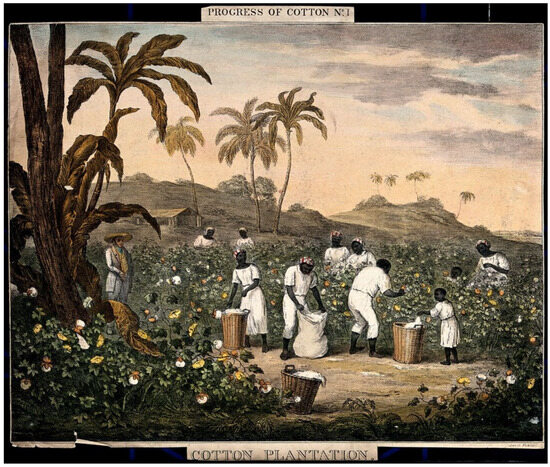
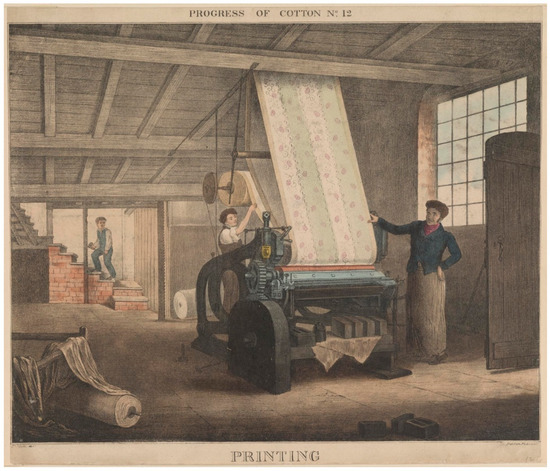
This essay examines how textiles operate as violent aesthetic tools in the formation of Black existence during American slavery. While the American plantation relied on cotton production and the regulation of what the enslaved would wear, enslaved people transformed these fibers into instruments
[...] Read more.
This essay examines how textiles operate as violent aesthetic tools in the formation of Black existence during American slavery. While the American plantation relied on cotton production and the regulation of what the enslaved would wear, enslaved people transformed these fibers into instruments of refusal, creativity, and ontological reclamation. A study of textiles during American slavery exposes how the violence of enslavement was lived on the surface of the body through clothing. Reading art and runaway advertisements alongside narratives by Olaudah Equiano, John Brown, Booker T. Washington, and Harriet Jacobs, this article reveals how the enslaved resisted and rebelled against the textiles they were forced to wear. Bringing together visual art, runaway slave advertisements, and slave narratives, I argue that textiles form a crucial archive for understanding Black rebellion and resistance. This essay situates historical acts of resistance through textiles; it is through clothing that enslaved people articulated a radical insistence on their presence, thus turning fiber into flesh.
Full article
(This article belongs to the Special Issue Rebellion and Revolution in African American Literature)
►▼
Show Figures

Figure 1
Open AccessArticle
Platformativity of Desire: Affective Labor, Libidinal Economy, and Prosumer Fantasy in Chinese Entertainment Live-Streaming
by
Kun Qian
Humanities 2026, 15(2), 21; https://doi.org/10.3390/h15020021 - 28 Jan 2026
Abstract
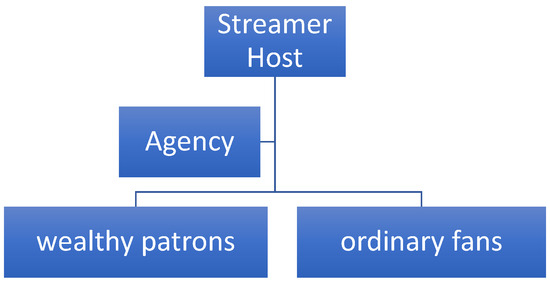
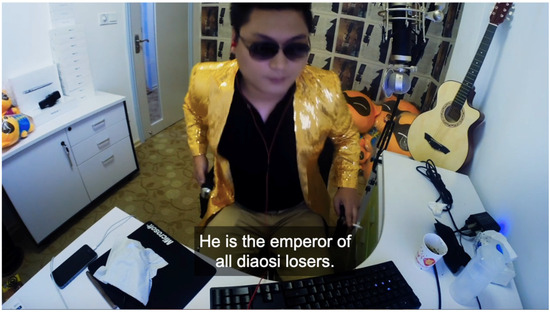
This article examines labor relations in China’s entertainment live-streaming, where the state and private companies jointly regulate desire to secure political control and economic profit. Using Hao Wu’s documentary People’s Republic of Desire as a case study, I analyze how physical and affective
[...] Read more.
This article examines labor relations in China’s entertainment live-streaming, where the state and private companies jointly regulate desire to secure political control and economic profit. Using Hao Wu’s documentary People’s Republic of Desire as a case study, I analyze how physical and affective labor are converted into emotional commodities circulated across platforms. Drawing on Jean-François Lyotard’s concept of the “libidinal economy,” I argue that while desire carries the potential to disrupt economic structures, it is ultimately absorbed into sustaining the political-economic status quo in contemporary China. Moreover, engaging Thomas Lamarre’s notion of “platformativity,” I further show how video platforms interweave the political, economic, and psychic to sustain a “tittytainment” economy that masks ongoing labor exploitation. The rise of live-streaming thus offers a critical lens for understanding the shifting relations among capital, labor, technology, and state governance in the digital age.
Full article
(This article belongs to the Special Issue Labor Utopias and Dystopias)
►▼
Show Figures

Figure 1

Open AccessArticle
Women’s Madness as a Social Construct in the Novel Misiá Señora by Albalucía Ángel
by
Diana Vela
Humanities 2026, 15(2), 20; https://doi.org/10.3390/h15020020 - 23 Jan 2026
Abstract
This article examines the representation of women’s madness in the novel Misiá Señora by Albalucía Ángel to argue that the protagonist’s diagnosis of madness and subsequent institutionalization serve as a social construct, lack a scientific foundation and function as mechanisms of social discipline.
[...] Read more.
This article examines the representation of women’s madness in the novel Misiá Señora by Albalucía Ángel to argue that the protagonist’s diagnosis of madness and subsequent institutionalization serve as a social construct, lack a scientific foundation and function as mechanisms of social discipline. I contend that the psychiatric procedures to which she is subjected operate less as therapeutic interventions than as punitive correctives aimed at regulating her defiance of patriarchal authority and her transgression of normative gendered behavior. This essay begins by reviewing scholarship on the novel that does not question the mental health diagnosis attributed to the main character. It then undertakes a close reading of the protagonist’s institutionalization to demonstrate how Ángel’s novel reveals madness as a device to neutralize women who resist socially prescribed roles. The analysis draws on feminist critiques of the “psy” disciplines—particularly those that interrogate the gendered construction of mental illness and the historical role of these disciplines in policing women’s bodies, emotions, and conduct. The conclusions highlight that, in Misiá Señora, the protagonist’s pathologization functions as a disciplinary tool that reinforces hegemonic gender norms by framing dissent as clinical deviance and justifying coercive forms of control.
Full article
Open AccessArticle
“It Wouldn’t Be Her Own”: Norah Hoult’s “Miss Jocelyn” as a Response to James Joyce’s “Eveline”
by
Kathleen P. Costello-Sullivan
Humanities 2026, 15(1), 19; https://doi.org/10.3390/h15010019 - 19 Jan 2026
Abstract
This article examines Norah Hoult’s 1929 short story “Miss Jocelyn,” from her short story collection Poor Women!, as an intertextual response to James Joyce’s representation of single women in the short story “Eveline” included in his landmark 1914 collection Dubliners. Drawing on Katherine
[...] Read more.
This article examines Norah Hoult’s 1929 short story “Miss Jocelyn,” from her short story collection Poor Women!, as an intertextual response to James Joyce’s representation of single women in the short story “Eveline” included in his landmark 1914 collection Dubliners. Drawing on Katherine Fama and Jorie Lagerwey’s work on singlehood, I suggest that Hoult challenges the dichotomy of “married” versus “premarried” that Joyce critiques in “Eveline”. At the same time, Hoult’s portrait of Miss Jocelyn powerfully engages the material and social factors that so often condition single women’s lives. She considers not only Miss Joceyln’s awareness and loss of her former independence, but also the ways that ageism compromises her options and agency. While both stories examine the disempowerment of women, “Miss Joceyln” highlights the loss of agency, the financial dependency, and the societal dismissal to which celibate older women were often subject in early twentieth-century Ireland and Britain, thus treating celibacy as a “third space”—an option not proffered in Joyce’s work.
Full article
(This article belongs to the Special Issue Celibacy in Irish Women’s Writing)
Open AccessArticle
Passports of the Soul: Crossing Borders and Remembering the Self in Post-Communist Europe
by
Lidia Mihaela Necula
Humanities 2026, 15(1), 18; https://doi.org/10.3390/h15010018 - 19 Jan 2026
Abstract
This article explores how Herta Müller and Paul Bailey transform the apparatus of state bordering, i.e., passports, permits and catechisms, into metaphors for an interior struggle between flight and belonging. In The Passport, The Land of Green Plums and Bailey’s Kitty &
[...] Read more.
This article explores how Herta Müller and Paul Bailey transform the apparatus of state bordering, i.e., passports, permits and catechisms, into metaphors for an interior struggle between flight and belonging. In The Passport, The Land of Green Plums and Bailey’s Kitty & Virgil, emigration is portrayed not as departure alone but as a prolonged contest between the body that moves and the spirit that lingers. Those who cross borders geographically remain anchored, often painfully, in the mental and moral landscapes of the home they leave behind. The paper examines how documents, bodies, and languages become shifting frontier zones where identity is repeatedly issued and withdrawn, shaped by the pressures of memory, exile, and biopolitical control. Müller’s vision, written from within Romania’s history, and Bailey’s, refracted through an English consciousness yet partly set in Romania, converge in a poetics of witness that treats exile as both wound and testimony. Ultimately, these works suggest that identity survives in the liminal space between motion and remembrance where thought halts at its own threshold, memory traces its faint watermark, and the self bears its unspoken credential.
Full article
(This article belongs to the Special Issue Cross-Borders and Crossroads—Sharing Cultural Memory and Identity Negotiation in South-Eastern European Narratives)
Open AccessArticle
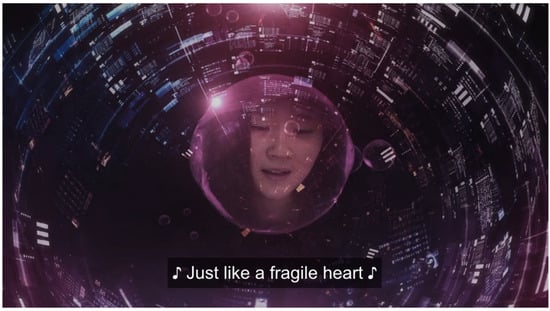
Extending Digital Narrative with AI, Games, Chatbots, and XR: How Experimental Creative Practice Yields Research Insights
by
Lina Ruth Harder, David Jhave Johnston, Scott Rettberg, Sérgio Galvão Roxo and Haoyuan Tang
Humanities 2026, 15(1), 17; https://doi.org/10.3390/h15010017 - 16 Jan 2026
Abstract
The Extended Digital Narrative (XDN) research project explores how experimental creative practice with emerging technologies generates critical insights into algorithmic narrativity—the intersection of human narrative understanding and computational data processing. This article presents five case studies demonstrating that direct engagement with AI and
[...] Read more.
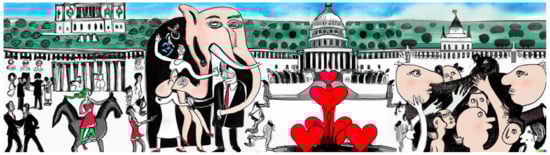
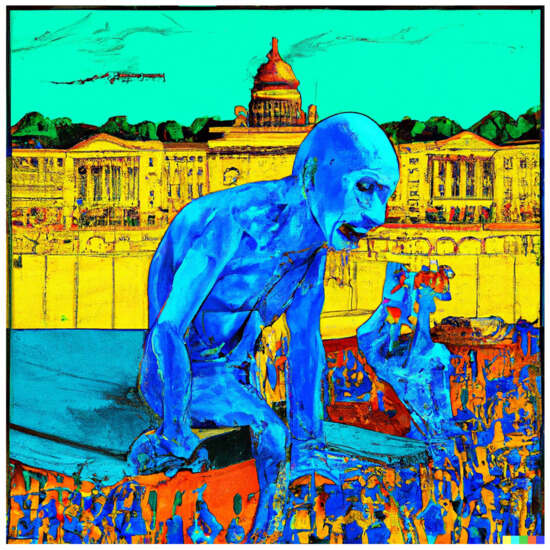
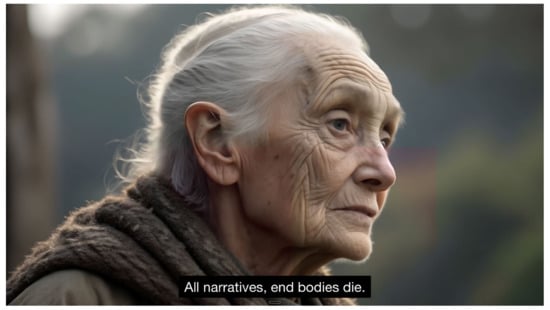
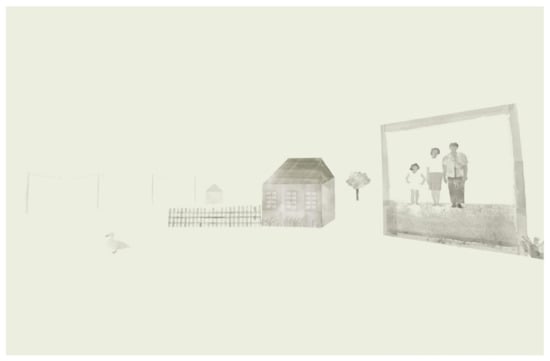
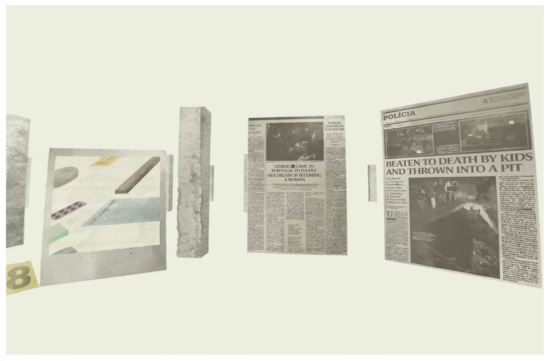
The Extended Digital Narrative (XDN) research project explores how experimental creative practice with emerging technologies generates critical insights into algorithmic narrativity—the intersection of human narrative understanding and computational data processing. This article presents five case studies demonstrating that direct engagement with AI and Extended Reality platforms is essential for humanities research on new genres of digital storytelling. Lina Harder’s Hedy Lamar Chatbot examines how generative AI chatbots construct historical personas, revealing biases in training data and platform constraints. Scott Rettberg’s Republicans in Love investigates text-to-image generation as a writing environment for political satire, documenting rapid changes in AI aesthetics and content moderation. David Jhave Johnston’s Messages to Humanity demonstrates how Runway’s Act-One enables solo filmmaking, collapsing traditional production hierarchies. Haoyuan Tang’s video game project reframes LLM integration by prioritizing player actions over dialogue, challenging assumptions about AI’s role in interactive narratives. Sérgio Galvão Roxo’s Her Name Was Gisberta employs Virtual Reality for social education against transphobia, utilizing perspective-taking techniques for empathy development. These projects demonstrate that practice-based research is not merely artistic production but a vital methodology for understanding how AI and XR platforms shape—and are shaped by—human narrative capacities.
Full article
(This article belongs to the Special Issue Electronic Literature and Game Narratives)
►▼
Show Figures

Figure 1
Open AccessArticle
A Peritextual Study of the Decadent Cover Art Choices for Arthur Schnitzler’s The Road into the Open
by
Méghan Elizabeth Hodges
Humanities 2026, 15(1), 16; https://doi.org/10.3390/h15010016 - 15 Jan 2026
Abstract
In George Eliot’s The Mill on the Floss (1860), we are cautioned not to judge a book by its cover. Yet, the marketing team at every publisher knows that we, the audience, inevitably do just that. In the case of Arthur Schnitzler’s The
[...] Read more.
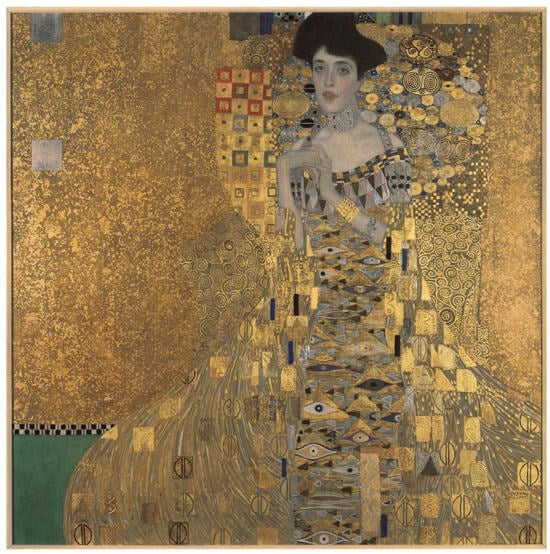
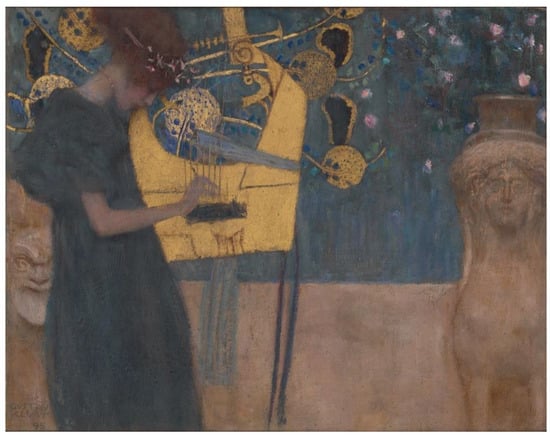
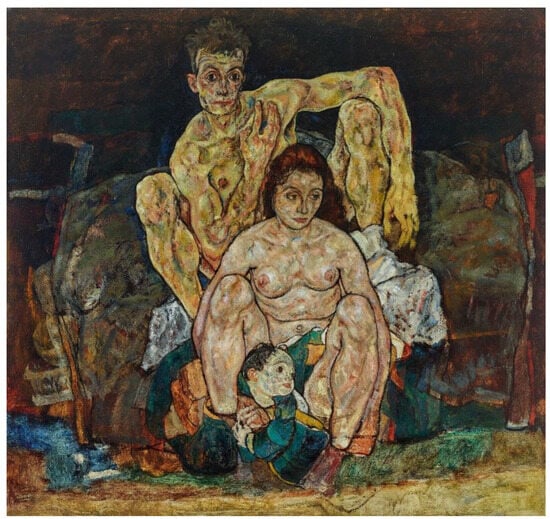
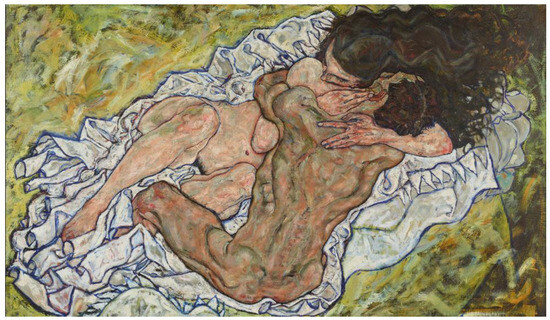
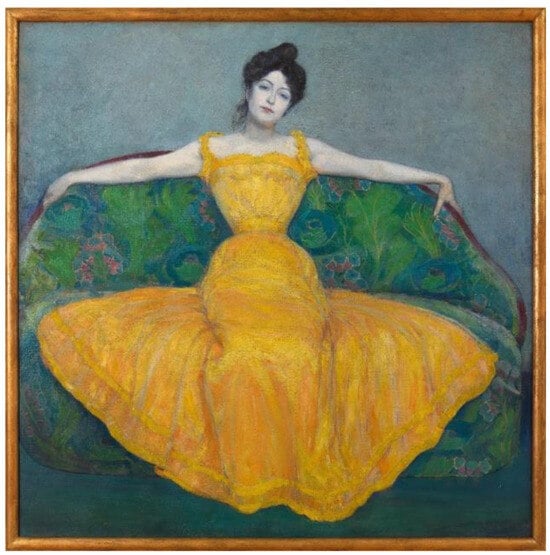
In George Eliot’s The Mill on the Floss (1860), we are cautioned not to judge a book by its cover. Yet, the marketing team at every publisher knows that we, the audience, inevitably do just that. In the case of Arthur Schnitzler’s The Road Into the Open (1908), various editions have featured paintings or drawings by contemporary Austrian artists, including Max Kurzweil, Gustav Klimt, and Egon Schiele, as the cover art. Schnitzler’s novel initially emerges in Pre-World-War-I Austria, a society grappling with political instability, fears about moral decline, and a preoccupation with neuroses. The anxious society that produced Schnitzler, Kurzweil, Klimt, and Schiele has been considered a representation par excellence of fin-de-siècle decadence. Following Gerard Genette’s Paratexts, I inquire as to the effect(s) of cover art and the competing visions of the novel they represent. This study responds to the following questions. How have publishers used or misused decadent imagery in (re)productions of Schnitzler’s novel? What meaning can be made from the use of the works by Kurzweil, Klimt, and Schiele as cover art? What contribution does each work make to our understanding of the Austria in Schnitzler’s novel? How does the reception of the author complement or compete with the reception of each painter?
Full article
(This article belongs to the Special Issue The Use and Misuse of Fin-De-Siècle Decadence and Its Imagination)
►▼
Show Figures

Figure 1

Open AccessArticle
Cultural Conceptualisation in Northern Albanian Gheg: Karl Steinmetz in a Diachronic Perspective and Youth Questionnaire Data
by
Ilda Hoxha and Edlira Bushati
Humanities 2026, 15(1), 15; https://doi.org/10.3390/h15010015 - 15 Jan 2026
Abstract
This article offers an interdisciplinary ethnolinguistic and sociolinguistic reading of Karl Steinmetz’s early twentieth-century travel accounts from the northern Albanian highlands and links them to contemporary Albanian youth’s attitudes toward tradition. Through close analysis of his depictions of space, social organisation and oral
[...] Read more.
This article offers an interdisciplinary ethnolinguistic and sociolinguistic reading of Karl Steinmetz’s early twentieth-century travel accounts from the northern Albanian highlands and links them to contemporary Albanian youth’s attitudes toward tradition. Through close analysis of his depictions of space, social organisation and oral practice, the study examines how tower, household, clan, honour, blood, revenge, hospitality and priest are lexically and discursively encoded as “word-concepts” structuring local worldviews. Methodologically, it combines textual analysis with a questionnaire administered to respondents aged 15–17 and 18–21 about the relevance of traditions today. The findings show that Steinmetz’s materials provide an early, systematic corpus on Northern Gheg Albanian, where linguistic variation is closely linked to customary law and collective identity; contemporary youth still value honour, hospitality, family solidarity and “besa”, while distancing themselves from the normative force of the Kanun and reinterpreting traditional codes in more individualised, rights-oriented terms. The article argues that Steinmetz’s work remains a crucial resource for understanding the diachronic interplay of language, culture and identity in northern Albania and for analysing how cultural models are transformed among younger generations.
Full article
(This article belongs to the Special Issue Cross-Borders and Crossroads—Sharing Cultural Memory and Identity Negotiation in South-Eastern European Narratives)
Open AccessArticle
The Suicidal Archive: From Di Benedetto’s Los suicidas to Guerriero’s Los suicidas del fin del mundo
by
Catalina Quesada-Gómez
Humanities 2026, 15(1), 14; https://doi.org/10.3390/h15010014 - 15 Jan 2026
Abstract
This essay offers a comparative reading of Antonio Di Benedetto’s Los suicidas and Leila Guerriero’s Los suicidas del fin del mundo through the lens of the “suicidal archive.” Drawing on literary criticism, trauma studies, and biopolitical theory, it explores how both works transform
[...] Read more.
This essay offers a comparative reading of Antonio Di Benedetto’s Los suicidas and Leila Guerriero’s Los suicidas del fin del mundo through the lens of the “suicidal archive.” Drawing on literary criticism, trauma studies, and biopolitical theory, it explores how both works transform suicide into a problem of representation, where writing functions as an aesthetic mediation against the chaos of reality. In dialogue with the ideas of Mbembe, De Martelaere, and Caruth, I argue that Di Benedetto and Guerriero move beyond the rational frameworks of scientific or journalistic discourse to probe the ethical and affective dimensions of suicidal acts. While Di Benedetto’s text renders repetition as a metaphysical and introspective structure, Guerriero’s transforms it into a collective, polyphonic archive of trauma. In both cases, literature emerges as a symbolic space of containment that, rather than closing off meaning, keeps the wound open. Ultimately, the essay concludes that the suicidal archive does not seek to explain or domesticate death but to inhabit its enigma—affirming writing as an act of resistance against silence and disappearance.
Full article
(This article belongs to the Section Literature in the Humanities)
Open AccessArticle
The Art of the Environment in Interactive Walking Simulation Narratives: How GenAI Might Change the “Game”
by
Andrew Klobucar
Humanities 2026, 15(1), 13; https://doi.org/10.3390/h15010013 - 13 Jan 2026
Abstract
This article critically examines the growing interest in what most contemporary scholars consider still a new and underdeveloped mode of environmental storytelling in video games. Different models of games that provide strong narrative techniques within highly detailed, environmentally sophisticated land/soundscapes have been released
[...] Read more.
This article critically examines the growing interest in what most contemporary scholars consider still a new and underdeveloped mode of environmental storytelling in video games. Different models of games that provide strong narrative techniques within highly detailed, environmentally sophisticated land/soundscapes have been released over the last decade by well-known studios like Fullbright Productions, Giant Sparrow and Campo Santo. This new perspective will draw several critical questions formed from prior research in several foundational articles, the area of game studies and several journals directed at the question of how game spaces function as narrative devices. For example, an early 2016 article by John Barber for the Cogent Arts and Humanities, “Digital storytelling: New opportunities for humanities scholarship and pedagogy” was one of the first essays to explore how Fullbright’s well-known game Gone Home utilizes spatial design, object placement, and ambient details to convey stories without explicit narration. Gone Home, according to Barber and many others, continues to emphasize environmental storytelling as a form of semiotic communication—one where the “text” is the game world itself, inviting players to read and interpret more complex layers of literary meaning. Contemporary scholars have built on these more foundational studies to consider how AI and procedural generation further complicate narrative agency and structure in digital spaces, enabling the current study to consider what could be considered a distinctly post-AI theoretical perspective based upon these primary determinants: (a) how game environments may dynamically adapt narratives in response to player interaction and algorithmic input, and (b) the evolving notion of narrative agency in digital spaces where human and machine contributions intertwine in AI systems. The two chief aims of this proposal are thus to reconsider traditional environmental storytelling within new innovative, post-GenAI narrative frameworks and, looking at contemporary insights from leading examples in the field, deepen current academic understandings of narrative spaces in games from new narratological perspectives. Studies in this area seem uniquely valuable, given the rapid development of GenAI tools in creative content production and what appears to be a new epoch in narrative engagement in all interactive media.
Full article
(This article belongs to the Special Issue Electronic Literature and Game Narratives)
Open AccessArticle
“So He Set a Royal Diadem on Her Head”—Queen Esther in Contemporary American Jewish Midrashic Poetry
by
Anat Koplowitz-Breier
Humanities 2026, 15(1), 12; https://doi.org/10.3390/h15010012 - 6 Jan 2026
Abstract
Feminist poets and scholars have transformed Queen Esther from a relatively silent biblical figure into a complex literary character, yet systematic analysis of their interpretive strategies remains limited. This study examines how these poets employ feminist hermeneutical frameworks to reimagine Esther’s experiences and
[...] Read more.
Feminist poets and scholars have transformed Queen Esther from a relatively silent biblical figure into a complex literary character, yet systematic analysis of their interpretive strategies remains limited. This study examines how these poets employ feminist hermeneutical frameworks to reimagine Esther’s experiences and choices. Using a close-reading methodology, the analysis applies Alicia Ostriker’s hermeneutical modes (suspicion, desire, and indeterminacy) and Wendy Zierler’s hermeneutics of identification to poems by Janet Ruth Heller, Carol Barrett, Caryn Mirriam-Goldberg, Stacey Zisook Robinson, Jill Hammer, Enid Dame, Yala Korwin, and Bonnie Lyons from the late twentieth and early twenty-first centuries. The poems organize into three thematic categories: transformation and identity formation during Esther’s preparation for queenship; the interior and moral costs of her heroic actions; and retrospective reflections comparing her strategic compliance with Vashti’s direct defiance. The analysis reveals that these poets challenge traditional binary oppositions between the two queens, positioning both strategic accommodation and direct refusal as legitimate forms of feminist resistance within patriarchal structures. By giving Esther a first-person voice and exploring her interior life, these works create a new literary midrash that addresses contemporary concerns about women’s agency while maintaining deep engagement with Jewish textual tradition.
Full article
(This article belongs to the Special Issue Comparative Jewish Literatures)
Open AccessArticle
Smoke Poetics: The Wapping Coal Riot, the Marine Police, and Romantic Forms of Urbanity
by
Jesslyn Whittell
Humanities 2026, 15(1), 11; https://doi.org/10.3390/h15010011 - 5 Jan 2026
Abstract
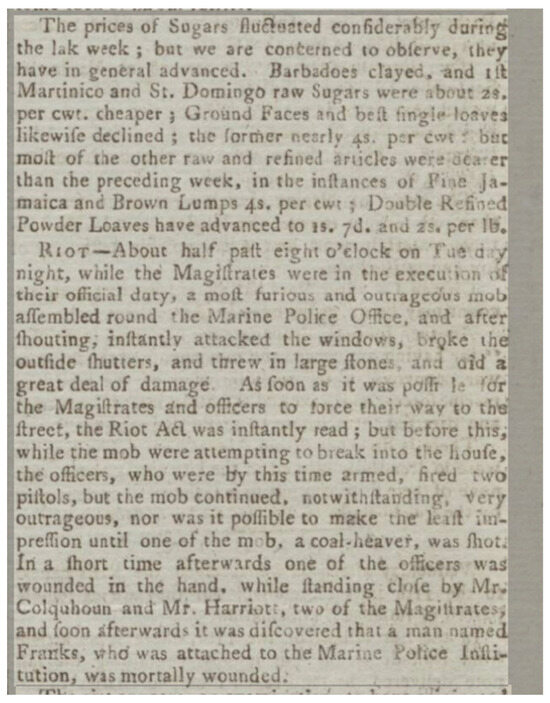
This paper reads coal as a metonym for London’s social fabric in the writings of police theorist Patrick Colquhoun, the archival reports on the Wapping Coal Riot, and the anti-carceral poetry of William Blake. In 1798, at the behest of the West India
[...] Read more.
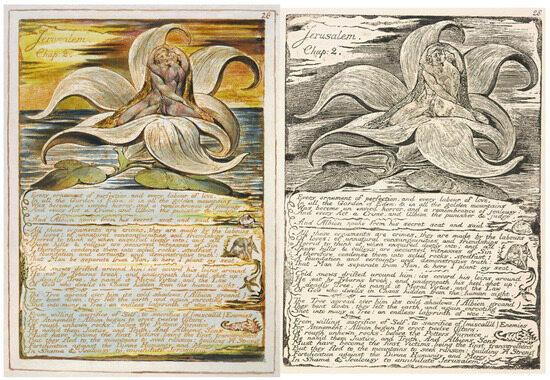
This paper reads coal as a metonym for London’s social fabric in the writings of police theorist Patrick Colquhoun, the archival reports on the Wapping Coal Riot, and the anti-carceral poetry of William Blake. In 1798, at the behest of the West India Committee, Colquhoun had developed the first modern police force, the Thames River Police, which predated Robert Peel’s metropolitan police by over 20 years. Colquhoun’s “Treatise on the Commerce and Police of the River Thames” (1800) centers on coal in his case for policing. In his argument, coal’s energy economies link domestic affairs with the entire metropolis, making policing a city-wide problem, one that merits public support (and public funding). In reading Colquhoun’s treatise as an example of the entanglement of policing and fossil fuel power, I discuss the relevant literature from the energy humanities that connects fossil energy to the larger extractive ideologies of empire. I also demonstrate how Colquhoun’s figuring of coal builds on but alters portrayals of coal in Jonathan Swift and Anna Barbauld. The final section of this discussion demonstrates how Blake’s Jerusalem (1820) indexes dispersed, atmospheric systems of carceral power and summons dynamic, unpoliceable crowds. Blake’s smoke poetics sketch a limit of generalization, one that recoups figures of pollution and waste to riot against the systems that produce them.
Full article
(This article belongs to the Special Issue Anglophone Riot)
►▼
Show Figures

Figure 1
Open AccessArticle
The Cosmic Extension of Fin: Aesthetics of Perceptual, Reflexive and Sensual Temporality in Nabokov’s Ada
by
Juan Wu
Humanities 2026, 15(1), 10; https://doi.org/10.3390/h15010010 - 5 Jan 2026
Abstract
Fin-de-siècle decadence—marked by symbolism, dandyism, aesthetic withdrawal, and defiance of bourgeois norms—has long been reimagined beyond its original European contours. Vladimir Nabokov’s Ada or Ardor: A Family Chronicle exemplifies this transformation by extending decadent aesthetics into the domains of modern physics, perception, and
[...] Read more.
Fin-de-siècle decadence—marked by symbolism, dandyism, aesthetic withdrawal, and defiance of bourgeois norms—has long been reimagined beyond its original European contours. Vladimir Nabokov’s Ada or Ardor: A Family Chronicle exemplifies this transformation by extending decadent aesthetics into the domains of modern physics, perception, and experimental temporality. While Ada is often read as a retreat into aestheticism, this paper argues that Nabokov reconfigures decadence through a radical engagement with time, science, and sensual consciousness. Through Van Veen’s philosophical treatise “The Texture of Time”—a burlesque of Bergsonian introspection—Nabokov constructs a vision of purified, de-spatialized, and self-reflexive time that destabilises the boundary between decadent and modernist aesthetics. The novel fuses metaphysical decadence with Bergsonian duration, creating a poetic meditation on temporality as both perceptual and sensual experience. Through intricate linguistic play—anagrams, palindromes, and recursive narrative structures—Nabokov fashions a labyrinthine temporality that mirrors the paradoxes of the decadent imagination: time that is linear yet cyclical, finite yet infinitely recurrent. Positioning Ada within broader debates on the afterlife of decadence, this paper examines how Nabokov preserves the movement’s aesthetic essence while transforming it through scientific analogy and linguistic experimentation. Ada simultaneously honours and subverts decadence, reimagining its hedonism and nostalgia within a cosmological framework that renders temporality itself a site of aesthetic play and metaphysical desire.
Full article
(This article belongs to the Special Issue The Use and Misuse of Fin-De-Siècle Decadence and Its Imagination)
Open AccessArticle
“Betrayal” and Faithfulness in Translation as Intercultural Mediation. Ethical Dilemmas and Strategies in South-Eastern Literary Discourse
by
Carmen Andrei
Humanities 2026, 15(1), 9; https://doi.org/10.3390/h15010009 - 5 Jan 2026
Abstract
This paper offers a series of reflections and observations derived from my experience as a (semi-) professional literary translator and as a teacher of translation studies. I openly recognise the subjective nature of any meta-reflection on the ethical challenges faced by the translator
[...] Read more.
This paper offers a series of reflections and observations derived from my experience as a (semi-) professional literary translator and as a teacher of translation studies. I openly recognise the subjective nature of any meta-reflection on the ethical challenges faced by the translator as an intercultural mediator. After briefly examining several central theses that have been defended, illustrated, and adopted to produce a translation that is politically correct from both a professional and deontological standpoint, I then list and analyse the major obstacles to the reception of a novel featuring “Romanian subject matter” written by a French author: cultural, historical, and political allusions as well as culinary and civilizational culture-specific elements. The examples come from Lionel Duroy’s novels Eugenia (2018) and Mes pas dans leurs ombres (2023), which revisit the pogroms of Iași, Bucharest, Bessarabia, and Ukraine, leading to the extermination of the Jewish population (1940–1941)—a significant and painful chapter of Romanian history, often overlooked or silenced. These cases enable us to argue more convincingly for the strategies, techniques, and procedures that can be considered when translating a text laden with profound cultural and ideological significance, aiming to help the Romanian/French and Francophone reader to understand sensitive realia and listen to History.
Full article
(This article belongs to the Special Issue Cross-Borders and Crossroads—Sharing Cultural Memory and Identity Negotiation in South-Eastern European Narratives)
Open AccessFeature PaperArticle
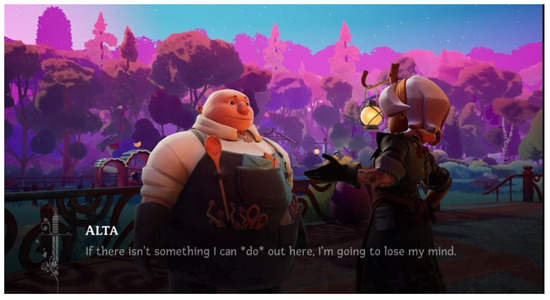
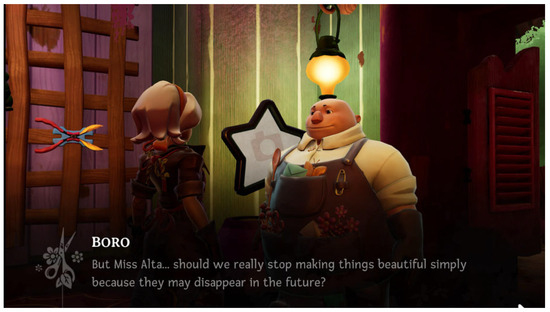
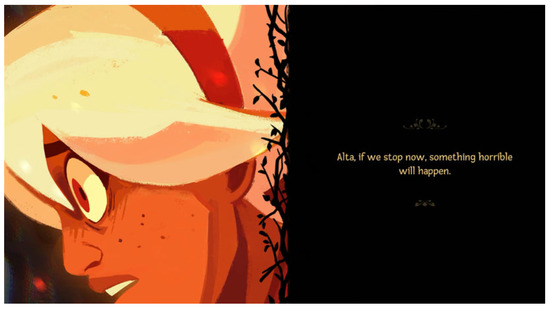
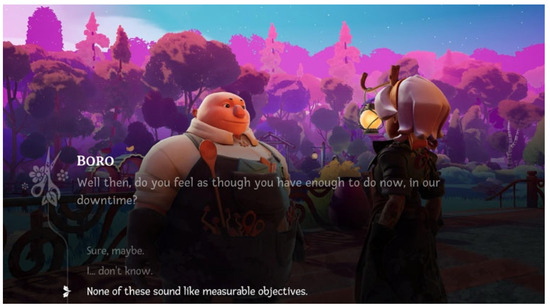
“If There Isn’t Something I Can *Do* out Here, I’m Going to Lose My Mind”: Confrontational Coziness and Degrowth in Wanderstop
by
Melissa Kagen
Humanities 2026, 15(1), 8; https://doi.org/10.3390/h15010008 - 31 Dec 2025
Abstract
In Ivy Road’s new game Wanderstop (March 2025), the player character is so burned out from their lifetime as a workaholic warrior that they find themselves trapped and forced to serve tea in a charming, purgatorial teashop until they finally learn how to
[...] Read more.
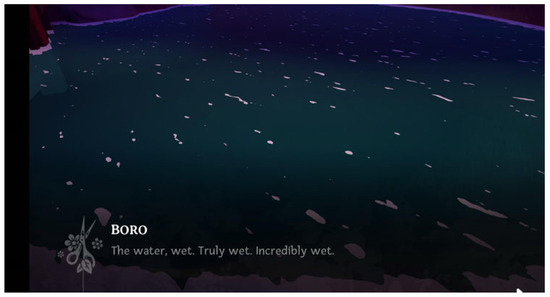
In Ivy Road’s new game Wanderstop (March 2025), the player character is so burned out from their lifetime as a workaholic warrior that they find themselves trapped and forced to serve tea in a charming, purgatorial teashop until they finally learn how to rest and recover. This article analyzes the game through its two core verbs—wander and stop—both of which the player first resists and then eventually accepts. With wander, the game forces the player into a jarring experience of presence, using a defamiliarization technique I term ‘confrontational coziness’—an experience of safety, abundance, and softness taken to such an extreme it becomes uncomfortable. With stop, the game uses ideas from the anti-capitalist philosophy of degrowth to engage the player in the challenge of not doing rather than doing.
Full article
(This article belongs to the Special Issue Electronic Literature and Game Narratives)
►▼
Show Figures

Figure 1

Highly Accessed Articles
Latest Books
E-Mail Alert
News
Topics
Topic in
Businesses, Economies, Humanities, Land, Sustainability, Tourism and Hospitality, Urban Science
Human–Environmental Relations: Ecotourism and Sustainability
Topic Editors: Tamara Gajić, Minja Bolesnikov, Aleksandar ErcegDeadline: 15 July 2026
Special Issues
Special Issue in
Humanities
Aqueous Instabilities
Guest Editors: Camille Mathieu, Linda ChaversDeadline: 28 February 2026
Special Issue in
Humanities
New Geographies of Thought: Black and Indigenous Epistemologies and Literary Production in Spanish America
Guest Editor: M'bare N'GomDeadline: 28 February 2026
Special Issue in
Humanities
Modern Greek Literature and PTSD
Guest Editor: Gail Holst-WarhaftDeadline: 28 February 2026
Special Issue in
Humanities
Celibacy in Irish Women’s Writing
Guest Editor: Paul FaganDeadline: 28 March 2026