
Skip Content
You are currently on the new version of our website. Access the old version .

Heritage

Heritage is an international, peer-reviewed, open access journal of cultural and natural heritage science published monthly by MDPI.
The Hellenic Society for Archaeometry (HSA) is affiliated with Heritage and its members receive discounts on the article processing charges.
Quartile Ranking JCR - Q2 (Multidisciplinary Sciences)

All Articles (2,129)

Fire Detection Solutions for Heritage Buildings

  • Ágota Zsuzsanna Mohai,
  • Eszter Horváth-Kálmán and
  • Ákos Török
  • + 1 author

Fire safety in heritage buildings is a major challenge. It is necessary to find effective solutions that minimise damage to the protected building and do not cause damage or diminish the aesthetic value of the building. This requires not only special equipment, but often also specific solutions. The easiest way to increase the fire safety level of a building is to retrofit it with active fire protection systems. The aim of this paper is to review fire detection solutions suitable for historic buildings, with particular emphasis on minimally invasive and visually unobtrusive systems. The study combines a structured review of point, linear, and aspirating smoke detection technologies with a demonstrative parametric sizing assessment of an aspirating smoke detection (ASD) system using a manufacturer-supported sizing software. The sizing analysis investigates how changes in sampling hole diameter and fan settings influence transport time, sensitivity distribution, and system balance under constrained routing conditions typical of heritage interiors. The results highlight key trade-offs between response time and system balance, providing practical guidance for designers and conservation professionals. The findings support the development of fire detection strategies that align with European recommendations for heritage protection while ensuring technical effectiveness. The paper also provides a guideline to professionals, architects, restorers, and heritage experts, who have key roles in the protection of heritage structures.

9 February 2026

Distribution of World Heritage cultural sites around the world [17] (Note: cultural sites inscribed on the List of World Heritage in Danger marked in red).

This paper examines the role of digital technologies in advancing archeological research, using two complex, stratified case studies—the Villa Reale of Haghia Triada in Crete and the rock-cut churches of Pantalica in Sicily—as reference points. Both sites, despite their geographical and chronological differences, present comparable challenges: fragmented evidence, incomplete documentation, and the need for multi-scalar interpretation. By integrating photogrammetry, LiDAR scanning, and other 3D acquisition techniques with 3D modeling approaches, this paper explores how digital workflows can both preserve and reinterpret fragile archeological contexts. The aim of this research is to critically assess the methodological potential and epistemological implications of these tools, emphasizing transparency, reproducibility, and their communicative value for scholarly communities and wider audiences.

9 February 2026

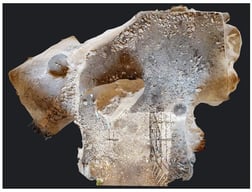
Pantalica, church of San Nicolicchio. Dollhouse view obtained through scans carried out with the Matterport Pro3 (Matterport Inc., Sunnyvale, CA, USA).

Paper-based heritage objects are commonly stored in archival boxes, books, and paper stacks, creating confined microclimates that may differ from the surrounding environment. While room-level climate control is central to preventive conservation, object-level conditions are shaped by enclosure permeability, hygroscopic buffering, ventilation, and internal emissions. This study investigates temperature, relative humidity, air exchange, and gaseous pollutants inside archival boxes, bound books, and paper stacks under laboratory and real storage conditions. Air exchange rates were determined using CO2 tracer decay, while climates were monitored over periods from hours to one year. Chemical conditions were assessed using passive sampling of air pollutants, oxygen measurements, and dosimetric methods. The results show that boxes, books, and paper stacks behave as semi-permeable rather than sealed systems. Hygroscopic buffering attenuated short-term RH fluctuations, especially within books and paper stacks, while long-term internal conditions followed ambient trends with pronounced time lags. Restricted ventilation limited the ingress of external pollutants but could allow for internally generated gases to accumulate. Experiments using acid-sensitive indicator paper demonstrated the slow penetration of acetic acid into paper stacks. Overall, enclosure performance reflected a balance between buffering capacity, permeability, and chemical reactivity rather than airtightness alone, highlighting the importance of object-level microclimate assessment in preventive conservation.

4 February 2026

Examples of archive boxes, stacks of paper, and books used for the experiments. Top left: box with a passive diffusion sampler placed inside, ready for exposure. Top right: box lined with aluminium foil. Bottom: shows how stacks of paper and books were fitted with climate sensors in a cavity cut out in the centre of the stack.

As one of the most representative cultural heritages, traditional Chinese opera is characterized by highly refined symbolic contexts and stylized narrative structures. Nevertheless, the contemporary generation often struggles with its abstract expression and language, leading to declining attendance. In addition, urbanization and digital entertainment have squeezed out its living spaces, increasing demand for more diverse experiences. To address these issues, this study conducts a systematic and thematically categorized review of the literature, exploring how extended reality (XR) reshapes the spatial and experiential representation of opera culture. Drawing upon the reality–virtuality continuum and spatial computing as theoretical foundations, the research investigates the features, workflows, and cultural adaptability of augmented reality (AR), virtual reality (VR), and mixed reality (MR), identifying how each modality of XR supports distinct modes of space generation and audience engagement. Through comparative analysis, we propose three XR-based approaches for reinterpreting Chinese opera: AR for theatrical spaces visualization, VR for performative narratives embodiment, and MR for opera cultural elements superposition. Overall, the research clarifies that XR can be used as a comprehensive medium to enhance replicability and user perception, contributing to the preservation and communication of humanity’s traditional culture.

4 February 2026

Reality–virtuality continuum. Source: [8].

News & Conferences

Issues

Open for Submission

Editor's Choice

Reprints of Collections

Dyes in History and Archaeology 42
Reprint

Dyes in History and Archaeology 42

Editors: Jo Kirby, Cecilie Brøns, Annemette Bruselius Scharff, Joanne Dyer, Regina Hofmann-De Keijzer, Paula Nabais, Sara Norrehed

Get Alerted

Add your email address to receive forthcoming issues of this journal.

XFacebookLinkedIn
Heritage - ISSN 2571-9408