Skip Content
You are currently on the new version of our website. Access the old version .
  • 35 days
    Time to First Decision

Glacies

Glacies is an international, peer-reviewed, open access journal on all aspects of the studies related to ice published quarterly online by MDPI.

All Articles (27)

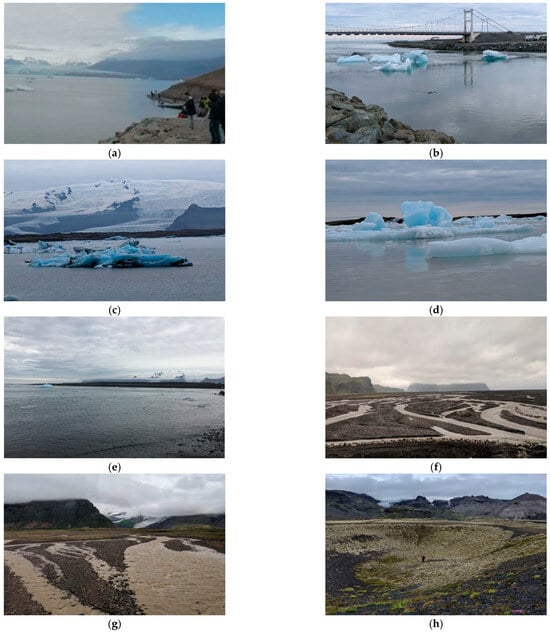
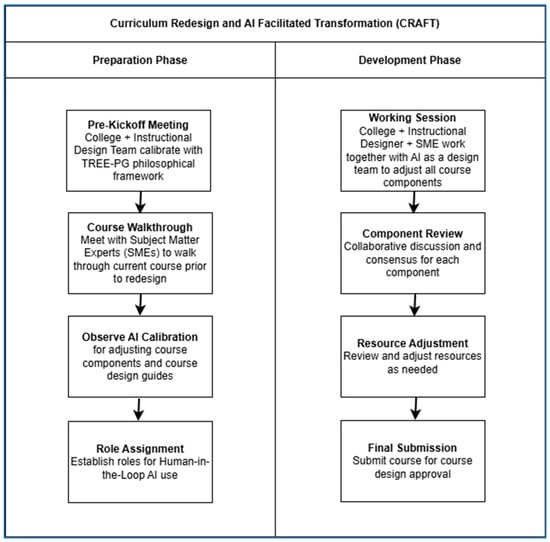
Introductory environmental science courses offer non-STEM students an entry point to address global challenges such as climate change and cryosphere preservation. Aligned with the International Year of Glacier Preservation and the Decade of Action for Cryospheric Sciences, this mixed-method, IRB-exempt study applied the Curriculum Redesign and Artificial Intelligence-Facilitated Transformation (CRAFT) model for course redesign. The project leveraged a human-centered AI approach to create anthropomorphized, place-based narratives for online learning. Generative AI is used to amend immersive virtual learning environments (VLEs) that animate glacial forces (water, rock, and elemental cycles) through narrative-driven virtual reality (VR) experiences. Students explored Iceland’s Jökulsárlón Glacier Lagoon via self-guided field simulations led by an imaginary water droplet, designed to foster environmental awareness and a sense of place. Data collection included a five-point Likert-scale survey and thematic coding of student comments. Findings revealed strong positive sentiment: 87.1% enjoyment of the imaginaries, 82.5% agreement on supporting connection to places, and 82.0% endorsement of their role in reinforcing spatial and systems thinking. Thematic analysis confirmed that anthropomorphic imaginaries enhanced emotional engagement and conceptual understanding of glacial processes, situating glacier preservation within geographic and global contexts. This AI-enhanced, multimodal approach demonstrates how narrative-based VR can make complex cryospheric concepts accessible for non-STEM learners, promoting early engagement with climate science and environmental stewardship.

1 February 2026
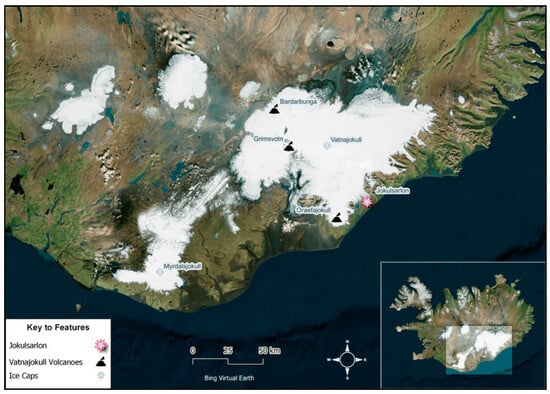
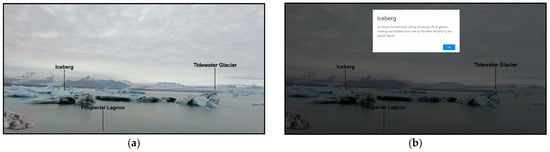
Map of Jökulsárlón Glacier Lagoon at the margin of Vatnajökull National Park, Southeastern Iceland (Permission obtained) [41].

As 2026 began, it was the middle of winter in much of the northern hemisphere [...]

21 January 2026
Characterising Ice Motion Variability at Helheim Glacier Front from Continuous GPS Observations

  • Christopher Pearson,
  • James Colinese and
  • Stuart Edwards
  • + 1 author
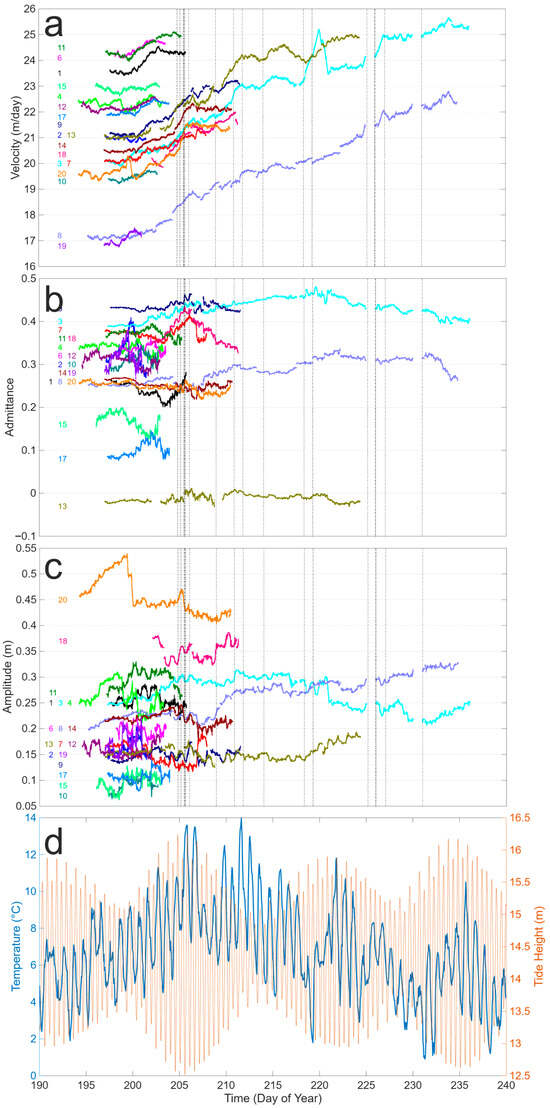
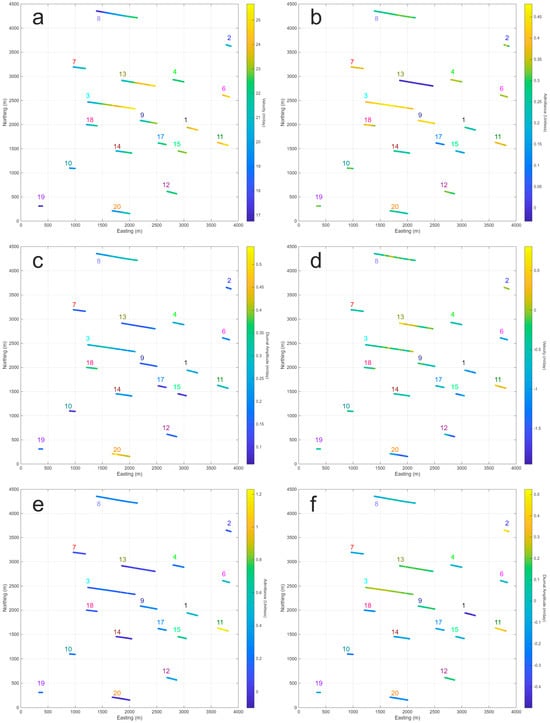
Understanding short-term glacier motion is vital for assessing ice sheet dynamics in a warming climate. This study investigates the tidal and diurnal influences on the flow of Helheim Glacier, one of Greenland’s fastest-flowing marine-terminating glaciers, using data from 18 high-frequency GPS sensors and a regional tide gauge collected during summer 2013. A Kalman filter was applied to separate and quantify glacier velocity, tidal admittance, and diurnal melt-driven acceleration. Results reveal a high level of tidal admittance affecting the horizontal flow speed of the glacier, especially at the centre of the glacier, which is propagated upstream. This admittance corresponds to a 0.38–0.68 m/day reduction from the mean at high spring tide and a comparable increase at low tide. The glacier’s vertical motion showed strong tidal control close to the terminus, of 0.6–1.05 m during high spring tides, but this was significantly reduced more than 1 km from the terminus. Diurnal variations in horizontal speed are less spatially and temporally variable, with most nodes experiencing changes from a mean speed of ±0.1–0.3 m/day. These findings demonstrate that both tidal forcing and meltwater input to the basal system exert a significant, and potentially spatially variable, control on glacier dynamics, highlighting the need to incorporate short-period external forcing into predictive models of marine-terminating glacier behaviour.
7 January 2026

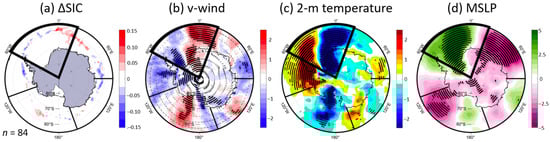
Madden–Julian Oscillation Modulation of Antarctic Sea Ice

  • Bradford S. Barrett,
  • Donald M. Lafleur and
  • Gina R. Henderson

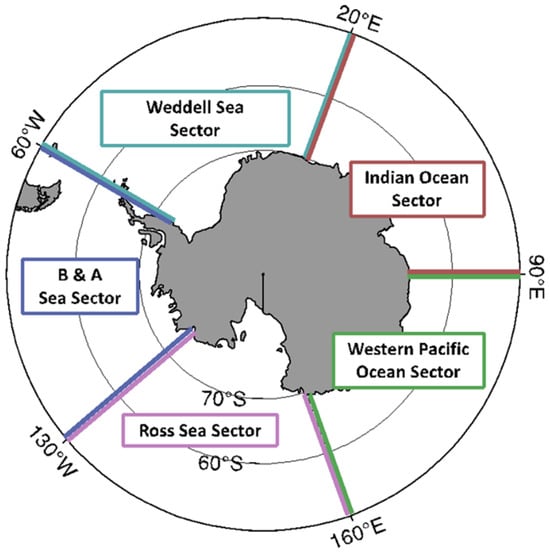
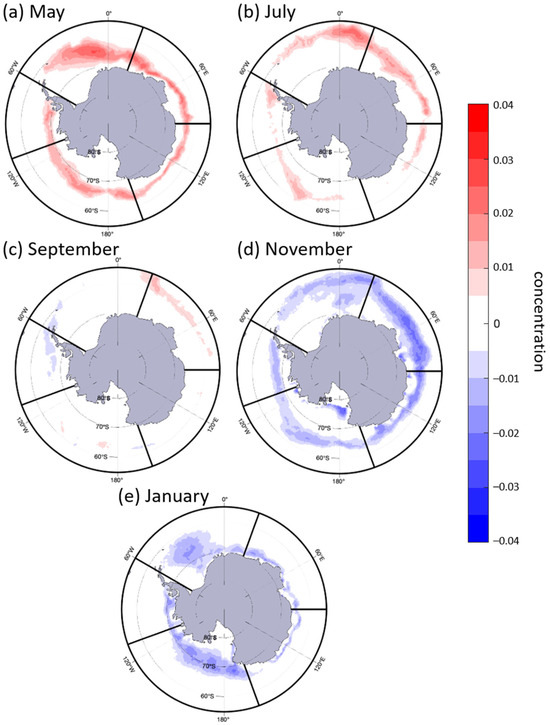
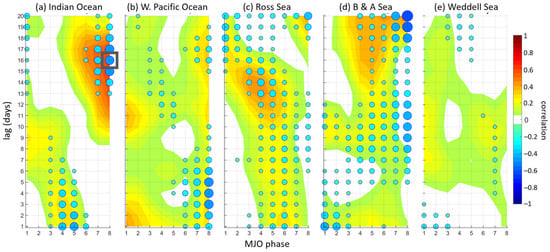
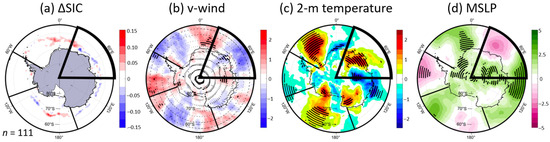
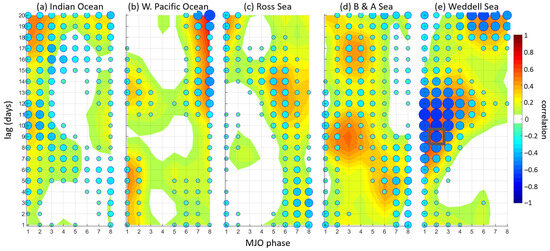
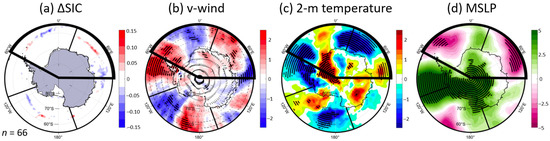
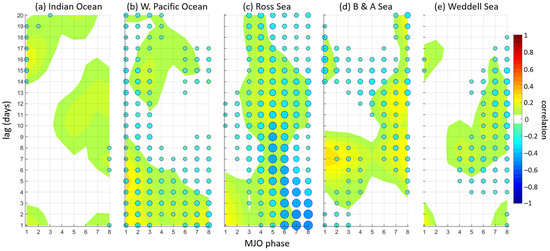
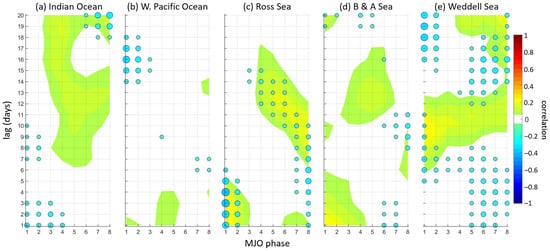
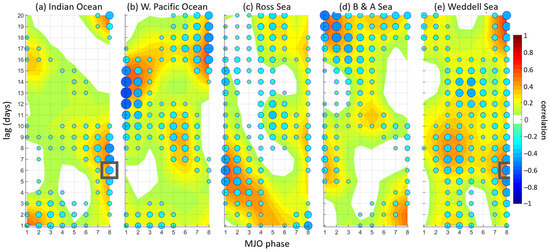
Convection associated with the leading mode of subseasonal variability of the tropical atmosphere, the Madden–Julian Oscillation (MJO), can excite Rossby wave trains that extend well into the extratropics and allow the MJO to modulate many components of the Earth system. To improve our understanding of teleconnections between the MJO and Antarctic sea ice, composite anomalies of daily change in sea ice concentration (ΔSIC) from 1989 to 2019 were binned by phase 0–20 days after an active MJO and compared to anomalies of surface air temperature, the meridional component of surface wind, and sea-level pressure. In May, ΔSIC anomalies were strongest in the Indian Ocean (IO) sector, 16 days after phase 8. There, a wavenumber-three pattern in sea-level pressure anomalies associated with the MJO resulted in anomalously poleward winds and warmer temperatures over the central and eastern IO that were collocated with anomalously negative ΔSIC. Furthermore, anomalously equatorward winds and colder temperatures in the western IO were collocated with anomalously positive ΔSIC. In July, ΔSIC anomalies were strongest in the Weddell Sea (WS) sector nine days after an active MJO in phase 2. There, a wavenumber-three pattern in sea-level pressure anomalies resulted in anomalously poleward winds and warmer temperatures over the western and central WS that were collocated with negative ΔSIC anomalies; anomalously equatorward winds and colder temperatures over the eastern WS were collocated with positive ΔSIC anomalies. In September, the largest ΔSIC anomalies were observed in the IO and WS sectors six days after an active MJO in phase 8. No meaningful modulation of sea ice anomalies was found after an active MJO in November or January. These results extend our understanding of teleconnections between the MJO and Antarctic sea ice on the subseasonal time scale.

13 December 2025

News & Conferences

Issues

Open for Submission

Editor's Choice

Get Alerted

Add your email address to receive forthcoming issues of this journal.

XFacebookLinkedIn
Glacies - ISSN 2813-8740