

- Article

AI-Driven Analysis of Meteorological and Emission Characteristics Influencing Urban Smog: A Foundational Insight into Air Quality
- Sadaf Zeeshan and
- Muhammad Ali Ijaz Malik
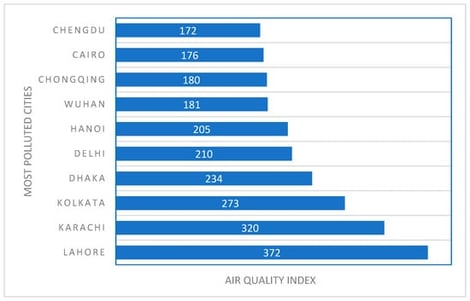
In South Asia, smog has become a critical environmental concern that endangers public health, ecosystems, and the regional climate. To determine the primary causes of smog formation in Lahore during peak polluted months (October and November), the current study develops a dual analytical framework that combines cutting-edge machine learning with sector- and pollutant-specific emission analysis. To assess their relationship with Air Quality Index (AQI) and create a high-accuracy predictive model, meteorological factors and emission data from key sectors are used to build Random Forest and extreme gradient boosting (XGBoost) models. The current study evaluates the joint effects of weather and emission loads on AQI variability by integrating atmospheric dynamics with comprehensive emission profiles. The XGBoost model forecasts important pollutants from the transportation, industrial, and agricultural sectors, including carbon dioxide (CO2), oxides of nitrogen (NOx), Volatile Organic Compounds (VOCs), and particulate matter, in the second analytical tier. Particulate matter (PM), NOx, and transport-related pollutants are consistently identified by the models as the primary predictors of AQI, with high prediction performance. Furthermore, a 3-fold split is used for cross-validation, making sure that each fold maintained the data’s chronological order to avoid leakage. The model has modest root mean square error (RMSE) levels (4.32 and 8.14) and high coefficient of determination (R2) values (0.93–0.99). Approximately 90% of Lahore’s annual emissions resulted from the transportation sector. These results offer aid to policymakers to anticipate air quality, identify important emission sources, and execute targeted initiatives to minimize smog and promote a healthier urban environment. The current study also helps in analyzing the causes of atmospheric and sectoral pollution. While the study captures smog dynamics during peak pollution months, its temporal scope is limited, and finer spatial measurements could further improve the generalizability of the results.
5 February 2026
![EU hydrogen demand projections from several studies (reproduced from [2]; Creative Commons CC-BY license).](https://mdpi-res.com/cdn-cgi/image/w=281,h=192/https://mdpi-res.com/gases/gases-06-00009/article_deploy/html/images/gases-06-00009-g001-550.jpg)