Journal Description
Engineering Proceedings
is an open access journal dedicated to publishing findings resulting from conferences, workshops, and similar events, in all areas of engineering. The conference organizers and proceedings editors are responsible for managing the peer-review process and selecting papers for conference proceedings.
Latest Articles
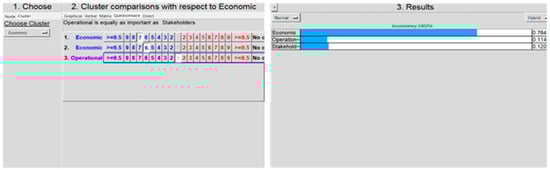
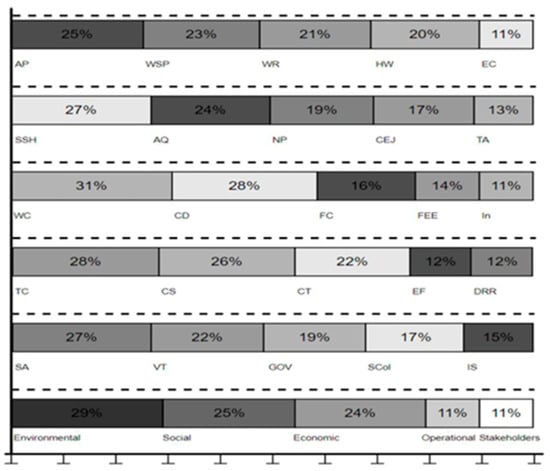
A Comprehensive Sustainable Performance Assessment in Morocco’s Mining Sector Using Artificial Neural Networks and the Fuzzy Analytic Network Process
Eng. Proc. 2025, 112(1), 82; https://doi.org/10.3390/engproc2025112082 (registering DOI) - 6 Feb 2026
Abstract
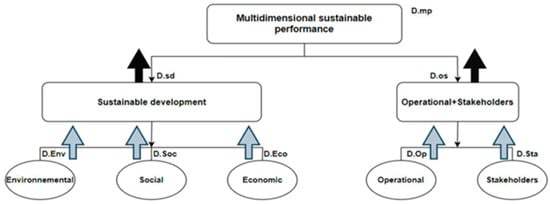
This article provides an in-depth evaluation of sustainability performance within the mining sector by employing the Fuzzy Analytic Network Process (FANP). The assessment centers on five fundamental dimensions: economic, social, environmental, operational, and stakeholder-related factors. FANP facilitates a comprehensive prioritization of both these
[...] Read more.
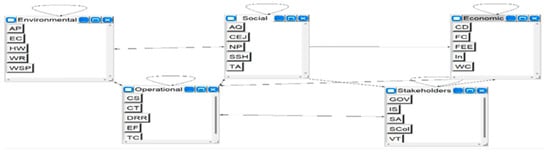
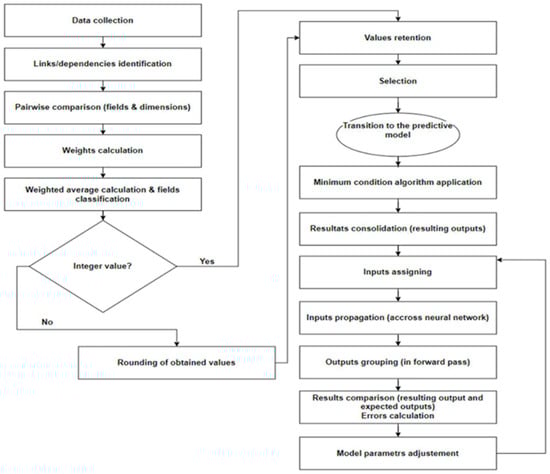
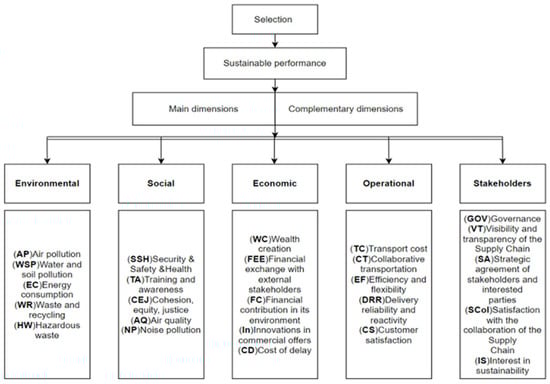
This article provides an in-depth evaluation of sustainability performance within the mining sector by employing the Fuzzy Analytic Network Process (FANP). The assessment centers on five fundamental dimensions: economic, social, environmental, operational, and stakeholder-related factors. FANP facilitates a comprehensive prioritization of both these broad categories and their associated sub-criteria, enabling a well-structured and balanced appraisal of sustainable performance. The methodology is further strengthened by integrating machine learning techniques, specifically a multilayer perceptron, which improves the accuracy and reliability of the multidimensional performance evaluation. Although the study concentrates on the mining industry in Morocco, the developed model is flexible and can be adapted to various other industries and research fields. By filling a significant gap in holistic sustainability assessment, this work offers valuable practical insights to support enhanced management practices and contributes meaningfully to the advancement of sustainable development goals. The findings and approach presented are pertinent to both industry professionals and the academic community alike.
Full article
(This article belongs to the Proceedings of 7th Edition of the International Conference on Advanced Technologies for Humanity (ICATH 2025))
►
Show Figures

Open AccessProceeding Paper
Enhancing Recommendation Interfaces with Interaction Modules: User Study Using Eye-Tracking
by
Qin-Yun Lai and Hung-Hsiang Wang
Eng. Proc. 2025, 120(1), 57; https://doi.org/10.3390/engproc2025120057 (registering DOI) - 6 Feb 2026
Abstract
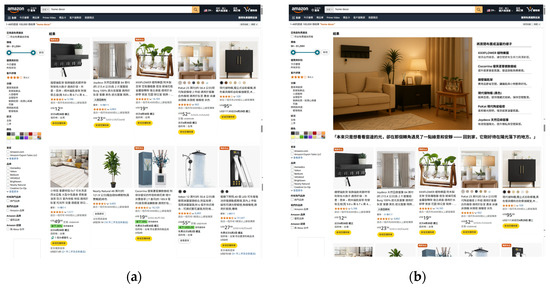
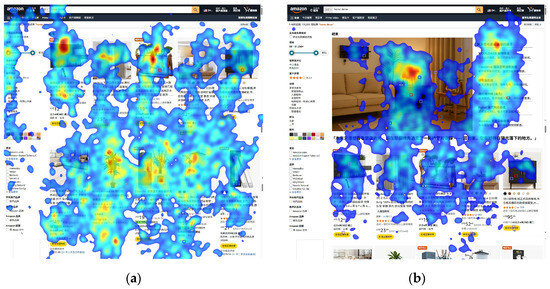
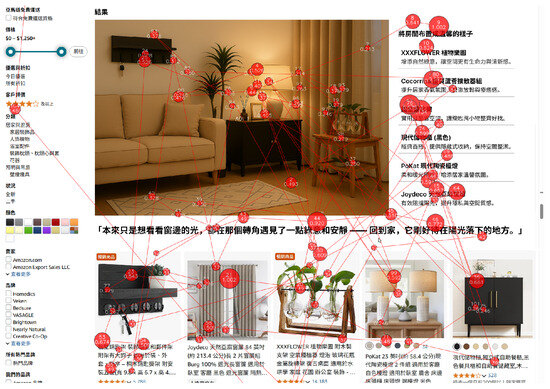
We investigated how adding interaction modules—including a category-themed image, slogan, and narrative text—affects user attention during exploratory browsing within category-based recommender interfaces. Eye-tracking data and post-task interviews revealed that the image module captured users’ attention early in the interaction and elicited a visual
[...] Read more.
We investigated how adding interaction modules—including a category-themed image, slogan, and narrative text—affects user attention during exploratory browsing within category-based recommender interfaces. Eye-tracking data and post-task interviews revealed that the image module captured users’ attention early in the interaction and elicited a visual pairing behavior, wherein users actively searched the product list for items depicted in the image. These findings indicate that semantically rich visual cues can effectively guide user exploration and influence gaze allocation. The results provide empirical support for the design of recommender system interfaces that enhance user engagement through strategically integrated visual elements.
Full article
(This article belongs to the Proceedings of 8th International Conference on Knowledge Innovation and Invention)
►▼
Show Figures

Figure 1
Open AccessProceeding Paper
Strategic Applications of Generative AI in Design Education
by
Yu-Min Fang
Eng. Proc. 2025, 120(1), 56; https://doi.org/10.3390/engproc2025120056 - 6 Feb 2026
Abstract
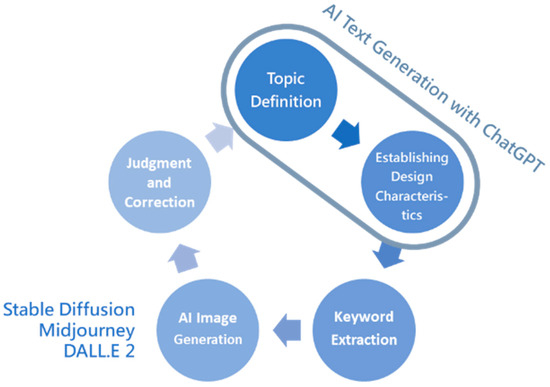
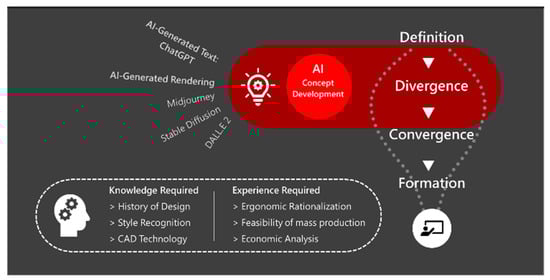
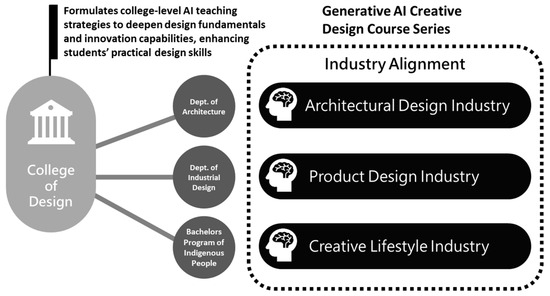
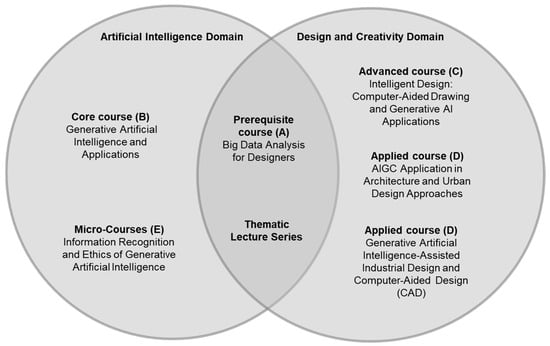
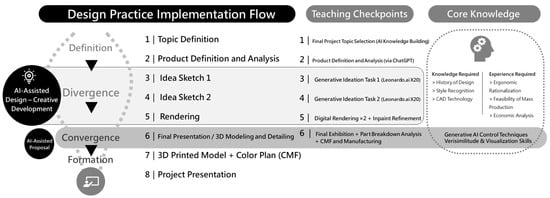
A strategic approach to integrating generative AI (GAI) into design education is explored in this article to enhance students’ creativity, critical thinking, and practical skills. Based on a cross-departmental initiative at National United University, Taiwan, a multi-level curriculum is proposed, combining foundational to
[...] Read more.
A strategic approach to integrating generative AI (GAI) into design education is explored in this article to enhance students’ creativity, critical thinking, and practical skills. Based on a cross-departmental initiative at National United University, Taiwan, a multi-level curriculum is proposed, combining foundational to applied courses. A five-phase design process, problem definition, attribute framing, keyword extraction, AI generation, and refinement, was used to guide student learning tools, including ChatGPT (powered by GPT-4o), Stable Diffusion XL (SDXL) 1.0, and Leonardo.ai (Phoenix model), supporting rapid ideation and decision-making. Case studies in industrial and architectural design demonstrate practical applications. Ethical issues are reviewed. The results show increased engagement, idea diversity, and faster iteration in student design work.
Full article
(This article belongs to the Proceedings of 8th International Conference on Knowledge Innovation and Invention)
►▼
Show Figures

Figure 1
Open AccessProceeding Paper
Subchannel Allocation in Massive Multiple-Input Multiple-Output Orthogonal Frequency-Division Multiple Access and Hybrid Beamforming Systems with Deep Reinforcement Learning
by
Jih-Wei Lee and Yung-Fang Chen
Eng. Proc. 2025, 120(1), 55; https://doi.org/10.3390/engproc2025120055 (registering DOI) - 6 Feb 2026
Abstract
In this study, we emphasize that the maximum sum rate can be achieved through AI-based subchannel allocation, while taking into account all users’ quality of service (QoS) requirements in data rates for hybrid beamforming systems. We assume a limited number of radio frequency
[...] Read more.
In this study, we emphasize that the maximum sum rate can be achieved through AI-based subchannel allocation, while taking into account all users’ quality of service (QoS) requirements in data rates for hybrid beamforming systems. We assume a limited number of radio frequency (RF) chains in practical hybrid beamforming architectures. This constraint makes subchannel allocation a critical aspect of hybrid beamforming in massive multiple-input multiple-output (MIMO) systems with orthogonal frequency division multiple access (MIMO-OFDMA), as it enables the system to serve more users within a single time slot. Unlike conventional subcarrier allocation methods, we employ a deep reinforcement learning (DRL)-based algorithm to address real-time decision-making challenges. Specifically, we propose a dueling double deep Q-network (Dueling-DDQN) to implement dynamic subchannel allocation. Simulation results demonstrate that the performance of the proposed algorithm gradually approaches that of the greedy method. Furthermore, both the average sum rate and the average spectral efficiency per user improve with a reasonable variation in outage probability.
Full article
(This article belongs to the Proceedings of 8th International Conference on Knowledge Innovation and Invention)
►▼
Show Figures

Figure 1

Open AccessProceeding Paper
Joint User Scheduling and Beamforming Design in Simultaneously Transmitting and Reflecting Reconfigurable-Intelligent-Surface-Assisted Device-to-Device Communications
by
Zhi-Kai Su and Jung-Chieh Chen
Eng. Proc. 2025, 120(1), 53; https://doi.org/10.3390/engproc2025120053 (registering DOI) - 6 Feb 2026
Abstract
Future wireless networks require efficient device-to-device (D2D) communication to meet the demands of increasing connectivity; however, practical challenges such as limited coverage and severe interference persist. This paper addresses these issues by employing simultaneously transmitting and reflecting reconfigurable intelligent surfaces (STAR-RISs) equipped with
[...] Read more.
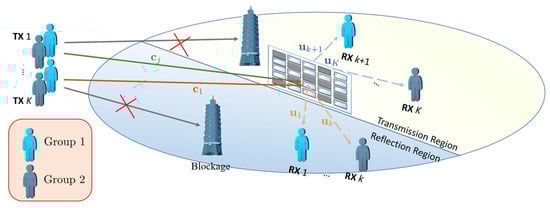
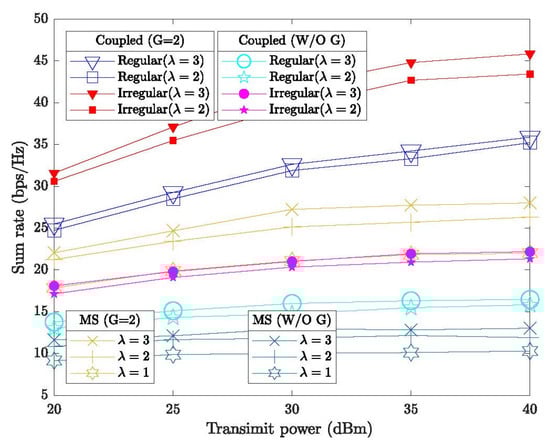
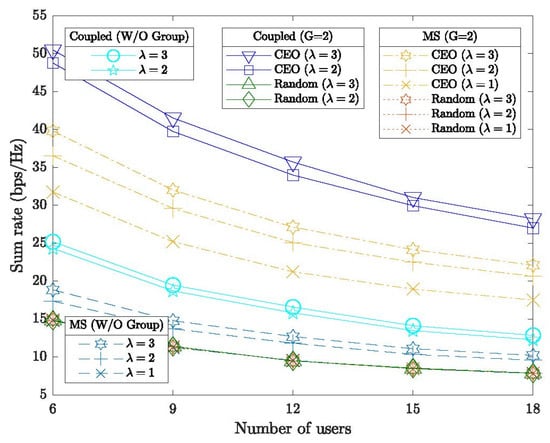
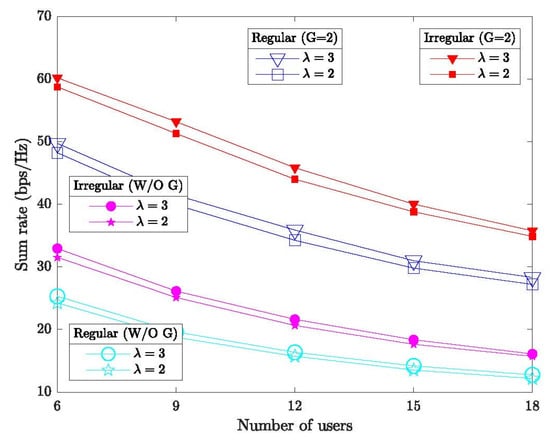
Future wireless networks require efficient device-to-device (D2D) communication to meet the demands of increasing connectivity; however, practical challenges such as limited coverage and severe interference persist. This paper addresses these issues by employing simultaneously transmitting and reflecting reconfigurable intelligent surfaces (STAR-RISs) equipped with low-resolution phase shifters, thereby enabling full-space coverage while conforming to hardware constraints. To further improve system performance, we propose an irregular STAR-RIS configuration, in which only a subset of elements is activated to enhance spatial diversity without increasing power consumption. Additionally, we introduce a group scheduling strategy that assigns users to different time slots, effectively mitigating interference and improving the overall sum rate. To solve the resulting high-dimensional and non-convex optimization problem, we develop a cross-entropy optimization framework that jointly optimizes element selection, amplitude and phase configurations, and user scheduling. Simulation results demonstrate that the proposed design significantly outperforms existing benchmarks in terms of both the sum rate and scalability, thus providing a practical and efficient solution for STAR-RIS-assisted D2D communication systems.
Full article
(This article belongs to the Proceedings of 8th International Conference on Knowledge Innovation and Invention)
►▼
Show Figures

Figure 1
Open AccessProceeding Paper
Towards Reliable 6G: Intelligent Trust Assessment with Hybrid Learning
by
Elmira Saeedi Taleghani, Ronald Iván Maldonado Valencia, Ana Lucila Sandoval Orozco and Luis Javier García Villalba
Eng. Proc. 2026, 123(1), 27; https://doi.org/10.3390/engproc2026123027 - 6 Feb 2026
Abstract
Sixth-generation (6G) networks will operate with pervasive autonomy and minimal centralised control, imposing stringent requirements on security and trust. This short communication presents a hybrid trust evaluation approach that combines fuzzy inference for uncertainty management, bidirectional long short-term memory (BiLSTM) networks for temporal
[...] Read more.
Sixth-generation (6G) networks will operate with pervasive autonomy and minimal centralised control, imposing stringent requirements on security and trust. This short communication presents a hybrid trust evaluation approach that combines fuzzy inference for uncertainty management, bidirectional long short-term memory (BiLSTM) networks for temporal prediction, and blockchain for immutable verification. The pipeline first maps multi-source interaction and context metrics into linguistic trust values via fuzzy rules, then leverages BiLSTM to anticipate trust fluctuations under dynamic conditions, and finally anchors trust updates on a permissioned blockchain to ensure integrity and traceability. Using CIC-IoT2023, the proposed approach attains high accuracy and F1-score while reducing Execution Time (ET) and energy demands relative to a recent spatial-temporal trust model for 6G IoT. Results indicate that jointly addressing uncertainty, temporal evolution, and ledger-backed validation yields stable trust trajectories suitable for resource-constrained devices. The study outlines a practical path toward explainable, adaptive, and tamper-resistant trust management for 6G ecosystems.
Full article
(This article belongs to the Proceedings of First Summer School on Artificial Intelligence in Cybersecurity)
►▼
Show Figures

Figure 1

Open AccessProceeding Paper
Blue and Green Phosphate Coatings Formed on Steel Without Heating
by
Viktoriya S. Konovalova
Eng. Proc. 2026, 124(1), 20; https://doi.org/10.3390/engproc2026124020 - 6 Feb 2026
Abstract
Phosphate coatings were obtained by cold method from solutions based on Mazev Salt (containing Mn(H2PO4)2∙2H2O and iron phosphates). Metal nitrates and nitrites were introduced into solutions as accelerators of the phosphating process. To obtain green
[...] Read more.
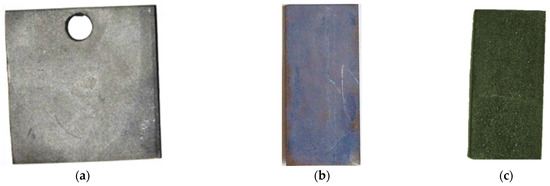
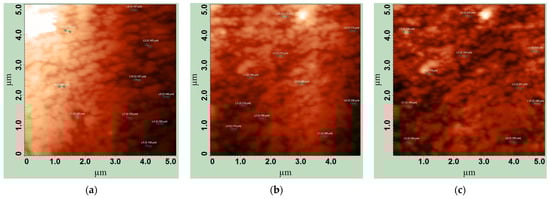
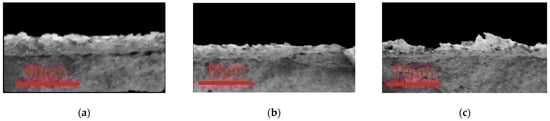
Phosphate coatings were obtained by cold method from solutions based on Mazev Salt (containing Mn(H2PO4)2∙2H2O and iron phosphates). Metal nitrates and nitrites were introduced into solutions as accelerators of the phosphating process. To obtain green and blue phosphate coatings, procyon olive green and methylene blue dyes (8 g/L) were added into the solutions. Colored phosphate coatings are deposited unevenly on the steel surface. The thickness of the modified phosphate films was estimated from SEM images of the cross-section samples and determined to be 3–4 microns. Colored phosphate coatings are fine-grained with a grain size of 170–190 nm, which was determined using an atomic force microscope. Phosphate films continue to exhibit protective properties when heated to 100 °C. With a further increase in temperature, the protective ability of the film is significantly reduced. Colored phosphate films have a low coefficient of friction (0.1–0.15). The breakdown voltage of colored phosphate coatings is 180–200 V, which characterizes low electrical insulation ability. Based on the established properties, colored phosphate coatings can be used as protective and decorative.
Full article
(This article belongs to the Proceedings of The 6th International Electronic Conference on Applied Sciences)
►▼
Show Figures

Figure 1

Open AccessProceeding Paper
Hybrid System for Geoanalysis: Comparative and Integrated Use of Relational and Graph Databases
by
Goran Mitrović, Tomislav Galba, Alfonzo Baumgartner and Časlav Livada
Eng. Proc. 2026, 125(1), 18; https://doi.org/10.3390/engproc2026125018 - 6 Feb 2026
Abstract
►▼
Show Figures
Geospatial data analysis systems are currently very relevant. Most such systems use either relational databases or graph databases. This paper presents the idea of using both approaches, taking into account the main features and advantages of each. A concrete example of a city
[...] Read more.
Geospatial data analysis systems are currently very relevant. Most such systems use either relational databases or graph databases. This paper presents the idea of using both approaches, taking into account the main features and advantages of each. A concrete example of a city transport network is used to experimentally examine the use of this hybrid approach. A special ETL procedure was developed to transform data from the corresponding graph database to a relational one, as well as the reverse process from the relational to the graph database. The results show which type of queries are better suited for relational databases, and which for graph databases. Additionally, for certain specific queries and applications, neither database type is capable of providing any results. Although this kind of hybrid architecture has issues with data duplication, the performance gains achieved are significant, making this approach highly efficient.
Full article

Figure 1
Open AccessProceeding Paper
State Road Pavement Maintenance
by
Karolina Vukelić and Sanja Dimter
Eng. Proc. 2026, 125(1), 17; https://doi.org/10.3390/engproc2026125017 (registering DOI) - 6 Feb 2026
Abstract
►▼
Show Figures
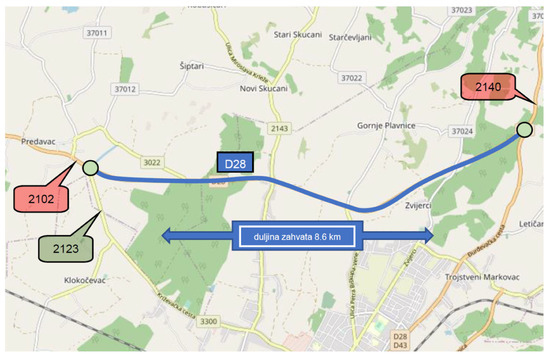
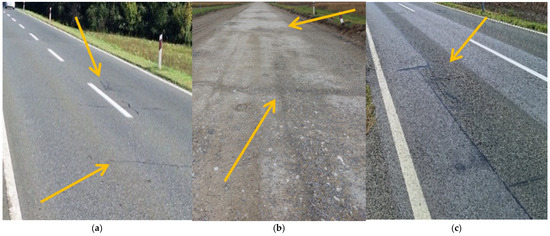
This paper focuses on a section of the state road D28, Bjelovar northern bypass, Republic of Croatia, which was opened to traffic in 2002. Following the expiration of the 20-year design service life, it was determined that the section required reconstruction, as visual
[...] Read more.
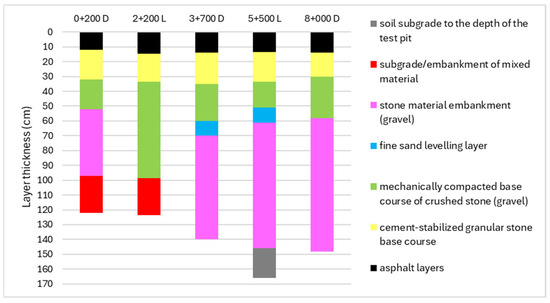
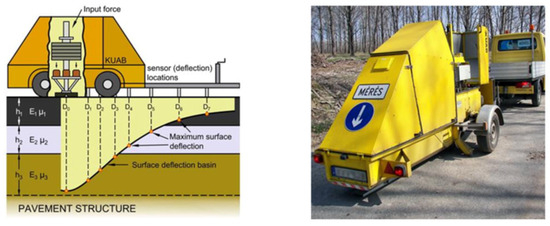
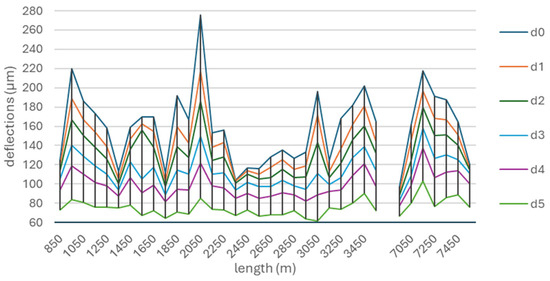
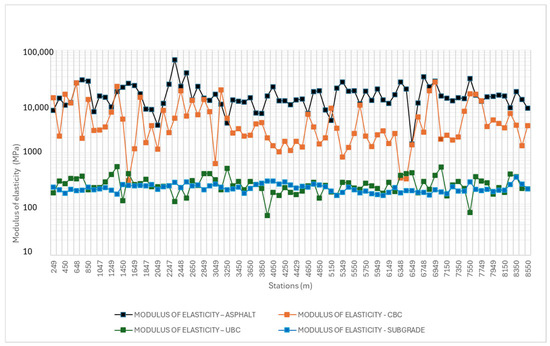
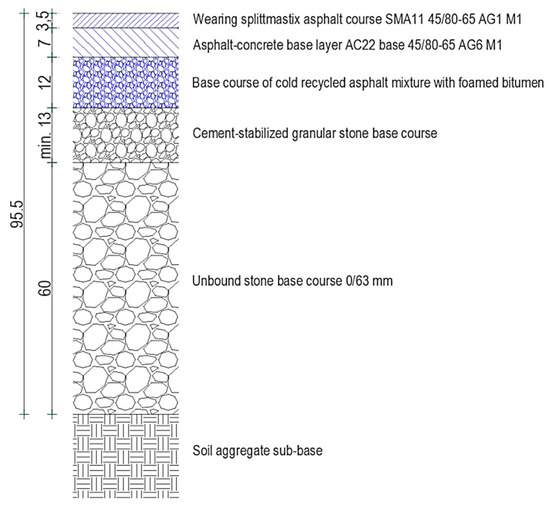
This paper focuses on a section of the state road D28, Bjelovar northern bypass, Republic of Croatia, which was opened to traffic in 2002. Following the expiration of the 20-year design service life, it was determined that the section required reconstruction, as visual inspections indicated a significant deterioration in ride comfort. To define the appropriate reconstruction strategy, specifically the strengthening of the pavement structure, reliable data on pavement bearing capacity were needed. Historical design thicknesses were compared with current measurements, and deflection data obtained using a Falling Weight Deflectometer (FWD) were analyzed for sections where visual assessments suggested reduced structural capacity. Based on the calculated modulus of elasticity, a pavement structure was designed and subsequently strengthened through the addition of an extra load-bearing layer composed of a cold-recycled mixture with foamed bitumen.
Full article

Figure 1
Open AccessProceeding Paper
A Dynamic Approach for Operational Efficiency Improvement Using Adaptive Particle Swarm Optimization
by
Hari Sundar Mahadevan and Ashwarya Kumar
Eng. Proc. 2026, 126(1), 7; https://doi.org/10.3390/engproc2026126007 (registering DOI) - 6 Feb 2026
Abstract
The maritime industry is experiencing significant growth due to globalized trade, but this expansion has led to increasing environmental concerns. Studies project that shipping emissions could reach 90–130% of 2008 levels by 2050 without intervention potentially contributing up to 17% of global CO
[...] Read more.
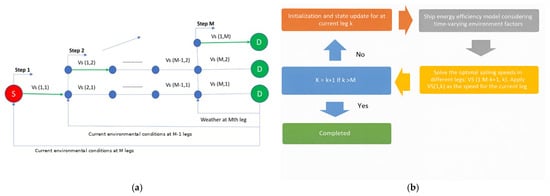
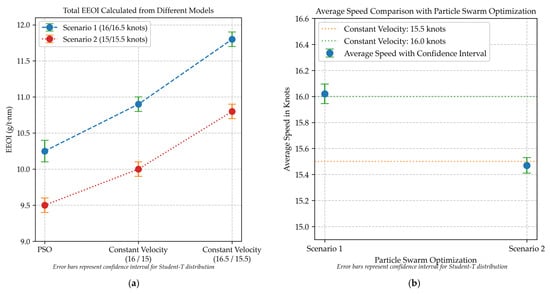
The maritime industry is experiencing significant growth due to globalized trade, but this expansion has led to increasing environmental concerns. Studies project that shipping emissions could reach 90–130% of 2008 levels by 2050 without intervention potentially contributing up to 17% of global CO2 emissions by 2050, thereby posing a major environmental challenge. Stringent environmental regulations from international organizations and government agencies necessitate the maritime industry to find effective solutions to reduce its greenhouse gas (GHG) emissions and improve energy efficiency. This research proposes a methodology for dynamically calculating optimal ship speed to enhance energy efficiency and reduce GHG emissions. By leveraging real-time environmental data (e.g., weather forecasts, sea state information) and operational parameters (e.g., ship characteristics, cargo load), the study utilizes an Adaptive Particle Swarm Optimization based on Velocity Information (APSO-VI) to predict optimal speed over ground (SOG) in real time. The study utilizes the Energy Efficiency Operational Index (EEOI) as a performance metric. EEOI is a widely employed measure in the maritime industry that quantifies the grams of CO2 emitted per tonne-nautical mile (g CO2/t nm) of transport work. The effectiveness of the proposed dynamic optimization model (APSO-VI) is assessed by comparing its performance with constant velocity models through extensive simulations, showing a 5–12% reduction in EEOI with the optimized speed model. The results demonstrate significant reductions in fuel consumption and emissions, supporting the adoption of such technologies for a more sustainable maritime industry. Future research may explore integrating machine learning techniques and advanced weather forecasting models for even more robust optimization strategies.
Full article
(This article belongs to the Proceedings of European Navigation Conference 2025)
►▼
Show Figures

Figure 1

Open AccessProceeding Paper
GRIPP: An Open-Source and Portable Software-Defined Radio-Oriented GNSS/SBAS Receiver
by
Gaëtan Fayon, Nicolas Castel, Hugo Sobreira, Ciprian-Vladut Circu, Noori Bni Lam, Marnix Meersman, Leia Nummisalo, Ruediger Matthias Weiler, Jörg Hahn, Stefan Wallner and Nityaporn Sirikan
Eng. Proc. 2026, 126(1), 6; https://doi.org/10.3390/engproc2026126006 - 6 Feb 2026
Abstract
This paper introduces the GRIPP (GNSS/SBAS Receiver, Independent and Portable PVT) system, an open-source SDR oriented GNSS/SBAS receiver. Composed of a Pocket SDR FE device, an L-band antenna and a computer, this system aims to ease the deployment and test of future GNSS
[...] Read more.
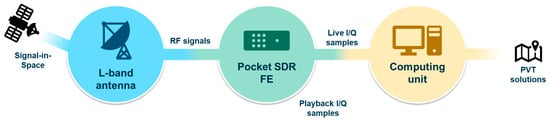
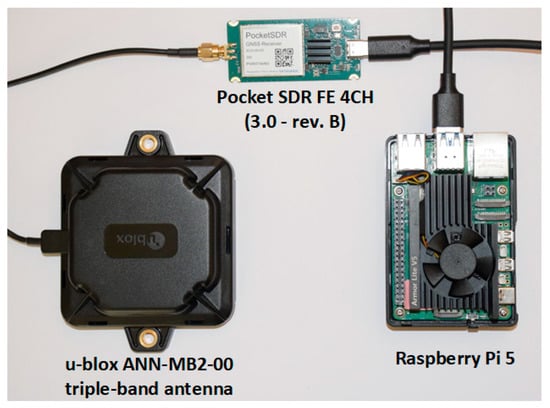
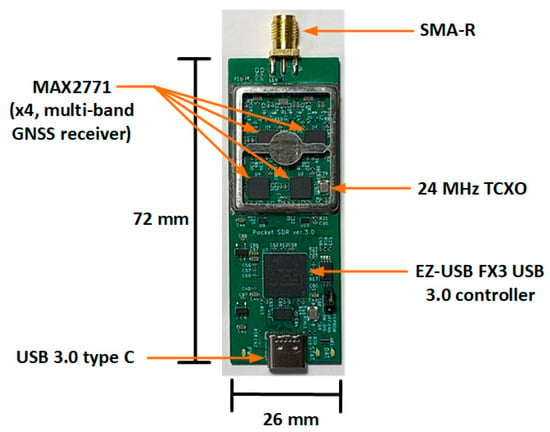
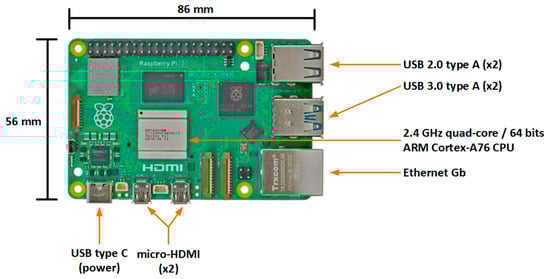
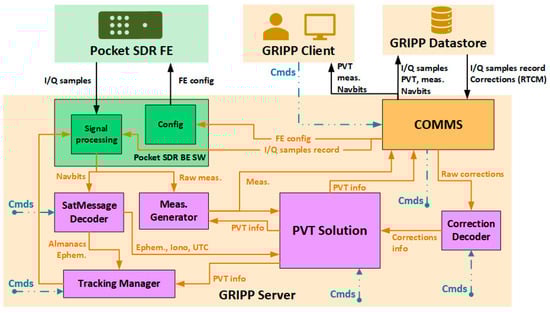
This paper introduces the GRIPP (GNSS/SBAS Receiver, Independent and Portable PVT) system, an open-source SDR oriented GNSS/SBAS receiver. Composed of a Pocket SDR FE device, an L-band antenna and a computer, this system aims to ease the deployment and test of future GNSS and SBAS evolutions, providing a fully documented and customizable receiver. Acting like a generic navigation toolbox, the main idea is to be able to quickly adapt it for research and development purposes, introducing new filtering methods or PVT algorithms. Besides these engineering applications, the goal is also to use it for educational purposes to introduce GNSS and SBAS to the general audience.
Full article
(This article belongs to the Proceedings of European Navigation Conference 2025)
►▼
Show Figures

Figure 1
Open AccessProceeding Paper
Low-Capital Expenditure AI-Assisted Zero-Trust Control Plane for Brownfield Ethernet Environments
by
Hong-Sheng Wang and Reen-Cheng Wang
Eng. Proc. 2025, 120(1), 54; https://doi.org/10.3390/engproc2025120054 - 5 Feb 2026
Abstract
We developed an AI-assisted zero-trust control system at low capital expenditure to retrofit brownfield Ethernet environments without disruptive hardware upgrades or costly software-defined networking migration. Legacy network infrastructures in small and medium-sized enterprises (SMEs) lack the flexibility and programmability required by modern zero-trust
[...] Read more.
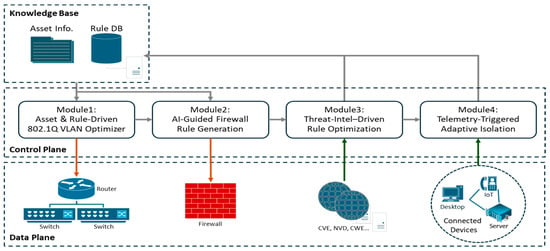
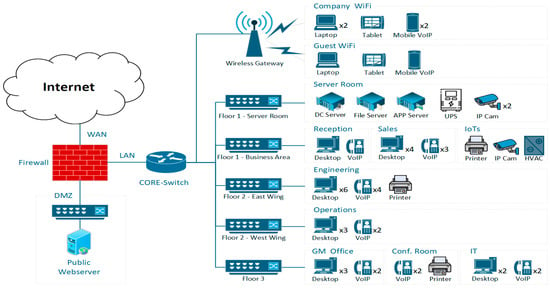
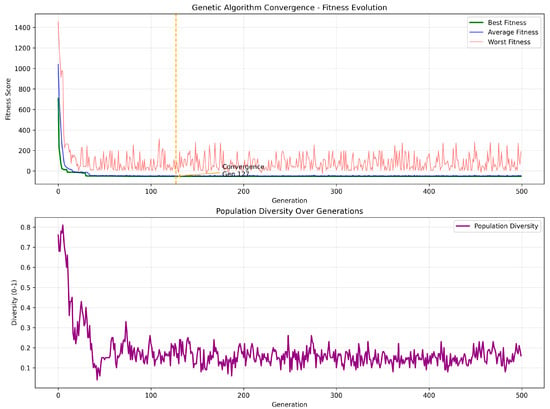
We developed an AI-assisted zero-trust control system at low capital expenditure to retrofit brownfield Ethernet environments without disruptive hardware upgrades or costly software-defined networking migration. Legacy network infrastructures in small and medium-sized enterprises (SMEs) lack the flexibility and programmability required by modern zero-trust architectures, creating a persistent security gap between static Layer-1 deployments and dynamic cyber threats. The developed system addresses this gap through a modular architecture that integrates genetic-algorithm-based virtual local area network (VLAN) optimization, large language model-guided firewall rule synthesis, threat-intelligence-driven policy automation, and telemetry-triggered adaptive isolation. Network assets are enumerated and evaluated through a risk-aware clustering model to enable micro-segmentation that aligns with the principle of least privilege. Optimized segmentation outputs are translated into pfSense firewall policies through structured prompt engineering and dual-stage validation, ensuring syntactic correctness and semantic consistency. A retrieval-augmented generation pipeline connects live telemetry with historical vulnerability intelligence, enabling rapid policy adjustments and automated containment responses. The system operates as an overlay on existing managed switches, orchestrating configuration changes through standards-compliant interfaces such as simple network management protocol and network configuration protocol. Experimental evaluation in a representative SME testbed demonstrates substantial improvements in segmentation granularity, refining seven flat subnets into thirty-four purpose-specific VLANs. Compliance scores improved significantly, with the International Organization for Standardization/International Electrotechnical Commission 27001 rising from 62.3 to 94.7% and the National Institute of Standards and Technology Cybersecurity Framework alignment increasing from 58.9 to 91.2%. All 851 automatically generated firewall rules passed dual-agent validation, ensuring reliable enforcement and enhanced auditability. The results indicate that the system developed provides an operationally feasible pathway for legacy networks to achieve zero-trust segmentation with minimal cost and disruption. Future extensions will explore adaptive learning mechanisms and hybrid cloud support to further enhance scalability and contextual responsiveness.
Full article
(This article belongs to the Proceedings of 8th International Conference on Knowledge Innovation and Invention)
►▼
Show Figures

Figure 1

Open AccessProceeding Paper
Hybrid Dictionary–Retrieval-Augmented Generation–Large Language Model for Low-Resource Translation
by
Reen-Cheng Wang, Cheng-Kai Yang, Tun-Chieh Yang and Yi-Xuan Tseng
Eng. Proc. 2025, 120(1), 52; https://doi.org/10.3390/engproc2025120052 - 5 Feb 2026
Abstract
The rapid decline of linguistic diversity, driven by globalization and technological standardization, presents significant challenges for the preservation of endangered languages, many of which lack sufficient parallel corpora for effective machine translation. Conventional neural translation models perform poorly in such contexts, often failing
[...] Read more.
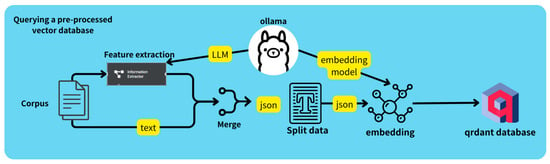
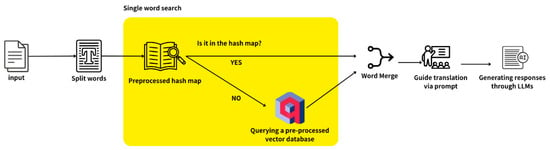
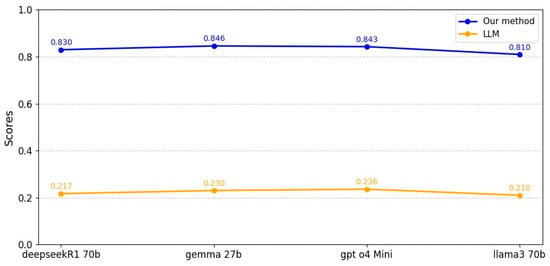
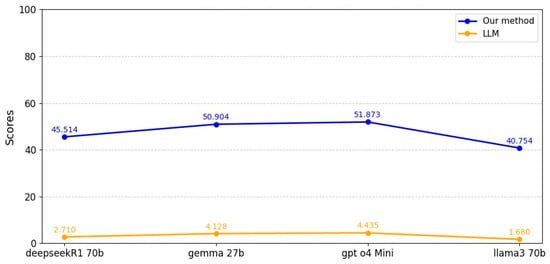
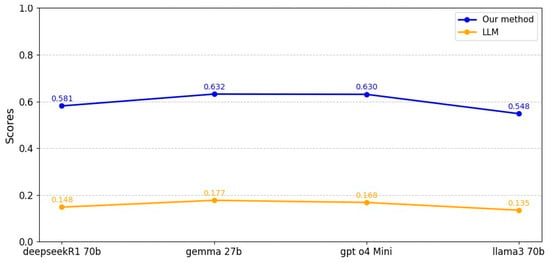
The rapid decline of linguistic diversity, driven by globalization and technological standardization, presents significant challenges for the preservation of endangered languages, many of which lack sufficient parallel corpora for effective machine translation. Conventional neural translation models perform poorly in such contexts, often failing to capture semantic precision, grammatical complexity, and culturally specific nuances. This study addresses these limitations by proposing a hybrid translation framework that combines dictionary-based pre-translation, retrieval-augmented generation, and large language model post-editing. The system is designed to improve translation quality for extremely low-resource languages, with a particular focus on the endangered Paiwan language in Taiwan. In the proposed approach, a handcrafted bilingual dictionary is the first to establish deterministic lexical alignments to generate a symbolically precise intermediate representation. When gaps occur due to missing vocabulary or sparse training data, a retrieval module enriches contextual understanding by dynamically sourcing semantically relevant examples from a vector database. These enriched words are then processed by an instruction-tuned large language model that reorders syntactic structures, inflects verbs appropriately, and resolves lexical ambiguities to produce fluent and culturally coherent translations. The evaluation is conducted on a 250-sentence Paiwan–Mandarin dataset, and the results demonstrate substantial performance gains across key metrics, with cosine similarity increasing from 0.210–0.236 to 0.810–0.846, BLEU scores rising from 1.7–4.4 to 40.8–51.9, and ROUGE-L F1 scores improving from 0.135–0.177 to 0.548–0.632. These results corroborate the effectiveness of the proposed hybrid pipeline in mitigating semantic drift, preserving core meaning, and enhancing linguistic alignment in low-resource settings. Beyond technical performance, the framework contributes to broader efforts in language revitalization and cultural preservation by supporting the transmission of Indigenous knowledge through accurate, contextually grounded, and accessible translations. This research demonstrates that integrating symbolic linguistic resources with retrieval-augmented large language models offers a scalable and efficient solution for endangered language translation and provides a foundation for sustainable digital heritage preservation in multilingual societies.
Full article
(This article belongs to the Proceedings of 8th International Conference on Knowledge Innovation and Invention)
►▼
Show Figures

Figure 1
Open AccessProceeding Paper
Intelligent Password Guessing Using Feature-Guided Diffusion
by
Yi-Ching Huang and Jhe-Wei Lin
Eng. Proc. 2025, 120(1), 51; https://doi.org/10.3390/engproc2025120051 - 5 Feb 2026
Abstract
In modern cybersecurity and deep learning, conditional password guessing plays a critical role in improving password-cracking efficiency by leveraging known patterns and constraints. In contrast with traditional brute-force or dictionary-based attacks, we developed an approach that adopts a latent diffusion model to simulate
[...] Read more.
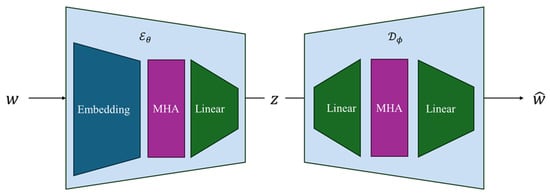
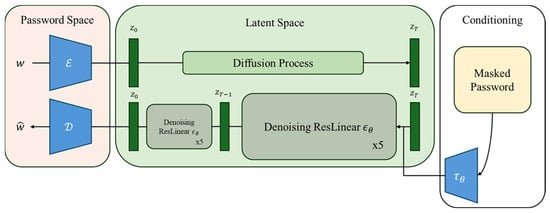
In modern cybersecurity and deep learning, conditional password guessing plays a critical role in improving password-cracking efficiency by leveraging known patterns and constraints. In contrast with traditional brute-force or dictionary-based attacks, we developed an approach that adopts a latent diffusion model to simulate human password selection behavior, generating more realistic password candidates. We incorporated masked character inputs as conditions and applied advanced feature extraction to capture common patterns such as character substitutions and typing habits. Furthermore, we employed visualization techniques, including autoencoders and principal component analysis, to analyze password distributions, enhancing model interpretability and aiding both offensive and defensive security strategies.
Full article
(This article belongs to the Proceedings of 8th International Conference on Knowledge Innovation and Invention)
►▼
Show Figures

Figure 1

Open AccessProceeding Paper
Magnetic Thin Film Inductor Characteristics and Packaging Stress
by
Yungching Chao, Tingsheng Chang and Deshin Liu
Eng. Proc. 2025, 120(1), 50; https://doi.org/10.3390/engproc2025120050 - 5 Feb 2026
Abstract
We investigated how mechanical material properties, magnetic material properties, and geometric structure affect the performance of magnetic inductors. Magnetic thin film samples were prepared using a sputter deposition system. Mechanical properties, including hardness and elastic modulus, were measured with a nanoindenter, while magnetic
[...] Read more.
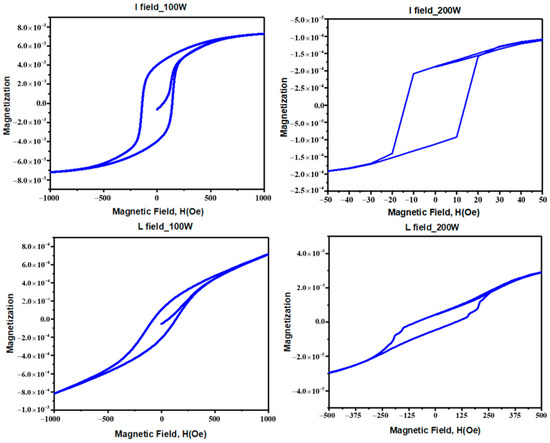
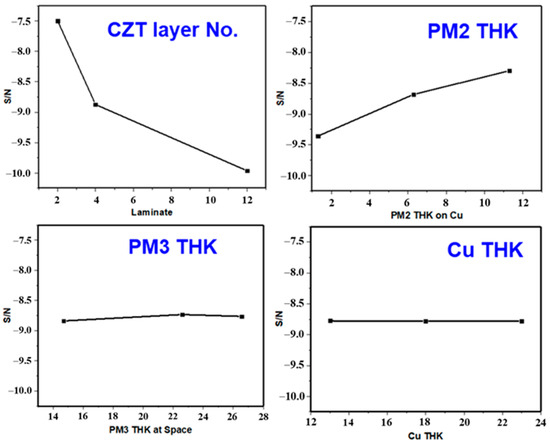
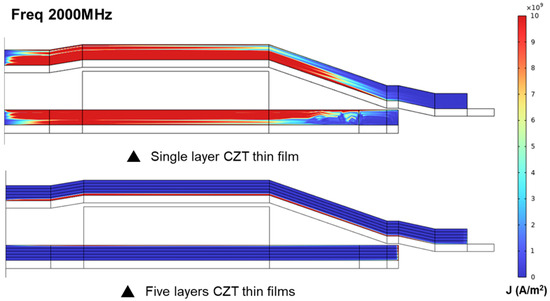
We investigated how mechanical material properties, magnetic material properties, and geometric structure affect the performance of magnetic inductors. Magnetic thin film samples were prepared using a sputter deposition system. Mechanical properties, including hardness and elastic modulus, were measured with a nanoindenter, while magnetic properties such as saturation magnetization were characterized using a magnetometer. The measured properties were then integrated with finite element simulations to analyze how geometric structure influences magnetic inductor performance sensitivity. The results present the manufacturing process for magnetic thin film preparation and the development of a finite element method for analyzing mechanical and magnetic effects in magnetic inductors.
Full article
(This article belongs to the Proceedings of 8th International Conference on Knowledge Innovation and Invention)
►▼
Show Figures

Figure 1

Open AccessProceeding Paper
Deep Learning-Based Technique for Building Damage Extraction and Mapping from Ground-Level Images Using Visible Remote Sensing Indices and Edge Angle Dispersion as Input Features
by
Haruhiro Shiraishi and Yuichiro Usuda
Eng. Proc. 2025, 120(1), 49; https://doi.org/10.3390/engproc2025120049 - 5 Feb 2026
Abstract
We developed a deep learning model for automated extraction and assessment of earthquake damage from dashcam and post-disaster images. By combining a custom-designed deep multi-layer perceptron model with an enhanced feature extraction methodology, we accurately classify image patches into “No Damage” (Class 0)
[...] Read more.
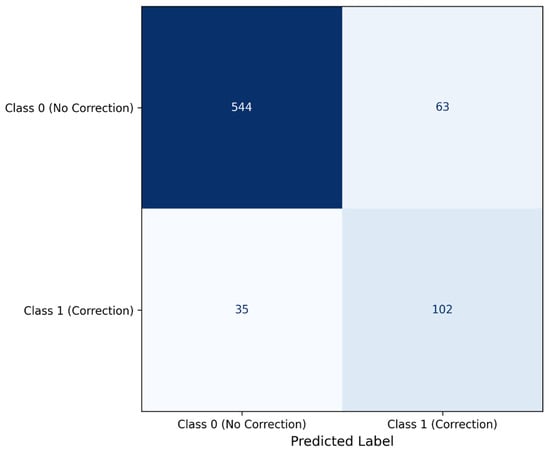
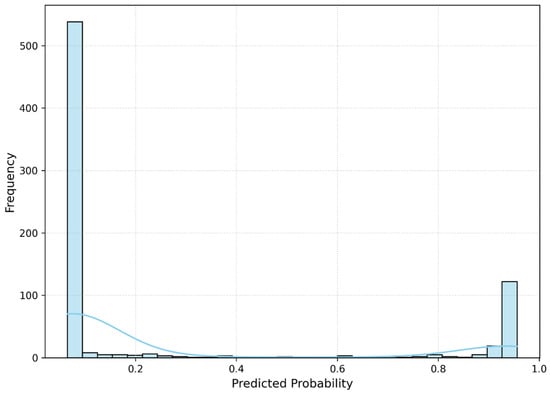
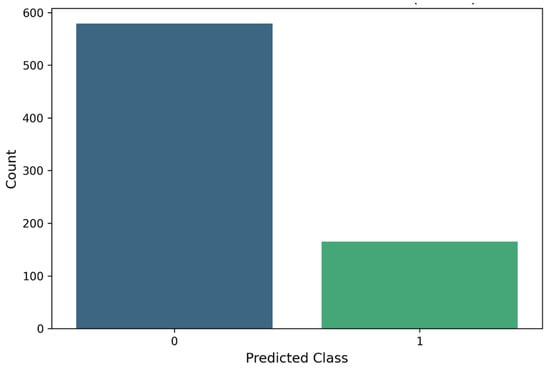
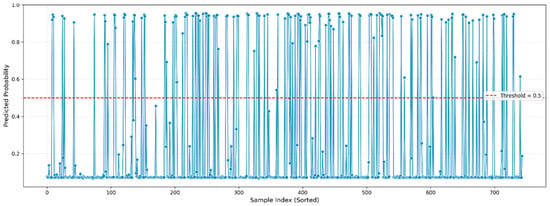
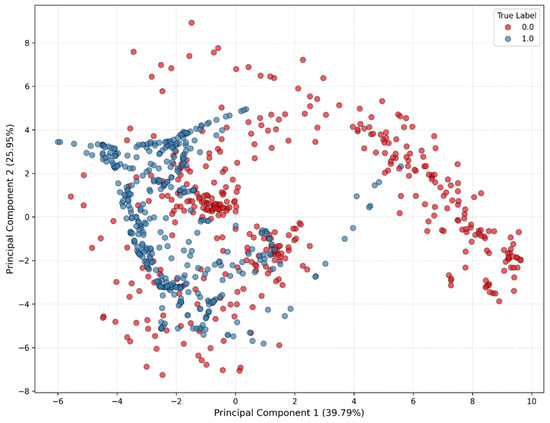
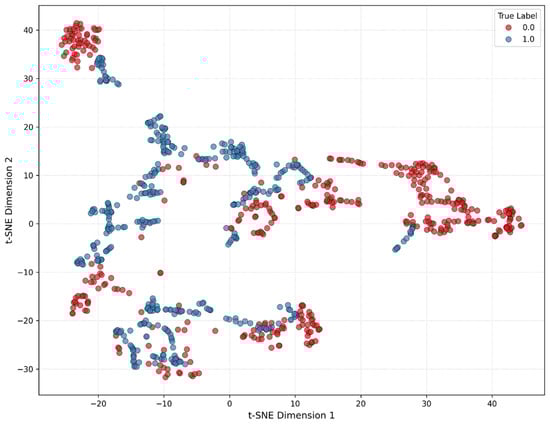
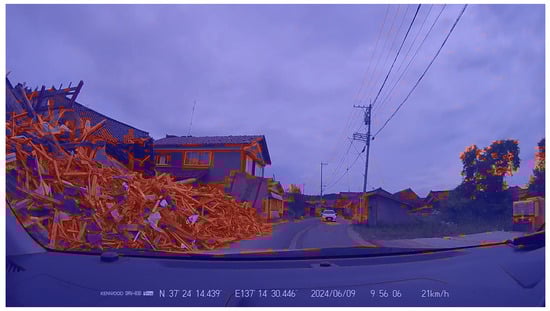
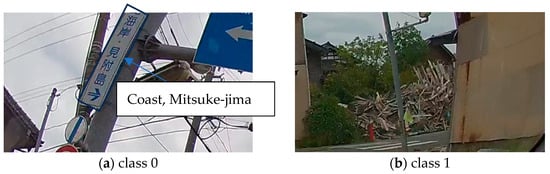
We developed a deep learning model for automated extraction and assessment of earthquake damage from dashcam and post-disaster images. By combining a custom-designed deep multi-layer perceptron model with an enhanced feature extraction methodology, we accurately classify image patches into “No Damage” (Class 0) and “Damage” (Class 1). The proposed model incorporates a rich set of image-based features, including color statistics, edge properties, and texture descriptors, along with strategies to mitigate class imbalance. Experimental results demonstrate the model’s high performance in identifying damaged areas, particularly its excellent recall for the “Damage” class, which is critical for rapid disaster response and damage mapping.
Full article
(This article belongs to the Proceedings of 8th International Conference on Knowledge Innovation and Invention)
►▼
Show Figures

Figure 1
Open AccessProceeding Paper
PM2.5 Concentration Estimation Based on Support Vector Regression: Hybrid Approach Using PM2.5-Sensitive Pixels and Multi-Features
by
Ming-Jung Liu, Meng-Yuan Jiang, Yu-Cheng Wu and Jiun-Jian Liaw
Eng. Proc. 2025, 120(1), 48; https://doi.org/10.3390/engproc2025120048 - 5 Feb 2026
Abstract
Fine particulate matter ( ) is a hazardous air pollutant that poses serious risks to human health. Long-term exposure to high concentrations of increases the likelihood of developing cardiovascular and respiratory diseases. Therefore, accurately monitoring
[...] Read more.
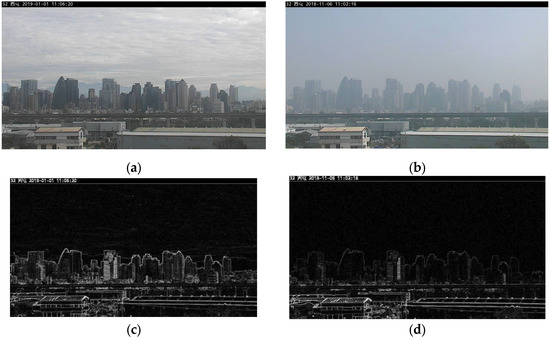
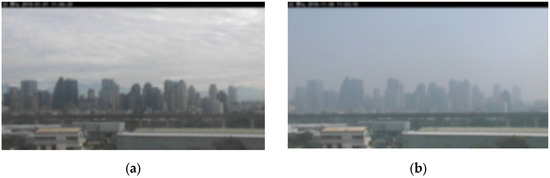
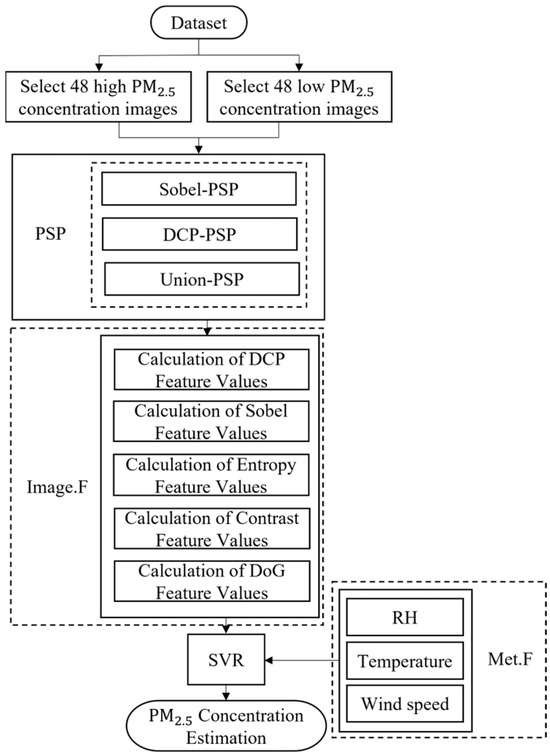
Fine particulate matter ( ) is a hazardous air pollutant that poses serious risks to human health. Long-term exposure to high concentrations of increases the likelihood of developing cardiovascular and respiratory diseases. Therefore, accurately monitoring concentrations are crucial for effective air quality management. However, due to the limited number and uneven distribution of monitoring stations, traditional monitoring methods fail to provide comprehensive data. With advancements in imaging technology and data processing, researchers have focused on estimating concentrations using image-based approaches. We constructed the -sensitive pixel (PSP) approach. In addition to the original four image features—Sobel, Dark Channel Prior (DCP), entropy, and contrast—we identified a new image feature and integrate three meteorological variables, relative humidity, temperature, and wind speed, to enhance the estimation of concentrations.
Full article
(This article belongs to the Proceedings of 8th International Conference on Knowledge Innovation and Invention)
►▼
Show Figures

Figure 1
Open AccessProceeding Paper
Tracert-Retrieval-Augmented Generation: Boosting Multi-Hop Retrieval-Augmented Generation with Direction-Aware Graph Traversal
by
Siu-Him Zhang and Jhe-Wei Lin
Eng. Proc. 2025, 120(1), 47; https://doi.org/10.3390/engproc2025120047 - 5 Feb 2026
Abstract
Tracert-retrieval-augmented generation (RAG) is a novel retrieval-augmented framework designed for efficient, document-level multi-hop reasoning. Unlike conventional RAG systems that retrieve top-k text segments based solely on dense similarity, Tracert-RAG predicts a semantic goal vector from the user query, constructs a local semantic
[...] Read more.
Tracert-retrieval-augmented generation (RAG) is a novel retrieval-augmented framework designed for efficient, document-level multi-hop reasoning. Unlike conventional RAG systems that retrieve top-k text segments based solely on dense similarity, Tracert-RAG predicts a semantic goal vector from the user query, constructs a local semantic graph from the document embeddings, and employs a direction-aware greedy traversal to identify reasoning paths toward the goal. This system eliminates the inflexibility of symbolic graph traversal and the inefficiency of manual query reformulation. On literary analysis tasks from Pride and Prejudice, Tracert-RAG outperforms standard RAG and graph RAG baselines in answer quality, inference speed, and interpretability. Specifically, it achieves the highest average answer quality (8.05 out of 10) while reducing indexing time by a factor of 80 compared to graph RAG methods.
Full article
(This article belongs to the Proceedings of 8th International Conference on Knowledge Innovation and Invention)
Open AccessProceeding Paper
MAS-Hunt: A Resilient AI Multi-Agent System for Threat Hunting
by
Paulo Matheus Nicolau Silva, Daniel Alves da Silva, Robson de Oliveira Albuquerque, Georges Daniel Amvame Nze and Fábio Lúcio Lopes de Mendonça
Eng. Proc. 2026, 123(1), 26; https://doi.org/10.3390/engproc2026123026 - 5 Feb 2026
Abstract
Modern cyber threats exhibit sophisticated, evasive behaviors that overwhelm traditional security systems, leading to prolonged periods of attackers remaining undetected. AI-driven autonomous agents promise a proactive solution but are themselves vulnerable to adversarial manipulation, including memory poisoning and behavioral exploitation. This paper introduces
[...] Read more.
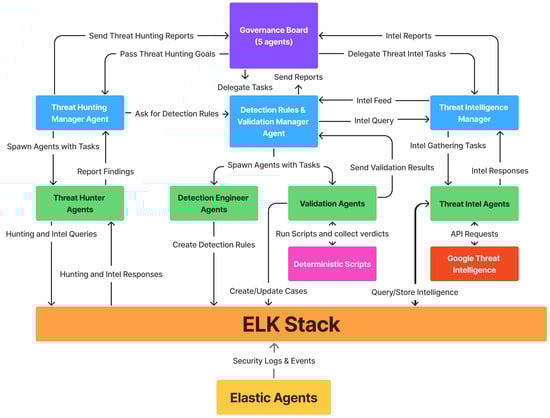
Modern cyber threats exhibit sophisticated, evasive behaviors that overwhelm traditional security systems, leading to prolonged periods of attackers remaining undetected. AI-driven autonomous agents promise a proactive solution but are themselves vulnerable to adversarial manipulation, including memory poisoning and behavioral exploitation. This paper introduces MAS-Hunt—a novel multi-agent system architecture for proactive threat hunting that operates directly on live telemetry within the Elastic Stack. MAS-Hunt employs a collaborative team of specialized AI agents to automate the threat hunting lifecycle while incorporating a security-first design with built-in defenses for memory integrity, cross-agent validation, and behavioral anomaly detection.
Full article
(This article belongs to the Proceedings of First Summer School on Artificial Intelligence in Cybersecurity)
►▼
Show Figures

Figure 1
Open AccessProceeding Paper
A Lightweight Deep Learning Framework for Robust Video Watermarking in Adversarial Environments
by
Antonio Cedillo-Hernandez, Lydia Velazquez-Garcia and Manuel Cedillo-Hernandez
Eng. Proc. 2026, 123(1), 25; https://doi.org/10.3390/engproc2026123025 - 5 Feb 2026
Abstract
The widespread distribution of digital videos in social networks, streaming services, and surveillance systems has increased the risk of manipulation, unauthorized redistribution, and adversarial tampering. This paper presents a lightweight deep learning framework for robust and imperceptible video watermarking designed specifically for cybersecurity
[...] Read more.
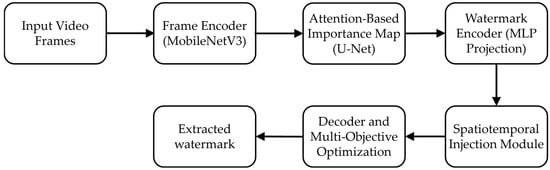
The widespread distribution of digital videos in social networks, streaming services, and surveillance systems has increased the risk of manipulation, unauthorized redistribution, and adversarial tampering. This paper presents a lightweight deep learning framework for robust and imperceptible video watermarking designed specifically for cybersecurity environments. Unlike heavy architectures that rely on multi-scale feature extractors or complex adversarial networks, our model introduces a compact encoder–decoder pipeline optimized for real-time watermark embedding and recovery under adversarial attacks. The proposed system leverages spatial attention and temporal redundancy to ensure robustness against distortions such as compression, additive noise, and adversarial perturbations generated via Fast Gradient Sign Method (FGSM) or recompression attacks from generative models. Experimental simulations using a reduced Kinetics-600 subset demonstrate promising results, achieving an average PSNR of 38.9 dB, SSIM of 0.967, and Bit Error Rate (BER) below 3% even under FGSM attacks. These results suggest that the proposed lightweight framework achieves a favorable trade-off between resilience, imperceptibility, and computational efficiency, making it suitable for deployment in video forensics, authentication, and secure content distribution systems.
Full article
(This article belongs to the Proceedings of First Summer School on Artificial Intelligence in Cybersecurity)
►▼
Show Figures

Figure 1
Highly Accessed Articles
Latest Books
E-Mail Alert
News
Topics