Skip to Content

Education Sciences

Education Sciences is an international, peer-reviewed, open access journal on education, published monthly online by MDPI.
The European Network of Sport Education (ENSE) is affiliated with Education Sciences and its members receive discounts on the article processing charges.
Quartile Ranking JCR - Q1 (Education and Educational Research)

All Articles (7,624)

Artificial intelligence (AI) is rapidly transforming language education. However, its pedagogical and sociocultural impacts on Japanese business writing remain underexplored. This study aims to examine how ChatGPT4o-based automated feedback functions within Japanese business writing education for adult learners in online higher education, with particular attention to both its instructional impact and learners’ sociocultural awareness. Situated in a cyber university context where the proportion of adult learners is increasing, the study explores the potential of AI-mediated feedback to address learners’ diverse educational and cultural needs. It employed a mixed-methods design, combining a survey of 27 participants and in-depth interviews with 11 participants. The interviews were transcribed and thematically coded to gain deeper insights into learners’ perceptions. The findings indicate that ChatGPT feedback contributed to learners’ planning of study strategies, the provision of immediate and personalized corrections, the reinforcement of error awareness, and the acquisition of honorific and polite expressions. On the one hand, learners reported that they could quickly understand regional language practices and communication conventions in business contexts, thereby deepening their cultural sensitivity. On the other hand, some learners expressed concern that increased reliance on AI could weaken exploratory and critical learning. These results suggest that ChatGPT can serve not merely as a correction tool but also as an educational resource that simultaneously fosters self-directed learning and sociocultural competence. However, to ensure reliability and cultural appropriateness, hybrid feedback incorporating instructor guidance is necessary. This study has academic significance in demonstrating the potential of extending AI-based feedback to Japanese business communication education, thereby constructing an integrated language and culture learning environment.

21 February 2026

Chatbot Introduction Screen.

Teacher motivation plays a critical role in the successful implementation of curriculum enrichment programmes, yet it remains underexplored in many educational initiatives. The study contributes insights into teacher motivation in early childhood education and offers practical guidance for strengthening the sustainability of enrichment programmes through integrated recognition, support, and incentive structures. This study investigates the impact of rewards and recognition on teachers’ engagement in the Tsogo Sun Moves for Life chess programme in early childhood education classrooms within the King Cetshwayo District, South Africa. A qualitative case study design was used, with data collected through semi-structured interviews, observations, and document analysis, and analysed using thematic analysis. The findings indicate that while teachers valued teaching resources, coordinator support, and certificates of appreciation, these forms of recognition were insufficient to sustain long-term engagement. Teachers emphasised the need for meaningful acknowledgment and tangible incentives to justify the additional workload associated with programme implementation. Drawing on Self-Determination Theory and Herzberg’s Two-Factor Theory of Motivation, the study highlights the interaction between intrinsic and extrinsic motivation in shaping teachers’ commitment.

21 February 2026

Adaptability and flexibility in teaching with digital technologies are essential for instructors to navigate dynamic and ever-evolving educational contexts. However, little has been done to investigate the underlying competencies required of instructors to fluently integrate technologies into their instructional practices. This study employed the Delphi method to address this gap and identify the competencies of a digitally fluent educator in higher education. Through three rounds of data analysis, 36 experts across multiple higher education institutions reached consensus on 14 competencies, including 8 knowledge, 3 skills, and 3 dispositions as indicators of an educator fluent in applying digital tools. The final list of competencies highlights the importance of metacognitive skills, conditional knowledge, and a disposition to be adaptable when defining fluency in digital instruction. The findings indicate a differentiation between digital fluency and previous paradigms such as digital literacy and digital competency. Implications for competency-based professional development opportunities and future research are discussed.

20 February 2026

Task-Based Learning with VR Support in CFL Learning

  • Pattanasak Muangchan,
  • Kiki Juli Anggoro and
  • Phirasoost Kateleatprasert

This study explores the effects of integrating virtual reality (VR) into task-based learning (TBL) to support Chinese language learning among Thai university students enrolled in a basic Chinese course. A total of fifty first-year students were selected using simple random sampling and assigned to either a VR-supported experimental group or a traditional control group. Both groups received instruction on the same vocabulary and writing content, delivered by the same instructor, and were assessed using identical pre- and post-tests. The findings indicate that students in the VR-supported group significantly outperformed their peers in the control group. Large effect sizes suggest substantial improvements in both vocabulary knowledge and Chinese character writing, while the control group demonstrated only minimal progress. Survey responses also revealed that students found VR-based tasks highly engaging, closely connected to real-life communication, and strongly motivating. Most participants reported a better understanding of vocabulary and noticeable advancement in learning Chinese characters. However, some students encountered technical difficulties and mild discomfort while interacting with the VR environment. These observations underscore the need for careful instructional design and the importance of implementing VR in a user-friendly and accessible manner. Overall, the study highlights the potential of VR-supported TBL to enhance learning outcomes in beginner-level Chinese courses, provided that technological and pedagogical considerations are carefully addressed.

20 February 2026

News & Conferences

Issues

Open for Submission

Editor's Choice

Reprints of Collections

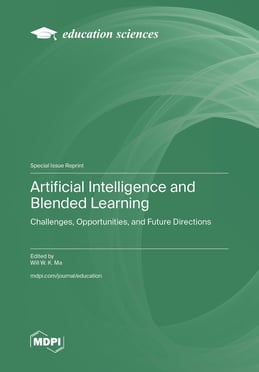
Artificial Intelligence and Blended Learning
Reprint

Artificial Intelligence and Blended Learning

Challenges, Opportunities, and Future Directions
Editors: Will W. K. Ma
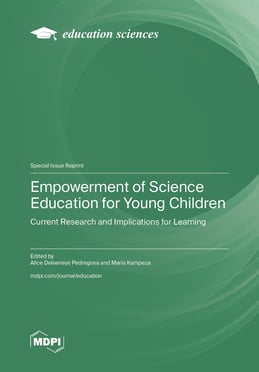
Empowerment of Science Education for Young Children
Reprint

Empowerment of Science Education for Young Children

Current Research and Implications for Learning
Editors: Alice Delserieys Pedregosa, Maria Kampeza

Get Alerted

Add your email address to receive forthcoming issues of this journal.

XFacebookLinkedIn
Educ. Sci. - ISSN 2227-7102