
Skip Content
You are currently on the new version of our website. Access the old version .

All Articles (224)

How Patients Seek and Value Online Scar-Related Information: A Qualitative Study

  • Koen Maertens,
  • Nancy Van Loey and
  • Jill Meirte
  • + 1 author

Background: Pathological scarring (PS) following surgical procedures, burns, or trauma poses significant clinical, psychological, and socio-economic challenges. Despite the high prevalence of PS, reliable information resources are limited, often leading individuals to depend on unvalidated online sources. To address this gap, we developed MyScarSpecialist.com, an evidence-based website providing comprehensive information on scar types, characteristics, and treatment options. This study aimed to optimize the website through co-creation with patients and clinicians. Methods: Semi-structured focus group meetings were conducted with patients and carers; sessions were recorded, transcribed, and analyzed using thematic analysis. Results: From the 3 focus group meetings with 15 patients with scars and 3 carers, four key themes emerged: (1) Information Sources: The Role of Professionals, Peers, and Digital Media in information sharing; (2) Desired information: From scar typing to treatment outcomes to psychosocial impact; (3) Website design: Audience preferences on content layering, information load, and image positioning; (4) Readability: Optimizing content for comprehension. Participants highlighted the need for enhanced peer support and resources addressing the psychological impact of scarring. Conclusions: These findings provide comprehensive insights for optimizing medical educational websites, ensuring inclusivity, accessibility, and empowerment for patients through co-designed strategies.

6 February 2026
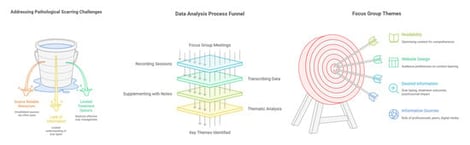
Focus group themes and subthemes.

Accurate documentation of burn wounds is essential for evaluating treatment outcomes and monitoring healing progression. Traditional two-dimensional (2D) photography remains the clinical standard but lacks depth and volumetric accuracy. Three-dimensional (3D) scanning offers enhanced visualization of wound morphology and tissue vitality, potentially improving objectivity in burn assessment. This study compares two handheld 3D scanning systems—Artec Eva and Revopoint Miraco—in documenting acute and healing burn wounds, using standard clinical photography as the reference. Fifteen patients with second-degree and third-degree burns were prospectively examined at the Burn Unit of AGEL Hospital Košice-Šaca, with five representative cases selected for detailed analysis. For each patient, clinical photographs and paired 3D scans were obtained under standardized conditions and evaluated for color fidelity, wound margin clarity, representation of epithelialisation islands, necrotic tissue, and correlation with clinical findings. Across all cases, Artec Eva demonstrated superior color accuracy, clearer wound delineation, and more realistic visualization of tissue vitality and re-epithelialisation. Revopoint Miraco reliably captured wound shape but produced darker tones and exaggerated surface relief, occasionally distorting depth perception. Overall, both systems successfully identified key healing features; however, Artec Eva provided more clinically accurate and visually consistent results. Three-dimensional scanning represents a valuable adjunct to conventional burn documentation.

28 January 2026

Objective: To identify key predictors of clinical outcomes in burn survivors and clarify the role of mixed-depth burns and confounding by indication in observational rehabilitation research. Design: Retrospective cohort study using data from a burn rehabilitation registry (January 2024 to July 2025). Setting: Burn rehabilitation center. Participants: 120 adult patients (age ≥ 18 years) with burns affecting ≥1% total body surface area (TBSA) and complete baseline data. Interventions: Not applicable. Main Outcome Measures: Primary outcome was functional improvement (ΔFIM). Secondary outcomes included pain reduction (ΔPain), scar severity (Vancouver Scar Scale; VSS), Activities of Daily Living (ADL) improvement, and Range of Motion (ROM) recovery. Multivariable linear and logistic regression models were used to identify predictors. Results: Patients achieved significant improvements in function (mean ΔFIM = 11.3 ± 8.9 points) and pain (mean ΔPain = 1.28 ± 0.81). Having a mixed-depth burn was the strongest predictor of worse scar outcomes (β = 2.52, 95% CI: 0.93 to 4.12, p = 0.002) and failure to achieve full ROM (OR = 0.089, 95% CI: 0.008 to 0.930, p = 0.043). An apparent association between inpatient ward care and better scar outcomes (β = −1.30, p = 0.020) was determined to be an artifact of confounding by indication, as the outpatient group had a higher proportion of high-risk mixed-depth burns (6.2% vs. 3.5%). Longer therapy duration was the only significant predictor of achieving ADL goals (OR = 1.014, 95% CI: 1.002 to 1.026, p = 0.025). Conclusions: Injury characteristics, particularly the presence of a mixed-depth burn, emerged as the dominant predictors of long-term scar and functional outcomes. This study identifies mixed-depth burns as a potentially high-risk clinical phenotype requiring targeted therapeutic strategies and demonstrates the critical importance of accounting for confounding by indication when evaluating rehabilitation outcomes in observational burn research.

19 January 2026

Background: A childhood burn presents new and unfamiliar challenges to patients and their parents during recovery. These injuries can negatively impact activities such as independence in self-care, participation in physical activity, and social interaction. As such, pediatric burn patients are at risk of poorer quality of life (QoL) outcomes after their burn. In this longitudinal, observational cohort study, we examined the social, demographic, and clinical factors that were associated with a poor QoL at 12 months postburn for pediatric patients aged > 2 years with non-severe burns in Western Australia. Methods: Inpatients were recruited from the pediatric burn unit at Perth Children’s Hospital in Western Australia between February 2021 and September 2022. Demographic and family information (age, sex, postcode, parental education, languages spoken at home) and clinical data (burn cause, TBSA%, location, surgical interventions, length of stay) were collected at baseline. At 6 and 12 months, caregivers completed the Brisbane Burn Scar Impact Profile (BBSIP). Results: A total of 37 caregivers completed the Brisbane Burn Scar Impact Profile (BBSIP). For the child’s QoL, 57% of caregivers reported that some impact remained for overall QoL, 32% for sensory intensity, 46% for sensitivity, 22% for daily living (22%), and 19% for emotional reactions. Parent worry was impacted in 46% of caregivers. Being female was associated with greater long-term impacts, particularly in overall functioning and parental worry. The burn location also influenced outcomes, with injuries to the upper limbs linked to higher sensory intensity and emotional impact. Children from culturally and linguistically diverse (CaLD) backgrounds, indicated by those speaking a language other than English at home (LOTE), demonstrated significantly greater effects across several domains, including overall impact, daily living, appearance, and parent worry. Conclusions: A substantial proportion of children continued to experience impacts from non-severe burns across multiple domains, indicating that even small-area burns can have lasting effects. The factors associated with worse scores were the child being female, the families being linguistically diverse, and upper body burns.

19 January 2026

News & Conferences

Issues

Open for Submission

Editor's Choice

Get Alerted

Add your email address to receive forthcoming issues of this journal.

XFacebookLinkedIn
Eur. Burn J. - ISSN 2673-1991