

- Article

Hungarian Drone-Based Wind Measurements During the WMO UAS Demonstration Campaign—A Low-Level Jet Case Study
- Ákos Steierlein,
- Péter Kardos and
- Zsolt Szalay
- + 4 authors
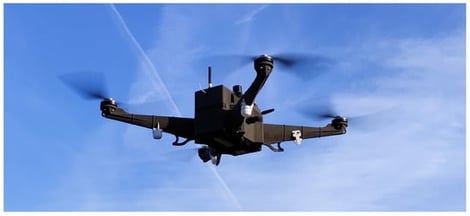
This study presents an operational approach to atmospheric wind profiling using a purpose-built meteorological uncrewed aerial vehicle (UAV) and an orientation-based wind estimation method that does not rely on dedicated onboard anemometers. The quadrotor platform, designed and developed by our team, has a maximum take-off mass of 2.45 kg and is capable of acquiring vertical atmospheric profiles up to 3000 m under a wide range of weather conditions. Within the framework of the World Meteorological Organization’s (WMO) global demonstration campaign for evaluating the use of uncrewed aircraft systems in operational meteorology and associated field activities, twelve vertical wind profiles were collected in parallel with radiosonde observations. UAV-based wind estimates were evaluated against radiosonde data using the WMO OSCAR (Observing Systems Capability Analysis and Review) performance framework. Across most wind speed regimes, the central 50% of UAV–radiosonde wind speed differences remain within OSCAR threshold requirements, indicating operationally relevant accuracy. Systematic deviations are physically interpretable and arise primarily in strongly sheared boundary-layer flows. A representative low-level jet case is used as a stress test, demonstrating that the UAV system remains safe and that wind estimates remain reliable even under extreme wind conditions, supporting robust performance in less demanding regimes. These results establish UAV-based wind profiling as a viable and complementary observing technique in the lower atmosphere and provide a practical pathway toward high-resolution, operational boundary-layer wind measurements.
7 February 2026