

- Systematic Review

Head and Neck Kaposi Sarcoma—An Updated Focus on Clinical and Epidemiological Characteristics: A Comprehensive Review
- Luis Alberto Gaitán-Cepeda,
- Brenda Daniela Ortega-Hidalgo and
- Daniela Carmona-Ruíz
- + 3 authors
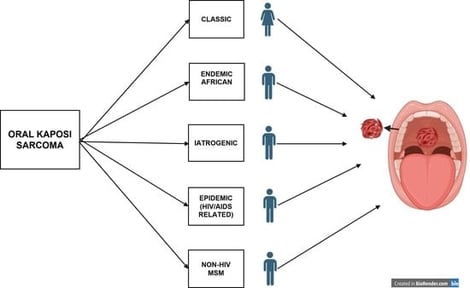
Background/Objectives: Interest in Oral Kaposi’s sarcoma (OKS) has declined recently, potentially causing diagnostic errors due to physicians’ unfamiliarity with its presentation. This review describes clinical and demographic characteristics of OKS patients across epidemiological groups. Methods: A literature search of studies published from 1957 to December 2024 was conducted using PubMed, Web of Science, Cochrane Library, Scopus, and Google Scholar. Studies with confirmed oral Kaposi sarcoma were included, while those with incomplete data were excluded. Cases were grouped into classic, endemic, epidemic (AIDS-related), iatrogenic, and HIV-negative males who have sex with males. Sex distribution, mean age, clinical appearance, lesion topography, and cause-related information for iatrogenic forms were recorded. Results: A total of 1812 articles were identified through database search. During initial screening, 1162 articles were excluded as duplicates. Of the remaining 650 papers, 338 were dismissed based on title and abstract. Of the remaining 312 articles for full-text review, 93 could not be accessed, leaving 219 articles for analysis. After screening, 123 were excluded, resulting in 117 articles for review. These were categorized as: 16 classical KS, 7 endemic-African, 20 iatrogenic, 70 epidemic-HIV/AIDS-related, and four articles reporting cases among MSM not related to HIV infection. A total of 152 patients with OKS were analyzed. Mean age was 38.04 years (range, 2–86 years), and 75% were male. Of all cases, 64.4% were epidemic, 13.8% iatrogenic, 10.5% classical, and 4.6% endemic. The palate was most common (44.6% of lesions), followed by gingiva (25.3%). Nodular or papular presentations were most frequent. Conclusions. OKS occurs in all KS epidemiological forms, and since this tumor can mimic gingival and periodontal lesions, dentists and physicians must be alert to identify oral Kaposi’s sarcoma.
24 February 2026